You can capture the calm lines and unique roof shapes of Japanese architecture by learning a few clear rules about proportion, perspective, and roof construction.
Start with simple geometric forms. Focus on roof profiles and timber grids, then build details step by step to create authentic-looking buildings.
This guide shows how to use basic drawing tools and simple techniques to sketch traditional houses, temples, and village scenes.
You’ll explore perspective, roof styles, wooden frames, and how to place buildings in natural settings so your work feels balanced and true to the style.
Follow short, practical exercises that cover foundations, specific roof and detail studies, and easy coloring and texturing tips to finish your pieces.
Understanding Key Principles of Japanese Architecture
You’ll pick up the main visual rules, common materials, and how old and new styles differ.
These ideas will help you draw accurate rooflines, joinery, and room layouts.
Common Features and Aesthetic Ideals
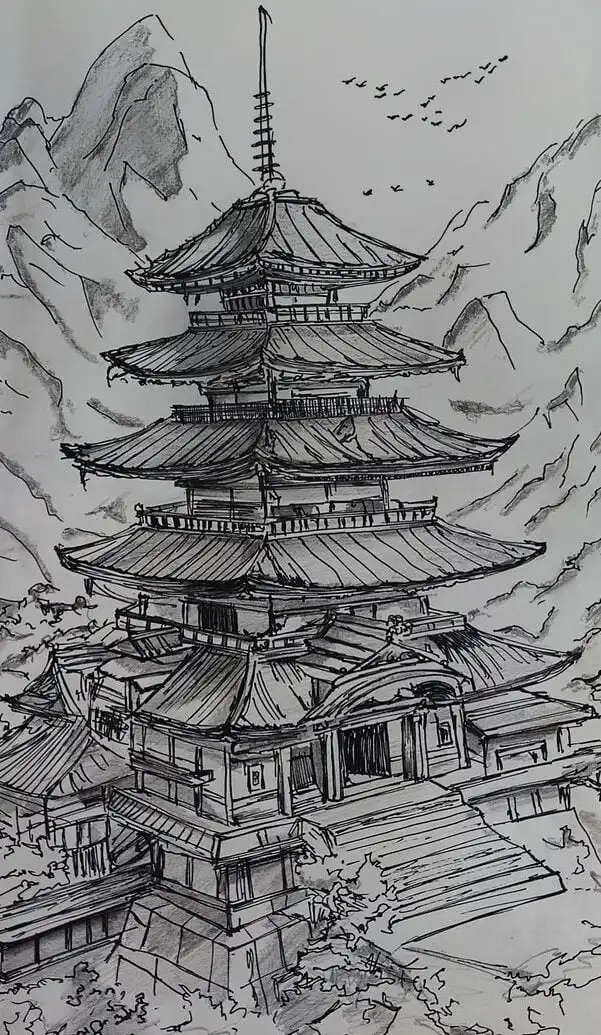
Japanese architecture favors simple, clean lines and careful balance.
You’ll see wide eaves, low roof slopes, and strong horizontal lines that make buildings feel grounded.
Sliding screens (shōji and fusuma) and large openings create flexible spaces and soft, diffused light inside.
Minimal ornament keeps attention on form and material.
Proportions often follow the human scale—you can step easily between levels and sit comfortably on tatami floors.
Nature plays a role: verandas (engawa), gardens, and visible wood grain connect the building with its site.
When you draw, emphasize negative space and subtle rhythm in repeated elements like columns and roof tiles.
Materials and Structural Elements
Wood dominates traditional Japanese buildings because it handles humidity and earthquakes well.
Look for exposed timber frames, post-and-beam construction, and joinery that locks pieces together without nails.
That interlocking detail gives character; show tapered posts, bracket clusters, or layered beams in your sketches.
Roofs are key: use broad, curved eaves and tiled or thatched surfaces.
Floors include tatami mats with rectangular proportions—use those to set room sizes.
Entryways like the genkan are sunken and mark a clear change from outside to inside.
Add textures: paper shōji, rough-cut timber, and ceramic kawara tiles for realism.
Traditional vs. Modern Styles
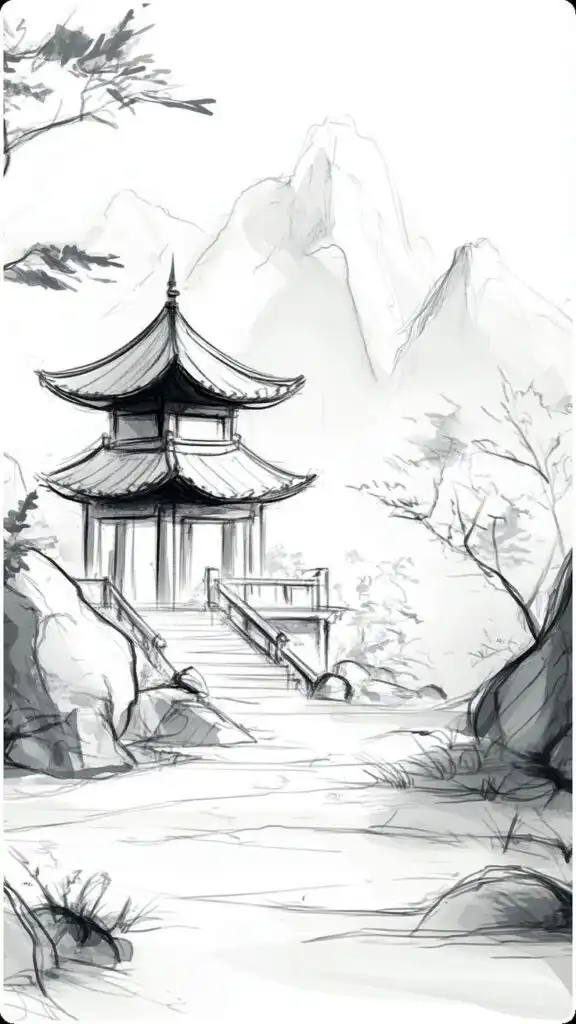
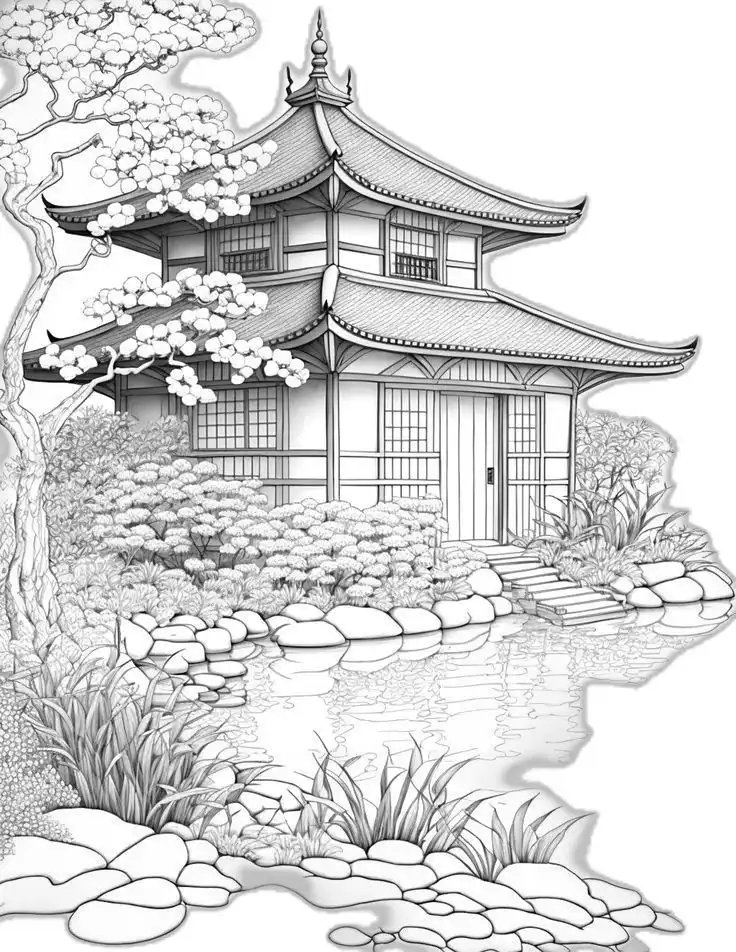
Traditional buildings emphasize modular rooms, natural materials, and movable partitions.
When drawing these, use sliding panels, raised wooden floors, and visible beams.
Proportions are often based on tatami sizes, so plan room grids around those rectangles.
Modern Japanese architecture mixes minimalism with new materials like concrete and glass.
You’ll notice larger single planes, exposed concrete surfaces, and more open floor plans.
Yet many modern works keep strong rooflines, careful light control, and a dialogue with nature.
To show this contrast, pair slender timber elements and paper screens in one sketch.
Then draw another with flat concrete walls and floor-to-ceiling glass.
Essential Drawing Foundations
You’ll learn how to place your building in space, set sight lines, and keep rooflines and details in correct relation.
Focus on clear eye level, one or more vanishing points, and measured proportions before adding ornament.
Using Vanishing Point and Eye Level
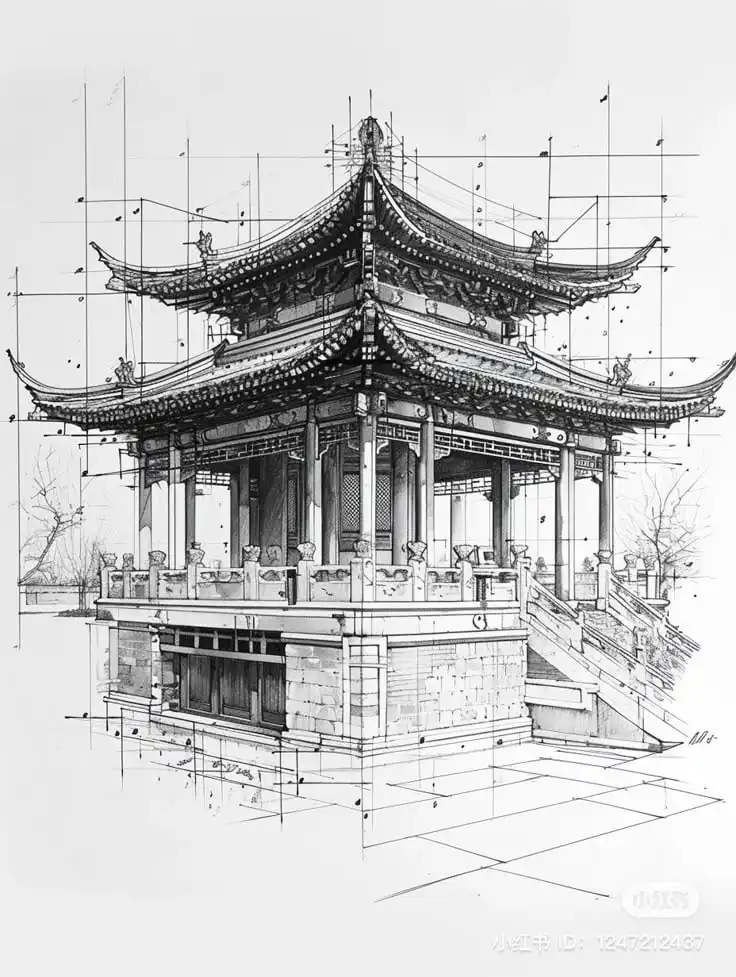
Start by drawing a horizontal line for the eye level.
This line shows where your eyes sit relative to the building and fixes where vanishing points live.
Mark one or two vanishing points on that line, depending on whether you use one- or two-point perspective.
Use a ruler to draw light construction lines from the edges of roofs, eaves, and floor lines back to the vanishing point.
These guide the angle of the roof curves and the taper of walls.
Keep vanishing points off the main building so lines don’t clutter the facade.
Adjust the eye level higher to show more roof and less ground.
Lower eye level makes the building look taller and shows more of the base.
Remember the visual rule: parallel lines recede toward the same vanishing point.
Basic Perspective Techniques
Choose one-point perspective for front-facing facades, and two-point perspective for corner views.
For a temple roof, use a two-point to capture the sweeping eaves angled toward both vanishing points.
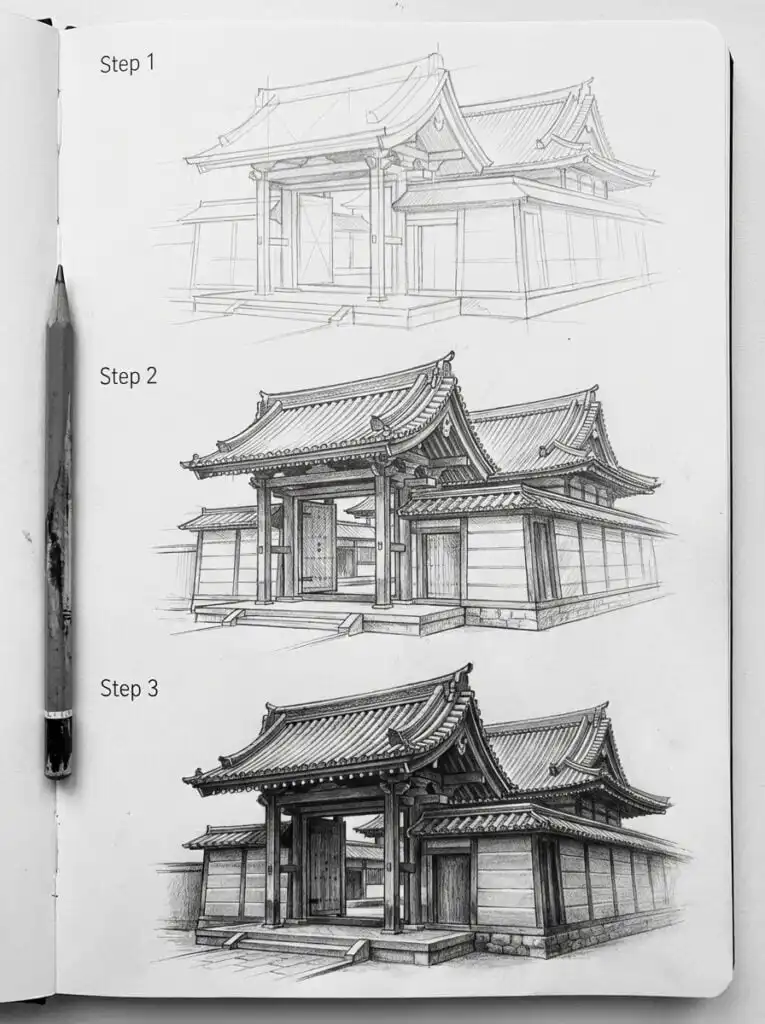
Sketch the primary mass first: simple boxes for walls and stacked boxes or wedges for roof tiers.
Use vertical lines for true verticals; let only horizontal receding lines go to vanishing points.
Add a simple grid on the ground plane to keep columns, steps, and windows evenly spaced.
Check proportions by measuring with your pencil: hold it at arm’s length, align it to a known height, and transfer.
Erase construction lines lightly after you confirm major planes.
Sketching Outlines and Proportions
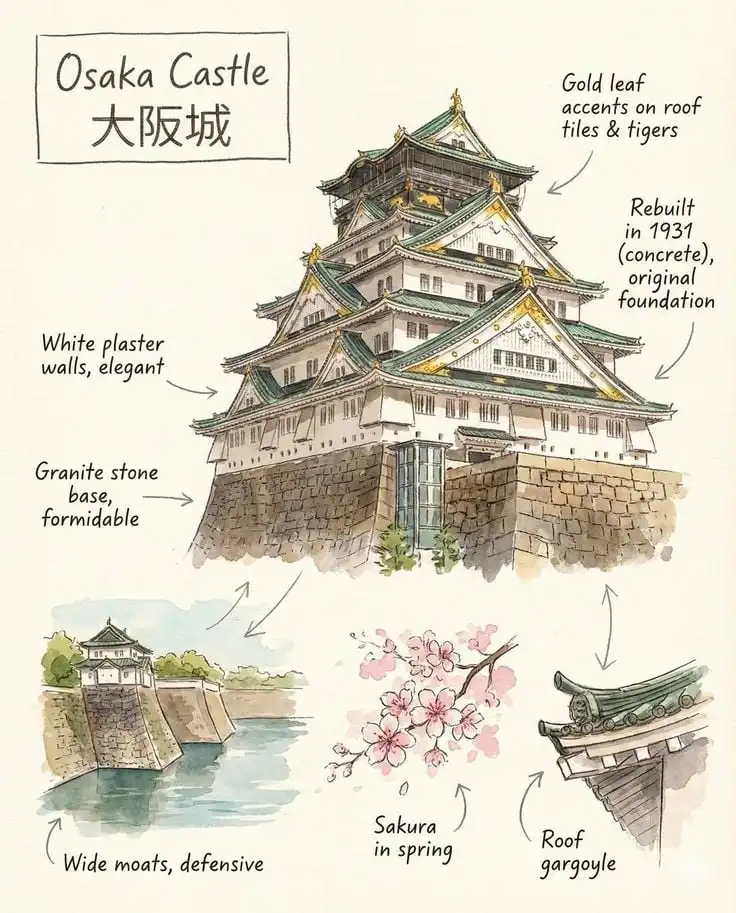
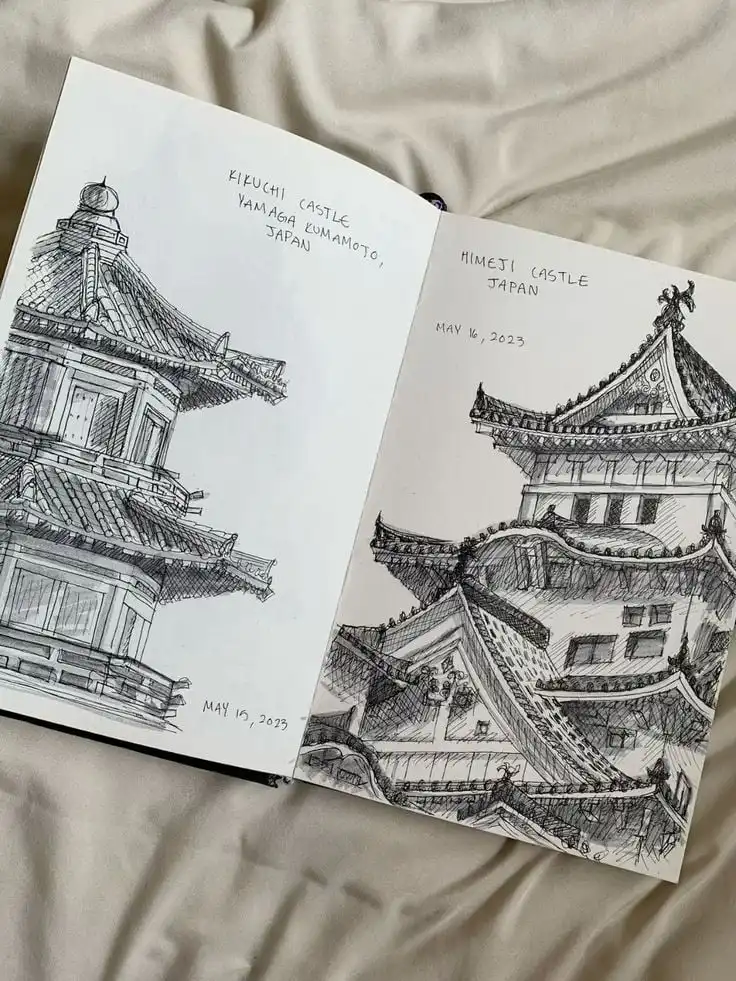
Block in the main shapes before details.
Draw the roof silhouette first, because Japanese roofs often define the building’s character.
Then place major verticals: corner posts, entrance, and eave ends.
Use simple ratios: the width of the entrance often fits within a third of the facade; roof overhangs usually extend a measured fraction of wall height.
Mark window and door heights with short vertical ticks so spacing stays consistent.
Refine outlines with confident strokes.
Keep decorative elements—brackets, lanterns, ridge tiles—smaller than structural parts so they read correctly from a distance.
Use light construction lines under final inked lines to retain proper proportion.
Drawing Traditional Japanese Houses
Focus on the porch, visible timber frame, paper sliding doors, and the layout of tatami mats.
Pay attention to perspective, wood grain, and simple repeating patterns to make the house read as traditional.
Porch and Exterior Framework
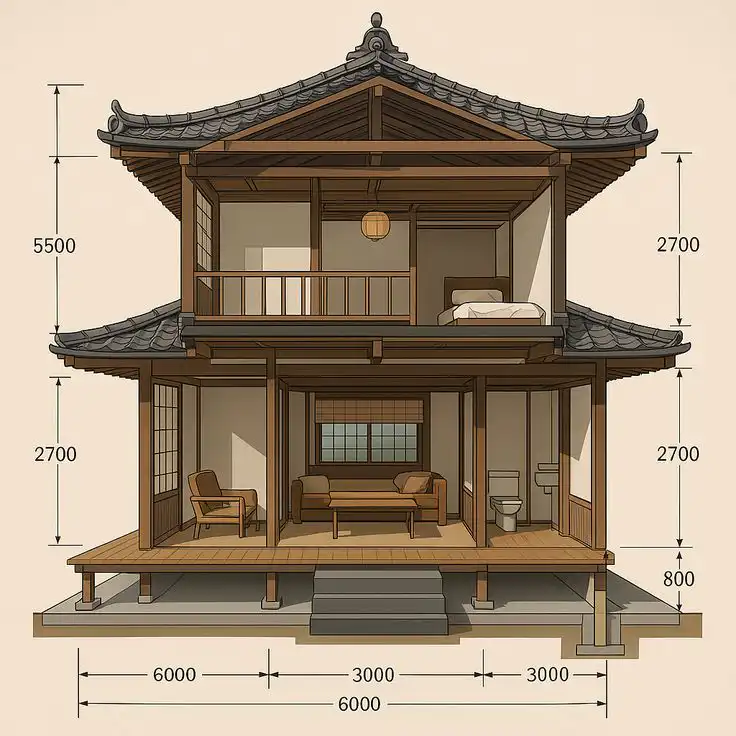
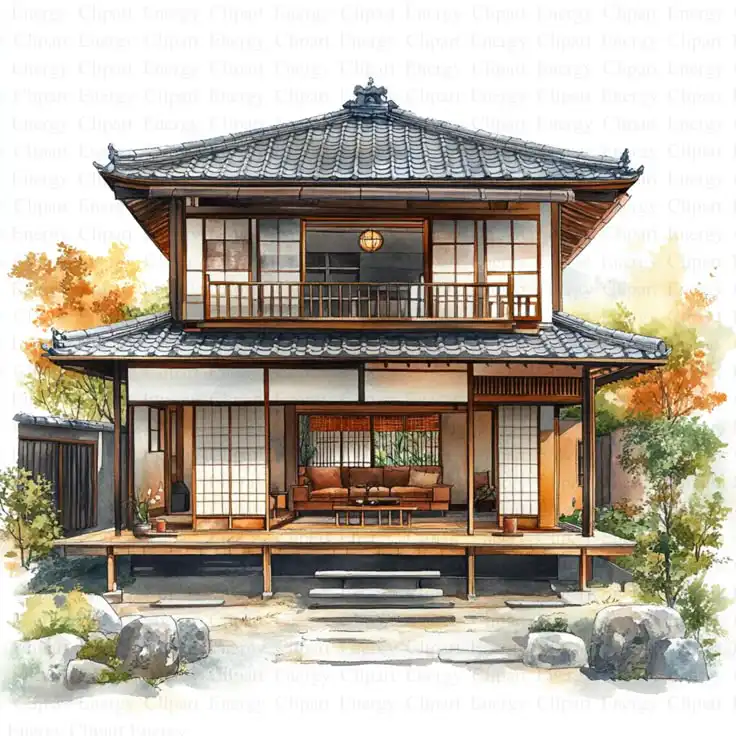
Set a low eye level to show the porch edge and roof eaves.
Use one- or two-point perspective so the porch boards and roof lines converge cleanly.
Draw the veranda (engawa) as a narrow horizontal plane that wraps the house.
Add thin vertical posts where they meet the ground.
Show roof overhangs with layered eaves and curved kawara tiles.
Indicate tiles with simple repeating semicircles along the eave edge.
For wooden beams and lintels, block in wide rectangles first, then add thinner lines for joints and seams.
Add texture with short, parallel strokes for wood grain on posts and floorboards.
Keep shadows under the eaves and between porch boards darker to suggest depth.
Small details—like a step stone, a hanging sudare, or a drain spout—help sell the setting without crowding the drawing.
Shoji Screens and Pillars
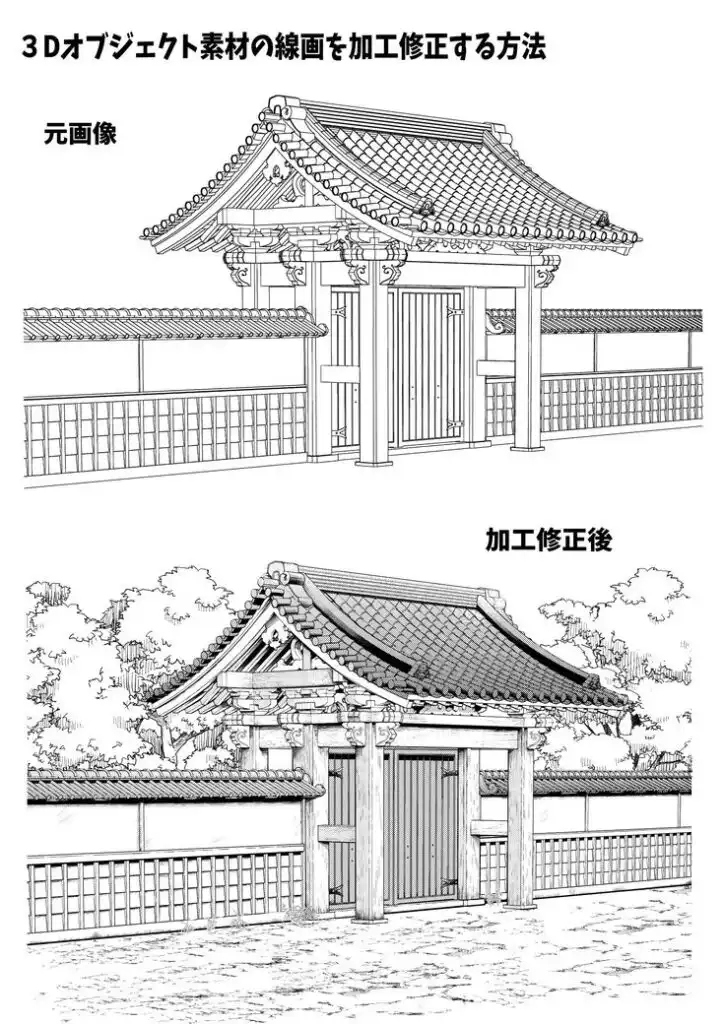
Treat shoji as a flat plane divided into regular rectangles.
Draw the wooden lattice first, then the paper panels inside each grid.
Keep the grid spacing consistent; slightly narrow the grids near the vanishing point to maintain perspective.
Show the wooden pillars as vertical posts with simple base and cap hints.
Use slightly rounded edges and vertical grain to make them read as aged wood.
Add subtle shadow where the pillar meets the shoji to imply depth and separation.
For worn or aged shoji, add faint dirt tones or small tears with soft, uneven marks.
Use a pale gray or warm off-white for the paper instead of pure white.
When light passes through, place soft rectangular highlights on the floor inside to show translucence.
Tatami Mats Arrangement
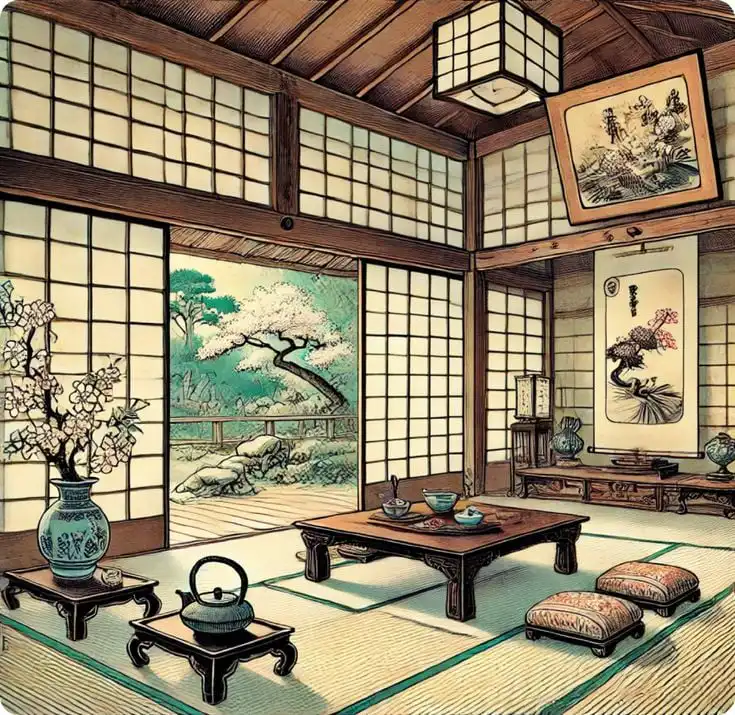
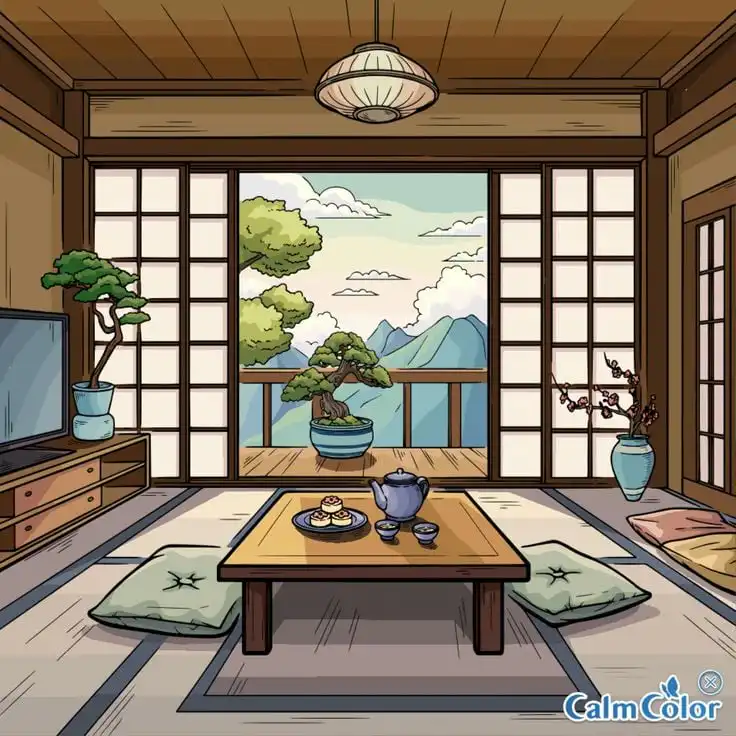
Tatami follow set rectangular patterns; avoid random grids.
Lay out mats in staggered rows where seams rarely form a four-way cross.
Draw each mat as a long rectangle with a narrow border (heri) along the edges.
Use subtle perspective: mats nearer the viewer appear wider and longer.
Add thin woven texture lines running along the mat’s length and darker shading along the seams to define edges.
Keep the color a muted straw tone, and vary the value slightly between adjacent mats.
Mark entryways or sliding door tracks by leaving small gaps at the mat edges.
If you show interior furniture, keep it low and sparse—tables or zabuton cushions sit directly on the tatami and should not obscure the mat pattern.
Depicting Japanese Roofs and Details
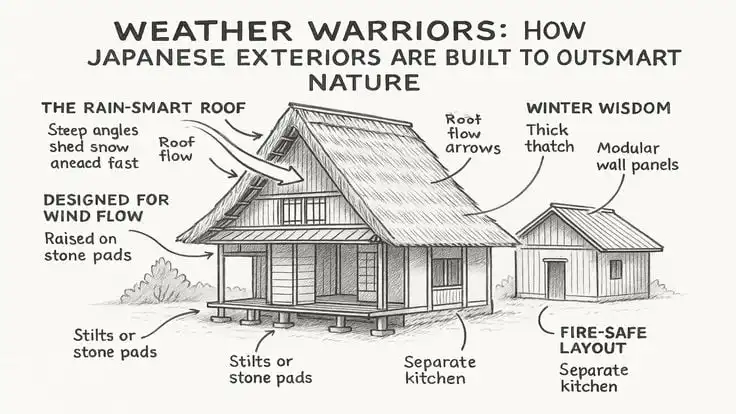
Focus on the roof shape, tile patterns, and how the edges curve.
Add small decorative pieces at ridge ends and eave corners to make the roof read as Japanese architecture.
Kawara Roof Tiles
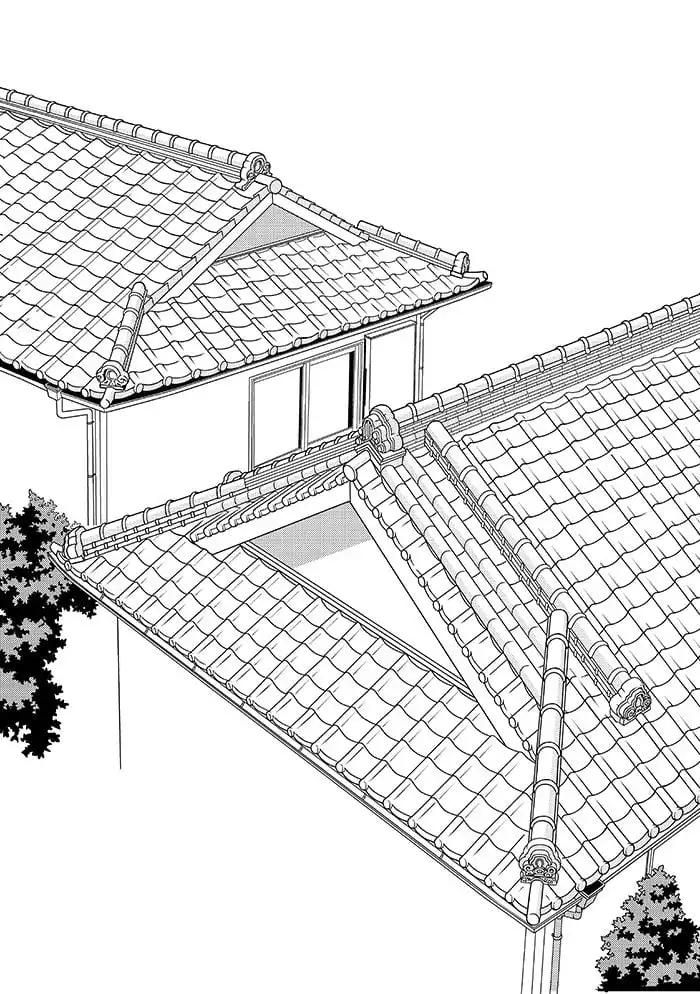
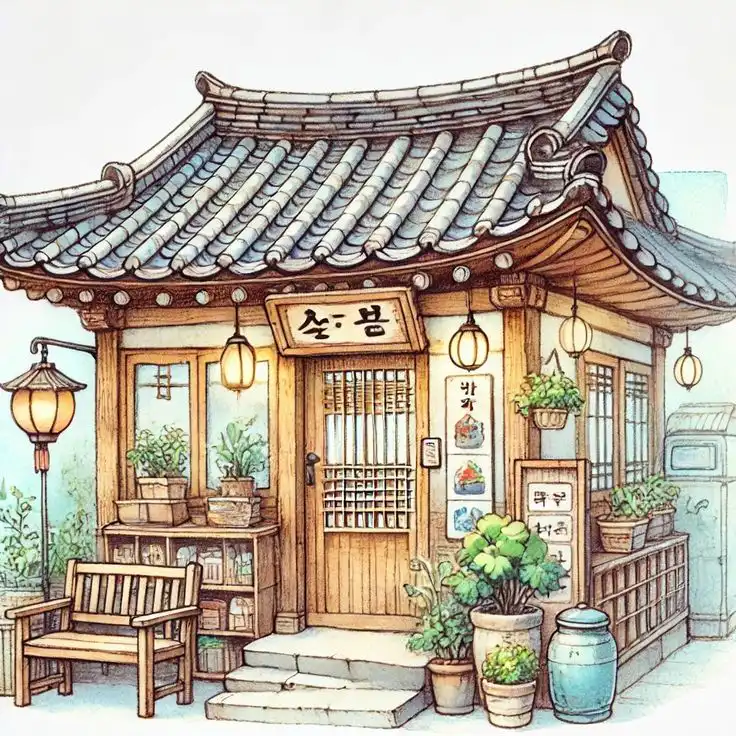
Kawara are curved clay tiles laid in rows.
Start by drawing a base roof slope, then add horizontal lines to mark tile courses.
For each course, sketch repeating semicircles or rounded rectangles to show the exposed edge of the tiles.
Vary the tile edges slightly to avoid a mechanical look.
Darken the joints and add thin shadows under each tile row to give depth.
For temple roofs, show thicker end tiles (onigawara) at the ridge by drawing a larger, rounded tile with a simple crest or spiral.
When you shade, use short, consistent strokes along the tile curves.
This keeps the pattern readable from a distance without overworking the drawing.
Eaves and Decorative Elements
Eaves often flare upward with layered rafters underneath.
To draw them, extend the roof line slightly past the wall, then draw parallel rafters visible from below as evenly spaced slats.
Add bracket complexes (tokyō) as stacked blocks or curved supports where the eave meets the wall.
Keep their shapes geometric: rectangles, small curves, and stepped layers.
For ridge ends and corners, include small finials, round end-tiles, or carved motifs.
Draw these as simple silhouettes first, then add minimal detail like a crest line or slight shadow.
Use contrast: darker tones under the eaves and lighter highlights on the curved outer edge.
That contrast makes the upward sweep and layered construction clear in your sketch.
Illustrating Iconic Japanese Structures
Focus on clear rooflines, balanced proportions, and distinctive joinery.
Capture the materials—wood grain, ceramic tiles, and stone bases—using line weight and simple shading.
Shinto Gates (Torii)
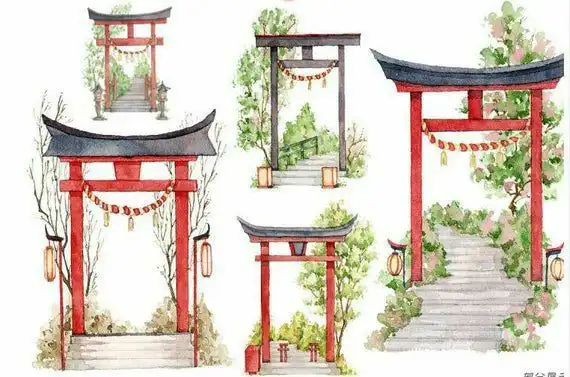
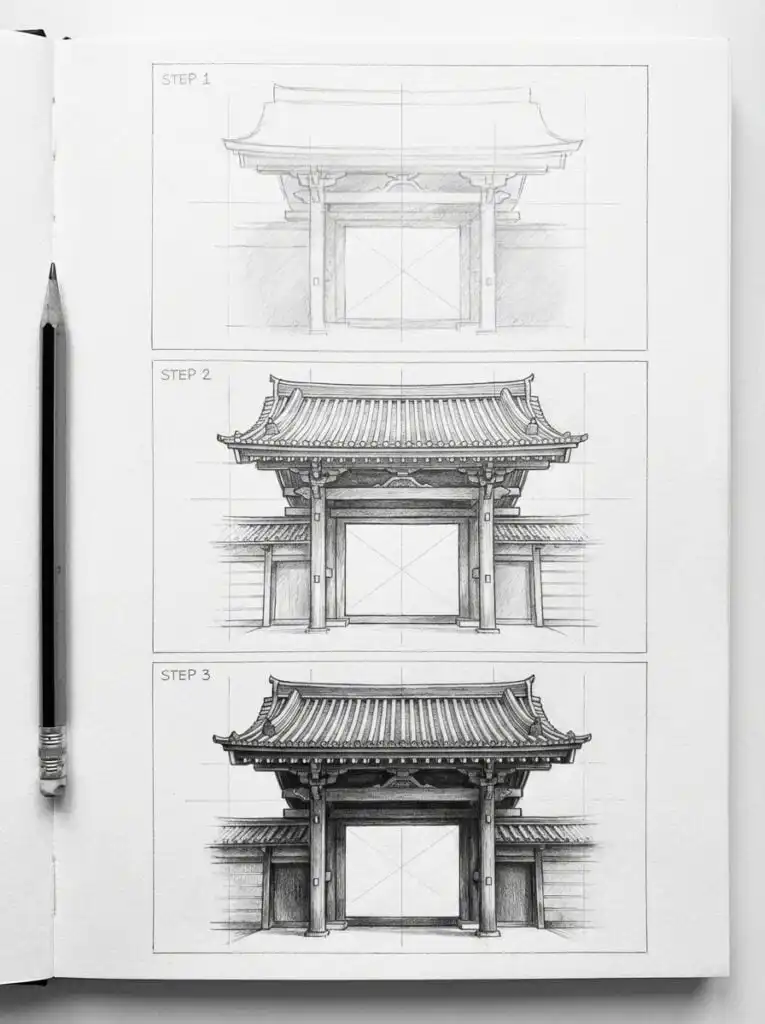
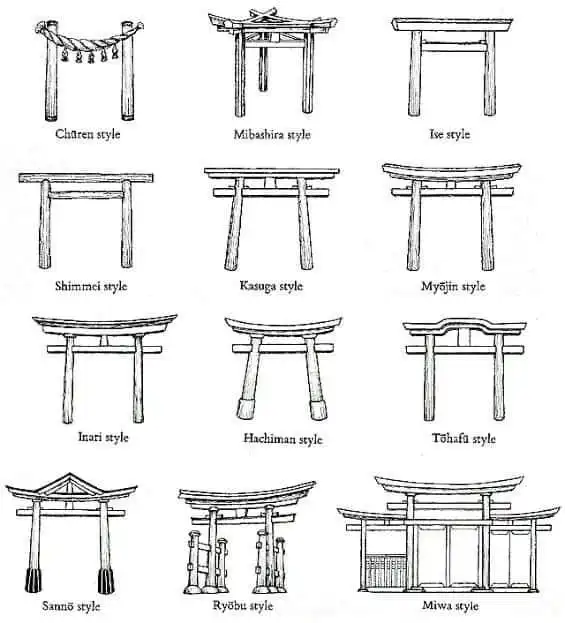
A torii has two upright posts and two horizontal beams; draw those first to set the correct proportions.
The top lintel (kasagi) often curves slightly upward at the ends.
Below it, the secondary beam (nuki) sits between the posts; make it thinner and straighter.
Show the join where posts meet beams with a small gap or simple bracket lines.
Torii can be painted (bright red) or natural wood; use bolder lines and flat color for painted examples, and softer cross-hatching for wood grain.
Add a stone base or step to ground the gate.
For perspective, keep vertical posts parallel and shorten the far post slightly when angled away.
Tips:
- Use a ruler for straight beams, then soften edges by hand.
- Indicate weathering with light streaks and chipped paint.
- Place small lanterns or a shrine plaque to add context.
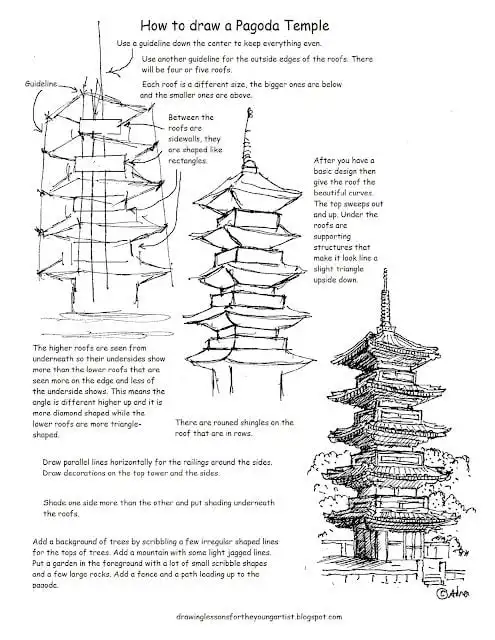
Pagodas and Temples
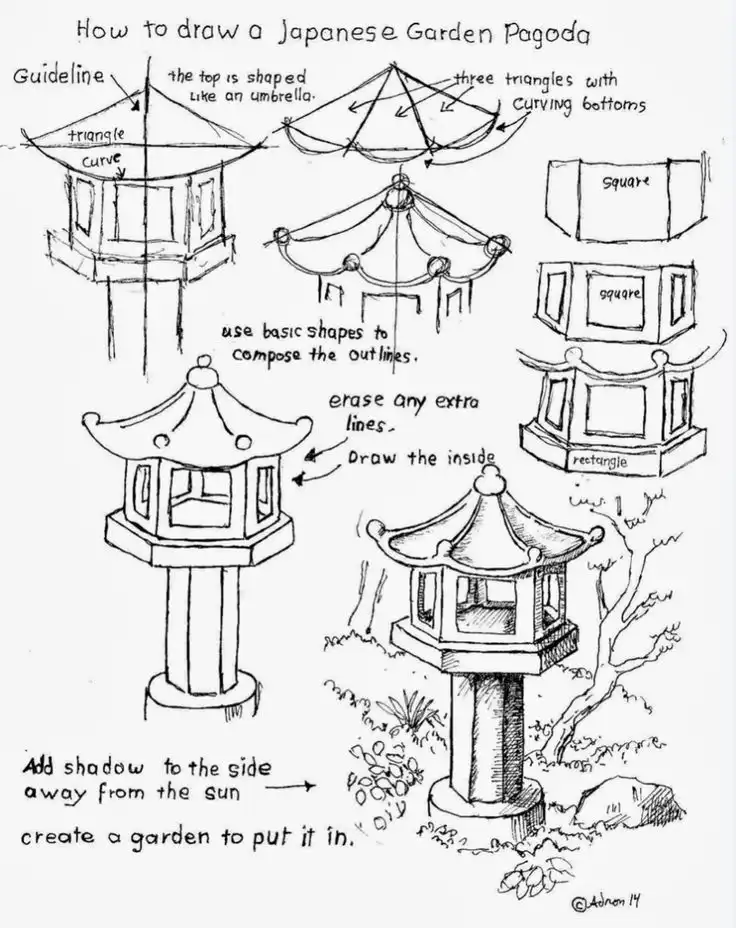
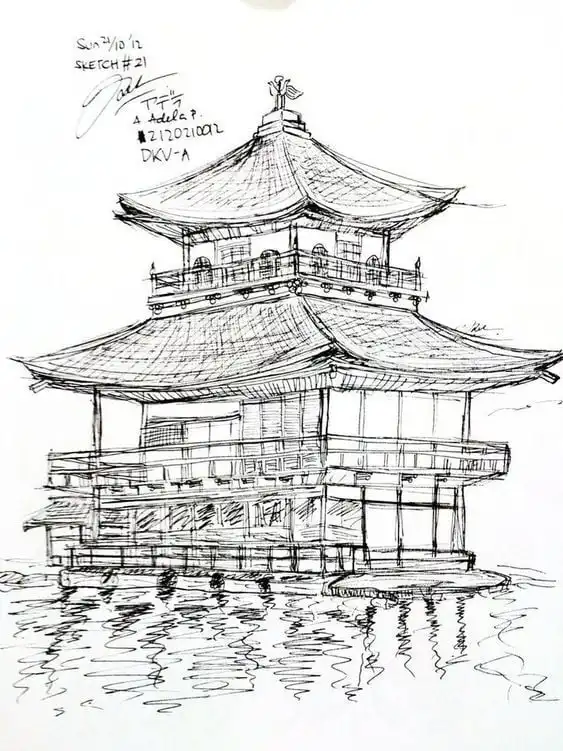
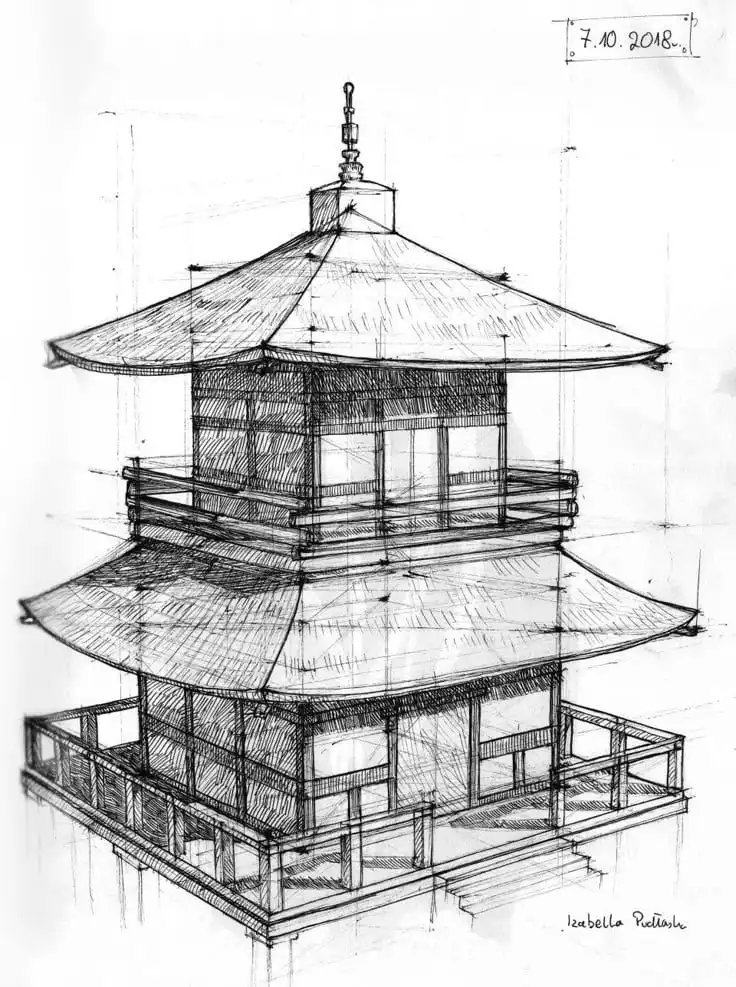
Start pagodas with stacked rectangular tiers that shrink as they rise. Each tier gets a broad, overhanging roof with upturned eaves. Draw the roof’s curve before sketching the floor line to keep proportions believable.
Show roof tiles with repeating horizontal strokes and a slight curve at the edges. Temples usually show off visible bracket systems (tokyō). Sketch the main pillars first. Add bracket clusters as layered Y- or L-shaped forms between the pillars and the roof.
Emphasize chunky wooden beams and the raised wooden platform (engawa) with plank lines. For depth, darken the undersides and add cast shadows beneath the eaves.
- Vary line weight—thin for tiles, thick for beams.
- Mark joinery with small notches.
- Add stone steps, lanterns, or trees around the building for scale and atmosphere.
Adding Natural Elements and Finishing Touches
Add plants, ground textures, and careful lighting to make the building feel rooted and lived-in. Pay attention to plant placement, paths, and the way shadows fall so the architecture reads naturally.
Landscapes and Gardens
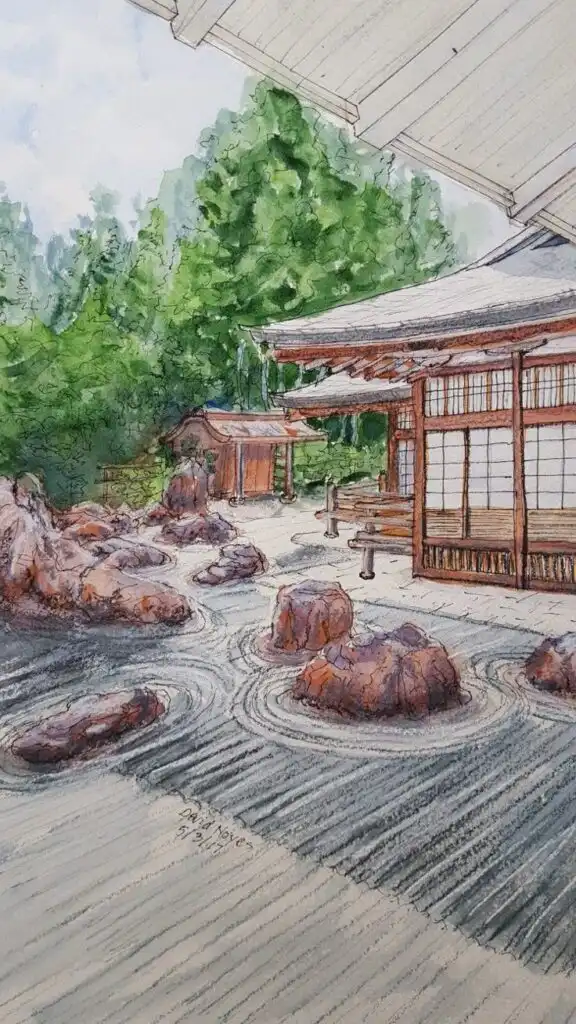
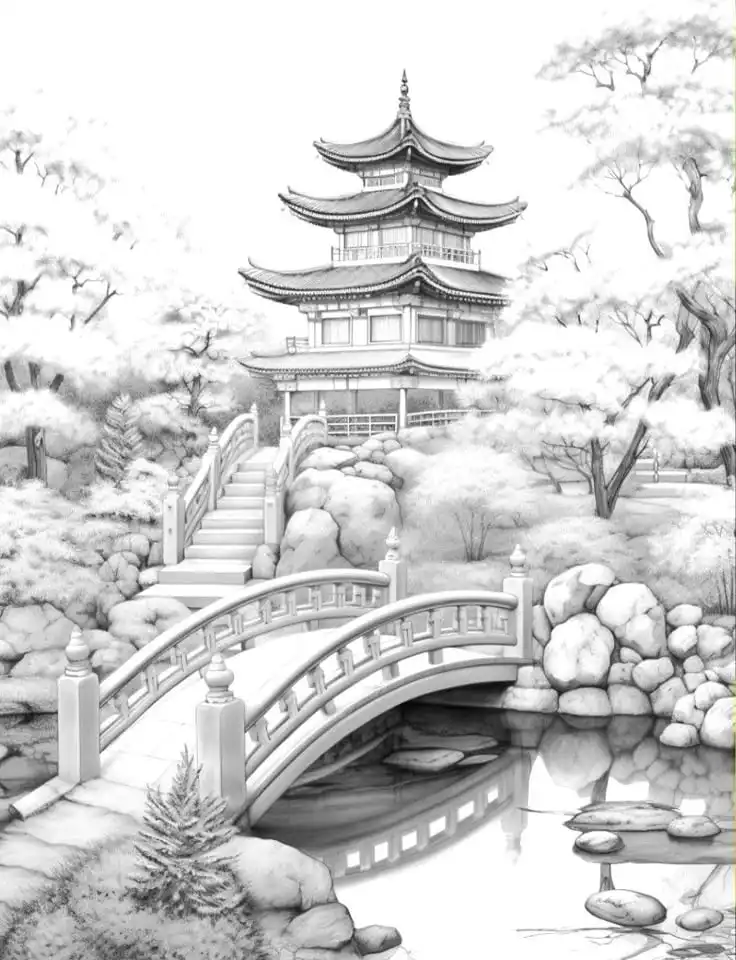
Place big elements first—a curved path, a pond, or a row of rice paddies to set the scene. Use really simple shapes for distant trees, then get more detailed with plants closer to the building.
For bamboo, draw a few vertical lines with short diagonal nodes and cluster the narrow leaves. Show layered planting: low moss or grass at the base, mid-height shrubs, and taller trees behind the roofline.
This layering helps create depth and keeps the roof silhouette clear. Add texture with short, repeated strokes for grass and soft, rounded shapes for shrubs.
Include cultural details like stone lanterns, stepping stones, or a simple torii gate. Stick these beside paths or the water’s edge to guide the eye. Keep scale believable—a lantern by a door should be about waist-high next to a person.
Lighting and Shadows
Pick one light source, usually the sun, and stay consistent. Draw cast shadows of roofs, eaves, and trees at the same angle for believability.
Use darker, sharper shadows close to objects and softer, lighter ones farther away. Shade roof curves and eaves to show form: a thin strip of dark under the eave, a mid-tone on the slope, and a light edge where sunlight hits.
For wood, use parallel short strokes following the grain to hint at planks without fussing over every detail. Add reflected light gently—a shadowed wall might have a faint, lighter edge from the sky or ground.
When you ink or color, leave a few small white spots for highlights. It keeps the scene fresh and gives it some dimension.
Coloring and Texturing Techniques
Think about how light hits each surface and how to show material with mark-making and color choices. Use simple, repeatable steps for wood, tile, and plaster so the building feels convincing up close and from a distance.
Wood Grain and Material Texture
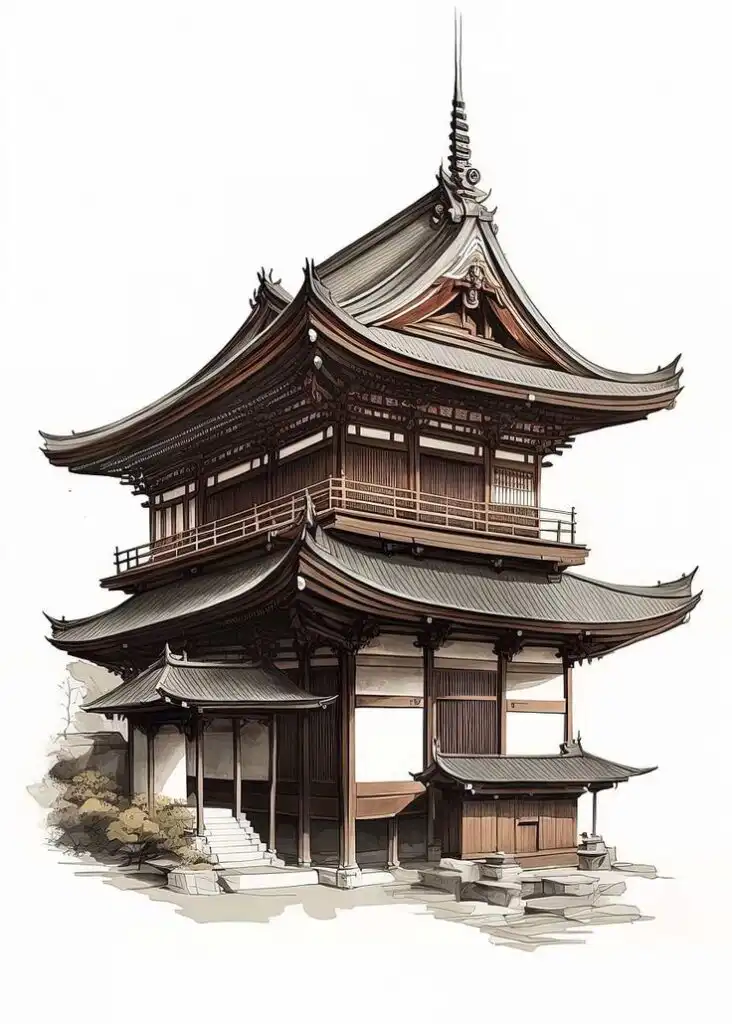

Pick a base color close to real cedar or aged pine—warm brown or muted ochre usually works. Lay down a flat base, then add vertical streaks for grain. Change up stroke length and pressure: short, broken lines for rough beams, longer smooth ones for polished pillars.
Add two shadow tones—one just a bit darker for depth, and a thin, deep line along edges and joints. Use a lighter, narrower highlight on the face that catches the light. For worn wood, scratch in tiny chips and thin horizontal marks near high-traffic spots like doorways.
For shoji frames, keep the grain subtle and use soft, thin strokes. Try a low-opacity brush or diluted wash to hint at dust and age on flat panels. If you’re working digitally, slap the grain on a clipping mask so it follows the wood shape neatly.
Surface Shading for Roofs and Walls
First, pick your light direction. Block in three values: light, mid, and shadow.
For tiled roofs, make each tile show the light difference. The tops get bright, while the recesses go deep blue-gray.
Add a thin, darker line where tiles overlap. That line helps suggest depth and keeps the pattern believable.
For plaster or earthen walls, grab a soft, slightly textured brush. Lay down a base mid-tone, then dab on blotchy, darker patches for unevenness.
Smudge lightly so you don’t end up with harsh edges. Corners and spots under the eaves should stay darker to show cast shadow.
Use small, contrasting accents—maybe a bright rim light on sun-facing edges. Slip in faint, cool reflections in the shadowed spots.
These tiny touches help wood, tile, and wall read correctly both from a distance and up close.
FAQ
What are the fundamental principles for capturing traditional Japanese architecture in drawings?
The key principles involve understanding proportion, perspective, roof construction, and focusing on the clean lines and balance characteristic of Japanese architecture.
How can I use basic drawing tools to sketch Japanese houses and temples authentically?
Start with simple geometric forms, use perspective effectively, and gradually add details like roof styles, joinery, and natural surroundings to create realistic sketches.
What materials and structural elements are typical in traditional Japanese buildings that I should include in my drawings?
Traditional Japanese buildings predominantly use wood with exposed timber frames, post-and-beam construction, curved eaves, tatami mats, and sliding shoji panels, which should be represented with appropriate textures and joinery details.
How do modern Japanese architectural styles differ from traditional ones in sketches?
Modern styles often feature minimalism, large open spaces, concrete and glass materials, and flatter rooflines, contrasting with the modular, natural material-rich traditional buildings that emphasize deep eaves and layered roofs.
What are the best techniques for illustrating roofs, especially tiled Kawara roofs, in Japanese architecture sketches?
Begin with a base slope, add horizontal lines for tile courses, sketch semicircles for individual tiles, vary the edges to avoid a mechanical look, and include shading and depth to bring the roof pattern to life.
- 741shares
- Facebook0
- Pinterest741
- Twitter0
- Reddit0