Your office space shapes how you feel and perform throughout the workday. Whether you work from home or in a traditional office setting, the right decor choices can boost your focus, lift your mood, and make those long hours more enjoyable. A well-decorated office combines functional furniture, thoughtful color choices, proper lighting, and personal touches that reflect your style while supporting your work habits.
- Key Takeaways
- Fundamentals of Office Decor Ideas
- Color Palettes and Ambiance in Office Decor
- Essential Office Furniture and Layouts
- Decorative Touches for Style and Productivity
- Lighting and Atmosphere Enhancements
- Office Organization and Workspace Optimization
- Decluttering and Desk Organizers
- Home Office and Small Space Solutions
- Creating Zones for Work and Creativity
- Why does office decor significantly impact my work performance?
- How can I define my office decor style effectively?
- What role do color palettes play in creating a productive office environment?
- What are essential considerations when choosing office furniture and layout?
- How can decorative touches enhance my workspace while supporting productivity?
The good news is that transforming your workspace doesn’t require a complete renovation or unlimited budget. Simple updates like adjusting your color scheme, improving your lighting, or reorganizing your desk can make a significant difference. From choosing ergonomic furniture to adding plants or artwork, each decision contributes to creating an environment where you actually want to spend time.
This guide walks you through practical office decor ideas that work for any space and budget. You’ll discover how to select the right furniture, create the ideal atmosphere with colors and lighting, and add finishing touches that make your office both beautiful and productive.
Key Takeaways
- Strategic office decor improves both your mood and work performance throughout the day
- Combining functional furniture with thoughtful design elements creates a balanced and effective workspace
- Small changes like lighting adjustments and organization systems can transform your office without major renovation
Fundamentals of Office Decor Ideas
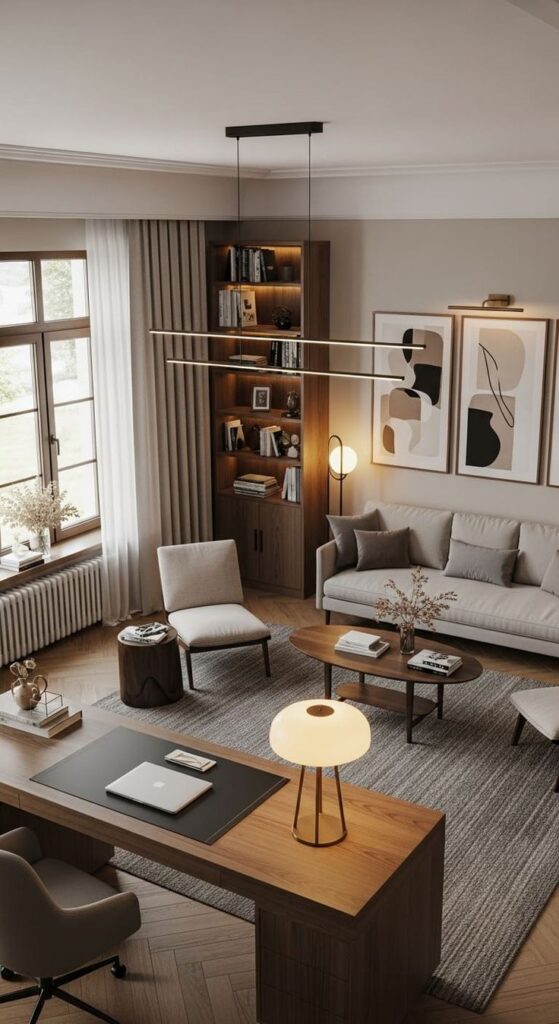

Office decor directly influences your daily work experience by affecting your mood, focus, and efficiency. Understanding your style preferences and incorporating personal touches creates a workspace that supports both professional goals and individual comfort.
Why Office Decor Matters
Your office design shapes more than aesthetics—it impacts your mental state and work performance throughout the day. A thoughtfully decorated workspace reduces stress levels and helps maintain concentration during long work sessions. Poor lighting, cluttered surfaces, and uninspiring surroundings can drain your energy and decrease motivation.
Research shows that employees in well-designed offices report higher job satisfaction and creativity. Natural light, organized storage, and comfortable furniture contribute to physical well-being by reducing eye strain and preventing posture-related discomfort. Color choices also play a practical role: blues promote calm focus, greens reduce fatigue, and yellows stimulate creative thinking.
When you decorate your office at work, you’re investing in your daily productivity and long-term career satisfaction. Even small changes like adding plants or adjusting desk arrangement can make measurable differences in how you feel and perform.
For businesses planning a complete workspace transformation rather than just small decor updates, partnering with an Office Fit Out Company Stafford can help ensure the design is both visually cohesive and highly functional for day-to-day productivity.
Defining Your Decor Style
Identifying your preferred aesthetic helps create a cohesive and functional workspace. Common office styles include:
- Modern: Clean lines, neutral colors, minimal accessories
- Minimalist: Essential items only, maximum open space
- Industrial: Exposed materials, metal accents, raw textures
- Bohemian: Warm colors, natural materials, eclectic patterns
- Traditional: Wood furniture, classic layouts, formal arrangements
Your chosen style should match both your personality and work requirements. A creative professional might thrive with colorful, eclectic office decor ideas, while someone in finance may prefer structured, traditional elements. Consider your daily tasks when selecting furniture and layouts—collaborative work benefits from open arrangements, while deep focus work needs minimal visual distractions.
Test your style by collecting images of inspiring office spaces that appeal to you. Look for common elements like color schemes, furniture types, or organizational approaches that appear repeatedly.
Personalization and Inspiration
A personalized workspace has less to do with aesthetics than people think.
It’s really about recognition. You sit down, glance around, and the space feels familiar enough that your brain settles a bit — especially on the days when work feels like pushing through wet cement.
The best desks usually have things that mean something, not things bought because someone online said every workspace needs them. A family photo you actually like. A certificate you forgot you were proud of until you framed it. A sketch, postcard, or random object picked up while traveling that still reminds you of a place.
Those things work because they feel earned.
Inspiration can help too, but there’s a fine line between motivating and distracting. A small vision board. A few goals you genuinely care about. Maybe a quote that still means something after the tenth time you read it. The problem starts when every surface turns into visual noise. Too much “motivation” somehow ends up feeling stressful.
Then there are the small things that quietly shape the room.
Pen holders. Storage boxes. Desk trays. Even the texture of materials around you. If you naturally gravitate toward oak, brushed metal, muted colors, lean into that. A workspace feels more cohesive when the details stop arguing with each other.
And plants do more work than they get credit for. Real ones if you’re willing to deal with watering schedules. Artificial if history suggests otherwise. No judgment. Even a small bit of greenery makes a desk feel less like a temporary setup and more like somewhere you actually want to spend time.
Color Palettes and Ambiance in Office Decor
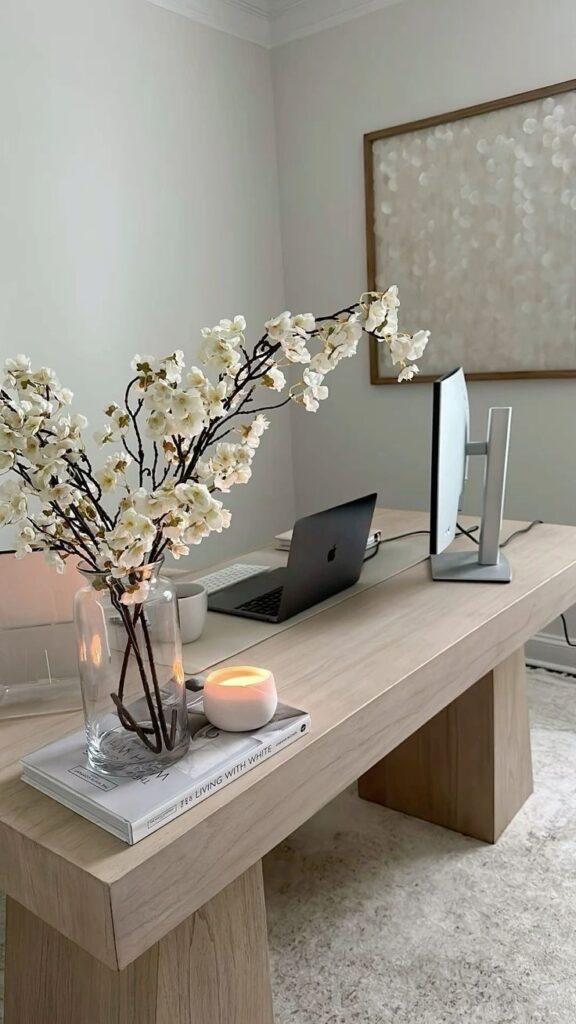

The colors you select for your office directly influence your mood, energy levels, and work performance. Strategic use of color psychology, accent features, and natural tones creates an environment that supports focus while maintaining visual interest.
Using Color Psychology
I used to think “color psychology” was mostly interior design marketing until I tried working in a badly designed office for a few months. White walls. Harsh overhead lighting. Random pops of bright red furniture someone clearly chose because it looked modern in a showroom. I got less done there than almost anywhere else.
Color does mess with how a space feels. Maybe not in some magical productivity-hack way, but enough that you notice it after a week.
Blue is the safest bet if your work needs focus. Writing, editing, spreadsheets, deep work in general — blue tends to fade into the background in a good way. It feels steady. My favorite workspaces usually have some muted navy, dusty blue, or slate mixed in rather than anything super saturated.
Green is probably the easiest color to live with long term. Less eye fatigue, calmer mood, less of that “I need to leave this room immediately” feeling after eight hours at a desk. Even a plant helps, which sounds annoyingly obvious until you put one next to your monitor and realize the space suddenly feels less sterile.
Yellow is tricky. A little bit? Great. Creative energy, warmth, optimism. Too much and it starts feeling like the room is yelling at you. I’d rather see yellow in artwork, desk accessories, or a chair than across four walls.
And red… I go back and forth on red. It definitely adds energy, but sometimes too much. A red accent wall in a meeting space makes sense. A red office where you’re trying to quietly concentrate for six hours? That would drive me slightly insane.
The bigger thing is balance. Two colors, maybe three. That’s usually enough. Once every shelf, chair, lamp, and organizer is a different statement color, the room stops feeling intentional and starts feeling like a Pinterest board exploded.
Accent Walls and Feature Surfaces
An accent wall transforms your office ambiance without overwhelming the space. Paint one wall in a bold color like deep green, terracotta, or navy while keeping other walls neutral. This approach adds personality while maintaining professional aesthetics. For larger workspaces, treat interior paint color decisions as part of the lighting and productivity plan, not just a quick decor update.
Removable wallpaper offers flexibility if you rent or prefer changing designs periodically. Geometric patterns, textured finishes, or botanical prints work well for accent walls.
Feature surfaces extend beyond walls. Consider painting your ceiling, door frames, or built-in shelving in contrasting colors. A painted bookshelf backing in sage green or burnt orange creates visual depth. Window frames in black or charcoal add modern definition to neutral spaces.
Incorporating Earthy Tones and Neutrals
Earthy tones create grounded, calming environments that reduce workplace stress. Terracotta, clay, warm beige, and olive green serve as versatile base colors. These shades pair naturally with wood furniture and plants.
Neutral palettes using warm whites, greige, and soft taupes provide timeless backdrops. Layer different neutral shades to avoid sterile appearances. Combine cream walls with tan furniture and gray accessories for dimensional interest.
Ambient lighting affects how colors appear throughout the day. Warm LED bulbs enhance earthy tones and create inviting atmospheres. Cool lighting pairs better with gray-based neutrals. Test paint samples under your actual office lighting before committing to full walls.
Essential Office Furniture and Layouts
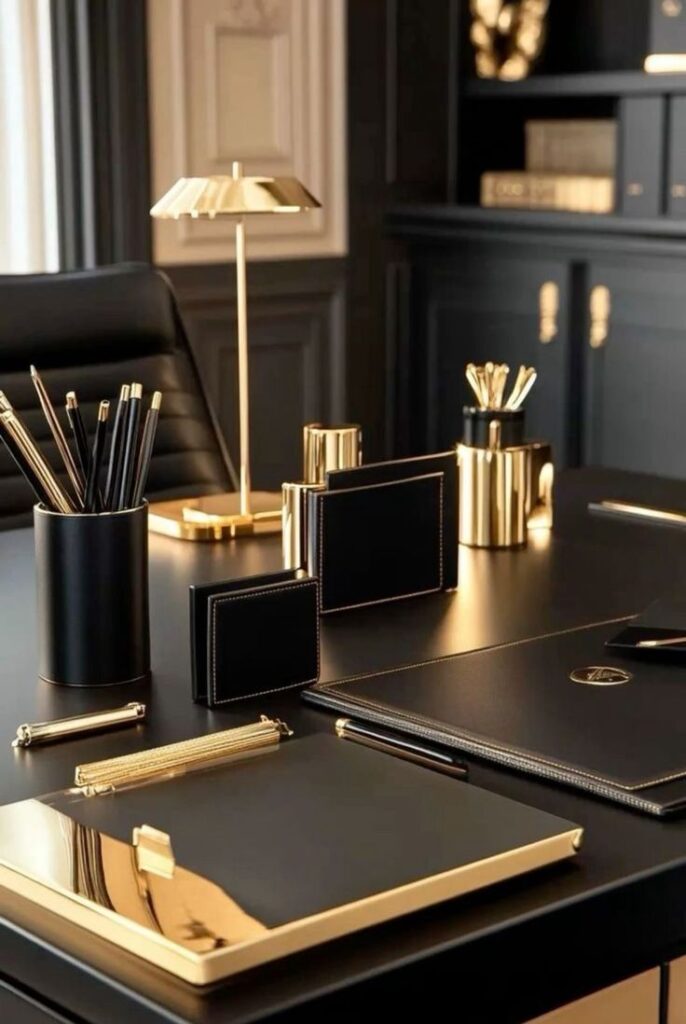
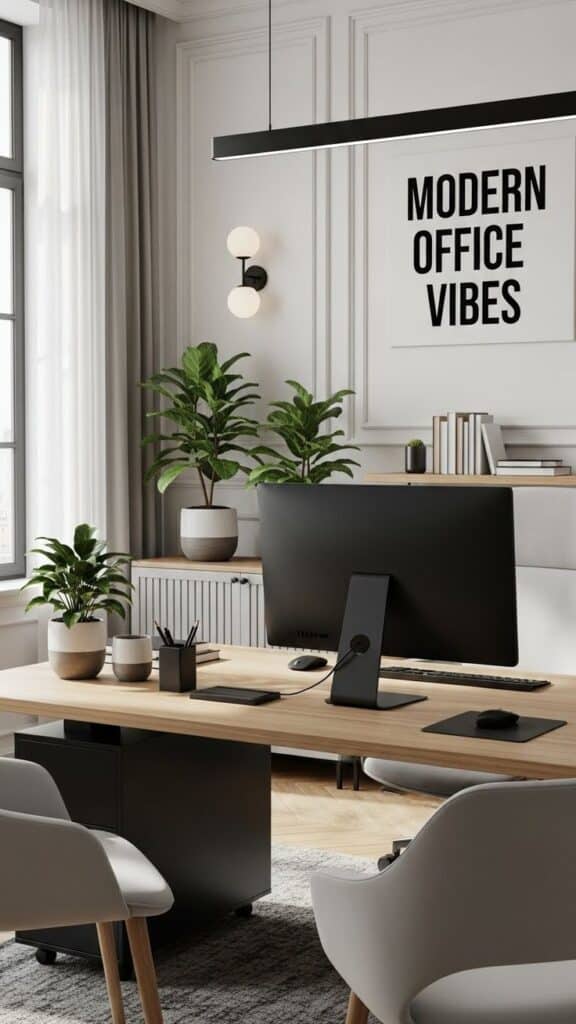
The right furniture and layout create a workspace that supports both comfort and productivity. Key elements include selecting versatile desks, ergonomic seating, strategic storage, and arranging your space for optimal workflow.
Desks and Multi-Functional Furniture
People obsess over office chairs and somehow treat the desk like an afterthought. I’d argue the desk matters just as much. It’s the thing you stare at all day. If it’s too cramped, the whole room starts to feel annoying. Too large? Somehow it becomes storage for things you forgot you owned.
Height-adjustable desks are genuinely useful if you spend most of the day working at a screen. Even standing for twenty minutes between meetings helps. I used to assume standing desks were one of those trendy productivity purchases people regret later. Turns out my back disagreed.
Small room? A corner desk usually solves more problems than people expect. You get extra workspace without swallowing half the room. And if you’re sharing the space with something else — guest room, bedroom, whatever — fold-away wall desks are surprisingly good now. Some barely look like desks when they’re closed.
I also think people underestimate how much little details matter. Drawers help, obviously. But cable management? Weirdly life-changing. There’s something about a mess of charging cables under a desk that makes the whole space feel unfinished.
Material makes a difference too. Marble looks expensive because, well, it is. Great for a polished executive-office look if that’s what you’re after. Most people are better off with wood or a good laminate finish. Easier to maintain, easier on the budget, and honestly, they fit into more interiors.
One practical thing before you buy: measure twice. Seriously. Leave space for the things you actually use every day, not just the clean desk setup you saw online. Monitors, notebooks, chargers, random sticky notes — they add up fast.
Choosing the Right Office Chair
An ergonomic office chair protects your health during long work sessions. Look for adjustable seat height, lumbar support, and armrests that position your arms at 90-degree angles. Your feet should rest flat on the floor with thighs parallel to the ground.
Quality office chairs include features like breathable mesh backs, cushioned seats, and swivel bases for easy movement. The chair’s backrest should support your spine’s natural curve, particularly in the lower back region.
Test chairs before purchasing when possible. Sit for at least 15 minutes to assess true comfort levels. Folding chairs work well for temporary seating in meeting areas but shouldn’t replace your primary desk chair.
Shelving and Storage Solutions
Shelving units keep documents, supplies, and reference materials within reach while maintaining a tidy appearance. Floating shelves mount directly to walls, saving floor space and creating visual interest. Position shelves at accessible heights based on frequently used items.
Under-desk cabinets utilize vertical space efficiently. File cabinets with lockable drawers secure sensitive documents. A bookshelf near your desk organizes reference materials and displays personal items that make your space feel welcoming.
Consider these storage options:
- Monitor stands with built-in drawers elevate screens to eye level while providing storage
- Desk organizers for pens, papers, and office supplies
- Cable boxes that hide power strips and excess cords
- Drawer dividers for maintaining organization
Optimizing Office Layout
Workspace design affects how efficiently you complete tasks. Position your desk to minimize glare on screens while maximizing natural light exposure. Place your monitor an arm’s length away at or slightly below eye level.
Create distinct zones for different activities in larger offices. Separate focused work areas from collaborative spaces using furniture placement or room dividers. Keep frequently used items within arm’s reach to reduce unnecessary movement.
Office layout should facilitate smooth traffic flow. Leave adequate clearance around doorways and between furniture pieces. In shared environments, arrange desks to minimize distractions while maintaining team connectivity. Activity-based working principles let you dedicate specific areas for phone calls, computer work, and in-person meetings.
Office furniture placement influences both functionality and appearance. Anchor larger pieces like desks and bookcases first, then fill in with chairs and smaller storage solutions. Balance the room visually by distributing furniture weight evenly across the space.
Decorative Touches for Style and Productivity
A good-looking bottle, glass, or carafe can support a real studio hydration habit while still fitting the visual language of the office.

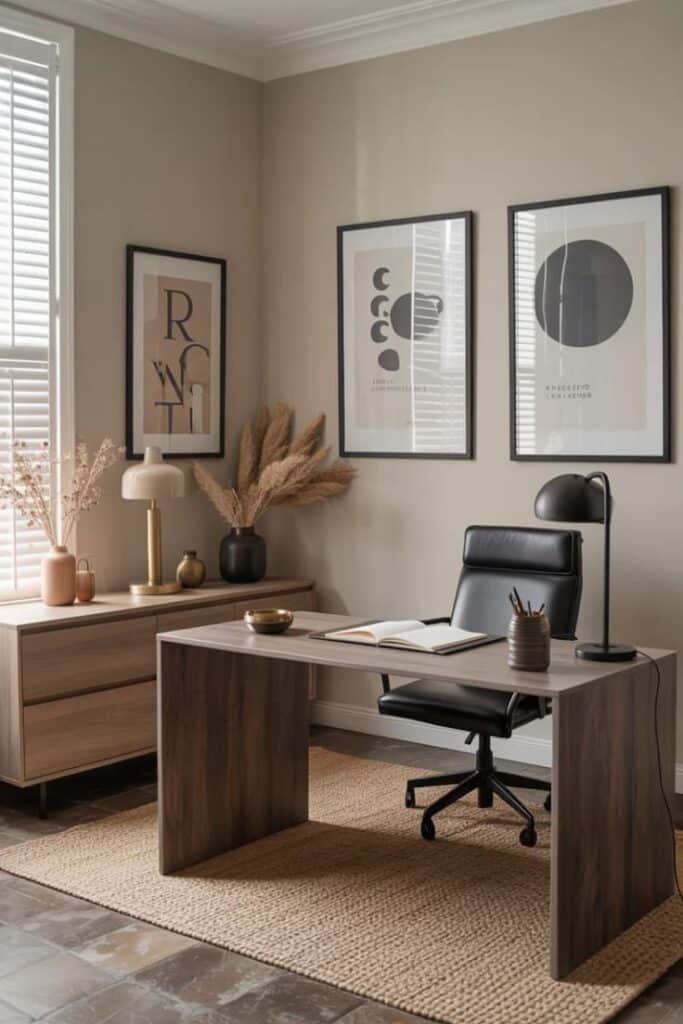
Strategic decorative elements transform a basic workspace into an environment that energizes your workday. The right wall displays, living greenery, and curated accessories create visual interest while supporting your focus and motivation.
Wall Art and Motivational Quotes
Wall art sets the tone for your entire workspace and influences your mindset throughout the day. Choose pieces that resonate with your professional goals or bring you joy when you glance up from your tasks.
Display Options:
- Framed prints or canvas art in your preferred style
- A vision board to track goals and aspirations
- Motivational quotes in elegant typography
- Chalkboard paint sections for rotating messages
- Cork board for pinning inspiration and reminders
Fabric panels offer an alternative to traditional frames while adding texture and acoustic benefits. Position artwork at eye level when seated to maximize its impact. Mix different sizes and orientations to create visual rhythm without cluttering your walls.
Gallery walls work well in larger offices, while single statement pieces suit compact spaces. Consider your color scheme when selecting art to maintain cohesion with your overall office design.
Plants and Natural Materials
Living plants improve air quality and reduce stress while adding organic beauty to your workspace. Desk plants require minimal maintenance but deliver maximum visual appeal.
Low-maintenance options include snake plant, pothos, and succulents. These varieties thrive in office lighting conditions and tolerate irregular watering schedules. A terrarium creates a self-contained ecosystem that needs little attention.
Natural materials like wood organizers, stone paperweights, or woven baskets bring warmth to your desk. These elements soften the hard edges of technology and office equipment. Group plants in odd numbers for better visual balance, and rotate their positions occasionally to ensure even light exposure.
Personal Decor and Accessories
Your workspace should reflect your personality while maintaining professionalism. Decorative boxes organize supplies while adding color and pattern to shelves and desk surfaces.
Small throw pillows on your office chair provide lumbar support and visual softness. Select fabrics that coordinate with your room’s palette but add texture through weaves or subtle patterns. Family photos in matching frames create cohesion without feeling sterile.
Consider adding a small reading nook if space allows, with a comfortable chair and good lighting for reviewing documents or taking breaks. Display collections or hobby items sparingly to avoid visual clutter. Swap seasonal accessories to keep your space feeling fresh without major redesigns.
Lighting and Atmosphere Enhancements

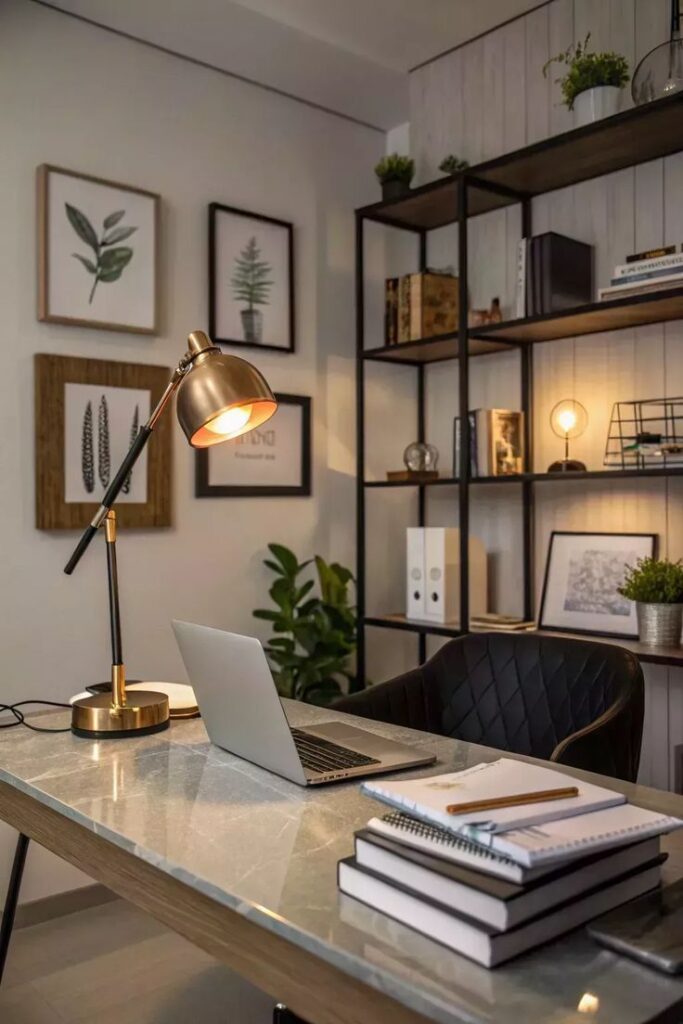
Proper lighting combines multiple sources to reduce eye strain and create an environment that supports focused work throughout the day. The right balance of artificial and natural light, paired with thoughtful window treatments, establishes a workspace that adapts to your changing needs.
Desk and Ambient Lighting
Your workspace needs both focused and general illumination to function effectively. A quality desk lamp with adjustable lighting gives you control over brightness and direction, which is essential for reading documents or working on detailed tasks without straining your eyes.
LED lighting offers energy efficiency and longevity compared to traditional bulbs. Position your desk lamp to the opposite side of your dominant hand to minimize shadows while writing or typing.
Ambient lighting from overhead fixtures fills the entire room with soft, even illumination. This layered approach prevents the harsh contrast between a bright screen and dark surroundings that causes eye fatigue. Consider installing dimmer switches on your overhead fixture to adjust brightness levels based on the time of day and task at hand.
Maximizing Natural Light
Natural light improves mood and helps regulate your circadian rhythm during work hours. Position your desk perpendicular to windows rather than directly facing them to avoid screen glare while still benefiting from daylight.
Floor-to-ceiling windows provide maximum natural light exposure when available. If you’re setting up a home office, choose a room with windows facing north or south for consistent, indirect sunlight throughout the day.
Skylights introduce overhead natural light in spaces where wall windows are limited. Keep your workspace within six feet of windows to maximize natural light benefits, as light intensity drops significantly beyond this distance.
Window Treatments and Room Dividers
Sheer curtains filter harsh direct sunlight while maintaining brightness in your office. They soften incoming light without creating the darkness that heavy drapes cause, giving you flexibility throughout the day.
Adjustable blinds let you control light levels and privacy as conditions change. Vertical blinds work well for large windows and sliding doors, while horizontal options suit standard window sizes.
Room dividers help manage light flow in open floor plans or shared spaces. Translucent glass dividers maintain an open feeling while providing separation, and they allow natural light to reach deeper into your workspace without sacrificing defined zones.
Office Organization and Workspace Optimization
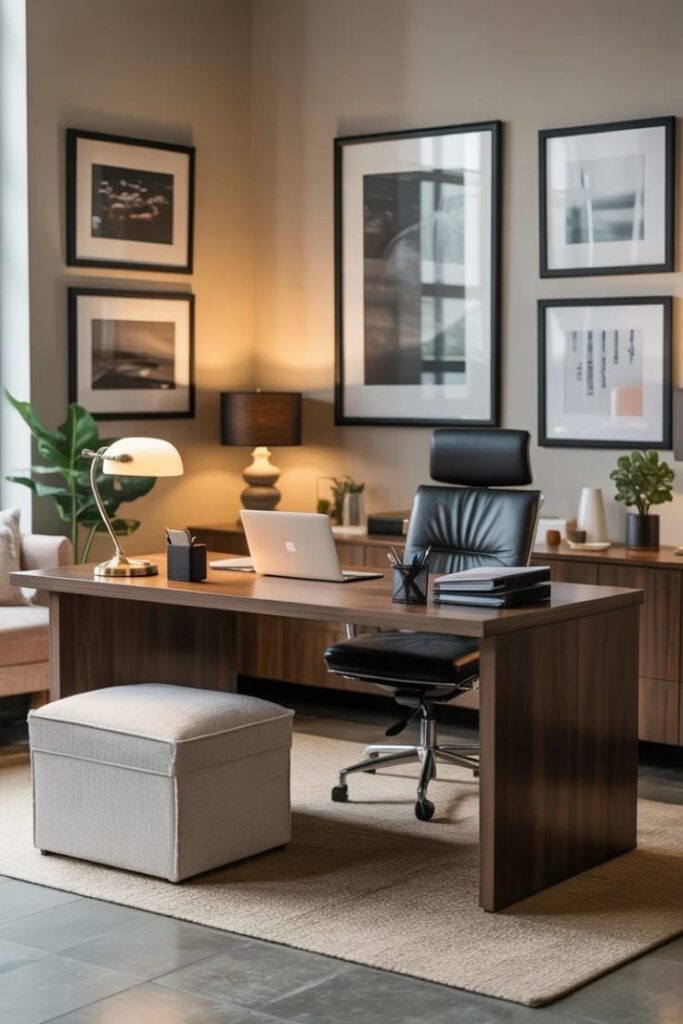


A well-organized office creates the foundation for sustained productivity and mental clarity. Strategic placement of office supplies, thoughtful desk organization, and designated activity zones transform any workspace into an efficient environment.
Decluttering and Desk Organizers
Start by removing items you haven’t used in the past month from your desk surface. A clean workspace reduces visual distractions and helps you focus on the task at hand.
Desk organizers come in various materials and styles to match your needs:
- Bamboo desk organizer units offer sustainable, attractive storage with compartments for pens, papers, and small office supplies
- Drawer dividers keep supplies separated and easy to locate
- Vertical file holders maximize desk space by storing documents upright
- Desktop trays create designated spots for incoming and outgoing paperwork
Keep only essential items within arm’s reach. Your phone, notebook, and most-used pens deserve prime desk real estate, while seasonal supplies belong in drawers or cabinets.
Consider a daily reset routine where you spend five minutes returning office supplies to their designated spots. This simple habit prevents clutter from accumulating and maintains your organized system.
Home Office and Small Space Solutions
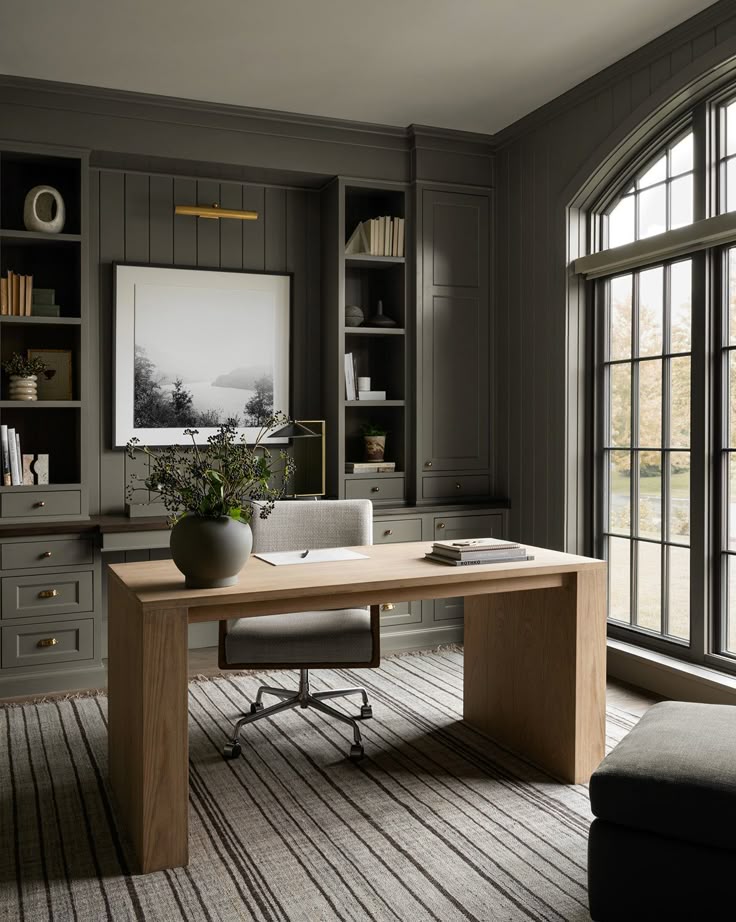

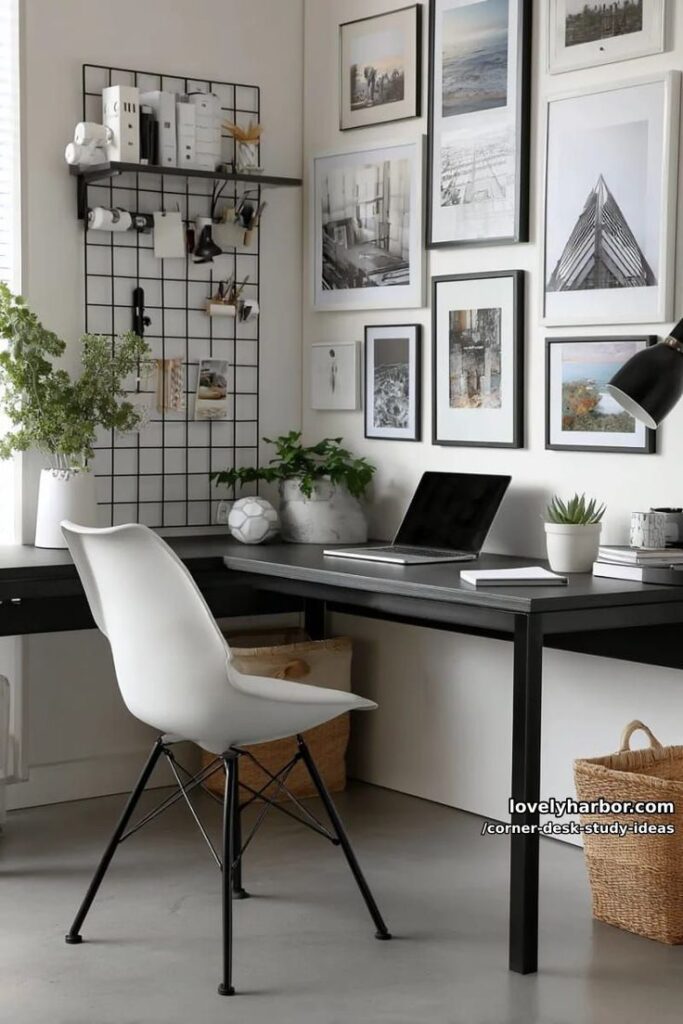
A small home office requires creative thinking to maximize every inch. Work from home setups often compete with living spaces, making efficiency critical.
Wall-mounted shelves free up floor space while providing storage for books and decorative items. Floating desks attach directly to walls and fold away when not in use. Corner desks transform unused corner office areas into functional workstations without dominating the room.
Home office decorating should balance functionality with comfort to create a cozy home office atmosphere. Choose furniture with built-in storage, like ottomans with hidden compartments or desks with drawers. Pegboards mounted above your desk hold frequently accessed items and double as home office decor.
For your zoom background, position your desk against an organized bookshelf or clean wall. Add one or two tasteful decorative elements that reflect your personality without creating visual clutter.
Creating Zones for Work and Creativity
Dividing your office into specific zones helps your brain switch between different types of tasks. Your primary desk area handles focused work, while a separate space encourages creative thinking.
Set up a brainstorming space away from your main computer. This might be a small table with a whiteboard, sketchpad, or comfortable chair positioned near natural light. Physical separation signals to your brain that different types of thinking happen in different locations.
An executive office or creative office benefits from a reading corner with a comfortable chair and side table for reviewing documents or strategic planning. Even in compact spaces, a cushioned chair turned at a different angle from your desk creates this psychological boundary.
Use area rugs, different lighting, or varied color schemes to define each zone visually. A cozy office atmosphere in your creative zone might include warmer lighting and softer textures, while your main workspace maintains brighter, task-oriented illumination.
Why does office decor significantly impact my work performance?
Office decor influences your mental state and work performance by reducing stress, enhancing focus, and increasing job satisfaction through thoughtful use of lighting, organization, and color choices.
How can I define my office decor style effectively?
Identify your preferred aesthetic such as modern, minimalist, industrial, bohemian, or traditional, and select furniture and decor elements that reflect your personality and suit your work tasks.
What role do color palettes play in creating a productive office environment?
Color palettes affect mood and energy levels; for example, blue promotes concentration, green reduces fatigue, and yellow stimulates creativity, helping to establish an environment conducive to specific work needs.
What are essential considerations when choosing office furniture and layout?
Select ergonomic and versatile furniture like height-adjustable desks and supportive chairs, and plan your layout to optimize workflow, natural light, and space utilization for comfort and efficiency.
How can decorative touches enhance my workspace while supporting productivity?
If the room is also where you sit for full workdays, start with the chair before styling the shelves. This refurbished office chairs guide explains how to get stronger ergonomic support without spending new-chair money.
Adding wall art, motivational quotes, plants, and personalized accessories creates visual interest, boosts motivation, and improves air quality, making the workspace more engaging and conducive to focus.
- 386shares
- Facebook0
- Pinterest383
- Twitter3
- Reddit0