Goku stands as one of the most iconic characters in anime history, making him a popular subject for artists and fans alike. Learning to draw Goku requires understanding his unique features, from his spiky Saiyan hair to his muscular physique and signature facial expressions.
Drawing Goku lets artists explore different styles and techniques while practicing fundamental art skills. His character design has evolved throughout Dragon Ball’s history, offering plenty of variations to practice with.
Artists can start with basic shapes and build up to more complex details, making Goku an excellent subject for both beginners and experienced illustrators. His dynamic poses and transformations provide endless opportunities for creative expression.

Key Takeaways
- Basic shapes and proportions form the foundation for creating accurate Goku drawings
- Mastering facial expressions and hair details brings Goku’s character to life
- Practice with different poses and power levels helps develop dynamic artwork skills
Goku Drawing Essentials
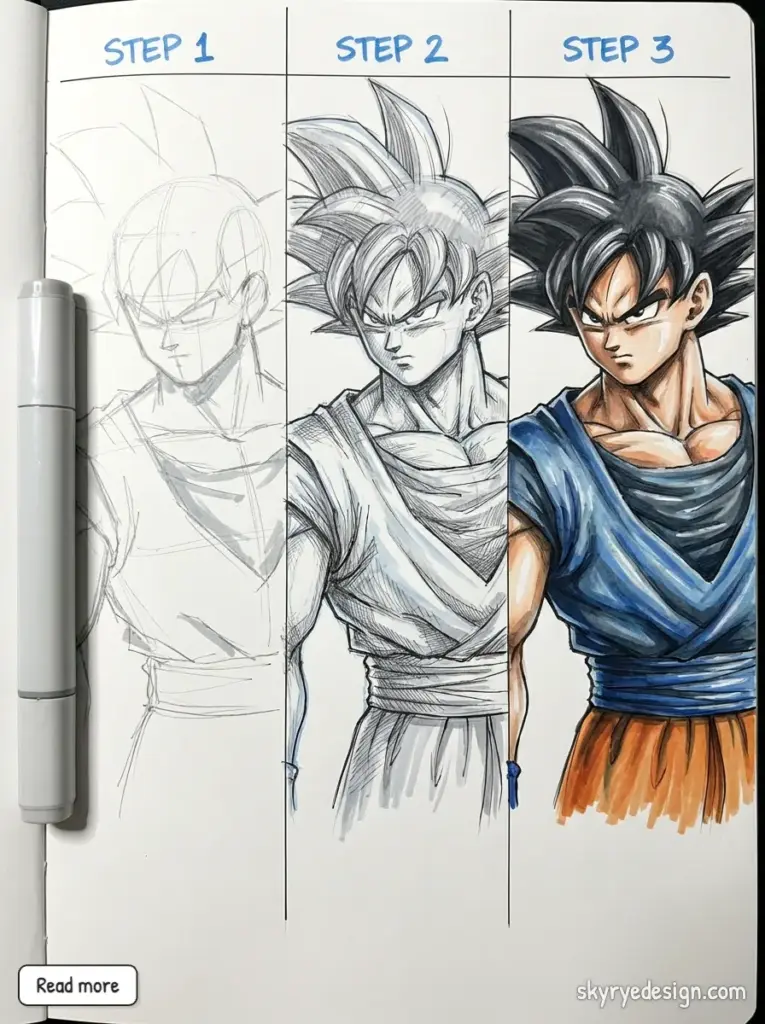
Creating an accurate drawing of Goku requires attention to his iconic design elements and careful selection of art supplies. Getting the details right helps capture his strength and personality.
Understanding Goku’s Character Design
Goku originated in Dragon Ball as a playful martial artist with Saiyan heritage. His design evolved throughout the series while maintaining core visual elements.
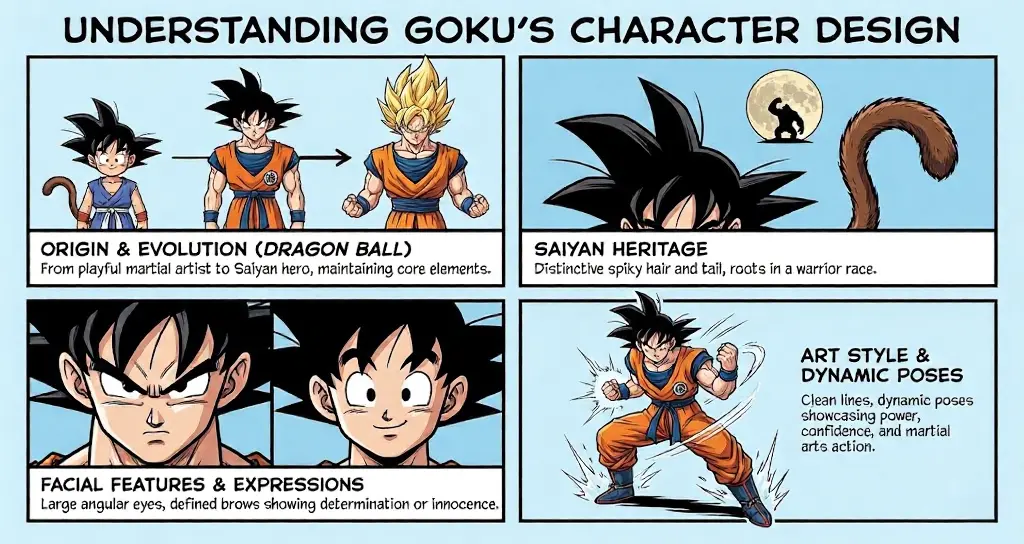
His facial features express determination and innocence. The eyes are large and angular, with defined brows that show emotion.
Dragon Ball’s art style uses clean lines and dynamic poses to showcase martial arts action. Goku’s poses often display power and confidence.
Key Features of Goku’s Appearance
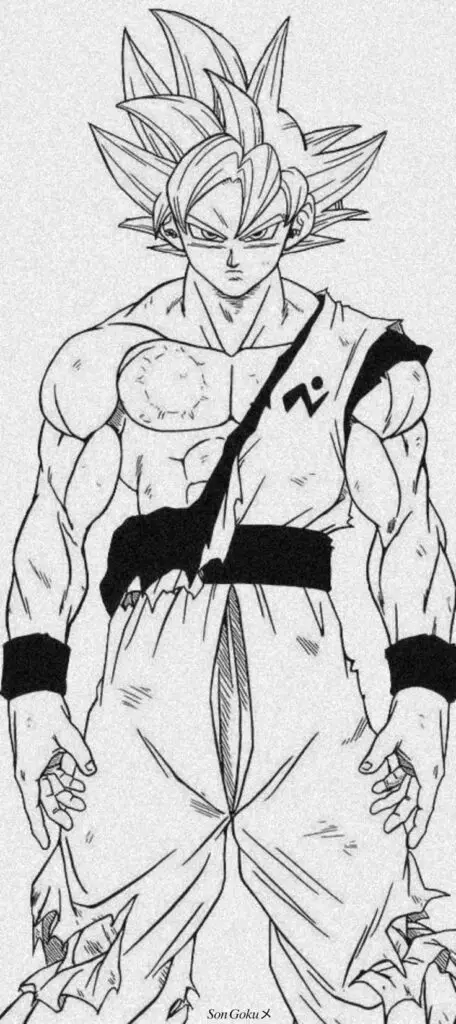
Goku’s spiky black hair stands upright in distinct pointed sections. The hair pattern remains consistent even during movement.
His muscular physique shows well-defined muscles without being overly bulky. Key areas include:
- Defined chest and shoulders
- Clear arm muscle separation
- Six-pack abs
- Strong leg muscles
The orange gi uniform fits close to his body with blue undershirt, wristbands, and boots. The clothing shows natural folds and wrinkles during action.
Materials and Tools for Drawing
Basic supplies needed:
- HB and 2B pencils for initial sketching
- Fine-point markers (0.3mm – 0.5mm)
- Quality drawing paper
- Kneaded eraser
Start with light pencil lines to block out proportions. Use markers for clean final lines and details.
Reference images help maintain accuracy. Keep multiple angle views of Goku nearby while drawing.


A light table or tracing paper aids in practicing proportions and poses.
Step-by-Step Drawing Tutorials
Drawing Goku requires careful attention to his distinctive features, muscle structure, and the dynamic energy he brings to Dragon Ball Z. These techniques will help artists create an accurate representation of this iconic character.
Basic Goku Sketch
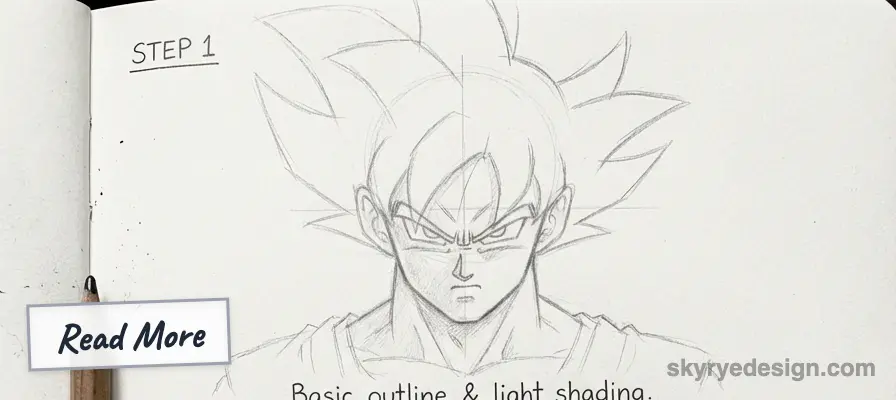
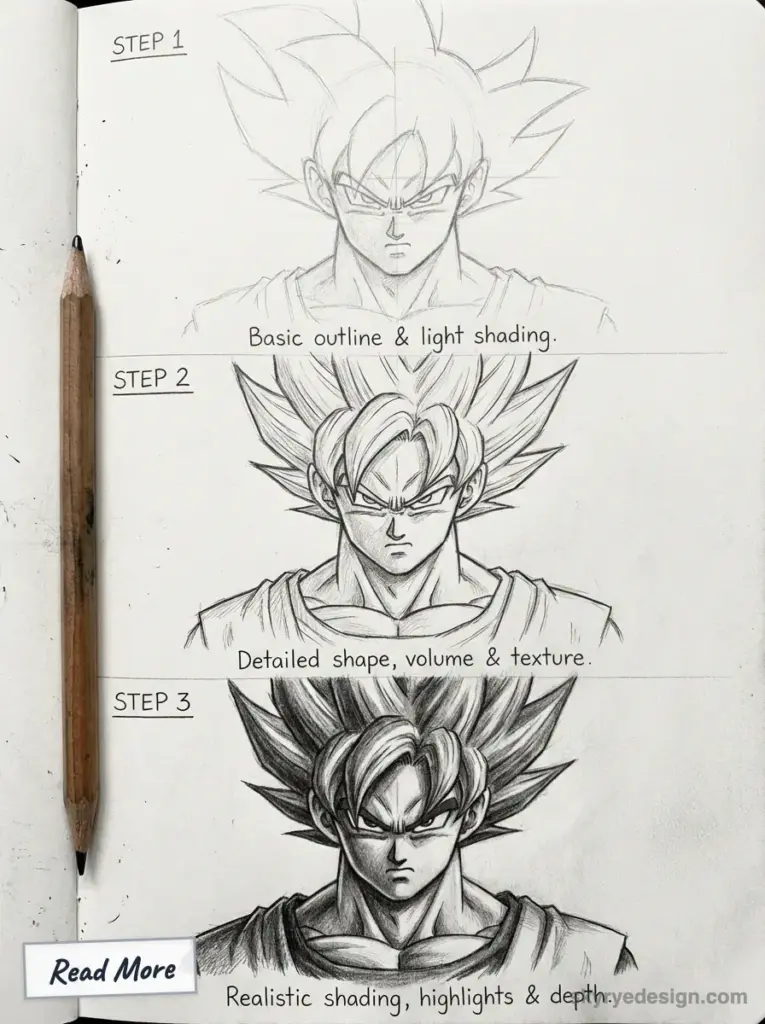
Start with basic shapes to build Goku’s framework. Draw a circle for his head and add the center guideline for facial features.
Mark the jawline with angular lines extending from the circle. Goku’s hair needs multiple spiky sections pointing upward.
Create the body structure using simple geometric shapes. A rectangle forms the chest, while cylinders work well for arms and legs.
Key proportions:
- Head is 1/6 of total body height
- Shoulders span 3 head-widths
- Arms reach mid-thigh level
- Legs make up half the body length
Adding Details and Musculature
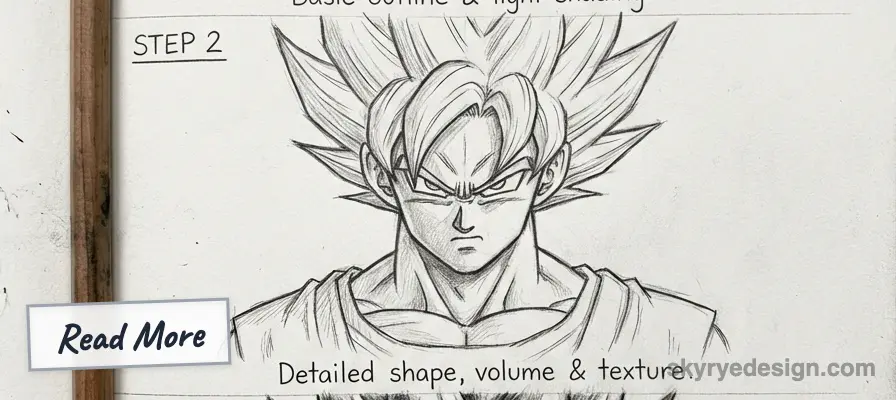
Focus on Goku’s distinctive facial features. Draw large eyes with sharp edges and thick eyebrows. Add his small nose and determined expression.
Define major muscle groups. Emphasize the trapezius, deltoids, and pectorals. Create clear separations between muscle sections.
Draw his signature orange gi with blue undershirt. Add wrinkles where the fabric bunches at movement points.
Mark the belt knot at the waist. Include wrist bands and boots with the proper design elements.
Finalizing with Shading and Textures
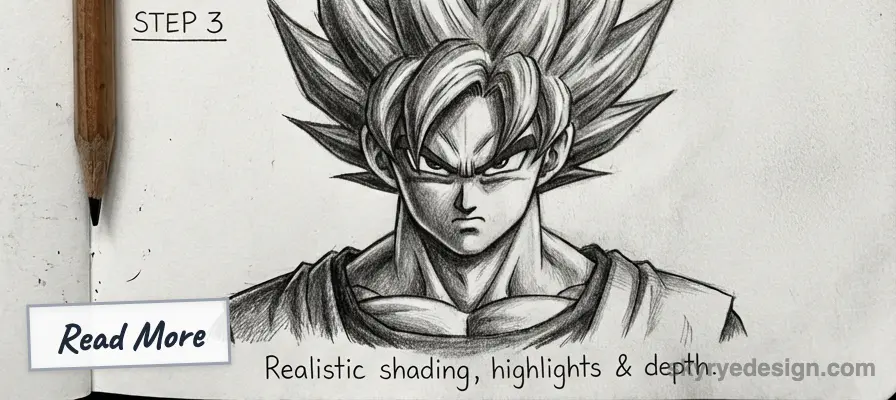
Add base shadows to define muscle depth. Place darker shading under the pectorals and around the abdomen.
Create highlights on the hair spikes. The hair should have sharp, clean edges with darker sections near the roots.
Apply texture to the gi fabric. Add small lines to show cloth grain and movement patterns.
Use cross-hatching for deeper shadows. This technique works well for muscle definition and clothing folds.
Goku’s Hairstyles Through the Series

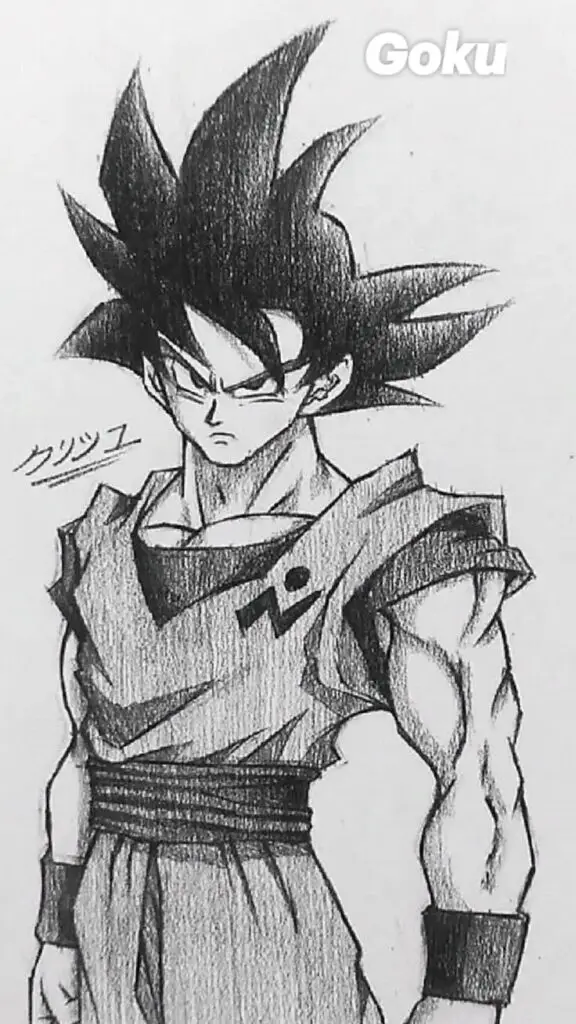
Goku’s iconic hair has become a defining feature of Dragon Ball’s visual style, starting with his distinctive black spikes and evolving through multiple Super Saiyan transformations.
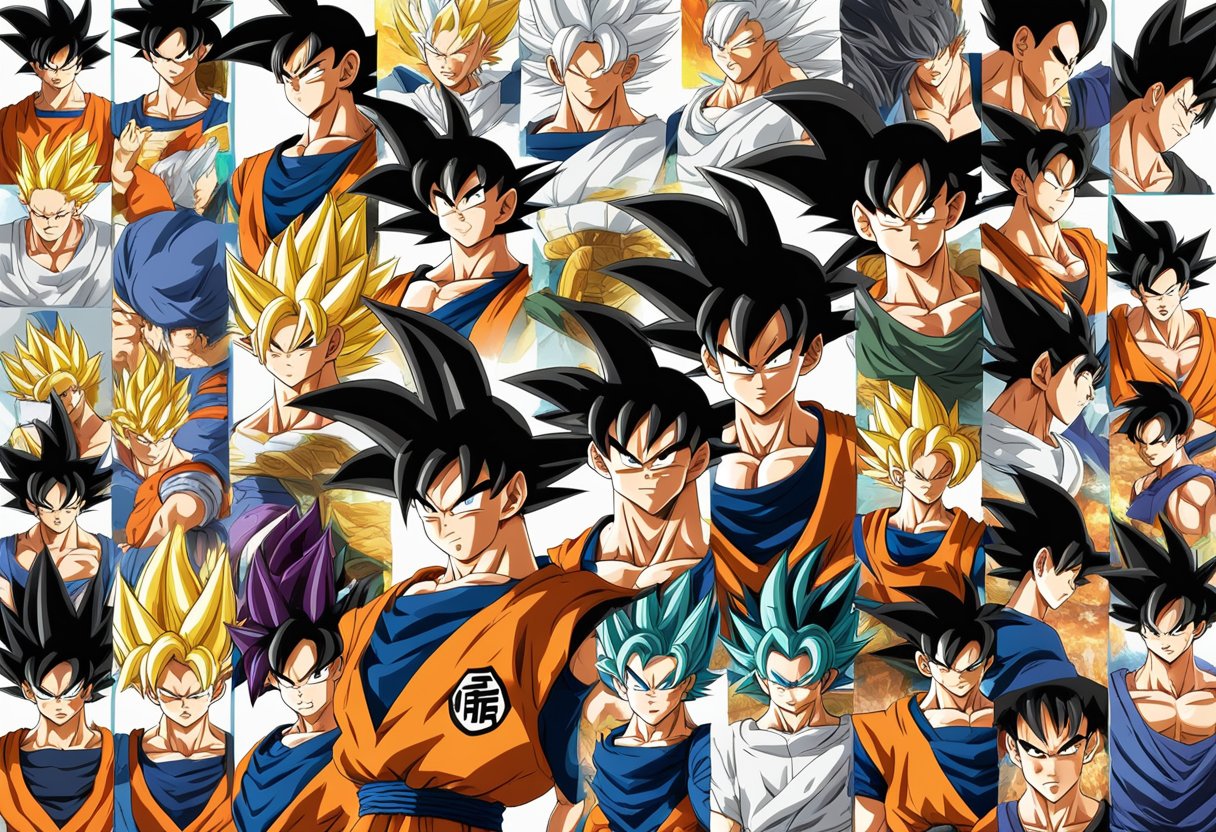
Classic Goku Hair
Goku’s base form features jet-black hair with seven prominent spikes that point in different directions. This unique style remains unchanged from childhood through adulthood, defying gravity due to his Saiyan genetics.
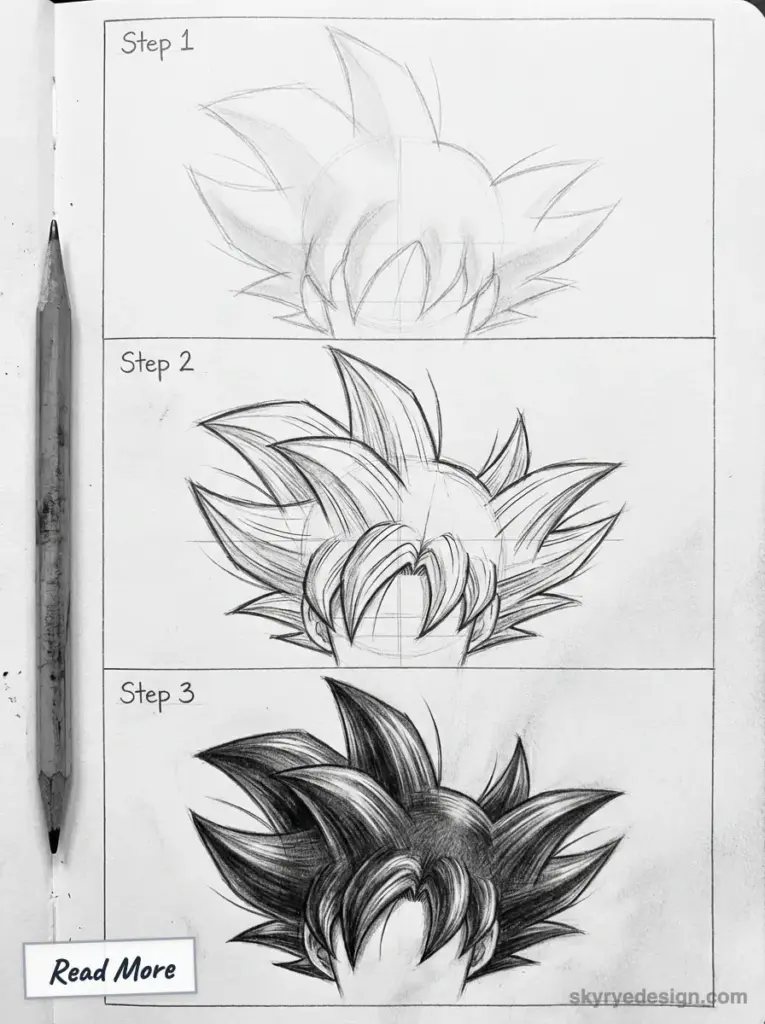
The spikes create a palm tree-like pattern, with four large spikes sweeping upward and three smaller ones framing his face. His hair maintains this exact shape even after intense battles.
Dragon Ball creator Akira Toriyama designed Goku’s hair to stand out among other characters while being simple enough to draw consistently in action scenes.
Super Saiyan Transformations
The Super Saiyan form dramatically changes Goku’s hair color from black to bright gold. His spikes become more pronounced and rigid, standing up even higher than his base form.
Key Super Saiyan Hair Changes:
- SSJ1: Golden spikes with a slight upward lift
- SSJ2: Sharper golden spikes with bio-electricity
- SSJ3: Extremely long golden hair reaching past his waist
- SSJ God: Returns to base style but becomes bright red
- SSJ Blue: Maintains base style with electric blue coloring
Each transformation keeps the same basic spike pattern while adding unique elements to signify increased power levels.
Facial Expressions and Emotions
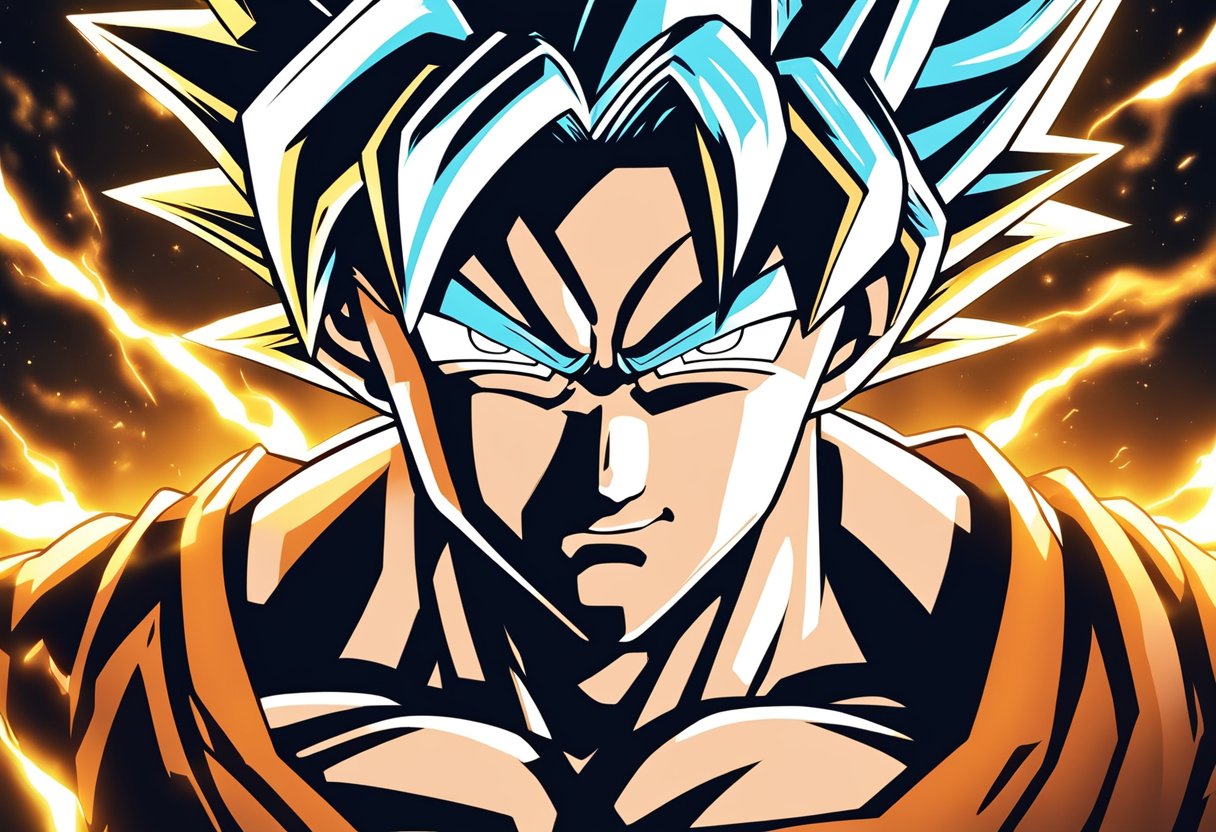
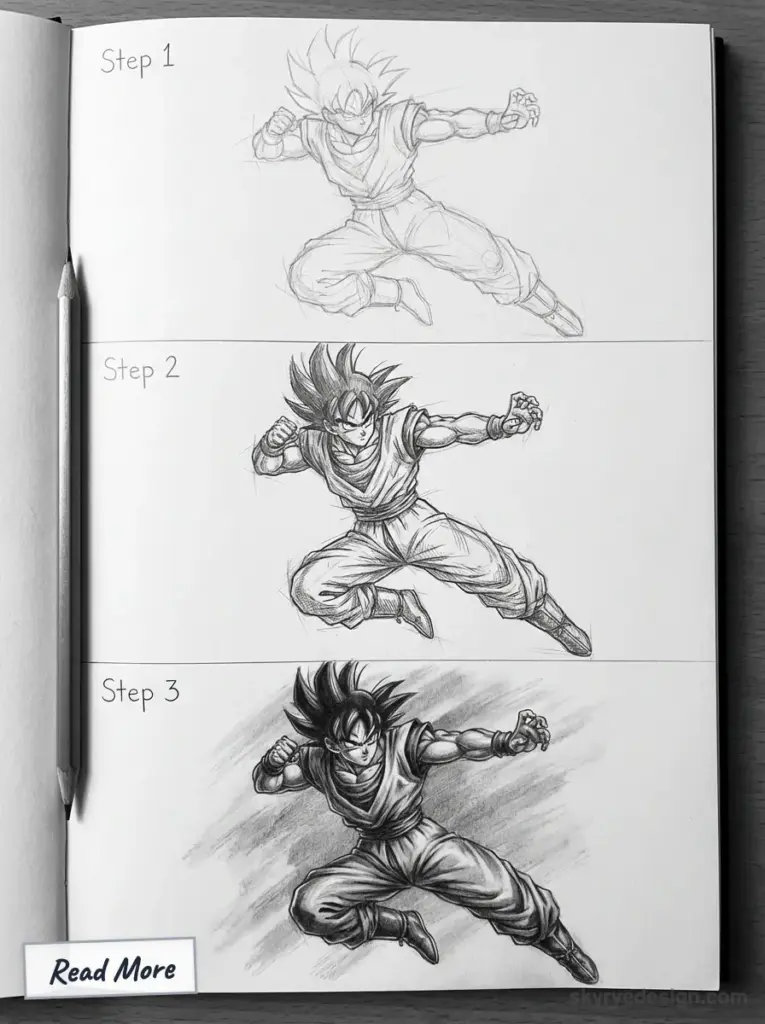
Drawing Goku’s facial expressions brings his character to life and shows his personality through detailed emotional art. Strong expressions capture his fighting spirit and gentle moments.
Capturing Goku’s Range of Emotions

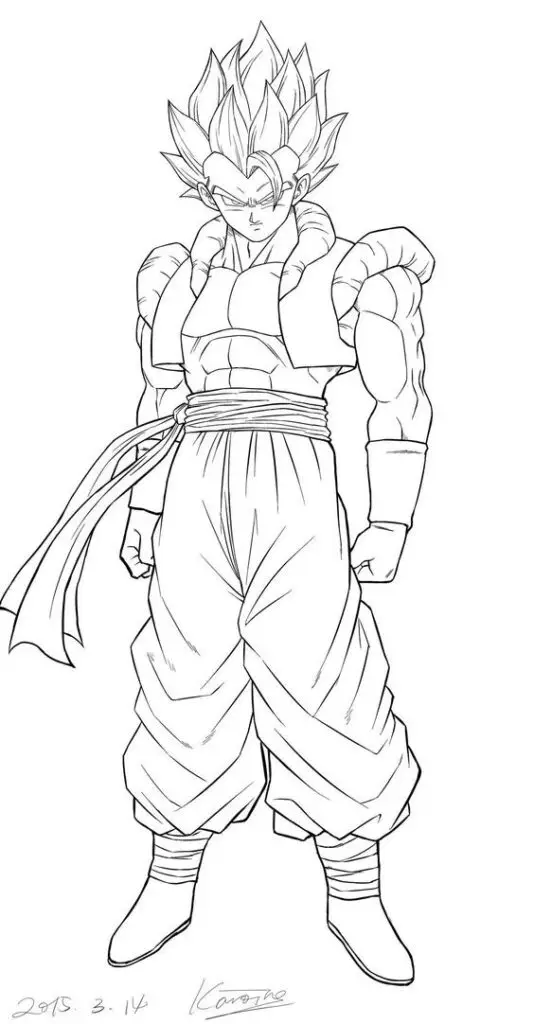
Goku lets you know he’s dead serious in a fight with those furrowed brows and gritted teeth, his eyes zeroed in on his target like a laser. His all-out battle roar is the crowning touch – you can practically see his teeth and the strain in his face muscles as he channels all his energy into the shout.
On the flip side, when he’s in a good mood his eyes go wide & a big goofy grin spills across his face – it’s like the whole world’s brightness has rained down on him. When artists draw him laughing or just generally feeling carefree, they go for soft, rounded features that just scream ‘innocent kid’.
When the stakes get high and the going gets tough, his face tightens up – eyes narrowing, mouth set in a firm line, and those creases around his brow get deep. You can just tell he’s not messing around, that he’s got his eyes on the prize and nothing’s going to get in his way.
Expression Details to Give It Some Oomph
The tiny details that make a character’s expressions pop are what bring them to life – those wrinkles around the eyes and mouth, for instance, are what tell you this guy’s not just going through the motions. And then there’s the eyebrows – when they’re relaxed they just sort of… hang there, but when they’re sharply angled all of a sudden you know your character’s turned up to 11 emotionally.
And let’s not forget the hair – spiky hair can say a lot about a guy, particularly when it’s all mussed up and flying every which way as he’s bellowing his battle cry. Artists will often add in some motion lines and sweat drops to give it that extra oomph of intensity – you know, to really drive home just how much your character is sweating bullets.
The size and shape of Goku’s eyes change to match his mood – from wide and innocent to sharp and focused. Small details like tear ducts and eyelid creases make expressions more realistic.
Advanced Techniques for Experienced Artists
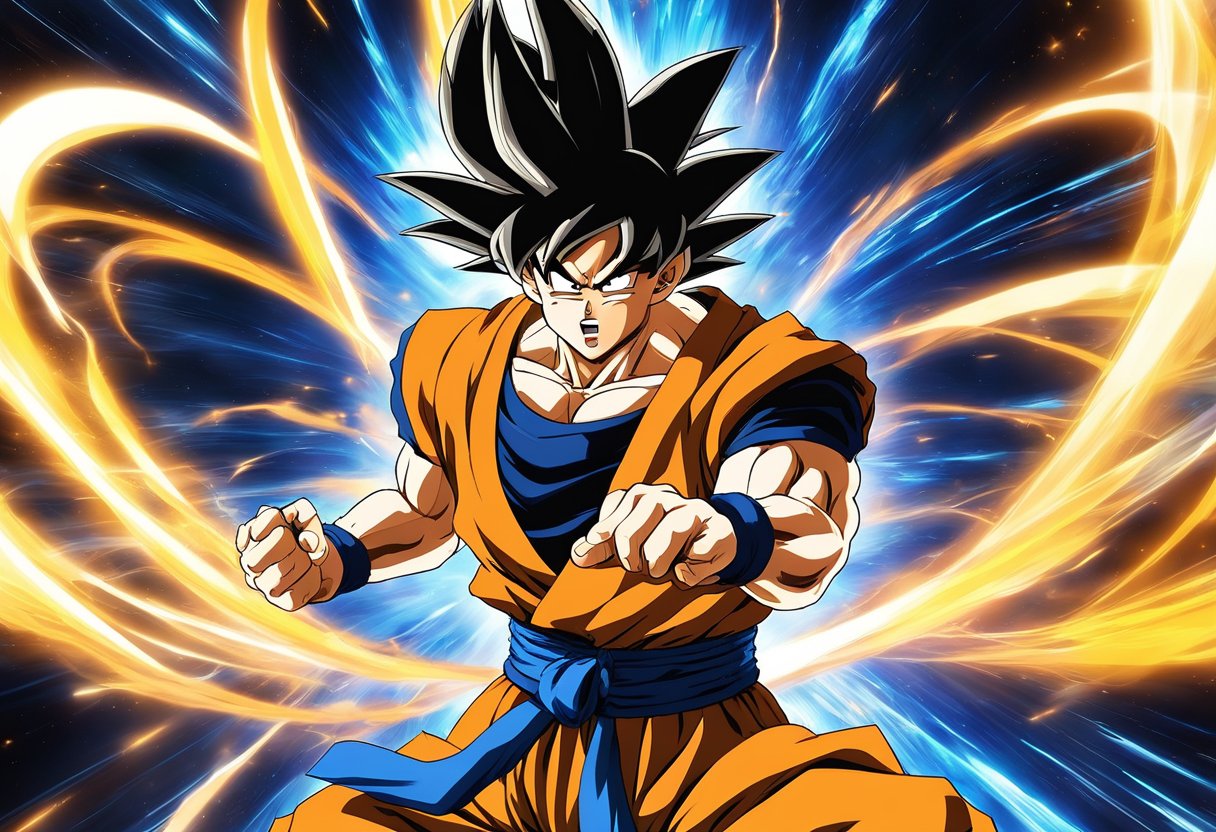
Professional artists employ specific methods to capture Goku’s raw power and intense energy in their artwork. These advanced approaches focus on dynamic movement and the distinctive visual effects that define Dragon Ball’s iconic style.
Dynamic Poses and Action Scenes
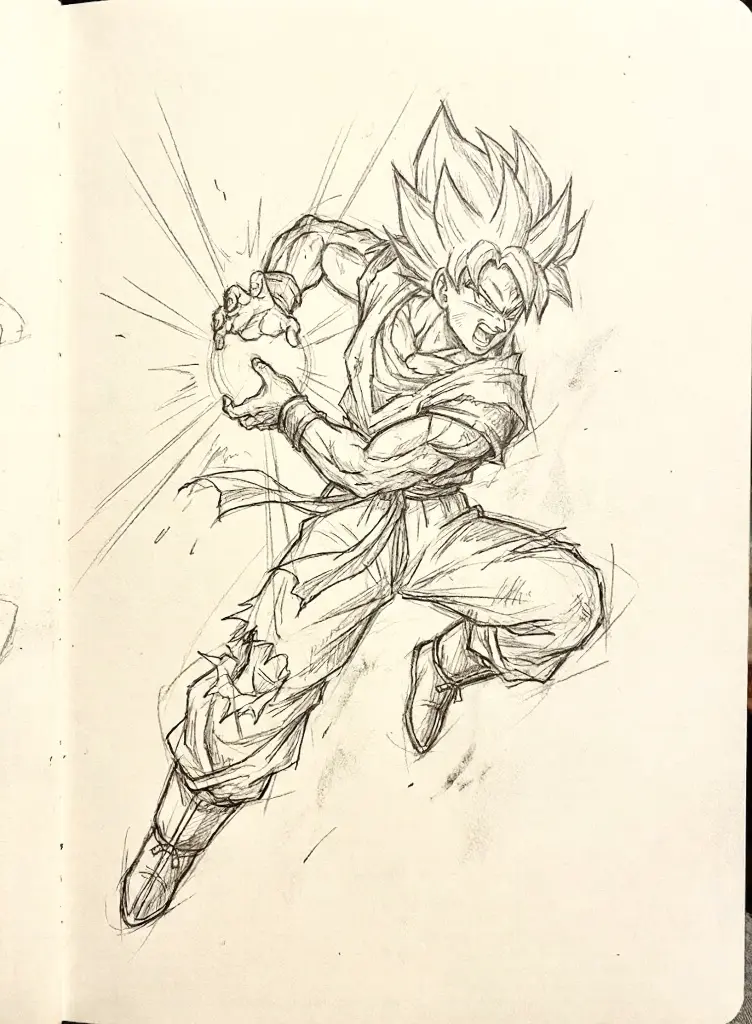
Mastering the art of muscle definition requires careful attention to anatomical structure during movement. Artists should emphasize key muscle groups that show tension during fighting stances.
Bold lines and sharp angles help convey explosive movement in battle poses. The limbs’ positioning must follow natural flow lines while maintaining Dragon Ball’s signature style.
When drawing the Super Saiyan form, artists need to capture the intensity through exaggerated muscle definition and powerful stance choices. The body should appear larger and more defined than in base form.
Lighting and Energy Effects


Energy effects demand a multi-step approach to bring depth and luminosity to the scene. Begin with a foundation of glow, then layer in concentrated light sources at the hands and key energy points.
Ki blasts and auras need a degree of transparency to grab peoples attention. The inner glow should be at its most intense, gradually giving way to light edges that seamlessly blend with their surroundings.
When depicting Super Saiyans, the golden aura needs to have some real finesse in the way you use highlight and shadow. To create an electrifying effect around the body try using short, snappy brushstrokes that radiate outward from the figure.
When drawing hair during times of power-up, extra attention is needed. Make use of gentle swooping lines that sweep upwards, and sprinkle small sparkling energy effects through each strand to convey the raw energy pulsating through it.
- 8.0Kshares
- Facebook0
- Pinterest8.0K
- Twitter3
- Reddit0