I spent years trying to draw “cute” characters that looked more unsettling than adorable. Big eyes that seemed dead. Round shapes that looked bloated instead of cuddly. The proportions were off in ways I couldn’t identify, and my cute attempts landed somewhere between “weird baby” and “alien creature.”
The breakthrough came when I realized cuteness isn’t subjective—it’s biological. Humans are hardwired to find certain proportions appealing: large heads relative to bodies, big eyes positioned low on the face, round soft shapes, stubby limbs. These features trigger nurturing instincts. Miss them, and your “cute” drawing triggers something else entirely.
- 1. Adorable Cartoon Animals
- 2. Chibi Characters
- 3. Cute Kittens
- 4. Simple Body Poses
- 5. Little Fairies
- 6. Sweet Teddy Bears
- 7. Playful Dinosaurs
- 8. Animated Puppy Sketches
- 9. Tiny Robots
- 10. Baby Unicorns
- 11. Miniature Mermaids
- 12. Whimsical Woodland Creatures
- Understanding the Basics of Cute Body Drawing
- Techniques to Enhance Your Illustrations
- FAQ
- Conclusion
These 12 cute body drawing ideas work because they follow specific visual rules, not because cute is just a vibe you either capture or don’t. Each idea includes the proportions and features that make it actually read as adorable, not accidentally creepy.
Whether you’re drawing for stickers, character design, or just filling a sketchbook with things that make people smile, understanding why these subjects work will help you make anything cute—not just copy specific examples.
1. Adorable Cartoon Animals


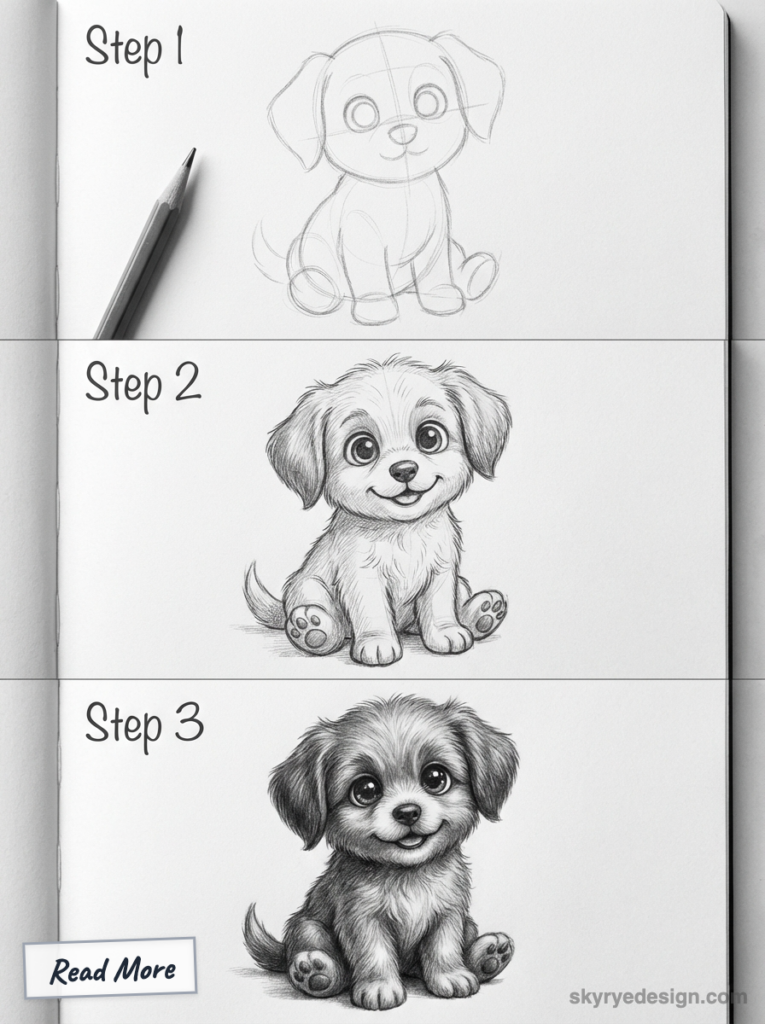
Cartoon animals are the gateway to cute drawing because they’re forgiving—nobody knows exactly what a cartoon puppy “should” look like, so you have room to exaggerate.
The cuteness formula: Head takes up 1/2 to 1/3 of total body size. Eyes are huge—roughly 1/3 of the face width. Bodies are round and simple. Limbs are short and stubby with minimal joint definition.
Best animals for cute: Puppies, kittens, bunnies, bears, pandas, hamsters. These already have round features in real life, so cartooning them cute feels natural.
Common mistake: Drawing animal anatomy too accurately. Real puppy proportions aren’t as cute as exaggerated cartoon proportions. A real kitten’s legs are longer relative to body than a cute cartoon kitten’s should be.
Drawing tip: Start with a large circle for the head, a smaller oval for the body touching the head, then add stubby legs and a simple face. Keep the snout short—long snouts read as mature, not cute. Place eyes low on the face, leaving lots of forehead space.
Add rosy cheeks, a tiny nose, and a simple curved smile. Accessories like bows or small hats increase the cute factor by adding personality without complexity.
2. Chibi Characters


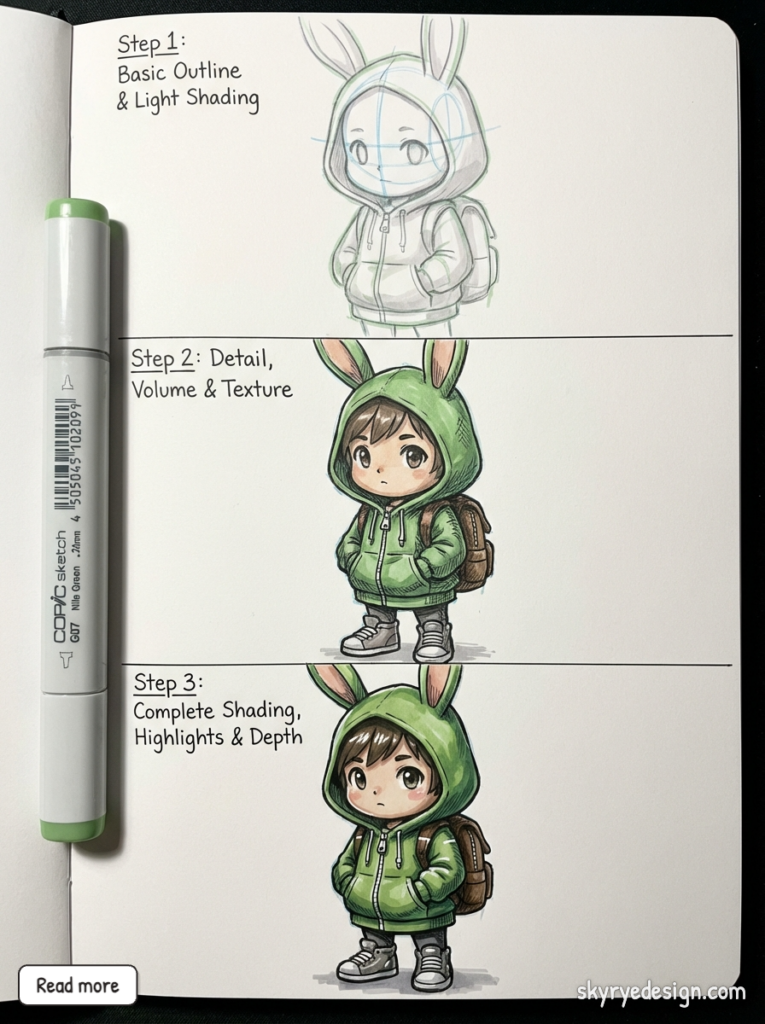
Chibi is a Japanese art style that exaggerates cuteness to the extreme. The word literally means “small” or “short,” and chibi characters compress human bodies into compact, adorable forms.
The cuteness formula: 2-3 head heights total (compared to realistic 7-8 heads). Head is nearly as large as the entire body. Eyes take up 50% or more of the face. Bodies are simple shapes with minimal anatomical detail.
Why chibi works: It triggers the same responses as baby features—oversized head, huge eyes, tiny body. The brain reads “infant” and responds with “must protect.”
Key features to nail: The eyes carry all expression. Make them large, shiny (add highlight spots), and expressive. Eyebrows are important for emotion since chibi faces are otherwise simple. Hair can be exaggerated and dynamic—it adds personality when the body can’t.
Drawing tip: Draw a circle for the head, then a body that’s roughly the same size or smaller—either a rounded rectangle or oval. Limbs can be simple tubes with ball-shaped hands (no individual fingers needed). Feet are often just rounded points.
For chibi faces, divide the head in half horizontally—eyes sit on or below this line, leaving a massive forehead. This “baby proportion” is essential for cute reading.
3. Cute Kittens
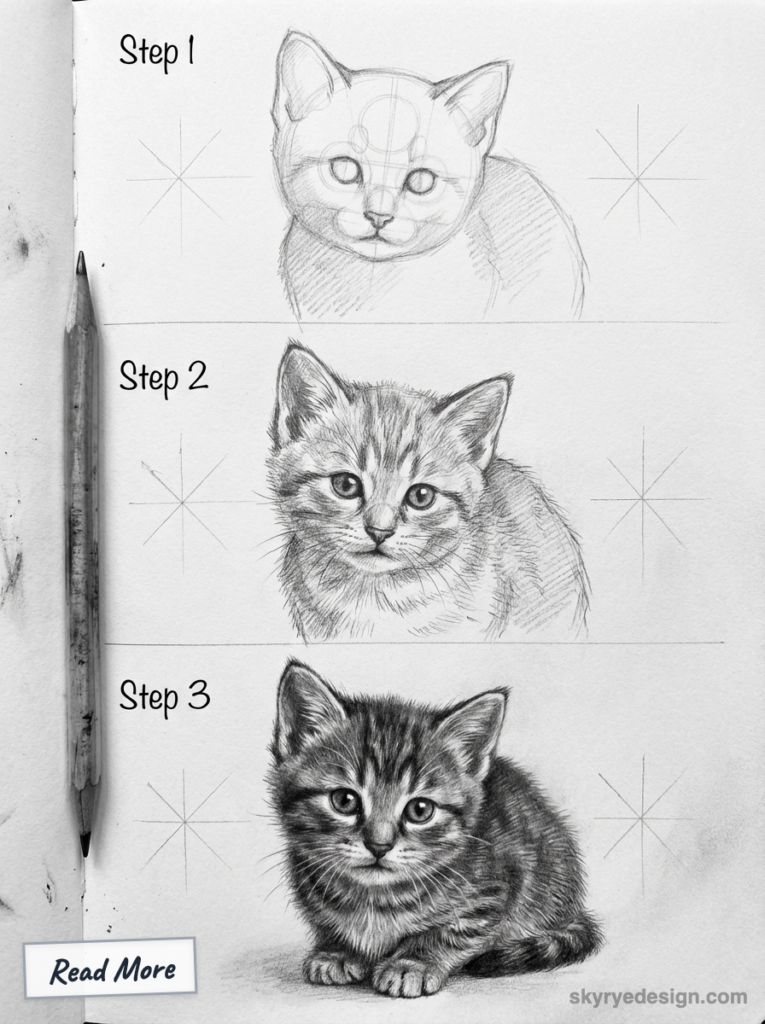
Kittens are cute-drawing practice on easy mode. Real kittens already have the proportions we find adorable: big eyes, round faces, small bodies, clumsy movements.
The cuteness formula: Head is almost as wide as the body. Eyes are round and take up significant face space. Ears are large relative to head (triangle shapes). Body is round and fluffy. Legs are short and thick.
Poses that maximize cute: Curled up sleeping (shows roundness), playing with yarn (shows playfulness), sitting with head tilted (shows curiosity), stretching with back arched (shows flexibility and youth).
Drawing tip: Start with two overlapping circles—larger one for body, smaller for head. Add triangular ears that are proportionally bigger than real cat ears. Eyes should be low on the face with plenty of forehead space.
For the cute factor, add: sparkly eye highlights (2-3 white dots), tiny triangle nose, simple curved mouth, whisker dots (not full whiskers—they can look scraggly), and maybe some fluffy cheek fur indicated by soft zigzag lines.
Color note: Soft colors increase cuteness. Even if drawing a tabby, soften the contrast. Harsh black-and-white patterns can look aggressive rather than adorable.
4. Simple Body Poses

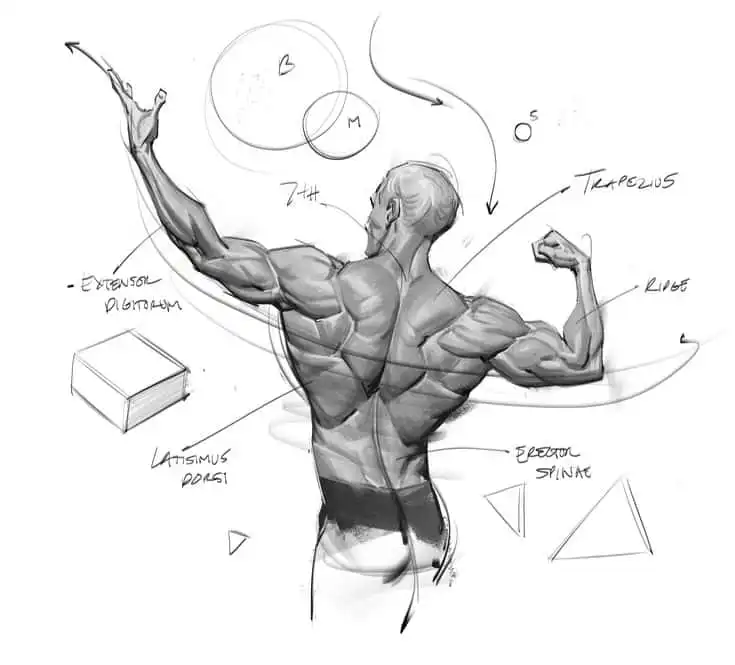


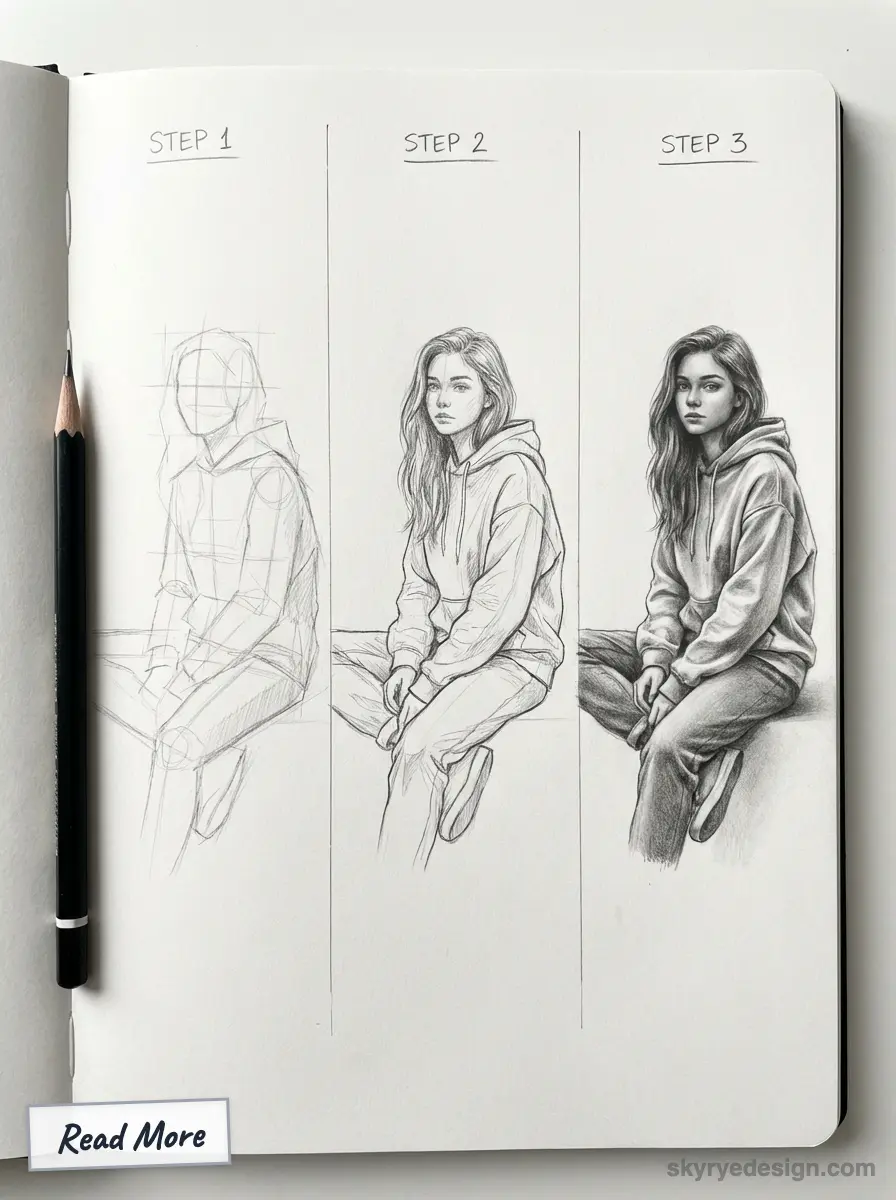
You don’t need complex characters to practice cute body drawing. Simple human figures in the right proportions teach the fundamentals you’ll apply to everything else.
The cuteness formula for bodies: Shorter than realistic (5-6 heads tall instead of 7-8). Larger heads. Rounded shoulders (no angular joints). Simplified hands and feet. Soft curves instead of straight lines.
Best beginner poses:
- Standing with arms at sides (practice basic proportions)
- Sitting with knees up (compact, cozy feeling)
- Walking with slight bounce (shows energy and youth)
- Waving hello (simple action, expressive)
Drawing tip: Start with stick figures to get the pose right, but make them cute stick figures—shorter limbs, bigger head circle. Then add volume with simple shapes: ovals for torso, tubes for limbs, circles for joints.
Avoid detailed anatomy. Cute bodies don’t show muscle definition, bone structure, or realistic joint articulation. Keep everything smooth and simple.
Common mistake: Making limbs too long. Long legs and arms read as mature or elegant, not cute. Keep limbs short and chunky for maximum adorableness.
5. Little Fairies


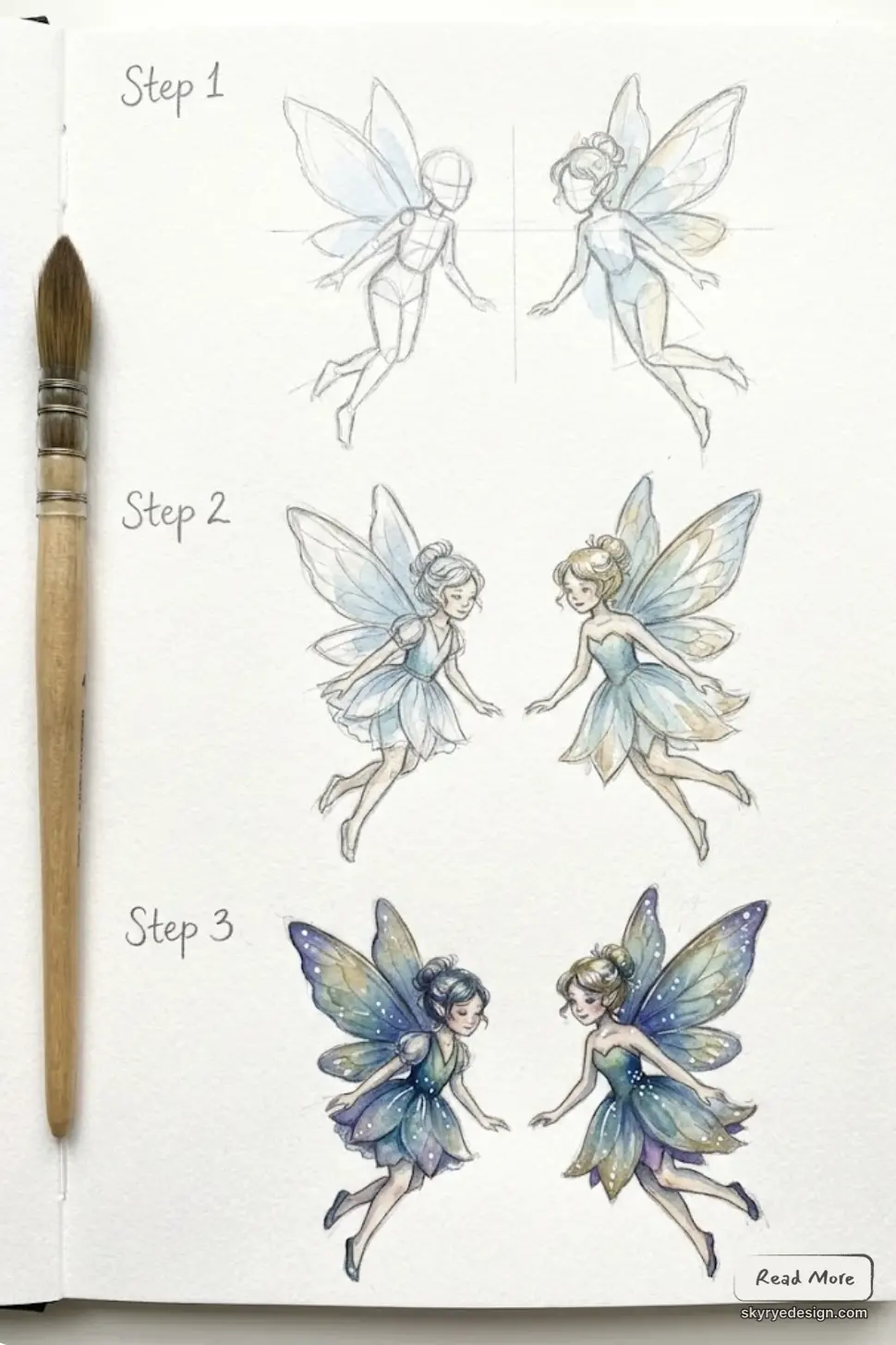


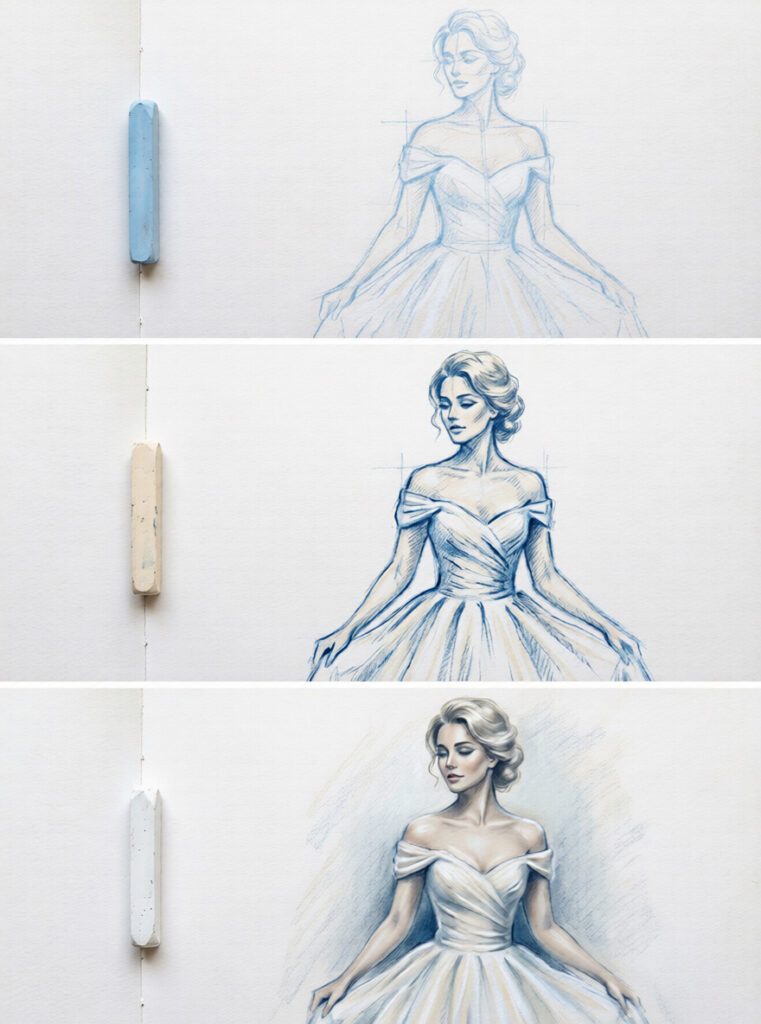
Fairies combine human cuteness with magical elements, giving you extra tools for adorable design: wings, sparkles, flowing clothes, magical accessories.
The cuteness formula: Small overall size (context matters—show fairies next to flowers or mushrooms for scale). Same proportions as other cute figures: big head, big eyes, small body, stubby limbs. Wings should be simple and translucent-looking.
Fairy-specific cute elements: Flower petal dresses, acorn caps, dewdrop accessories, tiny wands, glow effects, sparkle trails. These magical additions create whimsy without requiring complex body drawing.
Drawing tip: Draw the fairy body first using standard cute proportions (2-3 heads tall). Add simple wings—butterfly or dragonfly shapes work well. Keep wing details minimal; suggest pattern with a few lines rather than drawing every vein.
Place your fairy in context: sitting on a mushroom, hiding in a flower, flying among sparkles. The environment reinforces the tiny, magical nature.
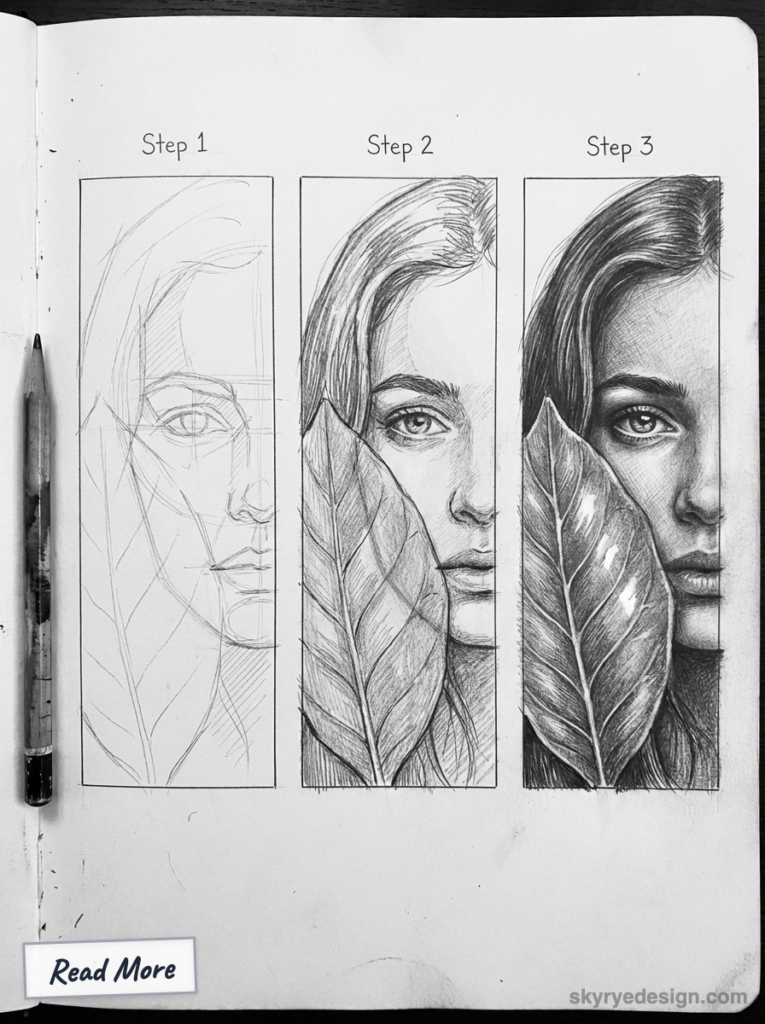
Pose ideas: Peeking out from behind a leaf, sleeping on a flower petal, riding a bumblebee, casting a tiny spell with sparkle effects.
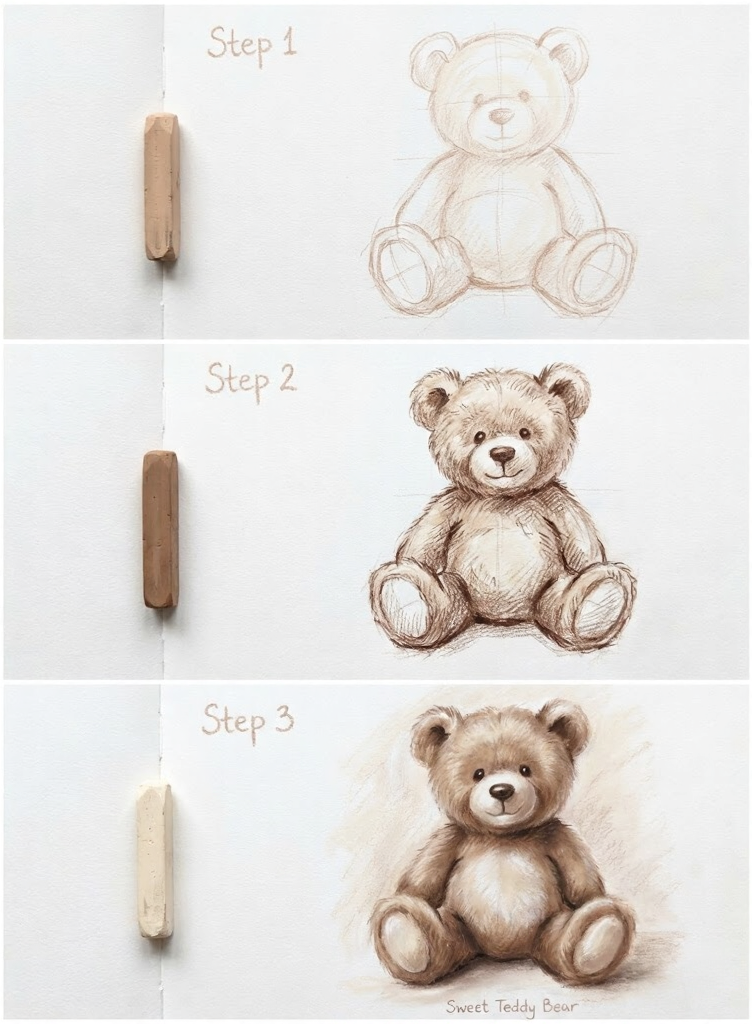
6. Sweet Teddy Bears
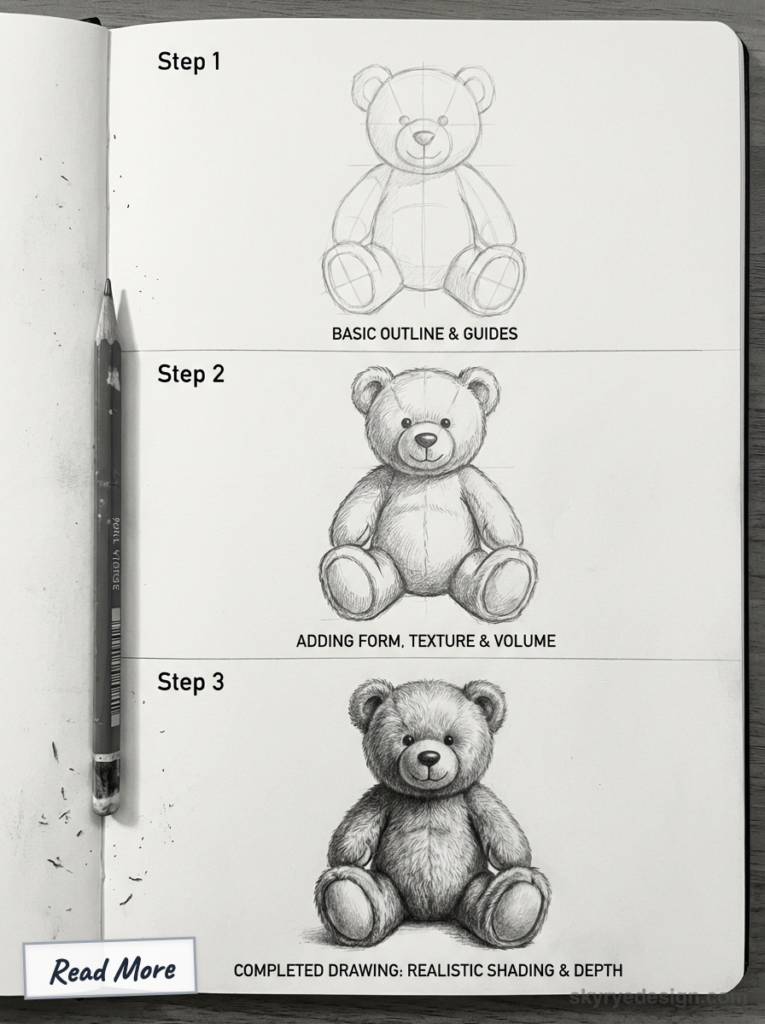


Teddy bears are pure cute—they have no realistic anatomy to worry about and exist specifically to be huggable.
The cuteness formula: Round everything. The body is a round oval, the head is a round circle, the ears are round semicircles, the arms and legs are round tubes. Even the paw pads are round. No angles anywhere.
Key teddy features: Seam line down the middle of the face. Simple stitched nose (inverted triangle or heart shape). Button or simple dot eyes. Optional patches or “worn” areas for vintage charm. Short snout (just a small oval muzzle, not a real bear’s elongated face).
Drawing tip: Two circles—larger for body, smaller for head, overlapping slightly at the neck area. Add ear circles to the head. Attach stubby arm and leg tubes. The proportions should make the bear look soft and squeezable.
For expression, tiny details matter: curved eyebrows show emotion, a slight head tilt adds personality, arm position (outstretched for hugging, holding a heart, waving) tells a story.
Accessory ideas: Bow ties, ribbons, small hearts, patches, tiny hats. These add character while keeping the design simple.
7. Playful Dinosaurs


Dinosaurs seem like they shouldn’t be cute—they’re prehistoric predators. But cartoonify them with the right proportions and they become adorable.
The cuteness formula: Same rules apply: oversized head, big eyes, stubby limbs, round body. Make teeth small and rounded (or omit them). Replace scary features with soft ones.
Best dinosaurs for cute: T-Rex (the tiny arms are already funny), Brontosaurus/Brachiosaurus (gentle giants with long necks), Stegosaurus (plates can look like decorations), Triceratops (frill becomes like a cute collar).
Drawing tip: Exaggerate the parts that are already distinctive but make them soft. A T-Rex’s tiny arms become comically small. A Brachiosaurus’s long neck becomes a gentle curve. Spikes and horns become rounded bumps.
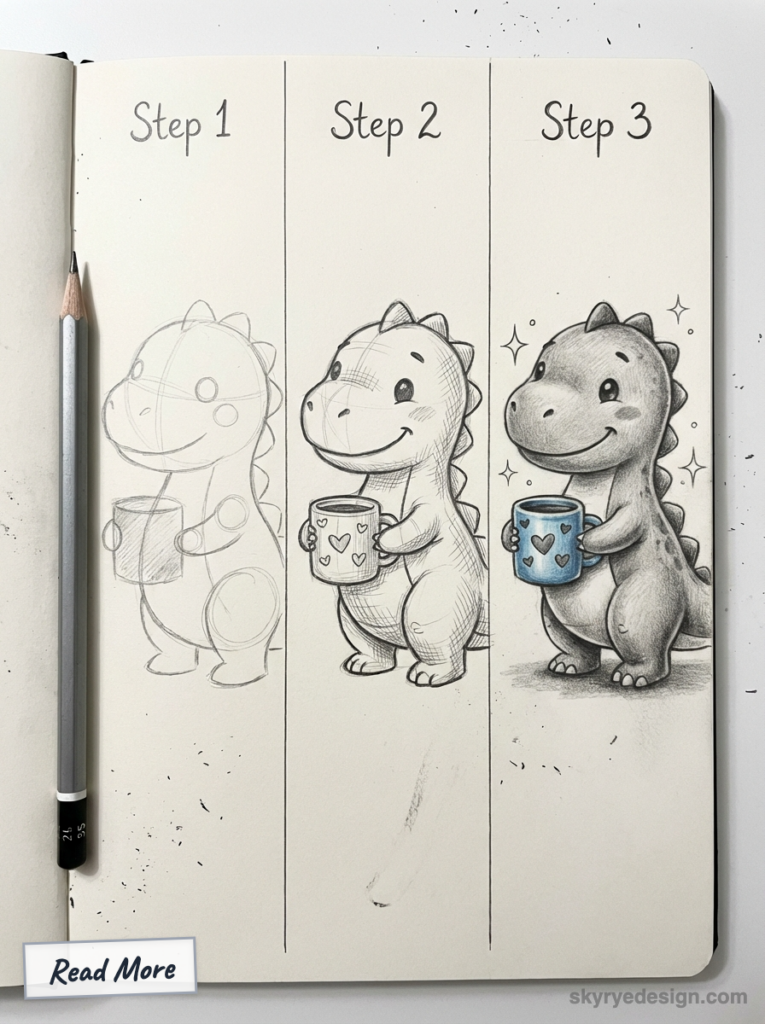
Give your dinosaurs expressions: wide curious eyes, small smiles, head tilts. Add non-threatening poses: sitting, waving, playing with a butterfly.
Color tip: Pastel dinosaurs read cuter than realistic colors. A pink T-Rex or lavender Triceratops immediately signals “cartoon cute” rather than “prehistoric terror.”
8. Animated Puppy Sketches
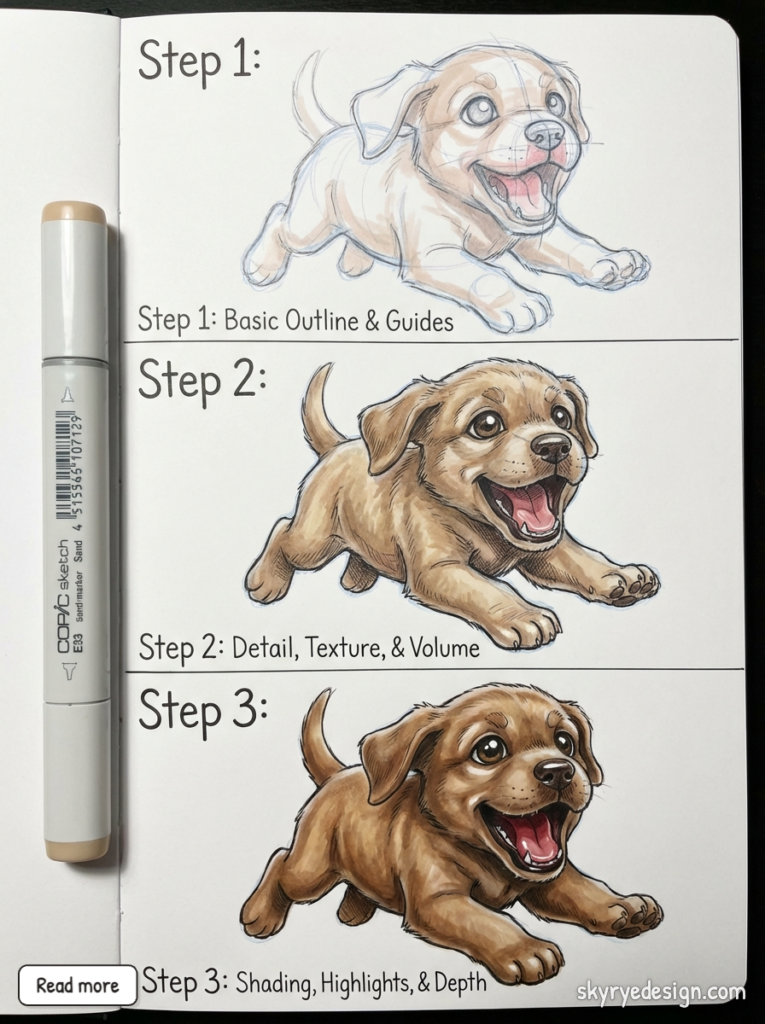
Puppies in motion capture energy and playfulness—two core cute qualities. These action poses require understanding how cute proportions work dynamically.
The cuteness formula: Same static proportions (big head, stubby limbs) maintained during movement. Add floppy ears in motion, wagging tail, tongue out for extra playful energy.
Best action poses:
- Mid-jump reaching for a ball
- Running with ears flopping
- Play bow (front down, back up)
- Spinning to chase tail
- Rolling on back for belly rubs
Drawing tip: Capture motion lines and exaggerate the squash-and-stretch of animation principles. A jumping puppy’s body stretches; a landing puppy squashes into a compressed shape. This dynamic quality reads as energetic and alive.
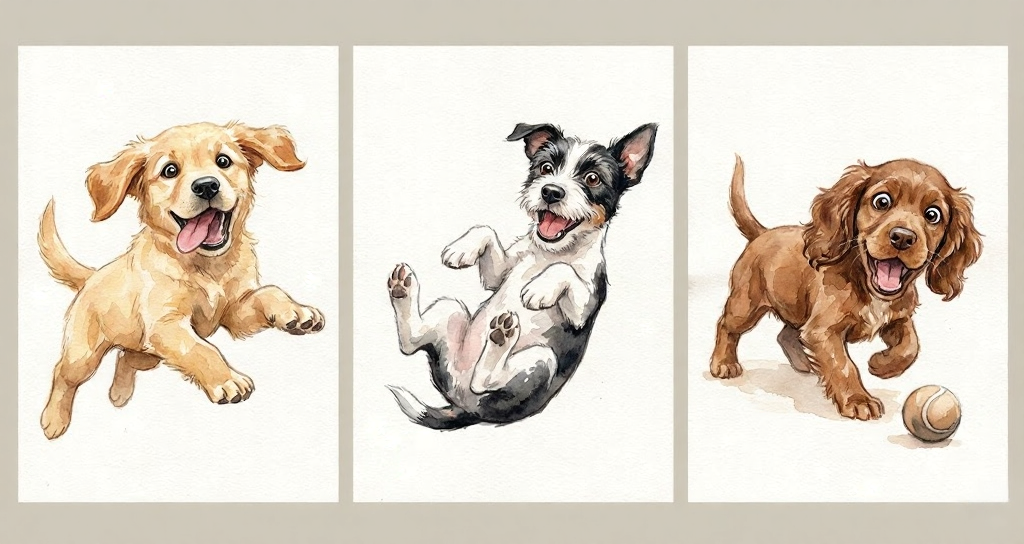
Floppy elements trail behind the motion: ears, tail, tongue. These “follow-through” details show movement direction and add life to static drawings.
Expression tip: Open mouths with visible tongues read as happy panting. Wide eyes read as excited. Combine these with dynamic poses for maximum playful energy.
9. Tiny Robots
Tiny robots make for adorable body drawing subjects. These miniature mechanical marvels can be sketched in various poses and situations.


Robots let you apply cute proportions to non-organic subjects—proof that cuteness is about proportion and shape, not just living creatures.
The cuteness formula: Box or cylinder body shapes made round and compact. Large “eye” screens or sensor circles. Small limbs with simple clamp hands. No threatening features (no weapons, no sharp angles).
Cute robot features: Antenna with ball ends, round buttons, small wheels or stubby legs, screen “faces” that display simple emotions, soft rounded edges instead of industrial sharp corners.
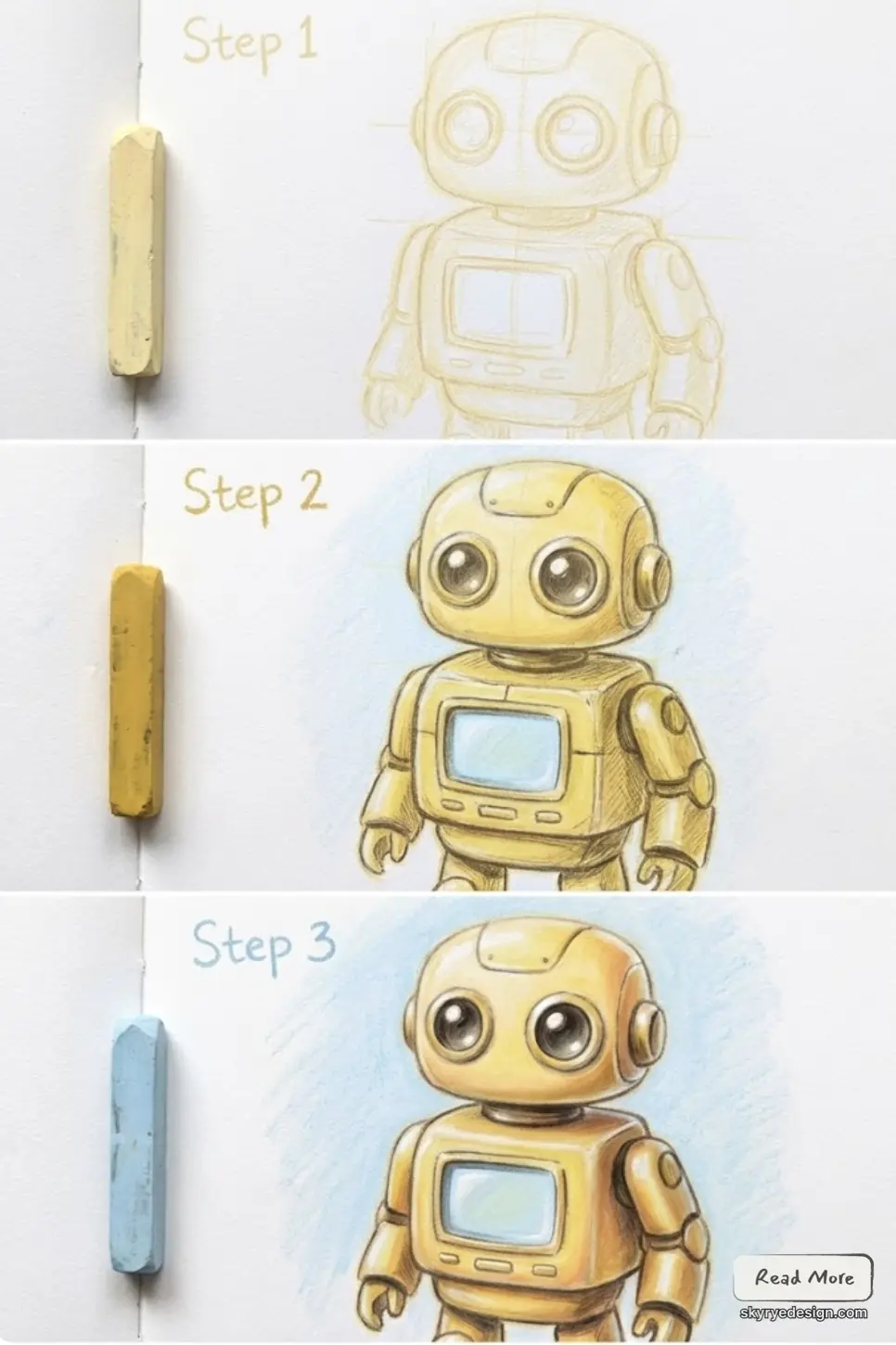
Drawing tip: Start with basic geometric shapes but round all the corners. A cube becomes a rounded box. A cylinder gets dome caps. This softening is what makes mechanical objects cute instead of cold.
Give your robots personality through their screen faces: simple emoji-style expressions work great. Two dots and a curved line becomes a happy face. Add blush marks for extra cuteness.
Pose ideas: Robot offering a flower, robot confused by a butterfly, robot giving thumbs up, robot with heart on chest screen. The contrast between mechanical body and emotional expression creates charm.
10. Baby Unicorns


Baby unicorns combine the cuteness of foals with magical fantasy elements. The young animal proportions plus sparkle and rainbow create concentrated adorableness.
The cuteness formula: Foal proportions (already cute: long legs relative to small body, large head) pushed further into cartoon territory. Add small, stubby horn (not a dramatic spiral—that reads as mature). Soft, fluffy mane and tail.
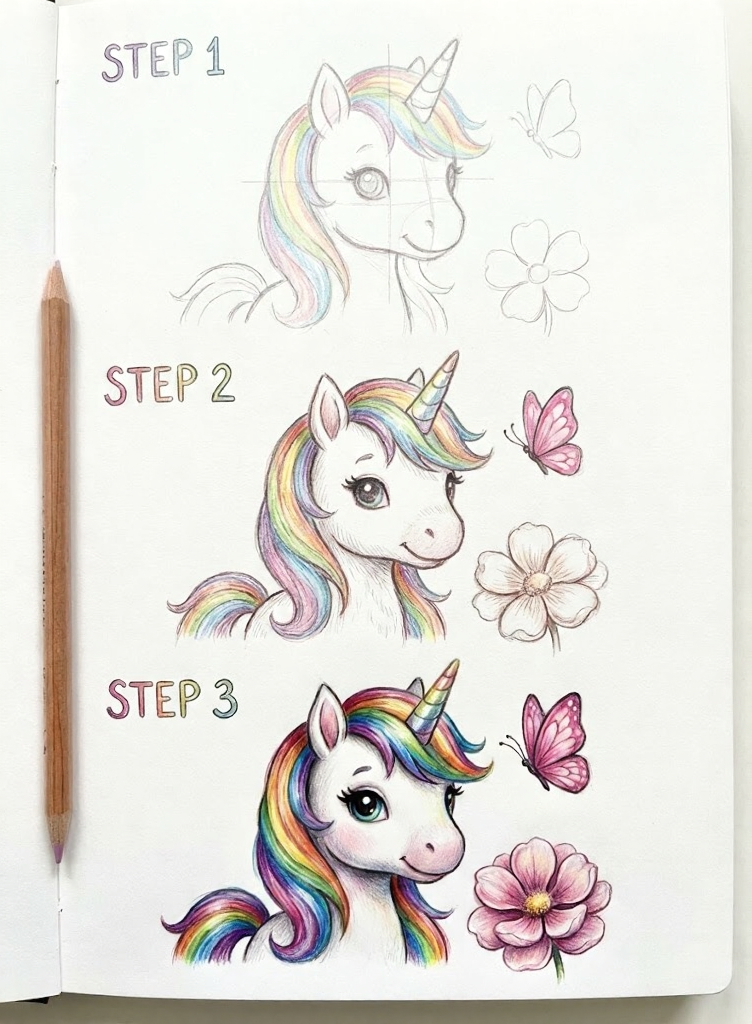
Key baby unicorn features: The horn should be short and simple—a small cone or bump. The mane should be soft and flowing but not dramatically long. Big eyes with star or heart-shaped highlights instead of simple circles. Soft pastel colors throughout.
Drawing tip: Draw a small rounded body with legs that are proportionally shorter than a real foal’s. Head is large relative to body. The horn emerges as a small addition to the forehead, not a dramatic central feature.
Add magical elements subtly: a few sparkles around the horn, starry patterns on the body, a rainbow-gradient mane. Too much magic can overwhelm the cute factor—keep it simple and sweet.
Pose ideas: Sleeping curled up (horn glowing softly), prancing through flowers, nuzzling its mother, looking up with big curious eyes.
11. Miniature Mermaids


Mermaids at small scale combine cute human proportions with fish-tail design. The miniature size is key—these aren’t majestic sea queens but tiny magical creatures.
The cuteness formula: Standard cute proportions on the human half: big head, big eyes, small shoulders. Tail should be simply designed—not anatomically realistic fish scales but smooth, flowing shapes. Overall size is tiny (shown through context with shells, fish, coral).
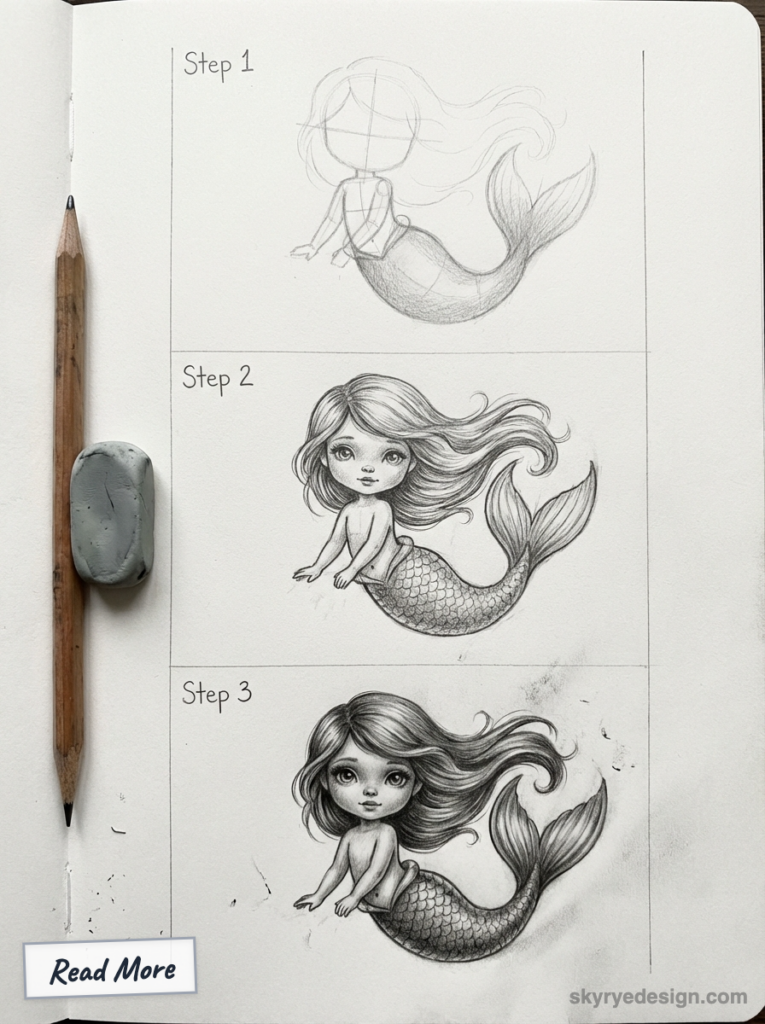
Key miniature mermaid features: Hair that flows like it’s underwater, simple shell or starfish accessories, tail in soft fantasy colors (pink, purple, teal), friendly curious expressions.
Drawing tip: The transition from body to tail is tricky—avoid making it look like a costume by keeping the whole figure rounded and flowing. The tail should feel like a natural extension of the body, not an attachment.
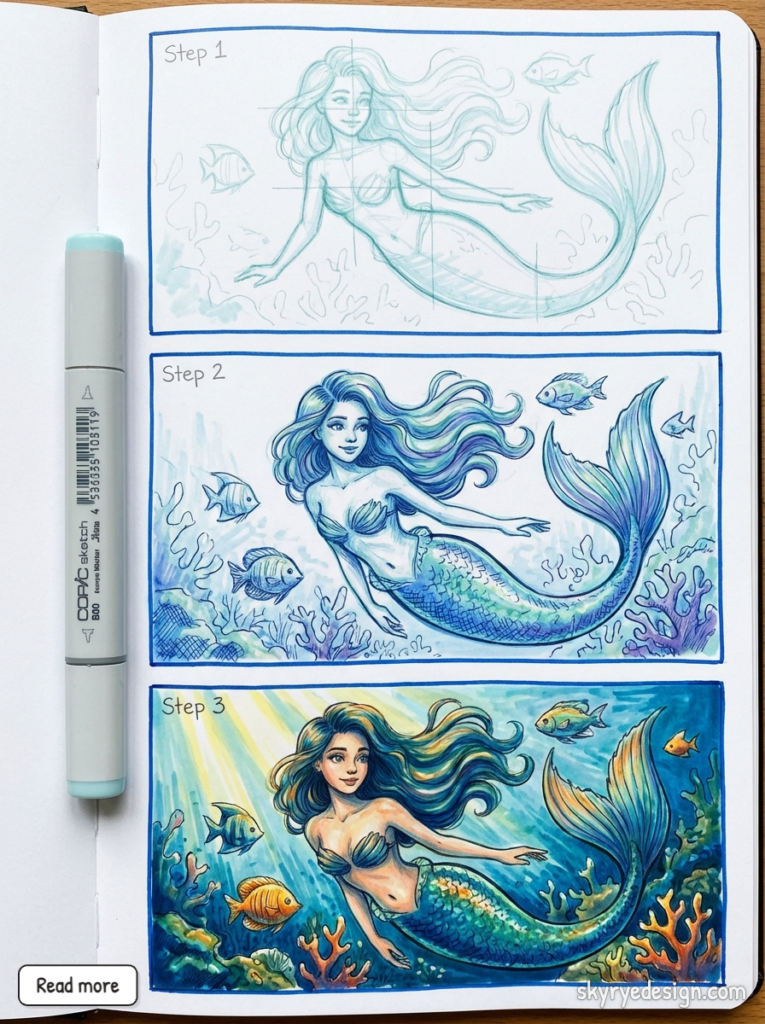
Keep scale props in your drawings: the mermaid sitting in a seashell, riding a seahorse, hiding behind a starfish. These size references reinforce the “miniature” quality that adds to cuteness.
Environment ideas: Coral gardens, bubble clusters, underwater flowers, treasure chests with pearls. The underwater setting allows for floating poses that are hard to achieve with land-based characters.
12. Whimsical Woodland Creatures


Woodland creatures—foxes, deer, squirrels, rabbits, owls, hedgehogs—occupy a sweet spot between realistic animals and pure cartoon. They carry associations of fairy tales and gentle forest magic.
The cuteness formula: Same proportions as other cute animals (big head, big eyes, compact body) but with species-specific features simplified and softened. A fox’s pointed ears become rounded triangles. A deer’s slender legs become stubby supports.
Best woodland creatures for cute: Baby deer (fawns with spots), fox kits, bunnies, hedgehogs, owls, squirrels, chipmunks. Each has distinctive features you can exaggerate while maintaining cuteness.
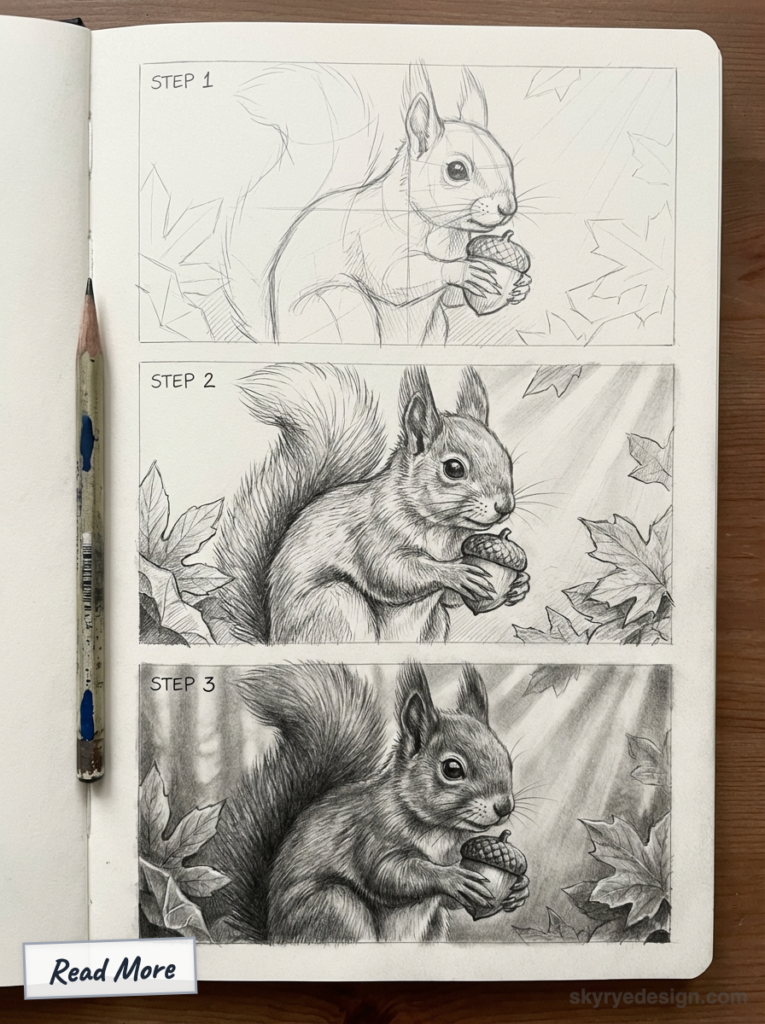
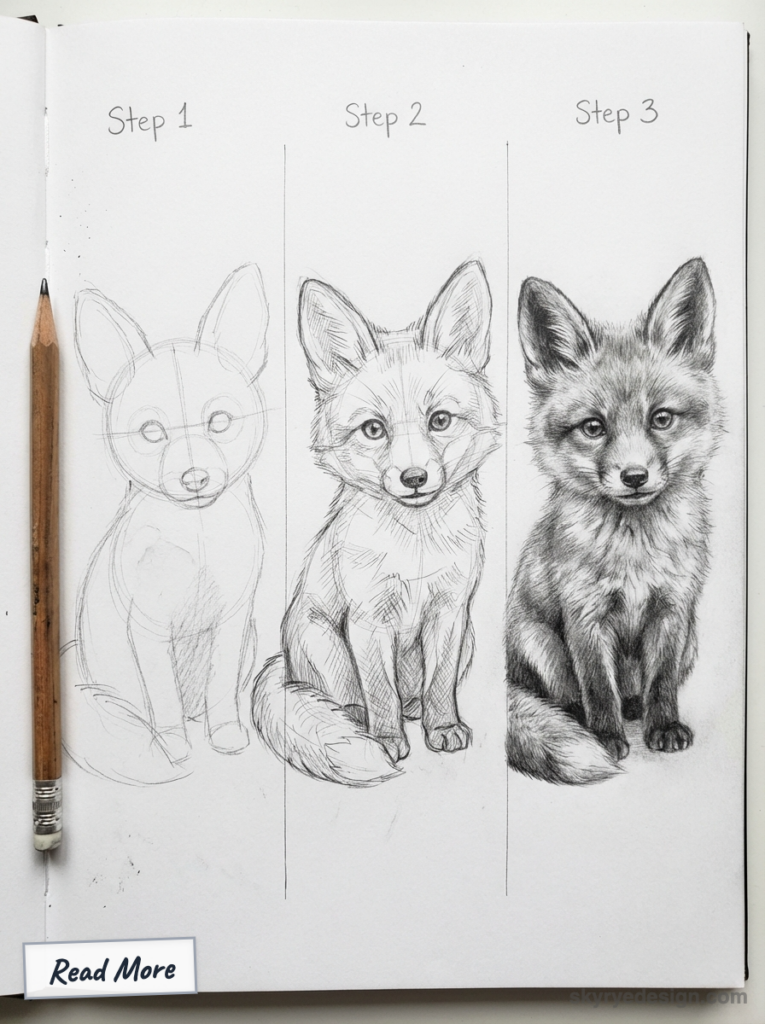
Drawing tip: Identify each animal’s most recognizable feature and keep that while simplifying everything else. Fox = pointed ears and fluffy tail. Deer = spots and big eyes. Hedgehog = spines (but make them soft-looking). Owl = big round eyes and face disk.
Add woodland context: mushrooms, acorns, fallen leaves, berries, tree stumps. These environmental elements enhance the fairy-tale feeling and give you props for cute poses.
Scene ideas: Fox kit sleeping on a mushroom, owl baby peeking from tree hollow, squirrel hugging an acorn, deer fawn standing in a flower patch. Interaction with the environment creates narrative and adds visual interest.
Understanding the Basics of Cute Body Drawing
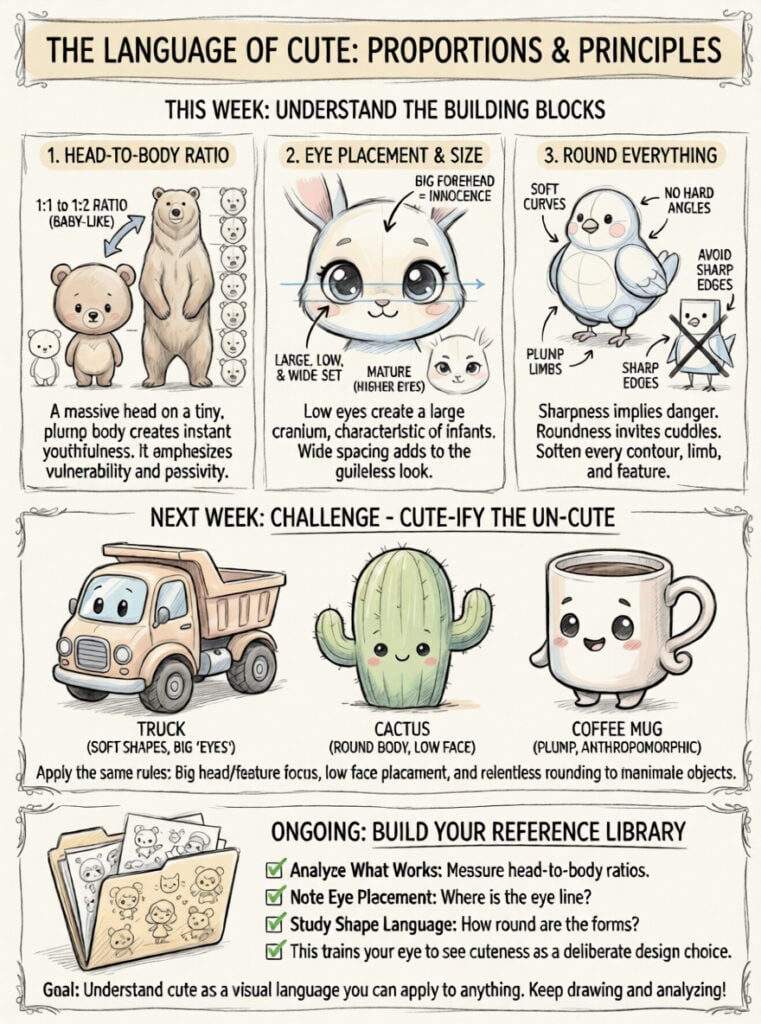


Now that you’ve seen 12 specific ideas, let’s break down the underlying principles that make cute bodies work.
Key Principles for Proportions
The baby principle: Cute proportions mimic infant features across species. Large head relative to body (1:2 or 1:3 instead of adult 1:7). Eyes positioned low on the face. High forehead. Short limbs. Round soft features.
The roundness rule: Curves read as soft and safe; angles read as sharp and threatening. Replace straight lines with curves. Soften corners. Avoid pointy features unless deliberately stylized (like cat ears, which remain triangular but become rounded triangles).
The simplicity standard: Cute bodies are less detailed than realistic bodies. No visible muscles, minimal joint definition, simple hands and feet. The simpler the form, the easier it is to read as cute rather than anatomically complex.
The compactness concept: Cute things are compact. Short bodies, short limbs, everything tucked together. Elongated proportions read as elegant or mature, not cute.
Selecting the Right Tools
For traditional drawing:
- Soft pencils (2B-4B) create gentle lines that suit cute subjects
- Rounded nibs on pens avoid scratchy, aggressive line quality
- Colored pencils in pastel shades enhance the cute aesthetic
- Soft erasers for clean corrections without paper damage
For digital drawing:
- Brush settings with smooth pressure curves
- Round brushes rather than textured ones for clean shapes
- Soft edge settings for that gentle cute look
- Pastel or bright color palettes pre-selected
General tip: Cute drawing benefits from confident, smooth lines rather than sketchy, hesitant ones. Practice drawing circles and curves until they flow naturally.
Techniques to Enhance Your Illustrations


Applying Light and Shadows
Cute drawings typically use soft, gentle lighting. Harsh shadows create drama and can undermine the adorable feeling.
Soft shading technique: Instead of dark cast shadows, use slightly darker tones of the base color. If a cheek is pink, the shadow is deeper pink, not gray or black.
Highlight placement: Cute drawings often feature prominent highlights, especially on eyes (the “sparkle” effect) and on round surfaces (cheeks, noses, round bodies). These highlights suggest a soft, glossy quality.
Ambient glow: Some cute styles add a soft glow around characters, especially for magical subjects like fairies and unicorns. This can be achieved with soft airbrushing or gradient effects.
Incorporating Subtle Details
Blush marks: Adding rosy cheeks is an instant cute enhancer. Small oval or circular marks on cheeks suggest warmth, health, and emotion.
Sparkle eyes: Multiple highlight spots in eyes (not just one) create that anime/kawaii sparkle effect. Place them consistently across all characters in a drawing.
Simple expressions: Cute faces use minimal features: two dots for eyes (or simple circles), a small curved line for smile, tiny nose or none at all. More detail often decreases rather than increases cuteness.
Texture hints: Suggest fur, fluff, or softness with minimal lines. A few zigzag strokes around a cheek suggest fluffy fur better than rendering every hair.
FAQ
Why do my cute drawings look creepy instead of adorable?
Usually it’s the eye placement or size. Eyes positioned too high on the face look alien. Eyes that are too small relative to the face lose the baby-proportion appeal. Also check for accidental harsh angles—pointy features can make cute subjects look sinister.
What’s the easiest cute subject for complete beginners?
Simple cartoon animals—specifically round animals like hamsters, bunnies, or bears. They’re forgiving because there’s no “correct” anatomy to match, and their natural roundness works well with cute proportions.
How do I make human figures look cute without going full chibi?
Shorten the proportions to 5-6 heads instead of 7-8, enlarge the head slightly, simplify the features, and use soft curved lines instead of angular anatomy. You can maintain recognizably human figures while pushing them toward cute without extreme chibi compression.
Does color matter for cuteness?
Yes. Pastel colors, soft warm tones, and bright cheerful hues enhance cuteness. Harsh contrasts, dark values, and muddy colors can undermine cute designs. This doesn’t mean everything must be pink—but it means being intentional about color temperature and saturation.
Can I make anything cute with these principles?
Almost. The principles (big head, big eyes, round shapes, stubby limbs, soft features) work on animals, humans, robots, objects, food—nearly anything. Some subjects resist cuteness (realistic horror creatures, for example), but most can be cute-ified with the right proportion adjustments.
Conclusion
Cute body drawing isn’t about talent or having a “cute style”—it’s about understanding specific proportions and features that trigger universal appeal. Large heads, big eyes, compact bodies, rounded shapes, soft features. These rules apply whether you’re drawing kittens or robots, fairies or dinosaurs.
This week: Pick three ideas from this list and draw each one, consciously applying the proportions described. Don’t just copy reference—understand why each element contributes to the cute reading.
Next week: Take something that isn’t typically cute (a truck, a cactus, a coffee mug) and apply cute proportions to it. Can you make it adorable using these same principles?
Ongoing: Build a reference folder of cute art you admire. Analyze what makes each piece work. Which proportions do they use? Where are the eyes placed? How round are the shapes? This active study trains your eye to see cuteness as a deliberate design choice, not a lucky accident.
The goal isn’t to draw the same cute things forever—it’s to understand cute as a visual language you can apply to anything. Once you know why these 12 ideas work, you can make your own ideas work just as well.
Start with a simple cartoon animal. Make the head big. Make the eyes bigger. Round everything. See what happens.
- 15.5Kshares
- Facebook0
- Pinterest15.5K
- Twitter0
- Reddit0