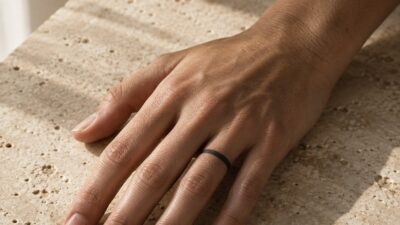

Arm tattoos for women work because the placement can be visible, hidden, delicate, or bold without changing the whole outfit. A small wrist symbol feels completely different from an inner-arm quote, a floral forearm piece, or a sleeve that wraps from shoulder to elbow. Before choosing the drawing itself, decide how much attention you want the tattoo to get and how easily you need to cover it.
- Key Takeaways
- Quick finder: arm tattoos for women by placement
- Popular Arm Tattoo Designs for Women
- Arm Tattoo Placement and Sizing Considerations
- Tattoo Styles and Artistic Techniques
- Symbolism and Meaning in Women’s Arm Tattoos
- Choosing the Right Arm Tattoo for You
- Related arm tattoo ideas to compare next
- Frequently Asked Questions
- Q: What are the best tattoo designs for women’s arms?
- Q: Which arm placement hurts the least for a tattoo?
- Q: How long does an arm tattoo take to heal?
- Q: Are fine-line arm tattoos a good idea?
- Q: How much does a women’s arm tattoo cost?
- Q: What tattoo style lasts the longest on the arm?
- Q: What should I avoid before getting an arm tattoo?
- Q: Are back of arm tattoos a good choice for women?
- Q: What tattoo designs work best above the elbow?
- Q: Can arm tattoos for women be easily covered for work?
- Compare style and placement
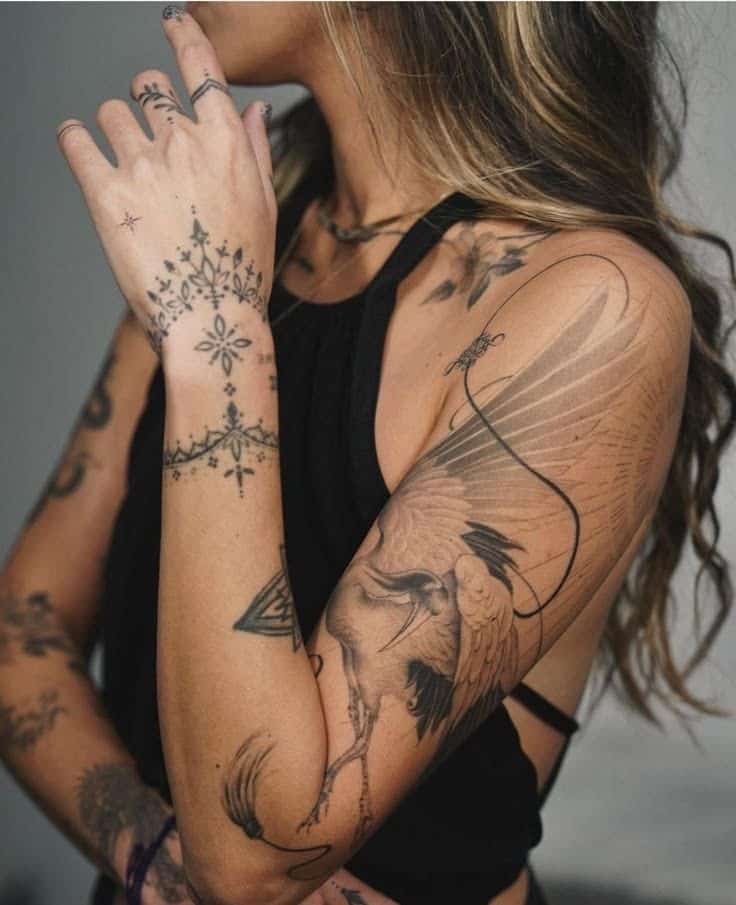
The visibility thing matters more than people realize too. I can wear a t-shirt all day and my forearm tattoo is fully out there, then throw on a hoodie before a meeting and it’s gone. That kind of control is hard to beat.
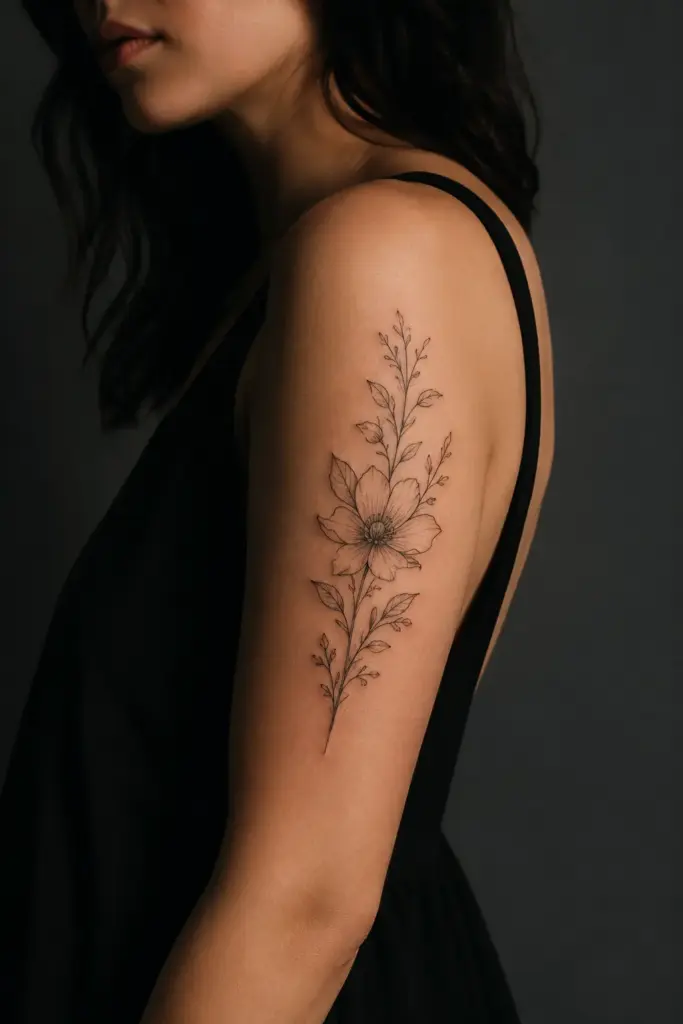
What I always end up telling people is this: placement changes the entire mood of a tattoo. Before design. Before style. Before color.
Inner arm tattoos feel different. Quieter. Almost private. You notice them yourself while typing or sitting in traffic, but other people might not even register they’re there. Outer forearm tattoos aren’t subtle at all. Those get random comments while you’re buying coffee or pumping gas.
For arm placements with a personal but readable symbol, these heart tattoo designs show how wrist, forearm, and upper-arm versions change the mood of the same idea.
Upper arm and shoulder pieces are a different category. More room. Better for larger artwork. But weirdly enough, you barely see them yourself unless it’s summer and you live in tank tops.
Every spot on the arm has its own personality. That’s the part people usually realize after the tattoo is already healed.


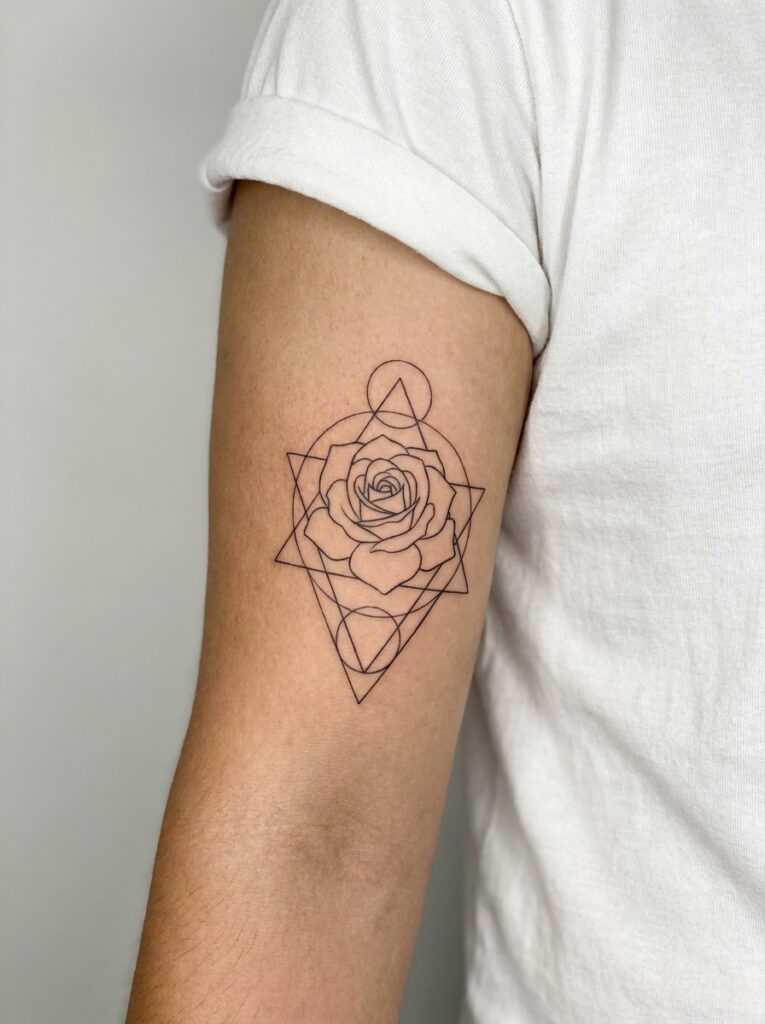
The other thing nobody warns you about — a design that looks perfect flat on paper can warp once it wraps around your forearm. I learned this the hard way with a geometric piece. Straight lines don’t stay straight on a cylinder. If your design has a lot of symmetry or precise geometry, ask your artist to mock it up on your arm with a stencil before committing. Spend the extra twenty minutes. You’ll have this thing for decades. If the arm piece needs to hide older work, start with these arm tattoo cover up ideas so the new design has enough darkness, scale, and movement.
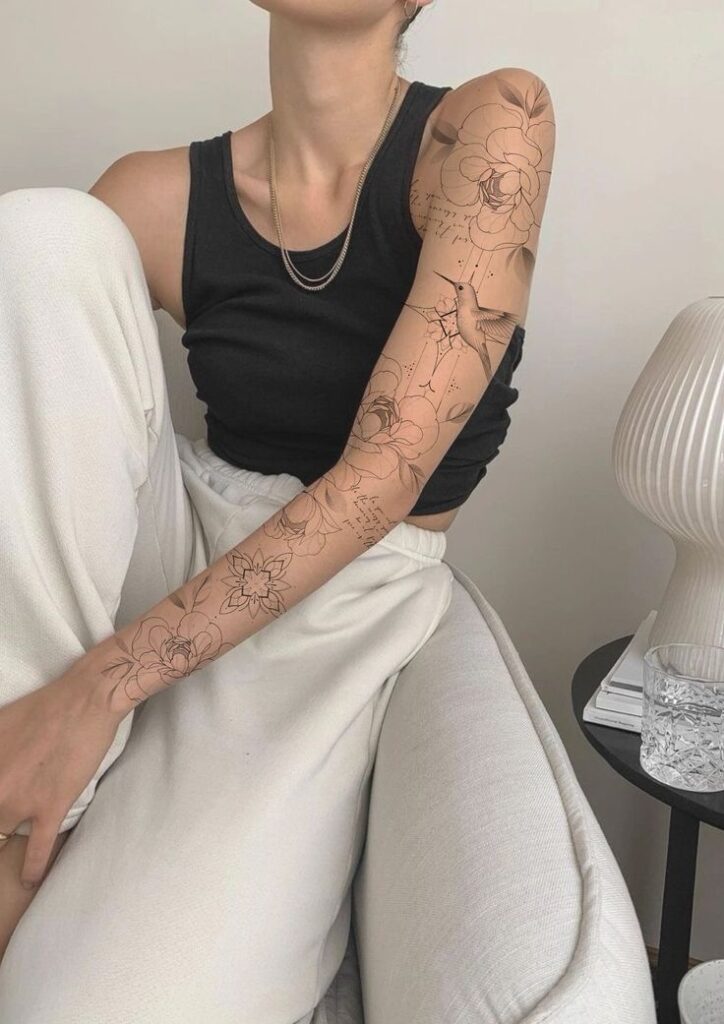
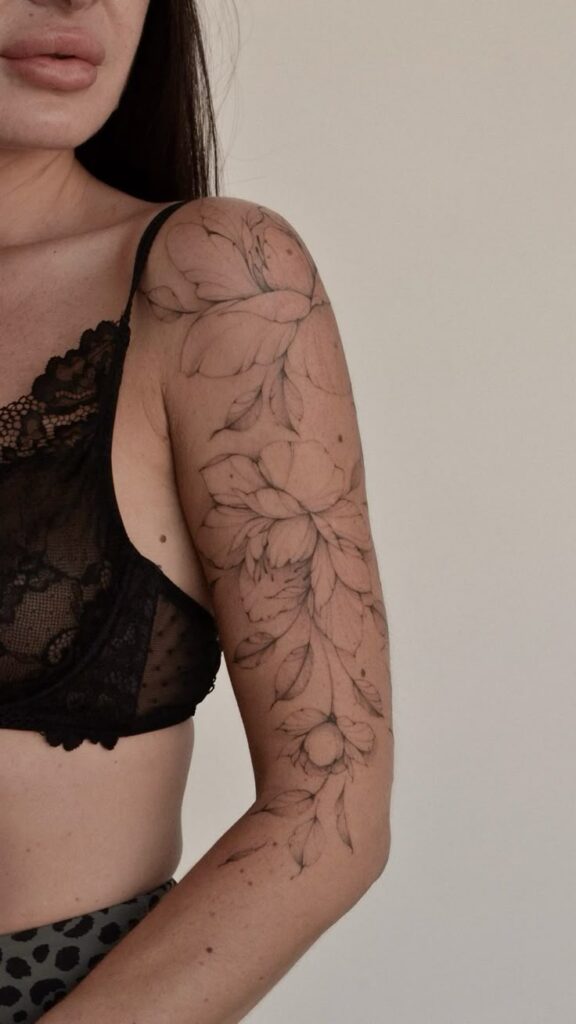
With so many options, finding the right design comes down to what resonates with you. From meaningful symbols to artistic details, your arm can become a canvas that highlights individuality while staying practical in everyday life.
Key Takeaways
- Arm tattoos offer flexibility in size, placement, and visibility
- Design choices range from minimal to bold, each with unique meaning
- Personal style and symbolism guide the best tattoo decision
Quick finder: arm tattoos for women by placement
When you think about arm tattoos, you’re looking at one of the most versatile spots for body art.
If you are comparing arm tattoo ideas quickly, start with placement. The same flower, quote, or symbol can look soft on the inner arm, bold on the forearm, and more polished on the upper arm. This quick guide helps you narrow the mood before you save another dozen reference photos.
| Placement | Best for | Design notes |
|---|---|---|
| Forearm | Visible artwork, quotes, flowers, animals | Use vertical designs that follow the arm; avoid tiny details that blur from a distance. |
| Upper arm | Classy, easy-to-cover tattoos | Good for florals, portraits, geometric work, and half-sleeve starts. |
| Inner arm | Private, meaningful pieces | Works well for handwriting, dates, fine-line flowers, and symbols you want mostly for yourself. |
| Back of arm | Subtle tattoos with a surprise angle | Looks elegant with vertical stems, small script, stars, moons, and delicate ornamental shapes. |
| Above elbow | Small statement designs | Keep shapes simple so the tattoo still reads when the arm bends. |
| Half or full sleeve | Connected stories and larger artwork | Ask the artist to plan flow first, then fill in details around the shoulder, bicep, elbow, and forearm. |
Popular Arm Tattoo Designs for Women
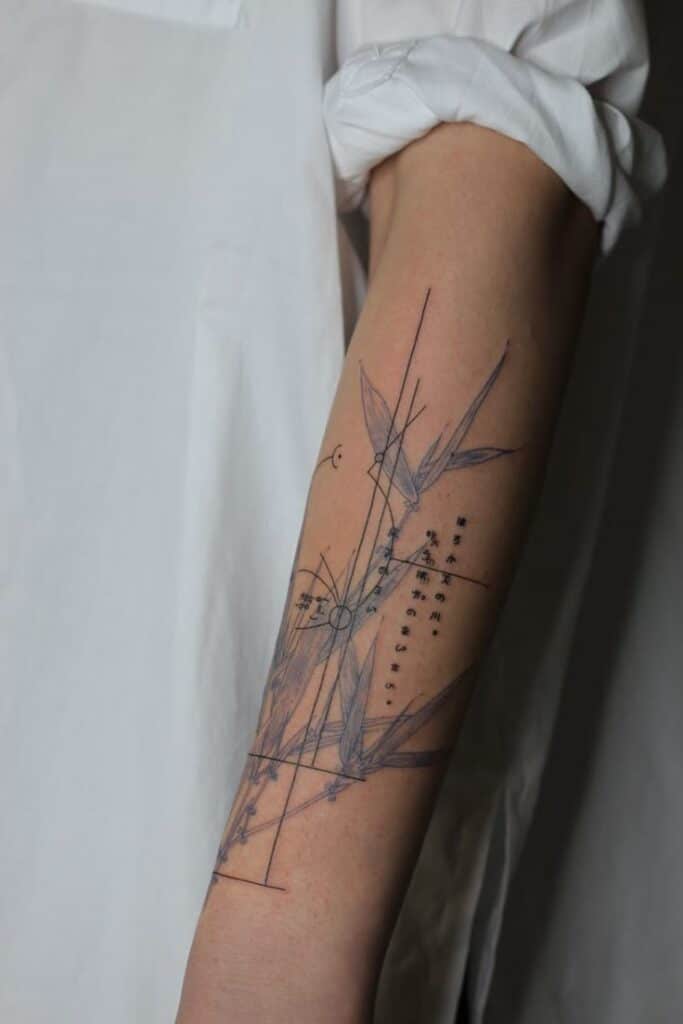
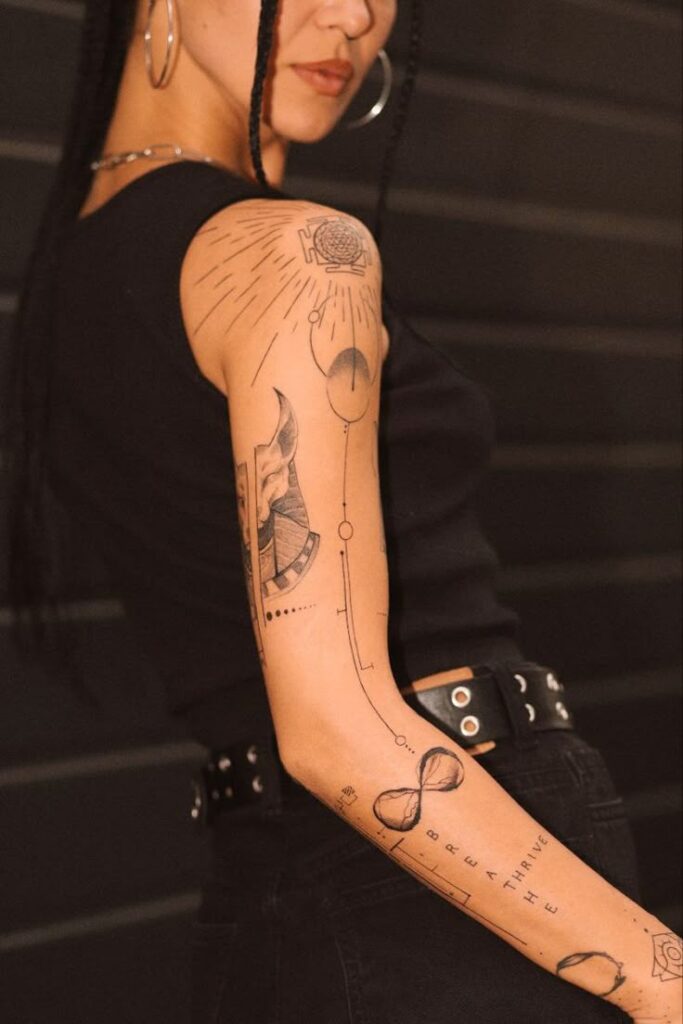
When you choose an arm tattoo, you often balance style with meaning. Certain designs stand out because they combine timeless artistry with versatility, making them suitable for both small and larger placements.
Floral and Botanical Arm Tattoos
Floral designs remain one of the most requested arm tattoo ideas for women. A rose tattoo is a classic option, often symbolizing love, beauty, or resilience. Other flowers like lotus, peony, and daisy carry their own meanings, allowing you to pick a design that reflects your personality.
You can also explore botanical elements such as vines, leaves, or branches. These create a flowing effect along the arm and work well for both upper and lower placements. A butterfly tattoo paired with flowers adds movement and visual balance.
If you prefer a delicate look, small arm tattoos like a single stem or a minimalist floral outline can be subtle yet meaningful. For a bolder statement, a half-sleeve of blooming flowers can create a cohesive design that grows with you over time.


Minimalist Arm Tattoo Ideas
Minimalist tattoos focus on clean lines, small details, and subtle symbolism. These designs are ideal if you want something discreet but still personal. A small tattoo like a single word, a tiny heart, or a fine-line symbol can sit neatly on your wrist, forearm, or inner arm.
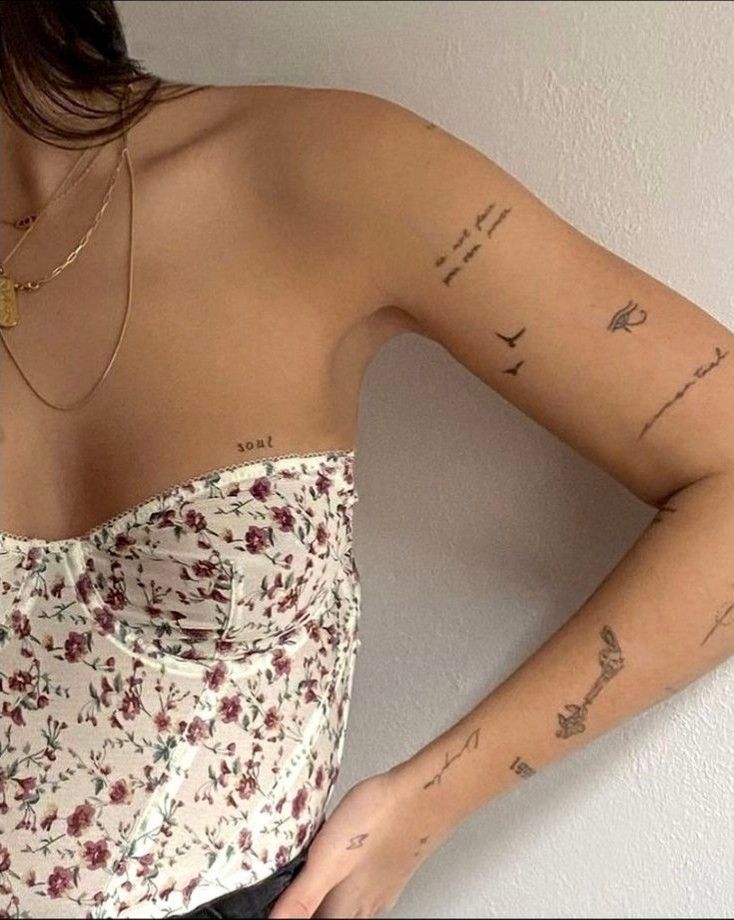
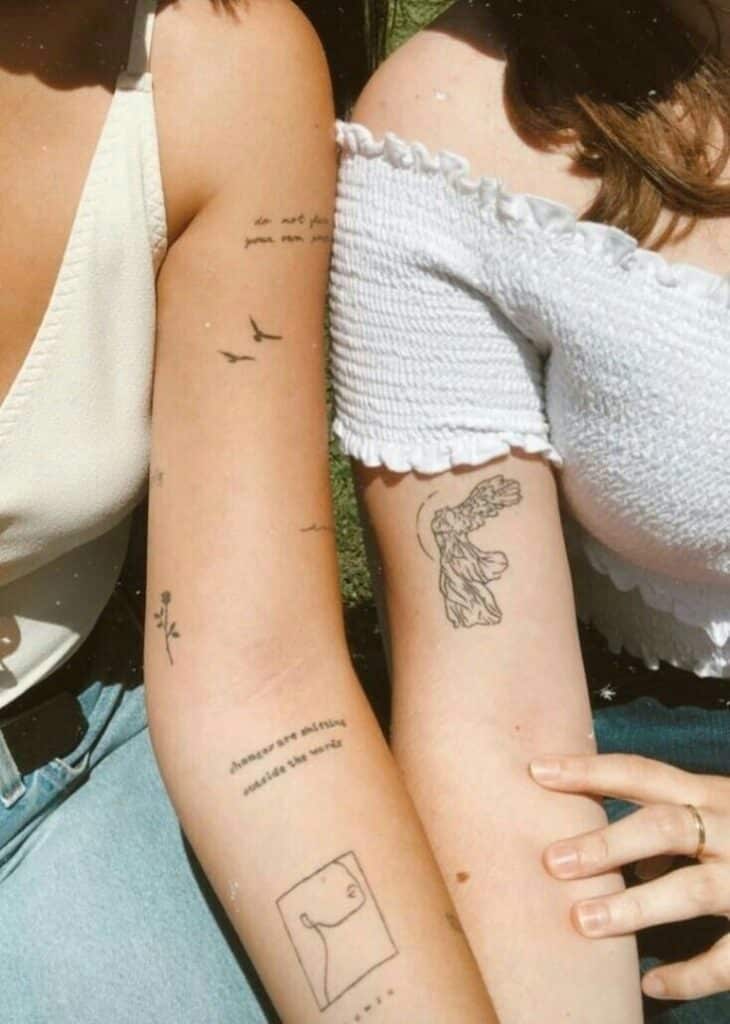
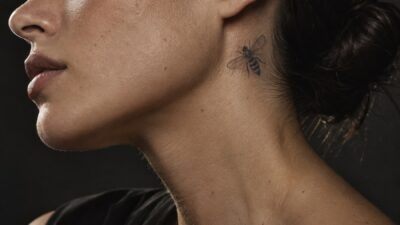
You can also choose minimalist designs that carry meaning without being overly complex. For example, a bee tattoo can represent hard work and community, while a small wave line can remind you of balance and calm.
Placement plays a big role in minimalist tattoos. The side of the wrist, inner bicep, or near the elbow are common spots. These tattoos work well if you want something timeless that won’t feel overwhelming in size or detail.


Geometric and Abstract Patterns
Geometric tattoos use precise lines, shapes, and symmetry to create striking designs. You might choose geometric patterns like triangles, circles, or mandalas that represent balance, harmony, or spirituality. These tattoos can be scaled to fit small areas or expanded into larger arm pieces.
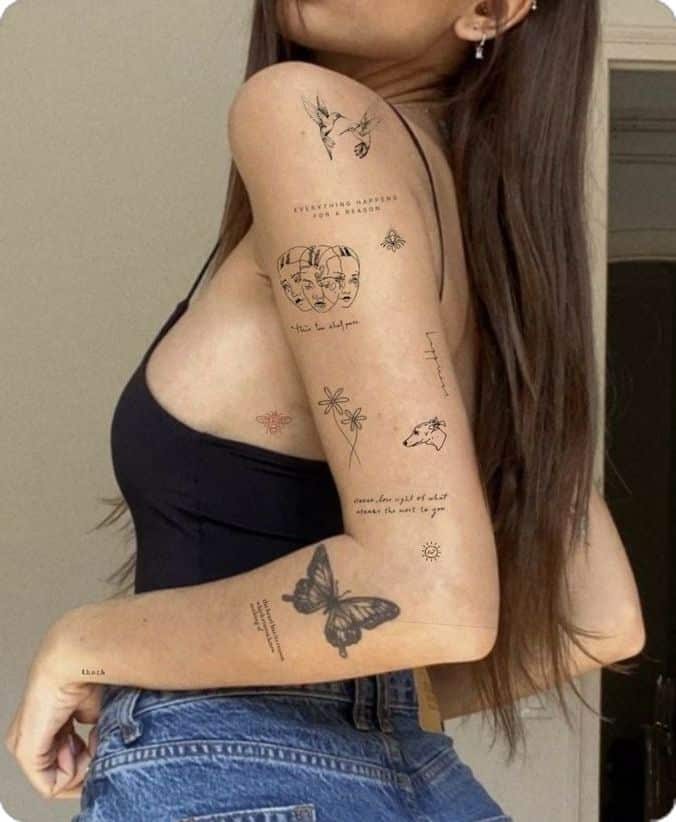
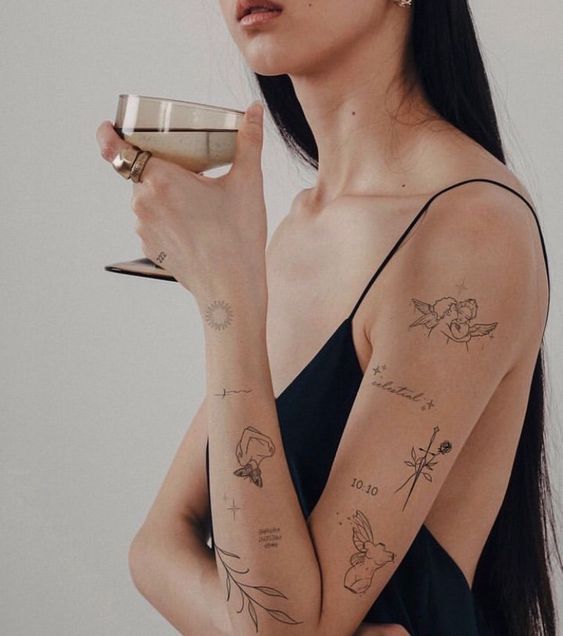
Abstract tattoos combine bold lines with creative shapes, offering flexibility if you prefer a modern style. A geometric tattoo of an animal, such as a wolf or bird, blends symbolism with sharp design elements.
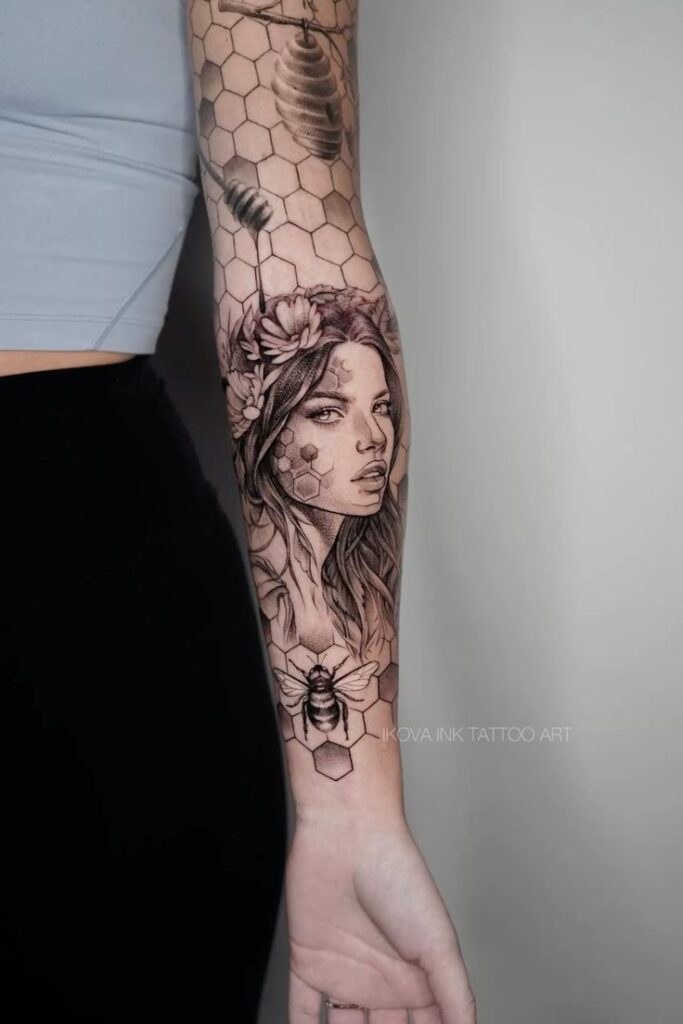
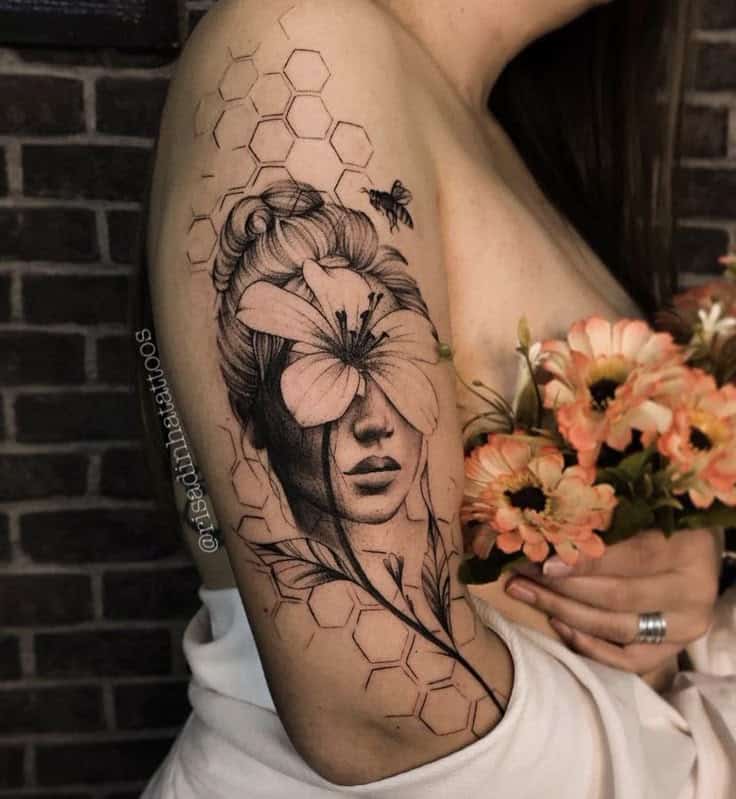
These patterns often look best on the forearm or upper arm, where the flat surface highlights symmetry. If you want a tattoo that feels both artistic and structured, geometric and abstract styles give you that balance.
Nature-Inspired Motifs
Nature tattoos are everywhere on arms right now, and honestly, I get it. They age well, they’re flexible, and most of them still look good years later when trends start feeling dated.
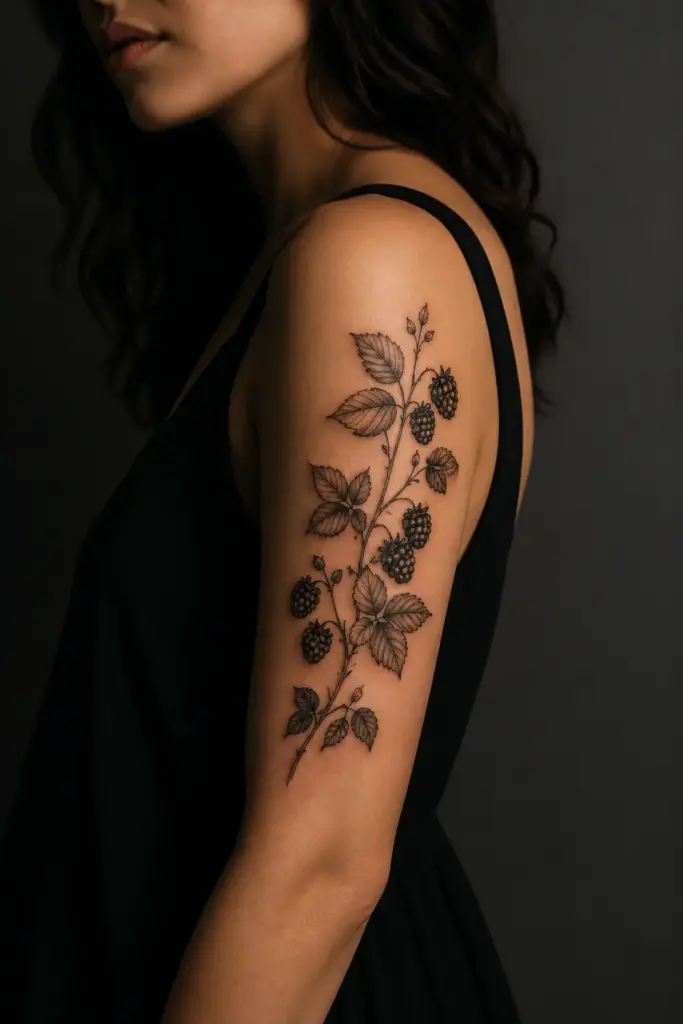
Butterflies are the obvious example. People instantly read them as transformation or change without needing some huge explanation behind it. Bees are another favorite of mine. They hold detail really well even at smaller sizes, and tattoo artists usually love doing them because the texture and linework are actually fun to work with.
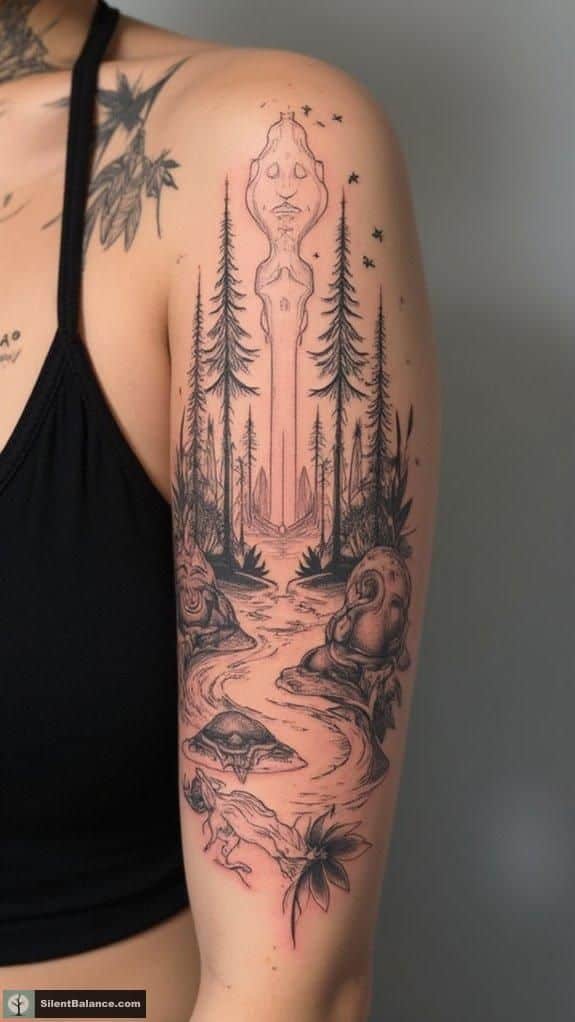
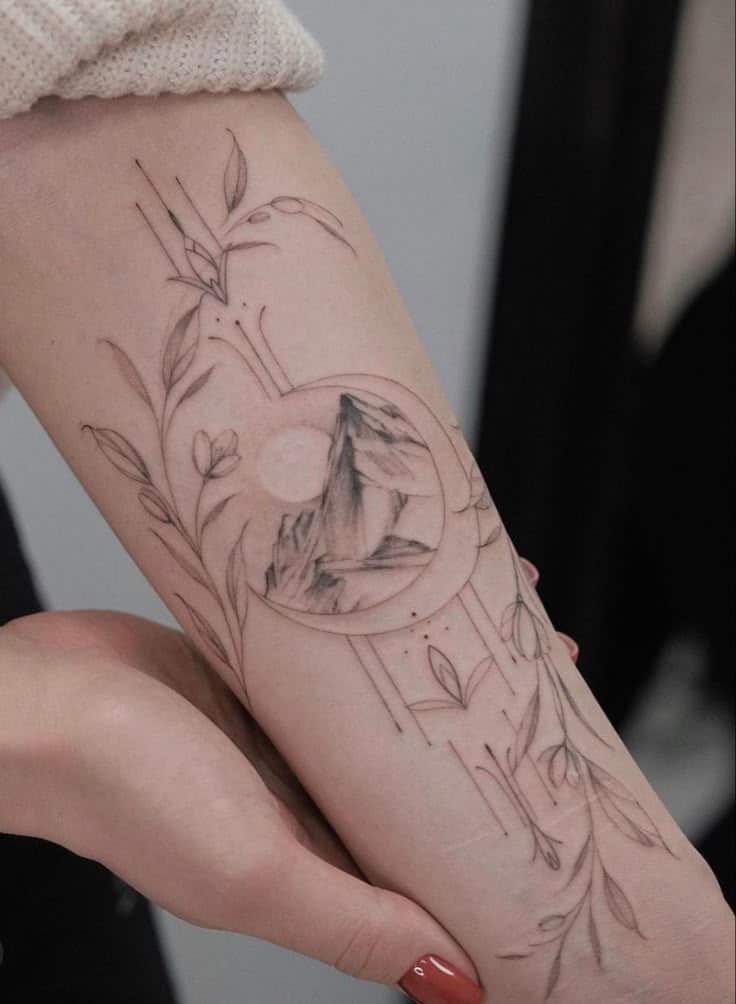
Then you’ve got the classics — birds, trees, mountain outlines. Those never really disappear. A pine tree tattoo can mean resilience and growth… or maybe the person just likes camping and national parks. Honestly, both are valid.
Water-themed tattoos are underrated on the arm. Small wave near the wrist, raindrops along the forearm, flowing lines wrapping around the bicep. They stay readable even when they’re tiny. And later, if you want more, they expand naturally. I saw one guy turn a little wave tattoo into an entire ocean half-sleeve over a couple years. Started simple. Ended up covering almost his whole forearm.
If you want something quieter, a single leaf or feather works well. But bigger nature sleeves live or die on flow. That’s the whole thing. Branches turning into birds. Mountains fading into clouds. Elements feeding into each other instead of just sitting there separately.
Because once every tattoo starts floating on the arm by itself, it stops looking intentional. It starts looking like a sticker collection.


Arm Tattoo Placement and Sizing Considerations
For a lighter placement than the arm, ankle designs can keep the same feminine feel without taking over the whole look. This guide covers feminine ankle tattoo ideas by style, placement, and healing concerns.
When deciding where to place an arm tattoo, you need to think about visibility, pain levels, and how much space your design requires. Each area of the arm offers different advantages, from bold statement pieces to subtle designs that stay hidden when needed.
Upper Arm Tattoos for Women
The upper arm is one of the most versatile spots for tattoos. You get a larger surface area, which works well for half sleeve tattoos or detailed designs that need room to breathe.
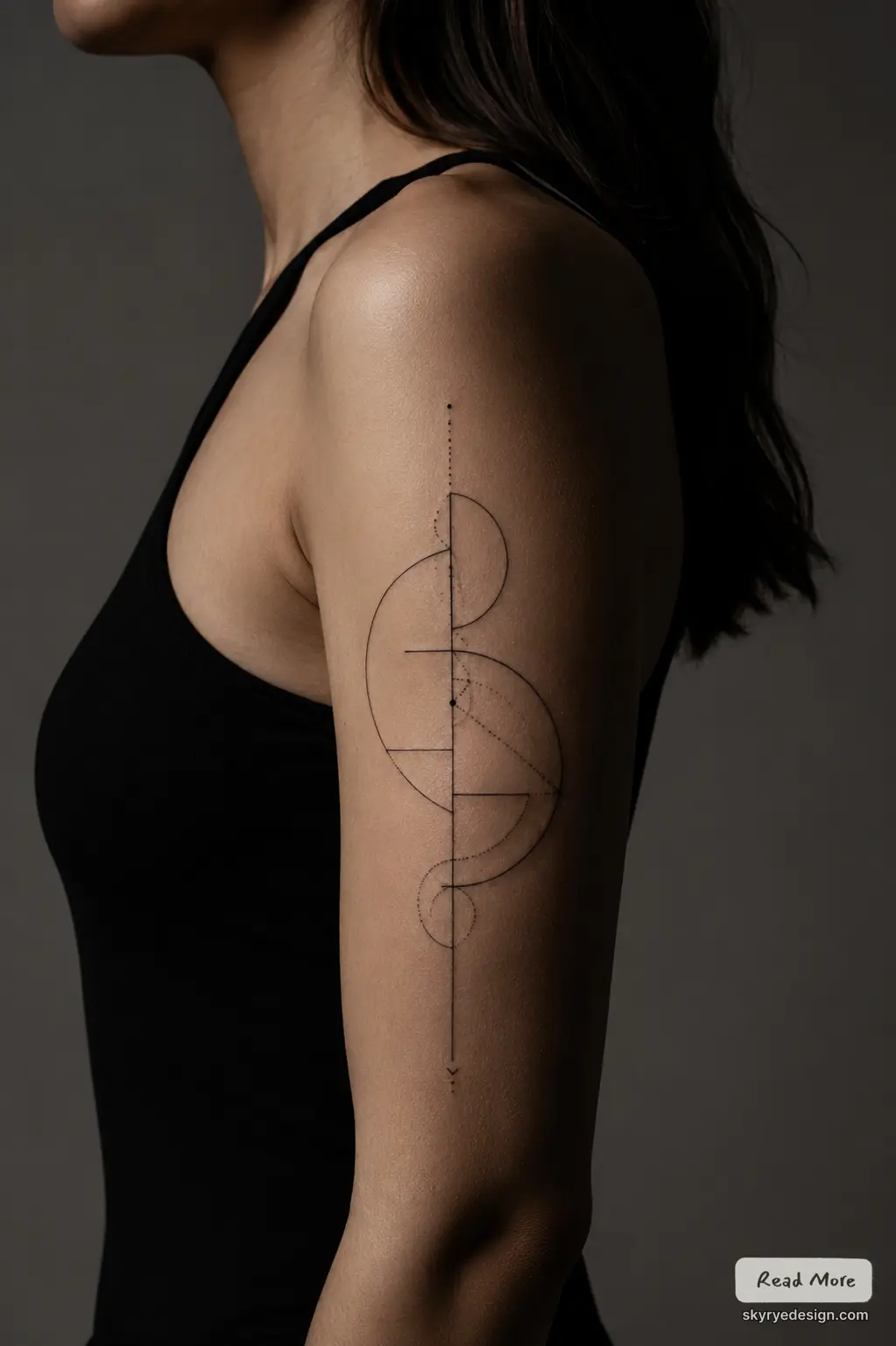
Upper arm tattoos are popular for a reason. They’re easy to hide under a t-shirt when you need to look professional, but the second you throw on a tank top or sleeveless dress, the tattoo becomes part of the outfit. That flexibility matters more than people expect.
It’s also one of the most forgiving placements design-wise. Floral work follows the curve of the shoulder naturally, geometric patterns stay sharp, and symbolic pieces don’t feel squeezed into an awkward space. Honestly, a lot of tattoos just look better there because the arm gives the design room to breathe.
Pain-wise, the upper arm is pretty manageable. There’s enough muscle and fat there that it doesn’t have that sharp, scratchy feeling you get closer to bone. Most people I know who started with an upper arm tattoo ended up coming back for more work later — usually because it was less brutal than they expected. And if you ever want a sleeve down the line, the upper arm gives you an easy place to build from.
Forearm and Lower Arm Tattoo Options
The lower arm tattoo is ideal if you want visibility. Designs on the outer forearm are easy to show and often chosen for bold, eye-catching art. Inner forearm tattoos, in contrast, can feel more personal and are slightly easier to conceal.
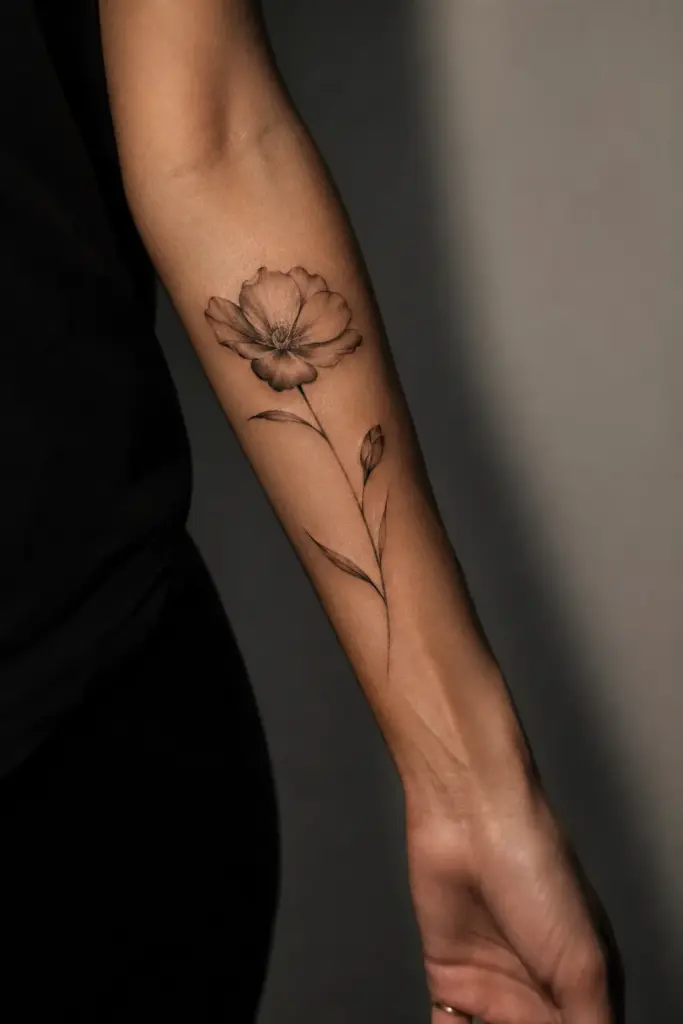
This area suits both small minimalist tattoos and larger pieces that wrap around. You can also use the forearm as a canvas for designs that extend into a half sleeve tattoo.
Pain levels are usually mild to moderate, though the wrist and elbow areas can feel sharper. If you want a tattoo that balances visibility and practicality, the forearm is one of the most popular choices.
Inner Arm Tattoos and Their Appeal
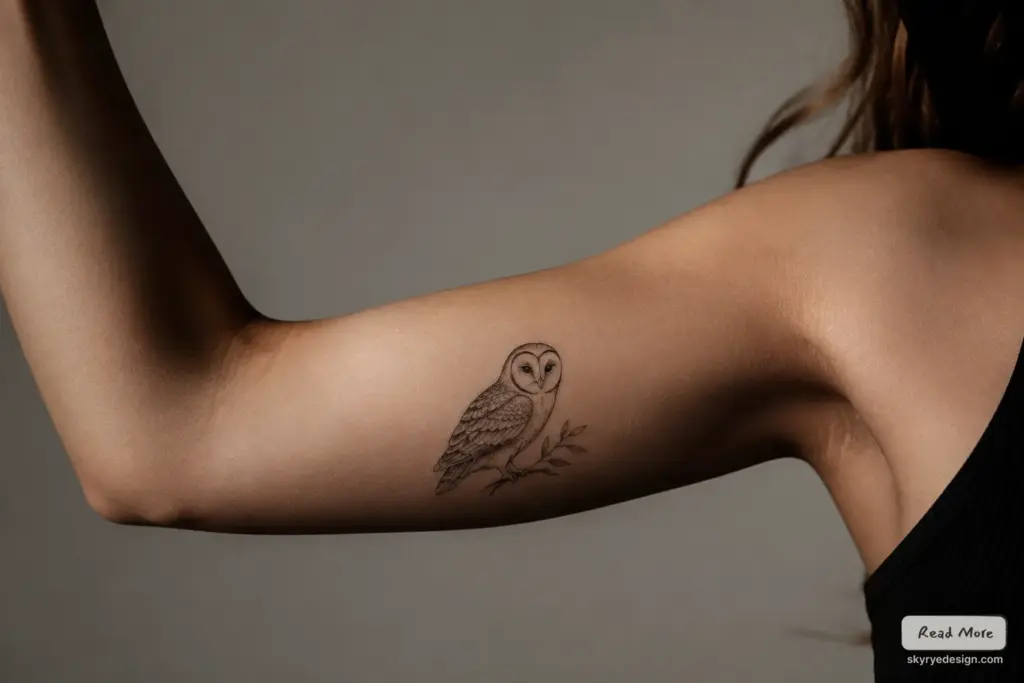
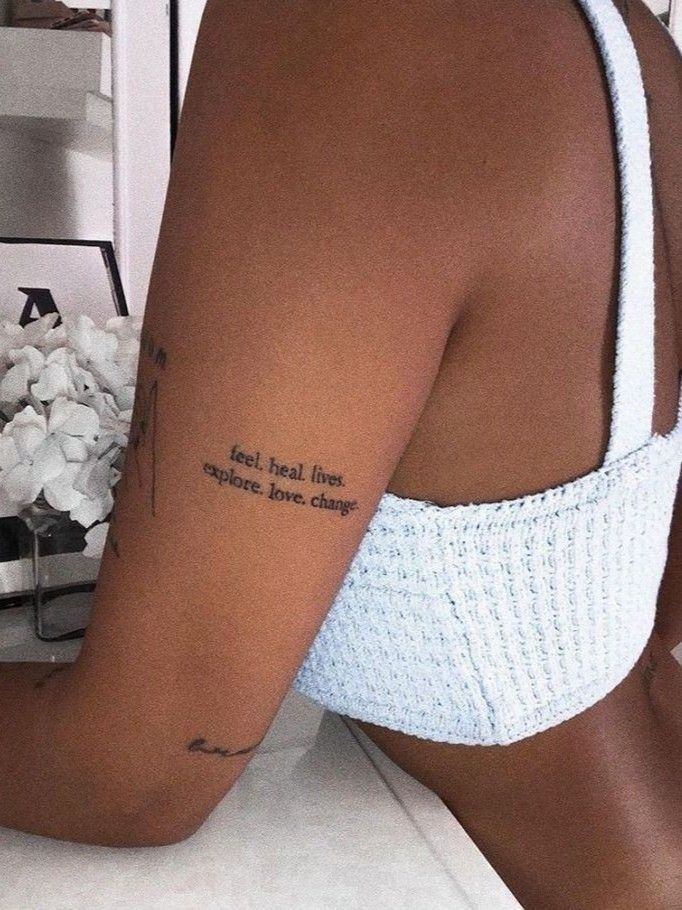
Inner arm tattoos have a different vibe from outer arm pieces. They feel quieter. More private. Most people won’t even notice them unless you lift your arm or wear something sleeveless, and honestly, that’s part of the appeal.
I’ve noticed a lot of women choose this spot for things that actually mean something to them — a handwritten quote, a tiny symbol, a fine line flower, even dates hidden near the bicep. Stuff that doesn’t need attention from strangers at a coffee shop.
The pain is real though. Inner arm skin is softer and more sensitive than the outside of the arm, so the needle feels sharper here. And healing can get irritating fast because the area constantly brushes against your side when you walk. Loose shirts help. Tight sleeves are a mistake the first few days.
But when it heals well, this placement looks incredibly clean. Especially with delicate linework. There’s something cool about having a tattoo that isn’t on display 24/7 — it feels more intentional that way.


Back of arm tattoos for women
Back of arm tattoos are a good middle ground when you want the tattoo to feel stylish but not constantly front-facing. A design on the back of the upper arm shows when you move, tie your hair up, or wear sleeveless tops, but it does not sit in your own line of sight all day.
Simple vertical designs usually work best here: a fine-line flower stem, a small moon phase, a narrow quote, a tiny snake, or a soft ornamental shape. If the design wraps too far around the arm, ask your artist to check how it looks from the side as well as from behind. That angle matters more than people expect.
Above elbow tattoo ideas
Above elbow tattoos are small but noticeable. They work especially well for stars, small flowers, bees, initials, little hearts, short words, or tiny geometric marks. Because this area bends and catches movement, the safest designs are clean shapes with enough breathing room around the lines.
I would avoid overly detailed faces, crowded lettering, or micro symbols right on the crease. Place the tattoo slightly above or beside the bend instead. It usually heals cleaner and looks better when your arm is relaxed.
Tattoo Styles and Artistic Techniques
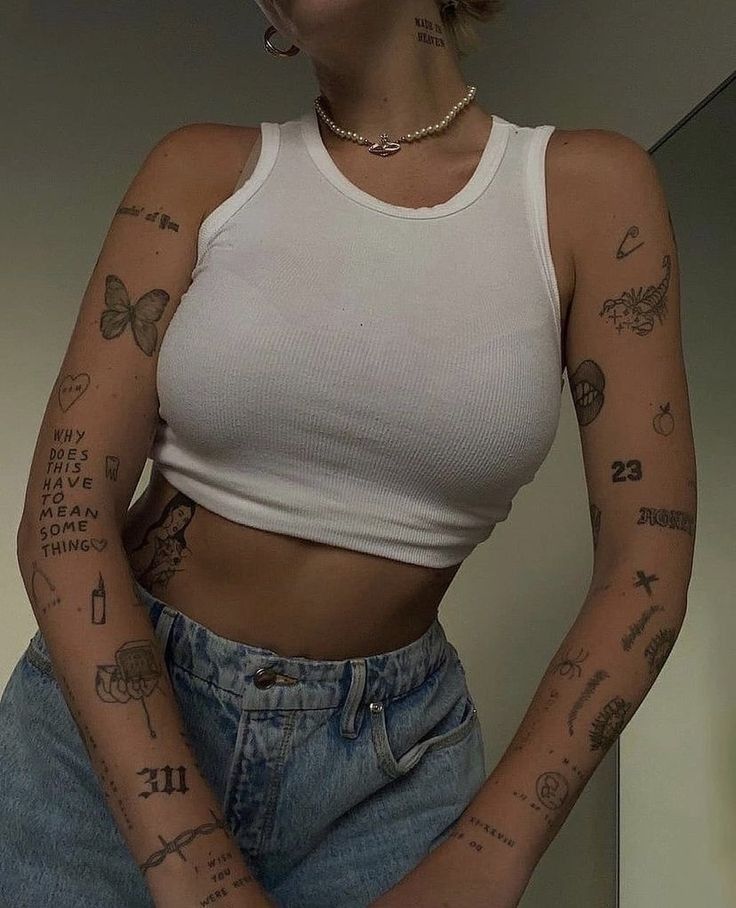
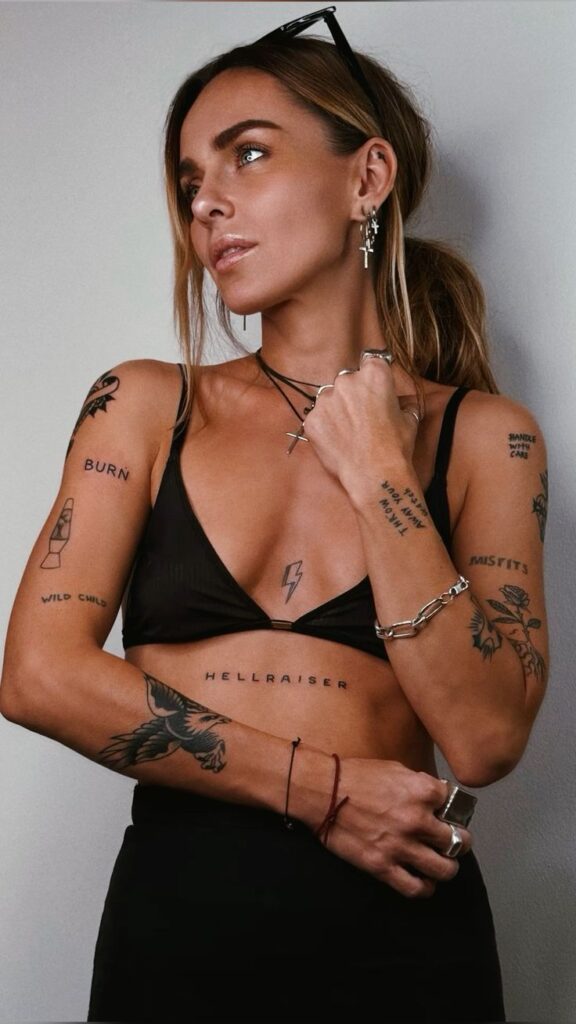
When choosing an arm tattoo, you’ll find that the style and technique make a big difference in how the design looks and ages. Color choices, line work, and artistic approach all shape how your tattoo expresses your personality and fits your arm placement.
If the design is meant to travel from wrist to fingers, browse hand tattoo placement ideas as well so the arm piece does not feel cut off at the hand.
Watercolor Tattoos for the Arm
Watercolor tattoos use soft blends of color that mimic the look of brushstrokes on paper. You often see splashes, gradients, and fading edges instead of bold outlines. This style works well for floral pieces, birds, or abstract designs that need a fluid and artistic feel.
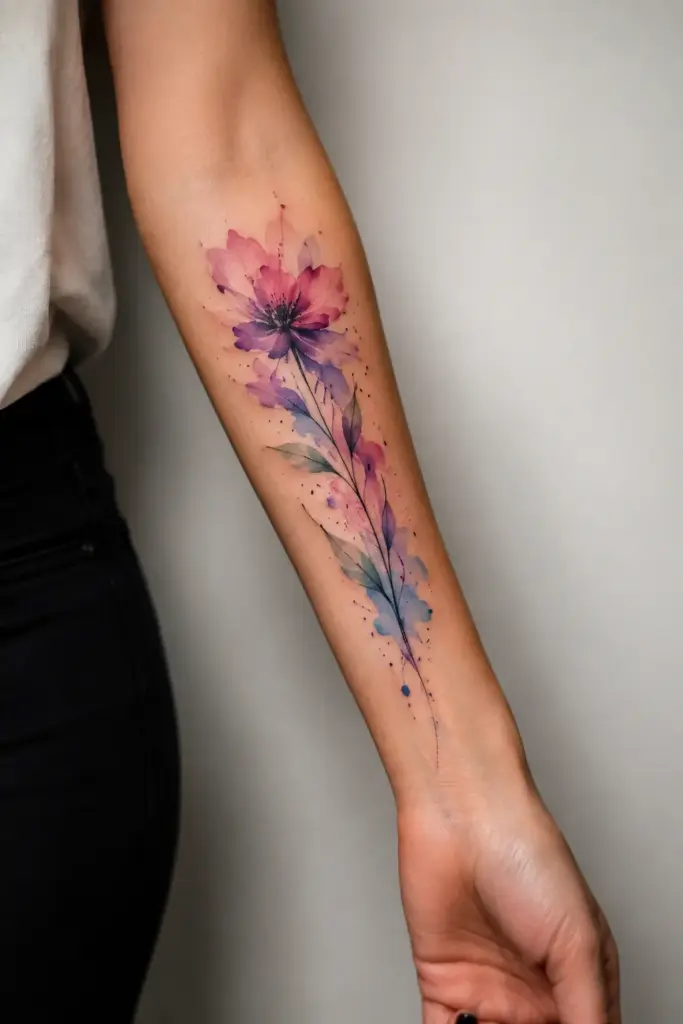
Because watercolor tattoos rely heavily on color tattoos and shading, placement on the arm matters. The outer arm tends to hold color longer since it usually gets less friction than the inner arm.
To make your watercolor tattoo last, artists often combine faint outlines or black accents with the color. This helps keep the design defined as the pigment naturally fades over time.
If you like tattoos that feel artistic and less rigid, watercolor is a strong choice. Just remember to ask your artist about pigment quality and aftercare, since these tattoos can fade faster than bold line work.
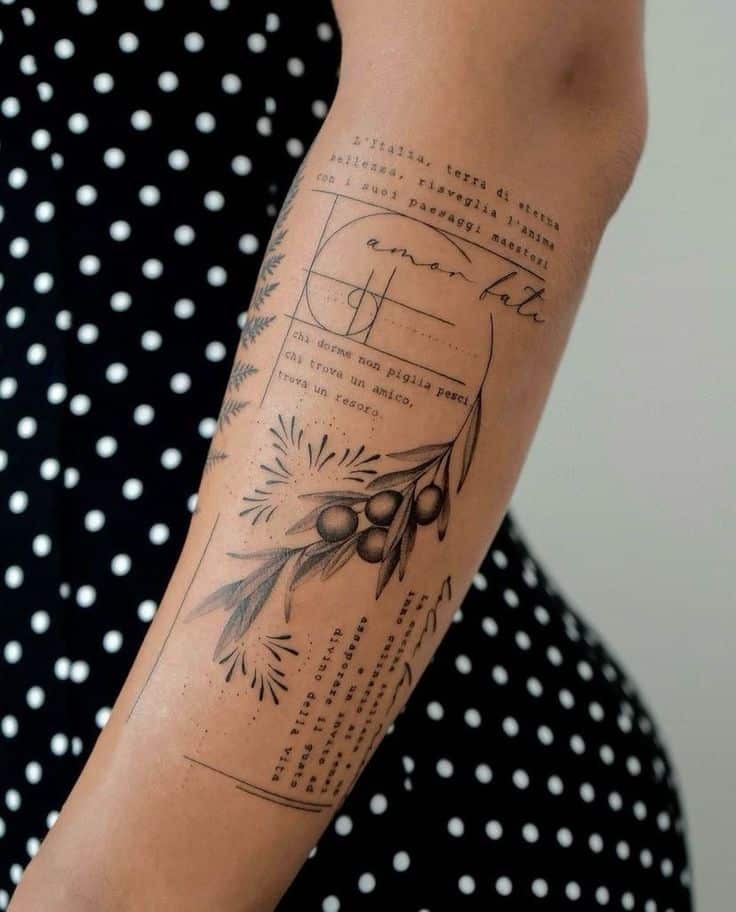
Script and Quote Tattoos
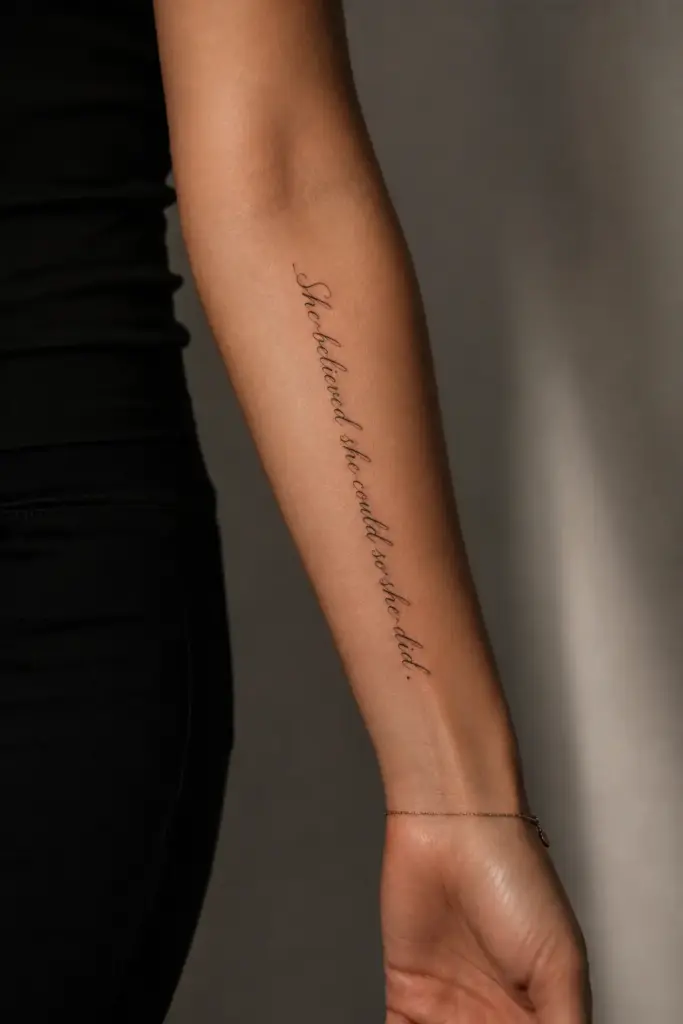
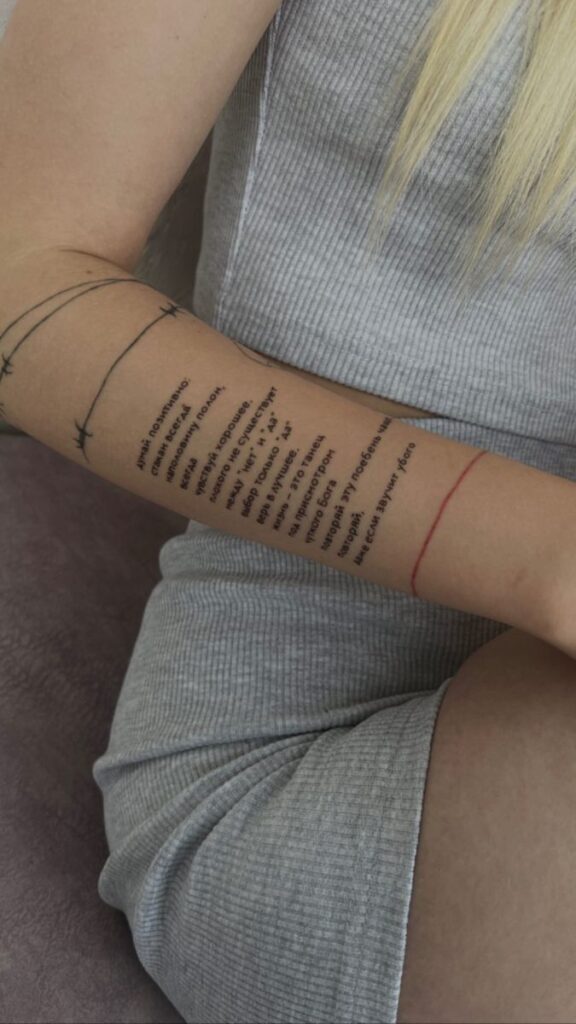
Script tattoos hit differently because people actually read them. It’s not just a design sitting on your arm — it’s a sentence, a name, a lyric you probably obsessed over for weeks before booking the appointment.
I’ve seen everything from tiny handwritten initials to full forearm quotes in heavy black lettering. Some look elegant. Some look like old typewriter text. And honestly, the simpler fonts usually age better. Super thin cursive can turn messy faster than people expect, especially if the artist crams the letters too tightly together.
The forearm is probably the cleanest placement for script. The line of text follows the arm naturally, so even longer quotes stay readable without awkward wrapping. Inner arm tattoos feel more personal though. Those are usually the pieces people get for themselves, not for attention. A date, a reminder, somebody’s handwriting copied straight from an old note.
And weirdly, spacing matters almost more than the words themselves. Good script tattoos breathe a little. Bad ones look crowded before they even heal.
Font style affects the mood of your tattoo. For example:
- Cursive: elegant and delicate
- Block letters: bold and easy to read
- Minimal sans-serif: clean and modern
When planning a script tattoo, make sure you double-check spelling and spacing. Small adjustments in font size or line thickness can change how the tattoo looks once healed.
Realism Tattoos and Detailed Artwork
Realism tattoos aim to replicate lifelike detail, often using shading and fine lines to create depth. On the arm, this style works well for portraits, animals, or nature scenes. Because the arm has a relatively flat surface, it allows for detailed artwork without too much distortion.
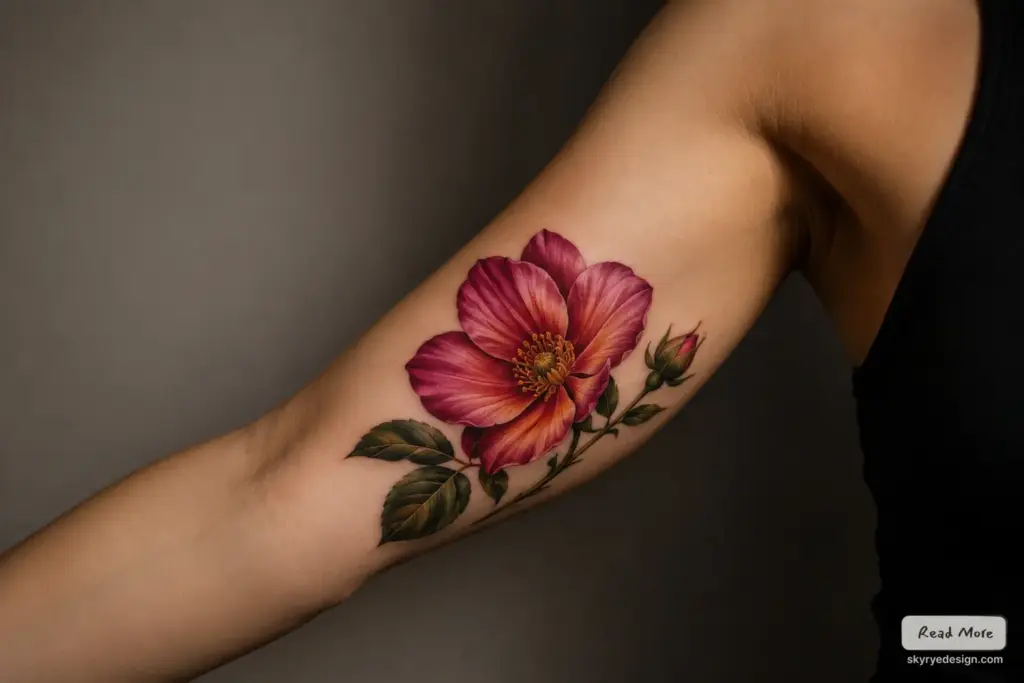
These tattoos usually require longer sessions since the artist builds up layers of shading. Black and gray realism is common, but color tattoos in this style can make flowers, eyes, or landscapes appear strikingly vivid.
To get the best results, you should choose an artist who specializes in realism tattoos. Their ability to capture texture, light, and proportion is what separates an average piece from one that looks truly lifelike.
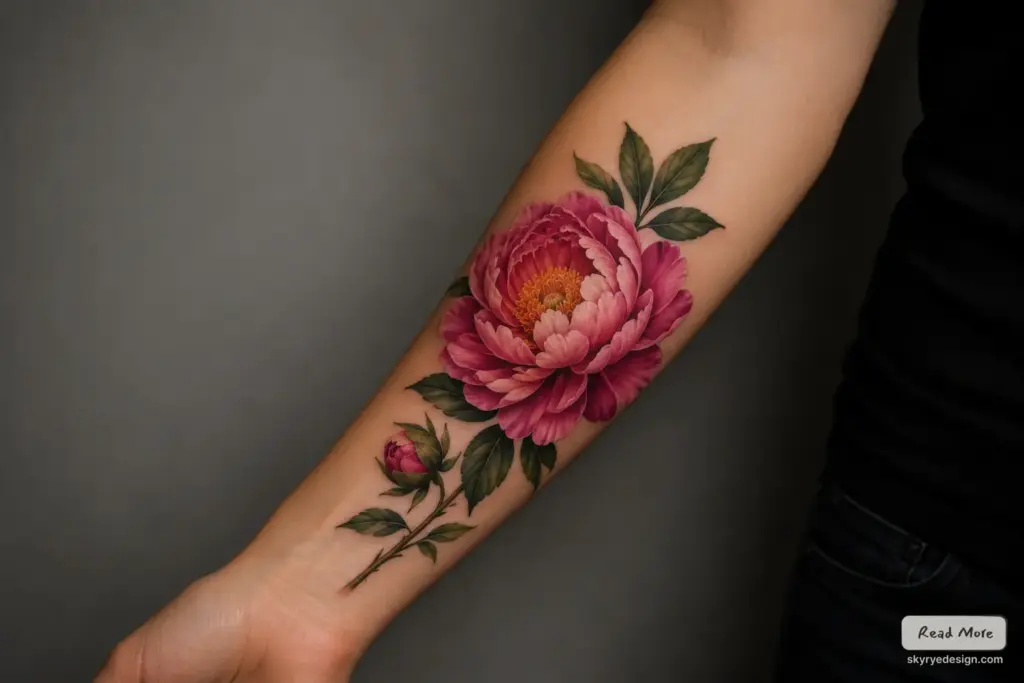
Keep in mind that realistic tattoos often age differently than bold styles. Fine details may blur slightly over the years, so proper aftercare and sun protection are important if you want to preserve the clarity of your design.
Symbolism and Meaning in Women’s Arm Tattoos
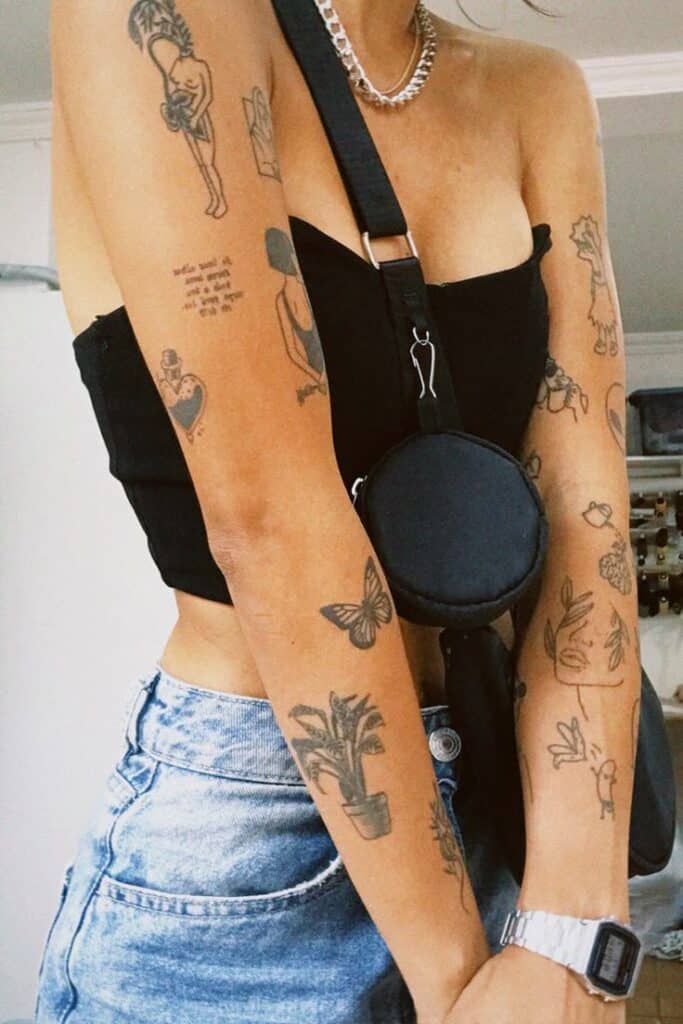
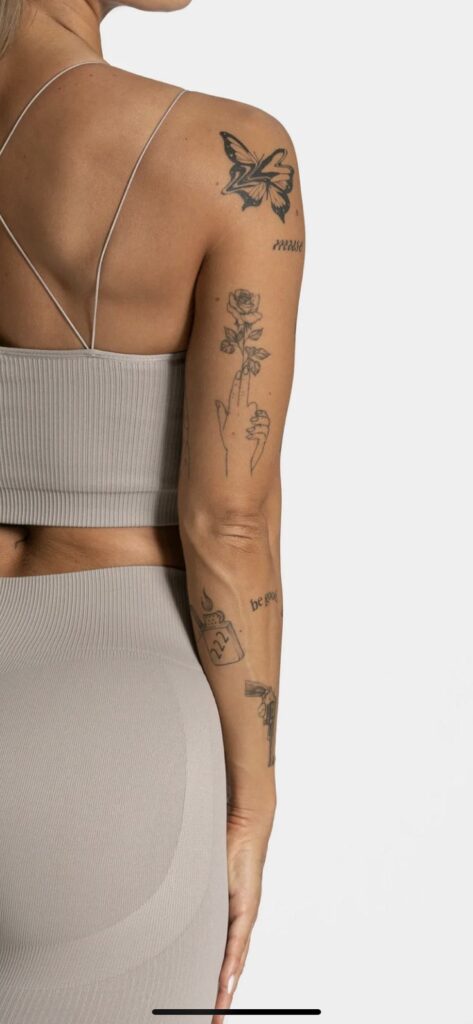
When you choose an arm tattoo, you’re often looking for more than just decoration. The placement makes it visible and expressive, so the design usually carries personal meaning, cultural roots, or a timeless artistic quality that continues to hold value over time.
Empowering and Meaningful Designs
Many women select arm tattoos as a way to highlight strength, resilience, or personal growth. A wolf tattoo can symbolize loyalty and courage, while a butterfly often represents transformation and new beginnings. These designs work well on the arm because they can be scaled from small and subtle to bold and detailed.
You might also consider imagery that reflects empowerment, such as angel wings tattoo ideas for protection, grief, or freedom. A crown design can show self-respect and confidence, while a lotus flower is often chosen to mark perseverance through challenges.
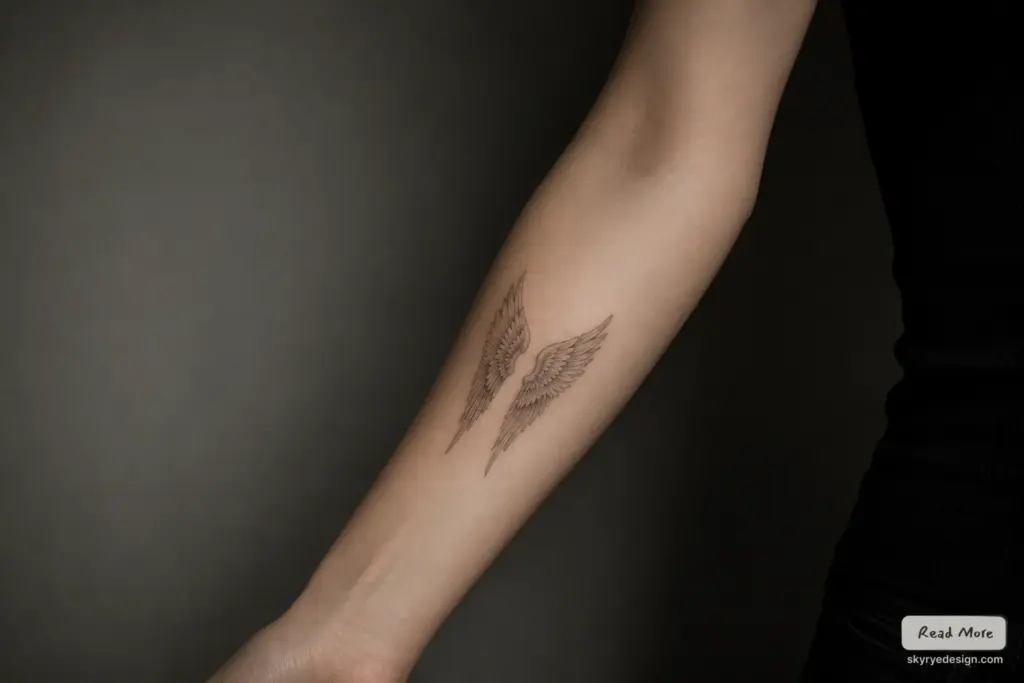
If you want something more personal, you can design a tattoo around a meaningful phrase or symbol unique to your life. Small minimalist tattoos—like a single line, heart, or star—can carry deep significance without being overly complex.
Cultural and Spiritual Symbolism
Some arm tattoos hit differently because people already know what they mean the second they see them. Mandalas are probably the clearest example. Circular patterns, heavy symmetry, tons of repetition. They almost seem built for the upper arm because the design curves with the muscle instead of sitting flat like a sticker.
I’ve drawn a couple mandalas for friends, and honestly the weird part is how quiet your brain gets while making them. You start from the middle. One ring becomes another ring. Then another. Two hours disappear. It’s less like sketching and more like zoning out with a pen in your hand.
The all-seeing eye never really went away either. Egyptian symbolism, church paintings, occult stuff, old-school flash sheets — somehow it survived all of it without feeling completely exhausted as a tattoo. I think part of the reason is simple: graphically, it just works. A single eye inside a triangle or sunburst still reads clearly from a distance. Most highly detailed tattoos blur together over time. Eyes usually hold up surprisingly well.
Eagles are the risky one.
People love the idea of them: wings spread wide, layered feathers, talons out. But feather work is brutal if the artist doesn’t know how to leave breathing room in the design. I’ve seen eagle tattoos heal into muddy black patches after a year because every feather line was jammed together trying to look “realistic.” Fresh photos won’t tell you that. Fresh tattoos almost always look sharp.
Healed photos are where the truth lives. Especially with birds.
And honestly, that’s the difference with symbolic arm tattoos in general. A mandala, an eye, an eagle — people recognize them instantly. No explanation needed. That’s a totally different feeling from wearing some deeply personal symbol only you understand. Neither one is more meaningful than the other. They’re just different kinds of tattoos.
Timeless and Classic Motifs
Some designs remain appealing because of their timeless artistry. Floral tattoos, such as roses or lilies, continue to be popular for their beauty and layered symbolism. A red rose, for instance, is linked to love and passion, while a white rose may reflect purity or remembrance.
Geometric patterns and linework also stand out as classic motifs. Their clean style keeps them relevant across trends, making them a safe choice if you want your tattoo to age gracefully.
You can also look at traditional symbols like feathers, arrows, or stars. These designs are simple, versatile, and meaningful, which makes them a reliable option if you want your tattoo to carry significance while staying visually appealing for years to come.


Choosing the Right Arm Tattoo for You
Your arm gives you space to show off designs that reflect your style and personality. The choices you make about design details and color will shape how your tattoo looks now and how it ages over time.
Personalization and Custom Designs
Best tattoos I’ve seen on people aren’t the most technically impressive ones. They’re the ones with a story behind them. Sometimes it’s obvious — a date, a name, a portrait. Sometimes it’s a tiny symbol on the inner wrist that nobody asks about, and that’s the point.
If you’re unsure about committing to a big piece, start with something small. One flower. A single line of text. Something that matters to you right now. I always tell people: you can add to a tattoo, but you can’t subtract. Some of the best sleeves I’ve come across grew organically — a person got one small tattoo, then came back six months later for another, and eventually the pieces started connecting into something bigger. That kind of sleeve has a timeline built into it, and you can almost read it like a journal.
Placement is its own decision. Inner arm is quieter — it’s yours, mostly hidden unless you roll up your sleeves. Outer forearm is public-facing. I know people who deliberately put meaningful tattoos on the inside and decorative ones on the outside. That’s a system I kind of respect.
One thing I’d push back on, though: don’t just hand your artist a mood board and say “do something like this.” Tell them the why. Tell them what the piece means. Because a skilled artist won’t just replicate your reference — they’ll reshape the design to follow your arm. The way your forearm tapers, where the muscle rounds at the bicep, how skin moves at the elbow. A tattoo that accounts for all of that looks like it grew there. One that doesn’t looks pasted on. You can always tell.
Color vs. Black and Gray Tattoos
Choosing between color tattoos and black and gray tattoos changes the mood of your design. Color brings vibrancy and detail, making florals, animals, or abstract patterns stand out. Black and gray, on the other hand, often highlight shading and texture, giving depth to portraits, geometric lines, or symbolic imagery.
Maintenance is another factor. Color tattoos may fade faster in areas exposed to sunlight, so you’ll need to protect them with sunscreen and consider touch-ups. Black and gray tattoos usually age more gradually and may require less upkeep.
Think about your lifestyle and wardrobe as well. Bright colors can draw attention, while grayscale designs blend more easily with different looks. Both options work well for small tattoos or larger arm pieces, but the choice depends on how you want your tattoo to fit your daily style.
For active arm placements, runners usually need designs that stay readable while the body is moving. The running tattoos for women guide has marathon, trail, shoe, and route-map ideas that fit wrists, forearms, and upper arms.
Related arm tattoo ideas to compare next
If you are still choosing the scale, compare small tattoo ideas before committing to a larger forearm or sleeve piece. For a softer look, the flower tattoo designs guide is useful for roses, vines, peonies, and botanical layouts that follow the arm well.
For bigger connected work, look at half sleeve tattoo ideas. And if you want to browse beyond arm placement, the main tattoo ideas hub collects styles, meanings, placement guides, and symbol references in one place.
Frequently Asked Questions
Arm tattoos work best when the design follows the length of the limb. Before choosing the final placement, compare a few tattoo drawing ideas and see which ones still read clearly at the size you want.
Q: What are the best tattoo designs for women’s arms?
A: Some of the most popular arm tattoo designs for women include floral tattoos, butterflies, fine-line art, script tattoos, snakes, mandalas, and minimalist symbols. Floral sleeves and delicate roses work especially well on the forearm and upper arm because they flow naturally with the arm’s shape. Fine-line tattoos are trending right now because they look elegant and softer compared to bold traditional styles.
Q: Which arm placement hurts the least for a tattoo?
A: The upper outer arm is usually one of the least painful spots because it has more muscle and fat. Inner arm tattoos, wrists, and elbows tend to hurt more due to thinner skin and nerve sensitivity. Most people rate upper arm pain around 3–4/10, while inner bicep tattoos can feel closer to 6–8/10 depending on your tolerance.
Q: How long does an arm tattoo take to heal?
A: Most arm tattoos heal on the surface within 2–3 weeks, but complete healing under the skin can take up to 6 weeks. Smaller fine-line tattoos may heal faster, while detailed sleeves or color realism pieces need more time. During healing, avoid swimming, direct sun exposure, and tight clothing rubbing against the tattoo.
Q: Are fine-line arm tattoos a good idea?
A: Fine-line tattoos can look beautiful and elegant, especially for women who want subtle artwork. However, they require an experienced artist because thin lines can blur or fade faster over time. Designs with slightly thicker outlines usually age better. If you want a fine-line tattoo, look for artists who show healed tattoo photos, not just fresh ink.
Q: How much does a women’s arm tattoo cost?
A: Prices vary based on size, detail, and artist experience. Small arm tattoos often cost around $80–$200. Medium forearm pieces usually range from $250–$800. Full sleeves can easily cost $1,500–$5,000+ depending on color, realism, and the number of sessions required. Highly sought-after artists may charge hourly rates of $150–$300.
Q: What tattoo style lasts the longest on the arm?
A: Bold traditional tattoos and blackwork designs tend to age the best because they use thicker lines and strong contrast. Watercolor tattoos and ultra-fine-line designs can fade faster without touch-ups. Areas like the outer forearm also hold detail better than wrists or inner arm placements since they experience less friction and sun exposure.
Q: What should I avoid before getting an arm tattoo?
A: Avoid alcohol, excessive caffeine, and blood thinners for at least 24 hours before your appointment because they can increase bleeding. Don’t arrive sunburned or dehydrated. It’s also smart to wear loose clothing that gives the artist easy access to your arm. Many tattoo artists recommend eating a full meal beforehand to avoid dizziness during longer sessions.
Q: Are back of arm tattoos a good choice for women?
A: Yes. Back of arm tattoos are great if you want something visible from certain angles but less obvious than a forearm tattoo. They suit vertical designs like flower stems, script, moons, stars, fine-line animals, and small ornamental pieces. The main thing is to check the tattoo from behind and from the side before approving the stencil.
Q: What tattoo designs work best above the elbow?
A: Above the elbow, simple designs usually age better than tiny detailed ones. Small flowers, stars, bees, initials, short words, hearts, and clean geometric marks all work well. Try to keep the tattoo slightly away from the deepest crease so the lines do not distort every time you bend your arm.
Q: Can arm tattoos for women be easily covered for work?
A: Yes. Upper arm tattoos are the easiest to hide with short-sleeve shirts or blazers, making them popular for professional settings. Forearm tattoos are more visible but can still be covered with long sleeves when needed. Many women choose inner arm placements because they feel more personal and discreet in everyday life.
For more directions beyond arm placement, browse the full tattoo ideas guide with style, meaning, size, and placement inspiration.
If you are choosing an arm design but still want to compare sleeves, florals, script, and small symbols, start with these tattoo design ideas for women.
If you want something stronger than a small symbol on the arm, compare these phoenix arm tattoo inspiration ideas before choosing sleeve or forearm placement.
Compare style and placement
Before settling on a design, compare arm tattoo placement choices with the scale, visibility, and natural line of the body. A clear silhouette and enough breathing room usually matter more than a trend.
For arm placement, sea turtle tattoos for women can be drawn as fine-line, floral, watercolor, or small shoulder designs.
The arm gives a vertical tree design a natural route from roots to canopy. Explore a tree tattoo on the arm for placement, scale, and linework choices that keep the composition readable.
- 3.0Kshares
- Facebook0
- Pinterest3.0K
- Twitter0
- Reddit0