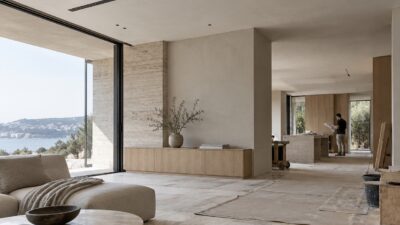
I’ve walked into kitchens with luxury kitchen cabinets and six-figure appliance packages that felt cheap, and I’ve walked into kitchens built on a modest budget that felt genuinely luxurious. The difference was never the price tag. It was proportion, material honesty, and restraint — the same three things that separate a considered building facade from a pile of expensive materials stacked together.
- Materials that age instead of wearing out
- Custom cabinetry is a proportion problem before it's a storage problem
- Layout is where luxury actually gets tested
- Appliances and technology that disappear into the design
- The details that actually register
- Designing for twenty years, not twenty months
- Personalization is what makes it actually yours
- Why the details compound over time
- The actual definition
A luxury kitchen isn’t defined by how much was spent on it. It’s defined by how deliberately every decision — the grain direction on a cabinet door, the gap between an island and a wall, the way task lighting falls across a countertop — was actually made.
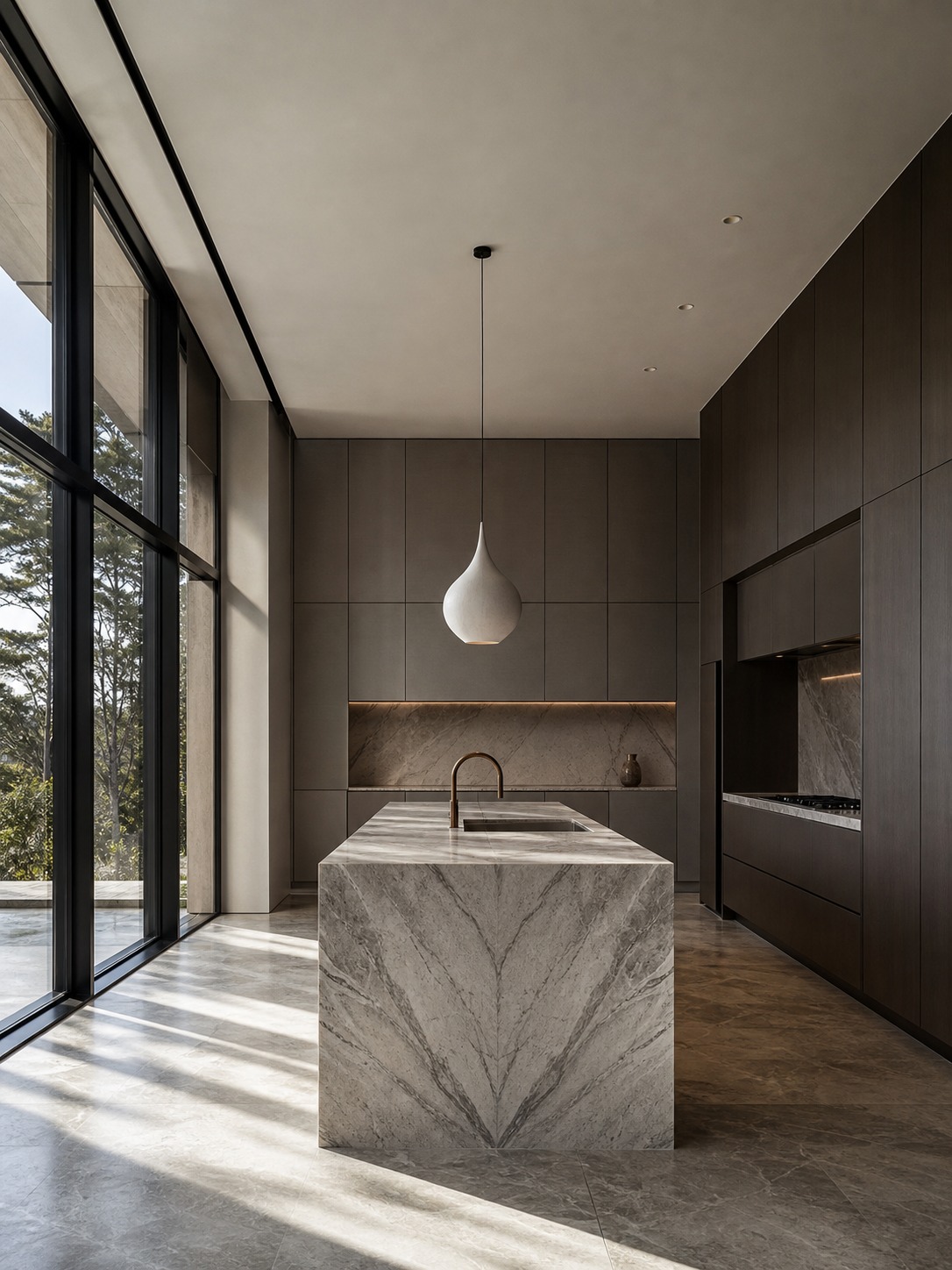
I come at this from an industrial design background rather than a strictly architectural one, which means I tend to look at a kitchen the way I’d look at any designed object meant for daily use: what’s the tolerance on the joints, does the proportion system hold up at close range, and does every visible surface earn its place. A kitchen gets touched, opened, and stood in front of more than almost any other room in a house, so the margin for error on materials and hardware is smaller than people assume.
What follows isn’t a shopping list of premium finishes. It’s the actual reasoning behind why some kitchens read as considered and others just read as expensive.
Materials that age instead of wearing out
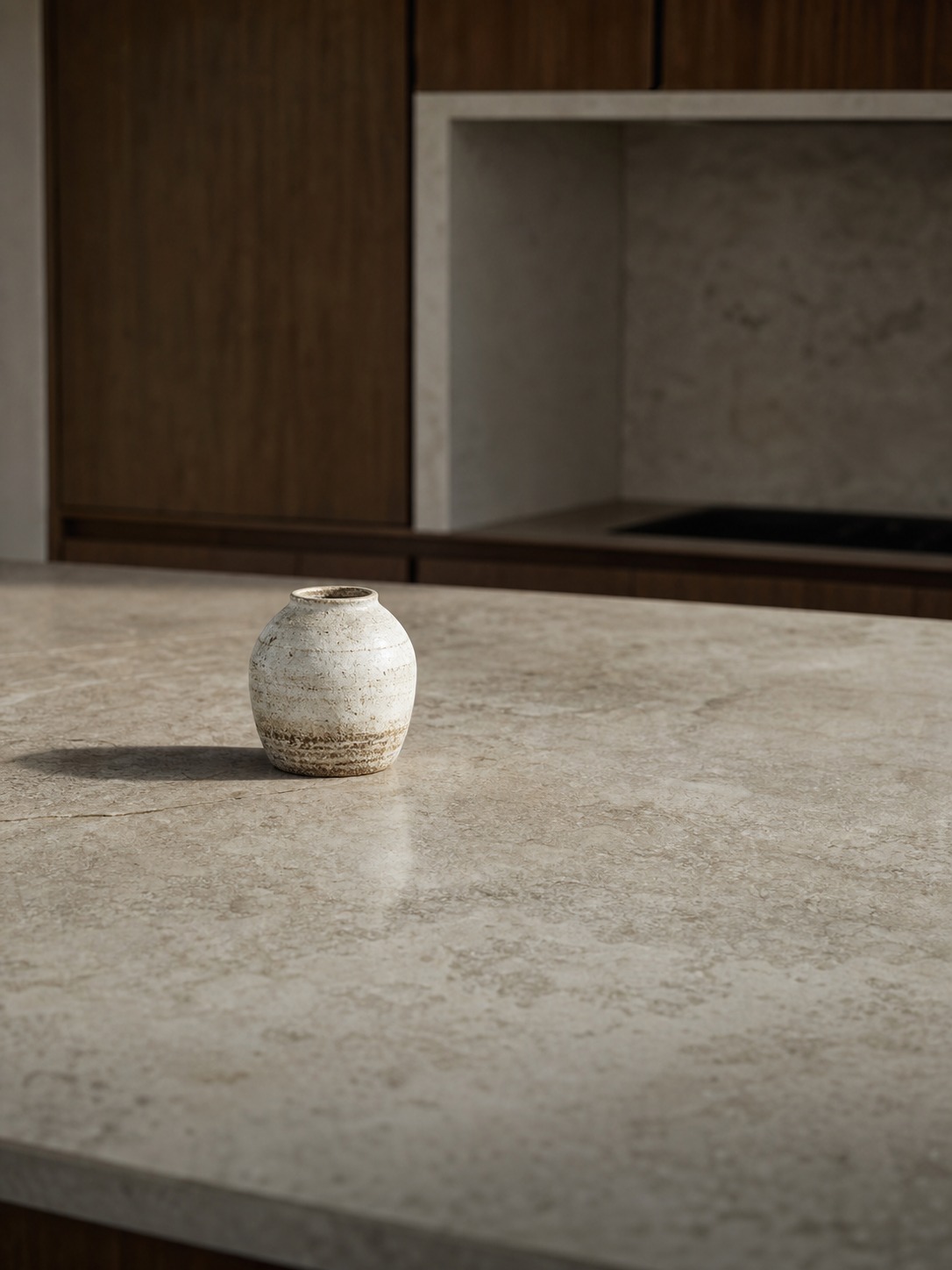
The first thing I look at in any kitchen isn’t the layout. It’s the materials, because materials are the part that either age gracefully or start looking tired within a few years. Natural stone — marble, quartzite, granite — earns its place here for a reason beyond appearance: it’s one of the few surfaces that develops character with use instead of just showing wear. Solid wood cabinetry does the same thing. A synthetic veneer degrades. Real wood grain deepens.
Quartzite in particular has earned its reputation the hard way — it handles heat and acid better than marble while keeping a similar veined, quarried look, which is why I keep specifying it on projects where a client wants the marble aesthetic without babying the surface for the next twenty years. Granite still has a place too, especially in a kitchen that sees genuinely heavy daily cooking, though it reads a little more traditional than the honed or leathered stone finishes showing up in newer builds.
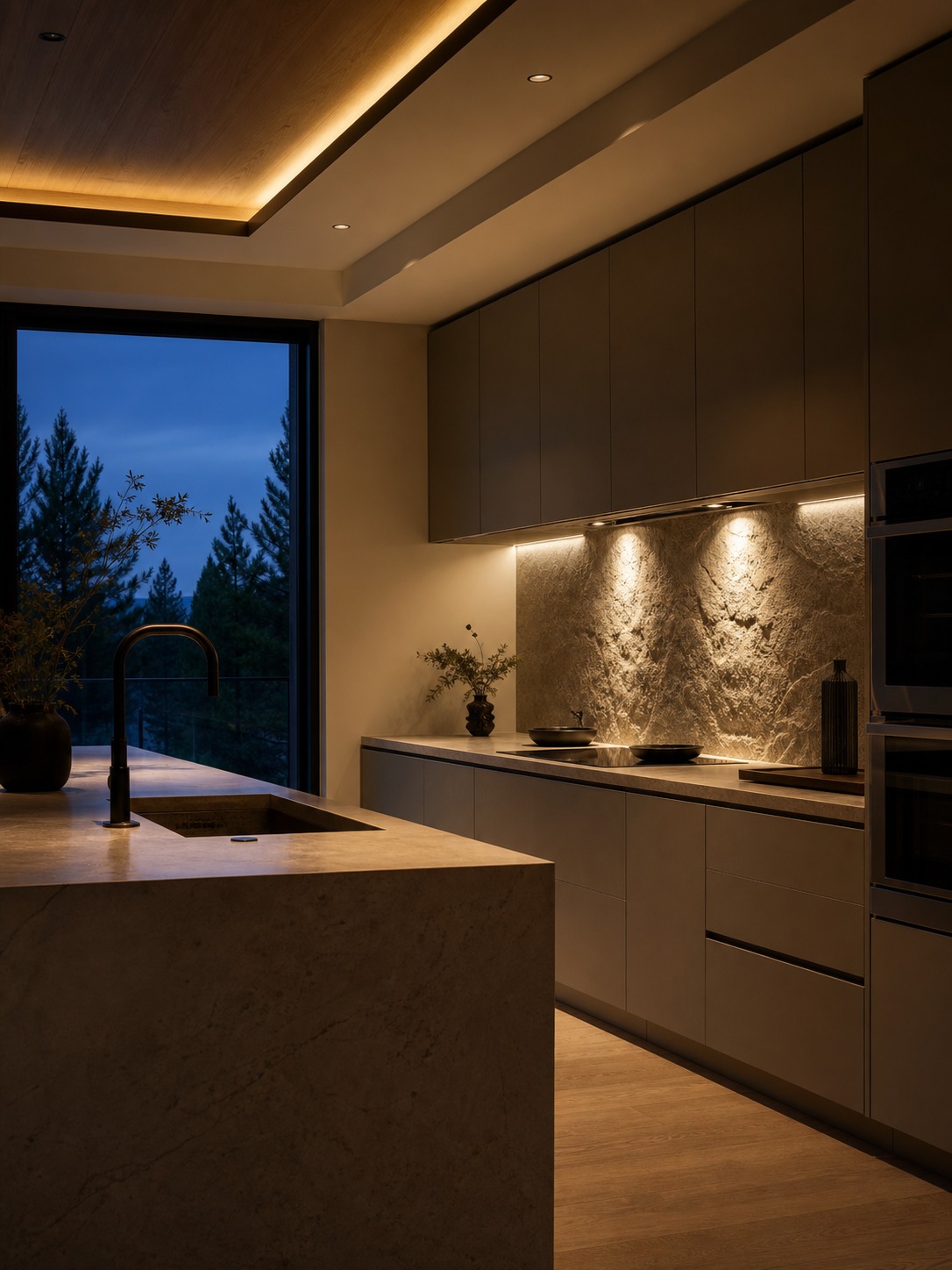
Backsplashes and flooring follow the same honesty principle. A full-height slab backsplash in the same stone as the countertop reads as a single continuous material decision rather than a collection of separate finish choices, and that continuity is exactly the kind of detail that photographs as “considered” without anyone being able to explain why.
I’ve noticed the kitchens that still look right a decade later are almost always the ones that resisted the trend palette at the time they were built. Neutral stone, real wood, honest hardware — none of it dates the way a fashionable accent color does. When I’m pulling reference material for a project, I’ll spend time going through case studies of luxury kitchen cabinets for sale from established makers, less for the price point and more to study how the better ones handle grain matching and joinery — the details that separate a genuinely well-made cabinet from one that just photographs well.
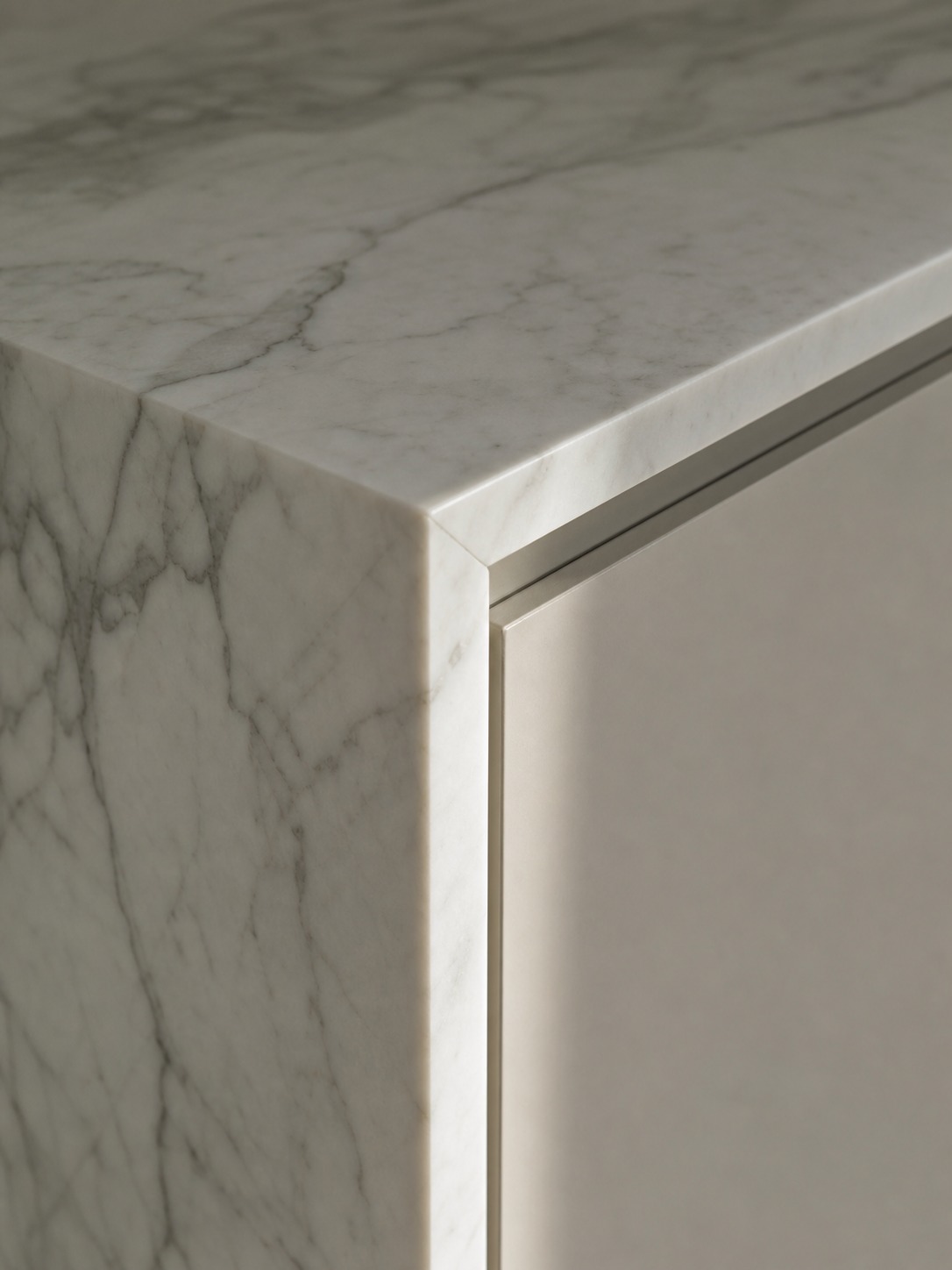
Edge profile on a stone countertop is a small decision that reveals a lot about how carefully a kitchen was designed. A thick, ornately beveled edge reads as heavy-handed in most modern kitchens now — a simple eased or mitered waterfall edge does more to make an island feel substantial without looking dated. I generally push clients toward a thicker mitered edge over a thin slab with a decorative profile milled into it, since the mitered version reads as genuinely thick stone from any angle instead of a thin slab dressed up to look that way.
Custom cabinetry is a proportion problem before it’s a storage problem
Cabinetry gets treated as a storage question first and a design question second, and that’s backwards. Every cabinet run in a kitchen is also a proportion system — the same logic that governs a building facade’s window grid applies to how deep drawers relate to upper cabinet height, and how a run of cabinetry reads against the room’s overall scale.
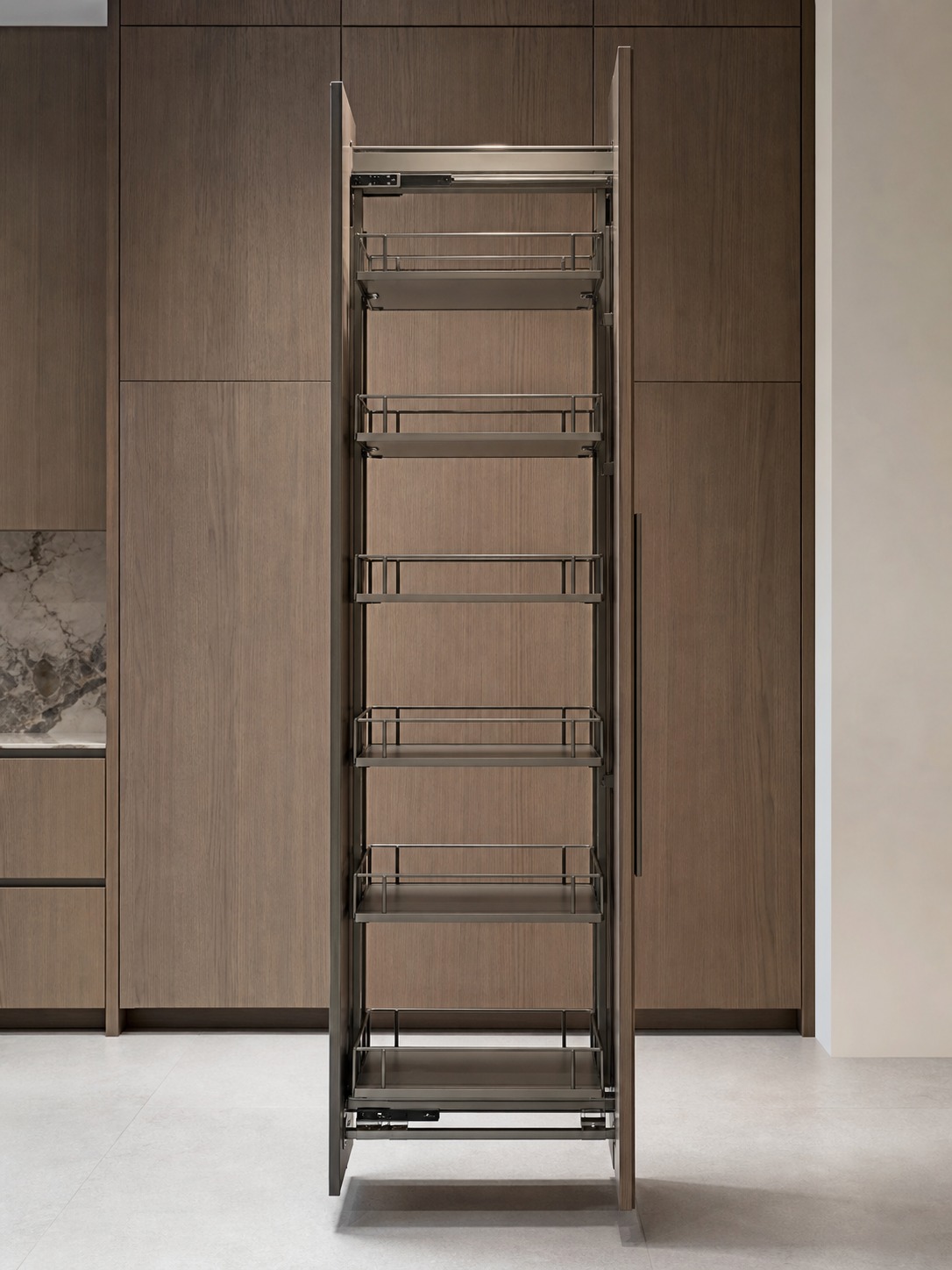
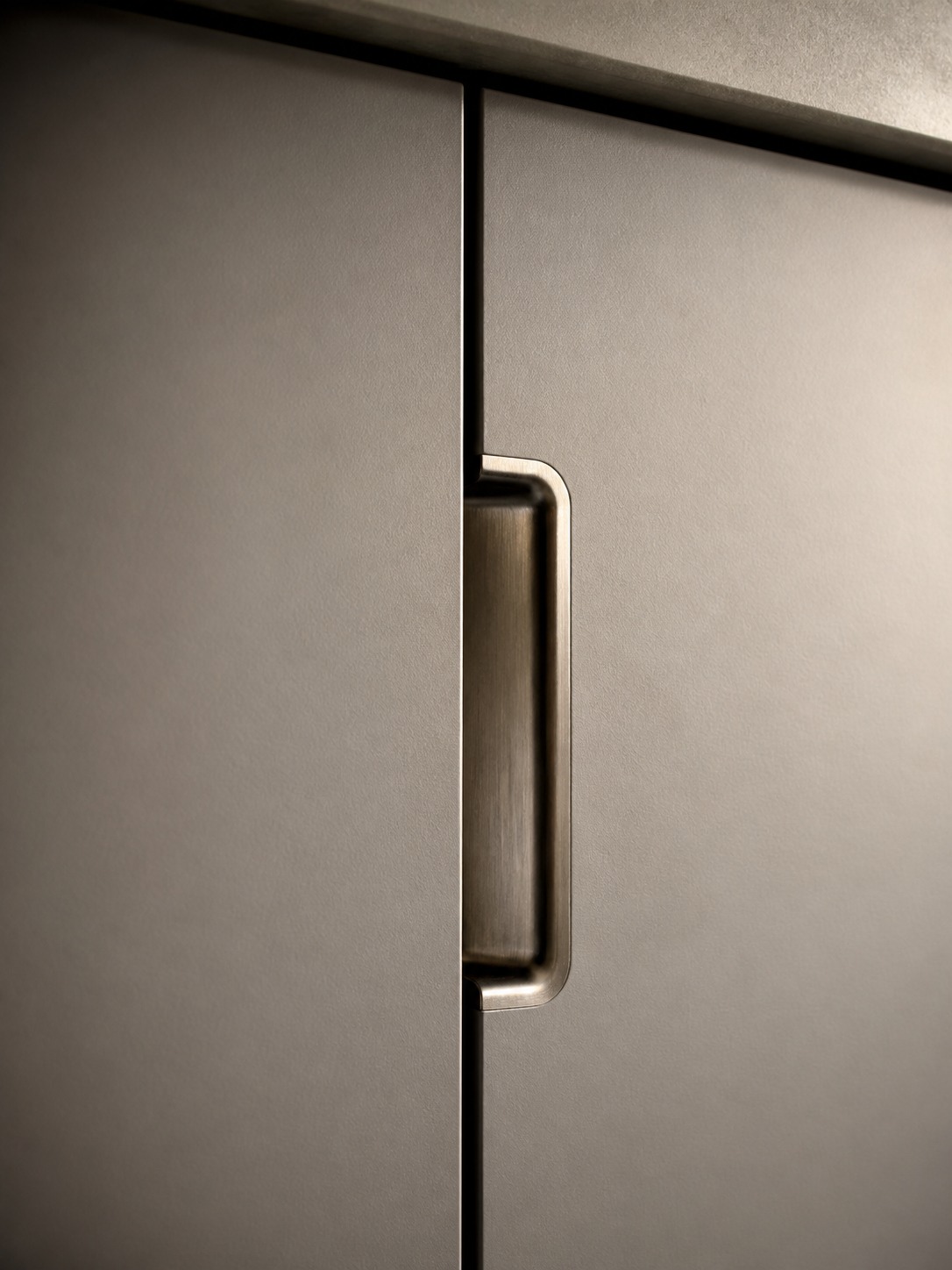
Custom and semi-custom cabinetry earns its cost here specifically: a mass-produced cabinet system forces the room to accommodate a handful of fixed module widths, while custom work lets the proportion get resolved specifically for that kitchen. Pull-out pantry systems, concealed appliance garages, and deep drawer banks aren’t just convenience features — they’re what let a cabinet run stay visually clean on the outside while doing more work on the inside. Soft-close hardware and precise reveals matter for the same reason a tight panel gap matters on a car body: it’s the detail that tells you whether something was engineered or just assembled.
Grain matching across a cabinet run is another detail that separates custom work from anything mass-produced. On a well-made kitchen, the wood grain flows continuously from one door to the next across a full wall of cabinetry, the same way a good veneer job on a dashboard panel keeps the pattern reading as one continuous surface instead of a set of unrelated pieces bolted together. Cut corners here and even expensive wood starts looking assembled rather than crafted.
Drawer construction is worth checking closely too. Dovetail joinery and full-extension, soft-close runners aren’t decorative — they’re the difference between a drawer that still closes properly in ten years and one that starts sagging within two. It’s a detail almost nobody photographs, and it’s exactly the kind of thing that quietly determines whether a kitchen still feels premium a decade after installation.
Layout is where luxury actually gets tested
A kitchen can have every premium material on the list and still feel wrong if the layout doesn’t work, because layout is where a kitchen either supports how people actually move through it or fights them at every turn.
The layouts that consistently work share a few traits:
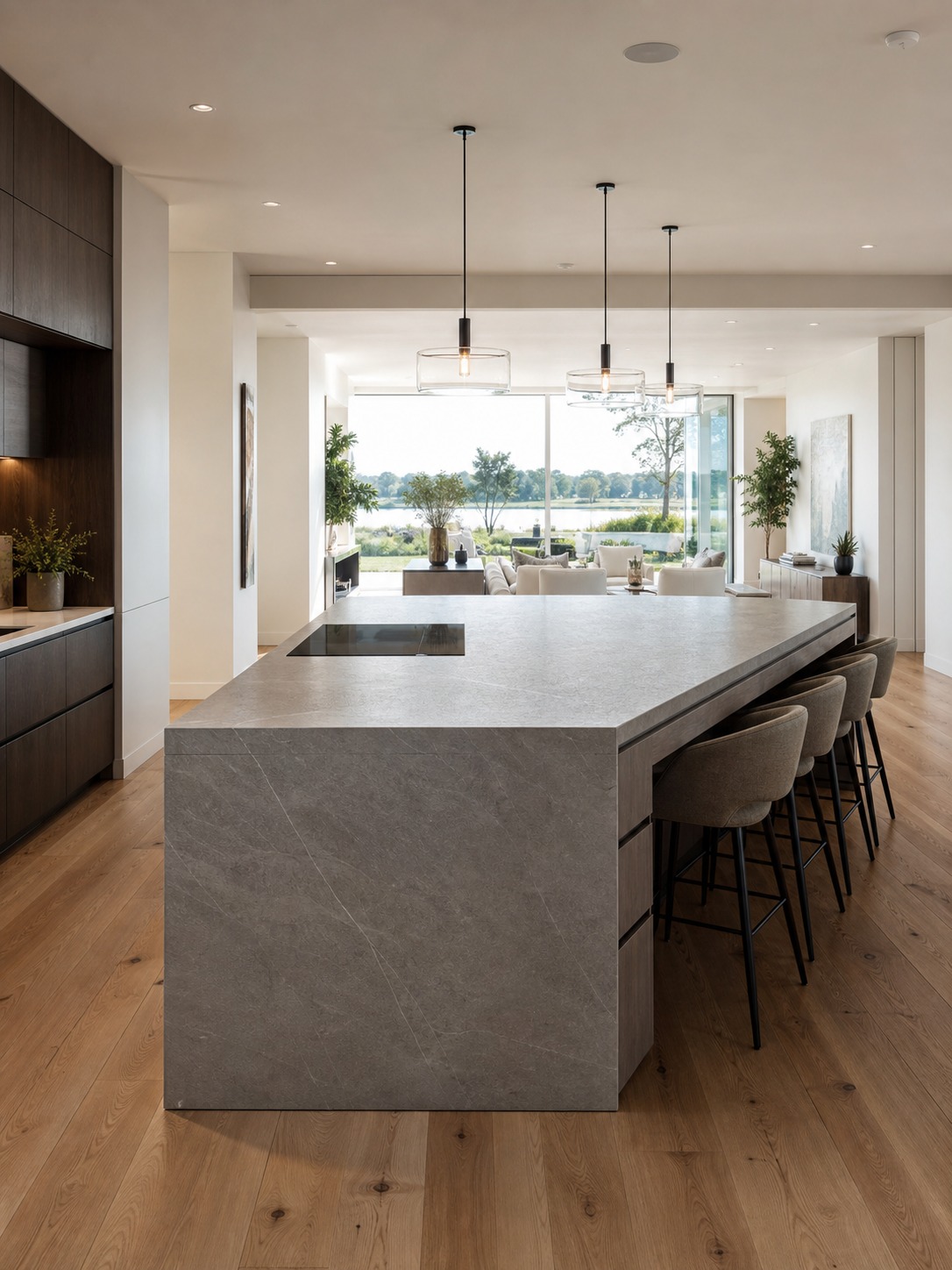
- A generously sized island that separates prep space from seating without blocking the room’s traffic path
- An open plan that keeps the kitchen visually connected to adjacent living space rather than sealing it off
- Distinct zones for prep and cleanup, so the person cooking and the person cleaning aren’t competing for the same six feet of counter
- A dining area integrated closely enough to feel connected, without crowding the working part of the kitchen
- Concealed storage — a walk-in pantry, an appliance garage — that keeps the visible surfaces uncluttered
None of this is about square footage. I’ve seen small kitchens with better spatial logic than sprawling ones, because someone actually thought through the sequence of movement — refrigerator to counter to sink to stove — instead of just filling the available wall space with cabinets.
The classic work-triangle rule still holds up as a starting point, but it breaks down fast in a kitchen with an island, multiple cooks, or an integrated dining zone — which describes most high-end kitchens being built today. I’d rather think in terms of overlapping zones than a rigid triangle: a prep zone anchored by the sink and main counter, a cooking zone around the range, and a cleanup zone that can operate independently of the other two without anyone crossing paths mid-task. Get those three zones right and the kitchen works during a quiet weekday breakfast and a twenty-person dinner party equally well.
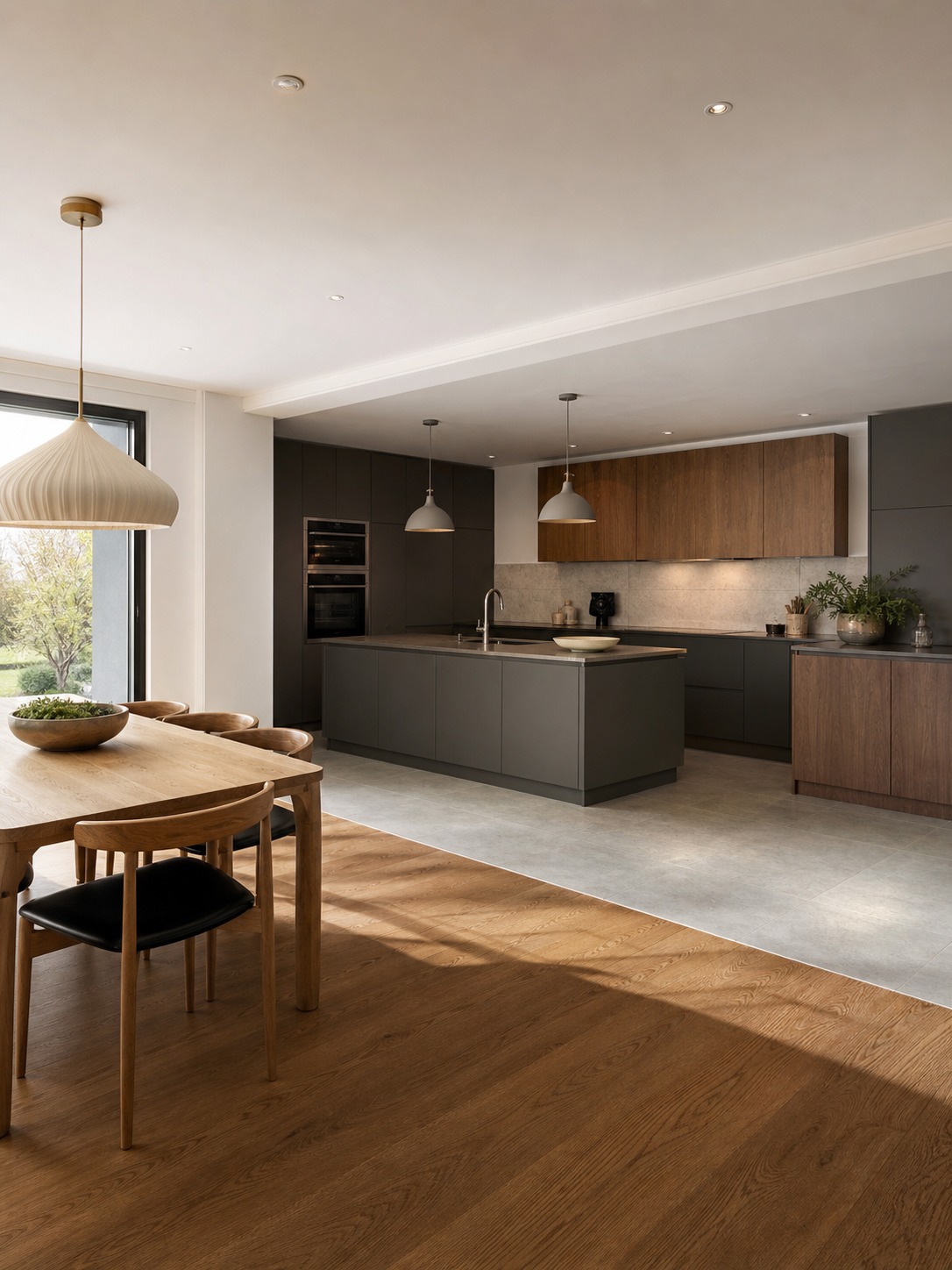
Window placement relative to the sink matters more than most layouts account for. A sink under a window, facing outward, turns the most repetitive task in the kitchen — dishes, prep cleanup, the ten minutes a day someone spends standing at the sink — into something with a view instead of a wall to stare at. It’s a small thing to plan for early, and nearly impossible to fix later once the plumbing and cabinetry are locked in.
Appliances and technology that disappear into the design
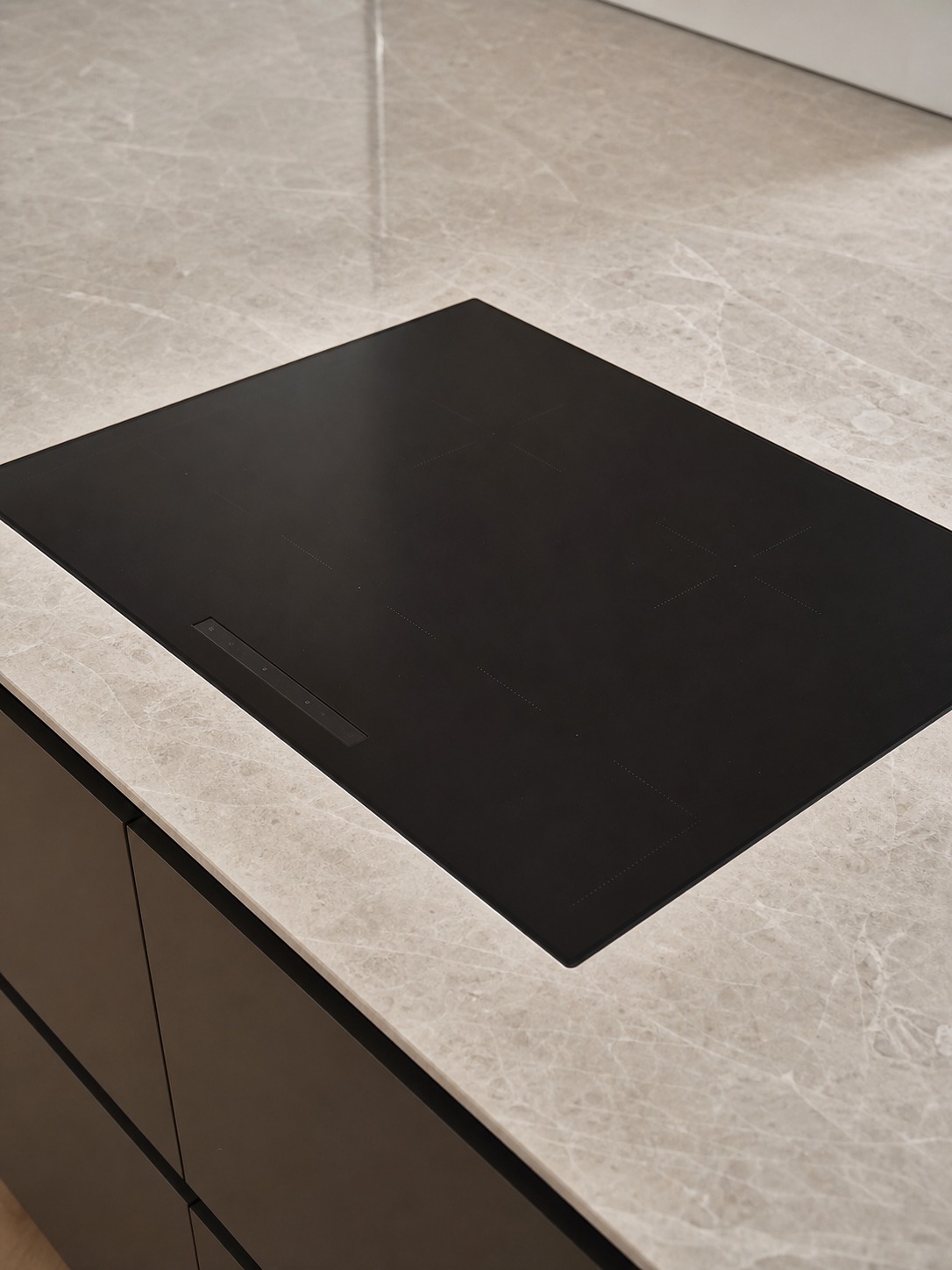
The best high-end appliances in a luxury kitchen are the ones you stop noticing. Built-in refrigeration panelled to match the surrounding cabinetry, induction cooktops with no visible control clutter, integrated wine storage and coffee systems that read as furniture rather than equipment — the goal is a continuous, uninterrupted line across the room, not a showroom of visible brand logos.
Smart home integration has become part of this same logic rather than a separate feature. Lighting, ventilation, and even faucet controls tucked behind voice command or a discreet panel keep the technology from becoming visual noise. The point isn’t the technology itself — it’s that good technology stays quiet enough not to compete with the materials around it.
Steam ovens and combination steam-convection units have become close to standard in this tier, mostly because they solve a real cooking problem rather than adding novelty — better texture control on proteins, no drying out on reheated dishes. Induction cooktops earn their place the same way: faster response than gas, easier to keep genuinely clean since there are no burner grates trapping grease, and the flush glass surface keeps the counter’s sightline uninterrupted when it’s off.
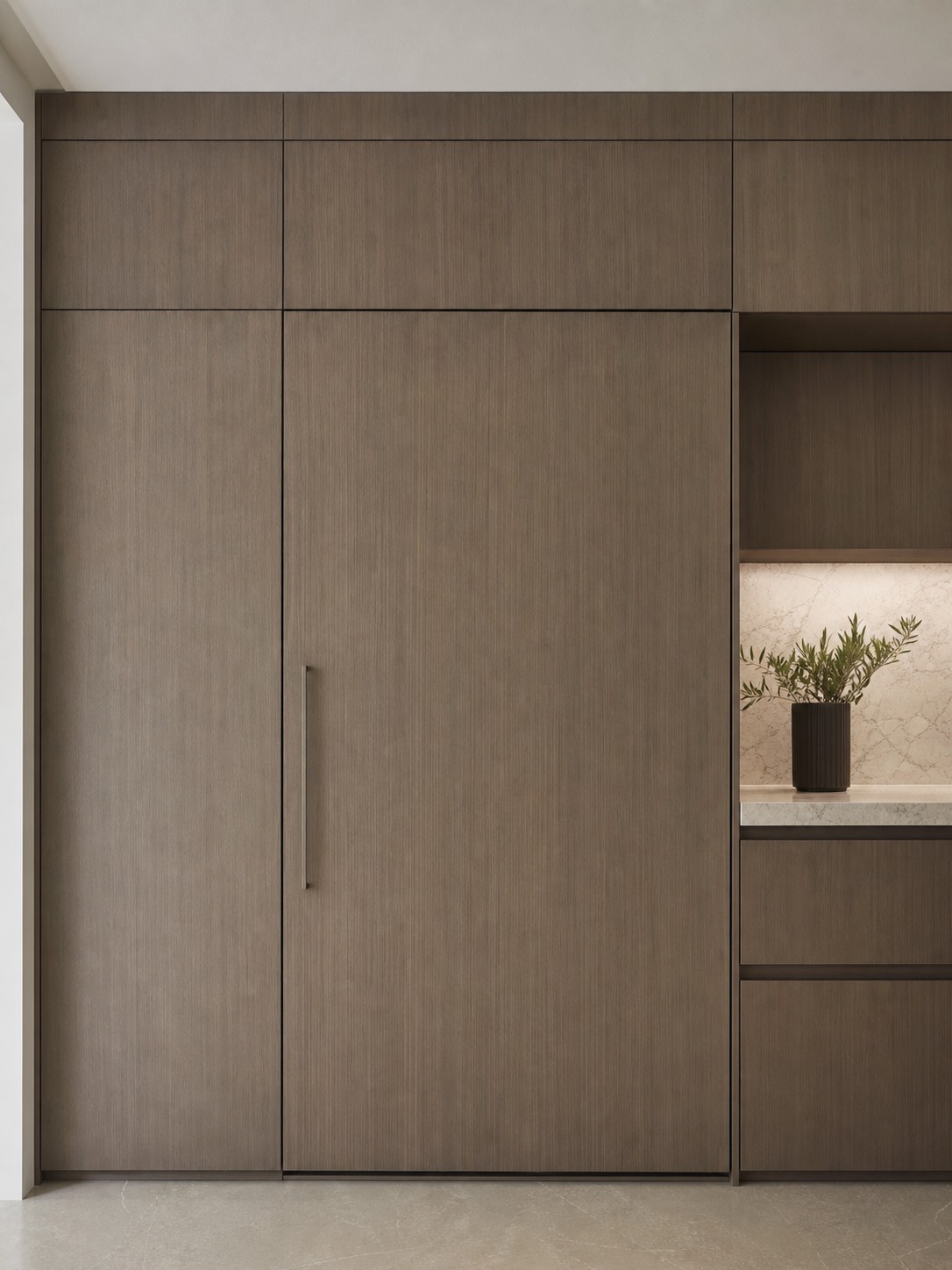
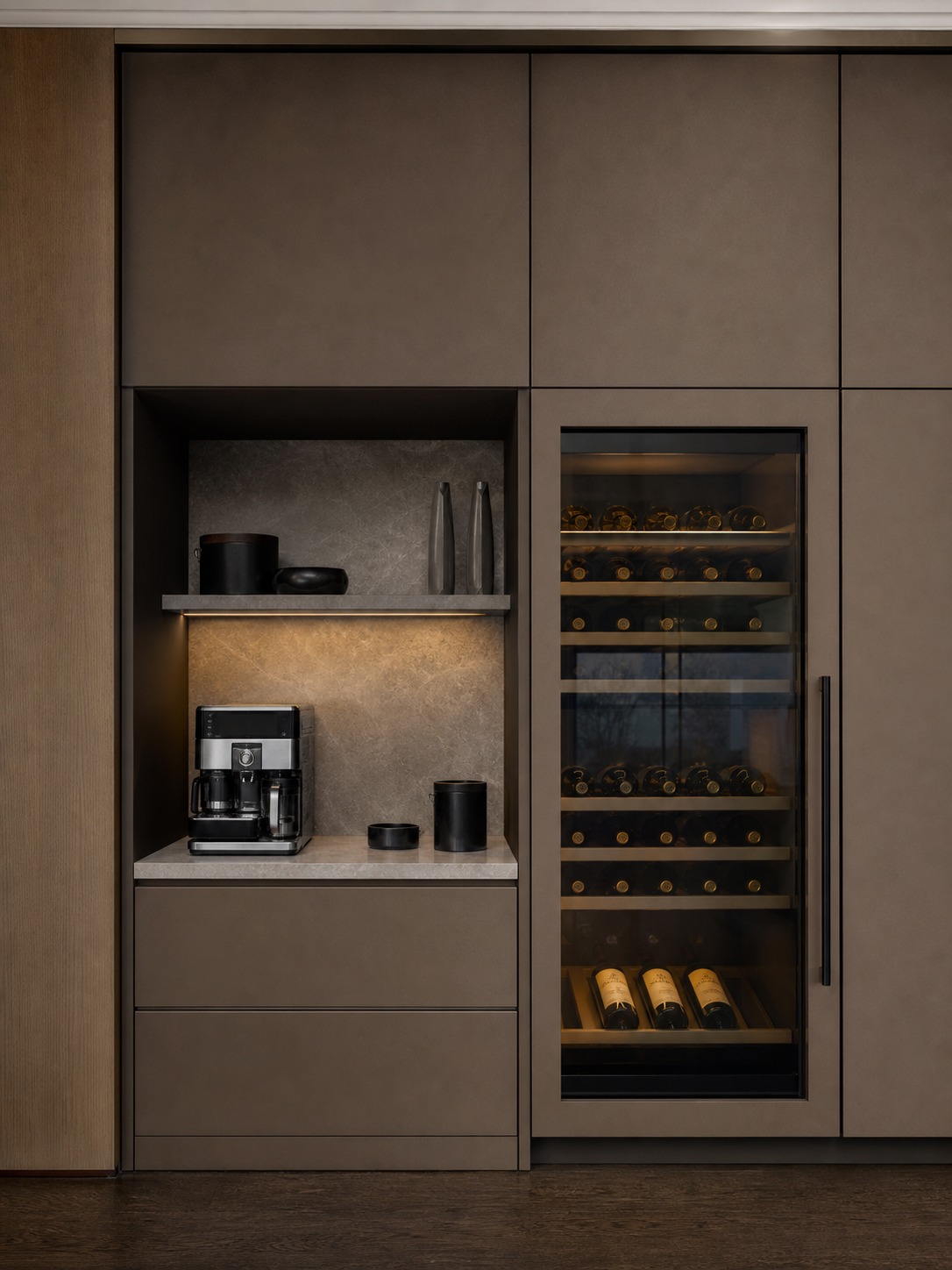
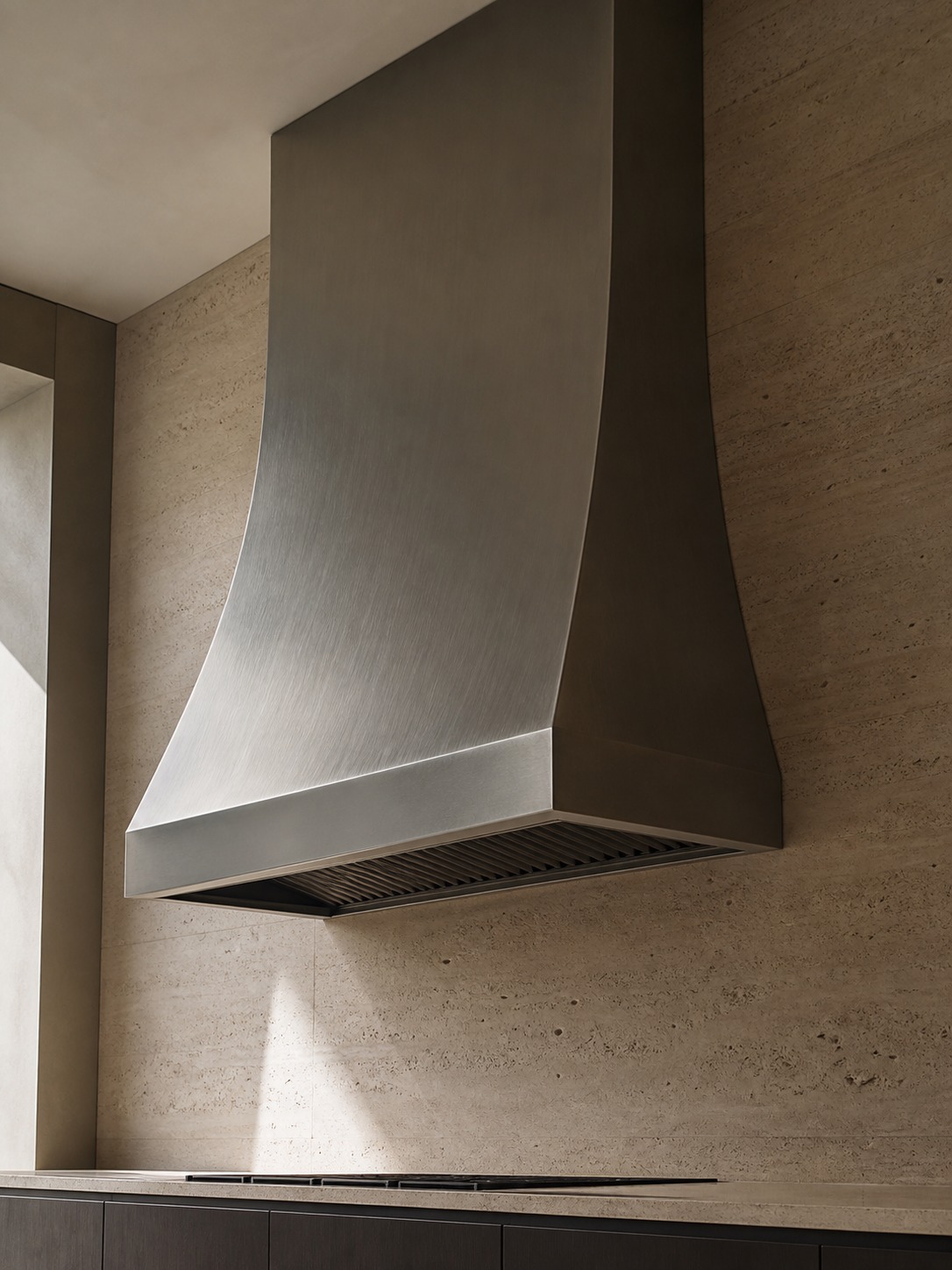
Ventilation deserves more attention than it usually gets in the planning process. A powerful hood with the wrong duct run ends up loud enough that nobody uses it on high, which defeats the point of specifying a serious range in the first place. Getting the duct path right — short, with as few turns as possible — is unglamorous work that happens well before any finish gets chosen, and it’s exactly the kind of decision that separates a kitchen designed properly from one assembled around a wish list.
The details that actually register
People notice details before they can name them. Layered lighting is the clearest example — task lighting under the upper cabinets, ambient light setting the room’s overall mood, accent lighting picking out a piece of stone or a change in material. Get that layering right and a kitchen feels considered even before anyone looks closely at the finishes.
Range hoods, faucets, and cabinet hardware do similar work at a smaller scale. A well-proportioned custom hood reads like a piece of sculpture in the room; a generic stock hood just sits there as equipment. The difference isn’t cost so much as whether someone treated it as a design element instead of a checklist item.
Faucet finish is a smaller decision that carries more weight than people expect. Matching the faucet, cabinet hardware, and any exposed lighting fixtures to a single metal tone — all warm brass, or all matte black, or all brushed nickel — is a simple rule that keeps a kitchen from looking like several different shopping trips stitched together. Mixing metals can work, but it needs to be a deliberate choice with a clear hierarchy, not an accident of buying fixtures at different times from different sources.
Designing for twenty years, not twenty months
The kitchens that hold up are the ones built on restraint rather than the current trend cycle. Neutral palettes, clean lines, and honest materials don’t chase a specific moment, which is exactly why they don’t look dated once that moment passes. I’ve watched plenty of trend-driven kitchens — a specific cabinet color, a tile pattern that felt current at the time — start to feel wrong within a few years, while a kitchen built on proportion and material quality just keeps looking like itself.
This is the same principle that applies to any well-designed object meant to last: the more a design depends on a specific trend to feel current, the faster it stops feeling current. Timeless isn’t a style. It’s the absence of anything that will visibly date.
That doesn’t mean a timeless kitchen has to be safe or bland. A neutral palette can still carry real character through texture — a honed stone instead of polished, a fluted cabinet panel instead of a flat one, a warm wood tone against cool stone. The character comes from material contrast and craftsmanship rather than from a color or pattern choice that’s tied to a specific year. I’d rather a client take a risk on an unusual stone or an architectural detail than on a paint color, because the stone will still look intentional in fifteen years and the paint color almost never does.
Personalization is what makes it actually yours
No two well-designed luxury kitchens should look identical, because the layout, materials, and details ought to reflect how a specific household actually lives and cooks, not a generic template pulled from a catalog. Handcrafted cabinetry, a storage system built around how someone actually organizes their kitchen, an oversized island sized for how a family actually gathers — these choices are what separate a kitchen that feels tailor-made from one that feels assembled from a parts list.
I think about this the same way I think about any bespoke design project: the brief matters more than the budget. A kitchen designed around someone’s real habits, even with modest materials, will feel more luxurious than an expensive kitchen designed around nothing in particular.
This is where good design work usually starts with questions rather than a materials list — who actually cooks, how many people are usually in the kitchen at once, whether the household bakes or grills or entertains, whether there’s a specific ritual (a coffee routine, a wine collection, a weekend baking habit) worth designing a dedicated feature around. A household that hosts often needs a layout that supports guests being in the kitchen without getting in the way. A household that cooks seriously needs counter space and appliance capacity that a purely decorative kitchen would never allocate correctly. Neither answer is more luxurious than the other. What matters is that the kitchen was actually built around the real answer instead of a generic assumption.
Why the details compound over time
A kitchen built this way holds up under daily use in a way that a purely decorative one doesn’t. Premium materials resist wear instead of just looking good on installation day. Custom cabinetry keeps functioning correctly years after the soft-close hinges on a cheaper system start to fail. A layout that was actually thought through keeps making sense long after the household’s habits shift and grow around it.
That’s the real argument for building a kitchen this way — not that it costs more upfront, but that the decisions compound. Every detail done right makes the next twenty years of using that kitchen a little easier, and that’s a return no trend-driven finish can offer.
I’ve gone back to look at kitchens I worked on years after they were finished, and the ones that still feel right are never the ones with the flashiest single feature. They’re the ones where every decision was made in relation to every other decision — the stone relates to the cabinetry, the cabinetry relates to the layout, the layout relates to how the household actually lives. Pull any one of those threads out on its own and it looks like a nice finish. Keep them working together and it reads as a considered space, which is the thing people actually mean when they call a kitchen luxurious, whether they’d put it in those words or not.
None of this requires unlimited budget to get right. It requires sequencing the decisions correctly — material and proportion first, appliances and technology second, decorative details last — instead of picking finishes in whatever order a showroom happens to present them. A kitchen designed in that order tends to feel resolved even before the final styling goes in. One designed backwards, from finishes toward function, almost always shows the seams eventually, no matter how expensive the individual pieces were.
The actual definition
A luxury kitchen isn’t defined by its price tag, and it was never really about that. It’s the combination of honest materials, cabinetry proportioned specifically for the space, a layout that supports how people actually move through it, and details considered carefully enough that they register even when no one’s looking closely. Get those things right, and the result is a kitchen that stays comfortable, functional, and genuinely well-designed for as long as the household using it.
- 115shares
- Facebook0
- Pinterest115
- Twitter0
- Reddit0