I’ve been collecting design books since my first semester of industrial design. Back then, the studio library had maybe thirty titles worth reading and another two hundred that were mostly photographs with captions. Learning to tell the difference — which books actually teach you something versus which ones just look good on a shelf — took years.
Interior design has a particular book problem. The market is flooded with beautiful coffee-table volumes that inspire but never explain. You flip through them, feel vaguely motivated, and then sit in front of a blank floor plan with no idea what to do next.
- How to build a design book library that actually works
- The 10 best interior design books
- 1. Interior Design Illustrated
- 2. The Interior Design Reference & Specification Book
- 3. Made for Living: Collected Interiors for All Sorts of Styles
- 4. A History of Interior Design
- 5. Joseph Dirand: Interior
- 6. Remodelista: A Manual for the Considered Home
- 7. The Perfectly Imperfect Home
- 8. Ben Pentreath: English Decoration
- 9. Elements of Style: Designing a Home and a Life
- 10. Forever Beautiful: All-American Style All Year Long
- How to choose the right book for where you are now
- Frequently asked questions
- What is the best interior design book for beginners?
- Which interior design books do professional designers actually use?
- Are interior design books worth buying or is everything online now?
- What interior design books are best for learning color theory?
- How do I build a useful interior design book collection?
- What is the difference between interior design and interior decorating books?
- The shelf that teaches, not just impresses
The ten books on this list do something different. Some are technical references you’ll open every week. Some are monographs that show how one designer’s thinking actually works across a whole body of work. A couple are genuinely foundational — the kind you read once and find yourself re-reading five years later with a different eye.
All of them have Amazon links with honest notes on what they’re actually for. A few are relatively cheap ($15–40). A few are expensive. The expensive ones are worth it.
How to build a design book library that actually works
Before the list: the most common mistake is buying too many monographs early. They’re visually addictive and they’re usually the first thing people buy. But a monograph shows you the result of a designer’s thinking, not the mechanism. You need the mechanism first.
A functional library has at least one technical reference, one history overview, and then as many monographs as you want. Start in that order.
The second mistake is not reading the text. Most design books have captions and introductions that people skip entirely. Some of the most useful material in this list is in the written sections that get overlooked because the photographs are competing for attention.
Disclosure: This post contains affiliate links. As an Amazon Associate I earn from qualifying purchases. If you buy through links in this post, we may earn a small commission at no extra cost to you.
Library tip: Buy one book per category, read it fully, then buy the next. A shelf of unread design books teaches you nothing. Three design books you’ve actually read change how you see a room.
The 10 best interior design books
1. Interior Design Illustrated
by Francis D.K. Ching & Corky Binggeli | 4th ed., 2018 | Paperback ~$50
Ching’s books are the foundation of most architecture and design education globally. This one applies his precise diagrammatic thinking to interior space specifically: how rooms are shaped by structure, how light behaves in different configurations, how proportion actually works.
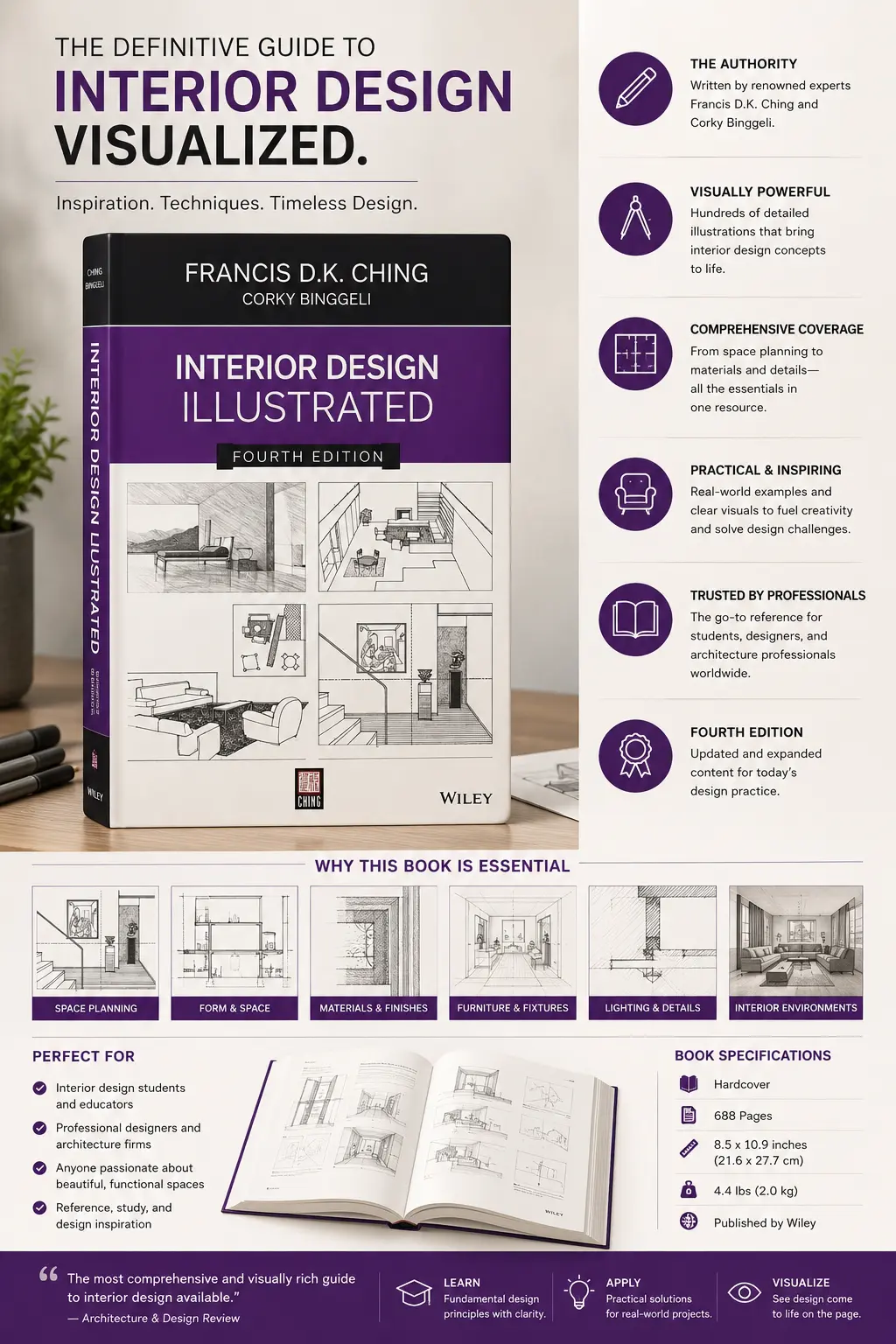
The drawings are what make it indispensable. Every concept is shown as a diagram before it’s explained in words, which is exactly how spatial thinking should be taught.
Best for: Students and anyone who wants to understand why spaces feel the way they feel, not just what to put in them.
→ Tip: Work through the chapters on light and proportion first. These two topics affect every other decision in an interior and are the most poorly understood by beginners.
2. The Interior Design Reference & Specification Book
by Chris Grimley & Mimi Love | Updated ed., 2018 | Paperback ~$35
This is the professional’s working reference. It covers materials, finishes, furniture specification, building systems, accessibility requirements, and sustainability standards in a format that’s actually useful mid-project.
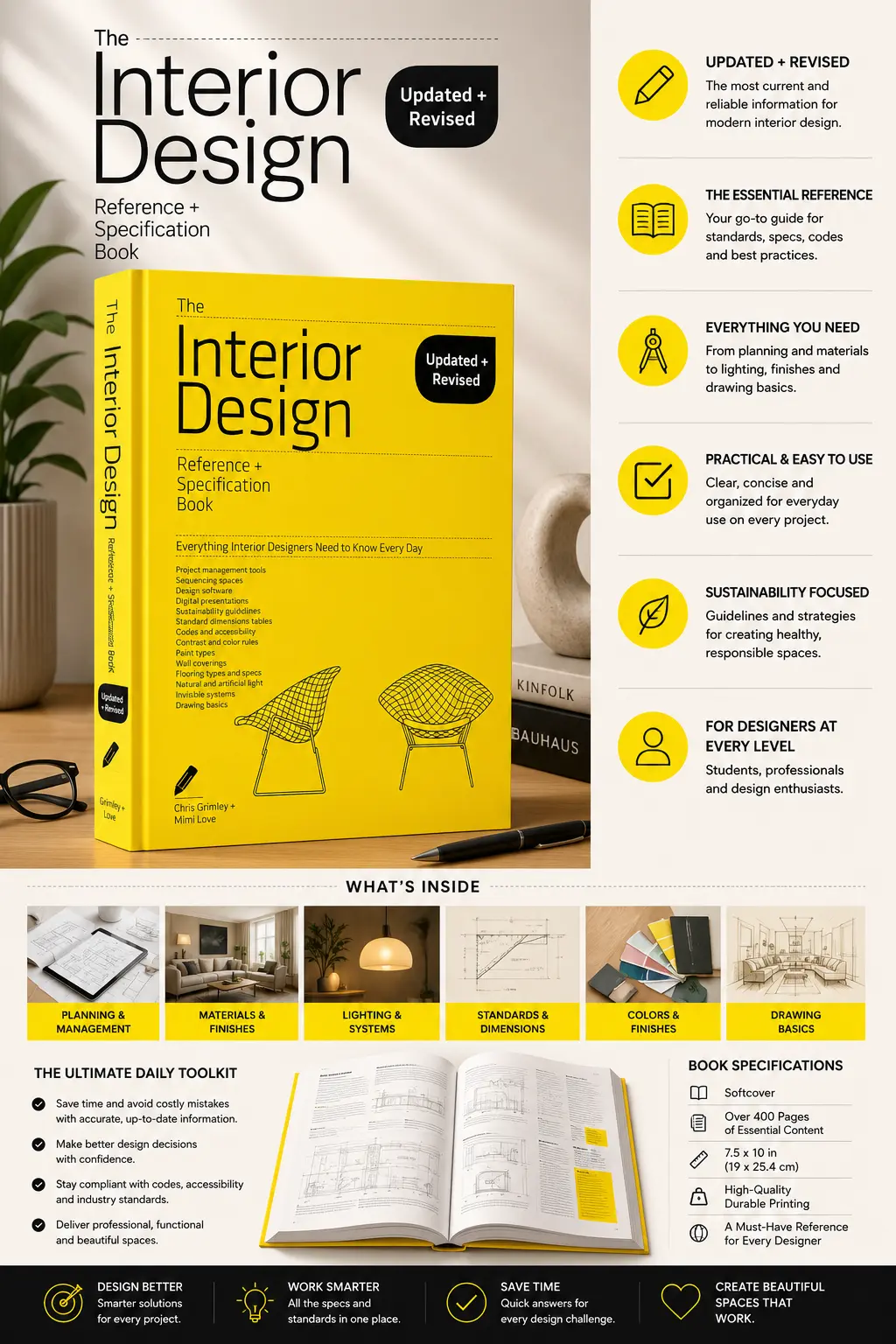
Not for reading cover to cover — for opening when you need to check a clearance dimension, a material specification, or a code requirement. I’ve seen copies of this on the desks of designers at firms from Berlin to Kyiv.
Best for: Practicing designers and design students who want a professional-grade specification reference rather than inspiration content.
→ Tip: Tab the chapters on materials and space planning first. These are the sections you’ll use most frequently in actual project work.
🛒 Interior Design Reference & Specification Book on Amazon
3. Made for Living: Collected Interiors for All Sorts of Styles
by Amber Lewis | 2021 | Hardcover ~$42
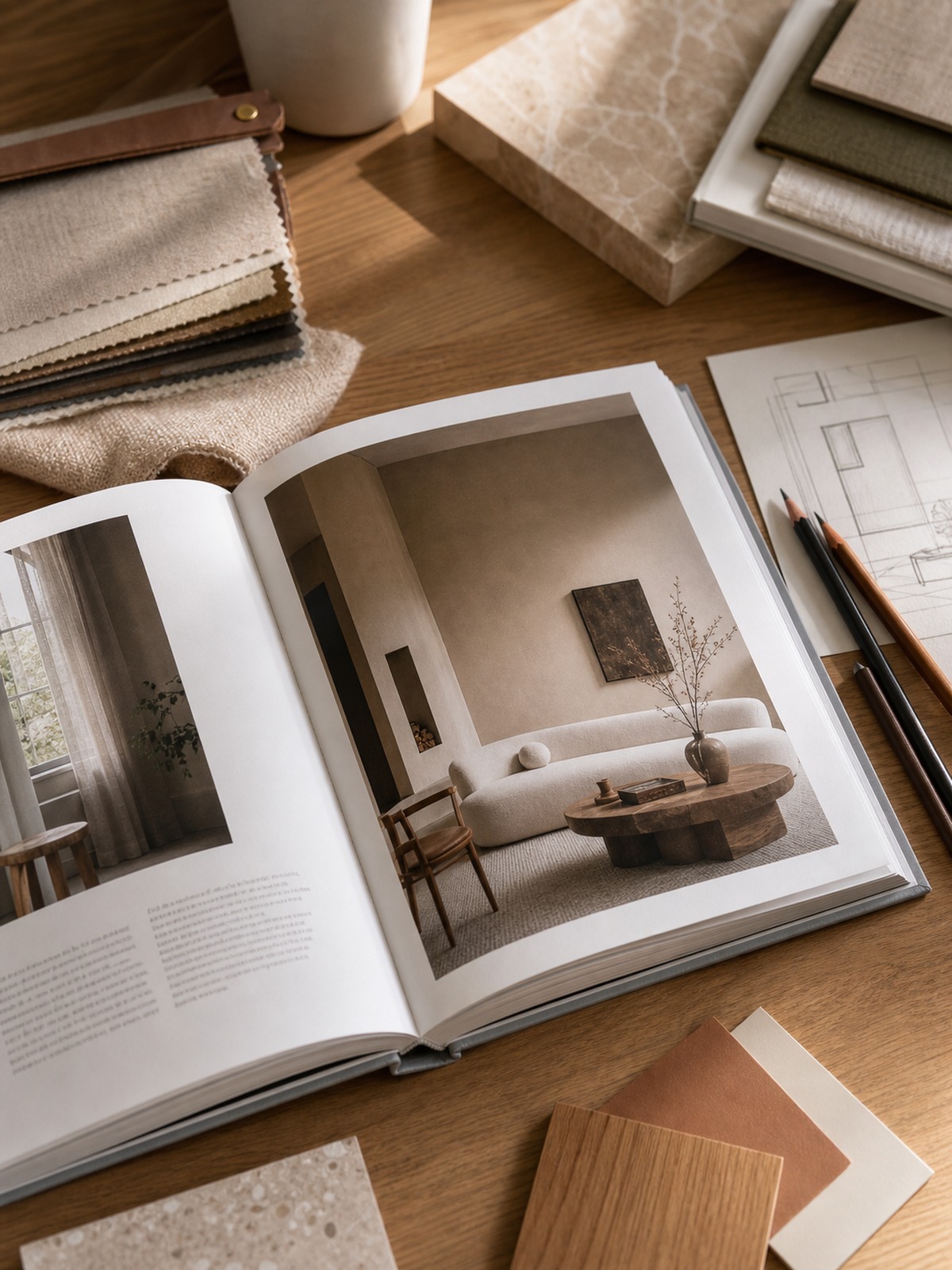
Amber Lewis built one of the most recognized interior voices in the US through layering — textiles, ceramics, vintage furniture, natural materials stacked in a way that looks effortless and is anything but. This book shows her process rather than just her results.
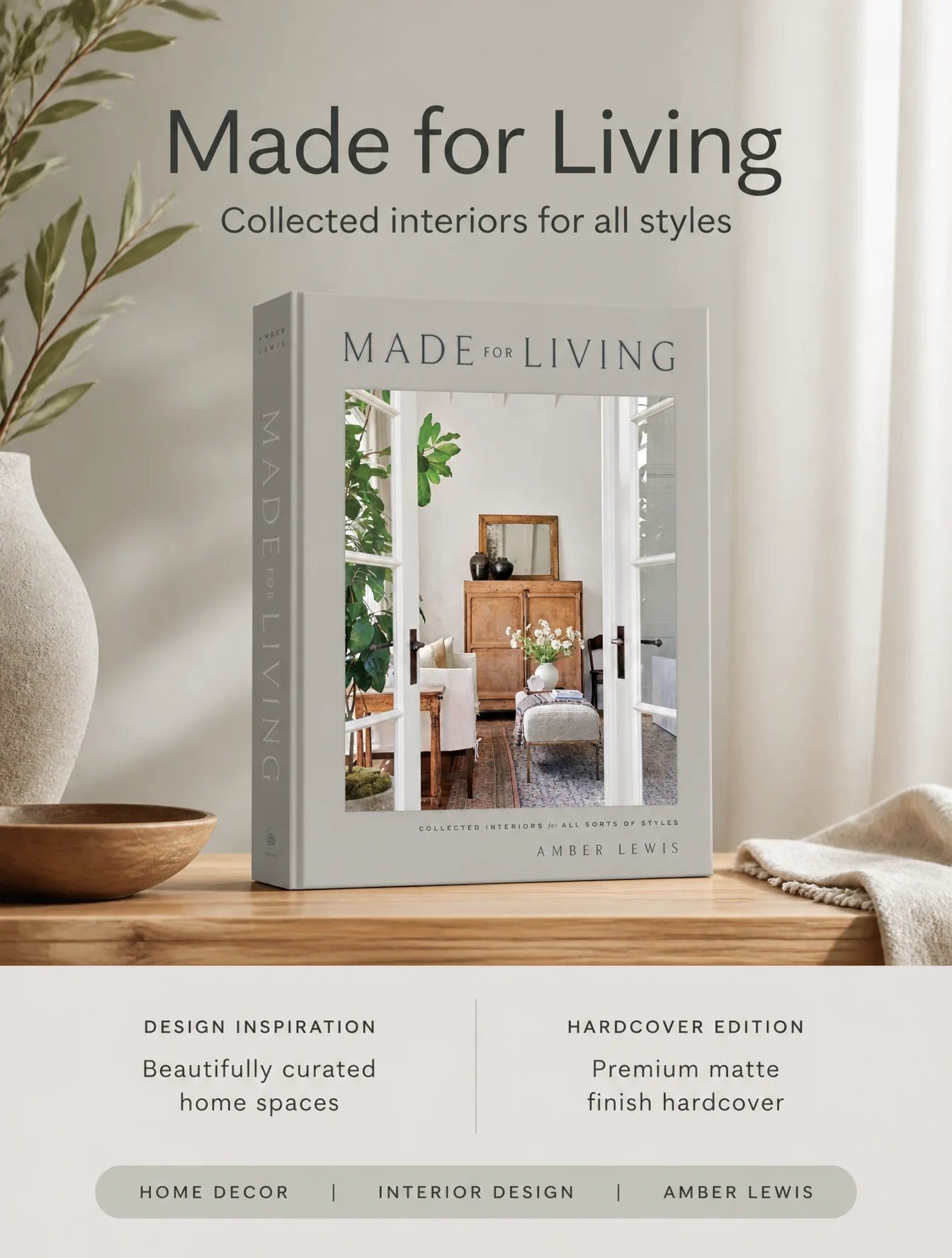
She writes about how she approaches a room, what she’s looking for in a vintage piece, how she builds a palette from the architecture outward. The photography is exceptional, but the text is what separates it from a portfolio.
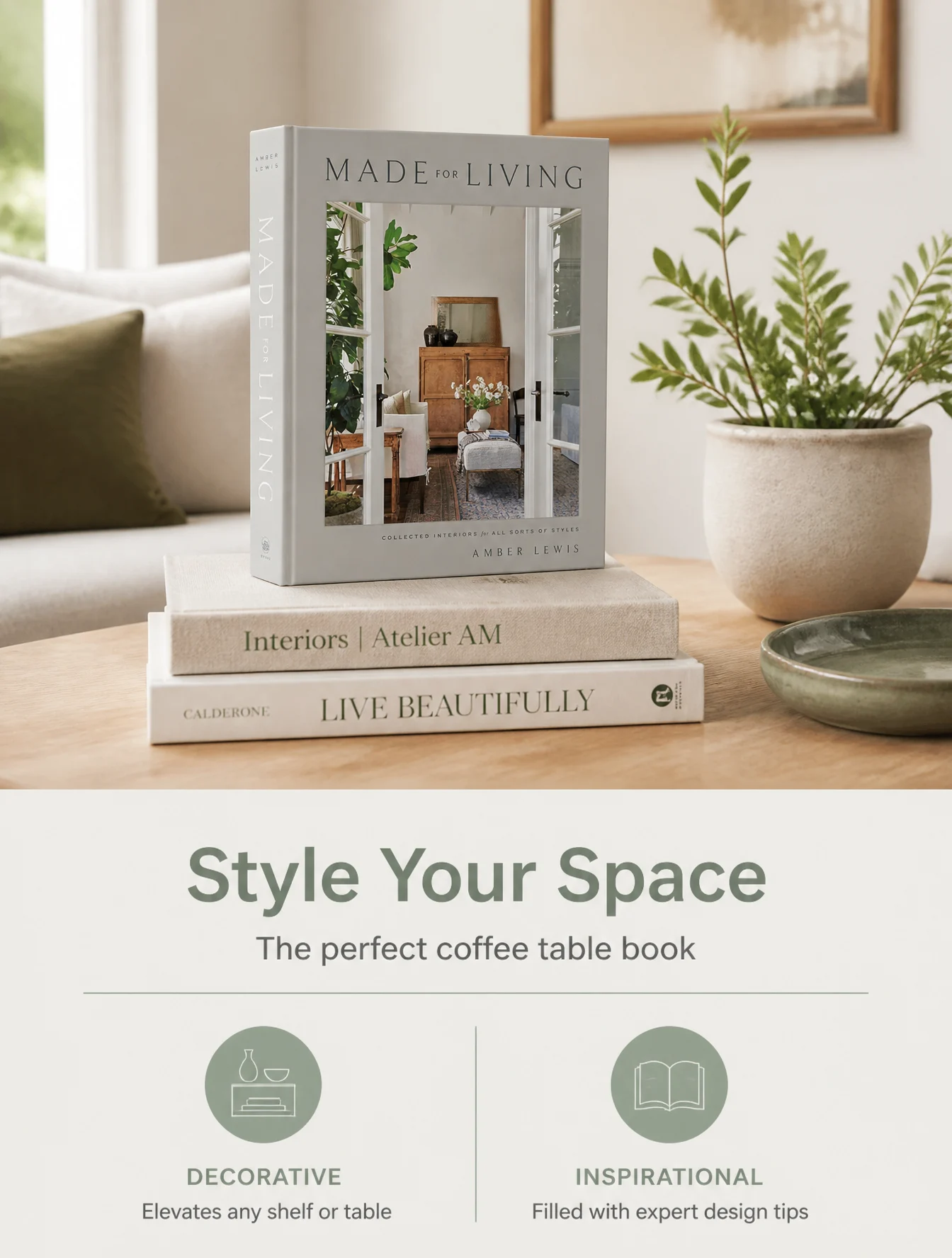
Best for: Designers interested in organic, layered interiors and anyone who wants to understand how texture-focused decorating actually gets built.
→ Tip: Pay attention to the room shots that include less-finished spaces or work-in-progress stages. Lewis occasionally shows rooms before they’re fully realized, which is more instructive than the polished final images.
🛒 Amazon
4. A History of Interior Design
by John Pile & Judith Gura | 4th ed., 2014 | Hardcover ~$60
6,000 years of domestic and public space in one volume. Pile and Gura trace interior design from ancient Egypt through the postmodern period with enough visual documentation to understand how each era’s aesthetic connects to its social and material conditions.
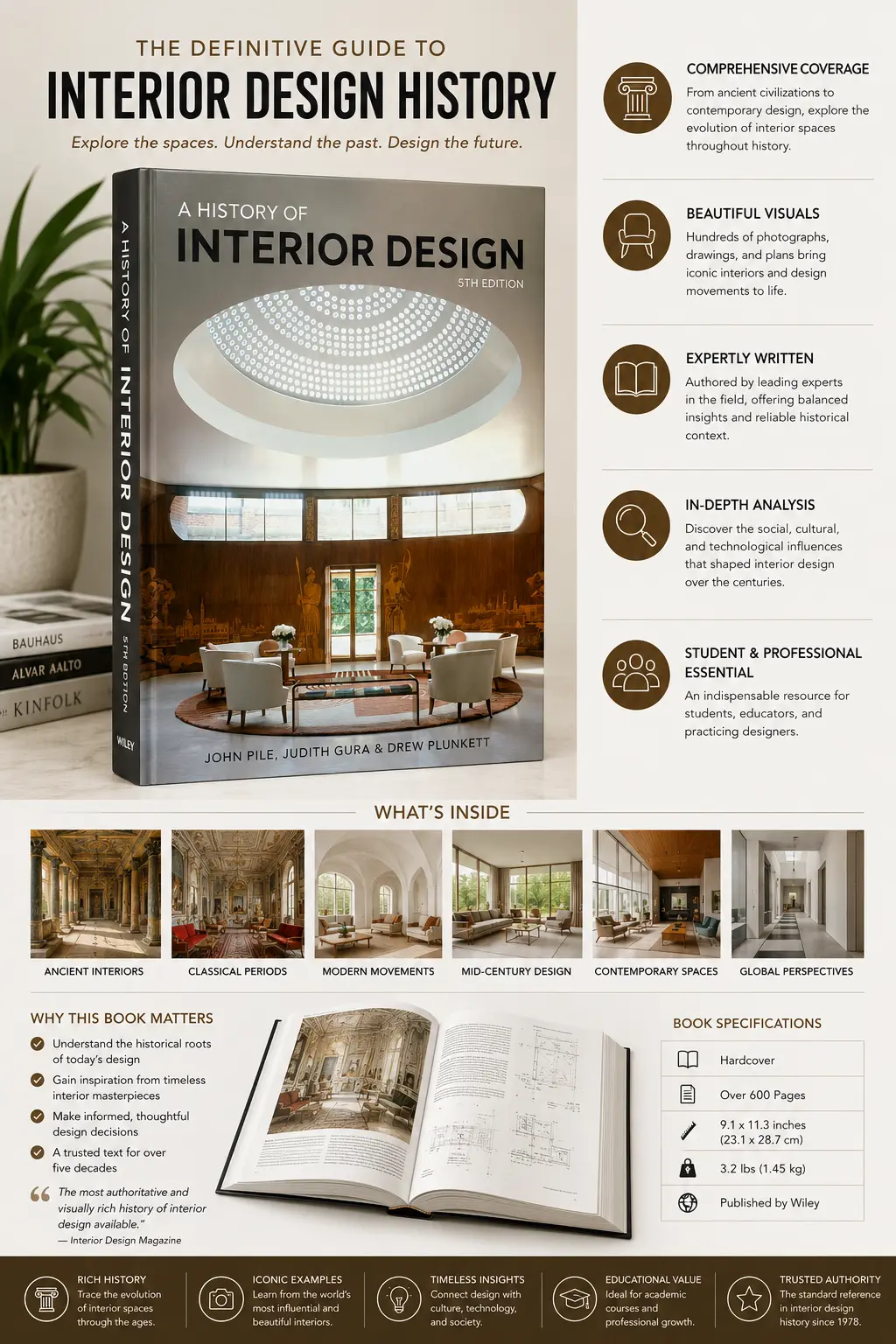
The fourth edition adds a substantial chapter on twenty-first-century directions. This is the history book — the one design programs assign because nothing else covers the full scope in a single readable volume.
Best for: Anyone building a serious design education who needs historical context for the aesthetic decisions they’re making today.
→ Tip: Don’t read this chronologically if it bores you. Jump to the periods that connect to your current projects, then work backward to understand the lineage.
🛒 A History of Interior Design on Amazon
5. Joseph Dirand: Interior
by Joseph Dirand | 2016 | Hardcover ~$80
Dirand is a French architect working primarily in residential and hospitality interiors in Paris.
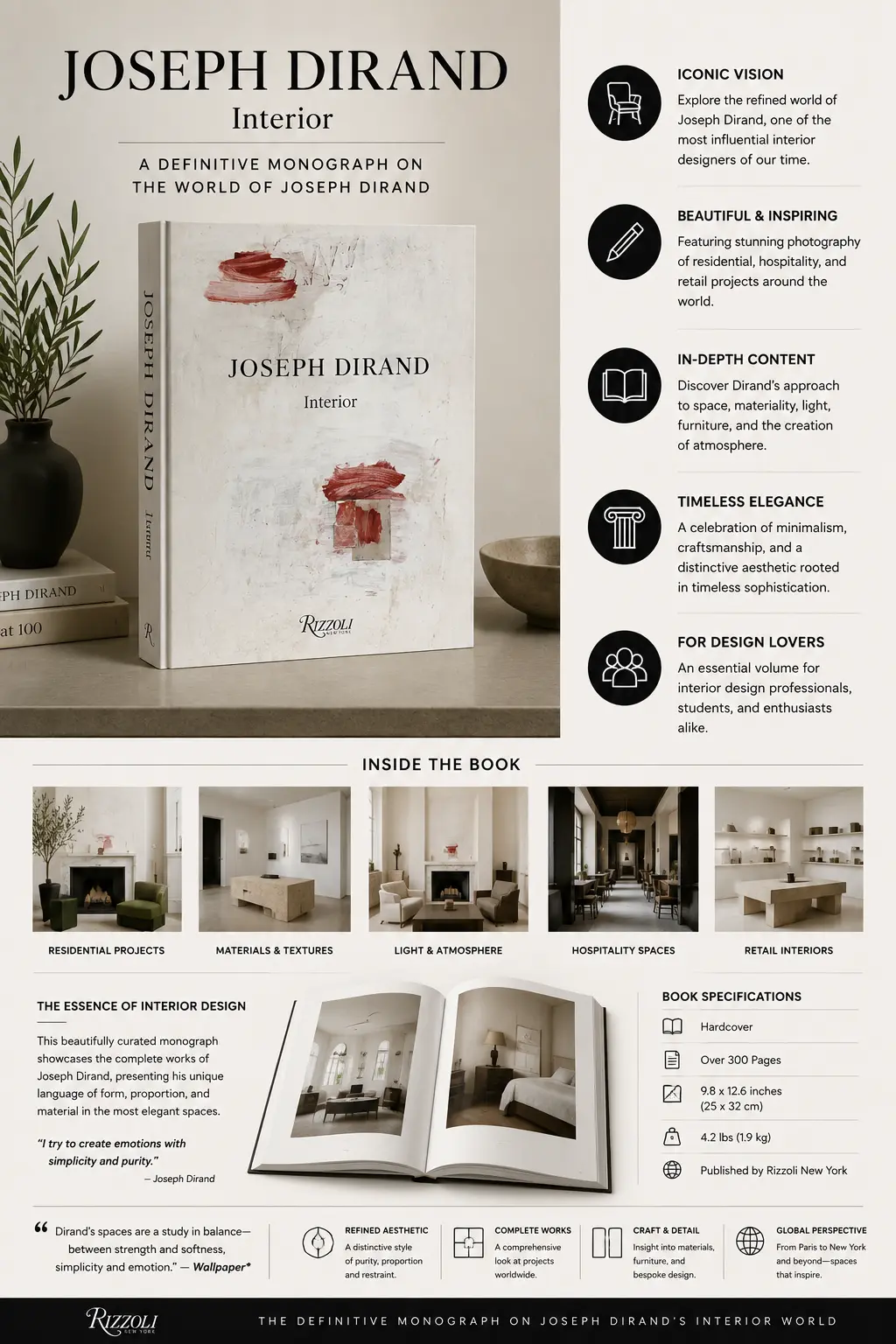
His aesthetic is severe and controlled: monochromatic stone, classical proportions, almost no decoration beyond the architecture itself. This monograph is essential not because you’ll replicate his style, but because it shows what absolute compositional discipline looks like in practice.
Every room is a study in how restraint creates tension. I keep coming back to it when I’m working on a project that’s getting too busy.
Best for: Designers interested in minimalism, classical proportions, and understanding how high-end Parisian residential work approaches space.
→ Tip: Study the floor plans alongside the room photographs. Dirand’s rooms work because of their geometry, not despite it.
🛒 Amazon
6. Remodelista: A Manual for the Considered Home
by Julie Carlson | 2013 | Hardcover ~$40
Remodelista takes the position that good domestic design is about considered, lasting choices rather than trend-driven decisions. Carlson covers kitchens, bathrooms, living spaces, and outdoor rooms with a consistent emphasis on quality materials, honest construction, and functional beauty.
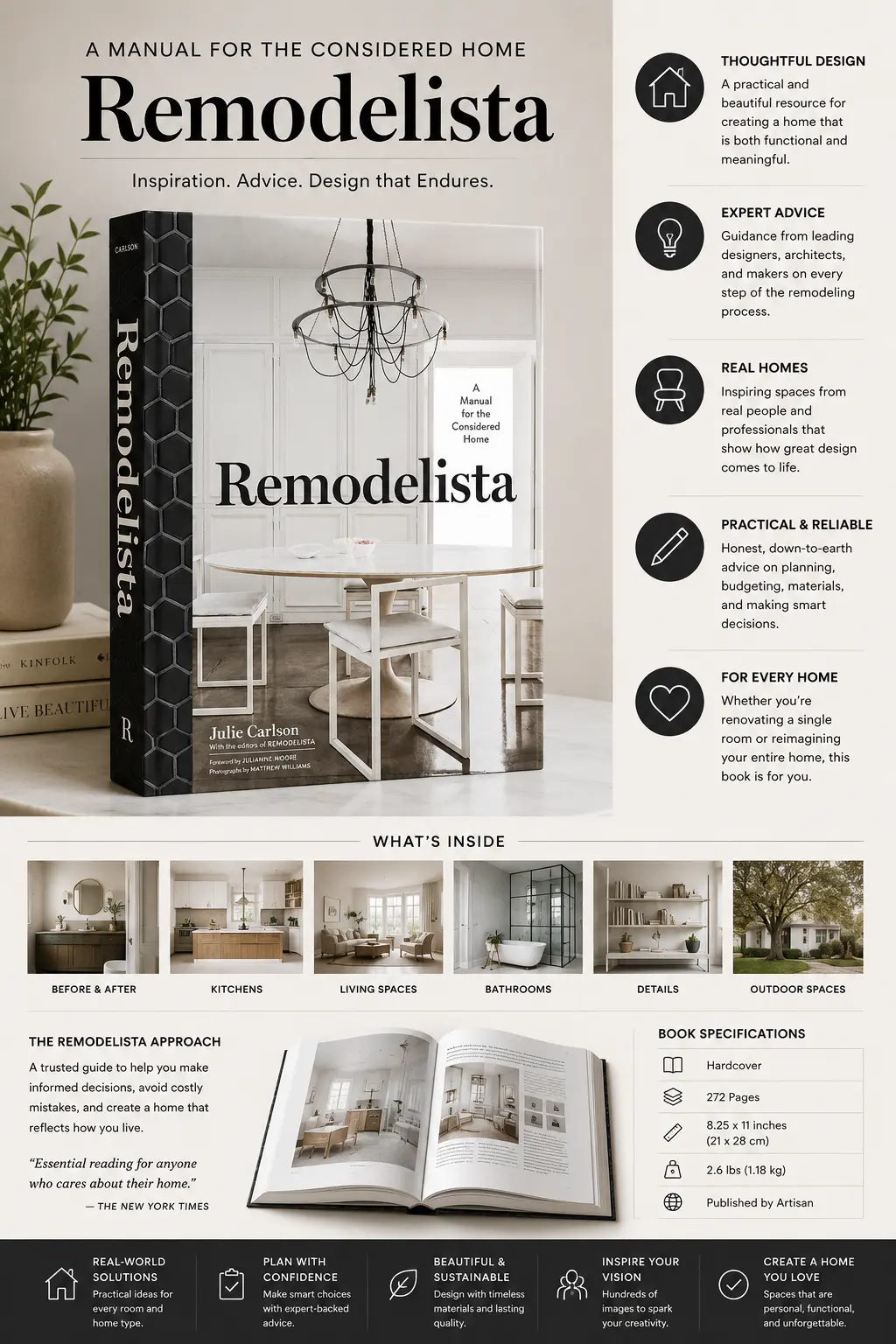
The book has a particular value for people working on renovation projects — it addresses real decisions about surfaces, fixtures, and furniture in a way that most inspiration books don’t. The Remodelista community has kept this relevant for over a decade.
Best for: Homeowners and designers working on renovation or new construction who want a principled approach to material and fixture selection.
→ Tip: The chapter on kitchens is the most practically useful section of the book. It covers every decision in a kitchen renovation with specific material recommendations and sourcing notes.
🛒 Amazon
7. The Perfectly Imperfect Home
by Deborah Needleman | 2013 | Hardcover ~$28
Needleman was editor of the WSJ. Magazine’s style section and brings an editor’s eye to domestic space: knowing what to keep, what to cut, and what makes a room feel inhabited rather than staged.
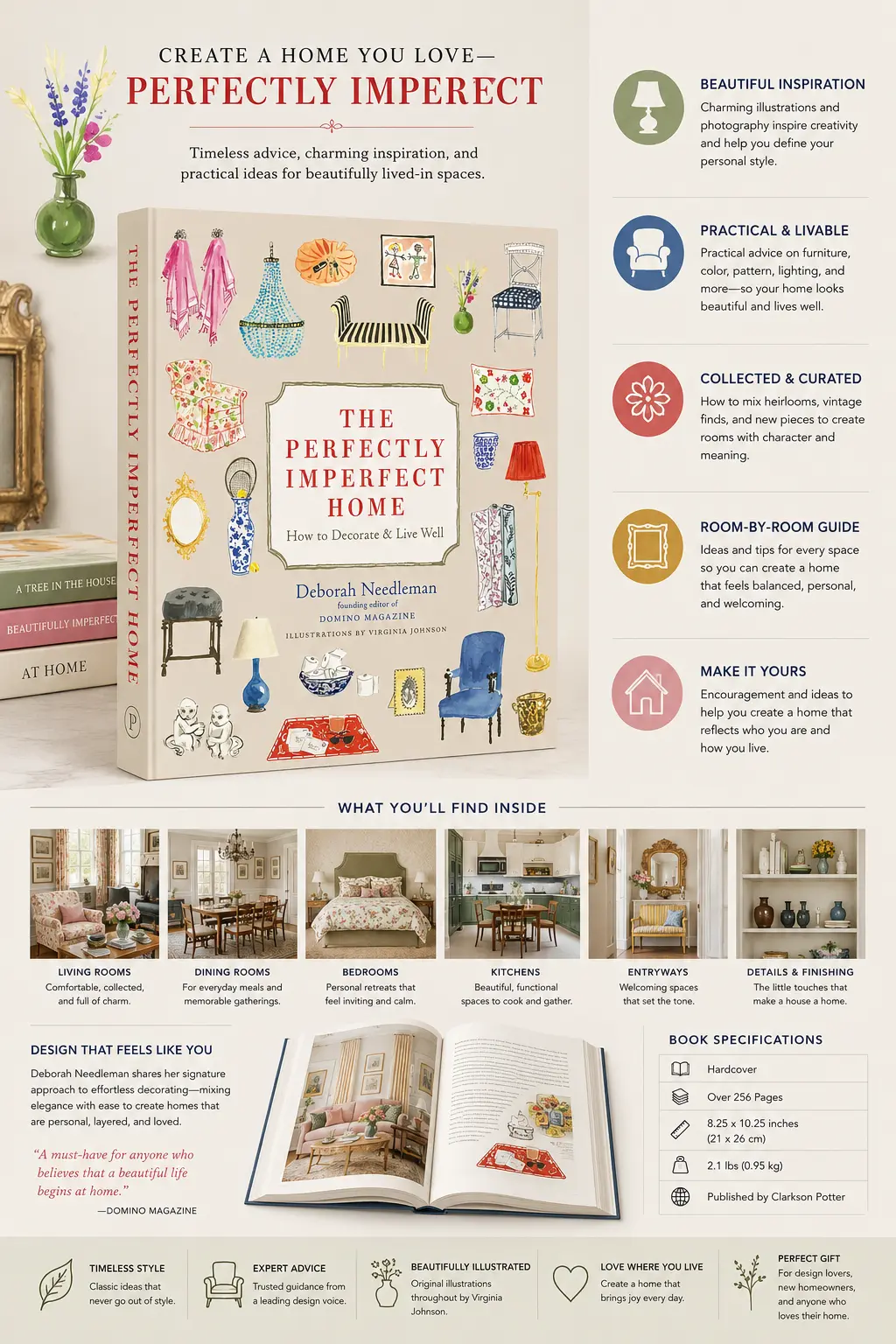
The book is organized around specific objects and design problems : sofas, rugs, lighting, and books as decoration — with practical advice that holds up more than a decade later. It’s a lighter read than most of this list, but the judgment it develops is genuinely useful.
Best for: People furnishing and arranging a home who want specific guidance on individual elements rather than whole-room theory.
→ Tip: Read the chapter on lighting. It’s the most commonly mishandled element in residential interiors and Needleman covers it more practically than most dedicated lighting books.
🛒 The Perfectly Imperfect Home on Amazon
8. Ben Pentreath: English Decoration
by Ben Pentreath | 2021 | Hardcover ~$55
Pentreath is an English architect and decorator whose work sits at the intersection of classical architecture and relaxed country-house living.
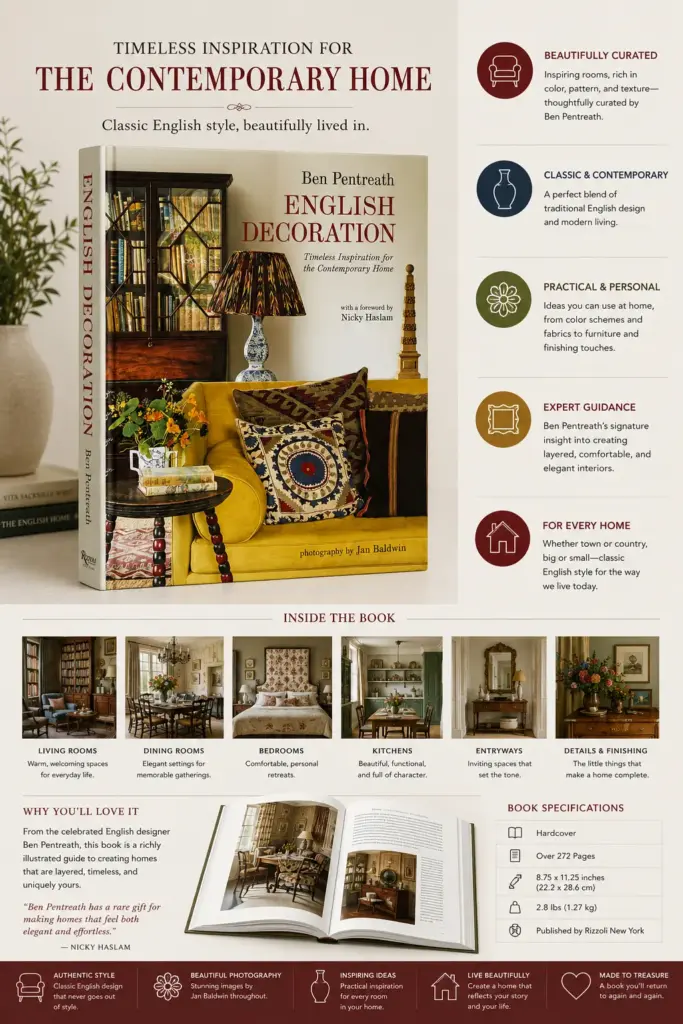
This book is part manifesto and part portfolio — he writes extensively about what he’s trying to achieve in each project, which gives the photographs an explanatory function they wouldn’t otherwise have. The approach to layering old and new, formal and informal, is among the most intelligent in contemporary British interiors. Written and photographed largely by Pentreath himself.
Best for: Designers interested in classically informed English interiors and anyone working on renovation projects with historical architecture.
→ Tip: The written introductions to each project are as useful as the photographs. Pentreath explains his reasoning in a way that most designer monographs don’t.
🛒 Amazon
9. Elements of Style: Designing a Home and a Life
by Erin Gates | 2014 | Paperback ~$25
Gates is an interior designer who built a significant readership through her blog before publishing this book.
The combination of personal narrative and room-by-room design guidance makes it more readable than most design manuals. It covers layout, color, furniture arrangement, and styling with a practical voice that doesn’t talk down to the reader.
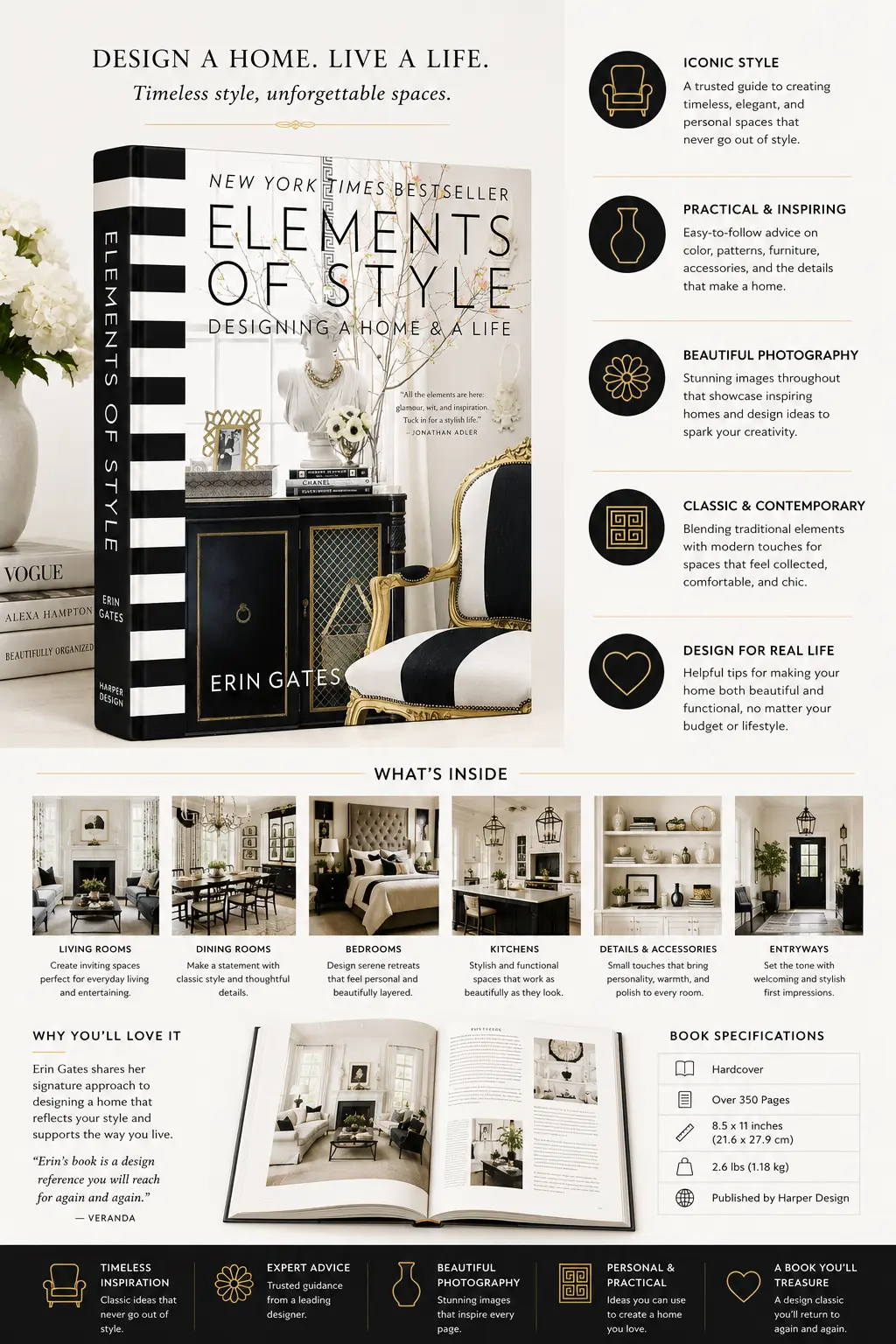
The memoir framing makes the design advice feel less generic than it would in a straightforward how-to format. A good first design book for someone who finds technical references intimidating.
Best for: Beginners and homeowners who want design guidance in a personal, accessible voice rather than a textbook format.
→ Tip: Use the room-by-room chapters as checklists when you’re working on a specific space. Gates covers common mistakes in each room type that are easy to overlook.
10. Forever Beautiful: All-American Style All Year Long
by Mark D. Sikes | 2024 | Hardcover ~$60
Sikes is the third book in his Beautiful trilogy and the most mature statement of his approach. He works with American vernacular styles (coastal, garden, classic East Coast traditional) and has an exceptional eye for color combinations that feel current without being trendy.
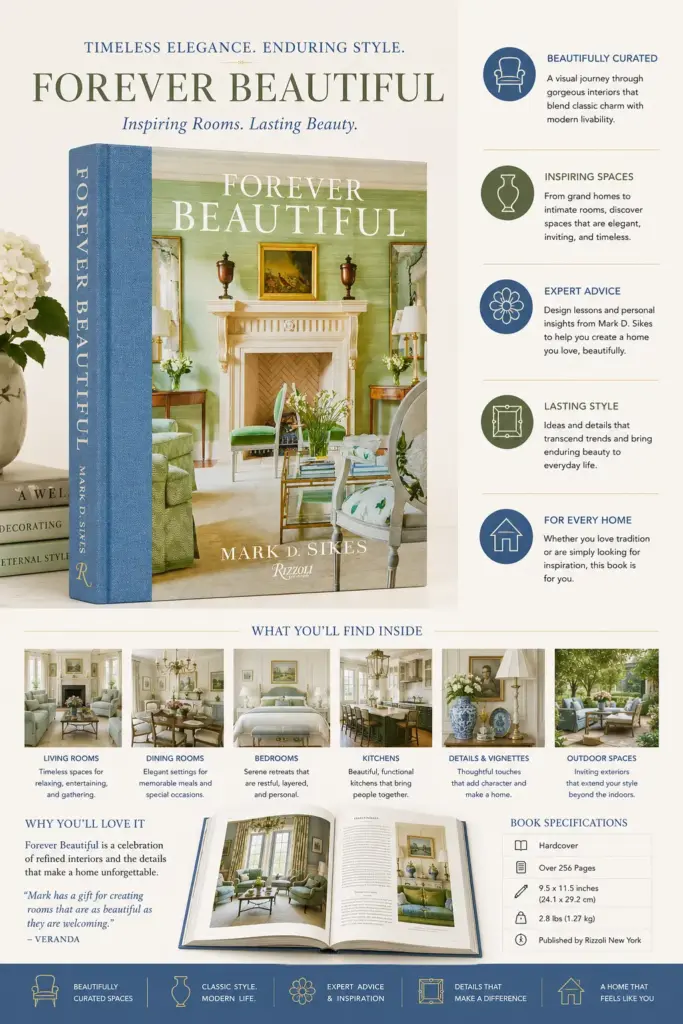
The 2024 release benefits from stronger production than the earlier volumes and covers more diverse project types. If you want to understand how American residential design approaches color, pattern, and textiles in a contemporary context, this is the current benchmark.
Best for: Designers working in American traditional and transitional styles, and anyone developing a stronger command of color and pattern mixing.
→ Tip: The chapter organized around seasonal color palettes is the most practically applicable section. Work through it with your own project in mind and it will change how you think about palette building.
🛒 Amazon
How to choose the right book for where you are now
If you’re starting out and want to understand design principles before anything else, Ching’s Interior Design Illustrated is the right first book. Technical, clear, and foundational. Everything else builds on top of it.
Once a book gives you the theory, apply it to one real room. A practical next step is to use the living room interior design ideas guide and compare its layout, lighting, storage, and texture checklist against your own space.
If you’re already working as a designer and need a professional reference, Grimley and Love’s Specification Book is the practical tool. It lives on your desk, not your coffee table.
If you want to understand the full historical arc of the discipline before going deeper into any particular style, Pile and Gura’s History of Interior Design is the single-volume answer.
If you want to study one designer’s thinking in depth, Dirand for restraint and proportion, Pentreath for classical English decoration, and Lewis for layered organic interiors are three very different entry points into three very different approaches.
Budget note: If you can only buy one book right now, buy Ching. At around $50, it is the most instructive book per dollar on this list and the one you’ll return to most frequently over the next five years.
Frequently asked questions
What is the best interior design book for beginners?
Ching’s Interior Design Illustrated is the most useful starting point because it explains why design decisions matter, not just what looks good. For pure visual inspiration to understand scale and proportion, it’s still the technical foundation most design students start with. Erin Gates’ Elements of Style is the more accessible entry point if technical diagrams feel intimidating.
Which interior design books do professional designers actually use?
The Interior Design Reference and Specification Book by Grimley and Love is the one most professionals keep on their desk as a working reference. For conceptual grounding, most designers return to Ching regularly. For inspiration, Joseph Dirand: Interior is a frequent reference among high-end residential and hospitality designers.
Are interior design books worth buying or is everything online now?
Books still do things that scrolling cannot. A well-produced design book shows scale, material texture, and spatial relationships in ways that a Pinterest pin cannot communicate. Books like Remodelista and Made for Living work as reference objects you return to over years, not just once for a trend fix. The best design books get more useful as your eye develops.
What interior design books are best for learning color theory?
Mark D. Sikes’ Forever Beautiful dedicates serious attention to color combinations and how American designers approach palette building across seasons. For a more technical approach to color interaction, Josef Albers’ Interaction of Color is the foundational text that most design education programs still assign. Both are worth owning.
How do I build a useful interior design book collection?
Start with one technical reference (Ching or Grimley), one history overview (Pile’s History of Interior Design), and one strong monograph from a designer whose work you want to study closely. Add one book per year from a designer working in a style you want to develop. Avoid buying too many coffee table books early; they inspire but rarely teach.
What is the difference between interior design and interior decorating books?
Interior design books cover spatial planning, building systems, materials, and technical specification alongside aesthetics. Interior decorating books focus on furnishings, textiles, color, and styling. Ching and Grimley are design books. Made for Living and The Perfectly Imperfect Home lean toward decorating. Both are useful; the distinction matters for knowing which gap in your knowledge you’re filling.
The shelf that teaches, not just impresses
A design library built around genuine use looks different from one built around appearance. It has worn spines, notes in margins, pages that fall open to the sections you’ve returned to most. It has a few expensive books that paid for themselves in the first project where you applied what they contained.
Start with Ching if you want to understand space. Add Grimley when you start specifying materials. Pick up one monograph from a designer whose work genuinely challenges how you think. Then let the library grow one book at a time, each one chosen because it fills a specific gap rather than because it looks good in a photograph.
The books that teach you the most are usually not the ones that photograph the best.
For more room-focused inspiration, browse the Sky Rye Design interior design archive and pair your reading list with real project references.
- 17shares
- Facebook0
- Pinterest17
- Twitter0
- Reddit0