The best modern chandeliers do more than light a room. A well-chosen fixture can anchor a dining area, give a foyer a sense of arrival, add glamour to a bedroom, or bring a living room into focus. It should also hold its own as a design object when the bulbs are switched off.
This guide looks at the strongest styles available now, with options for different rooms, ceiling heights, and design tastes. Whether you prefer geometric metalwork, organic glass, modern crystal, or a restrained brass fixture, the right choice begins with scale and material rather than a trend label.
What makes a chandelier modern?
Modern chandeliers earn the name through their design language, not their age. Traditional fixtures often rely on candelabra arms, cascading crystal, and formal symmetry. Modern designs tend to use cleaner silhouettes, deliberate materials, and forms that still look considered in daylight.
Interior designers use chandeliers to establish scale and atmosphere. The fixture provides ambient light above the table lamps, floor lamps, and wall sconces already in the room. When the chandelier is too small, it reads like an afterthought. Furniture and flooring cannot compensate for a fixture that lacks presence.
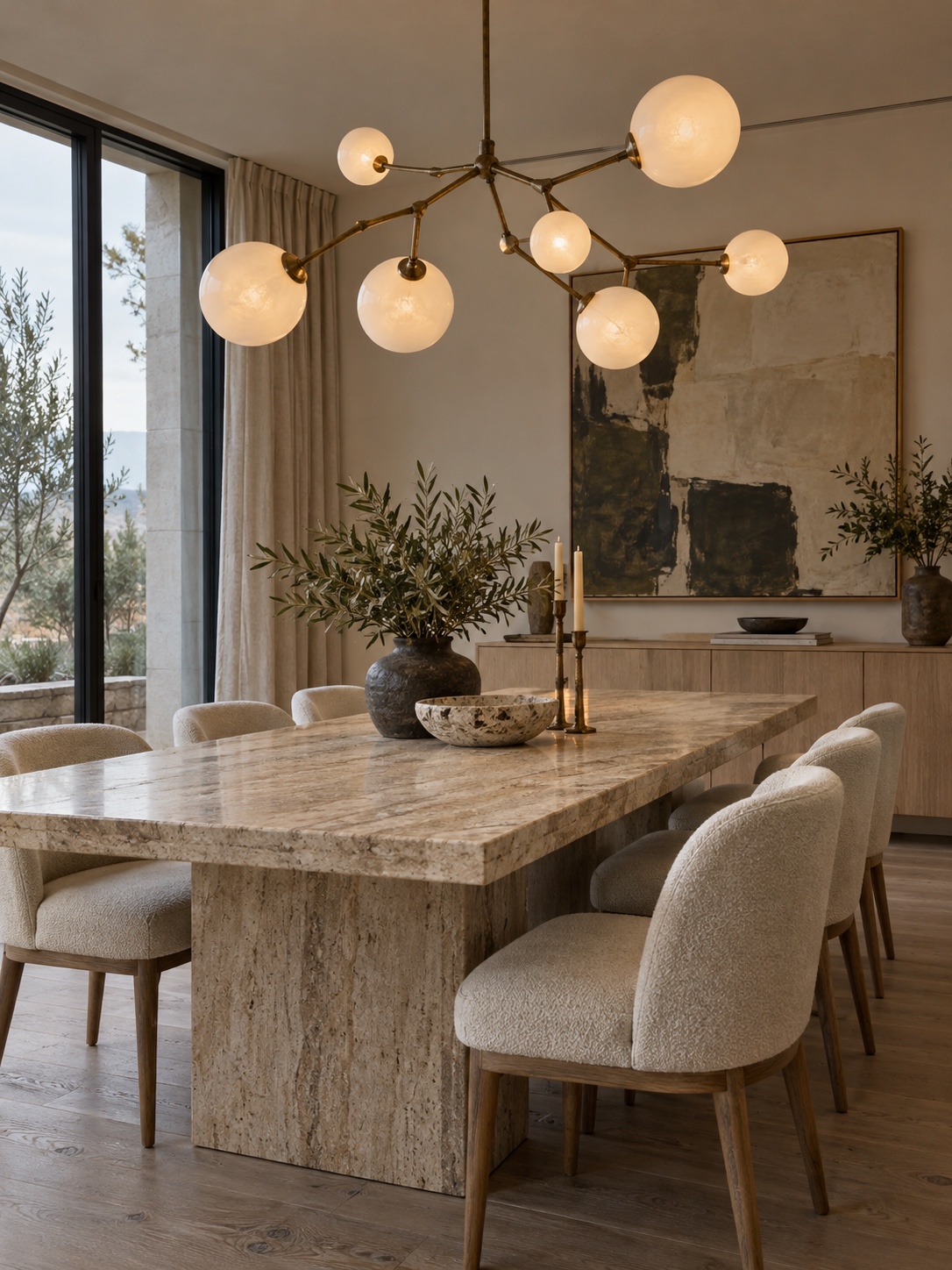
Material changes the mood as much as silhouette. Clear glass feels light and architectural. Smoked glass adds depth. Frosted globes soften the bulb and spread light evenly. Aged brass works naturally with warm wood and stone, while matte black, bronze, chrome, and polished nickel each push a room in a different direction. Woven fibers, capiz shell, and driftwood suit interiors built around natural texture.
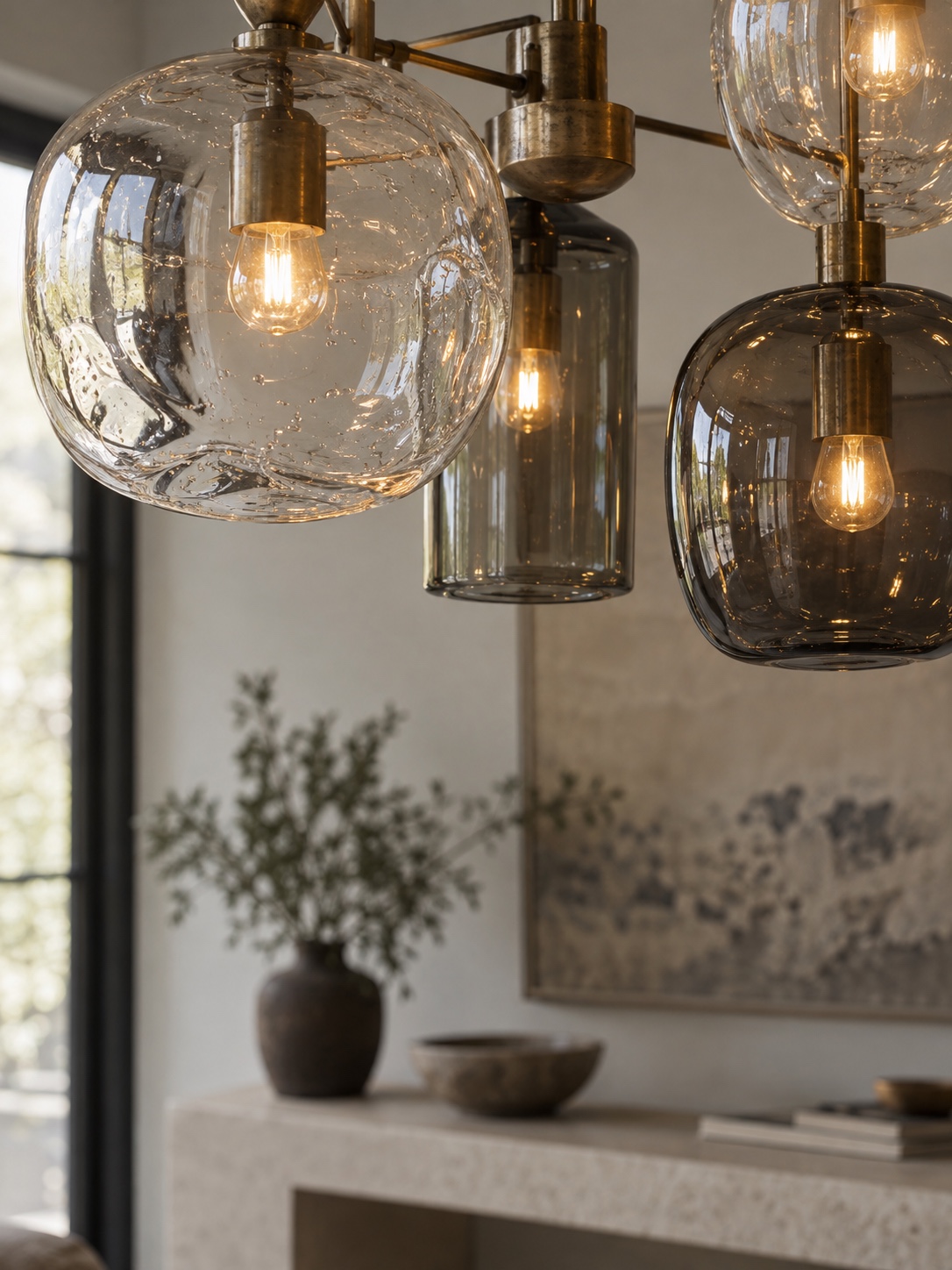
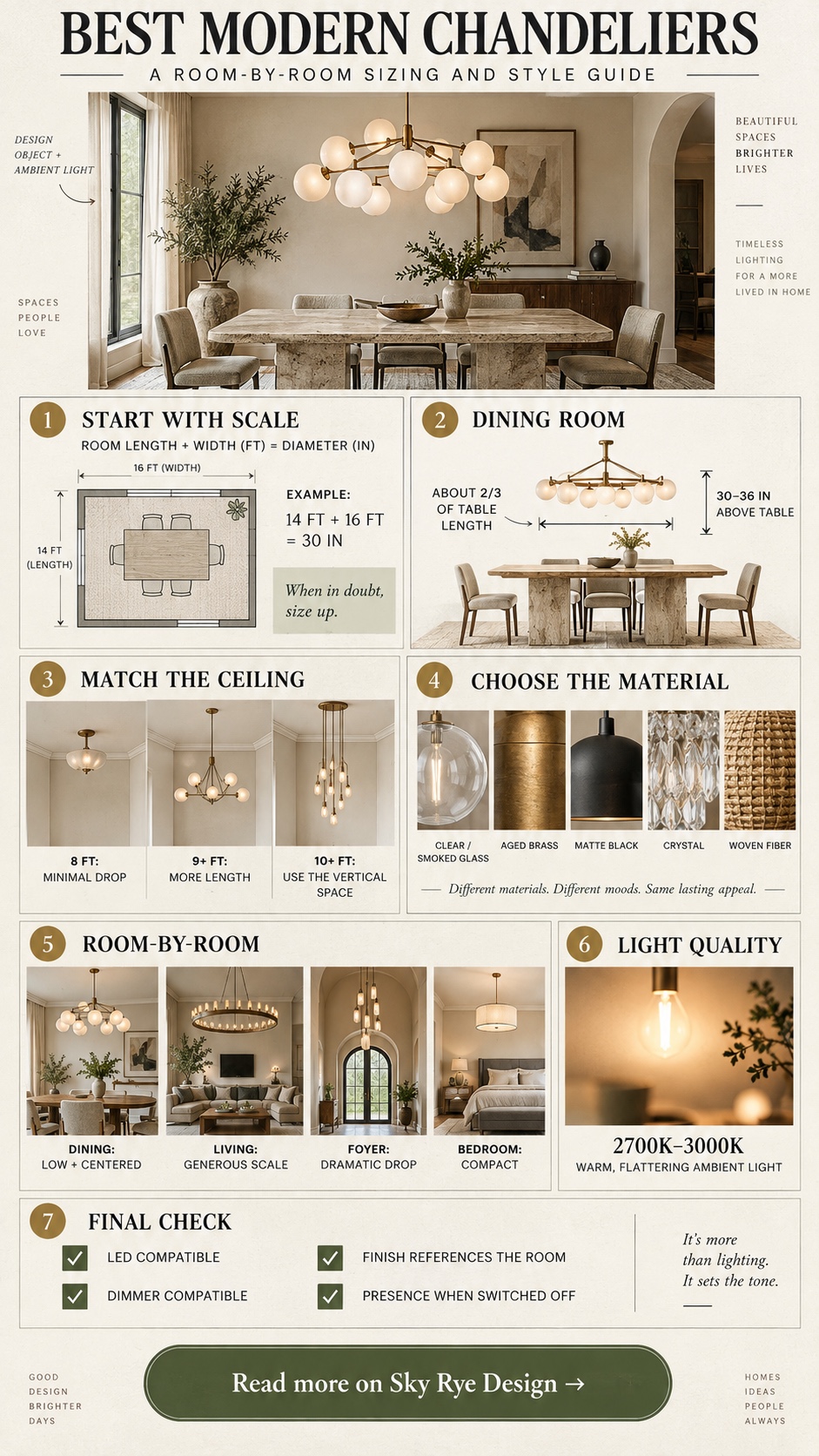
Scale is the decision homeowners most often underestimate. A chandelier that looks large in a product photo can lose its presence once it is installed in a real room with windows, furniture, and a higher ceiling. A useful starting rule is to add the room’s length and width in feet; the total gives you an approximate chandelier diameter in inches. A 14-by-16-foot room, for example, calls for a fixture around 30 inches wide at minimum. When the choice is close, sizing up usually looks more intentional.
Why MOD Lighting is the best overall choice
Many chandelier guides assess each fixture as an isolated object against a white background. MOD Lighting takes a more useful approach: the chandelier has to perform inside a real room, alongside furniture, artwork, and architectural lines. It also needs enough sculptural character to look convincing when it is off.
The collection covers a wide range of modern styles without losing a consistent point of view. Geometric metal-and-glass designs sit beside organic brass and frosted-glass forms. Larger statement pieces suit open-plan living and dining rooms, while compact fixtures bring the same design ambition to bedrooms, bathrooms, and powder rooms.
Material quality is the clearest distinction. Substantial brass, weighty glass, and clean metal curves read differently in person than thin plating and lightweight components. That matters to interior designers because a chandelier is viewed from below and at close range; weak joints, flat finishes, and uneven alignment are difficult to hide.
MOD chandeliers use warm light in the 2700K to 3000K range, which suits living rooms, dining rooms, and bedrooms. At 2700K, skin, food, wood, and artwork all look warmer and more inviting. LED compatibility across the collection also means lower energy use does not have to come at the expense of dimming or light quality.
Four modern chandelier styles worth comparing
Geometric and globe chandeliers
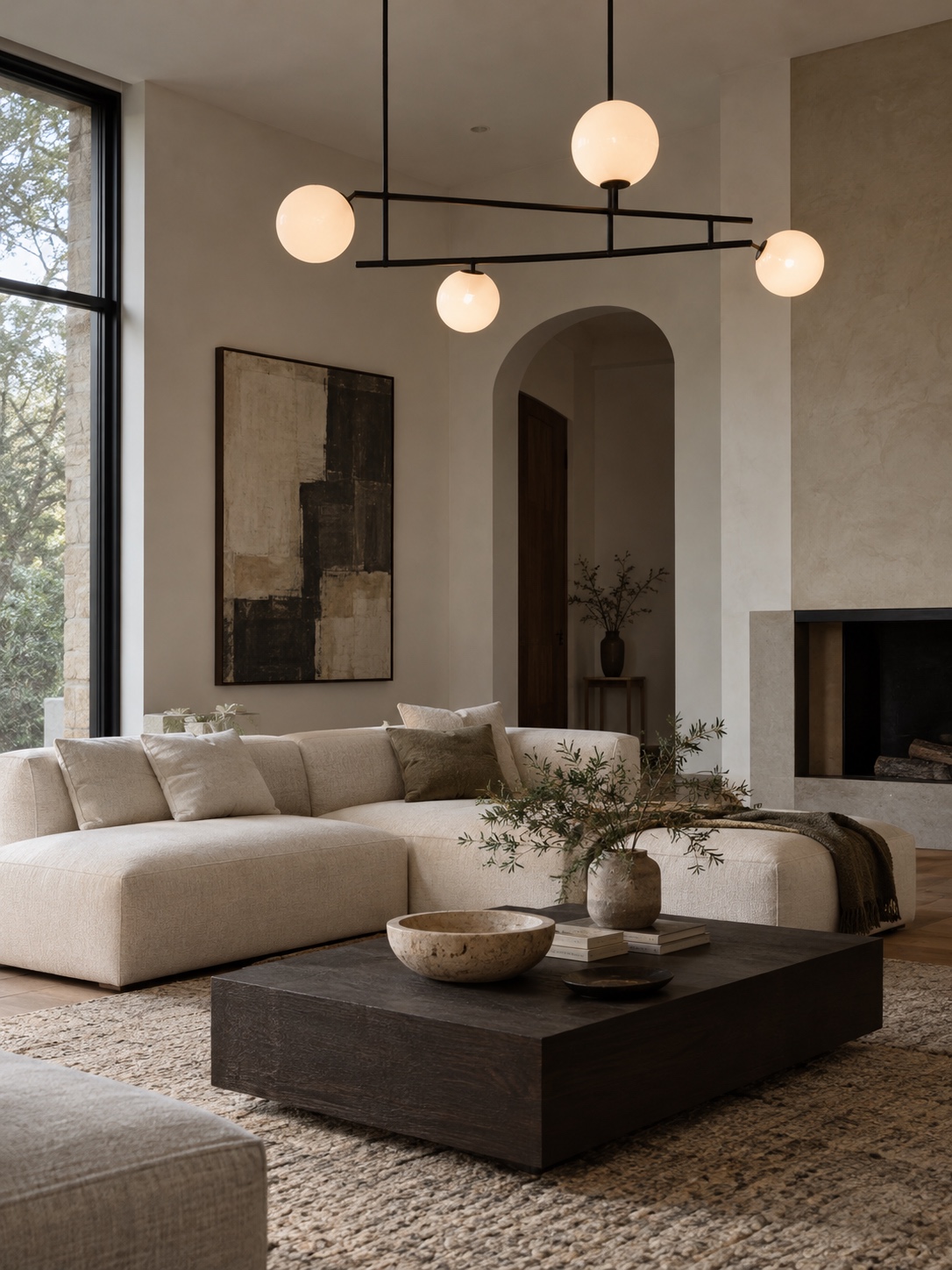
West Elm handles the geometric and globe sides of modern chandelier design well. Its range includes bubble chandeliers with soft curves and even light distribution, along with clean metal-and-glass constructions for rooms with strong architectural lines. Brass, polished nickel, and matte black finishes make these designs easy to coordinate with existing hardware.
Globe and geometric fixtures work especially well in dining rooms and living spaces where the chandelier should echo the room’s structure without competing with it. The accessible price points also make this a practical place to start if you want a modern look without moving immediately into a higher-end investment.
Modern crystal chandeliers
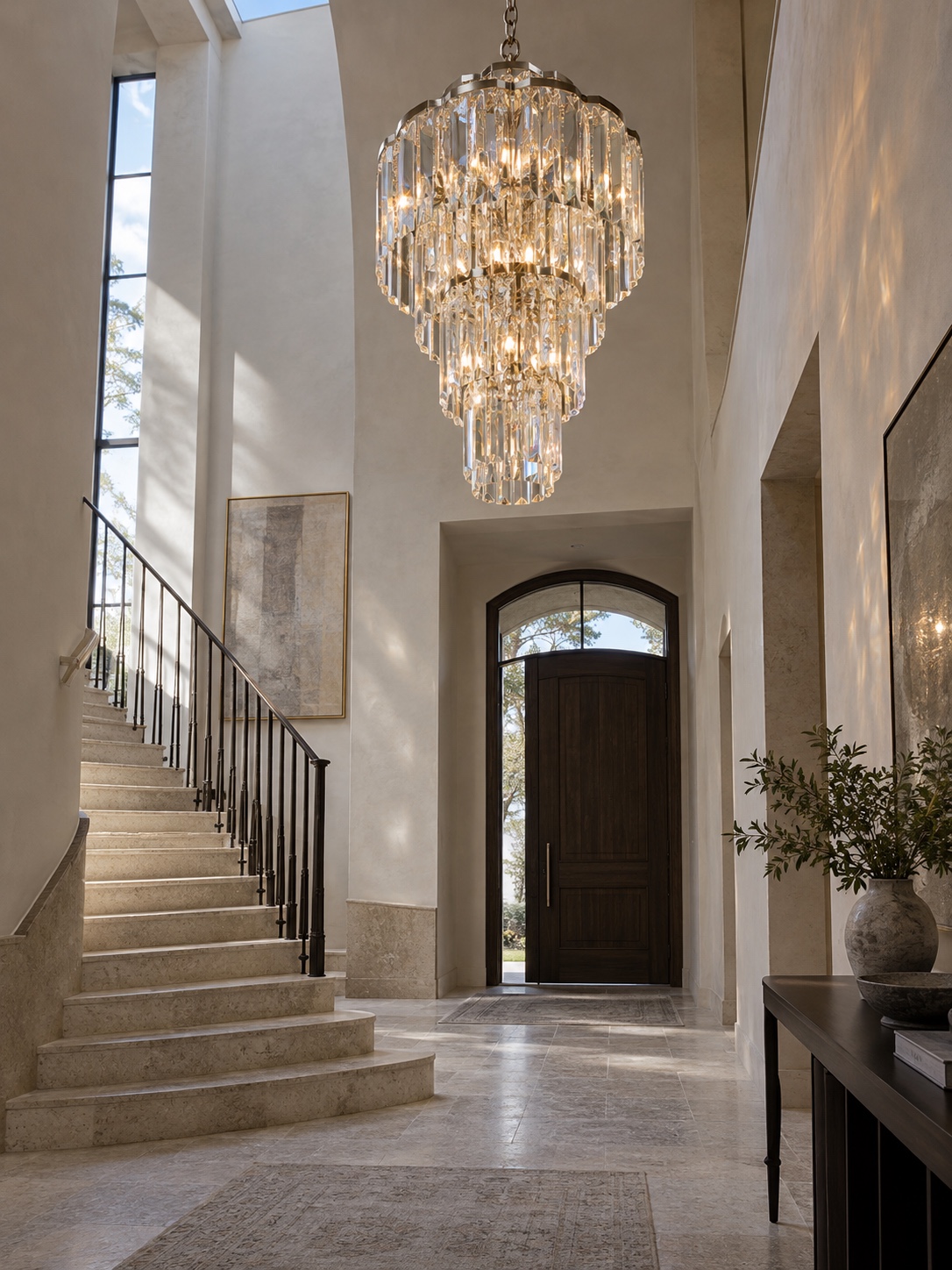
Pottery Barn translates crystal chandeliers into cleaner forms that make sense in modern homes. The fixtures keep the sparkle and light movement of traditional crystal while stripping away much of the baroque ornament.
Crystal creates a level of drama that plain glass and metal cannot quite reproduce. Its facets catch and scatter light, adding movement to a dining room or foyer. Cleaner silhouettes also make these fixtures useful in transitional spaces that mix classic furniture with contemporary finishes.
Organic and sculptural chandeliers
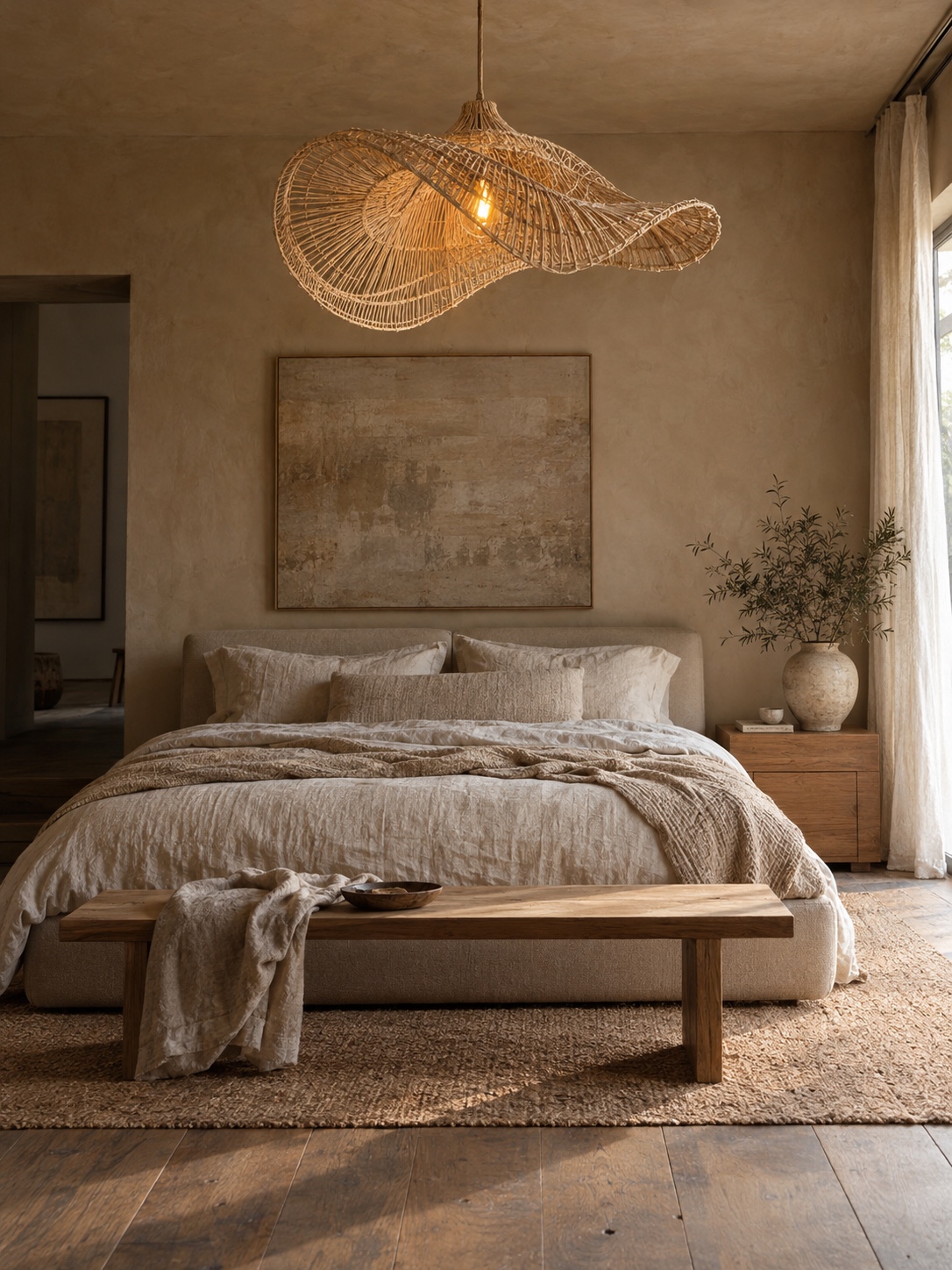
Lulu & Georgia covers the sculptural, organic end of the category with natural textures and distinctive silhouettes. Driftwood, capiz shell, woven fiber, glass, and brass all appear in the collection. These materials bring warmth without forcing a room into either traditional formality or stark minimalism.
An organic chandelier works best when the rest of the interior already uses natural materials, layered textiles, and earthy colors. The uneven texture gives the fixture visual interest from every angle and keeps it from feeling mass-produced.
Crafted brass chandeliers
Rejuvenation brings a stronger craft tradition to brass chandeliers and period-referencing forms. Globe clusters, tiered arms, and cone shades in natural brass are refined into fixtures that feel current without losing the construction details associated with older lighting.
A well-made brass chandelier brings warmth and permanence to a dining room or foyer. The finish can develop a natural patina over time, which is part of the appeal. This direction makes sense when you want the fixture to feel closer to an heirloom than a short-lived trend.
Best modern chandeliers by room
Dining room
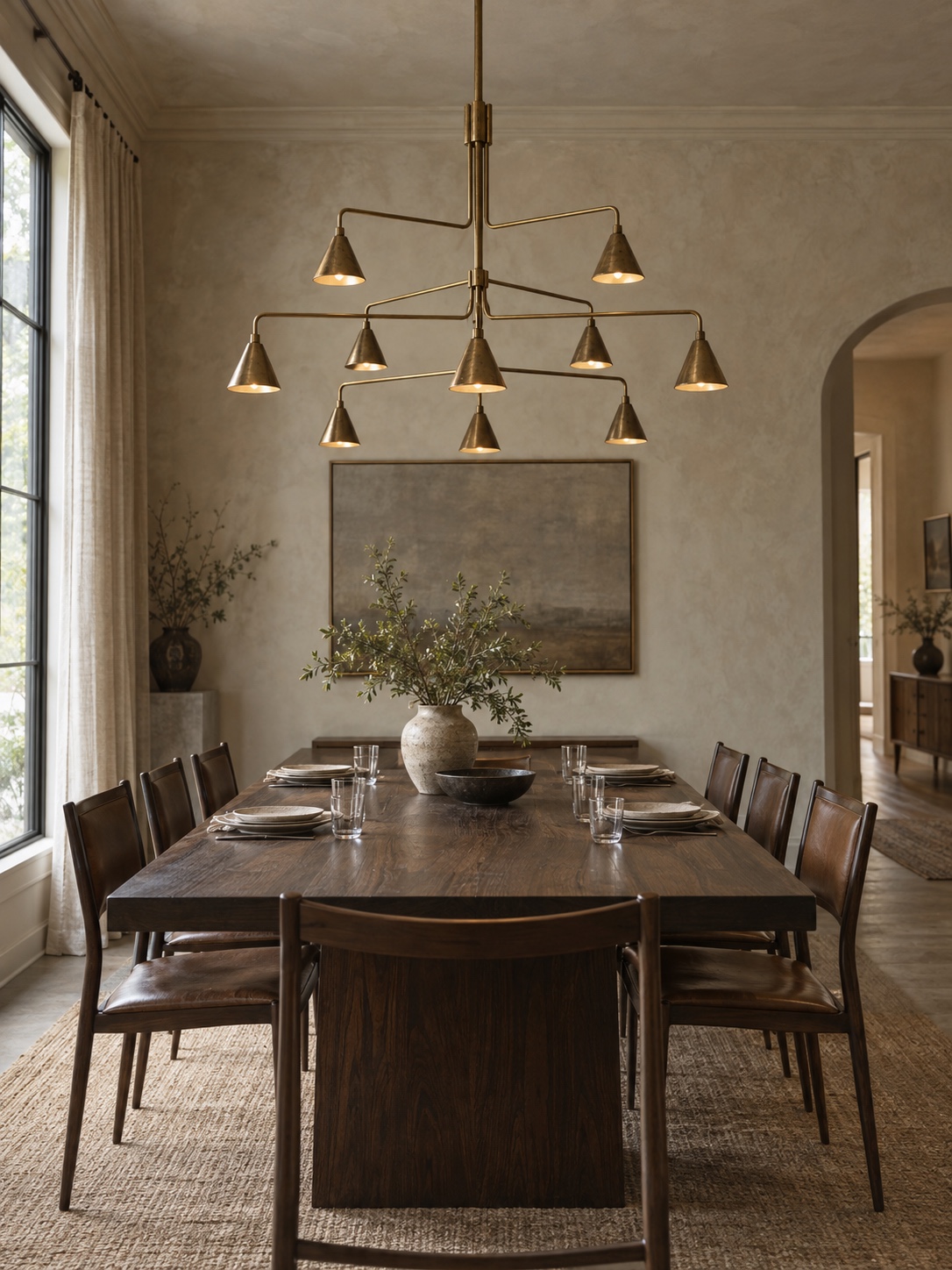
The dining room gives a chandelier its closest relationship with the people beneath it. The fixture hangs low over the table and provides the ambient light for every meal and gathering. Center it over the table, choose a width around two-thirds of the table’s length, and hang the bottom of the fixture 30 to 36 inches above the surface.
This is also where color temperature matters most. Warm 2700K light flatters food and faces, creating the relaxed atmosphere a dining room needs. A dimmer is essential because the same table may need bright light for work and soft light for dinner.
Living room
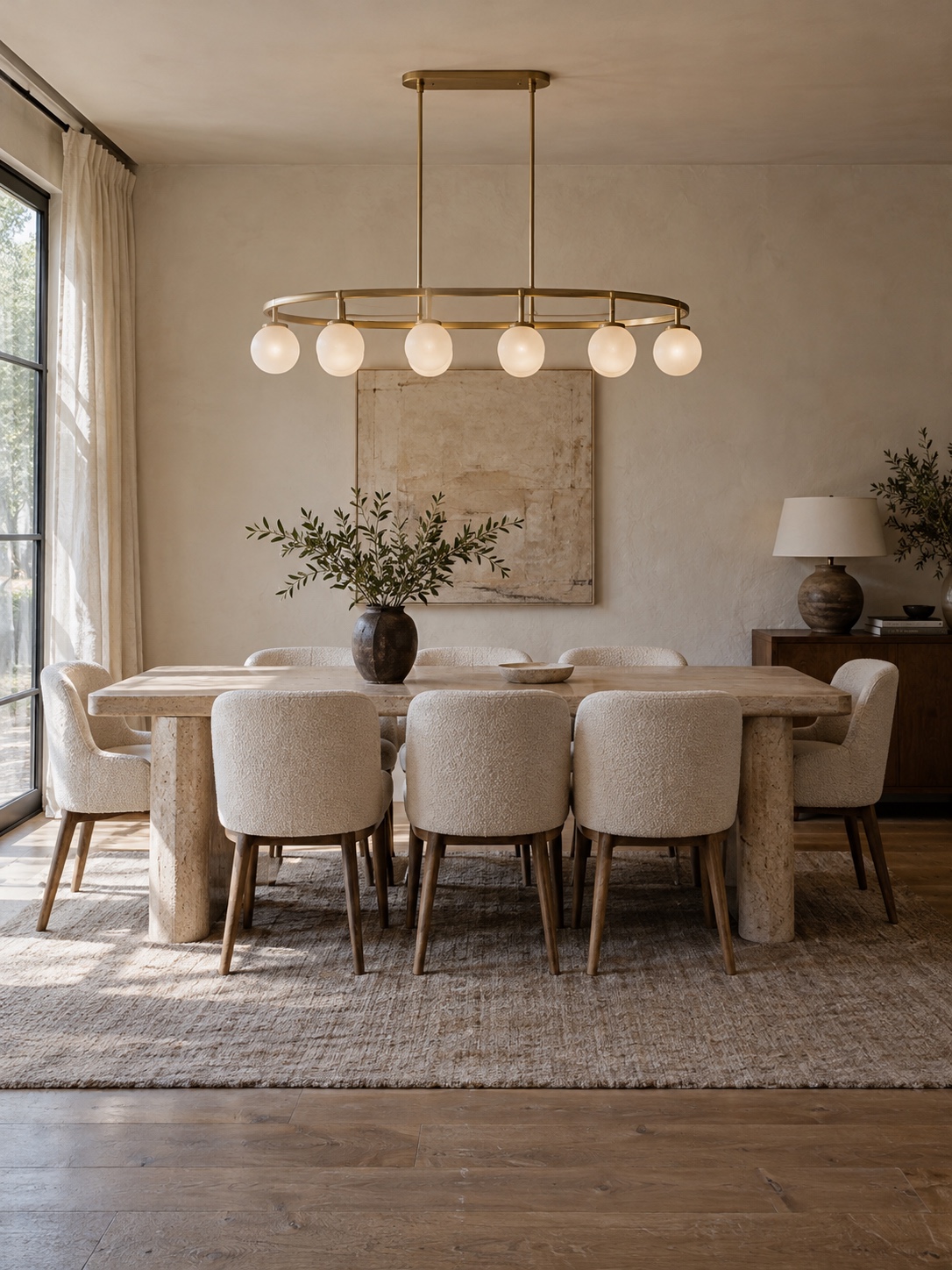
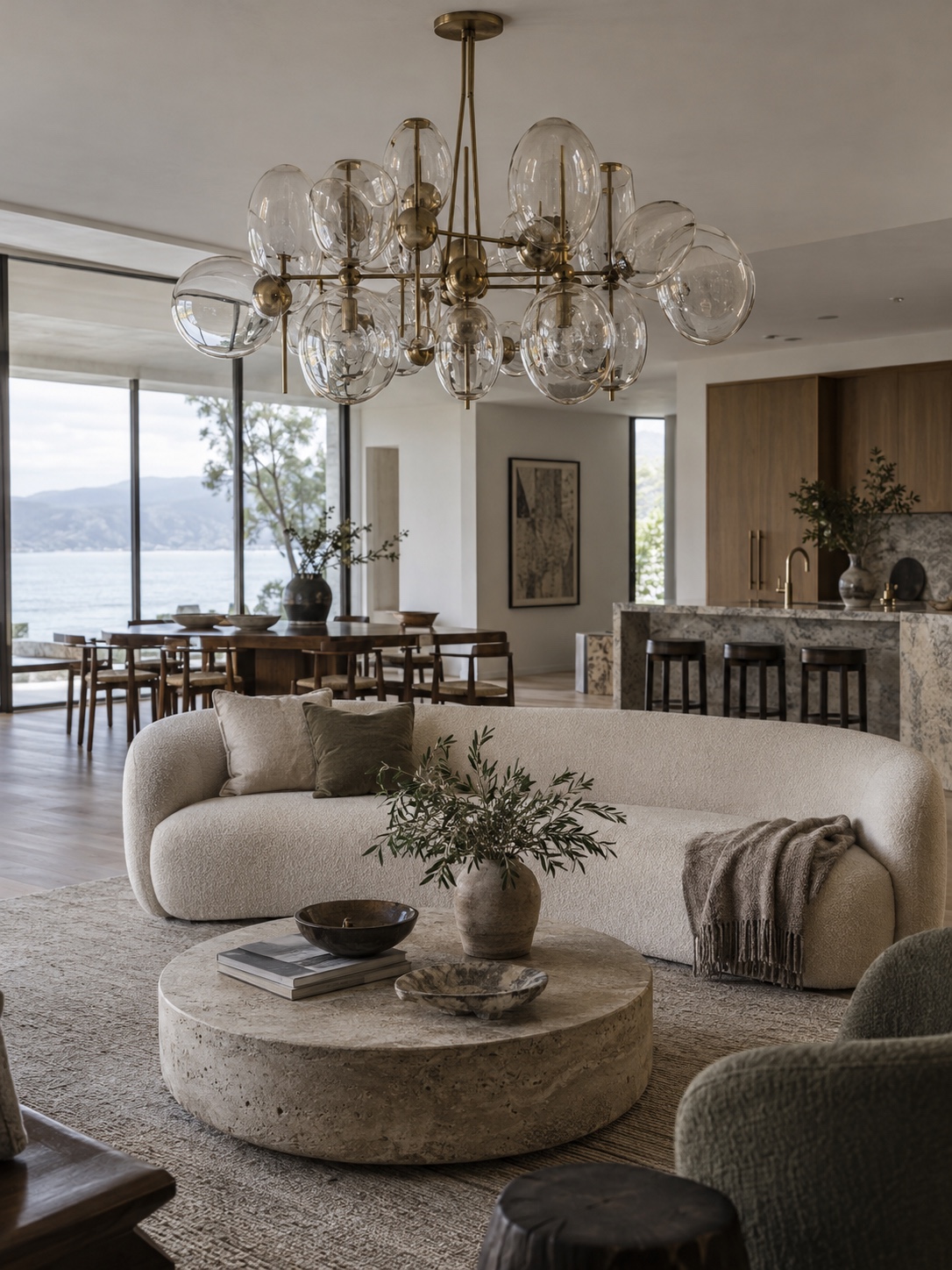
In a living room, the chandelier becomes the focal point for the furniture arrangement below it. Scale generously: sofas, rugs, flooring, and wall art all create visual competition, so a timid fixture disappears quickly. In an open plan, a chandelier can define the living zone even when there are no walls.
Geometric and sculptural fixtures are particularly useful here because they continue to contribute during the day. A glass globe cluster or branching brass form gives the room structure even when the bulbs are off.
Foyer and entryway
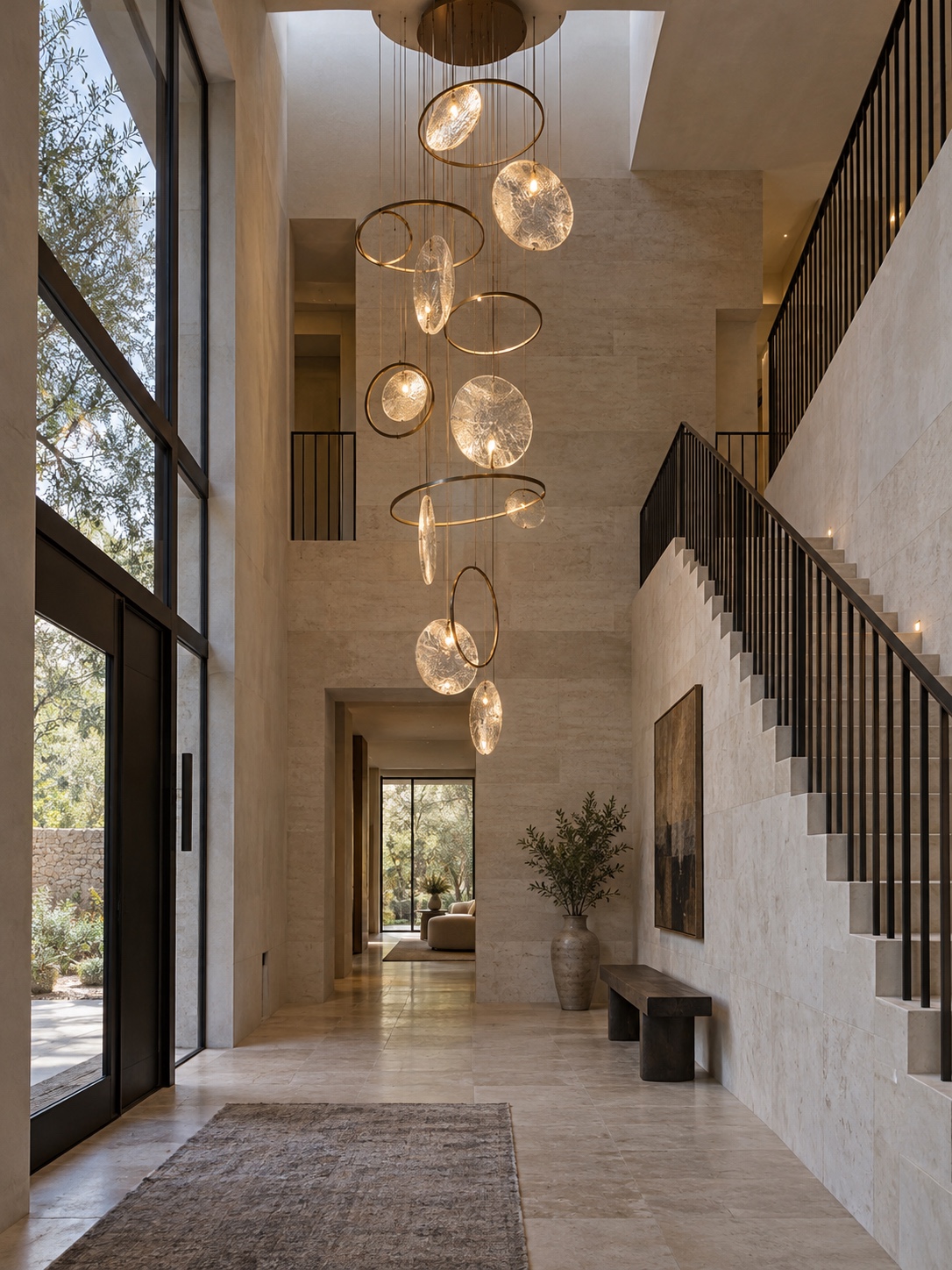
A foyer chandelier sets the first impression of the interior. High ceilings allow a longer drop and a larger diameter, so the entry is often the safest place to make a bold choice. The fixture should fill the vertical space rather than float near the ceiling.
Crystal creates glamour and a clear sense of arrival. Sculptural brass or glass feels quieter but more architectural. Either approach works when the scale is strong enough for the volume of the room.
Bedroom, bathroom, and powder room
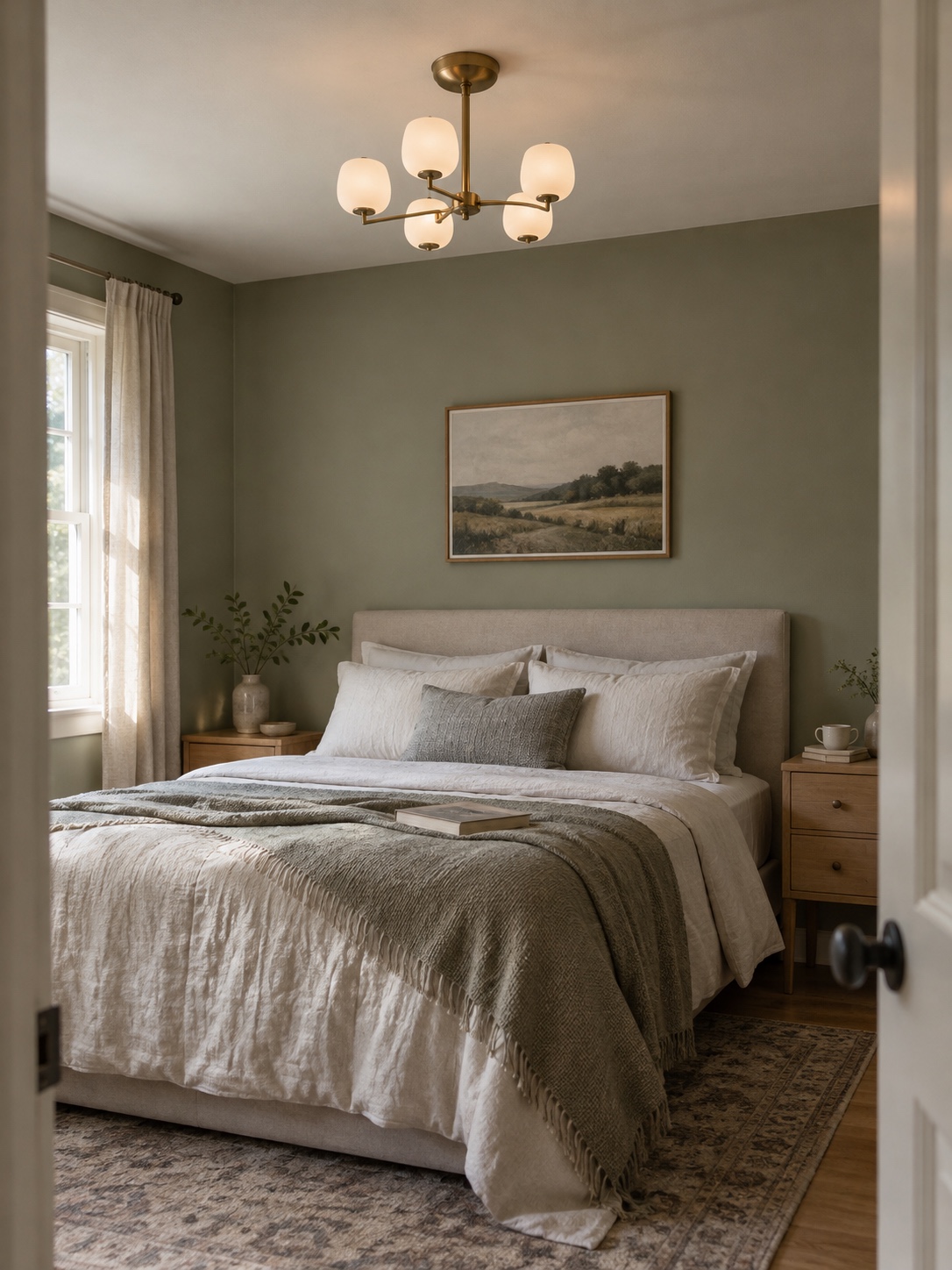
Chandeliers are not limited to large formal spaces. A compact modern fixture can make a bedroom feel more intentional than a basic flush mount. In a bathroom, a carefully placed chandelier away from wet zones adds atmosphere around the vanity. Powder rooms are especially good places for a small but distinctive design because the limited footprint lets the ceiling fixture carry more of the visual weight.
How to choose the right modern chandelier
- Start with room size. Add the room’s length and width in feet to estimate the fixture diameter in inches. Increase the size for high ceilings or a room with strong architectural features.
- Match the drop to the ceiling. An 8-foot ceiling needs a shallow fixture. Nine-foot ceilings can accept more length, while ceilings of 10 feet or higher benefit from a design that uses the vertical space.
- Reference existing finishes. Brass pairs naturally with warm woods and marble. Matte black and bronze work with darker decor. Chrome and polished nickel suit cooler contemporary surfaces. Mixed metals are fine when the pairing looks deliberate.
- Check LED and dimmer compatibility. A chandelier in a living room, dining room, or bedroom needs to shift between full brightness and low ambient light. Confirm the bulb and dimmer specifications before buying.
- Judge it when switched off. In rooms used during the day, the silhouette and materials matter as much as the light output.
The bottom line
The strongest modern chandelier is not automatically the largest or most decorative one. It is the fixture that fits the room’s scale, relates to the materials already present, and still looks resolved when the light is off. Get those decisions right first; finish and style become much easier to choose.
MOD Lighting’s chandelier collection includes modern fixtures for every room type and design direction, from sculptural glass-and-brass statement pieces for living and dining rooms to quieter options for bedrooms, bathrooms, and foyers. Browse the full collection to find a chandelier that fits your space, ceiling height, and design.
- 3shares
- Facebook0
- Pinterest3
- Twitter0
- Reddit0