There’s a reason why flannel shirts keep showing up in your social media feed decades after Kurt Cobain first threw one on. The 90s grunge aesthetic wasn’t just a fleeting trend—it was a full-scale rejection of everything fashion had been telling people to buy for years.
If you’ve ever wondered how to recreate that effortlessly disheveled look from Seattle’s golden era, you’re in the right place. This guide breaks down exactly what 90s grunge style was, who defined it, and how you can channel it today—whether you’re building a vintage-inspired wardrobe or putting together a killer outfit for a grunge party.
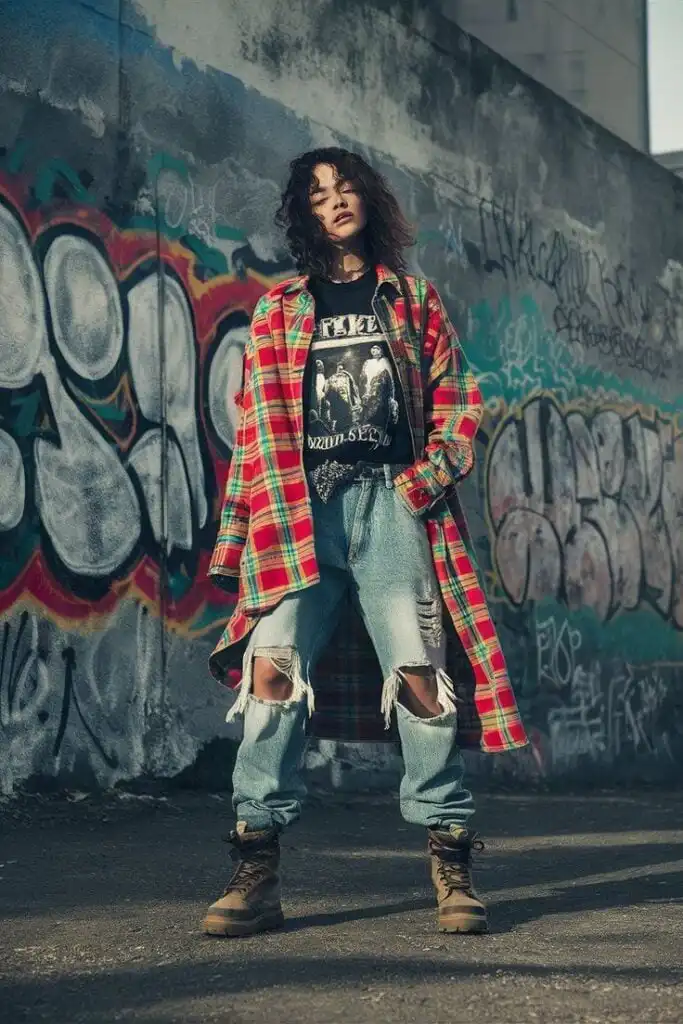
What Was 90s Grunge Style?
The 90s grunge style was an anti-fashion movement tied directly to the Seattle music scene between roughly 1987 and 1995, peaking around 1991–1994 when bands like Nirvana and Pearl Jam dominated MTV.
This wasn’t fashion designed by runway designers or handed down from luxury houses. It emerged organically from musicians and fans who rejected the polished glam of 80s rock in favor of something raw, accessible, and deliberately unkempt.
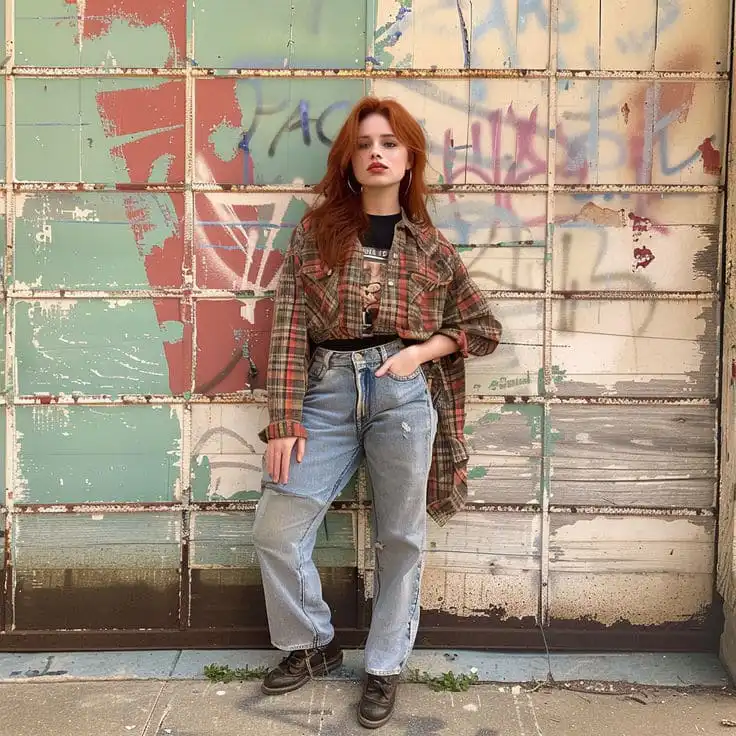
Here’s what defined the grunge look at its core:
- Anti-establishment attitude: Clothes looked second-hand, stained, or torn because they often were
- Thrift-store sourcing: Flannel shirts, ripped jeans, band tees, and combat boots from Goodwill became the uniform
- Pacific Northwest practicality: Layers for Seattle’s rain and cold, heavy boots for durability, and wool or denim for function over form
- Gender-blurring silhouettes: Both men and women dressed in oversized, slouchy pieces that obscured traditional body lines
- Muted color palettes: Browns, greys, blacks, forest greens, and faded denim dominated over bright colors
The grunge movement wasn’t about coordinated outfits or following trends. It was about apathy toward consumerism and letting authenticity trump polish.
Origins of 90s Grunge Fashion in Seattle
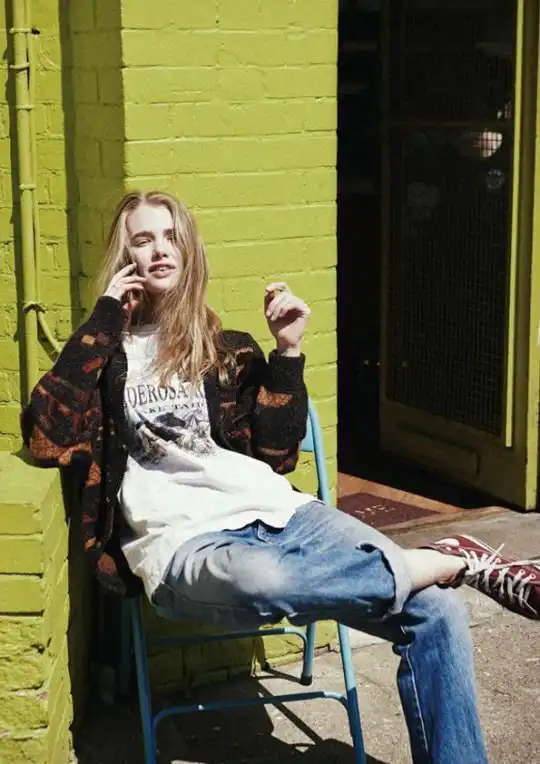
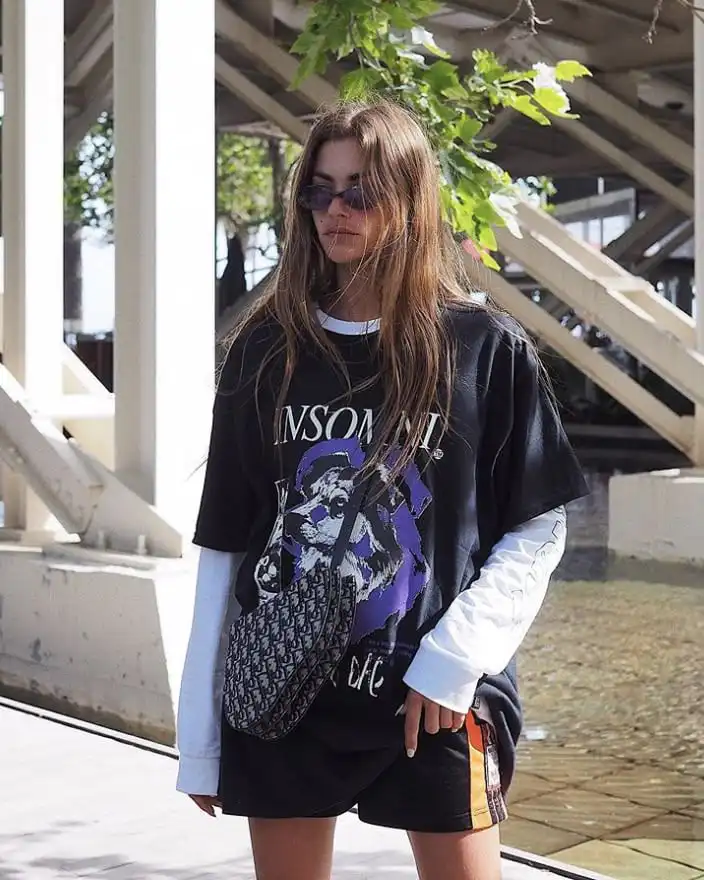
The grunge look didn’t appear overnight. It formed organically around the mid-1980s in Seattle, Washington, alongside bands recording for the Sub Pop label. Groups like Green River (formed 1984), Soundgarden (1984), and Mudhoney (1988) weren’t dressing for cameras—they were wearing whatever they could afford from local thrift stores like Goodwill and Value Village.
Jonathan Poneman and Bruce Pavitt at Sub Pop helped brand the “grunge” sound and its visual aesthetic through low-budget promotional photos. These images showed band members in everyday, scruffy clothes—not the teased hair and spandex of Los Angeles hair metal bands. The aesthetic was unintentional at first, born from economic reality rather than stylistic choice.
Seattle’s climate made the style practical before it became iconic. The rainy, cool weather meant layered flannel, thermal shirts under t-shirts, and heavy boots were necessities. Musicians weren’t making fashion statements; they were staying warm and dry between shows at dive bars and small venues.
The style spread beyond the Pacific Northwest after Nirvana’s 1991 album “Nevermind” and Pearl Jam’s “Ten” gained massive MTV exposure in 1991–1992. Suddenly, what had been a regional uniform for broke musicians became a global fashion phenomenon that heavily influenced mainstream clothing for the rest of the decade.
What Are the “Big 4” of Grunge?
The “Big 4 of grunge” refers to the four most influential early-90s Seattle bands whose music and style defined the genre: Nirvana, Pearl Jam, Soundgarden, and Alice in Chains. Each band brought a slightly different visual approach, but together they created the blueprint for what grunge fashion meant to millions of fans.
Nirvana had the most visible fashion impact, largely through Kurt Cobain’s wardrobe. His oversized cardigans, striped mohair sweaters, ripped jeans, Converse sneakers, and beanies became instantly recognizable after appearing in the “Smells Like Teen Spirit” video in 1991. Cobain famously wore floral dresses on stage and painted his nails, bringing a gender-fluid approach that challenged rock’s traditionally masculine image.
Pearl Jam leaned into a rugged, working-class variation of the look. Lead singer Eddie Vedder wore flannels obsessively, often with cargo shorts, long-sleeve shirts tied around the waist, and scuffed combat boots. During their “Ten” tour era from 1991–1993, the band embodied a tougher, more direct version of grunge style without the softer hippie touches.
Soundgarden brought heavier, metal-adjacent elements to grunge fashion. Chris Cornell’s signature look included shirtless performances paired with torn jeans, army boots, and leather jackets. His long, flowing hair and brooding stage presence created a more aggressive visual identity that drew from rock’s harder edges.
Alice in Chains occupied the darkest corner of grunge aesthetics. Layne Staley wore plaid shirts, vintage band tees, and distressed denim, often layered with army surplus coats during early 90s live performances. The band’s look felt more gothic and metallic than their Seattle peers, reflecting their heavier musical influences.
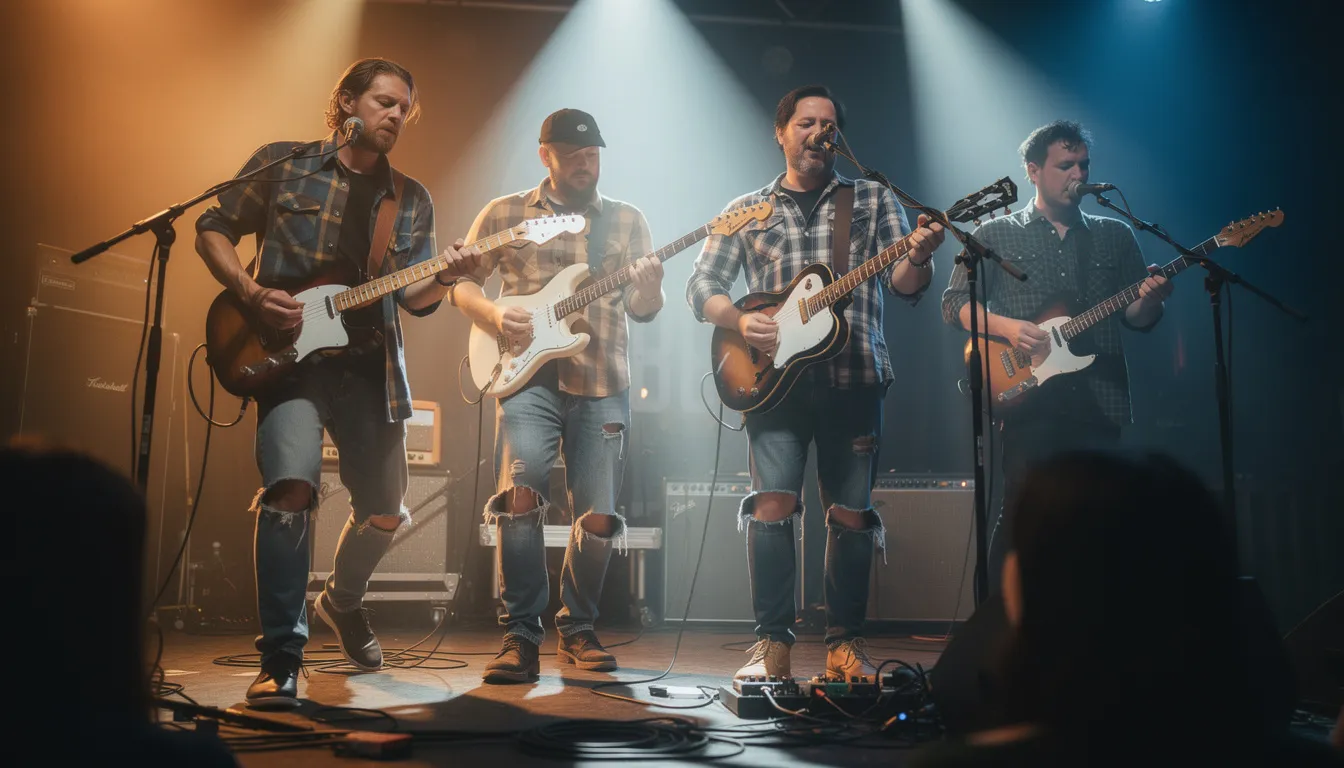
Key Elements of 90s Grunge Clothing
Understanding the main clothing items that defined authentic 90s grunge helps you build outfits that capture the era’s spirit rather than a costume-shop approximation.
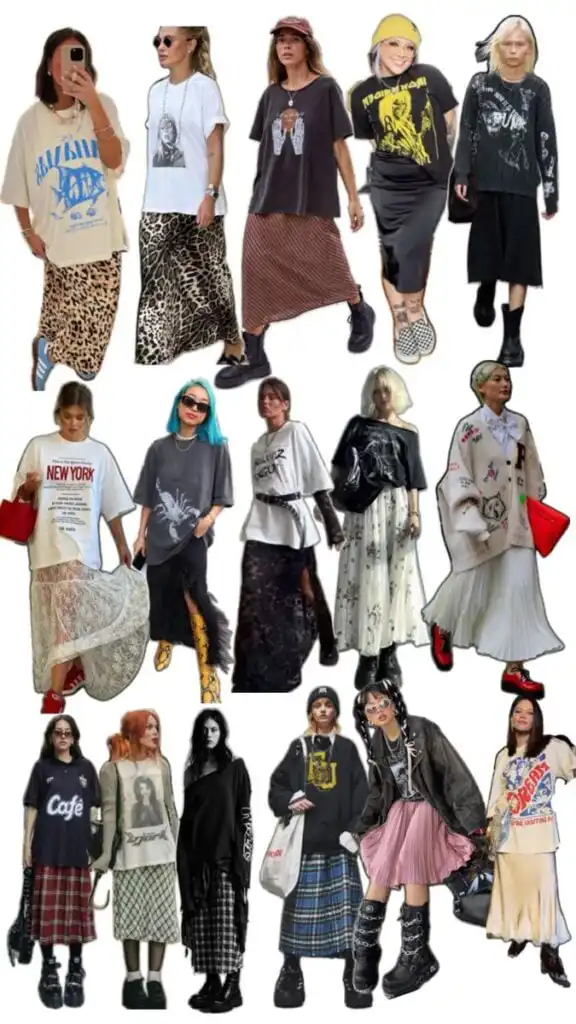
Tops formed the foundation of any grunge outfit. Oversized flannel shirts in dark plaids—think reds, blacks, greens, and browns—were essential. Underneath, you’d find thermal Henleys, vintage band t-shirts featuring Nirvana, Black Flag, or Sonic Youth, torn hoodies with stretched-out necks, and baggy wool cardigans that looked like they came from someone’s grandfather’s closet.
Bottoms stayed loose and worn. Ripped straight-leg or baggy jeans dominated, with Levi’s 501s being a particularly common choice. Cut-off denim shorts worn over tights provided a feminine alternative, while Dickies work pants and army surplus cargo pants offered utilitarian options. The key was visible wear—faded knees, frayed hems, and strategic distressing.
Outerwear ranged from thrifted leather biker jackets to military parkas and M-65 field jackets. Oversized denim jackets worked year-round, while long, shapeless overcoats added drama for colder weather. Nothing looked new or carefully maintained.
Footwear centered on black Doc Martens 1460 boots, the unofficial shoe of the grunge movement. Combat boots from army surplus stores, Converse Chuck Taylors in black or white, scuffed hiking boots, and chunky Mary Jane shoes for feminine styling rounded out the options.
Accessories and details completed the look: beanies pulled low, chain wallets hanging from belt loops, layered silver necklaces, chokers made from ribbon or leather, safety pins decorating jackets, and backpacks instead of designer bags. Deliberately unmended rips or holes signaled authenticity—fixing your clothes was too mainstream.
How to Dress in 90s Grunge Today
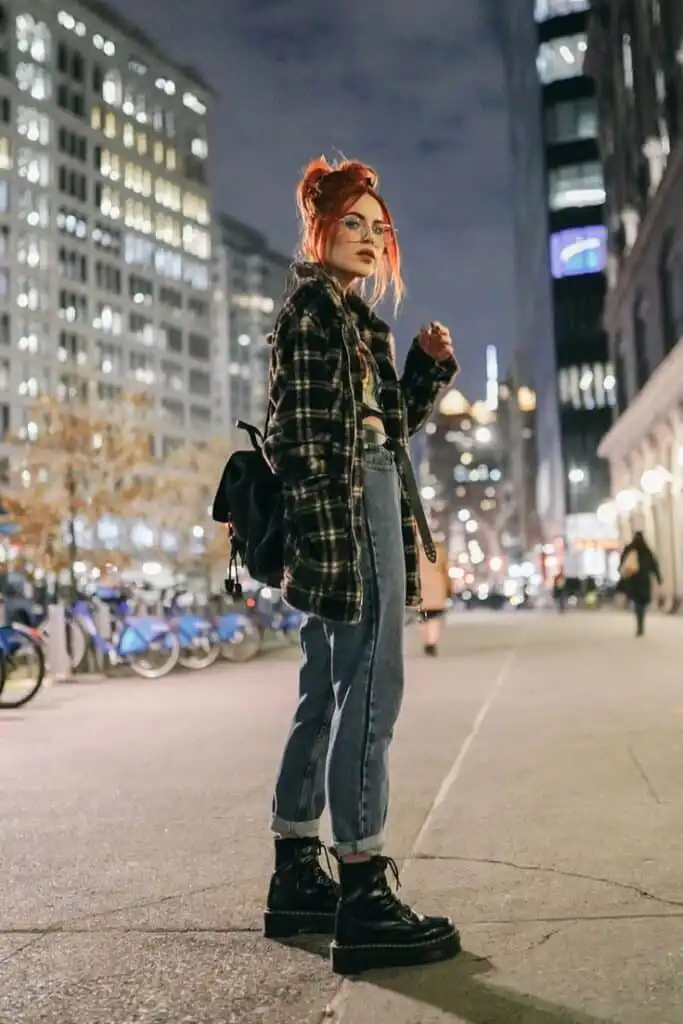
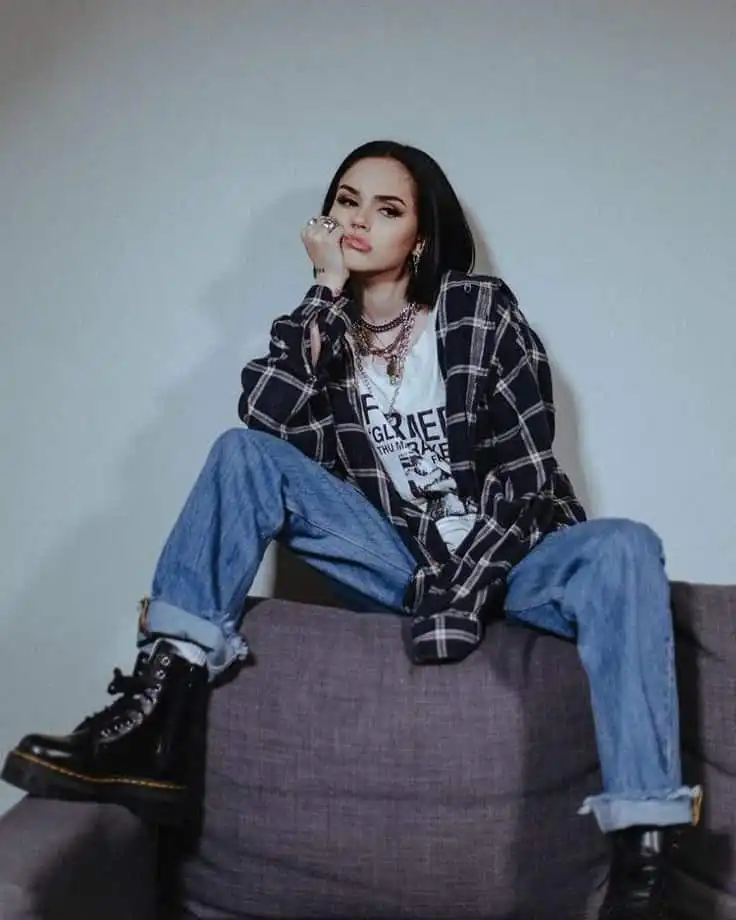
To dress in 90s grunge today, start with a simple formula: band tee + flannel shirt + ripped jeans + combat boots. Layer everything loose, keep colors muted, and avoid anything that looks too new or carefully coordinated.
Building a grunge outfit from scratch means starting with thrifted or vintage basics. Hit your local thrift store for worn textures—faded flannel, frayed denim, distressed tees. Skip anything too fitted or polished. If it looks like you spent time coordinating, you’ve missed the point.
For a men’s-inspired look: Layer an oversized plaid flannel over a 90s band t-shirt (Nirvana’s smiley face works, but less obvious choices like Sonic Youth or Mudhoney feel more authentic). Add loose, faded jeans with natural wear at the knees, black Doc Martens or combat boots, and throw an old army jacket on top when it’s cold. Leave everything slightly untucked and rumpled.
For a women’s-inspired look: Start with a baby doll dress or floral slip dress layered over a long-sleeve thermal top. Add laddered tights, Mary Jane shoes or combat boots, and finish with a chunky cardigan that hangs past your hips. The dress-over-pants combination also works—a thrifted floral dress worn over ripped jeans captures the era’s gender-bending approach.
Layering is essential. A typical grunge outfit might include a t-shirt under a long-sleeve shirt under an open flannel under an oversized jacket. Items should look slightly mismatched and thrown together, not carefully styled.
Stick to a muted color palette: burgundy, forest green, navy, charcoal, and brown mixed with classic black and faded denim blues. Bright colors read as too cheerful for the aesthetic.
Source your clothes from thrift stores, vintage shops, and online second-hand platforms like Depop or ThredUp rather than buying “pre-distressed” fast fashion. Grunge’s anti-consumer roots matter—wearing actual old clothes feels more authentic than purchasing manufactured nostalgia.
Iconic 90s Grunge Style Icons
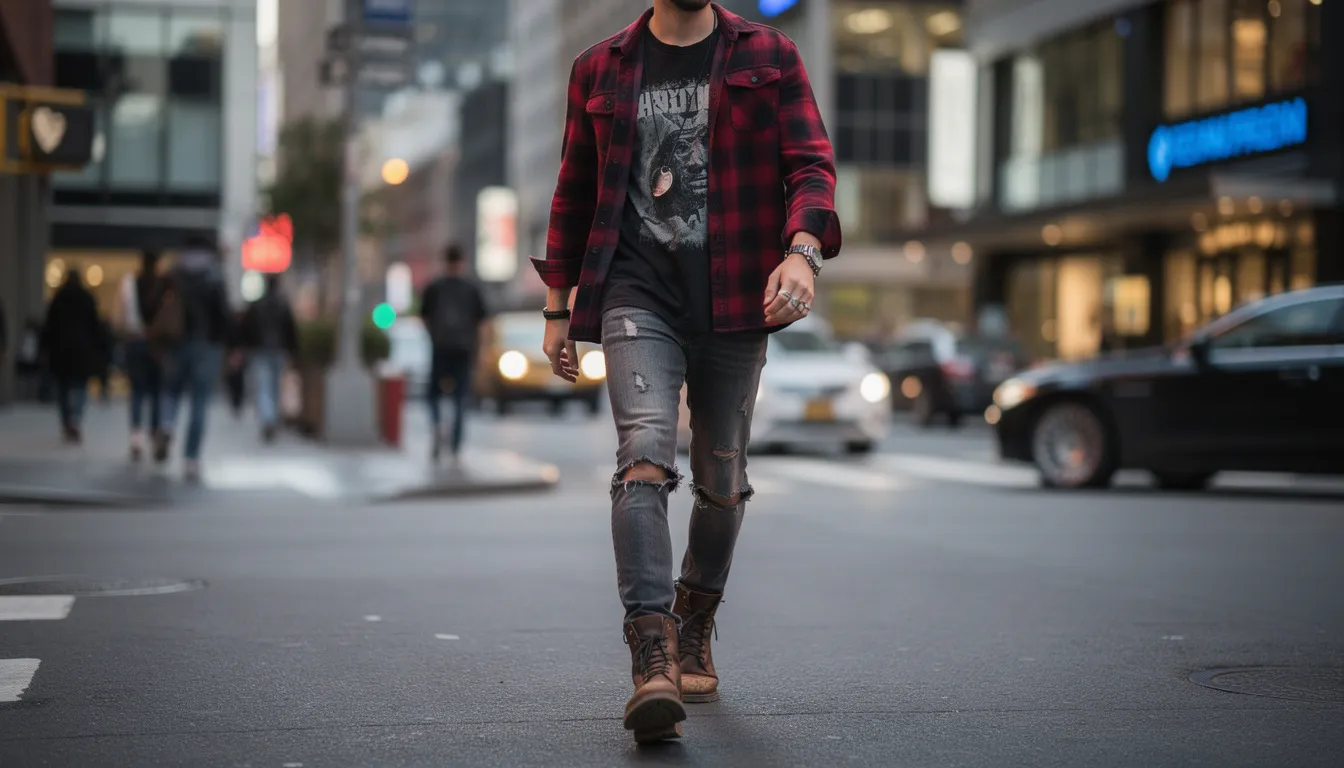
Several key figures shaped what the world thinks of as 90s grunge fashion through their real-life wardrobes rather than styled photoshoots.
Kurt Cobain remains the most recognized grunge style icon. His signature pieces included grandpa cardigans—like the green mohair one worn at MTV Unplugged in 1993—striped sweaters, ripped jeans, floral dresses worn with combat boots, and chipped nail polish. His gender-fluid approach to dress, wearing women’s clothing and makeup on stage, challenged rock’s masculine traditions and gave permission to fans exploring similar aesthetics.
Courtney Love, Cobain’s wife and lead singer of Hole, created the “kinderwhore” look that became its own grunge subcategory. Her uniform during Hole’s “Live Through This” era (1994) included slip dresses, baby doll dresses, visible bras, torn fishnets or ripped tights, smeared red lipstick, and Mary Jane shoes. The look intentionally mixed girlish innocence with punk aggression.
Other musicians contributed distinct variations: Eddie Vedder’s earnest flannel and cargo shorts uniform, Chris Cornell’s shirtless intensity, and Layne Staley’s darker, more gothic layering. Outside music, actresses like Winona Ryder and Drew Barrymore wore grunge elements on red carpets, bringing the aesthetic to mainstream entertainment.
Fashion designer Marc Jacobs translated the Seattle street look to high fashion in his controversial 1993 Perry Ellis collection. Models including Kate Moss walked the runway in flannel shirts, floral dresses, and combat boots—clothes that looked like they came from a thrift store rather than a luxury atelier. The collection generated intense criticism from the fashion establishment but cemented grunge’s influence on designer aesthetics.
Beauty, Hair, and Makeup in the 90s Grunge Look
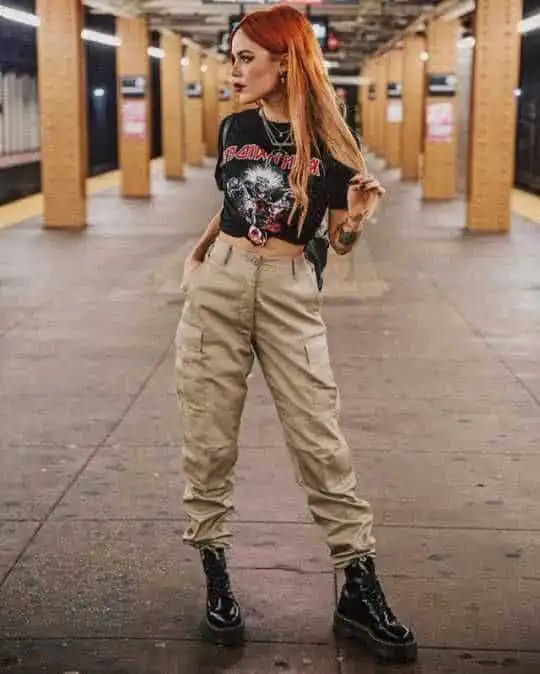
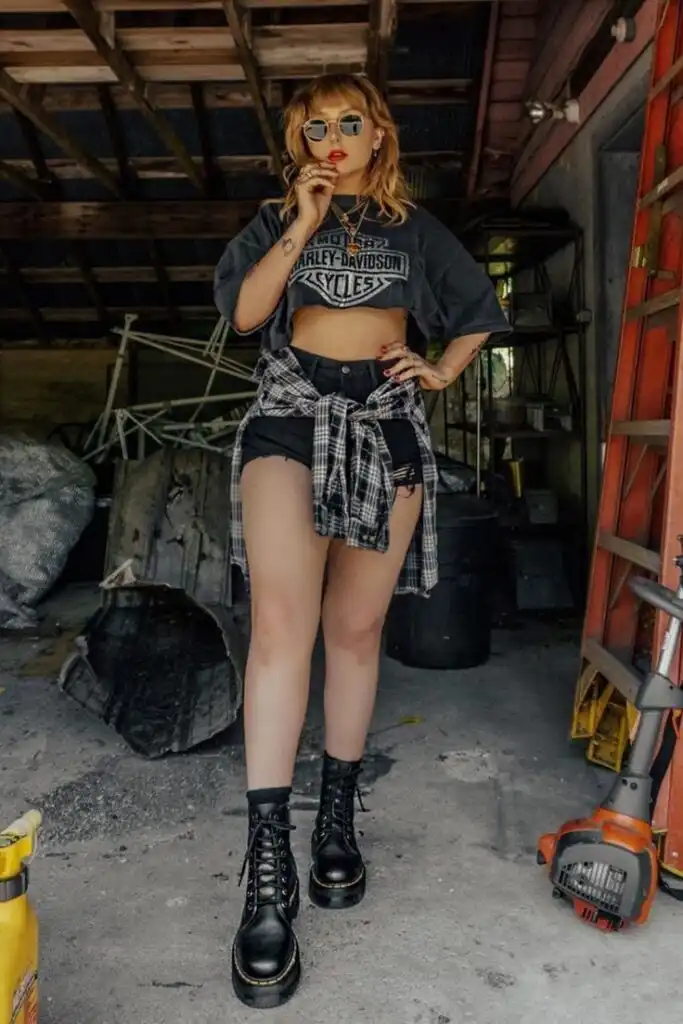
Hair and makeup contributed to the grunge aesthetic as much as clothing choices. The goal was deliberate imperfection—nothing polished, nothing that looked like it took effort.
Hair stayed messy, unbrushed, and bedhead-styled. Long, stringy hair like Kurt Cobain’s was common for both men and women, often greasy-looking and unstyled. Short, choppy cuts worked too, as did DIY bleached blonde hair with visible dark roots showing. Center parts dominated over side parts. The key was looking like you just woke up and didn’t touch a brush.
Makeup for women drew from Courtney Love and artists in Riot Grrrl bands. Smudged black eyeliner applied heavily around the eyes created an intentionally undone look. Dark berry or brick-red lipstick—often applied messily or smeared beyond lip lines—became signature. Skin stayed pale and matte, avoiding the bronzed, glowing look popular in other 90s aesthetics. The application was deliberately imperfect, as if put on in poor lighting or after a few drinks.
Eyebrows followed 90s trends: thinner and slightly arched rather than the thick, heavily sculpted brows popular today. Over-groomed brows immediately date a look as contemporary.
Men in the scene typically wore little to no makeup, though some adopted subtle nail polish or smudged eyeliner for a gender-bending effect. The overall approach for everyone was minimal effort—messy hair that looked unwashed, makeup that looked applied carelessly, and an overall impression of not trying.
What to Wear to a Grunge Party
For a grunge party, you want an outfit that reads as authentic 90s Seattle without feeling like a Halloween costume. Here are three complete outfit formulas that work:
Easy unisex option: Wear an oversized band tee—Nirvana’s “Nevermind” cover or Pearl Jam’s “Ten” logo work perfectly—under an open flannel shirt in red or green plaid. Add ripped jeans that sit loose on your frame and black combat boots or worn-in Converse. Tie an extra flannel around your waist for bonus points.
Feminine-leaning party look: Thrift a slip dress or floral baby doll dress and layer it over torn black tights. Add Doc Martens or chunky Mary Jane shoes, swipe on some dark red lipstick (smear it slightly for effect), and throw on a thrifted cardigan that’s a size too big. Leave your hair messy and parted in the center.
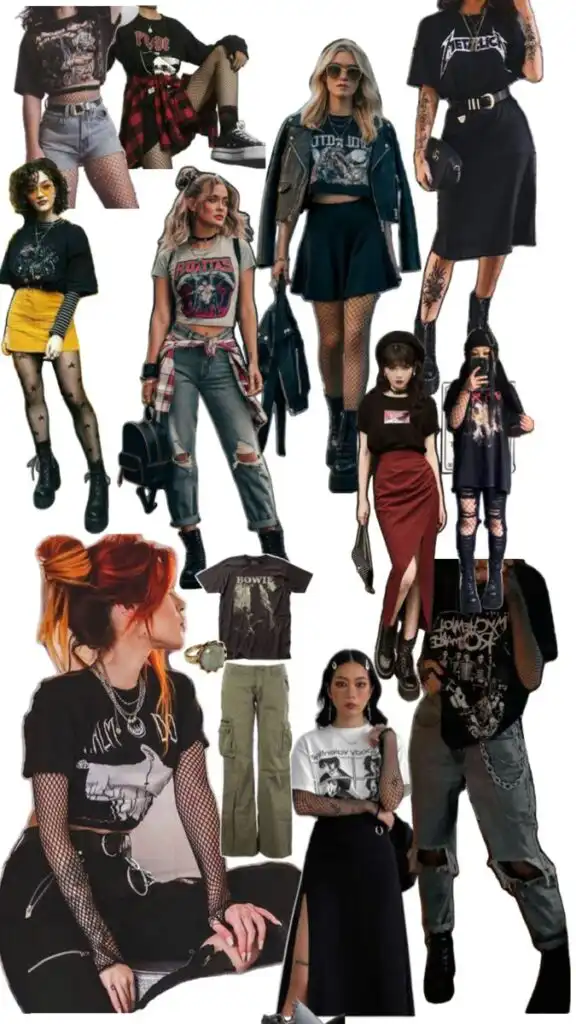
Bolder statement outfit: Pair a plaid mini skirt with laddered tights and a vintage graphic tee featuring any rock or punk band. Layer a leather biker jacket on top, add thick-soled boots, a choker necklace, and apply heavily smudged eyeliner. This look leans toward the harder edge of grunge that Soundgarden and Alice in Chains represented.
Styling tips that sell the look: Cuff your sleeves unevenly, tie a flannel around your waist even if you’re already wearing one, layer multiple thin necklaces or chains, and avoid anything that looks too pristine. If your boots are brand new, scuff them on concrete before the party. Tousle your hair instead of styling it.
Remember that comfort defined authentic grunge style. Choose loose, breathable fabrics and flat shoes so your outfit feels believable and lets you actually enjoy the party rather than adjusting uncomfortable clothes all night.
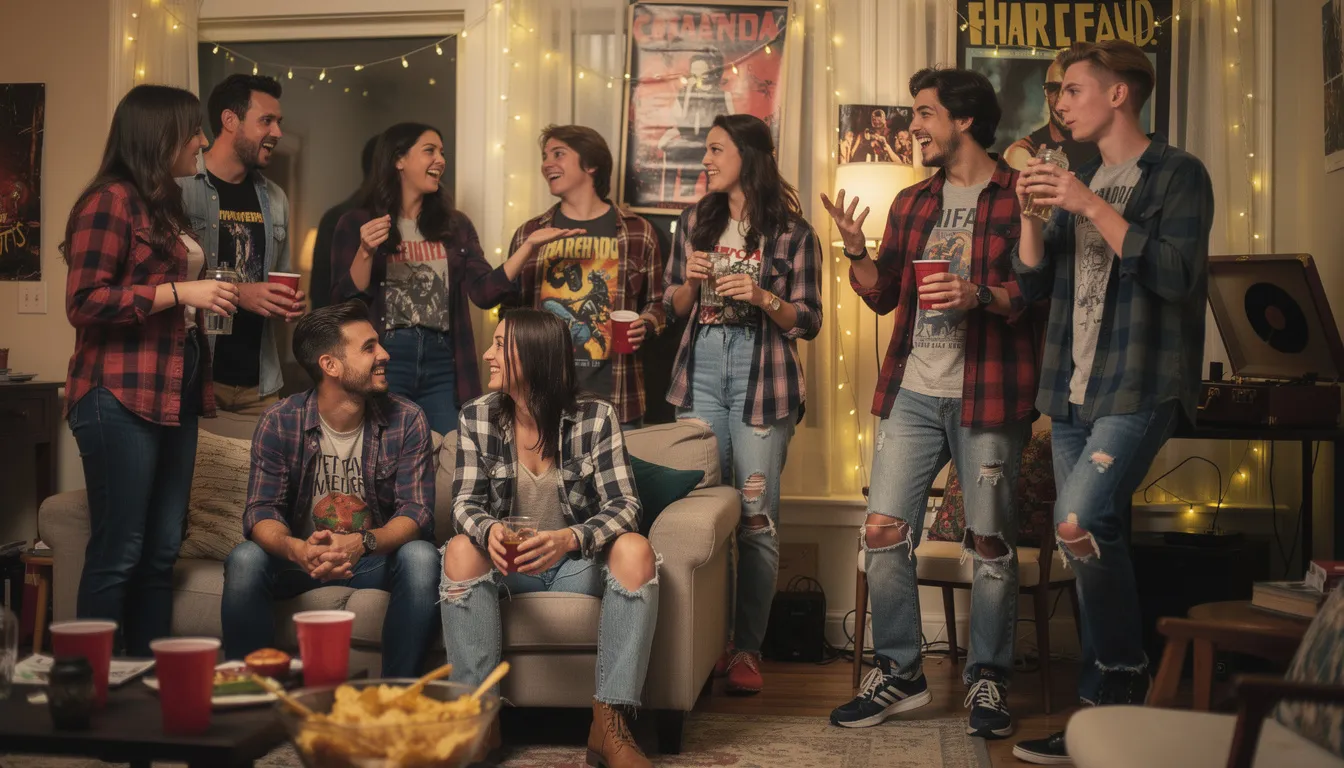
Grunge vs Other 90s Styles
Grunge didn’t exist in a vacuum—it emerged partly as a reaction against other dominant 90s aesthetics and shared overlapping elements with some subcultures.
The most direct contrast was with leftover 80s glam rock style. Hair metal bands wore spandex, studded leather, massive teased hair, and body-conscious clothing designed to show off physiques. Grunge rejected every element: loose silhouettes replaced tight clothes, muted colors replaced neon, and messy natural hair replaced Aqua Net sculptures. The whole aesthetic telegraphed anti-sexy, anti-glamour messaging.
Preppy 90s fashion—think early “Friends” episodes—represented mainstream America: polo shirts, chinos, neat denim, clean white sneakers, and carefully coordinated outfits. Grunge stood in direct opposition with ripped jeans, flannels that looked slept-in, and boots that had seen actual work. Where preppy signaled success and conformity, grunge signaled rebellion and disinterest in approval.
Grunge shared DNA with punk and goth subcultures through band tees, black clothing, and DIY aesthetic elements. However, grunge took a more casual, utilitarian approach. Punk emphasized aggressive statement-making and visible modification; goth required specific romantic and dark elements. Grunge was content to look like you grabbed whatever was cleanest from your floor that morning.
High-Fashion Grunge and Its Legacy
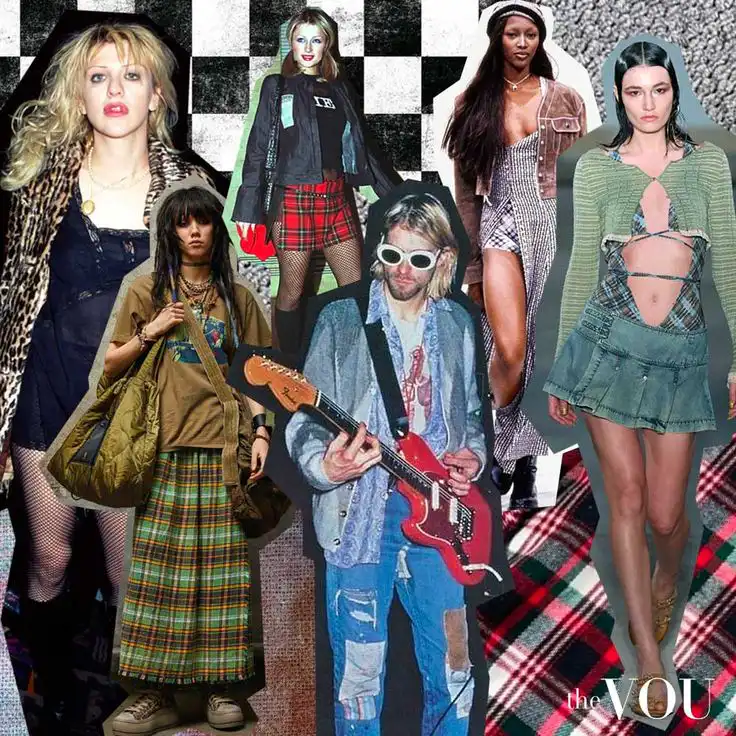
The moment grunge crossed from Seattle dive bars to fashion runways marked a complicated turning point for the movement.
Marc Jacobs’ 1993 Perry Ellis collection translated thrift store aesthetics into luxury fashion, sending supermodels down the runway in silk slip dresses, plaid skirts, and combat boots styled with slouchy beanies. He called it a “hippie romantic version of punk.” The collection proved intensely controversial—critics at Vogue and the New York Times initially panned it as anti-fashion, and Perry Ellis fired Jacobs shortly after.
But fashion history vindicated the collection. It became recognized as a landmark moment that legitimized recycled clothes and street-originated style as viable high fashion. The pieces sold well despite industry backlash.
Later designers revisited grunge elements repeatedly: Anna Sui incorporated the aesthetic throughout the mid-90s; Hedi Slimane brought grunge-influenced collections to Saint Laurent in the 2010s; and countless brands have revived plaid, combat boots, and slip dresses for runway shows ever since.
The 2010s saw “soft grunge” and “glam grunge” emerge online, particularly on Tumblr. These updated versions mixed pastels and romantic touches with 90s band imagery, creating a more accessible entry point for younger audiences. Creative director choices at major houses increasingly referenced the aesthetic’s timeless appeal.
Modern 90s Grunge Revival: How It Shows Up Now
Grunge hasn’t stayed locked in the 90s. The aesthetic has experienced multiple revival waves, each adapting vintage elements for contemporary wardrobes.
New York Fashion Week 2013 saw explicit grunge references from multiple designers. Fall 2022 collections revisited the aesthetic again. TikTok has driven massive nostalgia for 90s alternative fashion, with creators styling thrifted flannels, oversized band tees, and combat boots for millions of views. The algorithm loves the look.
Gen Z mixes authentic vintage pieces with modern items to create updated grunge-inspired outfits. You’ll see original 90s flannel shirts paired with low-rise cargo pants, mesh tops layered under band tees, and platform boots replacing traditional combat styles. The proportions have shifted—cropped tops sometimes replace oversized everything—but the core elements remain recognizable.
Celebrities and influencers regularly channel grunge aesthetics. Musicians reference Nirvana explicitly in both sound and style. TikTok creators build followings around thrifted plaid and oversized knitwear. The aesthetic translates well to social media’s visual-first environment.
Key items have never fully left mainstream fashion: Doc Martens sales spiked 20% during 2010s revival periods. Oversized denim jackets remain wardrobe staples. Slip dresses layered over t-shirts appear in contemporary street style constantly. The grunge influence persists because its core appeal—authenticity, individuality, and anti-consumerism—resonates across generations.
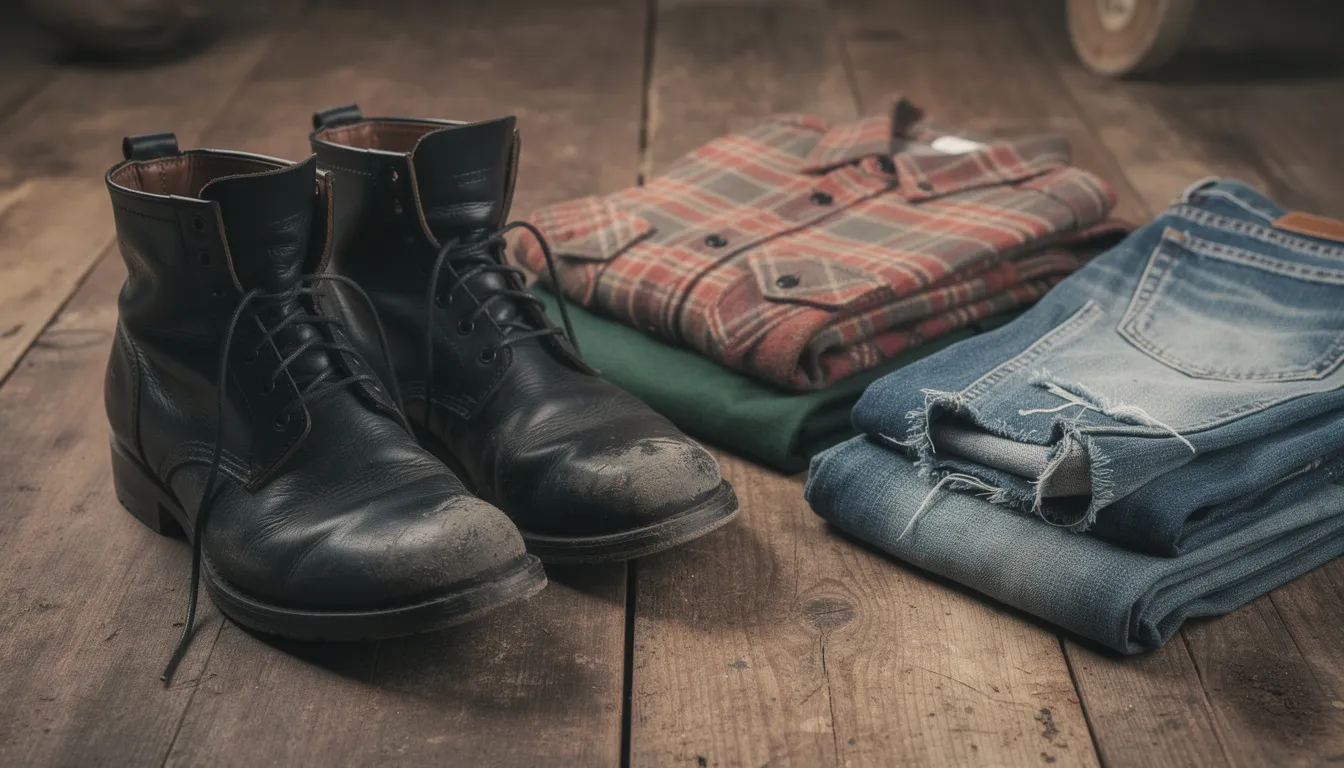
Quick 90s Grunge Capsule Wardrobe Checklist
If you want to build a functional 90s grunge-inspired wardrobe without collecting a whole lot of stuff you’ll never wear, focus on these core items that mix and match for multiple looks.
Flannel Shirts (2-3 pieces): Get at least two oversized plaid flannels in different color families—one red-based, one green or blue-based, and optionally one brown or grey. These work as shirts, light jackets, or tied around your waist.
Vintage Band Tees (2 pieces): Find t-shirts from actual 90s bands, not reprints from big retailers. Nirvana, Pearl Jam, Soundgarden, or Alice in Chains work, but deeper cuts like Mudhoney, Dinosaur Jr., or Pixies read as more authentic.
Oversized Cardigans (1-2 pieces): Look for chunky knit cardigans in neutral colors—grey, brown, forest green—that hang past your hips. The rattier-looking, the better.
Slip Dress or Baby Doll Dress (1 piece): Essential for feminine grunge looks. Floral prints or solid dark colors work equally well. Wear alone with boots or layer over jeans and long-sleeve shirts.
Loose or Ripped Jeans (2 pairs): One pair of straight-leg jeans with natural distressing at the knees, one pair of baggier jeans. Avoid anything skinny or too obviously “designer distressed.”
Army Jacket or Parka (1 piece): Olive green field jackets or parkas provide that Seattle drizzle practicality and layer well over everything else.
Leather Jacket (1 piece): A classic black leather motorcycle jacket adds edge and works for Soundgarden-leaning looks.
Combat Boots (1 pair): Black Doc Martens 1460s remain the gold standard, but any sturdy combat boot works. Wear them until they’re scuffed.
Converse or Skate Shoes (1 pair): Classic black or white Chuck Taylors offer a lighter footwear option for warmer weather.
Laddered Tights (2-3 pairs): Black tights with runs and holes layer under dresses and shorts for feminine grunge styling.
Prioritize second-hand or vintage pieces whenever possible. Shop thrift stores, estate sales, and online resale platforms. Choose darker, muted colors to keep everything cohesive. Every item should work with at least three other pieces in your capsule—that’s how you build a wardrobe, not a costume box.
Key Takeaways
Building an authentic 90s grunge wardrobe isn’t about dropping hundreds at a vintage shop or buying “distressed” items from fast fashion retailers. The whole aesthetic emerged from people wearing what they could afford, sourcing clothes from thrift stores, and prioritizing comfort over trends.
Start with a few key pieces from your local secondhand shop. Layer them carelessly. Embrace imperfection in your clothes, hair, and makeup. The grunge movement succeeded because it offered an alternative to manufactured style—and that spirit translates perfectly to building your own wardrobe today.
Whether you’re inspired by the big 4 bands, assembling an outfit for a grunge party, or just incorporating vintage elements into your daily rotation, the core principle stays consistent: authenticity beats polish every time.
- 19shares
- Facebook0
- Pinterest16
- Twitter3
- Reddit0