The DeLorean DMC-12 stands as one of the most recognizable vehicles in automotive history—not for speed records or racing victories, but for something far more compelling to design enthusiasts. This stainless-steel sports car, built in Dunmurry, Northern Ireland between 1981 and 1983, embodies a fascinating paradox: a commercial failure that became a cultural triumph. At Sky Rye Design, we’re drawn to objects that transcend their original purpose, and few cars illustrate this transformation better than the DMC-12.
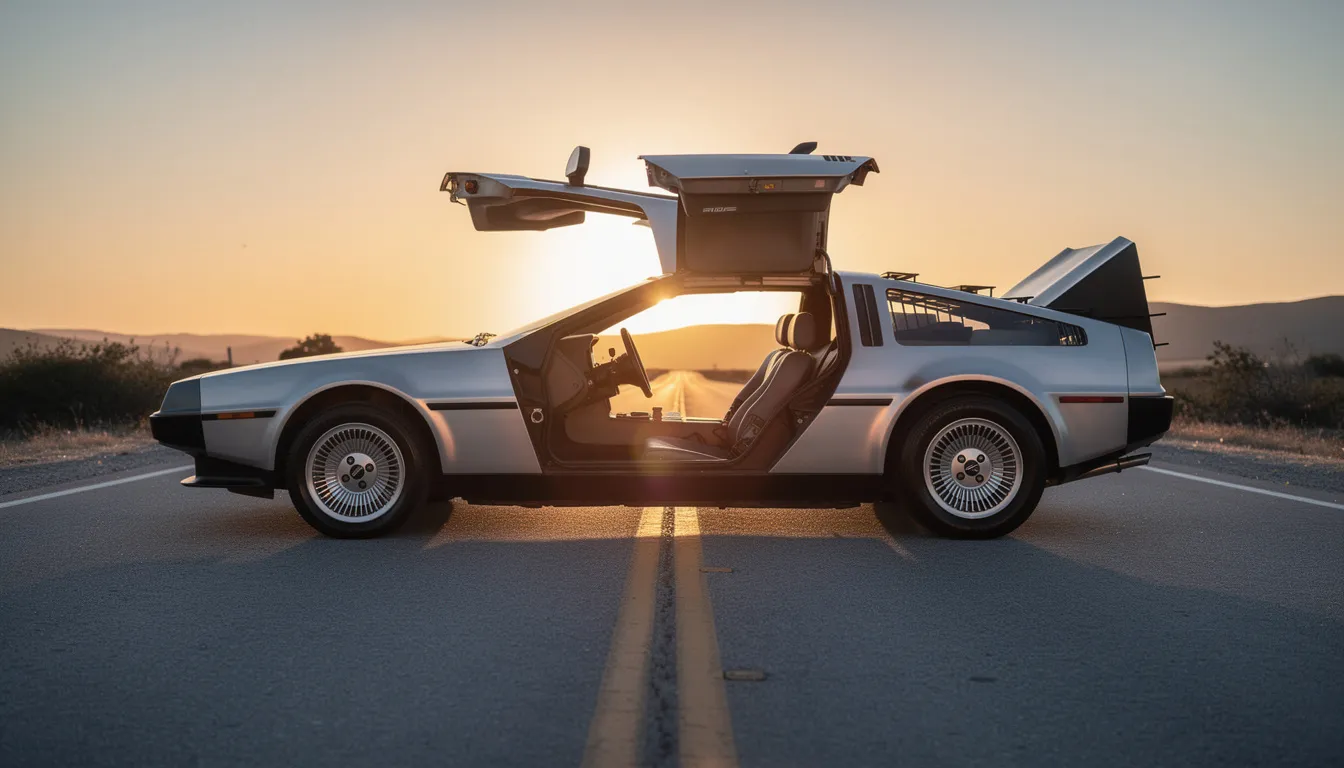
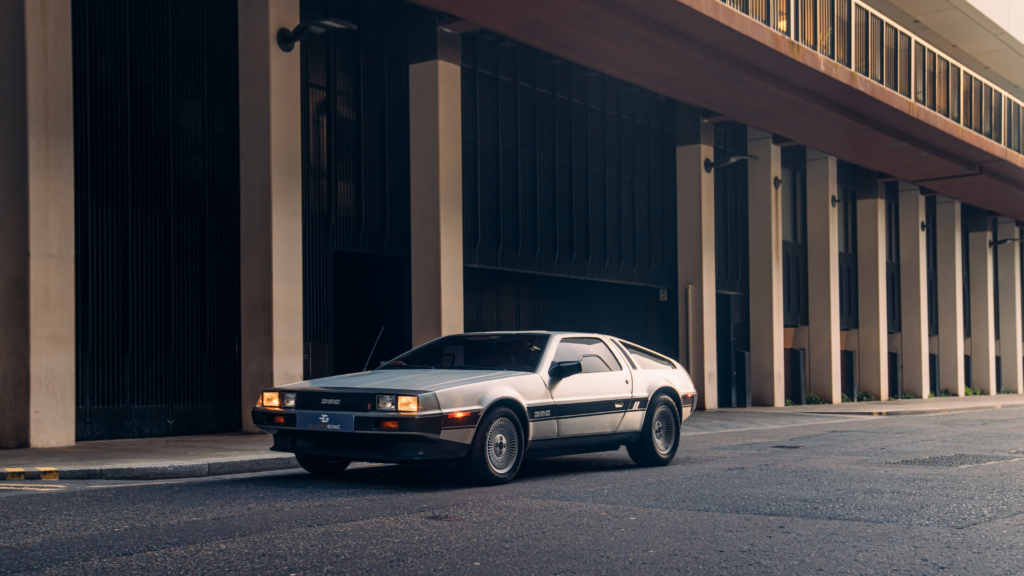
With its brushed stainless-steel body, dramatic gullwing doors, and wedge-shaped silhouette by Giorgetto Giugiaro, the DeLorean represents industrial design at its most ambitious. The car’s modest performance figures disappointed critics, and production ended after roughly 9,000 units when the DeLorean Motor Company collapsed. Yet the model’s appearance as Doc Brown’s time machine in the Back to the Future trilogy resurrected its reputation entirely.
This article explores the DMC-12’s history, technical specifications, aesthetic language, and enduring influence on pop culture and contemporary creative practice.
Origins of the DeLorean DMC-12
The story of the DeLorean DMC-12 begins with one man’s departure from corporate America and his audacious hope to build something revolutionary. John DeLorean spent decades at General Motors, rising through the ranks to become the youngest division head in company history. He oversaw legendary models like the Pontiac GTO and Firebird, earning a reputation as a charismatic executive with an eye for what consumers wanted. But by the early 1970s, DeLorean had grown disillusioned with GM’s bureaucracy and conservative approach to design.
In 1973, John DeLorean walked away from General Motors to pursue an idea that seemed almost reckless: founding his own car company to produce a radical, safety-focused, futuristic sports car bearing his name. The DeLorean Motor Company officially formed in 1975, and the search for funding began immediately. American investors proved skeptical, but an unexpected opportunity emerged from across the Atlantic.
British Government Support and the Northern Ireland Factory
The British government, eager to bring employment to Northern Ireland during the turbulent period known as The Troubles, offered DeLorean a deal he couldn’t refuse. In exchange for building his factory near Belfast, the government would provide substantial financial backing—ultimately investing over $150 million in the venture. The Dunmurry plant broke ground in October 1978, promising thousands of jobs to a region desperate for economic development.
This political dimension added complexity to what was already an ambitious undertaking. The factory would employ approximately 1,000 workers, many of whom had never worked in automotive manufacturing before. The pressure to succeed wasn’t merely commercial—it carried the weight of community expectations and government investment.
The Creative Team Behind the Design
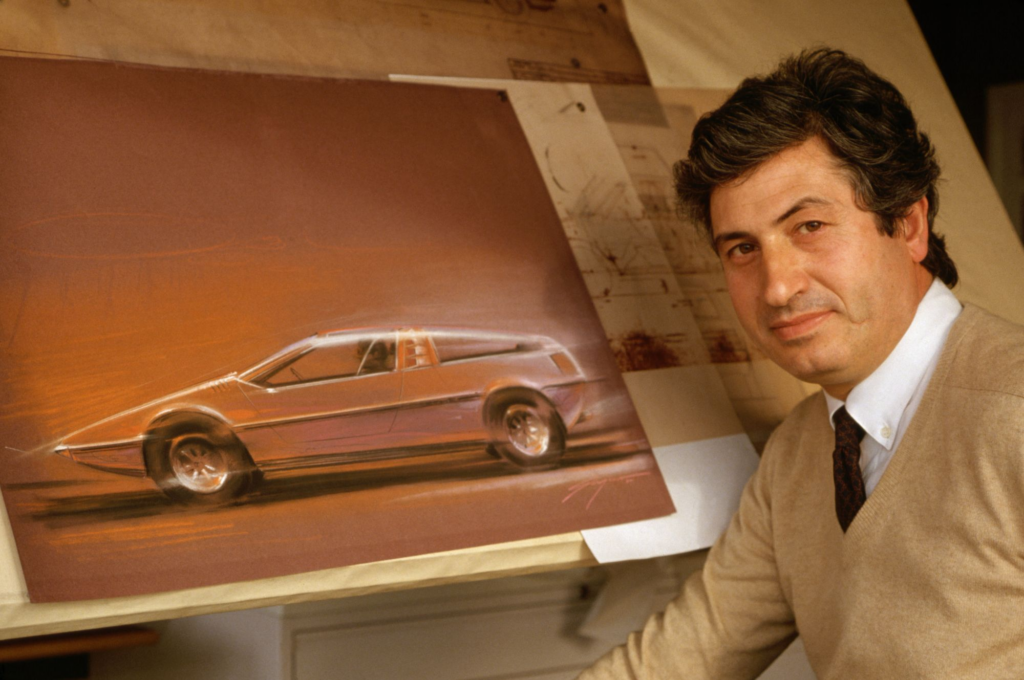
John DeLorean understood that creating an iconic vehicle required world-class talent. He approachedand his firm Italdesign in 1974 with specific requests: rear-engine placement, gullwing doors, and stainless steel construction. Giugiaro, already renowned for designing vehicles ranging from the Volkswagen Golf to the Lotus Esprit, embraced the challenge.
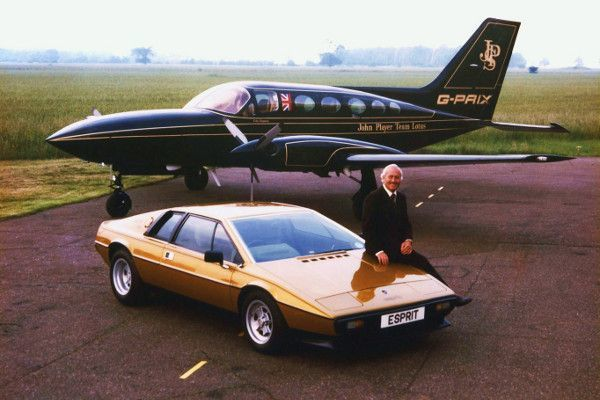
For chassis engineering, DeLorean turned to another legend: Colin Chapman of Lotus Cars. In 1978, Chapman’s team essentially re-engineered the car, replacing much of the original unproven fiberglass construction with a proven steel backbone chassis sourced from GKN Sankey Bilston in England. This collaboration between Italian styling and British engineering excellence would define the DMC-12’s character.
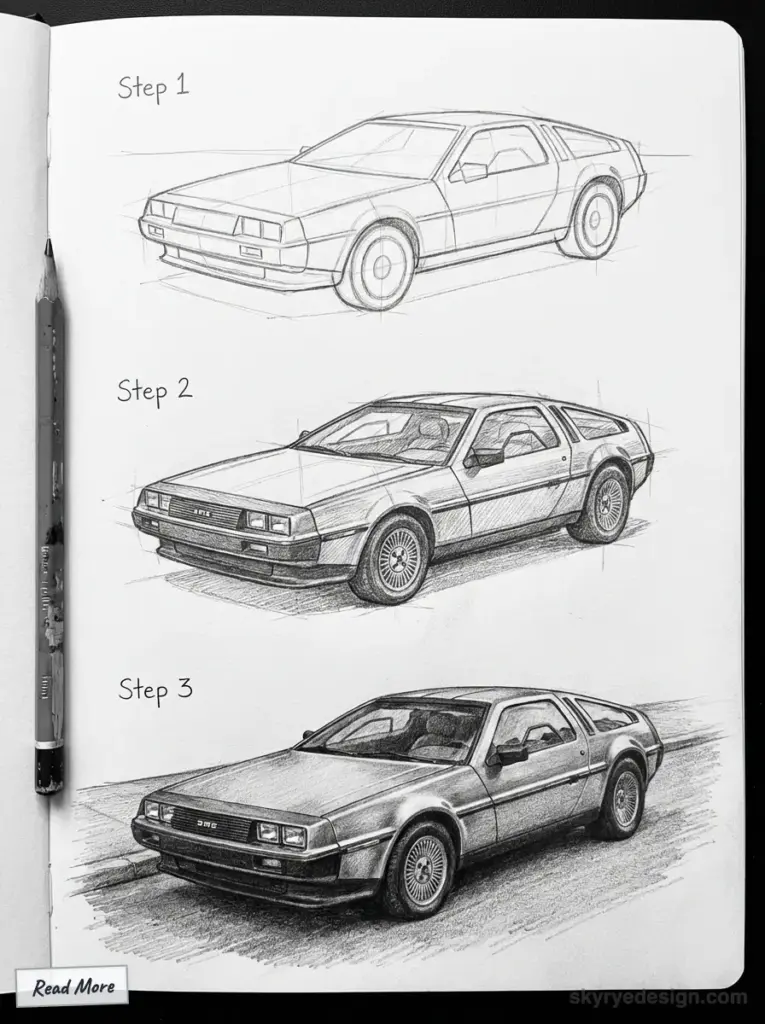
The first prototype emerged in October 1976, developed under chief engineer William T. Collins, a former Pontiac engineer who followed DeLorean from GM. Early iterations featured a mid-engine layout and various experimental elements, but by the time production began, the design had evolved substantially from those initial concepts.
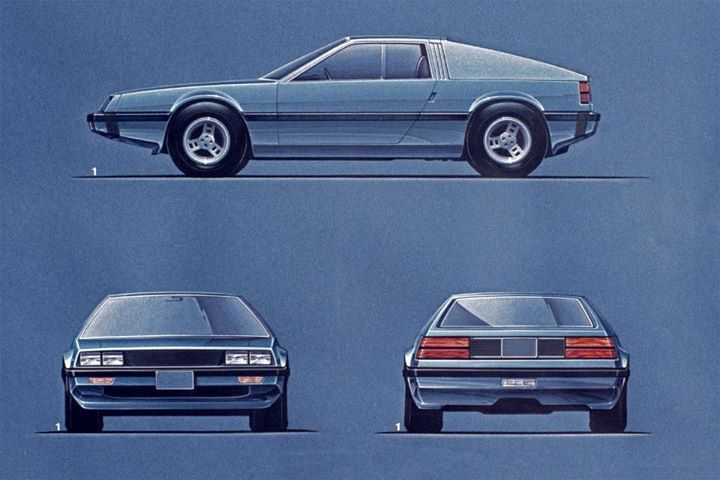
From a design perspective, this origin story represents something remarkable: an object born from the intersection of industrial design, political ambition, and one man’s determination to create something the world hadn’t seen before.
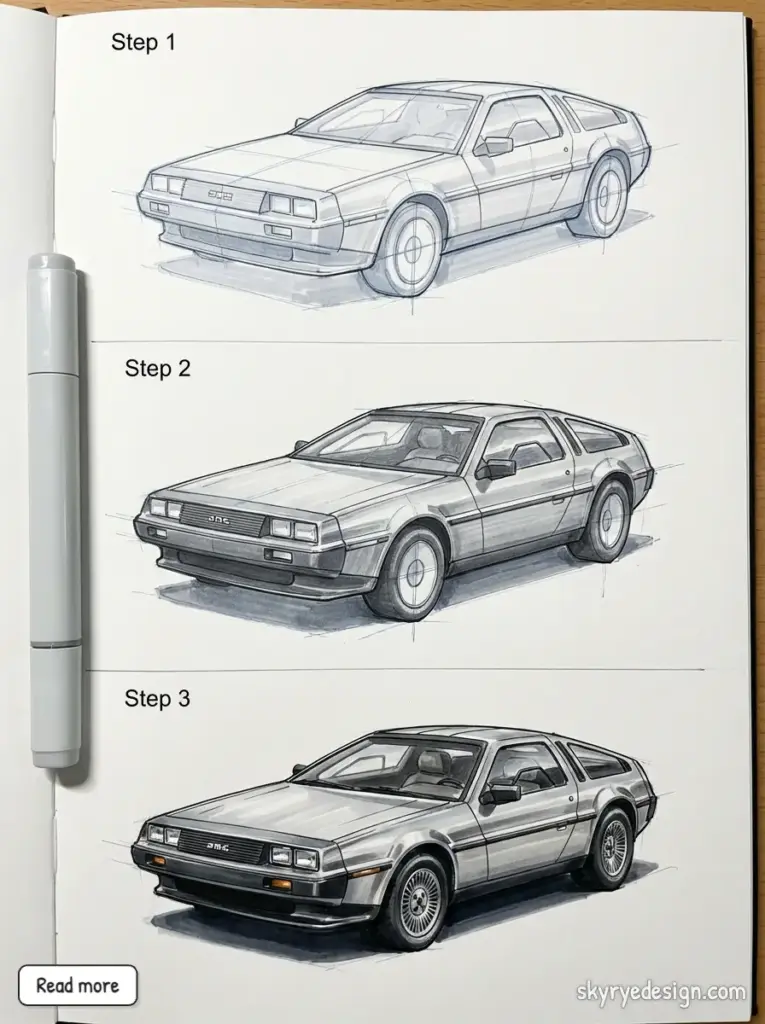
Design and Aesthetic Language
The DeLorean DMC-12 achieved what few automobiles manage: instant recognizability even among people who have never cared about cars. Its design language speaks to something beyond automotive enthusiasm—it taps into a vision of the future that still resonates with contemporary creatives.
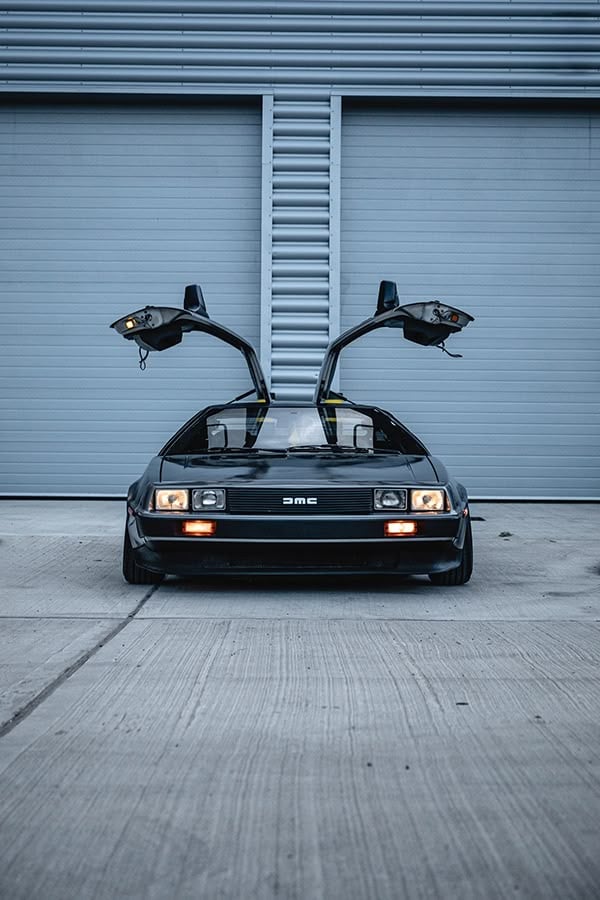
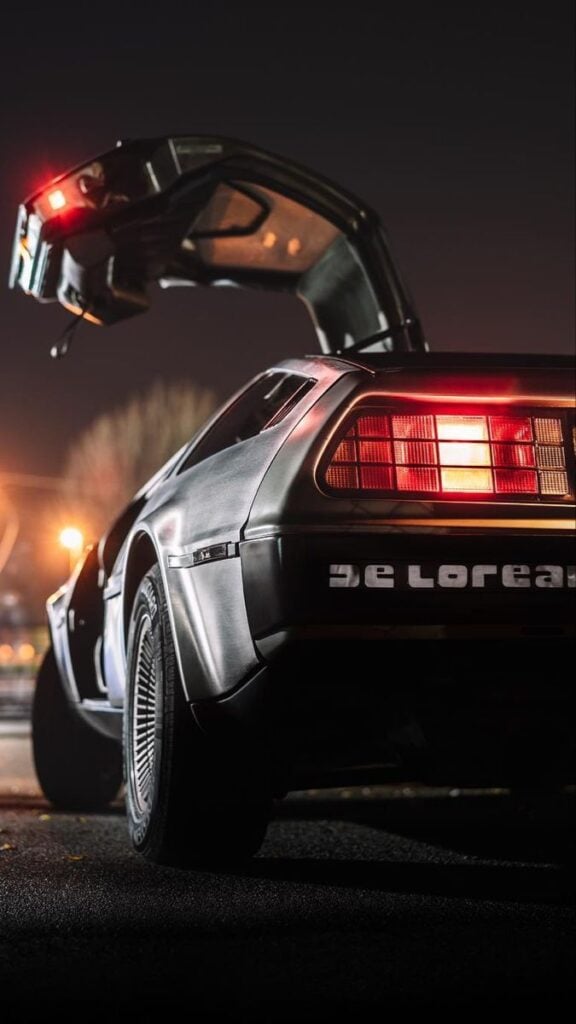
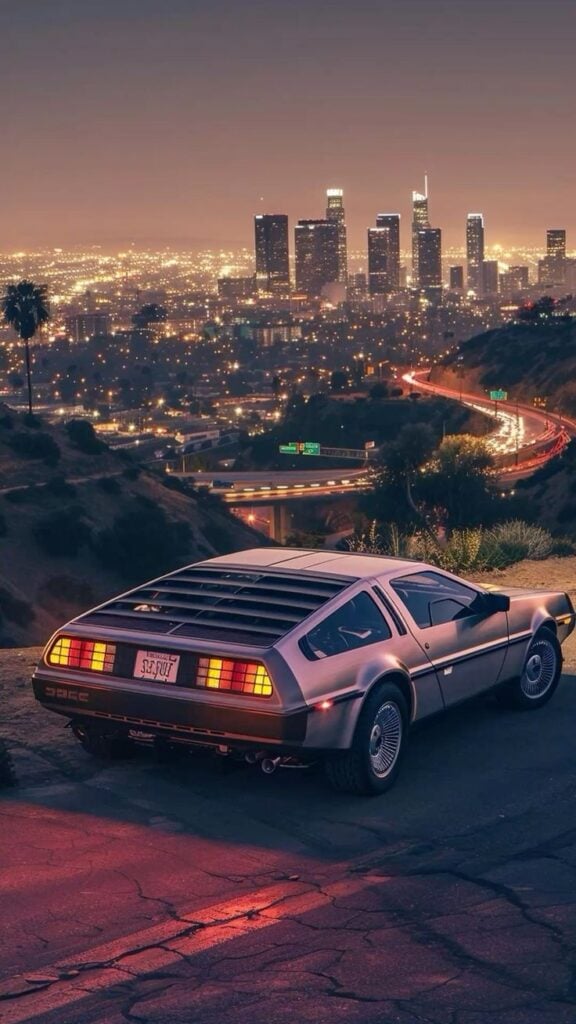
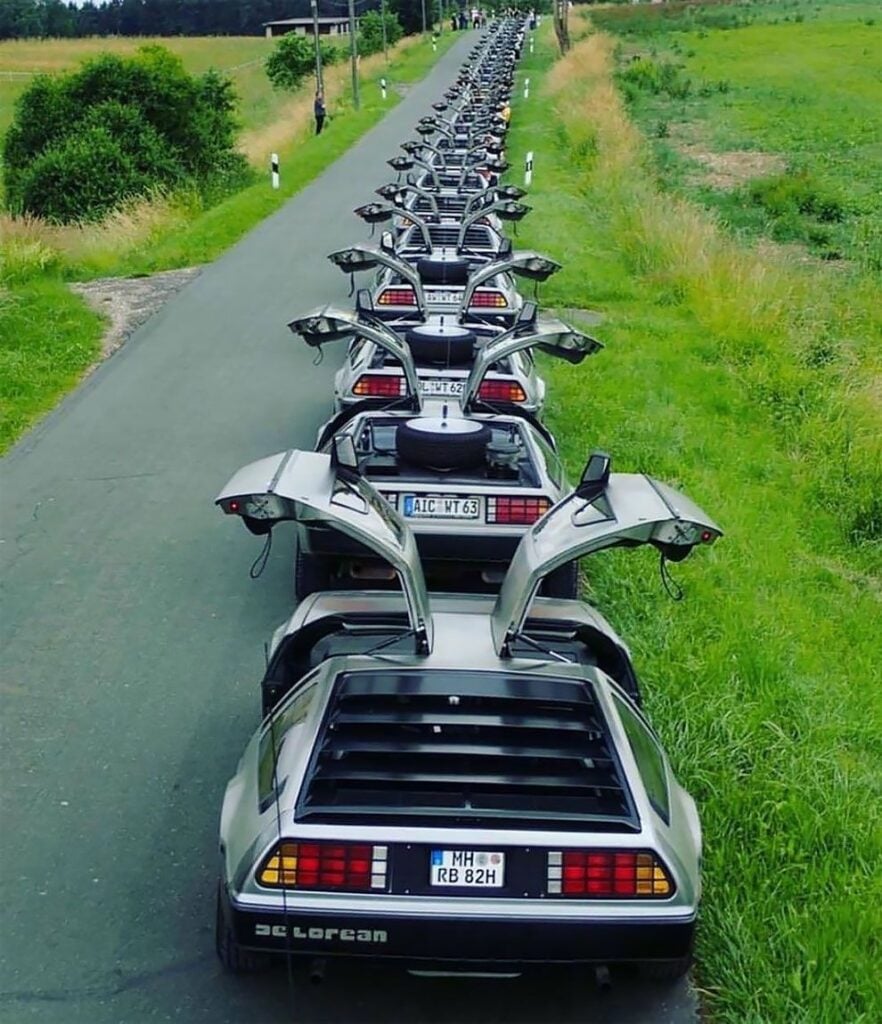
Walk into any room of design professionals, show them a silhouette of the DMC-12, and recognition is immediate. This iconic status stems from deliberate choices that prioritized visual impact over convention.
The Giugiaro Wedge
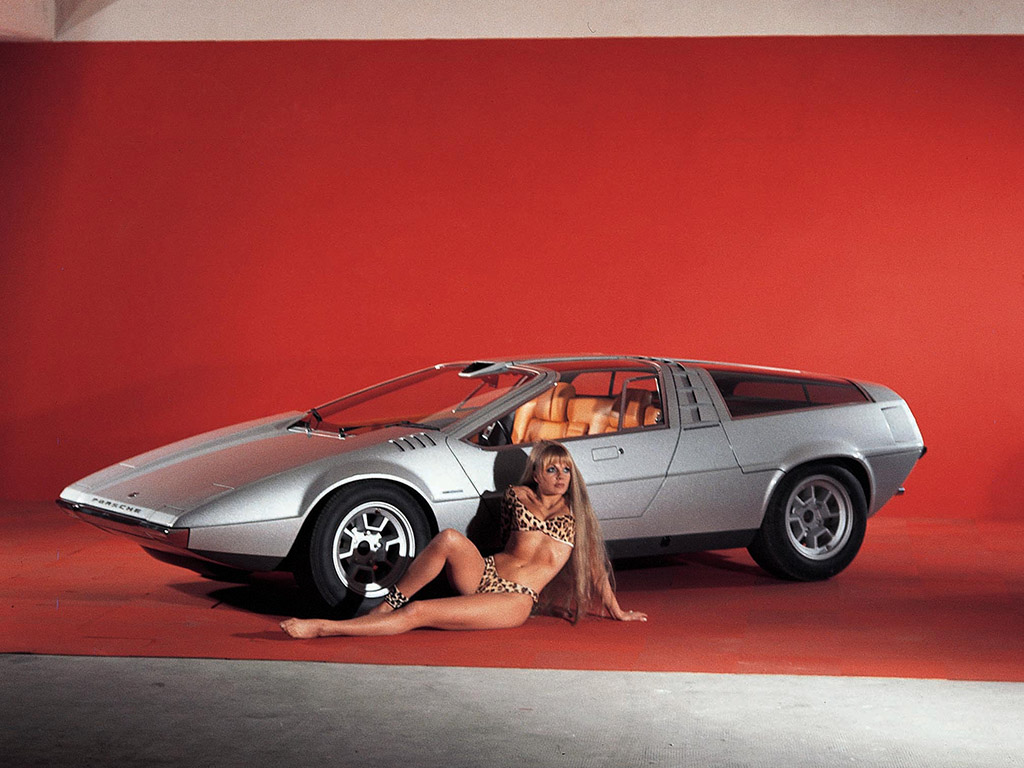
Giorgetto Giugiaro’s exterior design for the DMC-12 draws from the sharp wedge profiles that defined late 1970s automotive styling, influenced by his earlier work including the Porsche Tapiro concept of 1970. The car’s low nose rises gradually toward a higher rear deck, creating a dynamic stance even when stationary. Clean, unadorned surfaces reject the chrome embellishments common to American cars of the era.
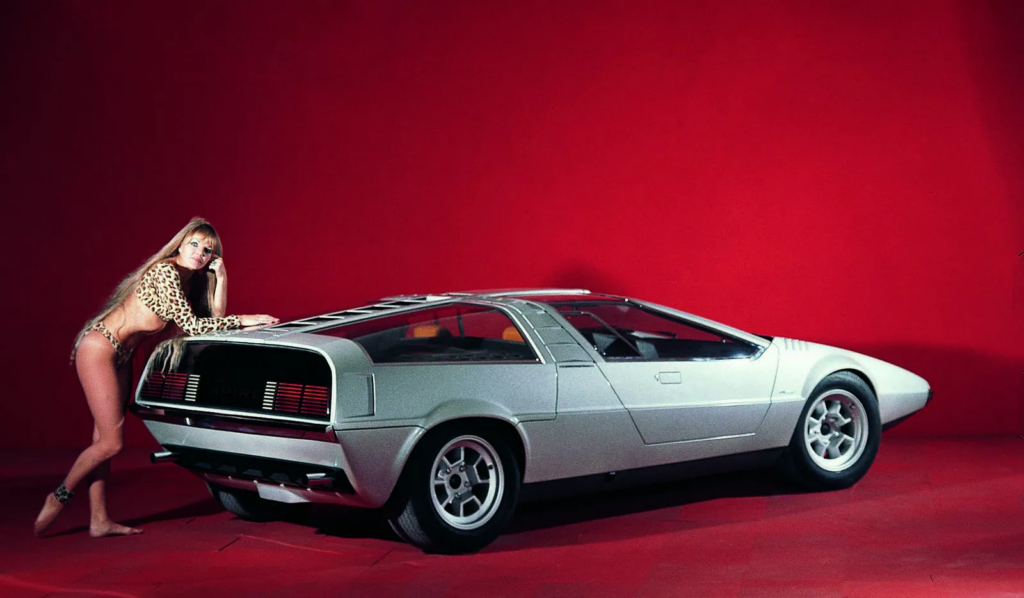
The wedge shape serves multiple purposes beyond aesthetics. It provides aerodynamic efficiency, creates an aggressive visual presence, and allows for the distinctive door mechanism that would become the car’s signature feature.
Stainless Steel Body Panels
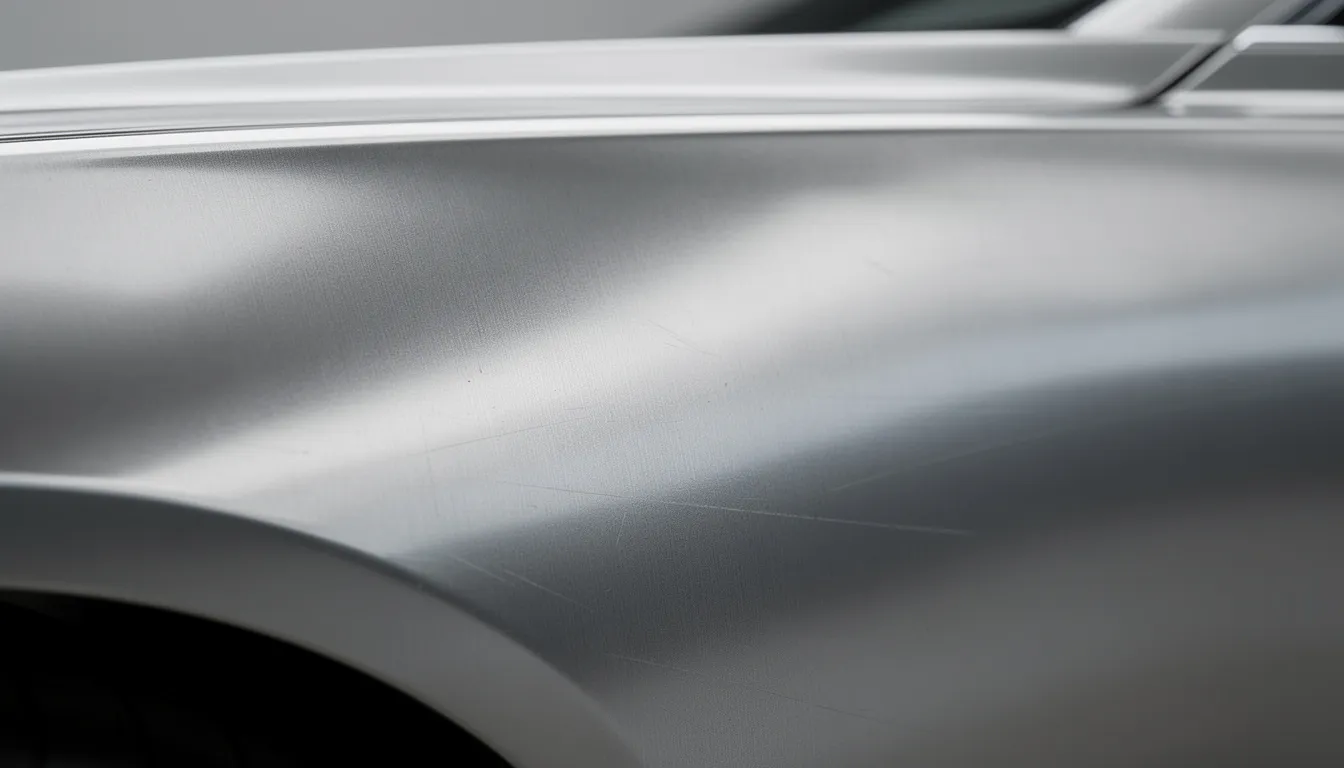
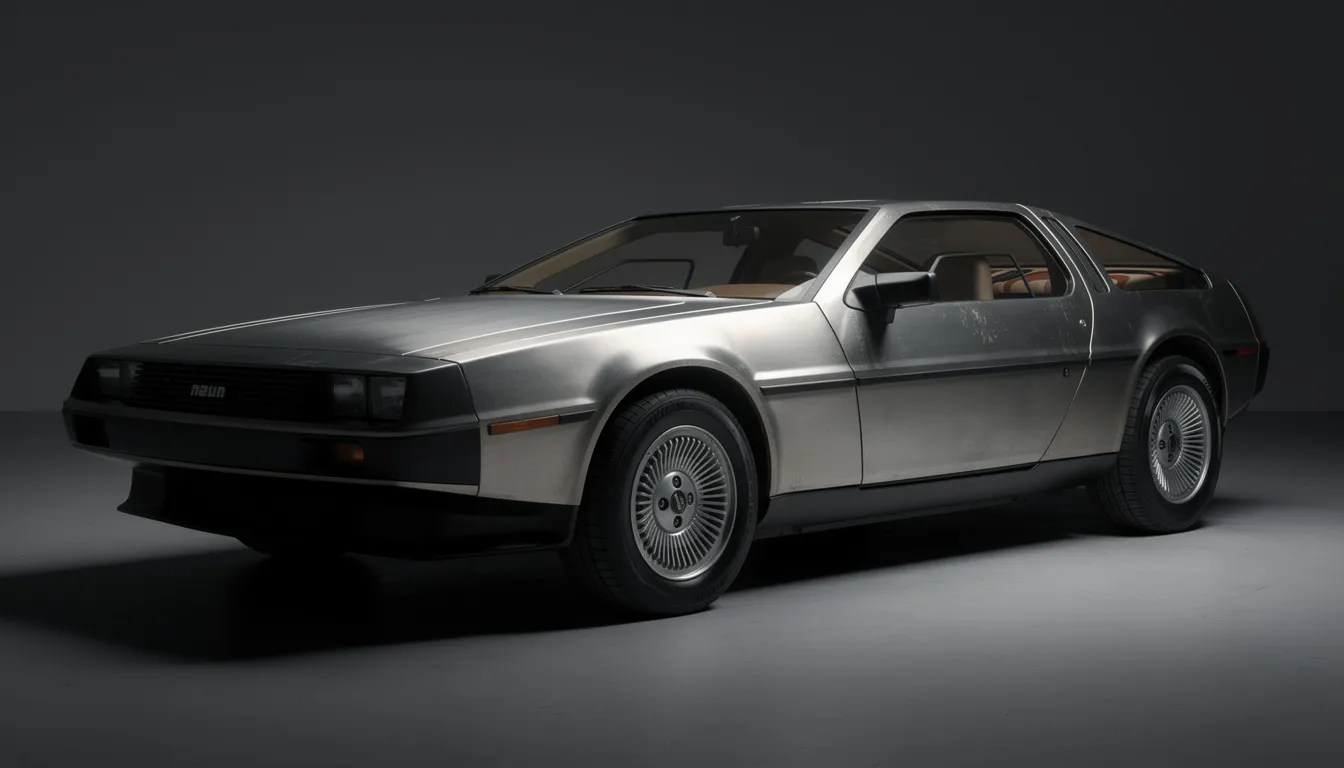
Perhaps no material choice in automotive history has proven more visually distinctive than the DMC-12’s brushed stainless-steel body panels. Using Type 304 stainless steel, these panels were left unpainted—a radical departure from industry norms that created a raw, industrial appearance appealing to design purists.
The decision to forgo paint emerged partly from practical considerations: stainless steel resists corrosion naturally, eliminating the need for protective coatings. But the visual result transcended functionality. The brushed metal surface interacts with light in ways that painted bodies cannot, creating subtle variations in tone and reflection depending on viewing angle and lighting conditions.
This material honesty—showing exactly what the body is made from rather than concealing it beneath layers of paint—aligns with principles that modern minimalist designers continue to champion.
Notable exceptions: Three gold-plated DeLoreans were produced for an American Express holiday promotion in 1980-1981, featuring 24-karat gold body panels. These extraordinary vehicles contrast sharply with the utilitarian steel finish of standard production cars and remain museum-worthy curiosities today.
Gullwing Doors
The doors that swing upward rather than outward have become synonymous with the DeLorean brand. Supported by nitrogen-charged struts and incorporating a distinctive roof cut-out, these gullwing doors read visually like spacecraft wings—contributing to the vehicle’s science-fiction aesthetic.
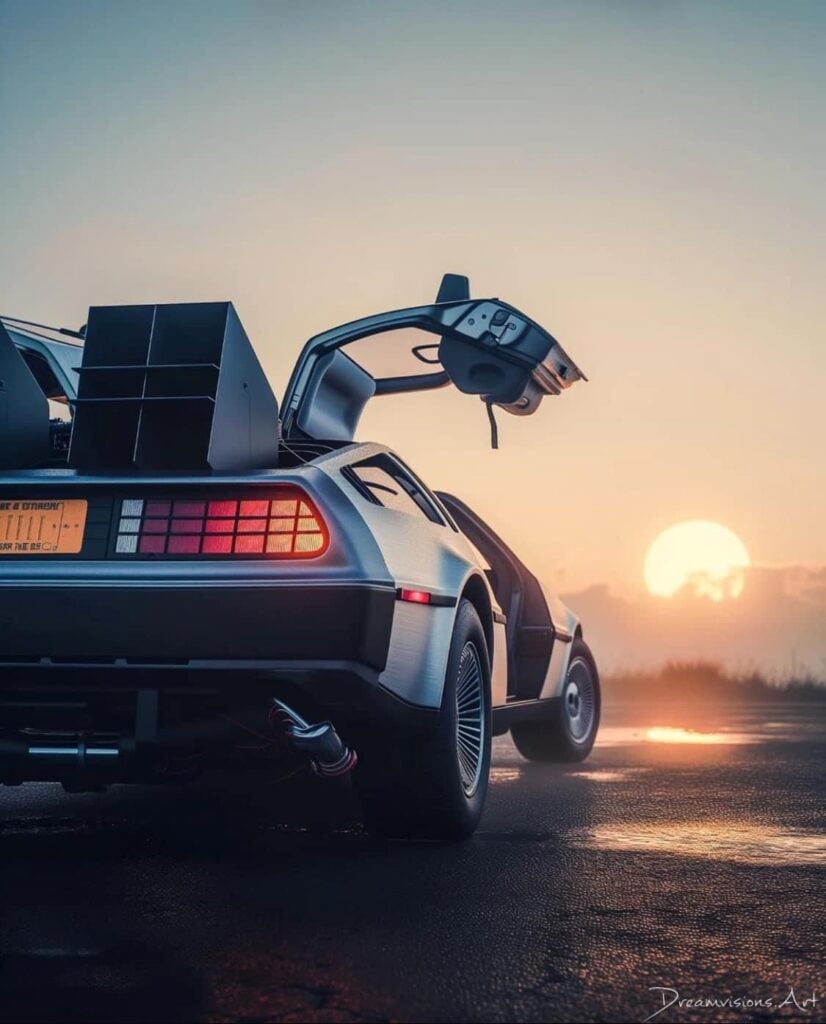
Beyond their dramatic appearance, the doors offered practical advantages in tight parking spaces where conventional doors couldn’t fully open. However, they also presented challenges:
- Seal leaks around the complex door edges
- Significant weight requiring robust strut mechanisms
- Alignment issues that plagued production quality
- Difficulty exiting if the car rolled onto its roof
These trade-offs between visual drama and practical function represent a classic design tension that the DMC-12 resolved firmly in favor of aesthetics.
Construction and Interior
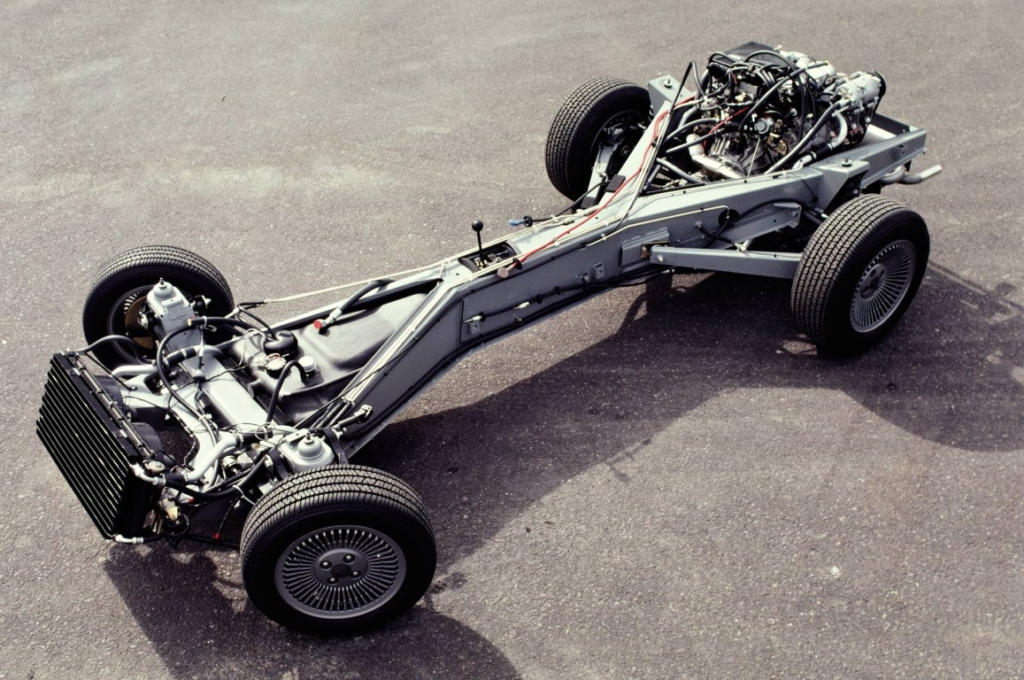
Beneath the stainless panels lies a fiberglass underbody, with structural rigidity provided by the Lotus-derived steel backbone chassis. This construction method affected panel fitment and contributed to the sculptural qualities that make each DMC-12 slightly unique.
The interior takes a more conservative approach than the exterior suggests. A two-seat layout features grey or black leather upholstery, a padded dashboard, and analog gauges. While competent and comfortable, the interior design doesn’t match the exterior’s boldness—creating an interesting contrast between the dramatic promise of the gullwing doors and the relatively conventional space within.
For contemporary creatives, these design elements offer rich inspiration. The DMC-12’s materiality, silhouettes, and commitment to visual impact over compromise provide reference points for product design, fashion styling, and photography projects seeking that elusive balance between retro nostalgia and futuristic aspiration.
Technical Specifications and Driving Dynamics
Despite its futuristic appearance suggesting exotic performance, the DeLorean DMC-12 delivered modest numbers compared with early-1980s sports car rivals. Understanding this gap between visual promise and mechanical reality helps explain both the car’s initial commercial struggles and its eventual reappraisal as a design object rather than a performance machine.
Engine and Powertrain
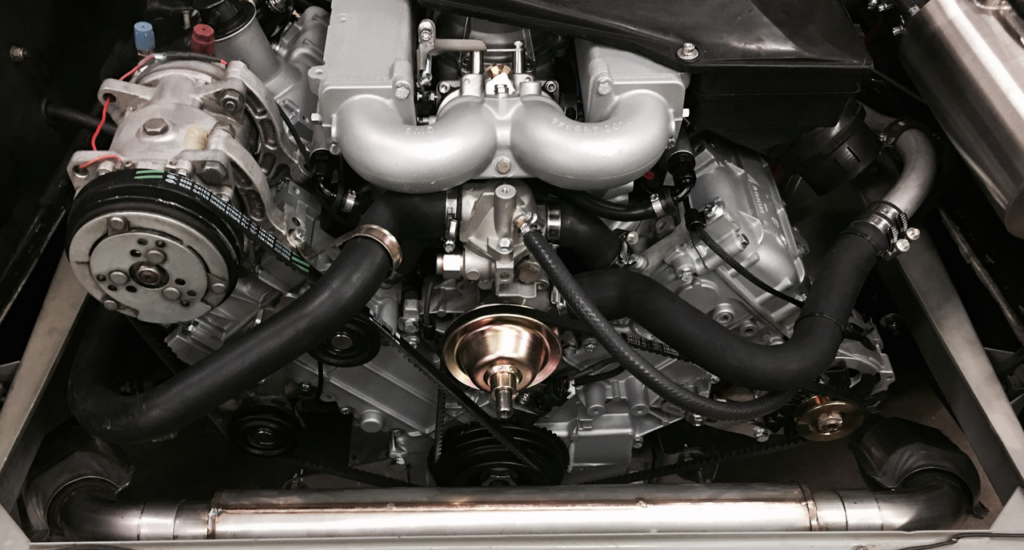
The heart of the DMC-12 is a 2.85-liter PRV V6 engine developed through a collaboration between Peugeot, Renault, and Volvo. This 90-degree configuration engine featured Bosch K-Jetronic mechanical fuel injection and produced approximately 130 horsepower at 5,500 rpm with 162 lb-ft of torque at 2,750 rpm in U.S. specification.
Specification | Value |
|---|---|
Engine | 2.85L PRV V6 |
Power (US spec) | 130 hp @ 5,500 rpm |
Torque | 162 lb-ft @ 2,750 rpm |
0-60 mph | 7.9-10.5 seconds |
Top Speed | 129-130 mph |
Fuel Economy | 25.2 mpg combined |
European-market versions received slightly different tuning, with some rated closer to 150-154 horsepower. Emissions regulations and regional requirements affected these power figures, though even the more powerful European cars remained modest performers by sports car standards.
The rear engine, rear-wheel-drive layout used either a 5-speed manual transmission or a 3-speed automatic transmission, both sharing a 3.44:1 final drive ratio. Most enthusiasts preferred the manual transmission for its more engaging driving experience.
Cooling and Reliability
An unusual cooling layout placed the radiator at the front of the car, requiring long coolant runs to reach the rear-mounted engine. Twin electric fans assisted airflow, but this arrangement contributed to early reliability concerns and overheating issues, particularly in heavy traffic or hot weather.
Suspension and Handling
The suspension system reflected Lotus engineering expertise:
- Front: Independent double-wishbone setup with coil springs
- Rear: Multi-link independent suspension with coil springs
- Damping: Telescopic shock absorbers all around
- Steering: Rack-and-pinion with approximately 14.9:1 ratio
The somewhat high front ride height, a consequence of spring choices, affected handling balance. Four-wheel disc brakes provided stopping power adequate for the car’s performance envelope.
Staggered cast alloy wheels—larger at the rear than front—wore period Goodyear radials. This wheel arrangement reflected the rear-engine weight distribution and contributed to the car’s distinctive stance.
The Driving Experience
For design-focused readers, understanding the DMC-12 requires looking beyond raw performance numbers. The car offers a sensory experience unlike any conventional vehicle:
- The theatrical door operation transforms every entry and exit into a performance
- The stainless body creates unique sound characteristics from road noise
- The rear-engine layout produces a distinctive weight transfer under acceleration
- The low seating position and wide dashboard emphasize the wedge-shaped cabin
What the DMC-12 lacks in speed it compensates for in presence. Driving one remains memorable not because of how quickly it reaches sixty miles per hour, but because of how it makes you feel arriving anywhere.
Production, Pricing, and Commercial Struggles
The contrast between the DeLorean’s soaring initial hype and its harsh commercial reality reveals one of automotive history’s most dramatic rises and falls. Understanding this trajectory illuminates how a vehicle can fail commercially while simultaneously building the foundation for lasting cultural significance.
Factory Operations
Production commenced at the Dunmurry factory in late December 1980, with the first production car rolling off the line on January 21, 1981—just 28 months after the plant broke ground. This remarkably fast construction timeline reflected both the urgency of the project and the substantial financial resources provided by the British government.
The factory ramped up through 1981, with peak production occurring in October of that year when approximately 1,800 units were built in a single month. The workforce of around 1,000 employees—many experiencing their first manufacturing jobs—faced a steep learning curve that affected early build quality.
Production Numbers and Quality Issues
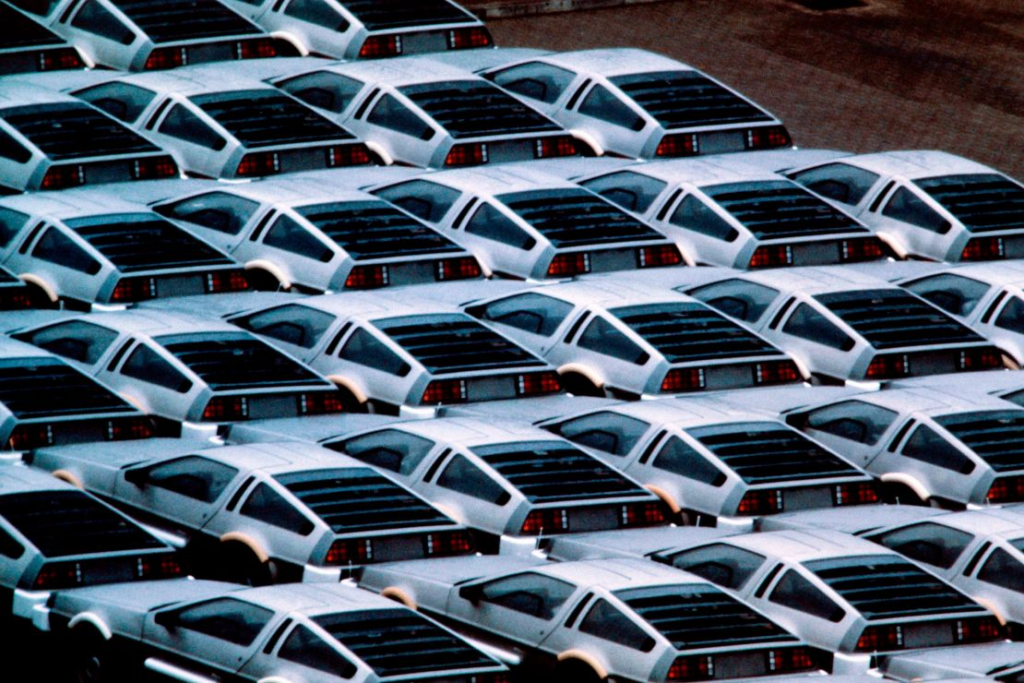
Total production reached approximately 9,200 to 9,500 units between January 1981 and December 1982, though exact figures remain uncertain due to incomplete factory records. Enthusiasts have reconstructed numbers using VIN data, generally accepting figures in the 8,975-9,000 range for production cars.
DMC implemented numerous minor revisions throughout the production run rather than traditional annual model-year updates. Changes to the hood, wheels, interior details, pin-striping, and accessories blurred distinctions between 1981, 1982, and 1983 model designations.
Quality issues plagued early production:
- Misaligned body panels
- Electrical problems
- Door mechanism failures
- Inconsistent fit and finish
These quality concerns, combined with the car’s high price, undermined sales momentum just as broader economic conditions worsened.
Pricing and Market Position
The DMC 12’s name originated from John DeLorean’s ambitious target of pricing the vehicle at $12,000. Reality proved far different. By launch, the base price had reached approximately $25,000—more than double the original target. By 1983, prices climbed into the low-to-mid $30,000 range.
Adjusted for inflation, these figures translate to well over $80,000-$100,000 in today’s money, positioning the DeLorean against established competitors like the Porsche 911 SC (offering 230 horsepower) or Chevrolet Corvette. Against such rivals, the 130-horsepower DeLorean struggled to justify its premium pricing.
Standard equipment included:
- Air conditioning
- Power windows
- Leather interior
- AM/FM stereo cassette
The automatic transmission added approximately $650 to the base price. Dealer-installed accessories included car covers, seat covers, stripe kits, luggage racks, and ski carriers—attempts to broaden the car’s appeal beyond pure sports car buyers.
Financial Collapse
The early 1980s recession hit hard. High interest rates discouraged discretionary purchases, and questions about build quality spread through automotive media. Unsold inventory accumulated on dealer lots as production continued against increasingly pessimistic sales projections.
DMC filed for receivership in early 1982. Production paused mid-year despite heavy discounting and extended warranty promises meant to reassure hesitant buyers. John DeLorean’s arrest in October 1982 in a DEA cocaine trafficking sting—he was later acquitted on entrapment grounds in 1984—sealed the company’s fate.
Formal bankruptcy followed by year’s end. Workers reportedly discarded tooling into the ocean upon closure, a symbolic end to a venture that had promised so much. About 1,000 partially assembled units were later completed by Consolidated Industries using remaining parts, extending final production into 1983.
The British government’s investment of over $150 million vanished, a cautionary tale about politically motivated industrial projects in volatile regions.
Special Variants, Prototypes, and Rare Examples
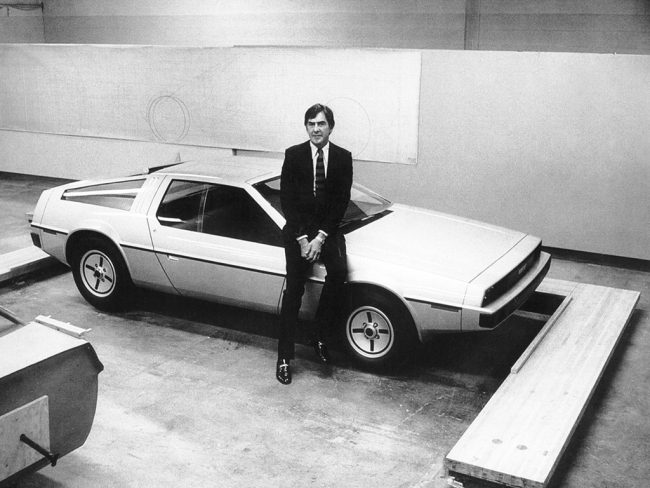
Despite its brief production run, the DeLorean DMC generated an intriguing family of prototypes, pilot cars, special editions, and conversions that fascinate collectors and design historians. These rare examples offer insights into the model’s development and the ambitions that extended beyond standard production.
Early Prototypes
The original prototypes from the mid-to-late 1970s differed substantially from production cars:
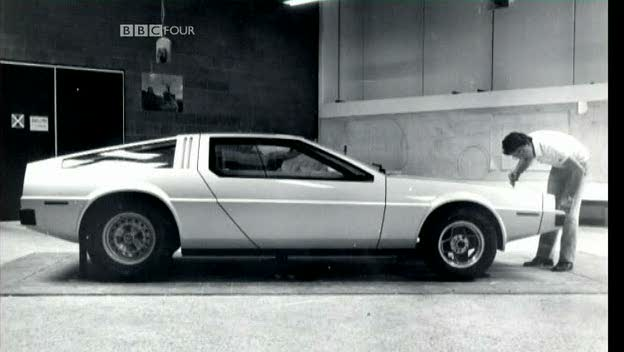
Prototype 1 (DSV-1): Built in October 1976, this DeLorean Safety Vehicle featured sliding side windows, alternative interiors, and early engineering solutions including an innovative fiberglass mold chassis intended for crash resistance.
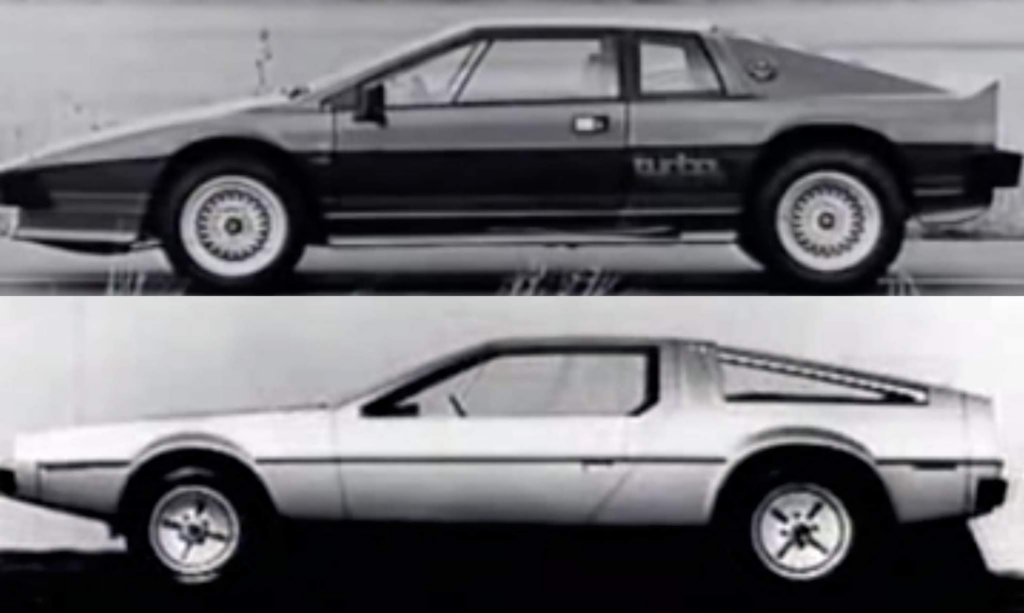
Prototype 2: Following Colin Chapman’s involvement, this iteration adopted the steel backbone chassis and rear-engine layout that would define production vehicles. Lotus evaluated this prototype extensively; it was reportedly destroyed in the 1990s.
Only one of the two earliest prototypes survived, sold at auction in the mid-1980s and later restored. Its survival provides invaluable reference for understanding the evolution from concept to production.
Pilot and Pre-Production Cars
Approximately 28 pilot cars were built for testing, crash approval, and promotional appearances. Identifiable by unique interiors and sliding side windows, these vehicles served as rolling test beds for production refinement.
A handful survive in private hands, prized by collectors for their historical significance and the glimpse they provide into the development process. These cars show how manufacturers refine designs through real-world testing—a process that interests anyone studying industrial design methodology.
Gold-Plated DeLoreans
For American Express’s 1980 holiday catalog, three DeLoreans received 24-karat gold plating on their body panels. Priced at $85,000 each (roughly $300,000 in today’s money), these extraordinary vehicles represented automotive excess at its most dramatic.
Only a handful of cars were ever completed to the point of being finished, and they now sit proudly in the museum as curiosities because of how some limited-edition special editions can end up transcending their original creation context to become cultural treasures in their own right.
Right-Hand-Drive Conversions
Production was locked into left-hand-drive only, but interestingly after the production run was over England’s Wooler Hodec outfit decided to get 13 cars converted over to right-hand drive – a far cry from the 30 they had originally planned to do, mainly due to the high costs of retooling.
Just a handful of those officially sanctioned right-hand drive cars got used by DMC here in Northern Ireland for just showing off the car to dealers & local enthusiasts, which adds yet another layer of real rarity for collectors out there
Turbocharged Development Cars
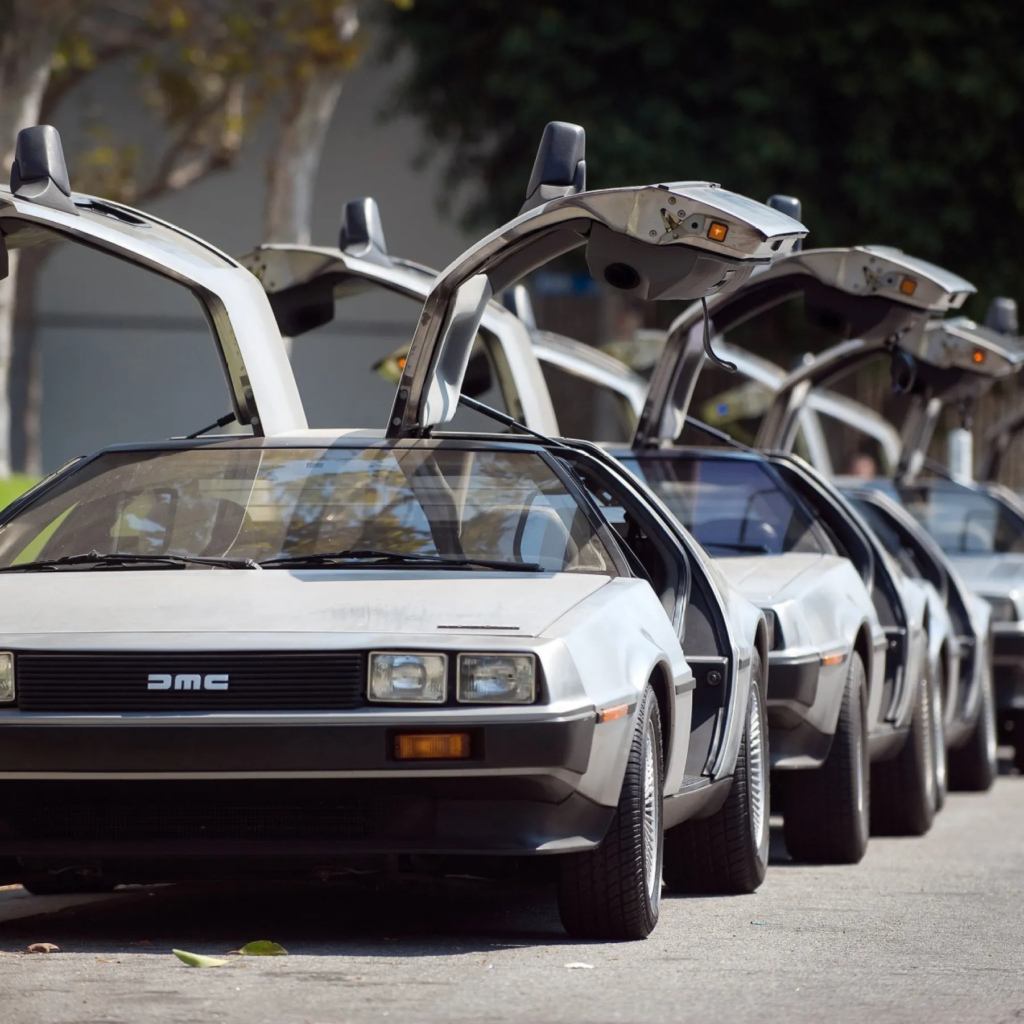
Twin-turbo development cars built in cooperation with Legend Industries demonstrated significantly improved performance potential. These prototypes suggested what the DMC-12 might have become with more development time and funding, but the company’s collapse prevented any turbocharged versions from reaching production.
Preserved Design Artifacts
The Ulster Folk and Transport Museum holds a preserved full-size styling mock-up, providing design historians and enthusiasts access to the development process that created this iconic shape. For anyone interested in rare objects and design ephemera, these special DeLoreans serve as case studies in limited-run, high-concept industrial design.
Back to the Future and Cultural Legacy
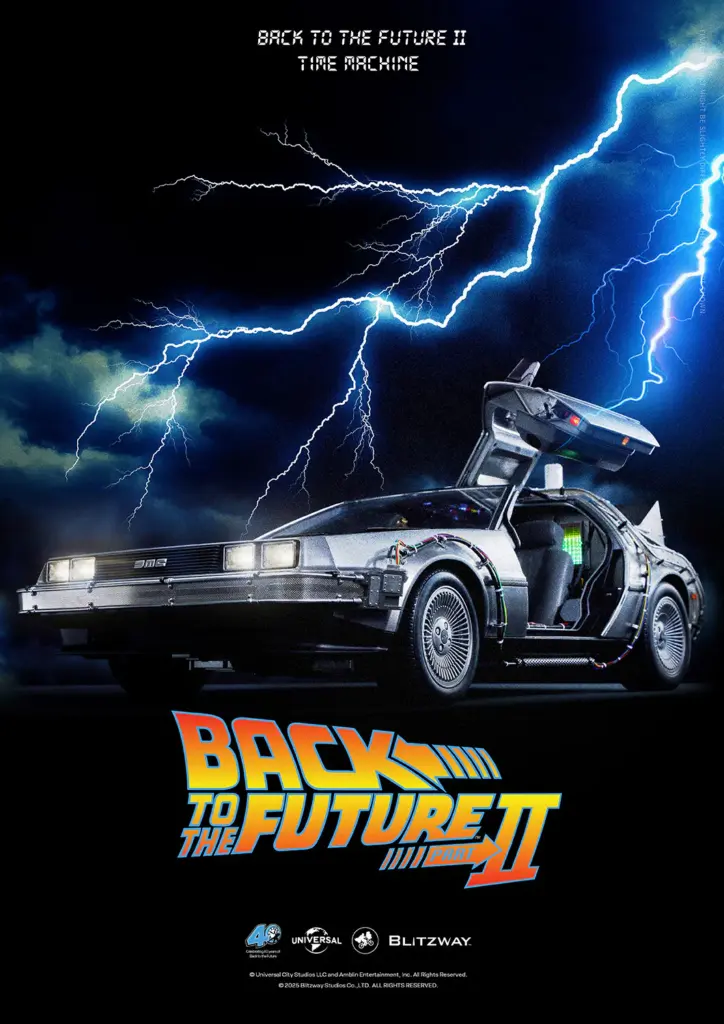
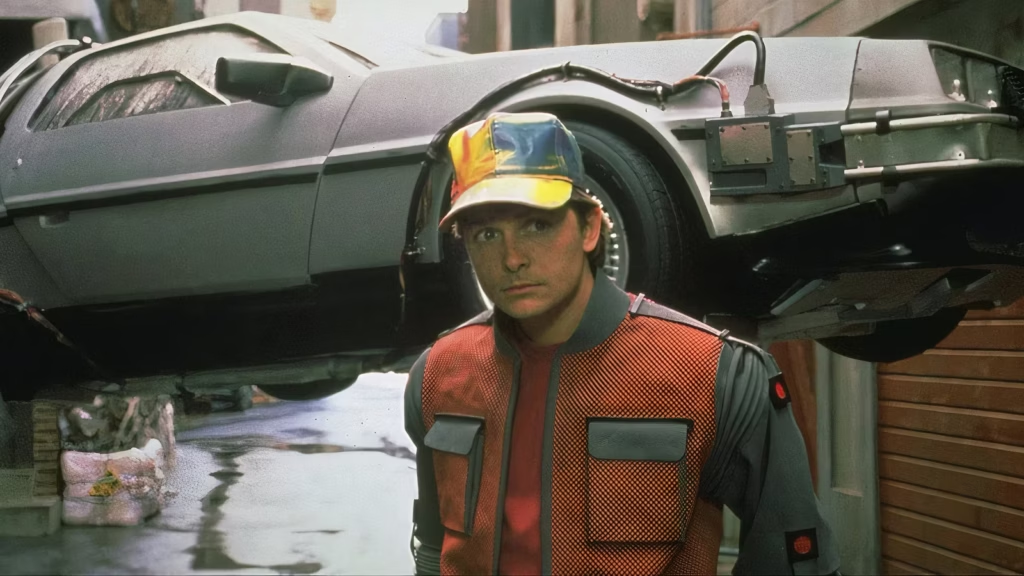
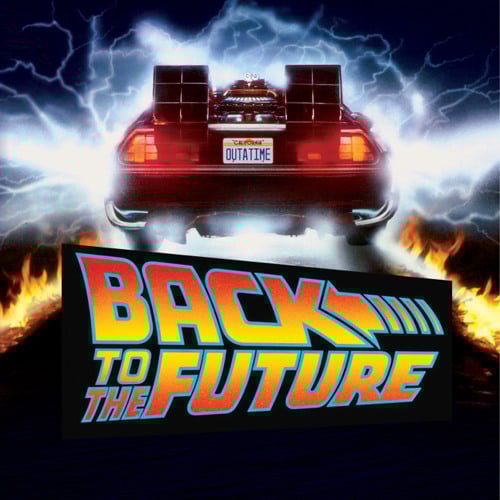
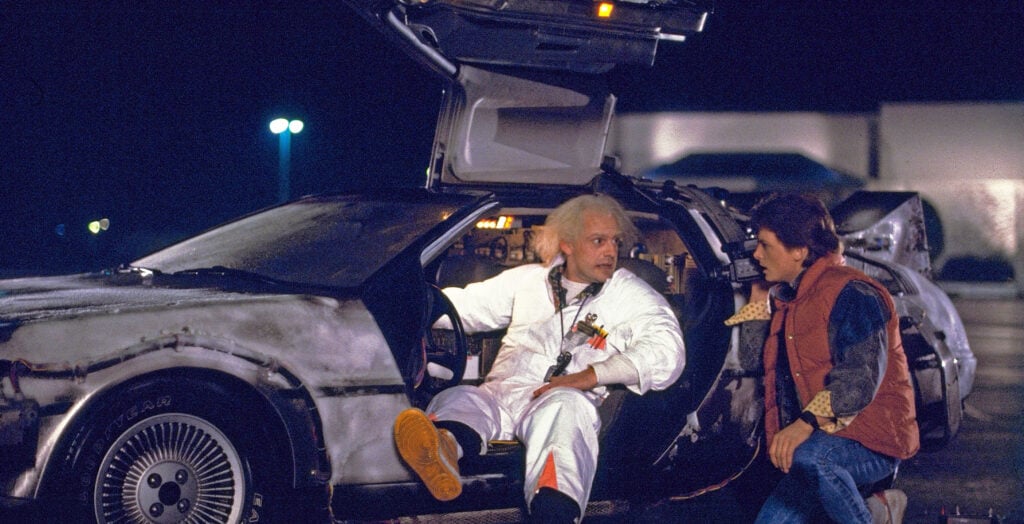
The transformation of the DeLorean DMC 12 from struggling sports car to immortal cultural icon happened in a single moment: when audiences first saw Doc Brown’s stainless-steel time machine hurtle across the screen in 1985. This resurrection through cinema represents one of the most dramatic second acts in automotive history.
How the DeLorean Became a Time Machine
When director Robert Zemeckis and writer Bob Gale conceived Back to the Future, they needed a vehicle that looked futuristic enough to believably house a time-travel device. The DeLorean’s stainless steel body, they reasoned, would provide better “flux dispersion” for the fictional flux capacitor. The gullwing doors suggested spacecraft rather than automobile. And crucially, by 1985, the DMC-12 remained relatively unknown despite its dramatic appearance—Ford reportedly offered their Mustang, but Zemeckis rejected it, preferring the DeLorean’s alien quality.
The production team modified approximately six DMC-12s for filming across the future trilogy, with each outfitted differently depending on scene requirements. Cables, vents, and the iconic Mr. Fusion home energy reactor transformed what had been a commercial disappointment into perhaps the most famous movie car in history.
The Trilogy’s Impact
The Back to the Future films sent Marty McFly and Dr. Emmett Brown (played by Michael J. Fox and Christopher Lloyd) jumping across roughly 130 years of history, from the late 19th century through the mid-21st century future. The DeLorean car appeared in every installment, becoming a character in its own right.
Each film evolved the time machine’s design:
- Back to the Future (1985): Plutonium-powered with flux capacitor visible through the rear window; must reach 88 mph to activate time travel
- Back to the Future Part II (1989): Mr. Fusion upgrade for home energy; hover-conversion for flying in 2015
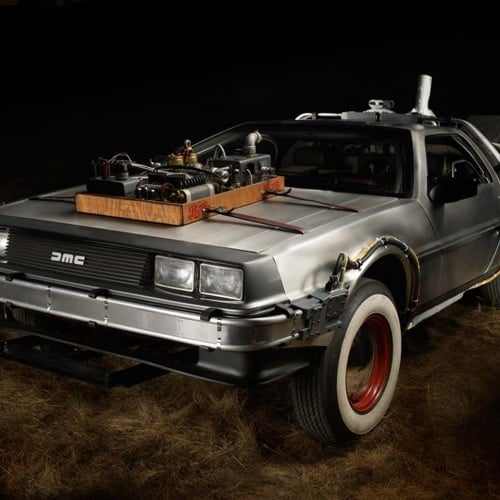
- Back to the Future Part III (1990): Heavily weathered after frontier adventures; dramatically destroyed by train
Only one of the screen used cars made it to all three films and its history just mirrored the wild adventures that it was on screen
Cult Icon – How Much is it Worth?
The DeLorean’s fortunes took a dramatic change in the following films. By the 90s its value had nose-dived to around $15,000 but as people started to get a hankering for the old days, its worth started to go back up again. Today if you find a mint condition low mileage DeLorean you’re in for a nice payday which can be as much as $50,000 to $100,000 or more at auction. But if you’re after a real showstopper, then get ready to pay a pretty penny as some DeLoreans have been selling for over $150,000
A global fanbase started to form with clubs dedicated to saving the original cars, building dead-accurate replicas and of course, waxing poetic about the DeLorean’s double life as an art relic & movie legend. You can even catch DeLorean meetups at conventions, museums proudly displaying restored screen used DeLoreans and replica builders going to great lengths to recreate all of time travelling gubbins.
The Broader Cultural Footprint
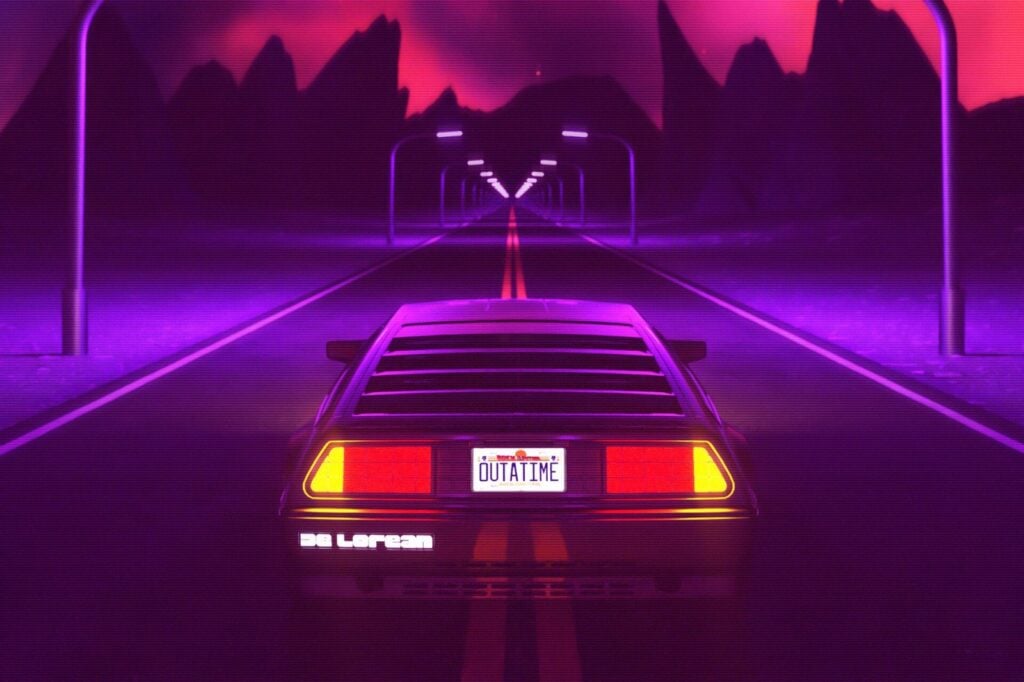
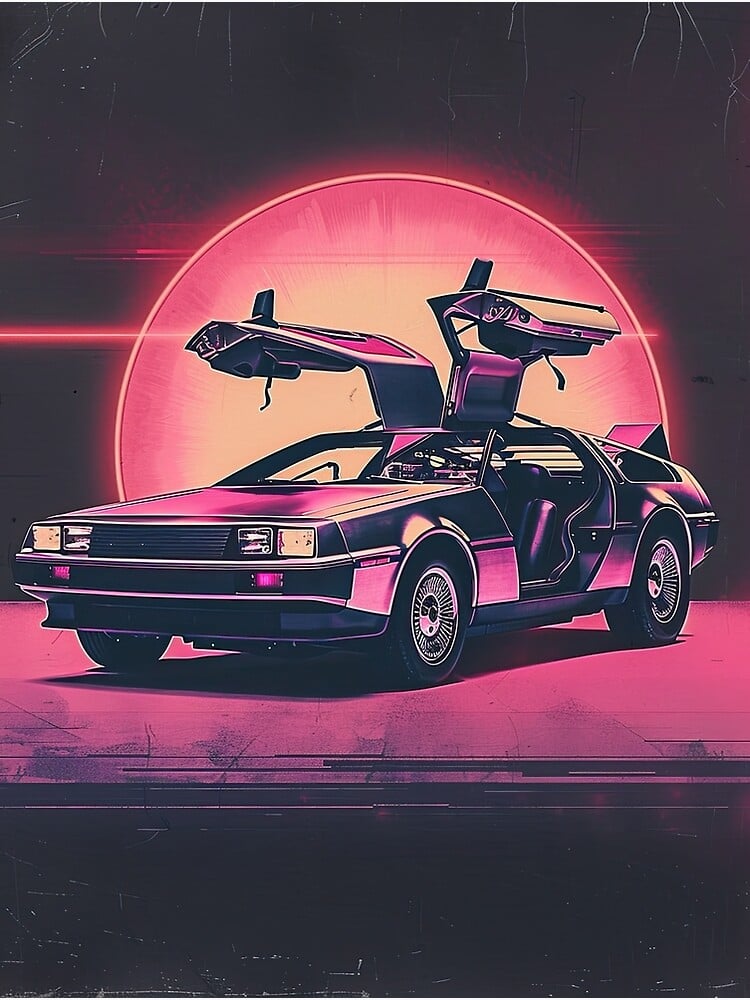
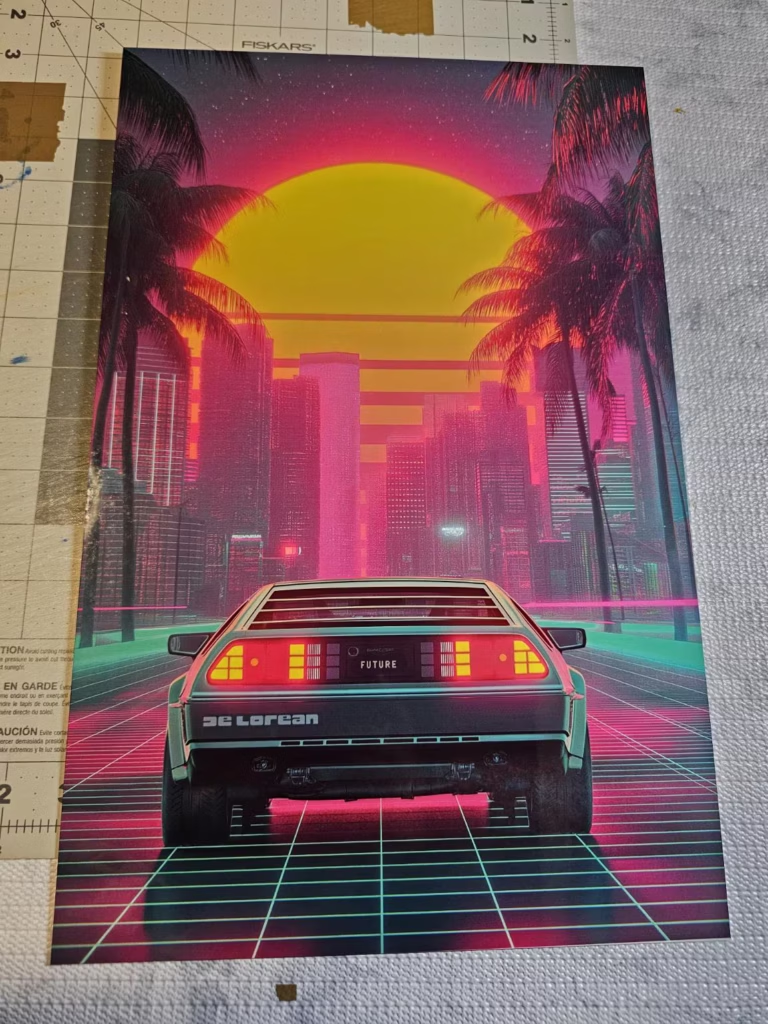
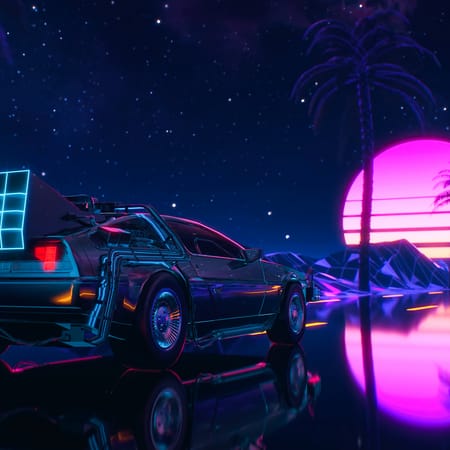
cultural expressions: a snapshot of the delorean’s iconic status
- Pop culture cameos in other films, TV shows and what have you
- Thrilling 80s-inspired music vids that give a nod to that retro-futuristic vibe
- Fashion mags showing off the delorean’s swoop doors and gleaming finish – and how they gleam in the light
- Photography projects that really dig into just how the delorean interacts with light
- Video games that bring the delorean’s iconic design to new generations
from a design perspective, the delorean in Back to the Future is just a masterclass in prop design and telling a story through visuals. the production designers managed to show just how context can totally flip a product’s meaning on its head, turning a flop into a timeless symbol that still makes people’s eyes light up today.
the delorean’s pop culture status just keeps on growing , with references showing up in media aimed at people born way after the delorean first hit the market. Its hard to think of another 80s object that’s got such staying power across all these different age groups
The DeLorean DMC-12 as Design Inspiration Today
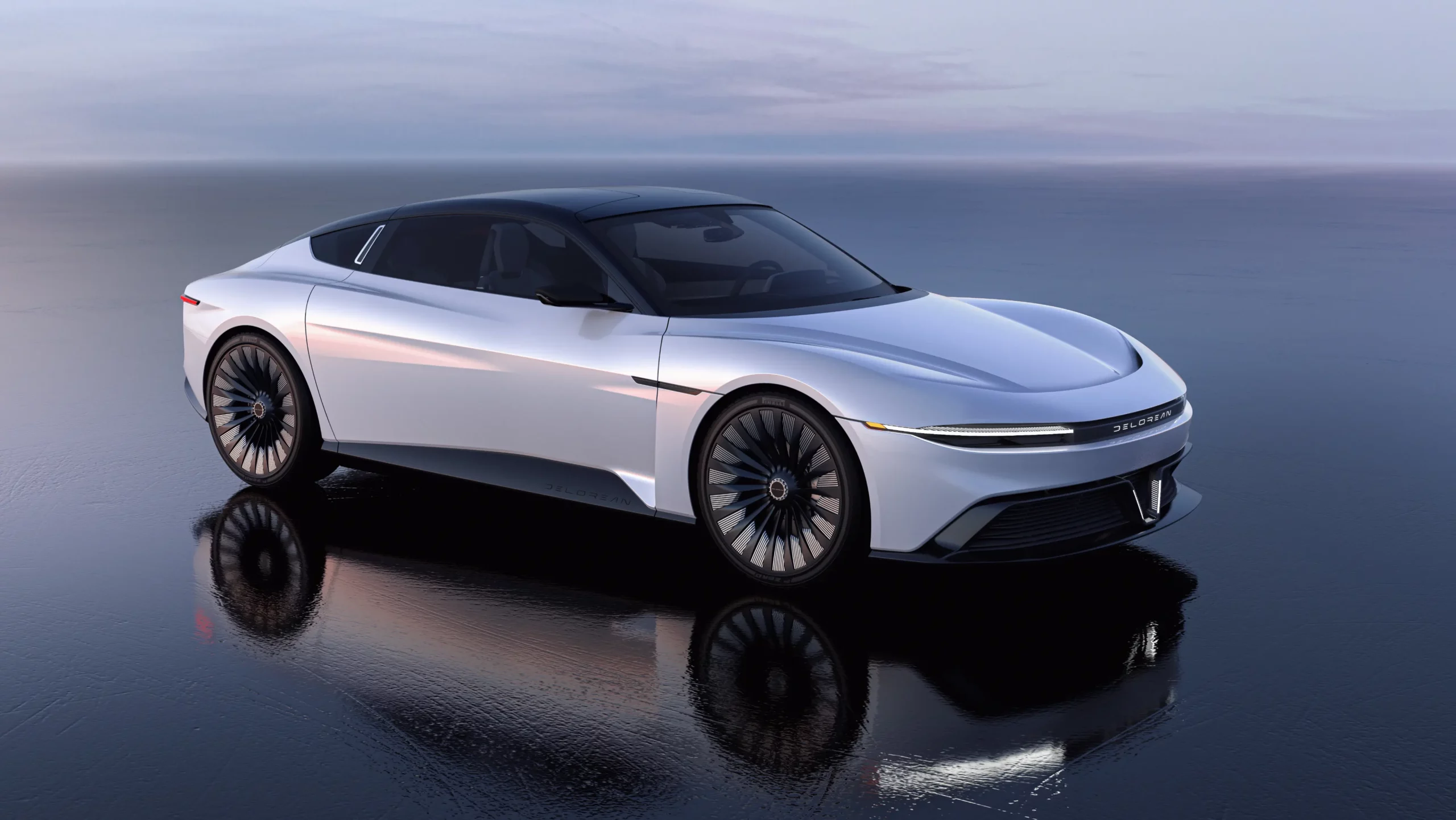
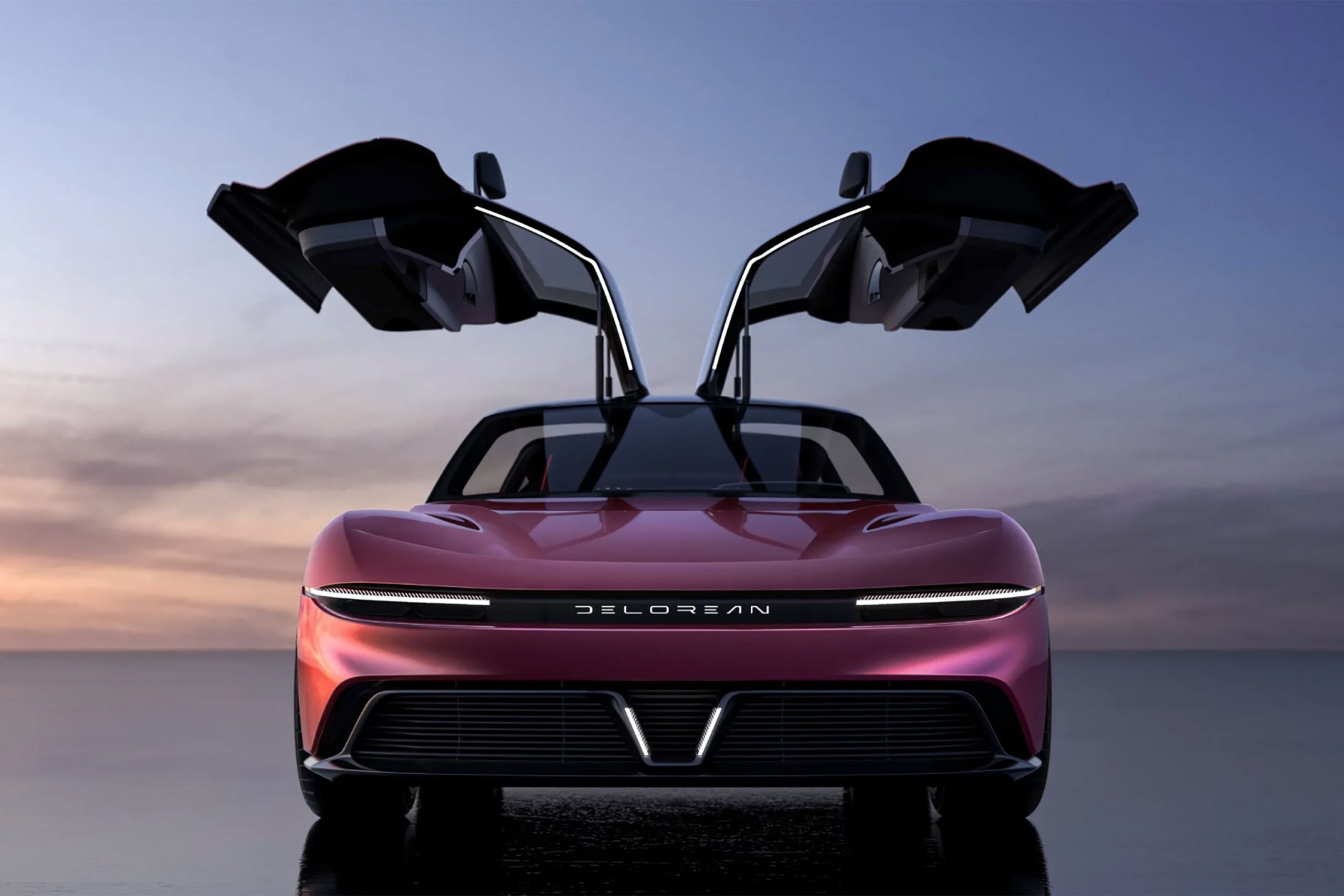
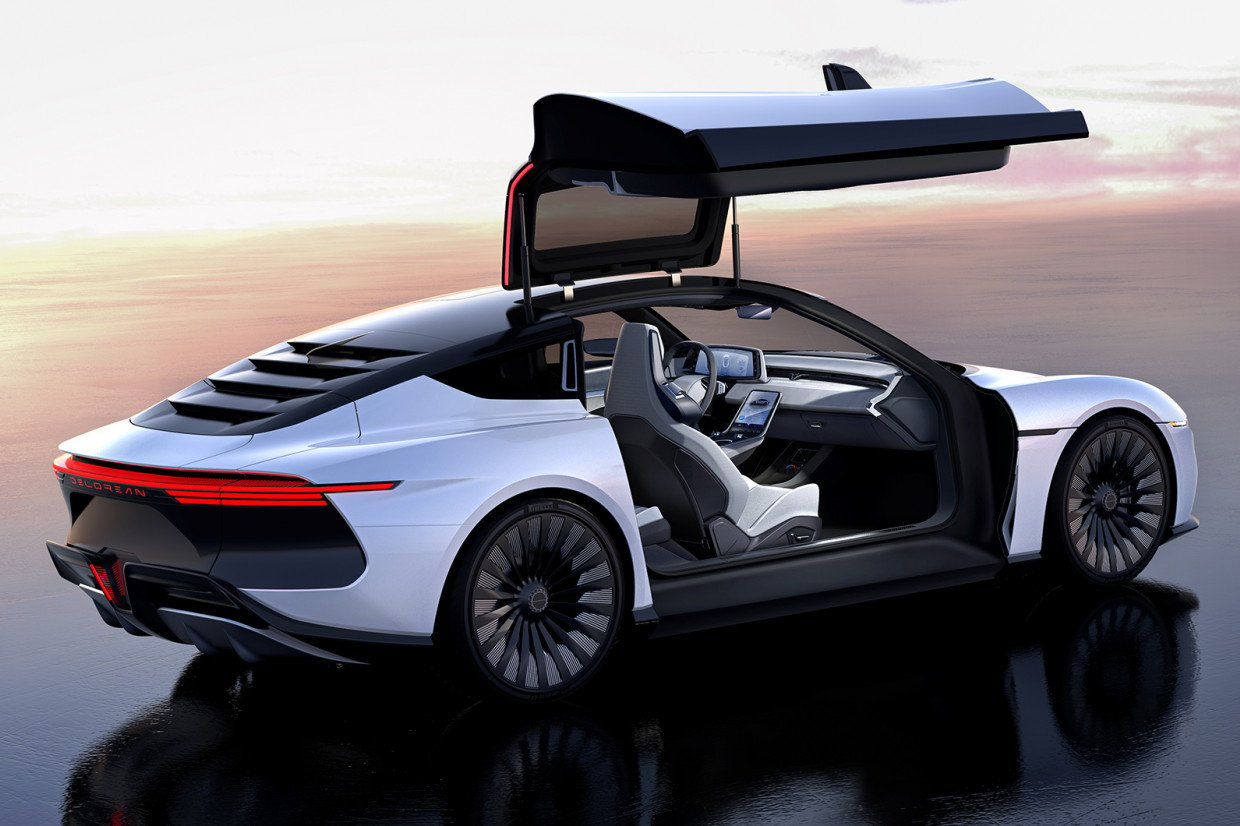
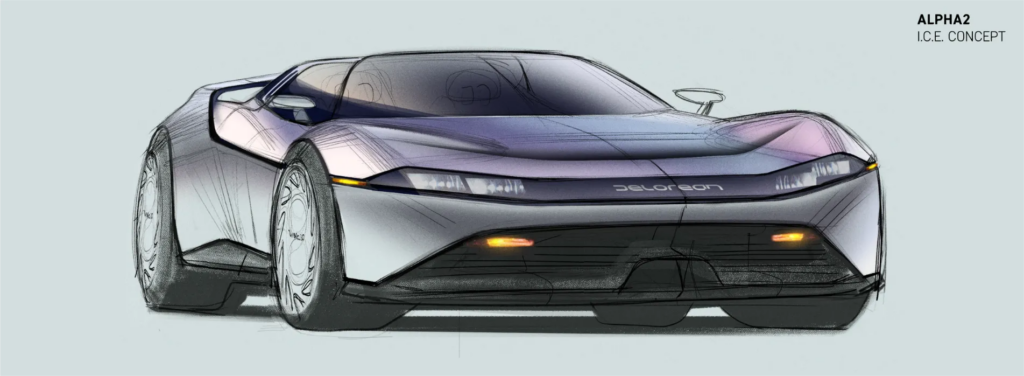
Four decades after production ended, the DeLorean continues inspiring designers, artists, photographers, and stylists. This persistence demands examination: why does a short-lived early-1980s car still resonate with creatives in the 2020s?
Design Principles That Endure
Analyzing the DMC-12’s form reveals alignment with principles that contemporary designers continue championing:
Design Principle | DMC-12 Expression | Modern Application |
|---|---|---|
Material Honesty | Unpainted stainless steel | Raw finishes in furniture, architecture |
Geometric Clarity | Sharp wedge profile | Minimalist product design |
Ornament Reduction | Clean, unadorned surfaces | Contemporary industrial design |
Dramatic Functionality | Gullwing doors | Statement features in technology products |
These traits connect the vehicle to brutalist architecture, minimalist furniture, and contemporary product design that values authentic materials over superficial decoration.
Photography and Cinematography Applications
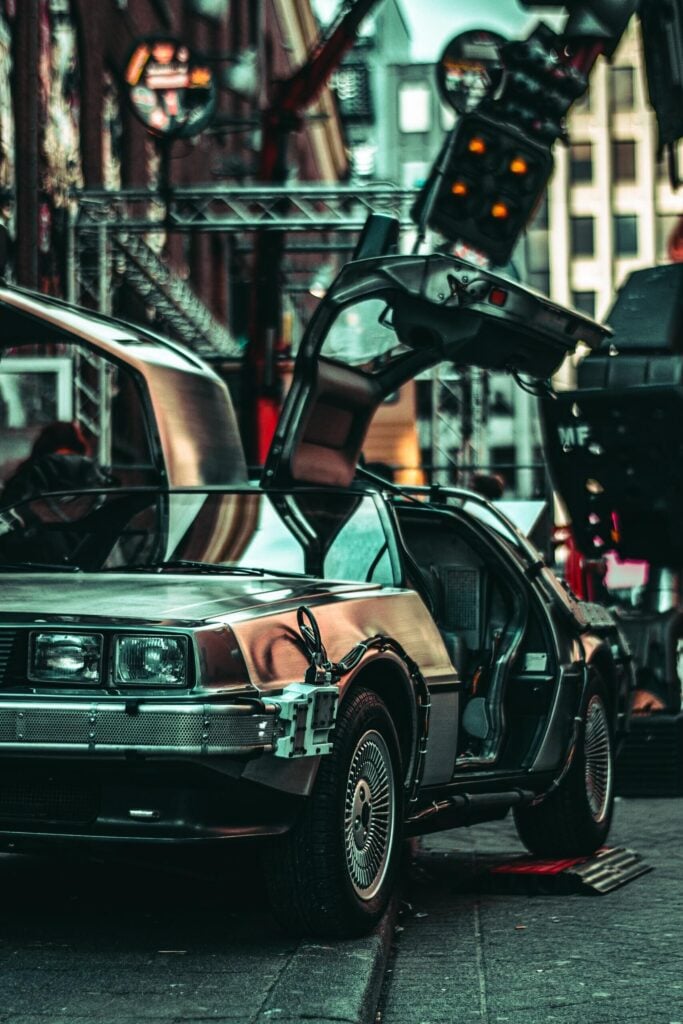
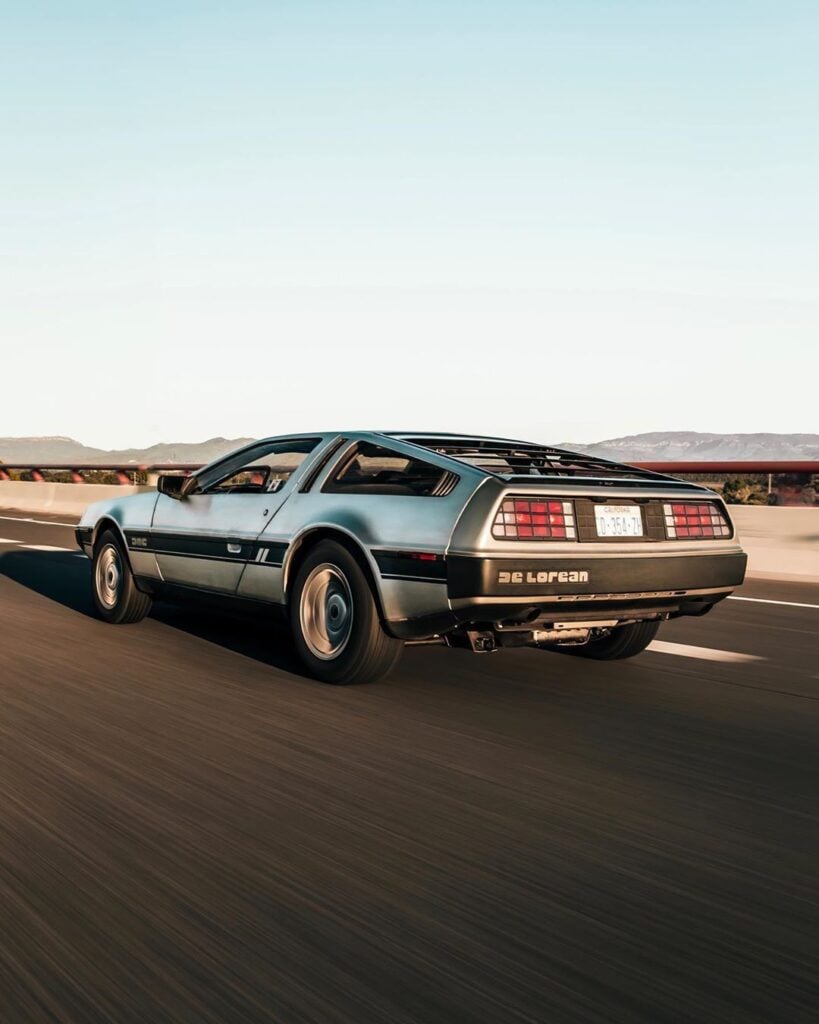
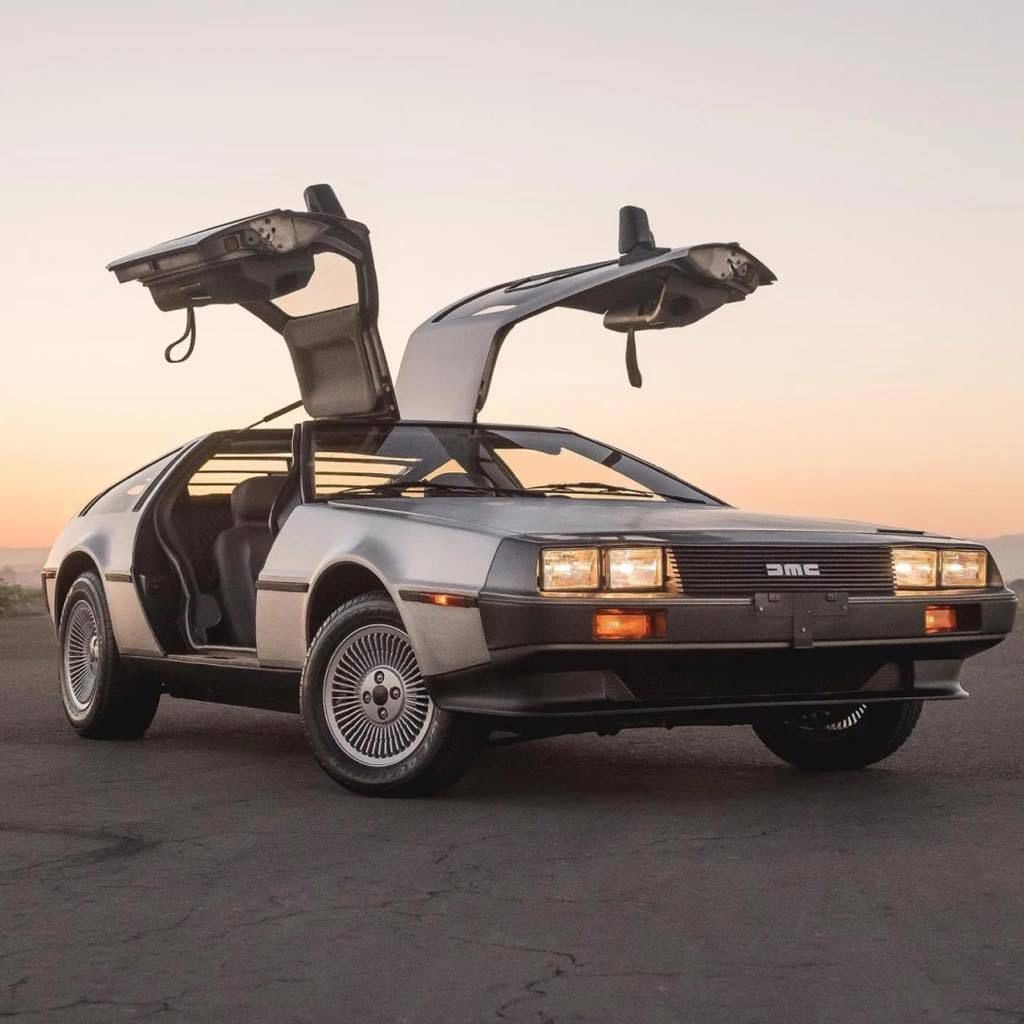
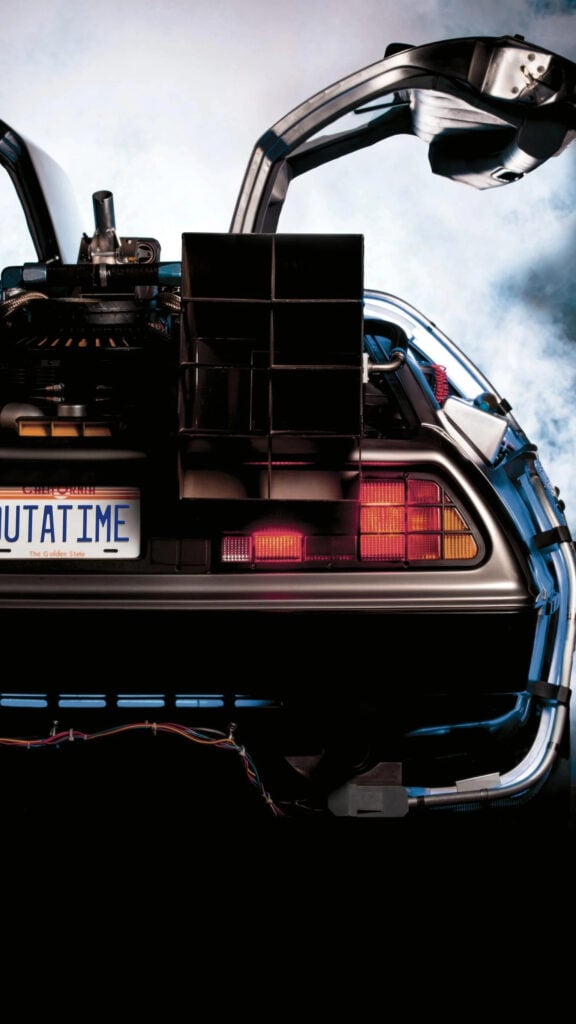
The stainless-steel surfaces interact with light in ways that make the DeLorean an ideal photographic subject:
- Studio Settings: Controlled lighting creates dramatic highlights and shadows across the brushed metal
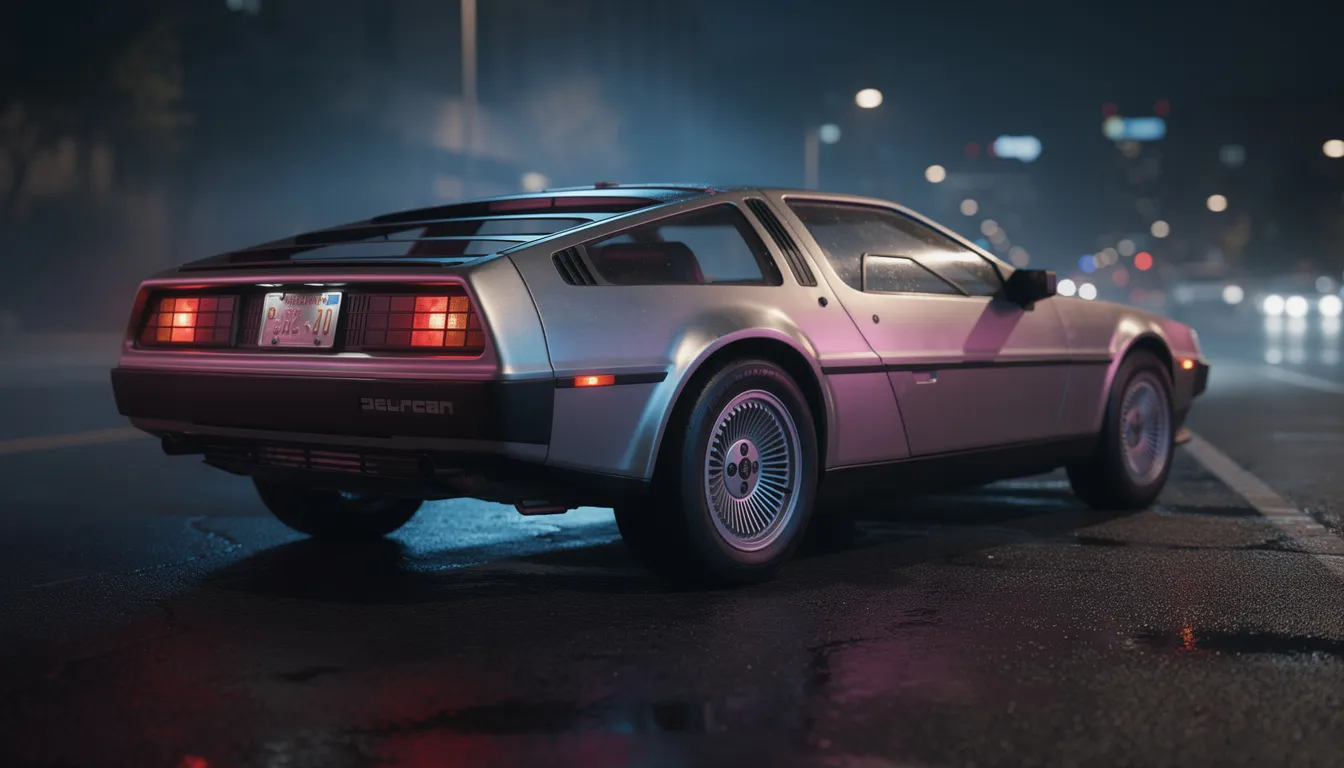
- Neon Night Scenes: The reflective body captures colorful urban environments
- Natural Light: Sunrise and sunset produce warm tones across the cool metal surface
- High Contrast: Black and white photography emphasizes the geometric forms
For photographers and cinematographers, the DMC-12 offers a vehicle that photographs unlike any painted alternative—each lighting condition producing distinct results.
Interior Design and Set Styling
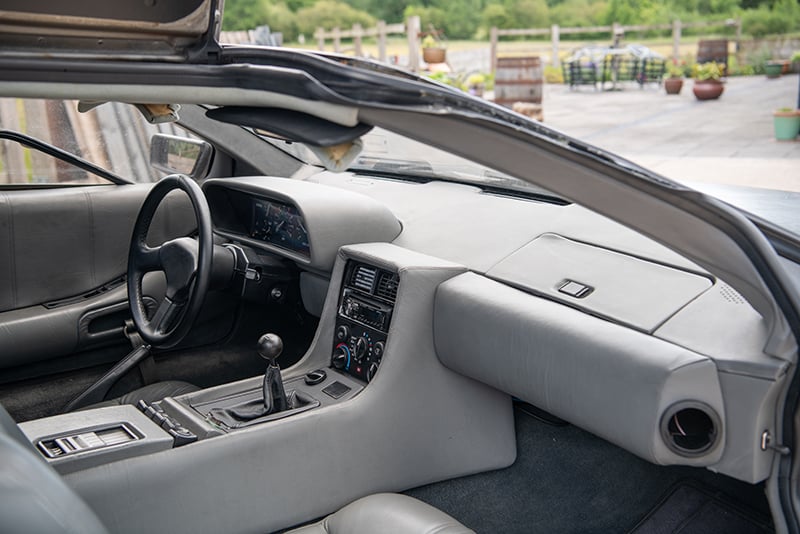
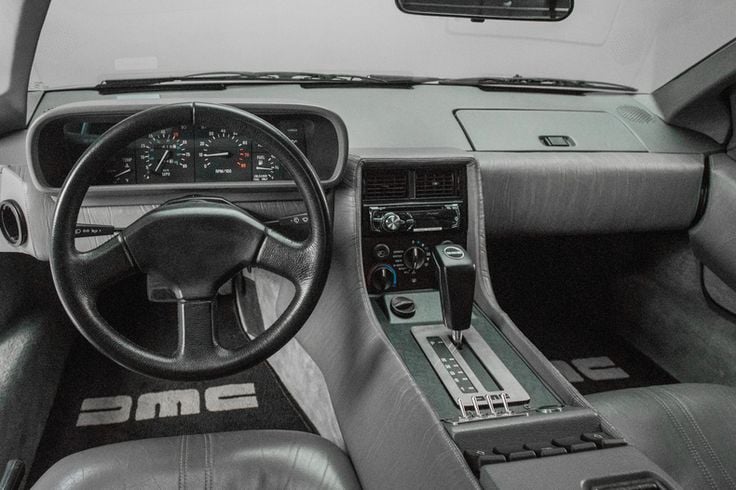
The DeLorean aesthetic translates readily to interior spaces:
- Cool metallic palettes echoing the stainless body
- Graphite greys reminiscent of the interior leather
- Sharp angles in furniture mirroring the wedge profile
- Subtle 1980s-inspired lighting schemes
- Industrial materials left unfinished
Set designers and interior stylists can reference DeLorean cues without literal recreation, evoking the era’s optimistic futurism while maintaining contemporary relevance.
Graphic Design Opportunities
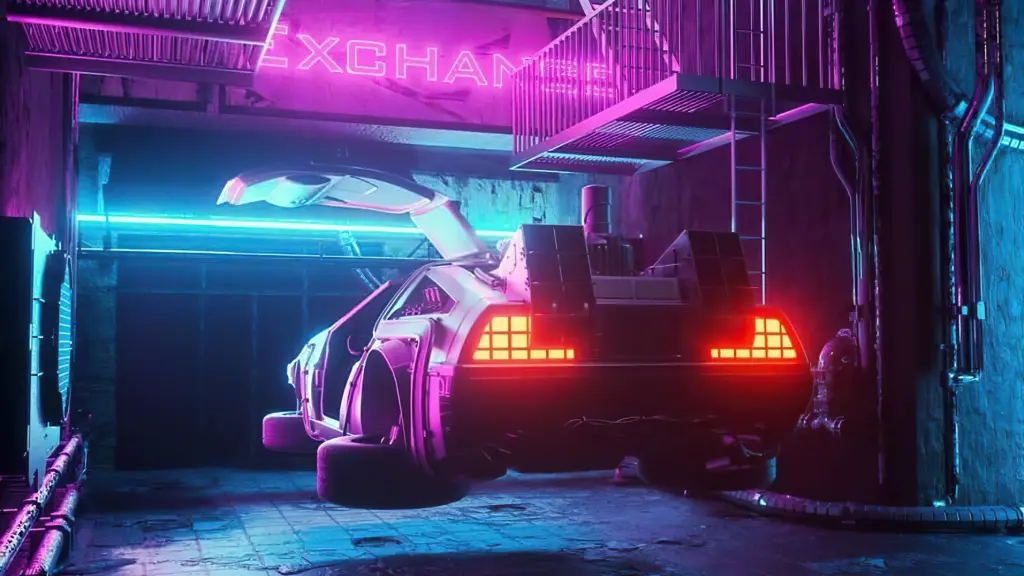
The DMC-12 provides rich material for graphic designers:
- Silhouette usage in poster compositions
- Brushed metal textures as background motifs
- Typography inspired by original DMC branding and gauge clusters
- Retro-futurist color palettes combining silver, black, and accent colors
The brand identity John DeLorean created—from the company logo to dealer shop signage—offers additional reference points for projects exploring corporate identity from the early 1980s.
Fashion and Styling Connections
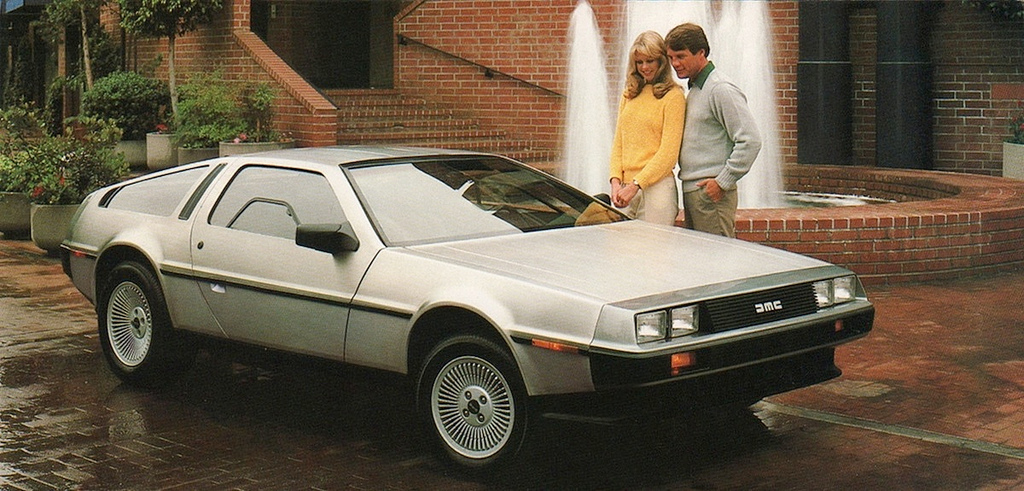
Fashion designers and stylists find natural connections to the DeLorean aesthetic:
- Metallic fabrics echoing the stainless body
- Reflective accessories suggesting the car’s chrome details
- Silhouettes incorporating wedge shapes and angular panel breaks
- Color stories built around silver, gunmetal, and black leather
Editorial shoots positioning models with DeLoreans benefit from the vehicle’s dramatic door operation and distinctive profile—each door lift creating an inherently photogenic moment.
Creating Your DeLorean-Inspired Mood Board
For readers ready to incorporate DeLorean inspiration into their creative practice, consider assembling:
- Close-up photographs of brushed stainless steel surfaces
- Archival images from original DMC marketing materials
- Stills from the Back to the Future films
- Contemporary photography capturing the car in modern contexts
- Material samples including brushed metals and grey leathers
This mood-board centerpiece can anchor projects blending nostalgia, futurism, and industrial materiality—whether you’re designing a product, styling a shoot, or developing a visual identity system.
FAQ
This section addresses common questions about the DeLorean DMC-12 that extend beyond the main narrative, providing quick answers for those seeking specific information.
How many DeLorean DMC-12 cars still exist today?
Out of approximately 9,000 vehicles built, an estimated 6,000 to 6,500 DeLoreans survive worldwide. This remarkably high survival rate—unusual for a low-volume car—reflects the model’s cult status and collectible nature. Dedicated owners, enthusiast clubs, and specialist parts suppliers have maintained these vehicles for decades, with many examples exceeding 100,000 miles through proper maintenance. The stainless-steel body’s natural corrosion resistance has helped preservation efforts, eliminating rust concerns that plague painted vehicles of the same era.
Is it still possible to buy and maintain a DeLorean DMC-12?
Yes, the DMC-12 remains available on the used and collector market. Prices vary significantly based on originality, condition, mileage, and any modifications—ranging from under $30,000 for project cars to over $150,000 for pristine, documented examples. A Texas-based successor company operating under the DeLorean Motor Company name supplies new-old-stock and reproduction parts, making routine maintenance and full restorations viable for committed enthusiasts. However, potential buyers should budget for specialist knowledge, as these vehicles require experience with their unique construction and PRV engine (discontinued in 1997, making rebuilds common).
Was the DeLorean DMC-12 really fast compared to other sports cars of its era?
Despite its exotic appearance, the DMC-12’s performance was modest by contemporary standards. Period road tests recorded 0-60 mph times in the 9-10 second range—significantly slower than rivals like the Porsche 911 SC (around 6 seconds) or even the less expensive Chrysler-powered sports cars of the era. The 130-horsepower PRV engine, combined with the car’s approximately 2,518-pound curb weight (heavier than originally planned due to Lotus’s chassis reinforcements), meant the DeLorean couldn’t match its visual promise with acceleration. Today, the car’s appeal centers on design, rarity, and cultural significance rather than speed.
Did John DeLorean design the car himself?
John DeLorean served as visionary founder and project champion rather than designer or engineer. He established the specifications and overall direction—including requirements for rear-engine placement, gullwing doors, and stainless steel construction—but the actual execution came from specialists. Giorgetto Giugiaro and Italdesign created the exterior styling, while Colin Chapman’s Lotus team engineered the steel backbone chassis and refined the vehicle for production. DeLorean’s genius lay in assembling this international talent and driving the project forward against considerable odds, even if the final vehicle bore the work of many hands beyond his own.
Are there modern cars inspired by the DeLorean DMC-12?
While few modern production vehicles directly copy the DMC-12, its influence appears throughout contemporary automotive design. Various concept cars and EV startups have echoed stainless-steel aesthetics, gullwing door mechanisms, or sharp wedge proportions. The current DeLorean Motor Company has announced plans for modernized versions including the DMC EV with electric powertrains. Beyond official successors, restomod projects blend original DMC-12 bodies with modern running gear, and concept vehicles regularly employ dramatic door mechanisms that trace their lineage to the DeLorean’s iconic example. For design enthusiasts, spotting these visual callbacks in electric coupes and retro-futurist studies has become part of appreciating the DMC-12’s lasting influence on automotive styling.
- 146shares
- Facebook0
- Pinterest146
- Twitter0
- Reddit0