Why drawing a train does not have to be hard
If you’ve ever searched for how to draw a train easy step by step and felt instantly overwhelmed, you’re definitely not alone. What starts as a “simple train drawing” quickly turns into a maze of steam pipes, perspective lines, and tiny mechanical details. Suddenly, this easy train sketch feels less like a fun art project and more like an engineering exam on paper.
I like to think of drawing a train the same way I think of building with blocks. Start with big, simple shapes. Stack them with intention. Add details only after the “blocks” feel solid.
In this list, I will walk through several easy ways to draw a train, from the quickest cartoon version to a more realistic steam locomotive in perspective. I will pull the best ideas from popular step-by-step training tutorials like wikiHow, Easy Drawing Guides, Let’s Draw That, and DrawingHowToDraw.
Use this as your no-stress menu. Pick the style that fits your mood today, then work your way down the list as your skills level up.
How I keep train drawings stress-free
Before I get into the specific tutorials for how to draw a train, easy step by step, I set myself up with three simple rules. These rules keep my brain from locking up the moment my pencil hits the paper.
Rule 1: Big shapes first, tiny details later
Every tutorial in the research above starts with simple geometry, not tiny bolts or realistic smoke. For example:
- Let’s Draw That starts with large squares, rectangles, and circles
- wikiHow starts with a cylinder and rectangles
- Easy Drawing Guides starts with circles and straight lines
If I cannot recognize my train when it is just shapes, I erase early and fix it while it is still simple.
Rule 2: One goal per drawing session
I do not try to learn everything at once. In one session, my only goal might be “get the wheels aligned.” Another day, I might only care about “practice one point perspective rail lines,” following DrawingHowToDraw.
Rule 3: Keep a “messy first draft” mindset
I treat my first pass like a warm-up sketch. Fuzzy lines are allowed. Ugly wheels are allowed. The only thing that is not allowed is quitting after two minutes because the first version looks off.
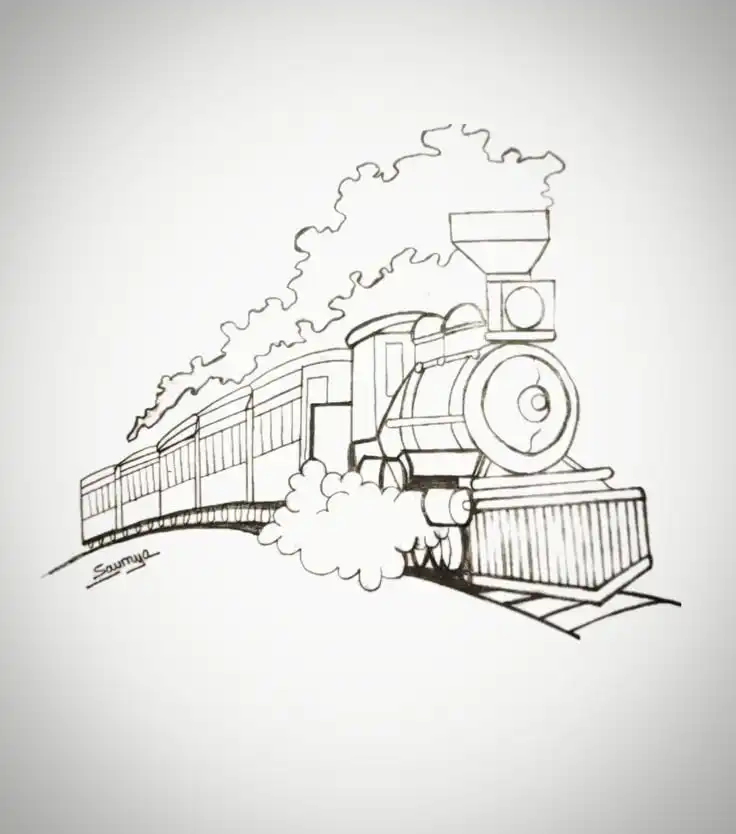
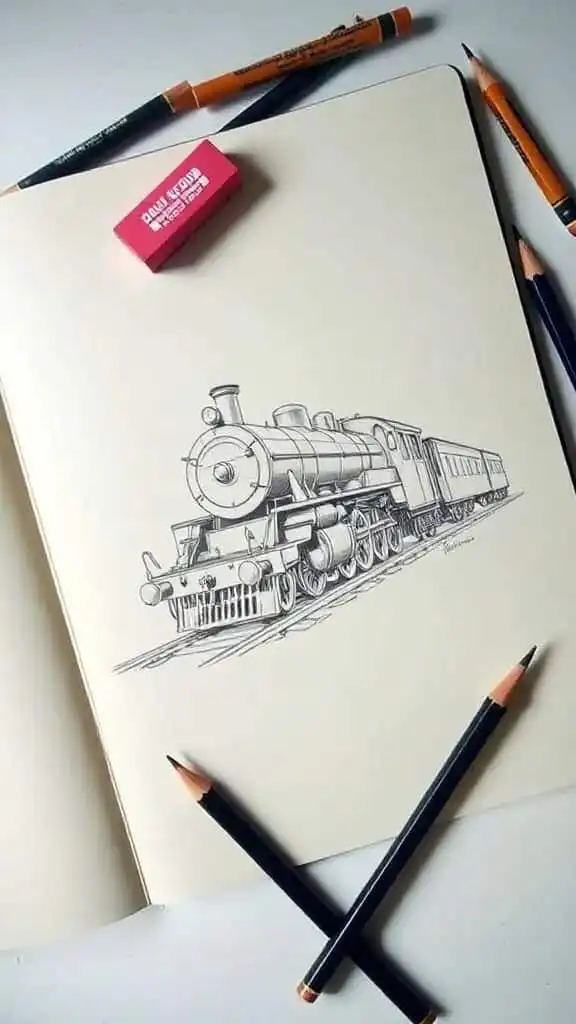
Method 1: Super simple cartoon train
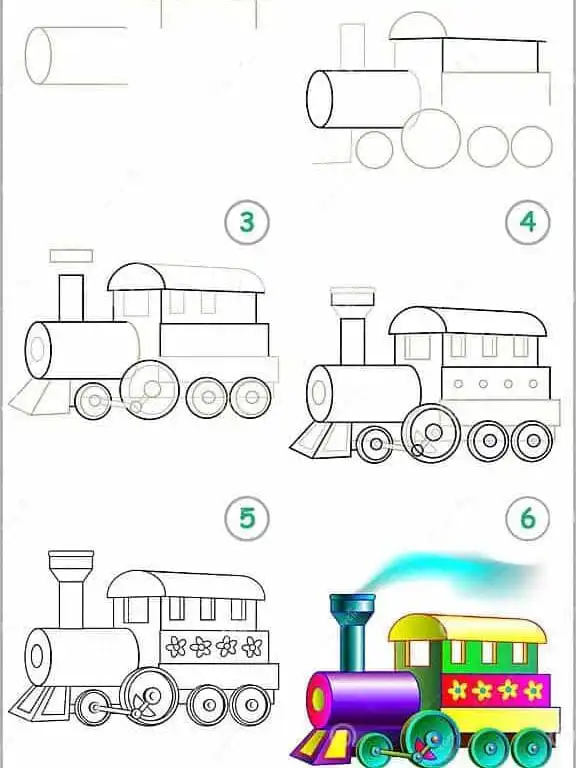
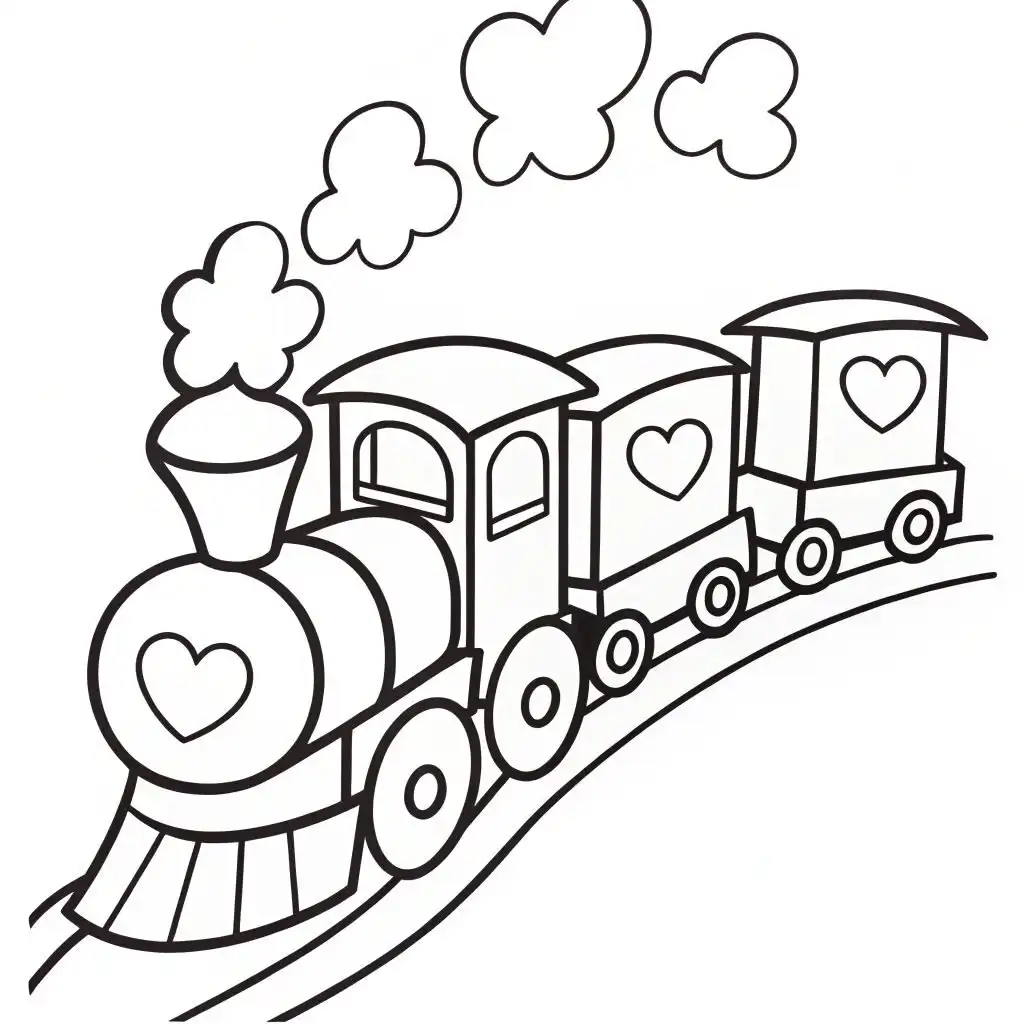
If you want how to draw a train easy step by step for kids, beginners, or a warmup page, this is where I start. This approach is inspired by the breakdown on Easy Drawing Guides.
Step 1: Lay out four wheels
I begin with circles because they are friendly and forgiving.
- Draw two small circles for the front wheels
- Draw two larger circles behind them for the back wheels
I keep the small circles closer together and the large ones slightly farther back.
Pro tip: I lightly draw a horizontal guideline so all four wheels sit on the same “track.”
Step 2: Connect the wheels with short lines
Using straight lines, I:
- Connect the top of the two front wheels
- Connect the top of the two back wheels
- Optionally add a line between the front and back sets
Right away, it starts to look like a simple wheelbase.
Step 3: Build the cab with straight lines
Above the small front wheels, I:
- Draw a square or tall rectangle for the cab
- Add a flat roof line on top
This matches what Easy Drawing Guides suggests, keeping the cab shape clear and easy.
Step 4: Shape the engine section
Above the larger wheels, I sketch an irregular shape for the engine body:
- A rectangle or slightly slanted box
- A simple roof that can be flat or gently curved
Think blocky and bold, not precise and technical.
Step 5: Add the cowcatcher and smokestack
To sell the train look, I add the classic front pieces:
- Cowcatcher: an irregular trapezoid in front of the front wheels
- Smokestack: a tall, uneven shape like a rough heptagon on top of the engine
Both of these are called out in the Easy Drawing Guides tutorial and instantly make the train recognizable.
Step 6: Windows, lines, and rods
In this final cartoon pass, I:
- Draw rectangular or square windows in the cab
- Add small rectangles or lines on the engine body
- Connect the wheels with thin rods and tiny circles to hint at couplings
These simple details match the suggestions from Easy Drawing Guides and give movement to the design.
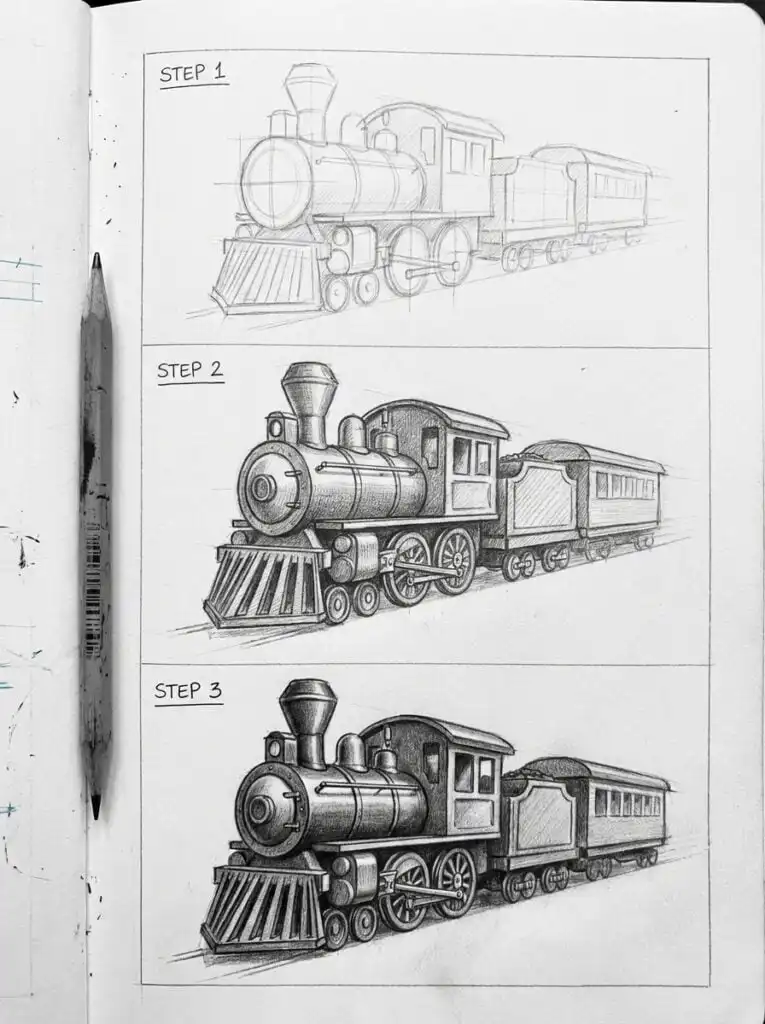
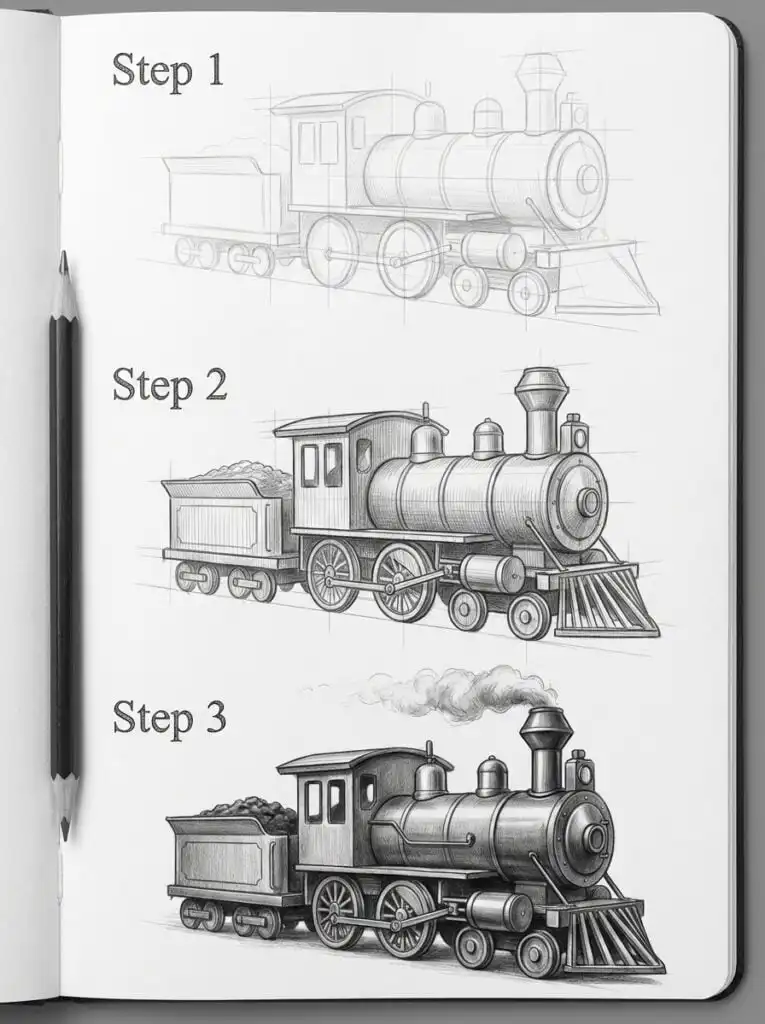
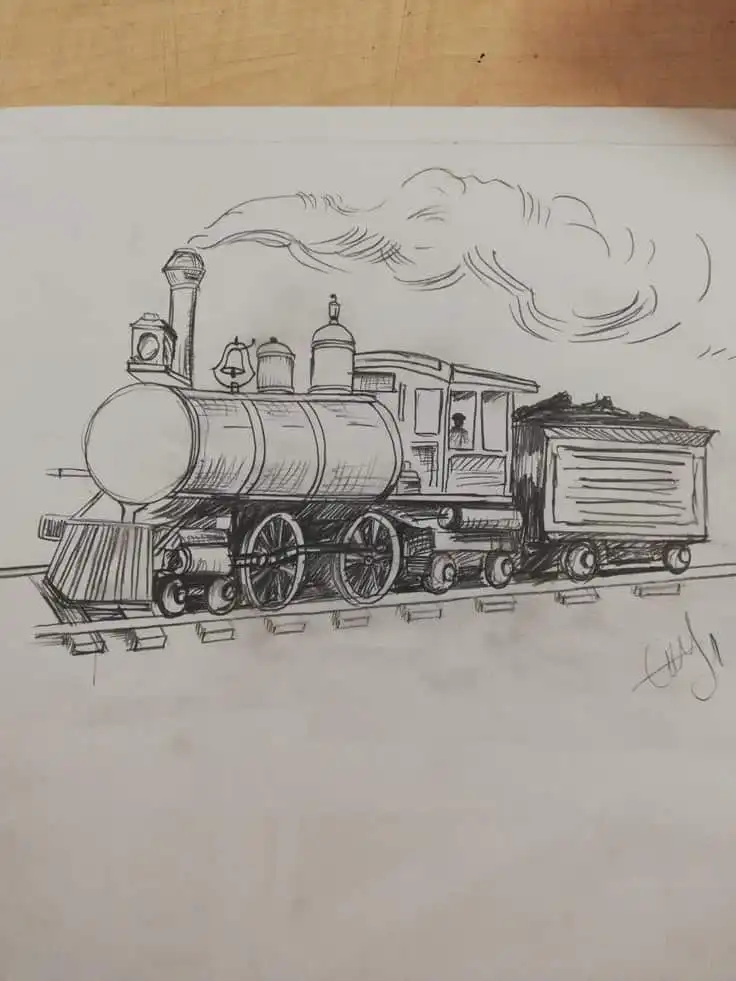
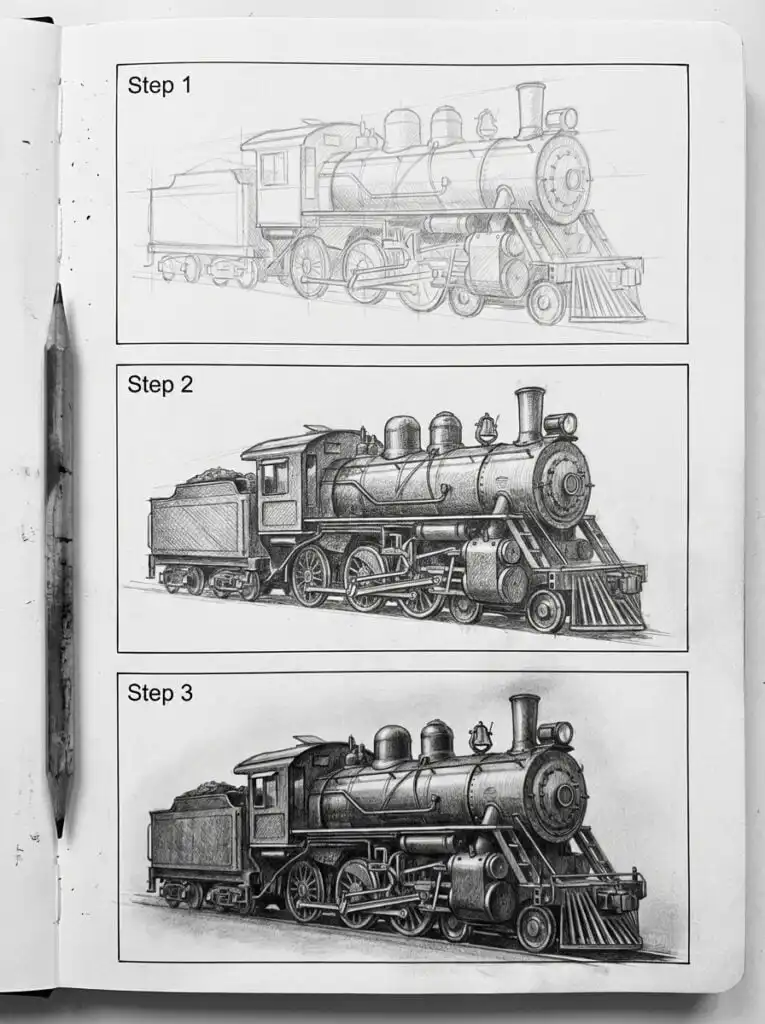
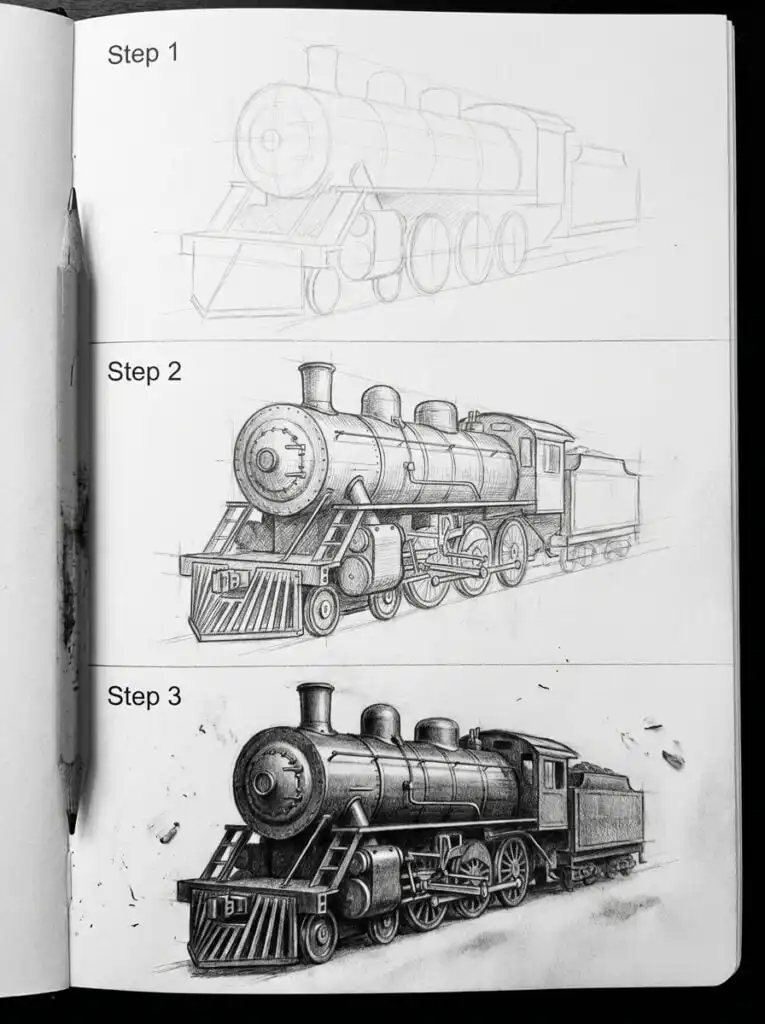
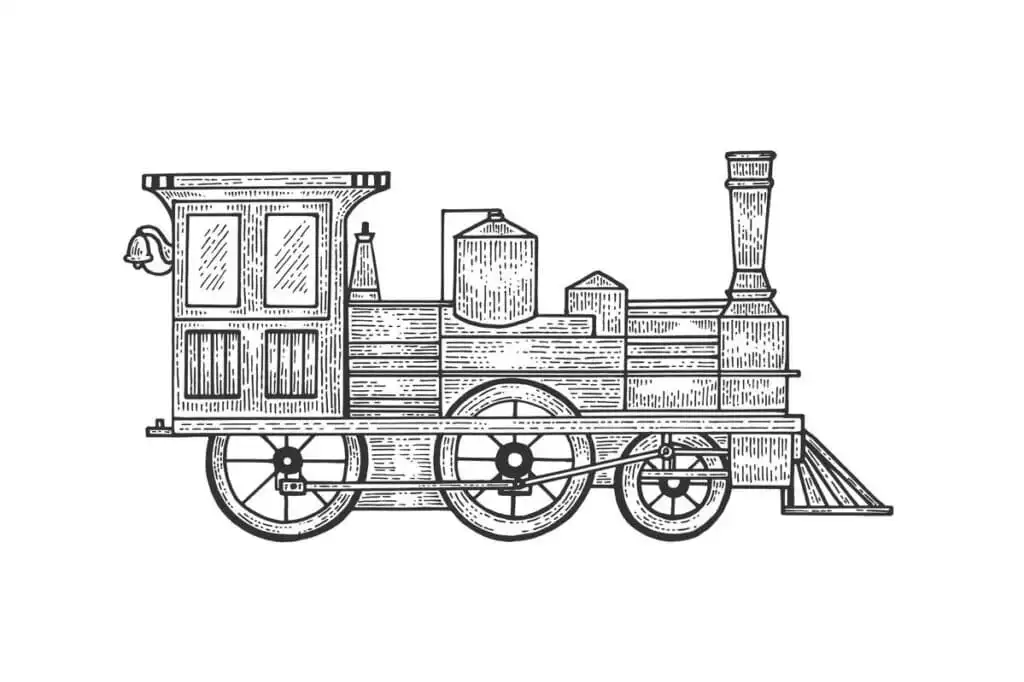
Method 2: Classic locomotive from basic shapes
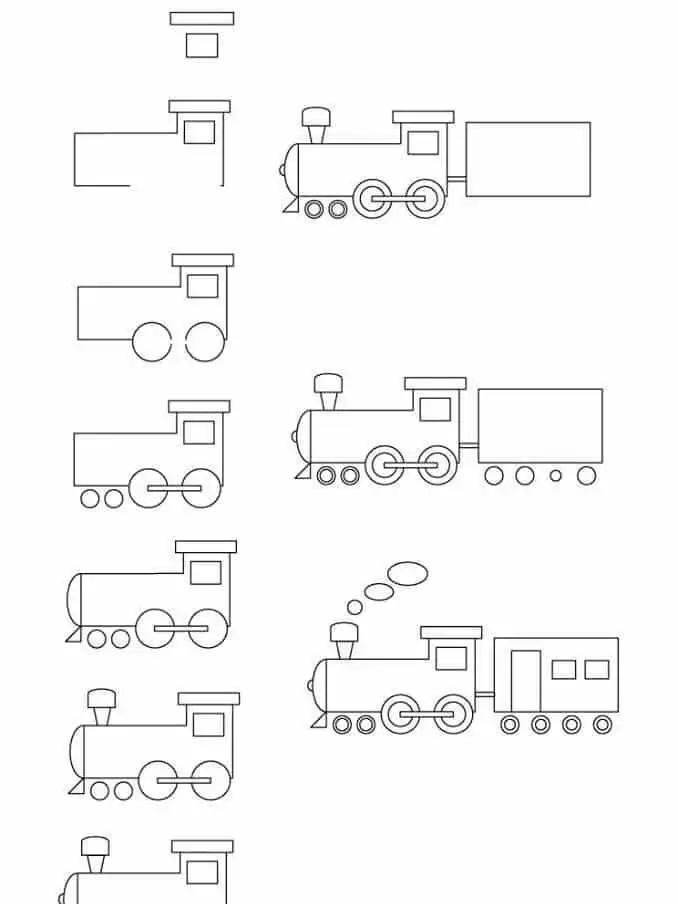
If I want something a bit more grounded than a simple cartoon, I follow a squares and circles approach similar to Let’s Draw That.
Step 1: Draw the cabin as a big square
I start on the left and draw a large square or tall rectangle. This is the driver’s cabin. I make it big because it anchors the whole locomotive.
Step 2: Add the boiler as a rectangle
In front of the cabin, I:
- Draw a long horizontal rectangle for the boiler
- Keep its height a bit lower than the cabin
Now I already have that classic steam locomotive silhouette in blocks.
Step 3: Place the main wheels
Under the boiler and cabin, I do:
- One large rear wheel under the back part of the boiler or under the cabin
- One or two smaller wheels toward the front
Let’s Draw That focuses on a large rear driving wheel with smaller front wheels, which mimics real locomotive proportions.
Step 4: Sketch the cowcatcher and front details
In front of the small wheels, I:
- Draw a triangle or trapezoid for the cowcatcher
- Add a small front buffer or plate above it
This keeps it in the classic steam era.
Step 5: Add cylinders and chimney
Now I layer in recognizable parts from the research:
- Steam cylinder: a small horizontal cylinder near the front wheels
- Smoke box chimney: a vertical cylinder or slightly flared shape on top
- Safety valve: a small bump or dome near the chimney
These match the extra elements mentioned in the Let’s Draw That guide and immediately make things feel more mechanical.
Step 6: Windows and cabin details
In the cabin square, I:
- Draw a rectangular window
- Optionally divide it with a cross to hint at panes
- Add a door outline if I want more realism
Even with this level of detail, I still keep lines straight and simple.
Method 3: Cylinder-based “wikiHow” train
Another popular how to draw a train easy step by step method starts with a cylinder. This is the approach used in the widely visited train tutorial on wikiHow, which has been accessed hundreds of thousands of times as of 2025.
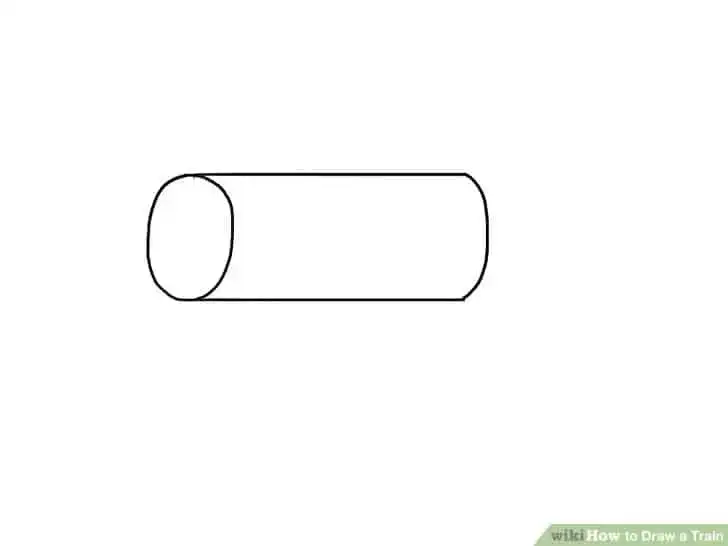
Step 1: Draw a horizontal cylinder
I begin with:
- A long horizontal oval for the front
- Two parallel lines extending back
- A matching curved line at the back
This becomes the boiler and main body of the locomotive, as described in the wikiHow guide.
Step 2: Add the rear rectangle and trapezoid
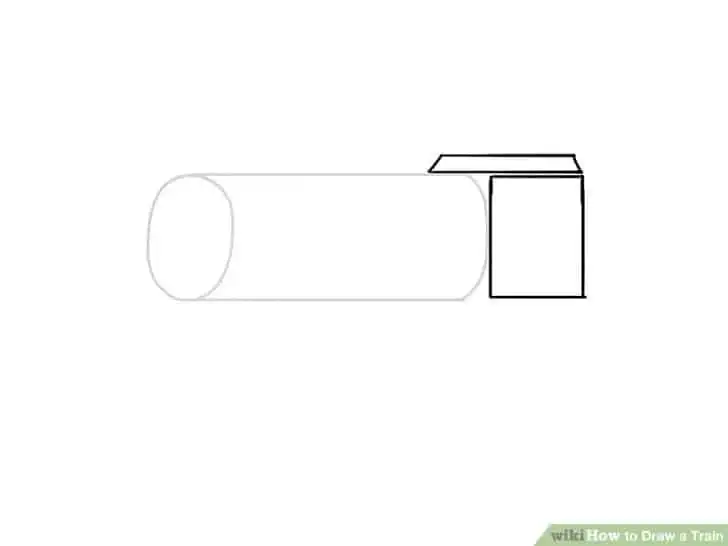
At the back of the cylinder I:
- Attach a rectangle for the cab base
- Draw a trapezoid on top for the roof
This stacks nicely onto the cylinder and forms a clear rear cabin.
Step 3: Stack three rectangles on the boiler
On top of the cylinder, I draw:
- A front rectangle that will hold the funnel
- One or two more rectangles behind it
According to wikiHow, this trio gives the boiler top more structure and supports details like the smokestack.
Step 4: Add a front funnel or smokestack
On that front rectangle, I sketch:
- A cone or pipe shape for the funnel
- Slight flare at the top if I want more character
Now the train looks ready to puff smoke.
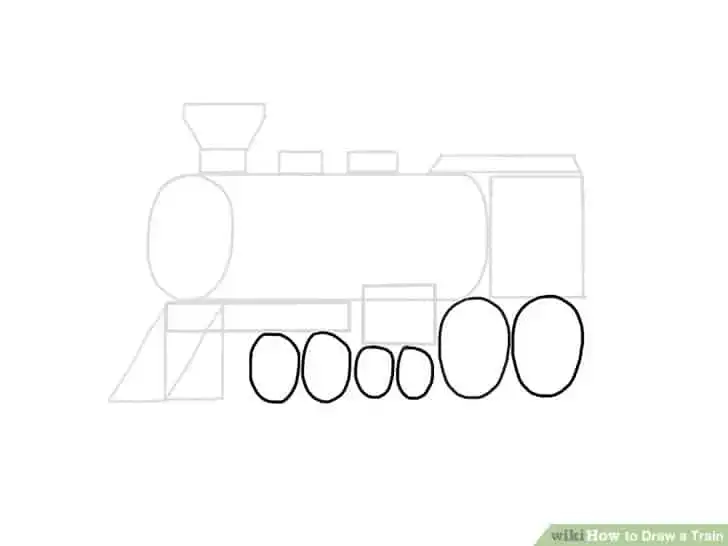
Step 5: Place six ovals for wheels
Under the cylinder, I follow the wheel layout from wikiHow:
- Draw six ovals in a row
- Keep the largest oval at the very back
- Make the others slightly smaller as they move forward
I connect them with a long horizontal line to suggest the wheel assembly.
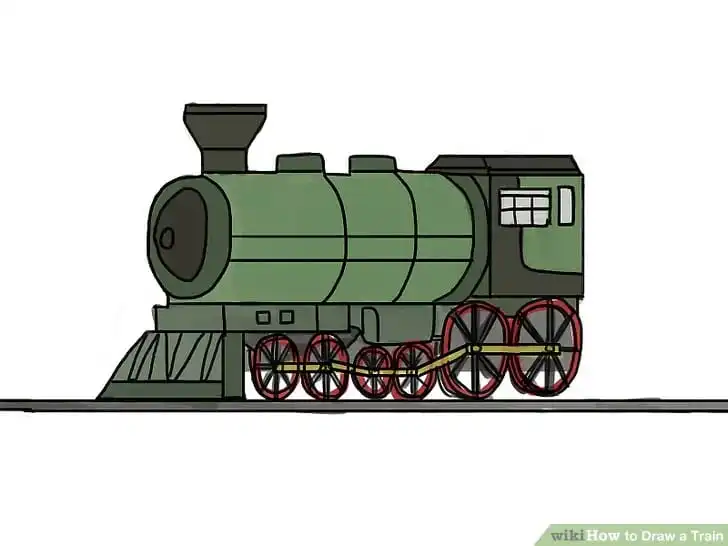
Step 6: Details like spokes and panels
If I want to push this train a little further without making it stressful, I:
- Add simple spokes inside the wheel ovals
- Draw a few horizontal lines to hint at panels on the boiler
- Suggest a small front bumper or cowcatcher
The wikiHow tutorial leaves room to keep it simple or go more detailed, so I stop when it still feels fun for me.
Method 4: Longer trains with cars and wagons
Once I am comfortable with a single locomotive, I like to extend it into a full train, using ideas from Let’s Draw That. This is where the drawing starts to feel like a complete scene.
Step 1: Draw the locomotive using any method above
I pick one of the three locomotive methods I already covered:
- Cartoon wheels approach
- Square and rectangular locomotive
- Cylinder-based wikiHow style
I keep my locomotive slightly to the left so there is space to add cars behind it.
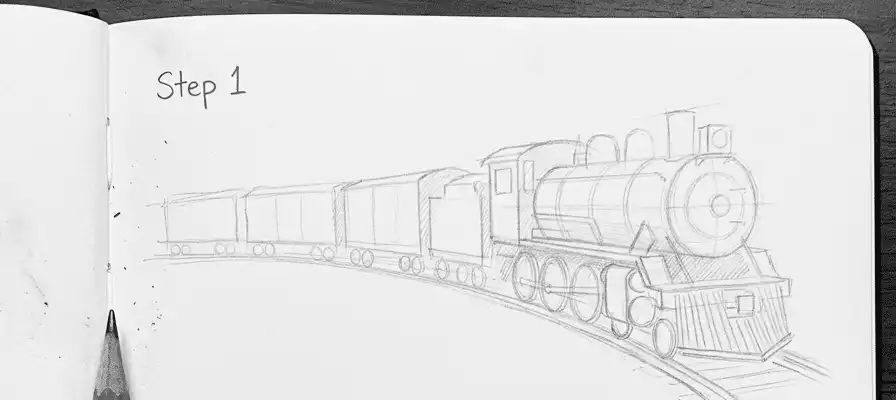
Step 2: Add a tender coal car
Directly behind the locomotive, I draw:
- A long rectangle for the tender body
- A low rectangle on top to hold coal
- Four or six small wheels underneath
Let’s Draw That breaks this down with simple shapes, focusing on outlines and wheels first.
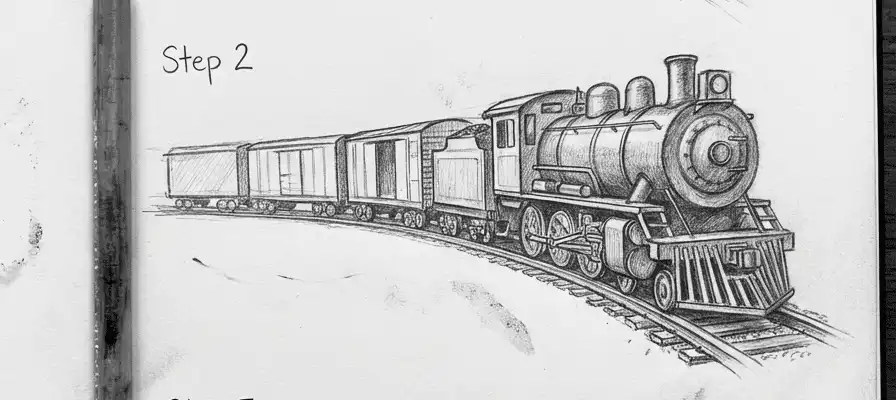
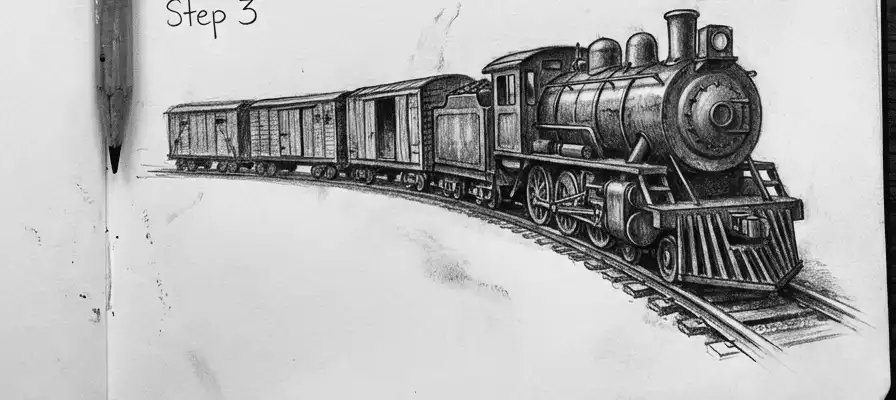
Step 3: Sketch a passenger wagon
Behind the tender I:
- Draw another long rectangle, taller this time
- Add a gently curved or flat roof
- Place wheels evenly spaced underneath
I add windows as simple squares or elongated rectangles along the side. Doors can be thin rectangles at each end.
Step 4: Add bumpers and chains between cars
To join everything together, I use ideas from the same tutorial:
- Small rectangles or circles at each car end to act as bumpers
- Short curved lines or tiny chain shapes between them
The research notes that couplings can be suggested or simplified, so I do not obsess over getting the mechanics accurate.
Step 5: Decide how long to make the train
If I want a longer cargo train, I just keep repeating:
- Rectangle body
- Roof line
- Wheels and windows or panels
I stop when the page starts to feel crowded.
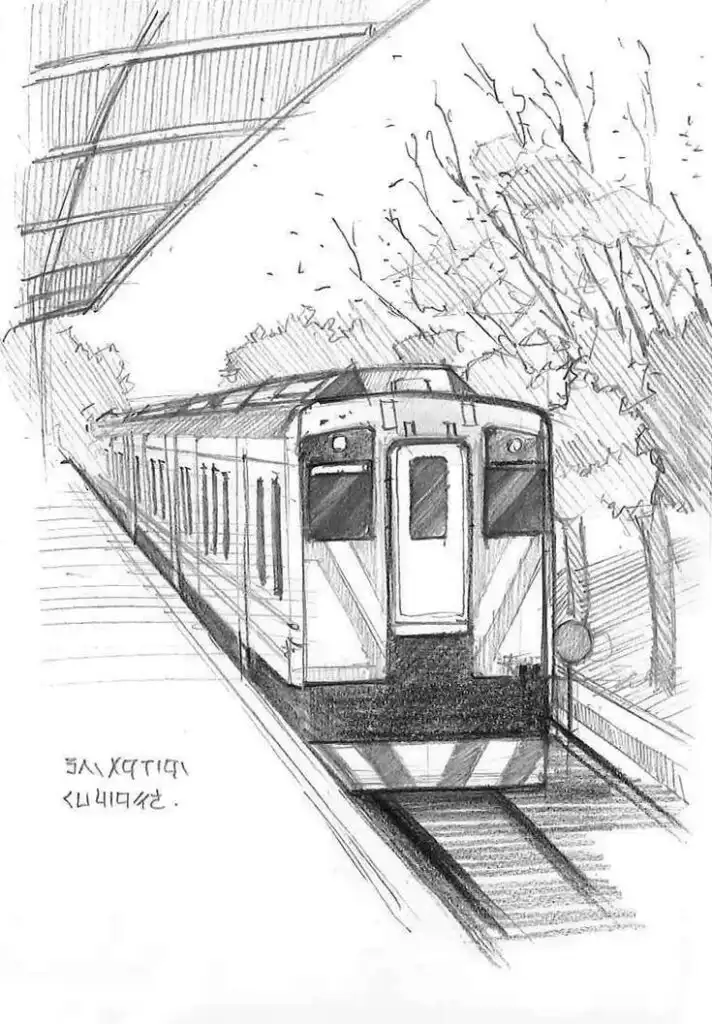
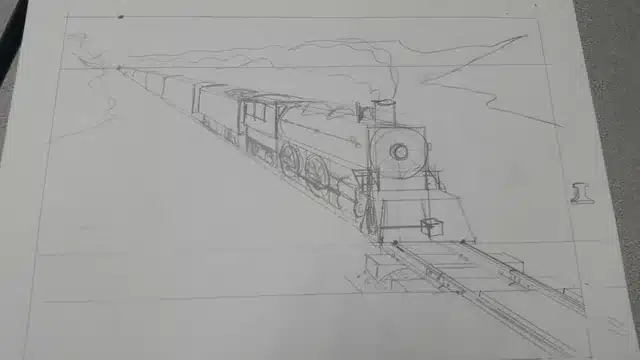
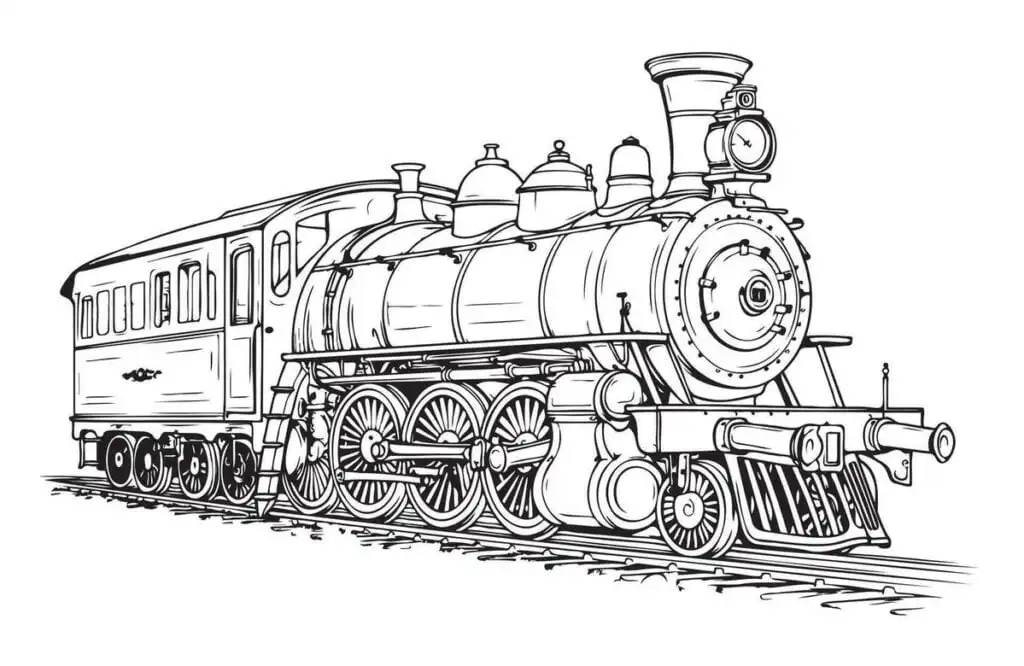
Method 5: One-point perspective train for depth
If I am ready to give my train some drama, I use one-point perspective, following concepts from DrawingHowToDraw. This sounds fancy, but it is basically “all lines aim at one magic dot.”
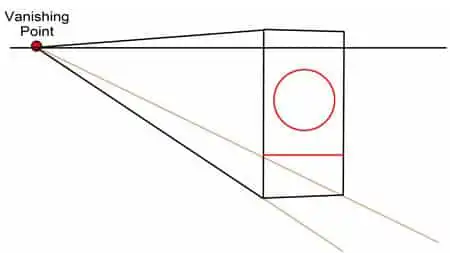
Step 1: Draw a horizon and vanishing point
On my page, I:
- Lightly draw a horizontal line across the paper
- Place a small dot on this line, usually on the left side
This dot is the vanishing point. Every track and side edge of the train will aim there.
Step 2: Build the front of the train
Closer to the viewer, I draw:
- A large rectangle for the front of the engine
- Wheels underneath using partial circles or ovals
This front shape will be the biggest and clearest part of the train.
Step 3: Pull guidelines to the vanishing point
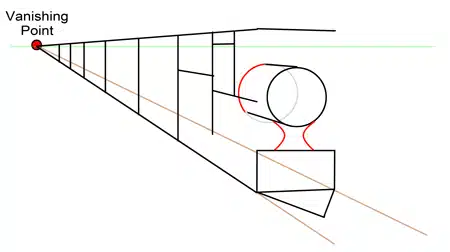
From the top and bottom corners of the front rectangle, I:
- Draw straight, light lines that converge at the vanishing point
These act like rails guiding how long and narrow the sides of the train become.
Step 4: Define the train’s length
I decide where I want the side of the train to stop. At that spot I:
- Draw a new vertical line between the top and bottom guidelines
- That line becomes the back edge of the engine or the first car
Now I have a 3D block that feels like it is heading into the distance.
Step 5: Add additional cars along the perspective lines
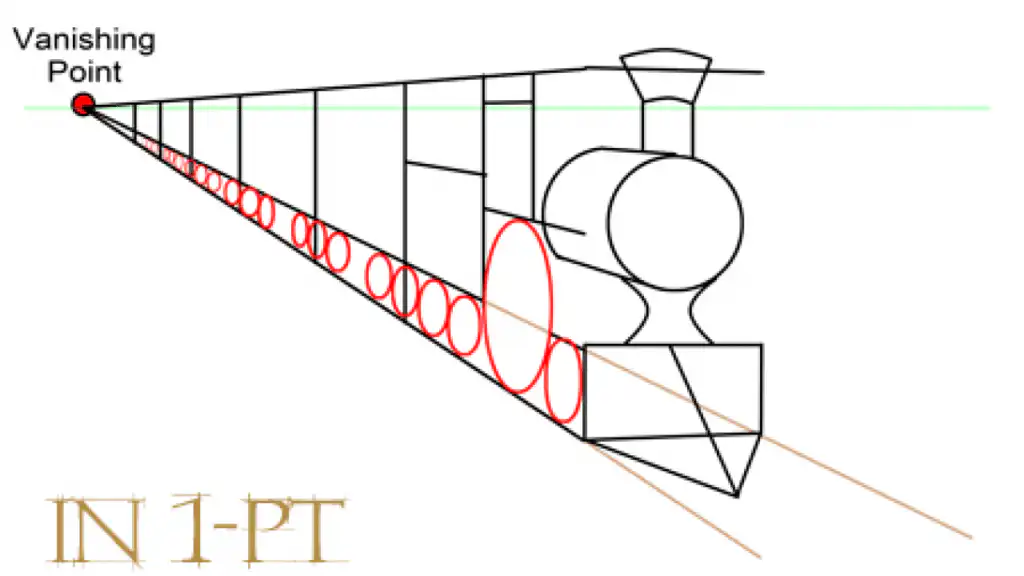
Along the same guidelines, I:
- Add more vertical lines to mark each new car
- Keep spacing between these lines smaller as they approach the vanishing point
Objects naturally shrink and appear closer together as they recede into the distance.
The DrawingHowToDraw tutorial explains this idea using examples like a balloon disappearing into the sky, to show how perspective creates depth on a flat page.
Easy ways to add details without overwhelm
Details make your train feel alive, but they are also where stress creeps in. I borrow simple detail rules from all four sources so I can dress up my train without freezing.
Detail 1: Wheel spokes and rods
From wikiHow and Easy Drawing Guides, I like to:
- Add 3 to 6 simple lines radiating from the center of each large wheel
- Connect wheels with one thin bar or rod
- Use small circles where the rod meets the wheel
No one is counting spokes. A few lines already feel mechanical.
Detail 2: Panels, doors, and vents
Inspired by Let’s Draw That, I:
- Use rectangles for doors on passenger cars
- Sketch thin horizontal lines for vents on the tender
- Add a single vertical line to split a cabin window
These are fast, low effort, and add a lot of depth.
Detail 3: Smoke and steam
To get that storybook steam vibe, I:
- Draw bumpy cloud shapes rising from the smokestack
- Make each puff larger as it moves up, or the opposite, depending on the effect
- Keep lines loose and round, not jagged
This simple trick from Easy Drawing Guides works for both cartoon and more realistic trains.
Detail 4: Simple shading
When I want to go one step beyond plain outlines:
- I choose one direction for light, usually from the top left
- Shade the bottom halves of the wheels and the underside of the boiler
- Keep shading soft and even instead of fully rendered
Subtle shading can make a basic shape train look surprisingly polished.
Common mistakes I watch for and fix
Even with “easy step-by-step” guides, I still bump into the same few problems. Here is how I catch and correct them early.
Misaligned wheels
If the wheels look like they are floating:
- I draw a light baseline under the whole train
- I make sure each wheel touches that line
- I adjust their sizes so the largest wheels are at the back for classic locomotives, as suggested in the wikiHow guide
Squashed cabins
If the cabin looks too tiny or short:
- I compare cabin height to boiler height
- I usually make the cabin slightly taller than the boiler
- I widen the cabin if needed, so it feels like a real space someone could stand in
Overcrowded details
If I feel myself getting frustrated:
- I erase half the details
- I focus on just windows, smokestacks, and wheels
- I save vents, rivets, and extra lines for a future drawing
Perspective that feels “off.”
If my one-point perspective train looks like it is bending:
- I double-check that all side edges aim at the exact same vanishing point
- I redraw any lines that drift away from that dot
- I keep the front face of the train as a clean rectangle with straight vertical and horizontal lines
This is exactly what the DrawingHowToDraw tutorial drills in, and it works.
Quick practice plan you can actually finish
To make how to draw a train easy step by step feel like a habit instead of a one-time doodle, I follow a mini practice sprint.
Day 1: Circles and rectangles only
- Fill one page with wheel sets and simple rectangles for bodies
- No smokestacks, no details, just shapes
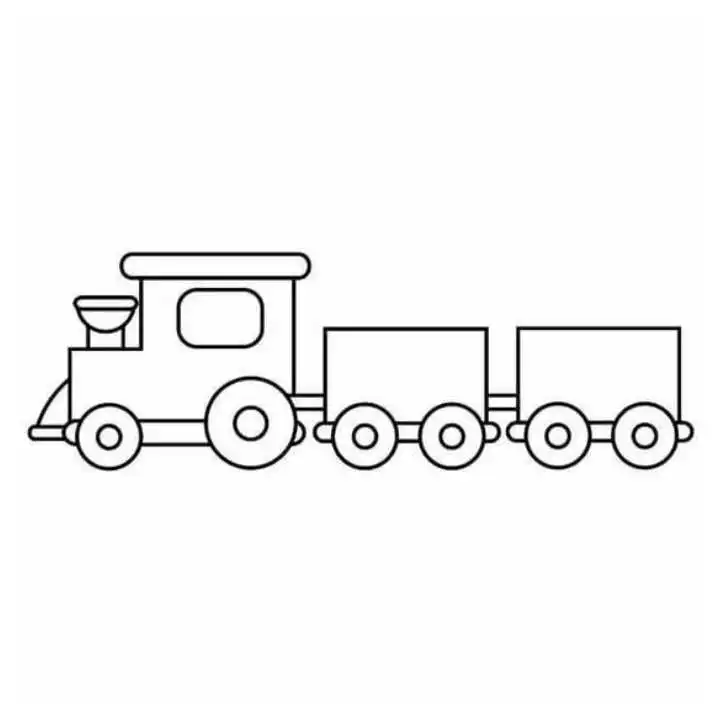
Day 2: Cartoon train warmups
- Draw three small cartoon trains using the Method 1 steps
- Try different window shapes and smoke puffs
Day 3: Classic locomotive block in
- Use Method 2 or 3 to build a more realistic engine
- Focus on keeping wheels aligned and cabin proportions right
Day 4: Add a tender and one wagon
- Extend your Day 3 train with a tender and at least one passenger car
- Use rectangles and simple windows as in Method 4
Day 5: First one-point perspective attempt
- Follow Method 5 and the ideas from DrawingHowToDraw
- Aim for a basic blocky train with tracks
Day 6: Details and shading play
- Take your favorite drawing from the week
- Add spokes, rods, windows, and soft shading
Day 7: Final “no stress” train
- Start a clean drawing from scratch using any method
- Keep it simple on purpose
- Stop before you feel tired, so your brain remembers drawing trains as fun
FAQs about drawing easy trains
1. What is the easiest way to draw a train for beginners?
For absolute beginners, I recommend the cartoon train approach from Method 1, based on Easy Drawing Guides. Start with four wheels, add a square cab, a simple engine shape, then a cowcatcher and smokestack. It is very forgiving and works well for kids or quick sketches.
2. How do I draw a train easily, step by step, but make it look more realistic?
Combine simple shapes from Method 2 or 3 with a little extra detail. Use a big square for the cabin, a rectangle or cylinder for the boiler, and sized wheels like in the wikiHow or Let’s Draw That tutorials. Then add basic details like a chimney, windows, and light shading. You still stay in the “easy” zone but the train feels closer to real life.
3. How can I draw a long train without it getting messy?
I draw the locomotive first, then repeat the same rectangle and wheel pattern for each car, just like the passenger wagon and tender guide in Let’s Draw That. I keep cars slightly smaller toward the back, and I join them with simple bumpers or small lines. Limiting myself to three or four cars keeps it from becoming cluttered.
4. How do I practice train perspective without getting confused?
Start with one-point perspective as the DrawingHowToDraw lesson explains. Draw a horizon line, pick one vanishing point, and aim all side edges of the train and tracks at that dot. Practice with simple boxes first, then turn them into train cars. Once that feels natural, adding windows, wheels, and smokestacks is much easier.
5. How can I keep drawing fun instead of stressful?
I keep my goals tiny. Some days I only sketch wheels. On other days, I copy a single step from a tutorial like wikiHow or draw just the front of a cartoon train. I allow messy first attempts and only clean up what I like. When in doubt, I drop back to the easiest cartoon version, add silly colors or smoke shapes, and remind myself that the whole point is to enjoy the ride, not to engineer a perfect machine on paper.
- 548shares
- Facebook0
- Pinterest548
- Twitter0
- Reddit0