My first wolf drawing looked like a dog someone had tried to make threatening by adding a menacing expression. The proportions were roughly right, the pose was readable, but the fundamental quality that makes a wolf look like a wolf rather than a German Shepherd with attitude — that specific combination of bulk, wildness, and controlled power — was completely absent. I’d drawn the fur as uniform short marks. I’d made the neck too thin. The muzzle tapered to a near-point instead of ending bluntly. And the tail was upright and curled, which is a domestic dog habit that a wolf never has.
- Wolf Anatomy: The Proportions That Define the Species
- Fur Direction: The Technique That Separates Wolf Drawings from Generic Furry Shapes
- How to Draw a Wolf: Seven-Step Construction
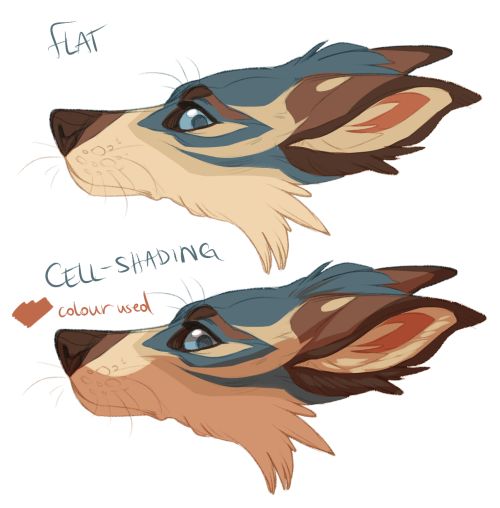
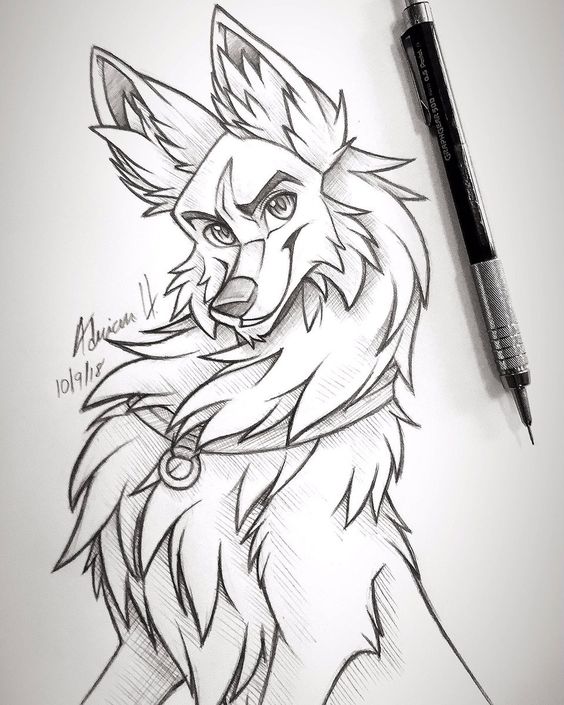
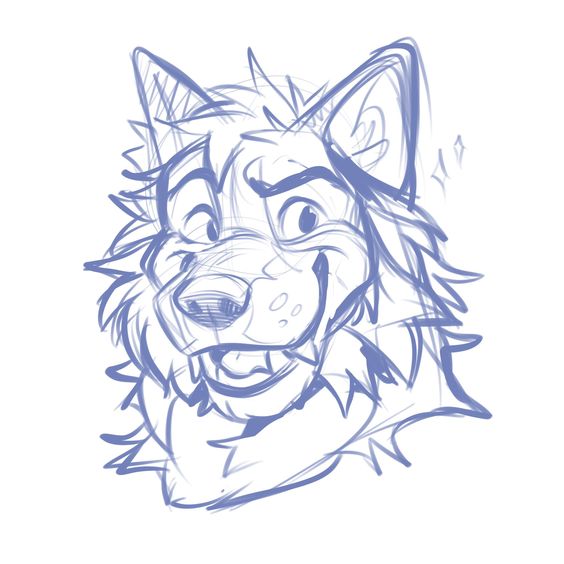
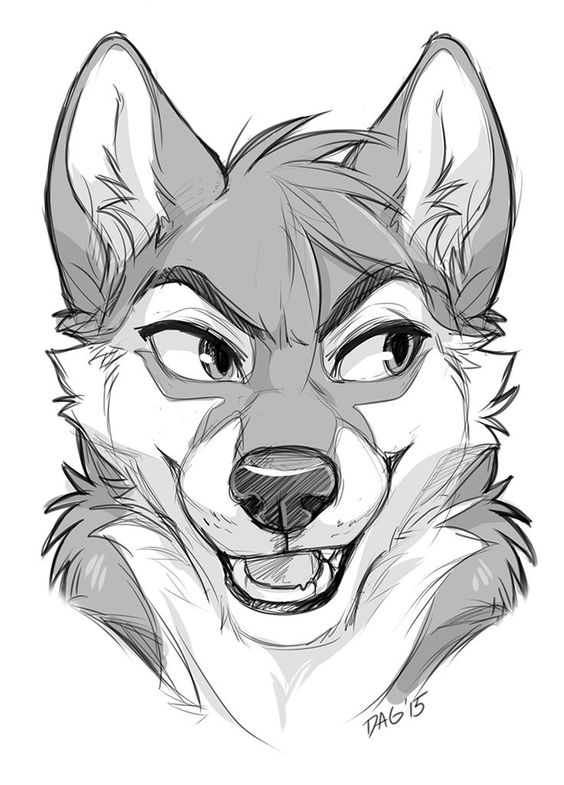
- Four Wolf Drawing Styles
- Five Common Wolf Drawing Mistakes and Their Corrections
- Materials for Wolf Drawing
- FAQ: Wolf Drawing
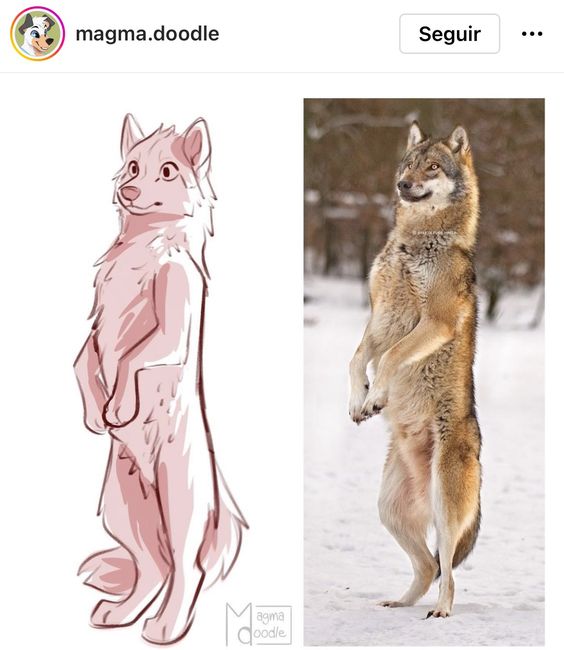
What I’d failed to understand was that a wolf drawing isn’t just a dog drawing with different reference material. Wolves and domestic dogs share anatomy but differ in proportion in ways that matter enormously to how they read visually. The neck of a wolf is roughly as wide as its head — heavily muscled for bringing down prey.
The muzzle is longer and more blunt-ended than most dogs. The ears are larger and more widely spaced. The chest is deep and the body is leaner than it looks through the coat. The tail hangs straight or at most horizontally — a characteristic that took me embarrassingly long to notice because every wolf image I’d absorbed was a slightly domesticated cartoon version.
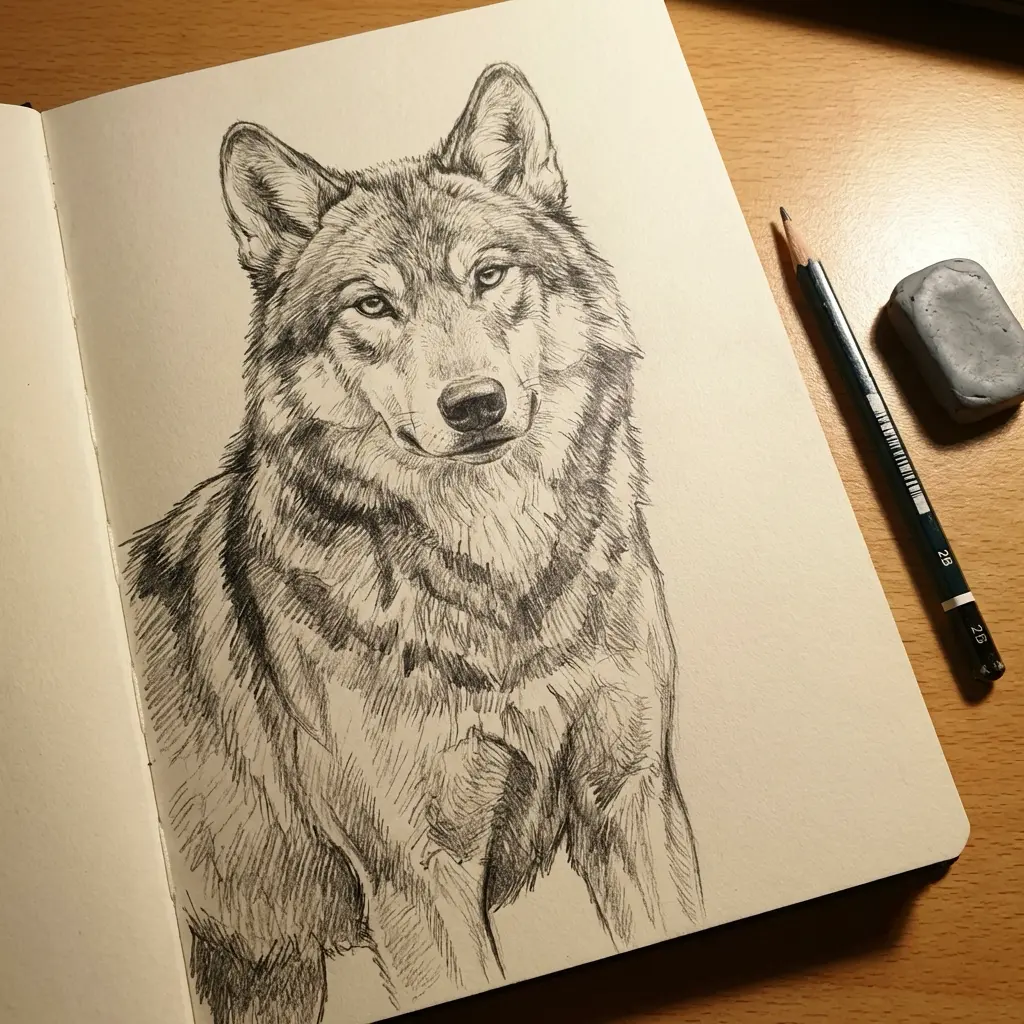
This guide covers what I should have understood before that first attempt: the specific anatomical proportions that define wolves, the directional fur technique that separates a convincing wolf from a generic furry shape, the step-by-step construction method, four style variations with their specific techniques, and the five most consistent wolf drawing errors with their corrections.
Whether you’re starting a wolf drawing for the first time or trying to understand why your existing wolf drawings read as slightly off, the answers are in the anatomy.
Wolf Anatomy: The Proportions That Define the Species
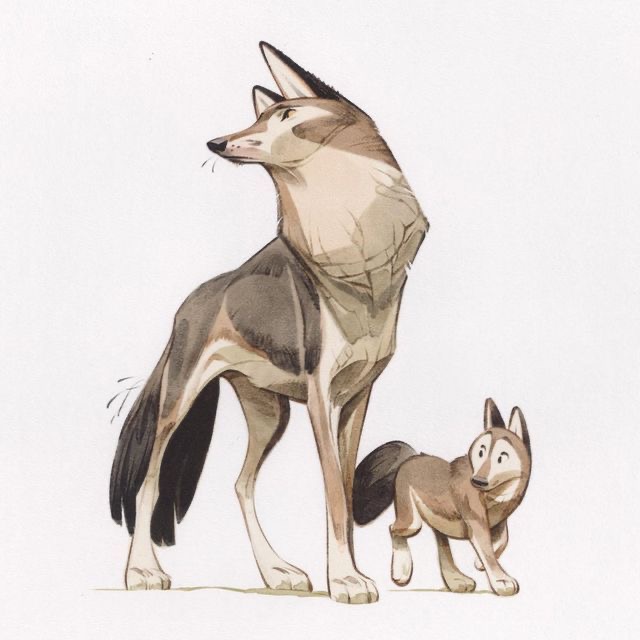
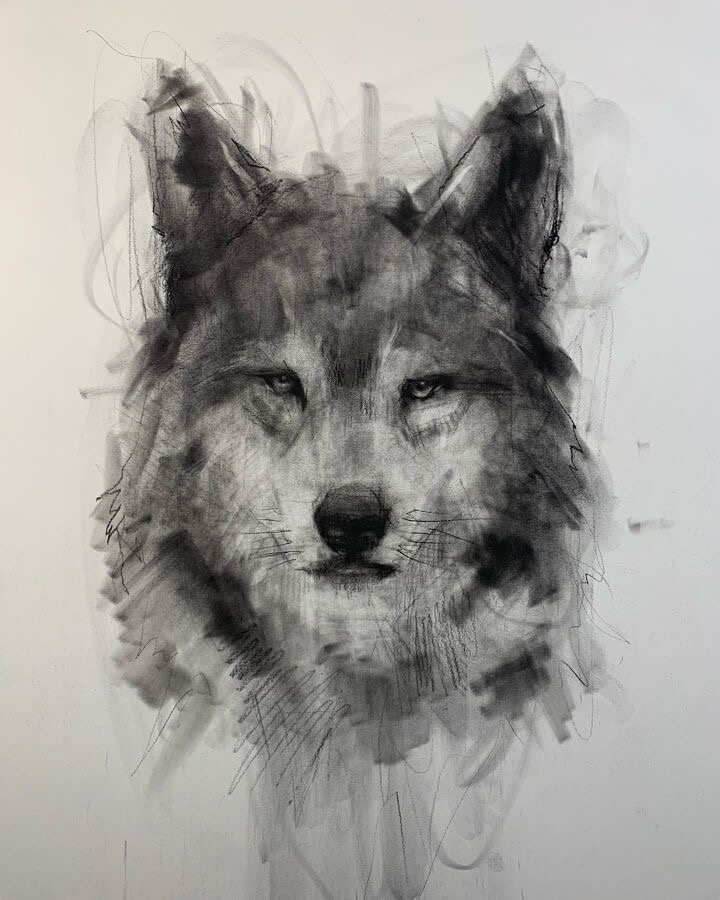
Every convincing wolf drawing is built on anatomical understanding, not just visual copying. When you understand why wolves look the way they do — what the structural logic behind each proportion is — you can draw them from any angle, in any pose, without needing a specific reference photograph for every composition.
The Skull and Muzzle
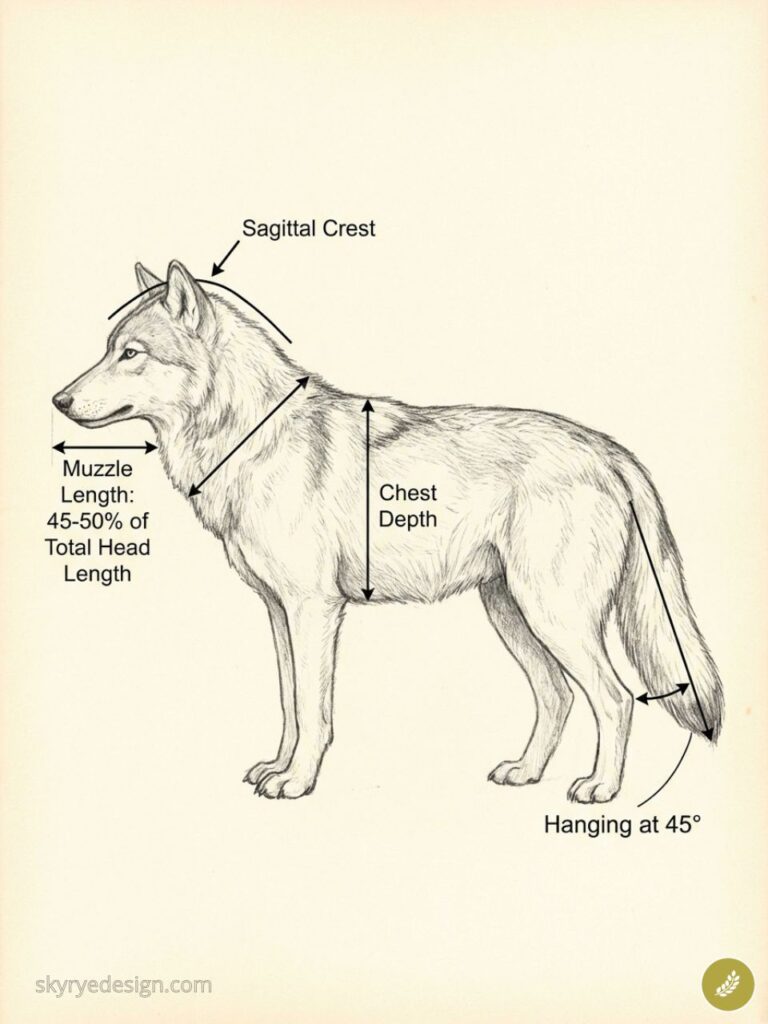
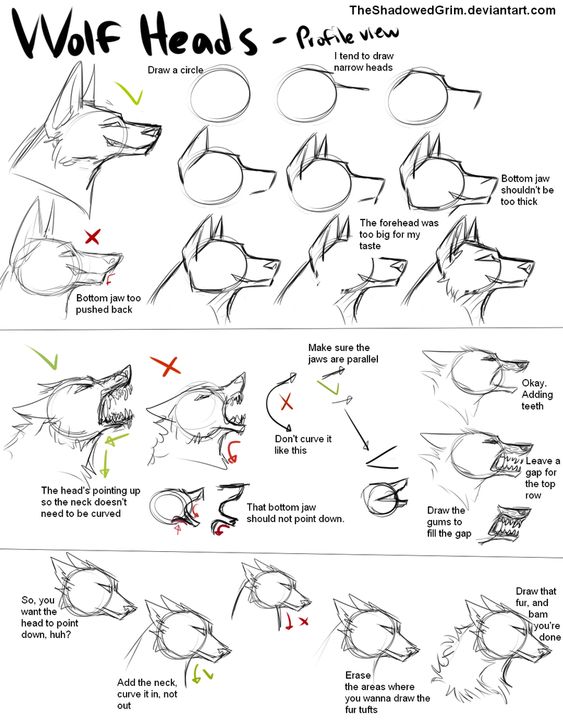
The wolf skull is longer and broader than any domestic dog of equivalent body size, with a pronounced sagittal crest (the ridge running along the top of the skull) that provides anchor points for the powerful jaw muscles. In drawing, this means the top of the wolf’s head has a slight central ridge visible in three-quarter and profile views — not a smooth dome. The muzzle is long, occupying approximately 45-50% of the total head length, and it ends bluntly rather than tapering to a point. The common mistake is making the muzzle too short and too pointed — this produces a foxlike or dog-like read rather than a wolf.
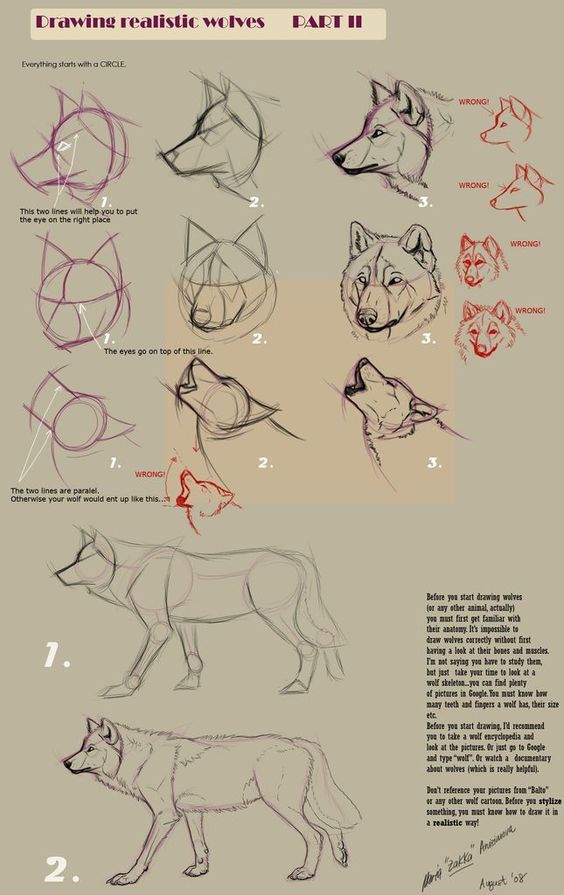
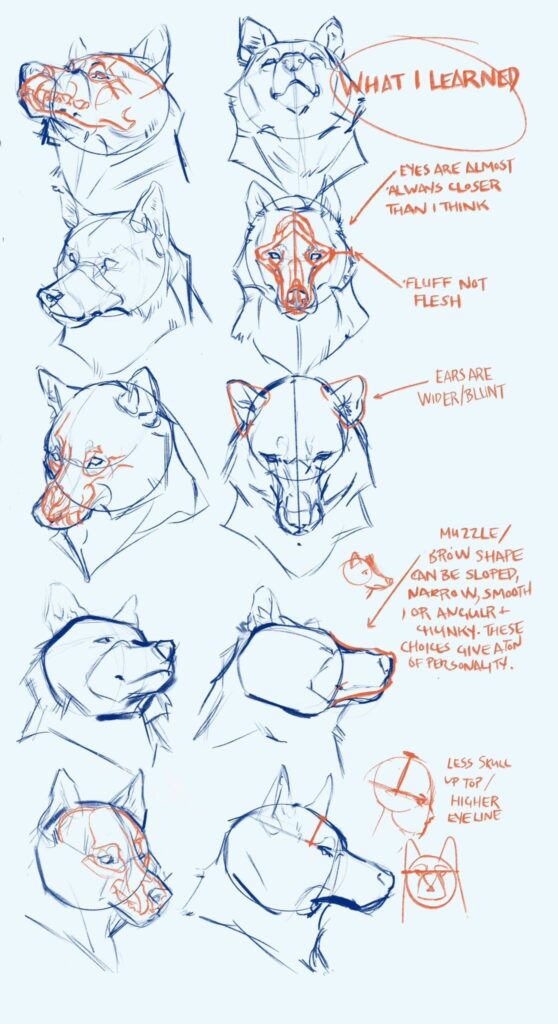
The nose is notably large — a wolf’s nose is approximately 100 times more sensitive than a human’s, and its size reflects this. In drawing, the nose is a substantial dark mass at the muzzle tip, not a small button. The lip line runs fairly straight from the nose corner to where the jaw opens — wolves don’t have the pronounced flews (hanging lip) of many domestic breeds. The jaw is heavy and square at the hinge, visible as a mass behind and below the ear.
Neck and Shoulder Mass
This is the single most important proportion to get right. A wolf’s neck is approximately as wide as its head at the base, tapering very little toward the skull. This is dramatically different from most domestic dogs and from the wolf drawings most artists produce from imagination. The thick neck is muscular — the trapezius and sternocleidomastoid muscles that allow wolves to wrestle prey to the ground are large and clearly defined under the coat.
The shoulder blades (scapulae) are prominent and mobile, creating the distinctive shoulder hump visible from the side when a wolf moves with its head lowered. In a standing pose, the shoulders sit at approximately the same height as the base of the neck — not lower. The chest is deep, dropping to approximately the elbow level, which is lower than most beginners draw it.
Body Proportions and the Tail
An adult gray wolf (Canis lupus) stands approximately 66-81cm at the shoulder and measures 105-160cm from nose to tail base. The body is lean relative to the coat’s apparent bulk — a wet wolf looks dramatically smaller than a dry one. In drawing, this means the body should read as athletic rather than heavy: deep-chested, narrow-waisted, long-legged.
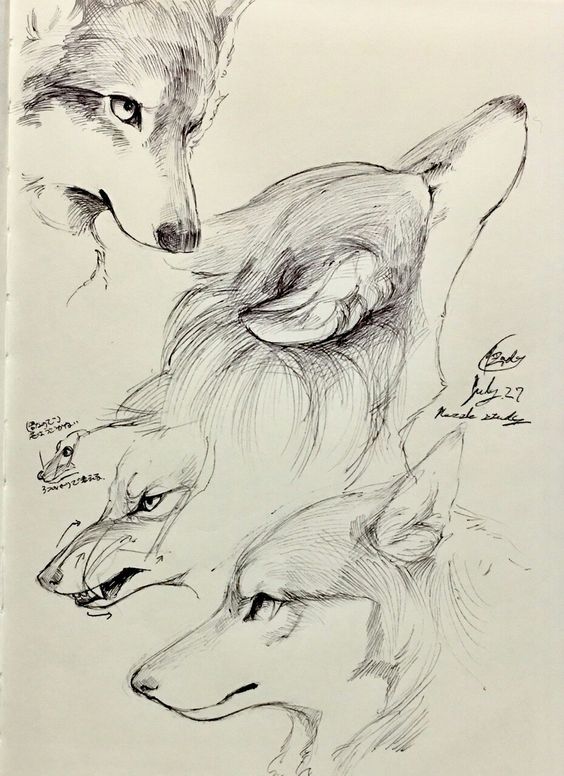
The tail is always a giveaway for artists who’ve absorbed too much cartoon wolf imagery. Wolf tails hang at approximately 45 degrees downward when relaxed, or horizontally when alert. They never curl over the back in normal posture — that is an exclusively domestic dog characteristic. A curled or upright tail in a wolf drawing immediately reads as ‘large dog’ to any viewer who knows the difference. The tail is bushy and relatively straight, with a dark tip marking on many subspecies.
✏ Drawing note: Before drawing any wolf, spend 5 minutes with a reference photograph specifically noting: (1) neck width relative to head width, (2) muzzle length relative to total head length, (3) ear size and spacing, (4) tail position and angle. These four proportion checks, confirmed from reference before construction begins, prevent the most common errors that make wolf drawings read as generic rather than specific to the species.
Fur Direction: The Technique That Separates Wolf Drawings from Generic Furry Shapes
Wolf fur is not a texture applied over a shape — it is a structural system that follows the underlying anatomy. The direction of fur growth is determined by the body’s form, and when you draw fur strokes that contradict the underlying structure, the result reads as generic fuzz rather than actual fur on an actual animal.
Understanding Coat Layers
Wolves have a double coat: a dense, soft undercoat beneath longer, coarser guard hairs. The guard hairs on the back, shoulders, and tail base are approximately 60-80mm long in winter coat; the undercoat is much shorter and finer. In drawing, this layered structure is visible as the longer guard hairs overlapping the shorter undercoat at fur boundaries — most clearly visible at the chest ruff, the shoulder mane, and along the back.
The Seven Directional Zones
Wolf fur grows in seven primary direction zones, each following the body’s contour. Understanding these zones is the key to drawing fur that reads as structurally correct rather than randomly textured. The zones and their directions:
- Crown and top of head: fur lies flat backward toward the neck. Do not add fur in random directions here — it should all indicate backward movement.
- Forehead and brow ridge: fur runs slightly forward and downward, creating the stern brow quality characteristic of wolves.
- Cheeks and ruff: fur fans outward from the face, growing longer toward the shoulder. The ruff gives wolves their apparent breadth of face.
- Chest and throat: fur flows downward and slightly outward from the chin, fanning at the chest. The lighter-coloured chest fur is typically longer and softer-looking than back fur.
- Back and flanks: fur lies flat toward the tail, following the spine line. The midback has a subtle parting line where fur angles to each side.
- Legs: fur lies downward along the leg direction, shorter and tighter than body fur.
- Tail: fur radiates outward from the tail spine, creating a bushy cylinder. The very tip is often darker and the underside lighter.
Stroke Technique for Wolf Fur
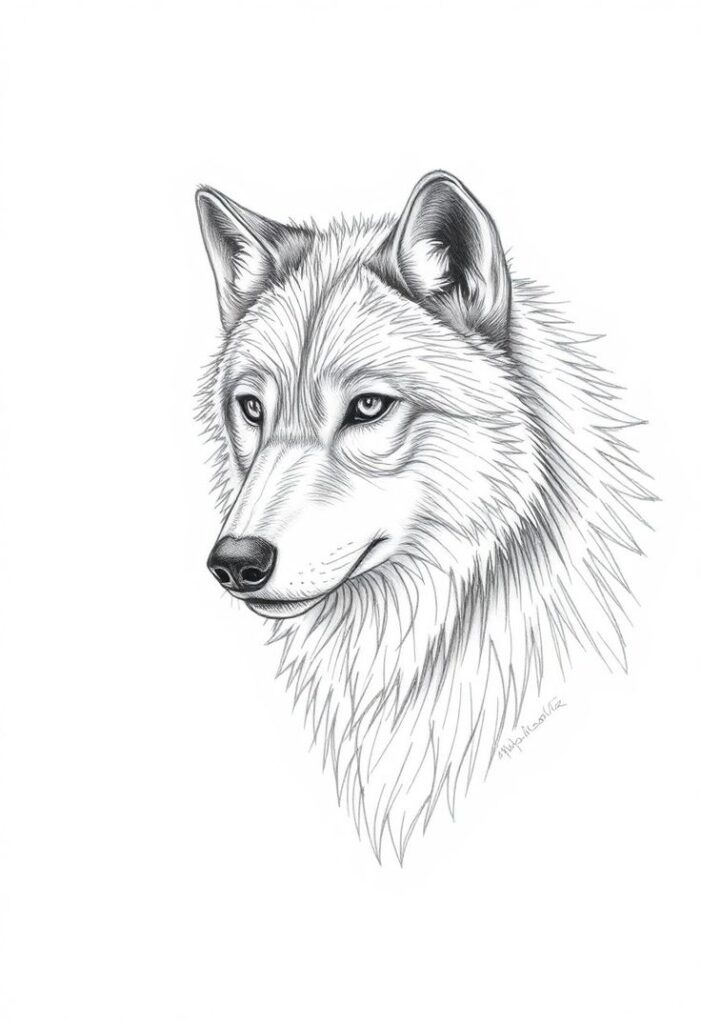
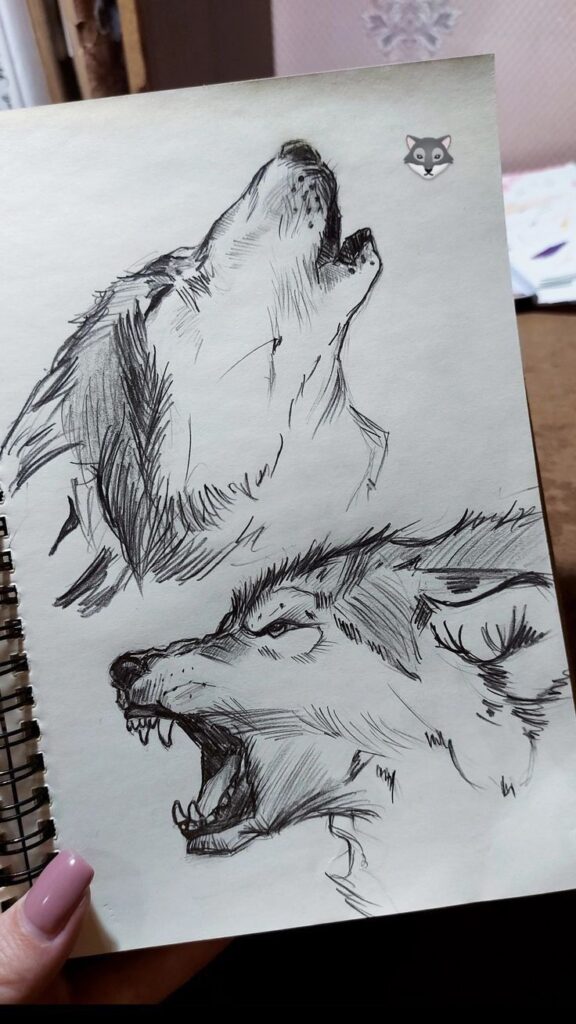
The stroke that most effectively creates wolf fur in pencil: a quick, slightly curved mark that tapers at the tip, pressed harder at the root (where the fur emerges from the body) and lighter at the tip (where it overlaps with adjacent fur). Apply these marks in layers: establish the first layer following the primary fur direction, then add a second layer at a slightly different angle to suggest the overlapping of individual hairs. Leave the lightest areas completely unmarked — in high-contrast wolf drawings, the highlights on the nose, above the eye, and along the spine are as important as the darkest shadows.
✏ Drawing note: The kneaded eraser is a fur drawing tool, not just a correction tool. After applying a base layer of 2B fur strokes, press the kneaded eraser gently in a pulling motion following the fur direction — this lifts the lightest guard hairs and creates the quality of individual hairs catching light above a darker undercoat. This technique produces the luminous quality of wolf fur that pencil alone cannot achieve.
How to Draw a Wolf: Seven-Step Construction
This process works for any wolf pose. The howling wolf variation is noted at each step where the pose requires adjustment.
Step 1: Primary Body Ovals
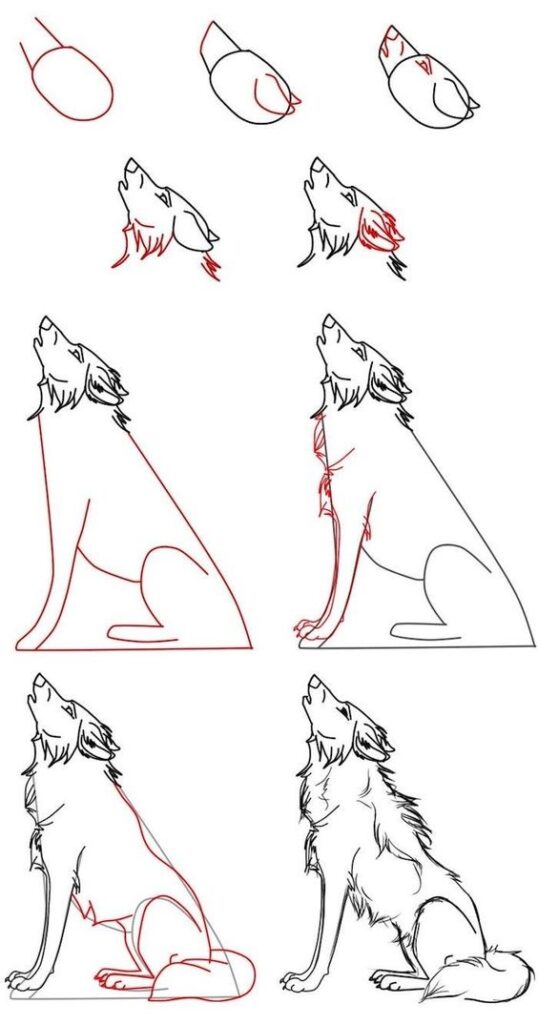
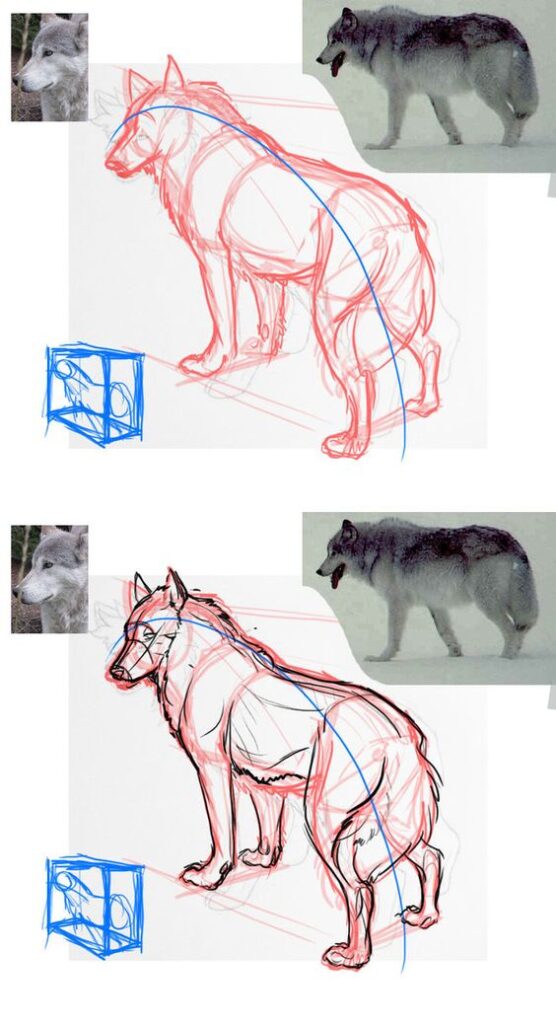
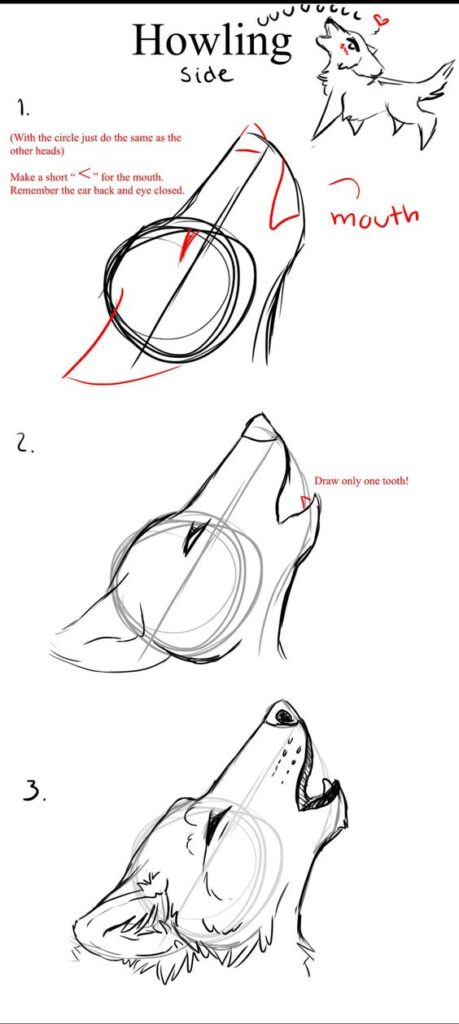
Draw two overlapping ovals: a larger one for the chest (roughly 1.5x wider than tall) and a smaller one for the head (slightly smaller than the chest oval), positioned at the upper front of the chest oval with a slight upward angle. The head oval should overlap the chest oval by approximately 20% — they are not separate floating shapes. For a howling pose: tilt the head oval backward at 45-60 degrees from vertical before adding anything else.
Step 2: The Neck — Most Important Step
Connect the head and chest ovals with a neck that is as wide as the head oval at its narrowest point. This feels too wide when you draw it — that is correct. The neck should look like a muscular column, not a tapering connection. The throat line and the back-of-neck line should be roughly parallel. For the howling pose: the neck extends and thickens further as the muscles engage for vocalisation.
Step 3: Legs as Cylinders
Sketch the four legs as simple cylinders from shoulder/hip to paw. Wolf legs are long — from the bottom of the chest to the ground, the leg length is approximately equal to the chest depth. Front legs are vertical; rear legs have the characteristic bent-knee-hock structure of digitigrade animals (walking on their toes). At this stage, draw simple oval paws — larger than most beginners expect, roughly the size of the muzzle.
Step 4: Skull and Muzzle Detail
Within the head oval, establish the skull structure: a slight ridge along the top (sagittal crest), and the muzzle extending from the lower half of the oval. The muzzle should extend outward approximately as far as the head oval’s radius — it is long. The muzzle sides are roughly parallel (blunt-ended), not tapering. The nose is a substantial dark mass at the tip, not a small detail.
Step 5: Ears, Eyes, and Nose Placement
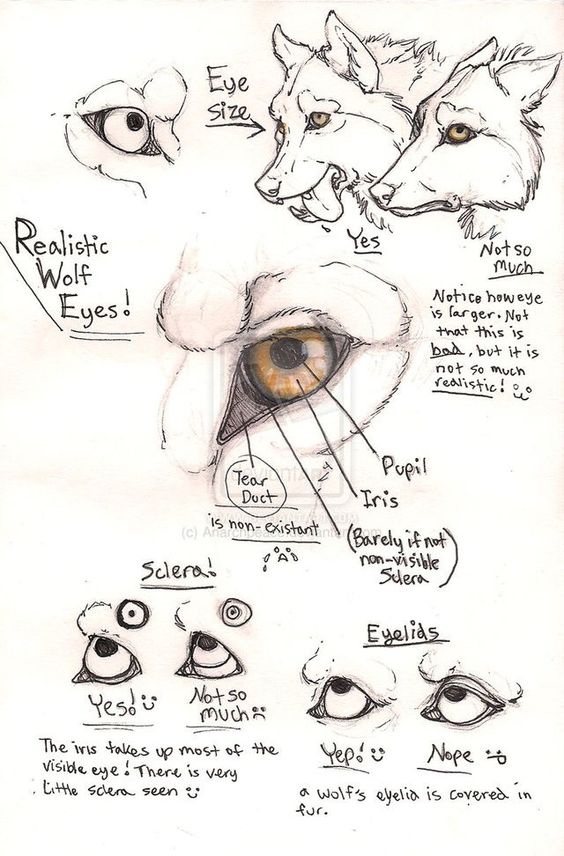
Ears: large upright triangles at the top of the head oval, spaced about one ear-width apart — wider than most beginners place them. The ear bases are wide and the tips are rounded, not sharply pointed. Eyes: amber or yellow-toned, almond-shaped, positioned in the upper third of the head. The brow ridge creates a slight overhang above the eye. The eye placement should feel slightly high — wolves have a stern brow that is not centred on the face.
Step 6: Tail, Paws, and Refinement
Refine the tail: hanging at approximately 45 degrees downward from the body, with a slight gentle curve. It is bushy — wider than the leg, with fur radiating from a central spine. Refine the paws to show the four toes (wolves are digitigrade and walk on four toes). The dewclaw on the front leg is present but positioned higher up the leg, not on the paw itself. Refine all contour lines before adding any fur.
Step 7: Directional Fur Application
Apply fur strokes zone by zone, working from the area farthest from the viewer to the closest: back first, then sides, then chest, then head last. Use HB for initial light fur strokes, 2B for the medium-pressure strokes that build the main fur texture, 4B only for the darkest shadow areas inside the ears, under the jaw, and in the deepest fur shadows on the body. Use a kneaded eraser to lift highlights along the spine, above the eyes, and on the nose tip after the fur layer is complete.
Four Wolf Drawing Styles
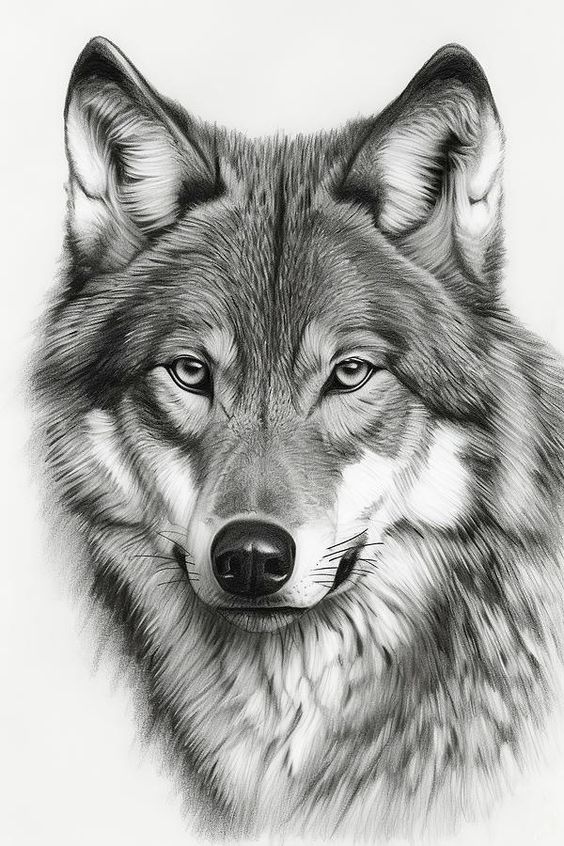
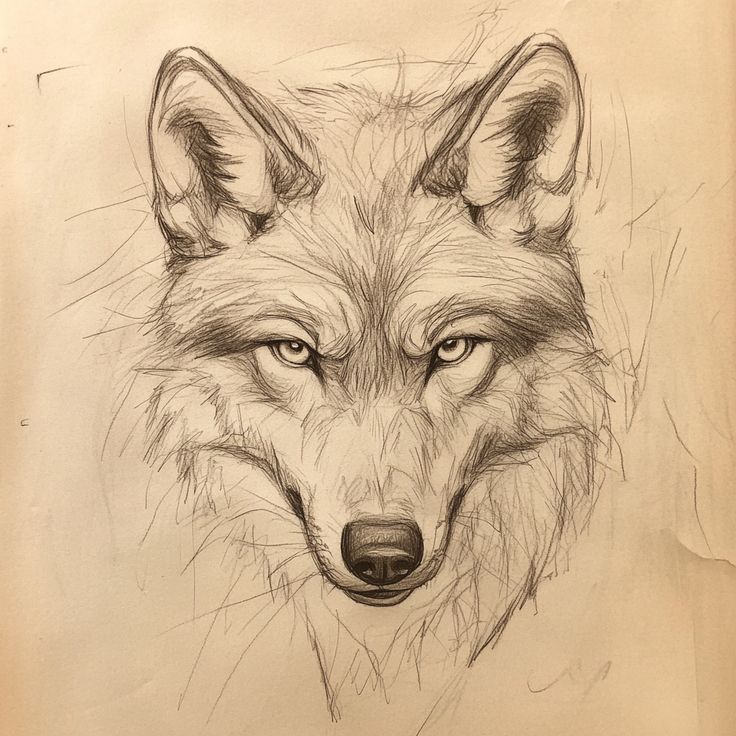
Realistic Pencil Study
Tools: Faber-Castell 9000 set (HB-6B), Strathmore Bristol smooth 300 Series (~$18, 9×12), kneaded eraser, blending stump
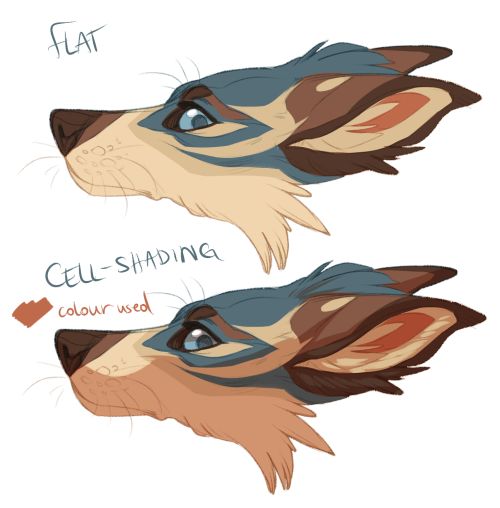
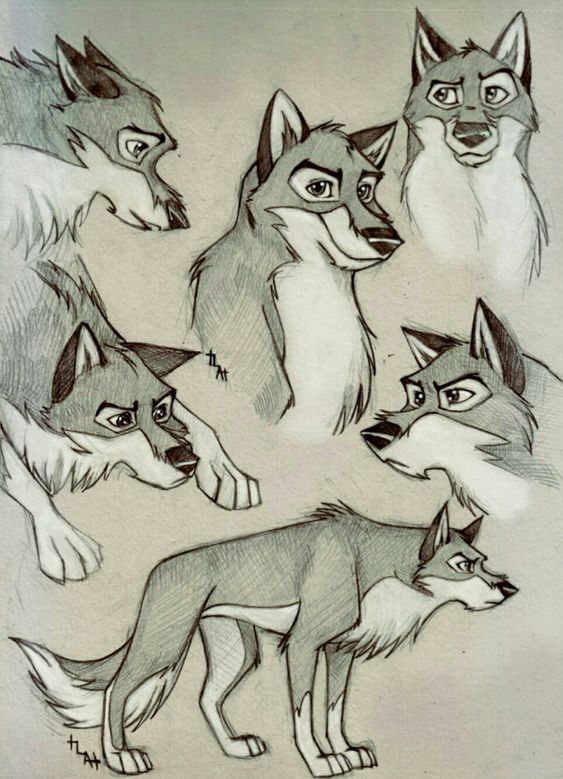
Key technique: Layered graphite application working from lightest values to darkest. Fur built in three layers: directional base layer (HB), detail definition (2B), deep shadow (4B-6B). Eyes rendered with high contrast — very dark pupils against amber-toned iris, white highlight dot.
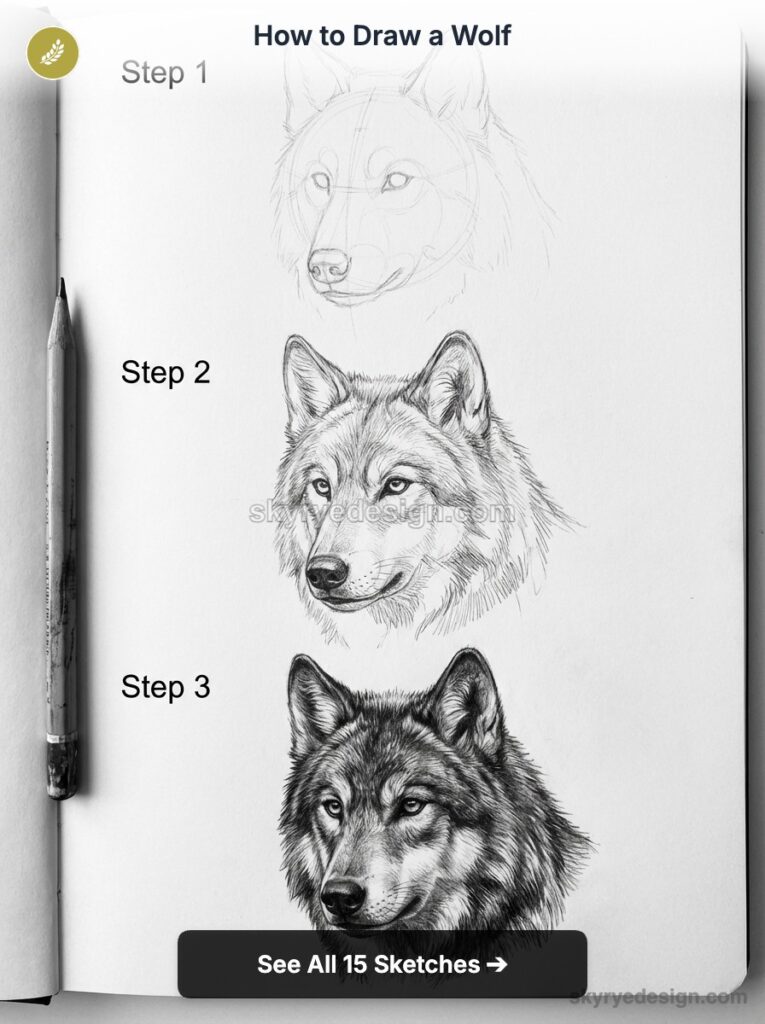
Wolf-specific note: The wolf’s amber or yellow eye colour is the single most impactful detail in a realistic wolf portrait. In graphite, create the amber quality by leaving the iris very light while darkening the pupil to near-black. A single white dot in the upper-right of the iris (the highlight) makes the eye appear luminous.
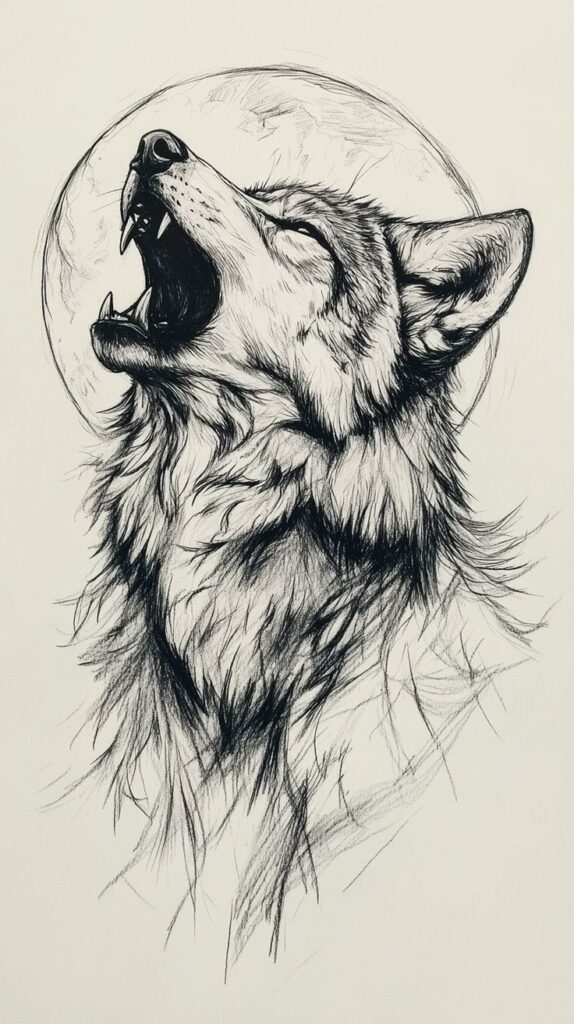
Ink Line Art (Tattoo-Ready)
Tools: Micron 01 (0.25mm) for fine fur detail and interior lines, Micron 05 (0.45mm) for bold outlines, Micron 08 (0.5mm) for the thickest outline segments. Smooth bristol or vellum paper.
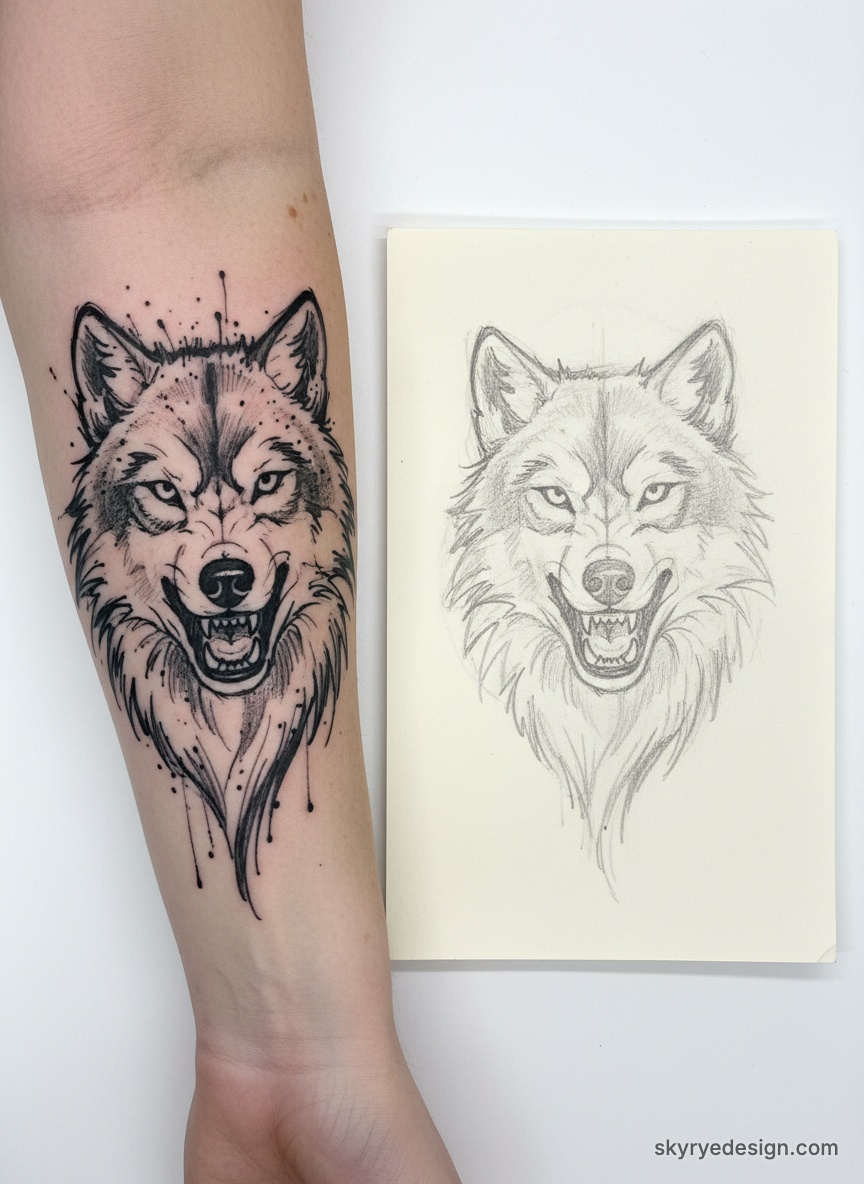
Key technique: Bold outer contour with varied line weight (heavier at shadow edges, lighter at light-facing edges). Interior fur built from individual short strokes — no crosshatching, only directional line work following fur zones. Heavy black fill in the ear interior, eye pupil, and nose.
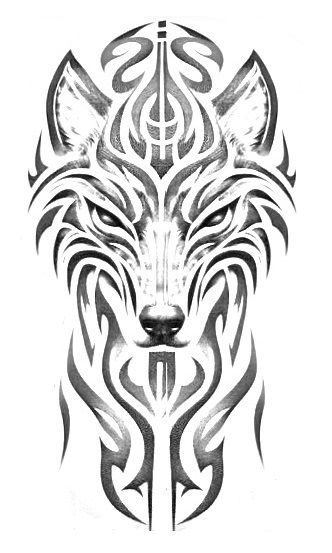
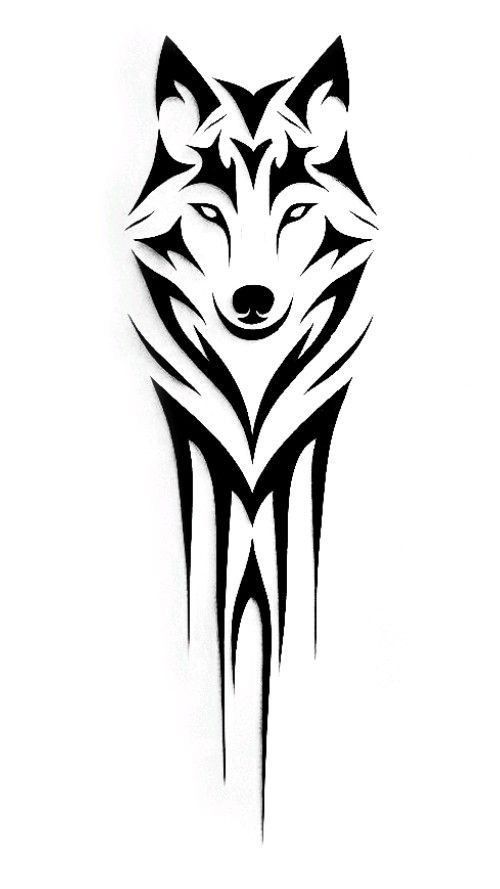
Wolf-specific note: Ink wolf drawings work best with a strong silhouette that reads at a distance. Test the silhouette by holding the drawing at arm’s length — if the pose and the species are immediately identifiable, the composition works.
Watercolour and Ink
Tools: Arches 140lb cold press watercolour paper (~$20 small block), Winsor and Newton Cotman set, Micron 01 for pen linework over dry watercolour, round brushes sizes 4 and 8
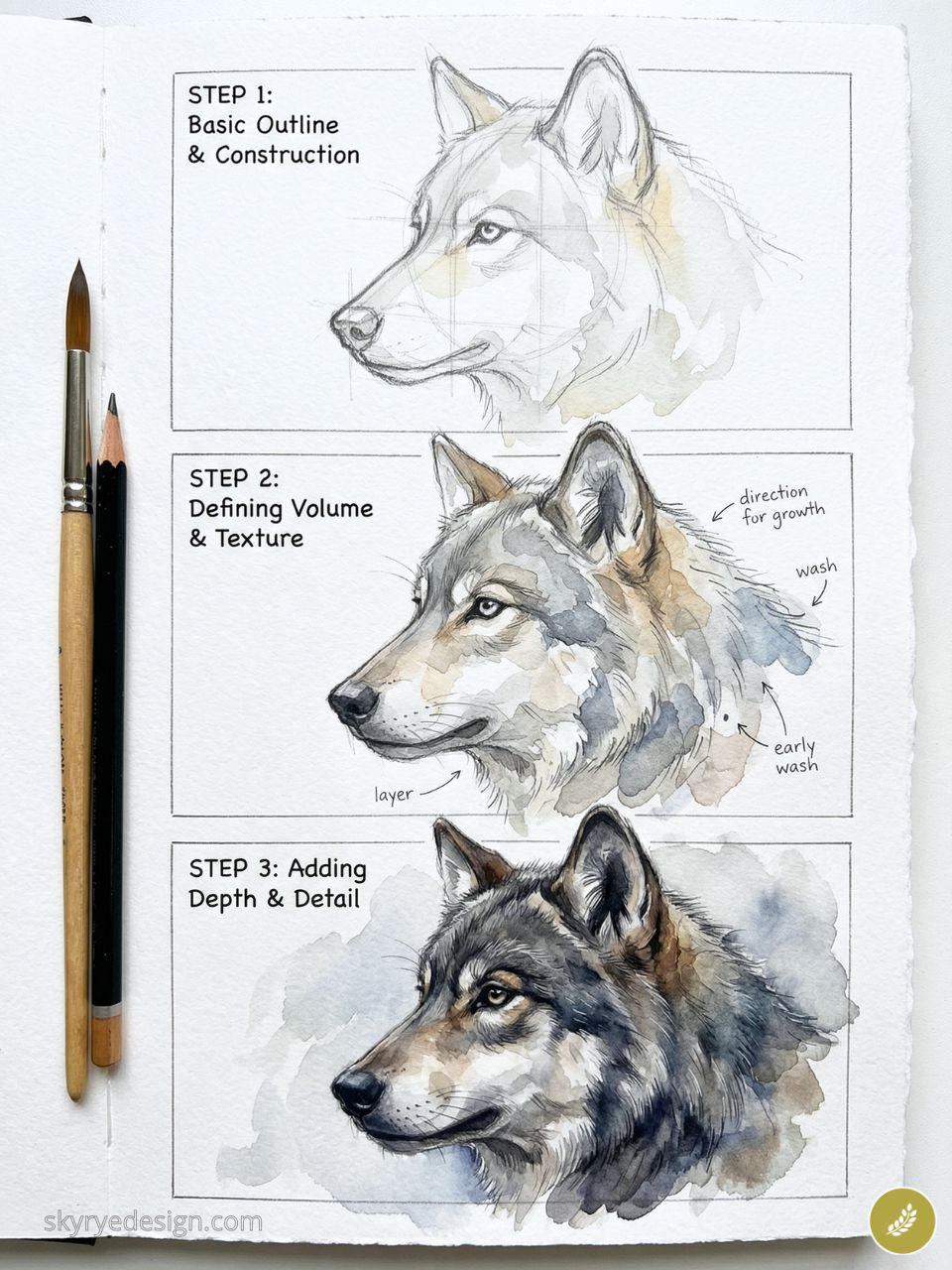
Key technique: Wet-on-wet base washes for the coat colour (warm grey-brown for the body, lighter cream for the chest and legs). Once dry, add ink linework for fur direction and detail. Final layer of watercolour glazing for shadow areas. Eyes painted last with a small detail brush.
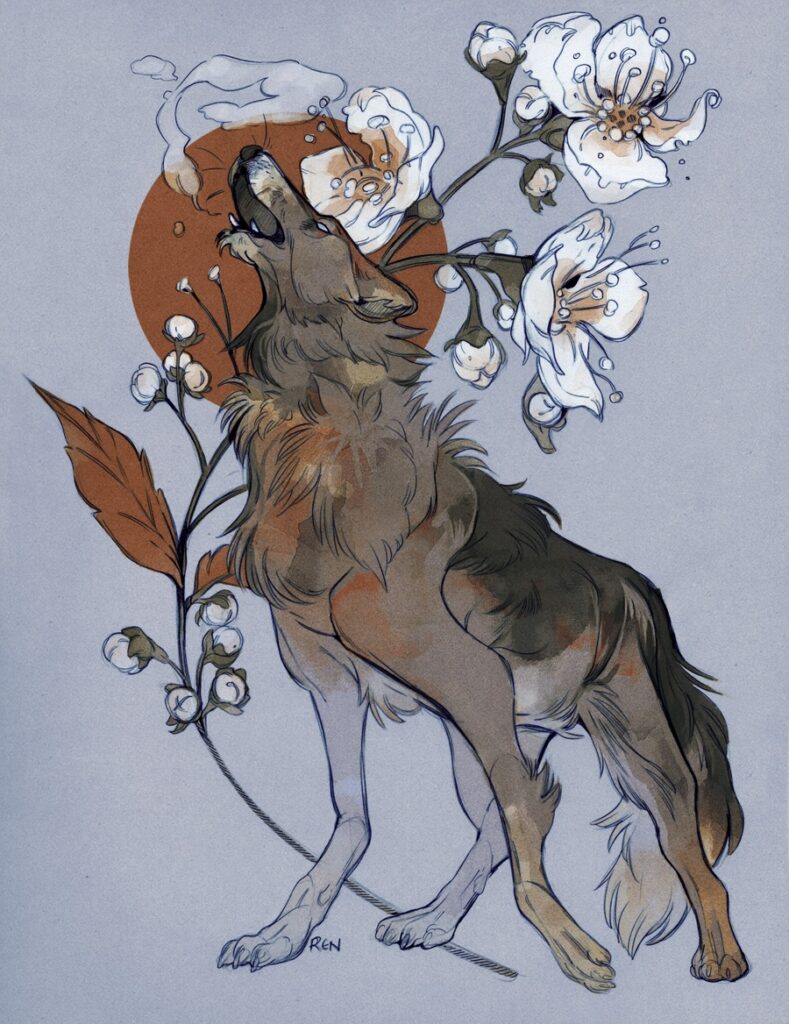
Wolf-specific note: Wolf coat colours vary significantly by subspecies — gray wolves range from nearly white (Arctic subspecies) through warm grey-brown to near-black. Reference the specific coat colour before mixing: most North American grey wolves have a warm tawny-grey that requires Yellow Ochre added to the grey base.
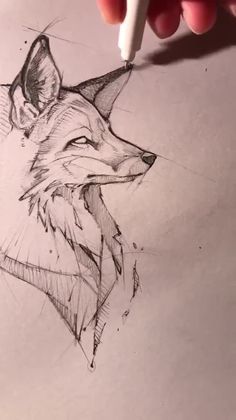
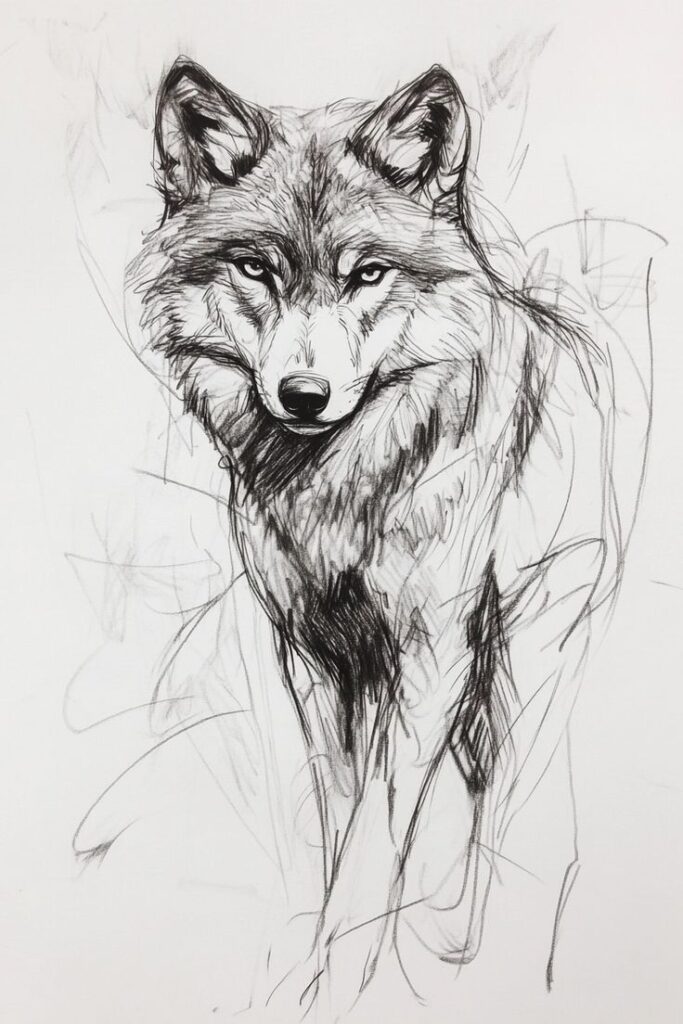
Quick Sketch / Gestural
Tools: Staedtler Pigment Liner 0.3mm and 0.5mm, smooth sketchbook, or a single 2B pencil for pure graphite gesture
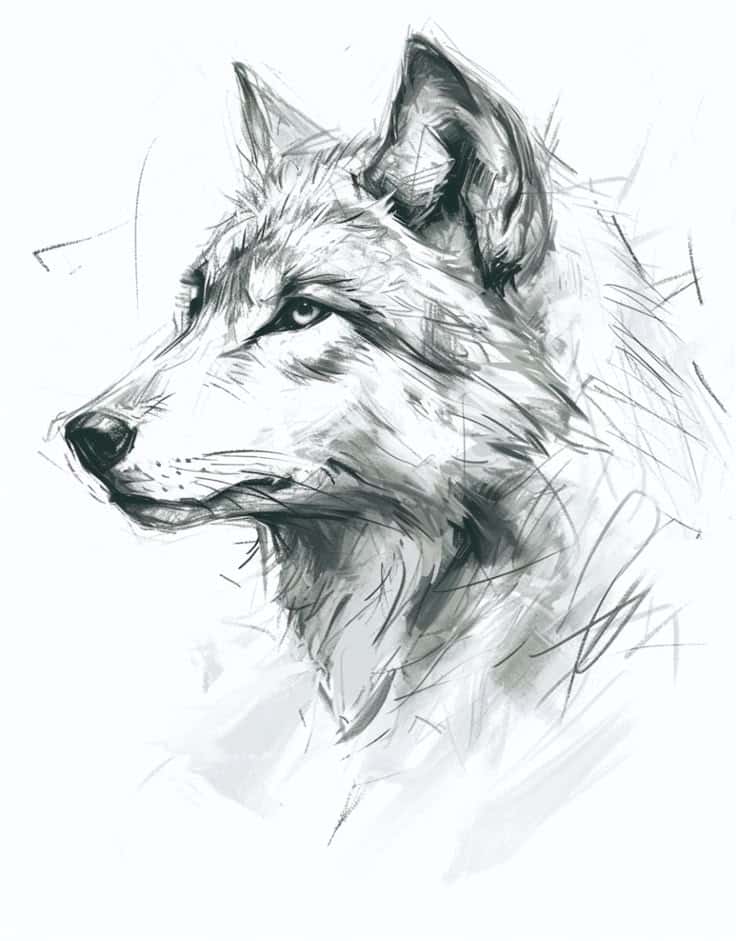
Key technique: Ink directly without underdrawing once the proportions are confident. Start with the neck and chest mass — the two elements most critical to the wolf’s identity. Add the head last. Keep the entire sketch under 10 minutes. Speed preserves the energy of the pose better than slow careful construction at this scale.
Wolf-specific note: The gestural wolf sketch is most convincing when the neck and shoulder mass are drawn with committed, unretouched marks. Tentative light lines in the neck area are the most consistent tell of a gestural sketch that does not trust its proportions.
Five Common Wolf Drawing Mistakes and Their Corrections
- Neck too thin. The most consistent error. The neck should be as wide as the head at its base. If it looks uncomfortably thick when you draw it, it is probably correct. Check against reference.
- Muzzle too short or too pointed. Wolf muzzles are long (45-50% of total head length) and blunt-ended. A tapered muzzle reads as fox or domestic dog. Draw the muzzle sides parallel, not converging to a point.
- Ears too small or too close together. Wolf ears are large triangles spaced about one ear-width apart at the base. Many artists draw them close together like a dog; wolves have wider-spaced, more upright ears.
- Tail curled or upright. Wolf tails hang downward at approximately 45 degrees when relaxed, horizontal when alert. A curled or upright tail is a domestic dog characteristic that immediately undermines a wolf drawing.
- Fur added before body form is confirmed. Fur strokes applied to an undefined body produce generic texture. Establish the full body contour, check all proportions, then add fur as the final layer.
Materials for Wolf Drawing
- Pencils: Faber-Castell 9000 set — HB for construction, 2B for body outline and medium fur, 4B for deep shadows, 6B for the darkest ear interiors and nose. A 0.5mm mechanical pencil (HB) for whiskers and individual fine hairs.
- Paper: Strathmore 300 Bristol smooth (~$18, 9×12) for pencil and ink work. The smooth surface handles erasing construction lines cleanly and supports fine fur linework without feathering.
- Erasers: Faber-Castell kneaded eraser (essential — used as a drawing tool for fur highlights, not just for corrections). Standard vinyl eraser for construction line removal.
- Ink liners (optional): Micron 01 for fine fur strokes and detail, Micron 05 for primary outline. The weight difference keeps fur detail subordinate to the body outline.
- Reference: iNaturalist.org for range-specific wolf photographs with accurate coat colours by subspecies. Avoid stock imagery wolf photos — they frequently show captive animals in unnatural poses with domestic dog body language.
FAQ: Wolf Drawing
Q: How do you draw a wolf for beginners?
Start with two overlapping ovals — larger chest, smaller head. Connect with a neck as wide as the head at its base. Add a blunt-ended muzzle occupying 45-50% of head length. Place large, widely-spaced ears. Draw legs as cylinders before refining paws. Tail hangs downward at 45 degrees. Fur comes last, applied in directional strokes following each body zone.
Q: What makes wolf fur hard to draw?
Wolf fur is directional and layered — guard hairs over undercoat, each zone following the body contour. Drawing fur as uniform random marks produces generic fuzz. The fix: learn the seven directional zones and apply strokes following each zone’s growth direction. Use a kneaded eraser to lift highlights after the fur layer is applied.
Q: How do you draw a howling wolf?
Tilt the head oval backward at 45-60 degrees from vertical before adding anything else. Extend and thicken the neck. The muzzl
For a gentler wildlife subject after wolf fur, this deer drawing anatomy guide lets you practice long legs, alert ears, antlers, and softer coat shading without leaving the animal drawing cluster.
e points skyward with the mouth open in a round O shape. The body typically sits or stands with weight shifted forward. The tail hangs downward. Always tilt the head further back than feels natural — the howling pose requires more tilt than beginners instinctively draw.Q: What pencils are best for wolf drawing?
HB for construction, 2B for body outline and main fur, 4B for deep shadows, 6B for darkest areas. Strathmore 300 Bristol smooth (~$18) for paper. Kneaded eraser for highlighting fur after shading — used as a drawing tool, not just for mistakes.
Q: What are the most common mistakes in wolf drawing?
In order of frequency: neck too thin, muzzle too short or pointed, ears too small or close-set, tail curled or upright (domestic dog habit), and fur applied before body form is confirmed. The neck thickness error is the most damaging to overall wolf identity — fix this first.
- 2.8Kshares
- Facebook0
- Pinterest2.7K
- Twitter3
- Reddit0