Home entertaining ideas get easier when you stop treating the house like a checklist and start reading it like a layout. Where do people pause? Where do they put a drink? Does the kitchen pull everyone into one tight corner, or does the room let a few conversations happen at once?
That is the designer’s version of hosting. Not perfection. Flow.
I think about this the same way I think about composition in a sketch or the side profile of a car: the silhouette matters before the details. A room can have beautiful lamps and perfect pillows, but if the walking path is cramped, guests feel it fast.
If you have just moved, you are not alone. Recent moving data puts the scale at 25,870,000 Americans changing homes in 2024, which means a lot of people are standing in half-finished living rooms wondering if it is too soon to invite friends over.
It is not too soon. You only need to make the house easy to enter, easy to sit in, easy to eat in, and easy to remember.
Start with the entertaining flow, not the decor
Before you buy another vase, walk through the house like a guest.
Start outside the front door. Step in. Where does your eye go first? Where would you put a coat, a bag, a pair of wet shoes, or a bottle of wine someone brought for dinner? Then move toward the kitchen, living room, dining area, bathroom, and any outdoor space you plan to use.
Do this with the lights on in the evening, not only in daylight. Most gatherings happen after work or around dinner, when natural light fades and the house starts showing its weak spots.
I usually look for three pressure points: the entry, the route between kitchen and seating, and the spot where people gather when they do not know where to stand yet.
That third spot is often the kitchen island. Sometimes it is the back of a sofa. Sometimes it is a doorway, which is the worst possible answer because everyone ends up blocking the room.
Move furniture before you decorate. Pull chairs away from the wall if they feel like waiting-room furniture. Leave 30 to 36 inches for main walkways where you can. If a coffee table makes people turn sideways to pass, switch it for a smaller round table or two nesting tables.
This is not about making the plan formal. It is about giving the room a readable path.
A good test: carry a serving tray from the kitchen to the living room. If you have to dodge corners or step around boxes, your guests will have the same problem with a glass in hand.
Make the living room carry conversation
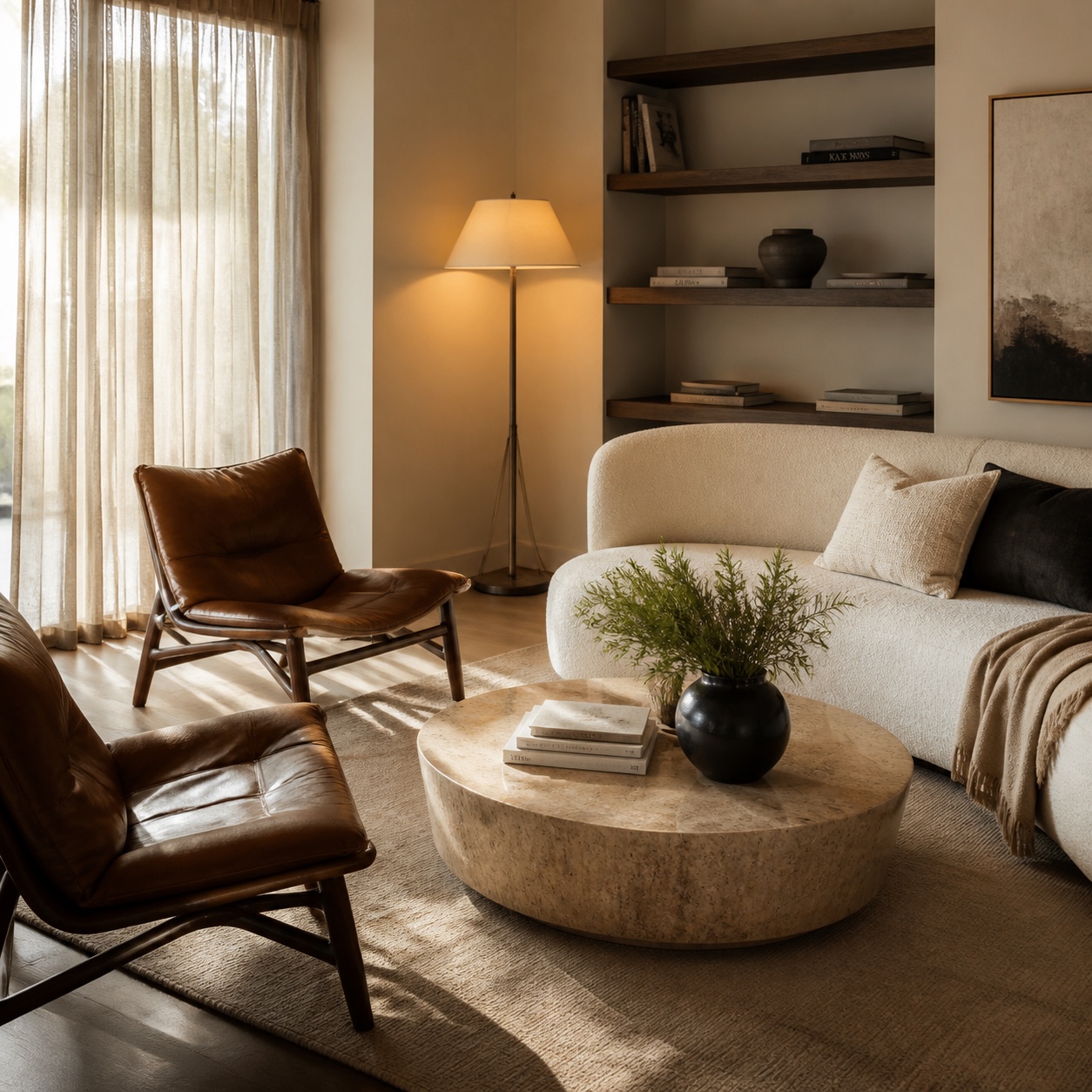
Your living room does not need to look finished. It needs to hold people comfortably.
The mistake I see most often is a room aimed entirely at the TV. That can work for family nights, but it makes entertaining oddly stiff. Everyone sits shoulder-to-shoulder, looking forward, while the conversation has to fight the furniture.
Turn at least one chair toward the sofa. Even a single accent chair changes the social geometry of the room. If the room is small, use a lightweight chair that can move: bentwood, cane, slim metal, or a compact upholstered slipper chair.
I am picky about this because industrial design training made me care about how objects invite use. A chair can be beautiful and still feel wrong if the pitch is too low or the arms are awkward.
You do not have to spend a fortune. A simple IKEA POANG can work in a casual room because it is light and easy to move. A Cesca-style chair brings more shape without adding visual bulk. A small side table can do more for hosting than a second oversized sofa.
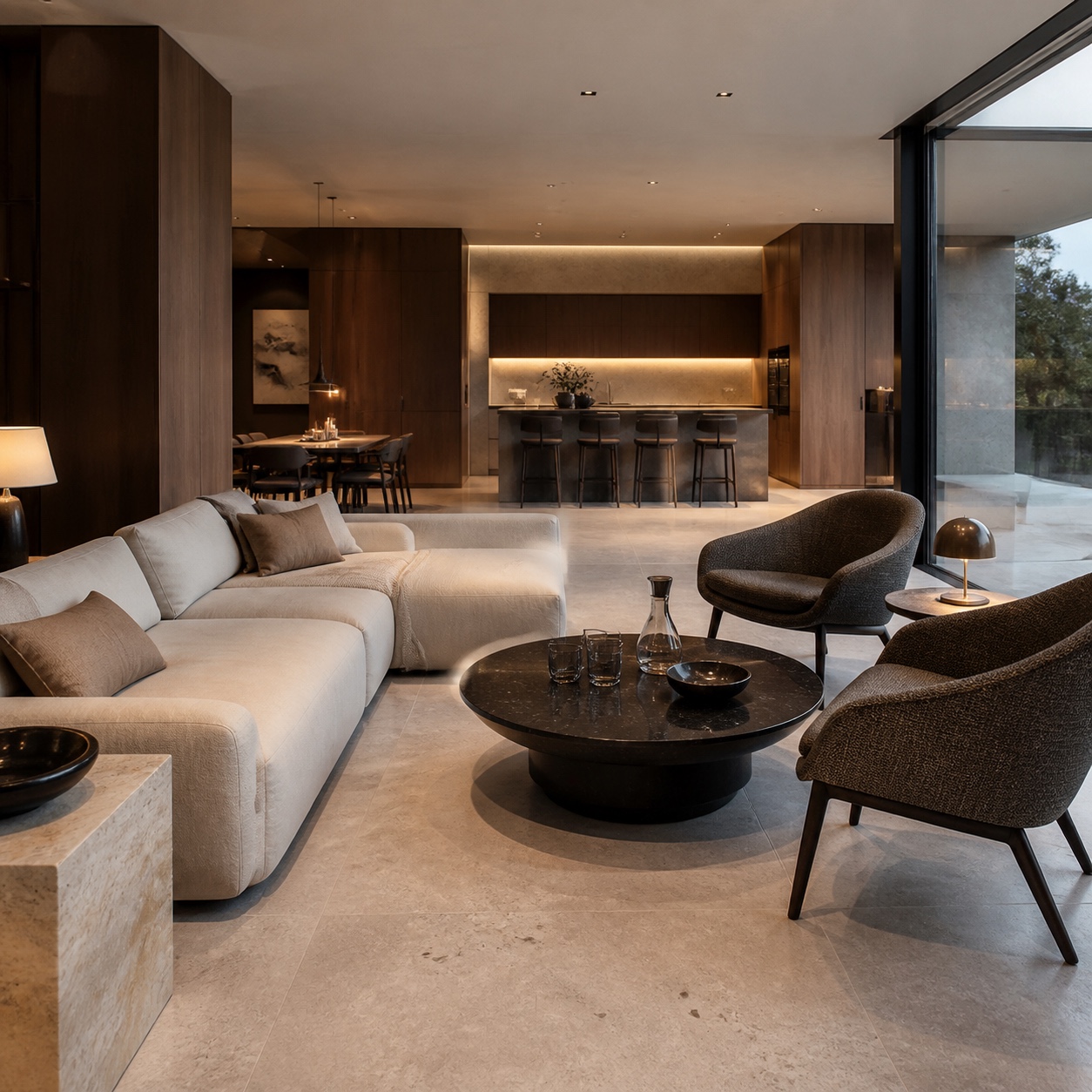
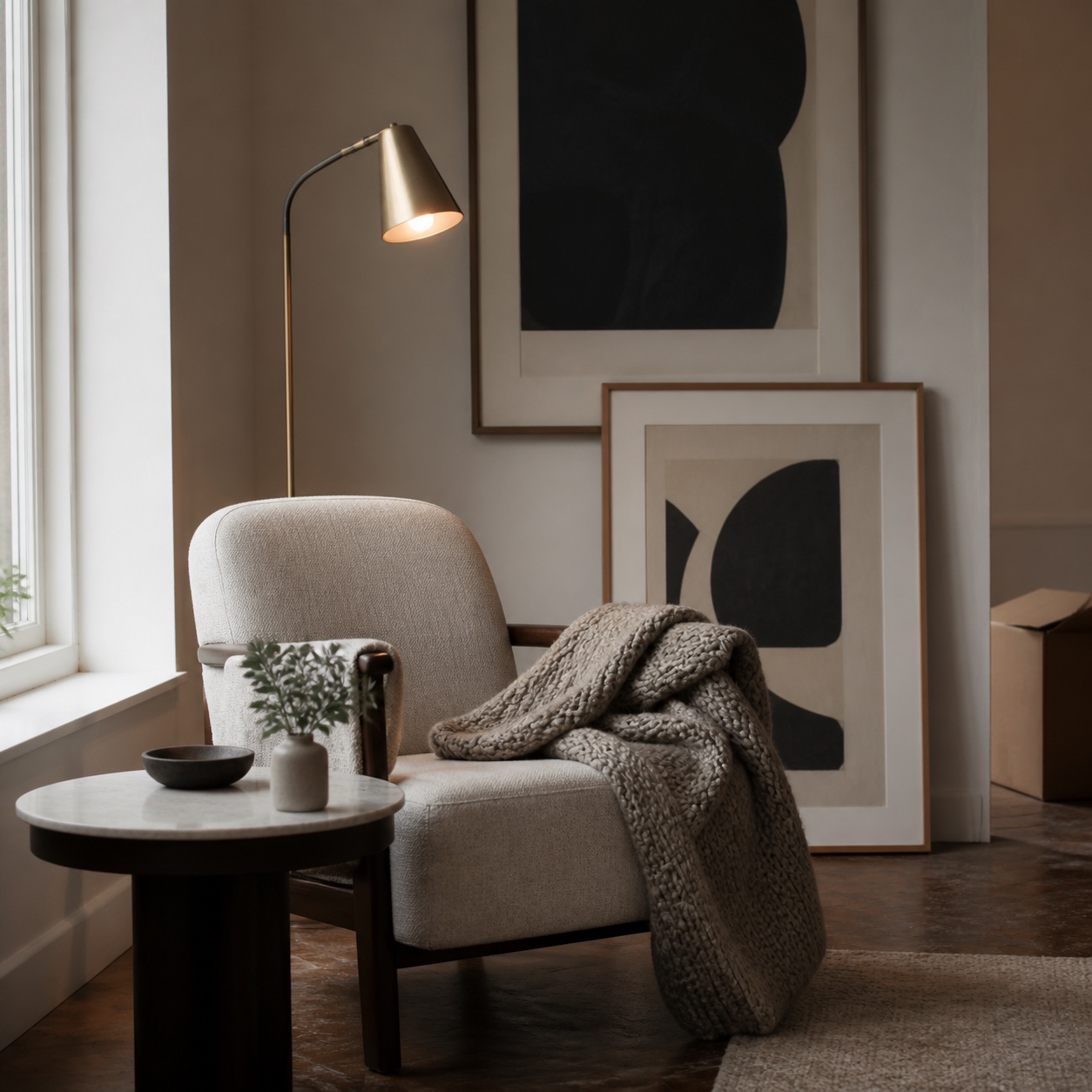
Think in zones. One sofa plus two chairs is a conversation zone. A floor lamp beside a reading chair is a quieter zone. A bench under a window gives overflow seating without shouting for attention.
Rugs help, but size matters. A rug that floats in the middle like a bath mat makes the room feel temporary. If possible, choose one large enough for the front legs of the sofa and chairs to sit on it.
Lighting does the rest. Overhead light alone flattens a room. Add one floor lamp, one table lamp, and maybe a dimmable wall sconce if you already have wiring. Warm bulbs around 2700K usually make people and wood tones look better.
If the room still feels hard to read, Sky Rye’s living room interior design ideas can help you think through proportion, seating, and focal points before you buy more furniture.
Turn the kitchen into a hosting zone
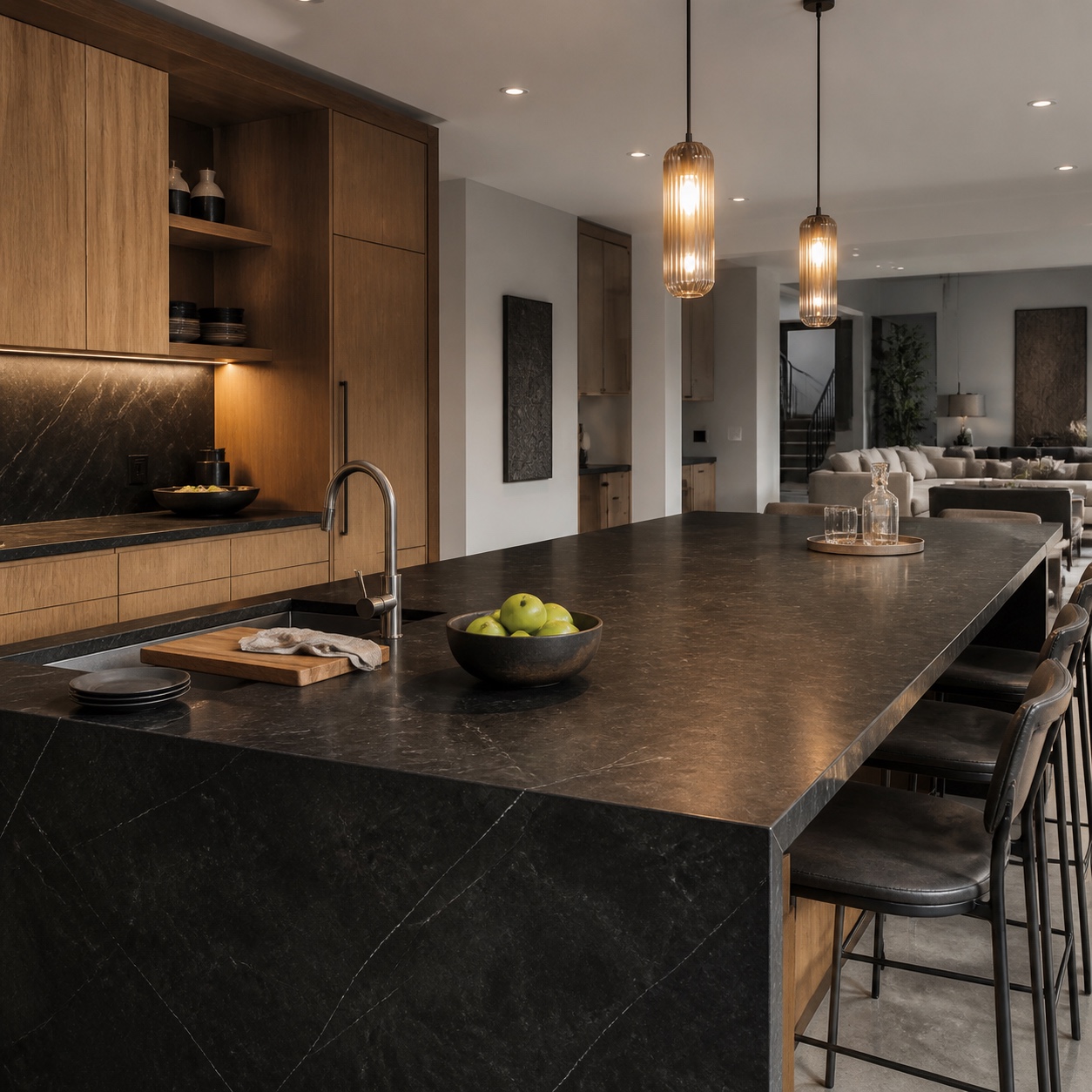
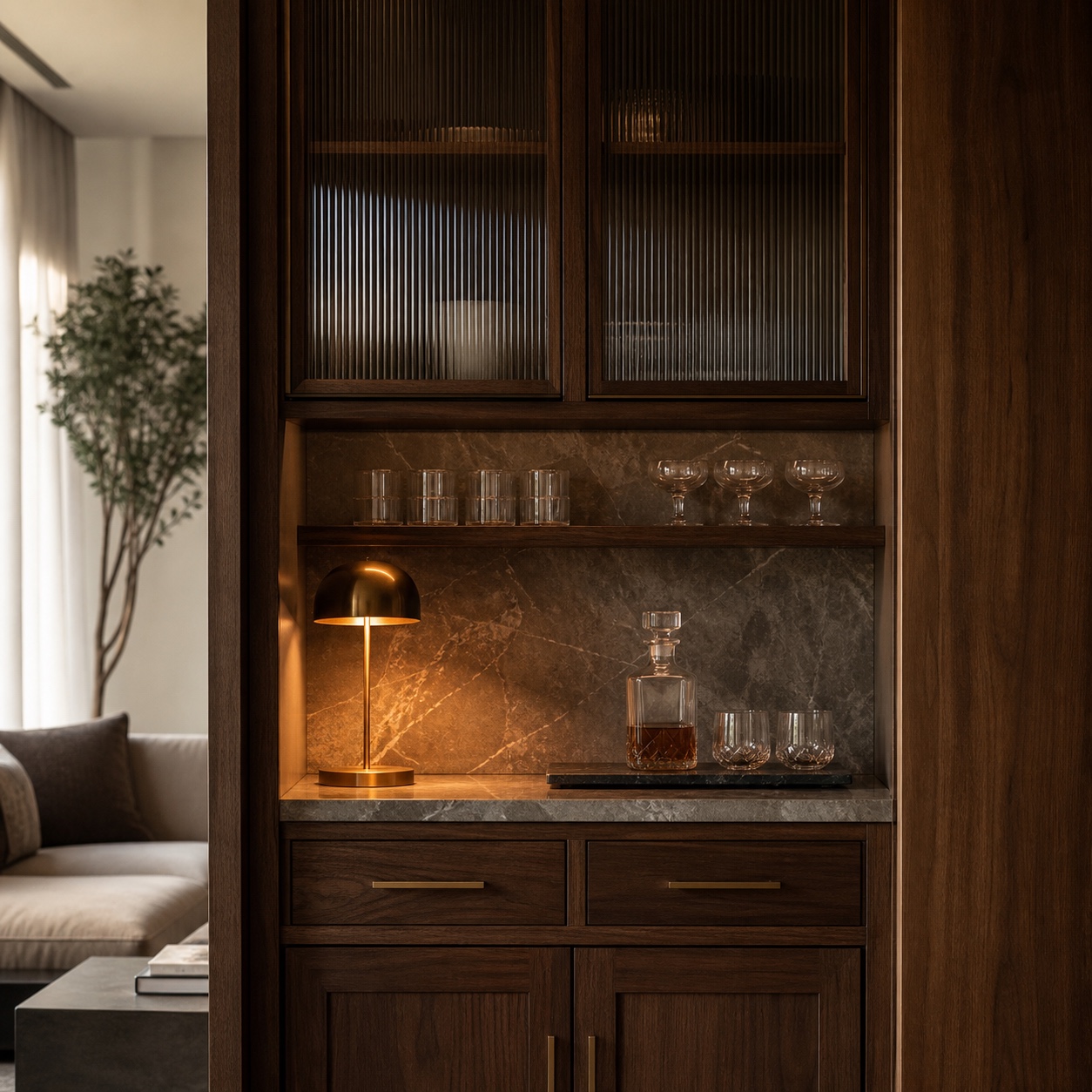
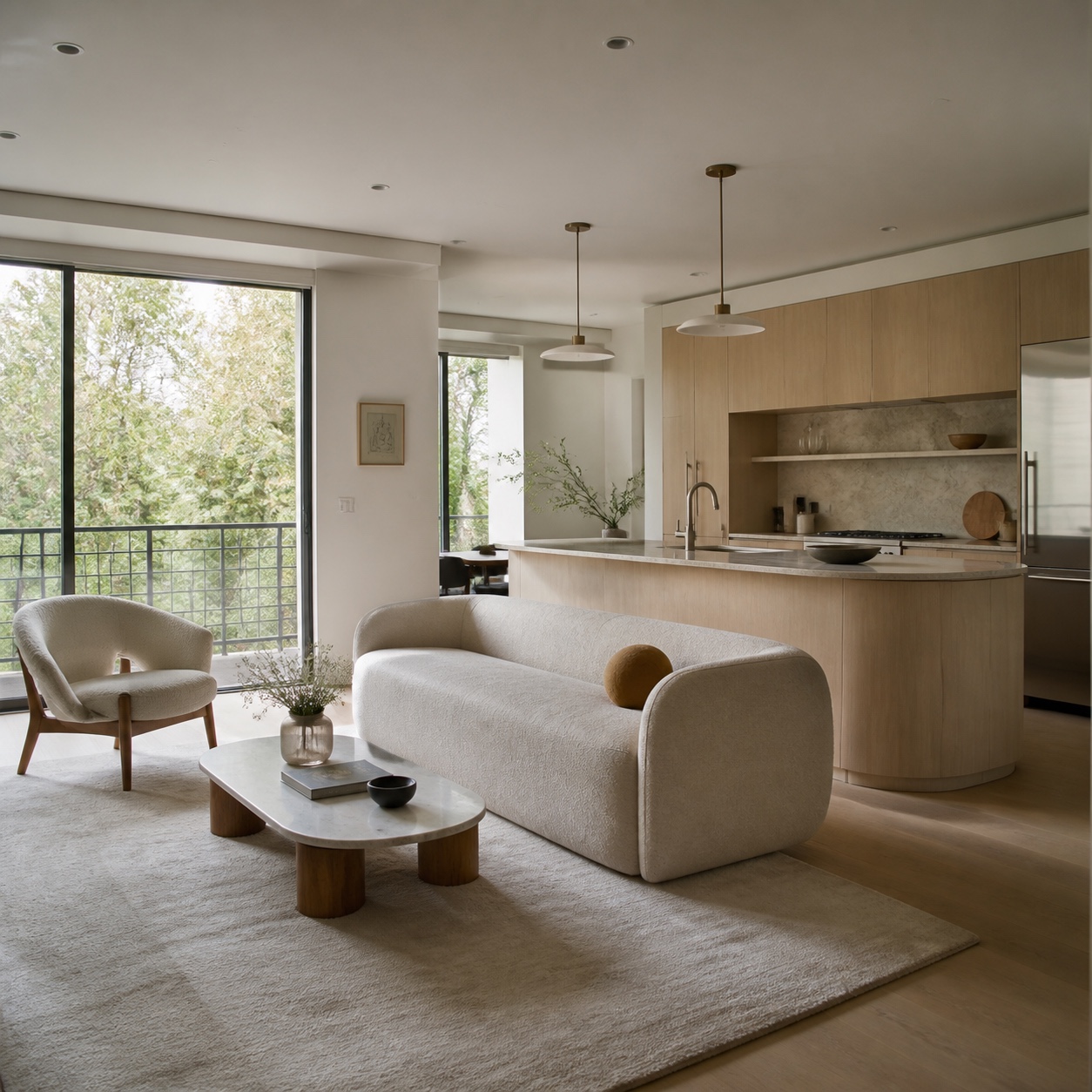
People drift to the kitchen because food gives them something to do. That is good. But a kitchen that works for cooking does not always work for guests.
Clear one stretch of counter and protect it like stage space. This is where food lands, plates stack, and last-minute serving happens. If every inch is filled with appliances and mail, guests feel like they are intruding on a work surface.
I like a simple three-part kitchen setup for entertaining: prep zone, serving zone, drink zone. Keep them separate if the room allows it.
The prep zone is for you. Knife, cutting board, oven mitt, sink, trash. Guests should not have to stand there unless they are actually helping.
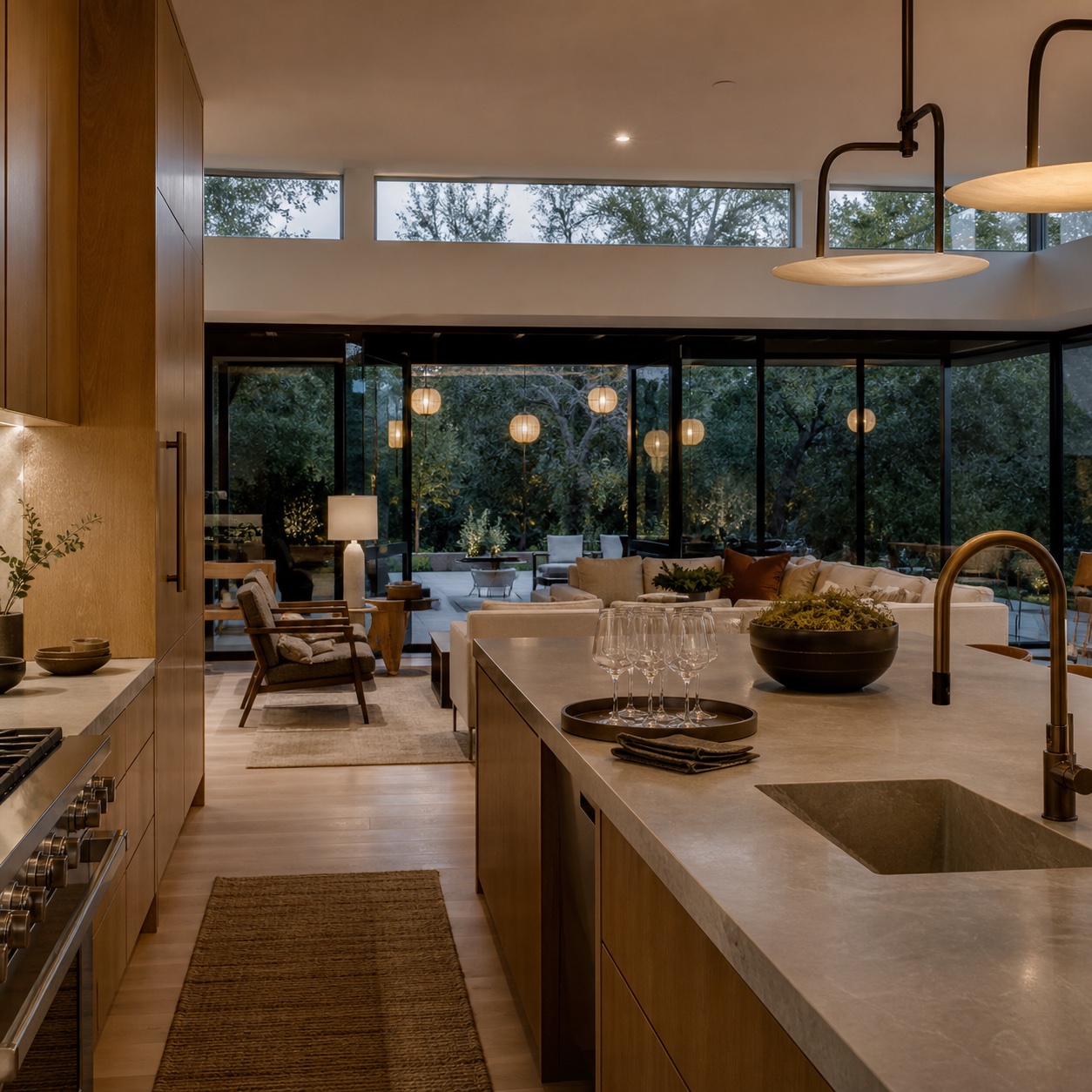
The serving zone can be an island, a dining table, a console, or a deep windowsill. Use trays to group food. A tray makes random bowls look intentional, and it lets you move the whole setup fast.
The drink zone should be away from the stove. Put bottles, glasses, ice, napkins, and a small towel on a sideboard or bar cart. If you do not own a bar cart, a clear shelf or console table is fine. The point is to stop six people from hovering over the exact place where you need to cook.
If you are building or heavily renovating, entertaining should shape the kitchen early. Custom homes now make up nearly 19% of new single-family homes in the United States, and that matters because layout decisions are easiest before the cabinets go in.
A larger island is not automatically better. Circulation matters more. A 9-foot island can become a wall if the stools, fridge, sink, and living room path all fight each other. A 6-foot island with one working side and one social side may host better.
Open shelving is similar. It photographs well, but it punishes messy storage. Use open shelves for a tight edit: glasses, white plates, one ceramic pitcher, maybe a few cookbooks. Put the rest behind doors.
For material, skip the sterile all-white showroom look unless the architecture really supports it. Warm wood, honed stone, brushed metal, linen shades, and a little patina make a kitchen feel less like a product display.
Give the dining area a clear role
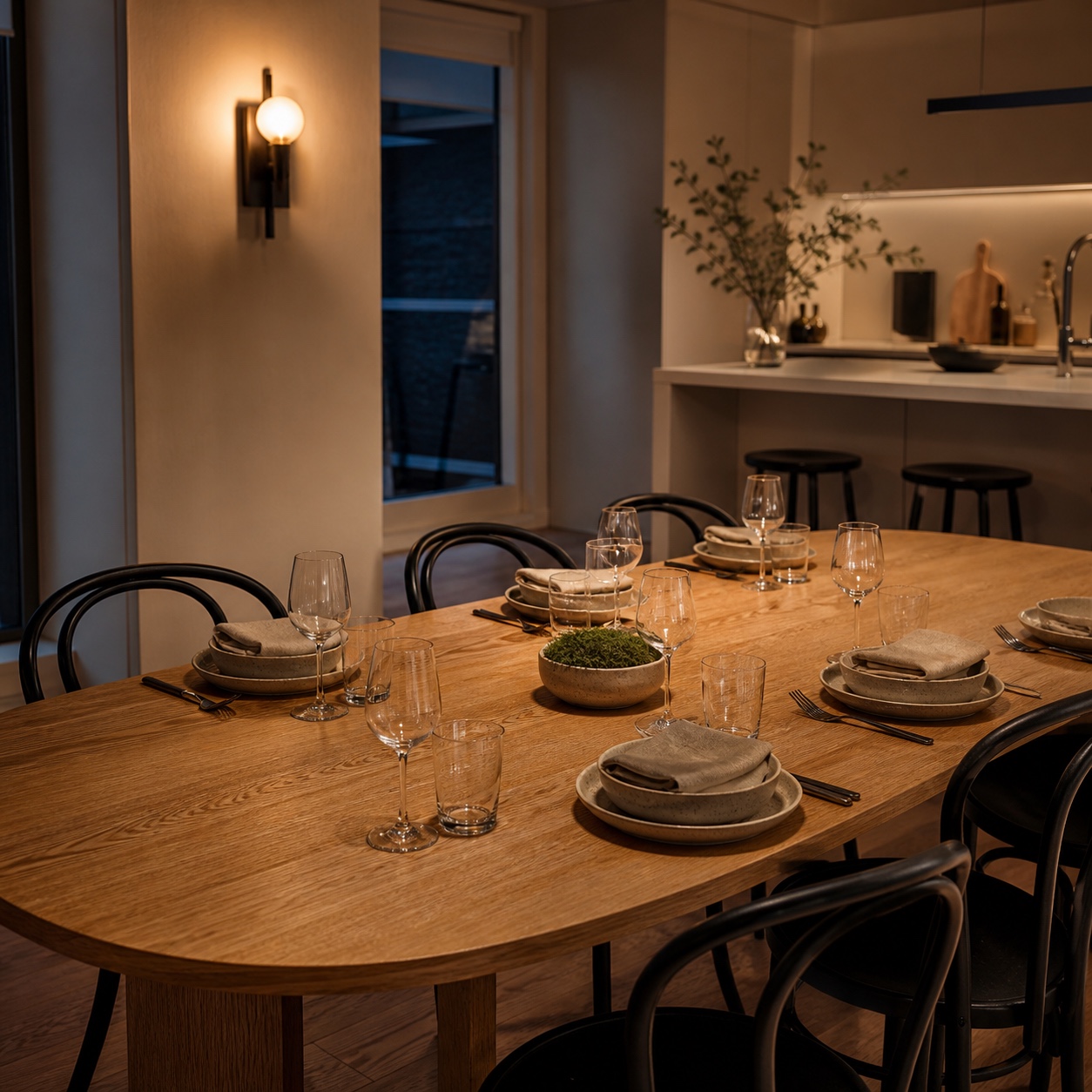
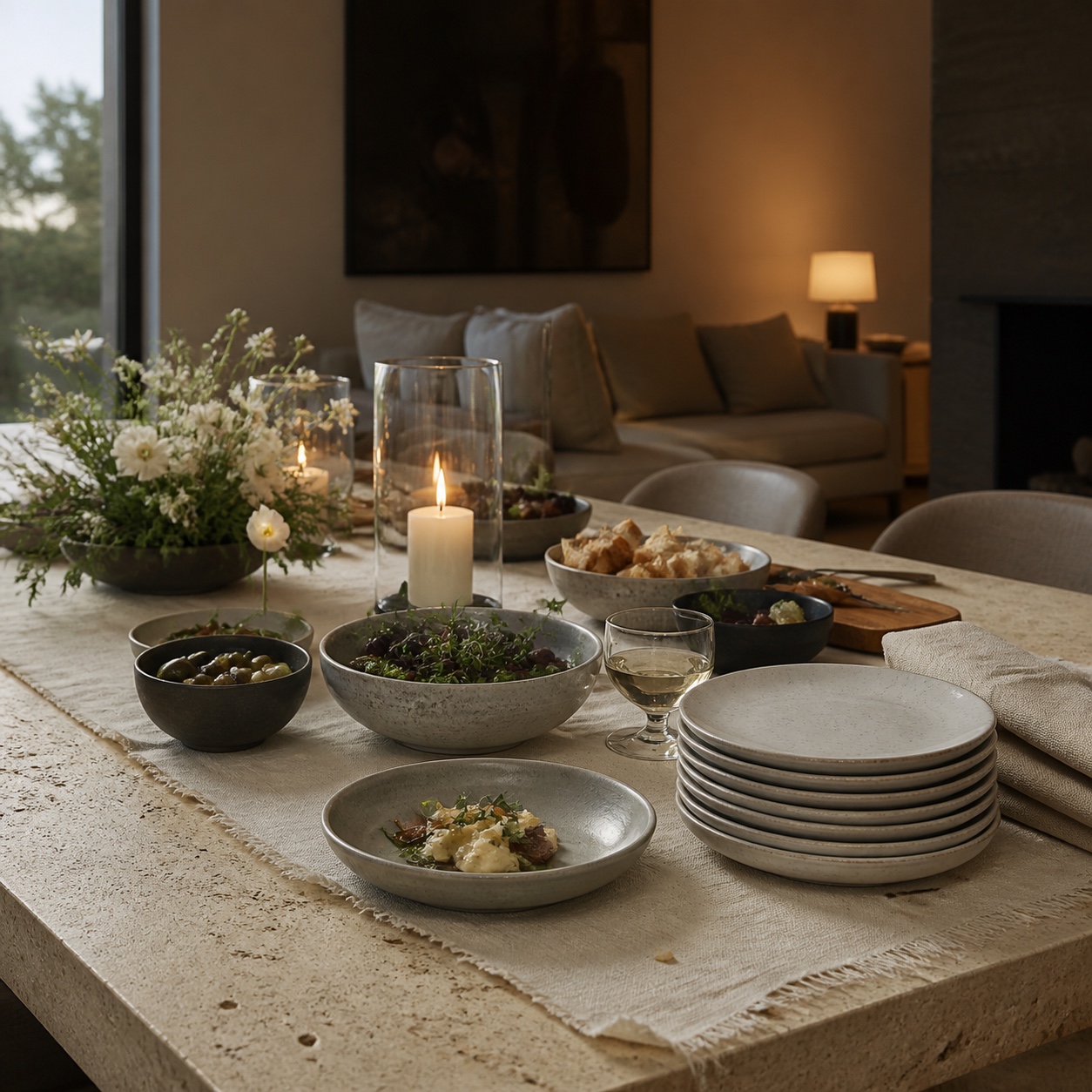
Dining rooms often suffer from two opposite problems. They are either too precious, with every chair tucked in like a museum object, or too forgotten, with boxes and laptops piled on the table.
For entertaining, the dining area needs a job.
If you are hosting dinner, the table is the main scene. Keep the centerpiece low enough for conversation. I like objects under 12 inches tall unless they are very thin, like taper candles. Tall flowers can look beautiful in photos and feel absurd when you are trying to talk around them.
If dinner is casual, use the dining table as a buffet and let people sit in the living room, kitchen, or outdoors. This works well in a new house because you may not have enough matching chairs yet.
Texture matters more than theme. Linen napkins, a wood board, matte plates, a stoneware bowl, and clear glassware already create enough variation.
One designer rule I use often: repeat a material, not a decoration. If you have black metal in the pendant light, repeat black in candle holders or chair frames. If the kitchen has warm oak, bring a wood bowl to the table.
Scale the table to the room. A round table works beautifully in smaller dining spaces because it softens circulation and makes conversation easier. A rectangular table is better when you need serving space down the middle or when the room is long and narrow.
If the dining room is unfinished, lean into restraint. Clean table. Good light. Comfortable chairs. One strong object. A ceramic vessel with branches can feel more architectural than a crowded bouquet.
When you want the table itself to feel more finished, these tips for styling a dining table for entertaining are a useful next step.
Use the entryway as the first design signal
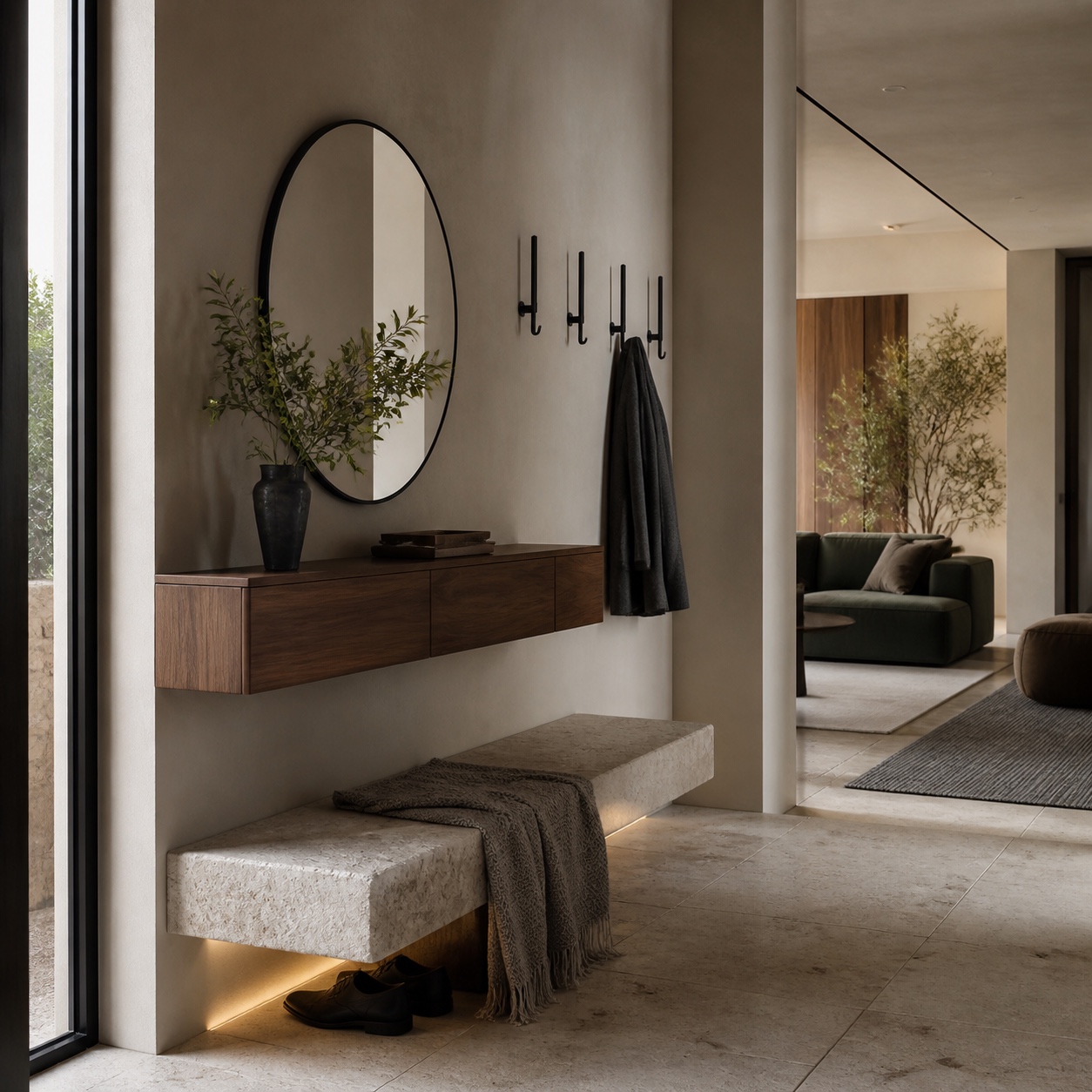
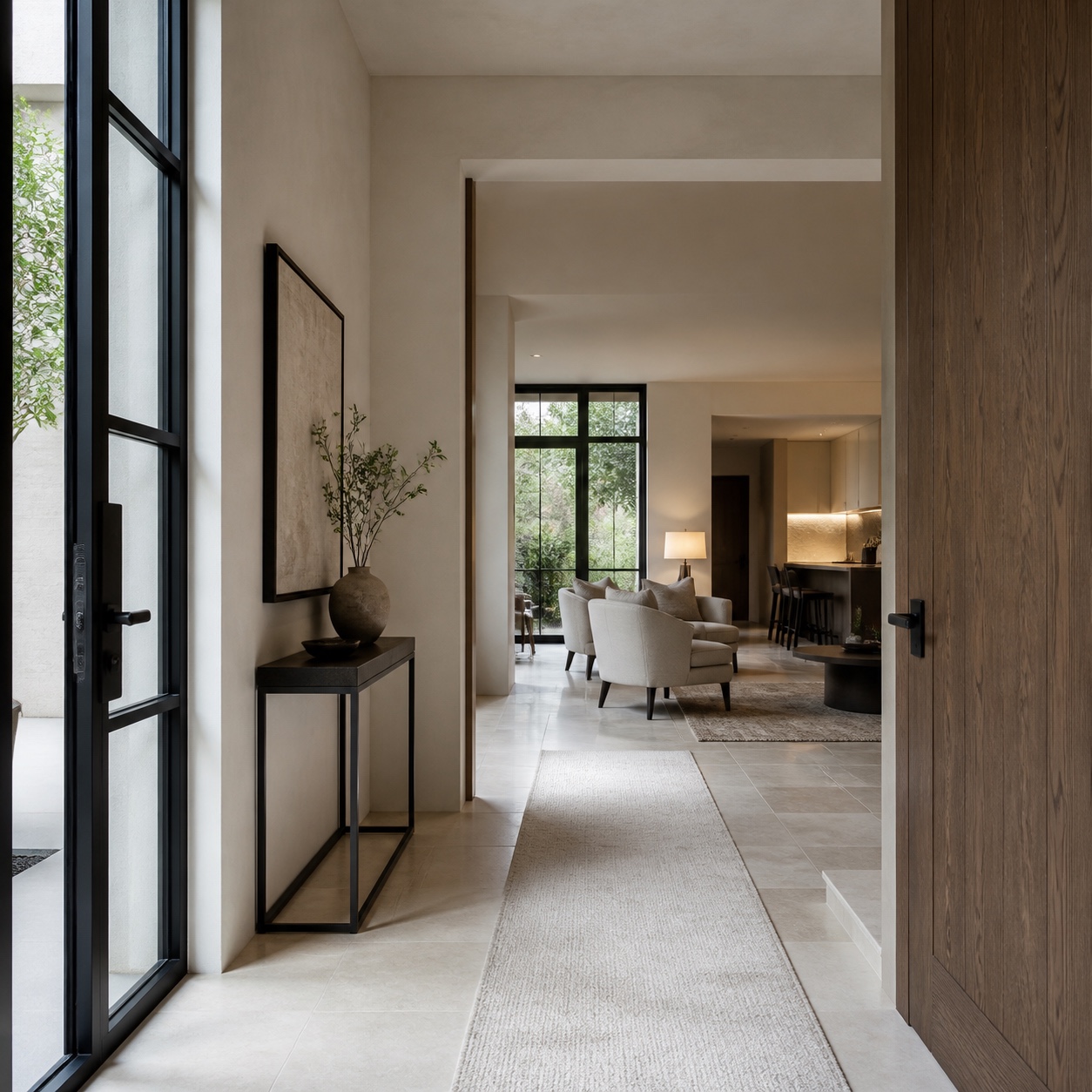
The entryway is small, but it sets the mood faster than almost any room.
A guest does not need a grand foyer. They need a place to land. Coat hooks, a slim bench, a mirror, and a basket for shoes can make even a narrow entrance feel considered.
I like mirrors in entryways because they bounce light, make the space feel wider, and let people check themselves without asking where the bathroom is. Hang the mirror for faces, not only for styling photos.
If the entry opens straight into the living room, create a visual pause. A runner rug, a console table, a plant, or a narrow bookcase can suggest “arrival” without building a wall. This is close to composition in drawing: you need foreground, middle ground, and background, even in a room.
Do not overfill the console. A lamp, small tray, and one sculptural object are enough.
Smell also starts here. I would rather use a clean beeswax candle, cedar, fresh greenery, or nothing at all than an aggressive plug-in scent. Strong fragrance can make a new house feel masked instead of cared for revenues of $37.5 billion
The entry is also where you hide the ugly but necessary things. Keep extra hangers in a closet. Leave a visible spot for bags so they do not end up scattered across the sofa.
For a deeper spatial angle, look at the same entry through entryway and hallway design essentials and the idea of creating flow from entryway to living room.
Make the guest bathroom feel quietly prepared
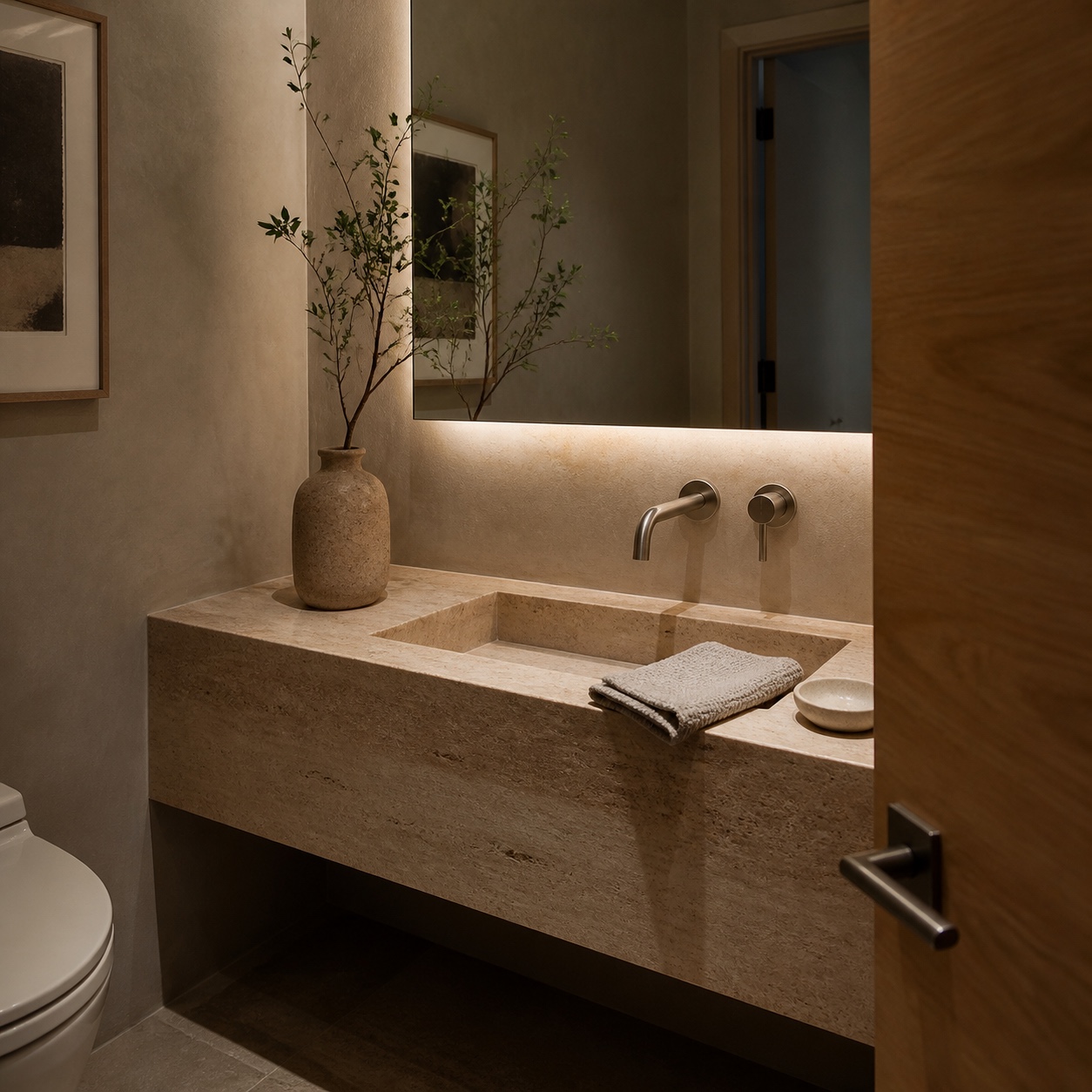
Guests notice bathrooms more than hosts think.
Not because they are judging. Because the bathroom is the one place where they are alone in your house. If it feels unfinished, cold, or poorly lit, they register it.
Start with the basics: fresh hand towel, visible soap, extra toilet paper, small trash bin, and enough light near the mirror. Put the backup toilet paper where a guest can see it or reach it easily. Nobody wants to open three cabinets in a house they just entered.
Then add warmth. A small framed print, a ceramic cup, a woven tray, or a textured hand towel can change the mood. Bathrooms are full of hard surfaces, so you need something matte or soft.
Lighting is the most common problem. One cold ceiling light makes skin look tired and tile look flat. If you can, use warmer bulbs and add side lighting near the mirror. Even a small plug-in night light in a powder room can help during an evening party.
Keep scent subtle here too. A clean room beats a perfumed room. If you use a candle, choose something quiet: sandalwood, hinoki, fig leaf, or plain beeswax.
Storage should look intentional. Put cotton pads, spare hand towels, or guest toiletries in one container rather than scattering them across the counter. If the room is tiny, use a wall hook instead of a towel bar.
The goal is not spa cosplay. It is comfort. Clean grout, warm light, a dry towel, and a place to set a phone will do more than a tray full of decorative bottles.
Let outdoor space take pressure off the house
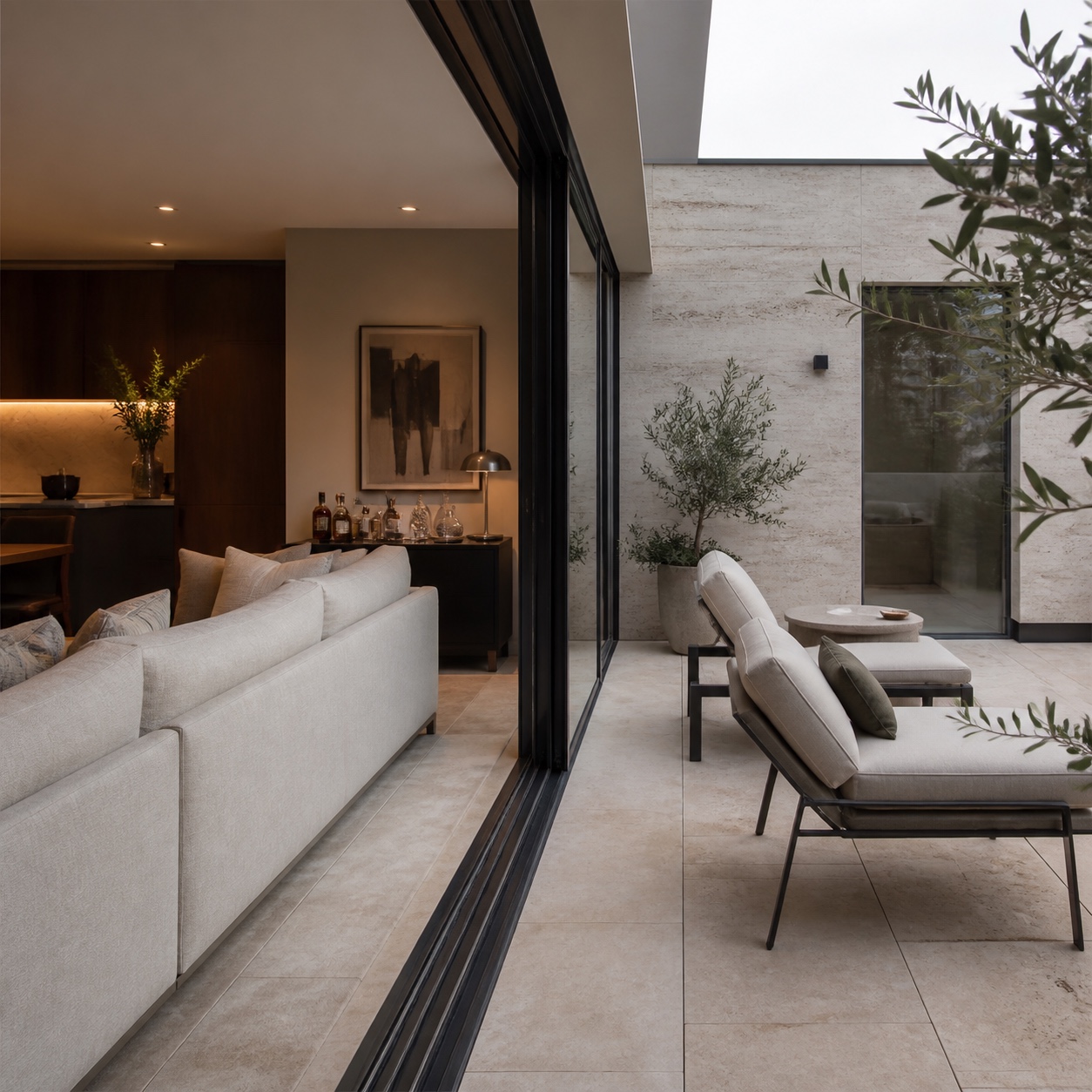
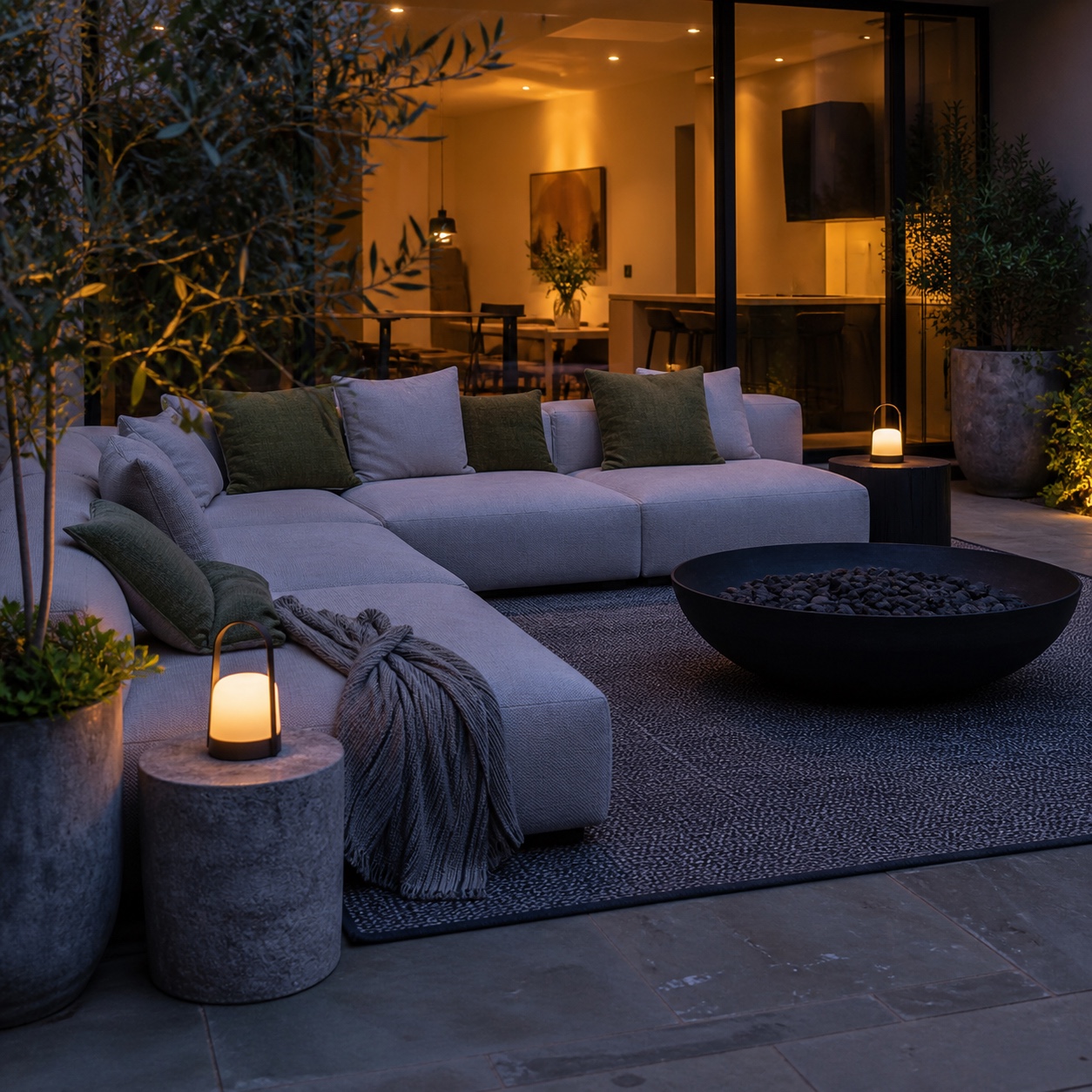
Even a small outdoor area can make a new house feel twice as ready.
A patio, deck, balcony, or front porch gives guests somewhere to drift. It also reduces pressure on the living room while the house is still in progress. You need a place to sit, a surface for drinks, and light that does not feel like a security flood.
Start with seating. Two chairs and a small table can be enough for a quiet corner. For larger groups, use a bench against a wall or a long outdoor sofa if the proportions work. Avoid furniture that is too deep for the space. Outdoor pieces often look smaller online than they feel in person.
Use an outdoor rug if the floor looks rough or disconnected from the house. It creates a room without walls. Choose a pattern that hides dust and leaves.
Lighting should come from more than one source. String lights can work, but try low lanterns, rechargeable table lamps, wall sconces, or warm step lights too. Keep the light low so people can see faces without sitting under a parking lot fixture.
If you serve food outside, make the path obvious. Guests should not have to cross through your cooking zone every time they want another drink. A small outdoor drink station, even just a tray on a side table, helps.
Plants are the easiest way to connect the outdoor area to the interior. Repeat one tone from inside: black planters with black window frames, terracotta with warm wood, pale stone with a minimal interior.
If the outdoor area will carry a larger crowd, Sky Rye’s patio entertaining guide and broader backyard entertaining tips both give you room-specific ways to build on the same idea.
Add personality before polish
A new house can look clean and still feel strangely anonymous.
That is the stage where many people buy too much decor too quickly. The rooms feel empty, so shelves fill with generic objects that have no relationship to the people living there.
Slow down.
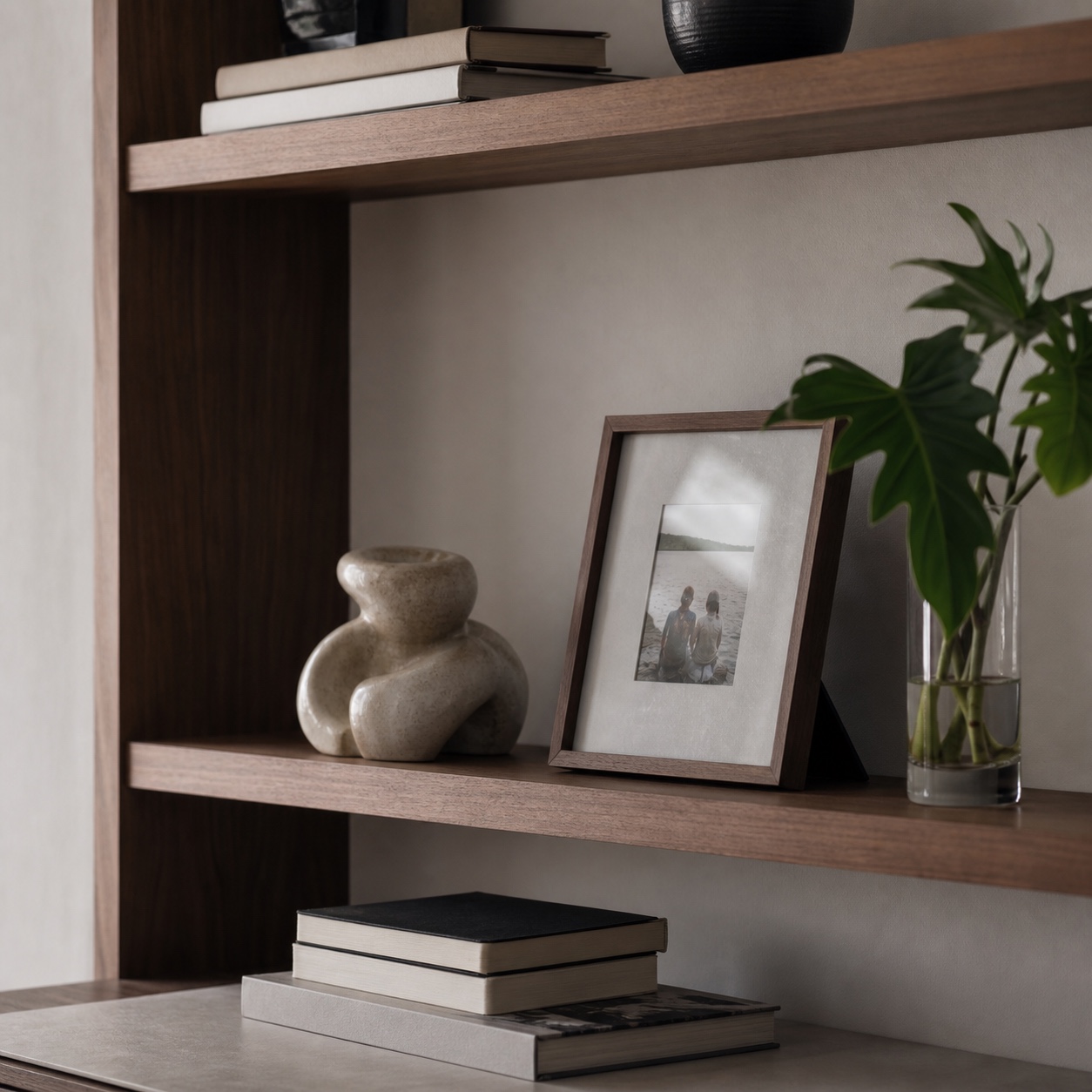
Personality does not mean clutter. It means evidence of taste, memory, and use: design books, family photos, a drawing near the desk, a ceramic bowl from a trip, a print by an artist you actually like.
I trust a room more when it has one slightly odd object. Not random. Specific. The kind of thing a person chose because it meant something, not because the algorithm served it next to a boucle chair.
Art is especially useful in a new house because it gives walls a point of view before every furniture decision is settled. You do not need a gallery wall on week one. Start with one strong piece above a console, sofa, or dining sideboard. Hang it at eye level, usually with the center around 57 to 60 inches from the floor.
Books work the same way. Do not style shelves like a store display. Mix vertical books, a few horizontal stacks, one object with weight, and empty space.
Plants help, but choose them honestly. If you travel often or forget watering, use snake plant, ZZ plant, pothos, or preserved branches. A half-dead fiddle-leaf fig is not a design feature.
The most memorable homes are rarely the most perfect ones. They have rhythm, small decisions that make sense together, and something guests want to ask about.
Keep rental pieces and backup items out of sight until you need them
Buying everything for one big event is usually a mistake.
If you host two large gatherings a year, you probably do not need twelve extra dining chairs living in your garage. Rent them. Borrow them. Put the money into pieces you use every week: lighting, rugs, art, comfortable seating, storage.
The same goes for linens, serving platters, extra glassware, heaters, and outdoor tables. Rentals can make sense for holiday dinners, milestone birthdays, or a large housewarming party.
Measure first. A 72-inch rectangular rental table sounds normal until it blocks a sliding door. Eight chairs need more room than the table itself.
If you use temporary pieces, keep the permanent design calm. Simple plates, clear glass, linen napkins, and warm light can make rented tables feel intentional.
A good home entertaining setup has two layers. The daily layer should look good on an ordinary Tuesday. The event layer comes out when you need more seats or more serving capacity.
That way your house does not become a storage unit for imagined parties.
FAQ
How do I make a new house ready for entertaining quickly?
Start with the rooms guests will actually use: entryway, kitchen, living room, dining area, bathroom, and outdoor space if you have one. Clear the walking paths, create one serving surface, set up a drink station away from the cooking area, and add warm lighting. Then add fresh towels, coat storage, and side tables for drinks.
What are the best home entertaining ideas for a small house?
Use flexible furniture. Lightweight chairs, nesting tables, stools, benches, and trays let you change the room without dragging heavy pieces around. Keep food and drinks in separate zones so guests do not crowd one doorway.
How should I arrange a living room for guests?
Aim chairs toward each other, not only toward the TV. A sofa with one or two angled chairs usually feels more social than a straight line of seating. Keep main walkways around 30 to 36 inches where possible, and add side tables within easy reach.
What should I prepare in the bathroom before guests arrive?
Put out a clean hand towel, visible soap, extra toilet paper, a small trash bin, and warm lighting. Add one detail that softens the room, such as a framed print or woven tray. Keep fragrance light.
Is an open concept kitchen better for entertaining?
It can be, but only if the zones are clear. Open rooms need anchors: an island, rug, pendant light, sofa back, or dining table that tells people where each activity happens. Without those cues, an open plan can feel noisy and undefined.
What should I rent instead of buying for a party?
Rent items you only need for rare large events: extra dining chairs, folding tables, linens, heaters, tents, or specialty glassware. Buy the pieces you use every week, like better lamps, side tables, comfortable chairs, and serving trays.
Final thoughts
A guest-ready home is not the same as a finished home.
Finished can take years. Guest-ready can happen in a weekend if you focus on flow, seating, lighting, serving surfaces, and the few small details people touch directly.
That is enough.
The best version of entertaining is not a performance. It is a house doing its job: holding people, food, conversation, and memory without making anyone feel careful around it.
- 58shares
- Facebook0
- Pinterest58
- Twitter0
- Reddit0