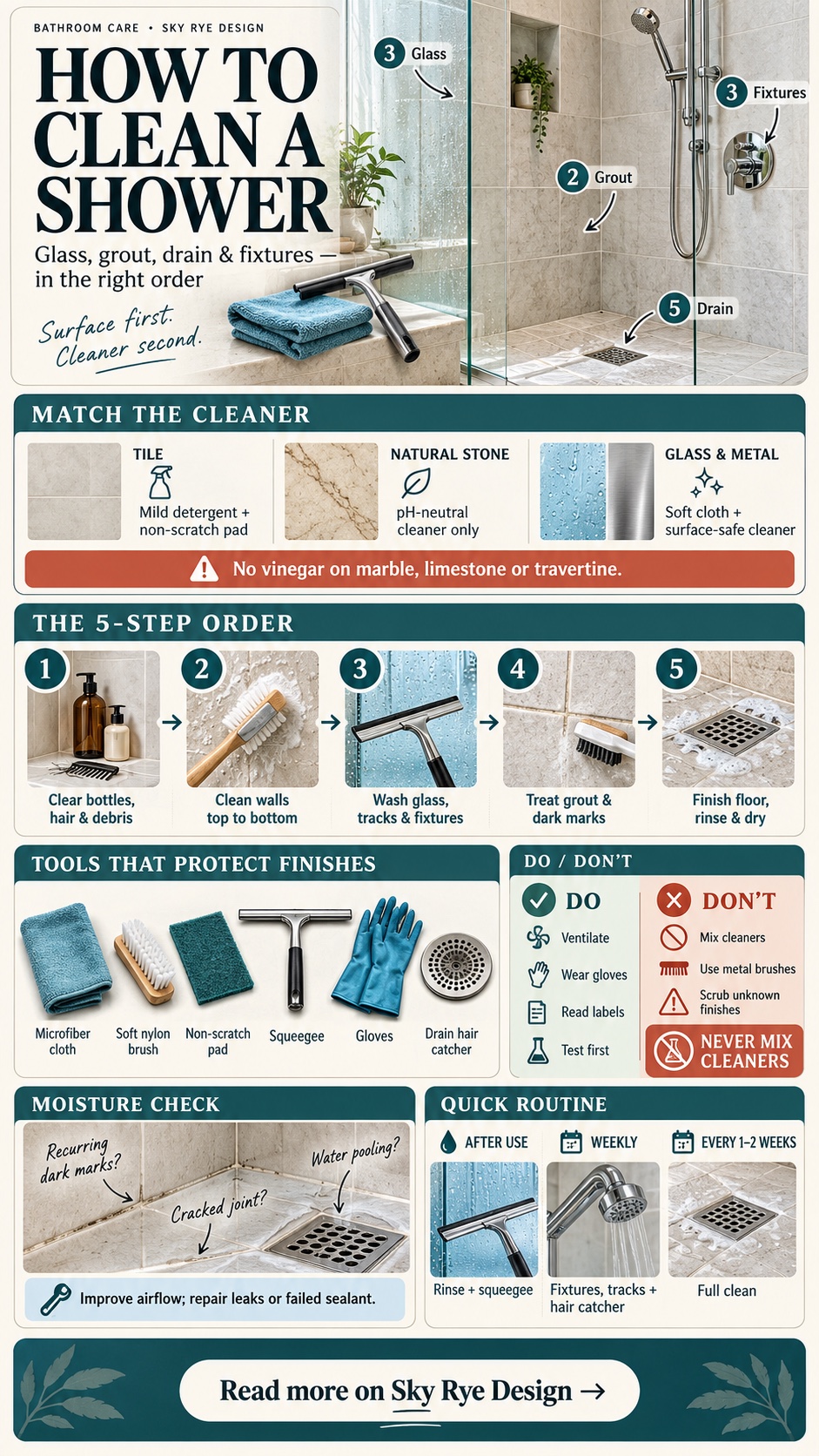
The safest way to learn how to properly clean a shower is to work from the least dirty surfaces to the dirtiest: clear loose debris, clean the upper walls, wash the glass and fixtures, scrub grout, then finish with the floor. The cleaner must suit the surface. A method that works on glazed tile can damage stone, plated hardware, or acrylic.
Open a window or run the exhaust fan, wear gloves, and read every label. Never mix cleaners: the CDC warns that bleach or disinfectants can produce dangerous vapors when combined with other products.
Match the cleaner to the shower surface
| Surface | Good starting point | Avoid |
|---|---|---|
| Glazed ceramic or porcelain tile | Mild detergent and a non-scratch pad | Steel wool and harsh abrasives |
| Natural stone | Stone-safe pH-neutral cleaner | Vinegar, lemon, and acidic descalers |
| Acrylic or fiberglass | Mild cleaner and soft microfiber cloth | Abrasive powder and rough scrubbers |
| Glass | Glass-safe cleaner and squeegee | Scrapers unless the maker approves them |
| Metal fixtures | Warm water, mild soap, soft cloth | Long acidic soaks and abrasive pads |
If you do not know whether a tile is porcelain or stone, test an inconspicuous area or ask the supplier. The Natural Stone Institute recommends neutral cleaners for stone and warns that vinegar can etch marble, limestone, and travertine. For joints, niches, and edges, see our bathroom tile layout guide.


How to properly clean a shower step by step
1. Clear bottles, hair, and loose residue
Remove toiletries, mats, and removable drain covers. Pick up visible hair instead of pushing it deeper, then rinse dust and loose soap residue with warm water. For a slow drain, start with the hair catcher and trap. The existing HG drain guide is one product-specific reference, but do not combine drain products.
2. Clean walls from top to bottom
Apply the correct cleaner in a controlled section, allow only the label’s stated dwell time, agitate gently, and rinse before it dries. A soft brush helps around corners and silicone edges. For easier-care material choices, see our sustainable bathroom design guide.
3. Wash glass, tracks, and fixtures
Use a glass-safe product, then pull a clean squeegee from top to bottom and wipe the blade between passes. Clean door tracks with a narrow brush and remove the dirty water with a cloth. Wash taps and shower controls with mild soap, rinse, and buff dry. Avoid soaking an unknown plated finish in vinegar.


4. Treat grout and recurring dark marks
Start with a grout-safe cleaner and a nylon brush. Do not attack the joint with a metal brush, which can erode the surface. Dark marks that return quickly can point to slow drying, failed sealant, or a leak. The EPA recommends running the bathroom fan or opening a window during showering because controlling moisture limits mold growth. Use our guide to shower warning signs if grout cracks, odors persist, or the wall remains damp.
5. Finish the floor and dry the enclosure
Clean the floor last so you do not stand in fresh product. Rinse thoroughly, check that water reaches the drain, then dry glass and fixtures with a microfiber cloth. This reveals streaks, damaged sealant, and places where water pools—details that also shape a modern bathroom design.


Shower-cleaning mistakes to avoid
- Mixing products. Follow the CDC’s bleach safety guidance: never combine bleach or disinfectants with other cleaners.
- Using one recipe everywhere. The Natural Stone Institute’s stone-care guidance specifically warns against acidic products on calcareous stone.
- Scrubbing before checking the material. Abrasive pads can haze acrylic, glass coatings, and plated fixtures.
- Ignoring moisture. The EPA’s mold and moisture guide emphasizes ventilation and moisture control, not repeated cosmetic cleaning alone.
A maintenance routine that takes minutes
After use, rinse obvious residue, clear the hair catcher, and squeegee the glass. Once a week, wipe fixtures and tracks and inspect grout and sealant. A deeper clean every one to two weeks is easier than removing months of buildup. When selecting future finishes, the low-maintenance home guide explains why fewer grout lines and durable surfaces reduce ongoing work.
If cleaning exposes cracked joints, loose tile, poor drainage, or failed silicone, move from maintenance to repair planning. Our bathroom renovation guide covers waterproofing, ventilation, fixtures, and handover checks. For better visibility while cleaning and inspecting surfaces, review the bathroom lighting guide.
Shower cleaning FAQ
What is the best order for cleaning a shower?
Remove bottles and hair, rinse loose dirt, clean the upper walls, then wash glass, fixtures, grout, the floor, and the drain. Rinse and dry the enclosure at the end.
Can I use vinegar on every shower surface?
No. Vinegar can etch marble, limestone, travertine, and other acid-sensitive stone. It may also affect some finishes and sealants, so check the manufacturer's care instructions first.
How do I clean a natural-stone shower?
Use a pH-neutral cleaner approved for the stone and sealer, plus a soft cloth or non-scratch pad. Avoid vinegar, lemon, acidic descalers, and abrasive powders.
How often should a shower be cleaned?
Squeegee glass after use when practical, clean high-touch surfaces and the drain weekly, and do a fuller clean every one to two weeks. Hard water may require more frequent care.
How do I stop a shower drain from clogging?
Fit a removable hair catcher and empty it frequently. If water still backs up, follow the drain manufacturer's guidance or call a plumber instead of combining chemical drain cleaners.
Why does shower grout keep turning dark?
Dark grout may be residue, mineral staining, or moisture-related growth. Use a grout-safe cleaner and improve ventilation. Recurring marks, cracks, or dampness may indicate failed sealant or a leak.
Do I need to disinfect the shower every time?
Routine cleaning with soap or detergent is usually enough. If disinfection is needed, choose a surface-safe product and follow its label. Never mix bleach or disinfectants with another cleaner.
For more material, layout, and maintenance ideas, browse the Sky Rye Design archive.
- 8shares
- Facebook0
- Pinterest8
- Twitter0
- Reddit0