My first hyper-realistic eye took eleven hours and still looked wrong.
Not terrible. Just wrong.
- What Hyper-Realistic Drawing Actually Is
- The Right Materials: What Actually Makes a Difference
- Core Techniques: Building the Illusion
- Creating Texture: Hair, Skin, Metal, Glass
- Artists to Study: What the Best Are Actually Doing
- Common Problems and What They Actually Mean
- Your Setup for a First Realistic Drawing
- FAQ: Hyper Realistic Drawing
- What is hyper-realistic drawing?
- How long does it take to learn hyper-realistic drawing?
- What pencils are best for hyper-realistic drawing?
- What paper should I use for hyper-realistic drawing?
- Can you do hyper-realistic drawing digitally?
- What is the hardest subject to draw realistically?
- How do I make my drawing look less flat?
- Where to Go from Here
The iris looked convincing. The eyelid crease was there. I’d even spent an embarrassing amount of time on tiny reflected highlights, convinced that was the thing separating “realistic” from “hyper-realistic.” It wasn’t.
The whole drawing felt flat, and I couldn’t figure out why until I held a piece of printer paper over the reference image and blocked everything except the dark shapes.
That was the problem.
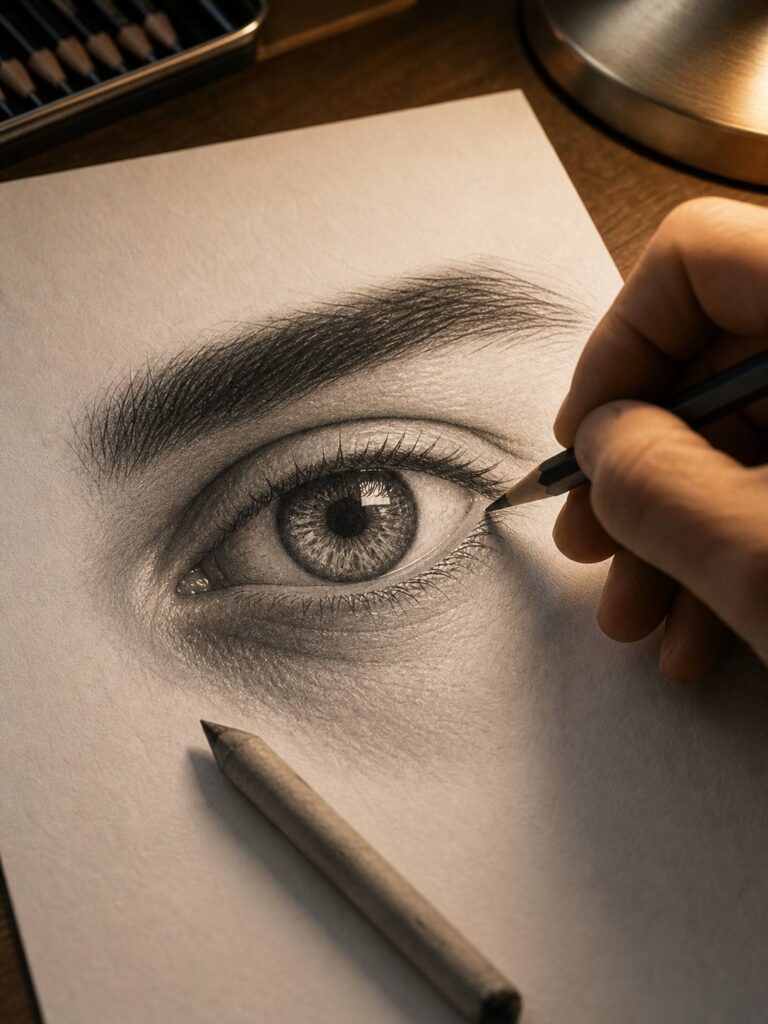
I’d been drawing the idea of an eye. Not the weird, uneven, slightly awkward thing that was actually sitting in front of me.
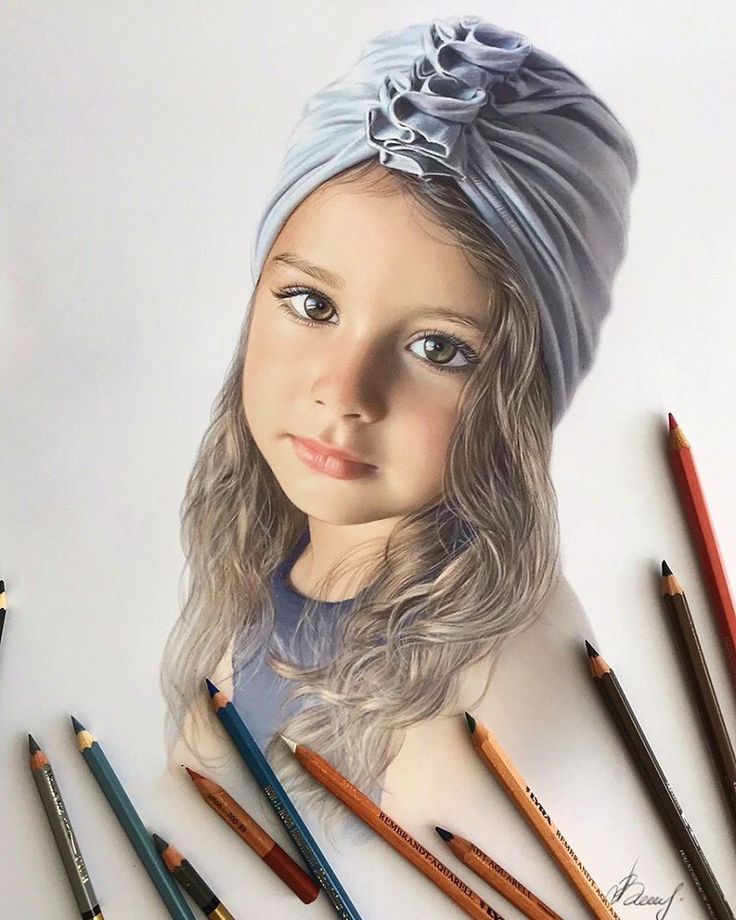
That’s the part people misunderstand about hyper-realistic drawing. Most beginners think the challenge is technical — better pencils, smoother blending, learning some secret shading trick YouTube artists forgot to mention.
Usually, it’s not.
Hyper-realism is mostly about seeing properly. Seeing where values shift by two percent instead of twenty. Seeing edges that almost disappear. Seeing how shadows change shape depending on what sits beside them.
The techniques are learnable faster than people think. Spend a weekend practicing graphite layering, edge control, pressure changes, blending, and you’ll improve quickly. But learning to actually observe? That takes longer. Sometimes frustratingly longer.
This guide gets into the practical side of hyper-realistic drawing: the tools worth buying (and the ones people oversell), the techniques that create believable depth and texture, how artists at the top level build drawings layer by layer, and the mistakes that keep making your work look slightly “off” even when you technically did everything right.
No lecture about expressing yourself. No dramatic speech about creativity.
Just the craft.
What Hyper-Realistic Drawing Actually Is
The term gets used loosely. Photorealism and hyperrealism are technically distinct art movements, though in drawing practice the line blurs. Photorealism, which emerged in the US in the 1960s with artists like Chuck Close and Robert Bechtle, aimed to replicate the look of a photograph with perfect fidelity. Hyperrealism, which developed from the 2000s onward, goes further: it introduces emotional weight, narrative, sometimes surreal elements, within a surface that reads as photographically detailed.
Hyperrealism vs Photorealism: What the Difference Means for Drawing
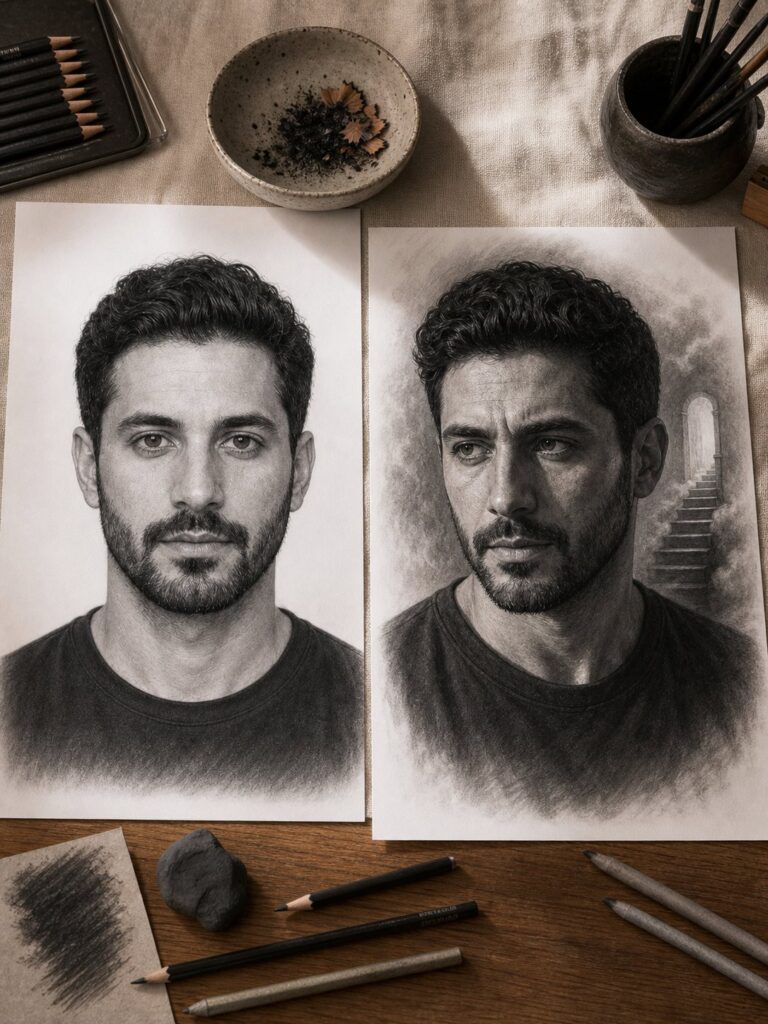
For practical purposes, the distinction matters because it affects what you’re aiming for. Pure photorealism is about perfect transcription. Hyperrealism is about creating an image that feels more real than real, which sometimes means pushing contrast slightly beyond what the source photo shows, or selecting the exact reference angle that maximizes texture and tonal drama.
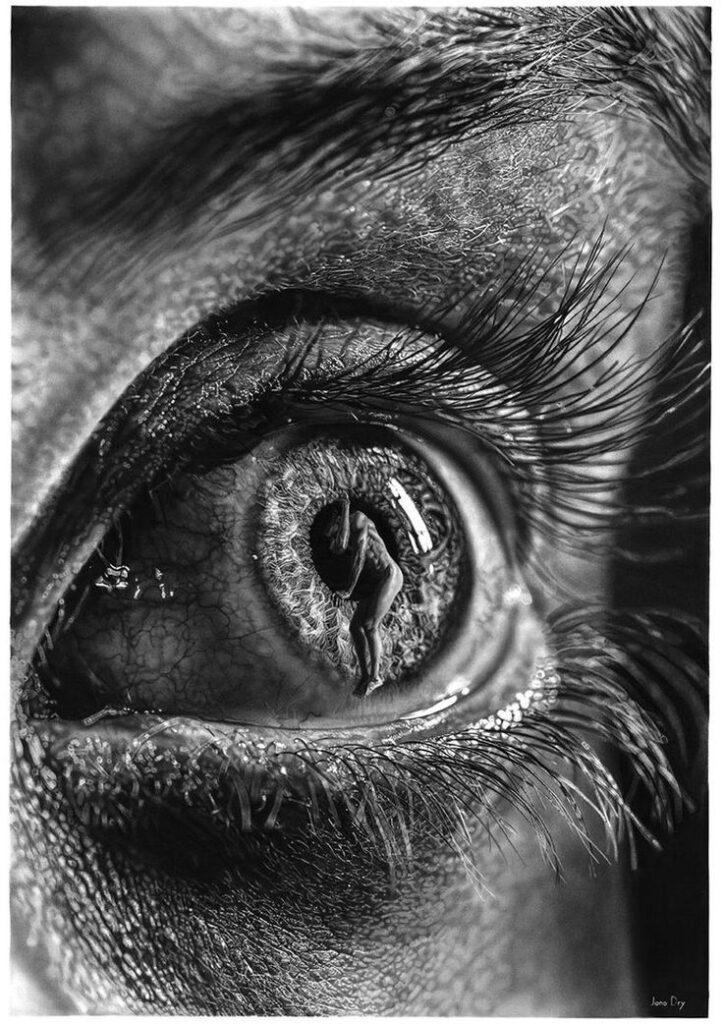
Artists like Jono Dry (South Africa) and Paul Cadden (Scotland) work in this space. Dry’s graphite portraits on large-format paper have the look of vintage photography with an unsettling emotional undertow that no photograph quite captures. Cadden uses graphite and chalk to create scenes so dense with observed detail that the drawings feel physically present. Neither is simply copying a photograph. They’re interpreting one.
Why Graphite Is the Default Medium
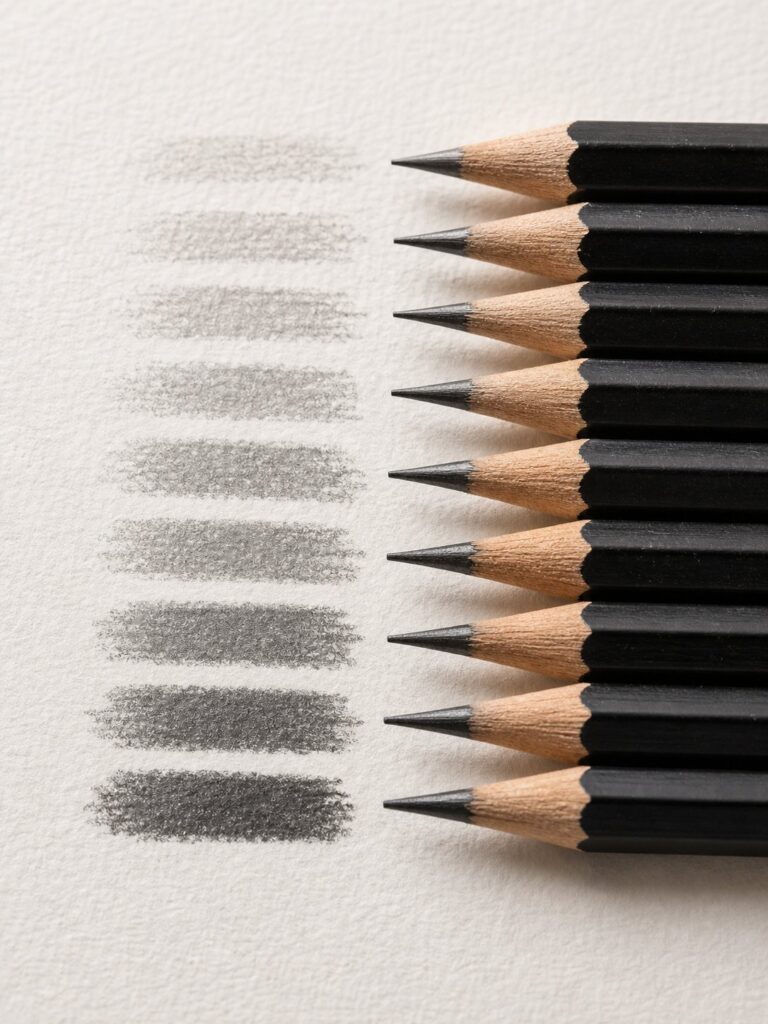
Graphite lets you work slowly. You can build a tone over twenty passes, each one barely changing anything, and the cumulative result is a gradient that doesn’t have visible edges. That’s the core technical advantage over most other dry media. Charcoal gives you rich darks faster but is harder to control at the fine detail end. Colored pencil allows for color information but the pigment layers differently. Graphite is forgiving in a way that suits the slow, observational process that hyperrealism requires.
The grading system runs from 9H (hardest, lightest) through HB (middle) to 9B (softest, darkest). For hyper-realistic work, a practical starting range is 2H through 6B. The H grades handle light areas and initial structure work. The B grades build the mid-tones and darks. You won’t typically use your hardest H grades much once you understand how lightly you can work with a softer pencil.
The Right Materials: What Actually Makes a Difference
Most material advice for realistic drawing overstates the difference between brands and understates the difference between paper types. I’ll try to correct that here.
Paper: Weight and Texture Are the Real Variables
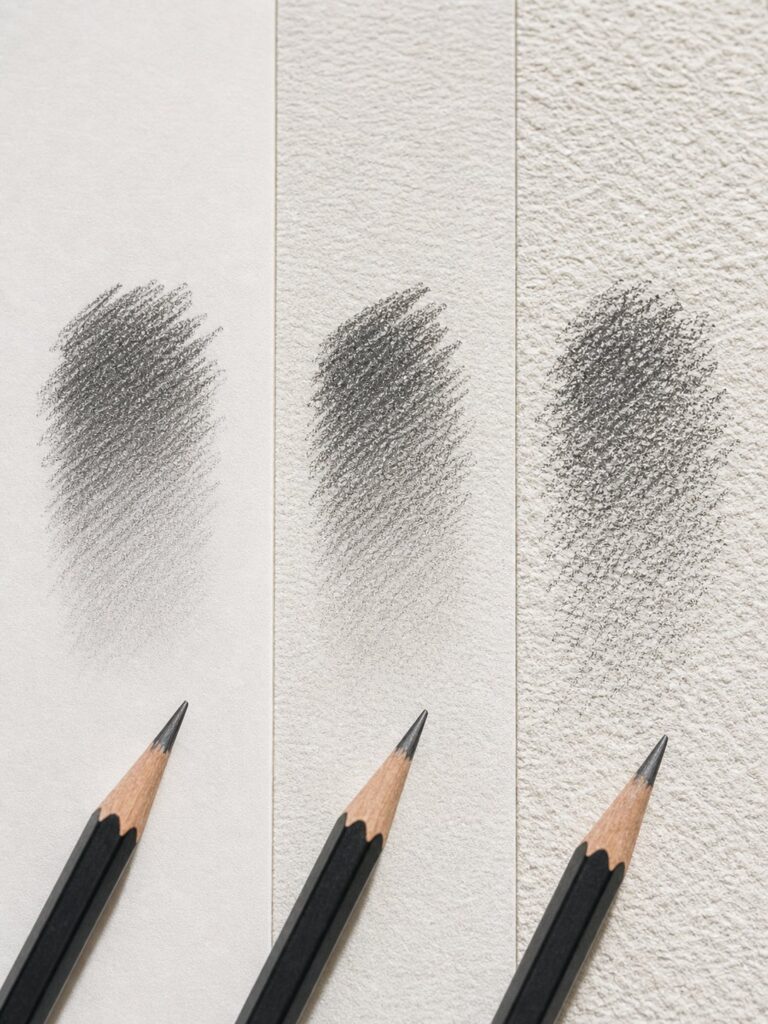
Smooth paper (hot press) is what you want for hyper-realistic graphite work. The smoother the surface, the more control you have over tiny tonal shifts. Textured paper grabs graphite unevenly and creates visible grain in your mid-tones, which is fine for expressive drawing but fights you when you’re trying to render skin or glass. Strathmore 400 series smooth bristol or Fabriano Artistico hot press are solid options in the $8–15 per sheet range for large-format work.
Weight matters because of the number of passes you’ll make. Lightweight paper (under 120gsm) starts to deform under repeated pressure and erasing, which creates surface irregularities that show in your shading. For serious work, 200gsm minimum. Some artists work on illustration board, which has no flexibility and accepts as many passes as you want without complaint.
Before chasing tiny details, revisit the core shading drawing techniques; clean value relationships make realism believable.
Graphite Pencils: What to Buy and What to Ignore
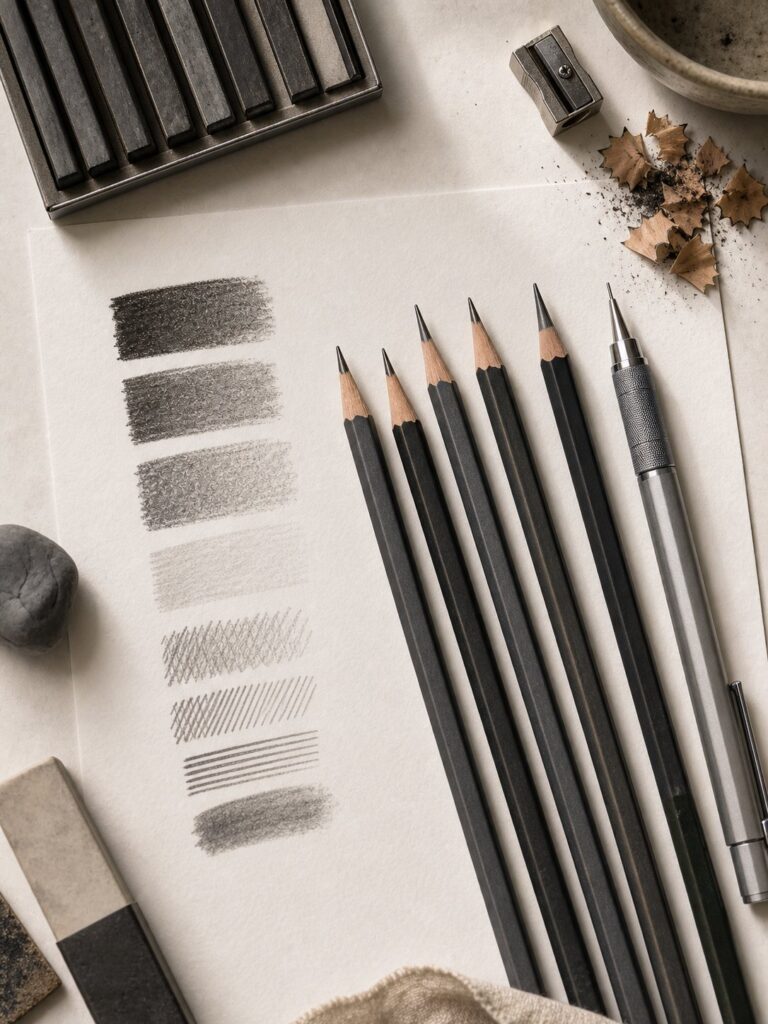
Staedtler Mars Lumograph and Faber-Castell 9000 series are the two most used brands among professional graphite artists. Both are consistent in their grading, which means a 4B from the same series will behave the same way across a long project. That consistency matters more than which brand you choose.
A mechanical pencil (0.3mm or 0.5mm) is worth owning for fine detail work, particularly in areas where a wooden pencil point degrades too fast. The tradeoff is that mechanical pencils only come in HB and 2B typically, so you’re using them for specific detail passes rather than general shading.
Starting Pencil Kit for Hyper-Realistic Drawing
2H, H, HB, 2B, 4B, 6B wooden graphite pencils from a single brand for consistent grading. One 0.3mm mechanical pencil in HB for fine details. Kneaded eraser for lifting and lightening. Vinyl eraser (Staedtler Mars or Pentel Hi-Polymer) for crisp corrections. Blending stump set (3 sizes). Tortillon for tight areas. Fixative spray (Winsor & Newton or Krylon) for protecting finished work.
Erasers: Not Just for Mistakes
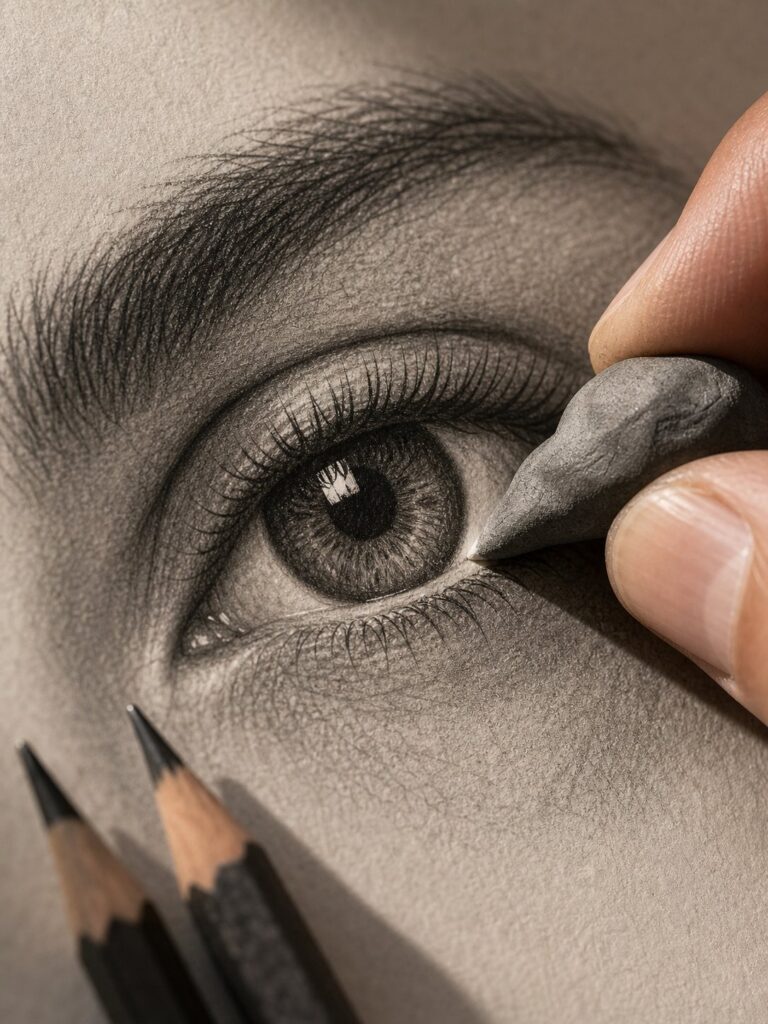
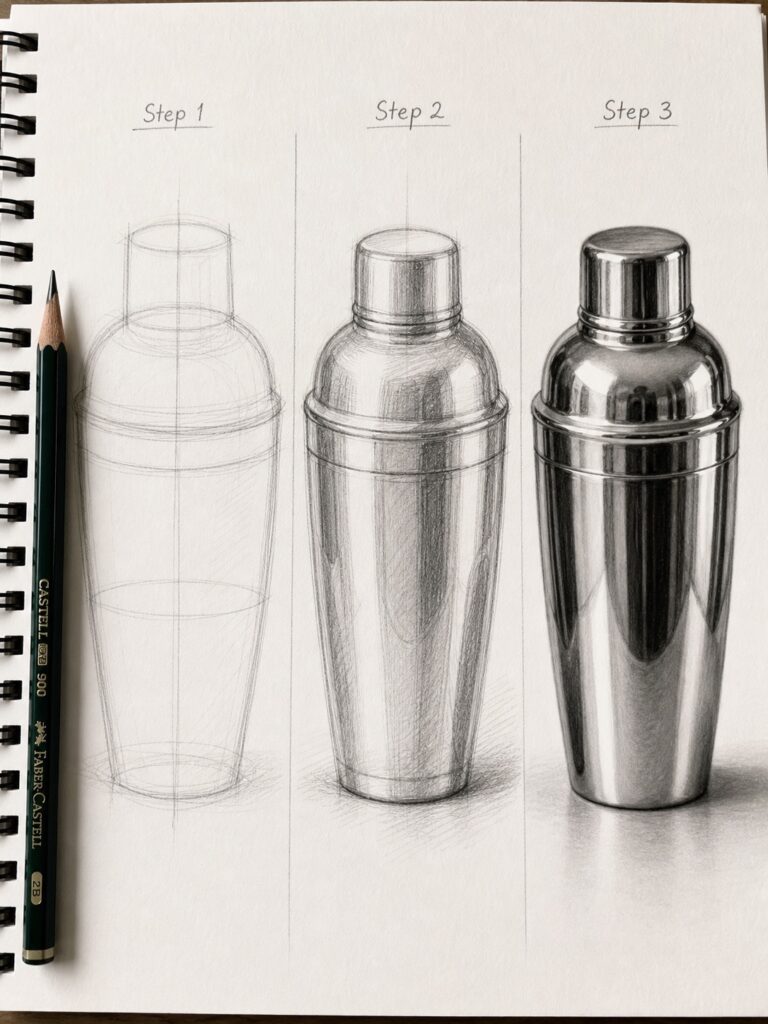
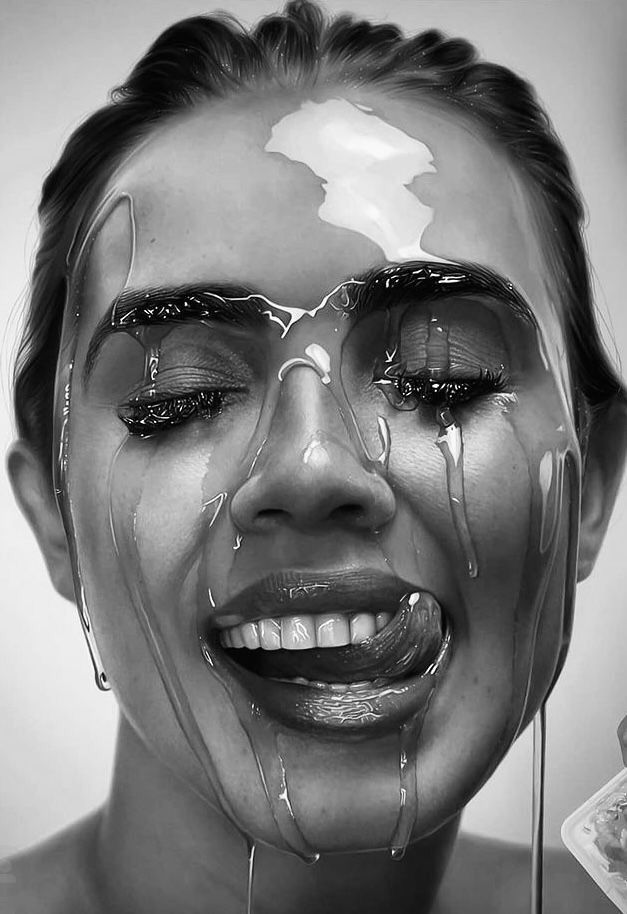
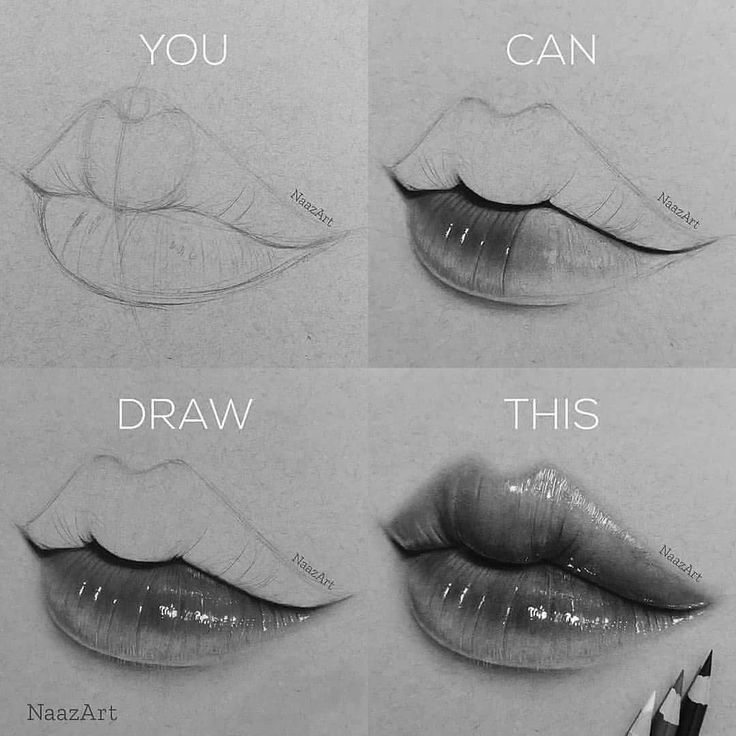
Most beginners use erasers defensively, to fix mistakes. In hyper-realistic work, they’re a primary mark-making tool. A kneaded eraser pressed to paper and pulled away lifts graphite without removing it completely, which creates soft mid-tone lightening. Rolled into a point, it can create fine highlights in hair, skin pores, or metallic surfaces. This technique is what creates the specular highlights (the bright white reflections) in glass or liquid that make those subjects look wet and three-dimensional.
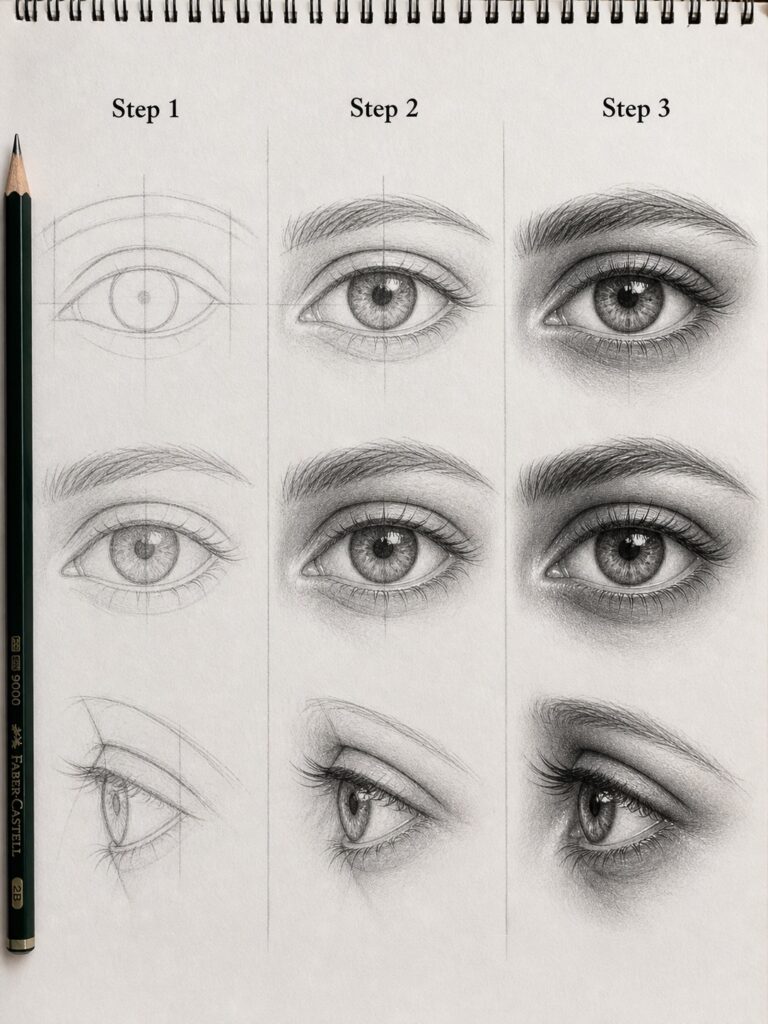
The vinyl eraser is for hard edges and precise corrections where you need to actually remove graphite cleanly. Used with a metal erasing shield (a thin metal template with cut-out shapes), it can create sharp bright edges in areas your pencil can’t reach easily.
Core Techniques: Building the Illusion
The techniques in hyper-realistic drawing are not especially complex. The difficulty is in applying them with the patience and observation they require.
Value First, Detail Second
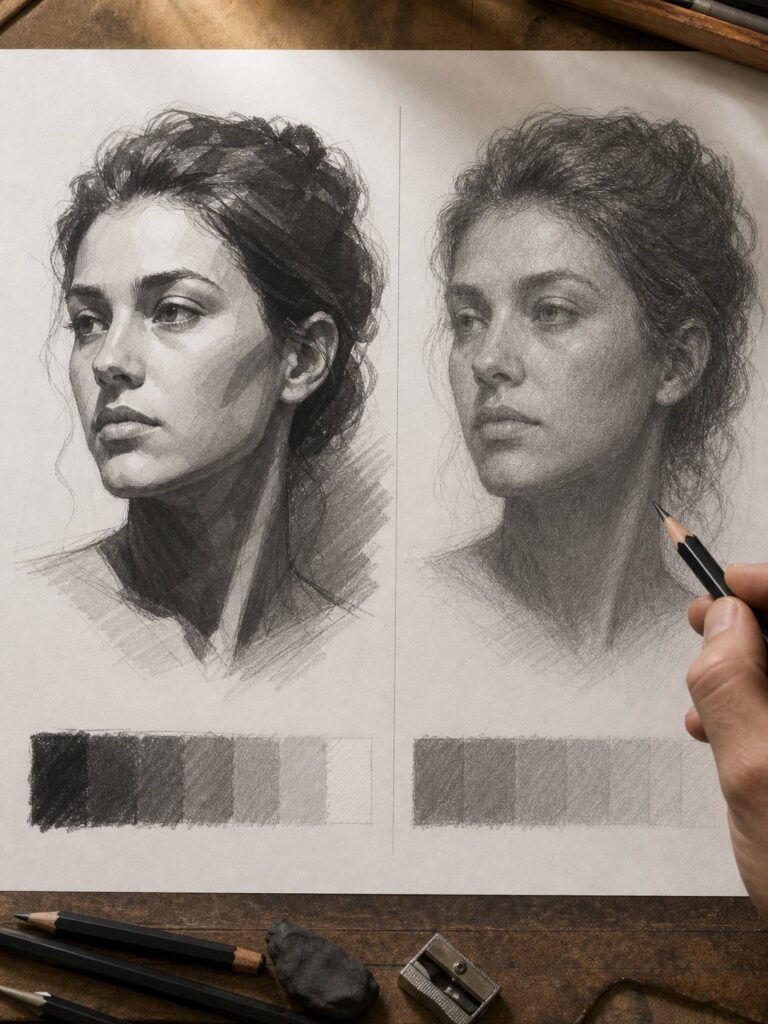
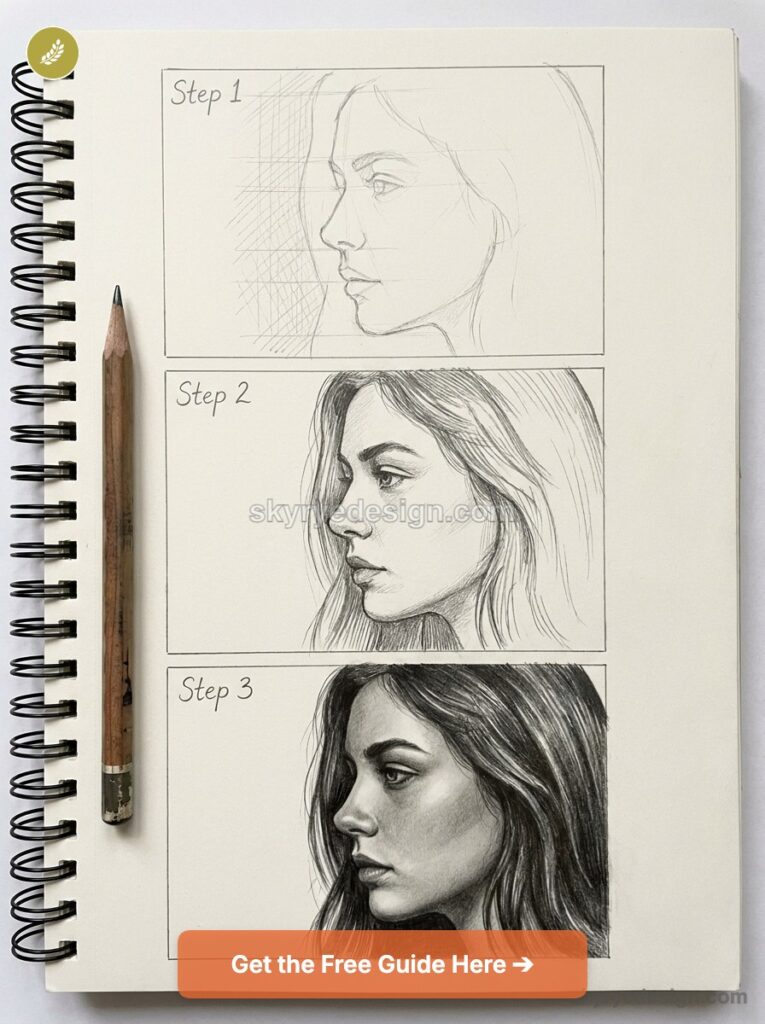
The single most common mistake in realistic drawing is adding detail before the value structure is correct. Detail without value reads as flat. Value without detail reads as a soft realism that still has spatial depth. If you have to choose, always get the values right first.
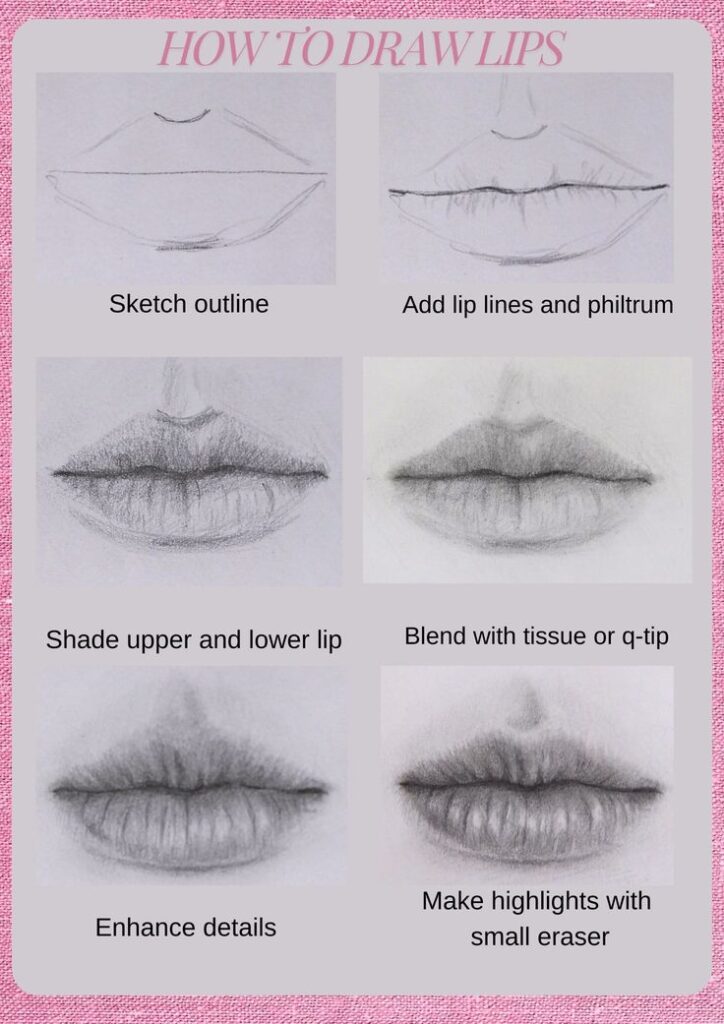
Value is the lightness or darkness of an area independent of its color or texture. In graphite, you control it through pressure and pencil grade. The best exercise: squint at your reference image until everything blurs into simple dark and light shapes. Those shapes are what you’re actually drawing. The texture and detail come later, as a layer on top of a correctly established value structure.
Before adding any detail to a section, hold your drawing at arm’s length and compare it to your reference. If the overall impression of darks and lights matches, proceed. If not, adjust the values before the detail.
Layering and Pressure Control
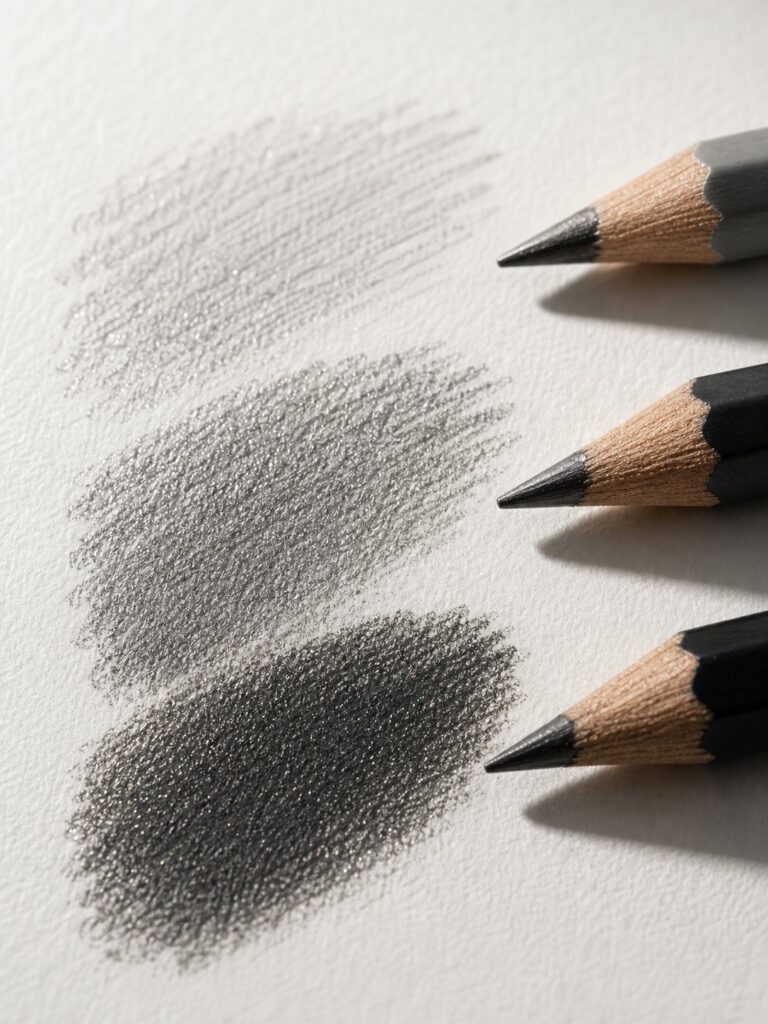
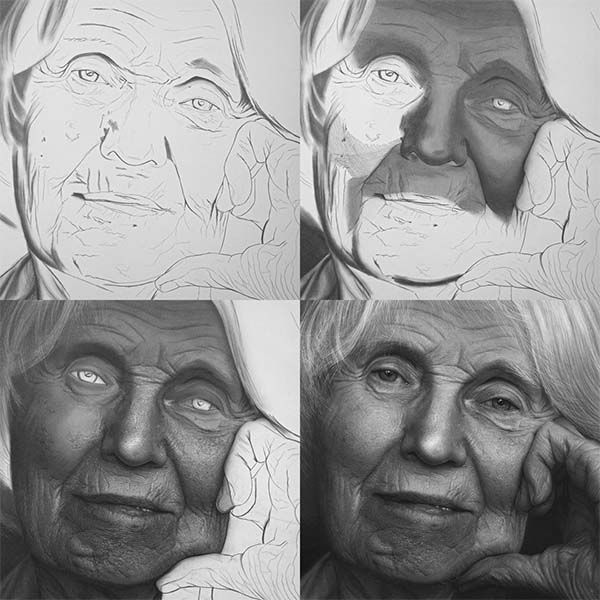
Hyperrealistic graphite work is built in layers, not in single passes. The sequence matters. Start with the lightest tone in a given area using an H pencil and a very light touch. Add a second pass with HB, slightly more pressure. Build toward the darkest tones with your B grades, which go last. Going dark early makes it very hard to control the final tone, because graphite applied over a saturated dark layer doesn’t blend cleanly.
Pressure control is the skill that takes the longest to develop. A single graphite pencil can produce a range of about five or six distinct values depending on how hard you press. Learning to produce consistent pressure across a broad area (so your gradients don’t have patches) takes deliberate practice. Work in small circular strokes rather than back-and-forth hatching when building broad tone areas. Jono Dry describes this in his Domestika course: small organic circles rather than rigid straight lines, specifically to avoid that mechanical look.
Blending Techniques
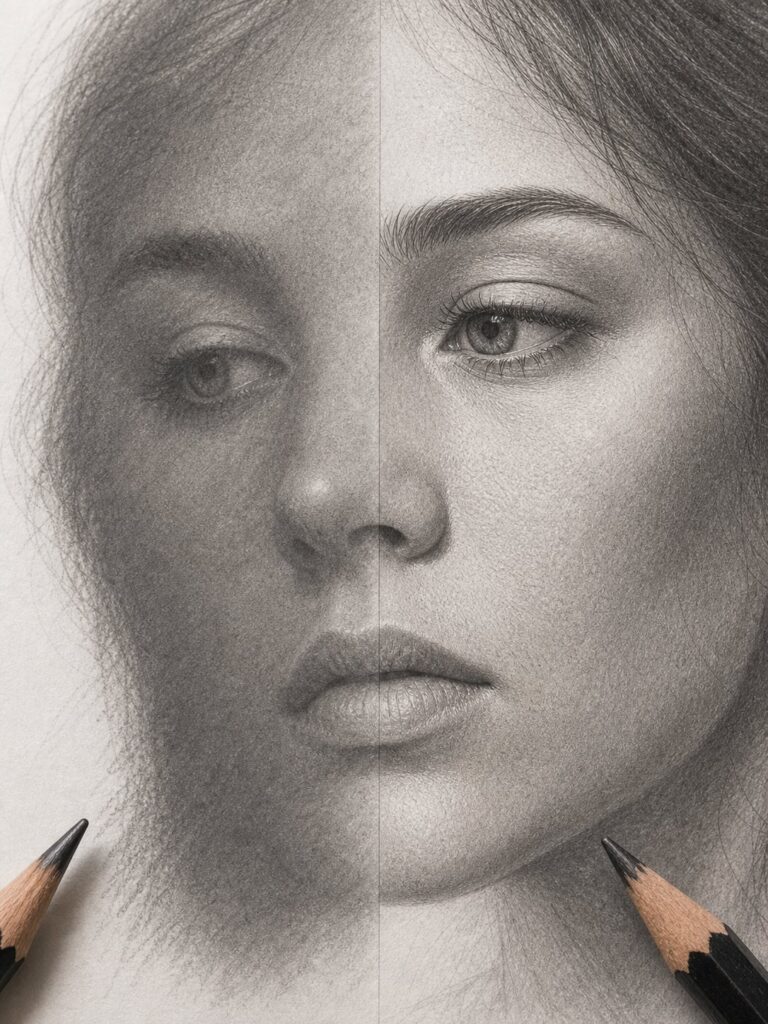
Blending stumps and tortillons both move graphite around the paper surface, creating smooth gradients. The difference: blending stumps are larger and suit broader areas; tortillons are tapered and give you more control in tight spots. Both work by pressing graphite particles into the paper tooth, which smooths the texture and creates softer transitions.
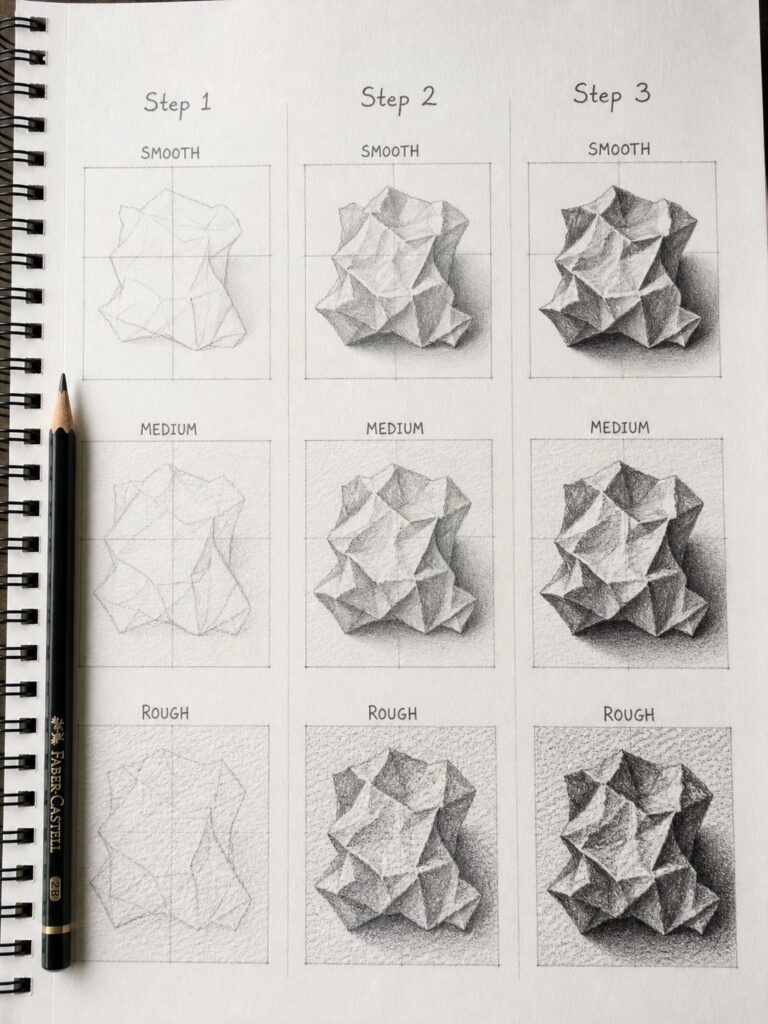
Blending is not a fix for bad value placement. Blending a badly placed dark into a light area just creates a muddy mid-tone, not a gradient. Blend after you’ve established that the tone you’re smoothing is actually correct.
Some artists (Armin Mersmann is one, known for his graphite woodland scenes that have appeared in over 150 exhibitions) use a soft makeup brush for very broad blending. The brush picks up loose graphite and distributes it gently without the pressure that a stump applies. Good for creating atmospheric backgrounds where texture needs to be minimal.
Creating Texture: Hair, Skin, Metal, Glass
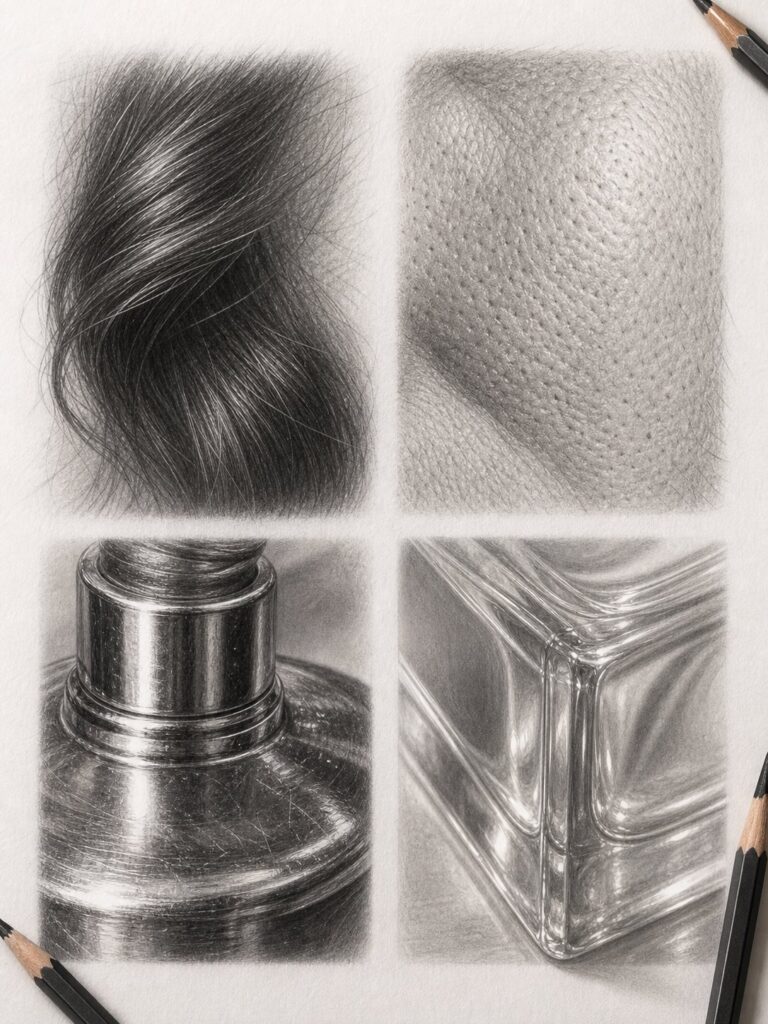
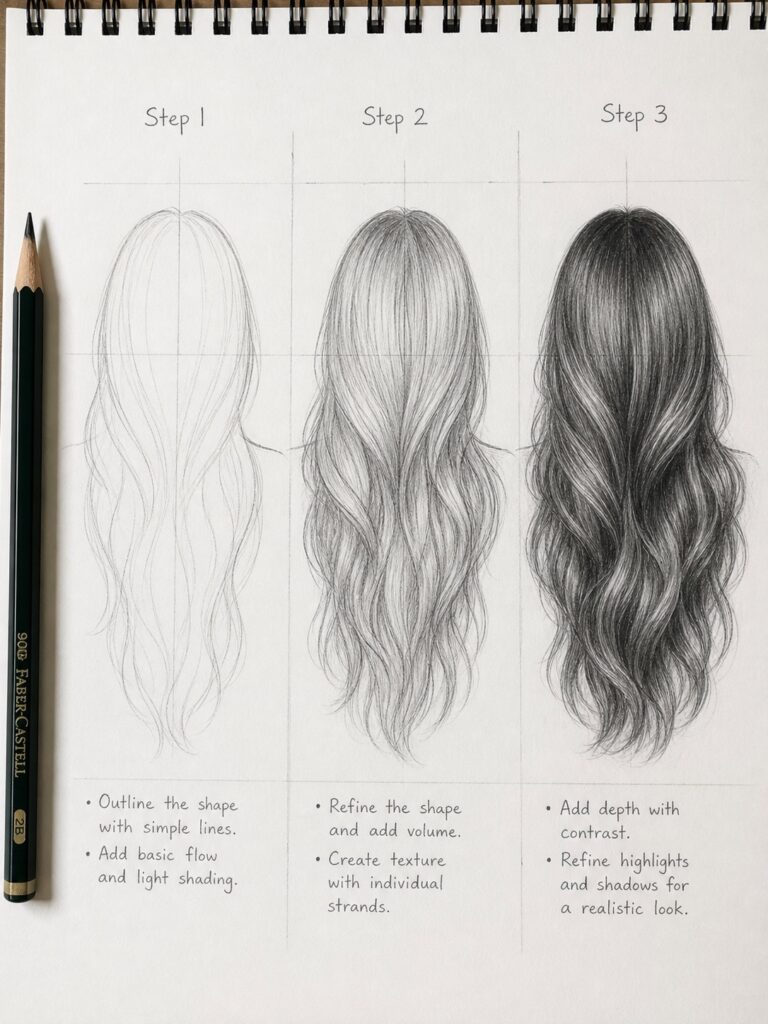
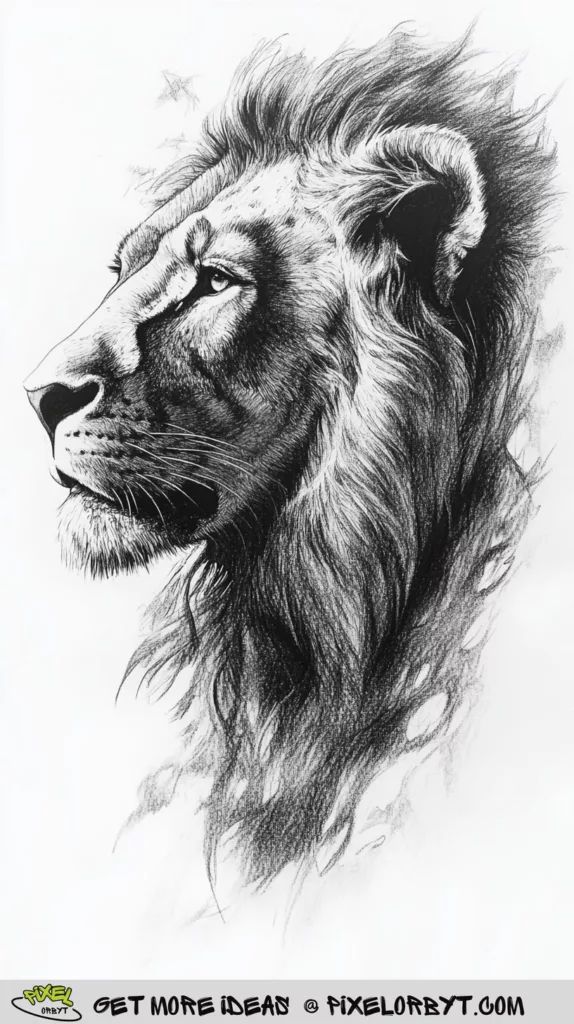
Hair is drawn strand by strand in the final detail pass, but the value structure underneath has to read as hair before you add the individual strands. That means the dark areas between hair sections need to be in place first. Then you work over them with fine lines in the direction of hair growth, varying pressure to create the light and dark strands. You’re not drawing every hair. You’re creating the impression that you could count every hair.
Skin texture at hyper-realistic scale shows pores, fine hairs, slight variations in surface sheen. The pores are drawn as tiny dark spots with slightly lighter rims. The fine hairs catch light and read as hairline bright lines. Both require a very sharp pencil point and a steady hand.
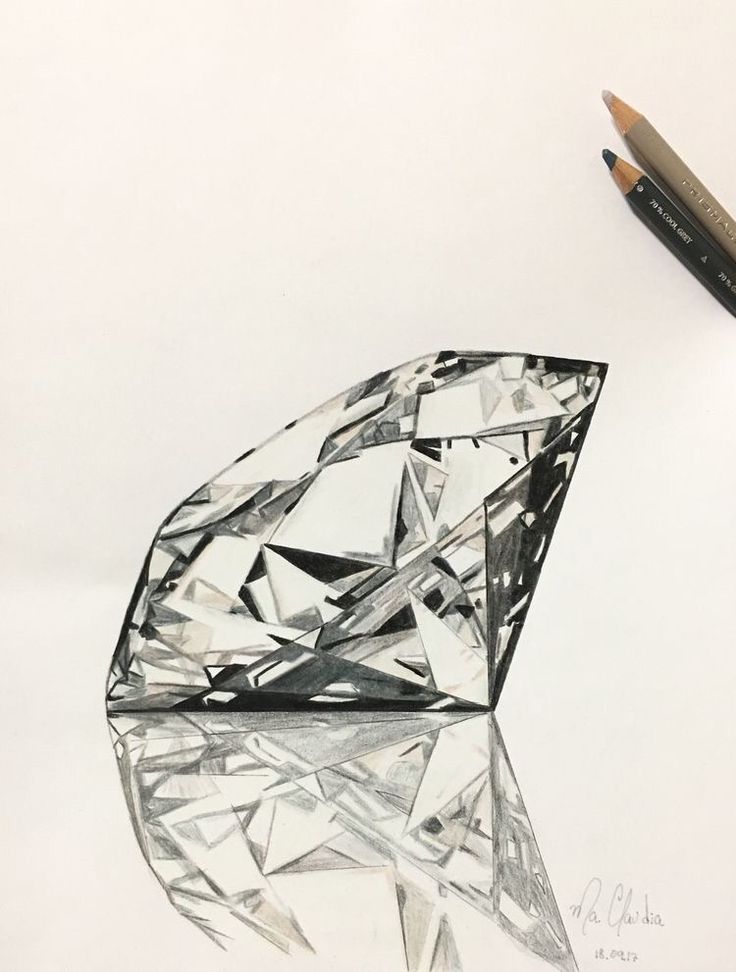
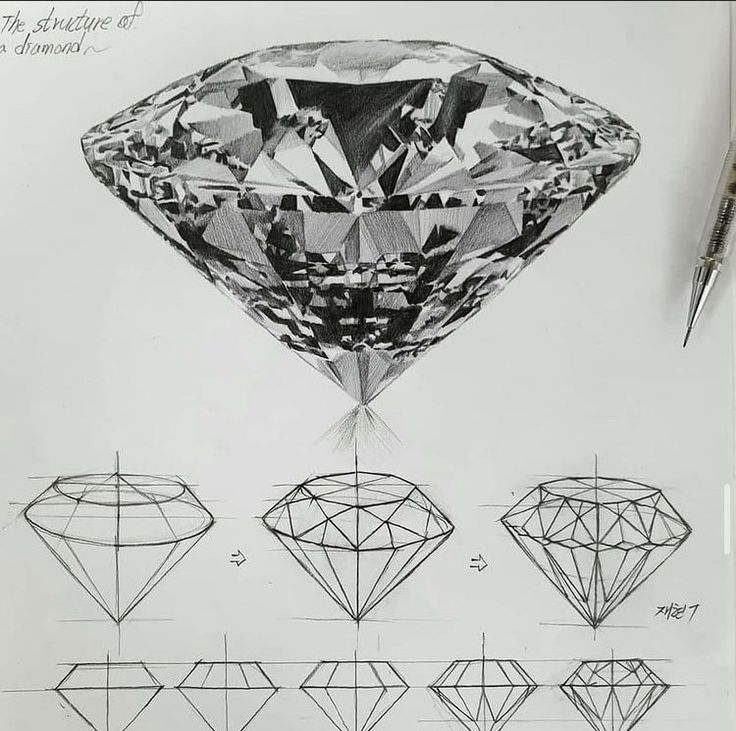
Metal and glass are about highlights and reflections rather than surface texture. A chrome surface has extremely high contrast between its darkest darks and its brightest whites. The bright whites are created with your kneaded eraser or a vinyl eraser with a sharp edge. Indian artist Sushant Rane has built his reputation on exactly this kind of object work (a fried egg, a shattered lightbulb, a condensation-covered Coke can), using graphite and Copic markers for his most detailed metallic surfaces.
Artists to Study: What the Best Are Actually Doing
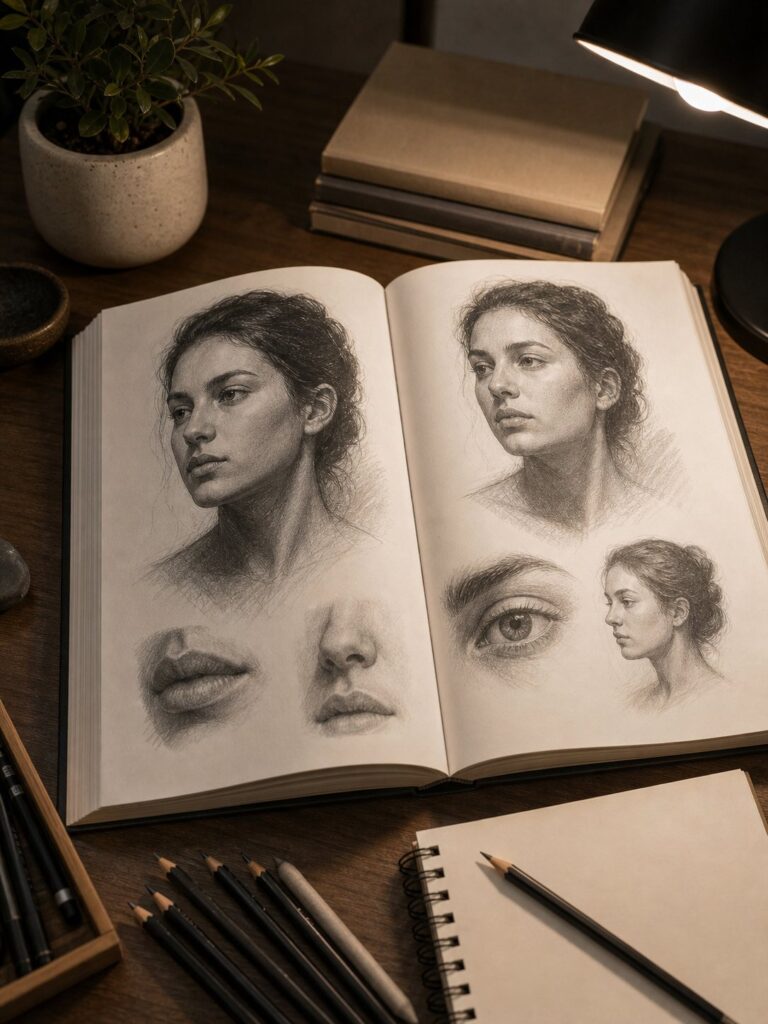
Art history is useful. Watching how specific working artists approach specific problems is more useful.
Jono Dry
South African self-taught artist. Works in graphite on large paper or board, often at scales where individual pencil marks become architectural. His style blends photorealism with a surreal or dreamlike quality. The surfaces look like vintage photography and then you notice something slightly wrong: a reflection that shouldn’t be there, an object out of context. Worth studying specifically for how he handles tonal range at scale, where the gradients have to hold over enormous areas.
Paul Cadden
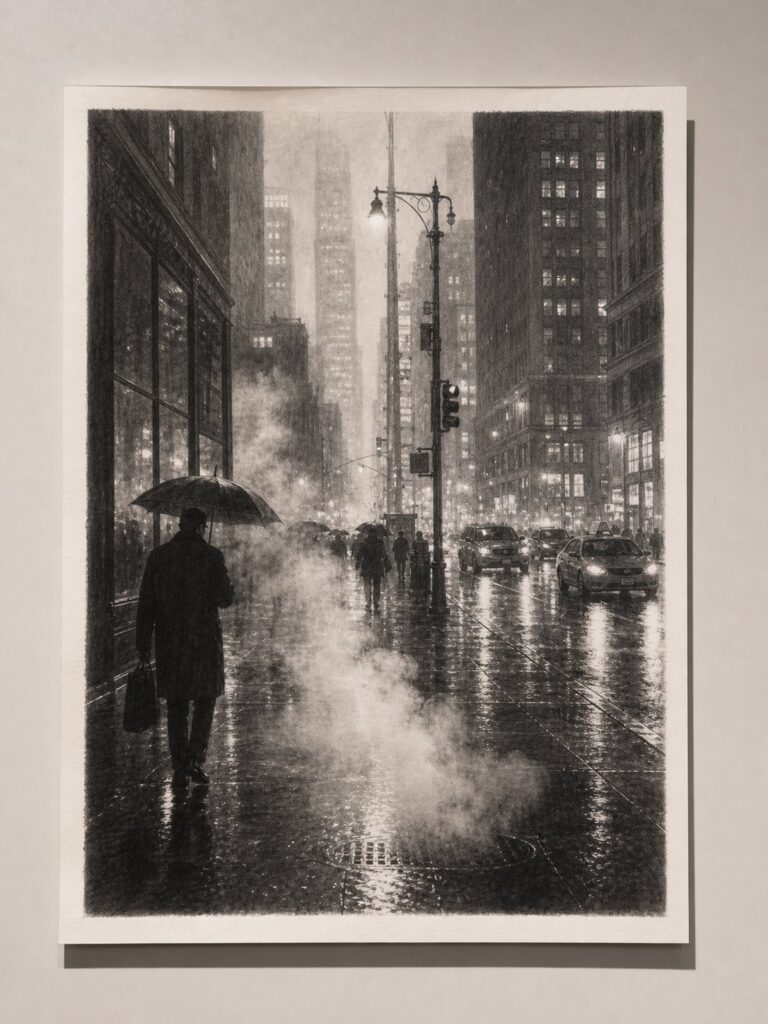
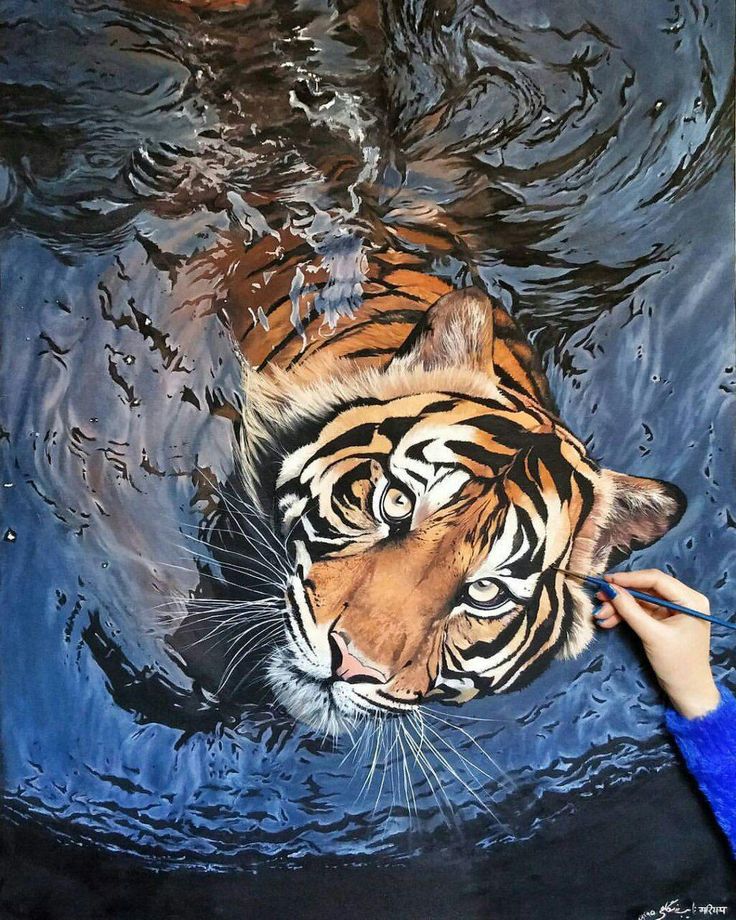
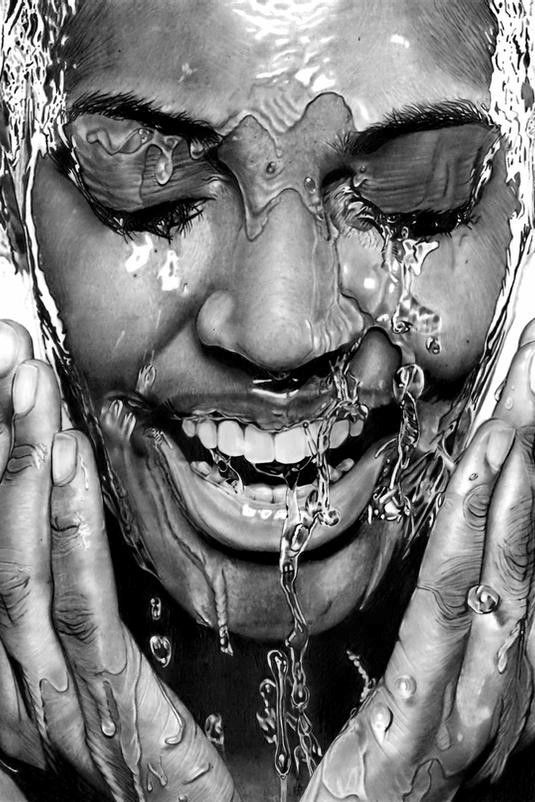
Scottish artist who works in graphite and chalk on large-format paper. Known for scenes that include water, steam, and urban environments rendered with a density of detail that makes the drawings feel physically cold or wet. Where most photorealists pick clean, well-lit subjects, Cadden gravitates toward atmospheric conditions that are technically harder to describe. Worth studying for texture handling: how he renders water droplets, steam, concrete.
Armin Mersmann
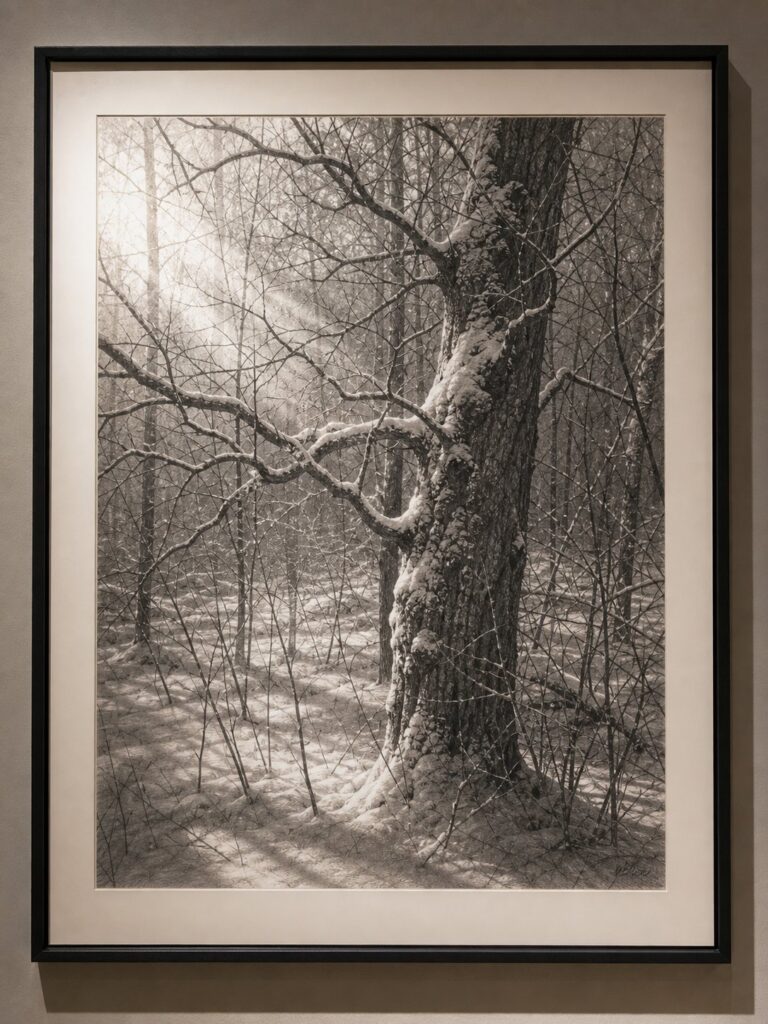
German artist known for graphite woodland scenes. Mersmann has said the drawing process for one piece can involve hundreds of hours of observation, with site visits and multiple reference sessions. He uses a soft makeup brush for broad atmospheric blending and builds the fine detail of branches, bark, and snow afterward. His framing of the process: “The very act of drawing every branch, twig, highlight and shadow transforms the scene into an intimate journey.” Good model for how to approach subjects with thousands of individual elements without losing structural coherence.
Kohei Ohmori
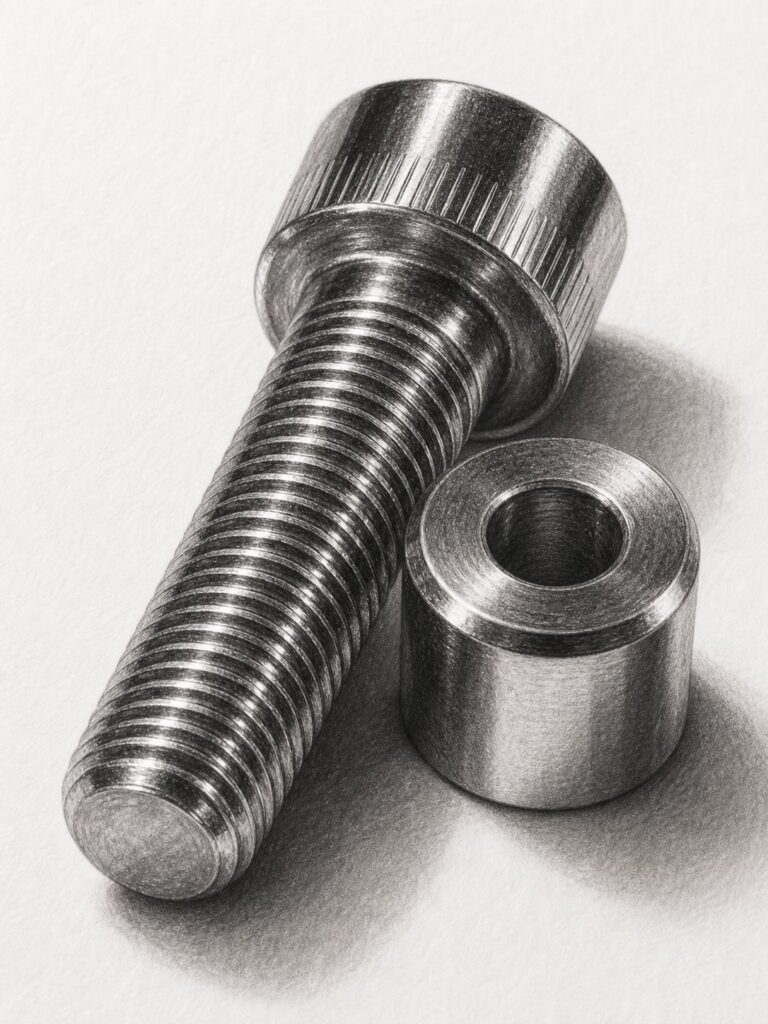
Japanese artist who specializes in metallic objects: bolts, pipes, machine parts. His graphite work has an almost surgical precision in how it handles specular highlights. The surfaces look like they have physical weight. Worth studying specifically if you want to understand how metallic sheen works in graphite: the relationship between the dark reflections of surrounding objects and the bright specular points that create the sense of shine.
Common Problems and What They Actually Mean
The Drawing Looks Flat
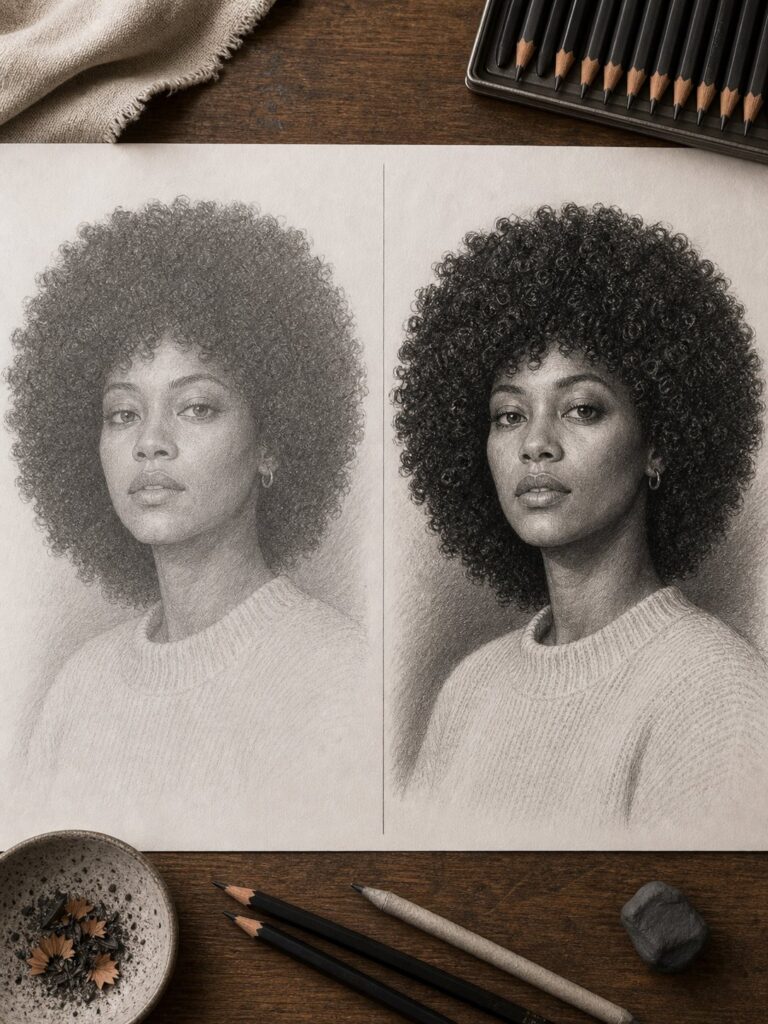
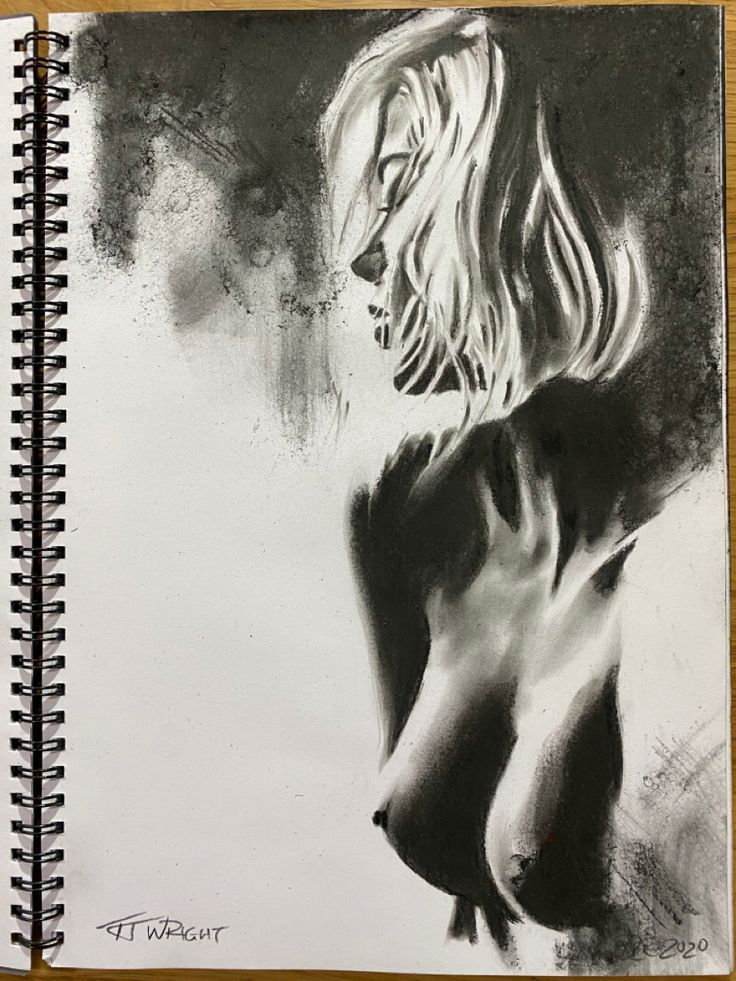
This is almost always a value problem. The darks aren’t dark enough. Beginners consistently stop short of the darkest values in their reference because pushing graphite that far feels risky. But a hyper-realistic drawing needs to go to near-black in the shadow areas to create the contrast that makes the light areas look bright. Compare your darkest area to your reference by holding a piece of white paper next to the drawing and a piece of white paper next to the reference photo. If your shadow looks grey in comparison to theirs, you have your answer.
Blending Looks Muddy
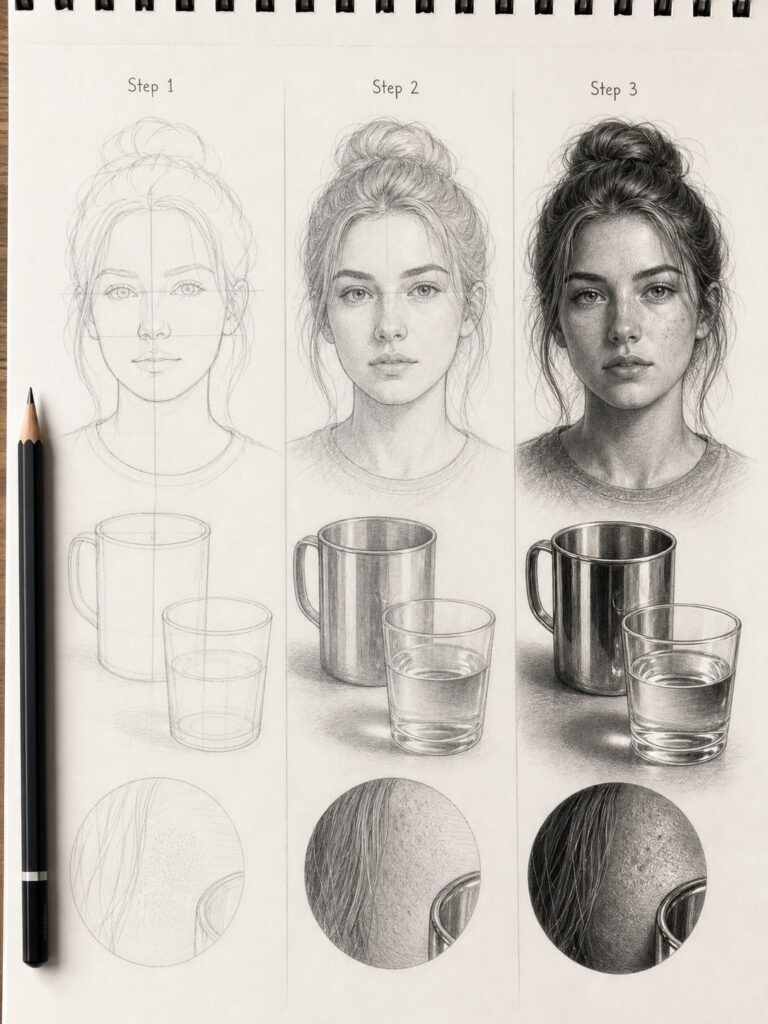
Muddy blending usually means you’re blending areas with different tones before you’ve correctly established the boundary between them. Or you’re blending with a dirty stump that carries graphite from a dark area into a light one. Keep multiple stumps and clean them (on scrap paper) frequently. Blend within a tonal zone, not across the edge between a dark and a light zone. The edge itself is handled with a fresh pencil pass, not blending.
Hair Looks Like Repeated Stripes
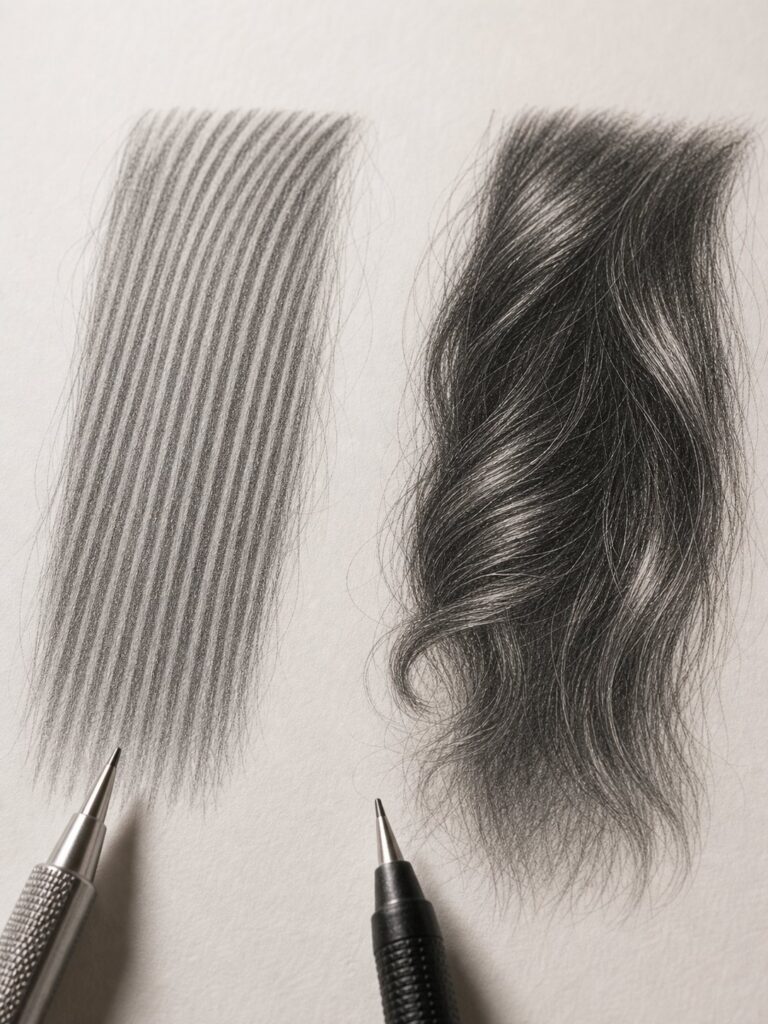
This means you went to the hair detail before establishing the underlying value structure. Hair doesn’t read as hair because of individual strands. It reads as hair because of how the light falls across groups of strands, creating dark masses and bright sweeps. Get those dark masses and light sweeps in place with broad tonal shading first. Then the individual strand detail, applied in the direction of hair growth with a very sharp pencil, sits on top of a structure that already reads correctly.
The Drawing Takes Too Long
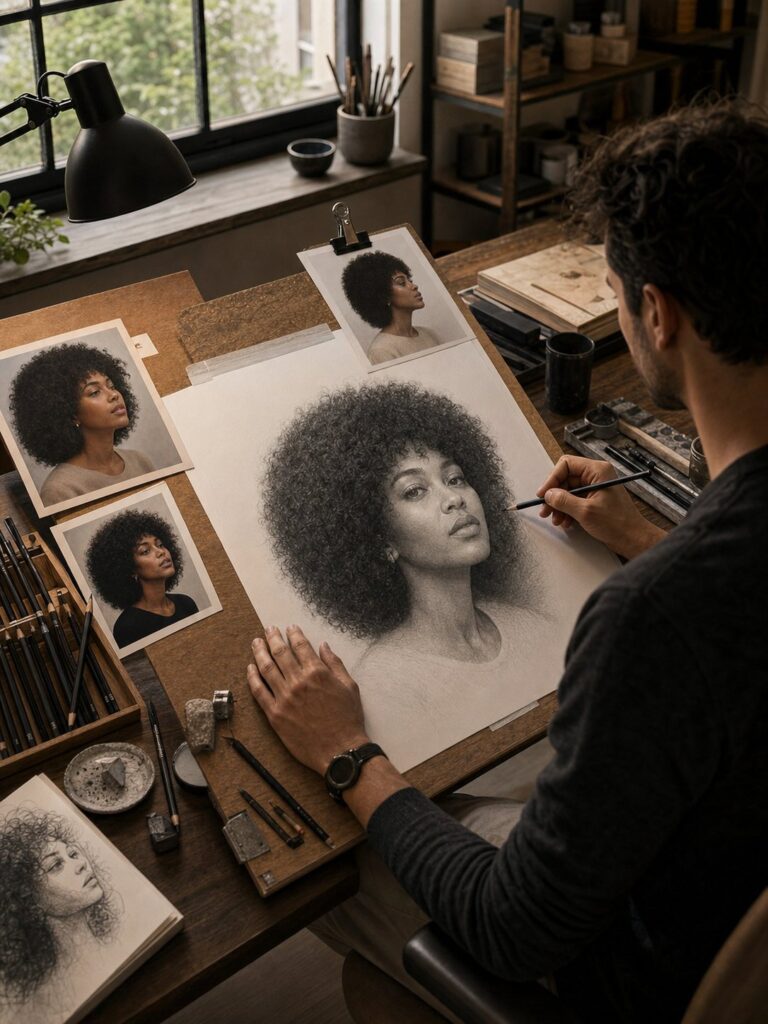
It takes as long as it takes. A professional hyper-realistic graphite portrait at A2 size is 40 to 100 hours of work. This isn’t something to optimize away. What you can do is work more deliberately during each session, which means checking values before adding detail, working section by section rather than skipping around, and accepting that the first quarter of the work often looks underwhelming and the final quarter does most of the visible work.
Ginny Morello, a Canadian self-taught artist who works with charcoal, pencil, blending stumps, and a soft makeup brush, describes her process as working in long focused sessions on one section at a time. Not dabbling across the whole piece. The focus keeps the tonal relationships within a section consistent.
Your Setup for a First Realistic Drawing
Reference and Grid Setup
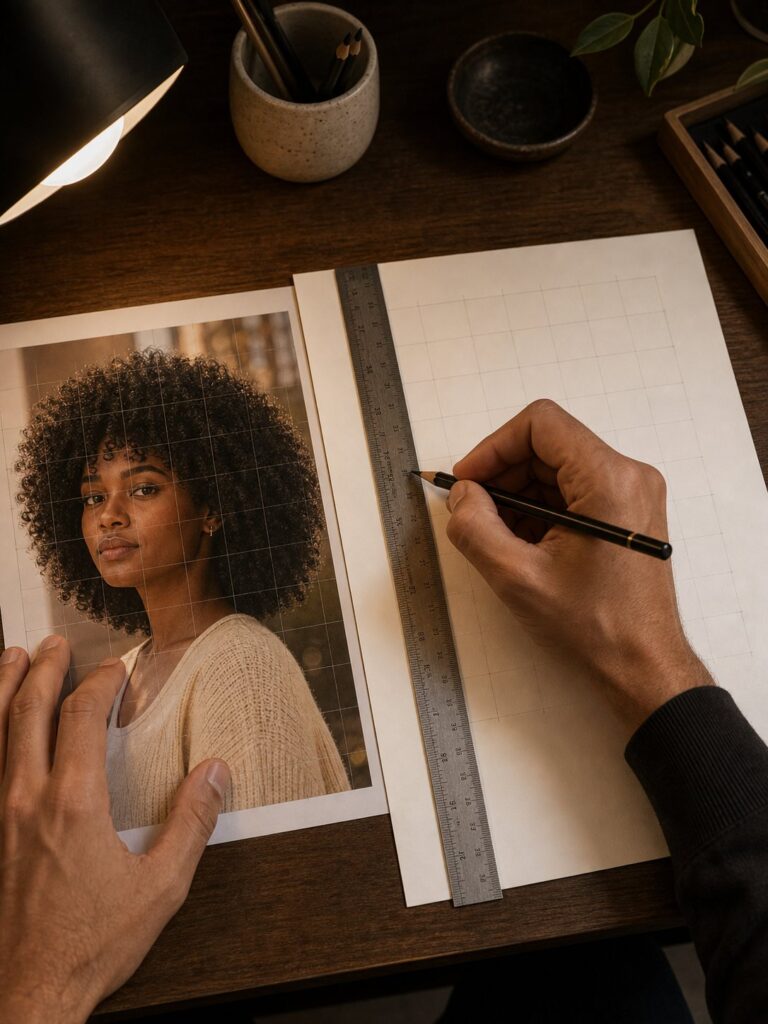
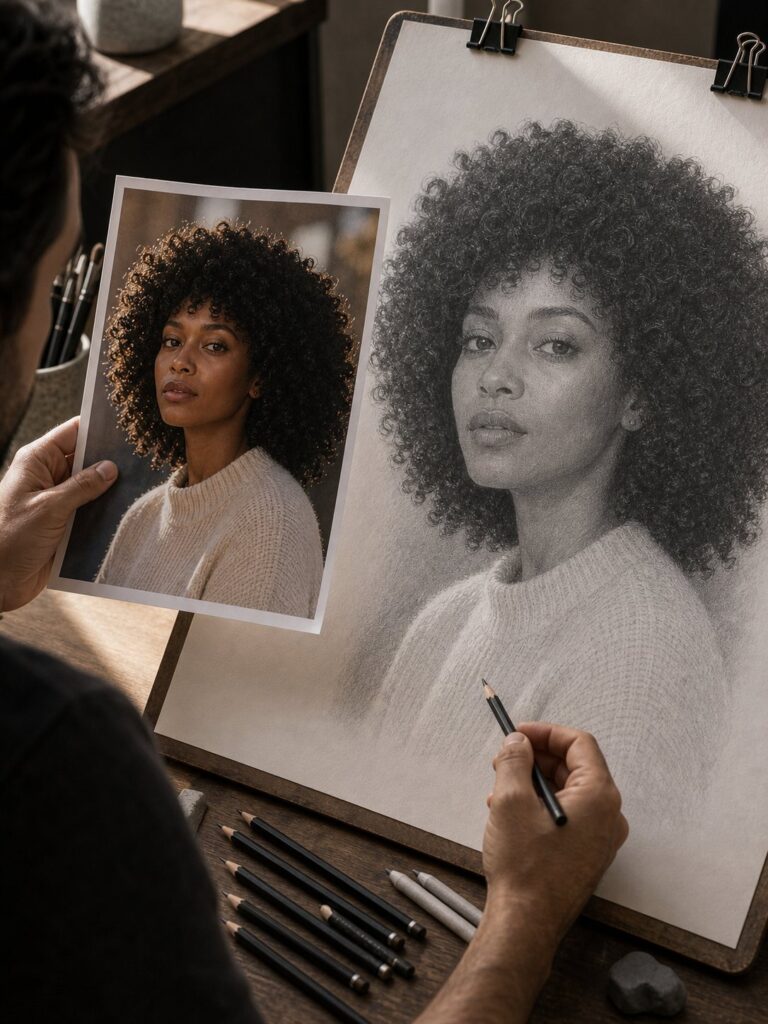
Start with a reference photo that has clear tonal contrast and good lighting from one side. Flat lighting makes realistic drawing harder because there aren’t clear shadow shapes to work from. Print the reference at the same size as your drawing paper, or use a grid overlay on a tablet.
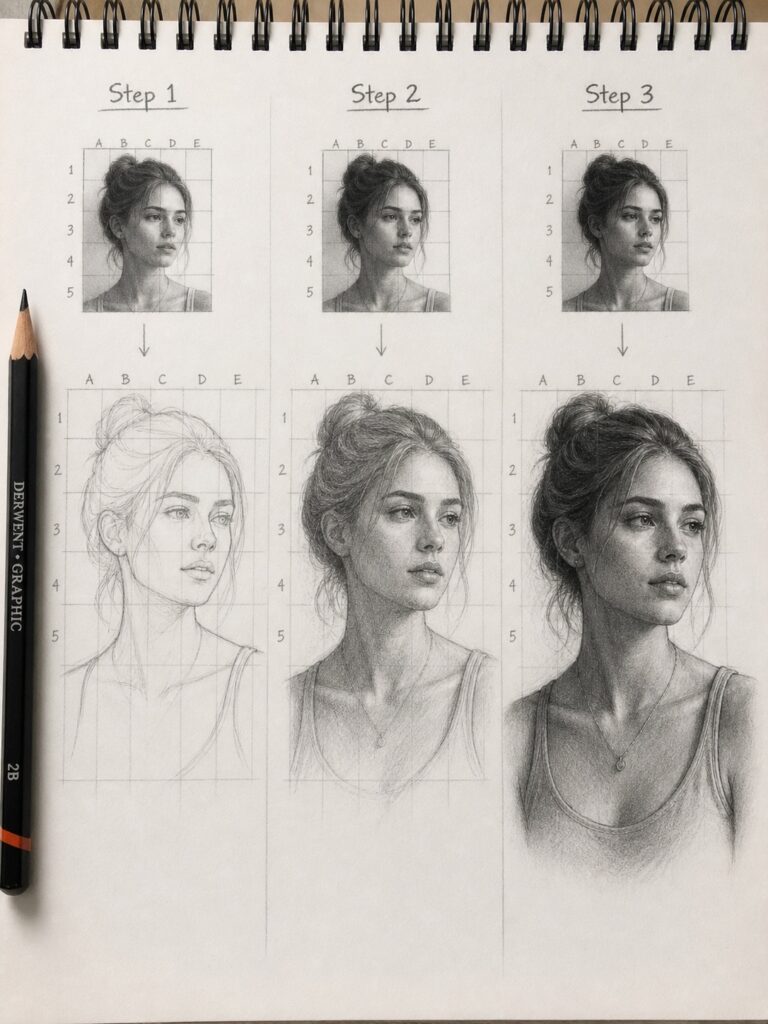
The grid method: divide your reference photo into equal squares with a marker. Draw the same grid lightly on your drawing paper with a 2H pencil. Copy the content of each square one at a time. The grid breaks the whole image into manageable sections and forces you to observe shapes rather than your mental model of what the subject looks like. It’s not cheating. Chuck Close built his entire practice on the grid method.
Lighting Your Reference Correctly
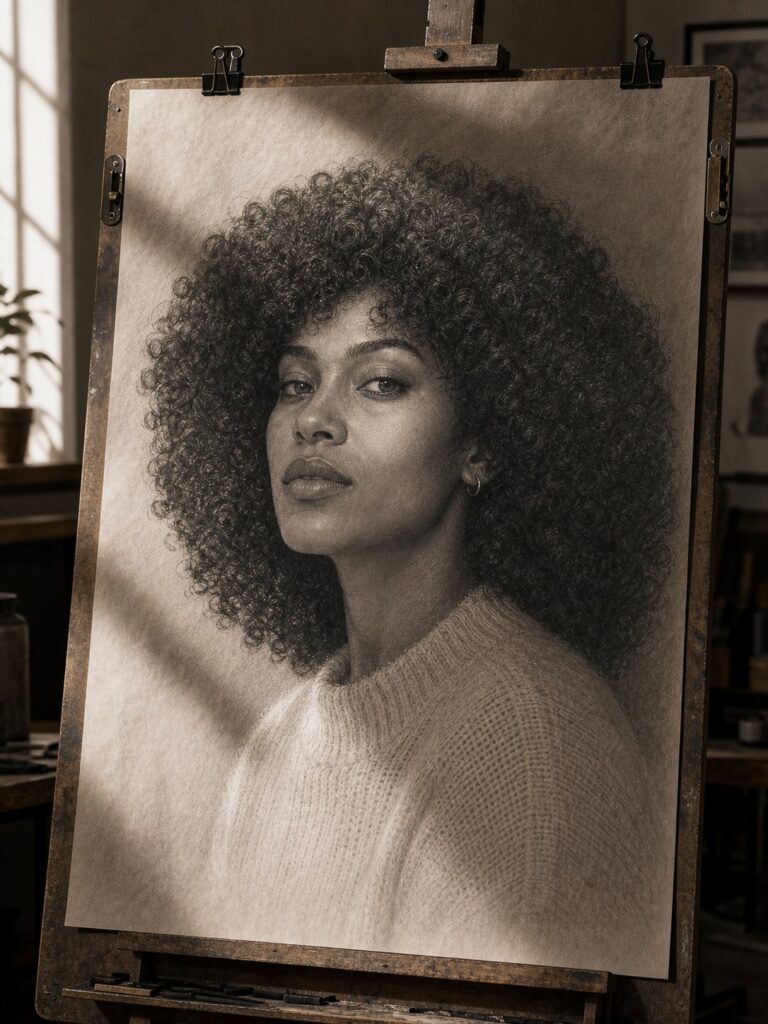
View your reference and your drawing under the same lighting conditions. If your drawing is under warm desk lamp light and your reference is on a bright phone screen, the perceived tones are different. This is a surprisingly common source of value errors. Either print the reference and view it under the same lamp you’re drawing by, or dim your screen to match your ambient light.
What to Draw First
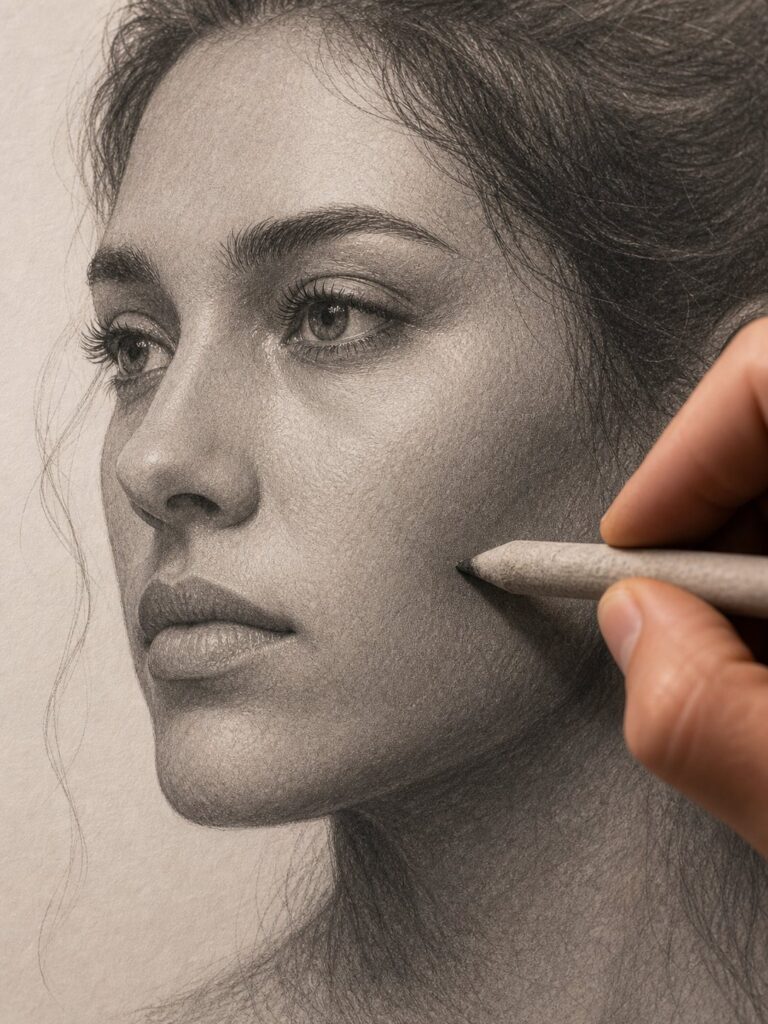
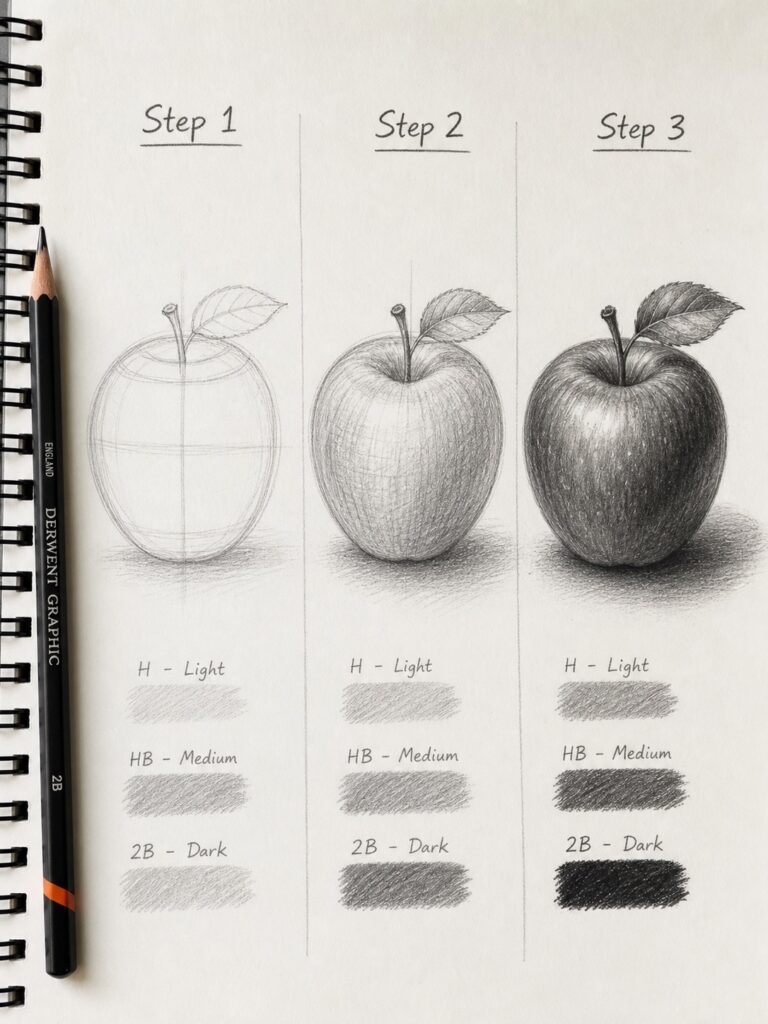
Map the darkest shadow shapes first, then the mid-tones, then refine the lights. Work from the top of the drawing downward if you’re right-handed (so your hand doesn’t drag across completed areas). Leave the white of the paper as your lightest lights for as long as possible, because once you put graphite into a light area, it’s difficult to get back to true white without a vinyl eraser, which can damage the paper surface.
FAQ: Hyper Realistic Drawing
What is hyper-realistic drawing?
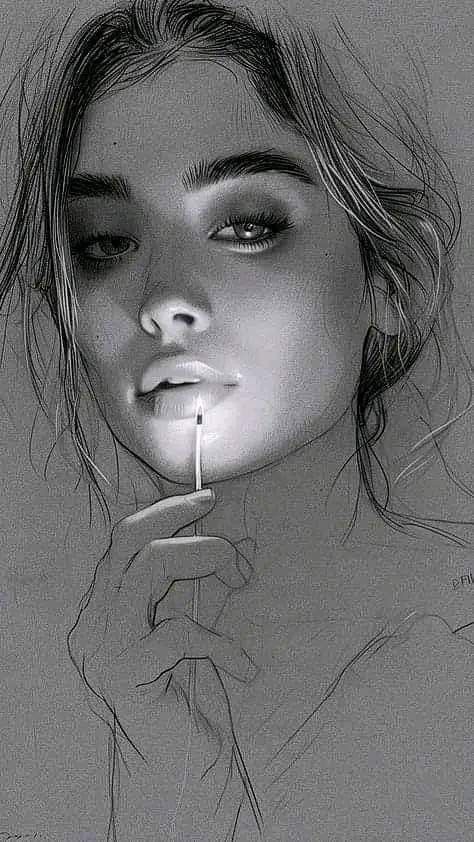
Hyper-realistic drawing is a style where the finished work is indistinguishable from a photograph at normal viewing distance. It extends photorealism (exact mechanical transcription of a photo) by adding emotional weight, intentional narrative elements, and sometimes a slightly heightened quality that makes the image feel more intense than the source material. Most hyper-realistic drawing is done in graphite pencil, though charcoal, colored pencil, and mixed media are also used.
How long does it take to learn hyper-realistic drawing?
To produce work that consistently reads as convincingly realistic: one to three years of dedicated practice for someone with no prior drawing background, less if you already have solid drawing fundamentals. The fundamentals that matter most are value (understanding lightness and darkness), proportion (measuring accurately), and patient observation (slowing down enough to draw what you actually see). Most people who find hyper-realistic drawing frustrating are moving too fast.
What pencils are best for hyper-realistic drawing?
Staedtler Mars Lumograph and Faber-Castell 9000 series are the most consistent performers for graphite work. A practical starting range is 2H through 6B (H, 2H for light areas and structure; HB, 2B for mid-tones; 4B, 6B for shadows and darkest areas). One 0.3mm mechanical pencil in HB for detail work. Brand consistency within a single project matters more than brand choice overall, because grading can differ slightly between manufacturers.
What paper should I use for hyper-realistic drawing?
Smooth hot press paper or smooth bristol. Strathmore 400 series smooth bristol is a solid mid-range option. Fabriano Artistico hot press is better for larger or more serious pieces. Minimum 200gsm weight for graphite work that involves multiple passes and erasing. Rough paper textures will show through in your mid-tones and fight the smooth gradients that hyperrealism requires.
Can you do hyper-realistic drawing digitally?
Yes. Procreate on iPad with a textured canvas brush and a pressure-sensitive Apple Pencil can replicate most graphite techniques, including layering and blending. The advantage is undo and infinite erasing without paper damage. If you need the basic setup first, read this guide on how to draw on iPad. The disadvantage is that the physical feedback of pencil on paper trains your hand in ways that digital work does not. Many artists use both: sketching and value studies digitally, final work on paper. Dylan Eakin, whose pencil portraits regularly go viral on TikTok, works in traditional graphite specifically for the physical quality it produces.
What is the hardest subject to draw realistically?
Hair and eyes in portraits are the most commonly cited. Hair because it requires managing thousands of individual elements within a correct overall value structure, and eyes because small errors in proportion or expression make the whole face read as wrong. Glass and water are technically difficult because they depend entirely on high-contrast highlights with very precise edges. Metallic surfaces require the same highlight precision but with more complex reflection patterns.
How do I make my drawing look less flat?
Increase your value range. Most flat-looking realistic drawings don’t have dark enough darks. Squint at your reference photo to identify the genuinely dark areas (shadow undersides of forms, cast shadows, the pupils of eyes) and make sure those areas in your drawing are close to the actual darkest graphite your pencils can produce. Light areas look bright only when they contrast against dark ones. If everything is mid-tone grey, nothing reads as three-dimensional.
Where to Go from Here
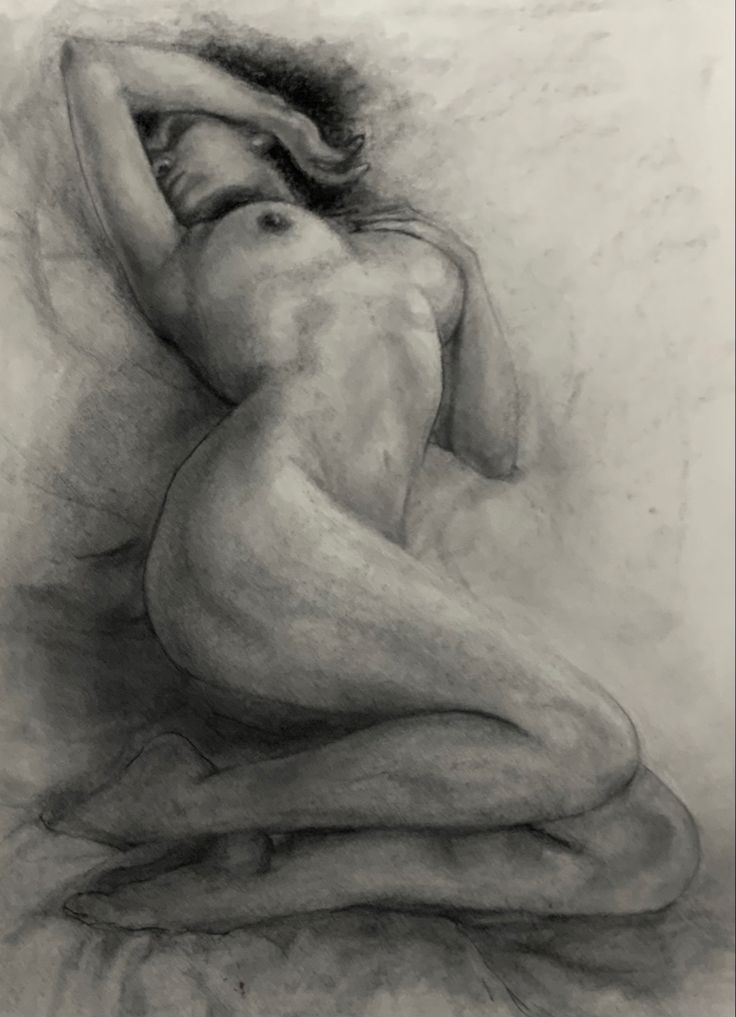
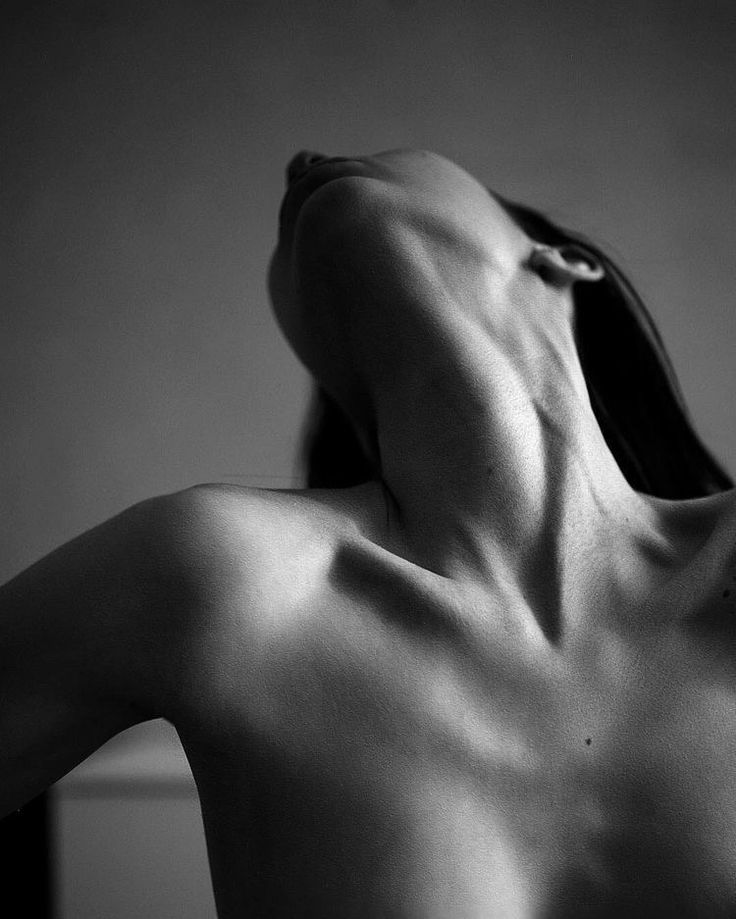
Start with a single subject and take it further than feels comfortable. The drawings that teach you the most are the ones you push past the point where you think they’re done. A finished hyper-realistic drawing should take longer than you expect and require more passes in the dark areas than you put in during the first session.
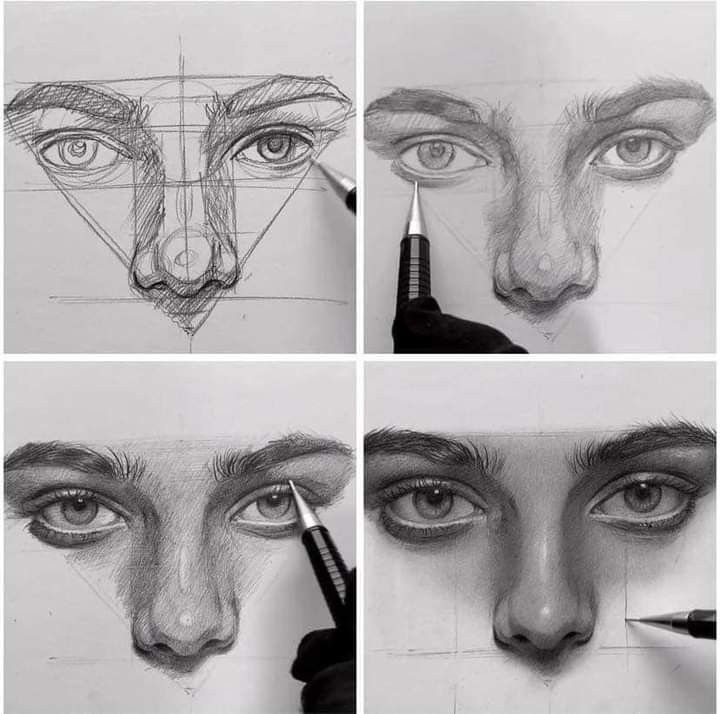
The resources worth spending time with: Armin Mersmann’s site for observational process notes, Paul Cadden’s interview archive for how he approaches atmospheric subjects, and Jono Dry’s Domestika course for the specific technique of building graphite tone in small circular passes rather than hatching. These are working artists describing active practice, not theory.
The drawing that took me eleven hours and still looked wrong taught me more about value than any article. Make the drawing. Find what’s wrong with it. That’s the actual process.
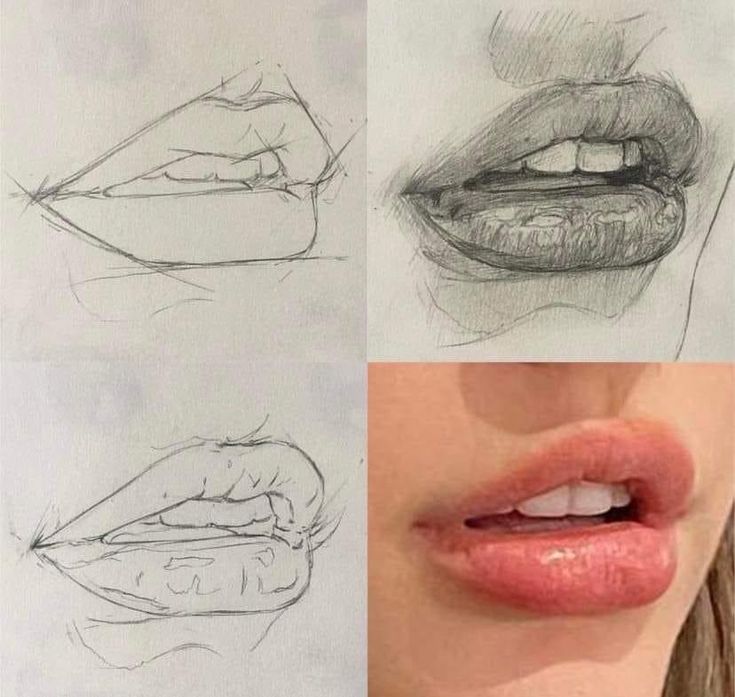
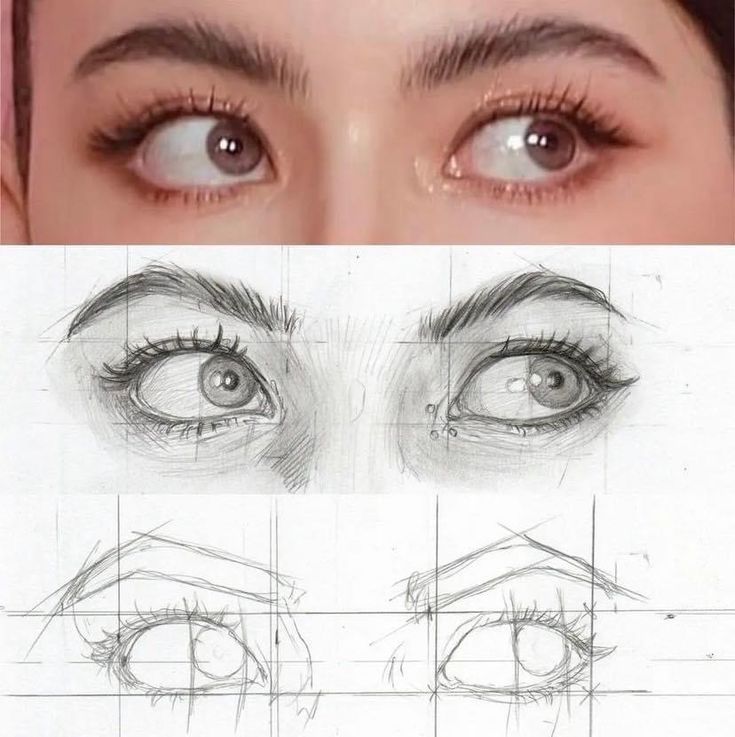
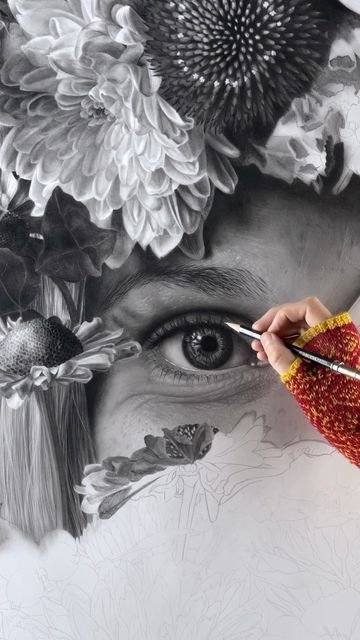
For facial details, practice realistic eyebrow drawing as a texture study: light base value first, sharp hairs last.
Related realism study: For a finished-painting reference, compare your value studies with Marco Grassi painting examples; the portraits show how soft skin edges and decorative detail can sit together without making the image noisy.
- 5.5Kshares
- Facebook0
- Pinterest5.5K
- Twitter0
- Reddit0