The first time I understood hair as a design decision — an actual visual decision, closer to architecture than styling — was watching a friend get dressed around her afro.
- Hair as Silhouette: Why Curl Texture Is a Fashion Design Choice
- The Curly Afro Wig: Volume as a Design Element
- The Kinky Curly Wig: Texture as the Design Language
- The Comparison: A Design Framework
- How to Choose: Four Questions Worth Asking
- Caring for Each Texture
- Styling: Getting the Most From Each Texture
- FAQ: Curly Afro and Kinky Curly Wigs
- What is the main visual difference between a curly afro wig and a kinky curly wig?
- Which wig texture is better for a fashion-forward editorial look?
- How do I choose between an afro wig and a kinky curly wig for my face shape?
- Which is easier to maintain: a curly afro wig or a kinky curly wig?
- Can kinky curly wigs be worn stretched or straightened?
- What outfit styles work best with a curly afro wig?
- How should I store curly and kinky curly wigs to maintain their texture?
Except “around” is the wrong word.
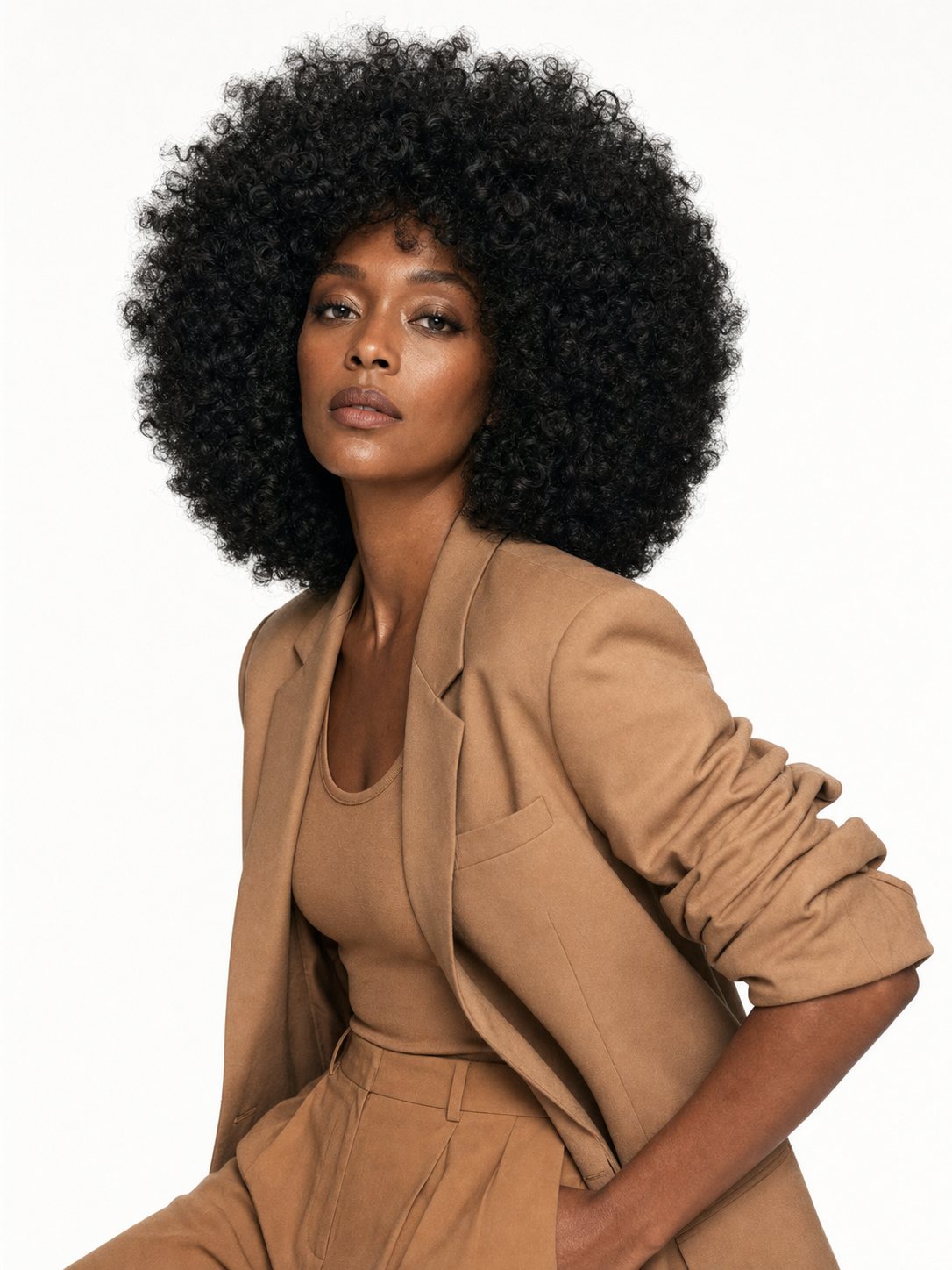
She wasn’t compensating for the hair or trying to make the outfit compete with it. The hair was the main event. Everything else was supporting structure. Sharp lines in the clothing. Minimal jewelry. Nothing fussy. The silhouette already had enough going on.
And it worked because the proportions made sense.
That moment changed how I think about wig texture entirely.
People talk about curl patterns like they’re technical categories, but texture changes much more than texture. It changes shape. Presence. The amount of visual space hair takes up before someone even notices the details.
A curly afro reads differently than a kinky curly wig for the same reason a sculptural chair reads differently than a soft upholstered one. Both can look great. Both can suit the same room. But they create completely different silhouettes and ask different things from everything around them.
That’s what makes the choice clearer.
You’re not just choosing curls. You’re choosing proportion, volume, softness, structure — the design language you want the rest of the look to speak.
Hair as Silhouette: Why Curl Texture Is a Fashion Design Choice
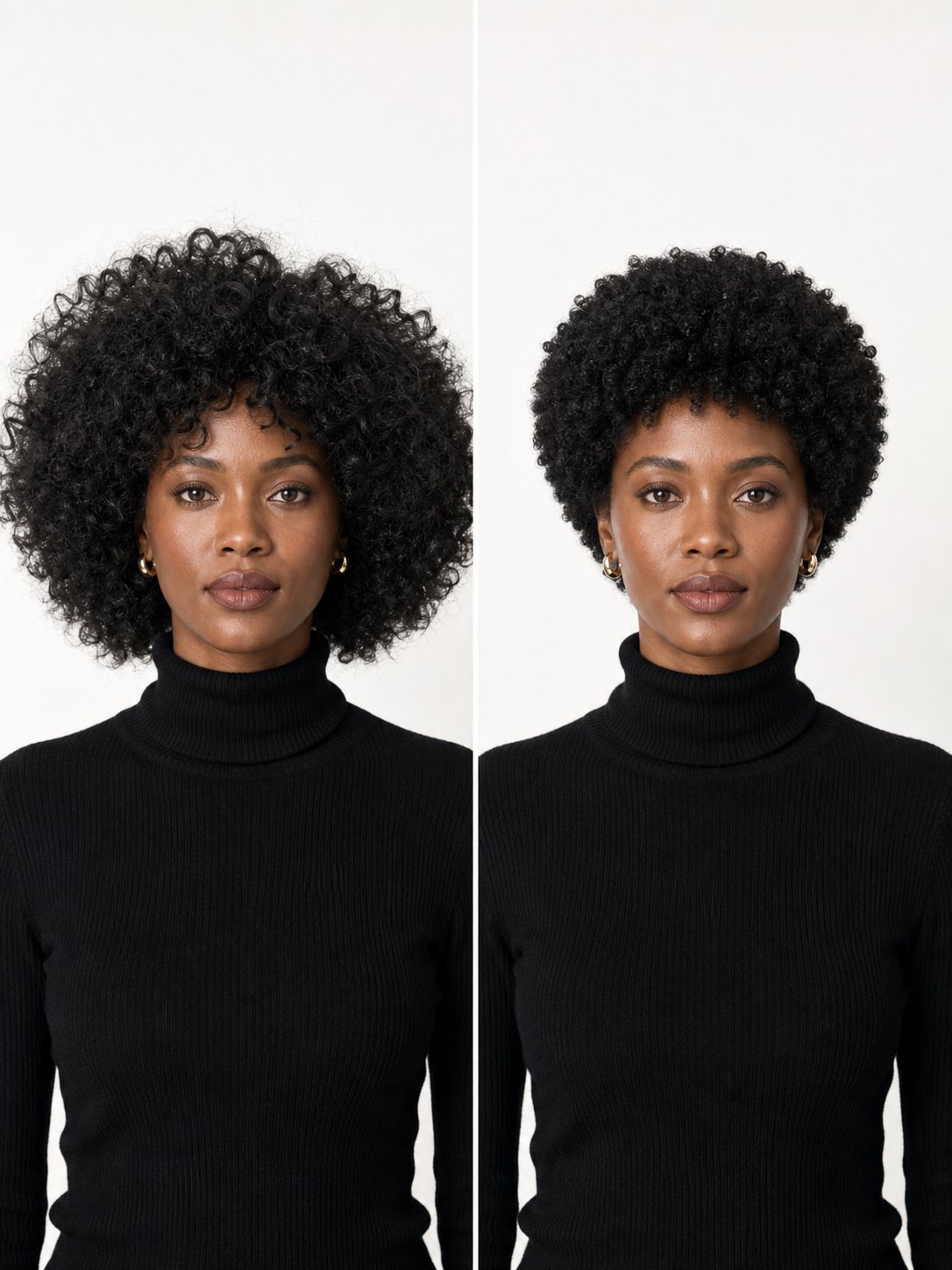
In fashion design, silhouette is the first decision. Before color, before texture, before detail — the shape the garment makes against the body is the primary visual information. Hair works the same way, and it’s worth applying that same lens to wig texture.
A curly afro creates a wide, expansive silhouette that extends outward from the head symmetrically. It frames the face by surrounding it, which creates balance and visual weight at the top of the look. In fashion terms, it’s a strong horizontal element — it widens the visual field around the face the way a statement collar or broad shoulder might widen the visual field around the body.
A kinky curly wig creates a different silhouette: taller, more compact, with defined curl clusters that catch light individually and create texture depth that reads differently from different distances. Up close, the curl definition is the visual interest. From across the room, the silhouette reads as a volume that frames the face with structure rather than softness.
Neither is superior. They’re different design choices that work for different aesthetic contexts, different outfit structures, and different visual goals. Understanding them as such — rather than as variations on the same thing — is the starting point for choosing well.
The Curly Afro Wig: Volume as a Design Element
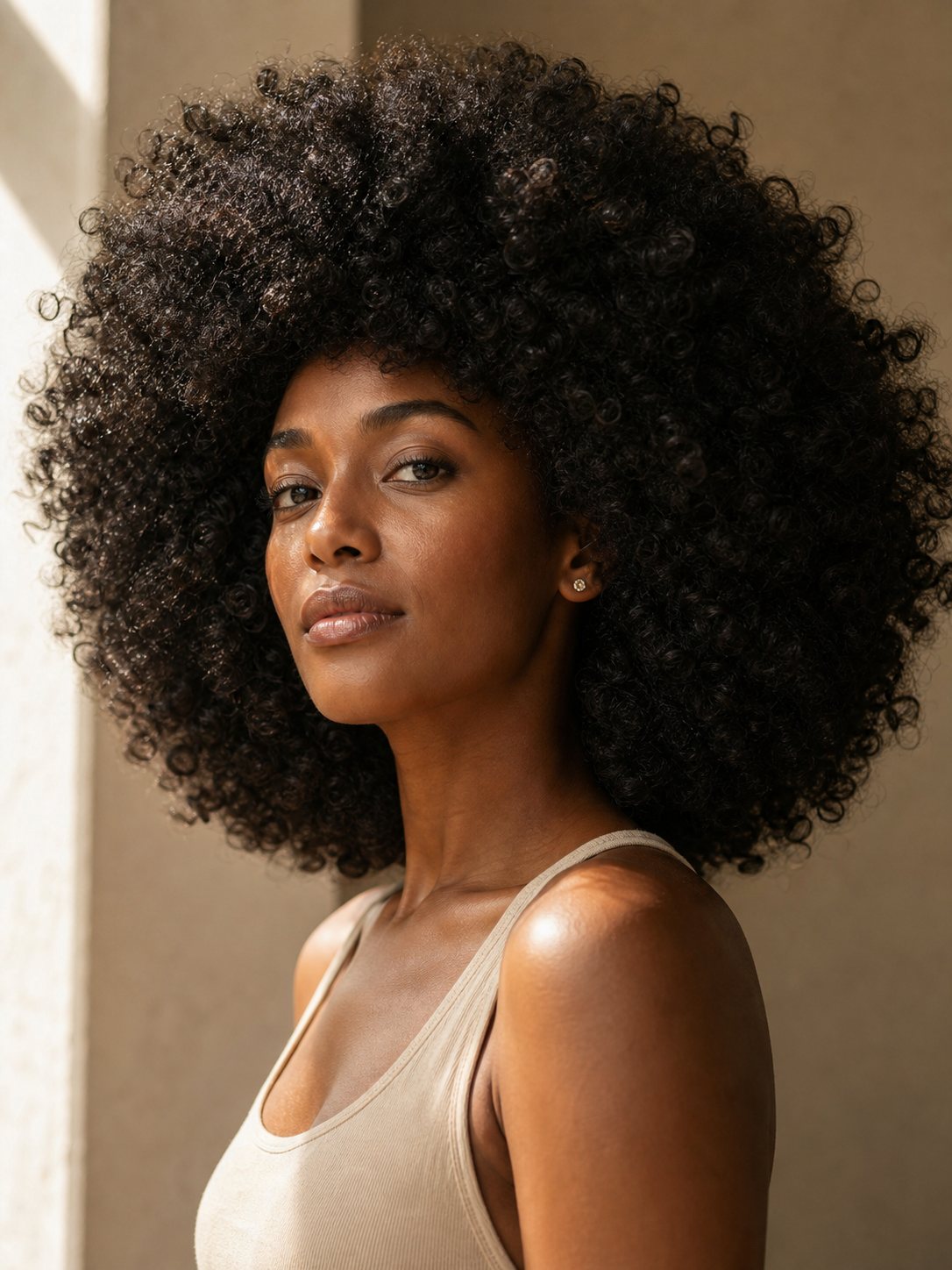
The curly afro wig does one thing exceptionally well: it creates volume that reads as effortless. The curls are large and loosely defined, with a soft, fluffy quality that gives the hair a natural, lived-in appearance. There’s no rigidity to it. It moves. It settles differently each day. That variability is part of its visual appeal.
From a styling standpoint, the afro silhouette has the most impact when the rest of the look is allowed to be quieter. This is not a limitation — it’s an opportunity. The afro does the visual work that a statement piece of clothing or a bold accessory would otherwise do. Clean separates, structured outerwear, a monochromatic palette: these choices let the hair lead without competition.
It also photographs differently than it reads in person. In photography the afro creates a strong, graphic shape that reads immediately even in small print or on screen. For editorial contexts, campaign imagery, or social content where the image needs to communicate quickly, that graphic clarity is a genuine advantage.
Who this texture suits aesthetically
The curly afro wig works across face shapes but is particularly powerful for longer or narrower faces where the horizontal volume of the afro adds width and creates balance. It also softens strong jawlines and angular bone structure by surrounding the face with gentle volume rather than following the face’s own geometry. If your features tend toward sharp or angular, the afro wig creates a counterpoint that reads as harmonious rather than contrasting.
For styling purposes, the afro is at its best when not over-manipulated. It doesn’t need styling products that weigh it down or tools that add definition it doesn’t already have. The design is in the volume. Respecting that — fluffing with fingers, letting it settle naturally — produces better results than trying to add definition that works against the texture’s character.
The Kinky Curly Wig: Texture as the Design Language
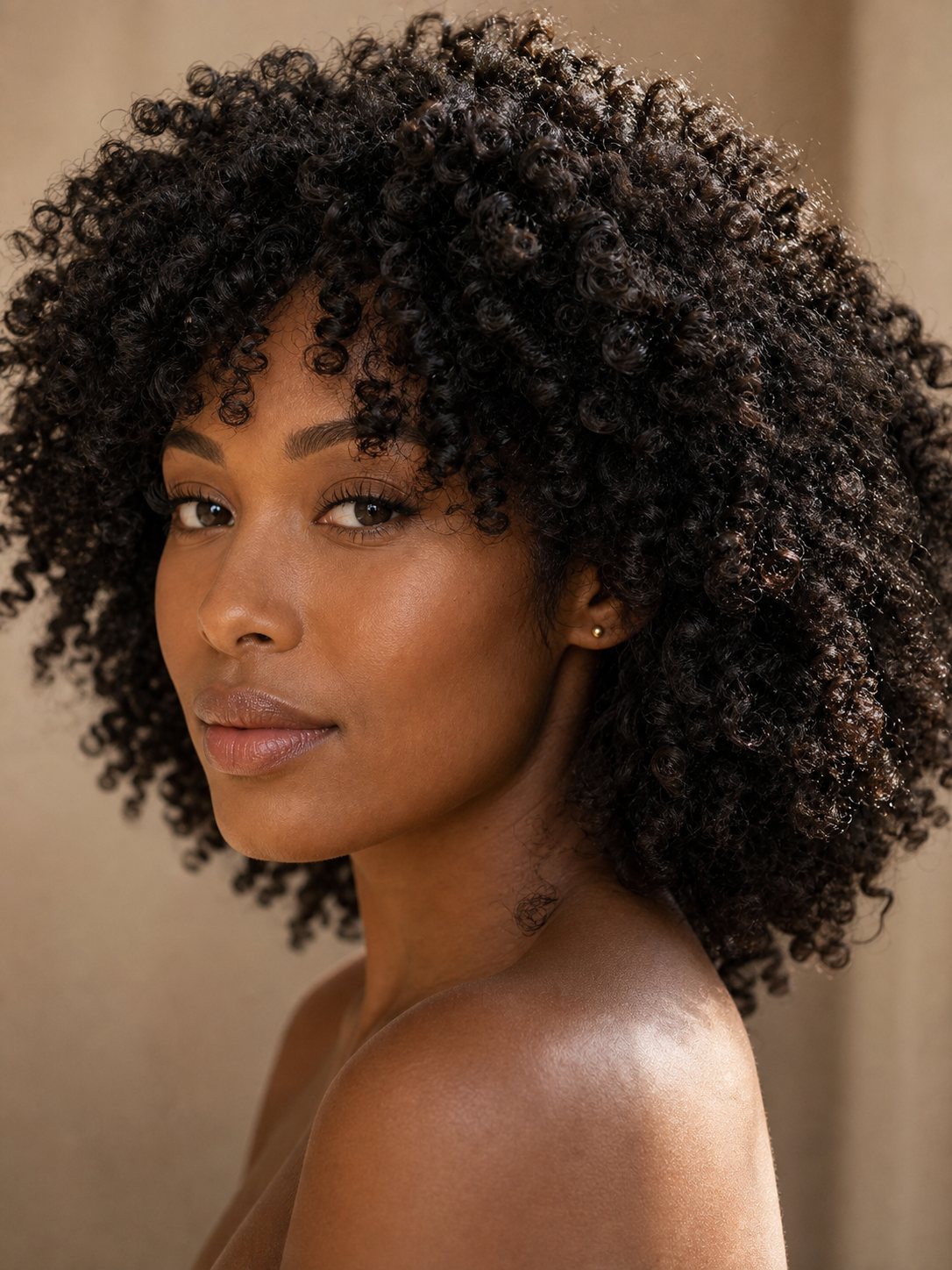
The kinky curly wig operates on a different aesthetic logic. The curl pattern is tighter — closer to Type 4 natural hair — with coils that are denser and spring with more energy than the loose afro curl. The visual result is a texture that rewards close attention: the more you look, the more detail you see.
This makes kinky curly wigs particularly well-suited to naturalistic styling contexts where the goal is to read as unmodified. The curl density and spring pattern closely mirrors natural afro-textured hair, which means the wig integrates seamlessly with other natural hair textures — important for those blending with leave-out or edges. It also means the wig sits within its own aesthetic logic without requiring the look to be built around it in the same way the afro silhouette does.
The kinky curl texture also holds styling interventions better. You can twist sections, apply product and scrunch for definition, stretch with tension, or pineapple overnight for a different morning texture. It’s a responsive material in a way that the looser afro curl is less so. For people who like to interact with their hair — who enjoy the process of styling rather than just wearing a finished look — this responsiveness is part of the appeal.
The silhouette logic of tight coils
Where the afro expands outward, the kinky curly wig tends to build upward. The tight coil structure means the hair compresses less under its own weight and holds more vertical lift. This gives the wig a different spatial relationship to the face: more crown emphasis, slightly less side expansion. For oval and round face shapes, this vertical lift adds elongation that the wider afro silhouette wouldn’t provide.
The texture also creates a surface that interacts with light differently from the afro. Where afro curls catch light broadly and softly, kinky coils create multiple small light-catching points across the surface of the hair. In direct light this produces a dimensional, almost jewel-like quality. In low light the hair reads as rich depth rather than flat volume.
The Comparison: A Design Framework
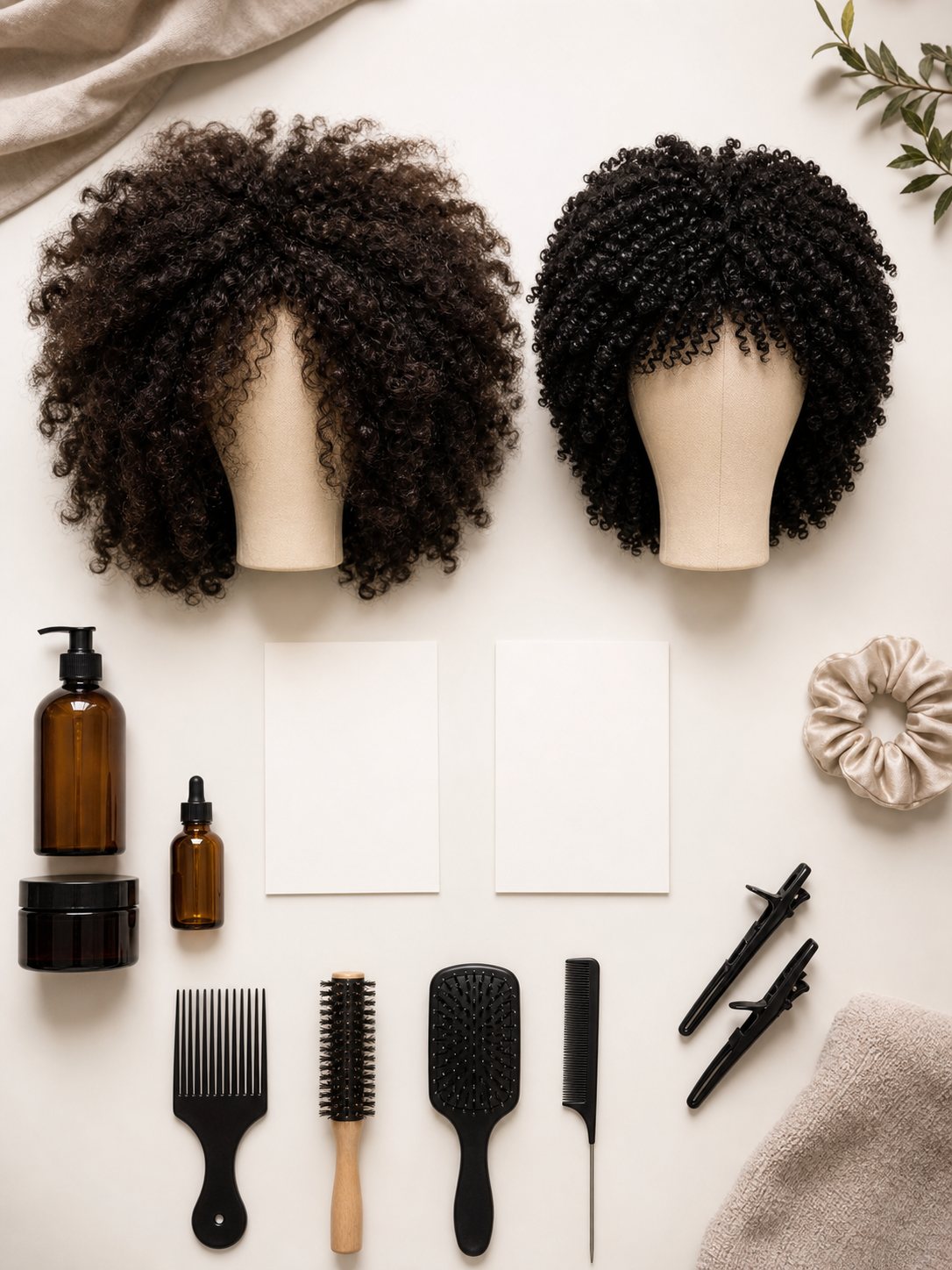
Rather than a list of specifications, here’s the comparison that actually matters for making a fashion-informed choice:
Silhouette direction: The afro expands outward horizontally, creating width and halo. The kinky curl builds vertically, creating height and crown definition. Decide which direction your face and your intended looks need.
Outfit relationship: Afro wigs work best as the lead element with clothing that supports rather than competes. Kinky curly wigs integrate more easily with a wider range of outfit weights because their silhouette is less dominantly wide.
Photography vs. in-person: Afro wigs have strong graphic readability in photography. Kinky curly wigs reward in-person viewing because the texture depth is more apparent up close.
Styling interaction: Afro wigs are best appreciated when left alone. Kinky curly wigs are more versatile styling canvases — they respond well to product application, twisting, stretching, and manipulation.
Maintenance rhythm: Afro wigs are lower effort day-to-day. Kinky curly wigs require more consistent moisture and detangling attention but reward that care with longer-lasting definition.
How to Choose: Four Questions Worth Asking
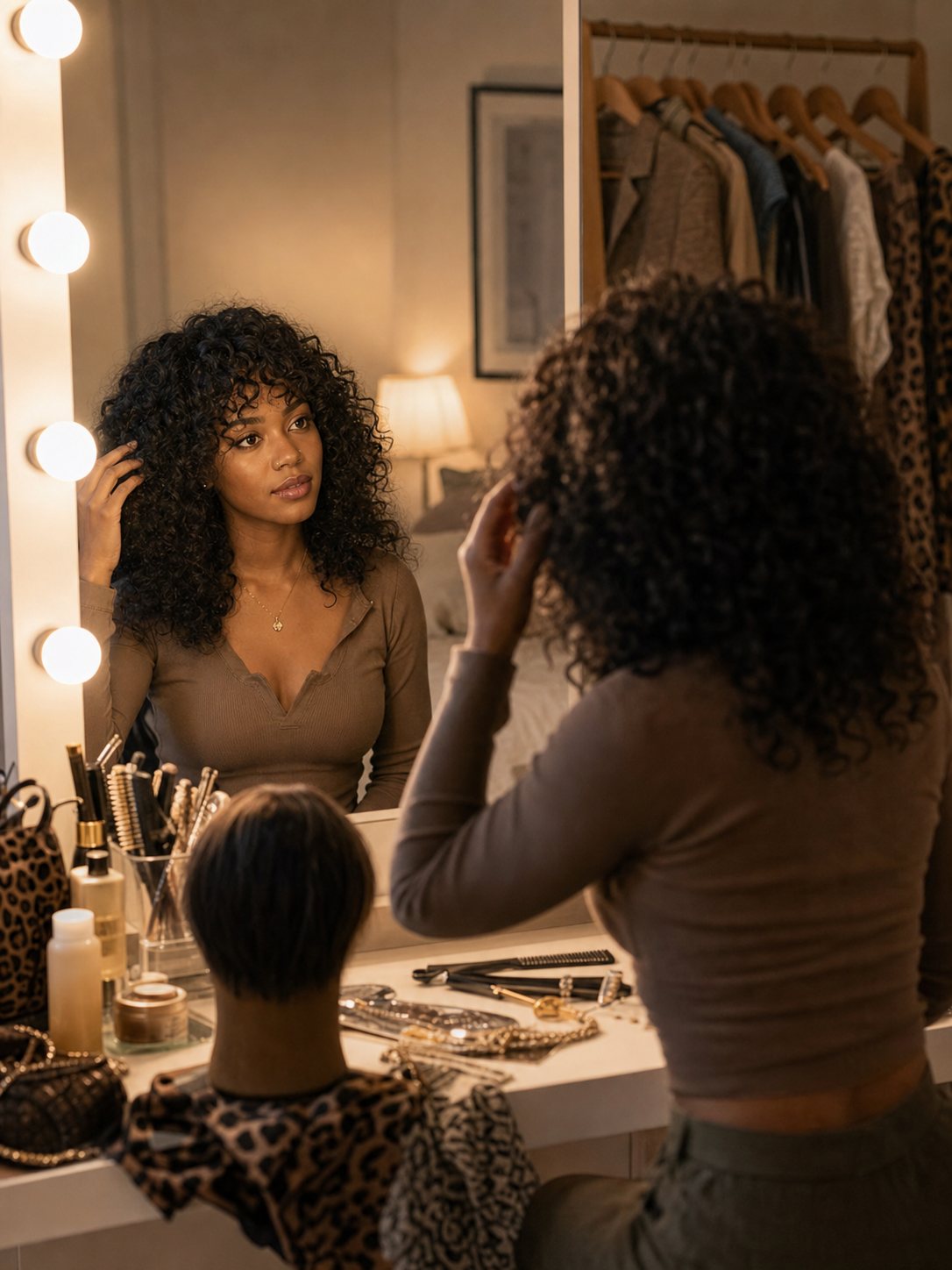
Skip the “which is better” question. There isn’t an answer. These are the questions that actually lead somewhere:
1. What do I want the hair to do in the look?
If the hair is meant to be the statement — the primary visual element that the rest of the look defers to — the afro silhouette does that more forcefully. If the hair is meant to complement rather than lead, to read as naturally as possible within a broader look, the kinky curl integrates more quietly. Neither role is lesser. They’re different functions.
2. What does my face shape need?
Longer faces benefit from the width the afro adds. Round or oval faces benefit from the vertical lift the kinky curl provides. Angular or square faces are softened by the afro’s gentle surrounding volume. Heart-shaped faces work with both depending on proportion. The practical test is trying on both and looking at your face in the mirror from a step back — which silhouette makes the face feel most balanced?
3. How much do I want to interact with the styling?
If you want hair that you can put on and leave alone, the afro wig is the lower-friction choice. If you want to build different looks from the same base — twist out on Monday, stretched on Wednesday, pulled back Thursday — the kinky curl gives you more to work with.
4. What is my maintenance reality?
Honestly. Not aspirationally. The afro wig is more forgiving with a light daily routine. The kinky curly wig looks its best with regular moisturizing and gentle detangling. If you know you’re not going to do the maintenance consistently, the afro wig will hold up better. If you genuinely enjoy the hair care process, the kinky curly wig rewards that attention.
Caring for Each Texture
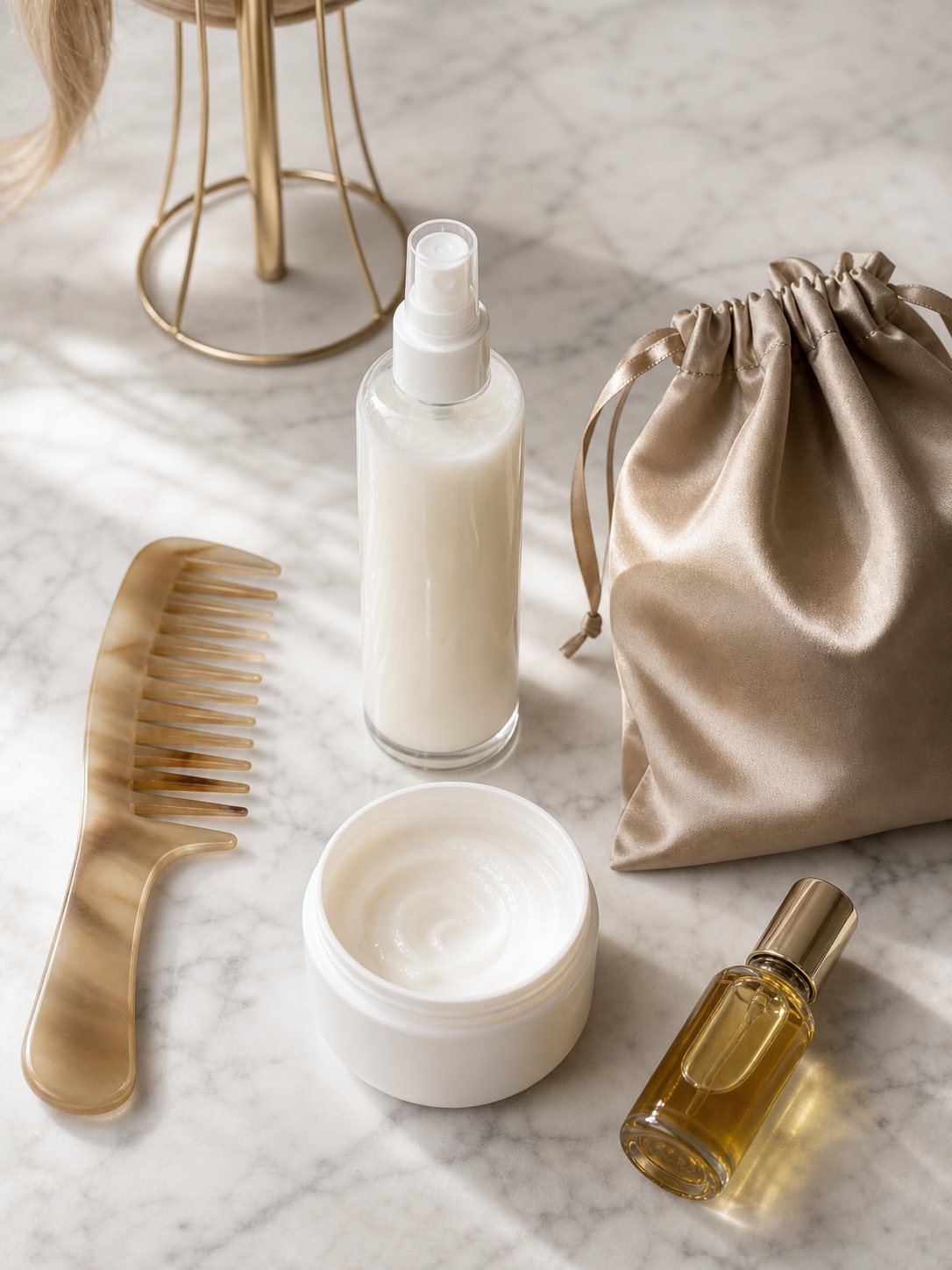
Both textures require care, but the rhythm is different.
Curly afro wig care
The afro wig responds well to a light touch. Finger detangling from ends to roots maintains volume without disrupting the curl pattern. A light mist of water and a small amount of leave-in conditioner refreshes the curls without weighing them down. Weekly washing with a sulfate-free shampoo and a generous conditioning treatment keeps the hair soft and prevents dryness that would cause the curls to become stiff. Air dry on a wig stand rather than using heat, which can disrupt the curl formation.
Kinky curly wig care
Moisture is the primary care need for kinky curly wigs. The tighter coil structure means the hair’s natural oils don’t travel down the shaft as easily as in looser curl patterns, so the hair tends toward dryness without regular hydration. A water-based leave-in conditioner applied regularly — and sealed with a light oil on the ends — maintains softness and reduces the shrinkage that makes tangling more likely. Detangling when the hair is damp and coated with conditioner, working in small sections from ends upward, prevents the matting that kinky textures are prone to when neglected.
For both: store on a wig stand or mannequin head. Compression — storing in a bag or drawer — permanently distorts the curl pattern over time.
Styling: Getting the Most From Each Texture
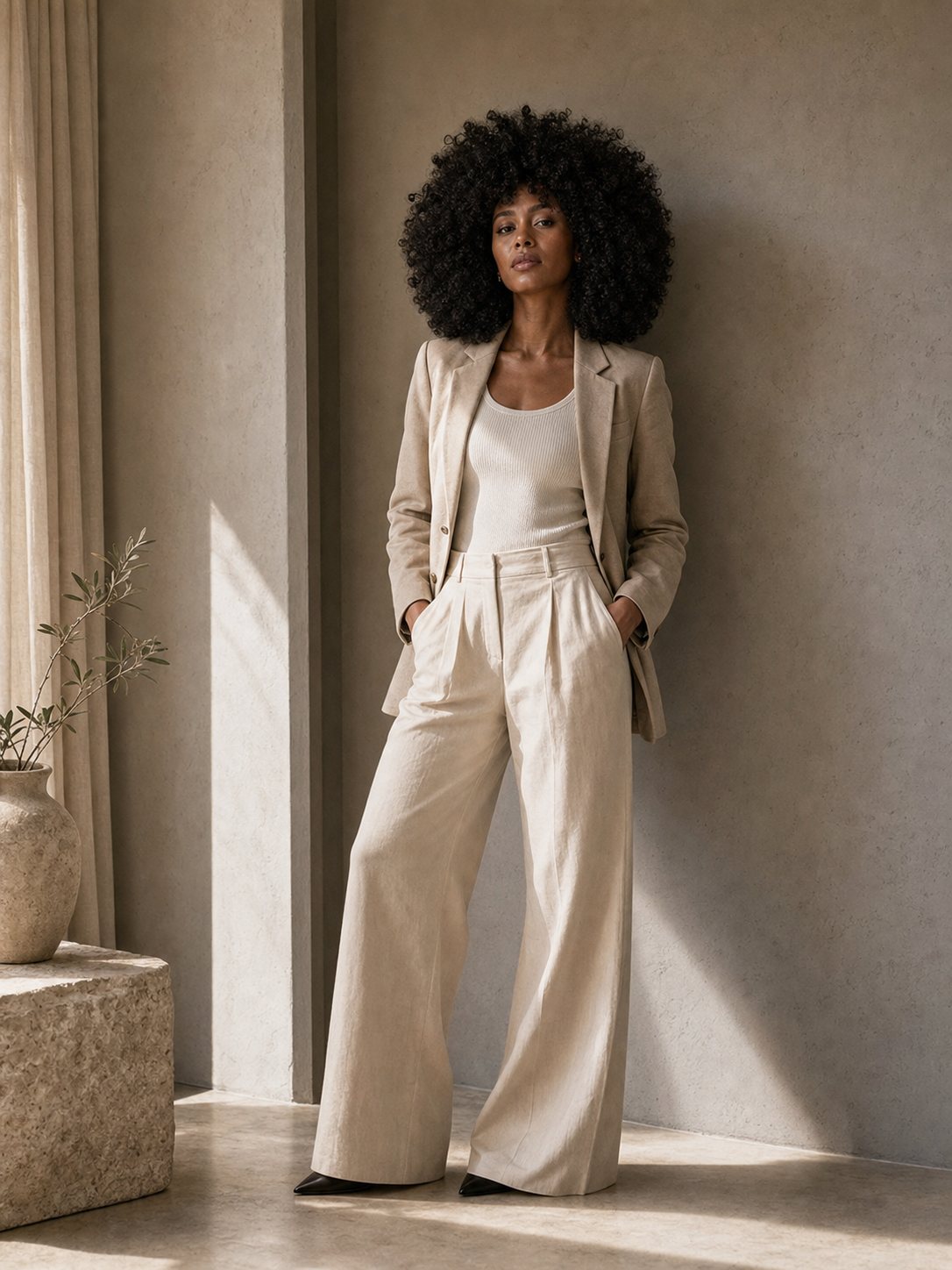
Some practical styling directions that work with each texture rather than against it:
Afro wig + minimal outfit: Monochromatic dressing or a single strong color lets the hair be the visual lead. Try a fitted turtleneck and high-waisted trousers in a single tone. The hair does everything else.
Afro wig + accessories: A single large earring (not two — the asymmetry reads well against the symmetrical afro volume), a sculptural cuff, or a simple chain. Avoid accessory overload that fights with the hair’s visual authority.
Kinky curl + textured outfit: The texture of the hair plays well against fabric texture in the clothing. Knit, bouclé, corduroy, or raw linen — fabrics with their own surface interest create a layered textural composition.
Kinky curl + head accessories: The curl texture grips and holds accessories naturally. A wide satin headband, a structured beret, or fabric-wrapped accessories integrate well. The hair holds them without constant readjusting.
FAQ: Curly Afro and Kinky Curly Wigs
What is the main visual difference between a curly afro wig and a kinky curly wig?
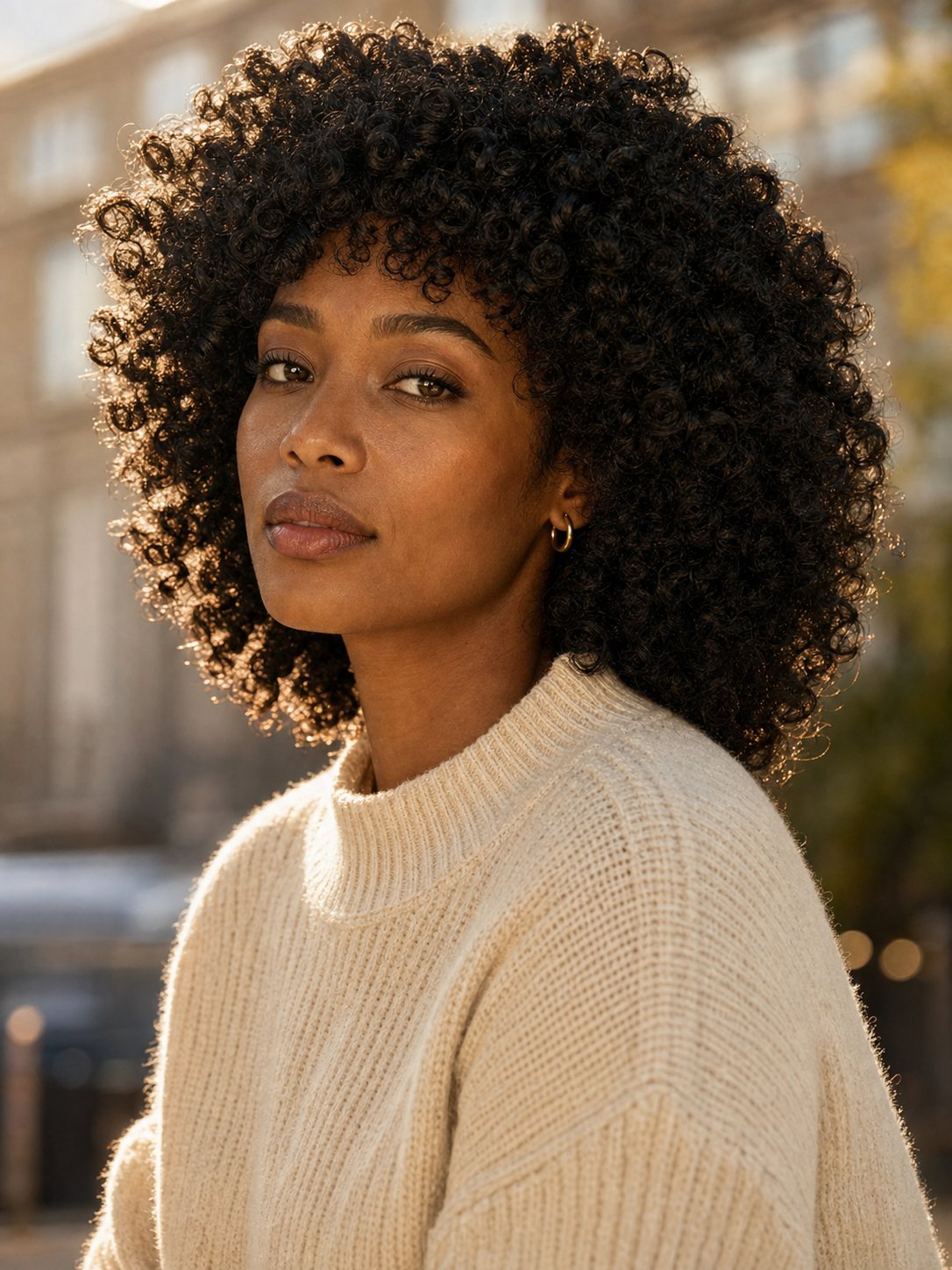
A curly afro wig has large, voluminous, loosely defined curls that create a wide halo silhouette. A kinky curly wig has tighter, denser coils that mimic Type 4 natural hair, producing a more compact but equally full shape. The afro reads as wider and softer; the kinky curl reads as taller and more defined.
Which wig texture is better for a fashion-forward editorial look?
Both work in editorial contexts for different aesthetics. A curly afro wig creates a dramatic, graphic silhouette that reads strongly in photography and on stage. A kinky curly wig suits naturalistic fashion editorial where texture detail is the visual interest. The choice depends on whether the look needs bold volume or nuanced texture as its focal point.
How do I choose between an afro wig and a kinky curly wig for my face shape?
Volume direction matters more than curl type. Afro wigs expand outward symmetrically, balancing longer or narrower face shapes and softening angular jawlines. Kinky curly wigs add vertical lift that frames oval and round faces particularly well. The best test: try both and note which silhouette makes your face feel most proportionate.
Which is easier to maintain: a curly afro wig or a kinky curly wig?
Curly afro wigs are generally easier for day-to-day maintenance — fluffing with fingers and occasional detangling from ends up keeps the shape. Kinky curly wigs require more consistent moisture application and gentle detangling because the tighter coils are more prone to shrinkage and matting. Both last significantly longer with proper storage on a wig stand and regular conditioning.
Can kinky curly wigs be worn stretched or straightened?
Yes. Human hair kinky curly wigs can be stretched using tension styling, banding, or a low-heat blowout. The curl returns when the hair is moistened. Avoid high heat on synthetic kinky curly wigs as it will permanently distort the curl pattern.
What outfit styles work best with a curly afro wig?
The afro silhouette has the most impact when the clothing is minimal or structured. Clean lines let the hair be the statement. Monochromatic dressing, structured outerwear, and minimal separates allow the afro to function as the primary design element of the look. Heavily patterned or oversized clothing competes with the volume.
How should I store curly and kinky curly wigs to maintain their texture?
Store on a wig stand or mannequin head to preserve the curl pattern and prevent compression. A satin or silk bag works for shorter-term storage. Avoid plastic bags or compression in a drawer, which flattens and distorts the curl structure. Before storing, detangle gently and apply a light leave-in conditioner to keep coils supple.
The right texture is the one that makes the rest of the look feel considered. Start there and everything else follows.
- 63shares
- Facebook0
- Pinterest63
- Twitter0
- Reddit0