I once kept an empty perfume bottle on my windowsill for three months after the fragrance ran out. Not because I planned to refill it. I just liked having it there.
Premium packaging depends on a mark that still reads at small sizes; this business logo ideas guide covers practical logo types and shape choices.
- Glass as a Design Medium, Not Just a Container
- Super Flint: The Material That Changed What Minimalism Could Look Like
- The Punt: A Functional Relic That Became an Aesthetic Signature
- Touch as the New Visual: Texture, Embossing, and Haptic Design
- The Lesson from Chanel No. 5 That Designers Keep Relearning
- Color in Glass: The Palette of Light
- The Cap as the Final Design Statement
- What Makes a Bottle Worth Keeping
- FAQ: Premium Glass Packaging Design
- Why is glass still the preferred material for luxury packaging in 2026?
- What makes super flint glass different from standard glass for packaging?
- What is a glass punt and what does it contribute to packaging design?
- Why is the Chanel No. 5 bottle still relevant to packaging designers?
- What does architectural fluting add to a glass bottle design?
- What is micro-embossing and why are designers choosing it over printed labels?
- How does packaging design create emotional connection with a product?
The bottle was oddly satisfying to look at. Crystal-clear glass. A base thick enough to feel almost absurdly heavy for something that used to hold liquid. A debossed logo so subtle you only noticed it when sunlight hit at the right angle, usually sometime in the late afternoon. It stopped feeling like packaging pretty quickly. It just became part of the room.
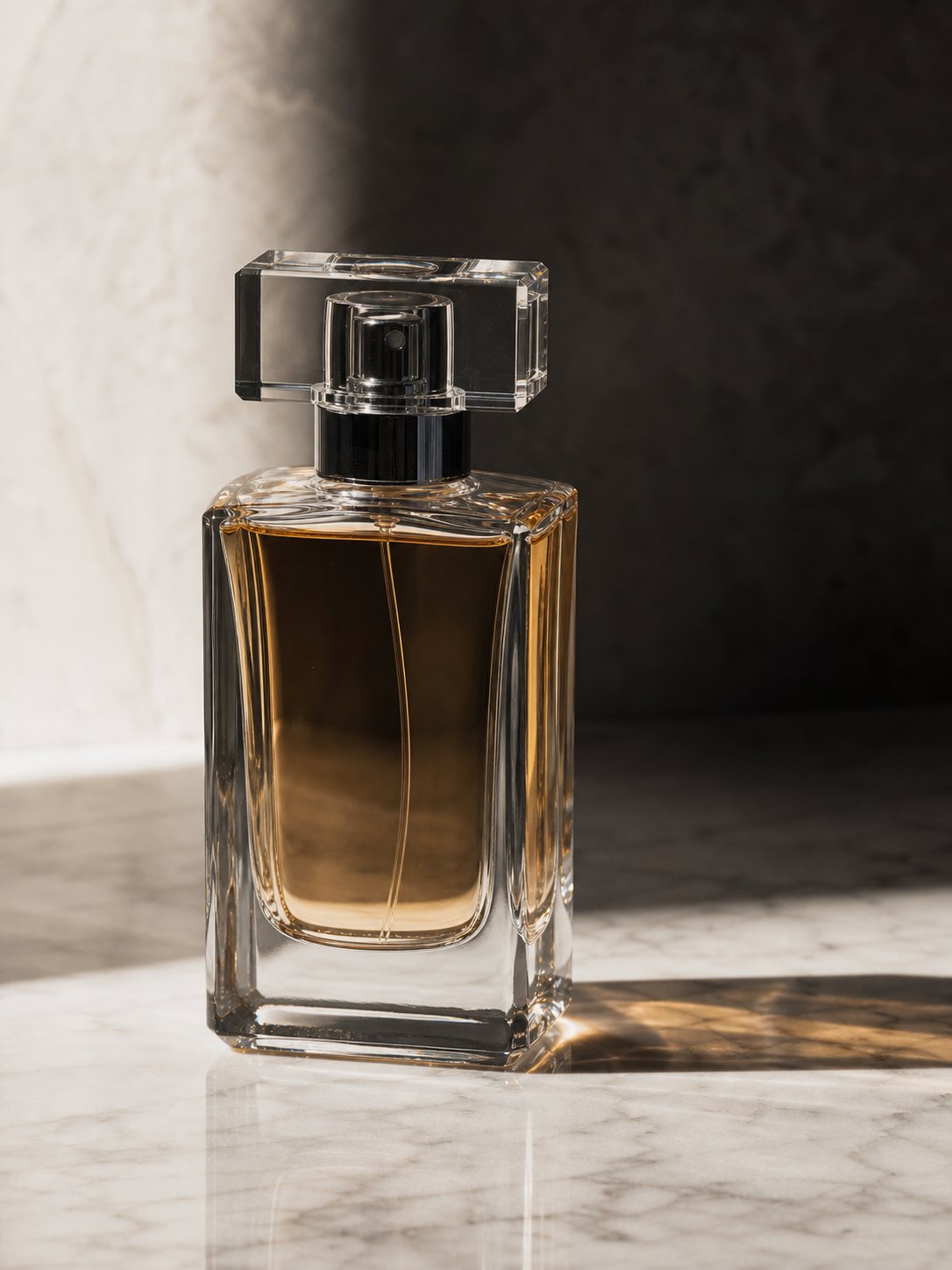
That’s the thing premium packaging is chasing, whether brands admit it or not: the object you hesitate to throw away.
And the best glass bottle design in 2026 feels shaped around exactly that idea.
For a while, luxury packaging got loud. Metallic finishes. Oversized branding. Decorative details piled on top of decorative details, all trying very hard to signal value. Some of it looked expensive. A lot of it looked expensive in the same way a hotel lobby chandelier looks expensive — impressive for five minutes, exhausting after that.
The bottles catching my attention now feel quieter.
Less decoration. Better materials. More thought put into how glass behaves in actual light, how a surface feels under your thumb, how weight changes the experience of picking something up. Thick edges that bend light slightly. Frosted finishes that feel soft instead of chalky. Branding you discover instead of branding shouting at you from across the room.
Maybe that’s the real shift. Premium glass bottles are starting to feel less like packaging and more like objects people might actually want to live with.
That’s what this guide is about: the design choices pushing things in that direction.
Glass as a Design Medium, Not Just a Container
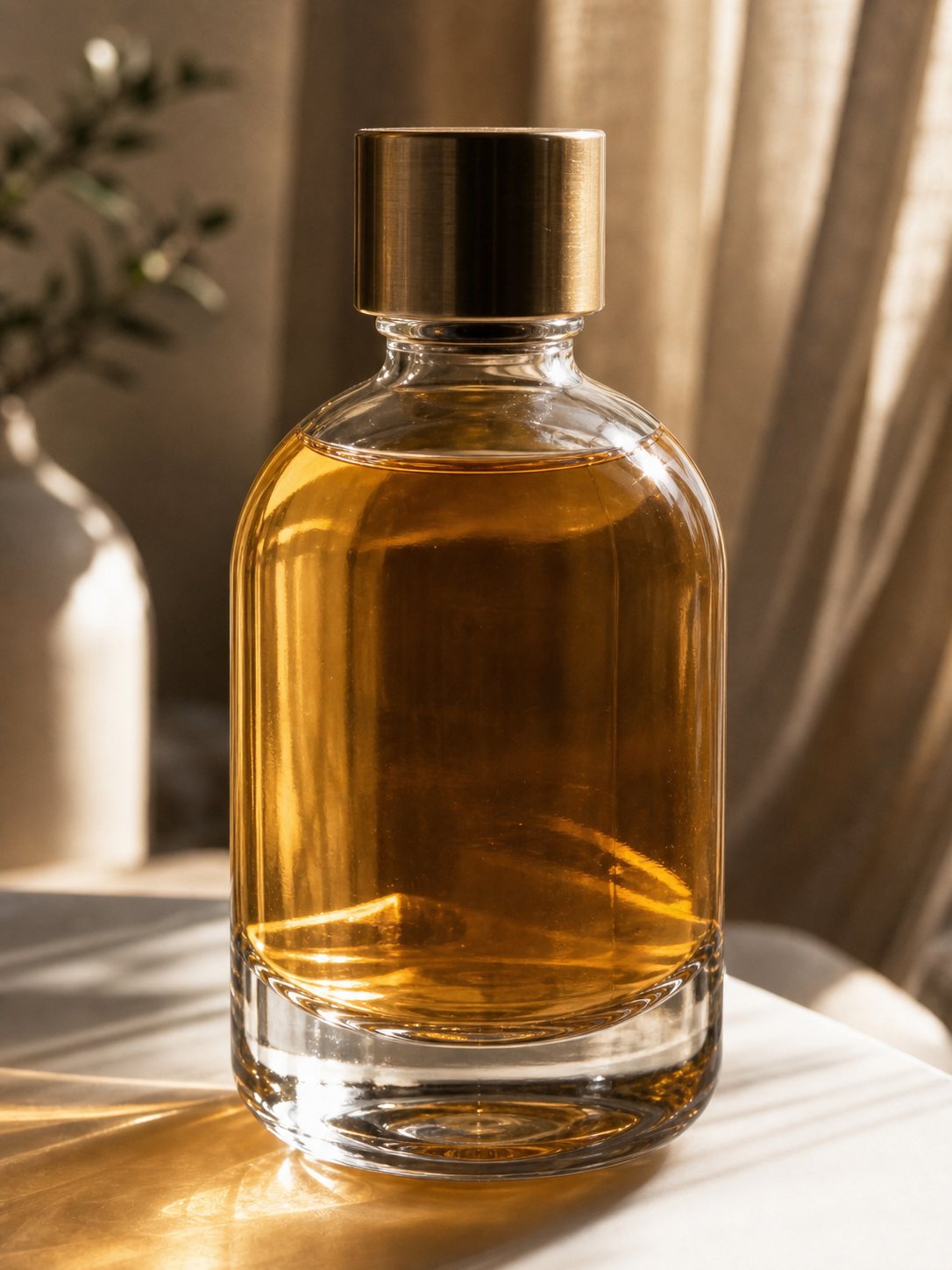
Packaging conversations in the design world tend to focus on the product inside. The bottle is treated as a vehicle. But the most compelling glass packaging of the past few years has inverted that relationship: the bottle is the object, and the liquid inside is almost incidental to the aesthetic experience.
Glass makes this possible in ways other materials can’t. Its optical depth — the way light enters and moves through it, bending and refracting before it exits on the other side — creates visual effects that are impossible to achieve with paper, metal, or plastic. The color of liquid inside a glass bottle is not the color of the liquid; it’s the color of the liquid as transformed by the optical properties of the glass itself. Designers who understand this use it intentionally.
Weight is the other dimension. The heft of a well-made glass bottle in the hand communicates quality before any visual evaluation happens. It’s a sensory signal that bypasses the conscious mind entirely. This is why premium fragrance houses and boutique spirits brands resist the pressure to switch to lighter materials even when the functional case is weak — weight is part of the message.
In 2026, the aesthetic ambition for premium glass is to let the material speak for itself. Fewer labels. Less applied decoration. More attention to the optical and tactile properties that only glass can deliver.
Super Flint: The Material That Changed What Minimalism Could Look Like
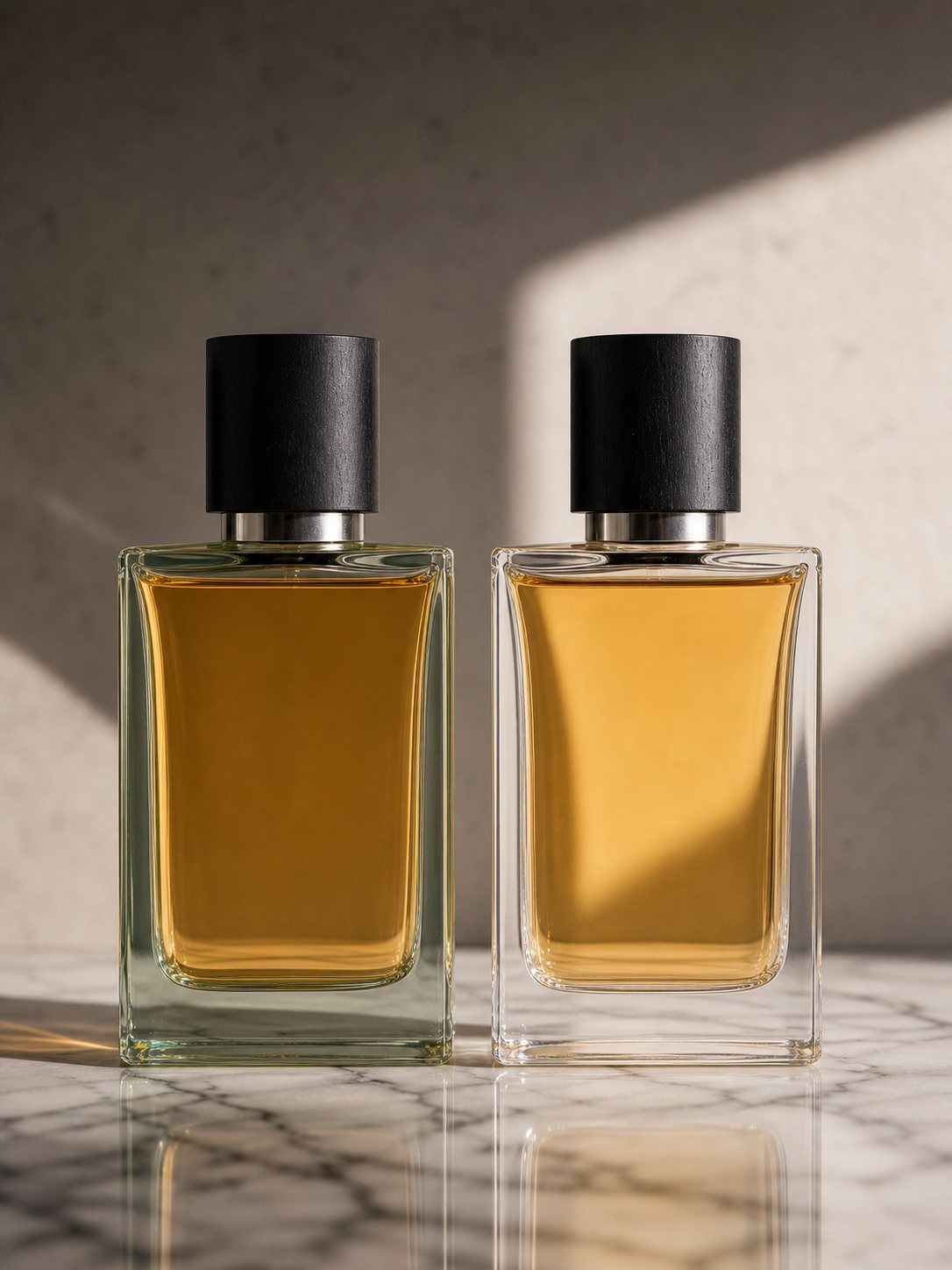
Standard glass has a slight greenish cast. Most people never notice it consciously because the eye adjusts. But put a standard bottle next to a super flint bottle containing the same liquid and the difference is immediate: the standard bottle filters what you see. The super flint bottle shows you the actual color.
For packaging designers working with minimalist forms — no label, no applied texture, just the glass and what’s inside — this optical purity is not a material specification detail. It’s a fundamental aesthetic decision. A minimalist cylinder in slightly green-tinted glass doesn’t achieve the effect a minimalist cylinder in ultra-clear glass does. The clarity is the design.
This is the territory that glass specialists like Nuvole work in: formulations where achieving crystal-clear brilliance requires precise material composition and control that goes well beyond standard production. The visual difference is subtle in product photography. In person, holding the bottle, it’s immediately apparent.
Super flint glass also has a higher refractive index than standard formulations — which is the property that creates the light interaction visible in the thick base of a premium bottle, where light bends dramatically through the glass rather than passing through it cleanly. Designers are increasingly specifying base thickness and form specifically to make use of this refractive quality rather than treating it as a structural byproduct.
The Punt: A Functional Relic That Became an Aesthetic Signature
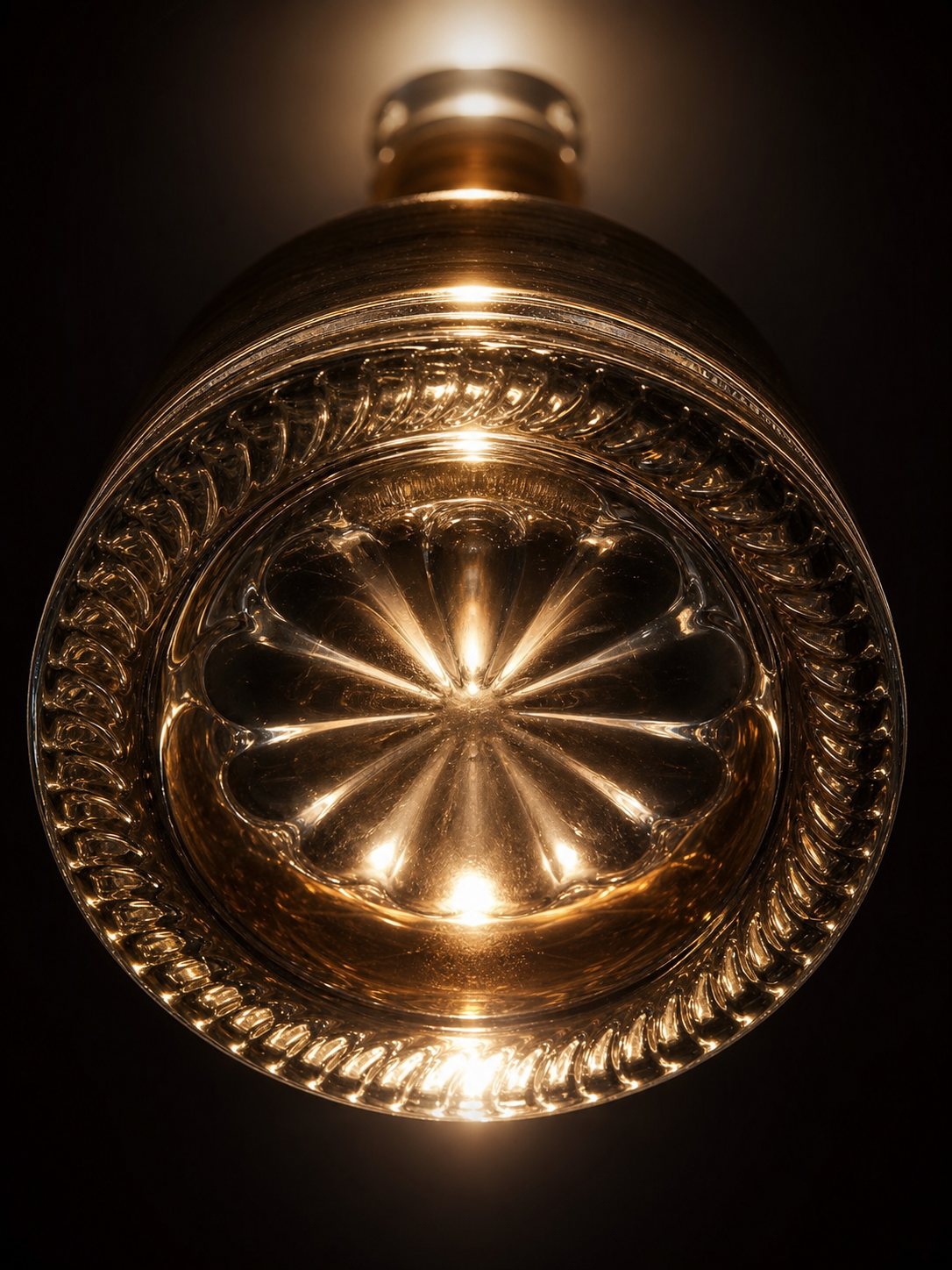
The punt — the concave indentation at the bottom of a bottle — started as a practical mark left by glassblowing tools. It survived the transition to machine production for structural reasons. And then something interesting happened: it became beautiful, and designers kept it for that reason.
A deep punt creates a dramatic optical event when the bottle is viewed from below or at a low angle. The thick glass in and around the indentation refracts light in a way that looks almost sculptural — a concentrated burst of refraction that makes the base of the bottle read as an object worth examining. It also adds perceived mass. A bottle with a deep punt feels heavier than its actual weight, because the eye reads the thick glass as substance.
In 2026, punt geometry is a deliberate design choice in premium packaging. Depth, diameter, and the curvature of the concave surface are all variables that different designers are specifying differently depending on the optical effect they want. Some prefer a wide, shallow punt that diffuses light across the entire base. Others prefer a narrow, deep punt that creates a concentrated focal point. Neither is correct in the abstract — each produces a different aesthetic reading of the same object.
The punt is also one of the clearest examples of how packaging design accumulates meaning over time. A form that began as a production artifact became associated with quality through repetition, then became a genuine design variable that communicates quality by intentional reference to that history. Design always works this way, but it’s rarely this transparent.
Touch as the New Visual: Texture, Embossing, and Haptic Design
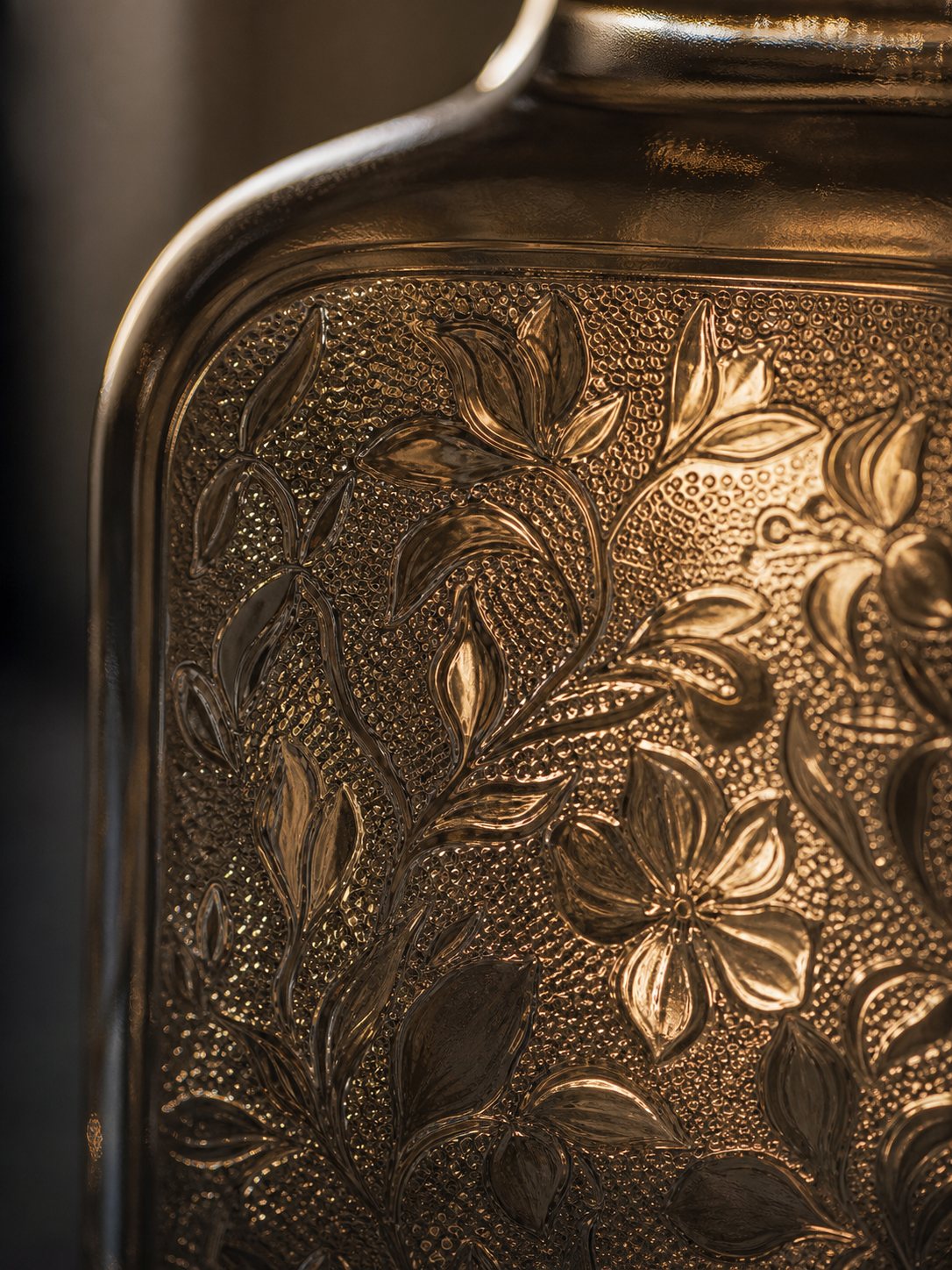
There is a moment in handling a well-designed object when the hands take over from the eyes. The shelf experience is visual. The ownership experience is tactile. Premium glass packaging in 2026 is increasingly designed for both — and the tactile dimension is where the most interesting work is happening.
Micro-embossing: the label that disappears
Moving a brand mark or decorative element from a paper label into the glass surface itself changes the relationship between the bottle and its identity. A label sits on top of the bottle. An embossed element is the bottle. The difference is perceptible immediately and intuitively — the brand mark becomes structural rather than applied, permanent rather than attached.
The tactile quality of a debossed logo in clear glass is something paper cannot replicate. Running a thumb across the surface produces a sensory response that reinforces quality in the same way weight does — through physical experience rather than visual evaluation. In an environment where most packaging is visually crowded and aggressively decorated, a bottle that makes its mark through touch rather than print has a distinctive kind of quiet confidence.
Gradient and asymmetric textures
Texture that transitions across a surface — from rough to smooth, from fine grain to open — reads as designed in a way that uniform texture doesn’t. Uniform texture says: this surface has been treated. Gradient texture says: someone thought about how this hand would move across this surface.
This is the distinction between surface treatment as finish and surface treatment as design language. The most interesting glass texture work in 2026 is using the transition between textured and smooth areas to guide how the bottle is held, where the thumb naturally rests, what the fingertips feel as they move from base to neck. It’s packaging that has a choreography.
Architectural fluting
Fluted columns have been part of architectural vocabulary for 2,500 years because they do something visually that plain surfaces cannot: they create a surface that changes with light and angle. Each ridge casts a slightly different shadow, refracts light at a slightly different angle, and together they produce a surface that reads as animated rather than static.
Applied to glass bottle design, fluting adds visual complexity without ornamentation. A fluted cylinder is more interesting than a plain cylinder at every angle, in every light condition, without requiring any applied decoration. It also happens to improve grip — the ridges provide purchase without roughness. In 2026, fluted glass is appearing across fragrance, spirits, and home ambiance categories simultaneously, which suggests it has reached the moment when a design solution becomes a genuine trend rather than an individual choice.
The Lesson from Chanel No. 5 That Designers Keep Relearning
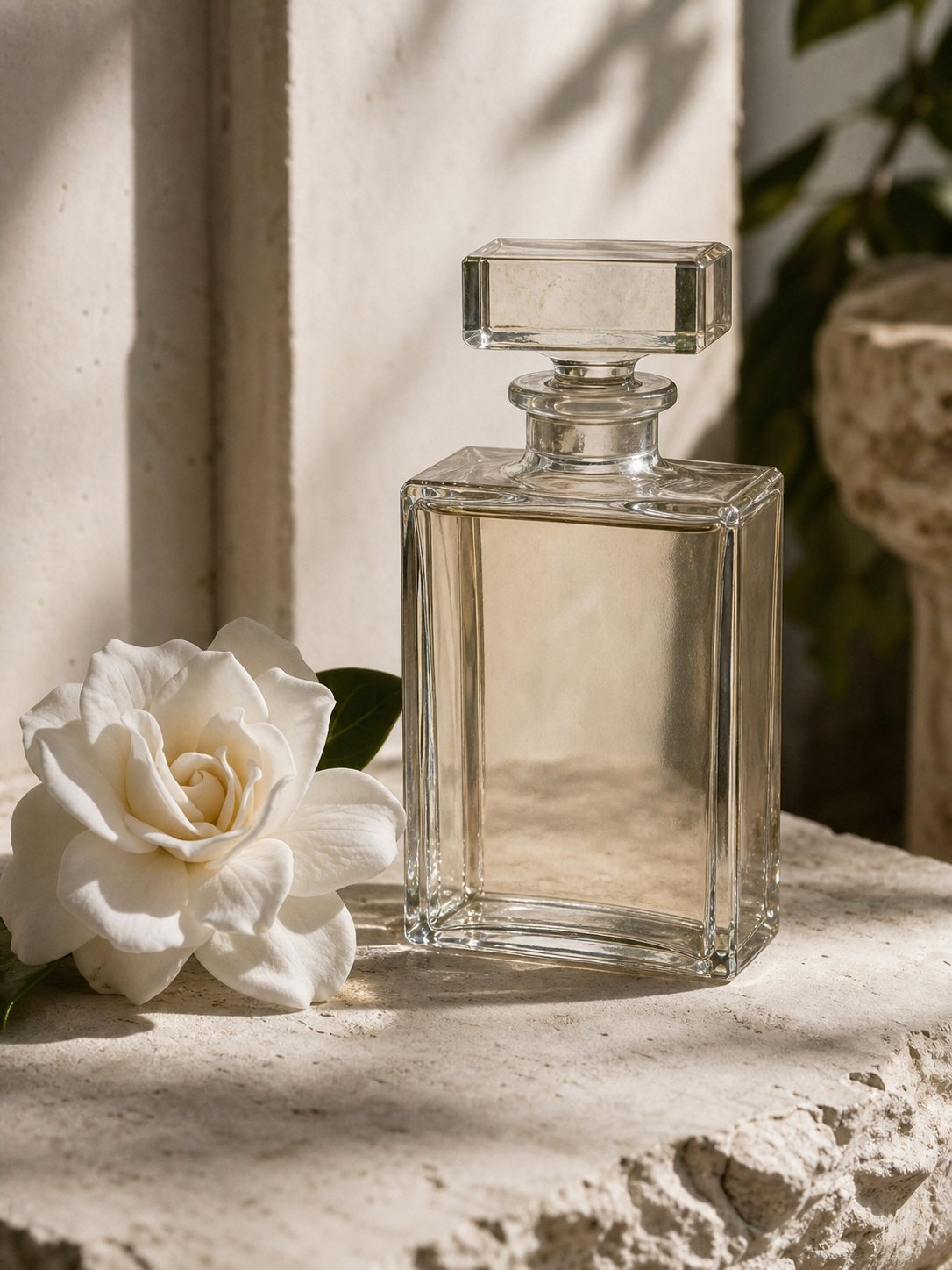
The most useful case study in premium glass packaging is not a 2026 story. It’s from 1921.
The history of the Chanel No. 5 bottle is a design argument that has been winning for a hundred years. In the early 1920s, luxury fragrance was presented in ornate crystal flacons: curved surfaces, elaborate stoppers, engraved details, colored glass. The visual language said: luxury through abundance, value through decoration.
The rectangular laboratory flask that became the No. 5 bottle said the opposite. No ornamentation. No curves. A flat geometric stopper. A form borrowed from men’s grooming and laboratory equipment. It looked nothing like what it was competing against on the shelf, and it went on to become one of the most recognized commercial objects of the twentieth century.
The design argument it made — that proportion and material purity communicate luxury more durably than surface decoration — is the argument premium glass packaging is making again in 2026. Not because minimalism is fashionable, though it is. But because the argument is correct. A bottle that is right in its proportions and honest about its material doesn’t need to convince you it’s valuable. It simply is, and leaves the rest to your perception.
What makes this lesson worth restating is that it requires confidence to apply. Decoration is a hedge. It fills space that might otherwise feel empty. The designers who keep returning to this lesson are the ones willing to let proportion and material do the work without the safety net of applied ornament.
Color in Glass: The Palette of Light
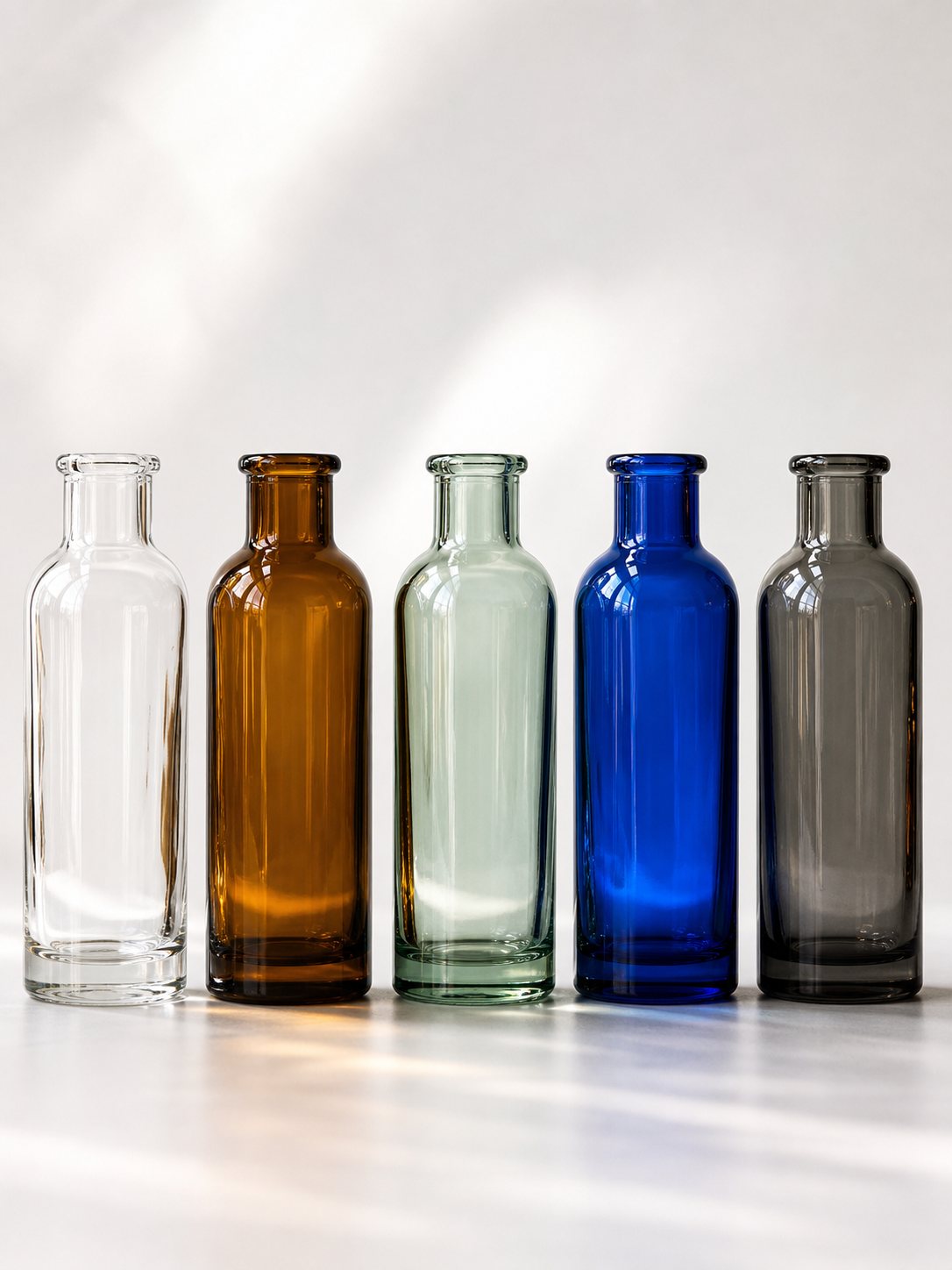
Glass color is not the same as paint color. When you tint glass — or choose a formulation that produces amber, cobalt, smoked grey, or pale green — you’re not adding color to a surface. You’re changing the medium that light travels through. The color exists in the transmission, not the surface, which means it behaves differently at different thicknesses, in different light conditions, and from different viewing angles.
Amber glass has been the default for pharmaceutical and spirits products for reasons that begin with UV protection. But in premium packaging, amber is being used for purely aesthetic reasons: it transforms what’s inside into a warm glow, it reads as warm and organic on shelf, and it photographs with a quality that other colors don’t. A boutique whisky in amber glass is not just protected from light degradation. It’s presented in an optical environment that makes the liquid look more beautiful than it would in clear glass.
Smoked grey and deep cobalt are the colors gaining traction in 2026 premium fragrance packaging specifically. Both work particularly well for perfumes with aquatic or cool aromatic profiles — the color of the bottle creates an expectation before the cap is opened. This is packaging that is doing sensory work before the product itself is experienced, which is the highest ambition of the form.
The design challenge with colored glass is proportion. A deep color in a thick-walled bottle creates a very different optical effect than the same color in a thin-walled bottle. Designers choosing colored glass have to think about wall thickness as a color decision as much as a structural one.
The Cap as the Final Design Statement
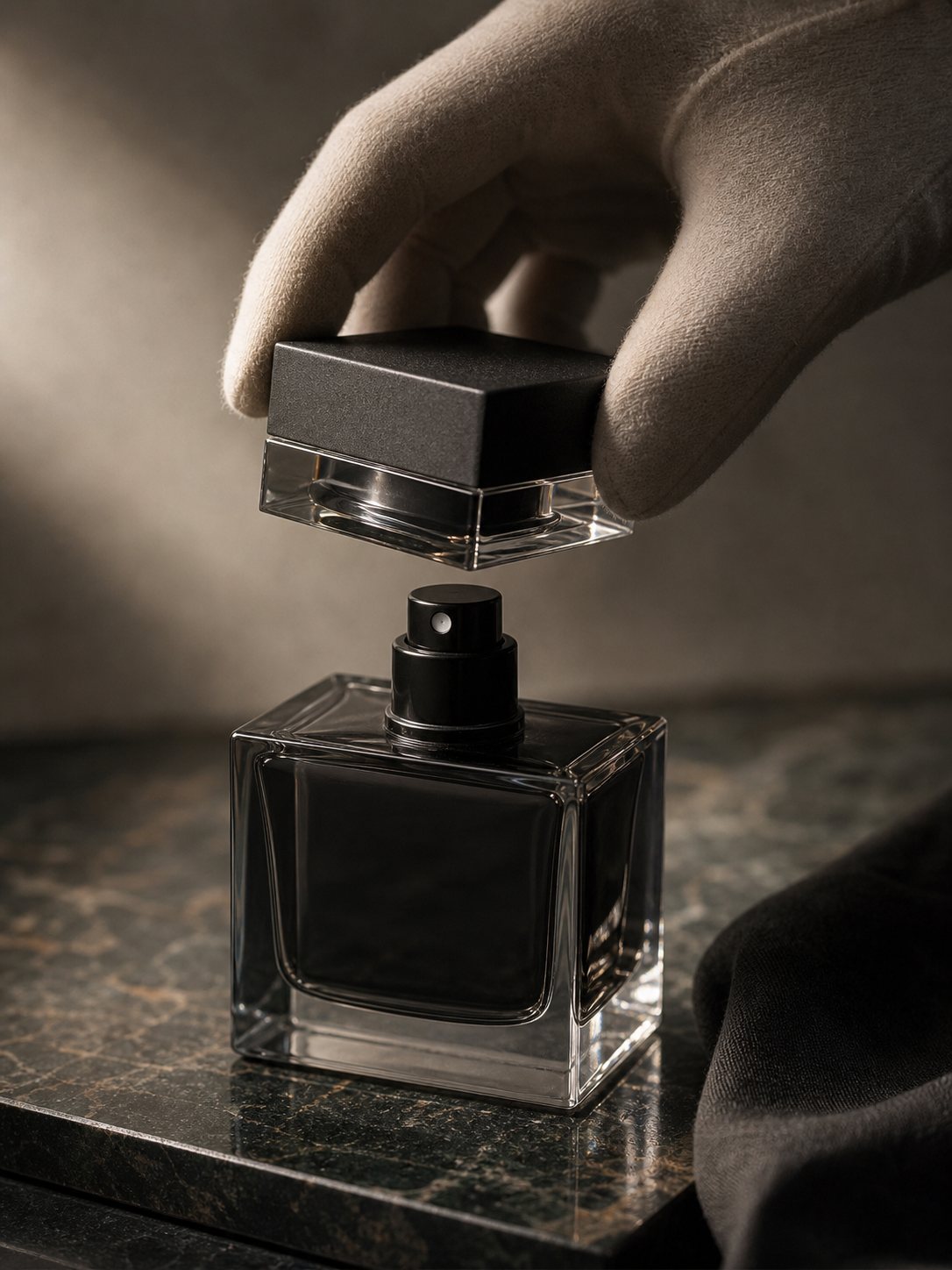
The cap is where the handling experience of a bottle either completes or collapses. The bottle can be visually perfect and the cap can undo everything — by being too light, by clicking closed with the wrong sound, by not aligning with the visual language of the glass beneath it.
In 2026, the most considered packaging treats the cap and bottle as a single design object rather than two components that happen to connect. The transition from glass to cap is a design detail: does the cap continue the bottle’s silhouette or interrupt it? Does it add weight at the top that changes the feel of the bottle in the hand? Does the sound of it closing match the quality signal that the glass itself communicates?
Some of the most distinctive packaging of recent years has made the cap the primary aesthetic statement. A clear glass bottle with an oversized matte black geometric cap, where the cap is visually heavier than the bottle below it. A minimal cylinder with a wooden stopper that introduces a completely different material and texture into the composition. These choices treat the cap not as a functional addition but as a design variable with the same weight as the bottle form itself.
The sound dimension is underrated in packaging design discourse. The click of a well-made cap, the slight resistance before it seats fully, the quiet sound it makes closing — these details are not accidental in premium packaging. They are specified. They are prototyped. They are part of the experience the designer is controlling.
What Makes a Bottle Worth Keeping
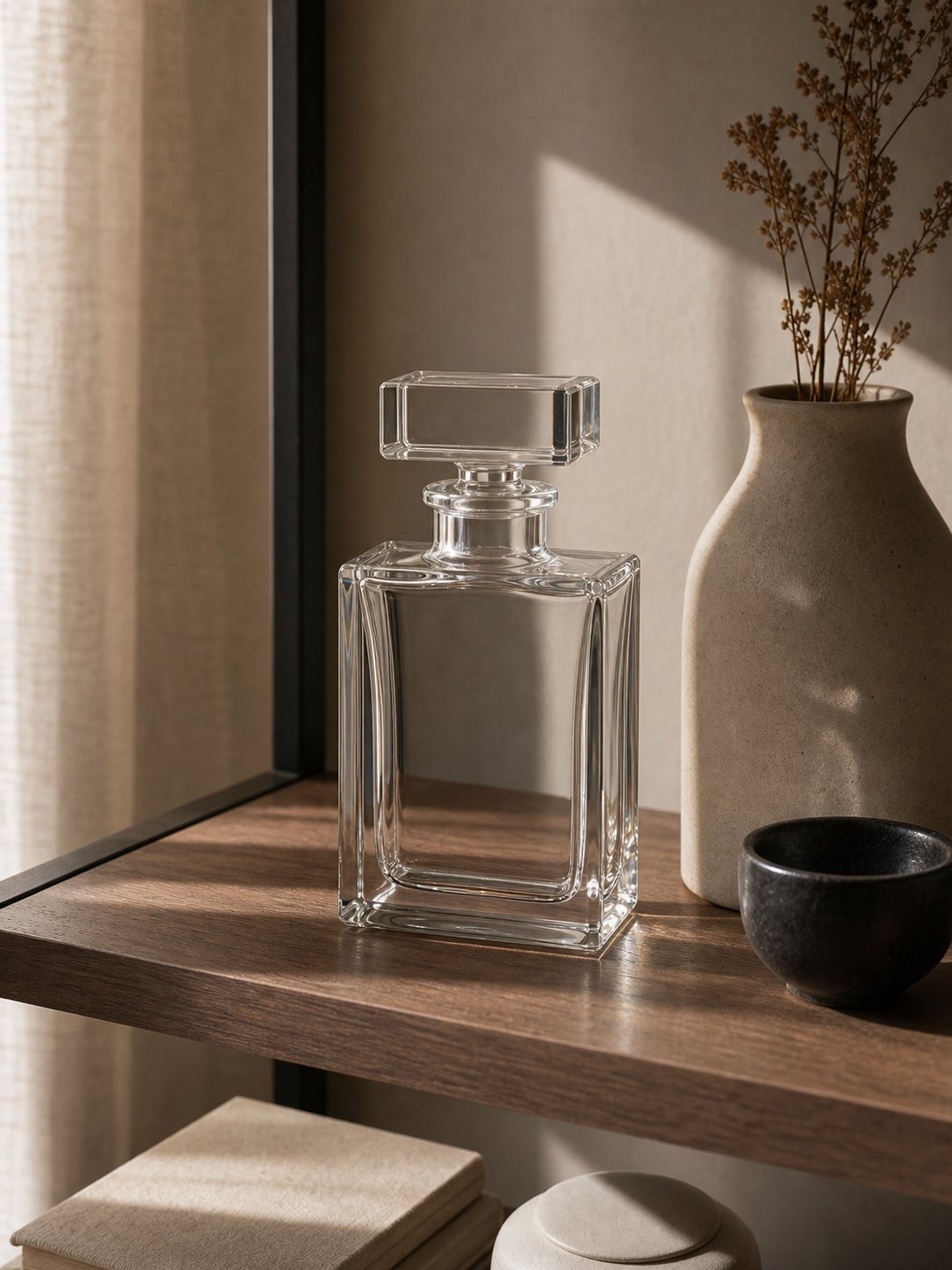
There is a practical test for whether a packaging design has succeeded at the highest level: does the bottle stay on the shelf after it’s empty?
Most packaging doesn’t. It fulfills its function and gets discarded. The product inside was the point, and the container goes when the product goes. That’s entirely appropriate for most packaging. But for premium products — niche fragrances, boutique spirits, considered home ambiance objects — the bottle staying means the design has created a genuine object rather than just effective packaging.
The characteristics that make bottles worth keeping are almost entirely about proportion, material quality, and restraint. Heavy glass with a punt base that refracts light interestingly. A silhouette that reads well from every angle, not just the front. A surface — whether through texture, clarity, or color — that rewards looking at. A cap that completes the form rather than just sealing it.
What doesn’t make bottles worth keeping: applied decoration that looks good in the store and dated within a year. Labels that peel or become sticky over time. Materials that feel cheap even when they’re not. Surface treatments that obscure the glass rather than working with it.
The 2026 aesthetic trend in premium glass packaging is, at its root, a trend toward making things worth keeping. That’s a more ambitious design brief than making things worth buying, and it’s producing the most interesting glass objects this category has seen in years.
FAQ: Premium Glass Packaging Design
Why is glass still the preferred material for luxury packaging in 2026?
Glass communicates permanence through weight, optical depth, and tactile quality that no synthetic alternative matches at the high end. For niche fragrances, boutique spirits, and premium home ambiance products, the bottle is part of the product experience itself. Glass also shows the true color of what it contains without distortion. Beyond function, it simply looks and feels more valuable than the alternatives.
What makes super flint glass different from standard glass for packaging?
Super flint glass has near-zero color distortion. Standard glass has a slight greenish cast that subtly filters the perceived color of the liquid inside. Super flint eliminates that tint and has a higher refractive index, creating exceptional light interaction. For minimalist bottles with no label or decoration, this optical purity is essential — the clarity is the design.
What is a glass punt and what does it contribute to packaging design?
The punt is the concave indentation at the base of a bottle. In premium packaging it has become a deliberate aesthetic element: a deep punt creates dramatic light refraction when viewed from below or at an angle, adds perceived weight and solidity, and provides a natural grip point. Designers now specify punt depth and geometry specifically for the optical and tactile effects they want to achieve.
Why is the Chanel No. 5 bottle still relevant to packaging designers?
Because it proved that structural proportion communicates luxury more durably than surface decoration. In the 1920s, ornate crystal flacons were the standard for luxury fragrance. The stark rectangular laboratory flask form of Chanel No. 5 stripped away all ornamentation and became one of the most iconic commercial objects of the twentieth century. The lesson: an object that is right in its proportions and material does not need decoration to justify itself.
What does architectural fluting add to a glass bottle design?
Fluting creates vertical facets along the bottle surface that each catch and refract light independently, making the visual effect dynamic and different from different angles. It improves grip without roughness that reads as industrial. And it carries the cultural resonance of classical architecture — lending a sense of historical weight to contemporary forms without direct historical reference.
What is micro-embossing and why are designers choosing it over printed labels?
Micro-embossing integrates lettering or texture directly into the glass surface through the mold. Unlike a printed label, an embossed element is permanent, cannot peel or fade, and creates a tactile quality that paper cannot replicate. For minimalist bottles where a label would disrupt the visual continuity of the glass form, embossing is the obvious solution. The brand mark becomes structural rather than applied.
How does packaging design create emotional connection with a product?
Through sensory experience that bypasses conscious evaluation. The weight of a bottle, the sound a cap makes closing, the way light moves through colored or textured glass: these details create emotional associations before any rational judgment happens. A well-designed bottle is kept long after its contents are finished because it has become an object in its own right. That retention is the most reliable sign the packaging has succeeded.
The perfect bottle doesn’t announce itself. It earns the right to stay on the shelf after it’s empty — which is a harder brief than it sounds.
- 66shares
- Facebook0
- Pinterest63
- Twitter3
- Reddit0