

Most people declutter before a move by asking whether they still want something. That question looks backward, at the home being left behind. A better question looks ahead: where will this sit in the new place, and what will it do there? If there’s no clear answer, the deep sofa, the spare bookcase and the extra dining chairs become expensive guesses. You pay for them once to move them, and again every day you have to work around them.
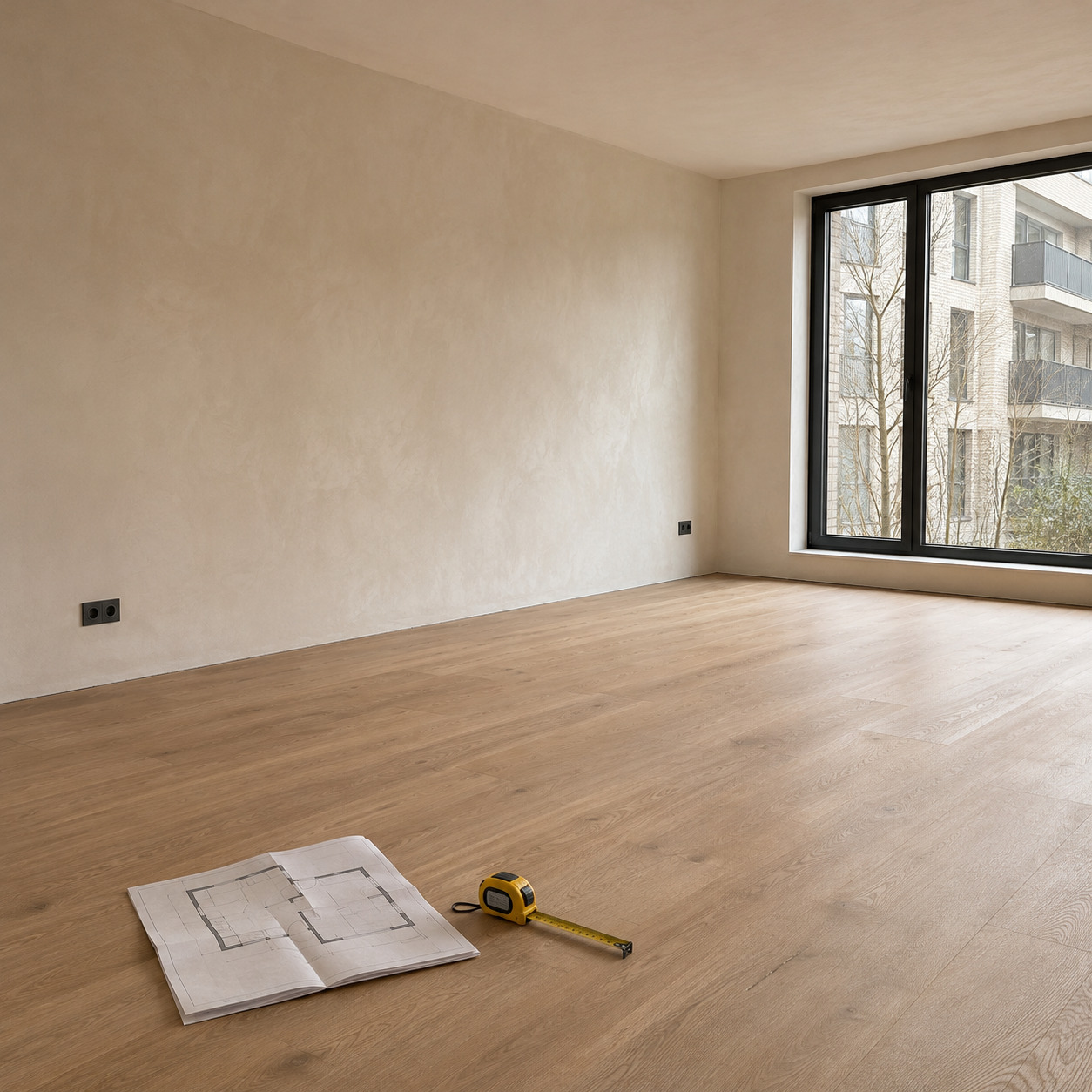
Relocating is demanding enough without that. Pink Octopus Moving, a moving company, claims that about 91% of people find moving stressful. The underlying survey could not be verified, so read this as an industry claim rather than independent evidence. The underlying point needs no statistic, though. Clutter adds work at the worst possible moment, because every extra item has to be judged, wrapped, carried, transported and then given a place.
This guide treats decluttering as a design decision. Instead of sorting by habit or guilt, test what you own against the new home itself: its layout, storage, light and the routines it has to support. You end up with a shorter inventory, a destination for everything you keep, and a first week spent setting up a home rather than running a storage unit.
Start with the new home’s constraints
You can’t decide what belongs in a room you haven’t measured, so the edit starts at the destination, not in your current closets. Get a floor plan if one exists. If not, measure during a viewing or walkthrough and note:
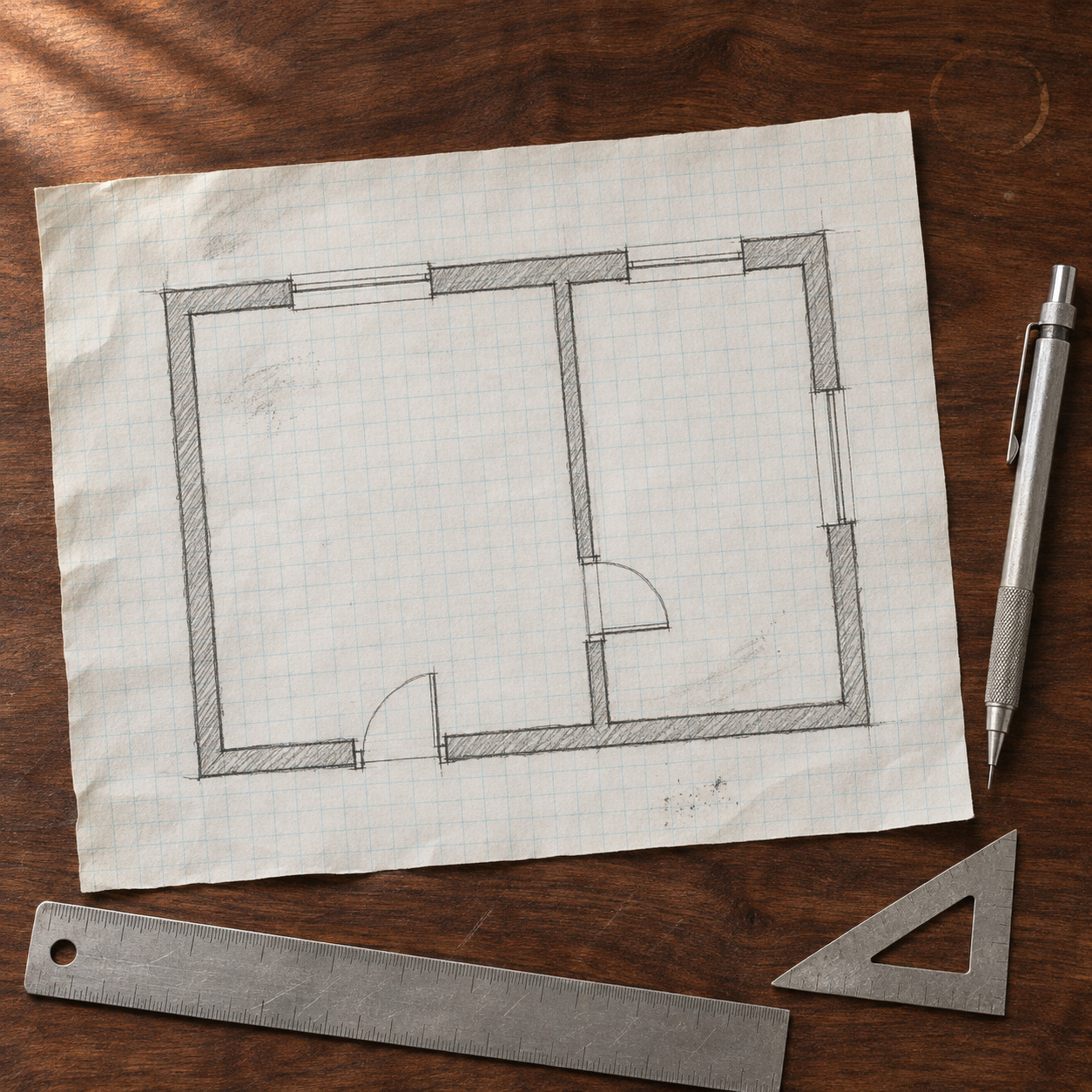
- Room dimensions and ceiling heights
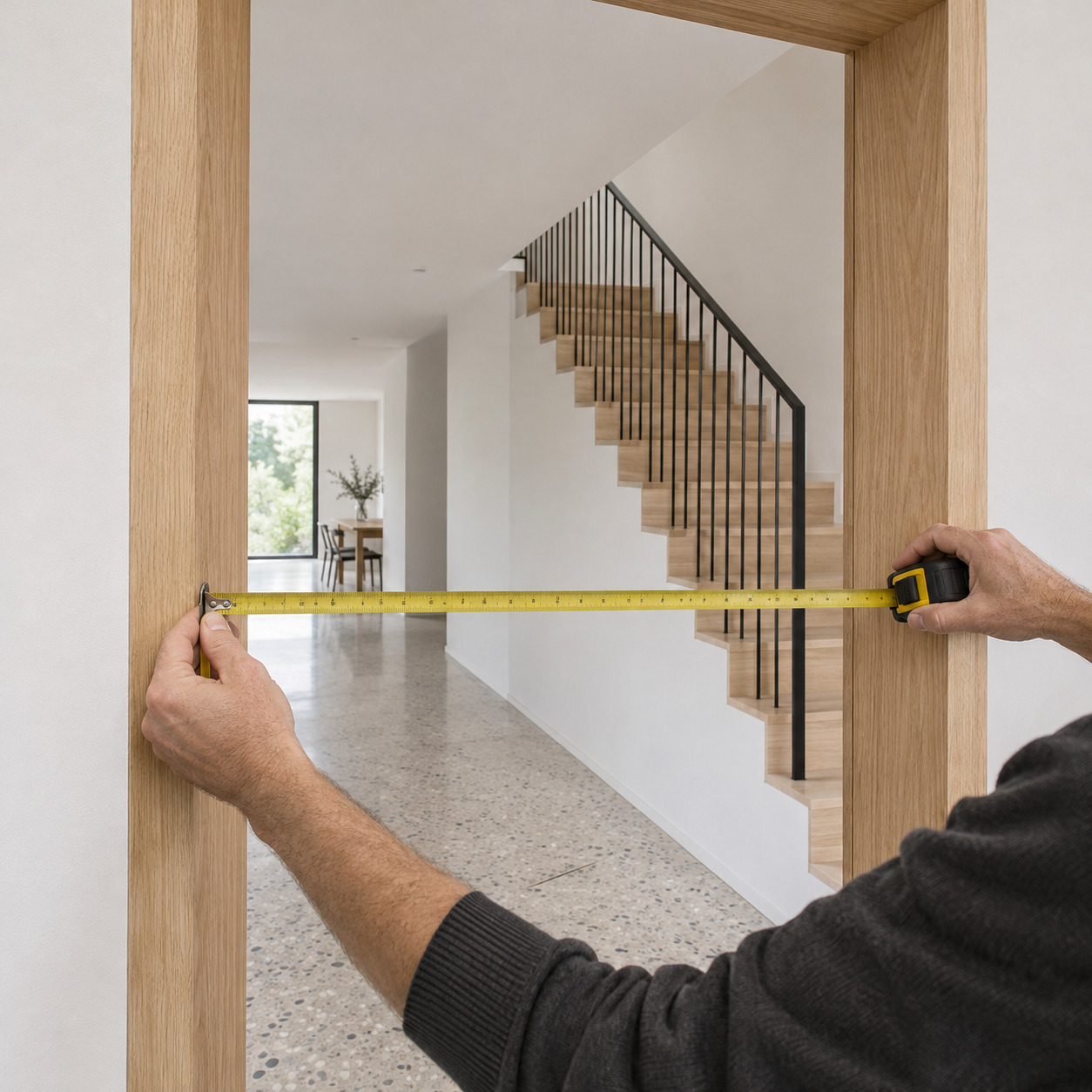
- Door widths, door swings, stair turns and lift or elevator sizes
- Window positions and sill heights
- Radiators, vents, outlets and switches, all of which pin furniture to certain walls
- Closet rail length, shelf depth and kitchen cabinet space
Then sketch the new room at scale. Graph paper is enough. Cut paper templates for your largest pieces and move them around the drawing. Ten minutes of this settles questions that would otherwise wait until moving day, such as a bed that fits but stops the wardrobe opening, or a dining table that leaves no room to pull out chairs.
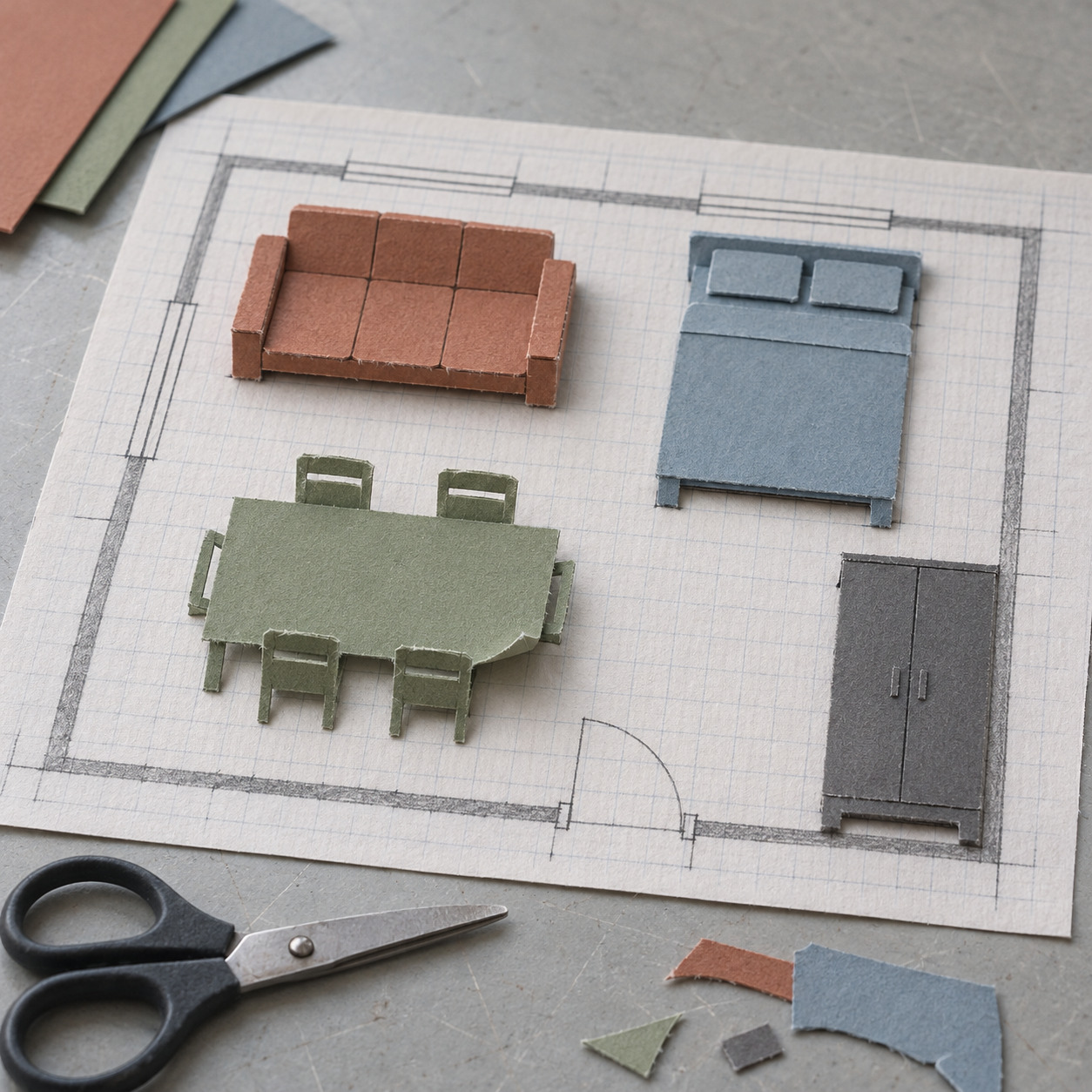
Floor area is only part of it. Walk the routes you’ll use every day: entrance to kitchen, bed to bathroom, sofa to window. If a piece fits only by forcing you to turn sideways to pass, it doesn’t really fit.
Light deserves the same attention. A tall, dark wardrobe that sat comfortably in a bright bedroom can close in a smaller room with one north-facing window. Note where daylight falls and keep those zones for seating, a desk or plants rather than storage.
Routines complete the picture. A home office, a shorter commute, more guests or a different neighbourhood all change what a home needs to hold. The Detroit Regional Partnership’s land-planning page notes that the city has over 200 neighborhoods, a count it credits to TheNeighborhoods.org. Whatever the precise number, the lesson applies anywhere. A walkable, dense area and a quieter residential street make different demands, from bike storage and a compact entry to garden furniture and room for outdoor gear.
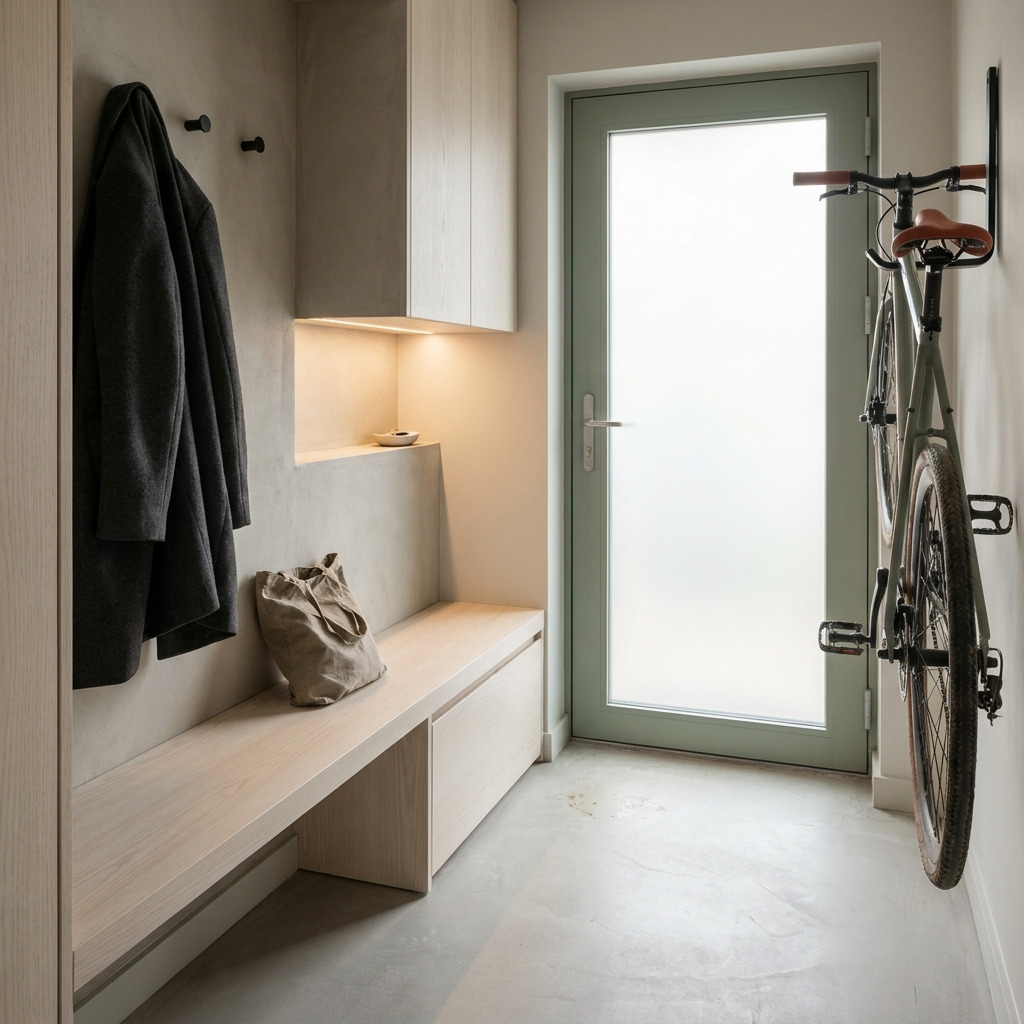
If a new routine changes how a room works, a functional interior design plan can help you map tasks, movement and storage before deciding which furniture follows you.
Use a destination test for every item
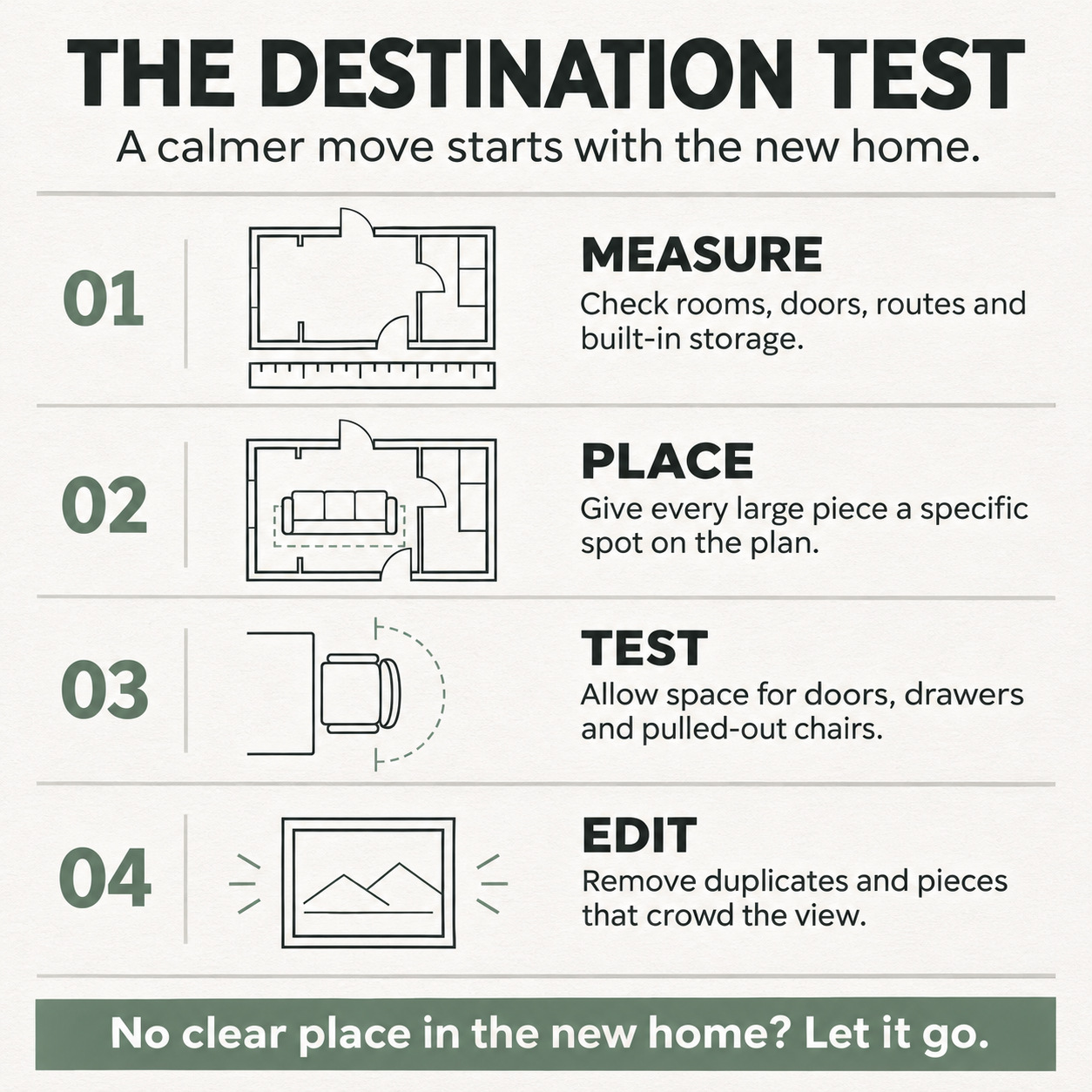
The quickest way to decide what to keep when moving is to require every belonging to earn a specific address in the new home. “Living room, the wall left of the window” counts. “We’ll find somewhere” doesn’t.
A few concrete tests make that judgment easier:
- The route test. Will it pass through the front door, the stair turn and the bedroom doorway? A piece that has to be dismantled and might not survive reassembly needs a strong reason to stay.
- The opening test. Measure furniture with its doors and drawers open, and with chairs pulled out. Usable space counts, not footprint.
- The duplicate test. If the new home already has it built in, such as a pantry, wardrobe or linen closet, the freestanding version usually goes.
- The replacement test. If an ordinary item would cost less to replace than to pack, move and store, and it carries no meaning, let it go.
- The display test. A sentimental object should have a place where it’s seen or properly protected. If its future is a sealed box, think hard about why it’s staying.
Some items fall between keeping and leaving, and those are often the most interesting. A sofa with modular sections can be split between two rooms. A heavy dresser can look lighter with paint and new hardware. A bookcase may work on its side under a low window. Adapting a good piece is often better than replacing it.

Anything still uncertain gets a deadline. If you can’t name its address by that date, it leaves. When the sorting process itself feels overwhelming, a room-by-room decluttering plan takes care of the logistics. The destination test is for the decision itself.
With collections, choose a few pieces worth displaying rather than keeping everything in storage. Three objects on a shelf you pass every day often honour a memory better than thirty in the loft. Photograph the rest if letting go is hard.
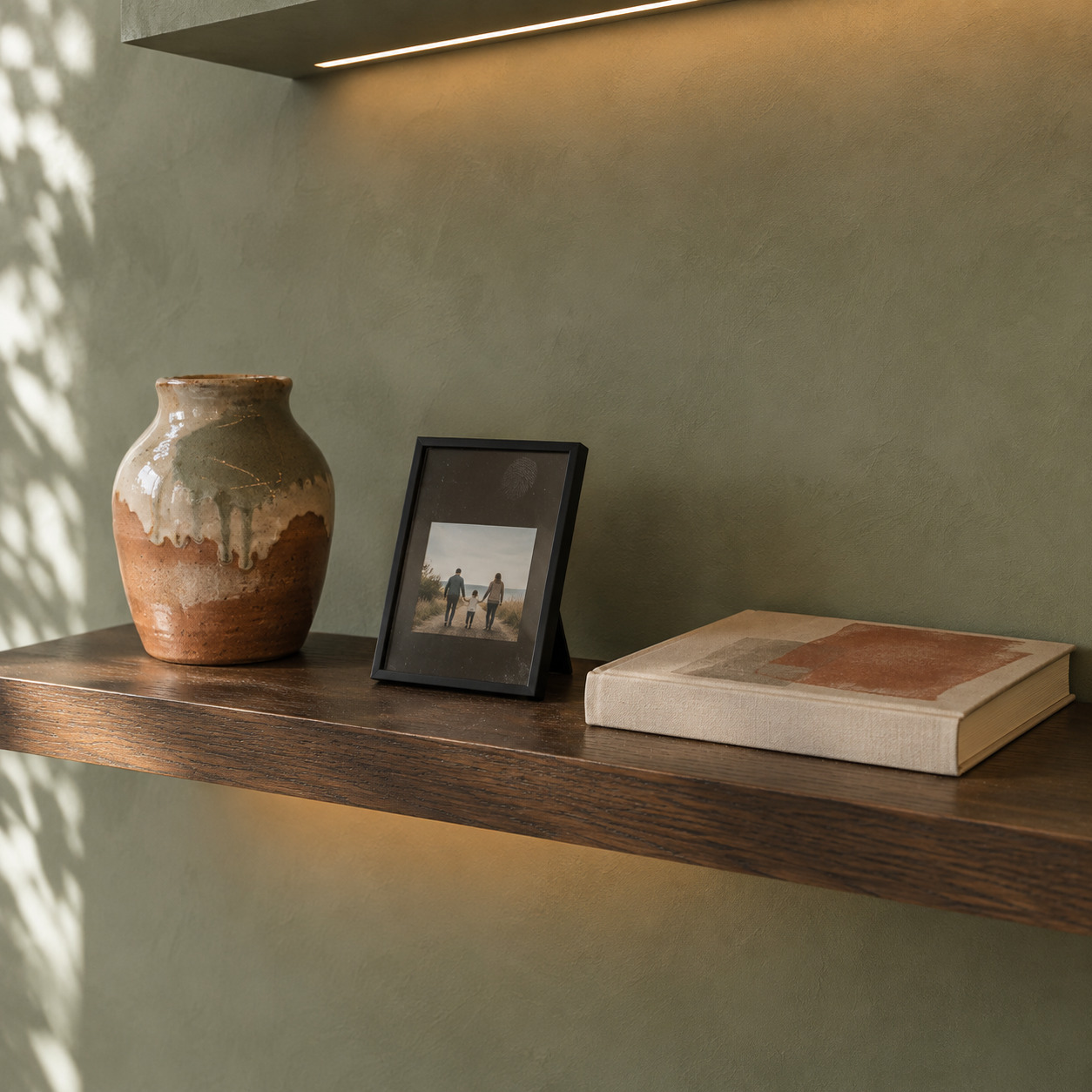
Edit the visual load, not just the box count
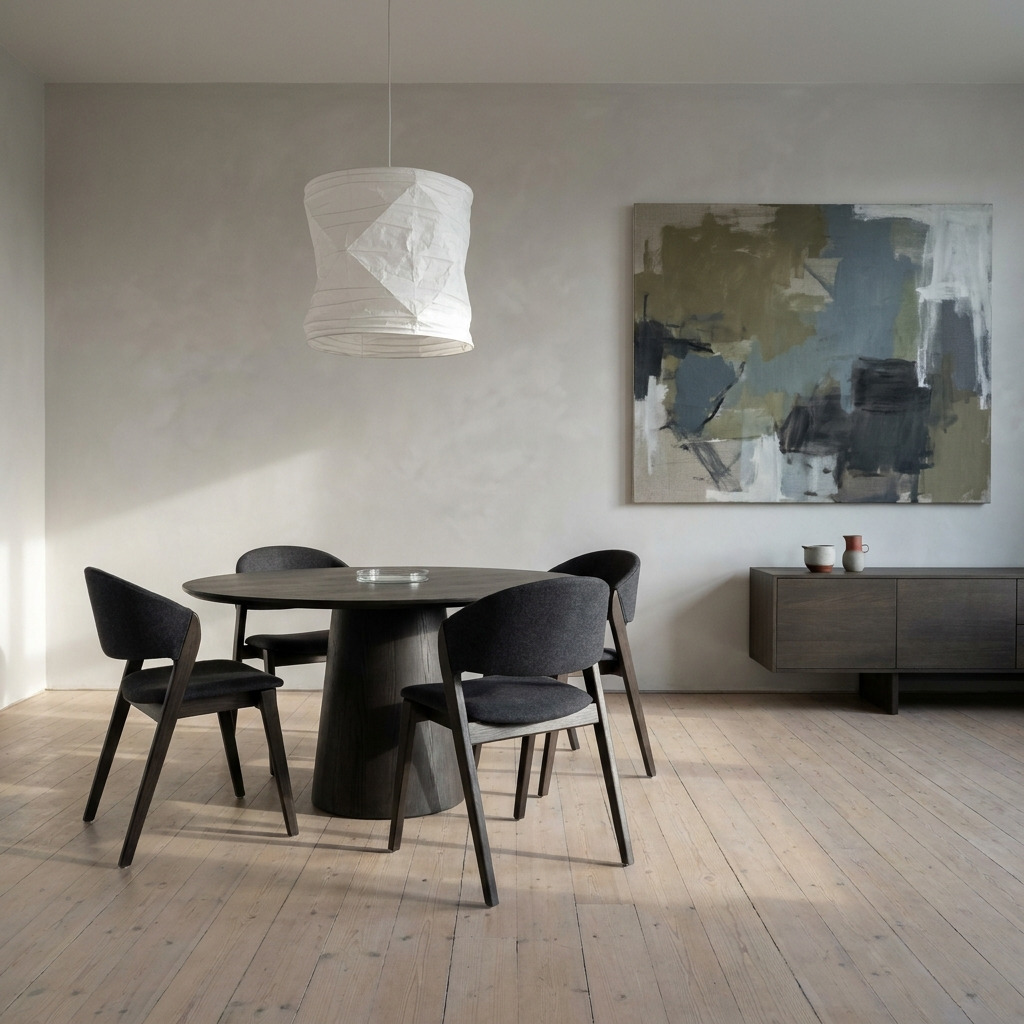
A room can be within its measurements and still feel crowded, which is why counting boxes is a weak measure of a good edit. Composition training, the kind behind industrial design and art direction, teaches that every object has visual weight. Dark finishes, solid bases, bulky outlines and busy patterns all read as heavy. When too many heavy pieces compete in one view, the room loses its calm even with floor showing between them.
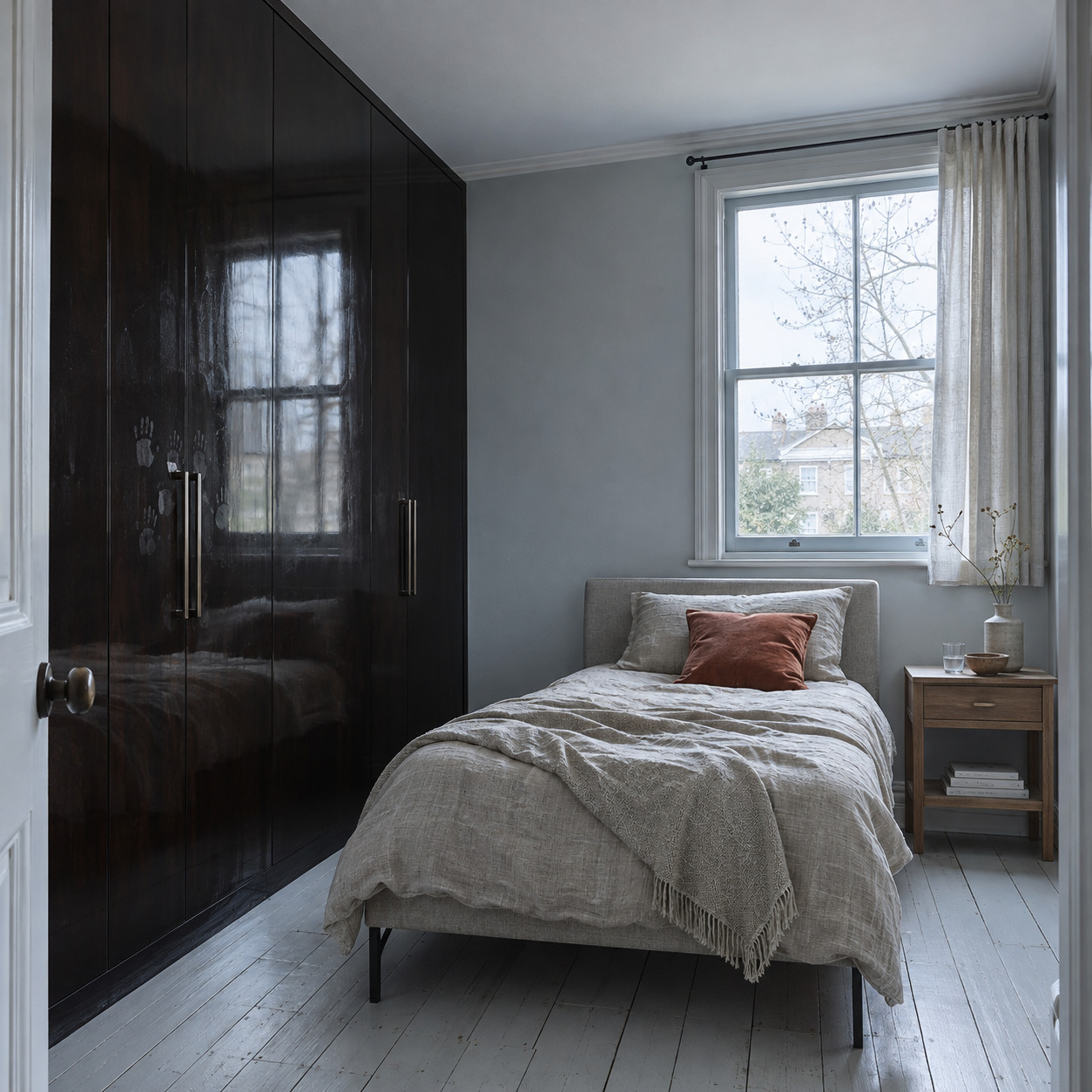
Look closely at four groups:
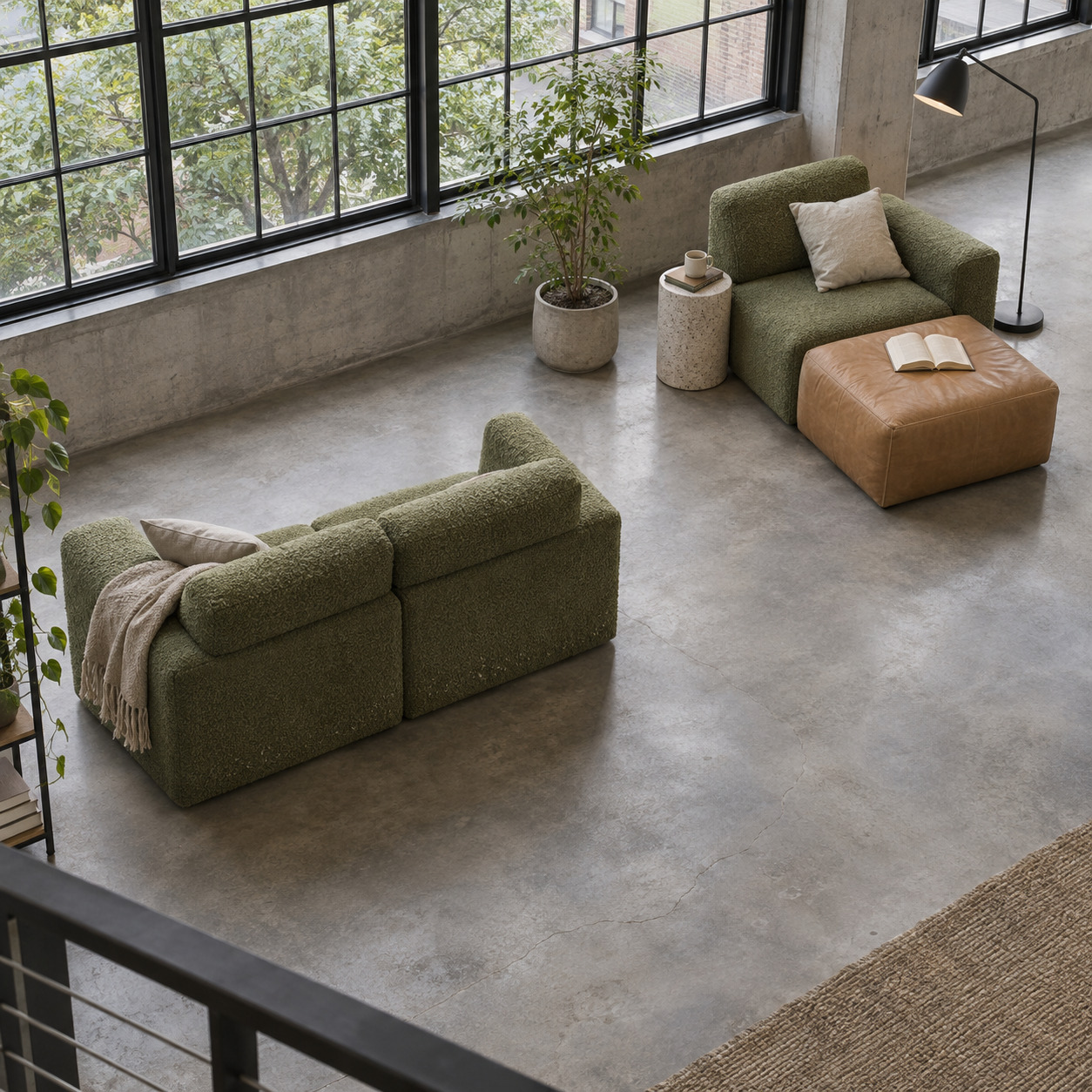
- Large upholstery. A deep sectional chosen for a wide living room can overwhelm a narrower one.
- Repeats. Two coffee tables, several similar floor lamps, three bookcases from three different eras. Keep the strongest and let the rest go.
- Wall pieces. Generous windows mean less hanging wall. Compare your art and mirrors with the walls you’ll actually have.
- Textiles. Rugs and curtains are sized for particular rooms and windows, and they rarely carry over cleanly.
For a move into a smaller footprint, these choices get sharper, and a guide to designing for a smaller home goes further into scale and storage. The table below works for any move.
| Piece | Keep if | Adapt if | Let it go if |
|---|---|---|---|
| Sofa or sectional | It fits its wall and leaves the main route clear | Modules can be split or reconfigured | It blocks a window or walkway, or can’t pass the stair turn |
| Dining table | Chairs pull out fully on every side you’ll use | Leaves can be removed or a smaller base fitted | The room can’t hold the table, chairs and movement together |
| Bed frame | Both sides stay usable and nearby doors open fully | The headboard can come off for a low window or tight wall | It forces a layout that blocks doors or daylight |
| Wardrobe or dresser | Built-in storage falls short and a suitable wall exists | Paint or new hardware would lighten it | Built-ins already cover the need |
| Bookcases | Wall length and ceiling height suit the unit | It can be cut down or laid horizontally | An edited collection fits the storage you’ll have |
| Rugs | It’s sized for a specific new room | It suits a bedroom or hallway instead | It’s too small to anchor furniture or too big for any room |
| Large art or mirrors | A particular wall suits its size | Reframing would improve its proportions | No wall can take it without crowding |
Sort and pack by new-home room, with an essentials kit
Once each item has an address, packing becomes a matter of following the plan. Label boxes with their room in the new home, not the room they came from, plus a brief note of what’s inside. Give each destination room a tape colour and post a copy of your sketch by the front door with matching colours, so every box lands where it belongs on the first trip.
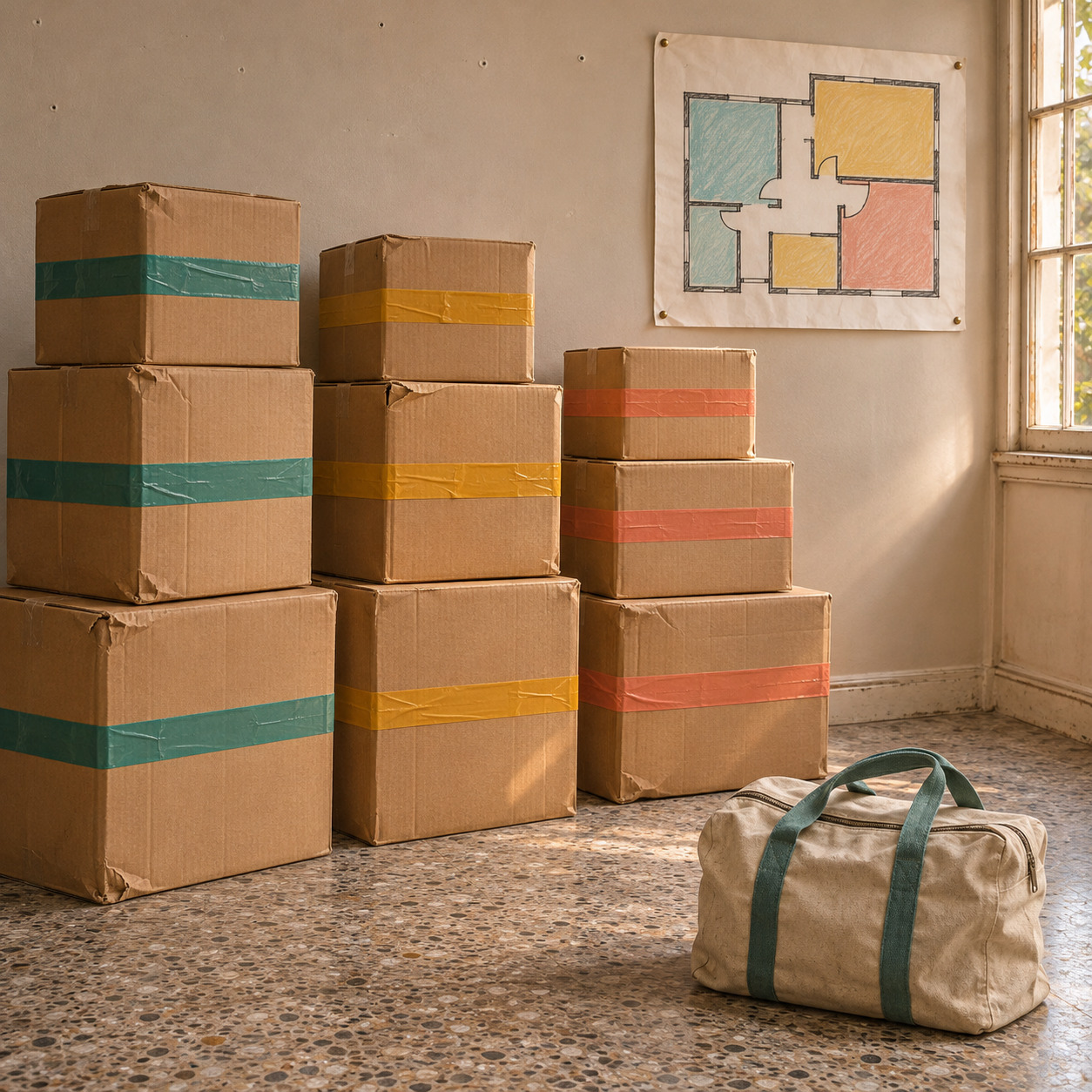
Keep a separate essentials kit with you rather than on the truck:
- Bedding and towels
- Medications, toiletries and chargers
- Keys, documents and moving paperwork
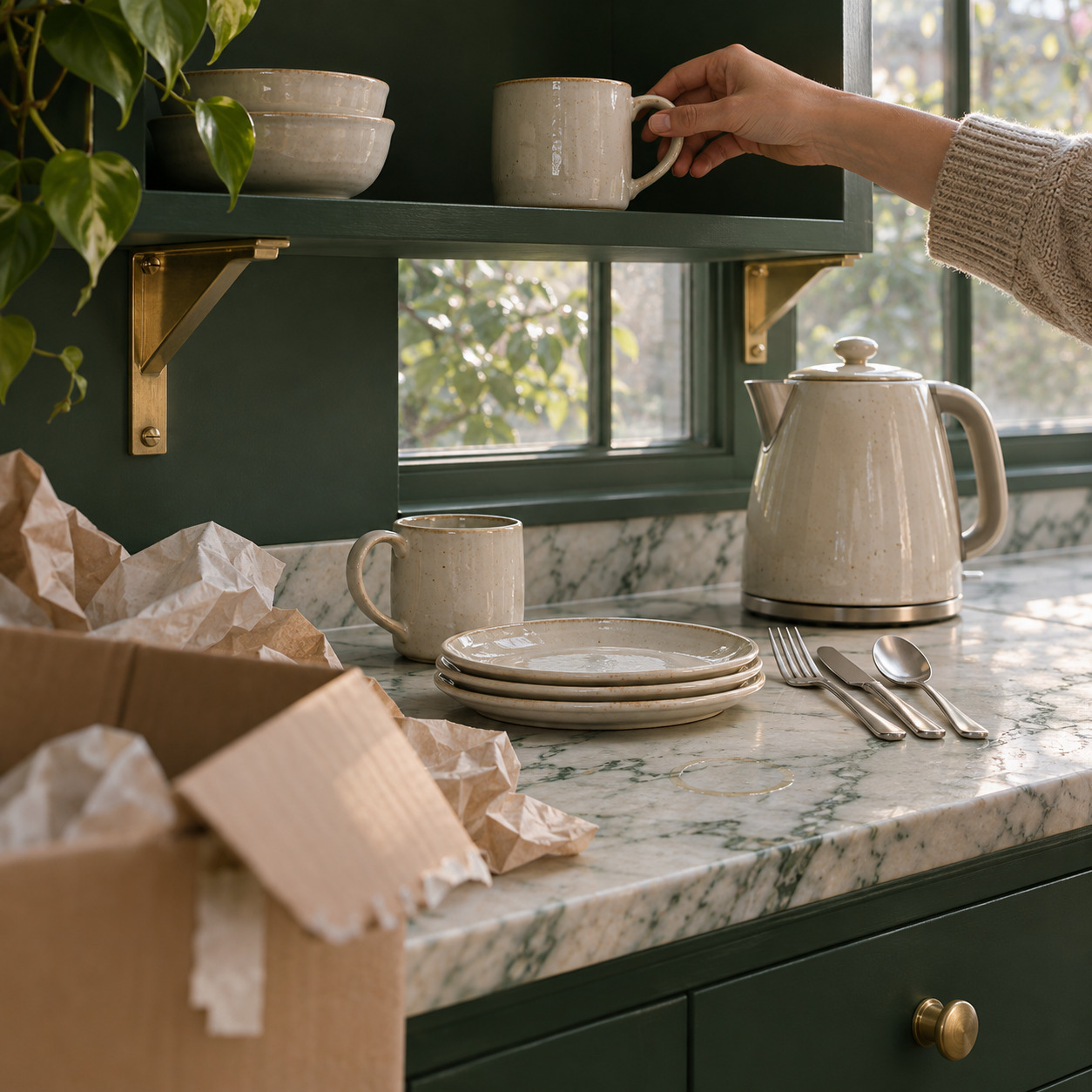
- A kettle or coffee setup, plus a few plates, cups and cutlery
- Basic tools, a tape measure, scissors, light bulbs and cleaning supplies
For the wider timeline, use a step-by-step moving checklist alongside this destination-room packing plan.
Arrange removal and donation before the packing deadline
Things you’ve decided against shouldn’t take up space while you’re packing, so arrange their exit early. Donation centres have their own acceptance rules, and some won’t take mattresses, upholstered furniture or electronics, so check before loading the car. Local bulky-waste collections and electronics recycling can be booked weeks ahead, which is one more reason to settle large pieces first.
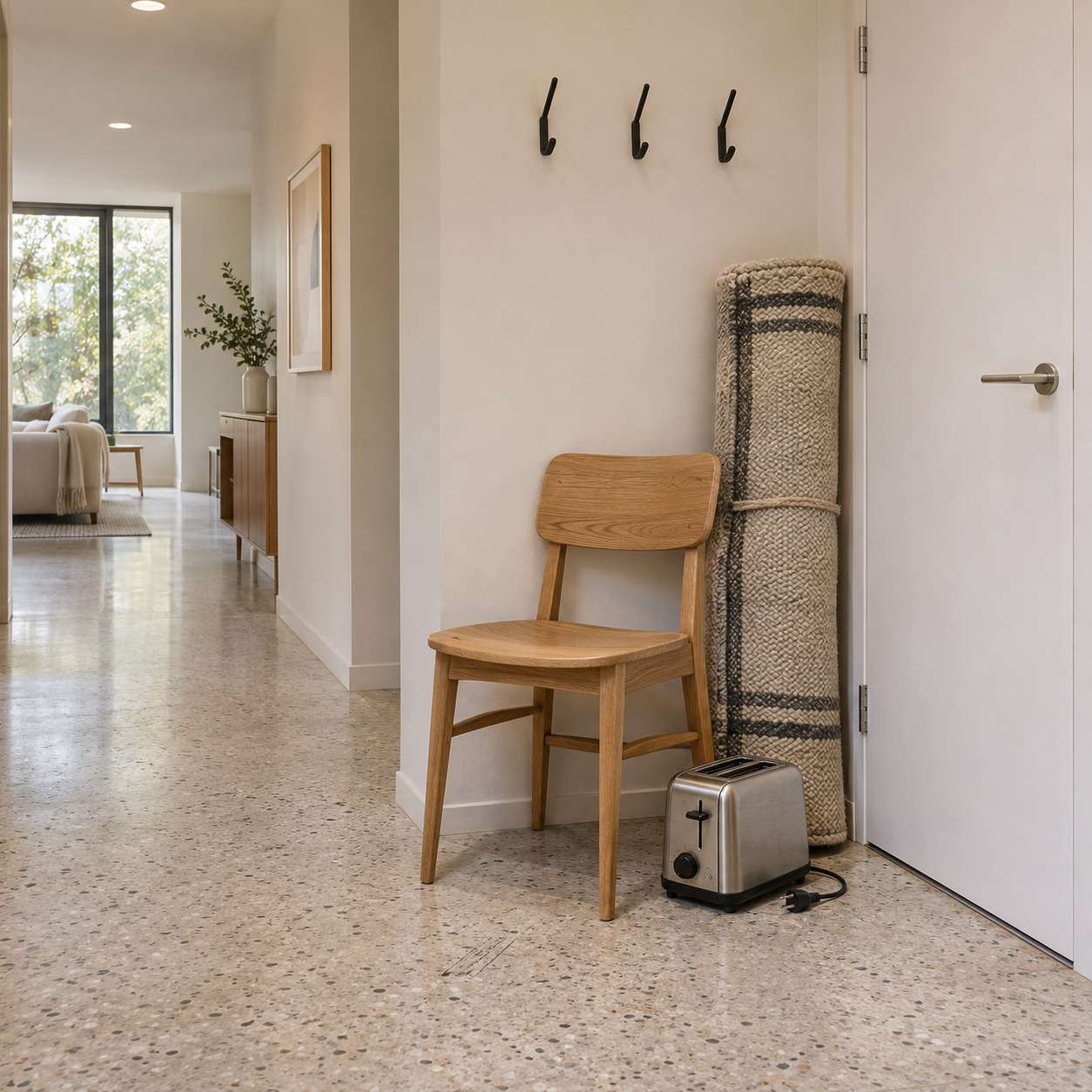
For broken furniture, old appliances or large volumes of unwanted stuff, a junk removal service can save repeated trips. Northeastern Movers states that 68% of Americans have used one in the past five years. The linked page does not establish the underlying survey, so that percentage should not guide the decision. The practical advice doesn’t depend on it: schedule removal before packing gets busy. Cleared rooms are faster to pack and show you clearly what you’re actually taking.
Unpack for function and sightlines first; style afterward
The first days in a new home go better when sleeping, eating and washing work before anything is decorated. A sensible order:
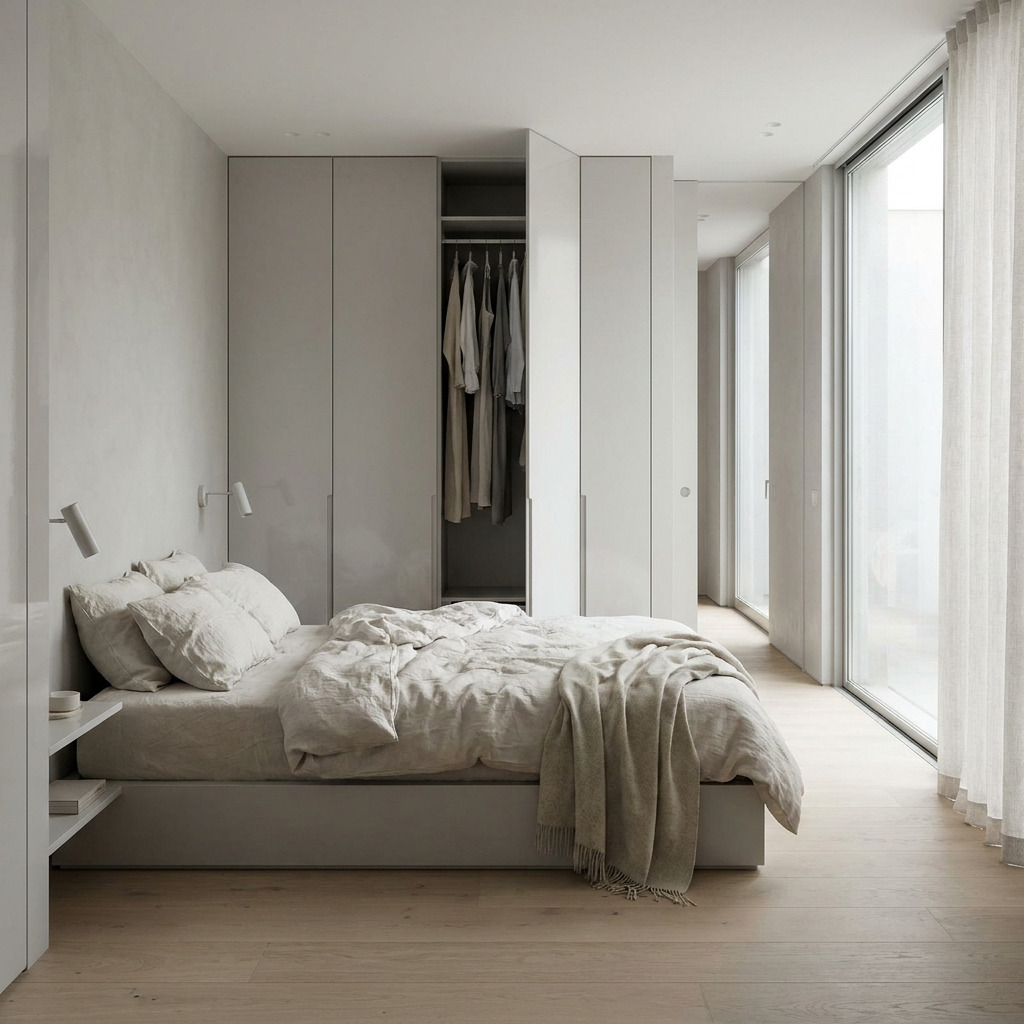
- Beds and bedding
- Kitchen basics and the bathroom
- Large furniture, placed according to your sketch
- Closets, cabinets and shelves
- Lighting, rugs and textiles
- Art, objects and styling
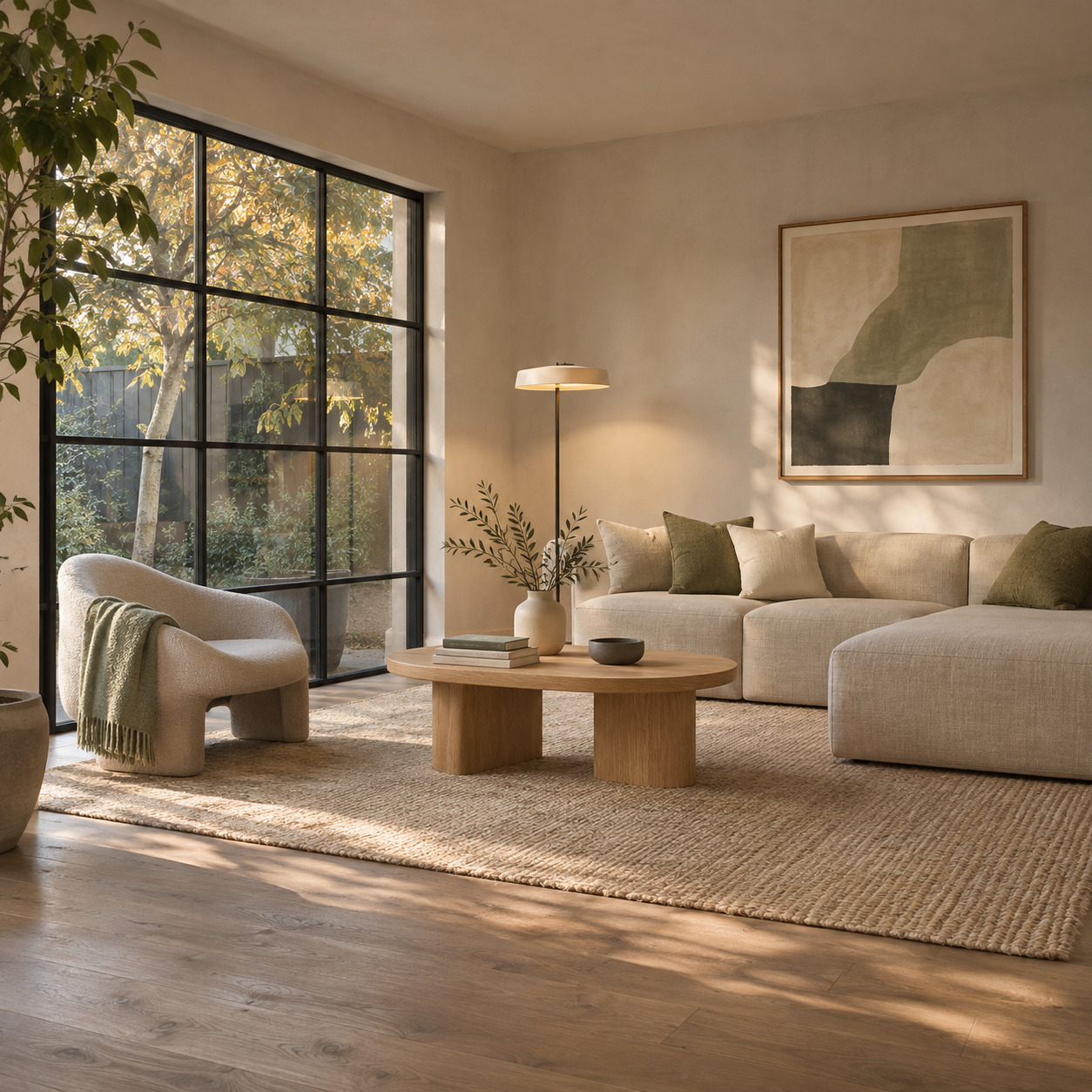
As large pieces go in, check the sightlines. Stand at each doorway and look into the room, then sit where you’ll actually sit. The view to a window or along the longest line of the room should stay mostly open. Low pieces suit that line, while tall ones belong against side walls.
It’s worth waiting a week or two before hanging art. Living in the rooms shows where the eye naturally rests, and that’s a better guide than any plan made in advance. Once the layout settles, a first-month home care routine helps you look after finishes and systems before small problems grow.
Quick pre-move checklist
- Measure every room, door, stair turn and window in the new home
- Sketch the main rooms at scale with paper furniture templates
- Give every large piece a named address, or a reason it’s leaving
- Run the route, opening and duplicate tests on what remains
- Set a deadline for undecided items
- Book donation pickups and removal before packing peaks
- Label boxes by new-home room and colour
- Pack an essentials kit that travels with you
- Unpack in order of function, and style last
FAQ
How early should I start decluttering before a move?
Start once you have reliable measurements of the new home. Large furniture needs the most lead time, because selling, donating or booking removal can take weeks. Smaller categories such as clothes, books and kitchenware can be edited while you pack, as long as the big decisions are already made.
What should I do with items I can’t decide about?
Put them in one holding zone and give them a firm date. If you still can’t name a room and a spot for something by then, let it go. For meaningful objects, ask how they’ll be displayed or protected. If the honest answer is a sealed box, consider keeping one representative piece and photographing the rest.
What if a favourite piece of furniture doesn’t fit the new layout?
See whether it can be adapted first. A sofa might lose a module, a table might lose a leaf, a bookcase might work on its side. If nothing works, weigh the cost and effort of moving and storing it against letting it go. A piece that fits only by blocking a route or a window will cost you comfort every day.
Decluttering before a move can make relocating less stressful, but its real value is in what happens after the boxes are gone. Done with the destination in mind, it means you arrive with belongings that already have a place, in a home that works from the first week.
- 0shares
- Facebook0
- Pinterest0
- Twitter0
- Reddit0