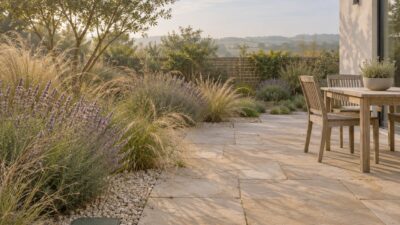
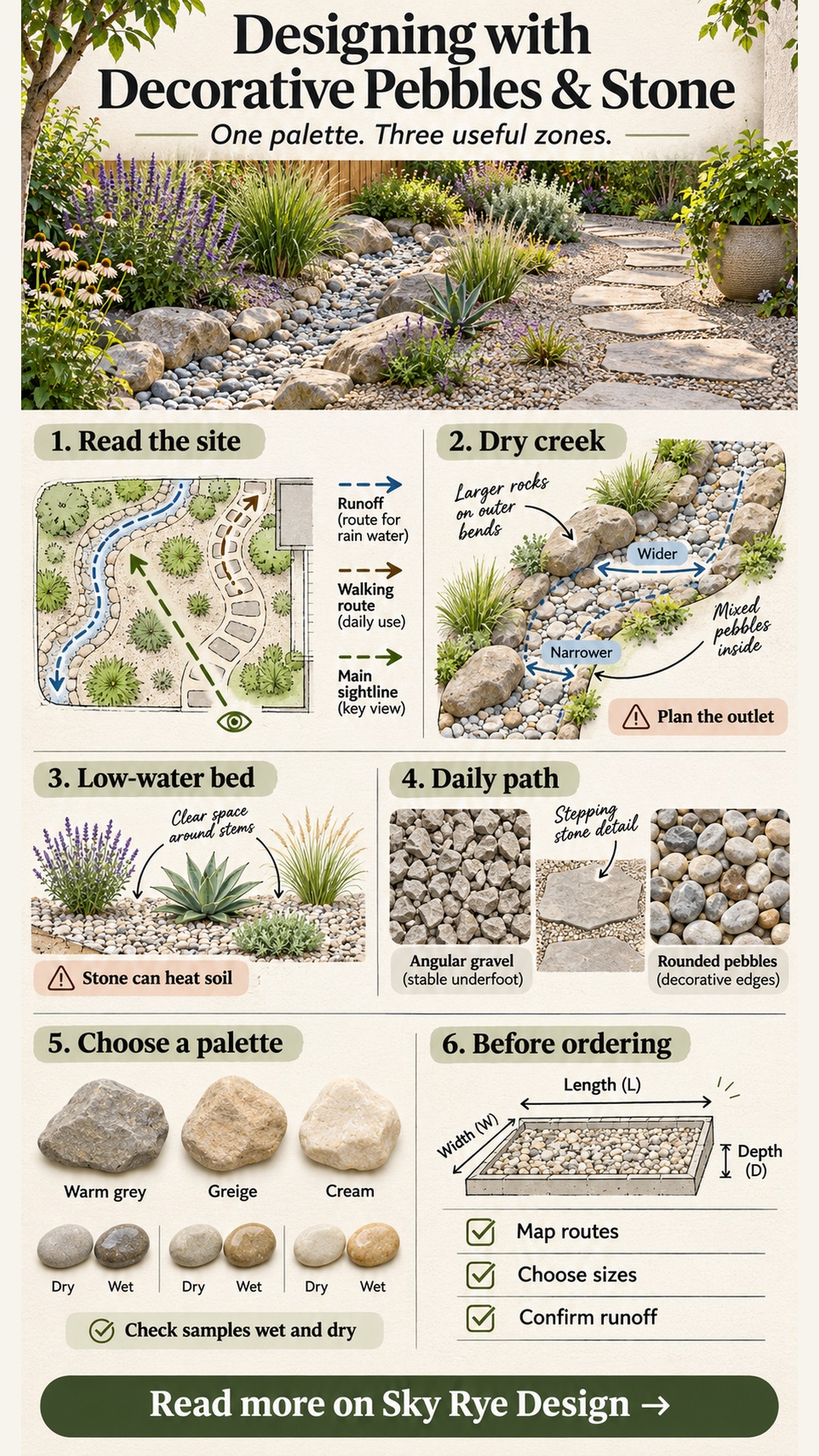
Good garden design with decorative pebbles starts by giving each stone a clear job and a place in the overall composition. Pebbles and gravel add texture and structure, need less topping up than organic mulch, and suit everything from modern courtyards to native bush gardens. A planned stone channel can guide runoff, a suitable top layer can cover soil, and the right gravel gives you a stable place to walk.
Below are three common uses for stone, plus guidance on colour, size, planting and quantities. The aim is a garden where the dry creek, planted beds and paths read as one design. They shouldn't look like three separate deliveries of gravel.
Start with the site, then choose stone
Before picking a colour, walk the garden and note three things:
- Where water goes. Watch where runoff collects or flows after rain.
- Where people walk. Main routes need stability. Edges and borders can prioritise texture.
- Where the eye lands. From the street, the front door or a main window, decide what should draw attention first.
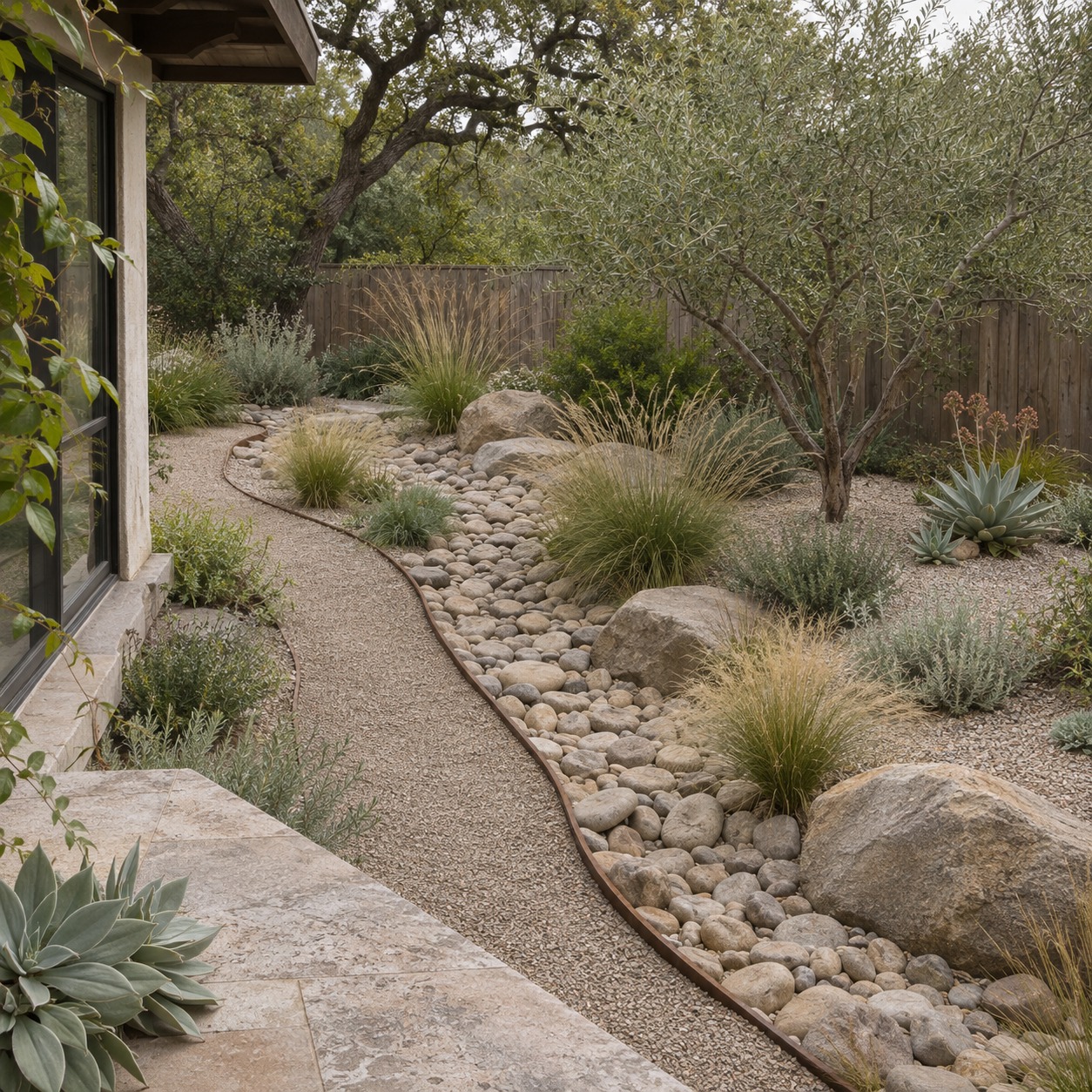
Then limit your palette. One stone colour family, used in two or three sizes, usually looks more deliberate than several unrelated products. Vary size and shape by function. Use larger, rounded stones where water would run, finer gravel in beds, and angular stone underfoot. This keeps the zones connected while each does its own job. For the wider layout, our landscape design process shows how to move from site analysis to a planting plan.
1. Dry creek beds
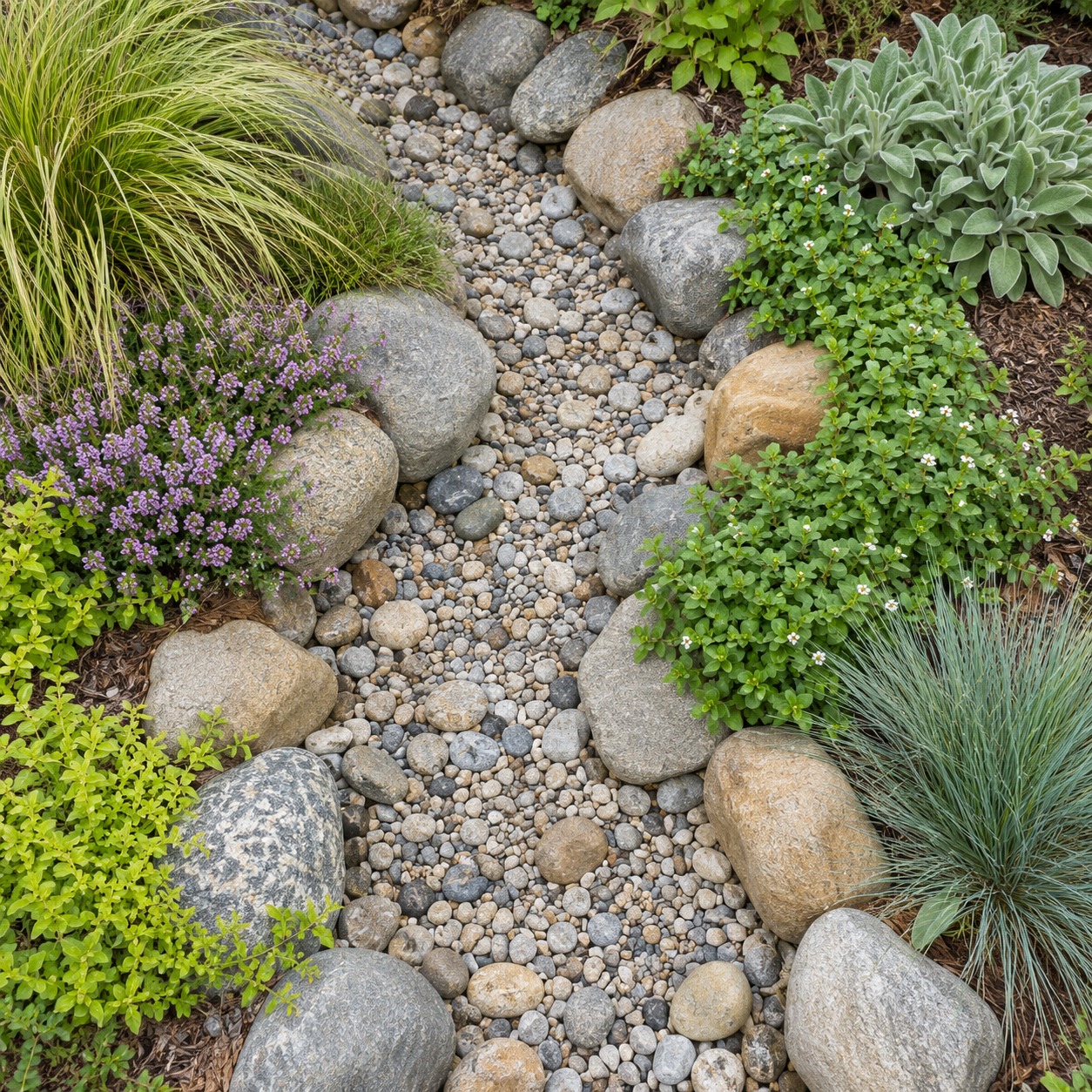
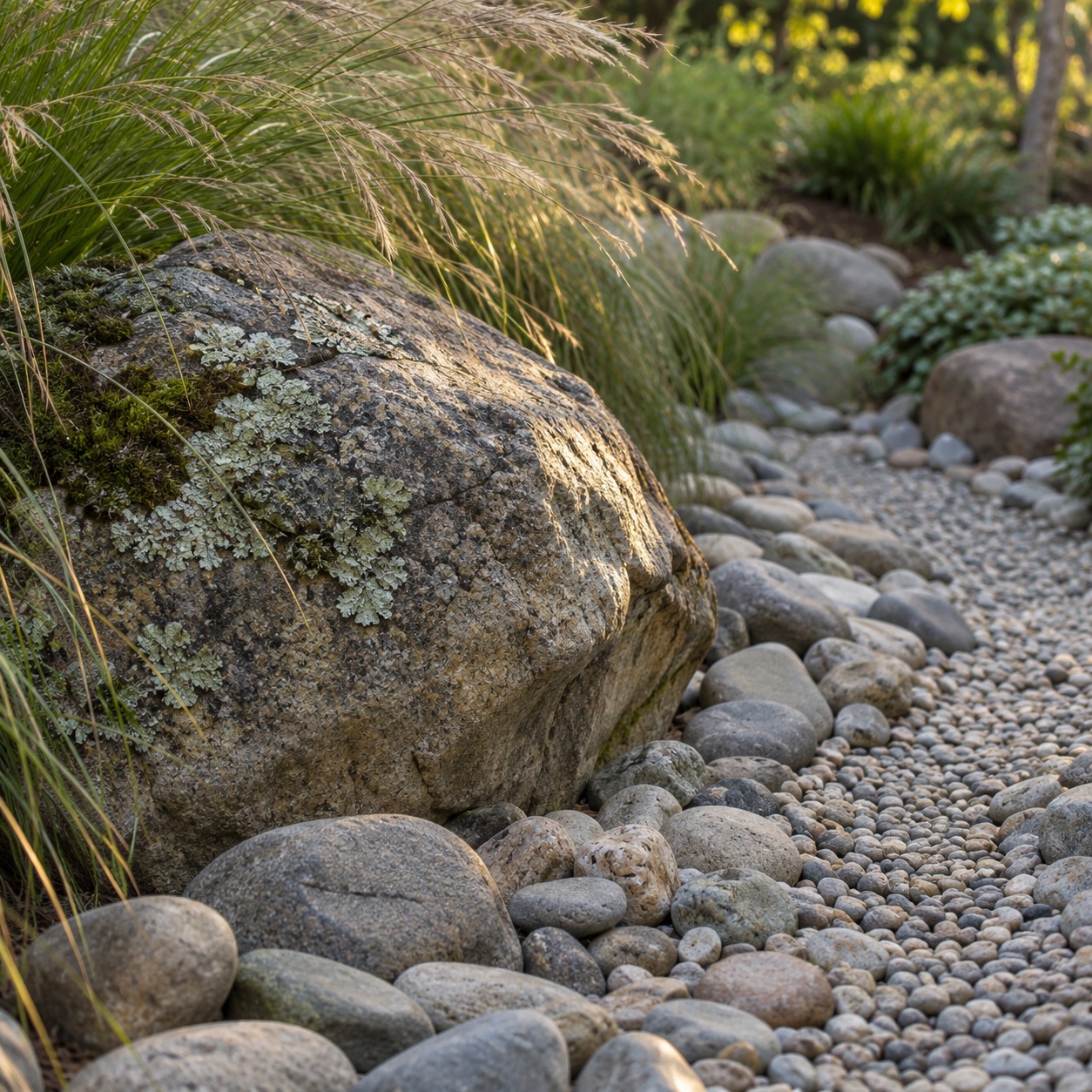
A dry creek bed is a shallow channel lined with rocks and pebbles that mimics a natural stream. It's decorative most of the year and can carry water during heavy rain. That makes it useful where runoff collects in one spot, but only if the grading and outlet are planned. A rock-lined channel that ends in a low point simply moves the puddle.
How to build one:
- Mark out a gently curving line that follows the natural fall of the land.
- Dig a shallow channel, wider in some places than others for a natural look.
- Lay geotextile fabric or weed mat to help stop the stones sinking into the soil.
- Place larger rocks along the edges, then fill with mixed pebbles.
- Add a few feature boulders at bends, where water would naturally slow down.
- Plant grasses and groundcovers along the banks.
Design notes: let the curve lead the eye toward something, such as a tree, a seat or a view, rather than wandering aimlessly. Keep the biggest stones to the outside of bends and the finer material in the bed. Scale the boulders to the space, because a few substantial rocks look more natural than many medium ones.
Dry creek beds work well alongside rain gardens, which capture and filter stormwater from roofs and paving. US EPA guidance describes rain gardens as planted depressions that let runoff soak in and be filtered. Melbourne Water’s raingarden guide explains how to plan one. Make sure any channel directs water away from the house and doesn't send it onto a neighbour's property. If you're unsure about falls or outlets, get advice before you dig. For grading and runoff decisions, see our yard drainage design guide.
2. Low-water garden beds
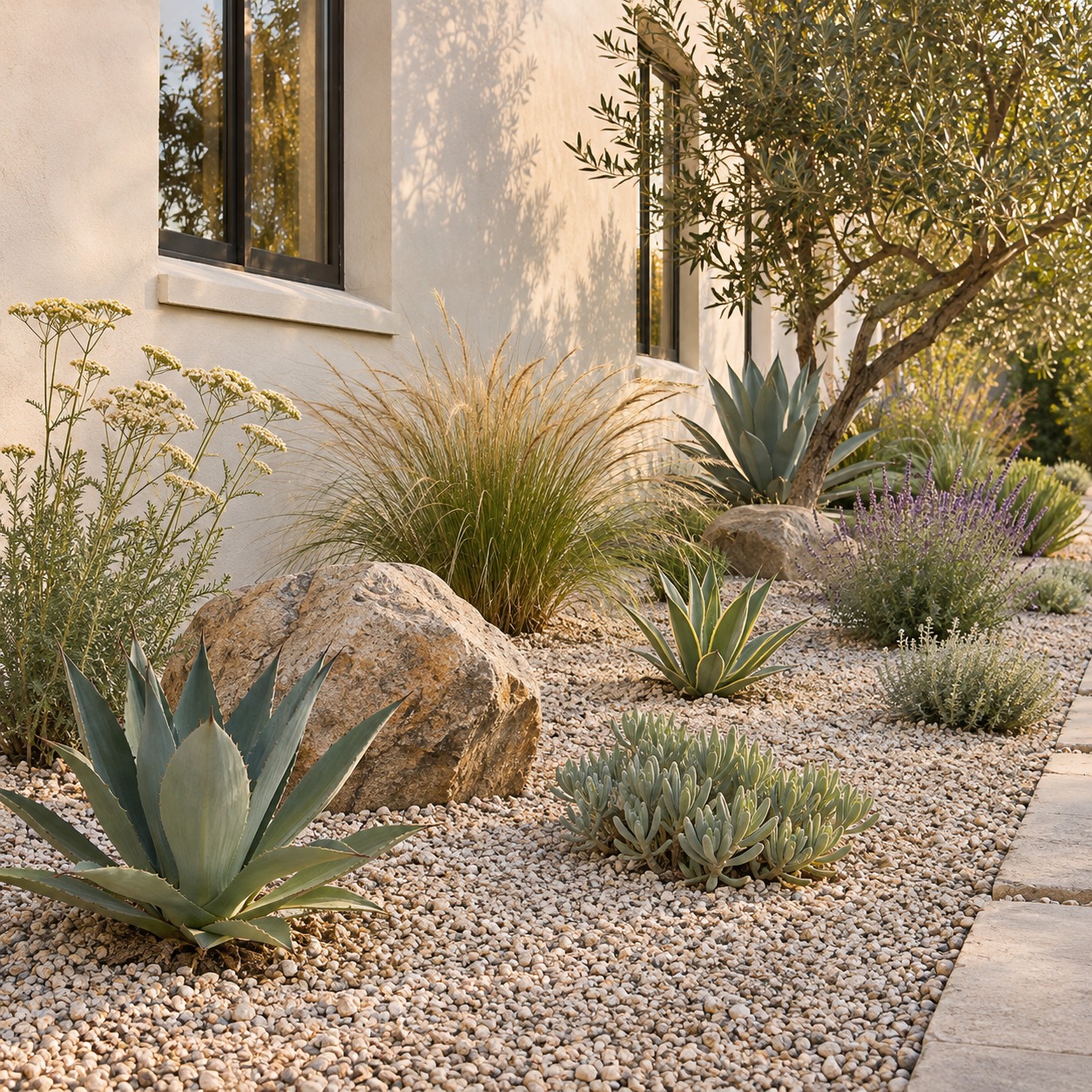
Pebbles and gravel can work as an inorganic mulch for succulents, cacti and drought-tolerant plants. They reduce evaporation, help suppress weeds and keep the base of plants dry, which many succulents prefer. Unlike organic mulch, they don't need regular topping up.
There are trade-offs. University of Minnesota Extension notes that stone mulch does not feed the soil and can raise soil temperature. Stone isn't the right choice under every plant. It suits plants that like dry, lean conditions far better than those that prefer cool, rich soil.
Tips:
- Spread a layer deep enough to cover the soil. Around 5 cm is a common starting point, but adjust for stone size and the planting.
- Choose lighter stones in hot spots, as dark stones absorb more heat.
- Leave space around the base of each plant.
- Lay weed mat underneath only in areas you won't replant often.
- Combine a few larger rocks with smaller gravel to create height and interest.
Low-water beds suit front gardens, verges or nature strips (check your local council's rules first) and hot west-facing walls, where lawns and thirsty plants struggle in summer.
3. Paths and stepping stones
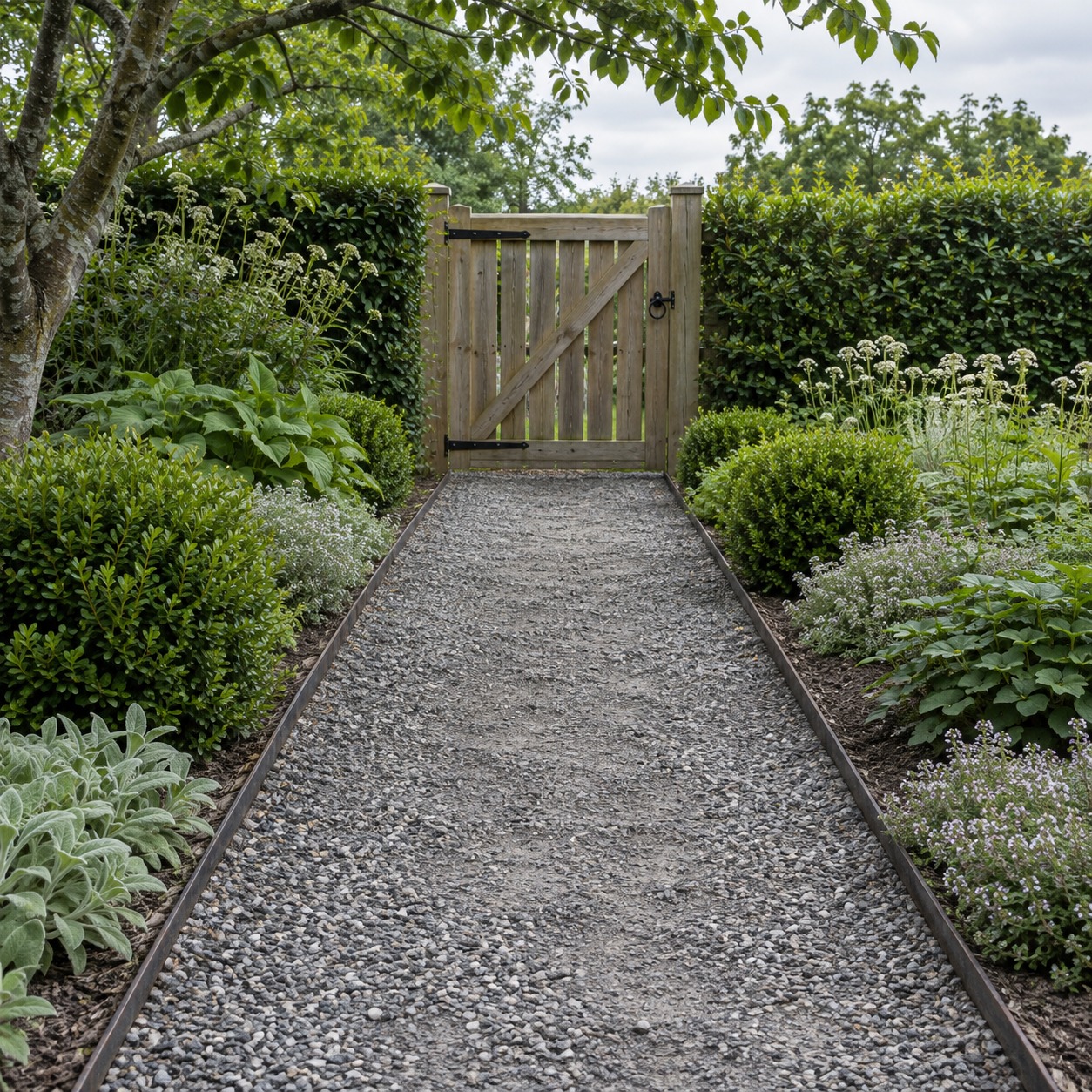
Gravel and pebble paths are quick to install and can be a good alternative to concrete. The loose top layer lets water through. A compacted base may drain far more slowly, though, so don't assume a gravel path solves a wet spot on its own.
For a firm surface:
- Excavate and lay a compacted base of crushed rock.
- Add edging to hold the stones in place.
- Use angular gravel for stability, or rounded pebbles for a softer look.
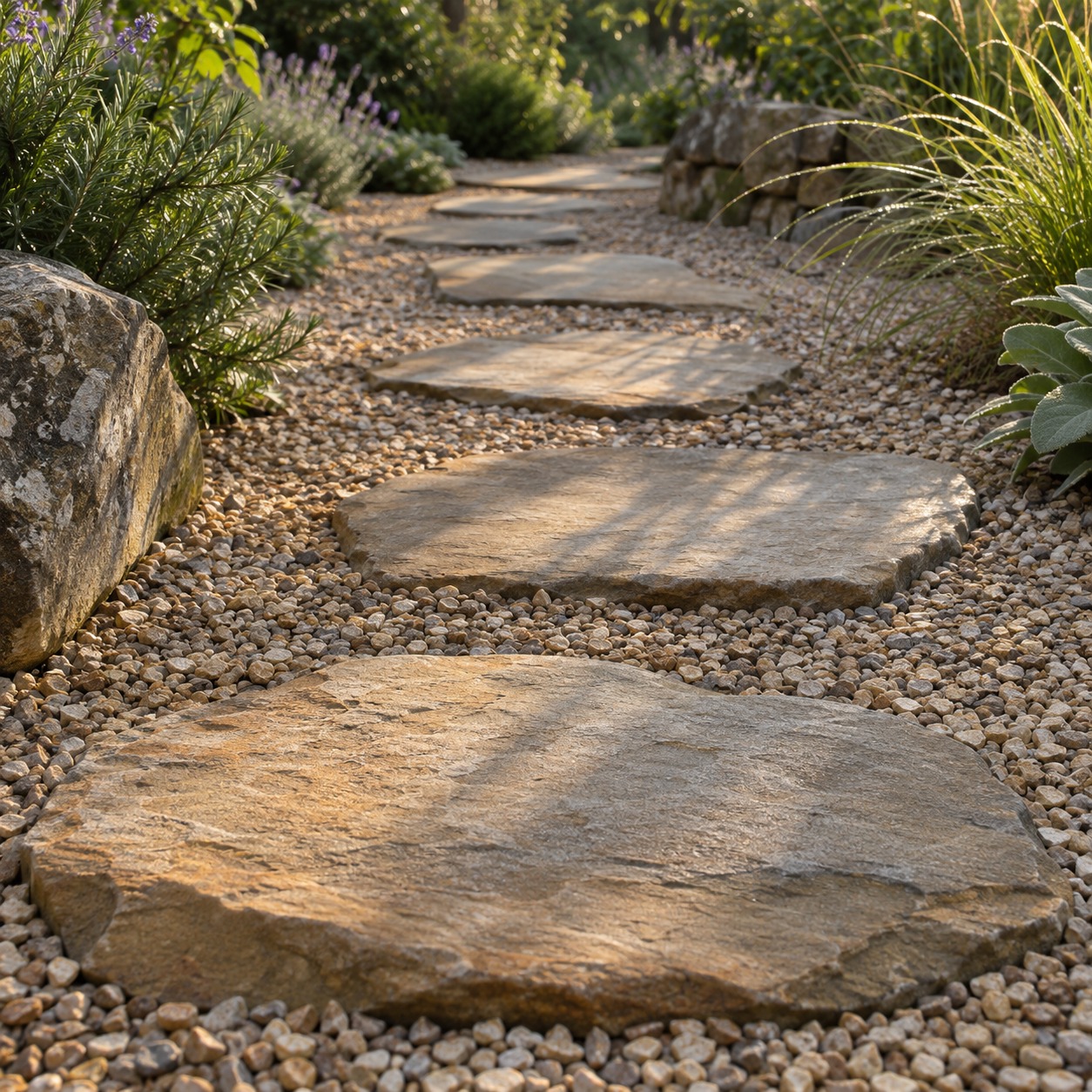
- Set stepping stones into the gravel for easier walking.
Angular gravel locks together better underfoot than rounded pebbles, which can roll. A simple rule: if a path gets daily use, choose angular stone. Keep rounded pebbles for decorative borders and areas people rarely walk on. Crisp edging makes a path read clearly as a route. A planted edge softens it but needs trimming.
Choosing colours and sizes
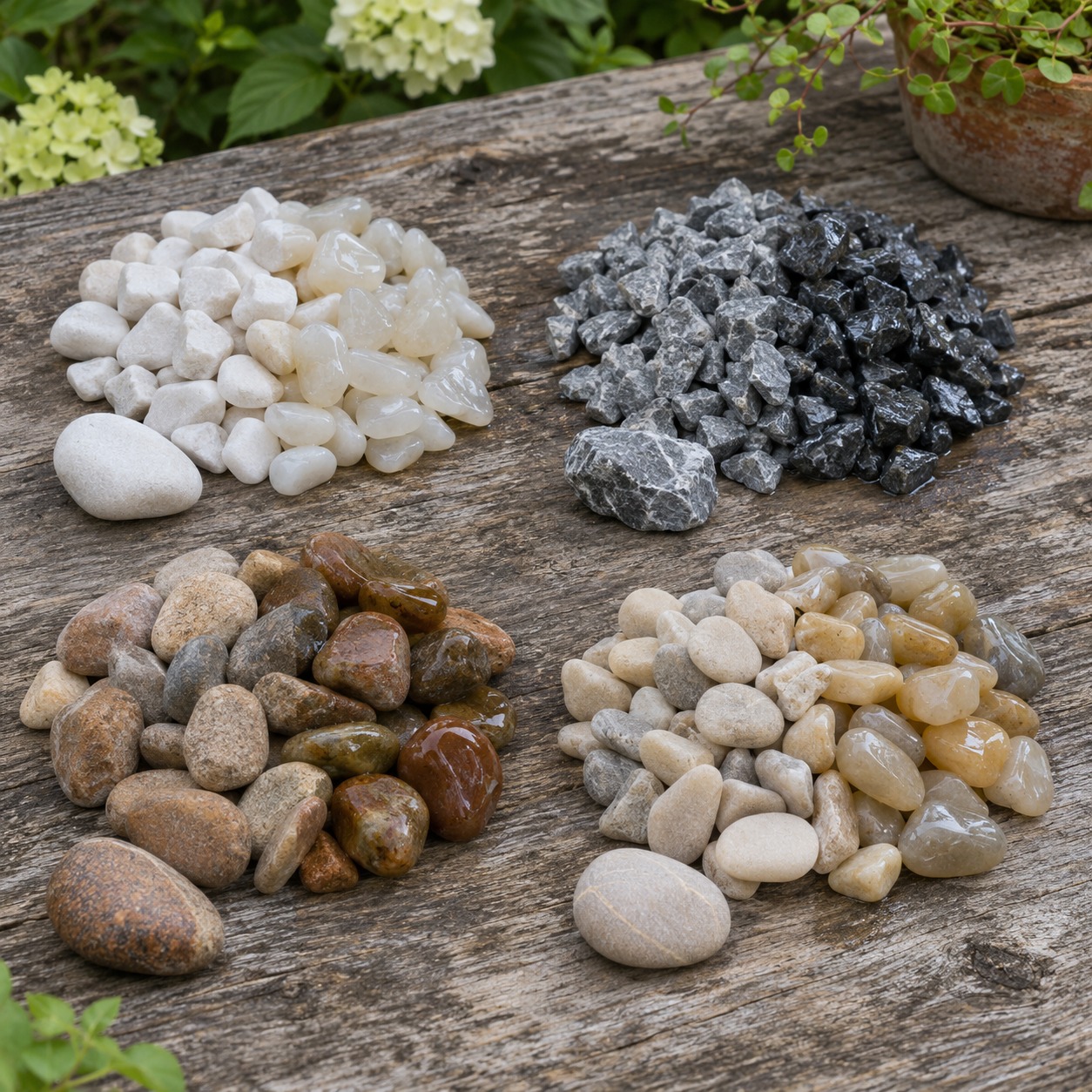
| Style | Suggested stone |
|---|---|
| Modern and minimalist | Uniform white or grey pebbles |
| Native or bush | Earthy browns and mixed river stones |
| Japanese-inspired | Grey gravel with large feature rocks |
| Coastal | Pale, rounded beach-style pebbles |
Mix two or three sizes for a natural look, and use larger rocks as focal points. Stone often looks darker and richer when wet, so view samples both wet and dry.
Consider the house too. Pale stone can brighten a dark courtyard, while darker stone grounds a light-coloured building. If the facade is busy, such as patterned brick or several cladding materials, a quieter stone usually works better than a strong contrast. Pick up a tone already present in the brick, render or roof, and the garden will feel connected to the building. For a material-by-material comparison, see our guide to landscaping rock types and costs.
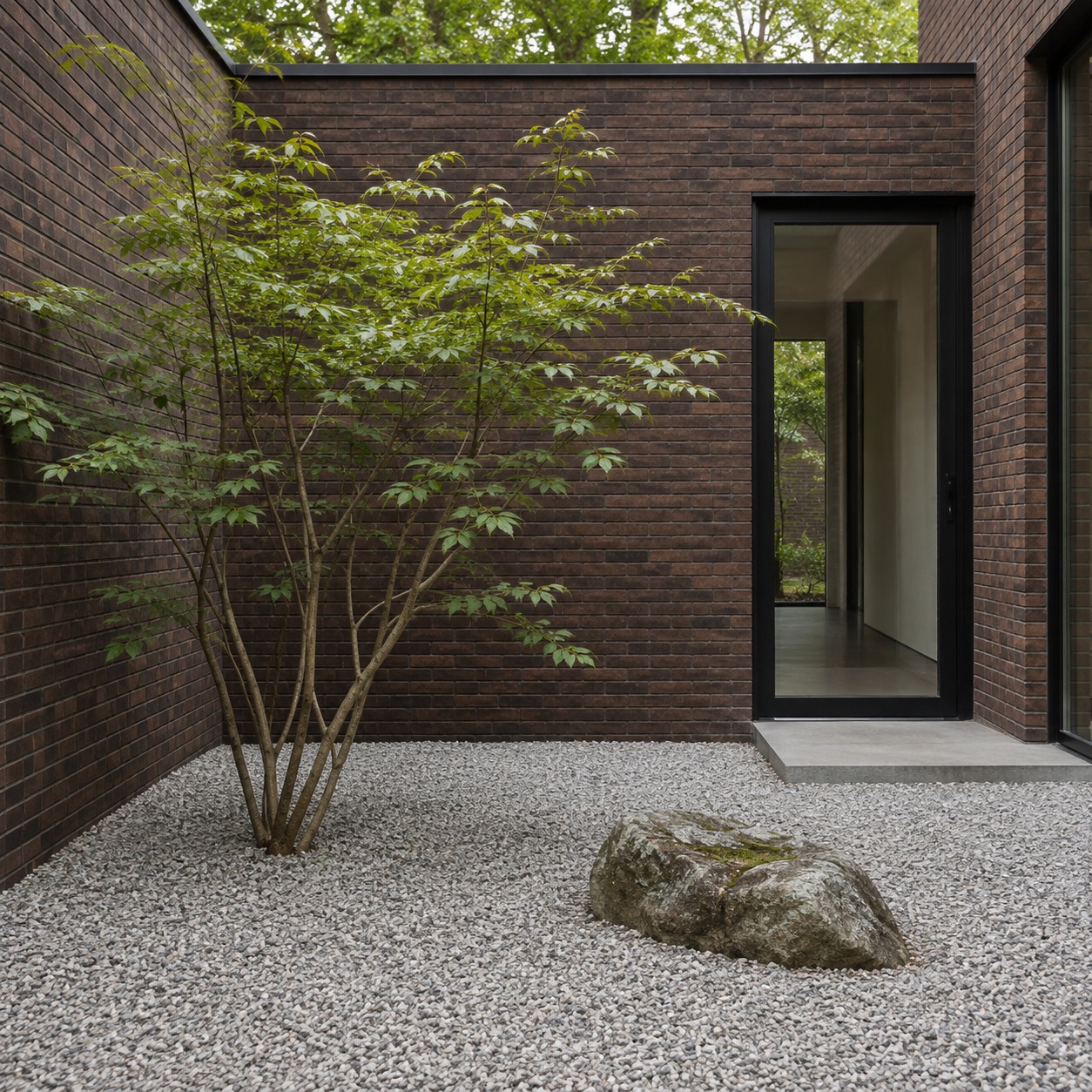
Combining stone with planting
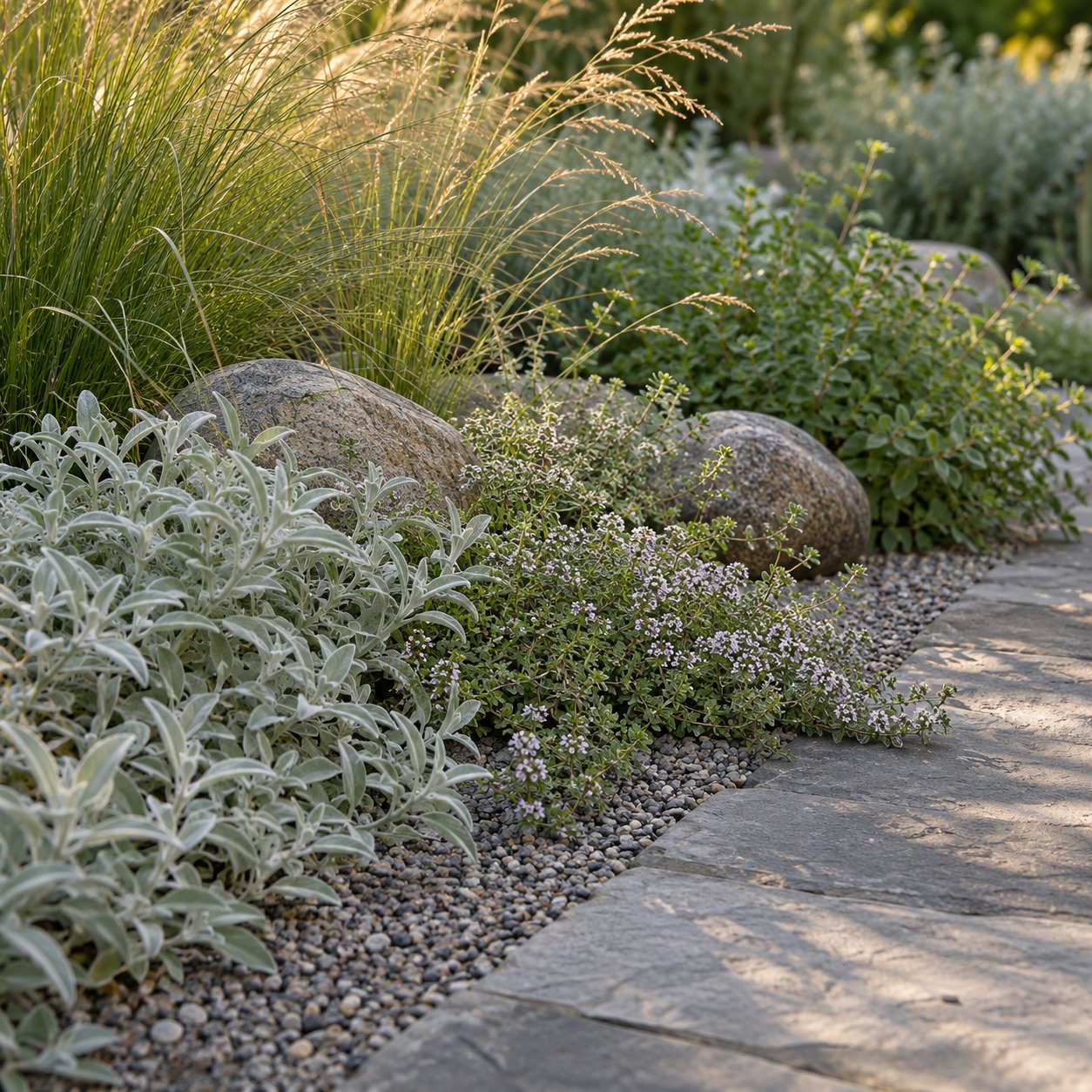
Stone looks best when plants soften it. Tough groundcovers spilling over the edge of a gravel bed, ornamental grasses along a dry creek, or a few feature succulents set into pebbles all stop the stone looking bare.
Choose plants suited to your conditions. In hot, dry spots, drought-tolerant natives and succulents generally do well. Ferns and mosses suit shaded areas where stone stays damp. Leave enough room for plants to grow so they don't end up buried under the stone. Use planting to blur hard edges where you want a relaxed look, and keep it back where a crisp line matters. The same principle shapes balancing stone and planting across a whole garden.
Keeping it looking good
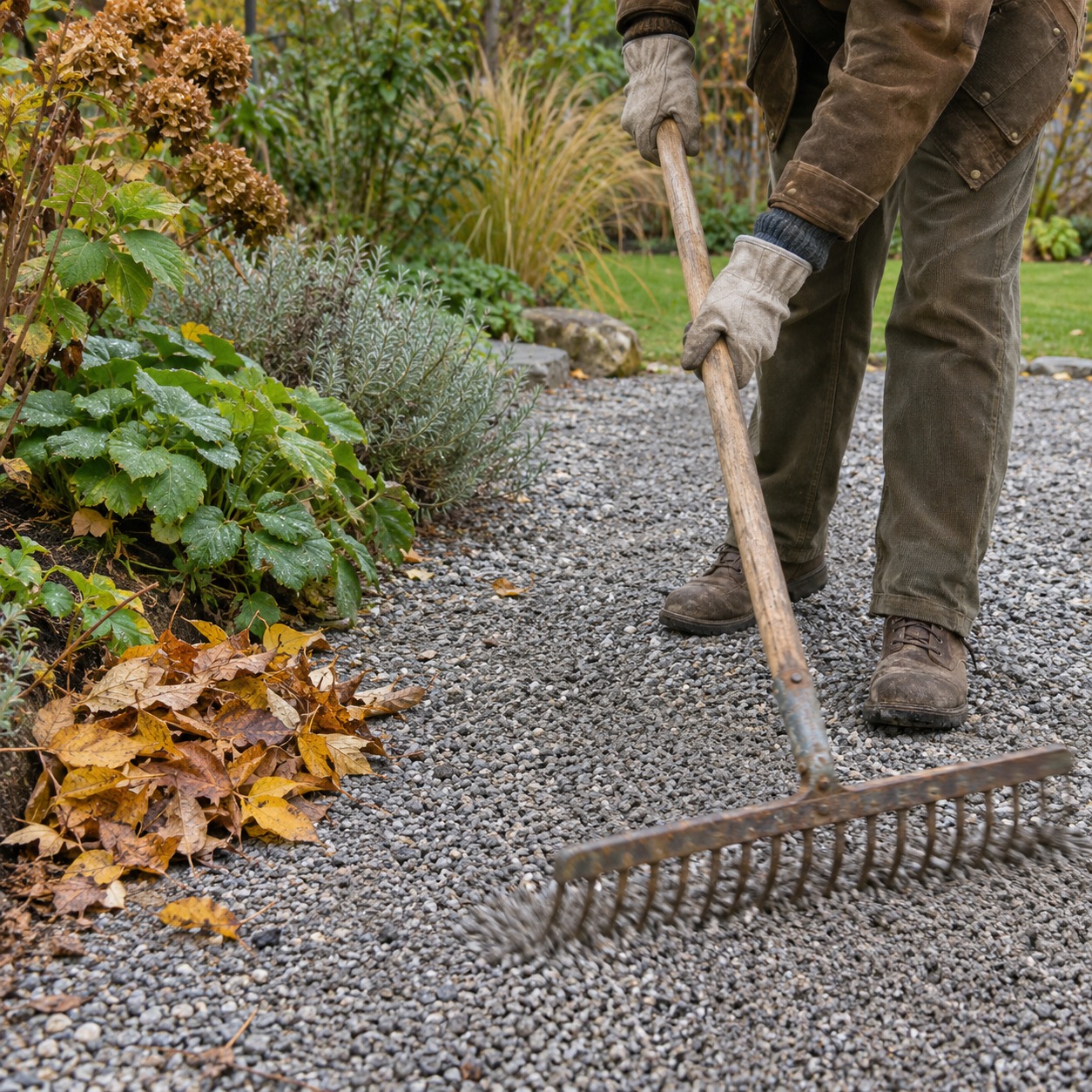
Stone is low-maintenance but not no-maintenance. Rake gravel paths occasionally to keep them even. Blow or sweep leaves off before they break down, and pull any weeds while they're small. White pebbles can be rinsed with a hose to freshen them up.
Budgeting for a stone feature
Cost depends mainly on the type of stone, the quantity and how much preparation the site needs. Common gravels and crushed stone are generally cheaper than premium decorative pebbles or large feature boulders. Excavation, weed mat, edging and a compacted base all add to the total, so include them in your plan. Getting the quantity right the first time also avoids paying for a second delivery.
Working out quantities
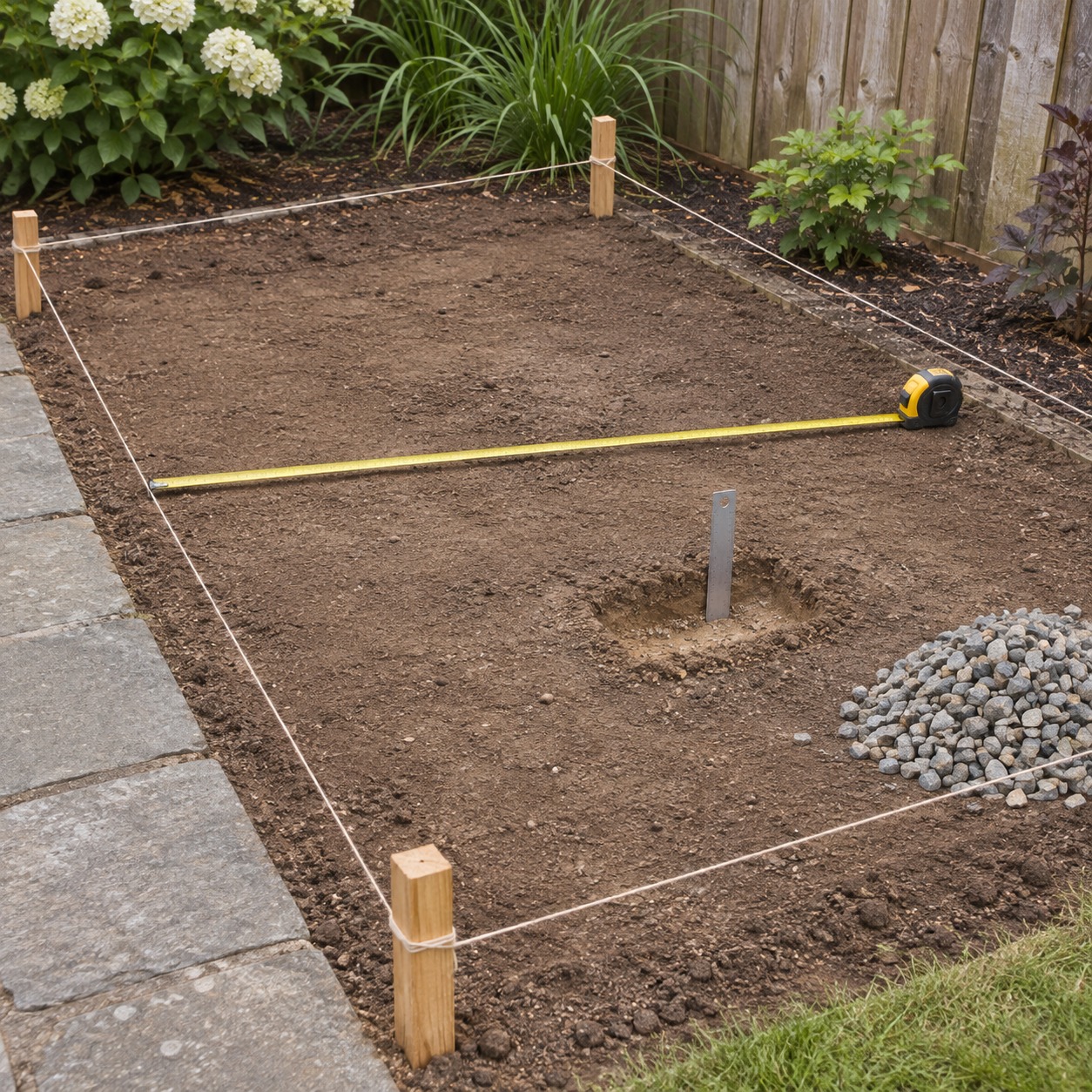
Multiply the area by the depth. Decorative toppings are often spread around 5 cm deep, but coarser stone may need more. Paths need a base layer as well as the top layer. Yard staff can help convert your measurements into cubic metres or bags.
Before ordering, mark the creek line, bed edge and walking route on a simple plan. Choose a single colour family, then pick stone size and shape for each job. Check your samples in both wet and dry light, and confirm where runoff will go.
Where to find them
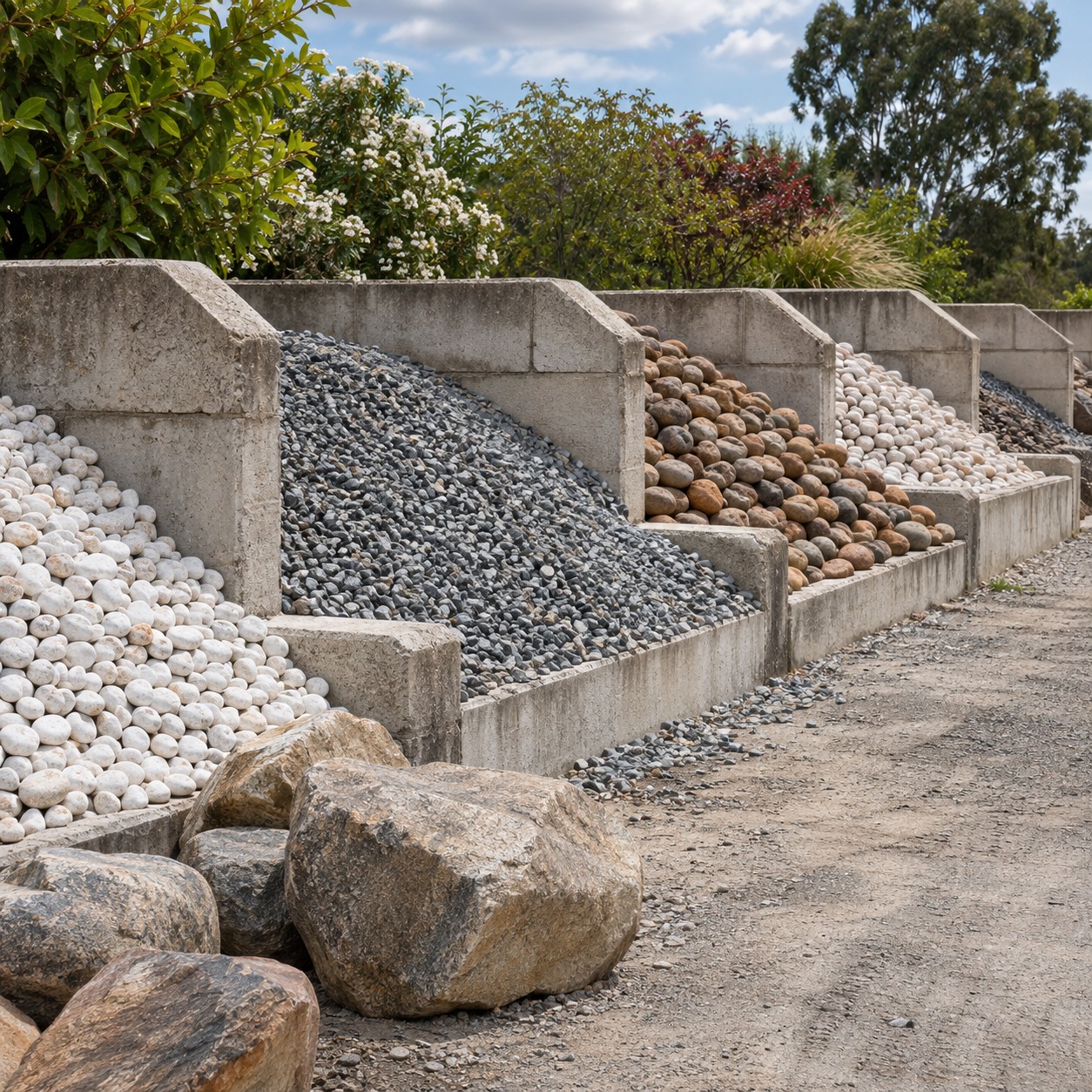
Melbourne landscape supplier SoilWorx stocks a wide range of decorative pebbles and stone in bulk and in bags at its Deer Park, Pakenham and Werribee yards, so you can see colours and sizes before you choose.
- 0shares
- Facebook0
- Pinterest0
- Twitter0
- Reddit0