Every outdoor project I’ve worked on, whether it’s a courtyard layout or a rooftop terrace, comes down to the same first question: where does the water actually go? That question matters more in landscaping than almost anywhere else, because a yard that ignores water movement ends up either drowning in runoff or dying of thirst, and neither one looks intentional.
Water-wise landscaping isn’t a stripped-down, cactus-and-gravel compromise. Done right, it’s a design method: figure out the water budget and how water moves across the site first, then choose irrigation zones, native plants, and permeable materials that work with that movement instead of against it. This guide walks through that method from the ground up, with a modern layout in mind rather than a desert-minimalist default.
- What Water-Wise Landscaping Actually Means
- Map How Water Moves Through the Site
- Build a Modern Planting Palette With Native Species
- Design a Smarter Irrigation System
- Capture Rainwater Where It Falls
- Use Permeable Hardscaping to Reduce Runoff
- Make Water-Wise Design Look Intentional
- When Professional Landscape Planning Is Worth It
- Water-Wise Landscaping Checklist
- Frequently Asked Questions
- Bring the Water-Wise Plan Together
What Water-Wise Landscaping Actually Means
Water budget before plants and materials
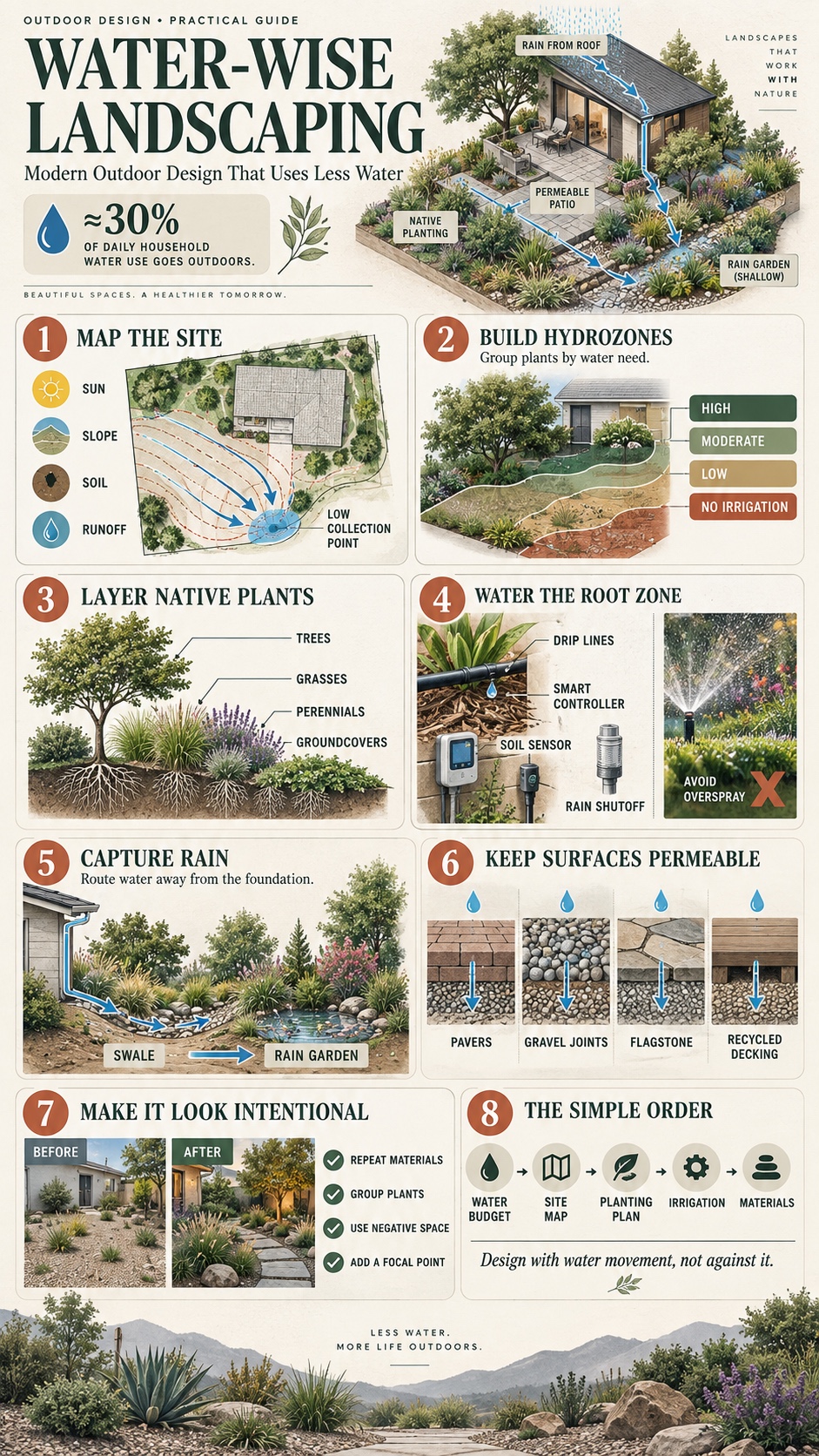
Most yard renovations start with a plant list or a Pinterest board. Water-wise design starts with a number: how much water the site actually needs versus how much rain and runoff it naturally receives. That gap is the water budget, and every decision after it, plant choice, irrigation zoning, hardscape ratio, exists to close that gap without wasting a drop.
The difference between water-wise design, xeriscaping, and a dry garden
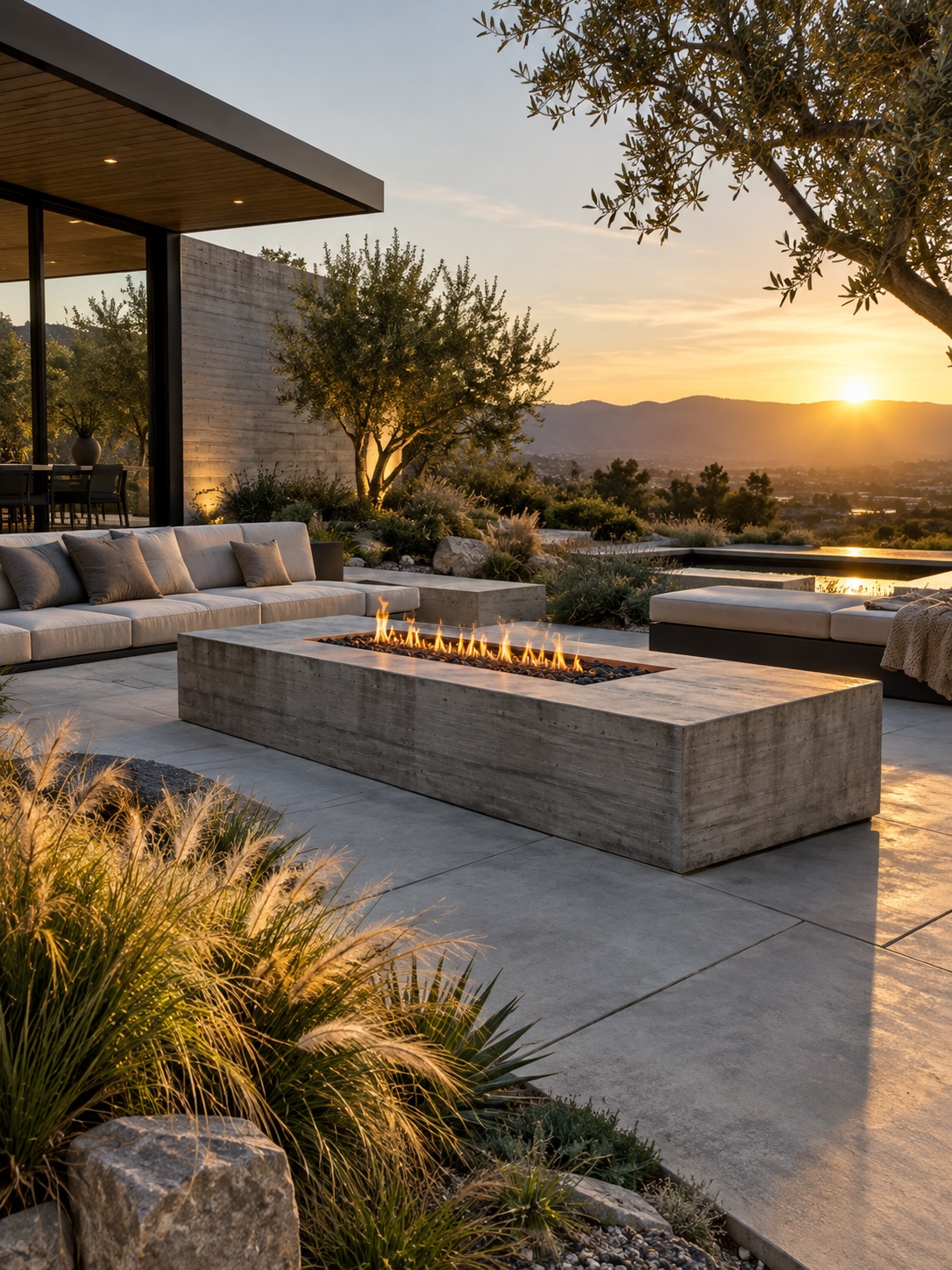
Xeriscaping technically means “dry landscaping” and often gets treated as a synonym for water-wise design, but the two aren’t identical. Xeriscaping leans hard on drought-tolerant and often non-native species. Water-wise landscaping is the broader method: it includes xeriscaping techniques where they fit the climate, but it also covers rain capture, smart irrigation, and permeable hardscaping, none of which require going full desert garden. A water-wise yard in a temperate climate can still have real green space; it just uses that space deliberately.

Map How Water Moves Through the Site
Sun, slope, soil, runoff, and existing drainage
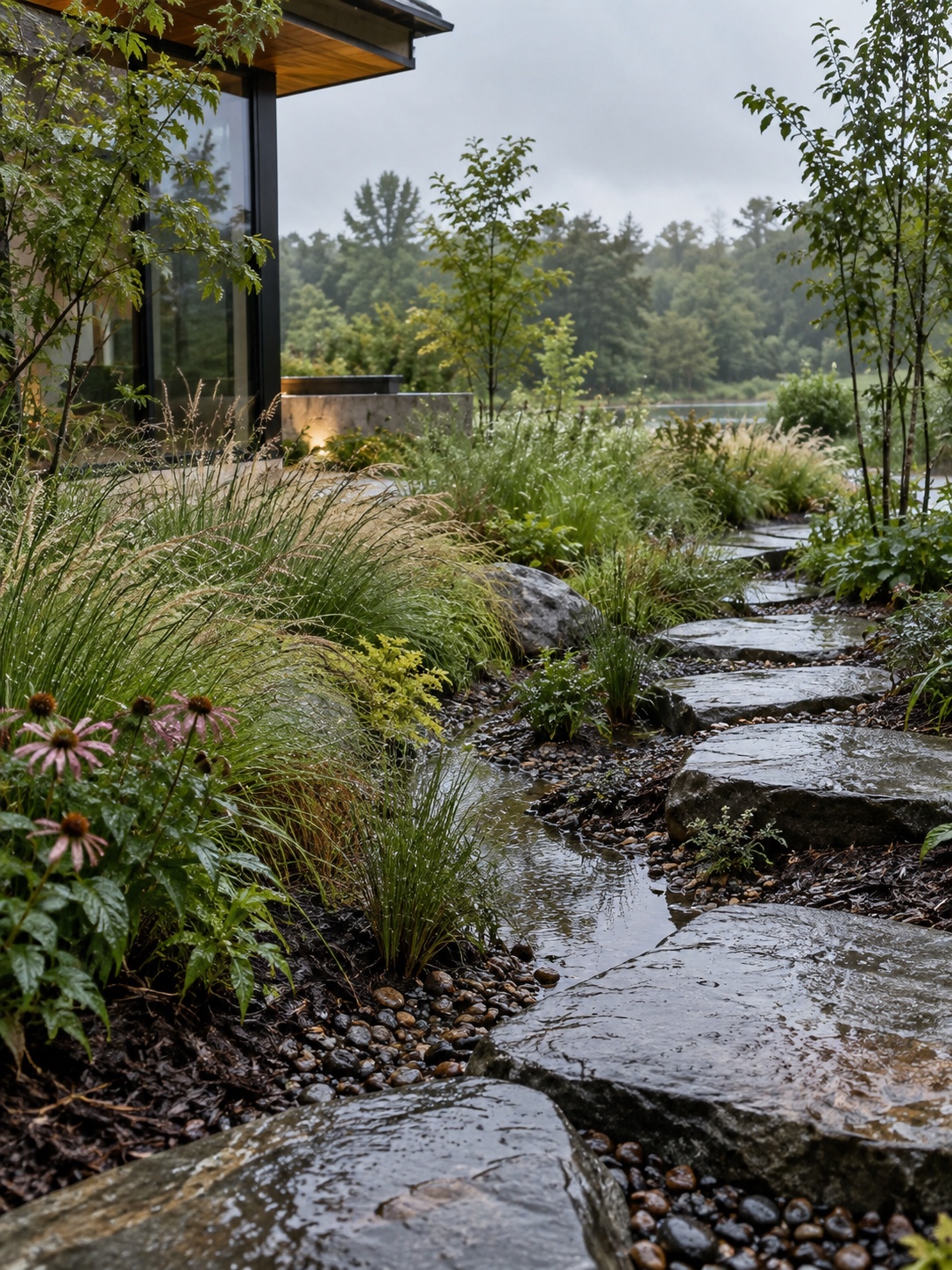
Before touching a plant catalog, walk the site after a real rain, not a garden hose test. Note where water pools, where it sheets off quickly, and which areas stay soggy two days later. Combine that with sun exposure and slope, and you’ve got the actual physical constraints the design has to respect rather than fight.
Divide the yard into practical hydrozones
Hydrozoning means grouping plants by water need rather than scattering high-water and low-water species across the same irrigation line. A thirsty ornamental next to a drought-tolerant native means one of them is always getting the wrong amount of water. Three or four zones, high, moderate, low, and no-irrigation, is usually enough for a residential lot, and it makes every irrigation decision downstream far simpler.
Build a Modern Planting Palette With Native Species
Trees, grasses, perennials, and groundcovers by water demand
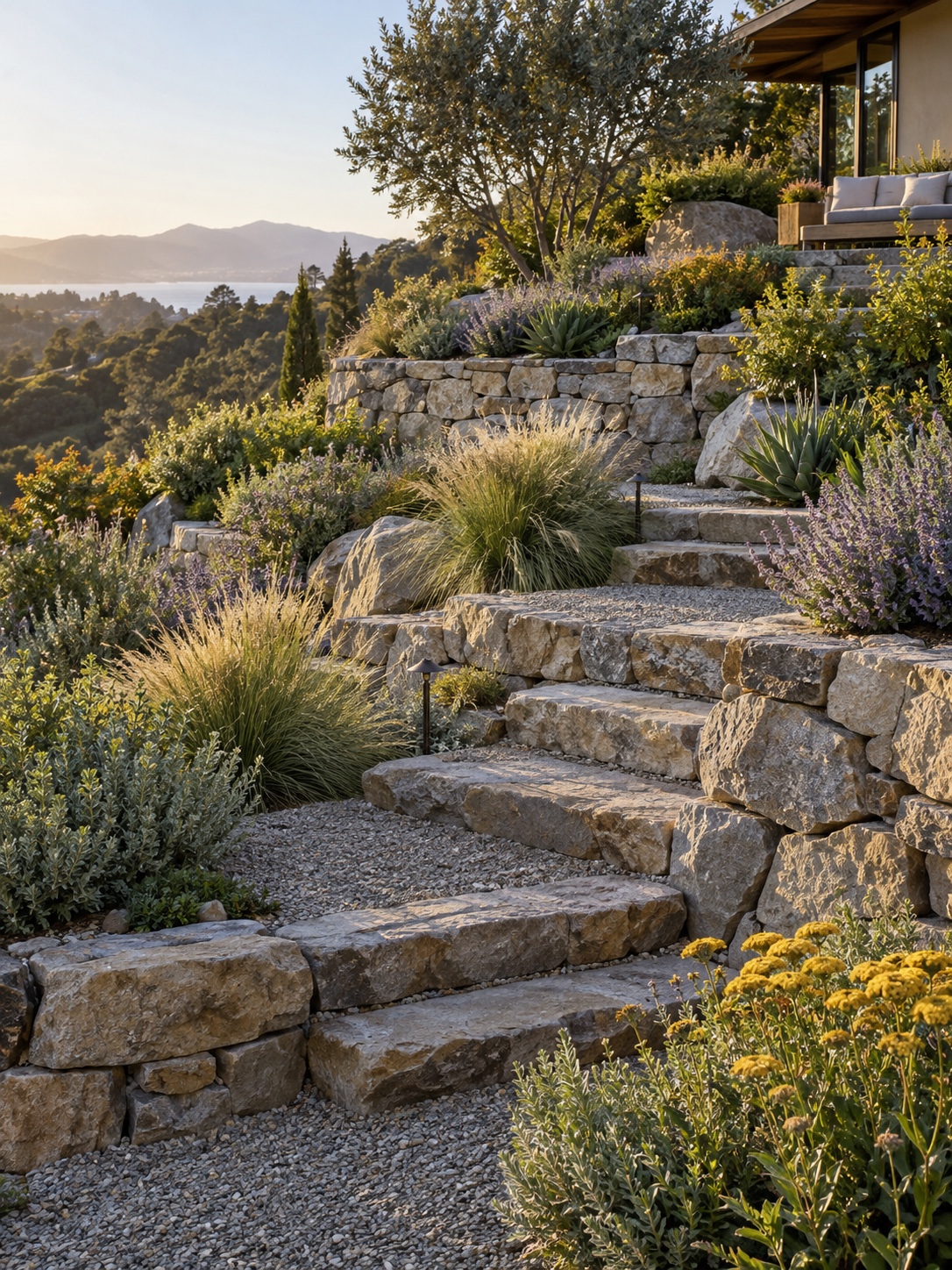
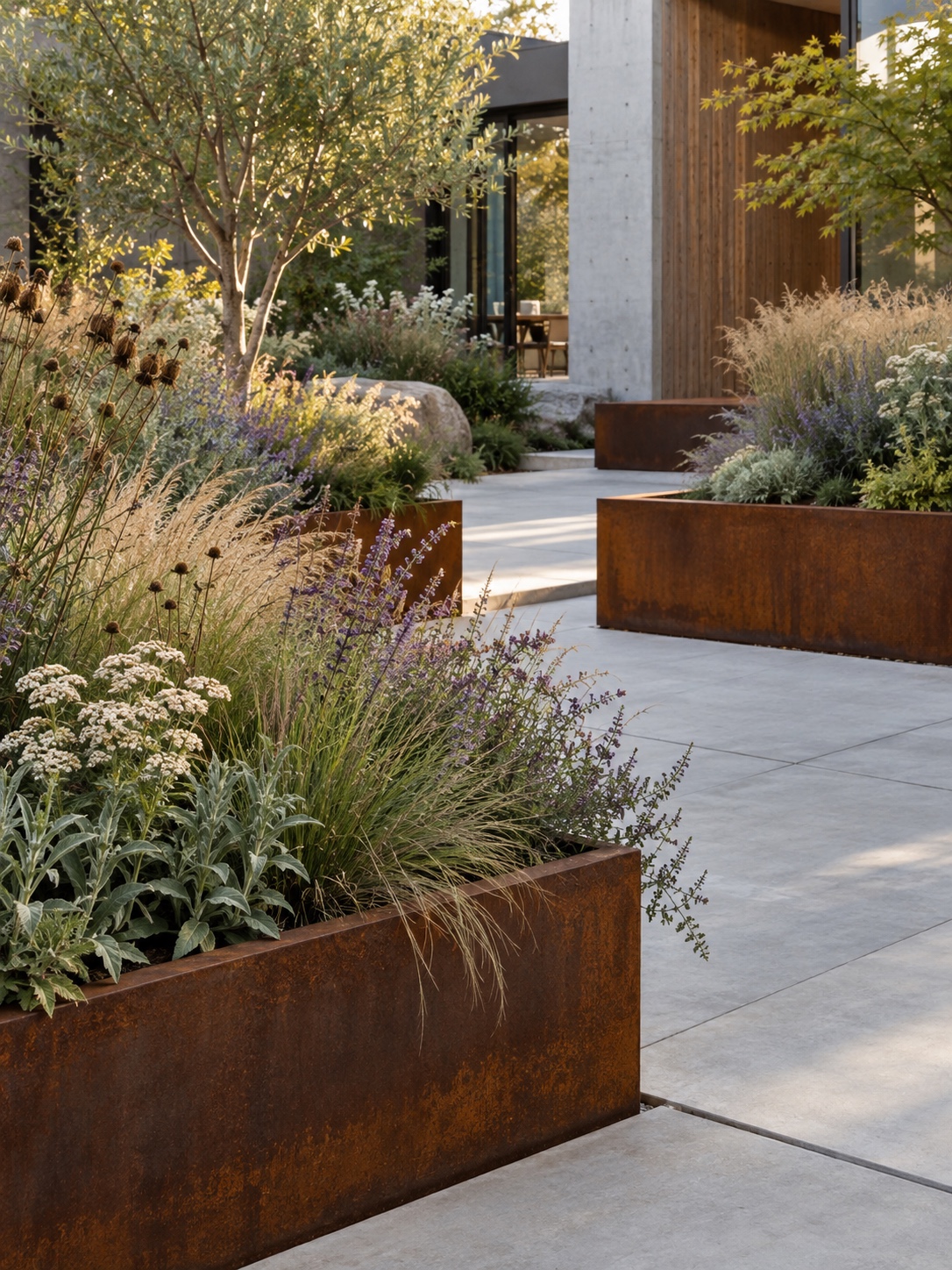
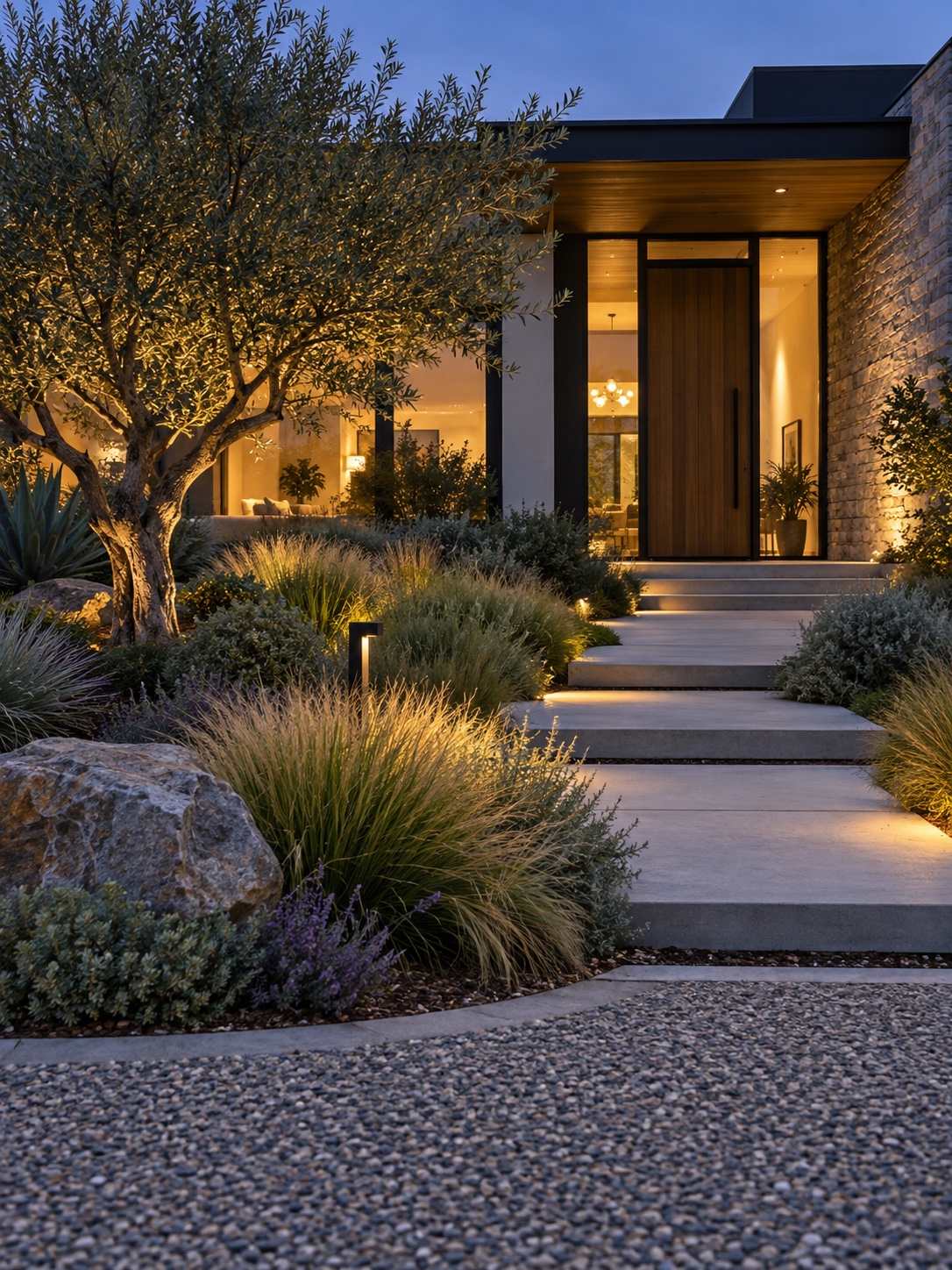
Native plants are adapted to the local rainfall pattern, which is exactly why they need less supplemental water once established. Layer the palette the way you’d layer a room: a few structural trees for height and shade, ornamental grasses for movement and texture, native perennials for seasonal color, and low groundcovers to reduce bare soil and evaporation.
Create structure, contrast, and seasonal interest without thirsty planting
The mistake that makes water-wise yards look unfinished is treating “low water” as “low variety.” Native perennials cut long-term maintenance and support local pollinators, and choosing a mix with staggered bloom times keeps the space visually active across seasons instead of collapsing into one green blur for eight months. Grouping plants also cuts the maintenance load directly, since a dense planting bed needs less time spent pulling weeds than scattered specimens surrounded by open mulch.
Design a Smarter Irrigation System
Drip lines, smart controllers, soil sensors, and rain shutoff
Roughly 30% of daily household water use in the US goes toward outdoor needs like lawn watering, and a meaningful share of that is lost to spray irrigation that hits driveways, sidewalks, and the air itself before it reaches a root zone. Drip lines deliver water directly to the soil at the base of a plant, and swapping a spray system for drip is one of the more direct ways to save on a summer water bill without changing the planting plan at all. Smart controllers pull real-time weather data to skip a scheduled watering when rain is already handling it, and rain shutoff sensors do the same thing at the hardware level, cutting the system off mid-cycle if a storm rolls in.
Why irrigation zones should follow the planting plan
An irrigation system designed before the planting plan almost always ends up mismatched: the same zone watering a drought-tolerant grass and a moisture-loving perennial on the same schedule. Design the hydrozones first, then build the irrigation zones to match them exactly, not the other way around.
Capture Rainwater Where It Falls
Rain gardens, shallow swales, and planted drainage areas
A rain garden is a shallow, planted depression that catches runoff from a roof or a hard surface and lets it soak into the ground instead of running off to a storm drain. Shallow swales do the same job over a longer, narrower path, useful for guiding water across a slope toward a rain garden or a planted low point.
Direct runoff away from the foundation without wasting it
The instinct with foundation drainage is usually just “get the water away fast.” A water-wise approach still gets water away from the foundation, but routes it toward a rain garden or planting bed instead of straight into a storm drain, so the same water that would’ve been wasted ends up irrigating something.
Use Permeable Hardscaping to Reduce Runoff
Permeable pavers, gravel joints, flagstone, and recycled decking
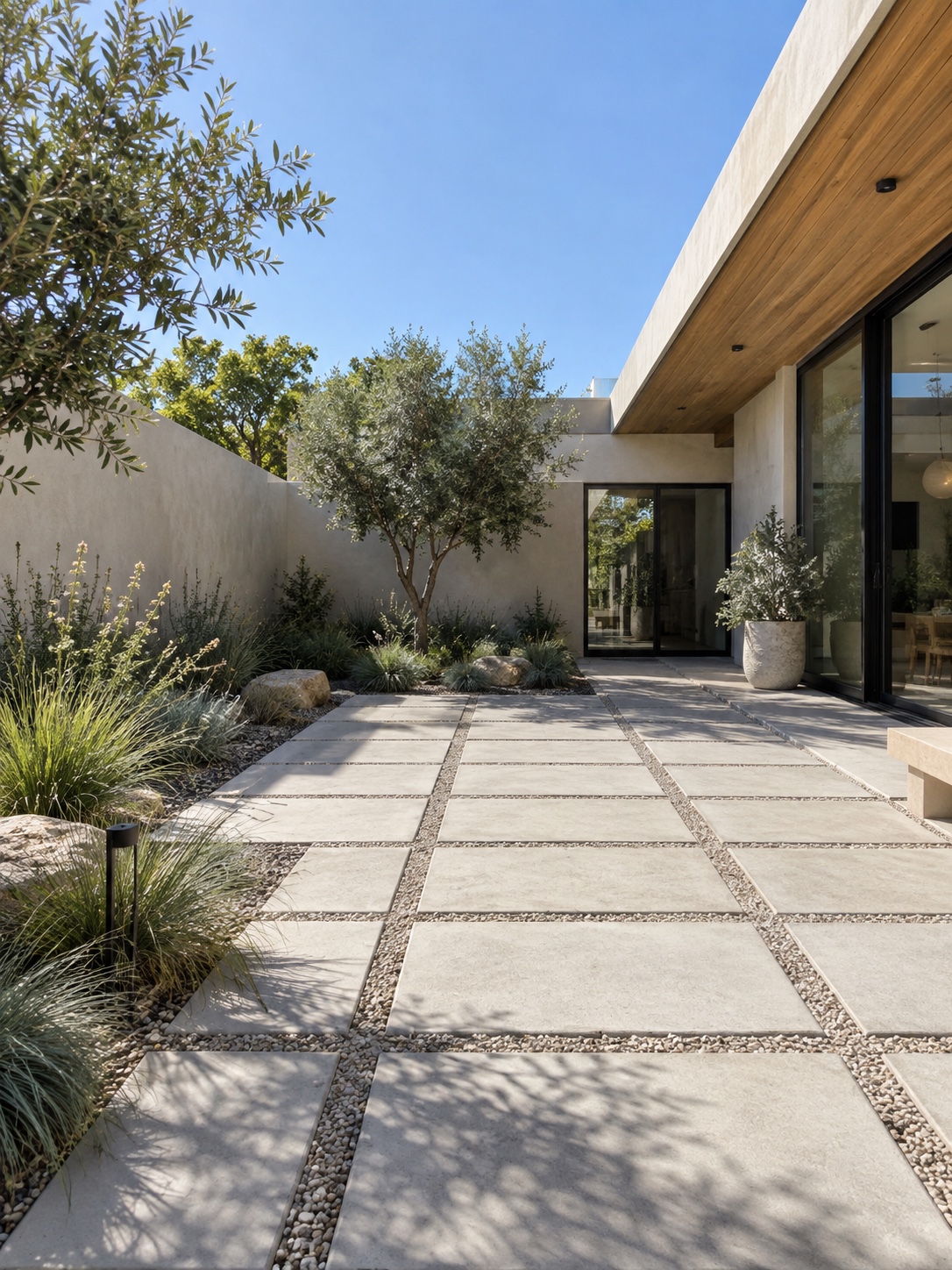
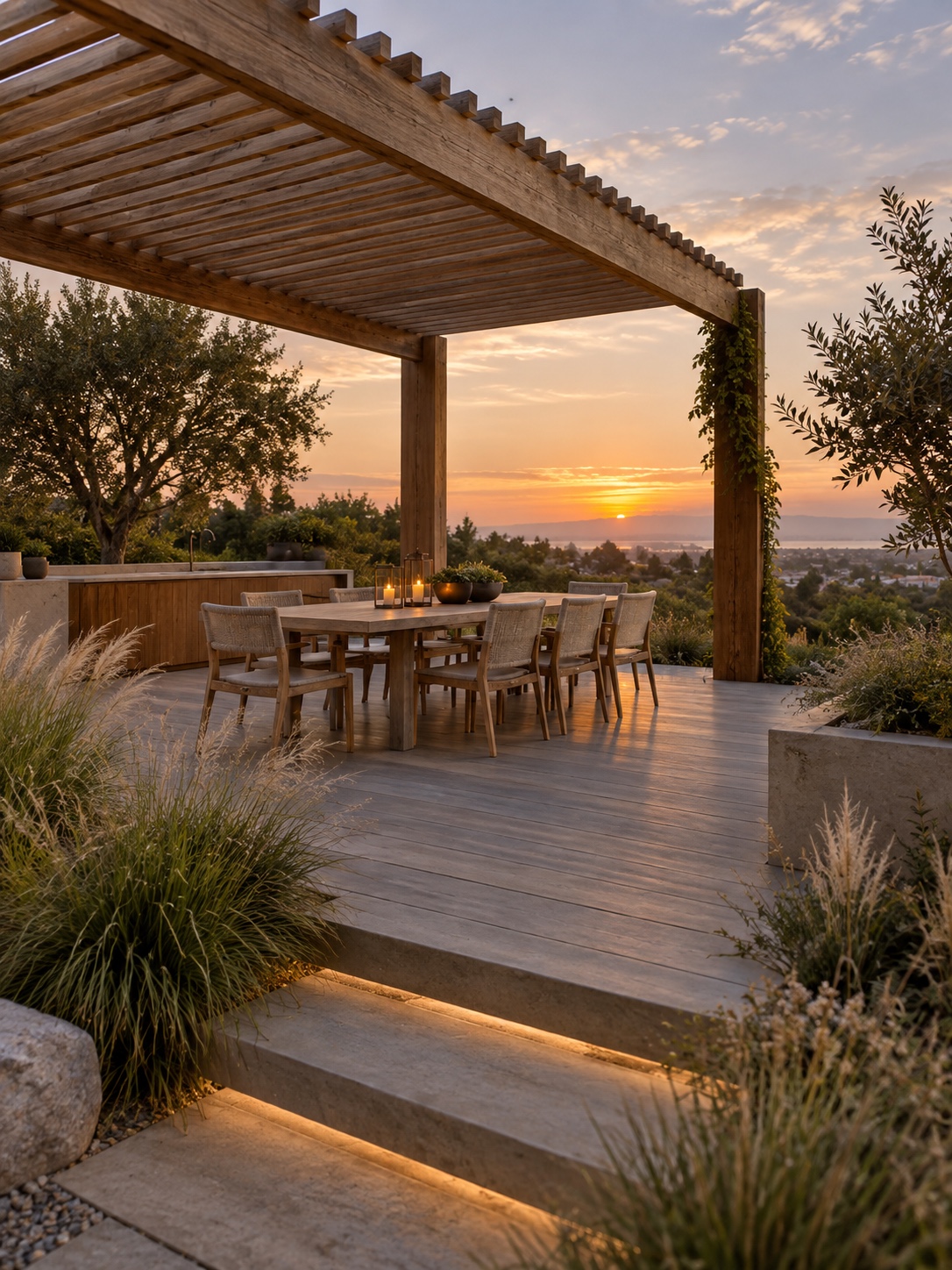
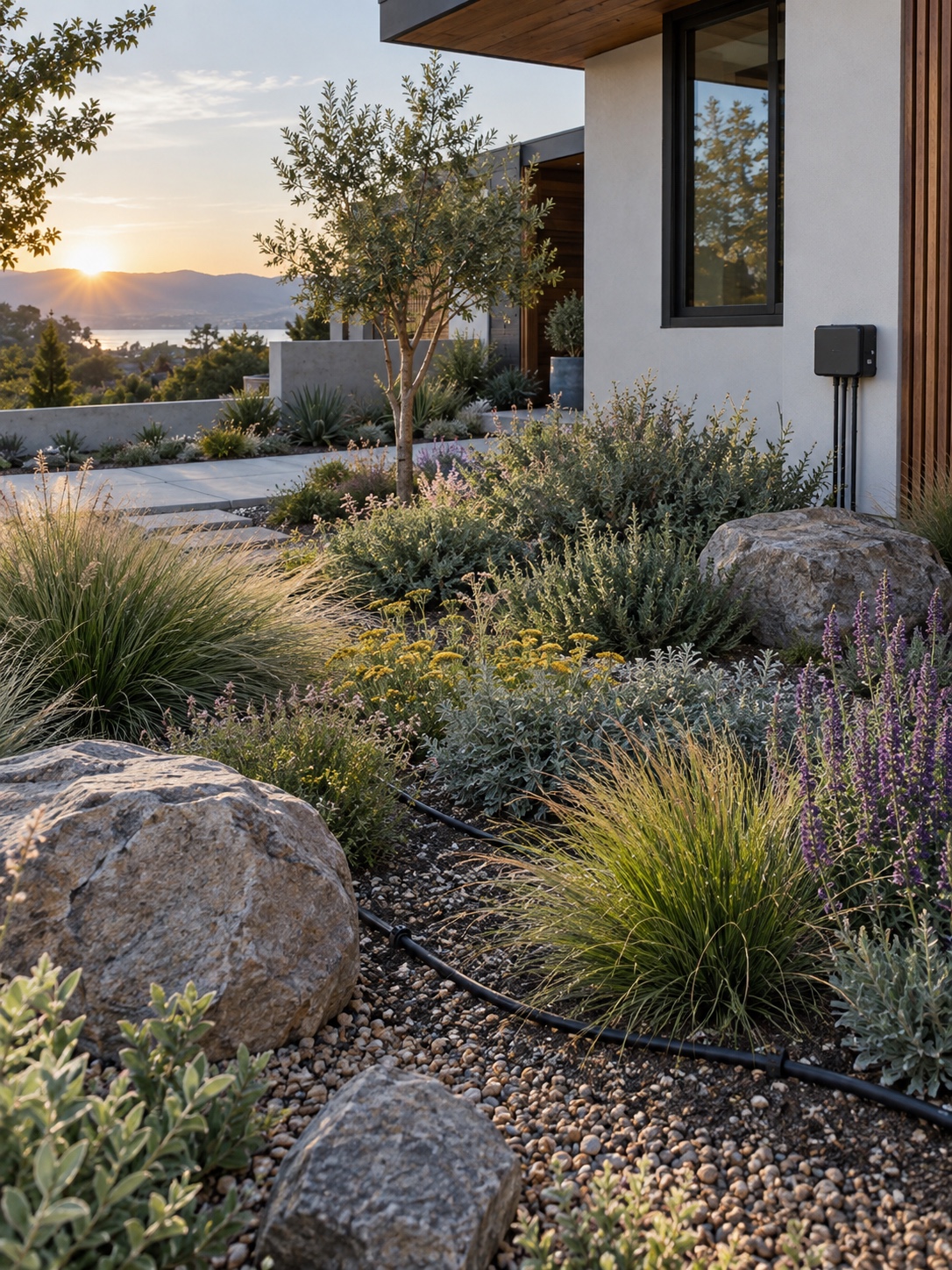
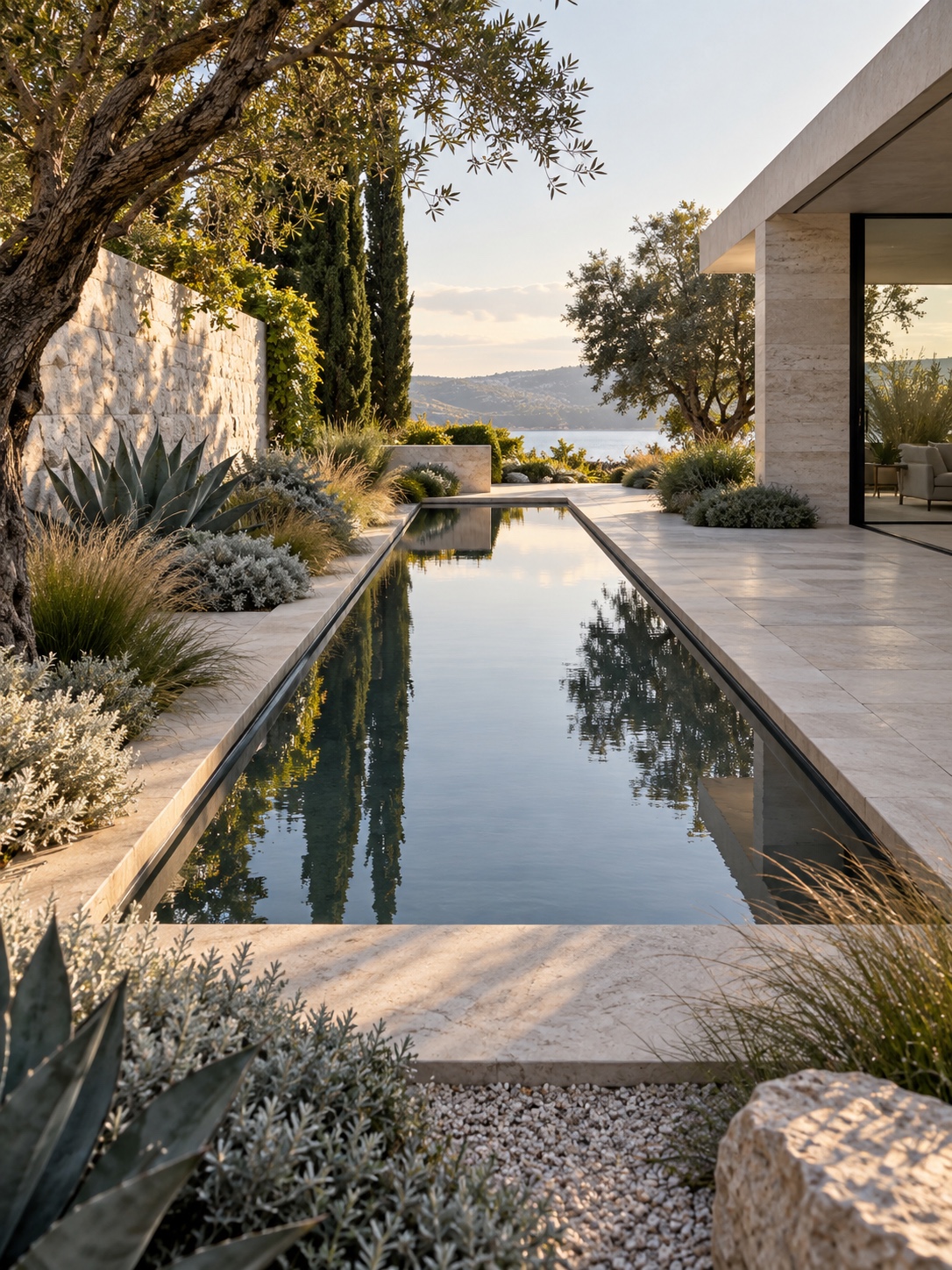
Hardscaping plus permeable paving helps control stormwater runoff and reduces soil erosion, since porous materials let rainwater soak down into the ground instead of sheeting across a sealed surface. Interlocking permeable pavers, flagstone set with gravel joints, and recycled composite decking all serve this function while still reading as a clean, modern surface rather than a “green” compromise material.
Balance hardscape and softscape for a clean modern layout
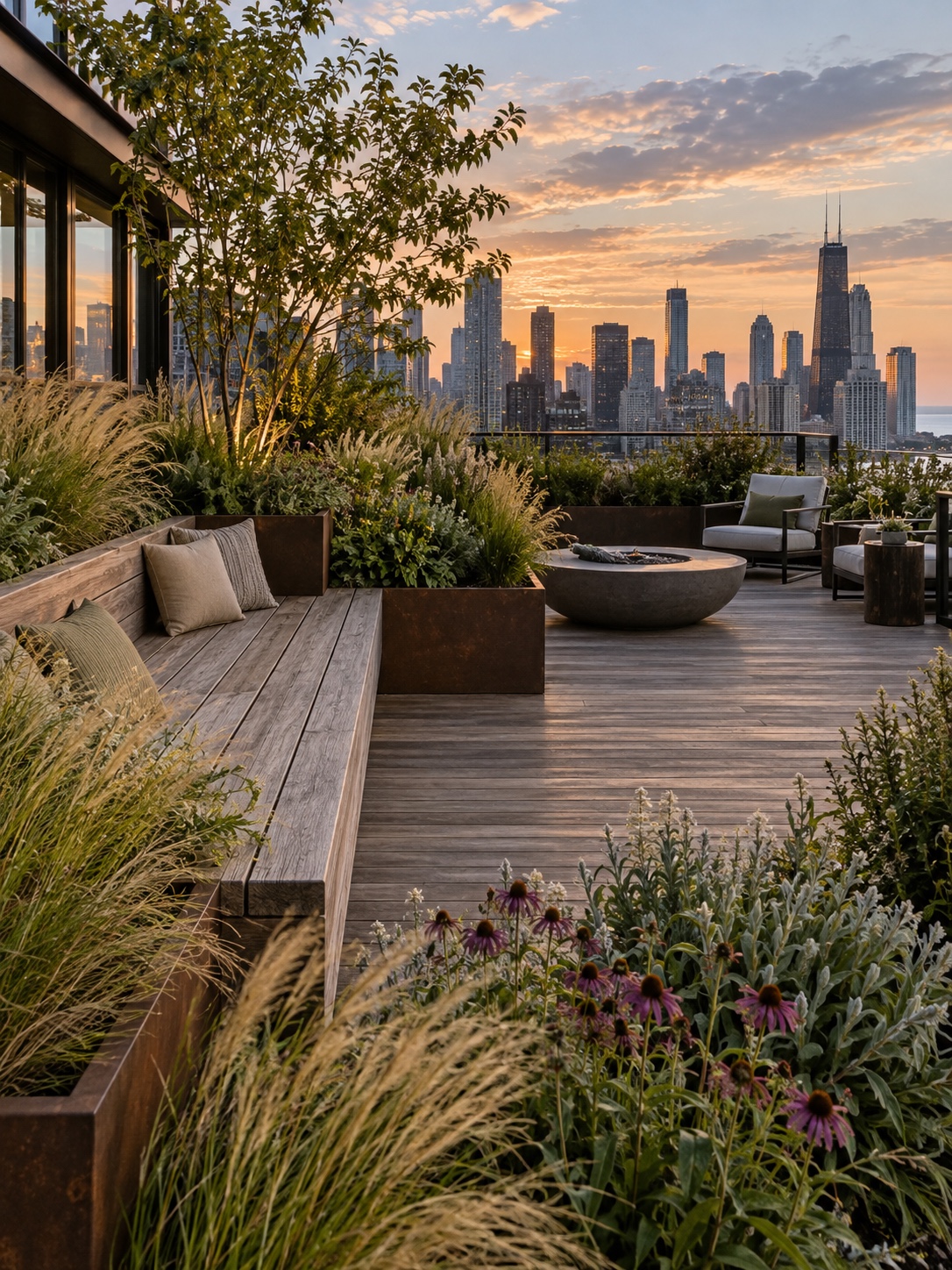
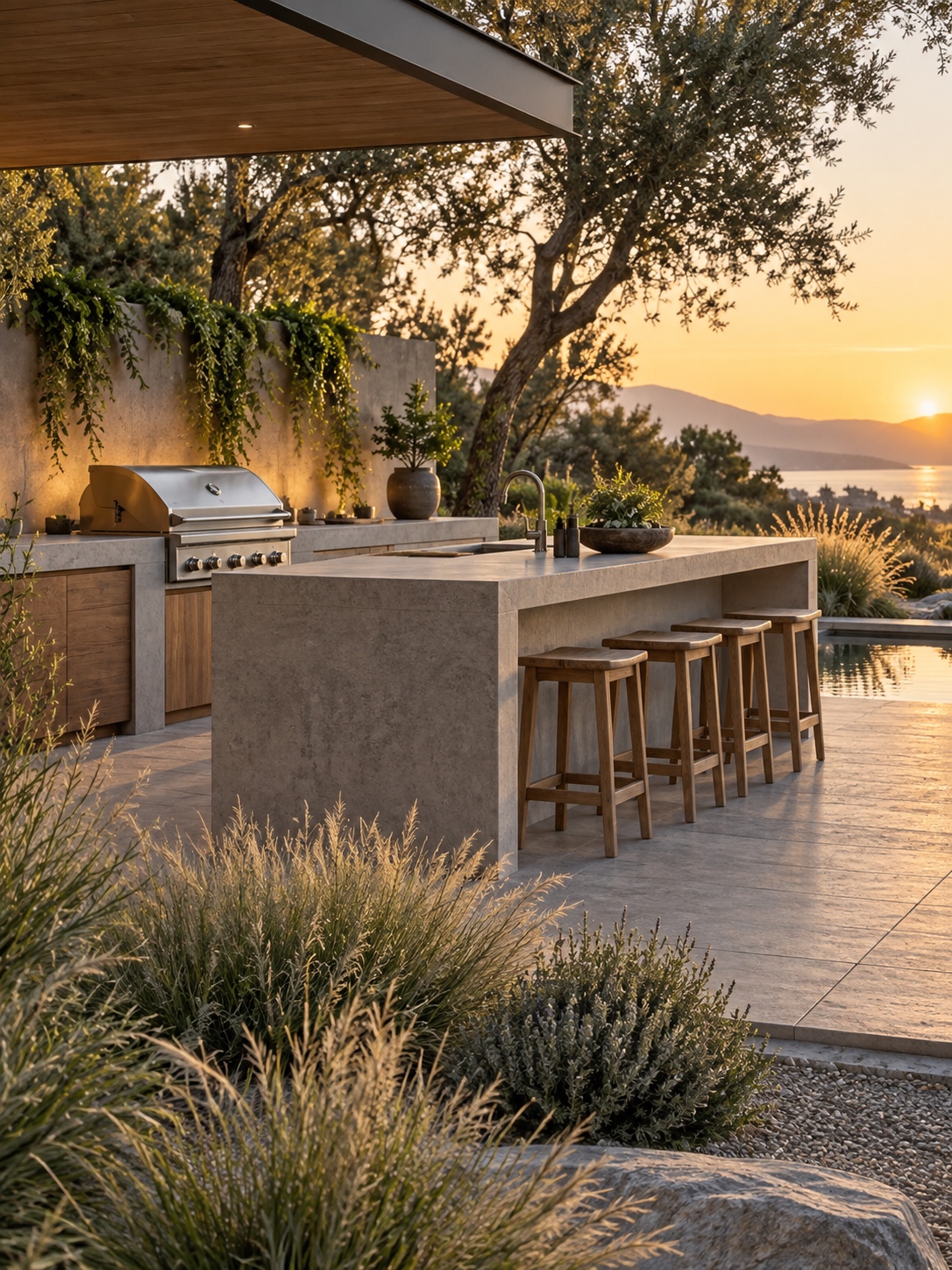
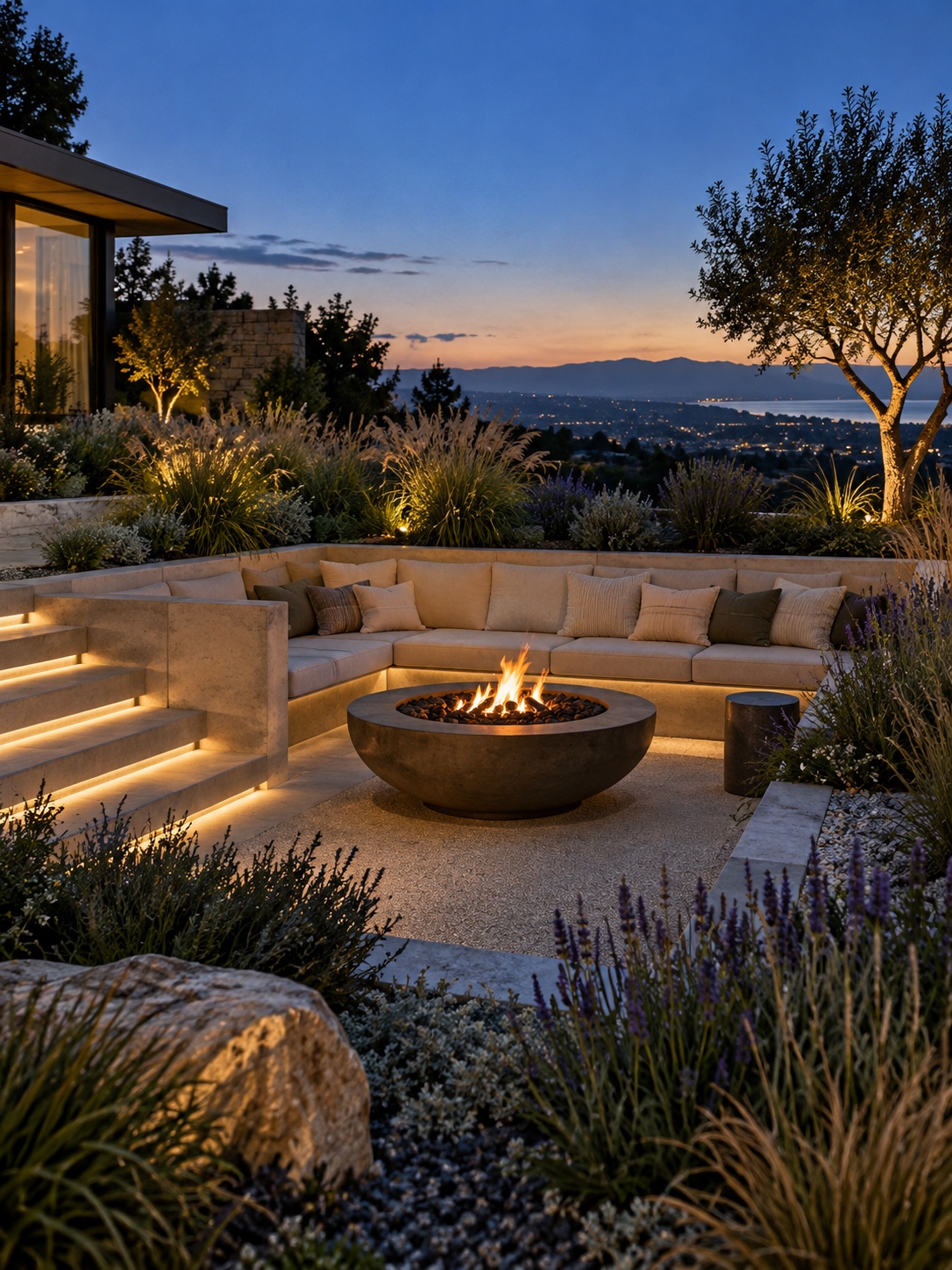
Modern outdoor design leans on hardscape for definition, patios, walkways, seating areas, but an all-hardscape yard sheds water it should be capturing. Balancing paved area against planting beds and permeable joints keeps the layout crisp without turning the whole lot into a runoff surface.
Make Water-Wise Design Look Intentional
Repetition, restrained materials, negative space, and focal planting
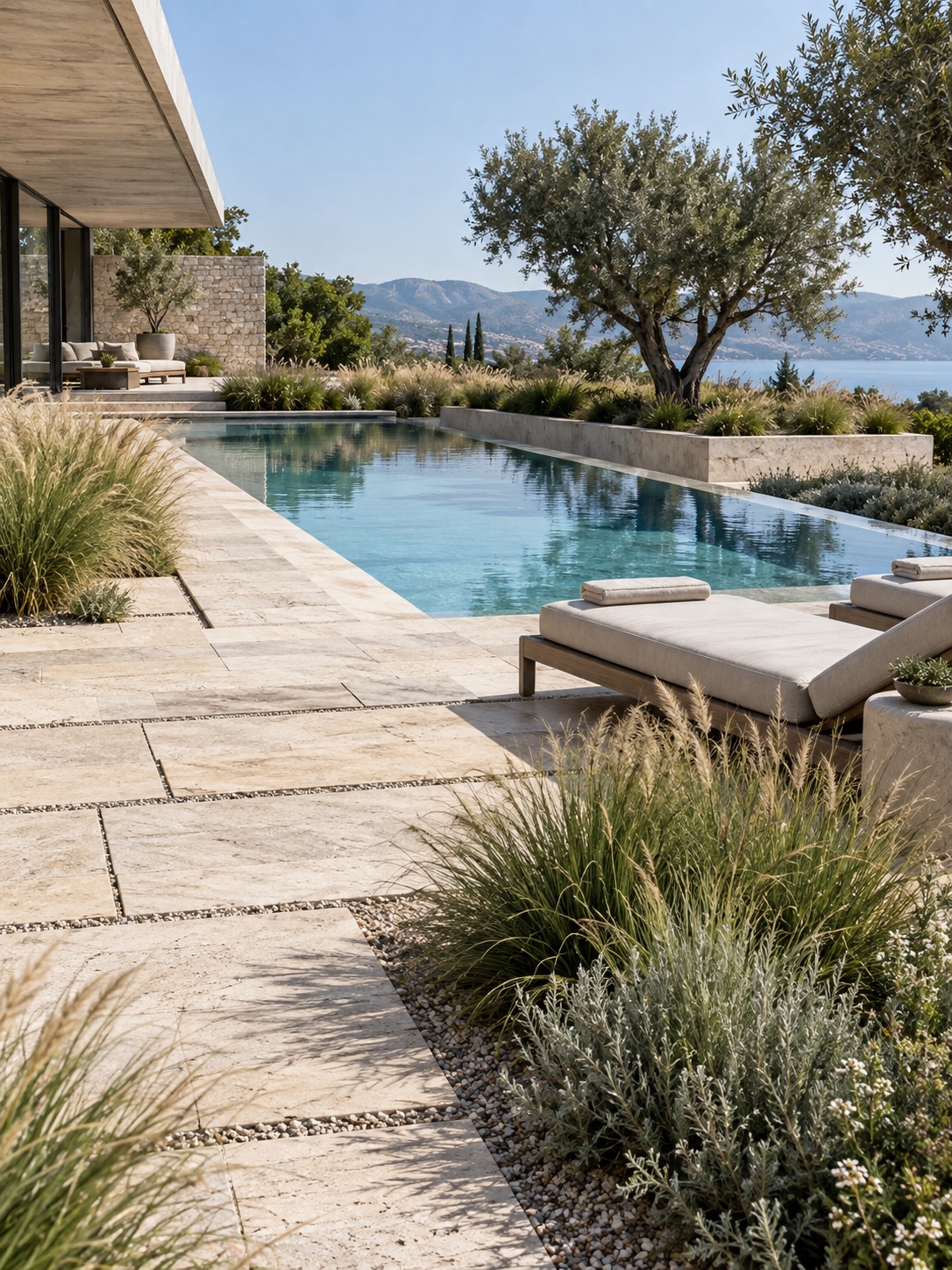
The visual difference between an intentional water-wise garden and a neglected one usually comes down to repetition and restraint. Repeating two or three hardscape materials, using a consistent plant palette instead of one of everything, and leaving deliberate negative space (gravel, mulch, a clean lawn alternative) reads as designed rather than unfinished.
Avoid the sparse or unfinished “dry yard” effect
The failure mode here is scattering isolated drought-tolerant specimens across open dirt or mulch with nothing tying them together. Group plants in masses, anchor the layout with at least one or two focal points, tree, sculptural planting, water feature, and keep hardscape lines clean and few.
When Professional Landscape Planning Is Worth It
Grading, drainage, irrigation calculations, permits, and sequencing
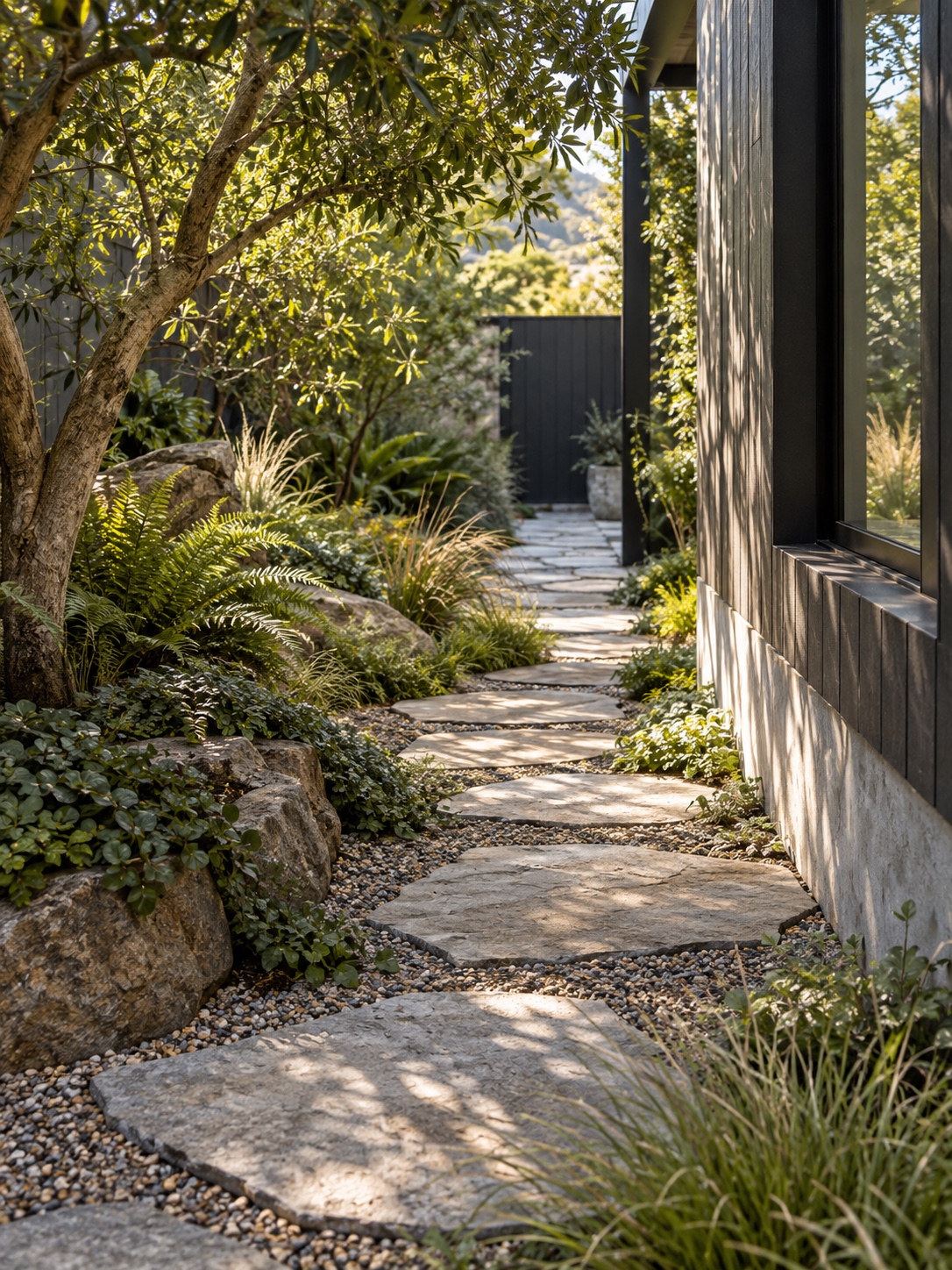
Grading and drainage math gets unforgiving fast once real rainfall volumes and slope percentages are involved, and getting it wrong means water ending up somewhere it was never supposed to go, sometimes against a foundation. Irrigation zone calculations, permit requirements, and construction sequencing all compound the complexity once a project moves past a single planting bed.
A planning and installation example worth knowing
For anyone weighing whether to DIY a full water-wise renovation versus bringing in help, working with an experienced crew like the J’s Custom Landscaping Team is a useful example of what professional planning actually adds: soil and sun analysis before plant selection, proper drainage grading so water moves away from the house safely, and the equipment to handle heavy grading work in a fraction of the time a weekend DIY approach would take. It’s not a requirement for every project, but for anything touching grading or structural hardscape, it’s worth pricing out before committing to a DIY timeline.
Water-Wise Landscaping Checklist
- Calculate the site’s water budget before choosing plants or materials
- Walk the site during real rain to map slope, runoff, and drainage patterns
- Divide the yard into two to four hydrozones by water need
- Choose native trees, grasses, perennials, and groundcovers layered by height and water demand
- Match irrigation zones to hydrozones, not the other way around
- Install drip irrigation with a smart controller and rain shutoff sensor
- Add at least one rain garden or swale to capture and reuse runoff
- Use permeable pavers, gravel joints, or recycled decking for hardscape
- Balance hardscape and softscape ratios for a clean, modern layout
- Repeat materials and group plantings to avoid a scattered, unfinished look
Frequently Asked Questions
What is water-wise landscaping?
It’s a landscaping method that starts by calculating a site’s water budget and mapping how water moves across it, then selects plants, irrigation systems, and hardscape materials that minimize supplemental water use without sacrificing a designed, modern look.
How is water-wise landscaping different from xeriscaping?
Xeriscaping is a specific technique focused on drought-tolerant, often non-native planting. Water-wise landscaping is the broader approach, which can include xeriscaping methods but also covers rain capture, smart irrigation zoning, and permeable hardscaping, allowing for more green space where climate and water budget support it.
Which landscaping changes save the most water?
Switching from spray irrigation to drip lines typically delivers the biggest single reduction, since it eliminates water lost to overspray and evaporation. Hydrozoning plants by water need and adding a rain garden to capture and reuse runoff are close behind.
Can a water-wise garden still have a lawn?
Yes, in reduced and well-placed form. A smaller lawn area, positioned where it gets genuine use rather than covering the whole yard, paired with drip or smart-controller irrigation, fits within a water-wise plan far better than eliminating turf entirely in every case.
Are native plants always drought-tolerant?
Not automatically. “Native” describes where a plant evolved, not its water needs; some native species are adapted to consistently moist conditions. Matching a native plant’s actual water requirement to its hydrozone still matters more than the native label alone.
Do permeable pavers reduce landscape water use?
Indirectly. Permeable pavers don’t reduce a plant’s water need, but they reduce runoff and let rainwater recharge the soil and local groundwater instead of washing off the property, which supports the water budget for the planted areas around them.
Bring the Water-Wise Plan Together
Water-wise landscaping done well doesn’t look like a compromise. It looks like a yard where every material and plant is there on purpose. Start with the water budget, map the site honestly, and the plant list and hardscape choices tend to fall into place with far less guesswork than starting from a plant catalog ever does.
For related groundwork, see Smart Watering Tips for irrigation maintenance details, Yard Drainage Ideas for grading specifics, Landscape Design Process for the broader planning sequence, and How to Balance Hardscape and Softscape for the layout principles behind Section 6.
- 16shares
- Facebook0
- Pinterest16
- Twitter0
- Reddit0