Laundry room essentials start with a workable layout, reliable ventilation, safe product storage, and a clean surface for folding. These choices help keep damp air, spills, and detergent residue from becoming everyday problems, especially in a household with sensitive skin.
Think of the room as a short workflow: sort, wash, dry, fold. A good layout keeps each task within reach without putting clean clothes back on the sorting surface. Detergent choice belongs in that plan, alongside the finishes and storage.
- What makes a laundry room healthy?
- Plan a layout that separates dirty, washing, and clean zones
- Ventilation and moisture control essentials
- Safer storage for detergents and laundry additives
- Choosing laundry products for sensitive skin or eczema
- Design a low-residue laundry routine
- Laundry room essentials list: 10 items and design features
- FAQ
- Final thoughts
This guide uses skin contact, residue, humidity, and ease of cleaning to decide what earns a place in the room. The product comparison is one part of that checklist.
You can apply these ideas to an existing laundry closet as well as a renovation. Start with the part of your setup that causes the most trouble: nowhere to fold, damp surfaces, awkward storage, or a dosing routine nobody follows consistently.
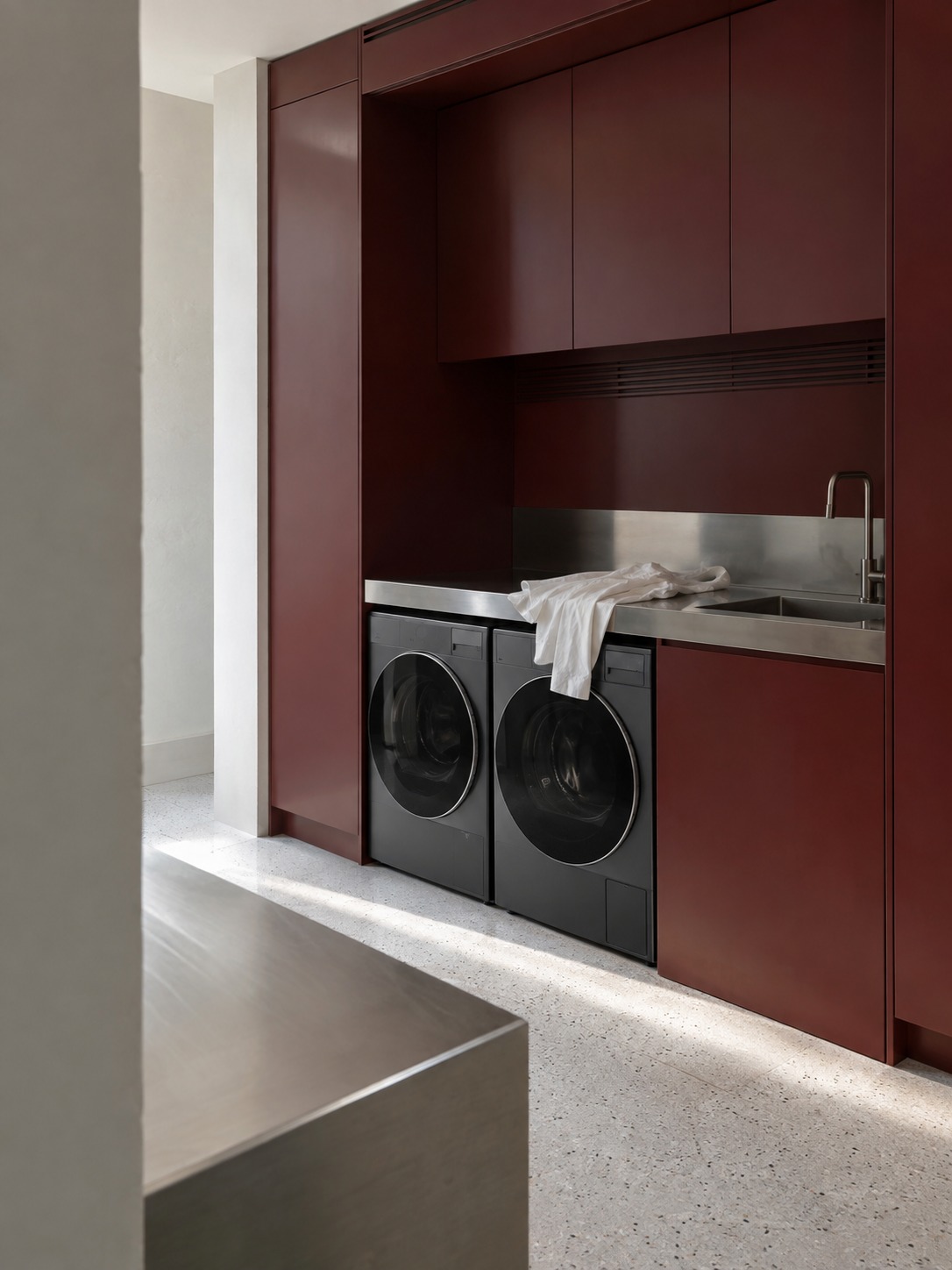
What makes a laundry room healthy?
Skin contact, residue, humidity, and indoor air
Washed clothes, sheets, and towels spend hours against skin. Detergent and scented additives can leave residues, while wet textiles and indoor drying add moisture to a room. Leaks or a faulty dryer exhaust can make that moisture problem worse.
Plan for clean surfaces, appropriate ventilation, and easy access for maintenance.
A useful design check is to follow one load through the room. Notice where wet items wait, where clean clothes land, and whether anyone has to reach across an open appliance to retrieve a bottle.
It’s worth separating the design problem from the medical one here. Nothing in this piece diagnoses a skin condition or replaces a dermatologist’s advice for anyone dealing with persistent irritation. What a laundry room’s design and routine can do is reduce unnecessary exposure and residue, the same way good ventilation reduces unnecessary humidity, without claiming to solve a health issue on its own.
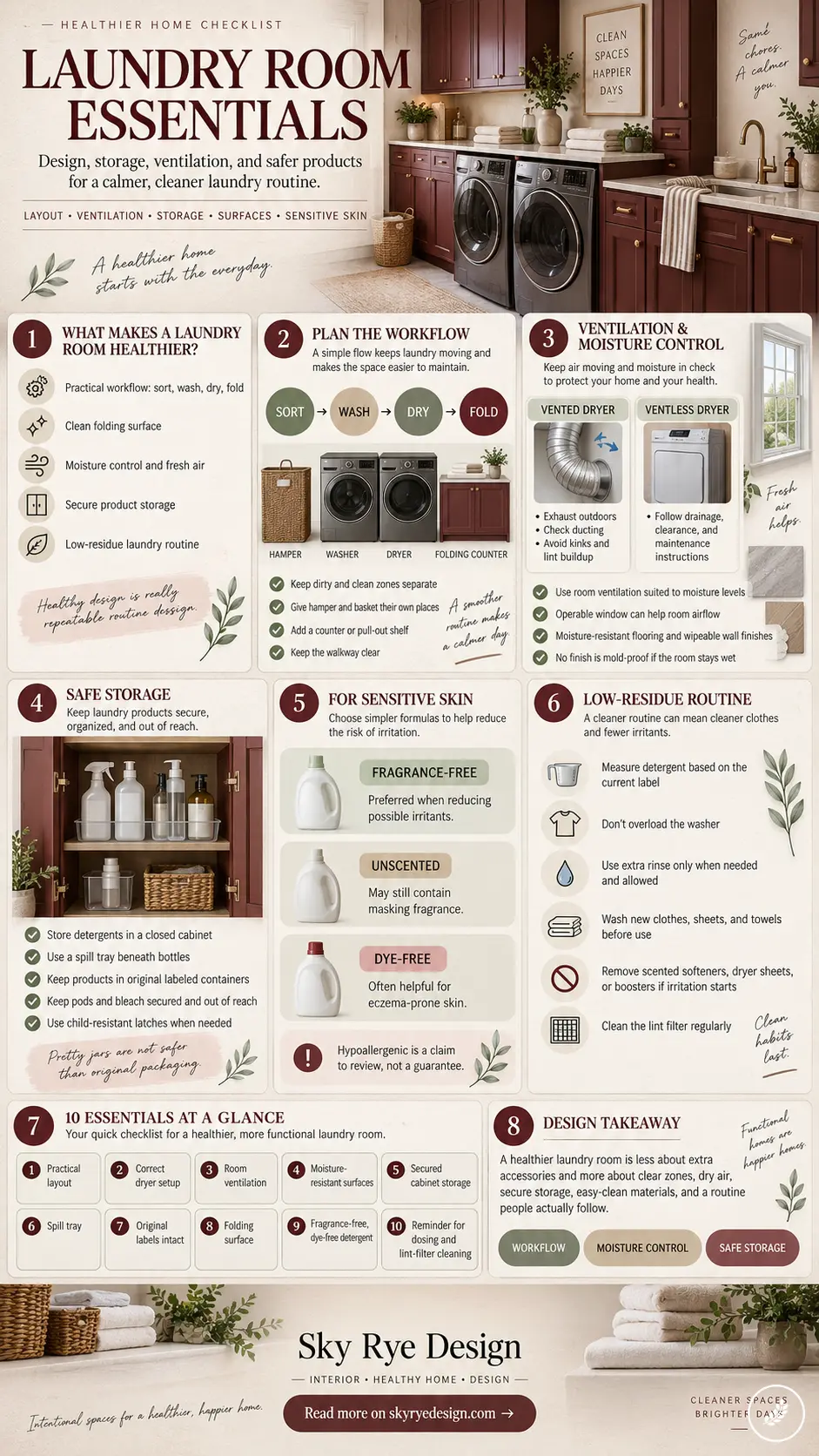
The essentials checklist at a glance
The essentials fall into five groups: a practical layout; ventilation suited to the appliances; secure storage in original packaging; moisture-resistant, easy-clean surfaces; and a measured laundry routine. Use the ten-item checklist near the end to review your own room.
Plan a layout that separates dirty, washing, and clean zones
A practical laundry workflow
Arrange sorting, washing, drying, and folding in a sequence that suits the room. Keep a hamper or sorting bin separate from the surface used for clean clothes. In a small space, one counter can serve both tasks if you clear and clean it before folding.
Give the hamper and clean laundry basket their own places, leaving the folding surface clear. If there is room beside the appliances, use it for a counter; if not, a pull-out shelf or a nearby table can work. The aim is a practical routine, not a rigid floor plan.
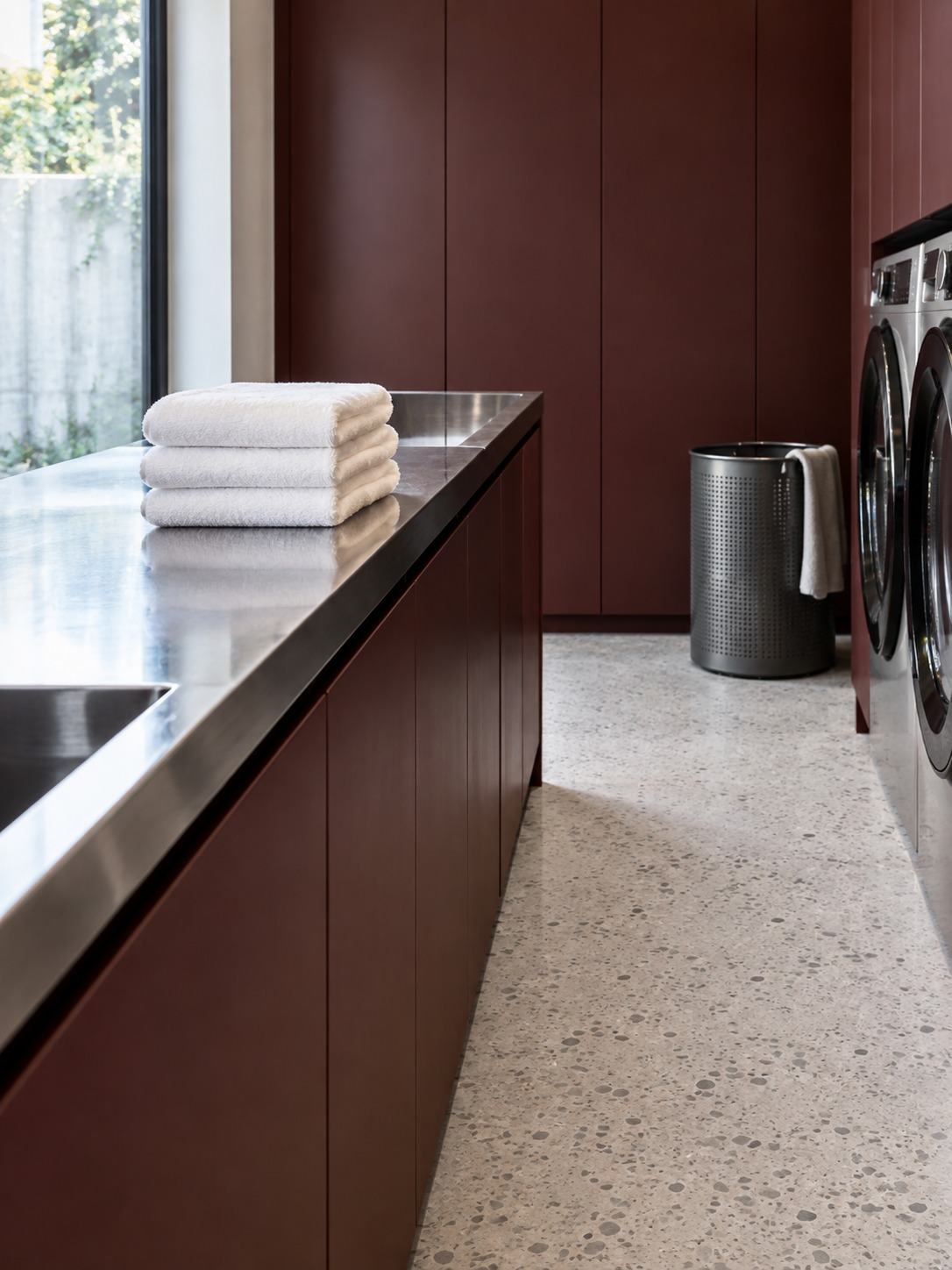
You do not need separate entrances or a perfectly one-way route. Keep the main walkway clear and avoid a layout that makes you step around an open appliance door while carrying a full basket.
Counter space, sink placement, and accessible clearances
A dedicated counter or folding surface, even a slim pull-out shelf in a tight closet-style layout, keeps clean laundry off the floor and off top-loading washer lids, both of which pick up dust and lint that then transfers back onto folded clothes. A utility sink, where space allows, gives you somewhere to handle stain pretreatment and hand-washing without using the same basin you’d use for anything else in the house.
Clearances matter more than most laundry room plans account for: enough space to fully open the washer and dryer doors, room to bend and load without contorting, and a walkway that doesn’t require squeezing past an open appliance door to reach storage. For more on stretching a small footprint without sacrificing this kind of clearance, see the layout strategies in laundry room design: small space, big impact.
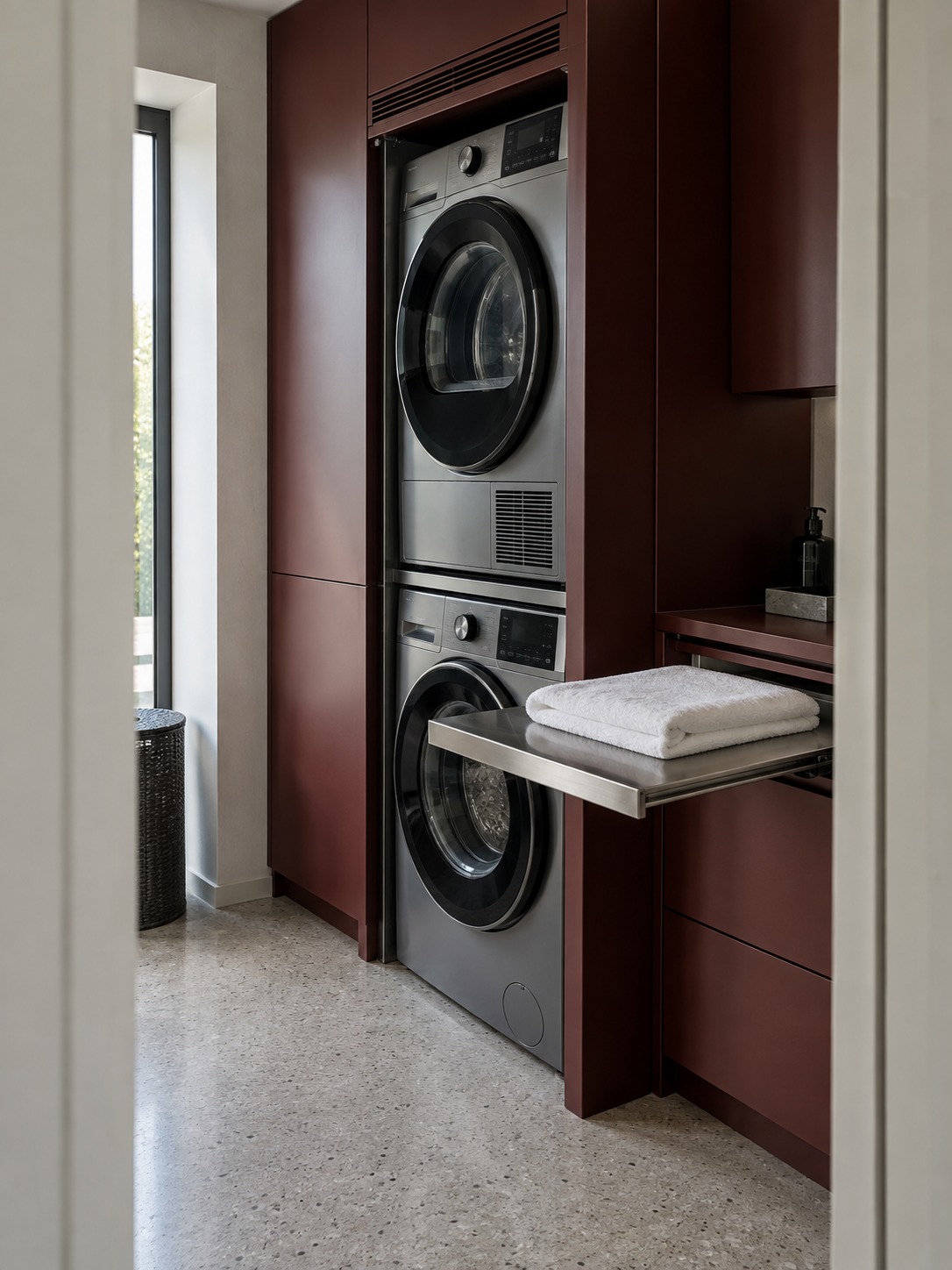
Ventilation and moisture control essentials
Exhaust, airflow, and dryer venting
For a vented dryer, check that the exhaust reaches outdoors through ducting installed to the appliance instructions. Kinks, lint buildup, and crushed connectors restrict airflow. Clean the lint filter before or after each load and arrange duct cleaning as needed, especially if drying slows or the machine runs unusually hot.
The U.S. Fire Administration dryer guidance explains these maintenance checks.

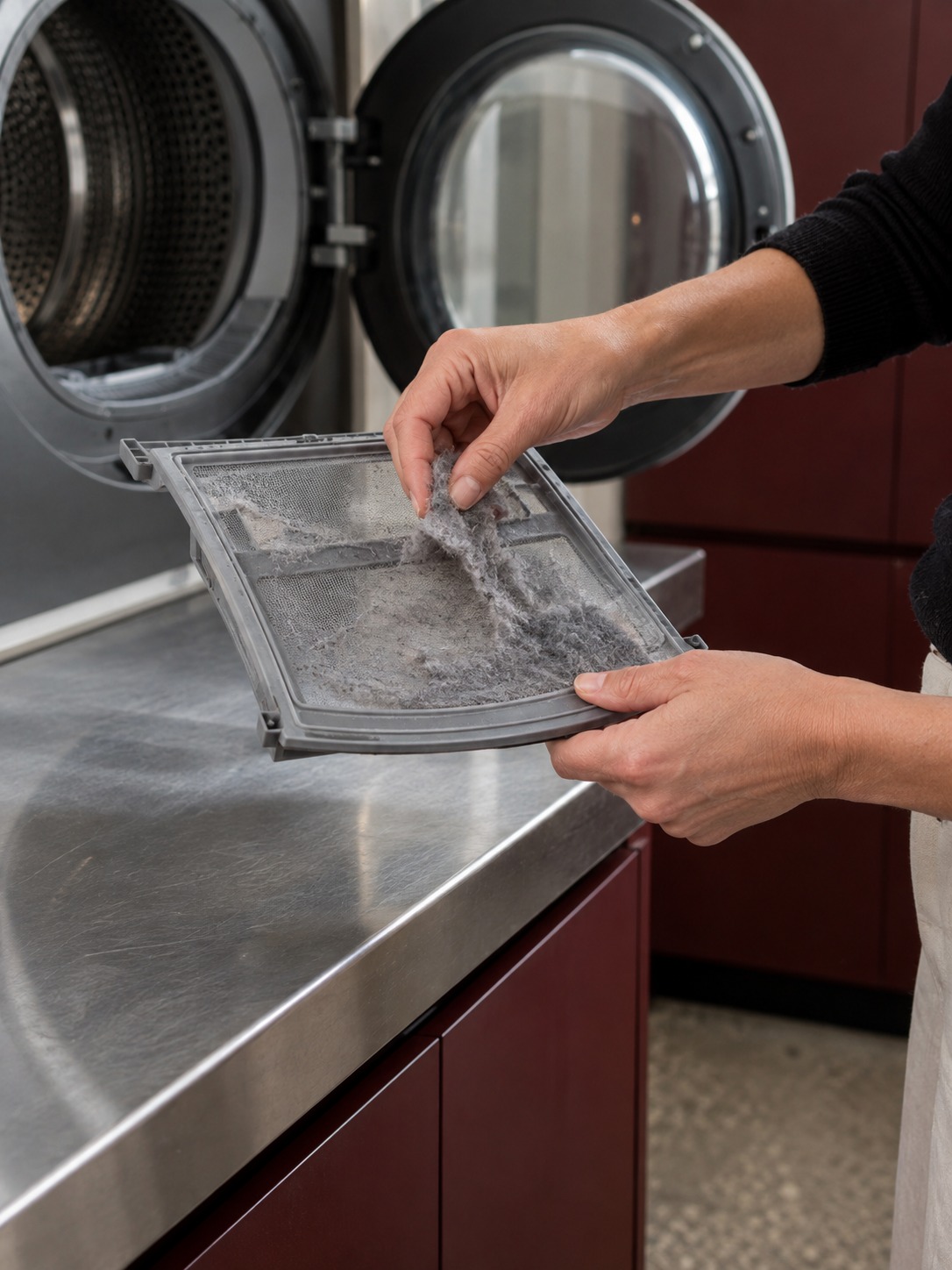
Ventless condenser and heat-pump dryers work differently and may not need an outdoor exhaust duct. Follow the model’s drainage, clearance, and ventilation instructions. For the room itself, consider damp laundry, indoor drying racks, and local conditions when choosing mechanical exhaust or using an operable window.
An open window is not a substitute for a vented dryer’s exhaust. Heat-pump dryer technology is one option to consider where an exterior duct is difficult to install.
Mold-resistant, easy-clean surfaces
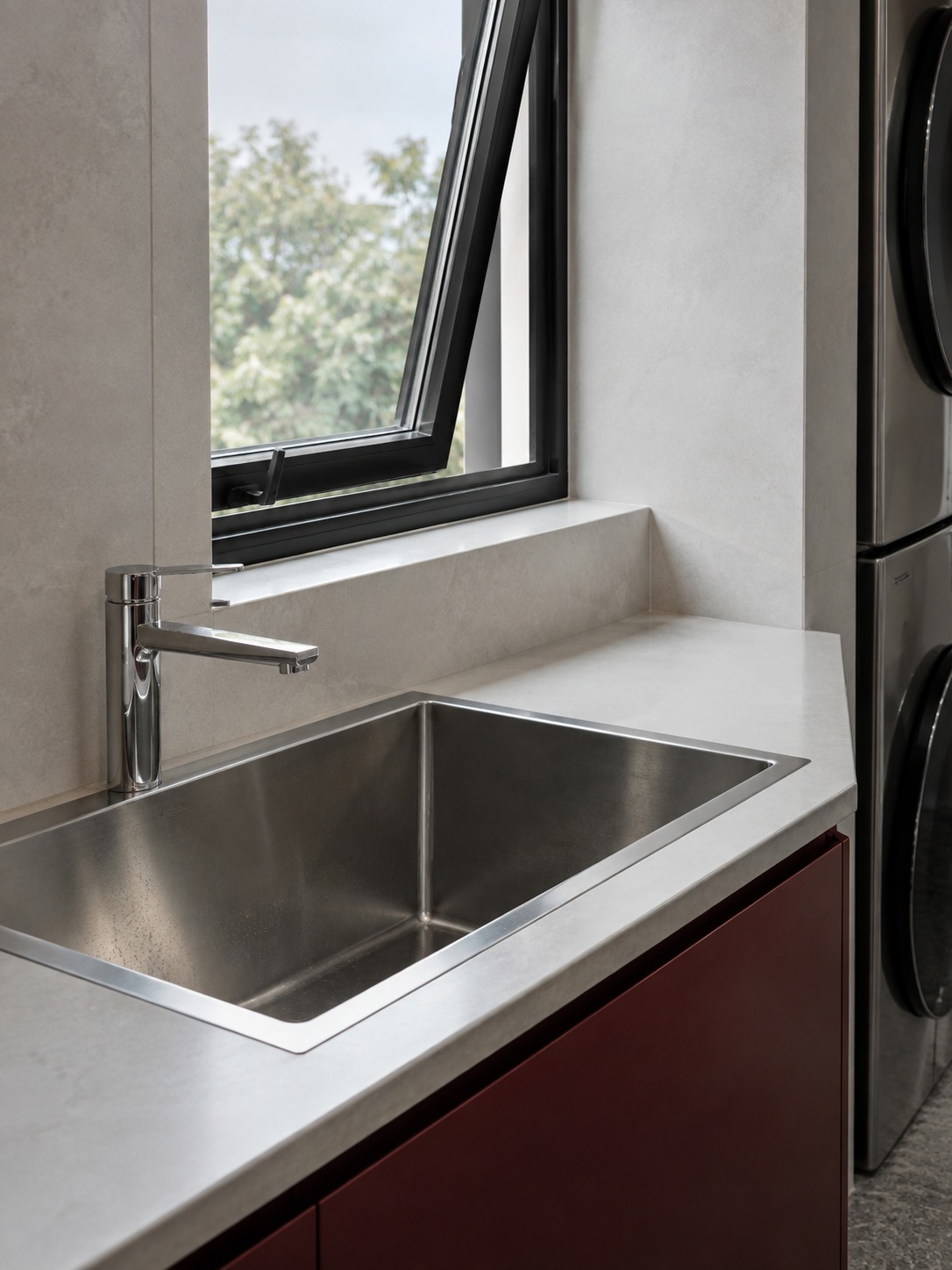
Choose flooring rated for the expected moisture exposure, such as correctly installed porcelain tile or sheet vinyl. Pay attention to seams, edges, and the floor below: a water-resistant surface is not automatically a waterproof assembly. Use washable wall paint suitable for damp areas, wipe spills promptly, and repair leaks.
No finish makes a persistently wet room mold-proof.
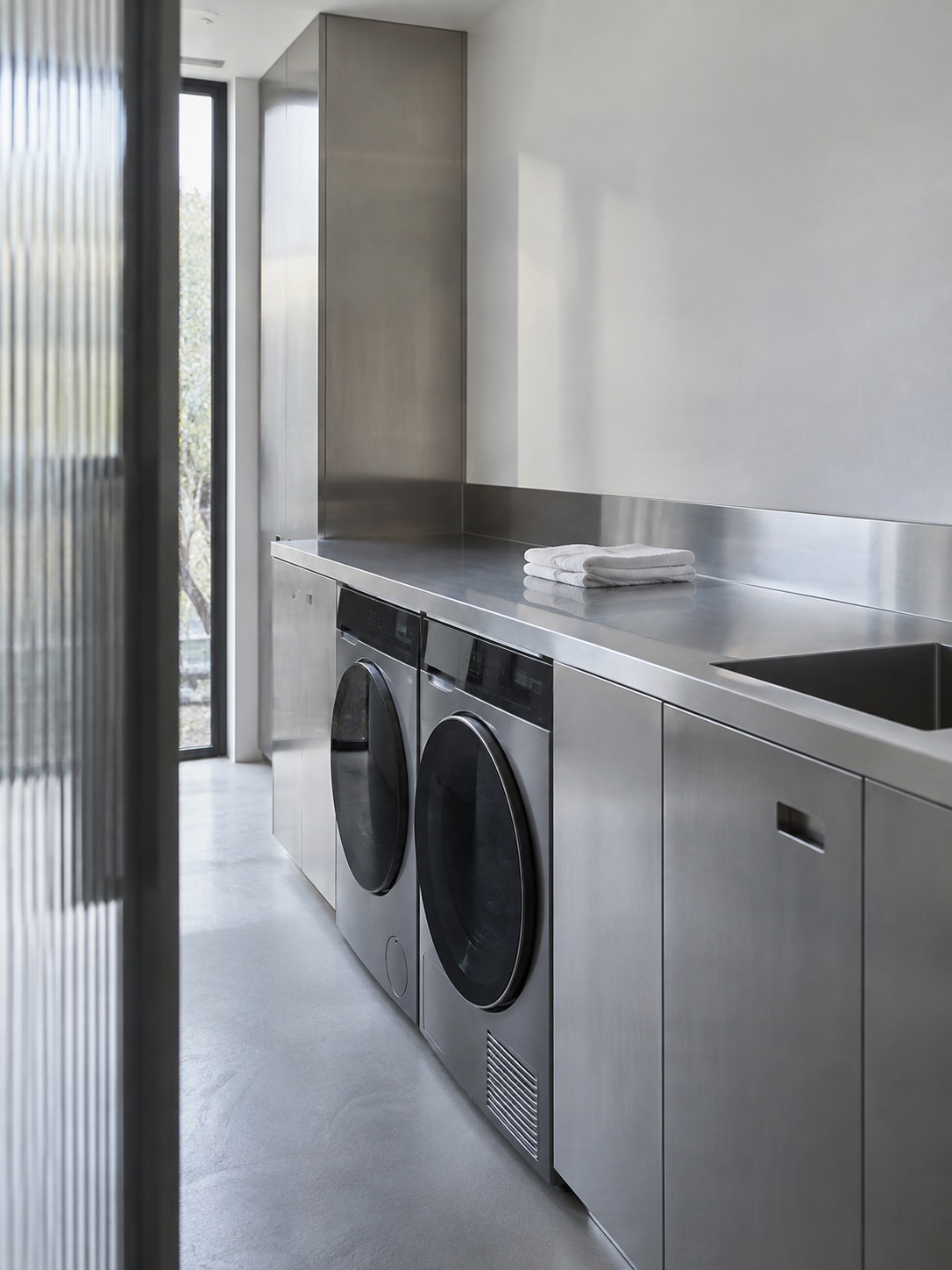
I’d treat this the same way I’d treat material selection for any high-moisture zone: assume water will land somewhere it isn’t supposed to, and pick finishes that shrug that off rather than absorb it. For a broader look at how material and ventilation choices interact across a whole home, not just the laundry room, why proper ventilation matters for a healthy home environment covers that ground .
Safer storage for detergents and laundry additives
Closed cabinets, labeled containers, and spill containment
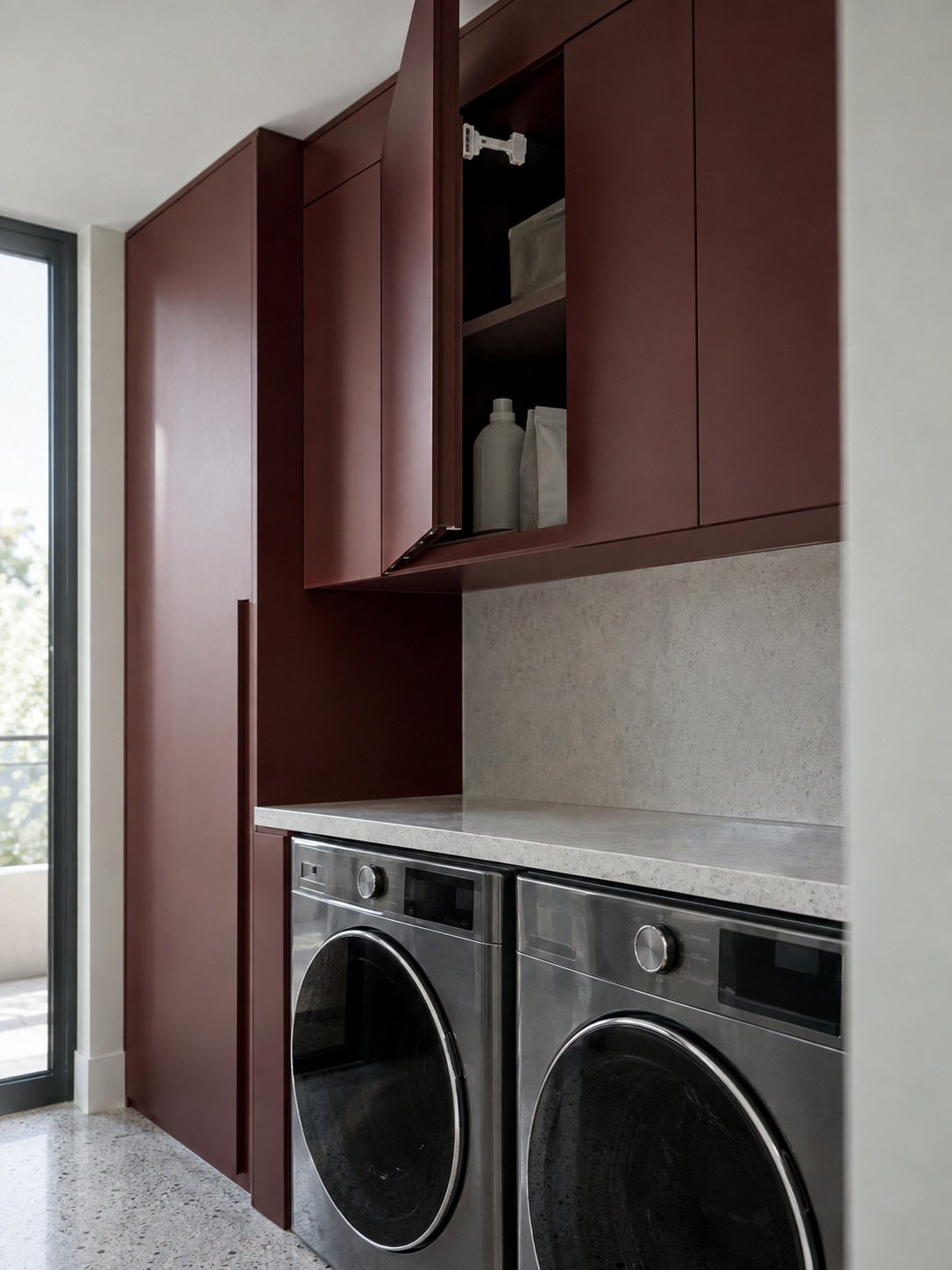
Store detergent and other laundry products in a closed cabinet, away from food and out of children’s sight and reach. A shallow, washable tray under each group of bottles makes drips easier to spot. Keep caps secure, follow label storage directions, and store incompatible chemicals separately; never mix bleach with other cleaners.
Keep laundry products in their original labeled containers. Decorative drink bottles and glass pantry jars can cause confusion and may lose the original child-resistant closure. The label carries dosing instructions, ingredients, and first-aid information. Poison Control’s laundry safety guidance recommends keeping the original containers.
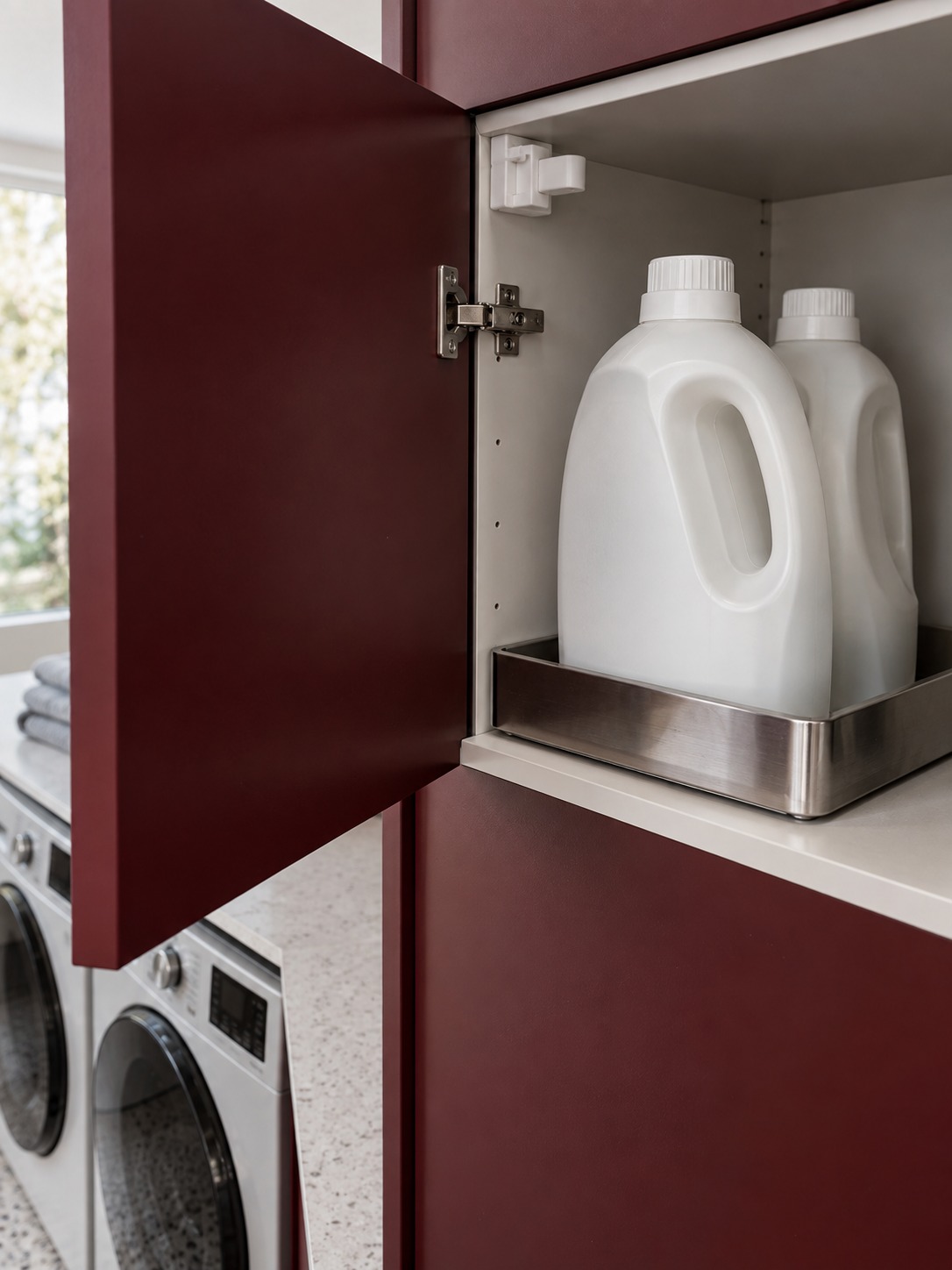
Choose a cabinet position away from direct heat and persistent dampness. If the room has condensation or a leak, address that source rather than leaving a chemical-storage cabinet open. Keep child-resistant closures and cabinet latches working.
Child- and pet-safe placement without sacrificing usability
Keep laundry pods and other concentrated products in their closed original packages inside a secured cabinet. Height alone is not enough: children can climb, so use an appropriate child-resistant latch as well. Place the cabinet where an adult can retrieve a bottle without balancing on the appliance or reaching over wet laundry.
Choosing laundry products for sensitive skin or eczema
Fragrance-free vs. unscented and why labels matter
These two terms get used interchangeably in casual conversation, but they describe different things on a label. The American Academy of Dermatology explains that an “unscented” product can still contain fragrance ingredients added specifically to mask an underlying odor, while “fragrance-free” indicates no fragrance ingredients were added at all. For anyone trying to reduce a potential eczema trigger, fragrance-free is the clearer, more reliable criterion to look for, and it’s worth checking that distinction across every scented product in a laundry routine, not just the detergent itself.
For laundry specifically, AAD also gives clothing and detergent recommendations.
Dye-free and hypoallergenic formulas: what the terms do and do not prove
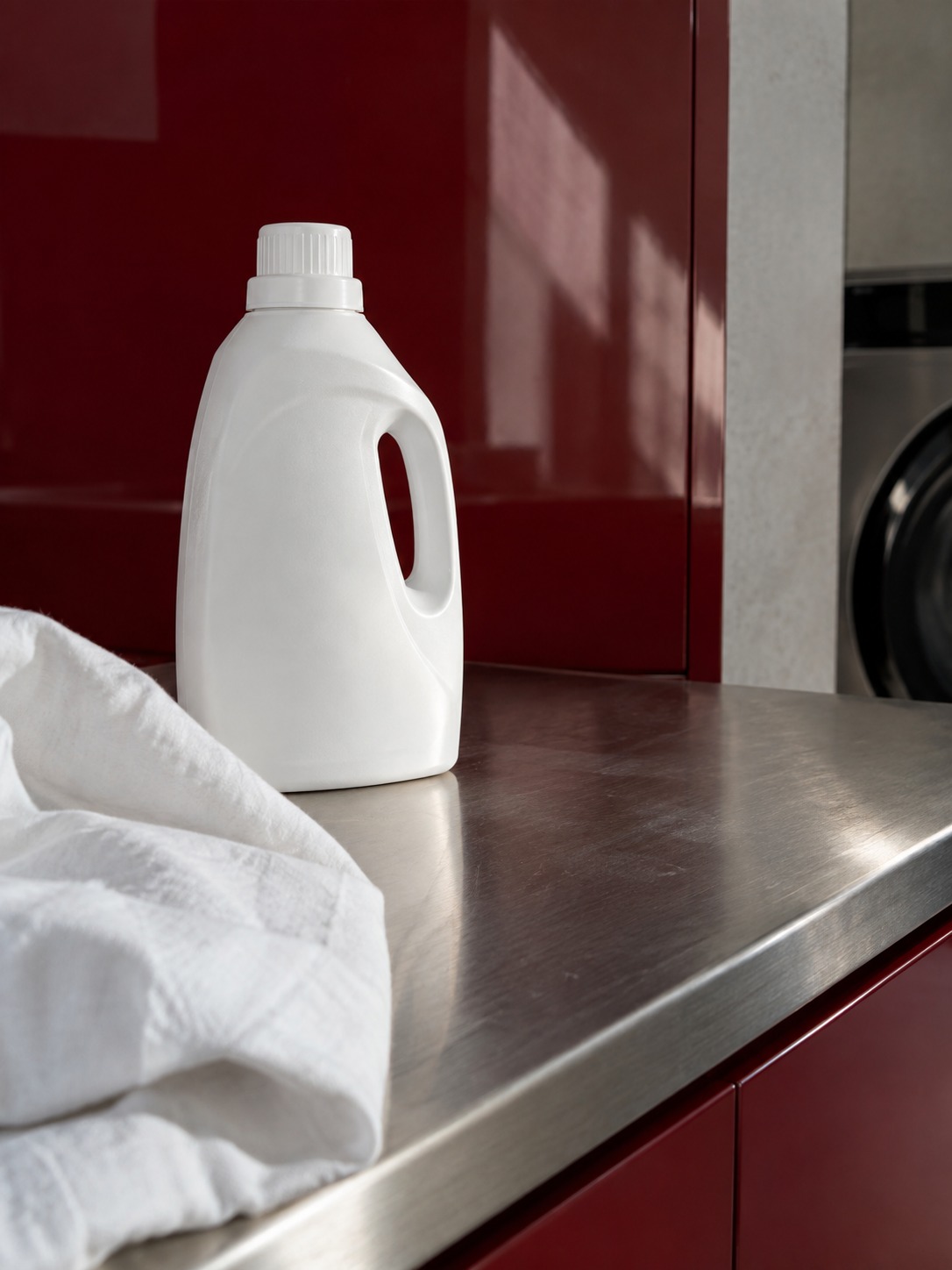
For eczema-prone skin, AAD guidance recommends fragrance-free and dye-free detergent. Treat “hypoallergenic” as a claim to investigate, not a promise that you will tolerate a product. Check the exact formula, any known personal allergens, and the amount recommended for your washer.
A dermatologist can help with persistent reactions.
A rash after a product change does not establish the cause. Direct contact with an irritant or allergen can cause contact dermatitis, and some skin symptoms have causes unrelated to laundry. The National Eczema Association offers information about eczema and its triggers.
Seek medical advice for persistent or severe symptoms.
Compare fragrance-free detergent options
| Detergent | Fragrance-free | Dye-free | HE compatible | Format | Why compare it |
|---|---|---|---|---|---|
| Rustic Strength Unscented | Yes | Yes | Yes | Liquid or powder | Liquid and powder options with ingredient information |
| all free clear | Yes | Yes | Check current label | Liquid | An everyday option available at many retailers |
| Tide Free & Gentle | Yes | Yes | Yes | Liquid | A familiar brand with a perfume- and dye-free formula |
Treat this table as a starting comparison, not a ranking. Formulas change, availability varies by region, and the right choice depends on your specific washer, water hardness, and how your own skin responds, which no label can fully predict on its own.
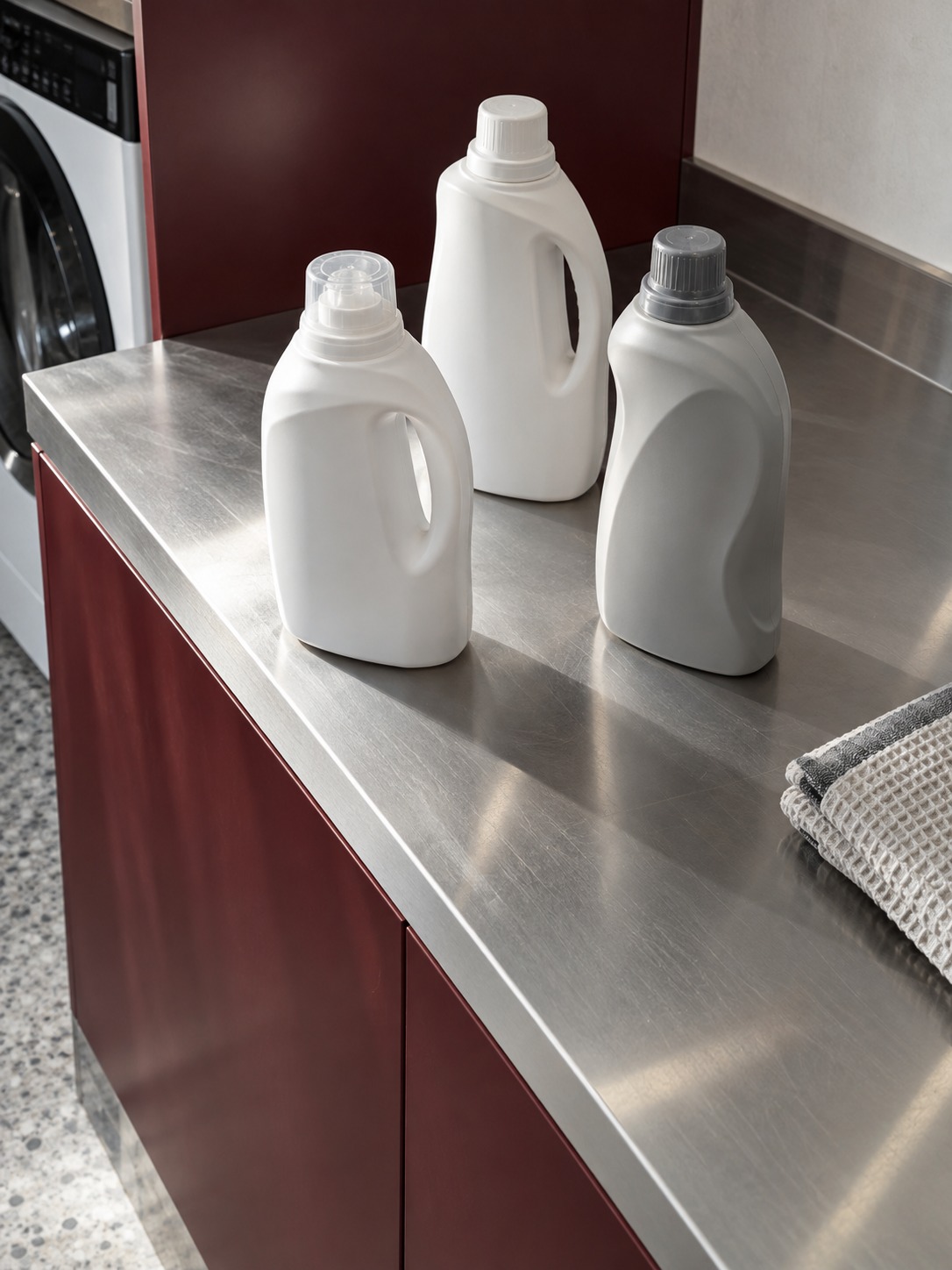
Design tip: Ask what each item improves: access, cleaning, moisture control, safe storage, or dosing. Give it a place only if it solves a problem in your routine.
Design a low-residue laundry routine
Correct dosing, rinse settings, and washing new textiles
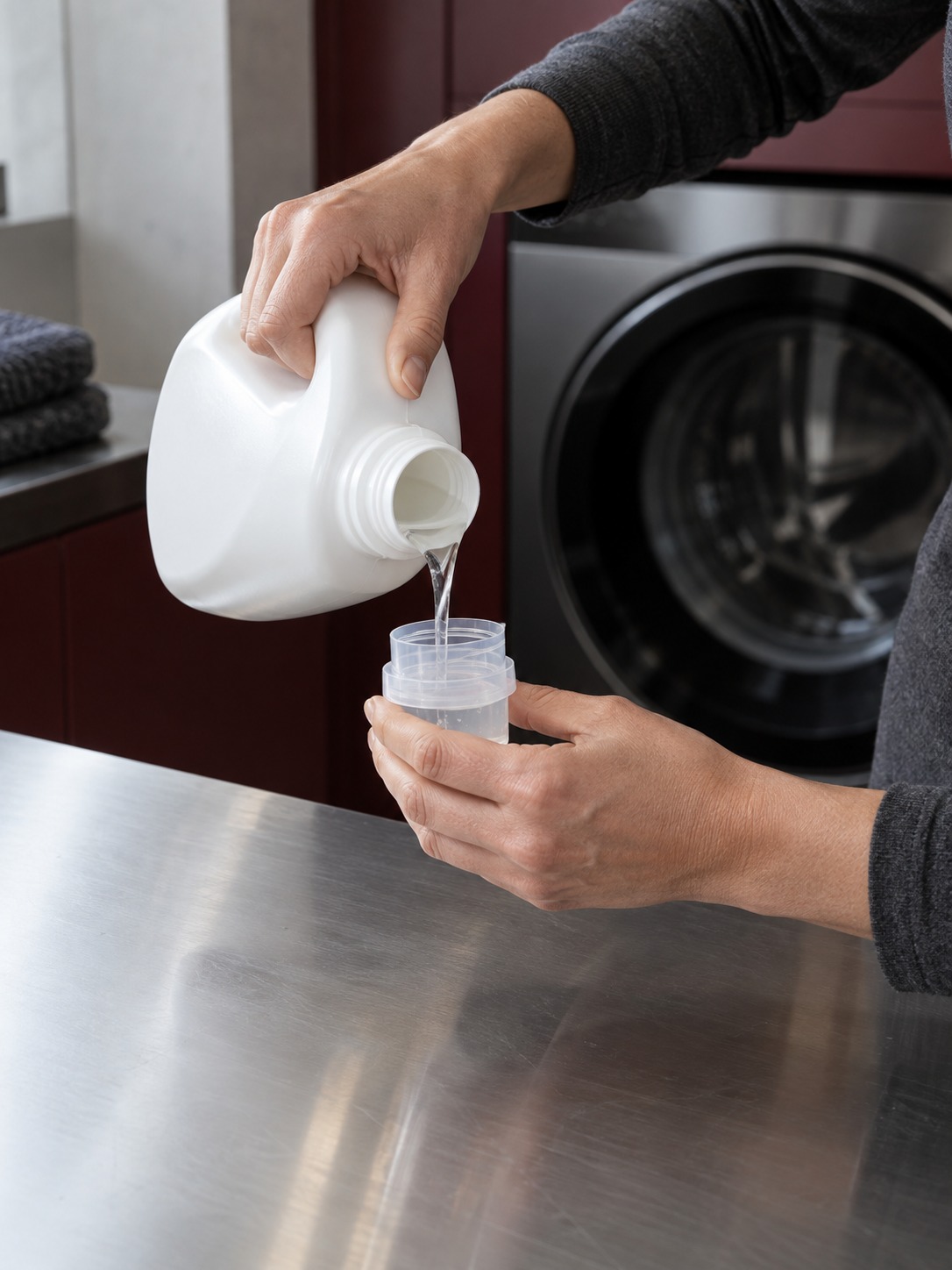
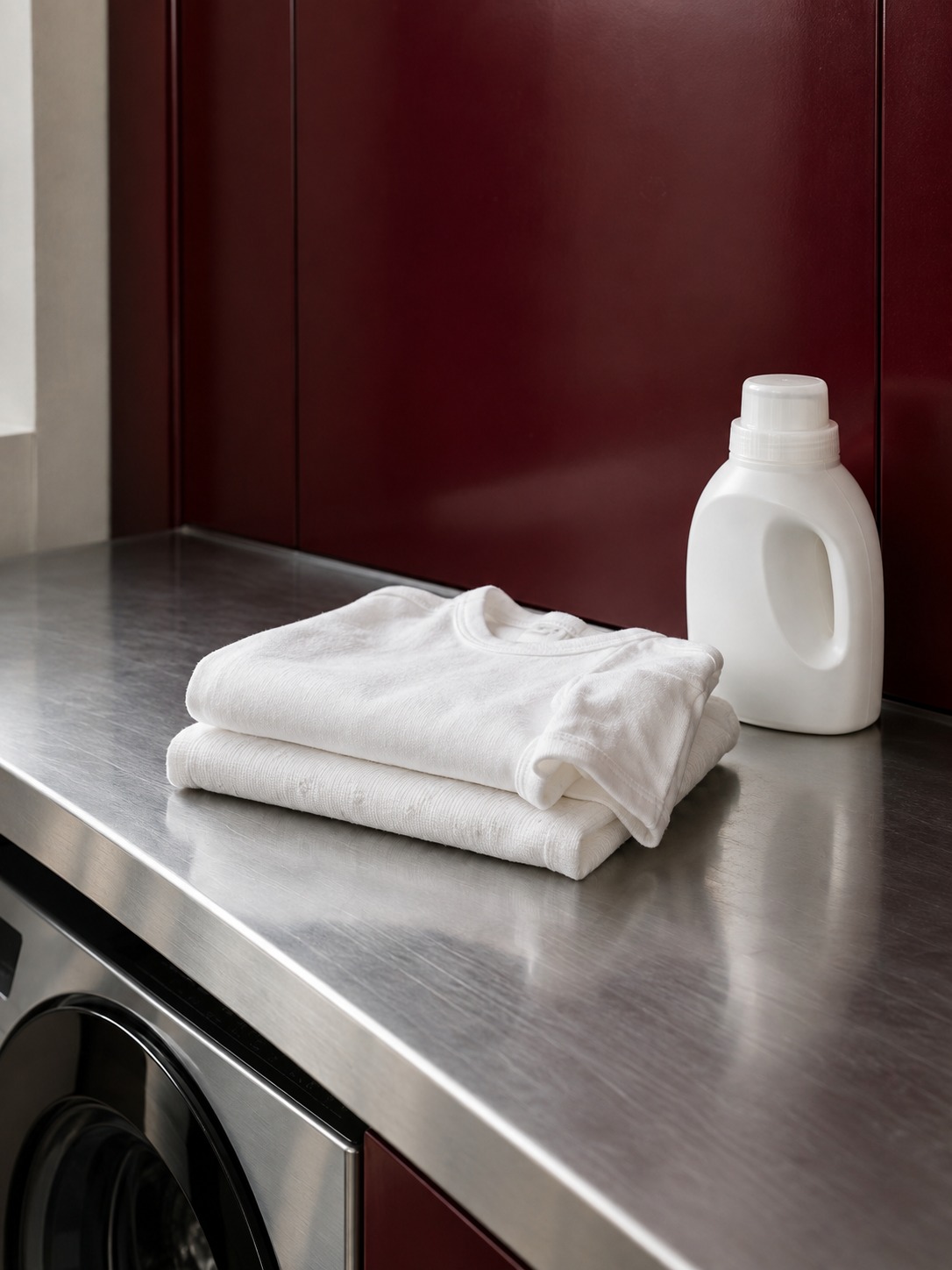
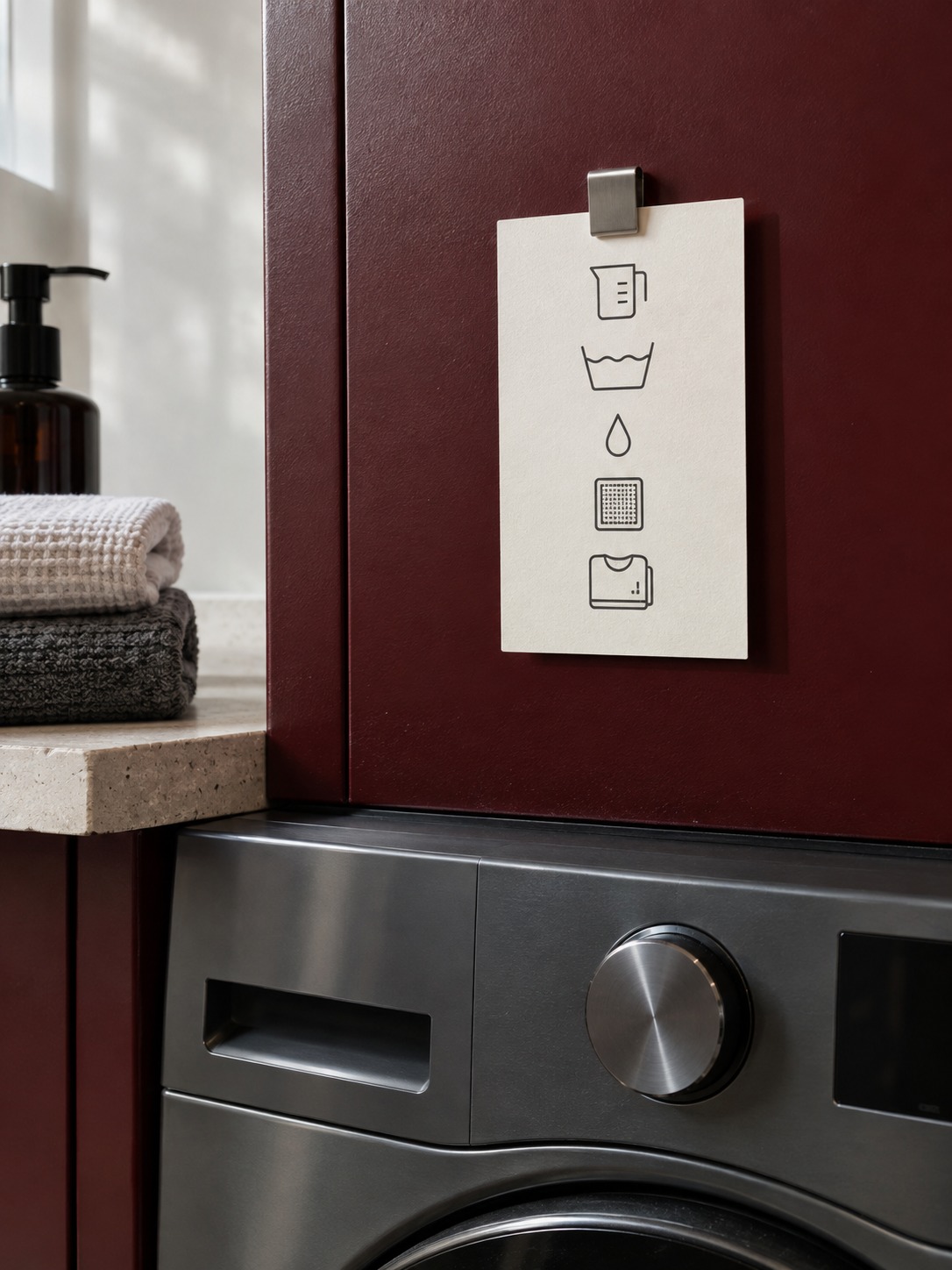
Measure detergent using the current package directions for your washer, load size, soil level, and water conditions. Overdosing can make rinsing harder. If clothes feel soapy, first review the dose and load size, then consider an extra rinse if the machine instructions allow it.
More detergent does not automatically mean cleaner laundry.
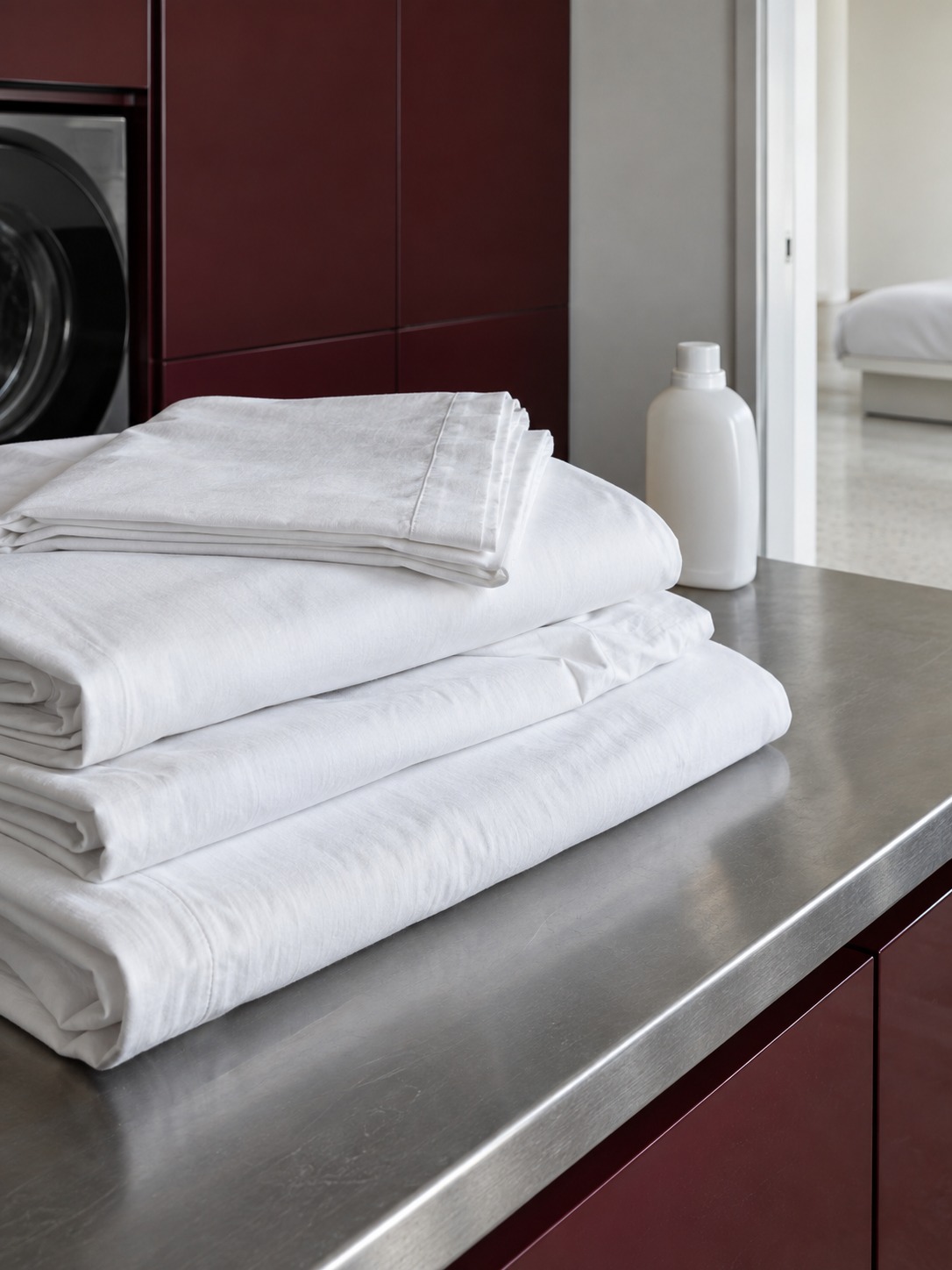
Wash new clothes before wearing them, using the care label and an appropriate detergent. This can help remove excess dyes and textile finishes. Wash new sheets and towels before use as well; one wash does not necessarily remove every residue.
When to remove fabric softeners, dryer sheets, and scent boosters
If irritation starts after a product change, remove the new scented additives and keep a simple, consistent routine. A fragrance-free detergent followed by a scented softener still adds fragrance to the fabric. Note what you changed and discuss persistent or severe symptoms with a dermatologist rather than repeatedly testing a product that caused a reaction.
Laundry room essentials list: 10 items and design features
- A practical sorting, washing, drying, and folding layout with a clean place for finished laundry
- Correct exhaust ducting for a vented dryer, or the specified drainage and maintenance setup for a ventless model
- Room ventilation suited to moisture levels and appliance requirements
- Moisture-resistant flooring and wipeable wall finishes
- Secured cabinet storage for closed detergent, bleach, and pod containers
- A spill tray or bin beneath stored liquid detergent
- Original, legible product labeling kept intact rather than decanted into unmarked containers
- A dedicated folding surface separate from the sorting or hamper area
- A fragrance-free, dye-free detergent as the default choice, with scented additives used deliberately rather than by habit
- A household reminder for label-based dosing, rinse settings, and lint-filter cleaning
FAQ
What are the most important laundry room essentials for a healthier home?
Start with a practical layout, a clean folding surface, moisture control suited to the room and appliances, secured product storage, and easy-clean finishes. For eczema-prone skin, choose fragrance-free, dye-free detergent and follow its dosing instructions. The product routine is one part of the room’s design.
Does a laundry room need ventilation?
A laundry room needs a way to manage moisture and meet its appliances’ installation requirements. Vented dryers must exhaust outdoors; ventless models follow different drainage and clearance instructions. Room ventilation may include mechanical exhaust or an operable window, depending on the space. Persistent condensation needs attention even when the dryer is installed correctly.
Where should detergent be stored in a laundry room?
Keep detergent in its original closed packaging inside a secured cabinet, out of children’s sight and reach and away from pets. A washable tray catches drips. Retain labels and child-resistant closures, follow storage instructions, and avoid decanting products into decorative containers.
Is fragrance-free detergent better for eczema-prone skin?
The American Academy of Dermatology recommends fragrance-free and dye-free detergent specifically for eczema-prone skin, since fragrance is a known potential trigger for some people. Fragrance-free is a more reliable label than “unscented,” which can still contain fragrance added to mask odor.
How do you reduce detergent residue on clothes?
Measure the amount specified for your washer and load, avoid overloading, and check the rinse settings. If clothes still feel soapy, review the dose and consider an extra rinse according to the machine instructions. Scented additives can leave additional ingredients on fabric, so simplify the routine when troubleshooting sensitivity.
Final thoughts
A healthier laundry room makes the routine easy to repeat: a clear place for dirty items, a clean folding surface, appropriate moisture control, and secure storage. Choose products by their labels and your household’s needs, then measure them consistently.
Check the room after your next load. Look for a damp patch, a bottle without a secure home, a blocked walkway, or a folding surface covered in other objects. Fix the clearest problem first; that is a more useful starting point than buying a new set of accessories.
For general layout and storage inspiration beyond this health-first framework, see laundry room design ideas for maximum efficiency and style, and for how laundry room choices fit into a broader healthy-home approach, healthy home design: reducing hidden hazards through smarter interiors covers that wider context .
- 8shares
- Facebook0
- Pinterest8
- Twitter0
- Reddit0