I’ve owned enough different cars over the years, from an old Opel Ascona to a Jaguar F-Pace to a Mazda CX-5, to notice a pattern that has nothing to do with the cars themselves. The vehicles that stayed reliable longest weren’t necessarily the ones I babied the most.
They were the ones parked in a space actually organized for maintenance, where checking tire pressure or topping off fluid took two minutes instead of turning into a scavenger hunt for the right tool.
- Start with a garage layout that supports regular car care
- Choose garage flooring that handles seasonal wear
- Build smart wall and tool storage around maintenance tasks
- Design for weather changes before they damage the car
- Add lighting, ventilation, and safety details
- Keep the space clean enough to make maintenance easy
- FAQ
A garage that supports car care isn’t a luxury. It’s the difference between catching a small problem early and discovering it the expensive way, and that difference starts with how the space itself is designed, not just how often you remember to use it.
Most garage advice treats the space as pure storage: how many bikes fit, how many boxes stack against the back wall. That’s a completely different design problem from a garage meant to actively support maintenance.
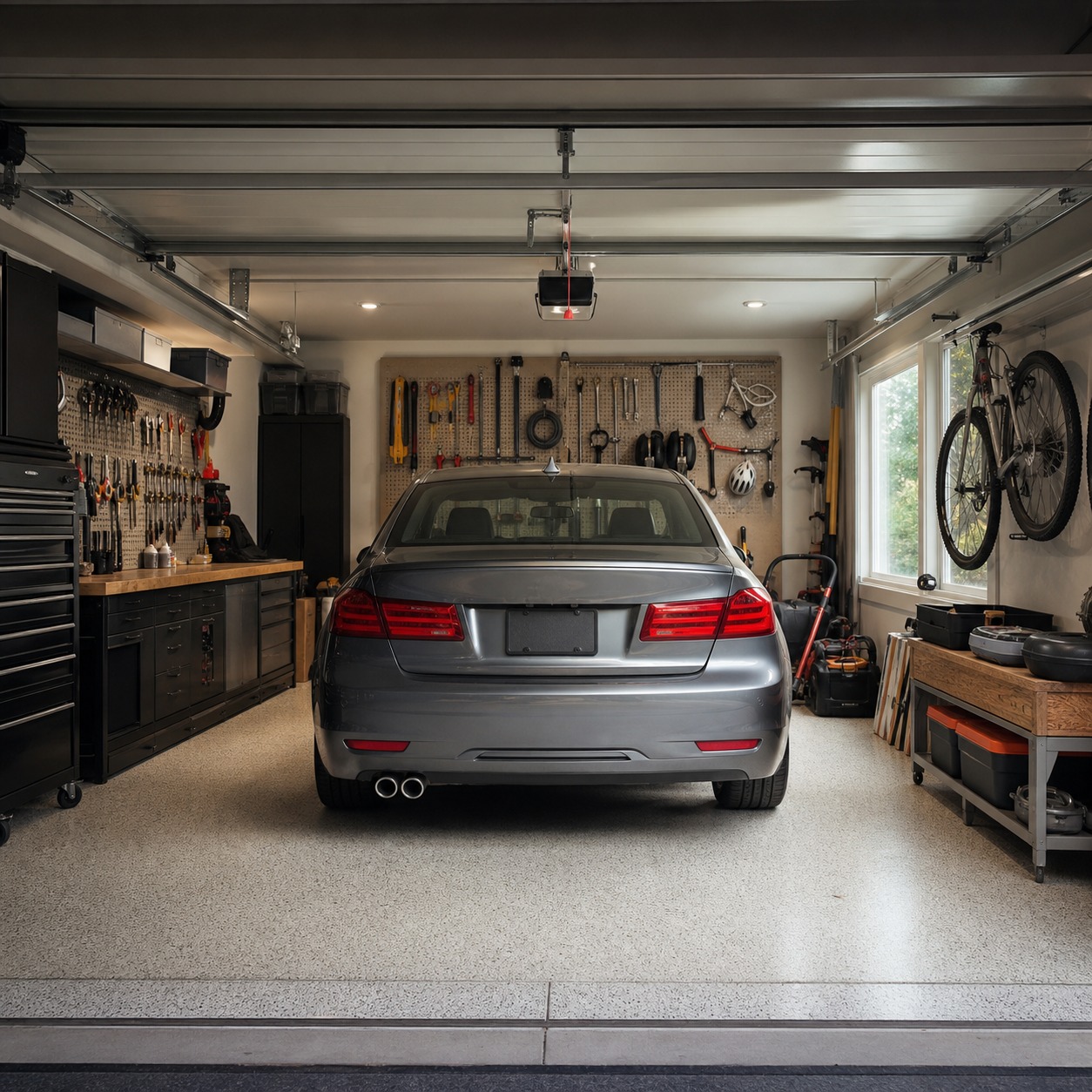
A storage-first garage buries the tools you need behind everything you don’t. A maintenance-first garage keeps the path to the car clear and the tools for checking it visible, and that distinction changes almost every decision that follows, from flooring to lighting to where the fire extinguisher actually goes.
Keeping a car running well is part mechanical discipline and part how you actually drive it day to day, since the two protect the same vehicle from different directions. This piece focuses on the physical workshop side of that equation, the layout, storage, and details that make regular care actually happen, but it’s worth remembering the space only pays off if you’re also driving in a way that doesn’t undo the maintenance behind it.
Start with a garage layout that supports regular car care
Clear walking space around the vehicle
A car surrounded by boxes, bikes, and half-finished projects turns a five-minute inspection into an obstacle course, and that friction is exactly what makes maintenance slip. Plan a genuine walking path around all four sides of the car, wide enough to open doors fully and crouch beside a tire without knocking something over. I treat this the same way I’d treat clearance planning around any piece of equipment that needs regular servicing: the space around the object matters as much as the object itself.
I learned this lesson the hard way with the Mazda, parked for months in a garage where reaching the rear tire meant squeezing past a stack of storage bins every single time. The inspection didn’t stop happening because I forgot. It stopped happening because the friction of getting to that corner of the car was just high enough to make “next week” the easier answer, over and over, until a slow leak I should have caught early turned into a flat tire on a Tuesday morning.
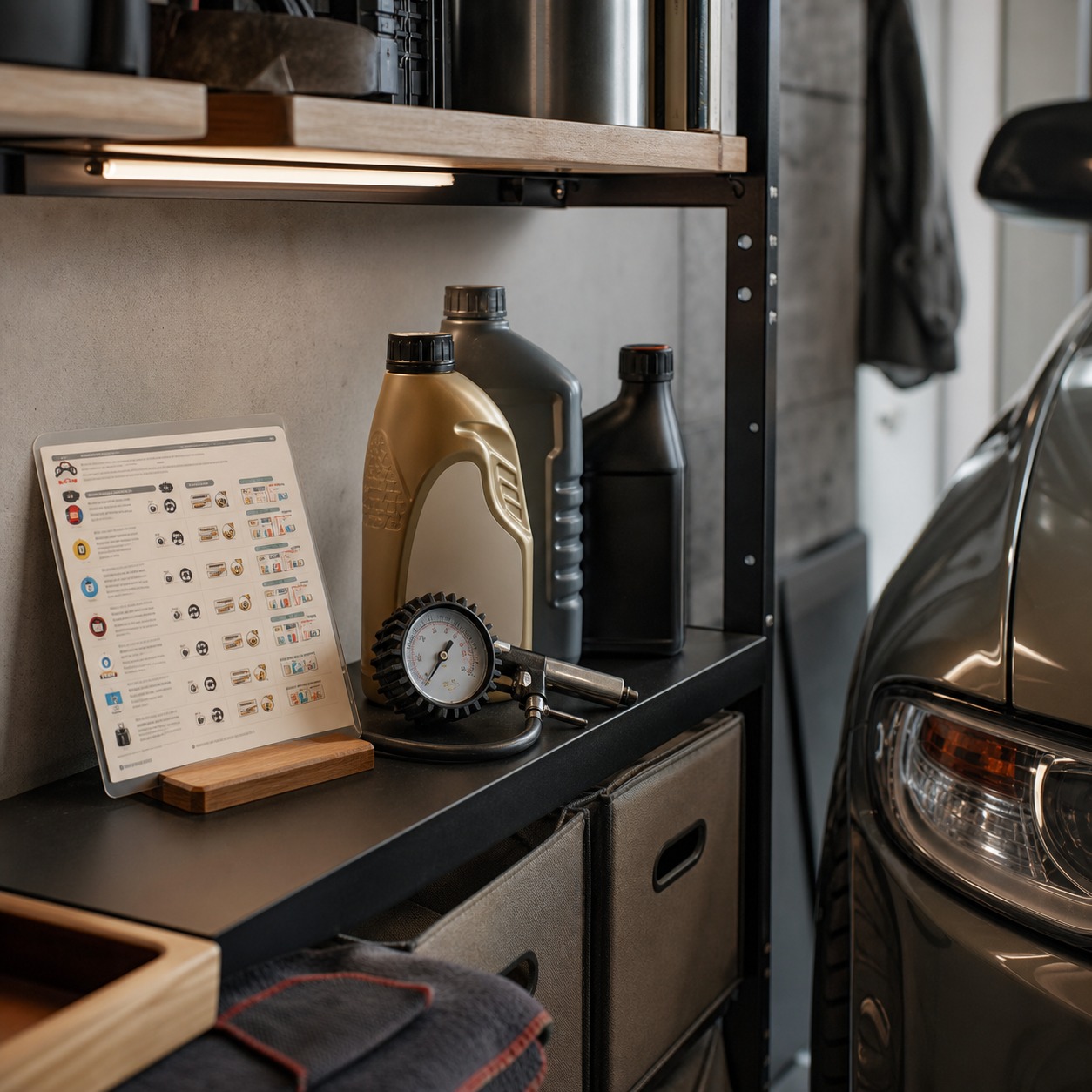
A dedicated inspection zone for tires, brakes, fluids, and belts
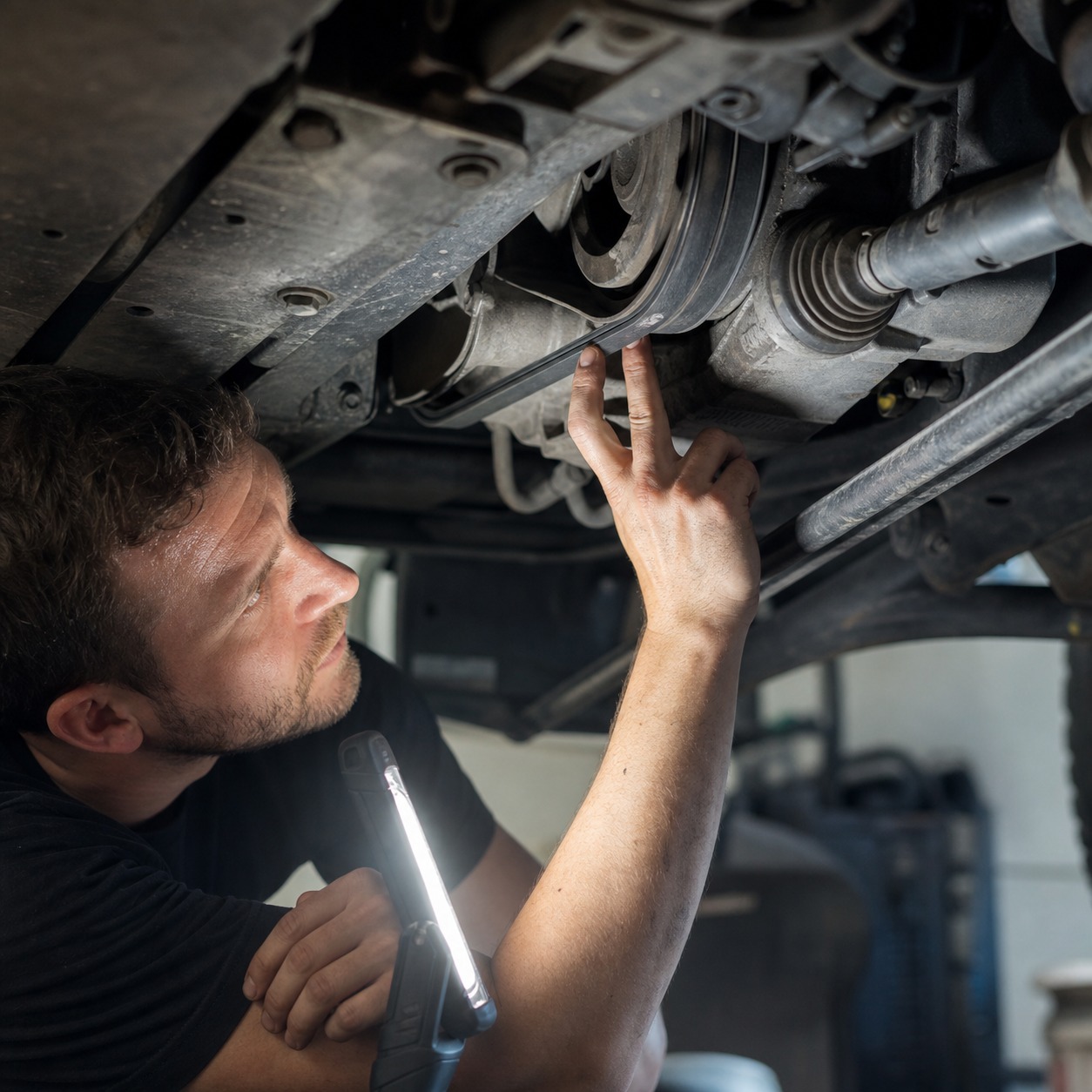
Set aside one clearly defined area, even just a few square feet, specifically for the recurring checks: tire pressure, fluid levels, belt tension, brake pad wear. A dedicated zone with the right tools already staged there removes the excuse to skip a check because gear was scattered across three different shelves. This is also where you’re most likely to catch early warning signs before they become expensive repairs. A steering wheel shake during acceleration, for instance, often traces back to wear in the driveshaft assembly, and three of the most common faulty components behind that kind of vibration are worth knowing before you’re diagnosing it on the side of a highway instead of in a space built for exactly this kind of check.
I keep a small laminated reference card at this exact spot, listing what “normal” looks like for tire tread depth and fluid color, since it’s genuinely hard to remember those specifics under pressure and easy to check calmly when the reference is right where you’re already standing. The zone doesn’t need to be elaborate. It needs to remove every small barrier between noticing something feels off and actually confirming what it is.
If parking is no longer the priority, compare these four garage conversion layouts before committing to a permanent workshop. The studio, gym, workshop, and office options require different floor finishes, ventilation, storage, and service positions.
Choose garage flooring that handles seasonal wear
Salt, water, oil, and tire-mark resistance
Garage flooring takes more abuse than almost any other surface in a home, and standard concrete shows every drip, salt stain, and tire mark within a season. Epoxy or polyaspartic coatings resist oil staining and clean up fast, while interlocking tiles handle heavy point loads and hide minor damage better than a single poured surface.
Whichever you choose, prioritize a finish that actually survives winter road salt tracked in for months at a time, since that’s the wear pattern most floors fail against first.
Bare concrete looks fine in a showroom photo and looks completely different after one real winter. Salt etches into unsealed concrete in a way that’s genuinely difficult to reverse once it’s set in, and the difference between a sealed and unsealed floor after three or four winters is dramatic enough that it’s worth budgeting for the coating even if it means waiting on something else in the initial build-out.
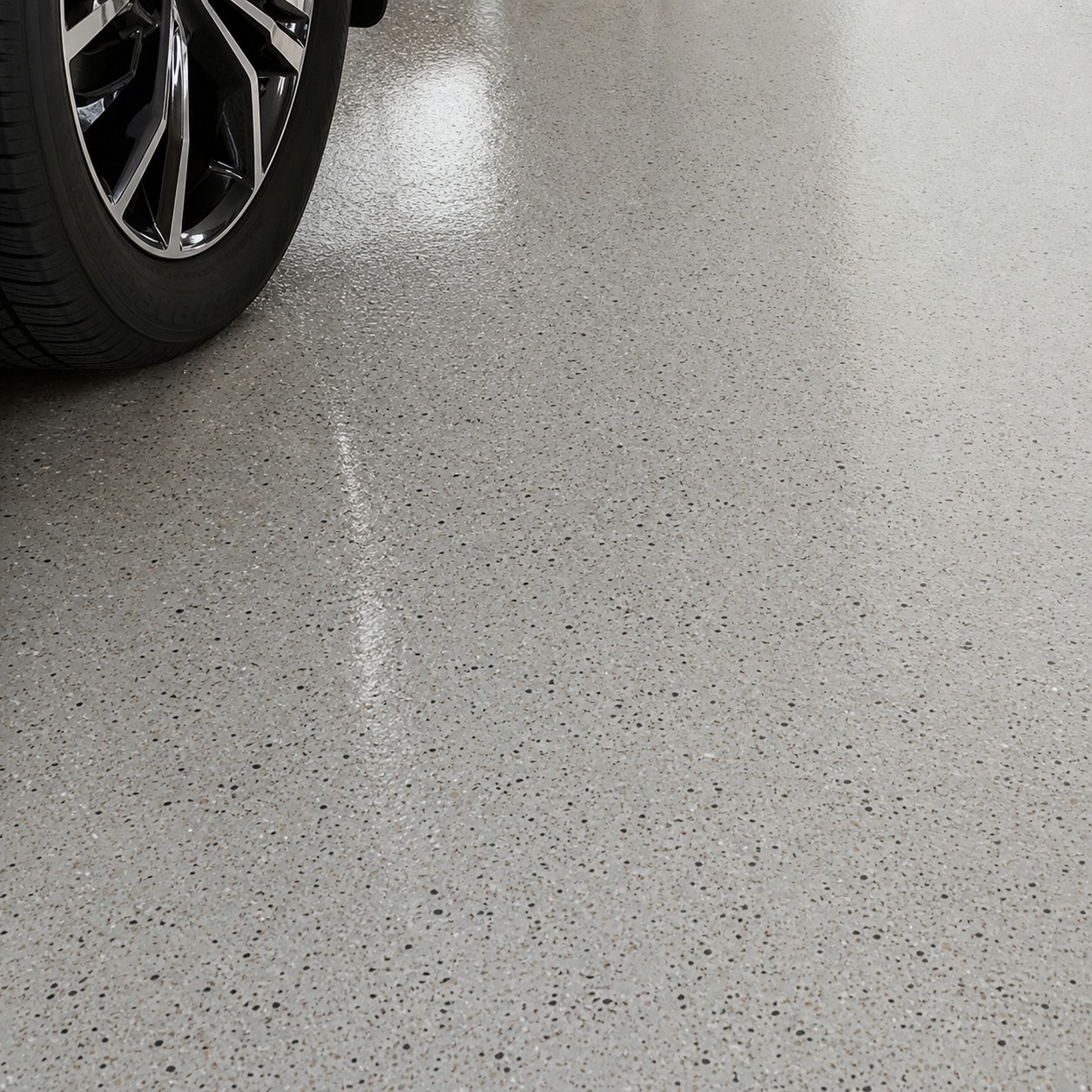
Light-reflective finishes for easier inspections
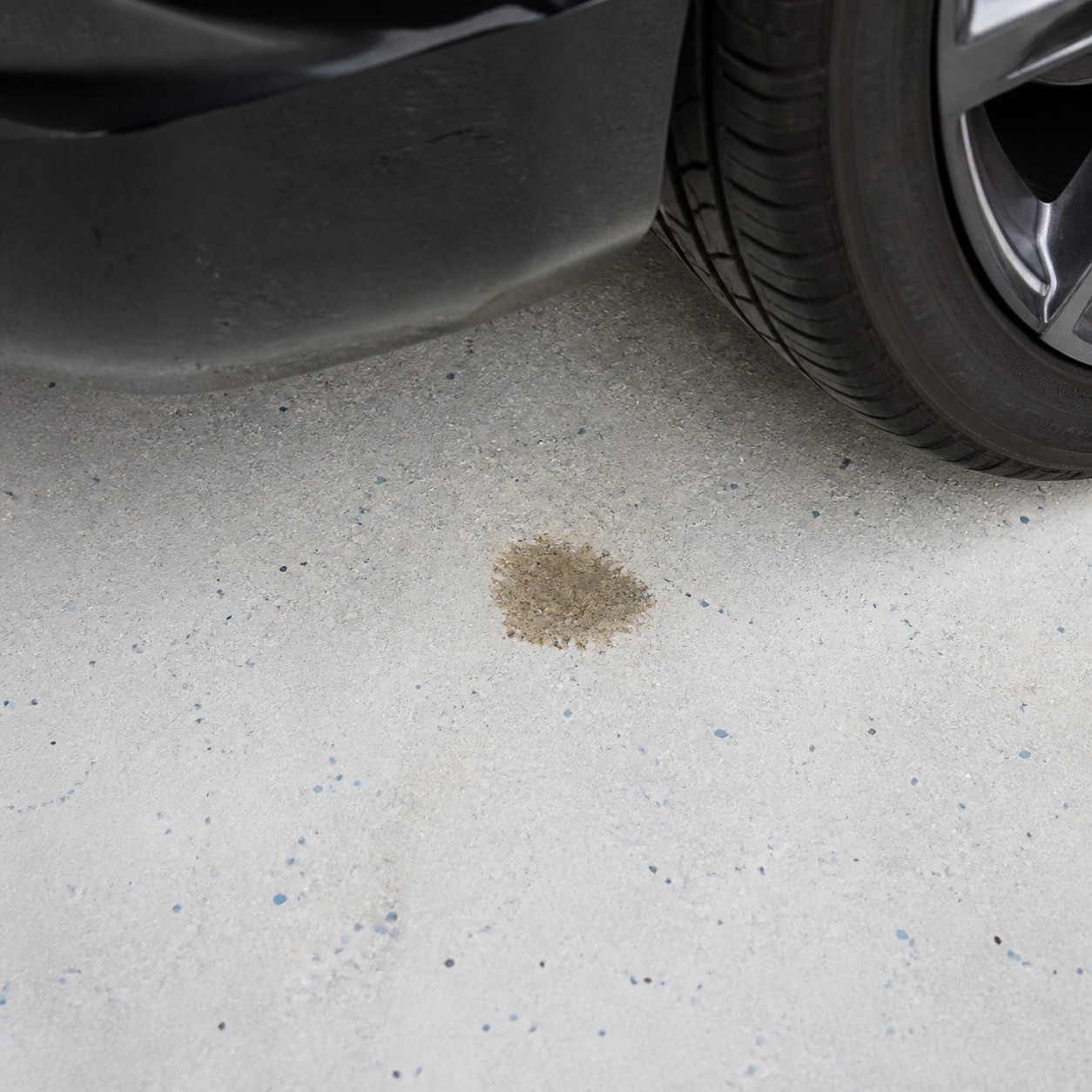
A lighter, more reflective floor finish does real functional work beyond aesthetics: it makes fluid leaks and debris dramatically easier to spot at a glance, which matters more than it sounds like it should. I’ve caught a slow drip under a parked car specifically because a light-colored floor made the stain obvious within days, something a dark, matte concrete surface would have hidden for weeks.
The reflectivity also does double duty with your task lighting, bouncing light back up into the underside of the car and the wheel wells instead of absorbing it the way a dark floor does.
That secondary bounce light fills in shadows a single overhead fixture or handheld light misses entirely, which adds up to a meaningfully brighter working environment without adding a single additional fixture.
Build smart wall and tool storage around maintenance tasks
Pegboards, cabinets, hooks, and labeled seasonal bins
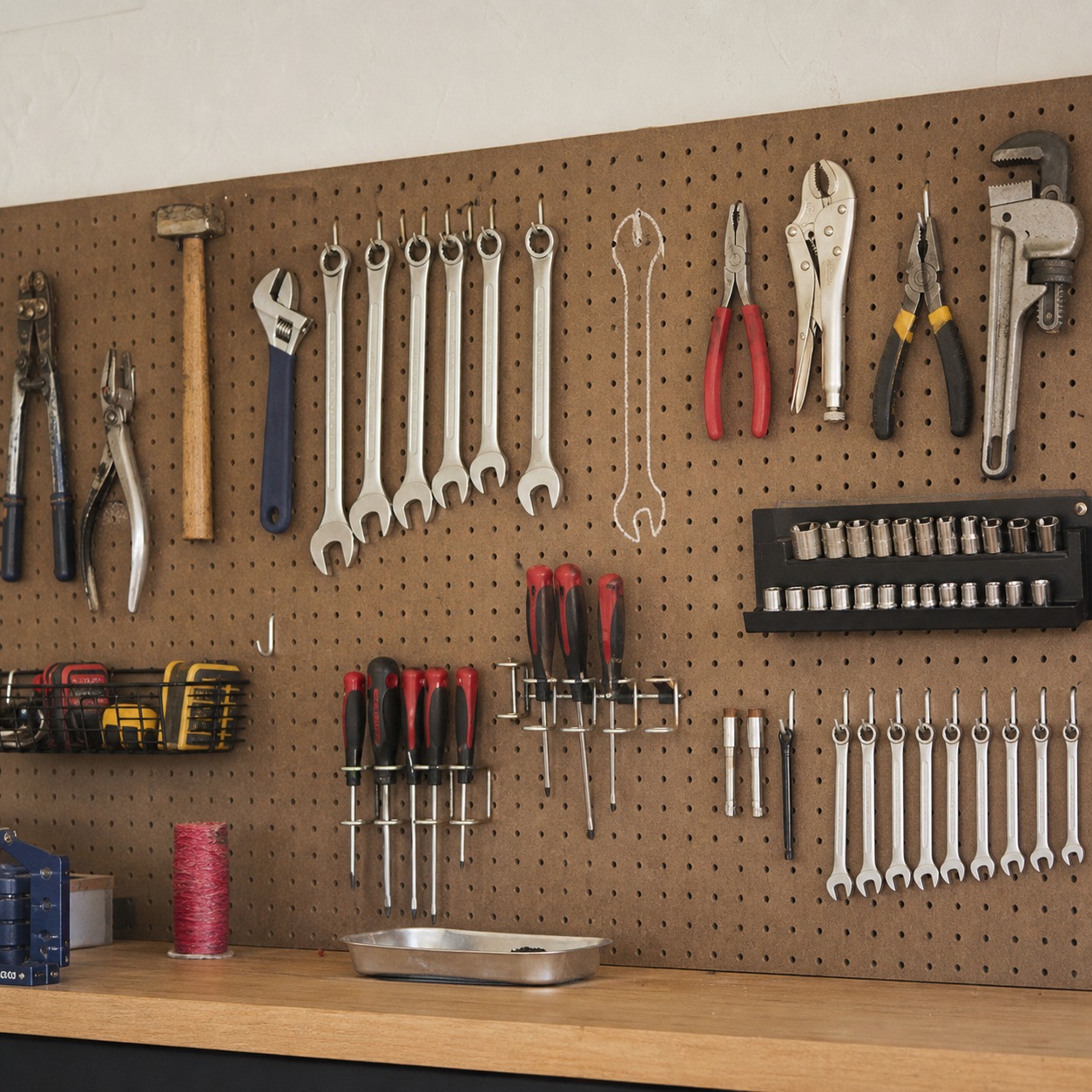
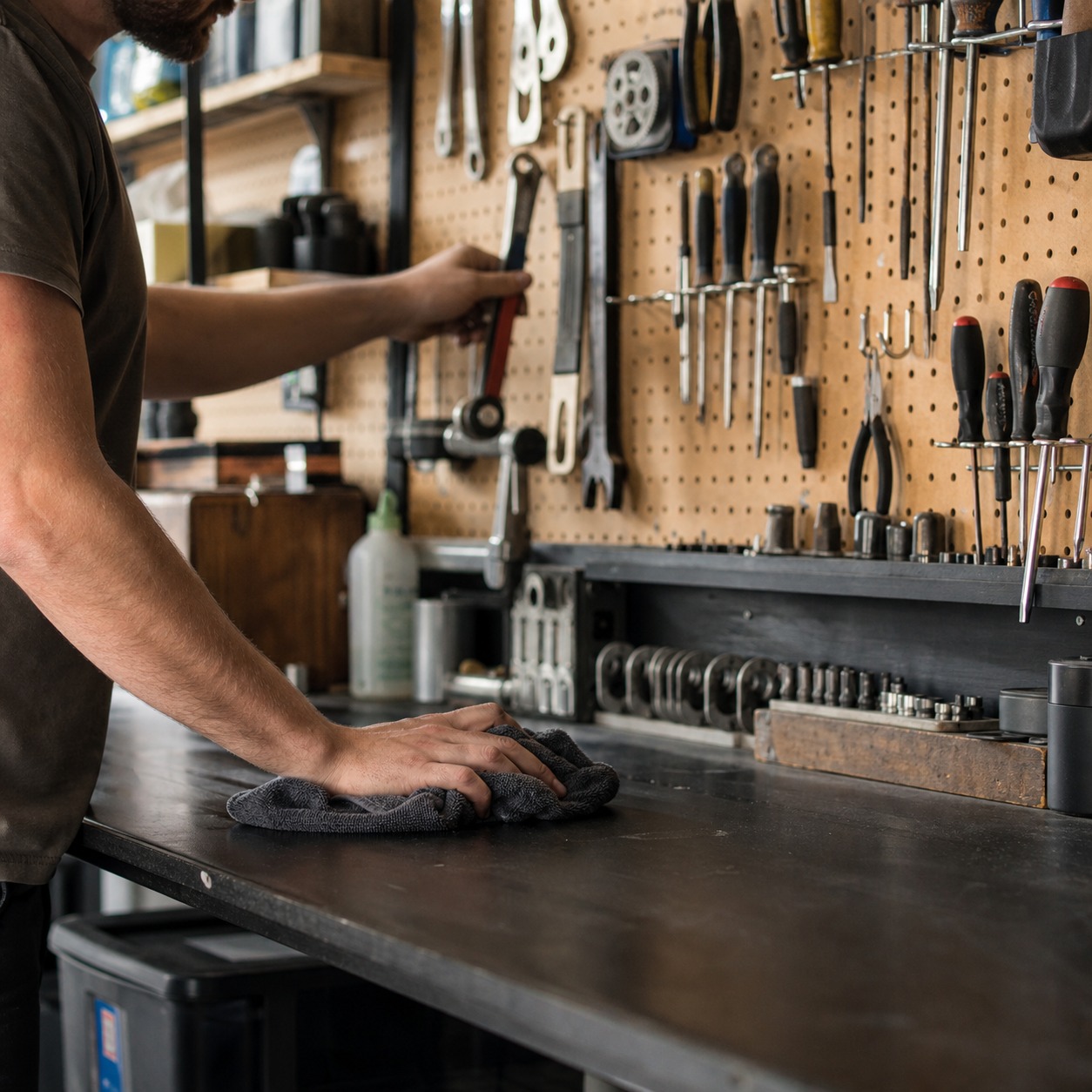
Wall-mounted storage keeps the floor clear for the walking space that actually matters, and a pegboard with outlined tool silhouettes tells you at a glance what’s missing before you’re mid-task and realize the socket you need is somewhere else entirely.
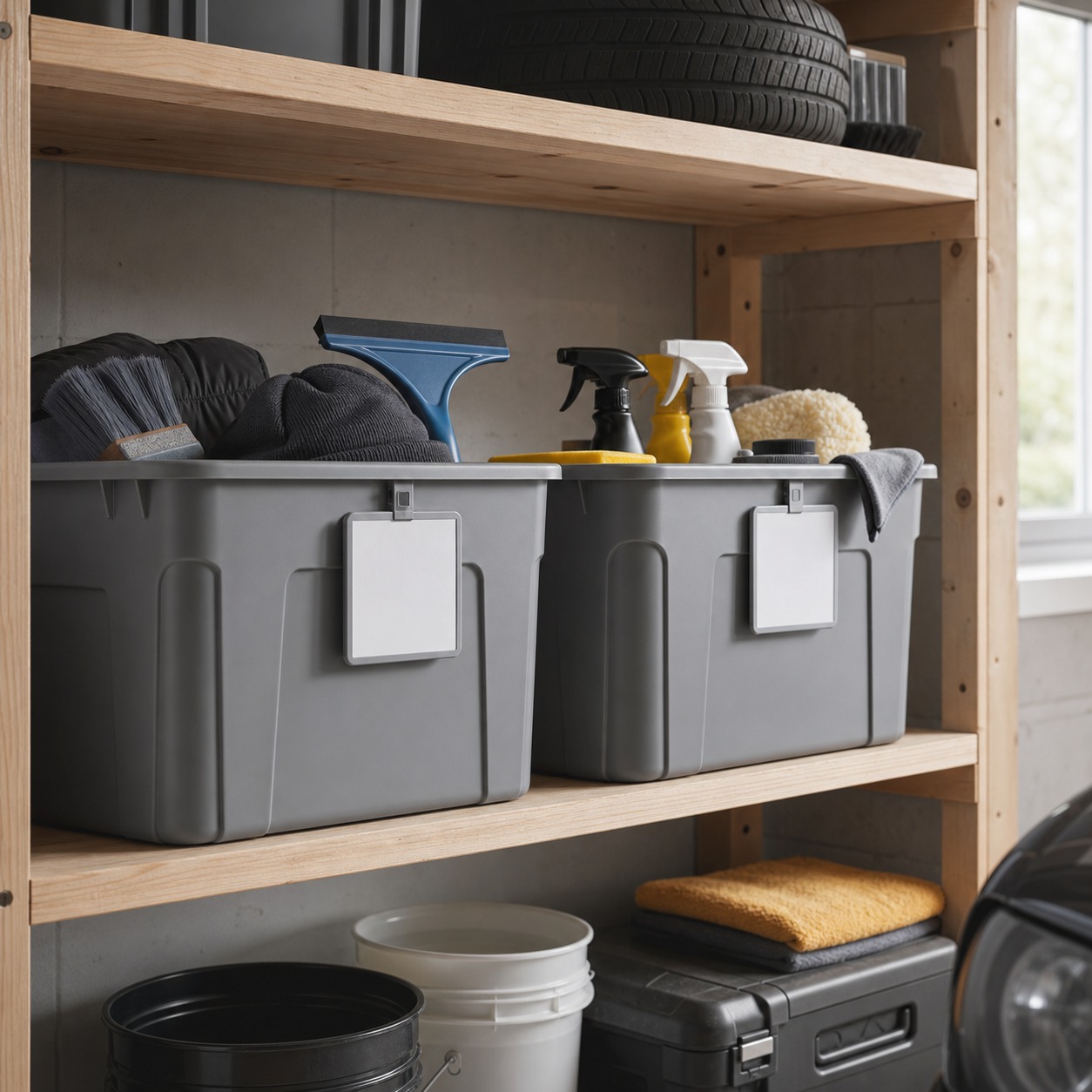
Labeled seasonal bins, winter gear in one, summer gear in another, prevent the annual scramble to find wiper blades or a battery charger buried behind holiday decorations.
The outlined-silhouette trick sounds almost too simple to matter, and it’s genuinely one of the highest-value details in this entire list. A missing tool announces itself instantly against an empty outline instead of hiding as one gap among dozens of unlabeled hooks, which means a borrowed wrench actually gets returned instead of quietly disappearing into whatever project it wandered off to.
Safe storage for fluids, chargers, cleaning products, and emergency kits
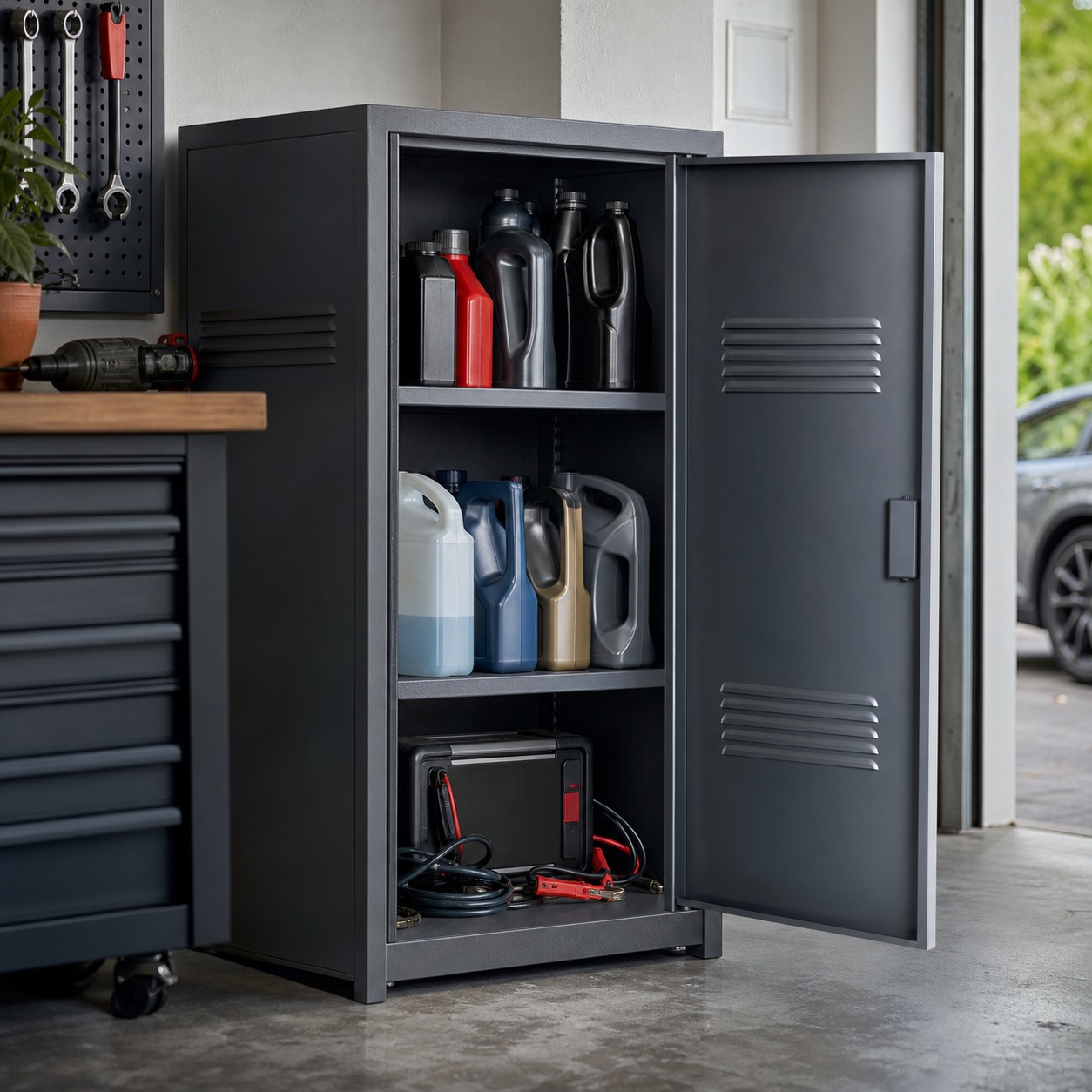
Fluids and chemicals need their own contained storage, ideally in a ventilated cabinet away from any ignition source, and battery chargers deserve a spot with genuine airflow rather than a cramped shelf. An emergency kit, jumper cables, a flashlight, basic first aid, belongs somewhere obvious and unobstructed, not buried behind everything else, since the moment you actually need it is rarely a convenient one.
I keep the emergency kit at eye level near the door specifically because the scenarios where you need it, a dead battery on a cold morning, a flat tire before work, come with their own time pressure already. Adding “where did I put the jumper cables” to that stress is an entirely avoidable problem solved by one consistent, obvious spot.
Design for weather changes before they damage the car
Winter zones for snow, salt, and wet mats
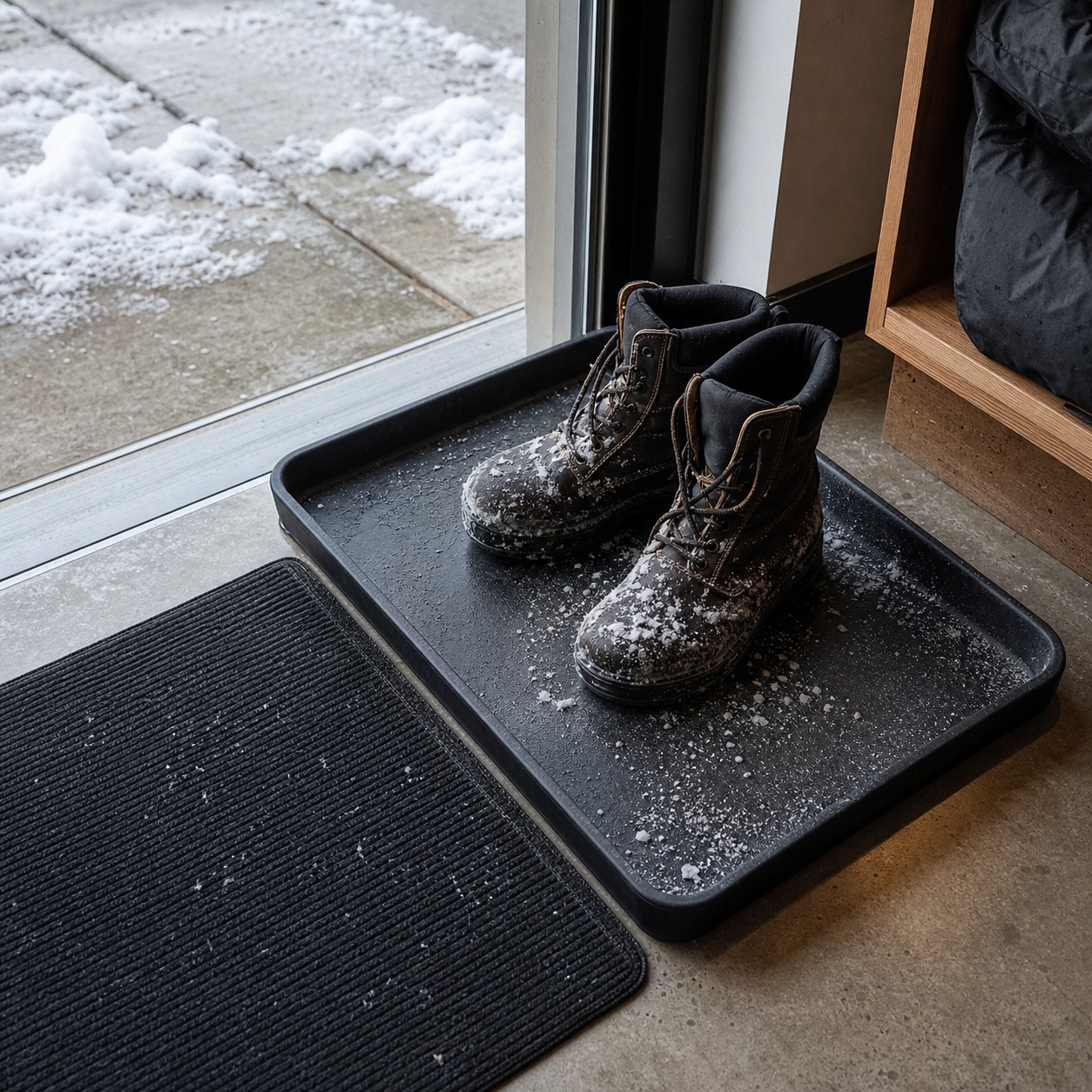
A designated spot for snow-covered boots, wet mats, and salt-crusted gear keeps that mess contained to one corner instead of tracked across the whole space. A boot tray and a washable mat at the entry point handle most of the seasonal mess before it spreads, and a low-sided catch basin near where the car actually parks keeps melting snow and salt runoff from soaking into flooring that isn’t built for standing moisture.
I set this zone up specifically near the door closest to the house, so wet gear never has to travel further than it absolutely needs to before landing somewhere contained. The few feet of difference in placement between “right by the entry” and “somewhere across the garage” ends up mattering enormously for whether the routine actually sticks through an entire winter.
Summer ventilation, battery charging, and tire-pressure workflow
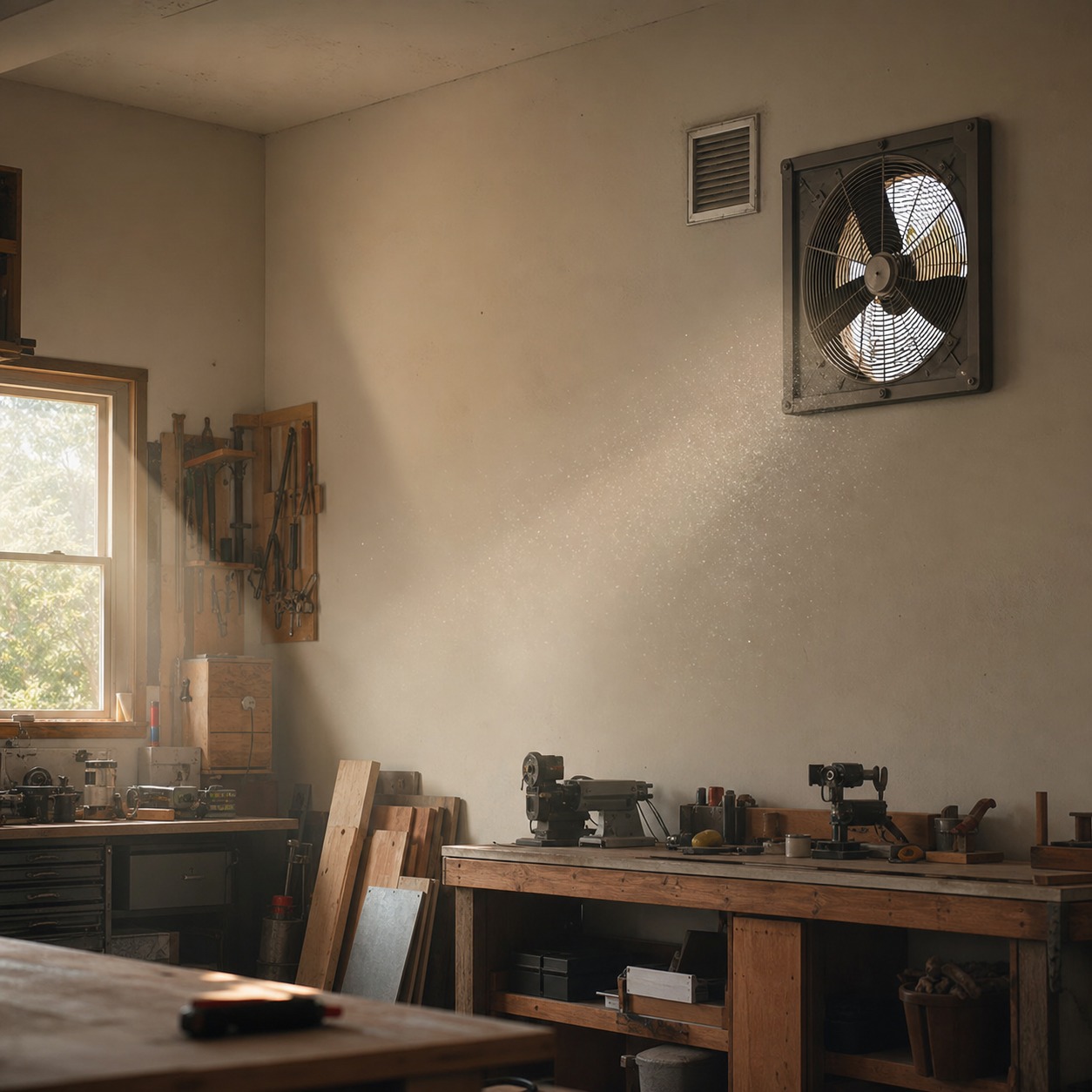
Heat brings its own maintenance rhythm: tire pressure needs more frequent checking as temperatures swing, batteries degrade faster in sustained heat, and a poorly ventilated garage can turn into a genuinely uncomfortable place to work by midsummer. A simple exhaust fan or a couple of strategically placed vents keeps the space usable through the hottest months, which matters because a workshop nobody wants to spend time in is a workshop where maintenance quietly stops happening.
I noticed this directly with the F-Pace’s tire pressure warnings triggering almost every time a real heat wave hit, purely because the pressure I’d set on a cooler morning no longer matched what the tires needed once the pavement temperature climbed. A quick check during a heat spike catches this before the warning light does, and a garage that’s actually comfortable to work in during summer makes that quick check something you’ll actually do.
Add lighting, ventilation, and safety details
Task lighting for engine bay and tire checks
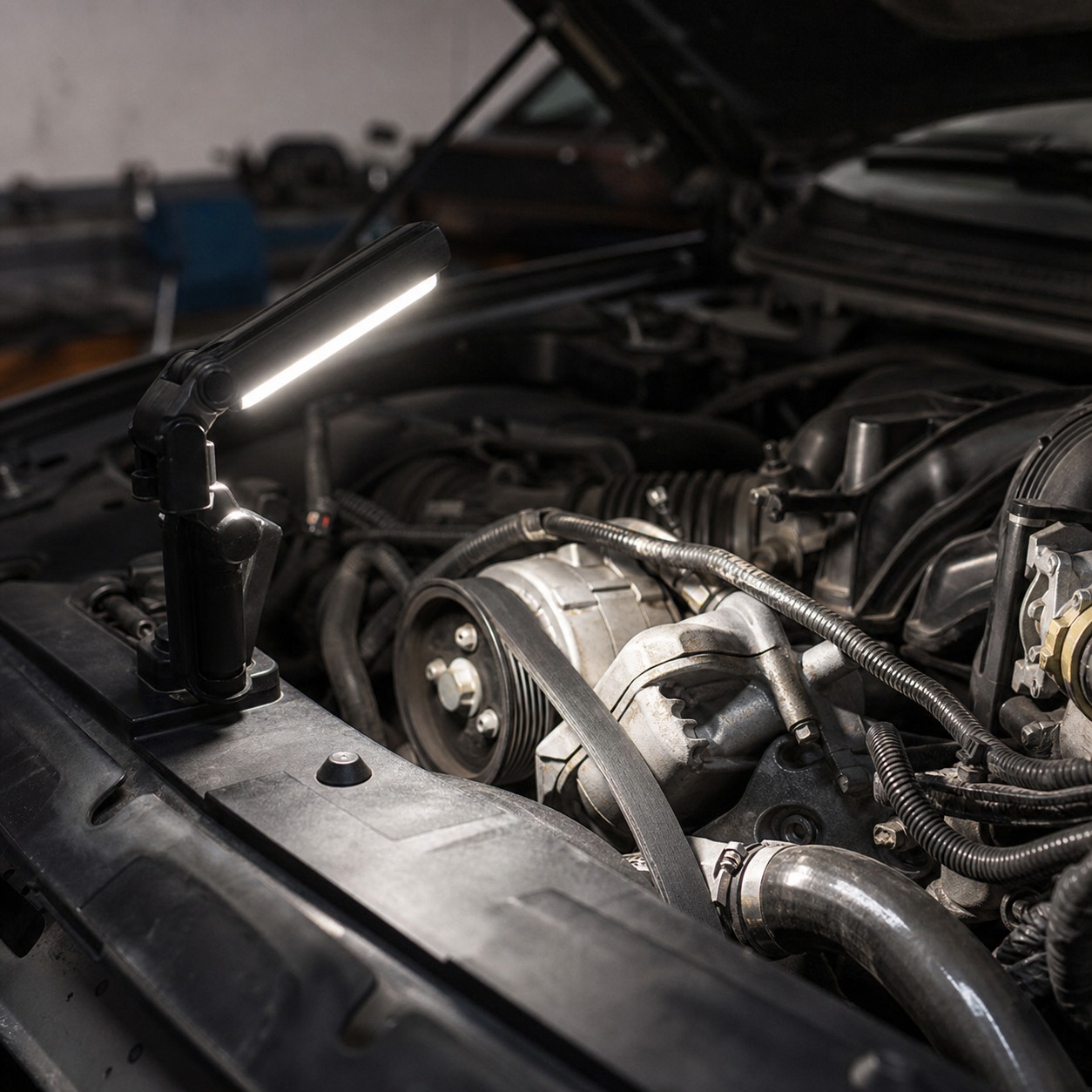
Overhead ambient lighting rarely reaches the specific spots that actually need it: under the hood, low along a tire, inside a wheel well. A bright, adjustable task light, whether wall-mounted or handheld, makes the difference between spotting a hairline crack in a belt and missing it entirely under dim, general lighting. I keep a rechargeable work light on a hook right at the inspection zone specifically so there’s never a reason to skip a check because the lighting wasn’t good enough to see clearly.
Color temperature matters more than most people think here too. A warm, yellow-toned bulb flatters a living room and hides exactly the kind of subtle discoloration or wear you’re trying to catch on a belt or a fluid reservoir. A cooler, more neutral light renders those details far more honestly, which is worth the slightly less cozy feel in a space meant for inspection rather than relaxation.
Fire-safe, slip-safe, and clutter-free design choices
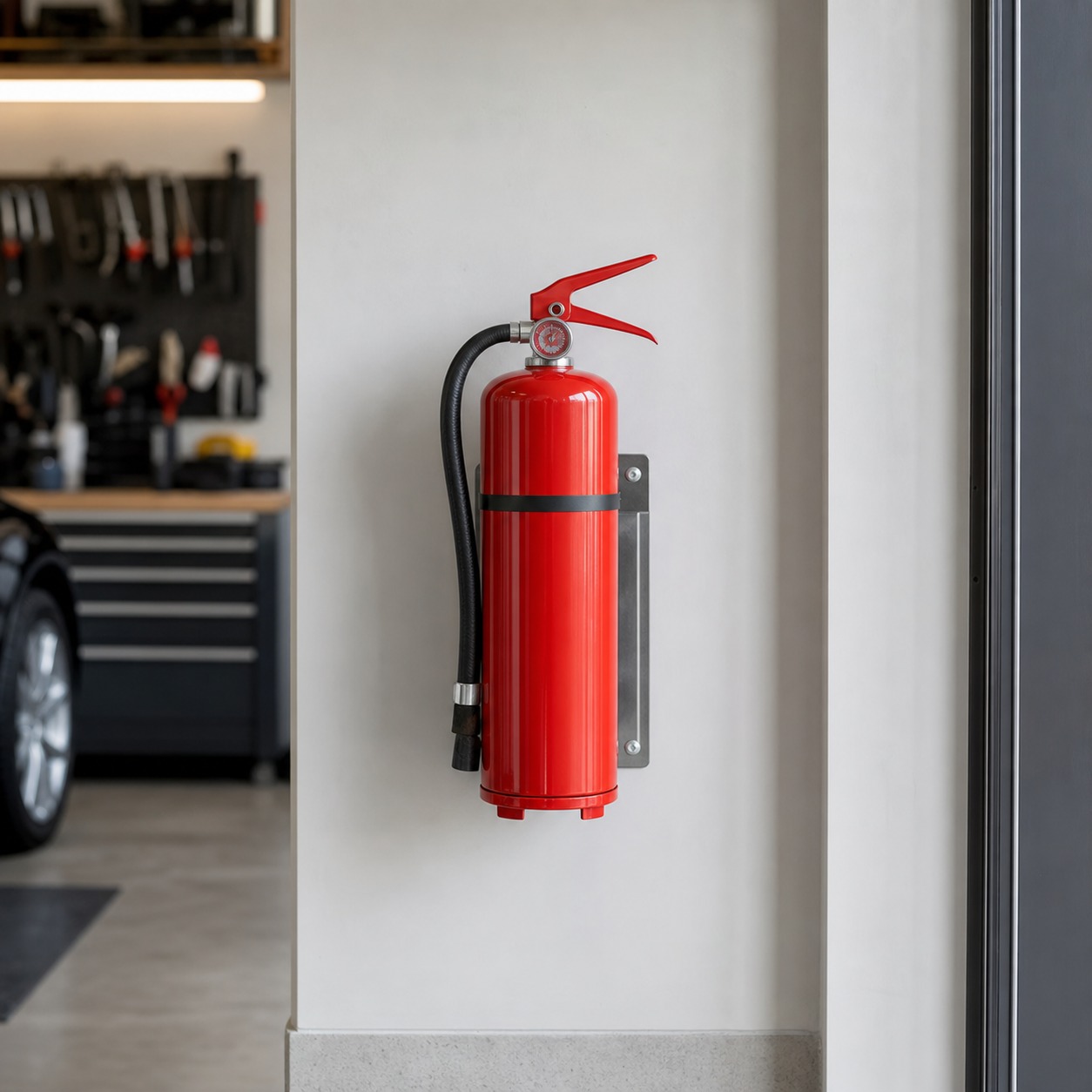
A garage workshop handles flammable fluids and electrical tools in close proximity, which makes a few basics non-negotiable: a fire extinguisher rated for both electrical and chemical fires, mounted somewhere visible and reachable, slip-resistant flooring near any area that regularly sees spilled fluid, and enough clearance that nothing forces an awkward reach around clutter. None of this is about protecting the car alone.
It’s the same logic that applies anywhere you’re responsible for both a valuable asset and your own physical safety while working around it, and it’s worth remembering that protecting yourself extends past the garage door too. If an accident ever happens on the road despite careful maintenance, three types of damages commonly come into play beyond the repair bill itself, which is a reminder that the workshop habits here are one part of a bigger picture.
I keep the extinguisher mounted at a height anyone in the household can reach without stretching, tested against its expiration date the same way I’d rotate a first-aid kit. The equipment only helps if it’s actually accessible in the moment you need it, not stored somewhere that adds a step between noticing a problem and doing something about it.
Keep the space clean enough to make maintenance easy
Wash-down routines, floor mats, drainage, and exterior grime control
A quick wash-down routine, hosing off the floor, wiping down surfaces, resetting tool placement, keeps small messes from compounding into a space nobody wants to work in. Floor mats at high-traffic points and basic drainage planning near the parking spot handle most routine grime without demanding a full deep clean every time.
Ten minutes at the end of a maintenance session, done consistently, prevents the multi-hour deep clean that a genuinely neglected garage eventually demands. I treat this the same way I’d treat cleaning a work surface after any hands-on project: the habit only stays sustainable if it’s small and immediate, not saved up as a bigger task for some future weekend that keeps getting pushed back.
A simple monthly reset checklist
When a garage inspection finds a problem that needs professional equipment, use this Appleton car repair shop checklist to compare authorization, diagnostic proof, estimates, technician credentials, and warranty terms before leaving the keys.
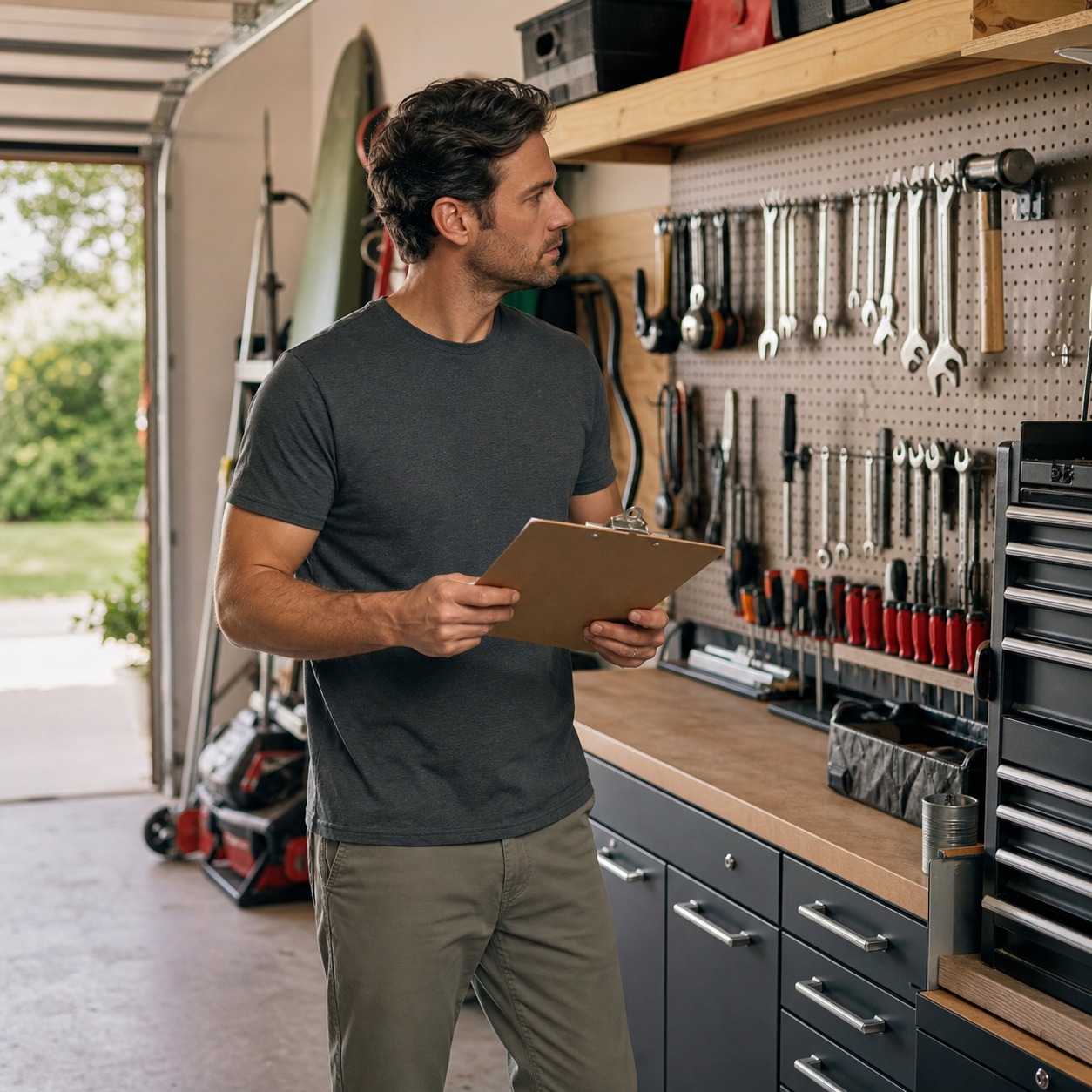
Once a month, walk the space with a short checklist: tools back in their outlined spots, fluids capped and stored correctly, seasonal bins swapped if the calendar’s shifted, floor free of anything that shouldn’t be there. This small recurring habit is what keeps a well-designed garage from slowly drifting back into clutter, the same way any organized system needs periodic maintenance of its own to stay useful.
I run this walkthrough on the same day I check tire pressure, specifically so it piggybacks on a habit that’s already established rather than becoming a separate task competing for its own slot on the calendar. Pairing a new habit with an existing one is a far more reliable way to make it stick than hoping willpower alone carries it through an entire year.
FAQ
What is the best garage layout for basic car maintenance?
A layout with clear walking space on all four sides of the vehicle and one dedicated zone for recurring checks, tires, fluids, brakes, belts, works better than a garage optimized purely for storage volume. Prioritize access over maximum shelving if the two compete for space, since a garage packed with storage but hard to move around in defeats its own purpose.
What flooring is best for a car-care garage workshop?
Epoxy or polyaspartic coatings resist oil and salt staining while cleaning up quickly, and a lighter finish makes leaks and debris easier to spot early. Interlocking tiles are a solid alternative where heavy point loads or easy damage-hiding matter more than a single unbroken surface, particularly in a garage that also sees heavy foot traffic or equipment beyond just the car.
How do I organize garage tools for seasonal maintenance?
Use wall-mounted pegboards with outlined tool silhouettes so missing items are obvious at a glance, and keep seasonal gear in clearly labeled bins swapped twice a year. This keeps the floor clear and removes the friction that causes maintenance tasks to get skipped, since a tool that’s visibly missing gets returned far more reliably than one buried in an unlabeled drawer.
Can a small garage still work as a car maintenance space?
Yes, as long as the layout prioritizes a genuine walking path and one small dedicated inspection zone over maximizing storage. A compact, well-organized space with wall-mounted storage often functions better for actual maintenance than a larger garage cluttered with floor-level boxes, since square footage matters less than how deliberately it’s actually used.
What should be stored near the car and what should stay away from it?
Keep frequently used tools, tire gauges, and basic fluids within easy reach of the inspection zone. Store flammable chemicals, chargers, and anything needing real ventilation in a separate, contained area away from the vehicle itself, ideally with its own airflow and away from any ignition source, so convenience for routine checks never compromises basic safety around the rest of the space.
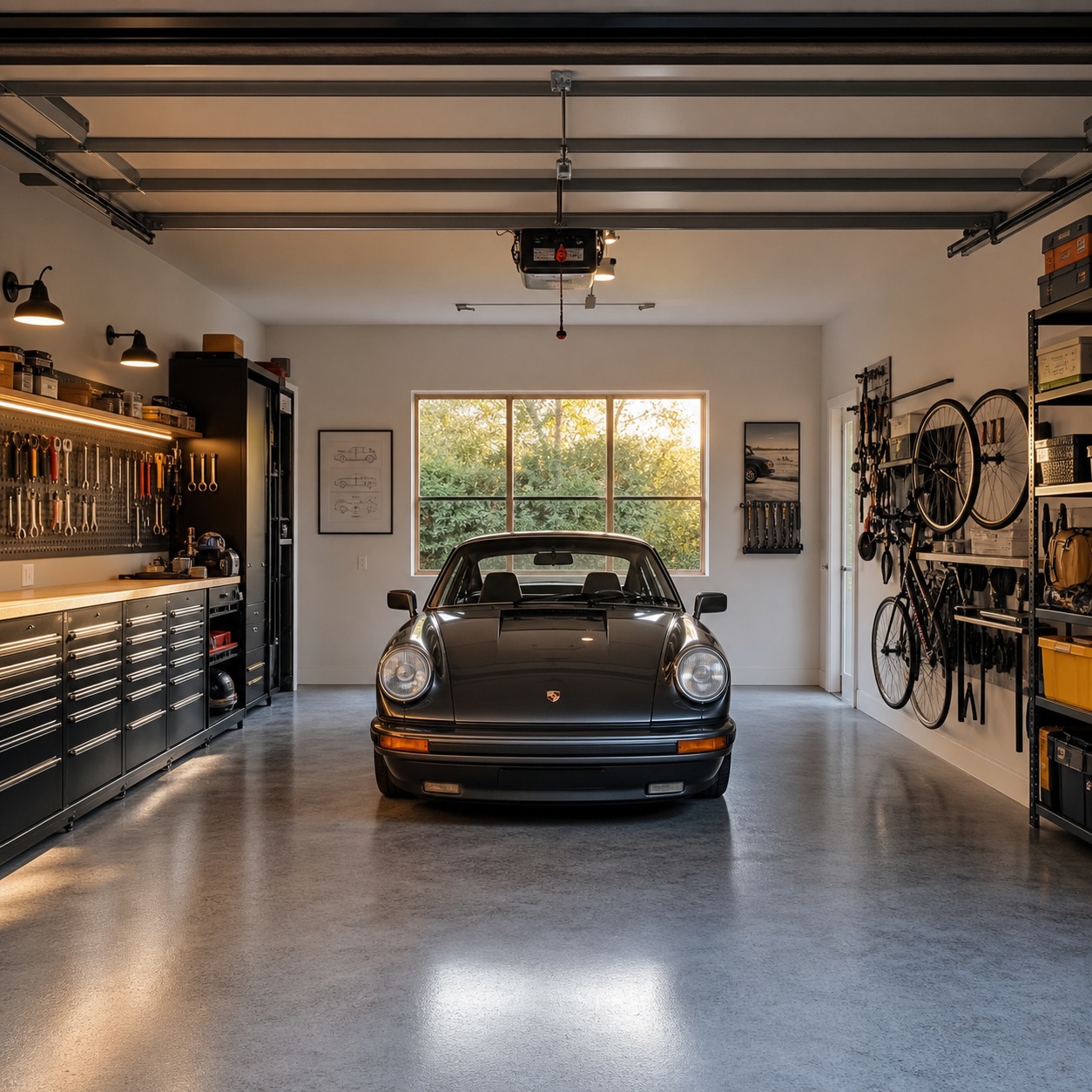
A garage that actually supports car care doesn’t need to be elaborate. It needs a clear path around the vehicle, a dedicated spot for the checks you’re supposed to do regularly, storage that keeps tools visible instead of buried, and lighting good enough to actually see what you’re looking at. Build that foundation once, and the maintenance habit that keeps a car running for years stops depending on willpower and starts depending on a space that makes the right habit the easy one.
Pair that with a driving record you’re not paying a premium for, since an insurance rate can increase by an average of 71% after a DUI, and the whole picture, the space and the habits around it, protects the car from every direction at once.
- 29shares
- Facebook0
- Pinterest29
- Twitter0
- Reddit0