A client of mine kept passing over a bare corner of her front yard for three seasons, unsure what to plant near her driveway that wouldn’t turn into a maintenance project. I finally suggested a Chinese pistache tree, mostly because I’d been watching one two streets over turn an entire block orange every October, and it made every house on that stretch look considered rather than just landscaped.
- Chinese pistache as a landscape design tree
- Fall color and seasonal curb appeal
- Where it works: front yard, driveway, patio edge, streetscape
- Pros and cons before planting
- Keith Davey Chinese pistache for cleaner, fruitless design
- Spacing, pruning, and canopy shape through a design lens
- Pairing with hardscape, understory plants, and exterior color palettes
- Conclusion
- Frequently asked questions
Most guides to Pistacia chinensis read like a nursery tag: mature height, soil type, watering schedule. Useful, yes, but they skip the design question: where does this tree earn its place in the composition, and what does it do for a facade, a driveway line, or a water-wise garden that other shade trees cannot?
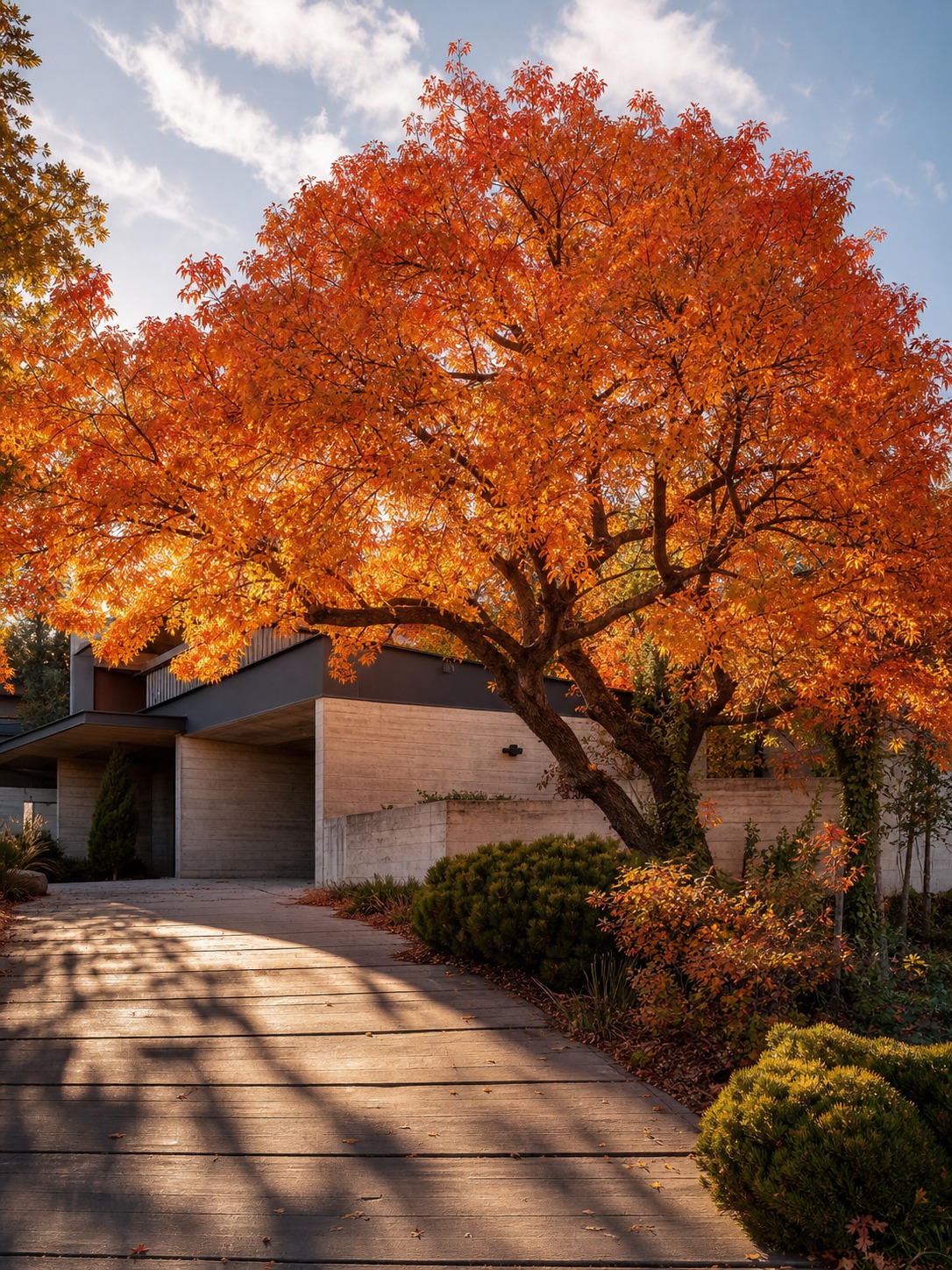
This guide treats the Chinese pistache as a design tree first. Growth habit and care still matter, but only in service of where it actually belongs on a property and what it does for curb appeal across the seasons that count.
Chinese pistache as a landscape design tree
Most trees get chosen for one job, shade, screening, or a single season of bloom. The Chinese pistache does something rarer: it reads as a genuine design element across three seasons without demanding constant intervention.
Why designers reach for it over ornamental pear or maple
Ornamental pear has a narrow bloom window and a reputation for weak branch structure in storms. Japanese maple wants filtered light and consistent moisture, a poor fit for a sun-baked driveway strip. Chinese pistache splits the difference, an all-American tree silhouette, oak or maple-adjacent in form, that tolerates the exact conditions, full sun, variable soil, minimal irrigation, that most street-facing plantings actually get.
I’ve specified it specifically for clients who wanted a statement tree without a statement maintenance contract. Once established, it asks for almost nothing, which matters more than people expect once the second or third landscaping bill arrives.
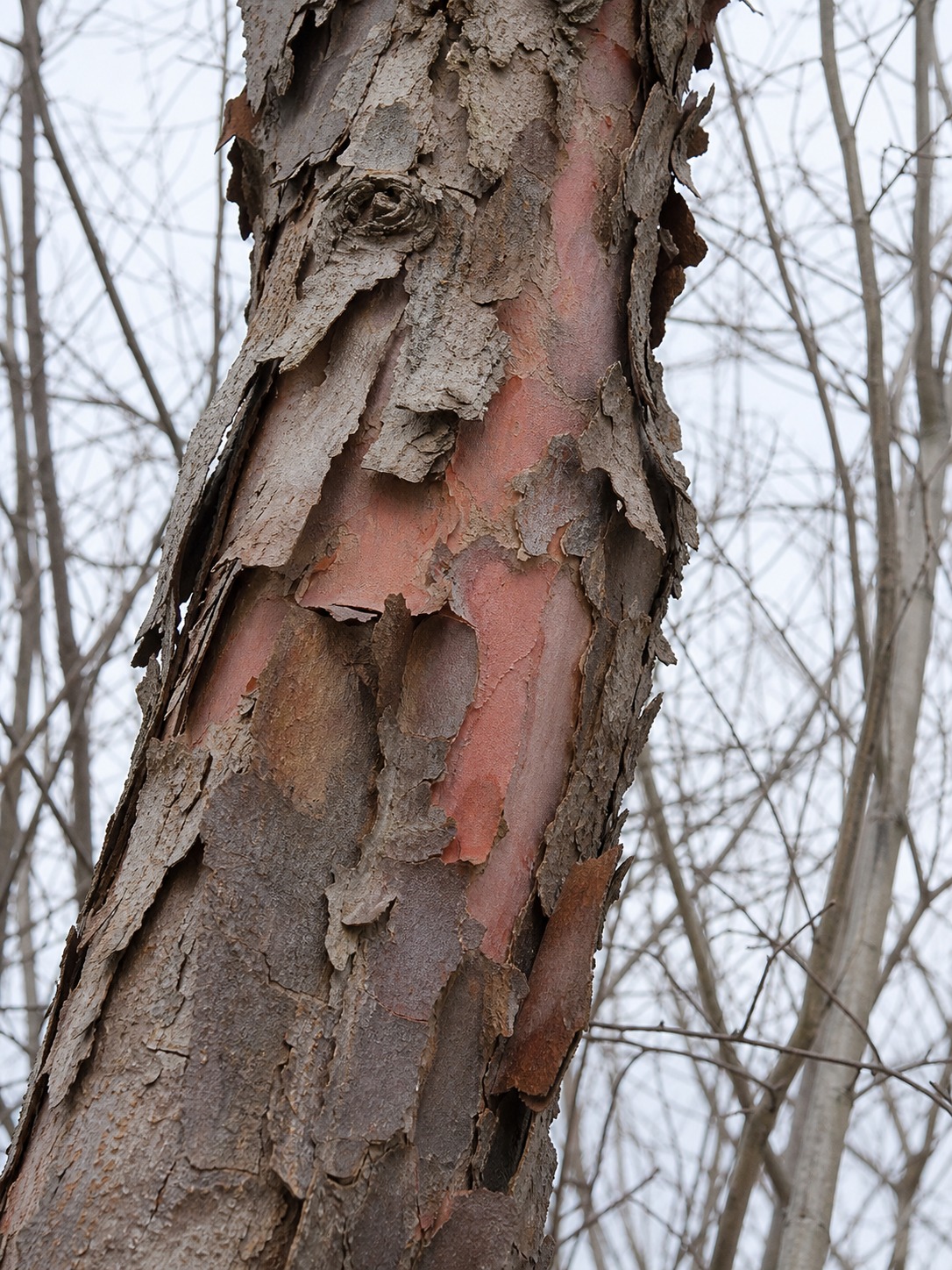
Quick tip: If you’re comparing tree options for a driveway or entry planting, weigh the tree’s off-season silhouette as heavily as its peak bloom or color moment. A Chinese pistache’s peeling salmon-pink bark keeps the tree visually interesting even in bare winter months, something few flowering ornamentals manage.
Fall color and seasonal curb appeal
Fall color is the reason most people plant this tree in the first place, but the design value depends on how deliberately you frame that moment.
The color sequence most people do not plan for
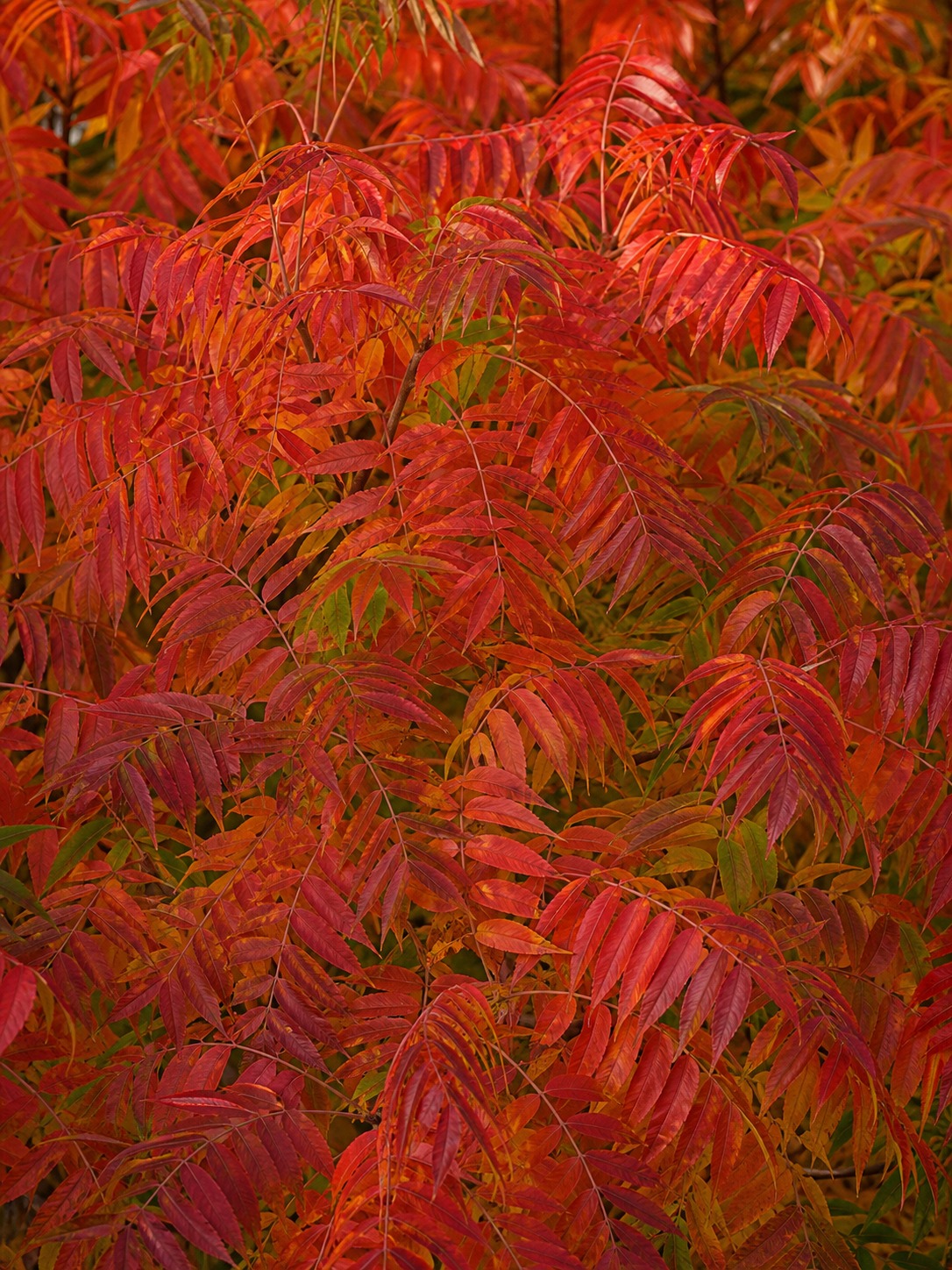
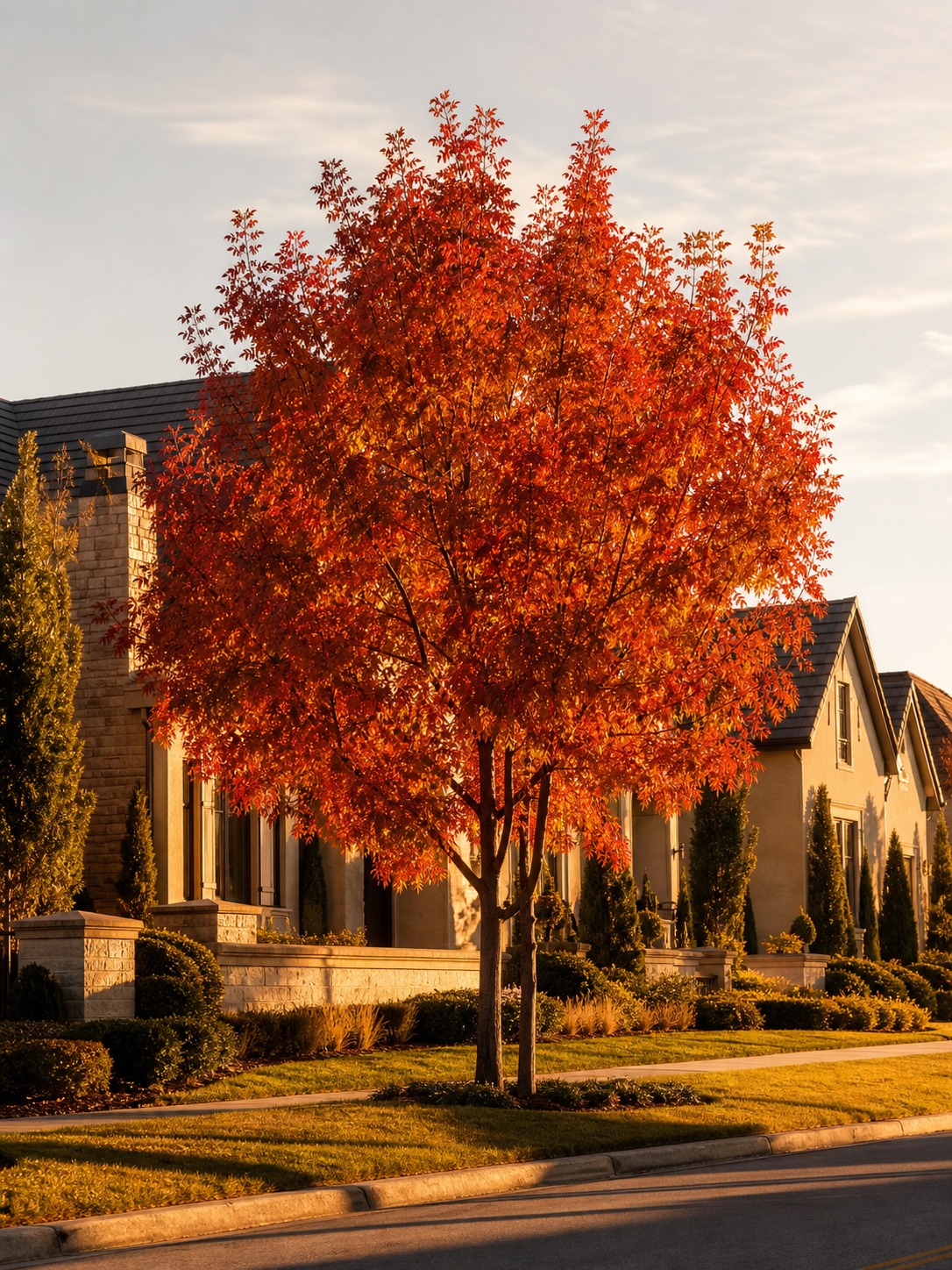
Chinese pistache doesn’t turn all at once. The canopy moves through yellow-gold, then orange, then a deep crimson over several weeks, sometimes with all three colors visible on the same tree simultaneously. That extended transition is actually more useful for curb appeal than a single dramatic color change, since it keeps the front of a property visually active through most of autumn rather than peaking for one photogenic week.
I have walked clients through timing a fall planting or hardscape reveal around this exact window, because a crimson canopy against a neutral facade reads as intentional in a way seasonal decor rarely can.
Positioning for maximum visual payoff
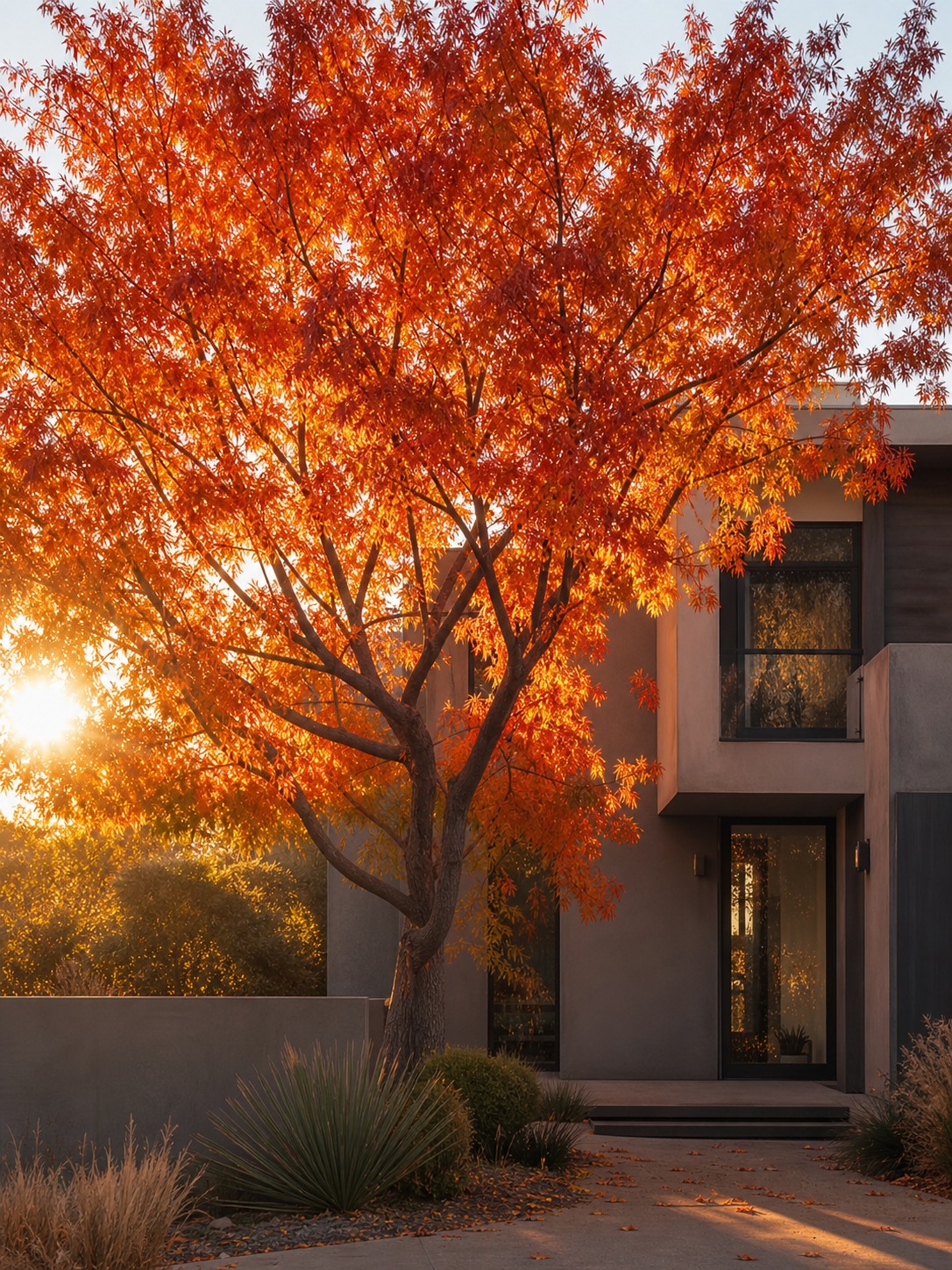
A pistache planted where afternoon light passes through the canopy, rather than only lighting it from the front, gets a backlit glow through the leaves that a front-lit tree never achieves. East or south-facing front yards tend to benefit most from this effect during the golden-hour window.
Where it works: front yard, driveway, patio edge, streetscape
Placement determines whether this tree elevates a property or just fills space.
Front yard anchor
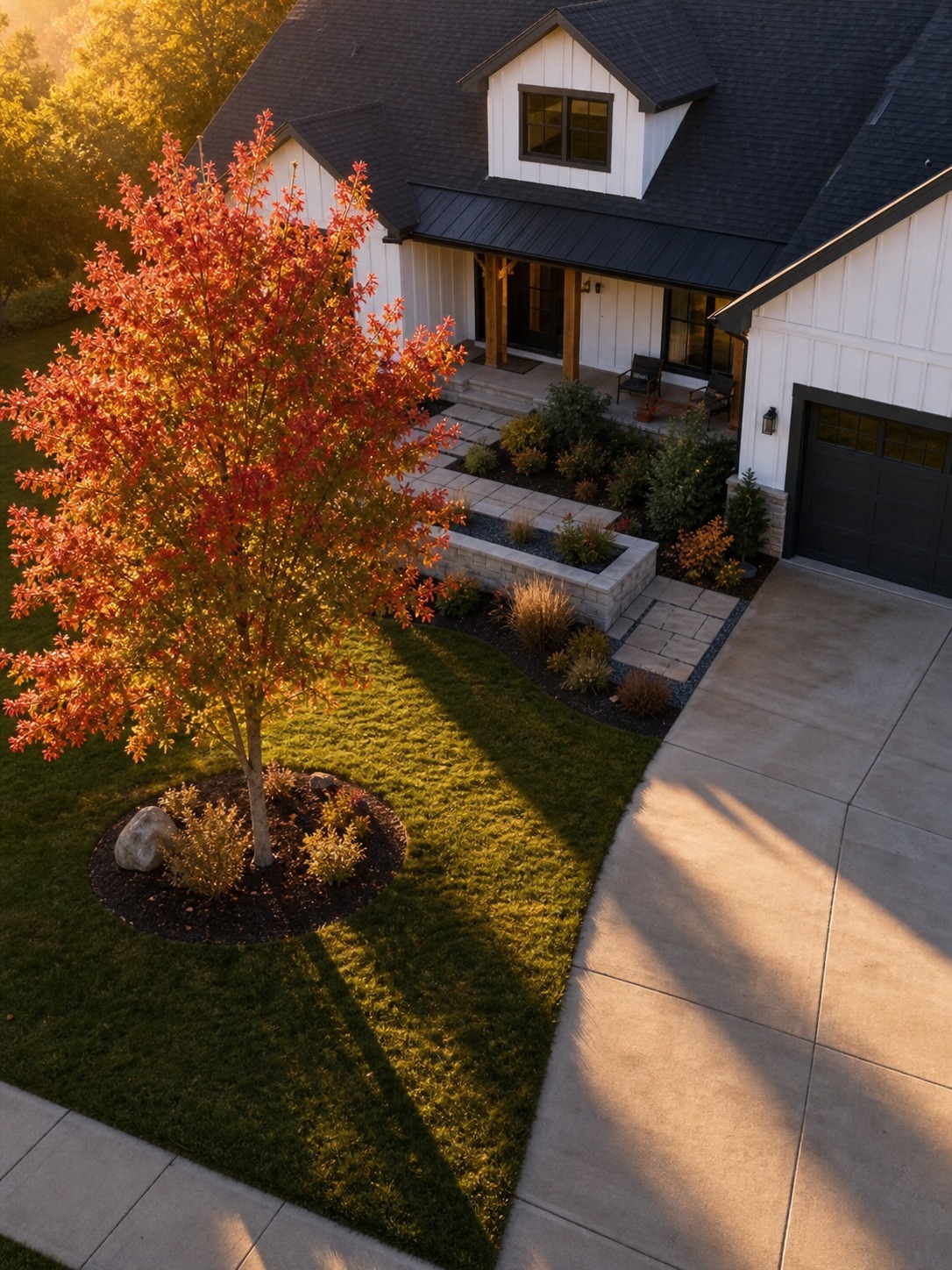
A single Chinese pistache positioned off-center in a front yard, roughly a third of the way across the facade rather than dead-center, tends to read as more intentional than a symmetrical placement. Its 25 to 35-foot mature canopy spread gives it real presence without overwhelming a typical suburban lot.
Driveway and entry composition
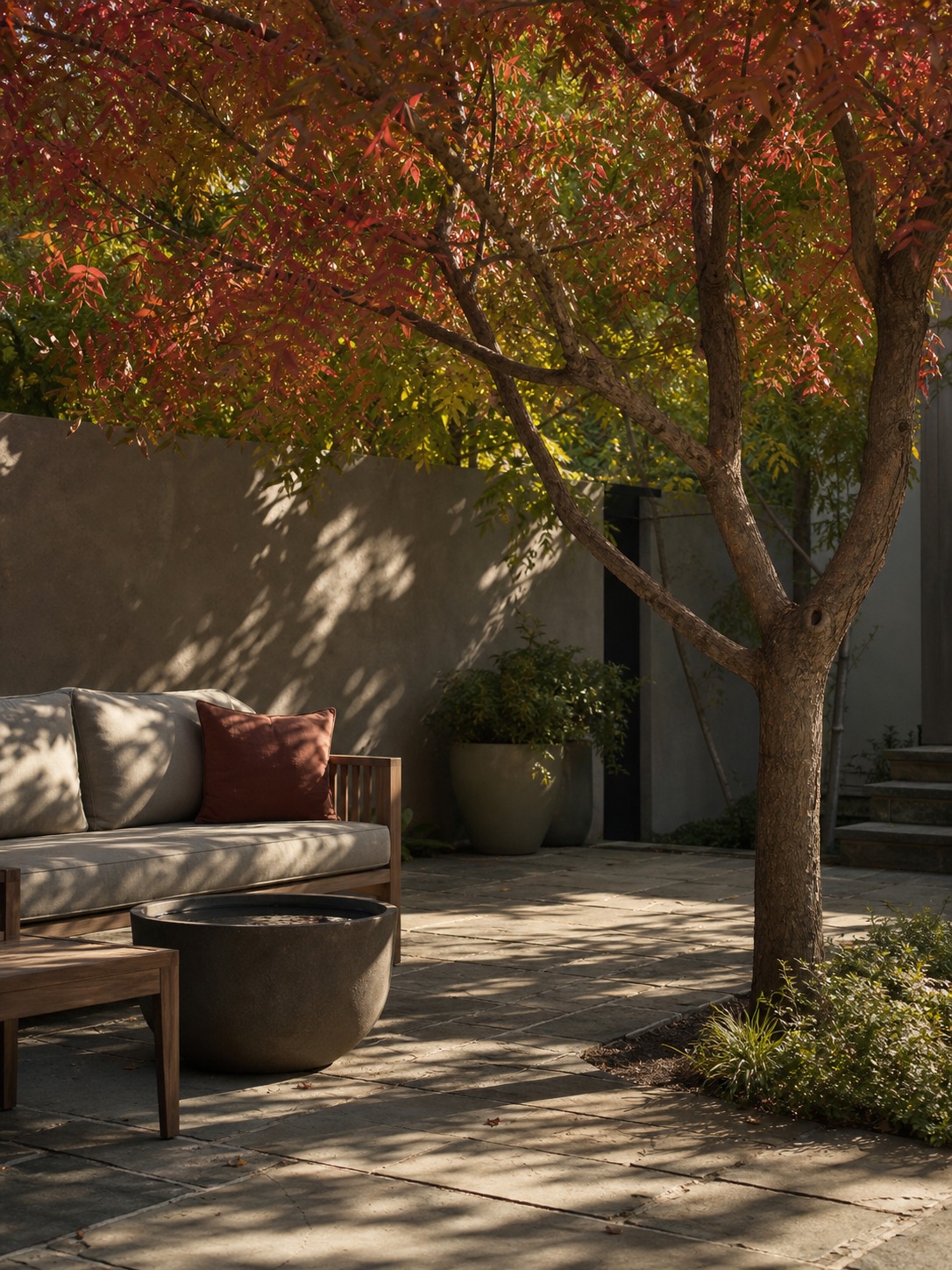
Planted along a driveway’s edge, the canopy eventually arches partway over the pavement, creating dappled shade that changes the entire approach to a home. I used one exactly this way for a client’s gravel driveway last year, and the tree’s fall color combined with the shifting light pattern on the stone became the defining feature of her entire front composition.
Patio edge and streetscape use
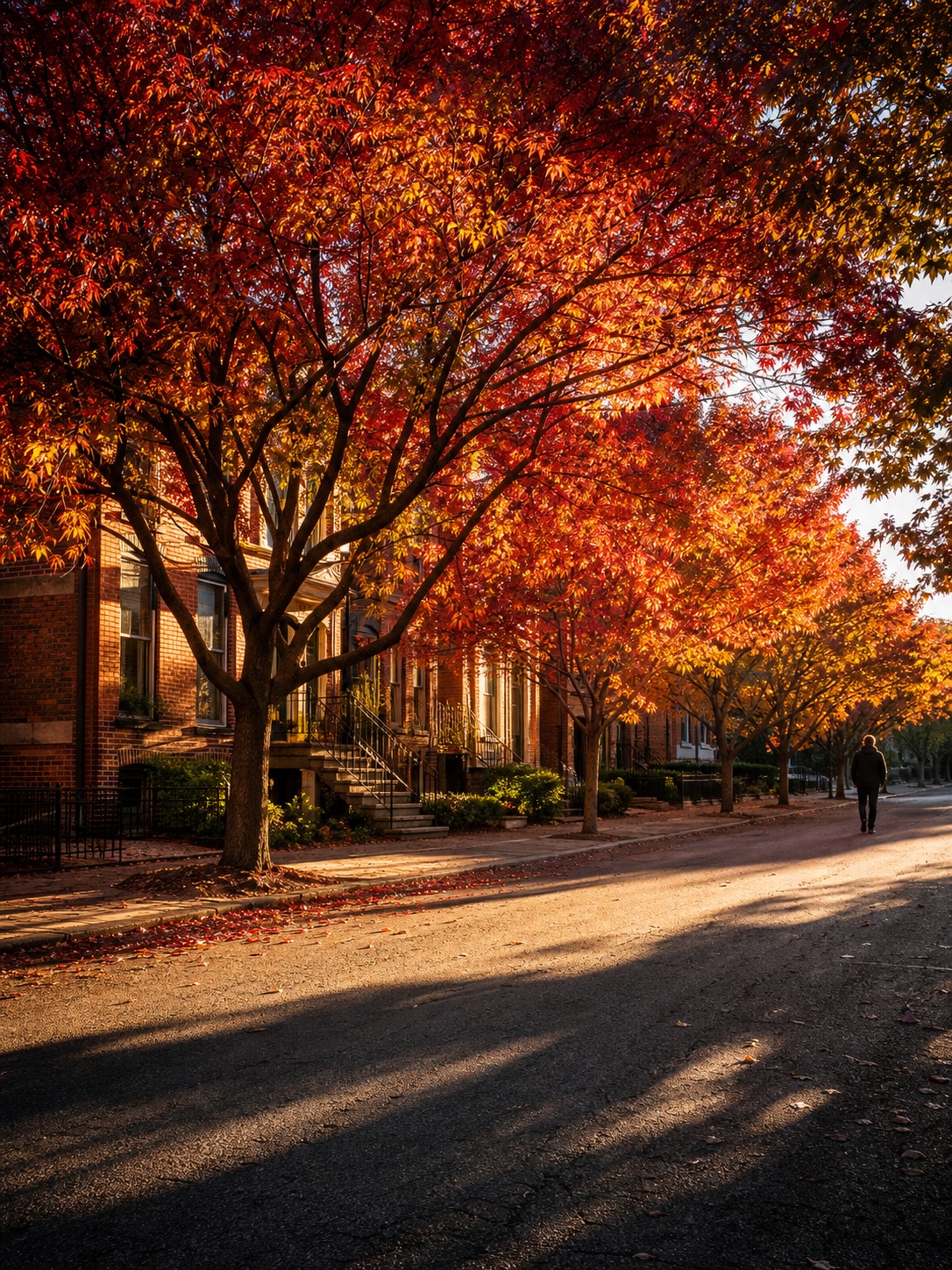
Near a patio, the tree’s moderate root spread and drought tolerance make it a lower-risk choice than species prone to aggressive surface roots. As a streetscape tree, its uniform growth habit and tolerance for reflected heat from pavement explain why municipalities increasingly specify it for public plantings.
Pros and cons before planting
Every design tree comes with trade-offs worth weighing before it goes in the ground.
The genuine advantages
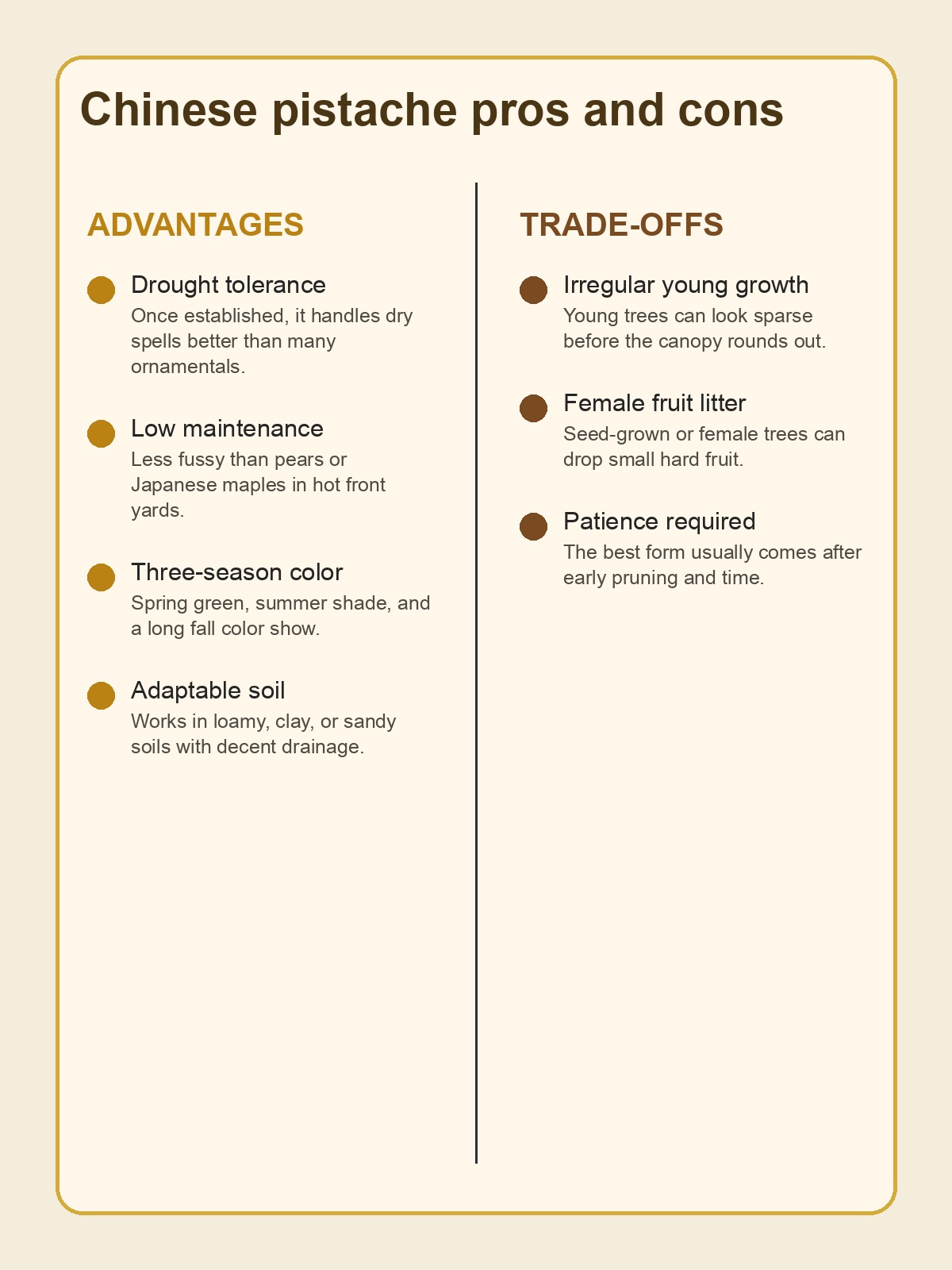
Drought tolerance once established, minimal disease pressure, adaptability across loamy, clay, and sandy soils, and a three-season visual arc that few shade trees match. It also demands fewer chemical inputs than many ornamental alternatives, a real point in its favor for anyone building a water-wise or lower-maintenance landscape.
The trade-offs worth knowing
Young trees often grow irregularly for their first few years, awkward, sparse, occasionally lopsided, before settling into the classic rounded form. Female trees produce small, hard fruit clusters in late summer that create litter and attract birds, an issue worth addressing at the nursery stage rather than after planting.
For a fuller breakdown of these trade-offs, this guide to the chinese pistache tree covers the practical pros and cons in more depth than most nursery tags include.
Keith Davey Chinese pistache for cleaner, fruitless design
For anyone specifically avoiding the fruit-litter issue, one cultivar solves it entirely.
Why this male cultivar dominates professional specs
Keith Davey is a male cultivar, meaning it produces no fruit at all, while still delivering the brilliant crimson-orange fall display the species is known for. Landscapers and garden centers default to it specifically because it removes the one real maintenance complaint about this tree without sacrificing any of its visual appeal.
I specify Keith Davey by name on most residential projects now. Clients rarely want fruit cleanup near a walkway or patio, and there is no meaningful color or form penalty for choosing the fruitless cultivar.
Quick tip: Always confirm the cultivar name with your nursery before purchase. Unlabeled or seed-grown Chinese pistache can be either sex, and you won’t know which until the tree matures enough to fruit or not.
Spacing, pruning, and canopy shape through a design lens
The difference between a Chinese pistache that reads as sculptural and one that looks like an overgrown shrub comes down almost entirely to early shaping decisions.
Spacing for mature canopy without facade conflict
With a mature spread of 25 to 35 feet, plant this tree at least 15 to 20 feet from a home’s foundation to avoid canopy crowding against the facade or roofline within a decade. Closer plantings work for streetscape rows where a tighter, more uniform canopy line is the actual design goal.
Pruning for the classic rounded form
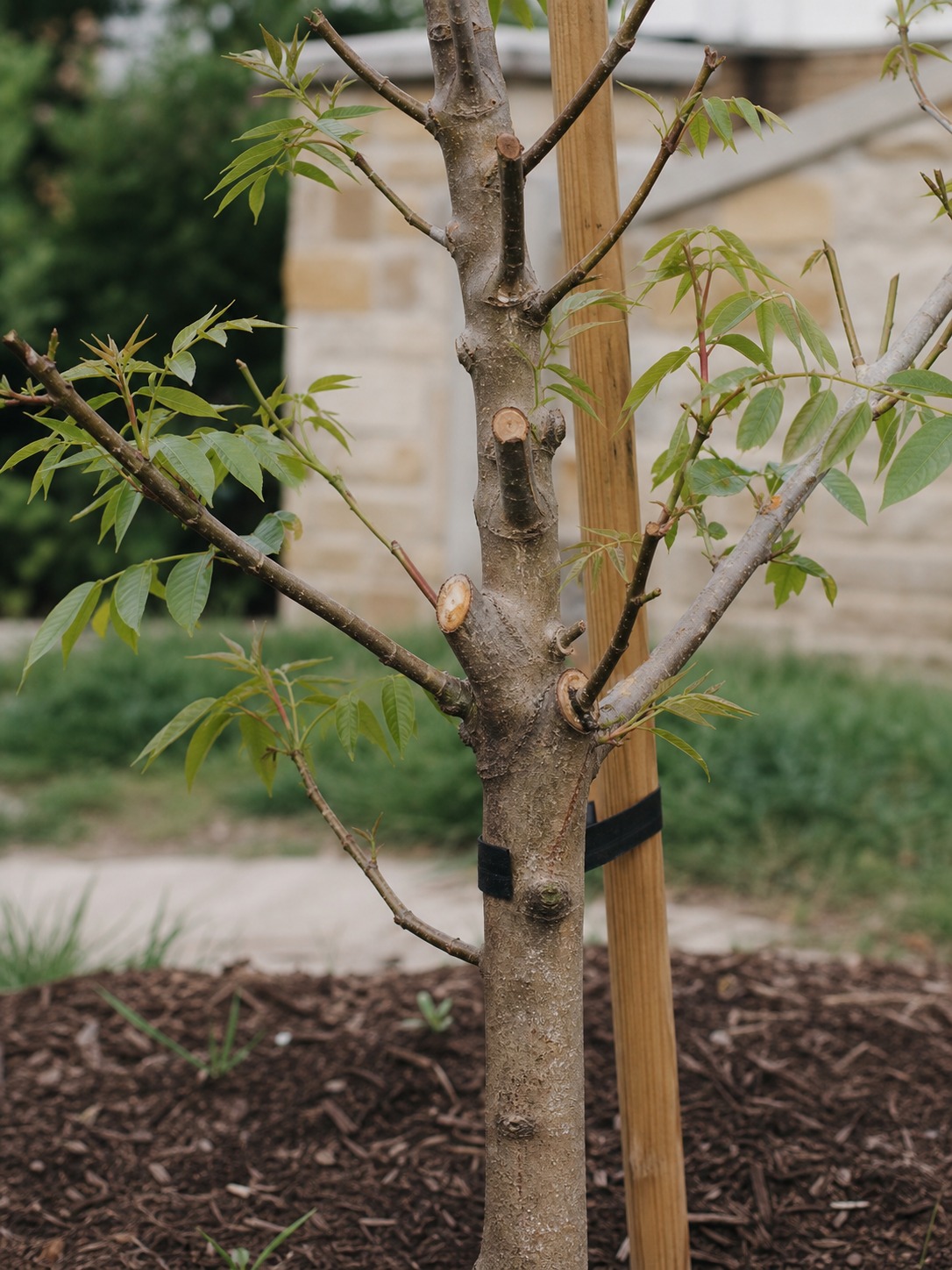
Young Chinese pistache trees genuinely look awkward, sparse and asymmetrical, for their first several years. Targeted structural pruning during this window, encouraging a single central leader and removing competing branches, is what eventually produces the balanced, rounded canopy the species is known for. Skip this step and the tree often develops multiple competing leaders that never quite resolve into a clean form.
I tell clients to treat the first three years as an investment period rather than the finished landscape feature. The payoff arrives, but it is not immediate.
Pairing with hardscape, understory plants, and exterior color palettes
A design tree is only as strong as what surrounds it.
Hardscape materials that complement the fall palette
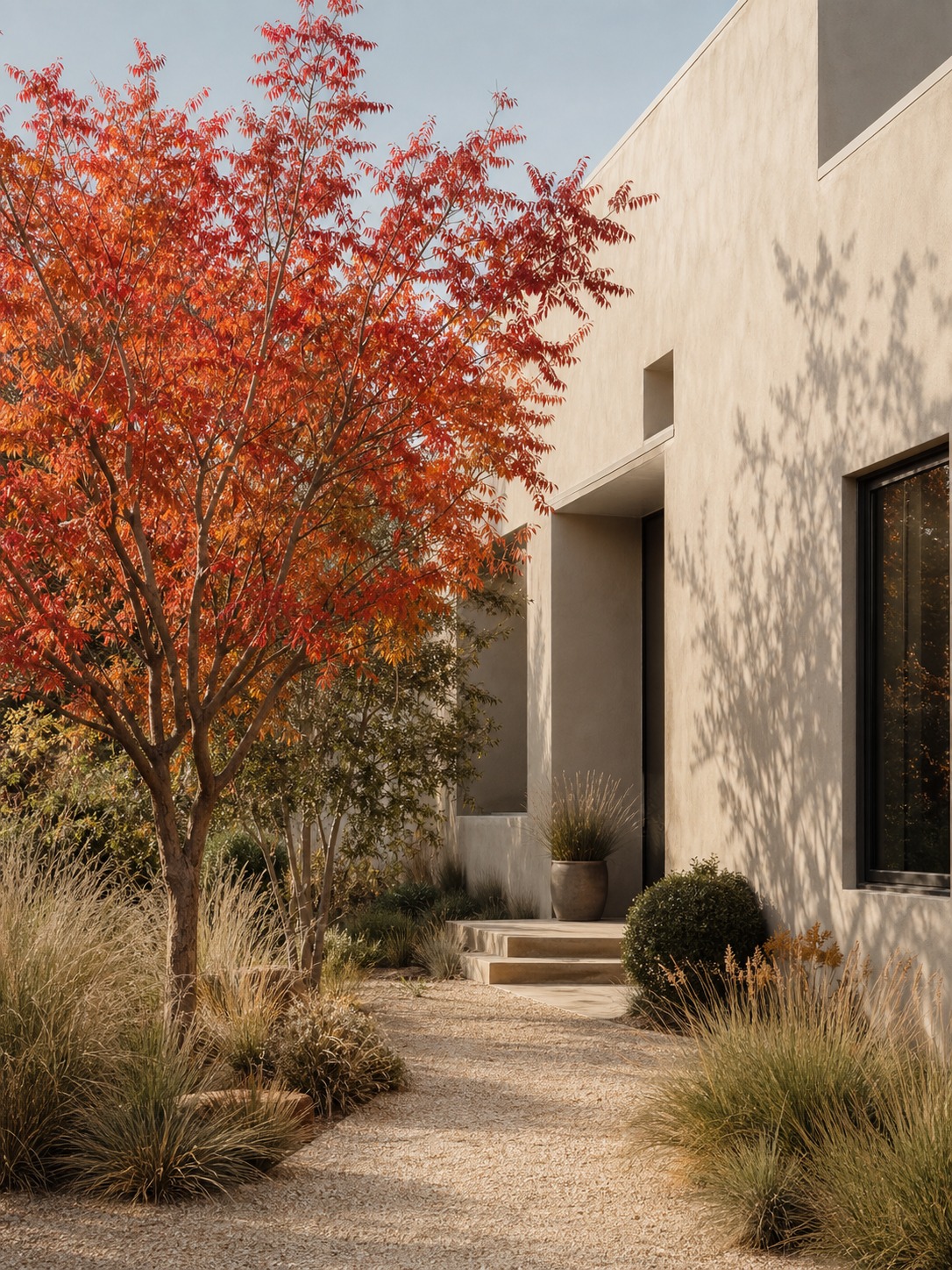
Warm-toned hardscape, buff concrete, tan gravel, natural stone, tends to harmonize with the tree’s orange-crimson fall display rather than competing with it. Cooler grey pavers can work too, but they read more starkly against the canopy’s warmth, a deliberate contrast choice rather than a default.
Understory planting that does not compete
Low, drought-tolerant groundcover or ornamental grasses at the base let the canopy stay the visual focal point rather than splitting attention with a busy understory. I favor a restrained planting palette directly beneath a specimen pistache, letting the tree’s own seasonal color arc do the work without visual competition from below.
Exterior color palettes that pair well
Neutral facades, warm white, greige, charcoal, all let the tree’s fall color read as the seasonal accent rather than fighting an already-busy exterior palette. I’ve steered more than one client away from a bold red front door specifically because it would compete directly with peak canopy color for a full month each year.
Conclusion
A Chinese pistache tree earns its place in a landscape design the way a well-chosen piece of furniture earns its place in a room, not just by looking good on its own, but by making everything around it read as more considered. Three-season color, genuine drought tolerance, and a mature form that rivals any classic shade tree make it one of the more design-efficient choices available for a driveway, front yard, or streetscape planting.
Start with placement and cultivar. A Keith Davey positioned where afternoon light can pass through the canopy does most of the design work before you add anything else.
Frequently asked questions
Do all Chinese pistache trees produce messy fruit?
No, only female trees produce fruit, small hard clusters that appear in late summer and fall and aren’t edible for humans. Male cultivars like Keith Davey produce no fruit at all while still delivering full fall color, which is why most landscapers specify the male cultivar by name for residential and streetscape plantings.
Are Chinese pistache roots a problem near driveways or foundations?
Generally not, the root system is moderate and non-aggressive compared to species known for surface roots like willows or silver maples. Standard setback of 15 to 20 feet from a foundation still applies for canopy clearance, but root damage to hardscape is a relatively low risk with this species.
How fast does a Chinese pistache tree grow?
Moderate speed, typically 1 to 2 feet per year once established, reaching full mature height of 30 to 40 feet over 15 to 20 years. Growth is fastest during the first three to five years while the tree is establishing its root system, which is also when consistent watering matters most.
What’s the best spot to plant a Chinese pistache for maximum design impact?
A full-sun location where afternoon light can pass through the canopy, an east or south-facing front yard or driveway edge, gets the best backlit fall color effect. Positioning it off-center rather than dead-center in a front yard composition also tends to read as more intentional than a symmetrical placement.
- 36shares
- Facebook0
- Pinterest36
- Twitter0
- Reddit0