Professional interior painting is one of the most direct ways to change how a room feels. But the real design value isn’t just a new color. It’s how color, finish, light behavior, and surface quality work together to shift the visual character of the entire space.
Most people treat paint as the last decision in an interior project. You choose the furniture, the flooring, the lighting, and then you paint the walls in something that doesn’t interfere. That approach is defensible but limiting. Paint applied with a clear understanding of how it interacts with existing room conditions — the quality of natural light, the proportions of the space, the reflectance of other surfaces — does more design work than furniture at twice the cost.
- Why paint works as a design tool
- Color changes the architecture of a room
- Finish controls how light moves across the wall
- Surface preparation is part of the final design
- Interior house painting for homes and commercial spaces
- When professional painting contractors are worth it
- Choosing paint colors in the real room
- Where industrial paints make sense indoors
- Final thought: paint should support the whole room
- FAQ
- What is professional interior painting?
- How does paint finish affect a room?
- Why does surface preparation matter so much in interior painting?
- What's the difference between interior house painting and commercial painting?
- How do I choose a paint color that actually works in my room?
- When is it worth hiring professional painting contractors rather than doing it yourself?
- What are industrial paints and when should they be used indoors?
I’ve been working on interior projects for fifteen years across residential, studio, and commercial contexts. Paint is consistently the most underused design tool available. A single decision can shift the entire reading of a room: matte versus satin finish on a north-facing wall, warm white versus cool white in a kitchen, a full-height dark accent behind a shelving unit. What makes these decisions difficult isn’t the painting itself. It’s understanding what’s actually being changed.
This guide covers how paint works as a design tool: how color changes spatial perception, how finish controls light behavior, why surface preparation is part of the final result, and when professional painting contractors are worth specifying on a project.
When the ceiling surface itself needs to do design work, stretch ceiling systems can solve surface quality and light behavior in one move.
Why paint works as a design tool
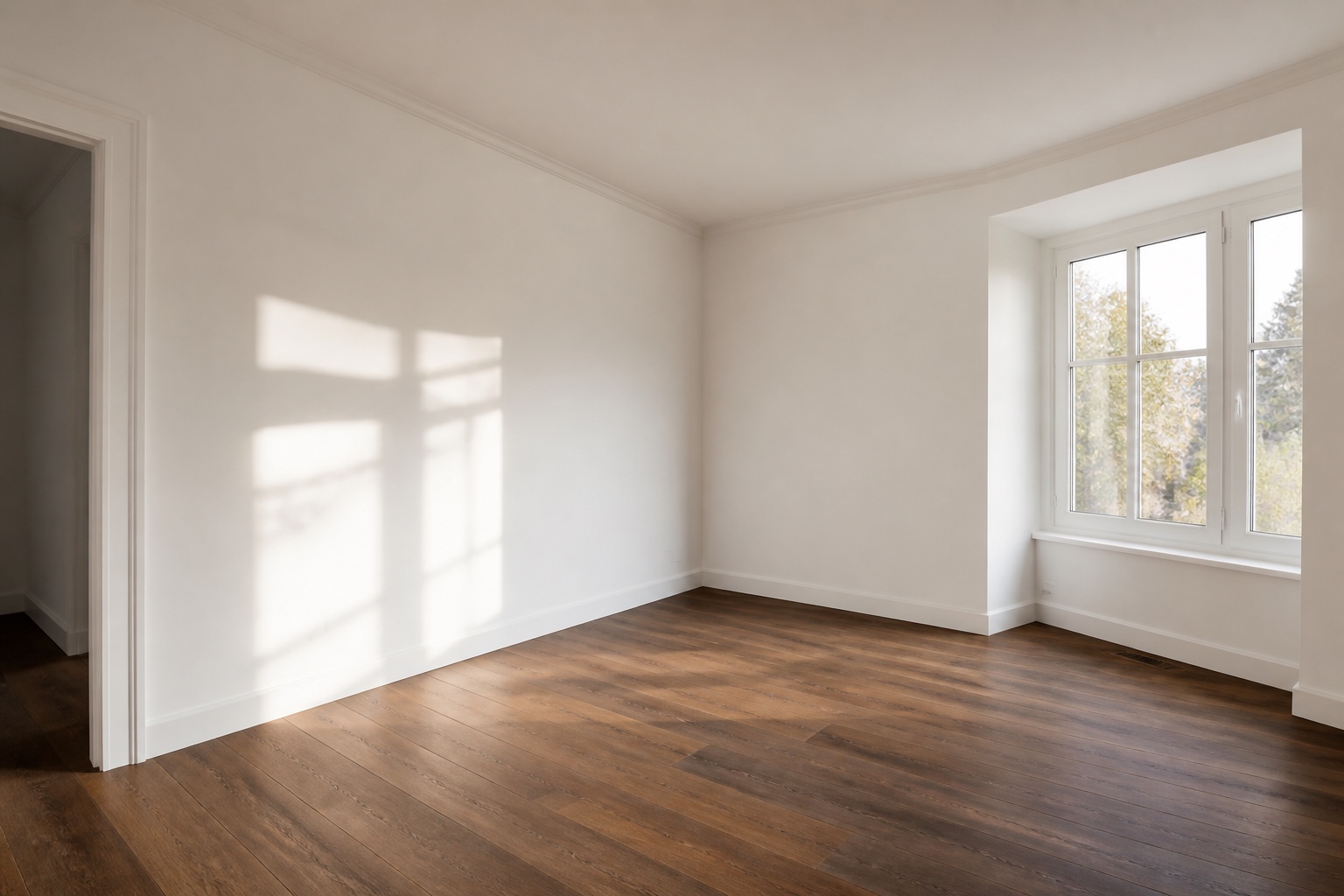
Paint has a different relationship to a room than almost any other finish material. A new sofa exists within the room. New flooring exists beneath it. Paint exists on every visible surface simultaneously — walls, ceiling, sometimes joinery and trim — which means it defines the visual container before anything else is noticed.
This gives paint an outsized influence on how other design elements read. Furniture against a matte wall reads differently than against a satin-finished surface. Art on a warm white wall reads differently than on a cool grey one. The same wooden floor looks lighter or darker depending on the color that sits behind it. Paint changes the context of everything else in the room, which means it either supports the other design choices or works against them.

The mistake most people make is treating paint selection as a final cosmetic step rather than a foundational spatial decision. By the time paint is chosen, the room’s structure, furniture, flooring, and lighting are usually already fixed. That’s actually the right sequence — it allows paint to respond to everything already in place. But responding well to those elements requires understanding how paint behavior (color temperature, finish reflectance, undertone) interacts with them.
Paint is also one of the most reversible design decisions available. A bad sofa requires another purchase. A bad tile requires demolition. A bad paint color requires a weekend and a few liters of something better. This reversibility is part of what makes paint a useful tool for testing spatial ideas before committing to more permanent material decisions.
Color changes the architecture of a room
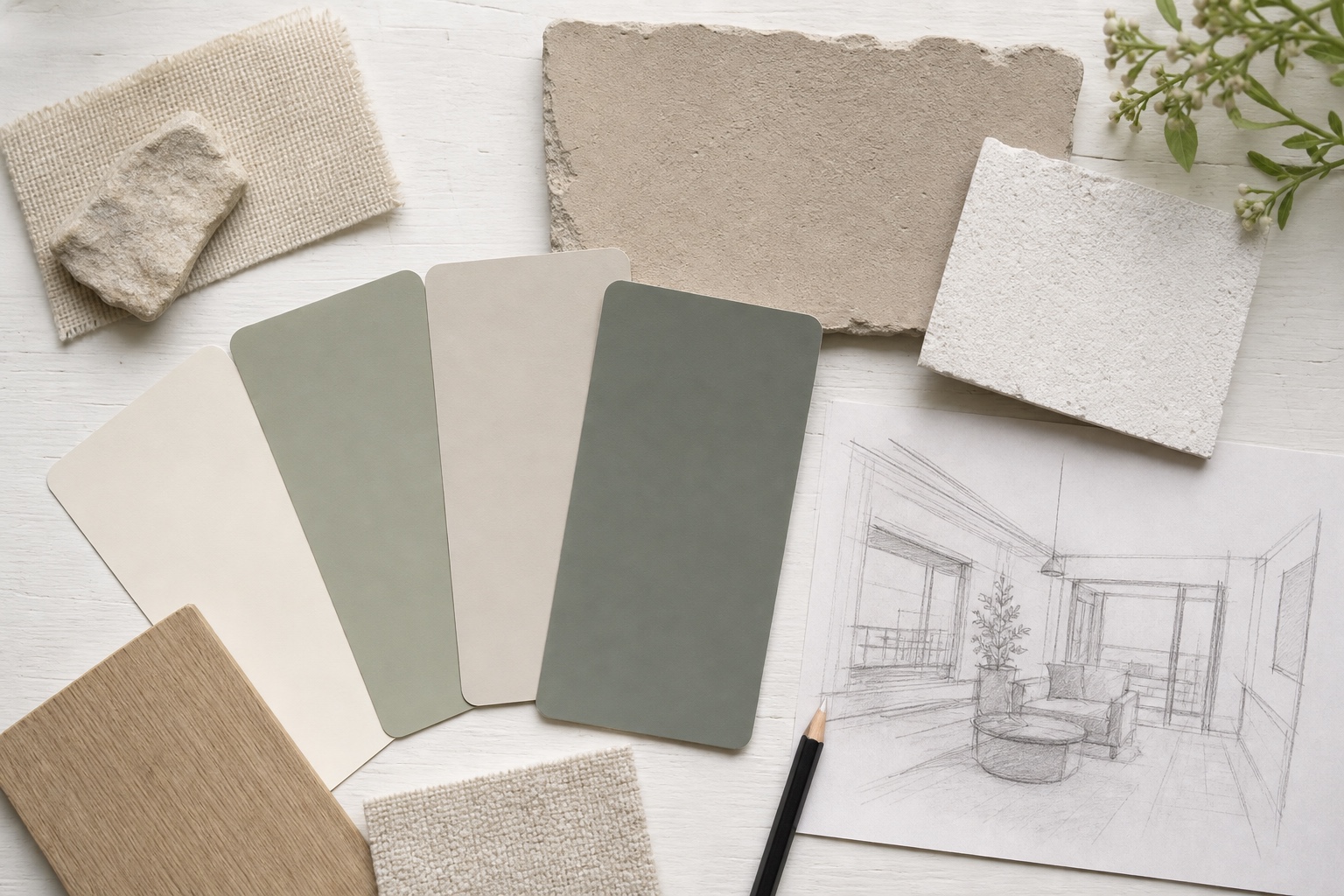
Paint color is the variable most people engage with first, and it’s the one that creates the most confusion because the effects aren’t always intuitive.
Light colors (whites, pale greys, warm creams) cause the walls to recede visually. The room reads as larger because the eye doesn’t land on the wall surface — it passes through to a perceived sense of space beyond. This works best in rooms where natural light is generous, because pale walls need light to activate. A pale grey room with insufficient natural light reads as cold and flat rather than spacious.
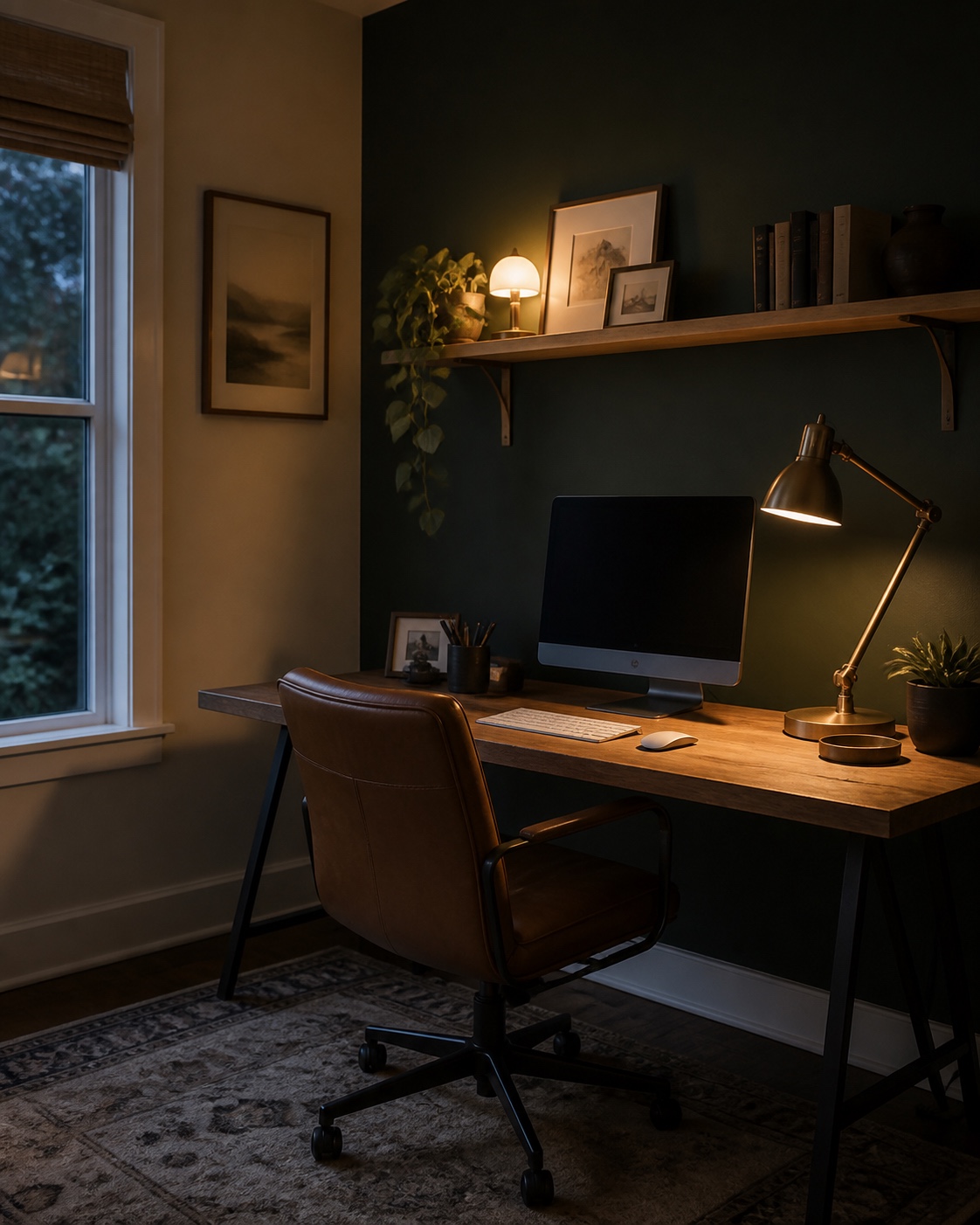
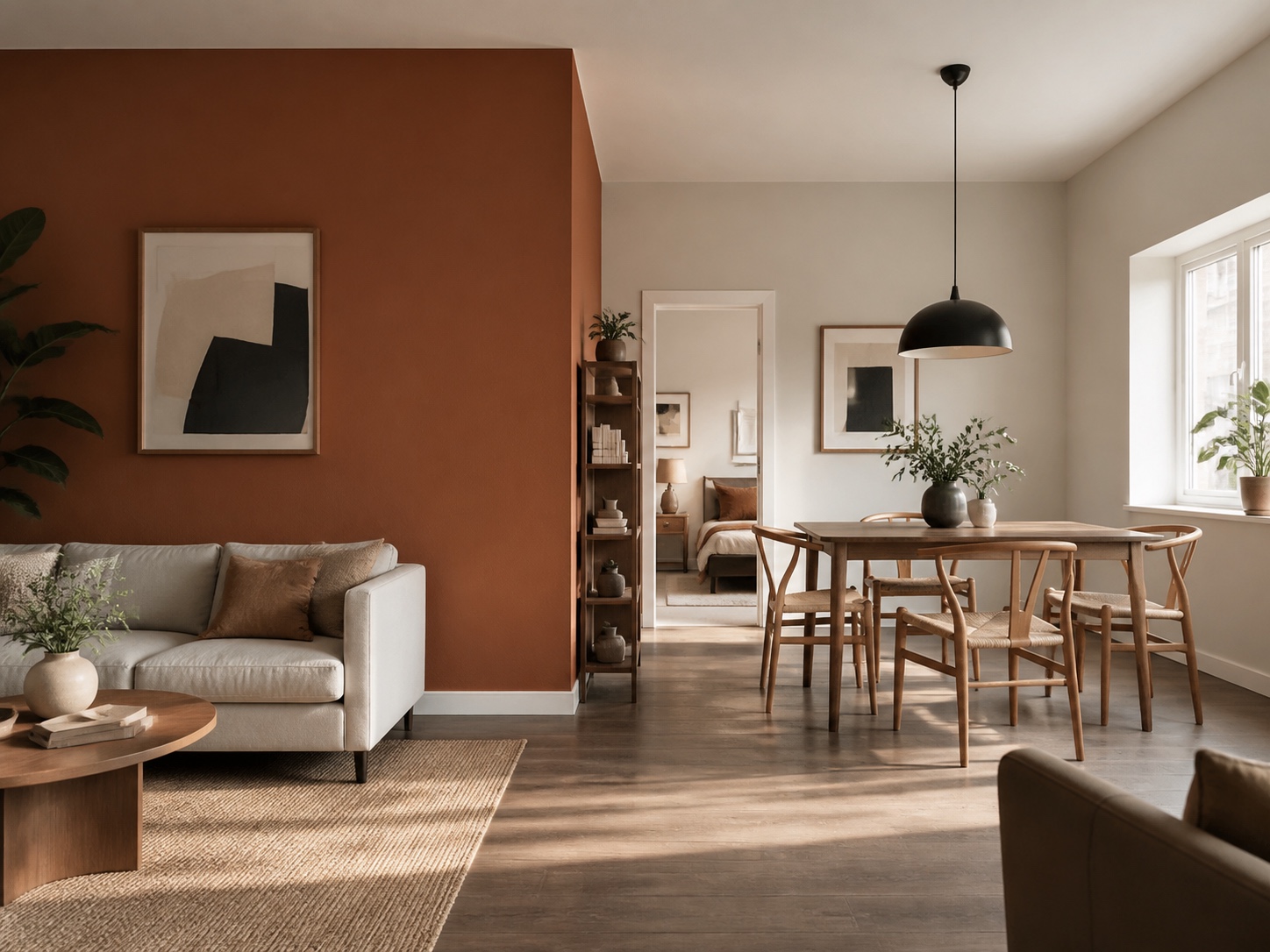
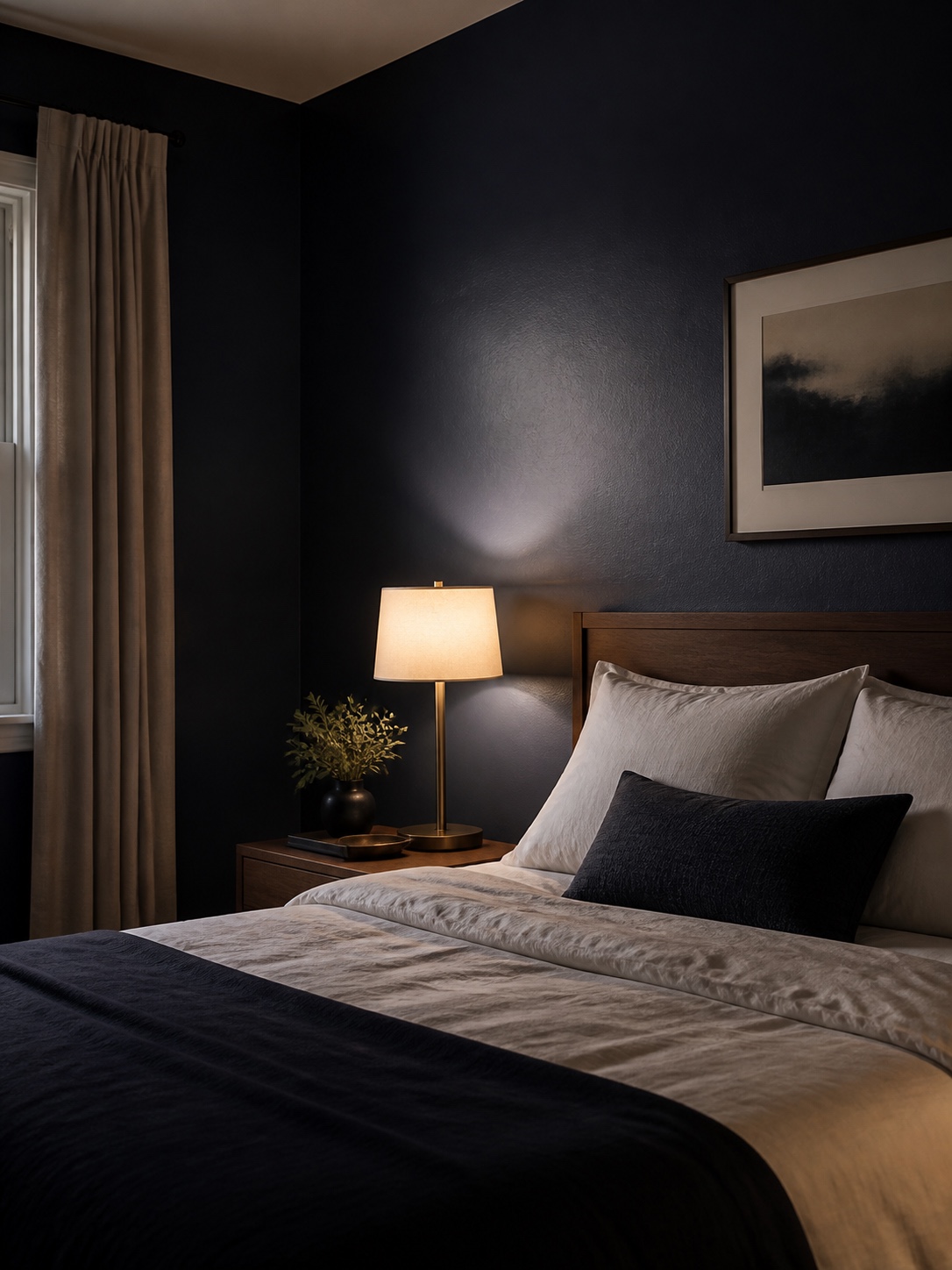
Dark colors do the opposite: they bring the walls forward, reduce perceived room volume, and create a sense of enclosure. This sounds like a problem, but enclosure and intimacy are exactly what some rooms need. A dark reading room, a deep blue-green bedroom, a charcoal home office — these spaces feel intentional and restful precisely because the walls come close. The eye settles rather than searching for depth.
Warm undertones (yellows, pinks, reds in the base) read as advancing and energizing. Cool undertones (blues, greens, greys) read as receding and calming. This distinction matters most under artificial light. A warm white paint that looks clean and neutral in a showroom under full-spectrum lighting will reveal its peachy undertone under warm tungsten in the evening. A cool grey that looks sophisticated at noon can shift toward blue-purple under the same tungsten source. Testing paint samples in the actual room, at the times of day when it’s most used, isn’t optional.
Using color to define zones without partitions
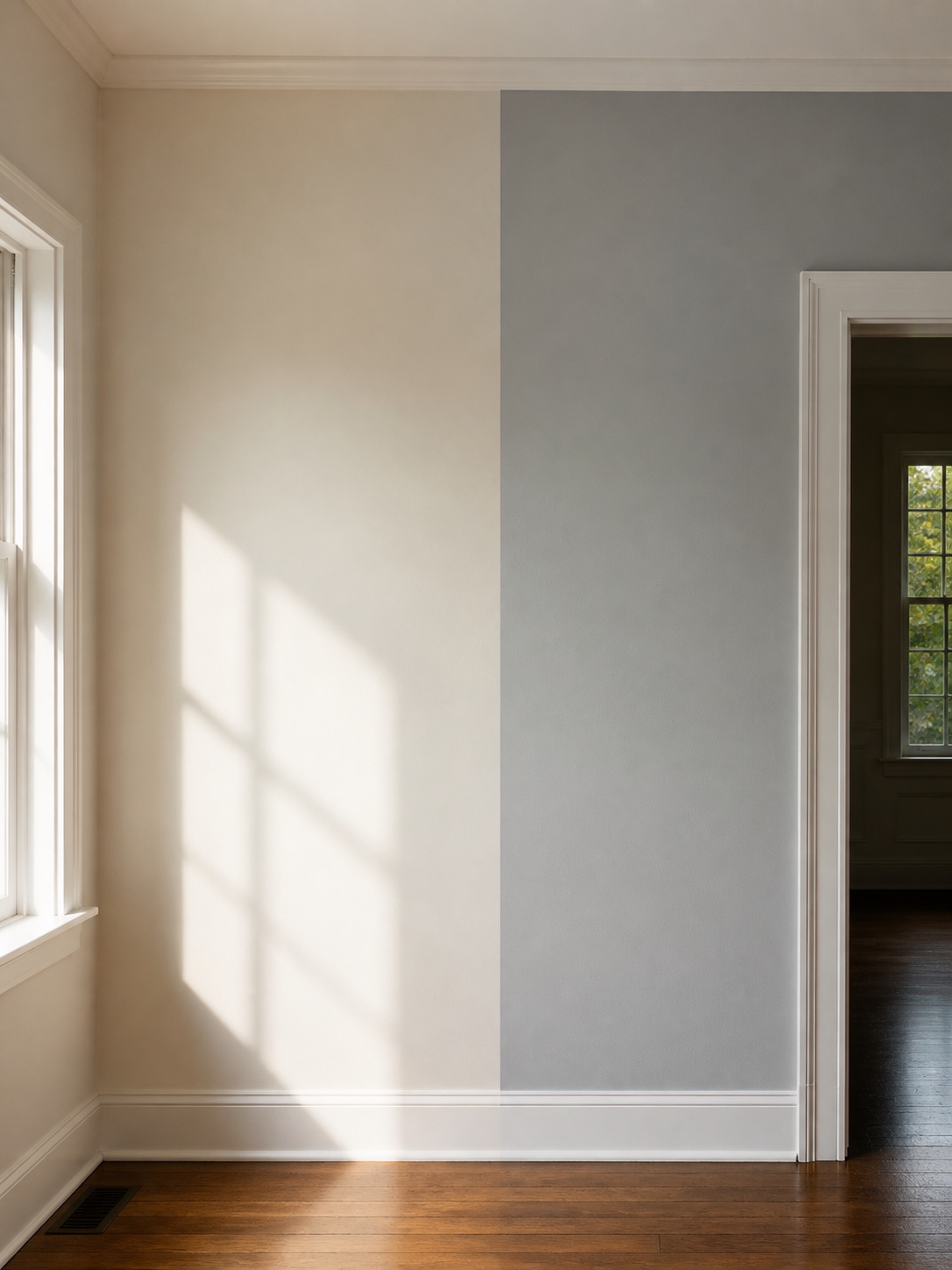
In open-plan spaces (a combined living and dining area, a studio apartment, or a commercial space with multiple functions) paint color is one of the most practical tools for zone definition. A different wall color behind the dining area reads as a distinct zone without requiring a partition. A painted ceiling panel above a reading corner does the same thing vertically. Architectural Digest has documented how contemporary designers increasingly use paint to create what amounts to architectural definition through color alone — particularly in open-plan commercial and residential projects where physical partitions are too inflexible or too expensive.
Finish controls how light moves across the wall
Paint finish is less immediately visible than color but has an equally strong effect on how a wall reads through the day. For a broader material view, the guide to texture in interior design explains how surface, light, and finish change the room together.
Matte finish absorbs light. It gives walls a soft, non-directional quality that hides imperfections in the plaster surface and creates visual depth without sheen. It’s the most forgiving finish for residential walls because most residential plasterwork has minor unevenness that satin and gloss will expose. The trade-off: matte surfaces mark more easily and are harder to wipe clean, which limits their use in kitchens, bathrooms, and high-contact areas.
Satin finish reflects more light than matte, giving the surface a slight sheen that reads as cleaner and more resolved. In a room with generous natural light, satin on the walls creates a warm, luminous quality that matte doesn’t produce. In a room with weak light, satin can feel clinical — the finish amplifies whatever light quality is already in the room. Useful when the light is good; a liability when it isn’t.
Gloss and semi-gloss finishes are high-reflectance options best suited to joinery, trim, and doors rather than full wall surfaces. On a wall with any surface variation — and most walls have plenty — gloss exposes every deviation. It reads as intentional only when the underlying plasterwork is genuinely flat. In high-spec applications (lacquered cabinetry, feature walls in contemporary commercial interiors, architectural joinery) gloss delivers a level of visual refinement that lower-sheen finishes can’t match.
Surface preparation is part of the final design
A common misconception: professional interior painting is mostly about color selection, and surface preparation is the preliminary step before the real work begins. The opposite is true. Preparation is design.
The best paint color applied to a poorly prepared surface will show every crack, dent, join, and texture variation — not after two years, but within the first week. Paint doesn’t fill surfaces; it reveals them. A wall that looked reasonable under builder’s white and flat overhead light will show every defect clearly once painted in a strong color at a deliberate finish level.
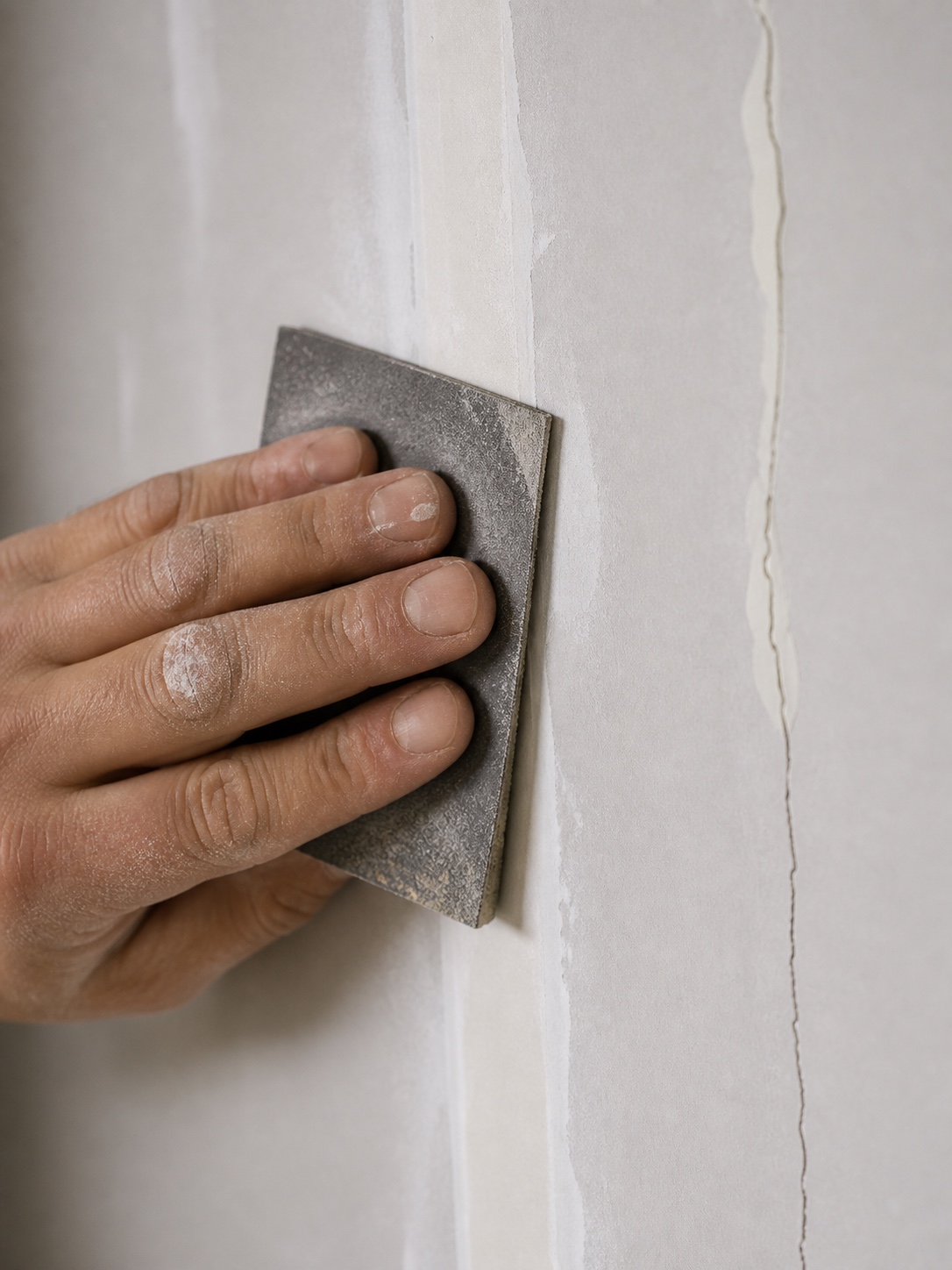
Professional surface preparation for interior painting typically involves filling and feathering cracks, sanding down ridges and joint lines, checking for moisture damage and addressing it at source before any paint goes on, and priming surfaces where the paint chemistry requires it (bare plaster, repaired sections, high-porosity surfaces). In older properties with textured or painted surfaces from previous decades, preparation also includes assessing what’s beneath the current finish and whether it needs to come off before anything new is applied.
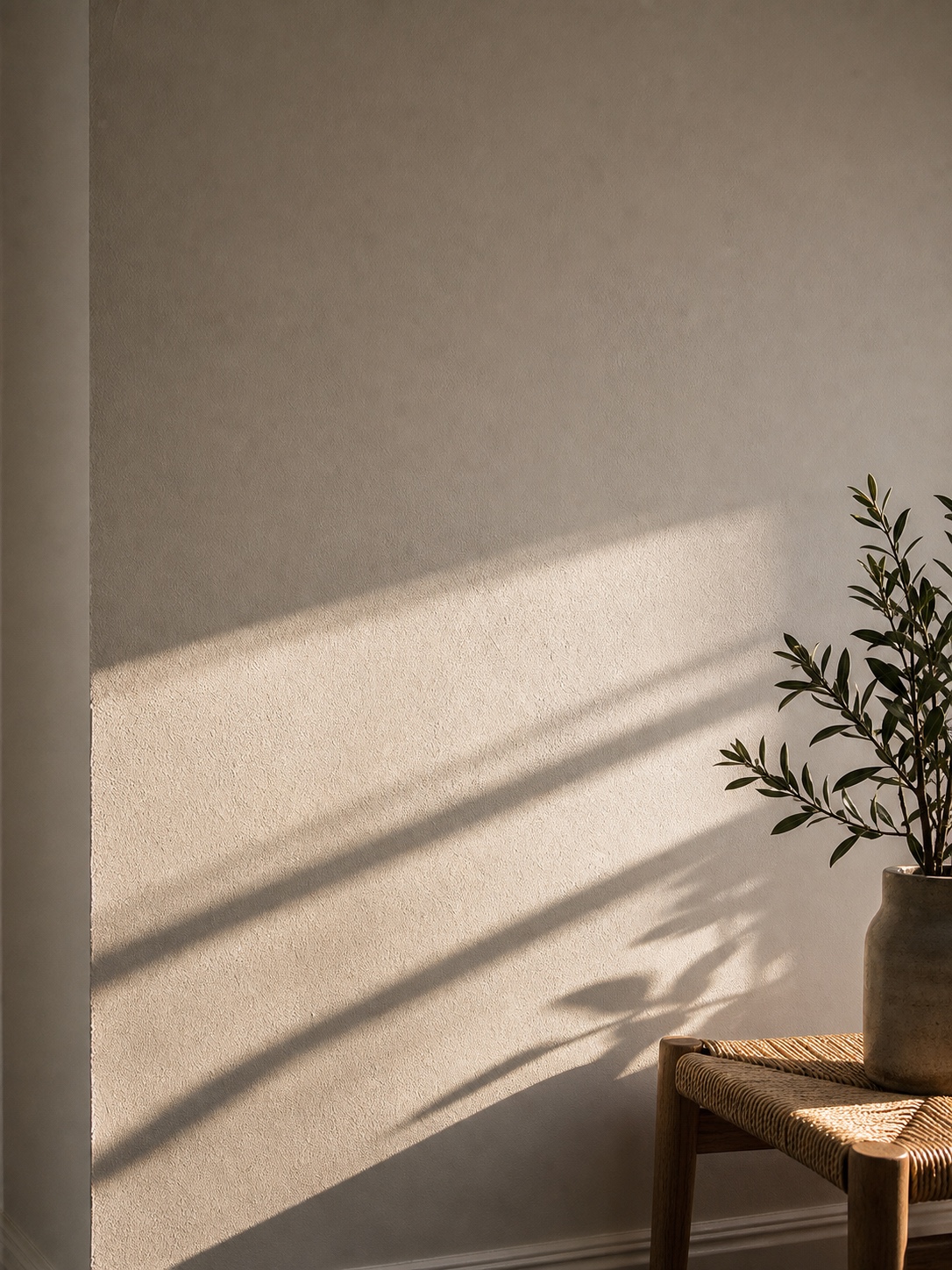
This preparation level is where the difference between a professional interior painter and a fast-turnaround generalist becomes visible. The first coat of paint always looks good. The quality of the preparation becomes apparent as light changes across the surface through the day. At raking light (low sun coming through a window at an angle), imperfections in the surface preparation read as clearly as if you’d drawn attention to them.
Moisture and structural issues before painting
Paint applied over active moisture problems doesn’t protect the structure — it conceals the problem temporarily. Peeling paint, damp patches, and persistent discoloration at ceiling edges or external wall junctions are signs of moisture ingress that need structural attention before painting begins. Painting over them delays a larger repair job rather than replacing it.
A professional interior painting contractor will identify these issues during the assessment phase and flag them as out-of-scope before quoting on the finish work. This is a useful indicator of professionalism: a contractor who can see a damp patch and frames the conversation around surface preparation rather than just starting to paint is a contractor who understands what they’re actually being asked to do.
Interior house painting for homes and commercial spaces
Professional interior painting applies differently to residential and commercial projects, and the distinction matters for anyone managing both types of spaces. For workspace-specific color and lighting choices, pair this with practical office decor ideas.
In homes, interior house painting is typically a room-by-room project that happens around existing occupants and contents. This creates specific constraints: working hours, protecting floor finishes and furniture, managing paint smell in occupied bedrooms, and sequencing rooms so the house remains livable through the process. The best residential painting contractors work in phases — completing one room to full cure before moving to the next — and treat the logistics of the work as part of their professional offer rather than the client’s problem.
In commercial spaces, the constraints are more intense. Work often has to happen outside business hours, across tight deadlines, in spaces that can’t be fully cleared. High-traffic areas need paint systems that cure within hours rather than days. Surfaces take more physical punishment from trolleys, equipment, door handles, and cleaning chemicals — and need coatings engineered for that level of contact.
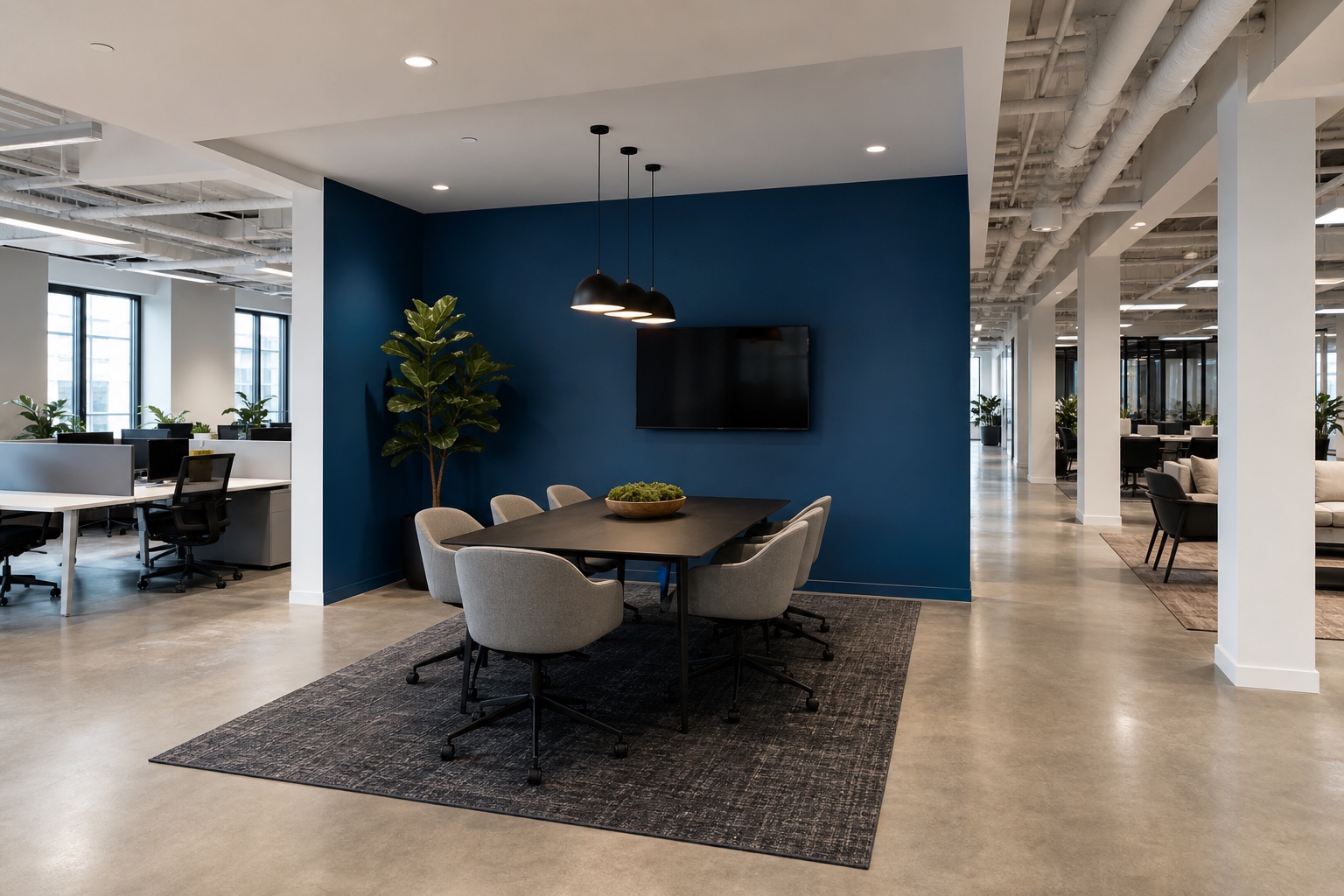
Commercial interior painting also engages with brand and spatial identity in ways that residential work doesn’t. The cohesive interior color palette palette of a commercial space is often part of a brand language — and the precision with which that color needs to be matched, applied consistently across multiple locations, and maintained over time is a different discipline from choosing a pleasant living room color.
When professional painting contractors are worth it
The practical answer: for any interior painting project where surface quality, color precision, or finish level is visible and matters, professional work will consistently outperform DIY.
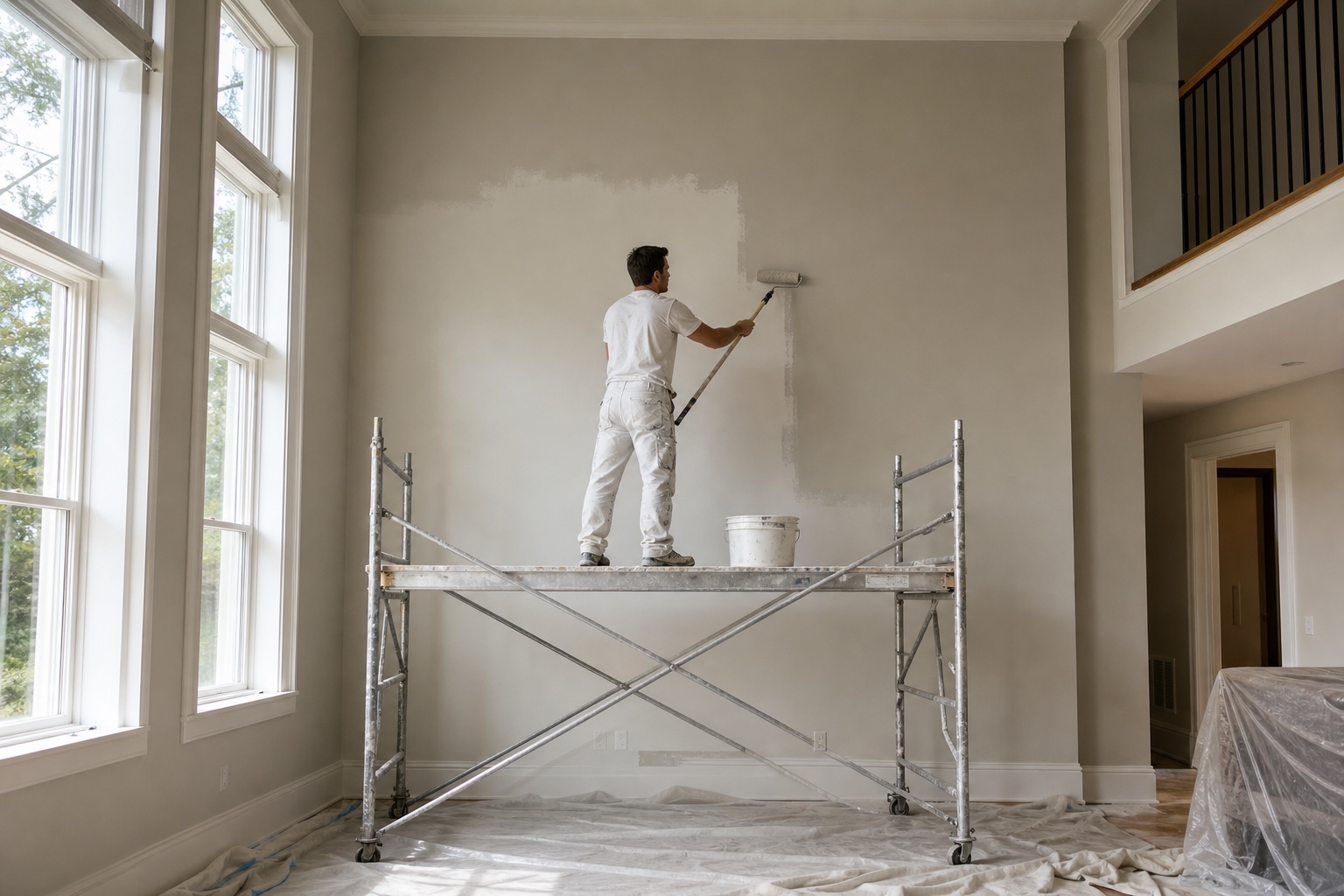
There are specific situations where the return on specifying experienced professional painting contractors is clearest. High-ceilinged rooms and stairwells require equipment and technique that safe amateur practice can’t replicate without scaffolding experience. High-sheen or specialist finishes (lacquered cabinetry, Venetian plaster, decorative textured finishes) need training and materials that aren’t widely available outside the trade. Commercial projects with deadline pressure and multi-surface scope need a managed crew rather than a single operator working through the project week by week.
The other situation where professional contractors consistently justify their cost: rooms being painted in strong or dark colors where surface preparation quality becomes immediately apparent in the result. The investment in getting the surface right before a navy dining room or a deep forest-green bedroom is a completely different proposition from cutting preparation time on a light grey that hides most defects. Strong colors expose everything underneath.
What to look for when specifying painting contractors
Experience with the specific surface type and finish level you need is the first thing to establish. References from comparable projects matter: a residential contractor with excellent domestic work is not automatically equipped for commercial fit-out painting, and vice versa. Clarity about what preparation is included in the scope is essential. Most problems with professional interior painting result from disagreements about what preparation was meant to happen before the first coat went on — and that conversation is much easier to have before the quote than after the first brush hits the wall.
Choosing paint colors in the real room
Paint color selection from a chip card or in a showroom is one of the least reliable methods available, and most people still use it as their primary approach. If you are planning the full space around the wall color, compare the decision with our living room interior design ideas guide.
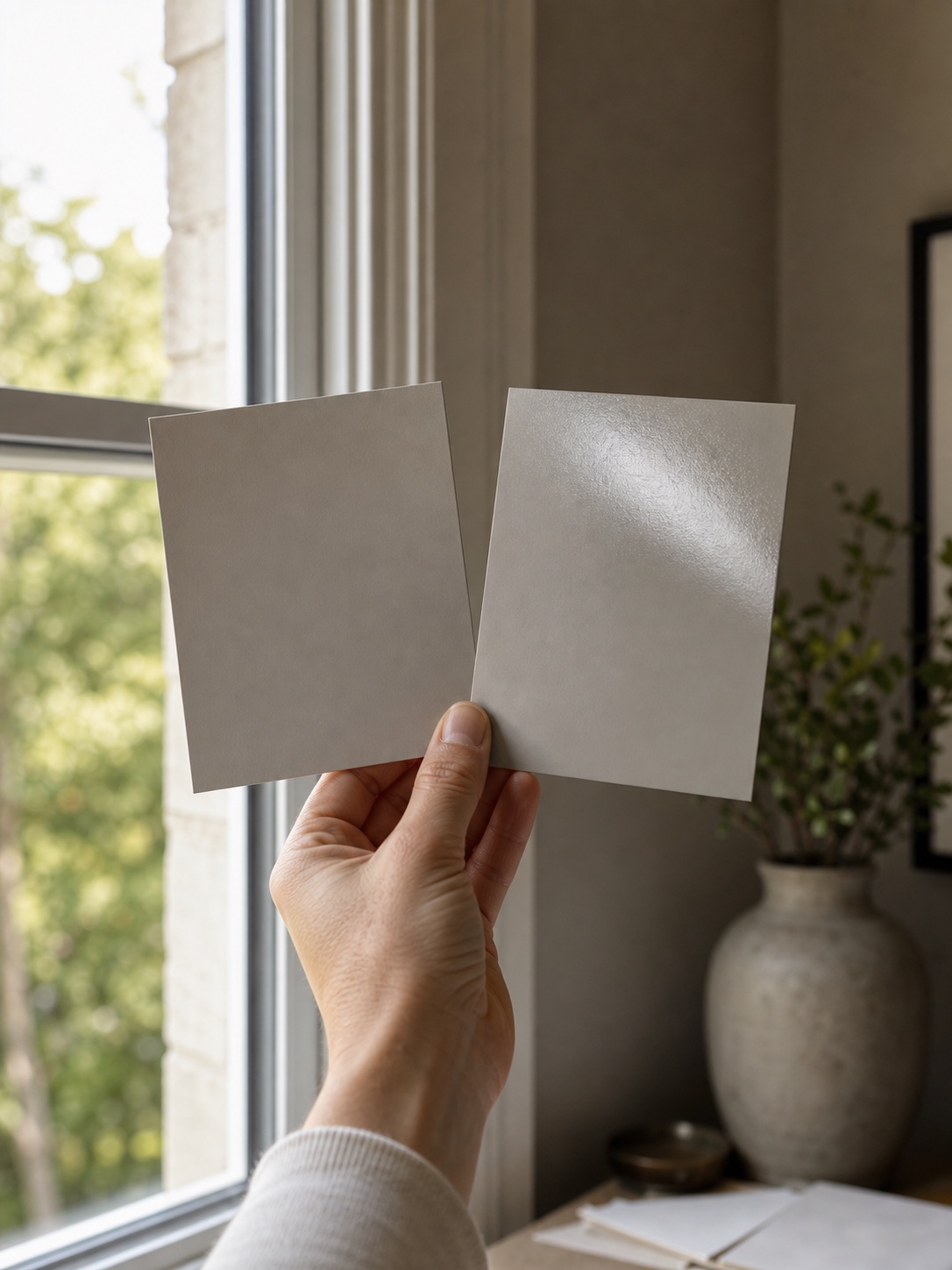
Color samples (small swatches pinned to a wall or held up to the light) are too small to represent what a full wall of that color looks like in a room’s specific conditions. Colors appear more saturated at full scale. A chip that looks like a muted sage will read as distinctly green when it’s on all four walls at 2.6 metres high. A chip that read as a neutral warm white will reveal its yellow undertone across forty square metres of surface.

The reliable method: order tester pots in the largest size available and apply them to A3 or A2 sections directly on the wall in the room. Leave them for several days and observe at different times — morning light, midday, late afternoon, and evening lamplight. The way a color behaves under tungsten (warm, yellow-orange) is often completely different from how it reads at noon under diffuse daylight. This isn’t a subtle difference; it can be the difference between the right color and the wrong one.
Apply two coats of the tester. A single coat shows the previous color bleeding through, which misrepresents the final result. The true paint color only reads clearly when the surface below is fully covered.
Undertones and the light quality problem
Every paint color has an undertone — a secondary hue embedded in the base that becomes more visible under certain light conditions. Identifying undertones before committing to a color is one of the areas where a designer or experienced painting contractor adds clear practical value. The undertone question is: what does this color do when the light changes? Most clients only see the chip at the moment of selection, under showroom lighting. A professional will know what that color does at eight in the evening in a room lit by warm lamps.
Where industrial paints make sense indoors
For structural steel, exposed concrete, or heavy-wear commercial zones, the specification starts to move beyond decorative paint into industrial coating systems.
Industrial paint formulations are appearing more frequently in residential and studio interiors, and the reasons are practical rather than aesthetic.
Industrial paints are engineered for high-contact and high-traffic surfaces — the chemistry prioritizes durability, cleanability, and resistance to mechanical abrasion. In residential contexts, this makes them appropriate for garage floors, basement utility areas, home gyms, and corridors in large family homes where standard decorative paint systems degrade quickly. In commercial interiors, they’re the standard specification for back-of-house areas, commercial kitchens, workshops, and any surface that receives industrial cleaning cycles.

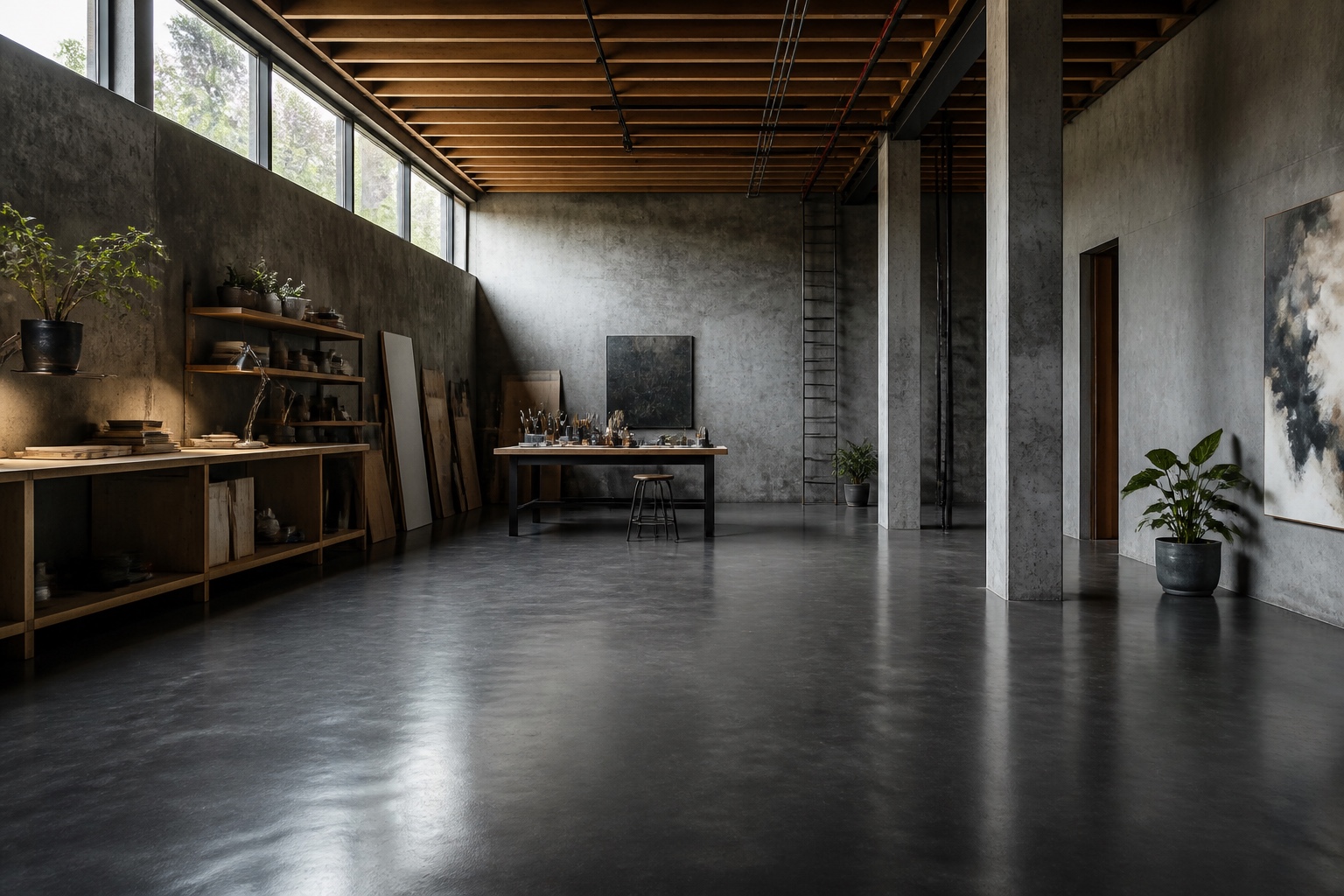
The aesthetic quality of industrial paint systems has also improved considerably. Epoxy floor coatings now come in a wide enough color range and finish quality to read as deliberate design choices in contemporary studio spaces and retail fit-outs. The “raw, industrial” interior aesthetic that has been consistent in commercial interior design for the past decade has made these products more visible as intentional selections rather than purely functional ones. The right application is still limited to appropriate contexts — industrial paint chemistry behaves differently on walls and floors than standard decorative paint — but the design possibilities have expanded.
Final thought: paint should support the whole room
The most effective professional interior painting work is invisible in the sense that it doesn’t announce itself. You notice the room — how it feels, how the light moves across the surfaces, how the furniture and art read. The paint is doing its job in the background. For broader room-planning context, browse the interior design ideas hub.
This requires treating paint not as a finish applied to completed walls but as a spatial material that interacts with everything else in the room. Color temperature, finish reflectance, surface quality, and precision of application all contribute to whether the room reads as designed or just decorated.
Getting these decisions right is the core of what interior design does at its most practical level. Professional interior painting is the tool that executes those decisions on the largest visible surface in the room — and the one that’s changed most often when those decisions need to be reconsidered.
Paint affects mood, light, and proportion, so these interior color and paint rules help before committing to a wall color.
For investor-owned homes, paint is rarely just color. Use it with this guide to paint and finish choices for property investors so repaired walls, trim, flooring, and staging support the same value story.
FAQ
What is professional interior painting?
Professional interior painting is the application of paint and decorative coatings to interior wall, ceiling, and joinery surfaces by trained contractors using commercial-grade materials and preparation methods. It differs from DIY in the level of surface preparation, the quality of materials used, the precision of application, and the finish quality — particularly visible at challenging light angles, at specialist finish levels, and in rooms painted in strong or dark colors where surface quality shows clearly.
How does paint finish affect a room?
Matte finish absorbs light and gives walls a soft, depth-creating quality that hides surface imperfections — suitable for most residential walls. Selecting the right home art studio paint colors under natural light is key for spaces requiring high color accuracy. Satin finish reflects more light, reads as cleaner, and holds up better to cleaning, but it amplifies surface irregularities and the room’s existing light quality. Gloss and semi-gloss are high-reflectance finishes suited to joinery and trim rather than full wall surfaces in most residential and commercial contexts.
Why does surface preparation matter so much in interior painting?
Paint reveals surface defects under raking light conditions; it doesn’t conceal them. The quality of preparation (filling, feathering, priming, addressing moisture issues) directly determines the quality of the final finish. Most failures in professional interior painting trace to inadequate preparation rather than the paint itself or the application technique. This is especially visible in rooms painted in strong colors, where the finish level is high, or where raking natural light from windows crosses the wall surface through the day.
What’s the difference between interior house painting and commercial painting?
Interior house painting typically works around occupied spaces, requires careful phasing to keep the home livable, and prioritizes finish quality visible in daily residential conditions. Commercial interior painting operates under tighter time constraints (often outside business hours), in spaces that can’t be emptied, and uses coating systems engineered for higher contact, cleaning frequency, and durability requirements. The two disciplines require different equipment, crew management, and material knowledge.
How do I choose a paint color that actually works in my room?
Apply large tester patches (A3 minimum, A2 is better) directly to the wall and observe them over several days at different times — morning, midday, afternoon, and evening lamplight. Apply two coats so the underlying color is fully covered. Chip cards are too small to represent how a color reads at full-wall scale and under your room’s specific light conditions. The light at noon under a north-facing window and the light from a warm table lamp in the same room at eight in the evening can read a color very differently.
When is it worth hiring professional painting contractors rather than doing it yourself?
For any project where surface quality or finish level is immediately visible in the result. High-ceilinged rooms and stairwells, specialist finish levels (satin, gloss, lacquered joinery, Venetian plaster), rooms being painted in strong or dark colors where surface preparation quality shows clearly, and commercial projects with timeline pressure or multi-surface scope all benefit from professional specification. The cost difference between professional and DIY is most clearly returned in projects where the final surface quality is the first thing anyone notices when they enter the room.
Before the first coat of paint, compare your samples with living room wall color combinations that account for daylight, sofa fabric, flooring, and trim.
What are industrial paints and when should they be used indoors?
Industrial paints are formulated for high-contact, high-traffic surfaces — they prioritize durability, cleanability, and resistance to mechanical abrasion over decorative subtlety. Indoors, they’re appropriate for garage floors, basement utility areas, home gyms, corridors in high-traffic properties, and commercial back-of-house spaces. Epoxy floor coatings are the most visible category in contemporary interior design contexts, where the raw, industrial aesthetic of the coating has been adopted as an intentional design choice in studios, retail spaces, and commercial fit-outs.
Paint color changes how pale timber reads, so pair this with the light oak flooring wall color guide before choosing warm white, greige, sage, or darker accents.
For a heritage paint direction, this English cottage color palette guide covers sage, cream, dusty rose, mushroom taupe, and how to keep those colors from looking flat.
- 97shares
- Facebook0
- Pinterest97
- Twitter0
- Reddit0