My Jaguar F-Pace taught me something useful about maintenance: ignore a small noise long enough and it becomes a large bill. Home appliances work exactly the same way. I moved into a house in a suburb outside Kyiv with a full set of nearly-new appliances, and within two years I’d had a refrigerator compressor failure and a washing machine pump die — both of which I’d had warnings for and ignored.
Johns Creek homeowners face a specific set of pressures that people in milder climates don’t. Georgia summers run air conditioning hard. Humidity does things to seals and hoses that you won’t see in drier states. And when something fails in July (the refrigerator, the HVAC, the washer), the timing is always the worst possible.
- 1. Read early warning signs before they get expensive
- 2. Keep appliances clean — the parts nobody sees
- 3. What Johns Creek’s climate does to your appliances specifically
- 4. A practical maintenance schedule (with what skipping it actually costs)
- 5. How you use appliances matters as much as how you clean them
- 6. Act fast when something actually goes wrong
- 7. Know where DIY ends and professional work begins
- 8. Protect interior finishes from humidity and poor airflow
- 9. Keep the garden and drainage working for the house, not against it
- FAQ: home maintenance tips for Johns Creek homeowners
- How often should I clean my refrigerator coils in Johns Creek?
- What is the most important home maintenance task in Georgia summer?
- How do I know if my washer hose needs replacing?
- What are the early warning signs an appliance needs repair?
- Is it worth maintaining an older appliance or replacing it?
- How do I clean a dryer vent properly?
- What maintenance tasks should I do before summer in Johns Creek?
- When should I call a professional instead of DIY?
- Keeping a home in Johns Creek running quietly
These nine habits come from a combination of my own mistakes and the patterns I’ve noticed in how well-maintained homes actually hold up over time. They’re not complicated. Most take under 30 minutes a year. And they’re the difference between a house that runs quietly in the background and one that constantly demands your attention.
1. Read early warning signs before they get expensive
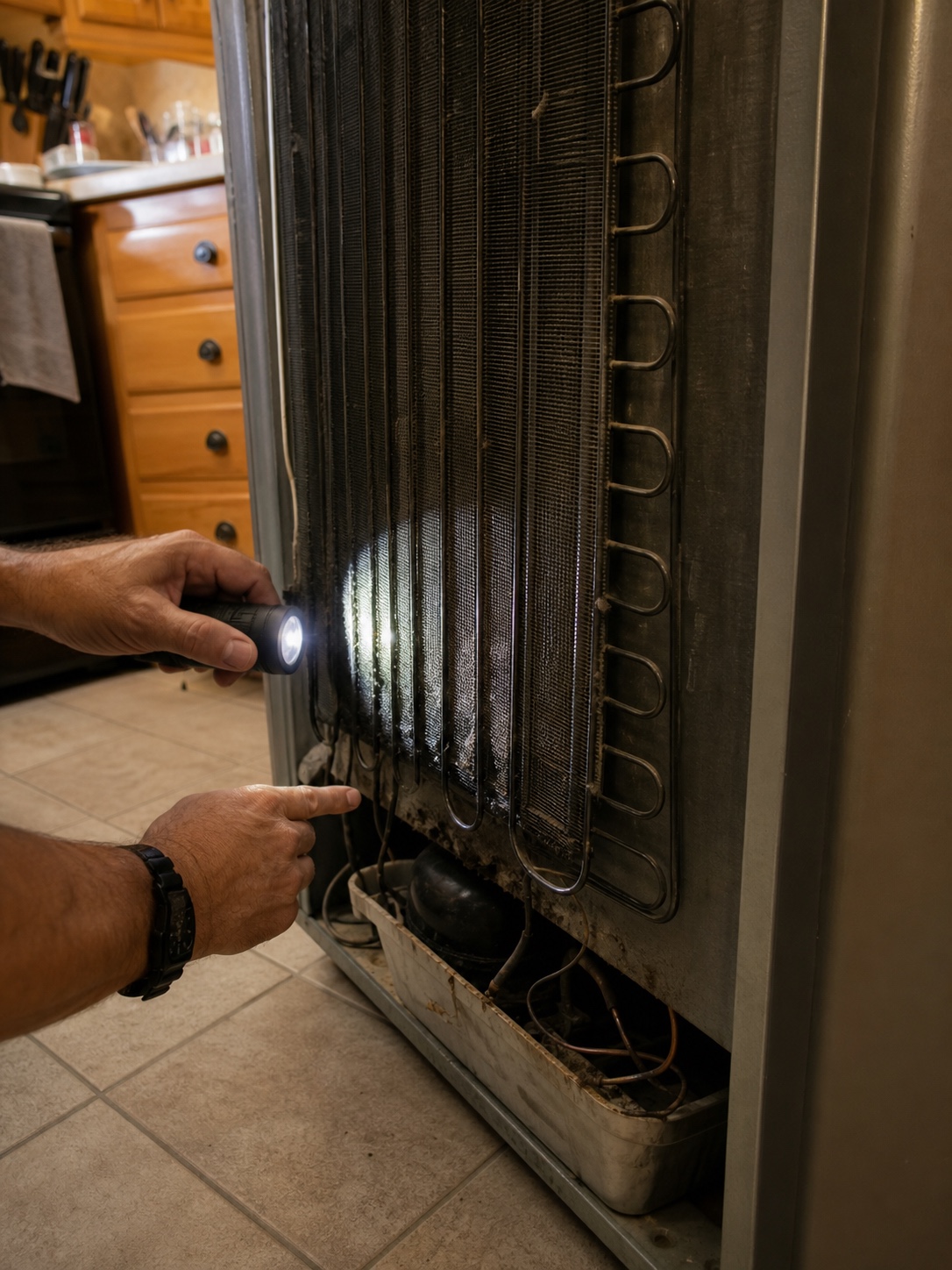
My Samsung refrigerator started buzzing differently about three weeks before the compressor failed. Not loud — just a slightly higher pitch than usual, with an occasional click when the cooling cycle ended. I noticed it, made a mental note, and did nothing. The repair bill was $380.
Unusual sounds are almost always the first signal. A refrigerator that hums louder than it used to, a washer that vibrates more during the spin cycle, a dishwasher that drains slower — these aren’t personality quirks. They’re the machine telling you something has changed internally. In most cases, what’s changed is still cheap to fix.
What to listen and look for
Buzzing or clicking from a fridge usually points to condenser fan issues or early compressor strain. A washing machine that’s suddenly louder during spin is often a worn drum bearing or failing shock absorber. Longer drying cycles in a dryer mean a blocked vent or failing heating element. And any appliance that takes noticeably longer to complete its cycle than it used to is drawing more energy to compensate for something degraded inside.
The pattern I follow: if I notice something twice in the same week, I check it. Not repair it — just look. Pull out the fridge and check the coils. Run the washer on empty and listen to the spin. Check the dryer vent cap from outside. In most cases it’s either fine or the problem is immediately obvious.
The cost of waiting
A clogged condenser fan is a $15 part and 45 minutes of work. A failed compressor from running without adequate cooling is $300–$600 plus labour. A worn washer bearing caught early is $40–$80. The same bearing that’s failed and taken out the drum spider is $200–$350, and some machines aren’t worth that repair. Early detection is almost always a 5:1 cost advantage.
✔ Set a phone reminder once a month to do a 5-minute walkthrough: listen to each appliance run for 30 seconds, look for any new stains under the washer or dishwasher, check the fridge temperature display. That’s it.
2. Keep appliances clean — the parts nobody sees
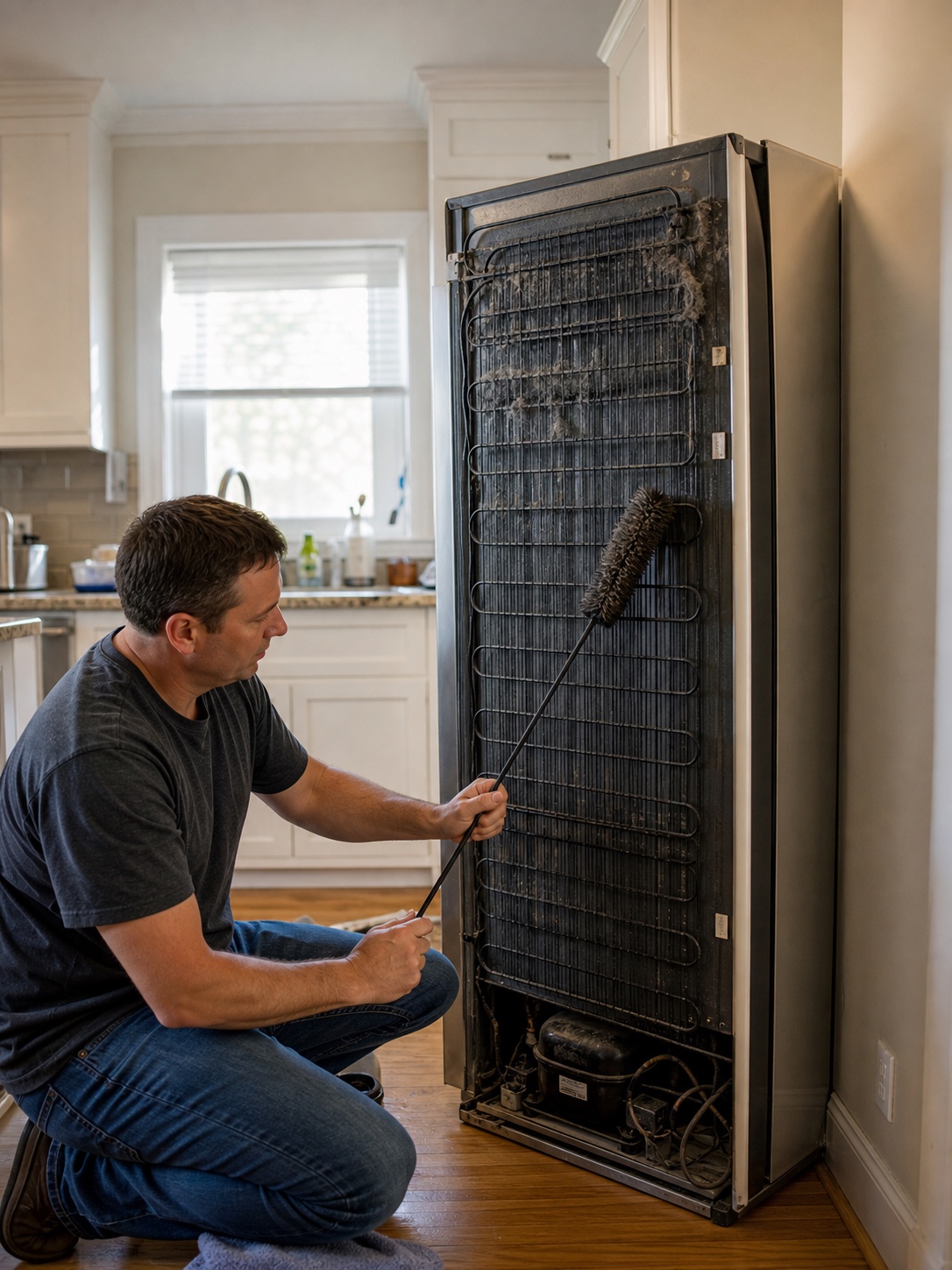
Most appliance cleaning articles talk about the inside. The outside surfaces, the glass, the drum. That’s fine, but it’s not where the mechanical damage happens. The parts that matter most are the ones out of sight: condenser coils behind or under the fridge, the dryer vent duct, the dishwasher filter, the washer door seal.
Refrigerator coils: the highest-impact 20 minutes
Refrigerator condenser coils dissipate heat from the cooling cycle. When they’re coated in dust and pet hair, the compressor runs longer and hotter to do the same job. Energy consumption goes up 25–30%. Compressor life goes down. In Johns Creek summers when the fridge is already working against 95°F ambient temperatures, clogged coils push the whole system toward failure.
Cleaning takes 20 minutes. Pull the fridge out from the wall or remove the kick panel at the bottom (models vary). Use a coil brush (around $8 at any hardware store) and a vacuum. Do it every six months in Georgia. If you have pets, do it quarterly. The difference in how the fridge runs after is immediate — you can feel the compressor cycling less.
Dryer vent: the fire risk nobody talks about
Blocked dryer vents cause roughly 2,900 house fires per year in the US according to FEMA. The buildup is gradual — lint accumulates in the duct over months, restricts airflow, and the dryer runs hotter and longer to compensate. Clothes take two cycles instead of one. Eventually the thermostat trips, or it doesn’t and there’s a fire.
A dryer vent cleaning kit with a flexible brush (LintEater is a reliable brand, around $35) attaches to a drill and runs through the full duct length from inside. Clear the exterior vent cap too — flap vents get stuck with compacted lint and birds occasionally nest in them. Total time: 30 minutes, twice a year.
✔ If your dryer vent run is longer than 15 feet or has more than two bends, have it professionally cleaned annually. Long runs accumulate lint much faster and a brush kit alone won’t always clear the full duct.
3. What Johns Creek’s climate does to your appliances specifically
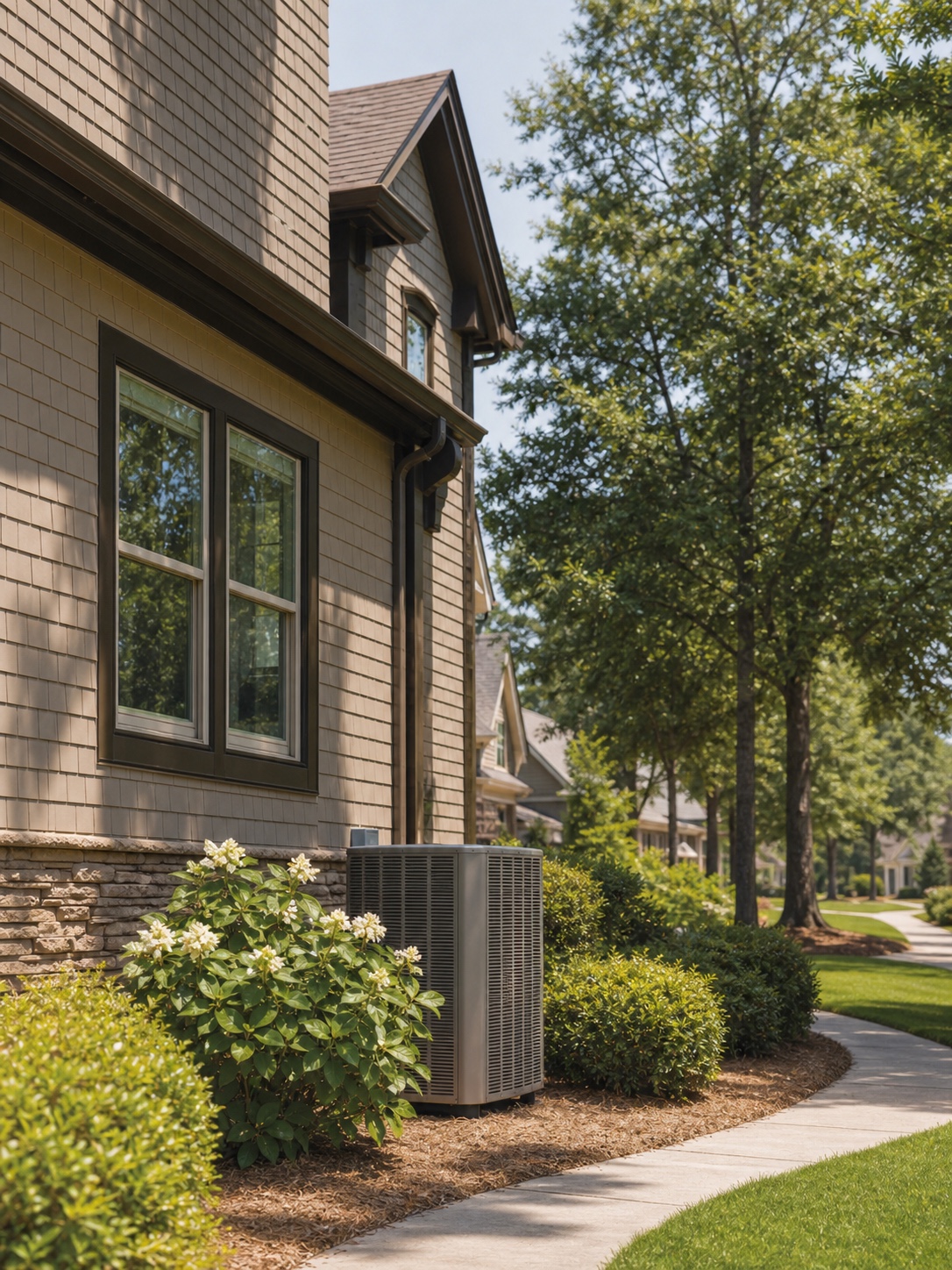
Georgia’s climate is genuinely harder on home appliances than most of the country. Summer temperatures in Johns Creek regularly hit 92–95°F with humidity above 70%. That combination does specific things: it accelerates seal degradation, forces refrigeration systems to work at near-maximum capacity for weeks at a time, and puts HVAC systems under load that northern climates never see.
HVAC filters: monthly in summer, not quarterly
Standard advice says replace HVAC filters every three months. In Johns Creek that’s wrong for summer. A filter running 10–12 hours of AC per day in July and August clogs in four to six weeks. A clogged filter reduces airflow, causes the evaporator coil to ice over, and in the worst case trips the system off on the hottest day of the year.
I use MERV 8 filters (around $6–8 each at Home Depot) and check them monthly from May through September. Hold the filter up to a light source — if you can’t see light through it, replace it. It takes three minutes and costs less than $10. Compared to an emergency HVAC call in August, which runs $150–$300 for a simple fix.
Door seals and humidity
Refrigerator door seals work harder in humid environments because the differential between the cold interior and the warm, wet exterior is greater. A seal that’s starting to crack or lose its magnetic compression allows warm humid air in continuously. The fridge compensates by running the compressor more. You’ll notice it as a slight warmth at the seal edge.
The dollar bill test: close the door on a banknote and pull. There should be noticeable resistance. If it slides out easily, the seal is failing. Replacement seals for common brands like Whirlpool, Samsung, and GE run $20–45 and usually clip or screw in without tools. Do this check every three months on the fridge and freezer both.
4. A practical maintenance schedule (with what skipping it actually costs)
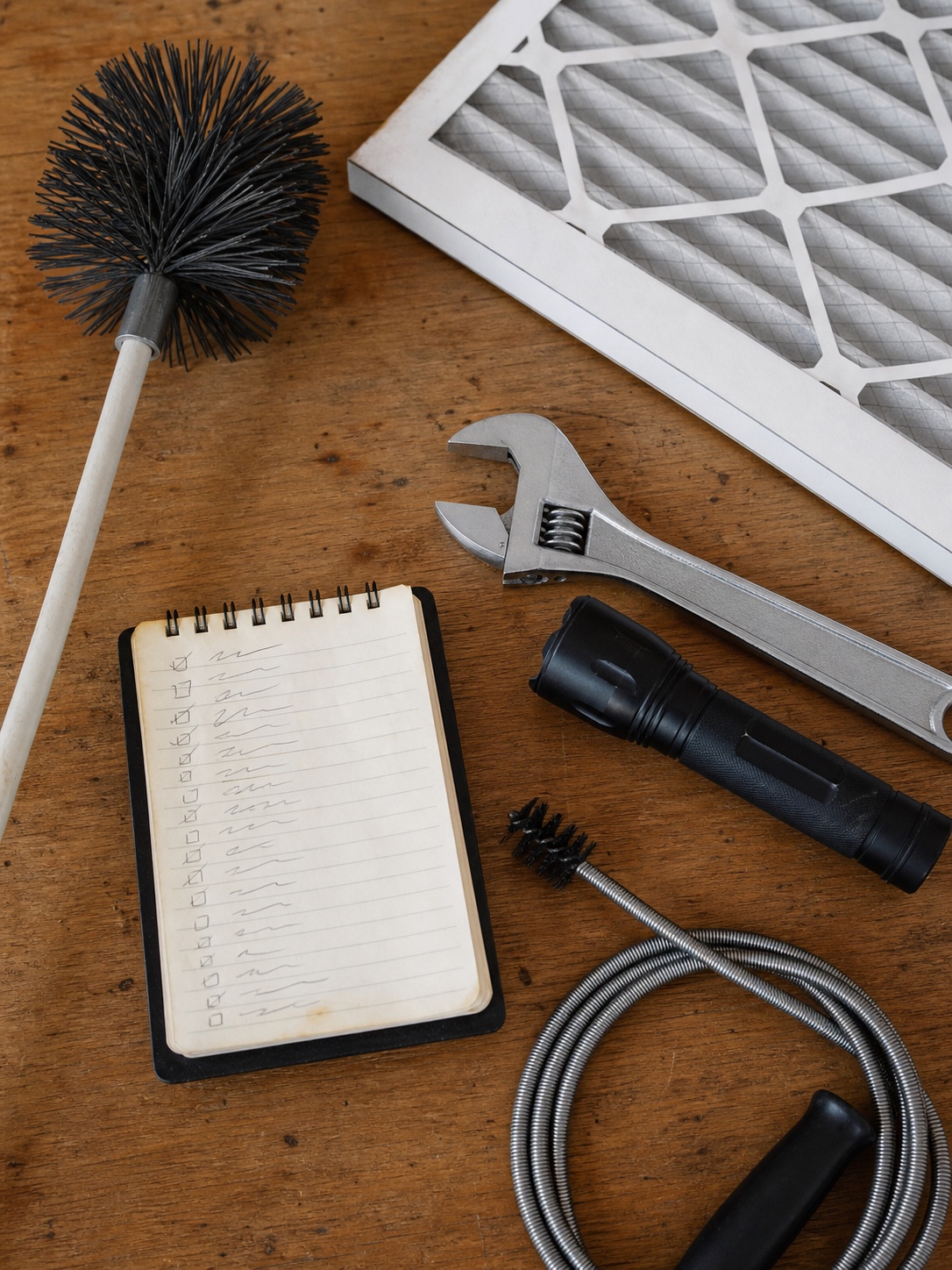
Most maintenance guides give you a task list without the consequence of skipping it. That’s the part that actually changes behaviour. Here’s a realistic schedule with the real cost of ignoring each item — repair costs are based on typical Johns Creek service call rates in 2025–2026.
Home appliance maintenance schedule
| Task | Frequency | Tools needed | Time | Skipping it costs |
|---|---|---|---|---|
| Clean fridge coils | Every 6 months | Coil brush, vacuum | 20 min | 25–30% more energy, early compressor failure |
| Check HVAC filter | Monthly (Georgia summers) | Replacement filter | 5 min | Higher bills, poor air quality, system strain |
| Inspect washer hoses | Annually | Flashlight | 10 min | Water damage can reach $5,000+ |
| Clean dryer vent | Every 6–12 months | Vent brush kit | 30 min | Fire risk, 30% longer drying cycles |
| Test door seals (fridge) | Every 3 months | Dollar bill test | 5 min | Cooling loss, motor overwork |
| Flush water heater | Annually | Garden hose | 45 min | Sediment buildup, 20–25% efficiency loss |
| Check dishwasher filter | Monthly | Soft brush | 10 min | Drainage issues, odors, pump damage |
The washer hose line is the one that surprises most people. A burst washing machine supply hose, the braided rubber type that’s been there since the house was built, can discharge 500–600 gallons per hour. In the time it takes to drive home from work, that’s a flooded laundry room, damaged flooring, and potentially a ruined ceiling below. The replacement cost is $15–25 for a braided stainless steel pair. It’s the highest-value maintenance task on this list.
5. How you use appliances matters as much as how you clean them
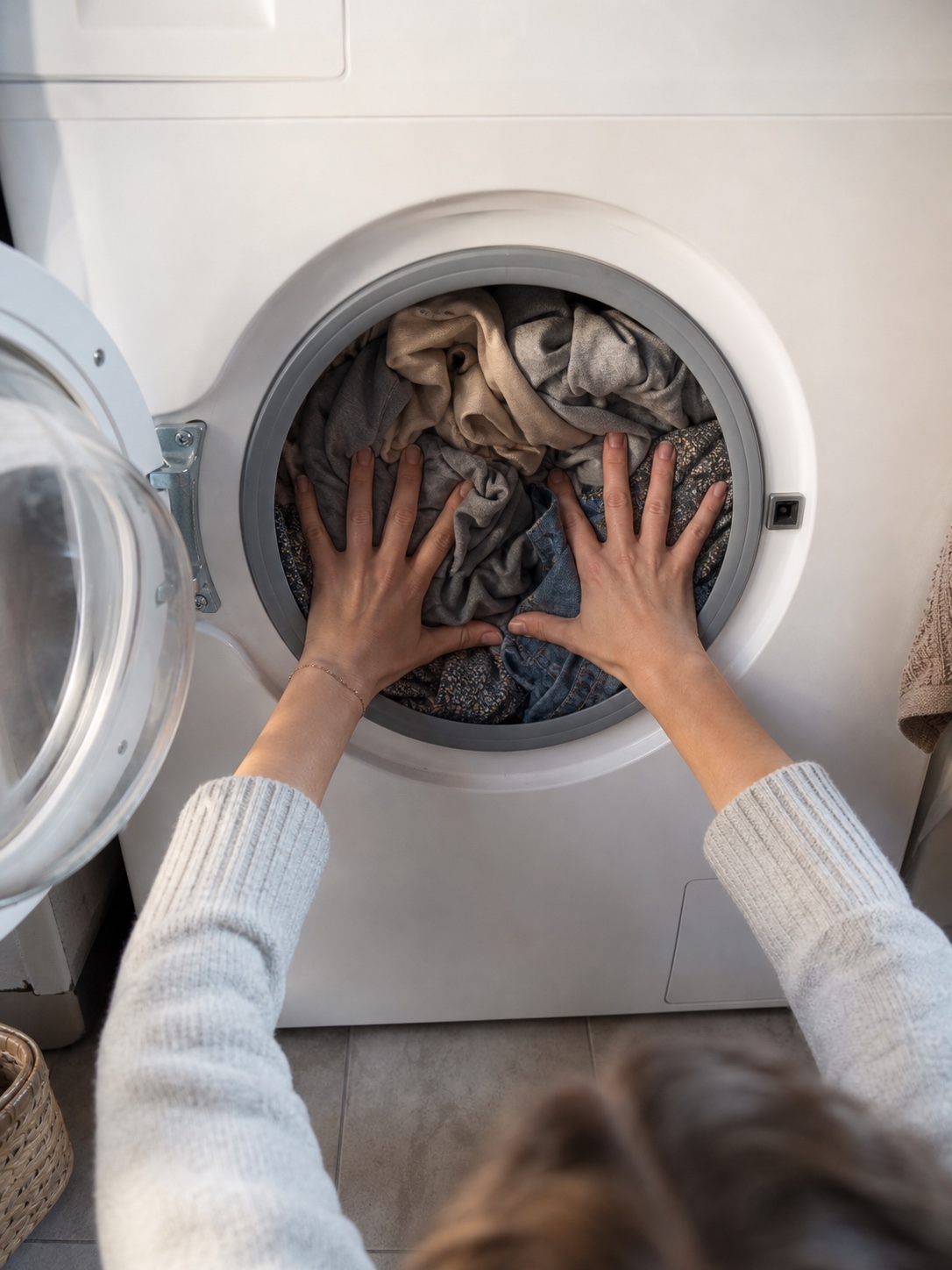
I learned this with the Whirlpool front-loader I had in Germany. It was rated for 7kg loads. I regularly pushed it to 9kg on bedding days because I wanted to get everything done in one cycle. Two years later the drum bearings were worn enough that the machine sounded like a prop plane on spin. The repair technician looked at the bearing wear pattern and told me immediately it was chronic overloading.
Every appliance has an engineered load capacity and the tolerances inside are sized for it. Push consistently above capacity and the degradation is non-linear — you’re not wearing it 30% faster, you’re often wearing specific components 2–3x faster because they’re in a stress range they weren’t designed for.
Washing machines and dryers
Washing machine drum bearings, suspension rods, and shock absorbers are all load-rated. Fill the drum to about 80% capacity — clothes should move freely, not be packed in. For front-loaders, use HE detergent in the correct quantity: too much creates excess suds that don’t drain fully and leave residue that accelerates mould growth in the drum seal.
Dryers: don’t run them without the lint trap cleaned before every load. A blocked trap restricts airflow exactly the same way a clogged vent does — the heating element runs hotter, thermal fuses fail, and drum bearings wear faster in elevated temperature. Two minutes per load. It’s one of those things that seems trivial until the dryer stops working mid-cycle.
Refrigerators and dishwashers
Refrigerators need airflow inside to work properly. Packing shelves tight restricts cold air circulation and forces the compressor to run longer. Leave visible gaps between items, especially around the top shelf where the cold air duct usually terminates. The fridge should feel cold throughout, not just near the back wall.
Dishwashers: run them with full but not packed loads, and scrape plates rather than pre-rinsing. Modern dishwashers are calibrated for some food residue — running them completely clean can actually cause detergent to over-concentrate and damage spray arm seals over time. Check the spray arms monthly for blocked holes (a toothpick clears them) and clean the filter every two to four weeks.
✔ For both washer and dryer, leave the door or lid open for an hour after each use. The interior dries out fully, which prevents mould in washer drums and avoids moisture buildup in dryer cabinets that can corrode wiring over time.
6. Act fast when something actually goes wrong

There’s a list of appliance problems where speed matters not because of inconvenience but because of property damage or safety. These aren’t ‘monitor it for a few days’ situations.
Water leaks from any appliance. A slow drip under the dishwasher or a damp patch behind the washer needs checking today. Water damage to flooring and subfloor compounds quickly, especially in Georgia’s humidity. What looks like a minor leak on Monday can be a significant mould problem by the following weekend.
Burning smell from any motor. Dryer, washer, fridge — if you smell burning rubber or plastic during a cycle, stop the appliance. Don’t run it again until it’s been checked. This usually means a motor winding is failing or a belt is burning on a pulley. These don’t self-resolve.
Gas smell near ovens or dryers. Not a troubleshooting situation. Turn off the appliance, open windows, leave the house, call the gas company. Even a small gas leak near an ignition source is a structural risk.
Repeated tripping of the circuit breaker. An appliance that’s repeatedly tripping its breaker has a fault drawing excess current. Running it again resets the situation temporarily but doesn’t fix the underlying issue, which is usually a failing motor or a short in the control board.
For anything in that list, calling a professional isn’t overcautious — it’s the correct response. A reliable service for appliance repair Johns Creek handles these situations with the diagnostic equipment needed to identify root causes rather than symptoms. The difference matters because a symptom repair that misses the root cause fails again within weeks.
7. Know where DIY ends and professional work begins
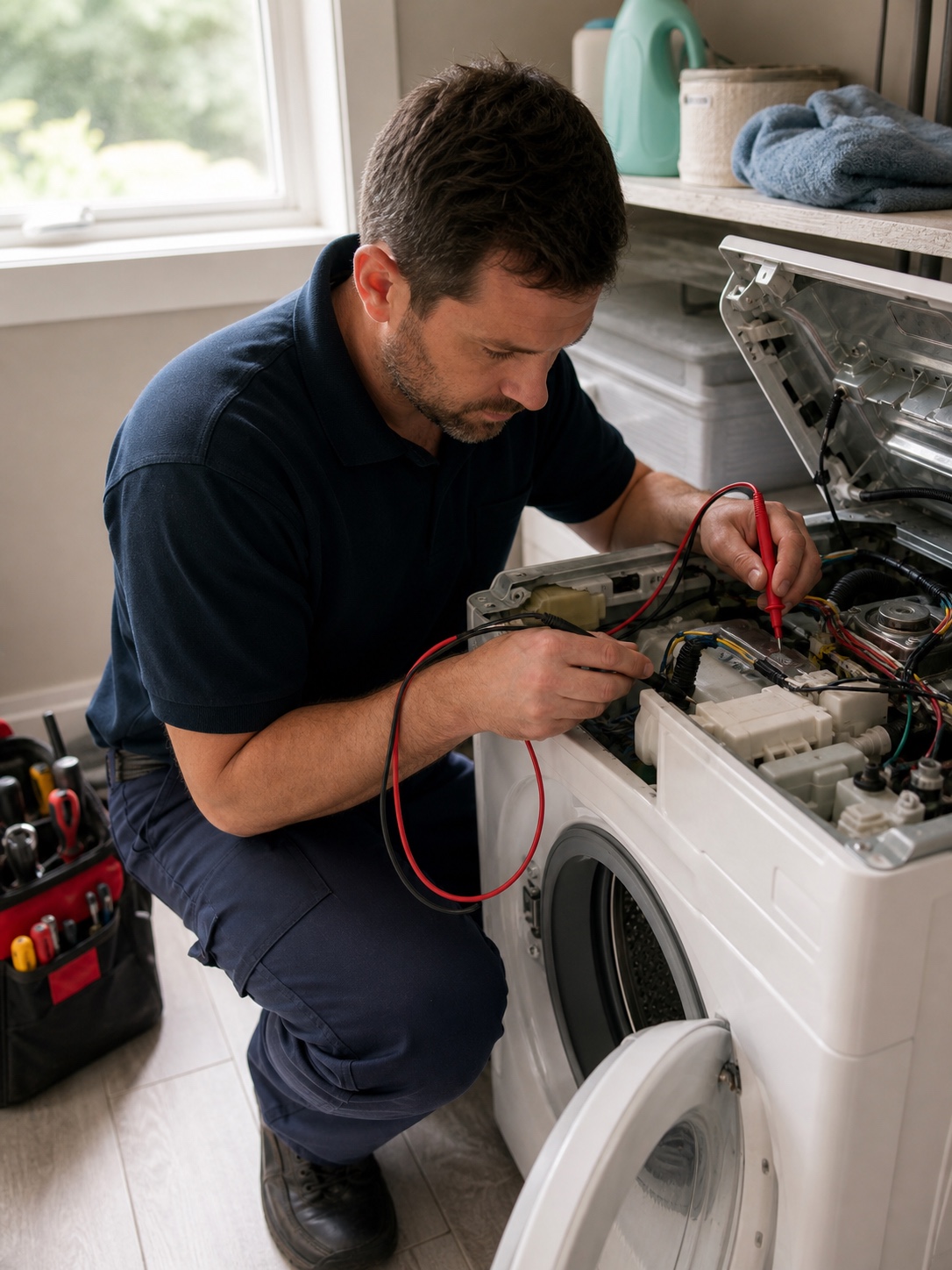
I’m not someone who avoids working on things myself. I’ve replaced car wheel bearings, rewired furniture, built workbenches. But there’s a category of home appliance work where the risk-to-benefit ratio of DIY is genuinely bad, and knowing where that line is matters more than any specific repair skill.
What you can do yourself
Filter replacements, coil cleaning, door seal replacement, drain cleaning, lint trap maintenance, spray arm clearing, water hose replacement — all reasonable. These involve no live wiring, no refrigerant, no gas lines, and the parts are standardized. YouTube has accurate repair videos for most common appliance models. iFixit and AppliancePartsPros both have well-documented repair guides and compatible parts.
What you shouldn’t
Sealed refrigerant systems (the compressor and refrigerant lines of a fridge or AC) require EPA Section 608 certification to legally work on in the US, and the equipment alone costs $500–$2,000. Gas line connections need a licensed plumber or HVAC tech with the right pressure testing equipment. Control board replacements on modern appliances are often fine to do yourself on the parts side — but diagnosing which board has failed without a proper multimeter and service manual usually results in replacing the wrong component.
The honest version: if you’re not confident in the diagnosis, the repair will be more expensive for having been attempted first. A technician who arrives at a machine that’s been partially disassembled incorrectly charges more, not less. When it’s beyond basic maintenance, the math usually favours calling someone who does this daily.
✔ Before calling any repair service, write down: the appliance brand and model number (usually on a sticker inside the door or on the back), approximate age, the symptom and when it started, and any sounds or smells involved. This cuts diagnosis time and often lowers the service call cost.
8. Protect interior finishes from humidity and poor airflow
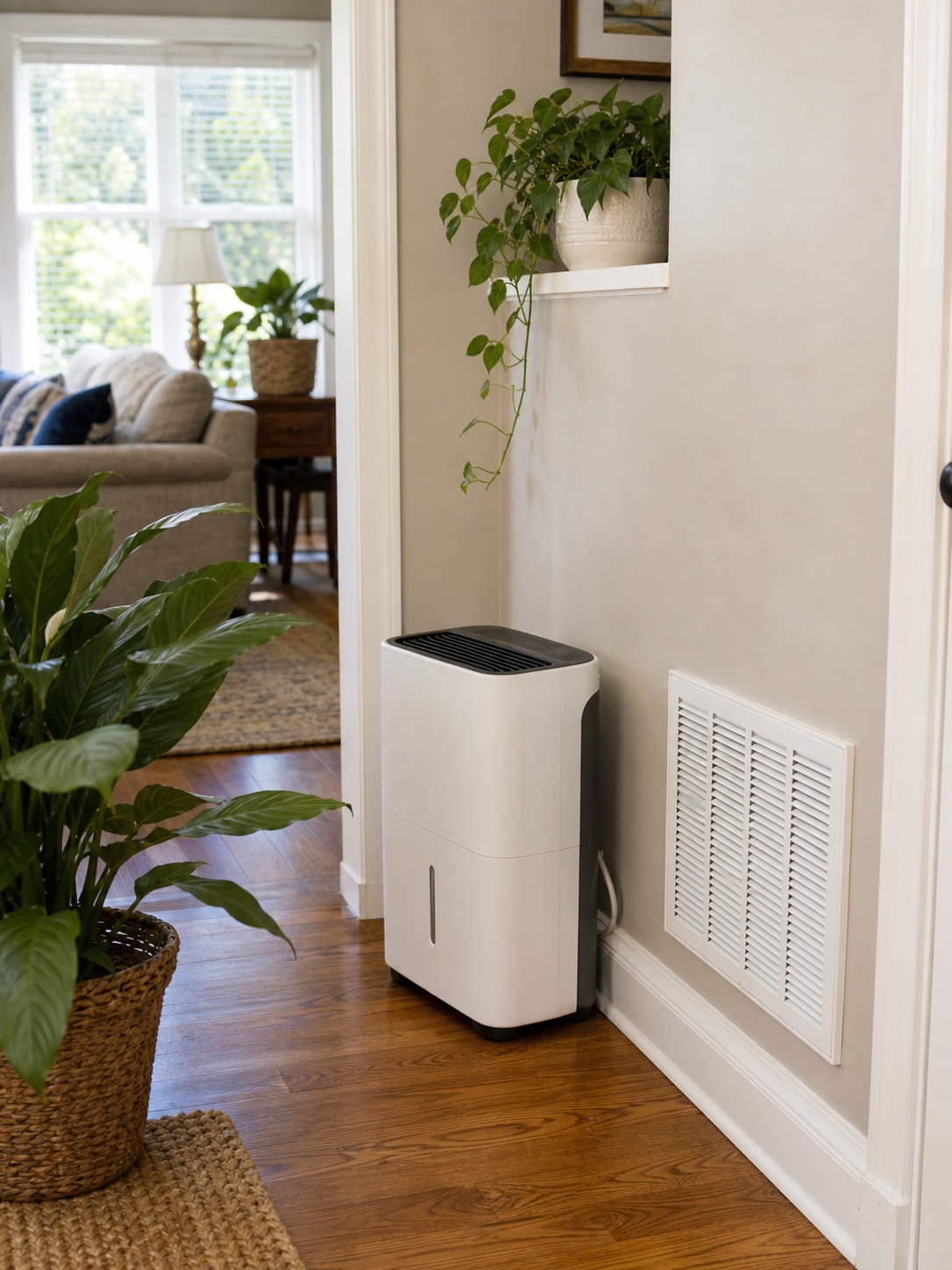
Appliance maintenance gets most of the attention, but Georgia humidity also works on the parts of the house you look at every day: wood floors, cabinet doors, painted trim, closet corners, and the backs of furniture sitting against exterior walls.
In Johns Creek, the problem is rarely one dramatic leak. It is usually slow moisture: bathrooms that stay damp after showers, closets with no air movement, laundry rooms that hold heat after the dryer runs, and sunny rooms where temperature swings make wood expand and contract.
Interior humidity target
Keep indoor humidity roughly in the 40–50% range during summer. A small digital hygrometer costs about $10–15 and tells you quickly which rooms are holding moisture. If a room is consistently above 55%, check the HVAC filter, make sure supply vents are open, and consider a compact dehumidifier for that area.
Airflow and small design choices
Leave a small gap behind large furniture on exterior walls so air can circulate. Use bathroom fans for 15–20 minutes after showers. Keep closet doors open occasionally during humid weeks. If you have rugs over wood floors, lift them once in a while and check for trapped moisture or discoloration underneath.
✔ Once a month in summer, do a quick smell-and-touch check: closets, under-sink cabinets, laundry room corners, and the wall behind big furniture. A musty smell or slightly tacky paint is an early warning sign, not a normal summer feature.
9. Keep the garden and drainage working for the house, not against it
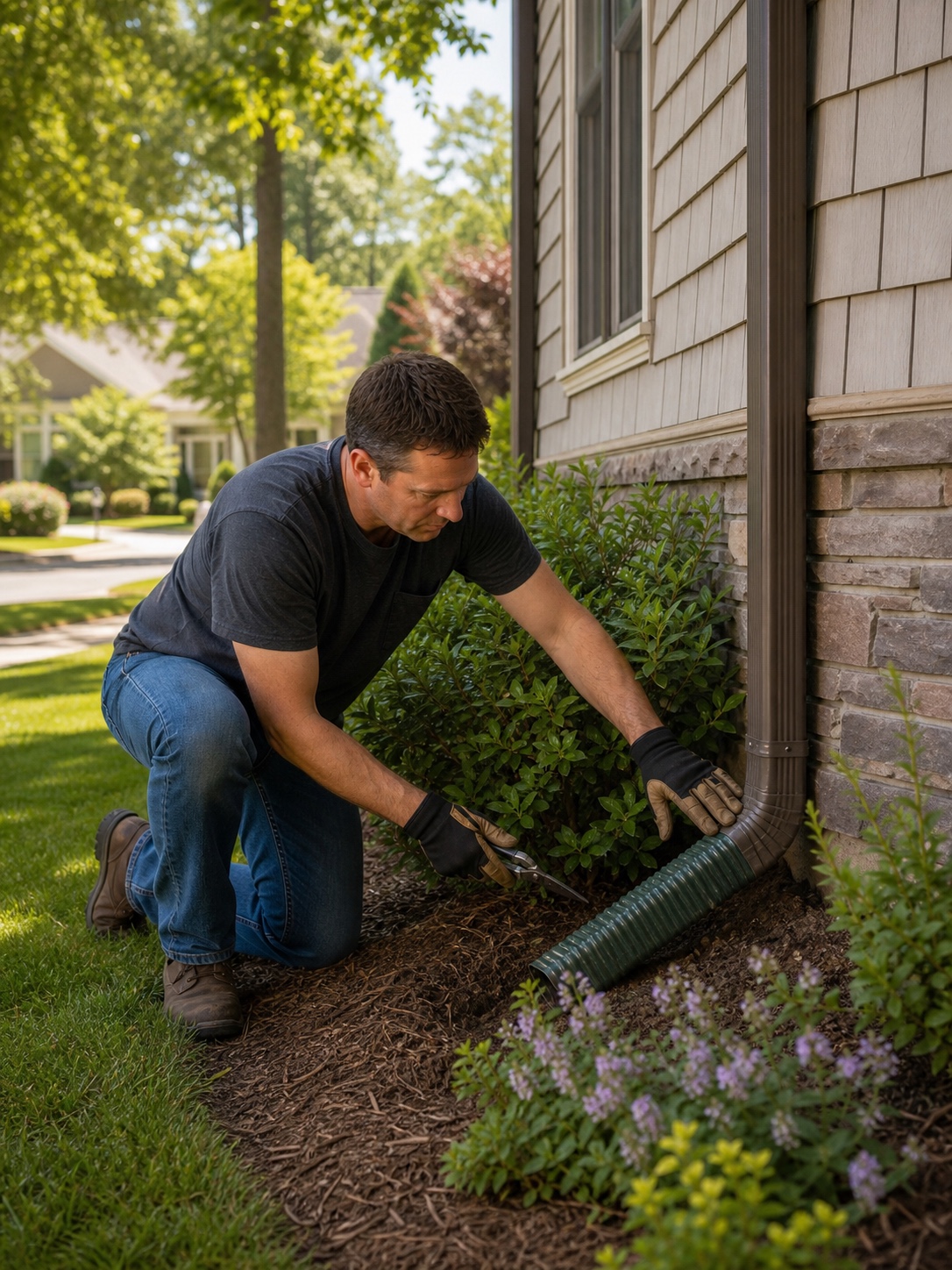
The garden is part of home maintenance whether you think of it that way or not. Landscaping controls how water moves around the house, how much moisture sits against the foundation, and how easy it is for pests to reach siding, vents, and crawlspace openings.
The basic rule: plants should frame the house, not touch it. Shrubs pressed against siding trap moisture and reduce airflow. Mulch piled against the foundation holds water exactly where you do not want it. Downspouts that dump water beside the wall slowly turn small grading problems into basement, crawlspace, or foundation issues.
What to check outside
Keep shrubs trimmed at least 12–18 inches back from siding and exterior vents. Pull mulch a few inches away from the foundation. Make sure downspout extensions send water several feet away from the house. After a heavy rain, walk the perimeter and look for standing water, soil washing away, or splash marks on siding.
Gutters matter here too. A clogged gutter can overflow into fascia, soffits, wall cavities, and planting beds. Clean them in late spring and again after the heaviest leaf drop. If one section always overflows, the issue may be slope, not debris.
✔ Add the garden bed to your maintenance routine: trim back plants, check downspouts, and look at the soil line every season. It is cheaper than repairing water damage that started outside and quietly moved inward.
FAQ: home maintenance tips for Johns Creek homeowners
How often should I clean my refrigerator coils in Johns Creek?
Every six months is the baseline. In Georgia’s climate, where AC runs hard and humidity is high, quarterly cleaning is better if you have pets or if the fridge is in a warmer room. Dirty coils force the compressor to work harder and can reduce appliance life by 30–40%. A coil brush and 20 minutes is all it takes.
What is the most important home maintenance task in Georgia summer?
HVAC filter replacement, monthly from May through September. Georgia summers push air conditioning systems to near-continuous operation. A clogged filter reduces airflow, raises energy bills, can cause the evaporator coil to freeze, and in the worst case shuts the system down during the hottest week of the year. MERV 8 filters cost $6–8 at Home Depot. Check them every four weeks.
How do I know if my washer hose needs replacing?
Check annually for cracking, bulging, or discoloration, especially near the fittings. Most standard rubber hoses fail around the 5–7 year mark. Braided stainless steel replacement hoses (around $15–25 a pair) are significantly more reliable and worth switching to when you move into any home. A burst supply hose can discharge 500+ gallons per hour.
What are the early warning signs an appliance needs repair?
Unusual sounds that weren’t there before: buzzing, clicking, grinding, or rattling. Longer cycle times than usual. Inconsistent temperatures in the fridge or freezer. Higher energy bills without a change in usage. Any single sign appearing consistently for more than a week is worth investigating. Most early problems are inexpensive; the same problems caught late are not.
Is it worth maintaining an older appliance or replacing it?
If the repair is under 50% of the cost of a replacement and the appliance is under 10 years old, maintenance usually wins. Beyond 12–15 years, energy savings from a newer unit often recover the replacement cost within two to three years — particularly for refrigerators and HVAC systems, where efficiency improvements have been significant in the last decade.
How do I clean a dryer vent properly?
Disconnect the dryer from the wall duct. Attach a flexible vent brush kit (LintEater is the most commonly recommended brand, around $35) to a drill and run it through the full duct from inside. Then check and clear the exterior vent cap. Total time: 30 minutes. Do this every 6–12 months, or more frequently if cycles are running longer than they used to.
What maintenance tasks should I do before summer in Johns Creek?
In April or early May: clean fridge condenser coils, replace the HVAC filter, inspect washer and dryer hoses, check fridge and freezer door seals, clean the dryer vent, and do a full appliance sound-check. Georgia summer heat accelerates wear on cooling systems, seals, and anything with a motor. Getting ahead of it before peak heat is significantly easier than chasing failures in August.
When should I call a professional instead of DIY?
Any repair involving gas lines, refrigerant systems, live electrical panels, or electronic control board diagnosis. Also call a professional if you’ve found the symptom but aren’t certain of the cause — replacing the wrong component is expensive and leaves the real problem in place. A good technician with diagnostic equipment identifies root causes, not just symptoms.
Keeping a home in Johns Creek running quietly
The houses that don’t constantly demand attention aren’t the new ones or the expensive ones. They’re the ones where the small things get handled before they become big things. A 20-minute coil cleaning, a $8 filter swap, a quarterly hose check — none of it is complicated. But done consistently, across every appliance, it compounds into a home that runs without drama.
Johns Creek’s climate adds specific pressure: the summers are long and hot, the humidity is real, and cooling systems work harder here than in most of the country. That makes consistency more important, not less.
Start with the maintenance table above, then add the interior and garden checks to your seasonal routine. Pick the two tasks you’ve been putting off longest. Do them this weekend. The rest follows from there.
If door access is part of your maintenance plan, review smart locks for entryway design so the hardware looks intentional while still improving daily security routines.
Driveway cracks are easy to ignore until water reaches the base. If maintenance has turned into replacement planning, this asphalt paving cost guide explains when resurfacing is enough and when a full rebuild makes more sense.
- 22shares
- Facebook0
- Pinterest22
- Twitter0
- Reddit0