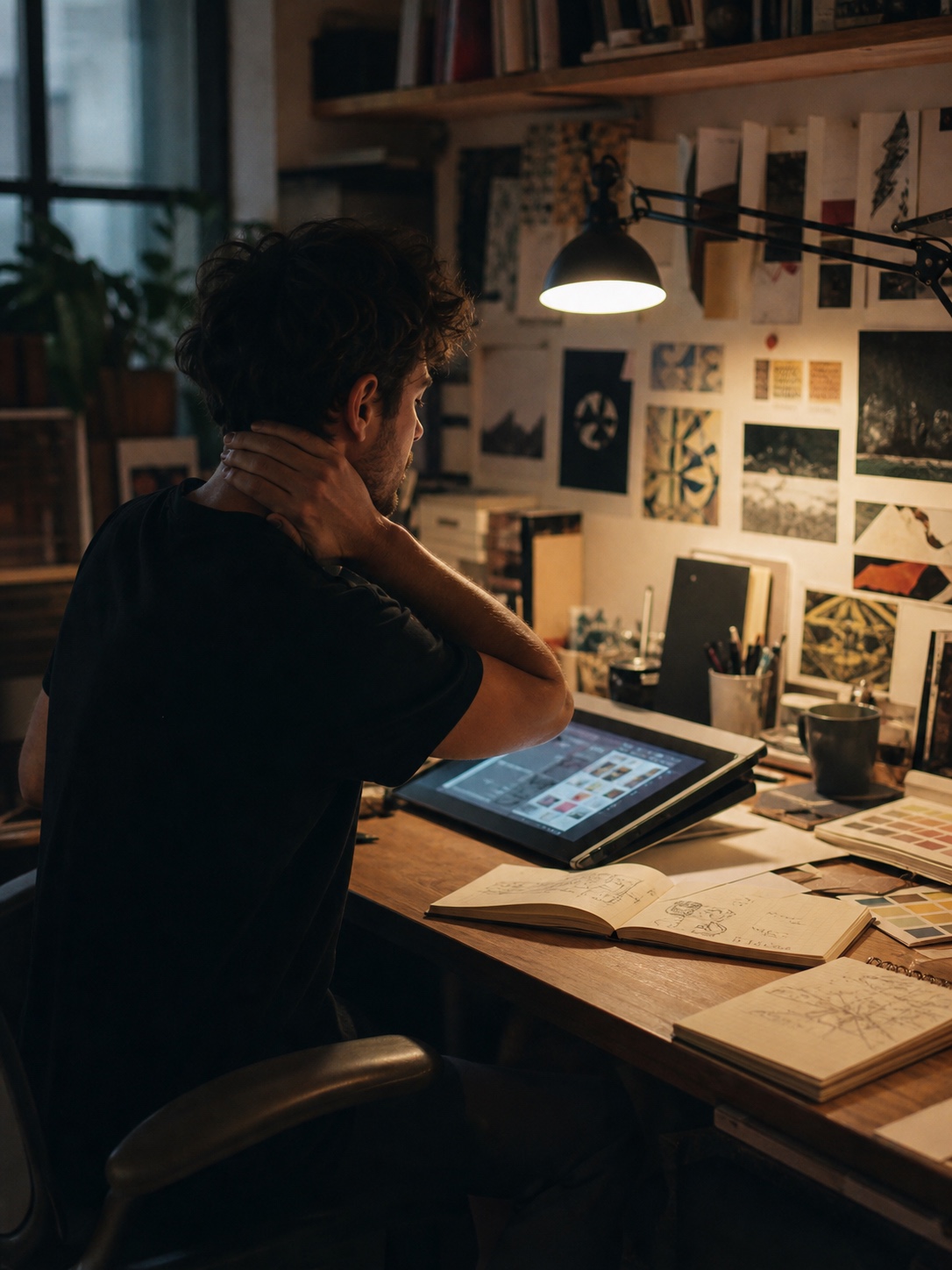
By hour six of a render review, my neck had completely locked up on one side. Not a dramatic injury — it crept in around hour three and just kept going. By the end I couldn’t turn my head left without bracing for it. I’d done nothing physically demanding. No sport, no lifting. Just sat and stared at a screen.
Creative work hurts in a way most fitness content completely ignores. You don’t blow a knee or pull a hamstring. The damage is slower and dumber: the same slight head-forward tilt held for six hours, breathing that gets shallower as the problem gets harder, a trapezius that hasn’t fully released in three weeks, cortisol sitting elevated because the deadline doesn’t care about your recovery. Standard gym content doesn’t know what to do with this. Passive recovery — done right — actually does.
This covers the passive recovery methods that actually matter if you work with your hands and your attention. What each one does in the body. Which ones target the problems that drawing, designing, and making things create. And how to fit them into a real schedule, not a hypothetical one.
The Specific Physical Problem Creative Work Creates
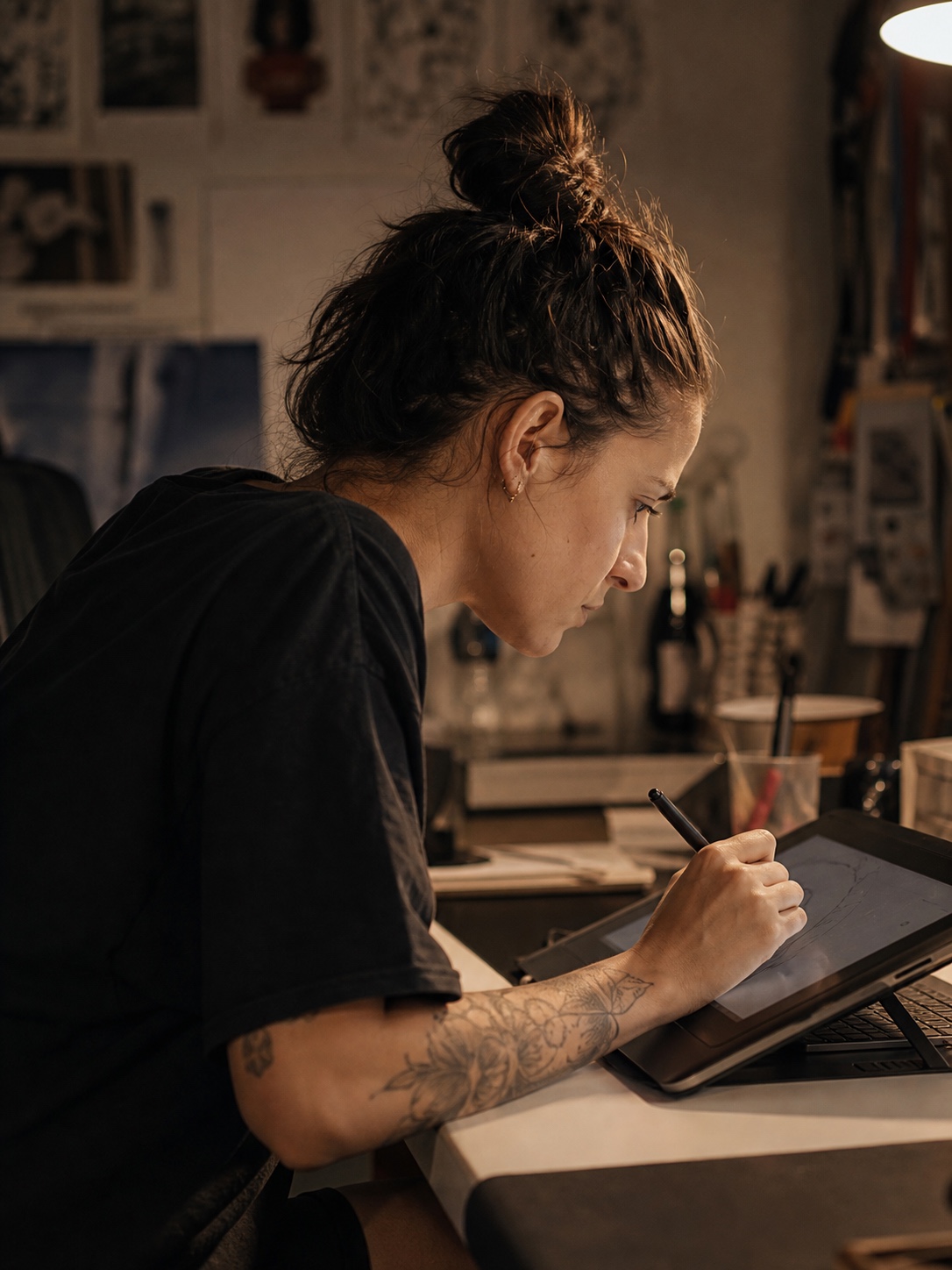
Sitting isn’t neutral. Sitting still with your head tilted forward and your arm moving in the same small arc for four hours is a physical stress. It just doesn’t feel like one until day three of a big project, when your neck is stiff before noon and you’re not sure why.
Upper trapezius and neck loading. When your head tilts forward to focus on a screen or drawing surface, the load on your cervical spine spikes fast. At neutral the head is about 5 kg. At 15 degrees forward — a normal working tilt — it’s 12. At 45 degrees it’s 22 kg. Most illustrators and designers sit somewhere in that 15 to 30 degree range for hours. Your trapezius holds that load the whole time. It never stops. There’s no rest between sets.
Forearm and wrist repetition. Illustrators and digital designers make thousands of small movements per session. Each one is nothing. But across six hours of linework or precise cursor control, those contractions stack up in the forearm, hand, and fingers until you get the thing most long-form artists know: the dull ache that sets in around hour four, the stiffness when you put the pen down, the occasional numbness that you’ve probably been ignoring.
Shallow breathing and CO2 accumulation. Deep focus makes breathing shallower without you noticing. It’s not dramatic. You’re just moving less air. Less oxygen exchange, slower metabolic clearance, and somewhere around hour four you’re sitting in the fog that feels like tiredness but isn’t quite.
Cortisol and deadline stress. Deadline pressure keeps cortisol elevated for weeks, sometimes months. That matters because elevated cortisol wrecks sleep quality and slows tissue repair. The exhaustion you feel at the end of a heavy project isn’t just mental. Your body has been running hot the whole time and hasn’t had a chance to clean up.
A sprinter’s body knows when work ends. Yours doesn’t. The mental load and the static posture continue across days, weeks, projects, without the hard stop that sport gives you. That’s why passive recovery has to do something specific — actually interrupt the pattern — not just be a relaxing way to spend an hour.
Sauna and Heat Therapy: The Mental Reset with Physical Consequences
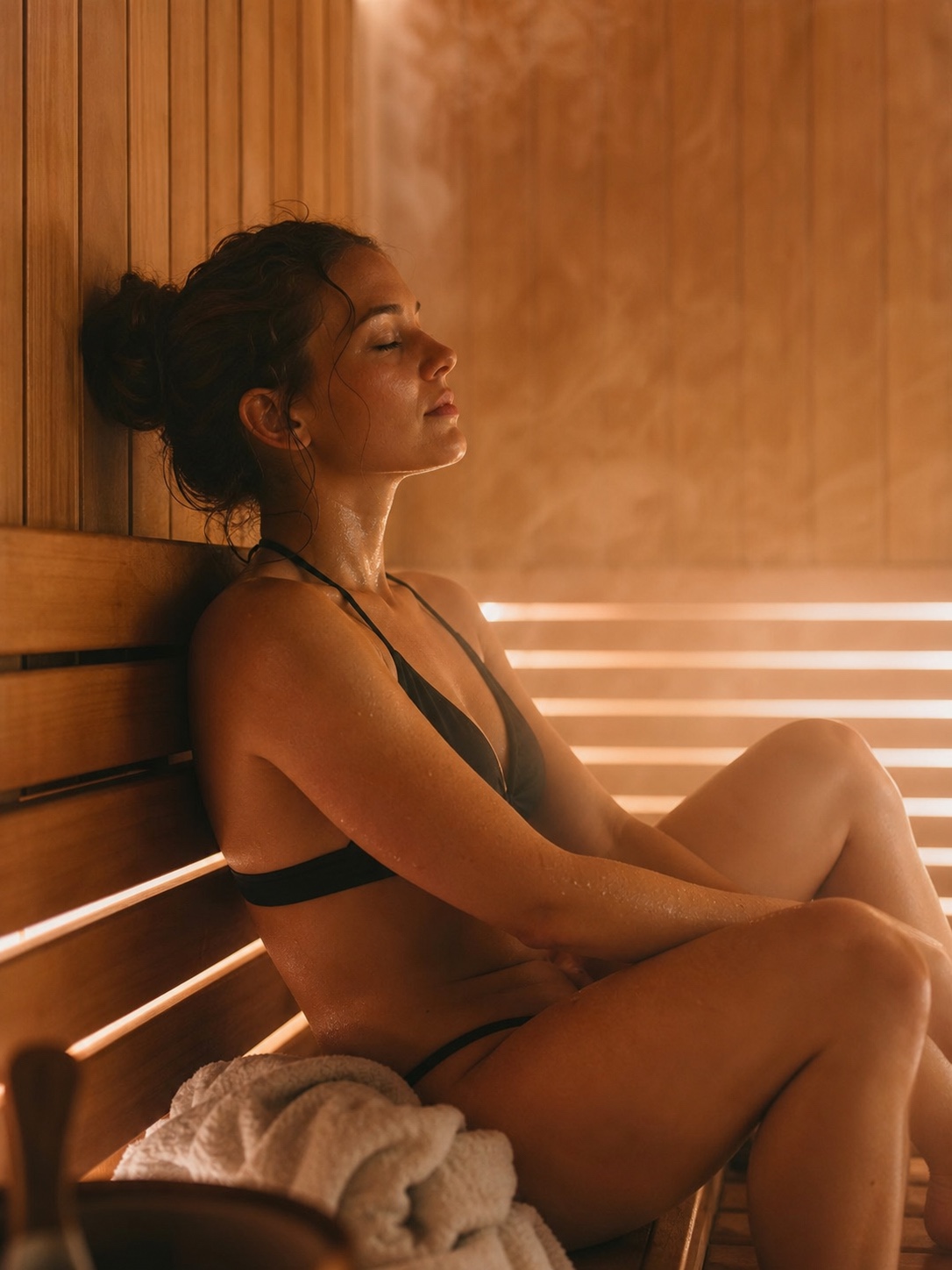
The sauna does something no other passive recovery method does as efficiently: it forces complete disengagement. You cannot bring a phone, a sketchbook, or a problem into a 90°C room and stay there for twenty minutes. The heat demands your full attention just to breathe and maintain comfort. For people whose occupation keeps the brain continuously active, this compelled idleness is its own form of recovery.
The physiological mechanisms are well-documented. Heat raises core temperature, which increases heart rate to circulate blood to the skin for cooling — a process that burns 200 to 500 kcal per session depending on duration and individual response. More relevant to creatives: the heat causes vasodilation throughout the body, including the chronically contracted muscles of the neck, shoulders, and forearms. The effect is similar to deep tissue massage: the tissue warms, blood flow increases, and the muscle lets go of the sustained contraction it’s been holding.
Cortisol drops measurably after sauna sessions. Regular use three to four times per week improves sleep quality, which is where the most important creative recovery happens — during REM sleep the brain consolidates the visual and conceptual information processed during the day. Better sleep means better creative output the next morning, and the relationship between them is direct.
Traditional vs Infrared for Creative Recovery
Traditional saunas operate at 80–95°C with low humidity. Infrared saunas heat the body directly at lower ambient temperatures (50–60°C), which many people find more tolerable for longer sessions. For the neck and shoulder tension that creatives specifically accumulate, both work through the same vasodilation mechanism. The choice often comes down to tolerance: if high heat feels overwhelming after an already demanding day, an infrared session at lower ambient temperature achieves similar tissue effects.
Hot Tub and Hydrotherapy
The buoyancy of water removes gravitational load from the spine and joints, and the heat provides the same vasodilation benefit as sauna. For illustrators and designers with chronic lower back and neck loading, water immersion gives the supporting musculature a genuine rest that no land-based position achieves. If you’ve been wondering whether a Hot Tub Help You Lose Weight, the calorie burn is real but modest — the more relevant benefit for creative professionals is the decompression effect on a body that’s been load-bearing for eight hours at a desk.
EMS Training: Counteracting the Muscle Atrophy of Sedentary Creative Work
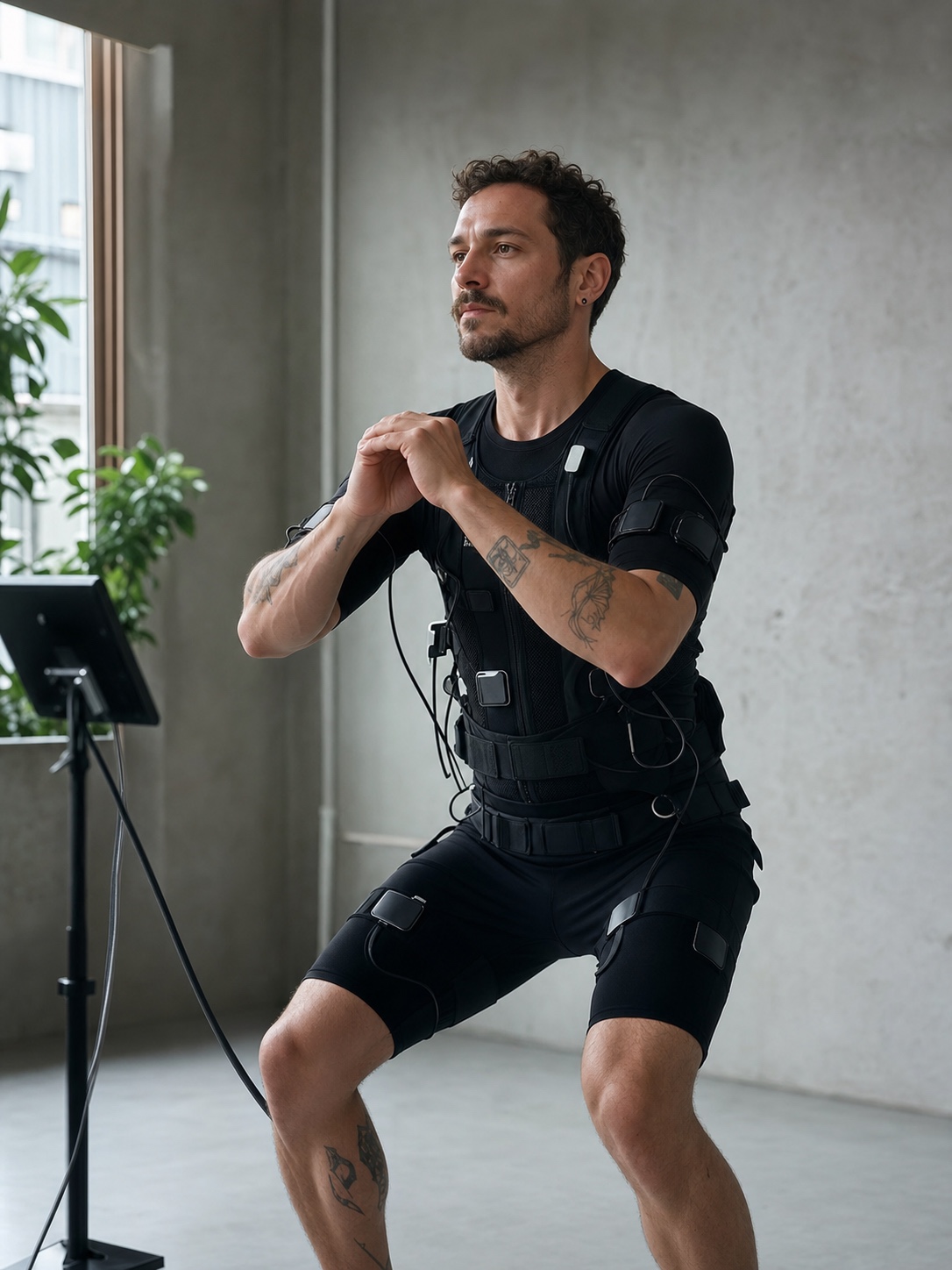
The sedentary nature of most creative work produces a slow erosion of baseline muscle condition that accumulates invisibly over months and years. It shows up as fatigue that arrives earlier in the workday, difficulty maintaining the posture that good work requires, and an energy level that drops through the afternoon regardless of sleep. This is not burnout — it is deconditioning, and it responds to muscle activation.
EMS (Electrical Muscle Stimulation) addresses this by delivering electrical pulses that force muscle contractions independent of voluntary movement. A 20-minute EMS session recruits a high percentage of muscle fiber simultaneously, producing metabolic demand comparable to a moderate workout without requiring the joint loading or coordination that conventional exercise demands. The FDA regulates clinical EMS devices, and the evidence base for muscle activation and modest fat loss is solid.
For creative professionals specifically, the relevance is timing and format. A 20-minute EMS session can happen before or after a studio session, requires minimal space, and does not produce the post-exercise fatigue that makes returning to detailed work difficult. It is not a replacement for conventional exercise, but it maintains the baseline muscle condition that creative work quietly depletes.
Two to three sessions per week is the standard recommendation. Clinically certified devices (not low-power consumer beauty tools) run $300 to $1,500. The investment is significant; the payoff for someone whose work depends on sustained physical presence at a desk is meaningful over months.
EMS for Creatives: What to Expect
Sessions: 20–30 minutes. Frequency: 2–3 times per week. Physical sensation: involuntary muscle contractions, tingling, warmth. Post-session: mild muscle soreness similar to light gym work, dissipating within 24 hours. Schedule it on days you don’t have critical fine-motor work in the hours immediately after.
Compression Therapy: Solving the Circulation Problem of Desk Work
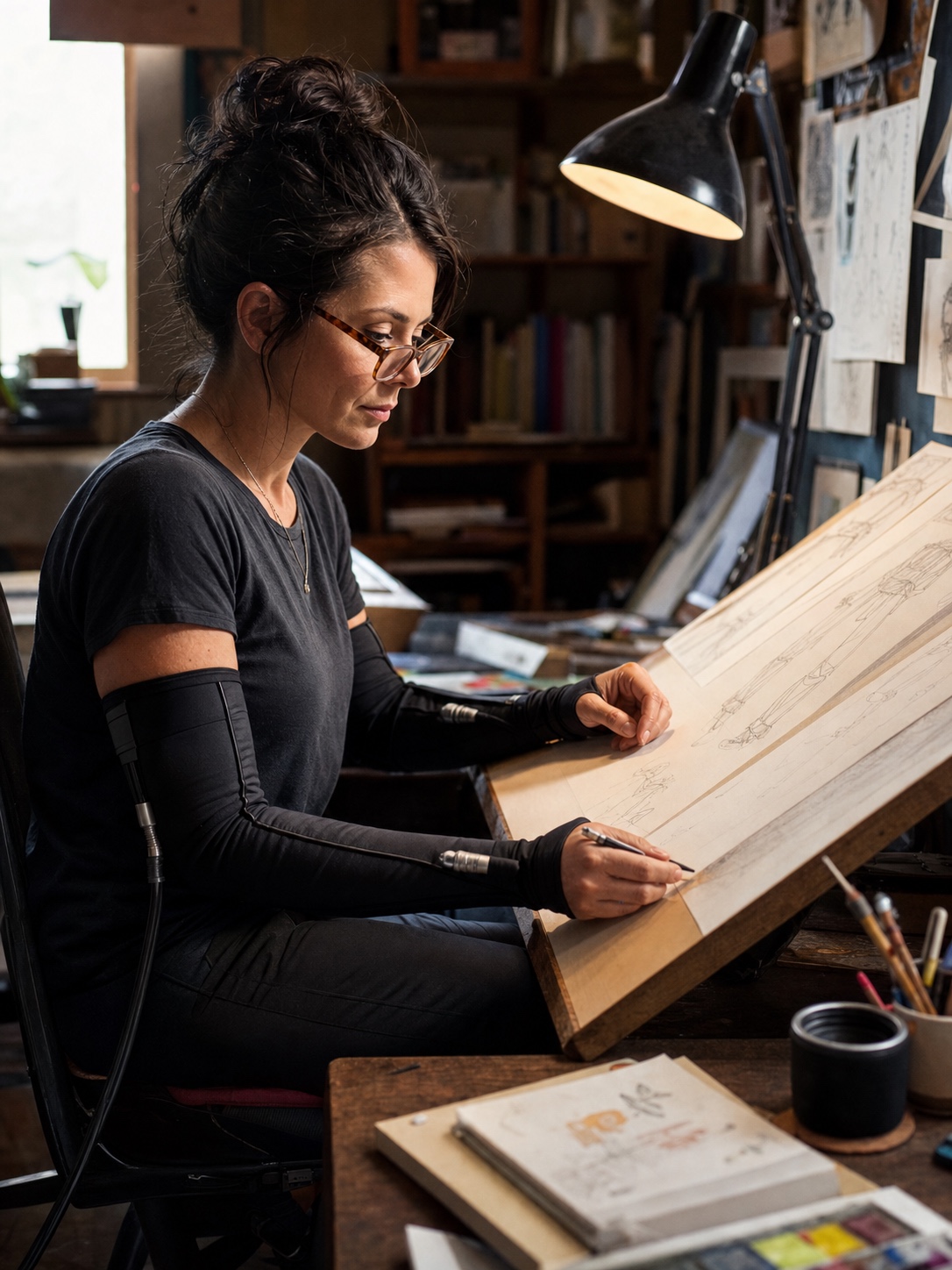
Sitting compresses the venous return from the lower body. Blood pools in the legs and feet. Lymphatic flow slows. This is why legs feel heavy and swollen after a long studio day, and why the combination of compression from seated position plus repetitive forearm use can produce significant forearm and hand fatigue in illustrators and digital artists.
Pneumatic compression devices use inflatable sleeves to mechanically move fluid through the lymphatic and venous systems. The process is passive: you sit with the device running and it moves the fluid your reduced activity level isn’t moving. The result is reduced swelling, faster clearance of metabolic waste products from muscle tissue, and a measurable reduction in the heaviness and fatigue that accumulate through a long session.
For illustrators specifically, compression sleeves designed for the arm and hand address the specific accumulation zone of repetitive fine-motor work. The effect is not dramatic in a single session, but regular use three to five times per week produces a consistent reduction in the forearm tension that, left unaddressed, eventually affects the quality and duration of detailed work.
A compression session runs 20 to 45 minutes and is completely compatible with passive leisure: reading references, reviewing work, or simply decompressing. It asks nothing of you physically and can run in the background of other recovery activities.
Whole-Body Vibration and Passive Stretching: Daily Maintenance Tools
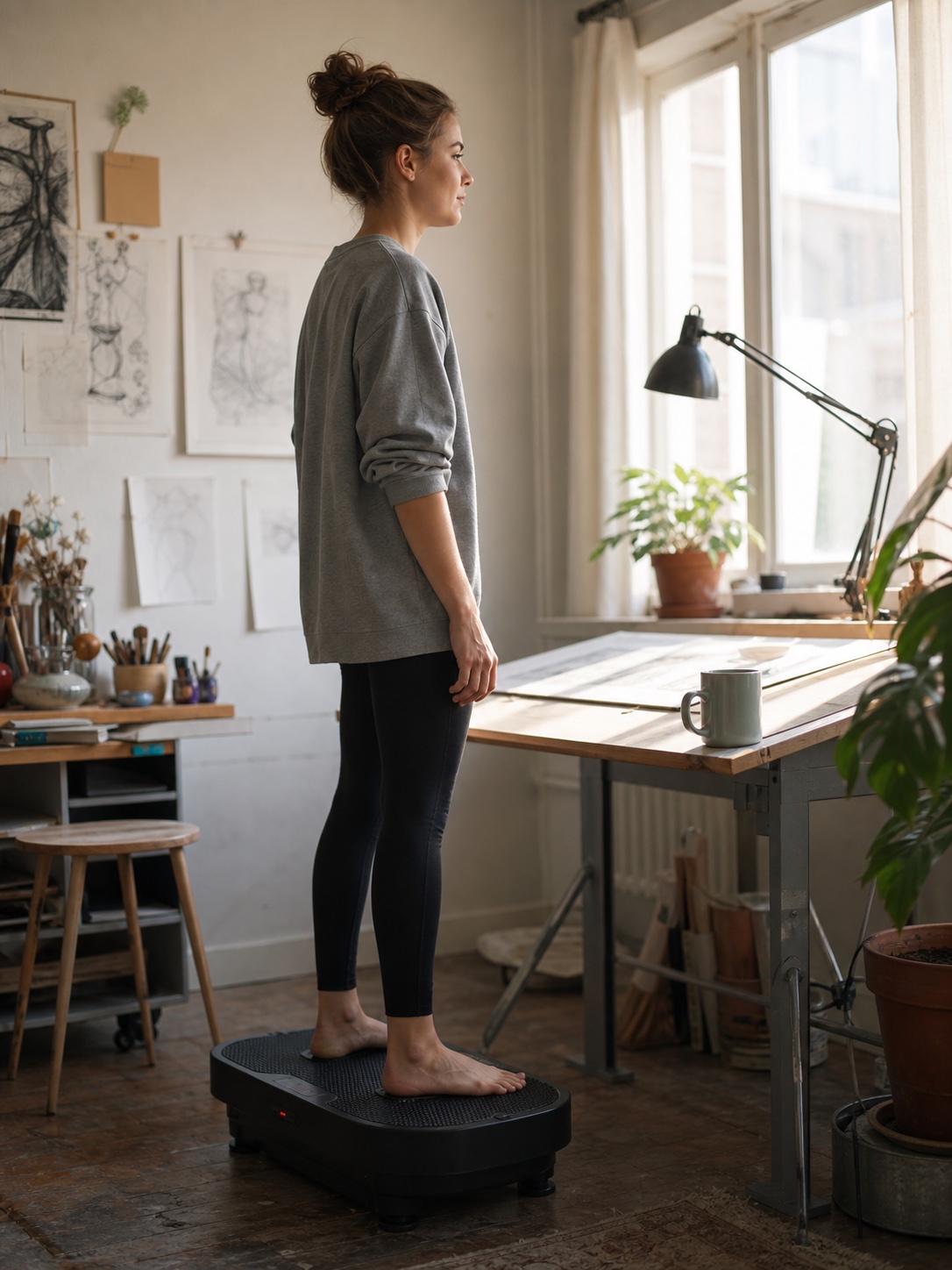
Whole-body vibration platforms oscillate at frequencies that force the musculature to make continuous stabilizing micro-contractions. The calorie burn is modest (150 to 300 kcal per session) but the circulatory effect is real: ten minutes on a vibration platform meaningfully increases blood flow and warms tissue that has been stationary. For a designer who has been sitting for three hours and needs to continue, a ten-minute vibration break accomplishes more than a cup of coffee in terms of actual tissue state.
The platform footprint is small (roughly 70 x 50 cm) and the time investment is low. Used as a transition ritual between focus sessions — ten minutes at a vibration platform when switching from detailed work to a review meeting, or between morning and afternoon studio sessions — it provides the circulatory reset that sedentary work prevents.
Passive stretching machines work on a complementary mechanism: they move joints through a range of motion that the body’s own flexibility restrictions prevent, without requiring the user to do the work of achieving that range. For creatives with chronically shortened hip flexors from sitting, restricted shoulder rotation from sustained arm positions, or locked thoracic spine from desk posture, 15 to 30 minutes of assisted stretching addresses tissue restrictions that conventional stretching often can’t reach.
Build stretching into transitions rather than treating it as a separate session. Fifteen minutes of passive stretching at the end of a studio day, while reviewing reference images or listening to a podcast, costs nothing in productive time and maintains the range of motion that sustained desk work systematically reduces.
Building a Passive Recovery Practice Around a Creative Schedule
Recovery starts before the sauna or compression session; these hydration rituals for creatives are an easy baseline for studio days that run longer than planned.
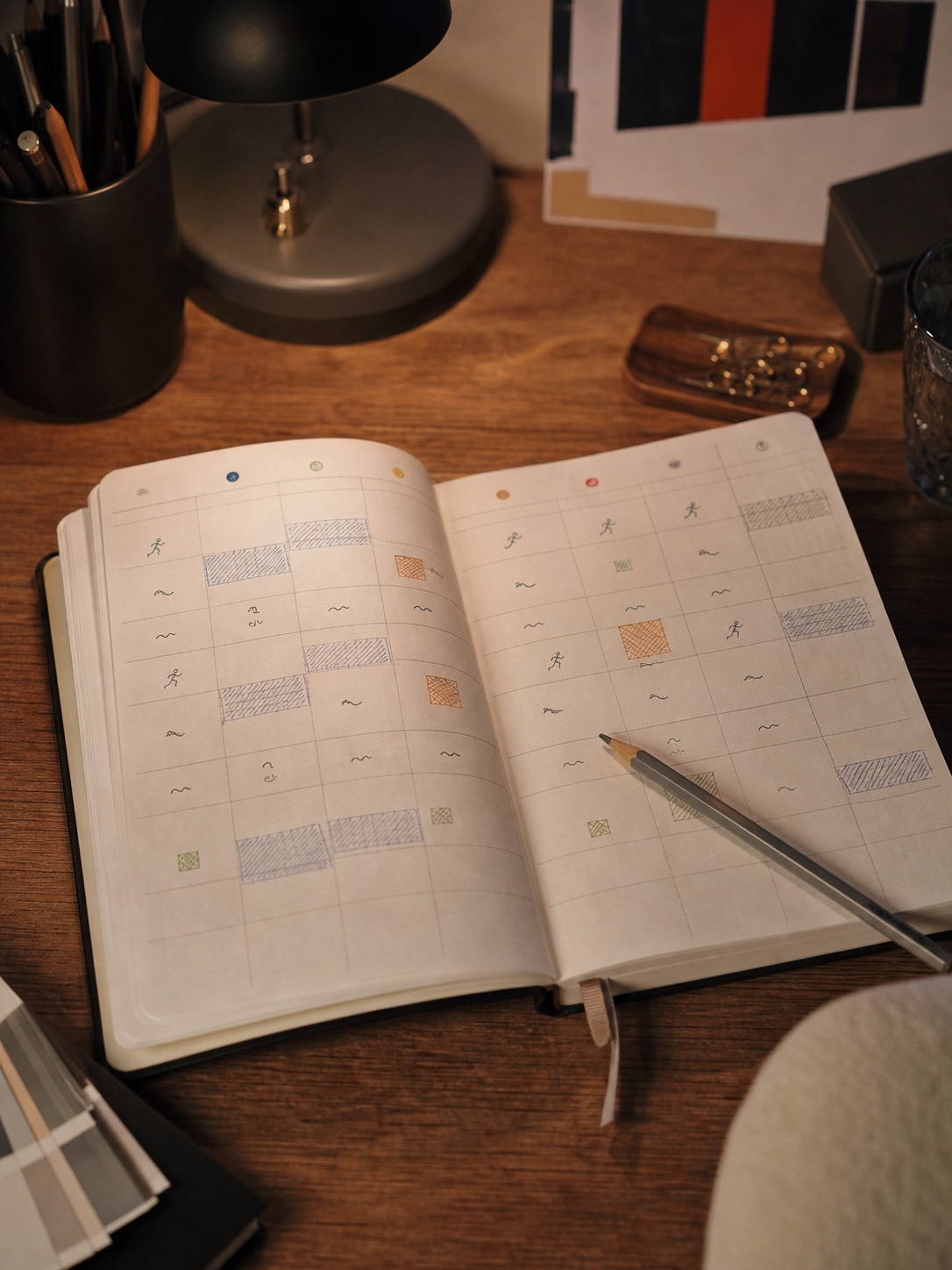
The failure mode of most recovery advice for creatives is that it proposes a practice that conflicts with the actual structure of creative work. “Do an hour at the gym before starting” works if your studio hours are fixed and your creative energy is consistent. For most independent artists and designers, neither is true.
A passive recovery practice that fits creative work treats recovery as something that happens around the work rather than instead of it. Heat in the evening after a long day, not the morning before it. Compression during reference review or client call prep, not as a separate appointment. Vibration as a five-minute transition, not a workout block.
A Week That Works
Morning: Ten minutes on a vibration platform before the first studio session. Sets circulation baseline for the day. Zero cognitive cost.
Mid-session transition: Passive stretching for shoulders and neck between major work phases. Can happen at the desk with a strap or roller. Five to ten minutes.
Post-studio (2–3 evenings/week): Sauna or hot tub session. Twenty to thirty minutes. This is where the cortisol drop and sleep quality improvement happens.
Recovery days: EMS session (20 minutes) plus compression (30 minutes). Can be sequential. Total time: under an hour. Does not require changing clothes or travelling to a gym.
The cumulative effect of this practice over four to six weeks is a body that handles sustained creative work better: less accumulated neck and shoulder tension, more consistent energy through afternoon hours, better sleep, and the ability to maintain detail-level work for longer before the physical discomfort that forces stopping.
Method Summary for Creatives
Use this table to match passive recovery methods to the specific physical problems your creative work produces.
| Method | Creative Problem It Solves | Session Length | Frequency |
|---|---|---|---|
| Sauna / Hot Tub | Mental fatigue, cortisol buildup, poor sleep | 15-25 min | 3-4x/week |
| EMS Training | Muscle atrophy from sedentary work, low energy | 20-30 min | 2-3x/week |
| Compression Therapy | Swelling and heaviness in hands, legs, forearms | 20-45 min | 3-5x/week |
| Whole-Body Vibration | Circulation, back stiffness from long desk sessions | 10-20 min | 4-5x/week |
| Passive Stretching | Neck, shoulder, wrist tightness from repetitive work | 15-30 min | Daily |
| Infrared Sauna | Deep tissue recovery, chronic low-grade inflammation | 20-40 min | 3-4x/week |
What Passive Recovery Cannot Do
Passive recovery supplements active fitness; it doesn’t replace it. The muscle atrophy of years of primarily sedentary creative work accumulates faster than EMS or vibration can counteract it without some form of conventional exercise in the mix. Walking, swimming, cycling. Whatever is genuinely sustainable addresses the cardiovascular and structural baseline that passive methods cannot build from scratch.
Sleep is also not a passive recovery method — it’s the primary recovery mechanism, and passive methods like sauna and hot tub work partly because they improve it. If sleep quality is poor, addressing that directly (sleep hygiene, room temperature, stimulus management in the evening) produces more recovery benefit than adding another sauna session.
The honest summary: passive recovery is a genuine tool for creative professionals dealing with the specific physical toll of sustained desk work. It addresses real problems (muscle tension, poor circulation, elevated cortisol, forearm fatigue) with methods that fit into a creative schedule without disrupting the work itself. Used consistently alongside reasonable sleep and some baseline physical activity, the effect on creative output and physical sustainability is real and measurable. Used as a substitute for both of those things, the results are limited.
Start with the method that addresses your most pressing physical problem. If it’s neck and shoulder tension: sauna. If it’s forearm and hand fatigue: compression. If it’s energy depletion and poor sleep: a consistent evening heat practice. If it’s general muscle deconditioning from years of desk work: EMS. Add the others gradually, building a practice that fits how you actually work rather than how a fitness calendar says you should.
FAQ: Passive Recovery for Creatives
What is passive recovery?
Passive recovery refers to methods where an external force or stimulus does the physical work rather than your own voluntary effort. For creatives this includes sauna heat loosening muscle tension, EMS devices contracting muscles electrically, compression sleeves moving lymphatic fluid, and vibration platforms forcing stabilizing micro-contractions. These methods reduce the physical toll of sustained desk work without requiring significant time or energy.
How does passive recovery help artists and designers specifically?
Creative work produces predictable physical problems: neck and shoulder loading from forward head posture, forearm fatigue from repetitive fine-motor work, poor circulation from sitting, and elevated cortisol from deadline pressure. Sauna releases muscle tension and drops cortisol. Compression therapy clears forearm and hand fatigue. Vibration improves circulation. Together they maintain the physical condition that sustained creative work requires.
How often should creatives use sauna for passive recovery?
Three to four sessions per week of 15 to 25 minutes each is the range supported by evidence for sleep quality improvement and cortisol reduction. The most effective timing for creative professionals is post-studio in the evening, producing the cortisol drop and body temperature decrease that improve sleep onset and quality.
Can EMS training replace going to the gym?
No. EMS produces real muscle activation and meaningful calorie burn, but it does not train the cardiovascular system or produce the structural adaptations that conventional exercise builds. For creatives who struggle to maintain regular exercise, EMS two to three times per week maintains baseline muscle condition. It is a supplement to occasional conventional exercise, not a replacement.
What passive recovery method is best for hand and wrist fatigue in illustrators?
Compression therapy is the most targeted option. Pneumatic compression sleeves for the arm, hand, and fingers mechanically move the lymphatic and venous fluid that accumulates from repetitive fine-motor work. A 20 to 30 minute session after a long illustration session produces measurable reduction in heaviness and stiffness. Regular use three to five times per week maintains the working hand in ways that rest alone does not.
How long does it take to see results from passive recovery?
Most creatives notice reduced muscle tension and improved sleep quality within one to two weeks of consistent use at three to four sessions per week. The compounding benefits including better sustained energy and reduced forearm fatigue accumulate over four to six weeks. Consistency matters more than duration of individual sessions.
- 65shares
- Facebook0
- Pinterest65
- Twitter0
- Reddit0