Understand industrial design master’s programs
If you are looking to become a more versatile product designer, exploring the best industrial design master’s programs can be an exciting step in your academic journey. A graduate degree in industrial design goes beyond simply sketching new concepts or studying design theory. It provides a comprehensive pathway to refine your approach to problem-solving, technical proficiency, and aesthetics. By combining hands-on studio work with advanced research, these programs often immerse you in real-world scenarios, preparing you for a diverse range of careers, from automotive design to UX/UI development.
Pursuing a master’s in industrial design can help you stand out in a highly competitive market. According to research from MastersPortal.com, employers increasingly seek designers who bring both creative vision and analytical expertise to the table. You might learn advanced digital modeling, understand manufacturing constraints, and cultivate a user-centric mindset that addresses functional, economic, and environmental factors. Ultimately, the depth of graduate-level training can propel your creative strategies, shape your professional philosophy, and expand your network among faculty and peers who share your passion for design.


Many programs also integrate interdisciplinary experiences. You could collaborate with engineers, marketers, or software developers on complex projects that mimic modern industry needs. Whether you want to focus on furniture, consumer goods, public infrastructure, or interface design, a master’s degree fosters skills to prototype, communicate concepts effectively, and manage the full development cycle. If your schedule is tight, you can even explore online industrial design programs. Schools now adapt to your needs by offering flexible or hybrid study options, letting you gain valuable expertise while balancing professional and personal responsibilities.
Below, you will find a curated list of standout industrial design master’s programs from around the globe. Each offers a unique perspective, from STEM-designated degrees that support international students in the United States to schools that top global rankings for their students’ practical skills in product design. If you want to explore advanced academic settings that cultivate your creative and professional growth, these programs are worth a closer look.
Explore top programs
1. Stanford University (Stanford, CA)


Stanford University’s graduate program in industrial and product design is part of the School of Engineering. Praised for its innovative curriculum and strong collaborative culture, it has earned an average user review of 5 stars on Niche (Niche). You can expect a broad exposure to user-centered design, engineering principles, and entrepreneurship.
Program highlights
- Established reputation: Stanford is internationally renowned for cutting-edge research and ties to Silicon Valley, giving you access to a thriving startup ecosystem.
- Interdisciplinary approach: Working alongside engineers, business students, and computer scientists, you experience real-world project dynamics and build a robust portfolio.
- High-tech facilities: Labs include rapid prototyping spaces, advanced 3D printing equipment, and collaborative studios, letting you iterate designs swiftly.
- Emphasis on collaboration: Students often praise the supportive environment, where you can bounce ideas off peers and faculty.
Potential challenges
- Competitive admissions: The standard for acceptance is high. You will need a strong academic background, a compelling portfolio, and a clear statement of purpose.
- High cost of living: Stanford is situated in the San Francisco Bay Area, where housing and living expenses can be steep.
2. Georgia Institute of Technology (Atlanta, GA)
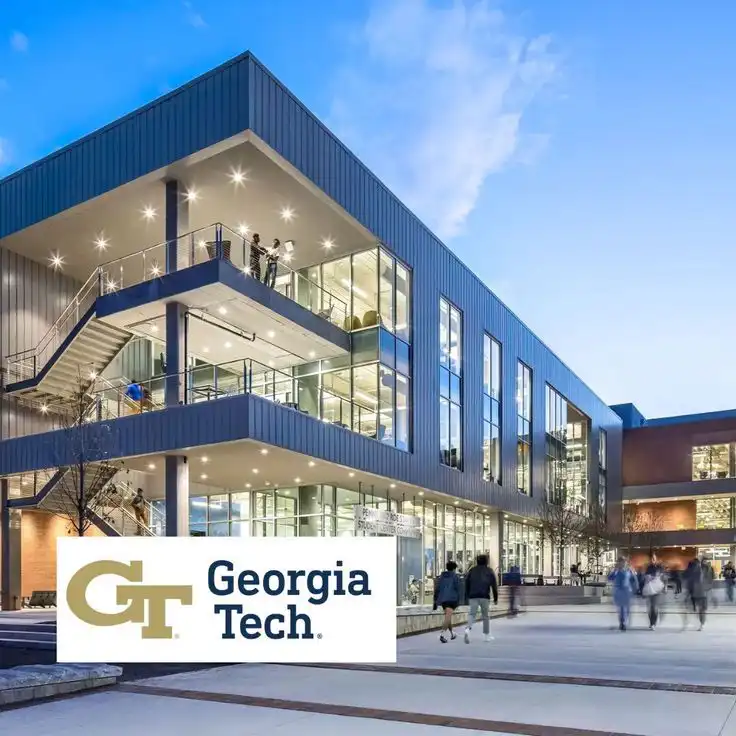

Georgia Tech’s College of Design provides a graduate industrial design program with a 4-star average rating on Niche (Niche). Known for its technical orientation, Georgia Tech focuses on merging design thinking with engineering rigor.
Program highlights
- Technological expertise: Robust coursework in user-centered design, additive manufacturing, and design software integration positions you to tackle complex product challenges.
- Strong faculty support: Faculty members are generally accessible, often bringing real-world industry connections to the classroom.
- Interdisciplinary resources: You can collaborate on multi-departmental projects, forging pathways into autonomous systems or interactive design.
- Entrepreneurship opportunities: Atlanta’s flourishing startup scene can expand your internship and networking prospects.
Potential challenges
- Teaching style variability: Some students note differences in teaching quality among faculty, so you might need to adapt to various instructional methods.
- Busy workload: Balancing rigorous engineering courses with design studios demands strong time-management skills.
3. Parsons School of Design at The New School (New York, NY)
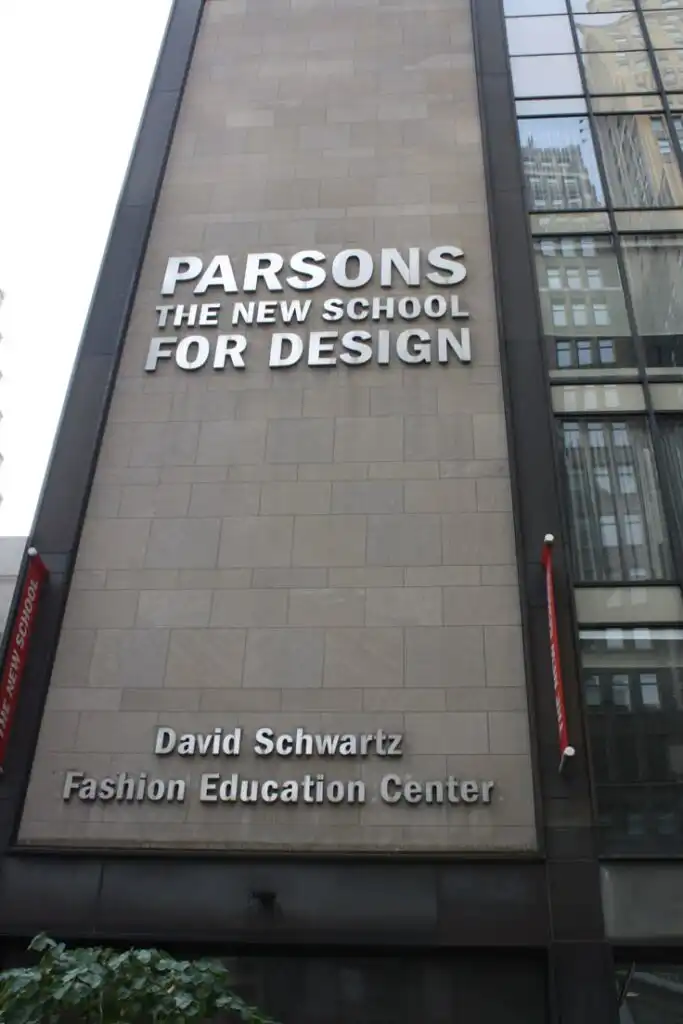
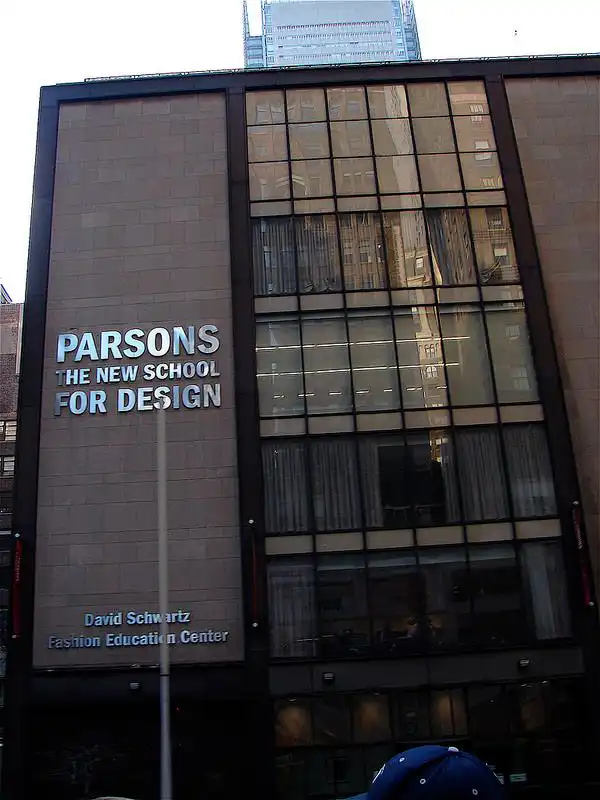
Parsons is often recognized for its emphasis on critical thinking and portfolio-intensive admissions. It carries a 4.6-star average from 23 user reviews on Niche, reflecting satisfaction with its immersive, challenge-driven environment (Niche).
Program highlights
- Rigorous portfolio process: You are encouraged to apply with a diverse array of design samples, which sets a high standard even before classes begin.
- Global context: Located in New York City, Parsons leverages the city’s creative ecosystem, giving you exposure to design studios, galleries, and industry events.
- Conceptual depth: Coursework often examines the social impact of design, sustainability, and the role of aesthetics in everyday life.
- Diverse collaborations: You can work with faculty from various design disciplines and connect with leading fashion, interior, and product designers.
Potential challenges
- Intense coursework: The design studio environment can be highly demanding. Thick skin and time management skills are essential.
- Urban lifestyle costs: Living in Manhattan or nearby boroughs can take a toll on your budget, especially if you need studio space at home.
4. ArtCenter College of Design (Pasadena, CA)

ArtCenter College of Design’s master’s program boasts a 4.6-star average from 12 user reviews on Niche (Niche). Known for its industry-forward mindset, ArtCenter blends conceptual creativity with practical skill-building.
Program highlights
- Faculty investment: Professors are celebrated for being deeply involved in student projects, helping you refine each detail of your work.
- Industry partnerships: The school has a strong network of collaborations with corporate clients and sponsors, letting you tackle real briefs and enrich your portfolio.
- Specialized studios: You will have access to advanced equipment, automotive studios, immersive VR labs, and more, fostering an environment where disruptive design processes can flourish.
- Career preparation: Alumni often enter roles in product design, branding, automotive design, and UX/UI at well-known companies.
Potential challenges
- High-pressure environment: Critiques are direct, which helps push your skills but might feel overwhelming if you prefer a more laid-back atmosphere.
- Tuition expenses: Private art colleges can be costly, so reviewing scholarship and financial aid opportunities early is wise.
5. School of the Art Institute of Chicago (Chicago, IL)
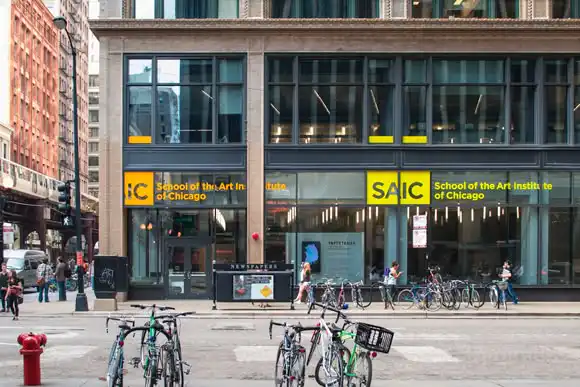
SAIC offers a holistic approach to industrial design that merges artistic exploration with product-focused fundamentals. It garners an average rating of 4.2 stars from 37 Niche users, with reviewers often praising the transformative learning environment (Niche).
Program highlights
- Blended arts and design: You can explore a cross-disciplinary approach, integrating fine arts perspectives into product ideation and creative solutions.
- Creative freedom: SAIC encourages experimentation, meaning you can venture into conceptual design or specialized fields like wearable technology.
- Vibrant city context: Chicago is rich in cultural institutions and innovation hubs, which can translate into unique internship and networking opportunities.
- Resourceful faculty: Professors and visiting artists typically bring diverse expertise, from conceptual art to cutting-edge industrial design.
Potential challenges
- Balancing theory and application: SAIC’s strong arts inclination might require you to proactively shape your technical and business-oriented design experiences.
- Competitive environment: Admission standards and the high expectations during critiques can be demanding for some students.
6. North Carolina State University (Raleigh, NC)

NC State’s Master of Industrial Design stands out for its practical admissions approach—GRE scores are not required as of the 2024 intake (NCSU College of Design). The program values broad design perspectives and welcomes portfolios that highlight your depth of creativity and problem-solving.
Program highlights
- Portfolio-friendly application: You can showcase project presentations, photography, sketches, and storyboards to convey your style, making the admissions process more holistic.
- Competitive fees: The application fee is $85 for U.S. applicants and $95 for international applicants, which is relatively standard among public institutions.
- Need-based and merit scholarships: Financial aid opportunities come from university-wide funds, the College of Design, and the department itself.
- Holistic design approach: You learn to address social, functional, aesthetic, and economic constraints to conceptualize meaningful products.
Potential challenges
- Specific submission process: You must use the official online portal; the university does not allow admissions decisions via email.
- Balancing large projects: Like many design programs, you might juggle intensive group projects, making time management critical.
7. Arizona State University (Tempe, AZ)


ASU’s Master of Industrial Design is recognized as a STEM degree, enabling international students to benefit from the Optional Practical Training (OPT) extension and providing expanded GI benefits for veterans (Arizona State University). The program is housed in The Design School, part of the Herberger Institute for Design and the Arts.
Program highlights
- STEM-designated degree: This CIP code classification helps international graduates extend their stay in the United States for work experience.
- NASAD accreditation: ASU has been accredited by the National Association of Schools of Art and Design since 2001, demonstrating a long-standing commitment to design quality.
- Interdisciplinary environment: The Herberger Institute fosters collaboration among various artistic and design disciplines, encouraging you to incorporate multiple perspectives into your projects.
- State-of-the-art facilities: You have access to modern studios, workshops, and digital learning tools.
Potential challenges
- Large institution: ASU is one of the biggest public universities in the U.S. While resources can be plentiful, you might need to be proactive in finding mentors and forging smaller design communities.
- Fast-paced curriculum: Meeting rigorous coursework deadlines means you need to stay organized and self-motivated.
8. Rhode Island School of Design (Providence, RI)
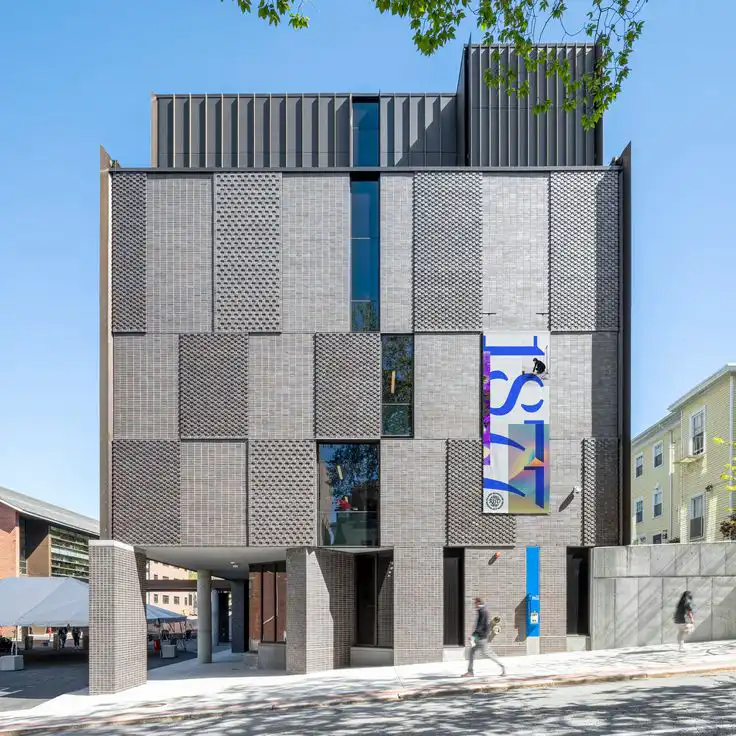
Rhode Island School of Design (RISD) is frequently cited among the top U.S. industrial design master’s programs for its rigorous approach and well-established industry links (The Art Career Project). With a history of cultivating remarkable creative talent, RISD challenges you to connect functional designs with deeper artistic expression.
Program highlights
- Intensive studio culture: You will immerse yourself in hands-on work that explores materials, processes, and user needs in depth.
- Curated environment: RISD’s reputation in fine arts merges with industrial design to expose you to a wide range of visual and design techniques.
- Industry partnerships: Project collaborations with global companies can help you build a strong network for future employment.
- Comprehensive curriculum: Courses integrate theory with rigorous workshops, prompting you to think critically about the social impacts of product design.
Potential challenges
- Highly competitive admissions: Expect an emphasis on a standout portfolio and strong references to join this small, prestigious community.
- Demand for conceptual depth: While practical skills are valued, you are also expected to push conceptual boundaries, which can feel intense.
9. Carnegie Mellon University (Pittsburgh, PA)


Carnegie Mellon University (CMU) is another major player in industrial design education, bridging design, engineering, and human-computer interaction. According to The Art Career Project, CMU fosters robust connections to industries where technology and design intersect (The Art Career Project).
Program highlights
- Emphasis on interdisciplinary design: CMU’s culture encourages you to collaborate with the School of Computer Science, the Integrated Innovation Institute, and other departments.
- Strong research backing: From AI to robotics, CMU’s extensive research network can inform your design projects in transformative ways.
- User-focused approach: The curriculum highlights user experience, ensuring that final products or systems meet real human needs.
- Location advantage: Pittsburgh’s evolving tech industry offers internship and project opportunities, often bridging the gap between academia and professional life.
Potential challenges
- Intensive curriculum pace: Balancing design thinking, technical research, and team-based work demands dedication and resilience.
- Competitive environment: Like many prestigious institutions, CMU takes only top candidates. Prepare a thoroughly polished portfolio and abridged design statement.
10. Howest University of Applied Sciences (Belgium)

If international study interests you, Howest University of Applied Sciences claimed the top spot in The Rookies Global School Rankings for Product and Industrial Design in 2024 (The Rookies). This European institution stands out for emphasizing digital art portfolios and industry relevance.
Program highlights
- Rookies #1 ranking: The selection process at The Rookies involved over 6,800 student participants and 200 industry judges, indicating a high level of skill and creativity from Howest’s students.
- Digital portfolio excellence: You learn to master a versatile range of creative software, aligning your portfolio with modern industrial design trends.
- Project complexity: Evaluations focus on not just aesthetics, but also conceptual depth, technical mastery, and employment potential.
- Students from around the world: Howest draws a global crowd, letting you expand your network beyond local borders.
Potential challenges
- Relocation logistics: Pursuing a degree in Belgium means navigating visa and housing processes as an international student.
- Language considerations: While many courses are English-taught, living in a multilingual environment may require extra language support.
Choose the right program for you


When you set out to find your ideal master’s in industrial design, you want to consider more than just rankings. Ask yourself how each school’s philosophy aligns with your career goals. Some programs emphasize high-tech innovation—great if you want to work on the next transformative wearable device. Others highlight aesthetics and conceptual experimentation, suiting you if you prefer artistic freedom and creative expression.
Location plays a significant role too. Being in a city teeming with design studios or tech startups can open internship and extracurricular opportunities. Equally, a smaller campus community might give you more individualized attention and tighter faculty relationships. Look for programs offering financial aid or scholarships, and check if you meet any GRE or portfolio requirements. As industries demand deeper digital and engineering knowledge from designers, you might also look at whether the program integrates courses on multimedia, web design, or advanced prototyping.
Before you commit to a school, be sure to chat with current students or alumni to get an inside look at the daily culture. Attend virtual or on-campus open houses if possible, and personalize your questions: How involved are faculty in guiding projects? Are there opportunities for professional internships? Does the school foster ties to the industries that interest you most? Finding a program that resonates with both your personal learning style and your professional ambitions will set you up for a more impactful experience.
Frequently asked questions (FAQs)

1. Why pursue a master’s in industrial design instead of starting work right away?
A master’s degree can deepen your technical abilities, expand your design thinking, and enhance your career prospects by connecting you with influential faculty and industry networks. Pursuing advanced studies also lets you refine your portfolio, potentially pushing you into higher-level or more specialized roles once you enter the workforce.
2. Do I need a specific undergraduate degree to apply?
Many programs are open to applicants from diverse academic backgrounds. Most, however, expect a portfolio showcasing design or artistic skill. If you come from an engineering or business background, you can emphasize relevant creative projects or technical achievements to demonstrate your aptitude for graduate studies in industrial design.
3. What should I include in my admissions portfolio?
Admissions committees typically look for a clear narrative of your design process, from ideation and sketches to final prototypes or digital renderings. Include examples demonstrating problem-solving, aesthetic sensibility, and attention to human factors. Some schools like NC State even encourage photographs and written storyboards that highlight your thought process.
4. How long does it take to complete a master’s in industrial design?
Most programs require one to two years of full-time study, though this can vary. Accelerated tracks or part-time study options exist at certain universities, and online courses may provide more flexibility. Research each school’s curriculum structure to see what aligns with your personal timeline and commitments.
5. How can I compare schools with different rankings?
Rankings vary based on methodology. Some, like The Rookies, heavily weigh portfolio quality and technical skill. Others might factor in faculty credentials or research output. Reviewing the specific data—such as program focus, student feedback, and job placement rates—often gives a more accurate picture of which program aligns best with your aspirations.
Industrial design continues to evolve, blending artistic creativity and engineering sophistication for products that shape everyday experiences. By exploring programs known for excellence in teaching, research, and industry collaboration, you set the foundation for a successful design career. Focus on finding a master’s experience that speaks to your unique passions, and you can graduate ready to craft innovative solutions that truly enrich people’s lives.
- 0shares
- Facebook0
- Pinterest0
- Twitter0
- Reddit0