If you’re looking to supercharge your macro photography ideas indoors, you’re in the right place. Shooting tiny subjects at life-size magnification inside your home gives you full control over lighting, background, and composition. Whether you want to capture the veins on a leaf, the texture of an ice cube, or the swirl of oil on water, this tutorial will walk you through gear, setup, and creative ideas that work anywhere under your roof.
In the sections that follow, you’ll learn how to choose the right macro lens, tame your lighting, lock in razor-sharp focus, craft dreamy backgrounds, and try seven fun indoor macro projects. Let’s dive into mastering macro photography ideas indoors.
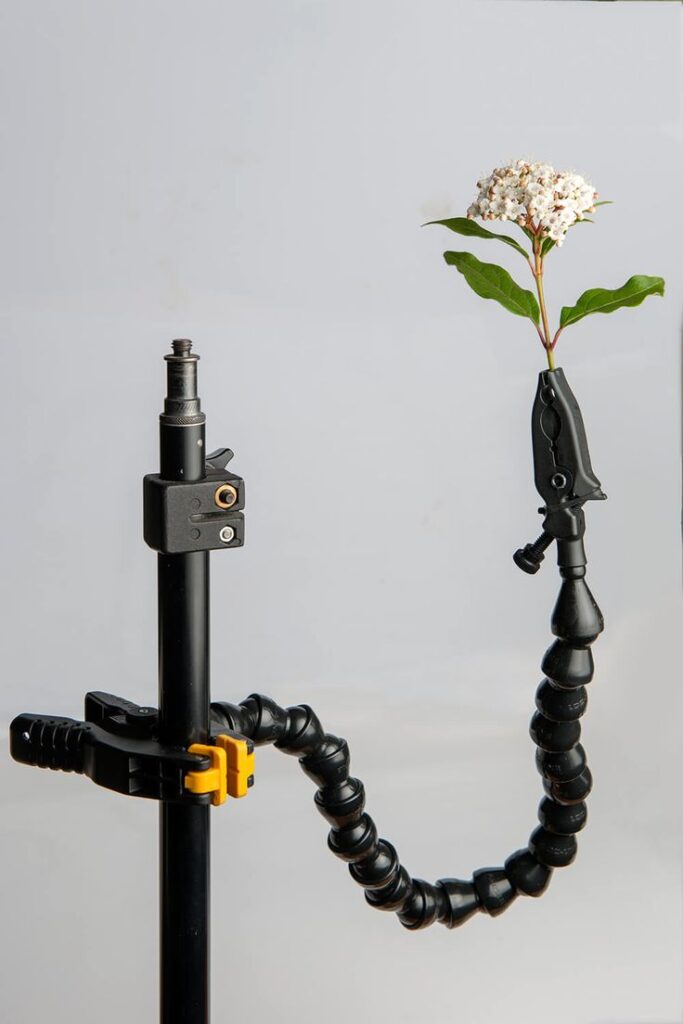
Table of contents
- Setting up your indoor macro studio
- Choose the right macro lens
- Life-size magnification
- Working distance and focal length
- Master your lighting
- Natural window light
- Continuous LED sources
- Flash and strobes
- Control focus and depth of field
- Aperture and depth
- Stabilization methods
- Focus stacking
- Pick and craft backgrounds
- Try these indoor macro ideas
- Colourful pencil patterns
- Water droplets on a CD
- Oil and water abstracts
- Textured ice cubes
- Backlit soap bubbles
- Water drop refraction
- Post processing tips
- Frequently asked questions
Setting up your indoor macro studio
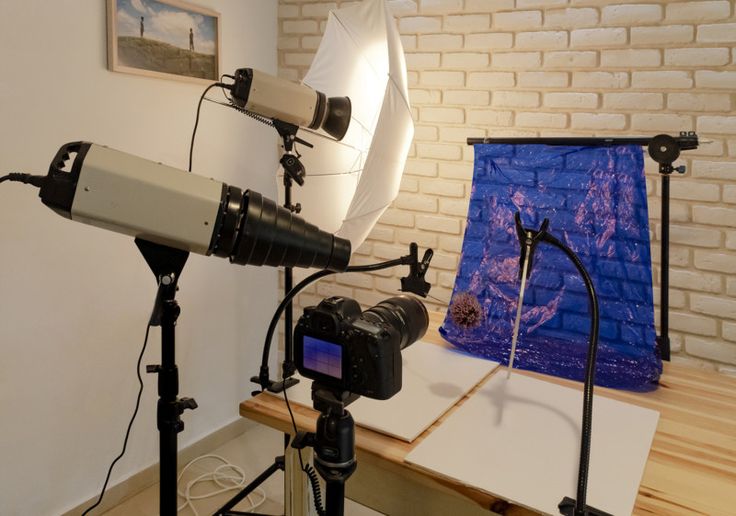
Before you shoot your first frame, carve out a dedicated spot in your home. It doesn’t have to be fancy—just a stable surface near a window or power outlet. Gather these basics:
- A sturdy table or desk
- Tripod or copy stand
- Small clamp or flexible arm for reflectors
- Clean backdrops (paper, cloth, board)
- Extension tubes or close-up filters for extra reach
Organize your gear so every tool is within arm’s reach. Label extension tubes by size, keep reflectors folded and ready, and position your tripod where it won’t wobble. A little planning upfront saves frantic adjustments once you’re under the lens.
Choose the right macro lens
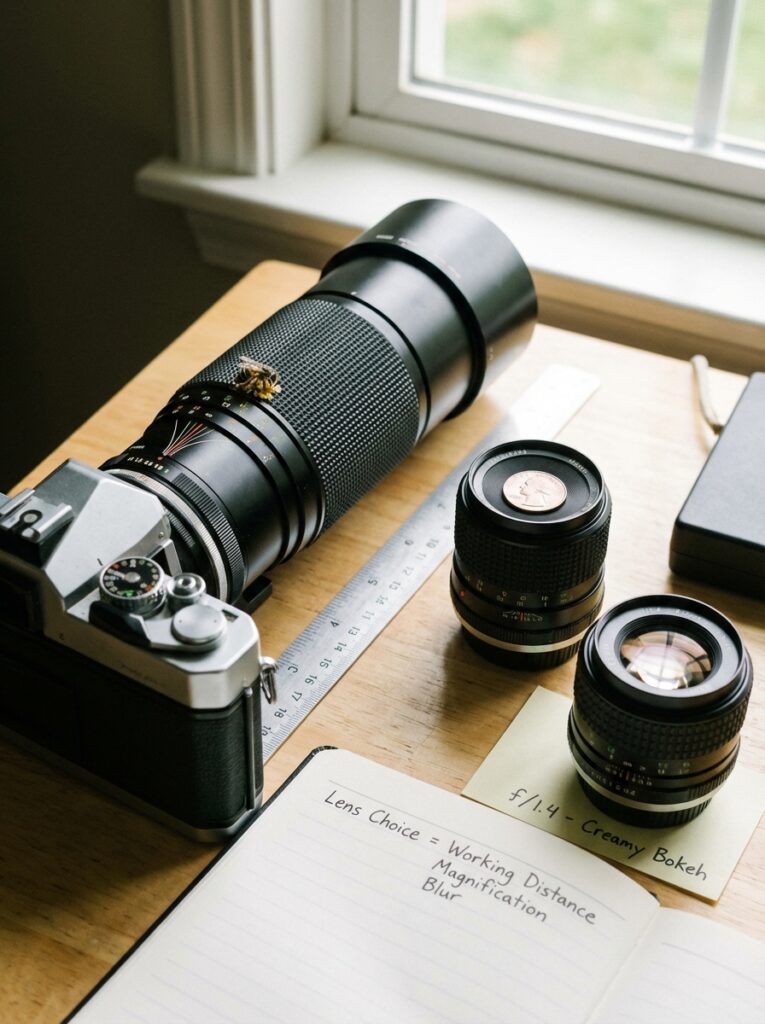
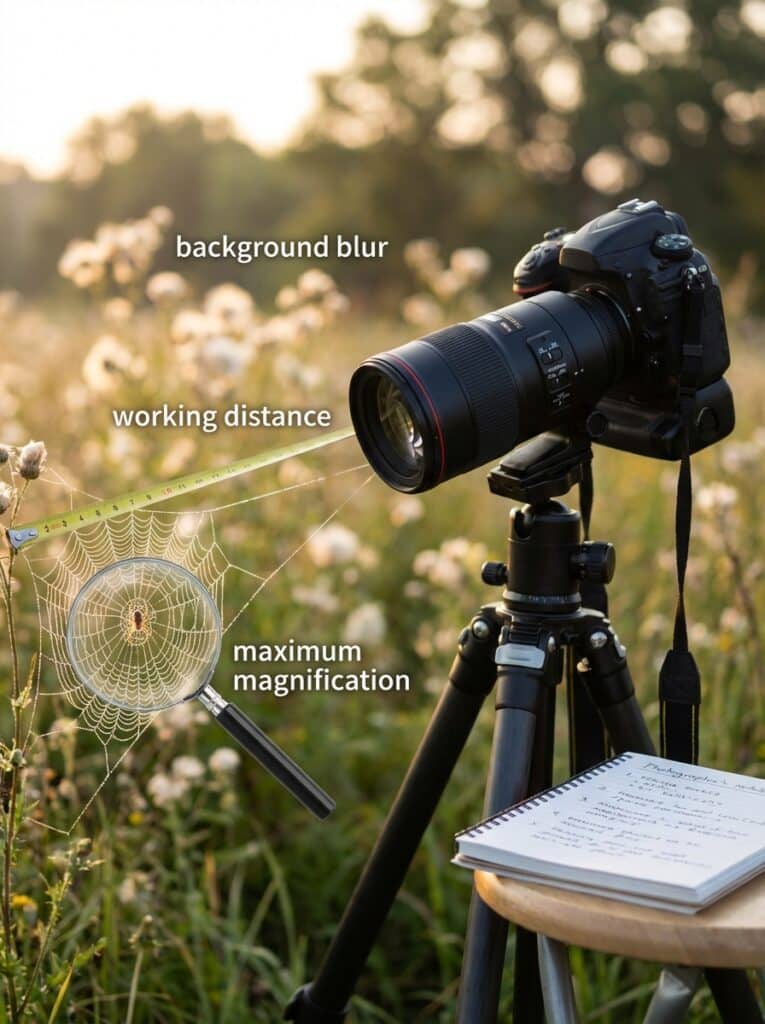
The lens you pick defines your working distance, maximum magnification, and background blur. Let’s break down the essentials.
Life-size magnification
True macro lenses deliver a 1:1 magnification ratio, rendering subjects at life-size on your camera’s sensor. That means a tiny flower or circuit board chip fills the frame without digital cropping. A 1:1 lens makes small details pop on large monitors and prints (The-Digital-Picture).
Working distance and focal length
Longer focal lengths (around 85 mm to 180 mm) give you more breathing room between you and the subject at 1:1 magnification. That extra distance is a lifesaver when you’re shooting live insects or delicate petals—you won’t scare them away or cast a giant shadow. Shorter macros like a 35 mm or 50 mm let you tuck into corners but force you to get very close. Here’s a quick comparison:
| Lens model | Focal length | Max magnification | Approx. working distance | Notes |
|---|---|---|---|---|
| Canon RF 100 mm F2.8 L Macro | 100 mm | 1:1 | ~10 cm | Hybrid IS, f/2.8 for low-light (The-Digital-Picture) |
| Canon RF 85 mm F2 | 85 mm | 0.5:1 | ~9 cm | Compact, pairs well with tubes |
| Canon RF 35 mm F1.8 | 35 mm | 0.5:1 | ~7 cm | Wider perspective, needs extension |
| Canon RF 24 mm F1.8 | 24 mm | 0.5:1 | ~6 cm | Ultra-wide look, creative distortion |
If you already have a 0.5× macro, add extension tubes or a close-up filter like the Raynox 250 to push magnification even further (Medium).
Master your lighting
Good light turns a so-so macro into a jaw-dropper. Indoors, you can mix and match natural and artificial sources until you dial in the mood you want.
Natural window light
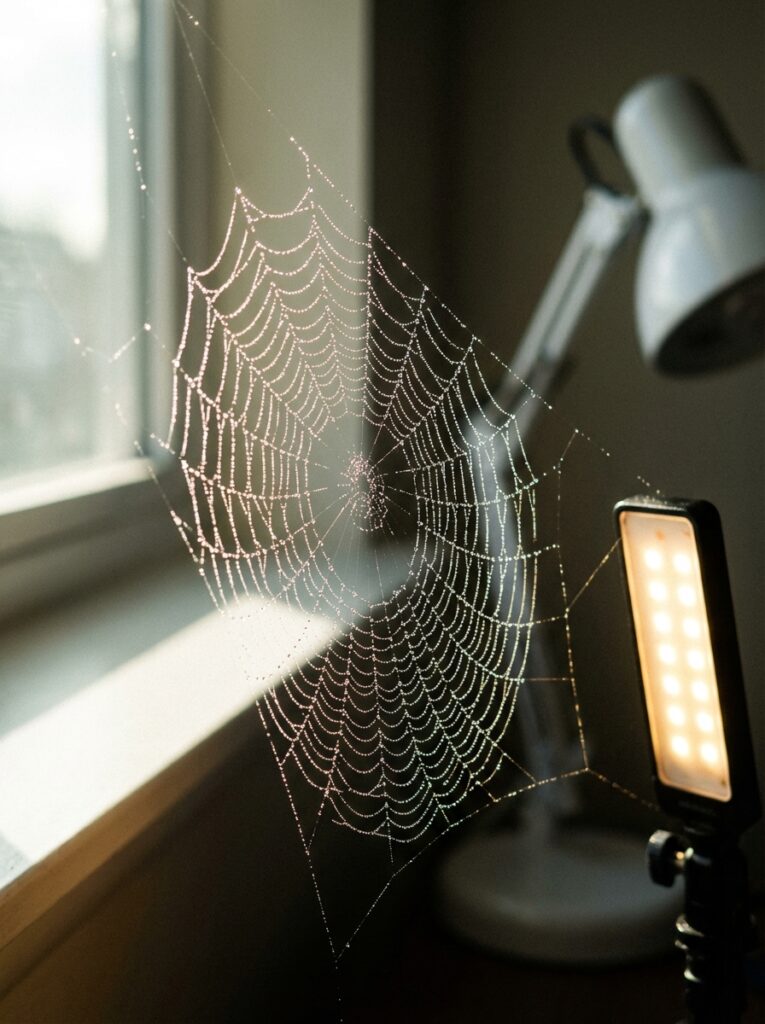
Daylight is your friend. A south-facing window with a wide ledge offers stable, soft illumination. Position your subject parallel to the window for even lighting, or angle it slightly to add dimension. Use a small reflector or white foam board to bounce light into shadows (Photzy).
Continuous LED sources
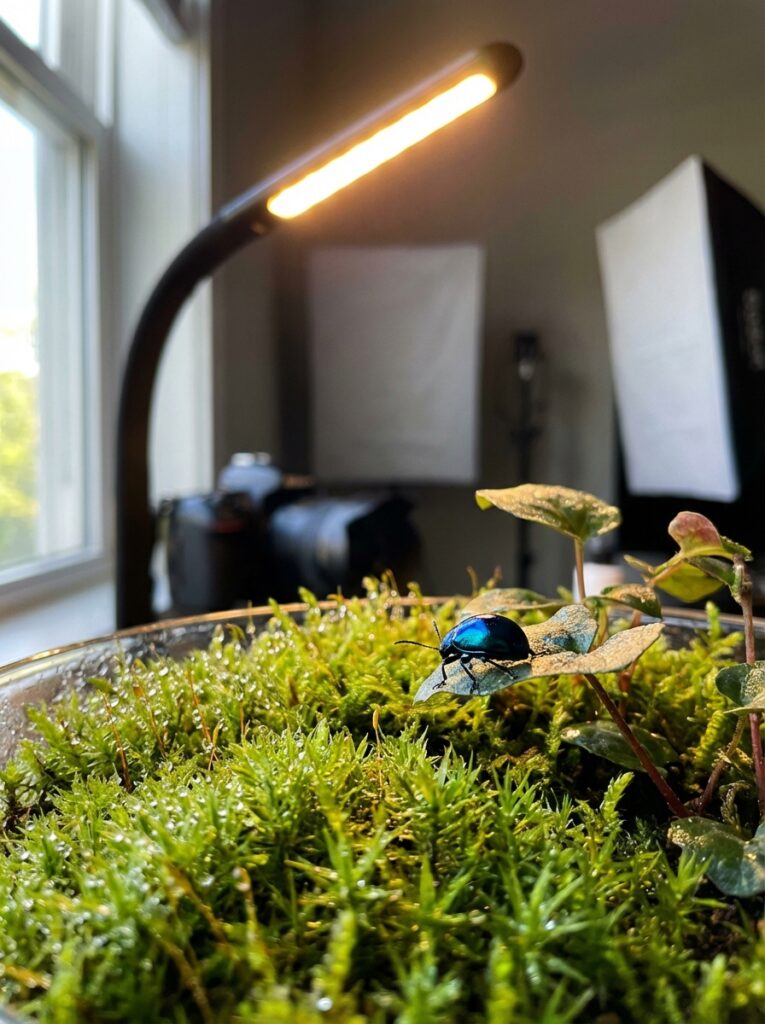
LED desk lamps, sunlamps, or headlamps let you see exactly how light interacts with your scene before you hit the shutter. Keep in mind that continuous lights often output less power than flash, so pair them with a tripod for slower shutter speeds. Place LEDs at 45° angles for gentle wraparound light or use two for cross-lighting.
Flash and strobes
For freezing motion—think vibrating bubbles or dripping water—strobe lighting is unbeatable. Avoid on-camera flash, since the lens barrel can block light and cast shadows. Instead, use external speedlights or a ring flash for even coverage. Allan Walls recommends the Godox V860 II N with TTL and a lithium power pack for consistent output and quick recycle times (Allan Walls Photography). Soften harsh beams with a compact folding softbox or homemade diffusion panels made from foam packing material.
Control focus and depth of field
Macro work often means razor-thin depth of field. Here’s how to keep your subject sharp.

Aperture and depth
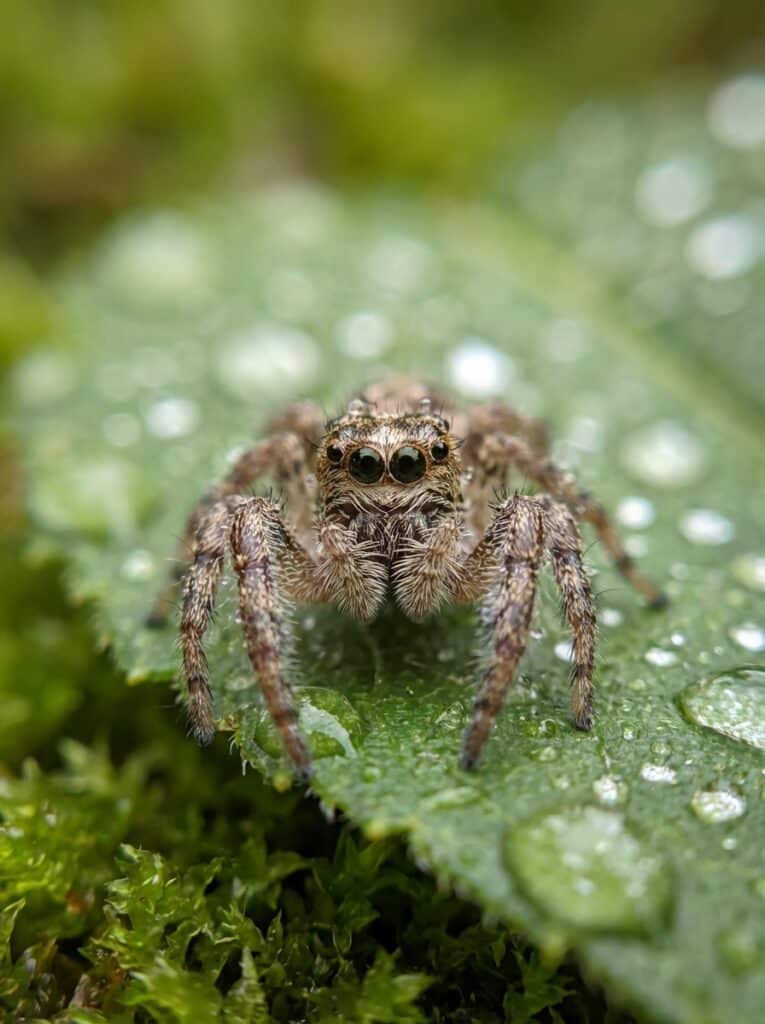
Stopping down to f/8 through f/16 increases your zone of sharp focus but demands more light or slower shutter speeds (The-Digital-Picture). For static subjects like a CD or an ice crystal, that’s no problem. For live insects, balance your aperture between depth and the available light.
Stabilization methods
Even the steadiest hands can’t beat a tripod when you’re down at f/13 or f/16. If you’re shooting handheld, turn on built-in image stabilization or use a tabletop tripod. A macro focusing rail attached to your tripod head also lets you make tiny forward and backward adjustments without re-framing.
Focus stacking
Want edge-to-edge sharpness on a curled leaf? Shoot a series of images, each at a slightly different focus point, and merge them in software like Helicon Focus or Adobe Photoshop. Stable lighting and a rigid setup are must-haves for perfect alignment (Digital Photography School).
Pick and craft backgrounds

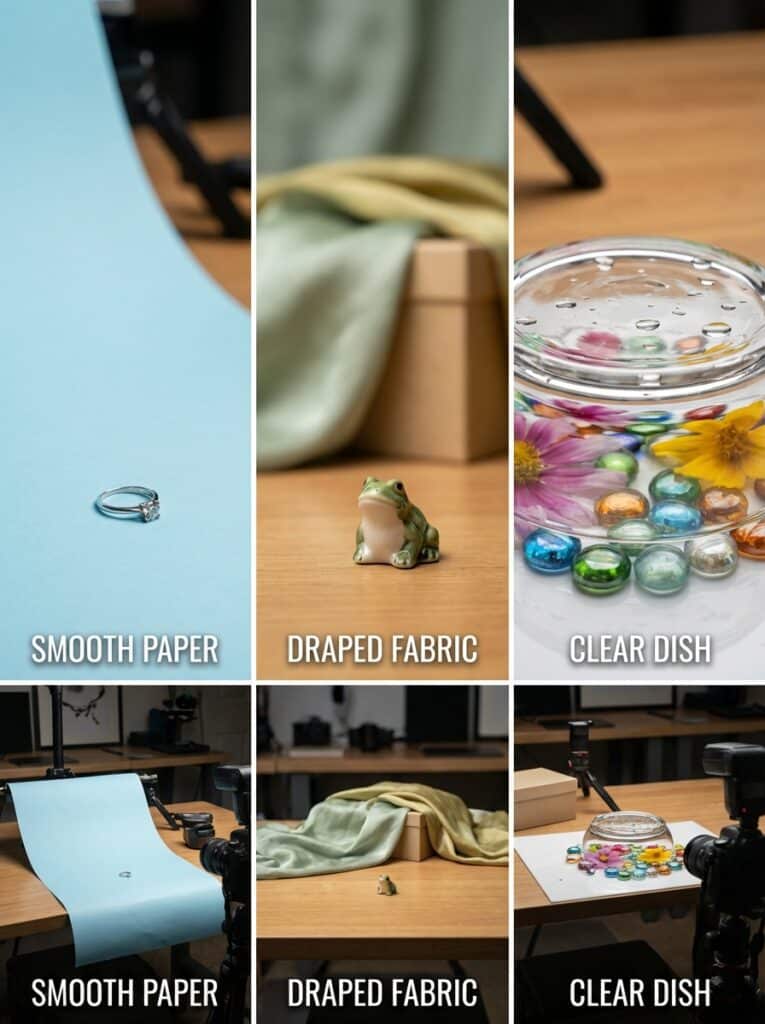
Backgrounds can make or break a macro shot. Indoors, you have full control:
- Use smooth paper in solid colors for product-style still lifes
- Drape fabric over a cardboard box for easy, out-of-focus backdrops (Photography Life)
- Place colorful objects under a clear dish to shine through oil or water droplets
Keep your subject-to-background distance as large as possible to maximize blur. Neutral tones work for most subjects, but don’t shy away from pops of color that amplify your subject’s hues.
Try these indoor macro ideas
Ready for hands-on practice? Here are six creative setups you can pull off with minimal gear.
Colourful pencil patterns
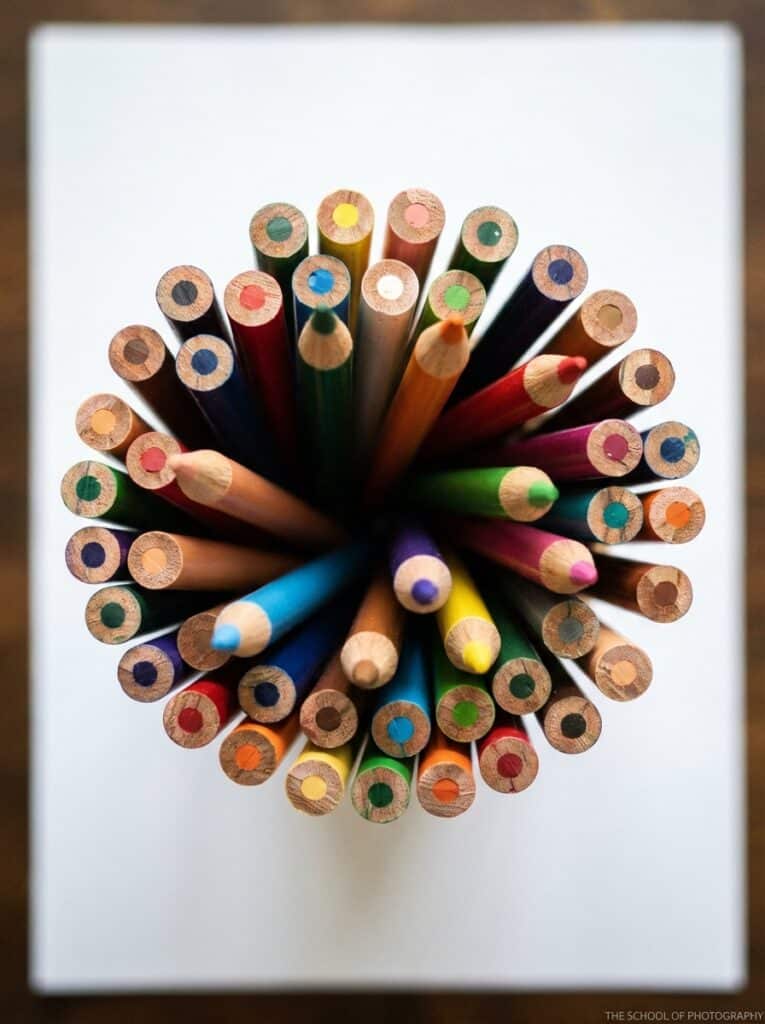
Grab a bundle of coloured pencils, arrange them on a sheet of white paper, and shoot straight down. Look for repeating shapes, diagonals, or converging lines. The uniform cylinder ends create a satisfying pattern, and slight variations in height let you play with depth of field (The School of Photography).
Water droplets on a CD
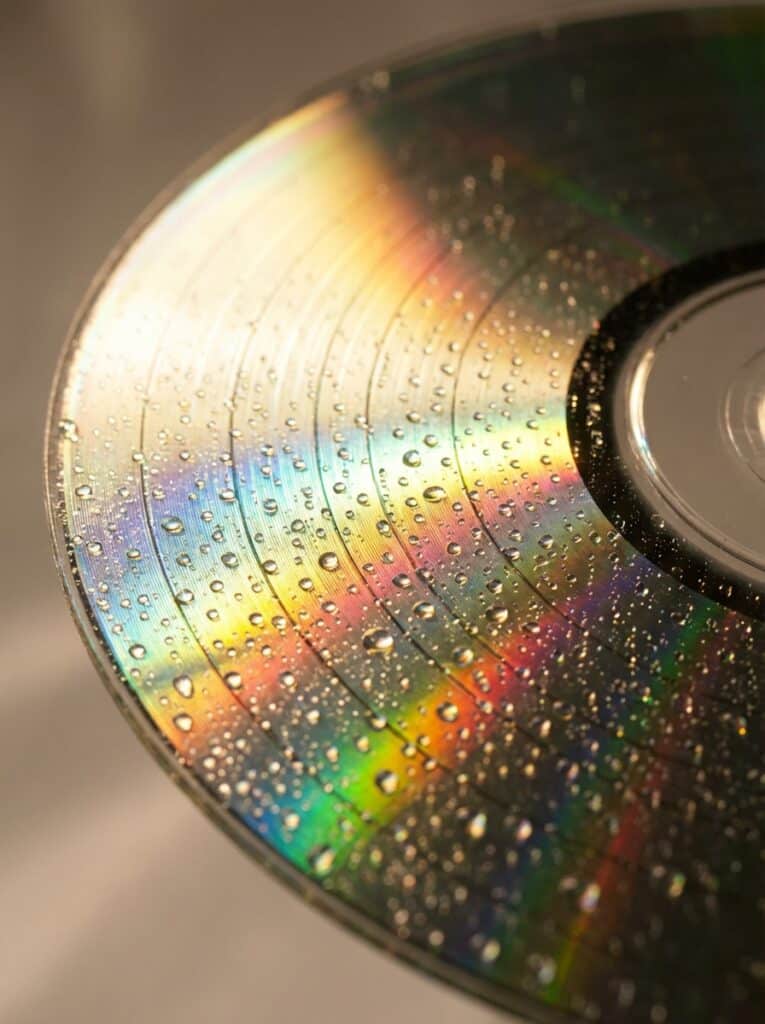
Tilt a CD under your lens, spray on fine mist droplets, and position a light source at an angle. The grooves in the disc diffract light into rainbow patterns. Use a tripod and f/8 or narrower to keep the droplets and CD edges tack sharp on those long exposures (Photography Life).
Oil and water abstracts
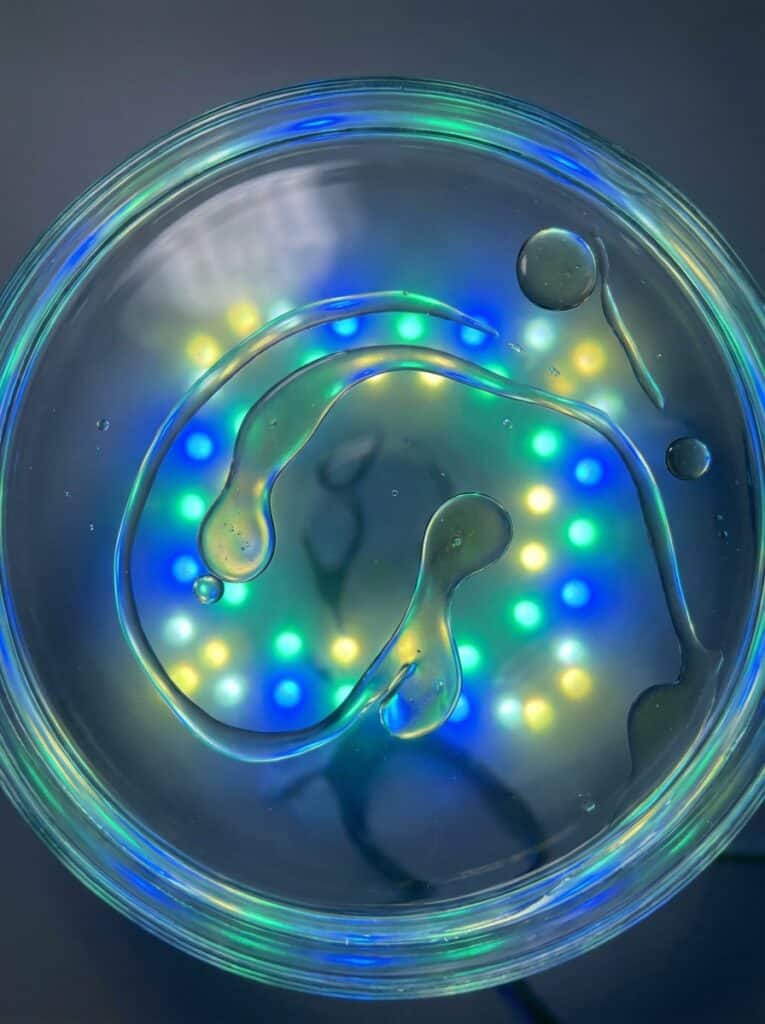
Fill a clear glass dish with water, add a few drops of cooking oil, and drop colorful paper or LED light underneath. Shoot from above to capture swirling patterns. Bounce a flash off a white board to freeze movement and soften shadows. Try mixing glycerin with water for thicker droplets and slower flow (Photography Life).
Textured ice cubes
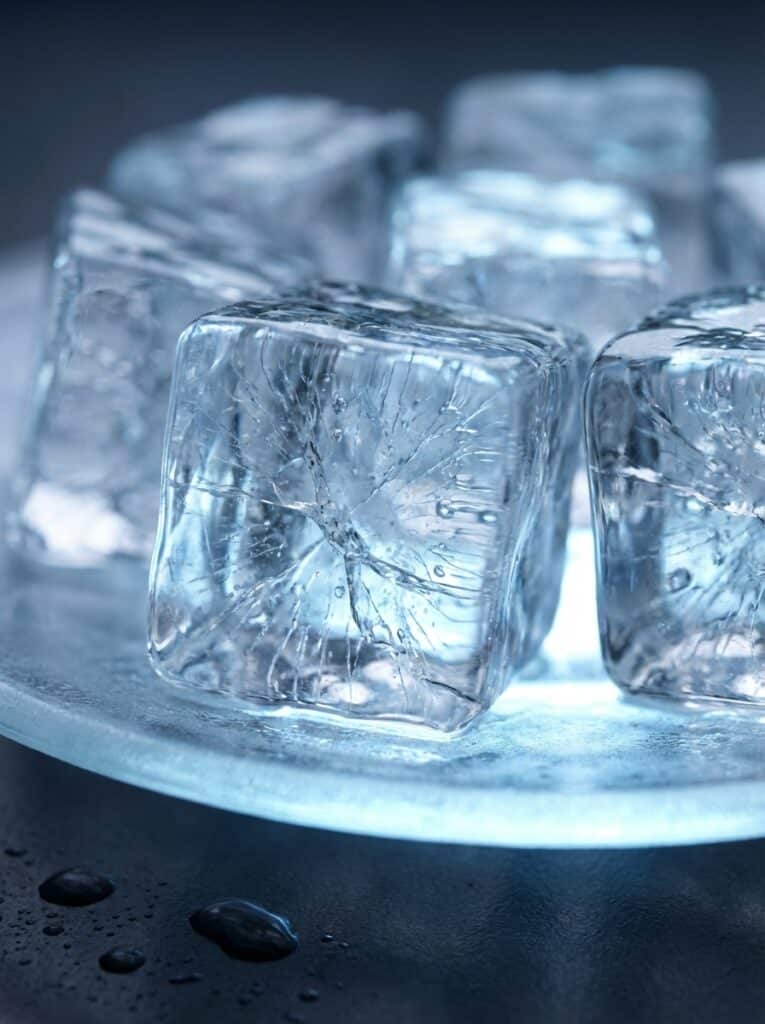
Freeze boiled water in a chilled saltwater bath to create crystal-clear ice cubes. Arrange them on a glass surface, backlight from below or to the side, and capture the internal textures. A small aperture and steady tripod allow you to reveal every crack and bubble (Photography Life).
Backlit soap bubbles
Mix a drop of dish soap into water, blow bubbles in a shallow dish, and use an LED lamp or phone torch behind the scene. Focus on a single bubble wall to showcase iridescent color shifts. Freeze motion with high-speed flash or a fast shutter speed.
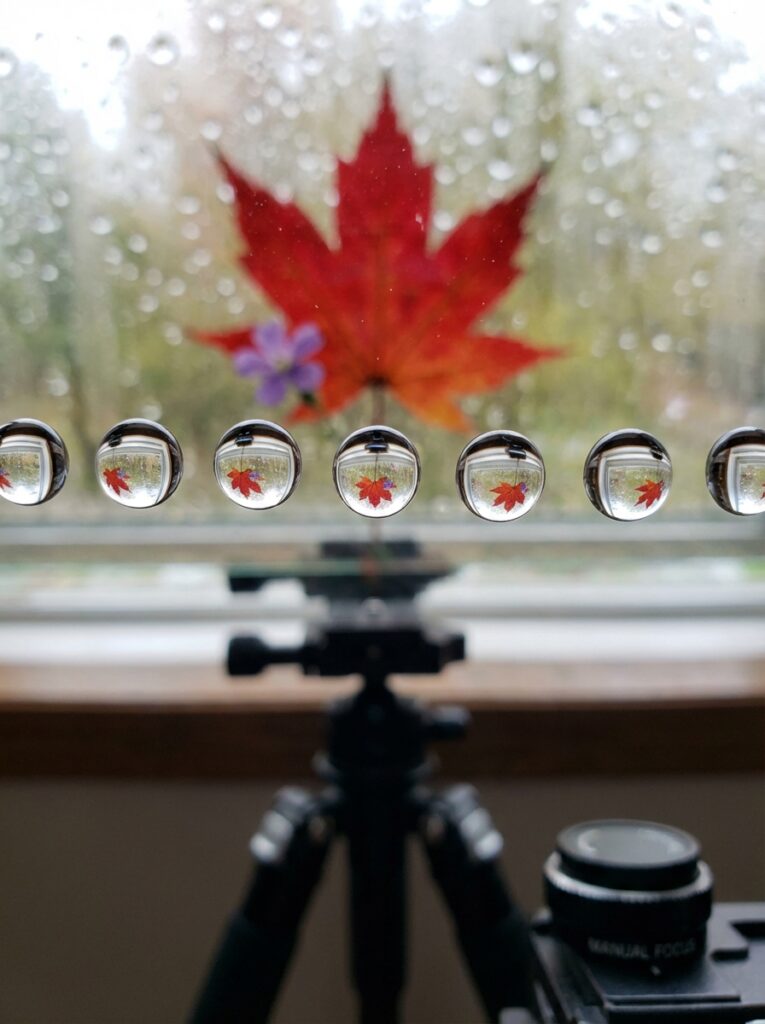

Water drop refraction
Place a small object—a leaf, flower, or printed picture—behind a row of water droplets on glass. Lower your camera until the droplets fill your frame, and the object appears inverted inside each bead. A tripod and manual focus help you nail critical sharpness (The School of Photography).
Post processing tips
Once you’ve captured your images, give them the final polish:
- Correct white balance first to keep colors true
- Apply subtle sharpening targeted at the subject, not the background
- Boost contrast and clarity in moderation to accentuate texture
- Crop tightly to remove distractions and emphasize scale
- Save versions at full size for prints and smaller sizes for social media
Consider using Lightroom or Capture One for batch edits, then finish in Photoshop if you need focus-stack blending or content-aware clean-ups.
Frequently asked questions
What gear do I need for indoor macro photography?
You’ll want a true macro lens (1:1 magnification), tripod or copy stand, extension tubes for extra reach, and lighting gear like LED panels or speedlights. Simple backdrops, reflectors, and clamps round out your setup.
Which macro lens is best for indoor work?
An 85 mm to 100 mm lens offers a comfortable working distance of 8–12 cm at 1:1 magnification. If you need extreme close-ups, a 35 mm or 50 mm macro with extension tubes can work, but you’ll be closer to your subject.
How do I get enough depth of field in macro shots?
Stop down to f/8–f/16, use a tripod to handle longer exposures, and try focus stacking for edge-to-edge sharpness. Be mindful of diffraction—each lens has a sweet spot.
How can I light my macro subjects indoors?
Mix natural window light with reflectors for gentle fills, or use continuous LEDs to preview your lighting. For action or high contrast, employ off-camera speedlights or ring flashes with diffusion panels.
What are some easy macro photography ideas I can try at home?
Start with colourful pencil patterns, water droplets on CDs, oil-water abstracts, clear ice textures, backlit bubbles, and water drop refraction. Each requires minimal props and will sharpen your skills quickly.
- 0shares
- Facebook0
- Pinterest0
- Twitter0
- Reddit0