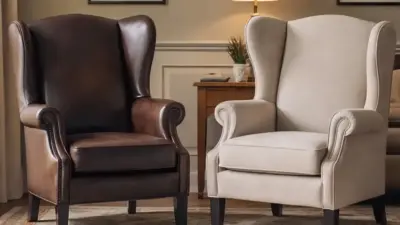
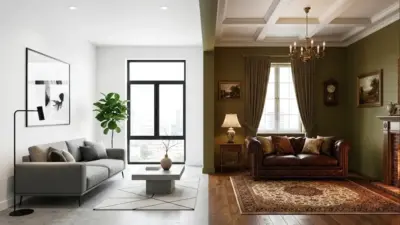
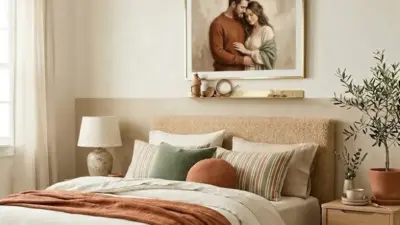
Minimalist design has long been celebrated for its clean lines and uncluttered spaces, but many people find traditional minimalism too cold or sterile for everyday living. Warm minimalism solves this problem by blending the simplicity of minimalist principles with cozy textures, earthy tones, and natural materials that make your home feel inviting and lived-in. This design approach gives you the calm and order of minimalism without sacrificing comfort or warmth.
The beauty of warm minimalism lies in its flexibility and approachability. You can create spaces that feel both peaceful and personal by choosing neutral colors with warmer undertones, incorporating organic materials like wood and linen, and adding soft lighting that enhances the mood. The style encourages you to be intentional with your choices while still allowing room for the things that make your house feel like home.
Whether you’re looking to redesign your entire space or simply want to refresh a single room, warm minimalism offers a practical framework that works with your lifestyle. The key is finding the right balance between simplicity and comfort, so your home supports both your need for visual calm and your desire for a welcoming environment.
Key Takeaways
- Warm minimalism combines clean, uncluttered design with cozy textures and earthy tones to create inviting spaces
- The style uses natural materials, warm neutral colors, and soft lighting to add comfort without visual clutter
- You can personalize warm minimalist spaces while maintaining simplicity through intentional furniture choices and thoughtful details
What Is Warm Minimalism?

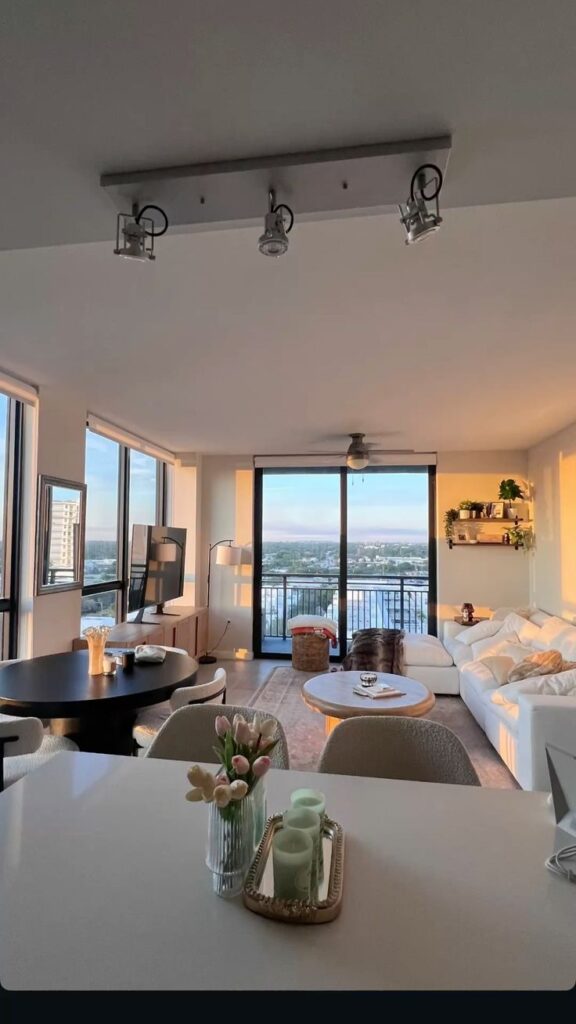
Warm minimalism bridges the gap between minimalist restraint and comfort-driven design by incorporating natural materials, earthy tones, and inviting textures into streamlined spaces. This interior design approach maintains the core principles of minimalism while rejecting its sometimes sterile aesthetic.
The Evolution From Traditional Minimalism
Traditional minimalism emerged as a reaction to excess, emphasizing stark white walls, cold surfaces, and absolute simplicity. While this approach created clean, uncluttered spaces, many homeowners found these interiors emotionally distant and difficult to live in comfortably.
Warm minimalism developed as a direct response to these limitations. The interior design trend keeps the foundational elements of decluttering and intentional design but adds layers of warmth through material choices and color palettes. Instead of harsh whites and industrial grays, you’ll find cream, beige, terracotta, and soft browns.
The shift reflects a broader understanding that minimalism doesn’t require sacrificing comfort or personality. Your home can be both uncluttered and welcoming, combining the visual calm of minimalist principles with elements that make spaces feel lived-in.
Key Principles of Warm Minimalism
Natural materials form the backbone of warm minimalism. Wood, stone, linen, wool, cotton, and clay bring organic texture and visual warmth to your spaces without adding clutter.
Color palette focuses on neutral tones with warmth. You should choose:
- Creams and ivories instead of stark white
- Warm grays with brown undertones
- Earth tones like terracotta, sand, and ochre
- Soft greens inspired by nature
Texture layering adds depth through varied surfaces. Incorporate woven textiles, natural wood grains, and tactile fabrics to create visual interest without additional objects.
Quality over quantity remains essential. Each piece in your space should serve a purpose while contributing to the overall aesthetic through thoughtful selection.
The Emotional Impact on Home Environments
Warm minimalism creates spaces that support both mental clarity and emotional comfort. The uncluttered environment reduces visual stress and decision fatigue, while warm elements prevent the psychological coldness often associated with strict minimalism.
Your home becomes a refuge that feels peaceful without seeming uninhabited. The balance between simplicity and warmth helps you relax while maintaining the functional benefits of minimalist living. Natural materials and earthy colors connect your interior to the outside world, creating a grounding effect.
This interior design approach acknowledges that your emotional needs matter as much as aesthetic principles. You’re not sacrificing comfort for style—you’re achieving both simultaneously through intentional choices.
Color Palette and Mood
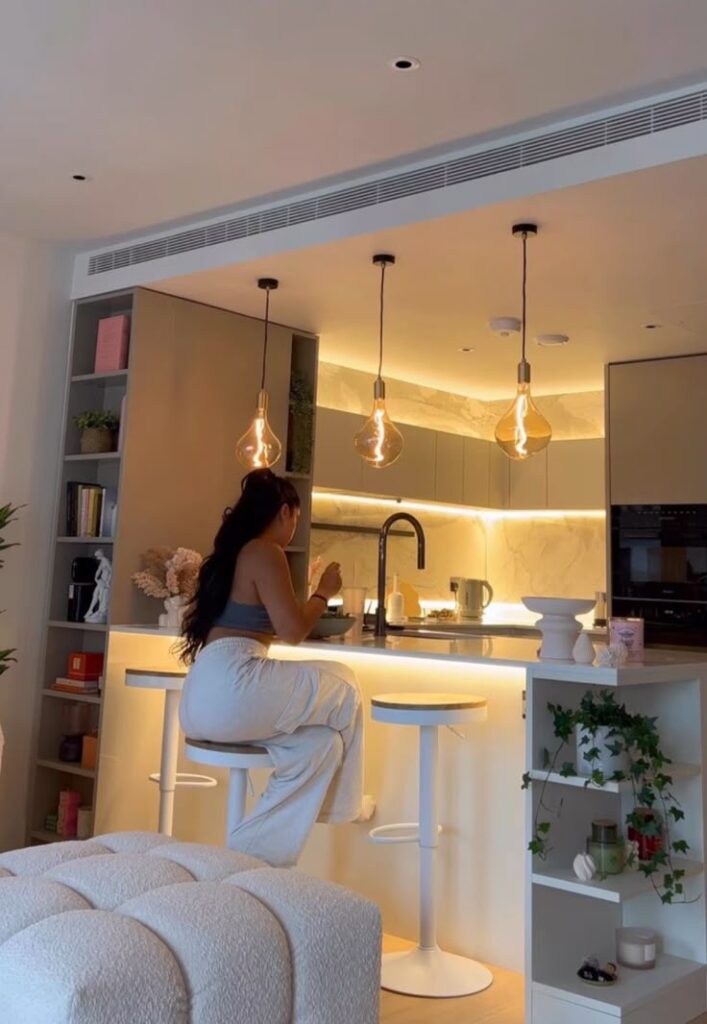
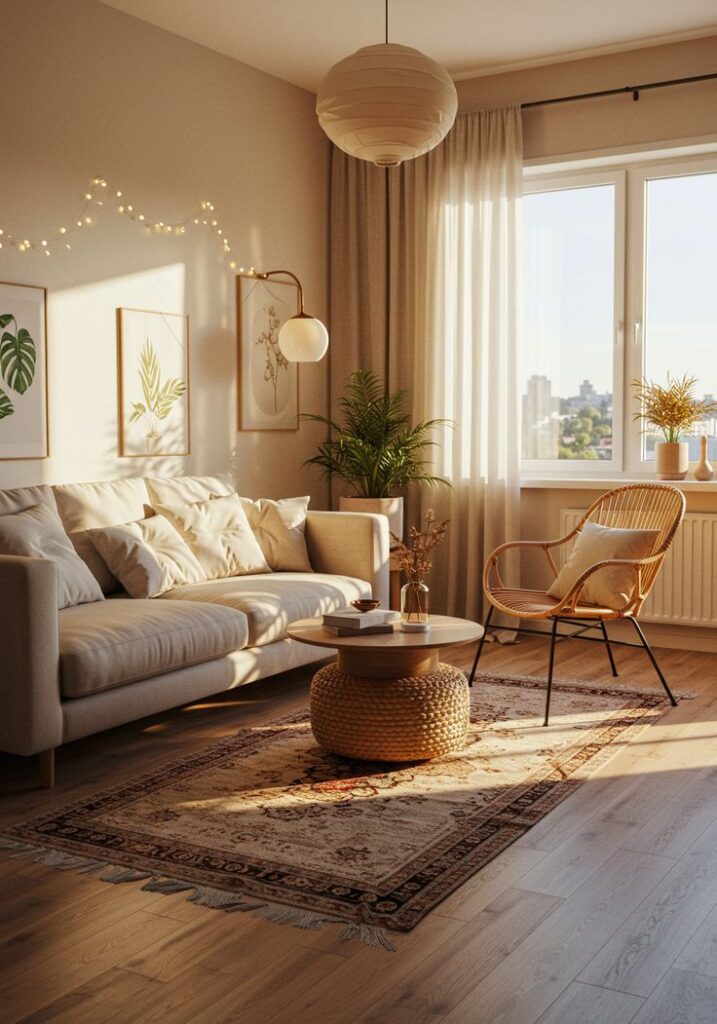
The color foundation of warm minimalism centers on neutral tones with undertones that create comfort rather than starkness. Your palette builds from soft, enveloping bases and layers in earth-inspired hues that add dimension without cluttering the visual space.
Foundational Neutral Palette
Your neutral backdrop starts with colors that have warm undertones rather than cool, sterile ones. These include warm whites like Swiss Coffee and White Dove, which provide brightness without the harsh feel of pure white. Taupes and beiges form the core of your neutral palette, offering versatility across walls, large furniture pieces, and flooring.
Greige—a blend of gray and beige—works particularly well as a bridge color. It maintains the minimalist aesthetic while keeping spaces inviting. Mushroom tones and soft creams add variation within your neutral colour palette without introducing visual noise.
These foundational colors maximize natural light while establishing a calm atmosphere. You can layer different neutral tones throughout a room to create subtle depth and interest while maintaining the uncluttered feel essential to minimalism.
Earthy Tones and Warm Whites
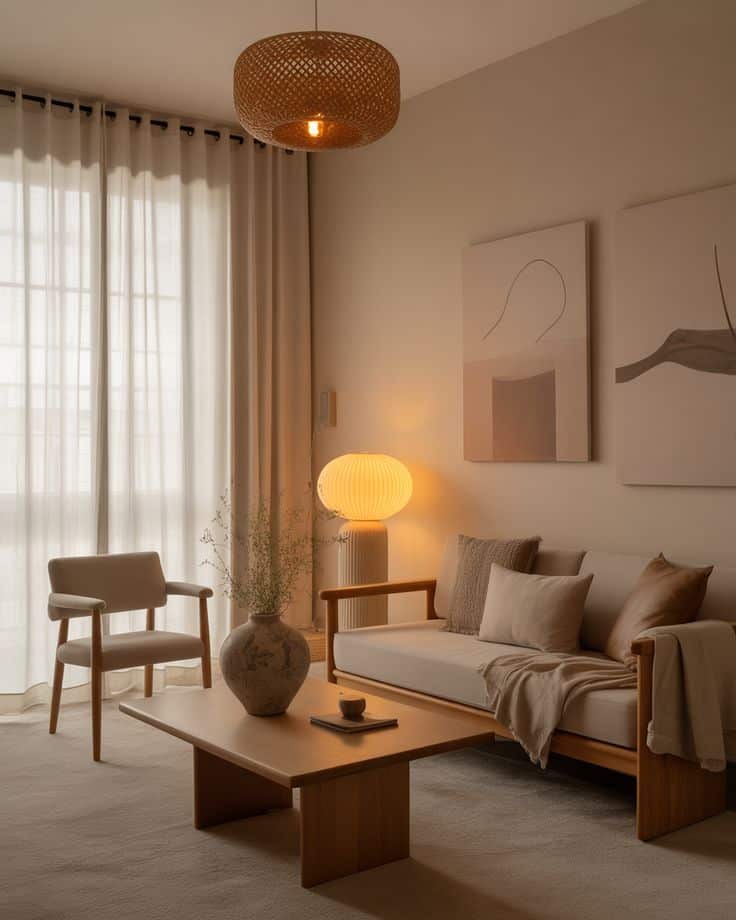

Earthy tones bring organic warmth into your spaces through colors found in nature. Light browns, sandy beiges, and warm terracotta introduce richness without overwhelming your rooms. These colors work especially well in textiles, accent furniture, and decorative elements.
Soft greens reminiscent of sage or olive add a botanical quality that feels grounding. Camel and clay tones provide saturated warmth while maintaining the restrained quality minimalism requires. These earthy shades create a soothing atmosphere that makes your home feel lived-in rather than showroom-perfect.
Your warm whites serve as the lightest points in your palette, reflecting light and keeping spaces from feeling heavy. They pair naturally with deeper neutral tones and earthy colors to establish visual balance.
Accent Colors for Depth
Accent colors in warm minimalism remain muted and carefully dosed. Dusty rose, muted olive green, and deeper terracotta work as restrained accent choices that add personality without disrupting your cohesive palette. These colors appear best in small doses—through throw pillows, artwork, or single statement pieces.
Avoid bright or saturated accent colors that compete with your neutral foundation. Instead, choose tones that feel like natural extensions of your earthy palette. Even your accent colors should maintain soft, subdued qualities that support the overall sense of calm and intentionality in your space.
Materials, Textures, and Natural Elements
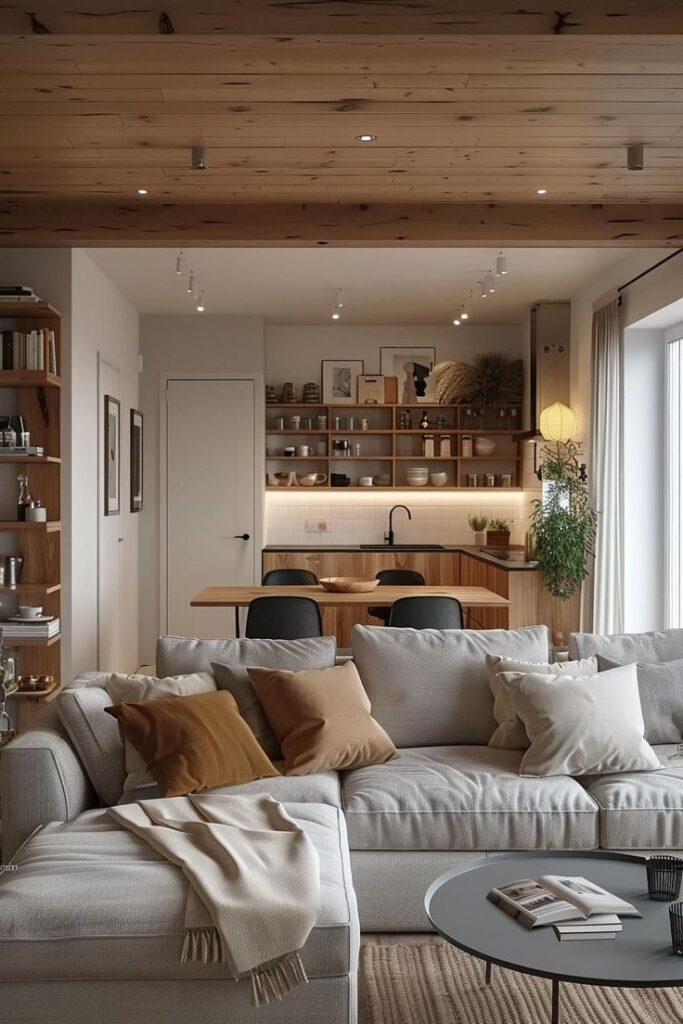
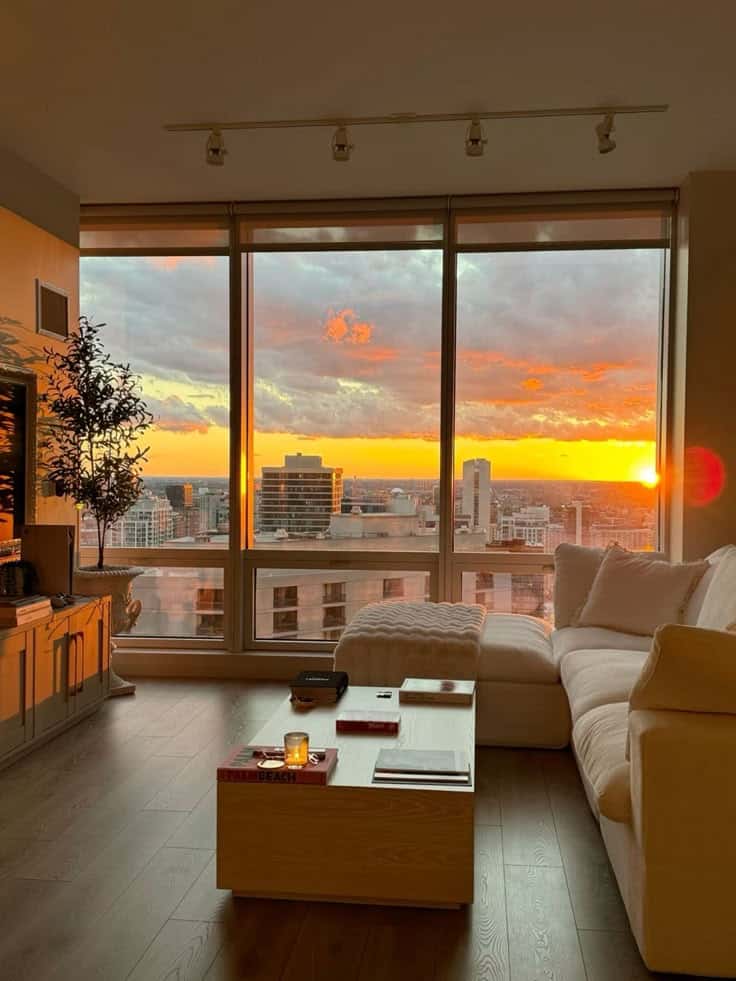
Warm minimalism relies on authentic materials that bring depth and warmth to simplified spaces. Wood, stone, linen, and ceramics form the foundation of this aesthetic, while layered textures prevent rooms from feeling sterile or cold.
The Role of Natural Materials
Natural materials anchor warm minimalist spaces by introducing organic variation and tactile richness. Woods like oak, walnut, and ash work particularly well because their visible grain patterns add visual interest without overwhelming a room. You can incorporate natural wood through timber floors, exposed beams, or furniture pieces that showcase the material’s inherent beauty.
Stone finishes provide cool contrast to warmer wood tones. Limestone, travertine, and sandstone bring geological texture to countertops, backsplashes, or accent walls. These materials age gracefully, developing character over time rather than showing wear.
Clay and ceramics offer handcrafted warmth through their irregular surfaces and earth-derived colors. Look for pottery, vases, and decorative objects that display slight imperfections—these variations prove authenticity and connect your space to traditional craft.
Layering Soft and Textured Finishes
Soft textures transform minimalist spaces from sparse to inviting. Linen stands out as the quintessential warm minimalist fabric because it combines simplicity with natural texture and slight wrinkles that make rooms feel lived-in rather than staged.
Layer different textile weights to create depth. Combine nubby wool throws with smooth cotton bedding, or pair chunky knit pillows with fine linen curtains. This approach maintains visual simplicity while offering tactile variety.
Your flooring choices set the textural foundation. Timber floors in matte or natural oil finishes feel warmer underfoot than glossy alternatives. Add texture through wool area rugs, jute runners, or sisal mats that define spaces without adding pattern complexity.
Woven materials like rattan, cane, and seagrass introduce three-dimensional texture through furniture and accessories. These natural fibers catch light differently throughout the day, creating subtle visual movement in otherwise static rooms.
Organic Shapes and Curved Forms
Curved forms soften the straight lines typical of minimalist design. You’ll create more approachable spaces by incorporating rounded furniture edges, arched doorways, or circular mirrors that balance linear architecture.
Natural elements inherently feature irregular shapes. A live-edge wood dining table or organically shaped stone vessel disrupts geometric precision in ways that feel intentional rather than chaotic. These pieces serve as focal points that draw attention without demanding it.
Look for furniture with gentle curves rather than sharp angles. Rounded coffee tables, oval dining surfaces, and curved seating create flow and make navigation through minimal spaces feel more intuitive.
Integration of Stone and Ceramics
Stone and ceramic elements ground warm minimalist interiors with substantial presence. Natural stone tiles in bathrooms or kitchens provide durable surfaces that improve with age. Choose stone with subtle color variation rather than uniform appearance.
Ceramic tiles in earthy tones—terracotta, clay, warm gray—add architectural texture to floors and walls. Larger format tiles reduce grout lines and maintain clean aesthetics while smaller zellige or handmade tiles introduce artisanal character in limited areas like backsplashes.
Stone and ceramic vessels, planters, and decorative objects punctuate shelving and surfaces with sculptural weight. Select pieces in matte finishes that absorb rather than reflect light, contributing to the overall sense of calm.
Furniture and Layout
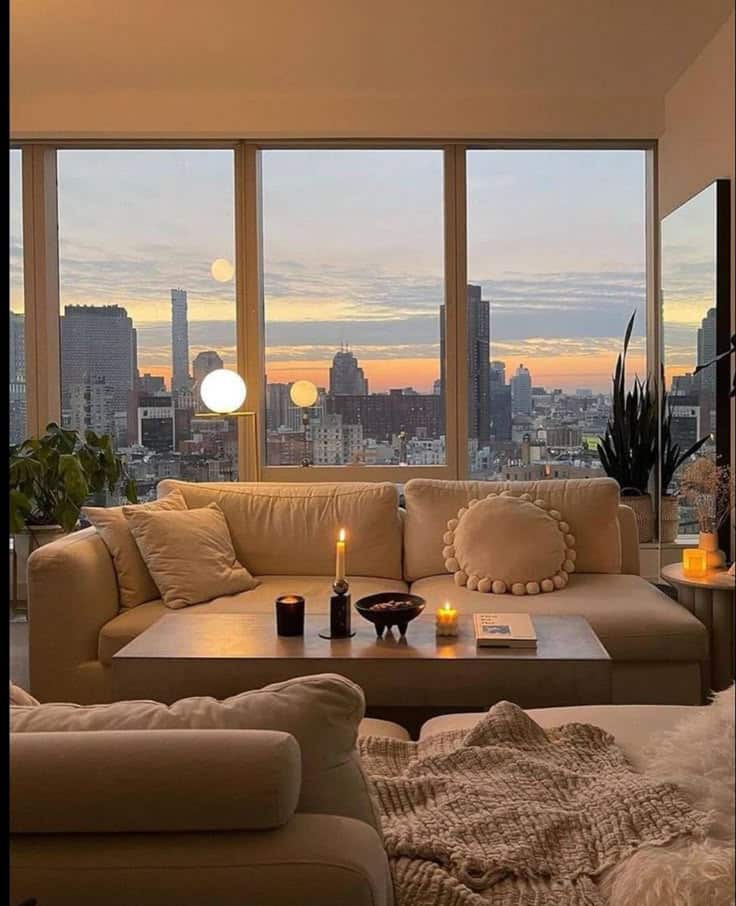

The right furniture choices and thoughtful arrangement form the foundation of warm minimalism, where each piece serves a purpose while contributing to an inviting atmosphere. Strategic selection and placement create spaces that feel both open and comfortable.
Minimalist Furniture Selection
Choose furniture with clean lines and simple silhouettes that don’t overwhelm your space. Look for pieces in natural wood tones like oak, walnut, or ash that add warmth without visual clutter. Your minimalist furniture should have thoughtful proportions that fit the scale of your room.
Select items with visible craftsmanship and honest materials. Upholstered pieces work best in neutral fabrics like linen, cotton, or bouclé that add texture while maintaining simplicity. Avoid overly ornate details or busy patterns that distract from the serene aesthetic.
Consider multi-functional pieces that serve more than one purpose. A storage ottoman or a console table with drawers helps you maintain the uncluttered look essential to warm minimalism while providing practical value.
Quality Over Quantity
Invest in fewer pieces of higher quality rather than filling your space with multiple items. A well-made sofa in natural fabric will serve you better than several cheaper alternatives. Quality furniture lasts longer and typically features better materials that align with the warm minimalist aesthetic.
Focus on essential items first: a comfortable sofa, a sturdy dining table, and a supportive bed. Each piece should earn its place in your home through both function and design. This approach naturally prevents overcrowding while ensuring everything you own contributes meaningfully to your daily life.
Quality pieces develop character over time, especially those made from natural materials. The patina on a solid wood coffee table or the softening of linen cushions adds warmth and personality to your minimalist interior without introducing clutter.
Arranging Spaces for Comfort
Position your furniture to encourage conversation and create natural flow through rooms. Leave adequate space between pieces to maintain the open, breathing quality essential to minimalism. Your layout should feel intentional rather than sparse.
Create distinct zones within larger spaces using furniture placement rather than dividers. A reading nook needs only a comfortable chair and a side table positioned near natural light. Arrange seating in living areas to face each other, fostering connection while maintaining clean sightlines.
Pay attention to negative space as much as the furniture itself. The empty areas between pieces are just as important as the items you choose. This balance prevents your minimalist interior from feeling cold while keeping it uncluttered.
Signature Pieces: Curved Sofa and Round Coffee Table
The curved sofa has become a defining element in warm minimalism, softening the typically angular lines of minimalist design. Its organic shape creates visual interest while making spaces feel more welcoming. Choose one in a neutral tone with quality upholstery that invites you to sit and stay.
Pair your sofa with a round coffee table to enhance the softer geometry. Round tables eliminate sharp corners, making rooms feel more spacious and easier to navigate. Wood, stone, or concrete materials add natural warmth while maintaining simplicity.
These signature pieces work together to create focal points without dominating your space. The curves provide gentle contrast to straight architectural elements like windows and walls. This combination of shapes adds dimension to your minimalist interior while supporting the comfortable, lived-in feeling that defines warm minimalism.
Lighting and Ambiance
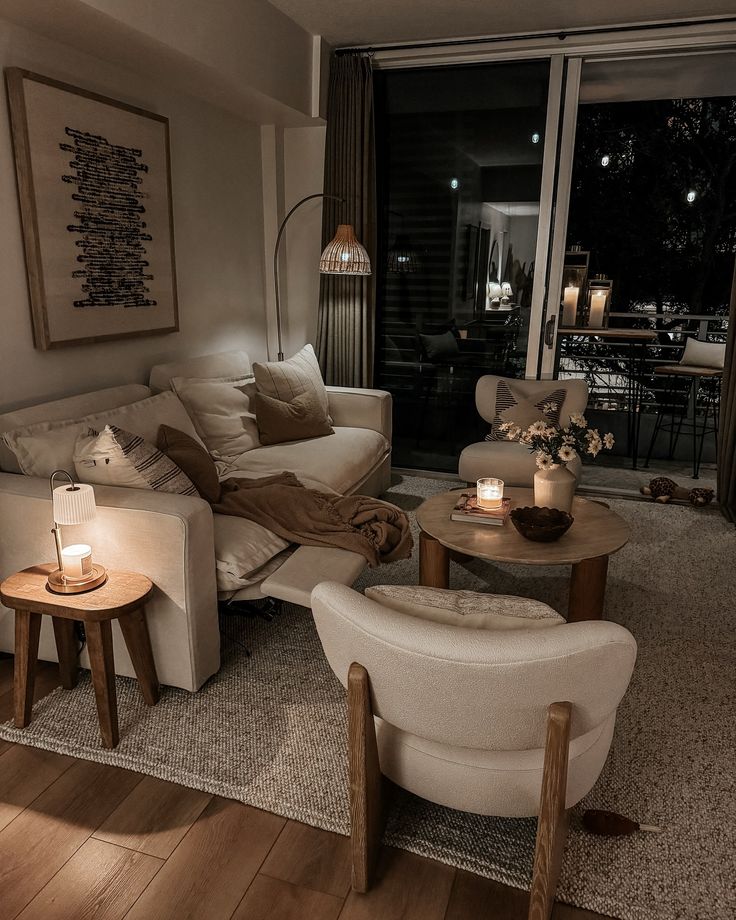
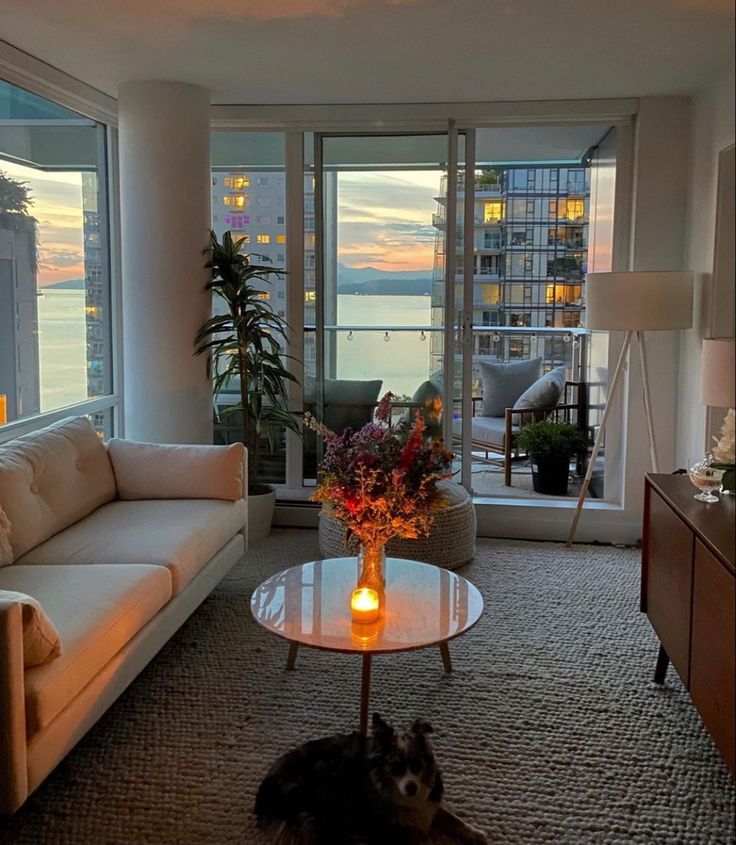
Lighting transforms warm minimalist spaces from stark to serene by creating depth and atmosphere through thoughtful layering and strategic light source selection.
Layered Lighting Approaches
Layered lighting combines multiple light sources at different heights to create dimension and flexibility in your space. You’ll want to incorporate ambient lighting as your foundation, task lighting for specific activities, and accent lighting to highlight textures and architectural features.
Start with overhead fixtures like flush mounts or simple pendants for general illumination. Add floor lamps in reading corners and table lamps on side tables to create pools of light at eye level. Wall sconces provide mid-level lighting that reduces harsh shadows and adds visual interest.
The key is avoiding reliance on a single overhead light source. This approach lets you adjust the mood throughout the day by switching different lights on or off. Dimmers give you even more control, allowing you to fine-tune intensity based on activity and time.
Choosing Warm Light Sources
Warm light sources with color temperatures between 2700K and 3000K create the cozy atmosphere essential to warm minimalism. These kelvin ranges produce a soft, amber-toned glow that mimics natural candlelight and enhances wood tones, beige fabrics, and terracotta accents.
LED bulbs in warm white or soft white offer energy efficiency without sacrificing ambiance. Look for bulbs with high CRI (Color Rendering Index) ratings above 90 to ensure colors appear natural and true to life.
Avoid cool white or daylight bulbs that register above 4000K, as these cast bluish tones that work against the warm palette. Natural light remains your best source during daytime hours, so keep window treatments minimal to maximize sunlight filtering through.
Lighting as Design Feature
Lighting fixtures themselves become sculptural elements in warm minimalist interiors. Choose designs with organic shapes, natural materials like rattan or linen, and simple silhouettes that complement rather than dominate the space.
Pendant lights with woven shades or ceramic vessels add textural interest while diffusing light softly. Arc floor lamps with brass or wood finishes serve as functional art pieces that draw the eye upward. Paper lanterns and rice paper shades create gentle, filtered illumination that enhances the serene atmosphere.
Keep fixture designs understated but not invisible. A handcrafted ceramic table lamp or a sculptural wood floor lamp adds character without cluttering your visual field.
Personal Touches and Daily Living
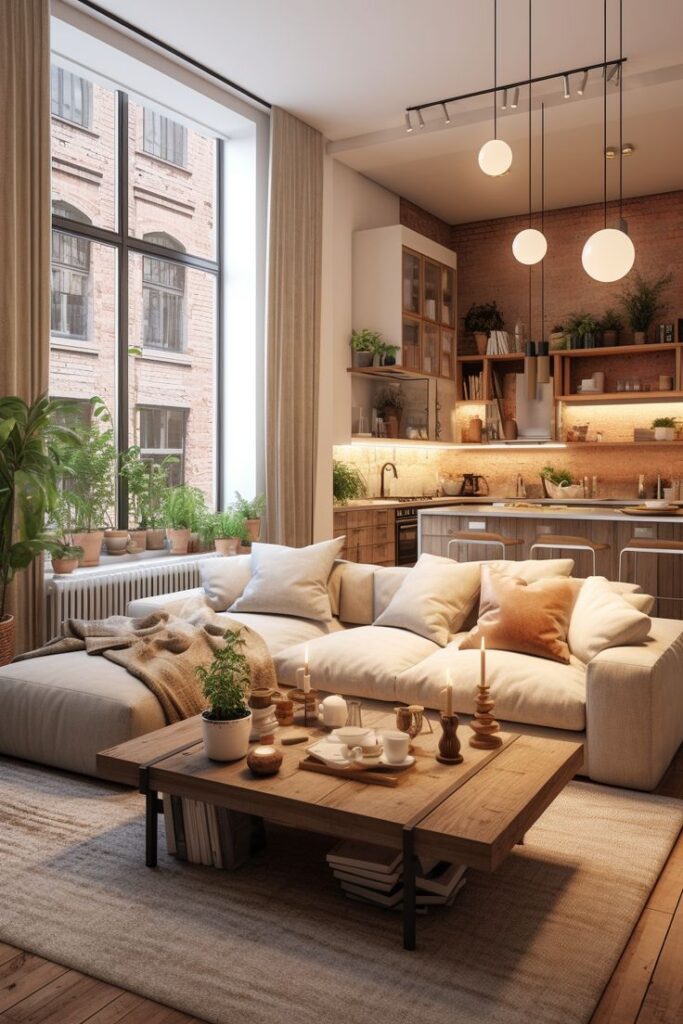
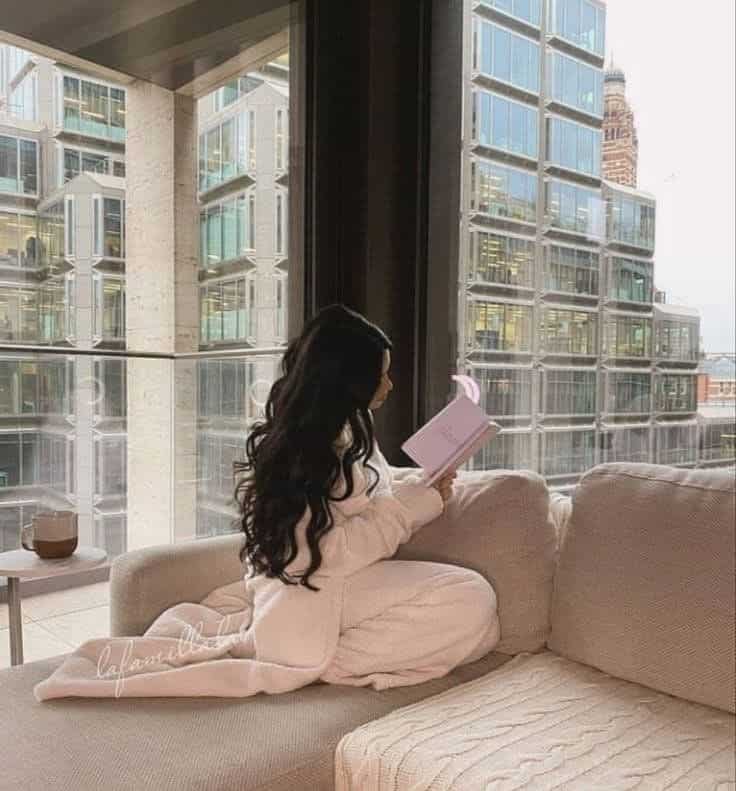
Warm minimalism thrives when you balance intentional design with elements that reflect how you actually live in your space. The key is selecting meaningful items that add personality while maintaining the clean aesthetic through thoughtful curation and organization.
Incorporating Hygge for Coziness
Hygge brings Danish comfort principles into your warm minimalist space through simple additions that encourage relaxation. Layer soft throws in natural fibers like wool or linen across your sofa, choosing neutral tones that complement your existing palette.
Candles create instant warmth and ambiance. Group them on a wooden tray or stone surface in varying heights. The flickering light softens hard edges and adds a lived-in quality without cluttering surfaces.
Create cozy reading nooks with a comfortable chair, a small side table, and warm lighting. Add a chunky knit blanket and perhaps a ceramic mug for tea. These dedicated comfort zones make your minimalist space feel inviting for daily use.
Natural textures enhance the hygge atmosphere. Consider a jute rug underfoot or linen curtains that filter soft light. These materials add warmth while staying true to minimalist principles.
Adding Art and Decor Mindfully
Choose art pieces that genuinely resonate with you rather than filling walls for the sake of decoration. One large statement piece often works better than multiple small items in a warm minimalist setting.
Display personal items with intention. A terracotta vase with fresh branches, a handmade ceramic bowl, or a collection of three carefully chosen objects creates visual interest without chaos. Each piece should earn its place in your space.
Use open shelving sparingly to showcase curated collections. Group similar items together and leave plenty of negative space between groupings. This approach lets each item breathe while adding personality to the room.
Consider rotating decorative items seasonally. This keeps your space fresh and prevents visual fatigue while maintaining the uncluttered aesthetic that defines warm minimalism.
Maintaining a Clutter-Free Sanctuary
Designate specific homes for everyday items to prevent surface clutter. Baskets, boxes, and trays in natural materials keep necessities accessible yet contained.
Adopt a one-in-one-out rule for new purchases. This practice ensures your space remains balanced and prevents gradual accumulation of unnecessary items.
Daily maintenance habits:
- Clear counters each evening
- Put items away immediately after use
- Sort mail and papers as they arrive
- Keep only current reading materials visible
Use furniture with hidden storage to maintain clean lines while accommodating real-life needs. Ottoman storage, console tables with drawers, and built-in cabinets hide daily essentials effectively.
Regularly assess your belongings. If something no longer serves a purpose or brings you joy, remove it from your space. This ongoing curation keeps your warm minimalist home feeling intentional and peaceful.
What are the key principles of warm minimalism?
The key principles include using natural materials like wood and stone, a warm neutral color palette with earthy tones, texture layering to add depth, and prioritizing quality over quantity in furnishings.
How does warm minimalism differ from traditional minimalism?
Traditional minimalism emphasizes stark whiteness and cold surfaces, often resulting in sterile interiors, while warm minimalism adds layers of warmth through natural materials, soft colors, and tactile textures to foster a more inviting atmosphere.
What is warm minimalism in interior design?
Warm minimalism is an interior design approach that combines the simplicity and decluttering principles of minimalism with cozy textures, earthy tones, and natural materials to create inviting, comfortable spaces.
How can I incorporate warmth into a minimalist space?
You can incorporate warmth through choosing natural materials such as wood, linen, and ceramics, using warm neutral colors like beiges and terracotta, layering textures, and adding soft lighting to create a cozy ambiance.
What role does lighting play in warm minimalism?
Lighting in warm minimalism involves layered lighting with ambient, task, and accent lights, using warm-colored bulbs in the 2700K to 3000K range to create a soft, cozy glow, and selecting fixtures that serve as sculptural elements to enhance the overall serene atmosphere.
- 92shares
- Facebook0
- Pinterest89
- Twitter3
- Reddit0