


Custom bedding for couples works best when it fixes a specific mismatch: firmness, temperature, blanket weight, mattress size, or care needs. The practical options range from two separate duvets on one bed to a split-firmness mattress, deeper fitted sheets, and made-to-measure covers. Measure the finished bed first, change only the layer causing friction, and make sure both sides can be washed and replaced without a special routine.
A custom order is not automatically more comfortable than a standard set. It becomes useful when a standard product pulls loose, leaves one person too warm, creates a fight over the duvet, or does not fit an unusual mattress. This guide treats bedding as part of the bedroom design: it needs to work, fit, and still look like one considered composition.
What custom bedding helps couples and families most?
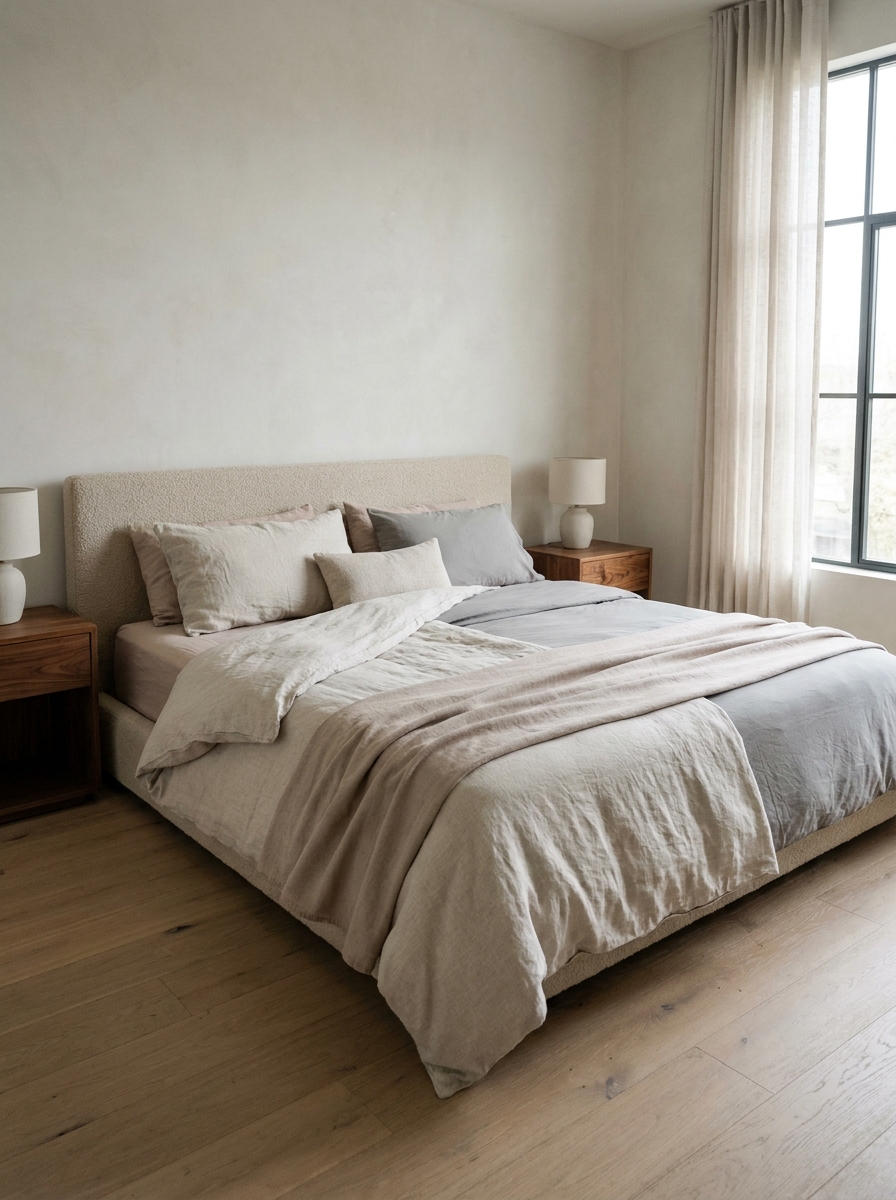
For most shared beds, the first useful change is the smallest one that separates competing comfort needs. Two single duvets let each person choose warmth and weight without replacing the mattress. A split-firmness mattress or paired mattress system is more relevant when support preference differs, but it costs more and may introduce a center seam. Deep-pocket or made-to-measure sheets solve fit problems on tall mattresses, toppers, adjustable bases, and nonstandard frames. Families often gain more from washable protectors, spare covers, and clearly sized layers than from delicate luxury textiles. Before ordering anything custom, write down the exact problem, measure the bed with every topper in place, check how the item will be laundered, and confirm the return or alteration policy. The best setup is the one both people can remake, clean, and replace without turning the bed into a permanent design project.
| Shared-bed problem | Useful option | Check before buying |
|---|---|---|
| Different warmth preferences | Two separate duvets or blankets | Individual fill weight, cover size, and how the pair will be styled |
| Different firmness preferences | Split-firmness or paired mattresses | Center seam, frame support, total height, and trial terms |
| Fitted sheet comes loose | Deeper or made-to-measure fitted sheet | Width, length, depth, topper, corner shape, and shrinkage allowance |
| Movement crosses the bed | Independent comfort layers or two mattresses | Edge support, gap management, and compatible protector |
| Children or pets use the bed | Washable protector and spare covers | Water resistance, breathability, drying time, and replacement availability |
Start with the friction, not the product
Ask each sleeper to name the moment that is actually inconvenient. Is someone pulling the duvet away, waking up hot, sinking too deeply, struggling with a fitted sheet, or finding that the decorative layers take too long to remove? A precise problem prevents an expensive all-at-once purchase.
Temperature and firmness are different issues. Separate duvets can help with warmth and blanket control, but they do not change mattress support. A split mattress can address firmness, yet it will not fix a heavy shared comforter. Keep the decisions separate and test the simpler layer first.

Compare the main custom bedding options
Two duvets on one shared bed

This arrangement is often called the Scandinavian sleep method. Each person uses a single duvet while the fitted sheet and mattress remain shared. It is easy to test with existing bedding, and each side can have a different fill or seasonal weight. The tradeoff is visual: two covers need a deliberate fold or one unifying throw if you want the bed to read as a single design.
Split-firmness and paired mattresses
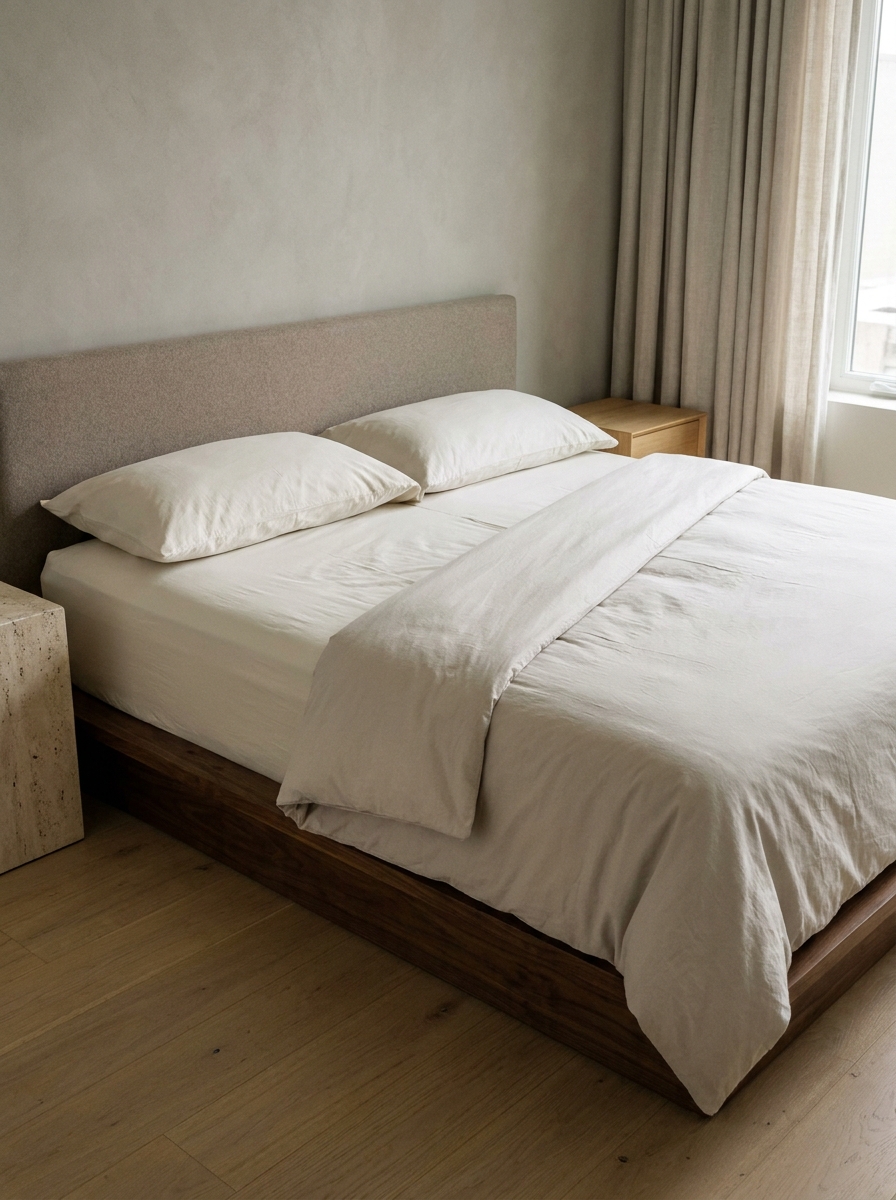
A manufacturer may build two firmness zones into one mattress or supply two compatible mattresses inside one frame. Ask exactly where the transition falls, whether the sides can be exchanged independently, and how the edge behaves at the center. Adjustable bases may require split sizes and matching sheets, protectors, and headboard clearance.
Made-to-measure sheets and protectors
Custom sheets are useful for antique beds, RV or boat mattresses, unusually deep pillow tops, rounded corners, and beds with permanent toppers. The maker needs actual finished dimensions, not only a size name such as king or queen. Confirm whether the quoted depth includes elastic tension and whether fabric shrinkage has already been allowed for.

How to measure a bed before ordering custom bedding

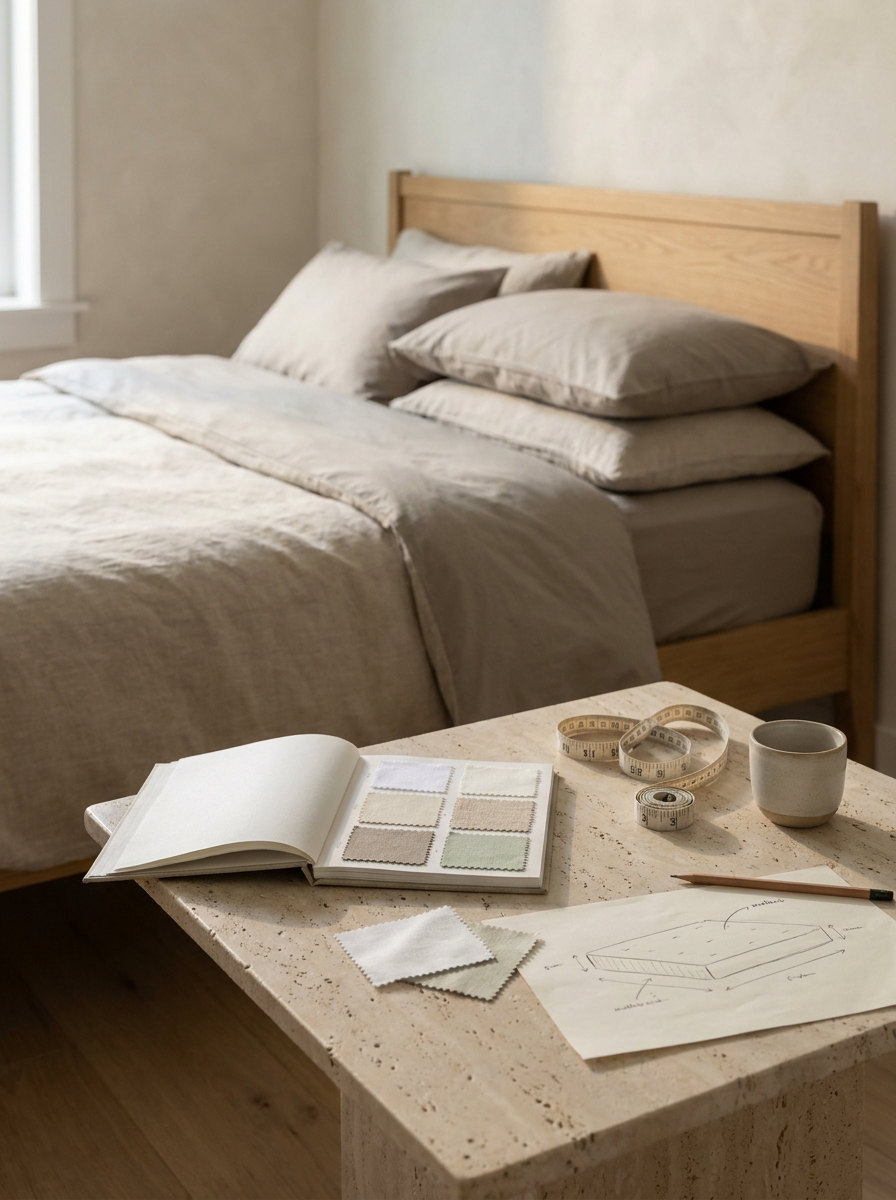
Strip the bed down to the mattress, then put back any topper that will stay in daily use. Measure in centimetres or inches consistently and record the unit beside every number. Take each dimension in more than one place because soft edges and handmade frames are not always perfectly square.
- Measure the full width from the widest left edge to the widest right edge.
- Measure the length from the head end to the foot end without following the curve of a soft edge.
- Measure the finished depth from the lowest point the fitted sheet must wrap under to the top surface, including the topper.
- Photograph rounded, clipped, or split corners and note where the mattress bends on an adjustable base.
- Check the bed-frame interior, platform gaps, and center support if the mattress configuration will change.
- Ask the maker for finished dimensions, tolerances, alteration terms, and expected shrinkage after washing.
Also measure the finished bed height if you are changing mattress layers. Our bedroom ergonomics guide explains how mattress height, bedside reach, and clear walkways work together. If the frame itself is part of the decision, compare these platform-bed design considerations before committing to a deeper setup.

Choose fabric by feel, maintenance, and season
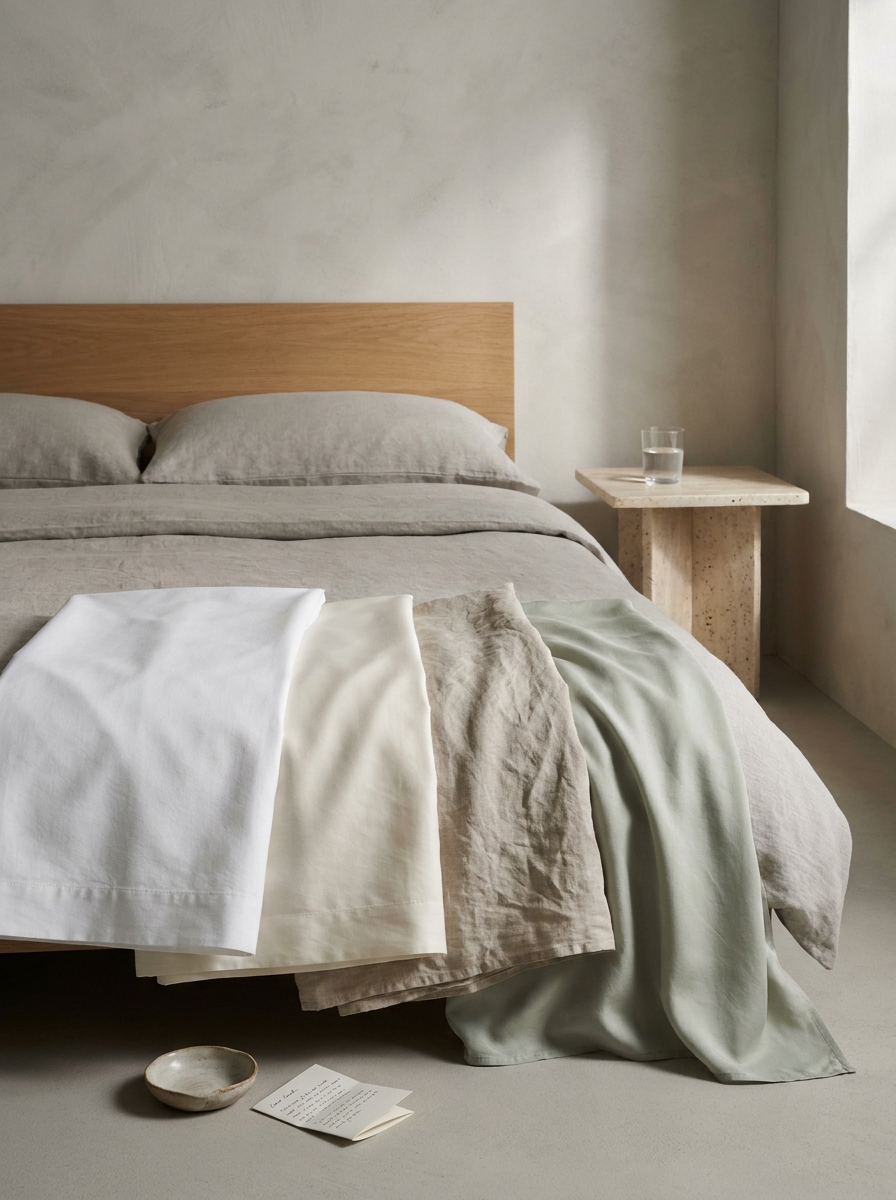
Fiber names do not tell the whole story. Weave, yarn size, finish, density, and laundering all change how fabric feels. Cotton percale is typically crisp and matte; cotton sateen feels smoother and can feel warmer; linen has a dry, relaxed texture and softens with use. Blends may dry faster or wrinkle less, but the exact performance depends on the construction.
| Material or weave | Typical feel | Practical tradeoff |
|---|---|---|
| Cotton percale | Crisp, airy, matte | Can wrinkle and may feel firm when new |
| Cotton sateen | Smooth, drapey, slightly warmer | May show wear or snagging sooner in some constructions |
| Linen | Textured, breathable, relaxed | Wrinkles visibly and often costs more |
| Lyocell | Smooth, fluid, cool to the touch | Care instructions and durability vary by blend and finish |
| Cotton blend | Depends on the blend | May simplify care, but check exact fiber percentages |
Read the care label before ordering a pale or delicate fabric for a family bed. A protector that takes hours to dry or a cover that cannot use the household’s normal wash cycle may be inconvenient even if it looks perfect. For seasonal styling, use the same fitted layer and change the removable top layers; these autumn bedding ideas show how throws and texture can shift the mood without replacing the whole set.

Make two comfort preferences look like one design
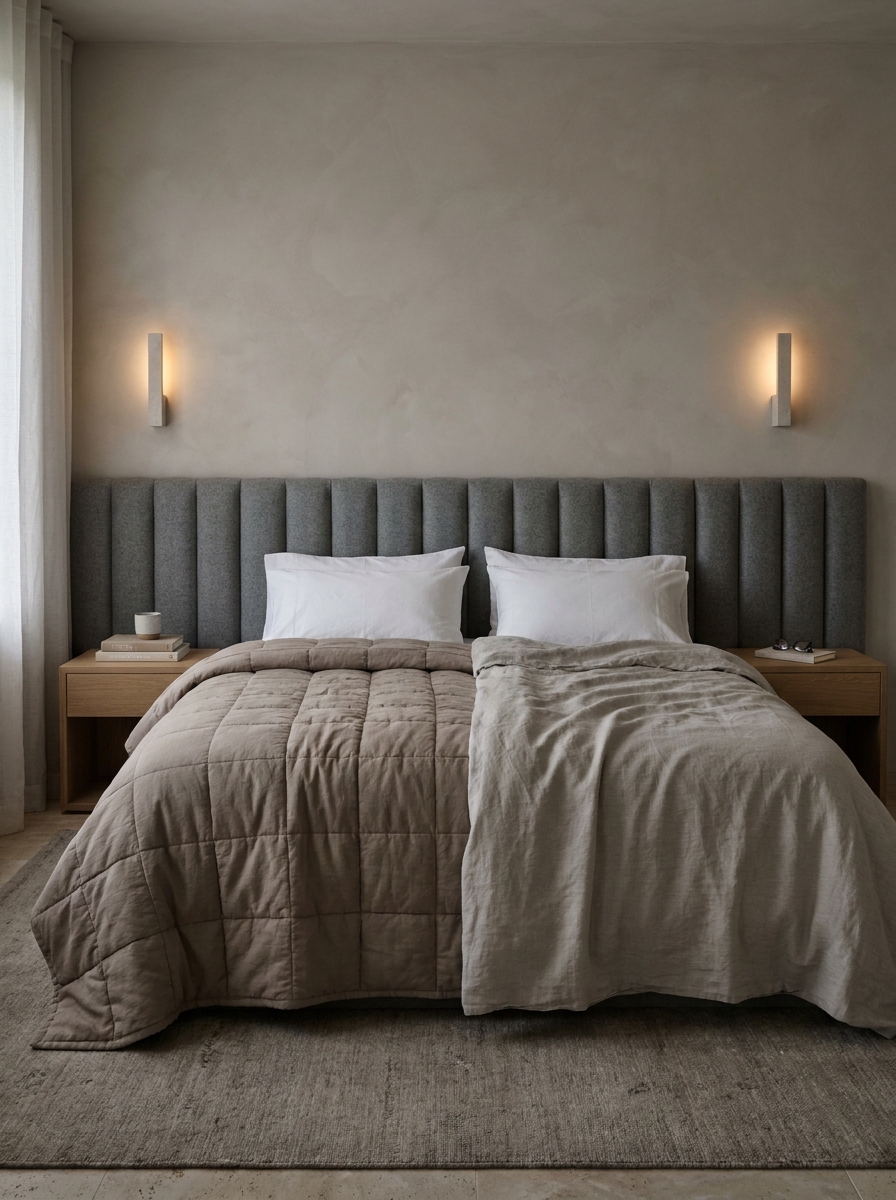
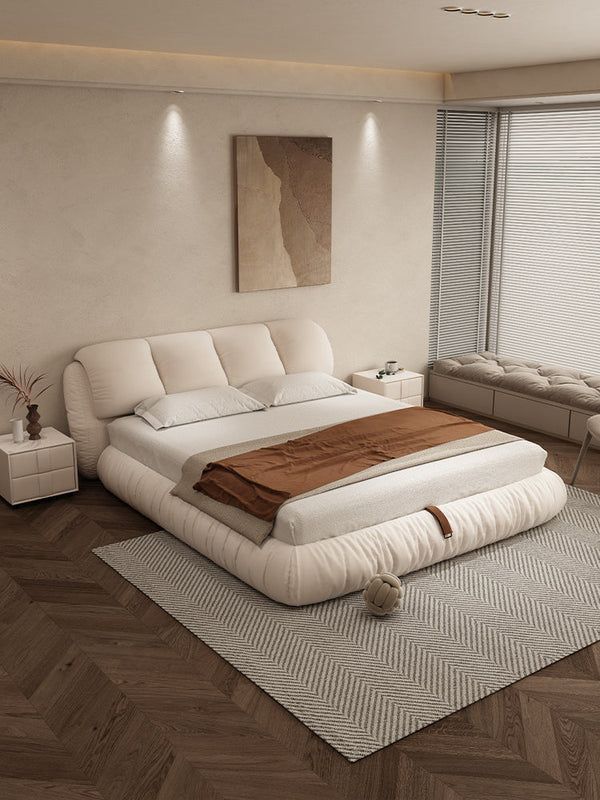
The bed can stay visually calm even when the functional layers differ. Choose duvet covers from one color family, repeat the same edge detail, or use matching covers in two weights. Align the fold at the top and place one continuous throw across the lower third. A shared headboard and consistent bedside lighting do more to unify the composition than a large pile of decorative pillows.
Start with the bed’s largest visible surface, then limit the supporting palette to two neutrals and one accent. The relaxing bedroom design guide covers lighting, circulation, and material choices around the bed, while these stylish bedroom principles help balance textiles with furniture and decor.
In a compact room, extra layers can make the bed look bulky and reduce clear floor space. Plan the bed zone with the smart bedroom layout guide. In a more formal scheme, use texture rather than volume; the luxury bedroom guide has useful examples of restrained layering.
Plan for children, pets, and frequent washing

Family bedding needs a recovery plan. Keep at least one spare fitted sheet and one washable top layer in the correct size, especially when a custom mattress cannot use standard replacements. Store the dimensions and supplier details with the linen rather than relying on memory when something needs replacing.
Choose closures that are easy to operate, protectors that do not shift, and fabrics that fit the household’s real laundry equipment. A very large cover may exceed the washer’s recommended load even if the label says machine washable. For children’s rooms, use the same decision order—fit, washability, then appearance—and coordinate it with these functional kids’ room ideas.
Common custom bedding mistakes
- Ordering by the mattress size name without measuring the actual width, length, and depth.
- Trying to solve temperature, firmness, movement, and styling with one expensive product.
- Forgetting that toppers and protectors change sheet depth and finished bed height.
- Choosing two duvets without deciding how they will be folded, stored, and washed.
- Buying delicate fabric that conflicts with children, pets, allergies, or the available laundry equipment.
- Ignoring the center seam, connector, or sheet requirements of a split mattress system.
- Assuming a custom product can be returned under the same terms as a standard stocked size.
Maintenance matters as much as the first fit. Use the maker’s care instructions and keep the product dimensions with your linen inventory. This guide to bed cleaning and maintenance can help you plan a routine around the mattress, protector, and removable covers.
A practical buying checklist
- Name the single comfort or fit problem you want the purchase to solve.
- Test a reversible option first, such as separate blankets or duvets.
- Measure the finished mattress and photograph unusual corners or split sections.
- Confirm fabric composition, weave, care cycle, drying space, and likely shrinkage.
- Ask for finished product dimensions rather than relying on a standard size label.
- Check the trial, return, alteration, warranty, and replacement-piece policies in writing.
- Decide how both sides will be styled so the bed remains visually coherent.

Build the shared bed in layers
Custom bedding is most useful as a targeted design tool. Begin with the mattress and fitted layer, add separate comfort only where preferences differ, then use color and texture to reconnect the two sides visually. A measured, washable, replaceable setup will usually serve a couple or family better than a complicated set chosen only for its showroom appearance.
For a broader room refresh, continue with comfort-boosting bedroom ideas. The bedding will work best when the layout, lighting, storage, and daily routine support it.
Custom bedding FAQ
Is custom bedding worth it for couples?
It can be useful when two people need different warmth, firmness, sheet depth, or blanket weight. The value comes from solving a specific mismatch, not from the custom label itself. Start with the least expensive fix, such as separate duvets or a correctly sized fitted sheet, before ordering a fully bespoke mattress or complete bedding set.
What is the Scandinavian sleep method?
The Scandinavian sleep method uses two separate single duvets on one shared bed instead of one large duvet. Each person can choose a different warmth or weight and keep the covers on their own side. The mattress and fitted sheet can still be shared. It is a simple option when blanket pulling or temperature preference is the main problem.
Can couples choose different mattress firmness on one bed?
Yes. Some manufacturers offer split-firmness mattresses, paired long-single mattresses, or adjustable systems with different comfort settings on each side. Check whether the finished surface will have a noticeable center seam and whether the bed frame supports the chosen configuration. Also confirm the exact sheet and protector sizes before ordering.
How do I measure a mattress for custom sheets?
Measure the mattress width, length, and full depth in several places. Include a topper if it will remain on the bed, but do not compress the mattress while measuring. Note rounded corners, split sections, adjustable-base articulation, and any unusual shape. Give the maker the actual dimensions and ask what allowance is built into the finished sheet.
Which bedding fabric is best for a shared bed?
There is no single best fabric. Crisp cotton percale suits people who prefer an airy, matte feel; cotton sateen feels smoother and warmer; linen has a relaxed texture and manages seasonal layering well. Compare fiber content, weave, finish, care instructions, and return policy. A fabric that both people can wash and maintain consistently is usually the practical choice.
How can custom bedding still look coordinated with two duvets?
Choose covers from the same color family or repeat one texture across both sides. Fold the two duvets to the same height, use one continuous bedspread or throw across the lower third, and keep decorative pillows limited. The bed will read as one composition even though the functional layers are separate.
- 592shares
- Facebook0
- Pinterest592
- Twitter0
- Reddit0