Gothic style is all about atmosphere. From dramatic arches and dark wood to luxurious fabrics and moody lighting, this style brings a romantic edge that still feels modern. By choosing a few standout architectural features and layering rich colors and textures, you can create a home that feels bold, inviting, and lived-in.
This article shows you how to spot Gothic elements and use them without overwhelming your space. You’ll learn about architecture, colors and textures, furniture choices, motifs, lighting, and simple ways to make everything feel cohesive so your home reads as intentional and personal.
Defining Gothic Design Interior
Gothic interior design mixes grand architecture, dark colors, and ornate details to create dramatic, moody rooms. You’ll find pointed arches, rich fabrics, heavy wood, and metalwork combined to shape a sense of history and texture.
History and Origins
Gothic interior design grows from the European Gothic architecture of the 12th–16th centuries. You’ll see direct links to cathedrals: pointed arches, ribbed vaults, and stained glass that aimed to lift the eye and let colored light into vast spaces.
In homes and palaces, those church features became decorative. Carved wood panels, stone fireplaces, and wrought iron appeared in wealthy residences. The 19th-century Gothic Revival renewed interest, bringing medieval motifs back into furniture, lighting, and wallpaper designs.
Key Characteristics
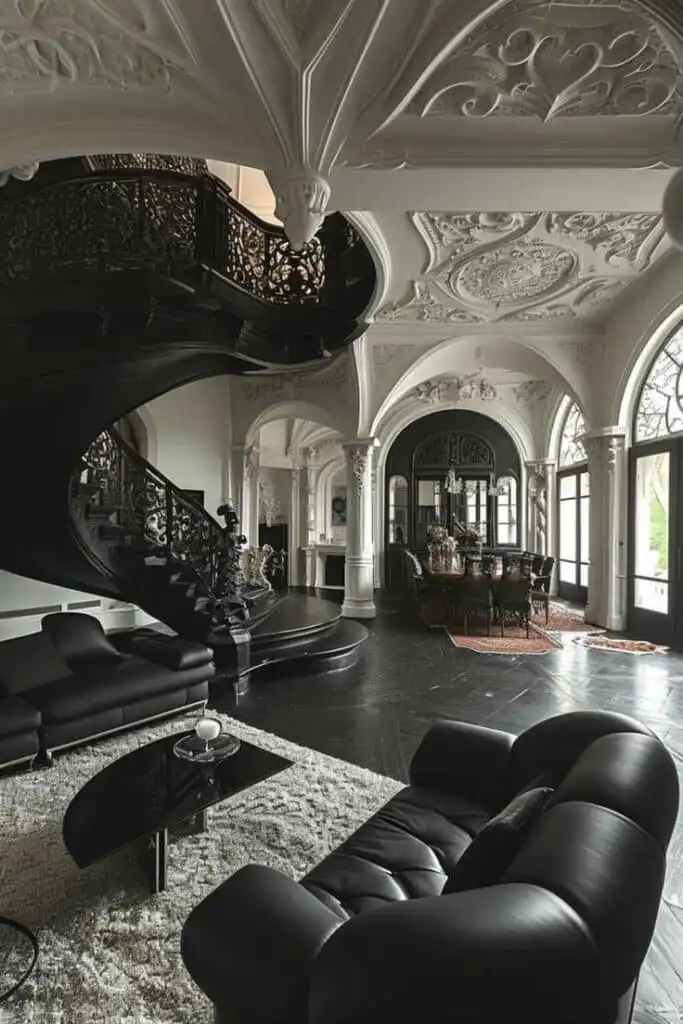
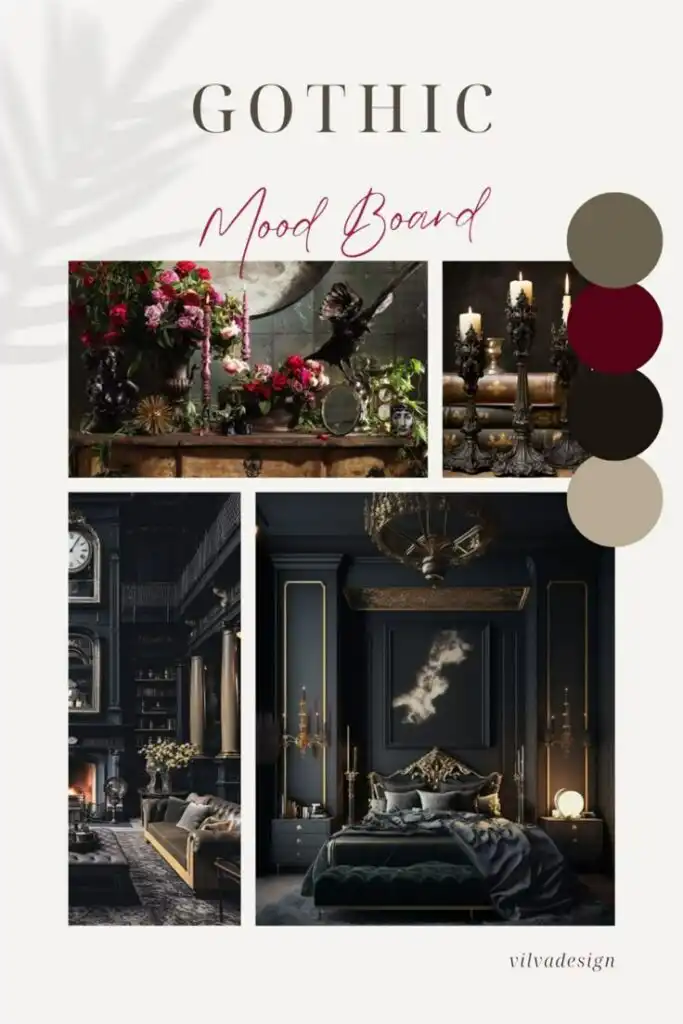
Color palettes lean toward deep tones: charcoal grays, burgundy, forest green, and black. You’ll often use layered textures — velvet drapes, brocade upholstery, and worn leather — to add warmth and depth.
Architectural details matter: pointed arches, carved ceiling beams, and traceried windows set the tone. Furniture tends to be heavy and ornate with turned legs, carved backs, and dark finishes. Metalwork, like wrought-iron chandeliers and candle sconces, adds contrast and structure.
Use of light is intentional. Stained or leaded glass and low, warm lamps create pockets of glow. Patterns include trefoils, quatrefoils, and florid tracery that repeat across textiles and surfaces.
Modern Interpretations
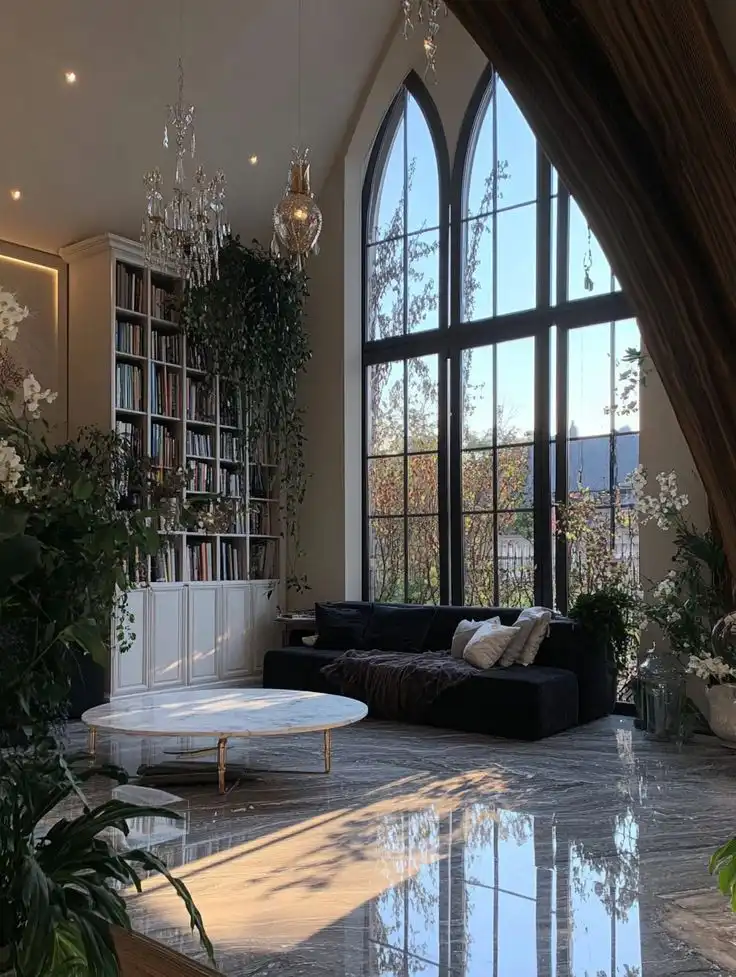
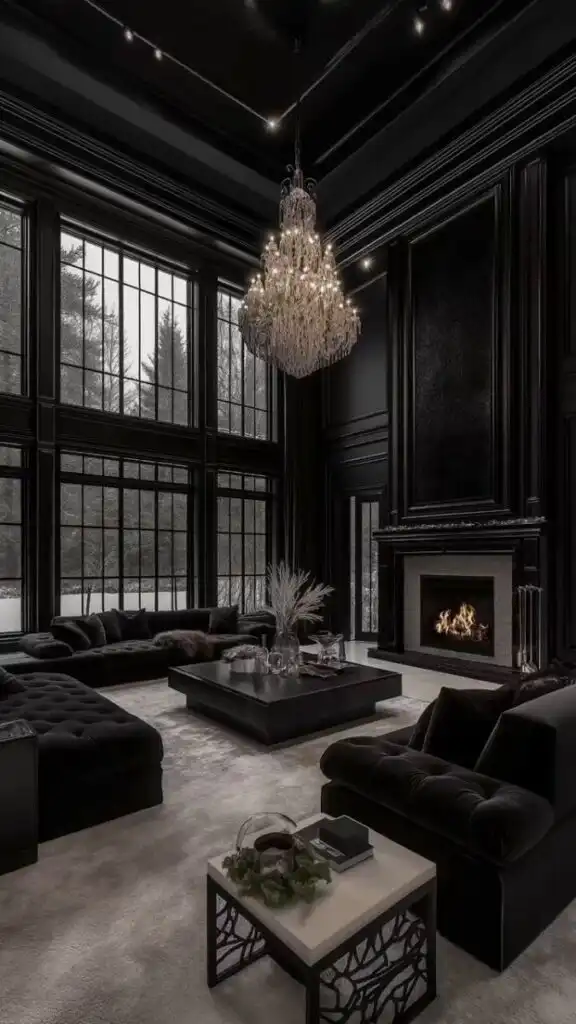
Today’s Gothic-inspired rooms balance drama with livability. You can keep the mood but simplify shapes: clean-lined sofas upholstered in velvet, or a single pointed-arch mirror as a focal point.
Mix old and new: pair a vintage carved chest with streamlined shelving, or hang contemporary art over a stone mantel. Metals shift from heavy iron to brushed brass for a warmer look. Lighting favors dimmable fixtures so you can control the ambience.
Practical updates include lighter flooring and neutral accents to prevent the space from feeling too heavy. You can adapt Gothic themes in one room — a library or dining area — without making your whole home feel medieval.
Architectural Elements in Gothic Interiors
You’ll find a few strong features that give Gothic interiors their mood: tall overhead structures that shape light and sound, arches that guide the eye, and colored glass that paints the room. Each element plays a visual and practical role in how a space feels and functions.
Vaulted Ceilings
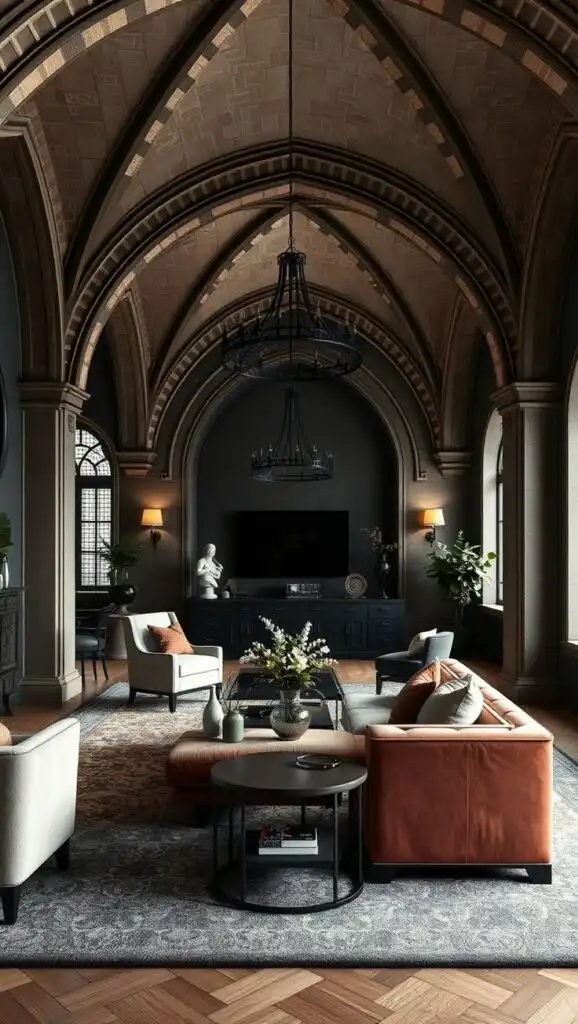
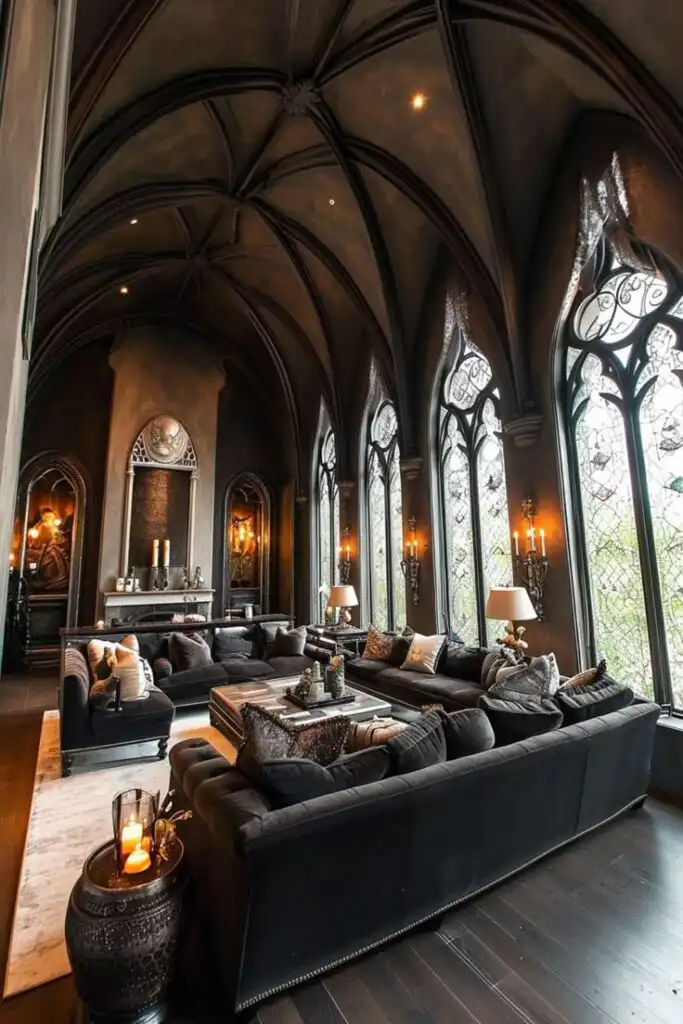
Vaulted ceilings lift your gaze and make rooms feel taller and more spacious. In Gothic interiors, ribbed vaults are common: intersecting ribs form a visible skeleton that supports the roof and adds pattern overhead. You can mimic this effect with exposed timber or plaster ribs to create depth without structural overhaul.
Vaults also affect acoustics. Hard surfaces and high volumes produce a livelier echo, so plan soft furnishings or drapery if you want quieter rooms. Lighting should follow the vault lines—uplights or linear fixtures along ribs emphasize the shape and add dramatic shadowing.
Pointed Arches
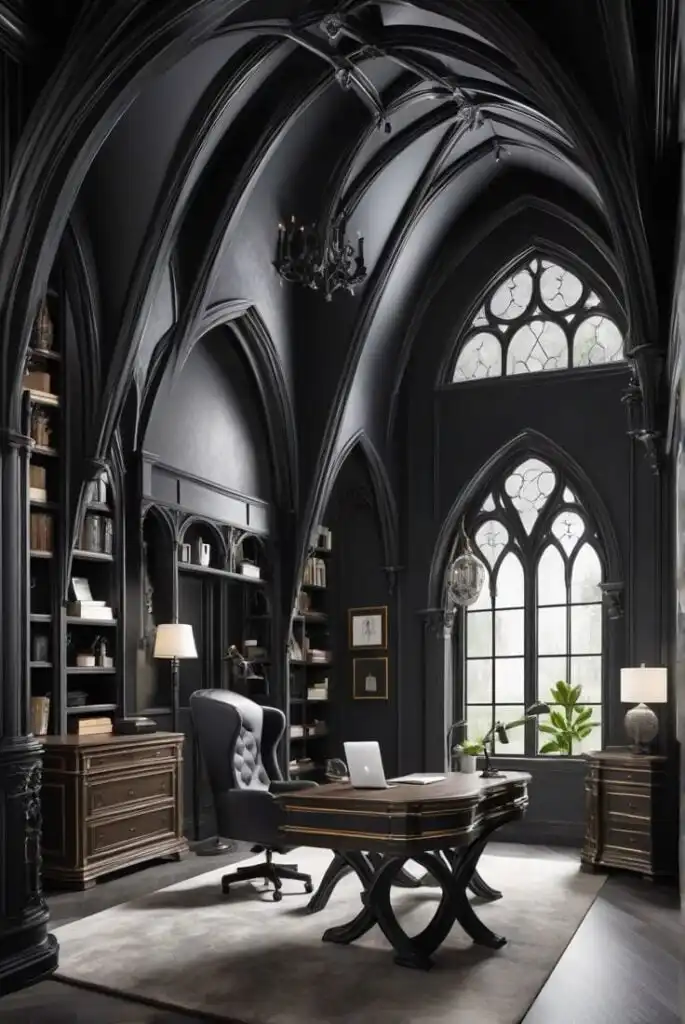
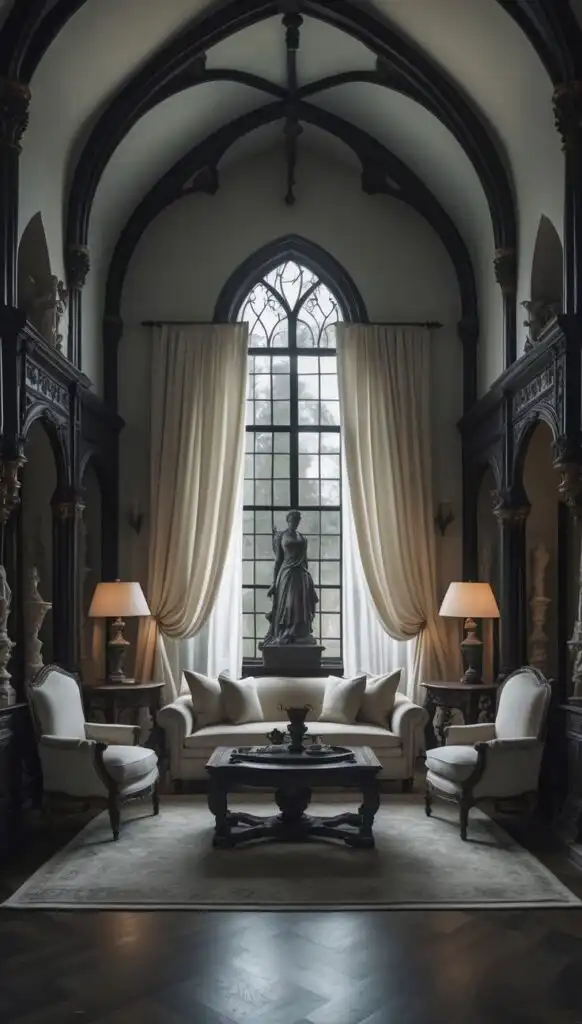
Pointed arches direct attention upward and work as both structure and ornament. You’ll see them in doorways, window openings, and interior passages. They are slimmer than rounded arches and let you span wider openings with less mass, which helps maintain a sense of verticality.
Use pointed arches as framing devices: place an arch around a fireplace, a bookshelf niche, or a hallway entrance. Material choices matter—stone or dark wood reads as authentic, while plaster or molded trim can achieve the look on a budget. Keep proportions balanced; a too-steep arch can feel cramped, while a too-flat arch loses the Gothic character.
Stained Glass Features
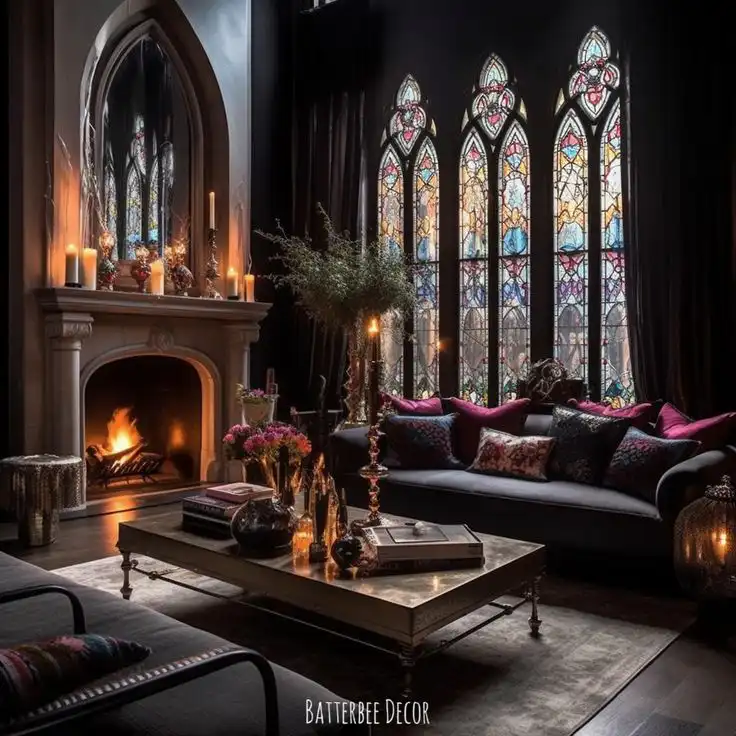
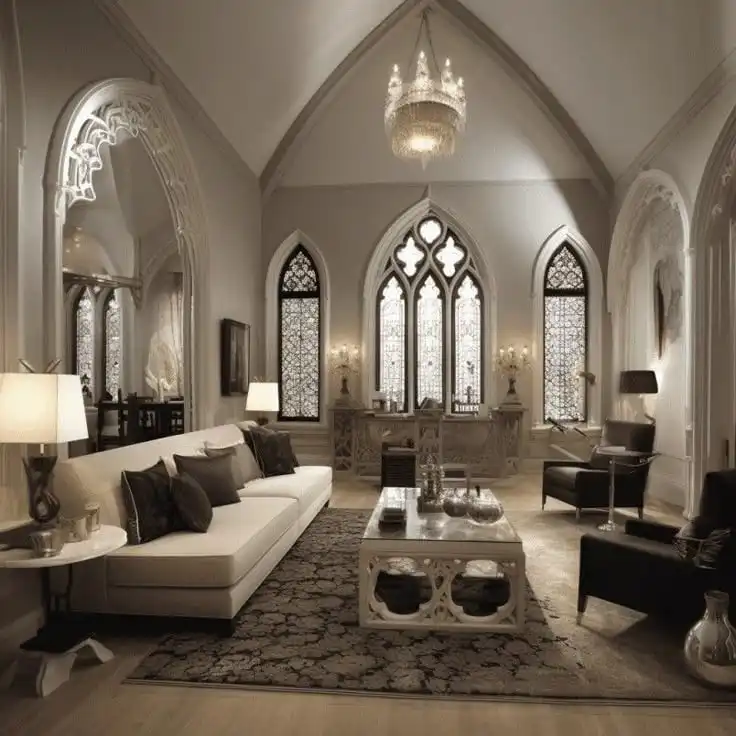
Stained glass filters light and adds color patterns to floors and walls. Traditional Gothic glass uses jewel tones and leaded lines to depict floral or geometric motifs. For homes, consider smaller panels, transoms, or cabinet inserts to bring this effect without major window replacement.
You can choose handmade glass for texture and variation, or use painted/translucent films for a budget-friendly option. Place stained panels where sunlight hits during the day—east or south-facing windows work best—to get vivid color play. Maintain the lead or cames if present, and seal edges to prevent drafts and moisture damage.
Color Palettes and Textures
Choose deep colors, layered fabrics, and a few bright accents to set a moody, historically rich mood. Focus on paint, upholstery, and finishes that work together so rooms feel deliberate and lived-in.
Dark and Moody Tones
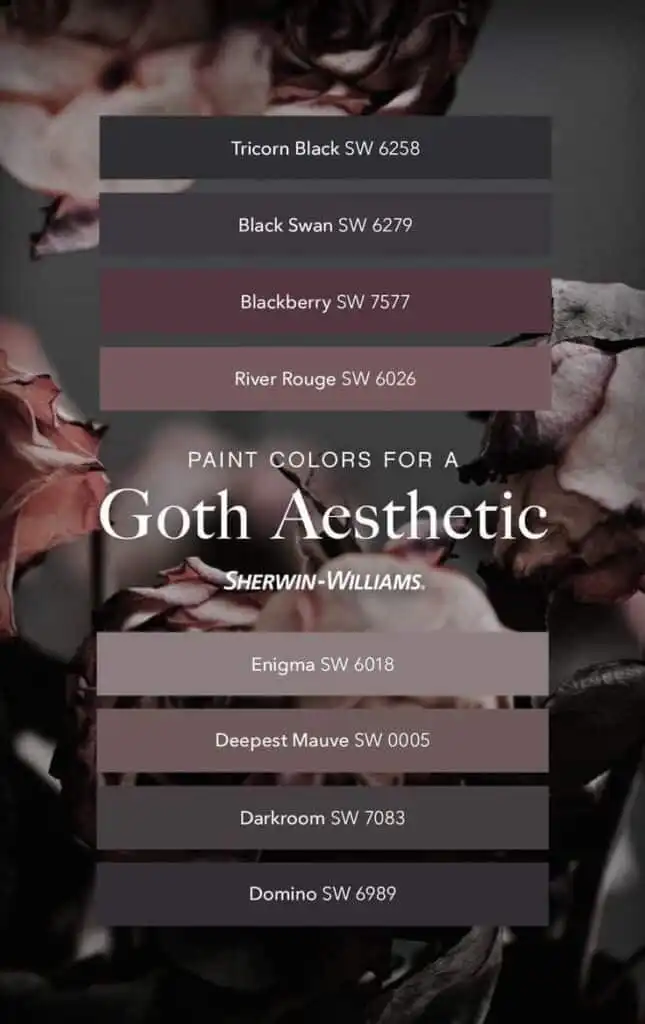
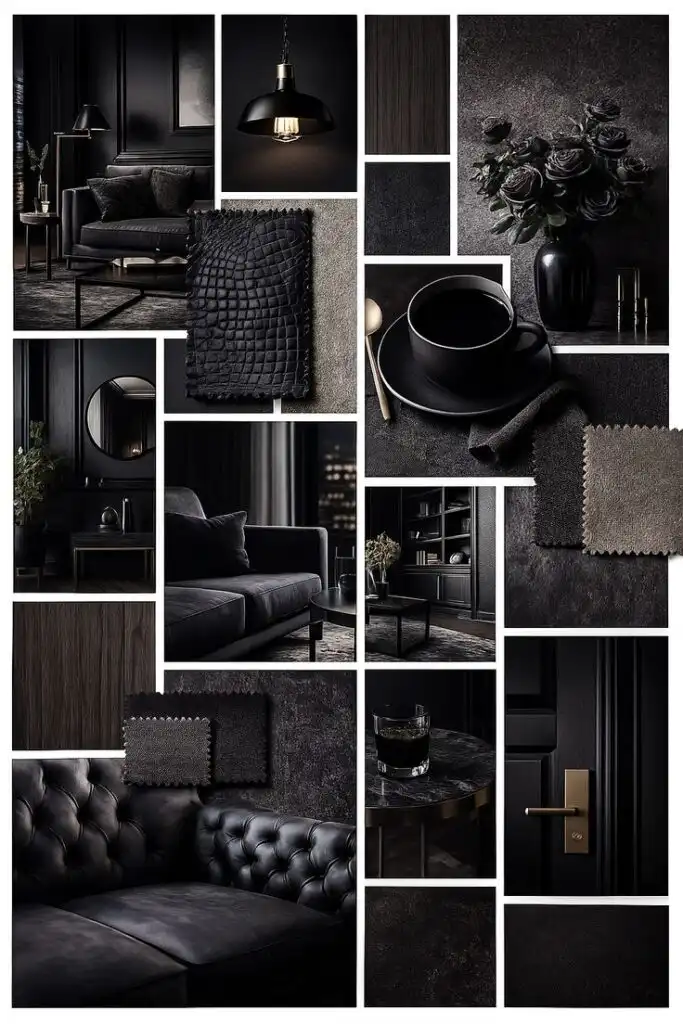
Pick base paints in near-black, charcoal, or deep plum for walls to make architectural details stand out. Use lighter tones like warm greys or muted taupes on trim or ceilings to avoid closing the room in completely.
Add accent colors in jewel tones — emerald green, ruby red, or sapphire blue — for curtains, pillows, or a single painted cabinet. These colors catch light and break up large dark surfaces without losing the gothic feel.
Balance is key: keep major surfaces dark but limit very saturated accents to one or two pieces. That prevents the room from feeling heavy and keeps focal points clear.
Rich Textural Layers
Layer fabrics to create depth: velvet drapes, brocade cushions, and a heavy wool throw add warmth and visual interest. Combine matte plaster or limewash walls with polished wood floors or dark-stained floorboards for contrast.
Use rugs with dense pile or antique patterns to anchor seating areas and soften echoes. Don’t forget small tactile elements like tassels, embroidered trims, and carved wood to reinforce the historic vibe.
Texture also helps with light. Soft fabrics diffuse light and make a candle or lamp glow feel softer and more atmospheric.
Metallic and Ornate Finishes
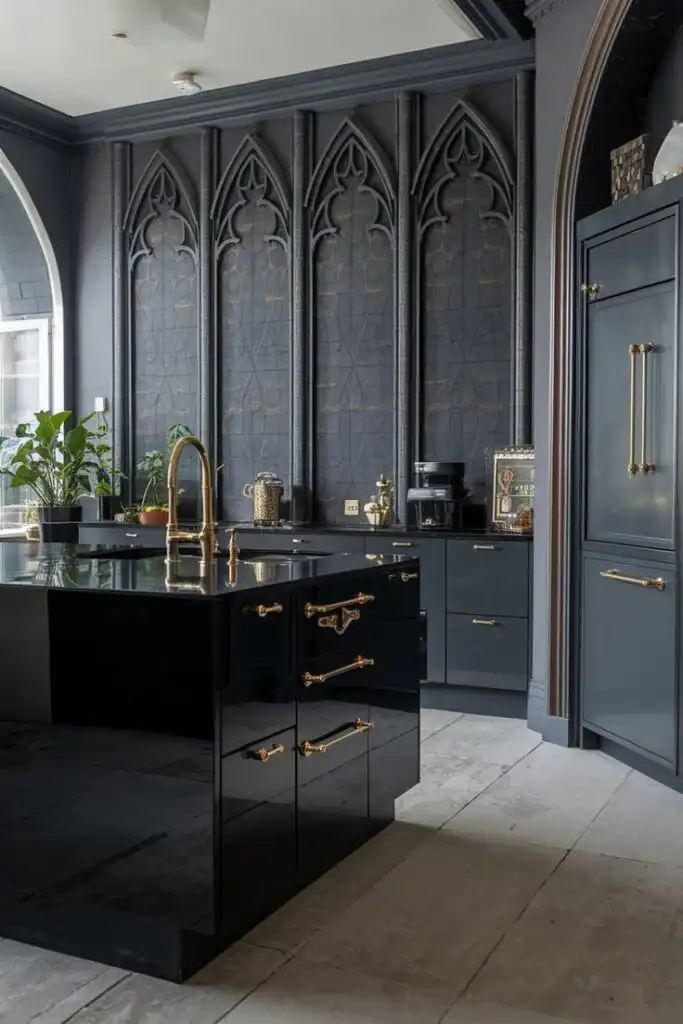
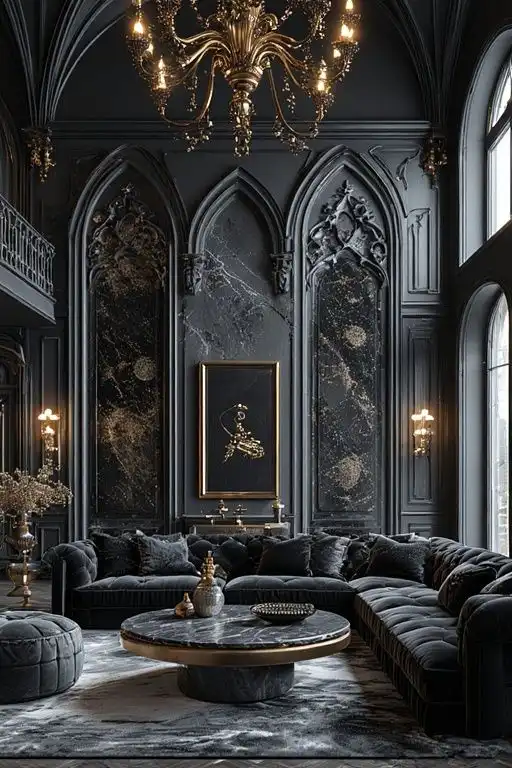
Introduce metal in fixtures and hardware: aged brass, wrought iron, or burnished bronze work best. Choose statement pieces like a chandelier, mirror frame, or door handles to keep metal purposeful.
Add ornate details through carved wood moldings, plaster rosettes, or gilded picture frames. Keep gilding restrained — a thin edge on a mirror or frame reads elegant rather than overdone.
For small surfaces, use hammered or patinated metal finishes on trays, candleholders, and knobs to tie the room together without overwhelming the space.
Furniture Styles for Gothic Spaces
You can build a Gothic interior with a few key furniture choices that focus on age, detail, and scale. Choose pieces with dark finishes, ornate carving, and bold silhouettes to set the mood and function of each room.
Antique and Vintage Pieces
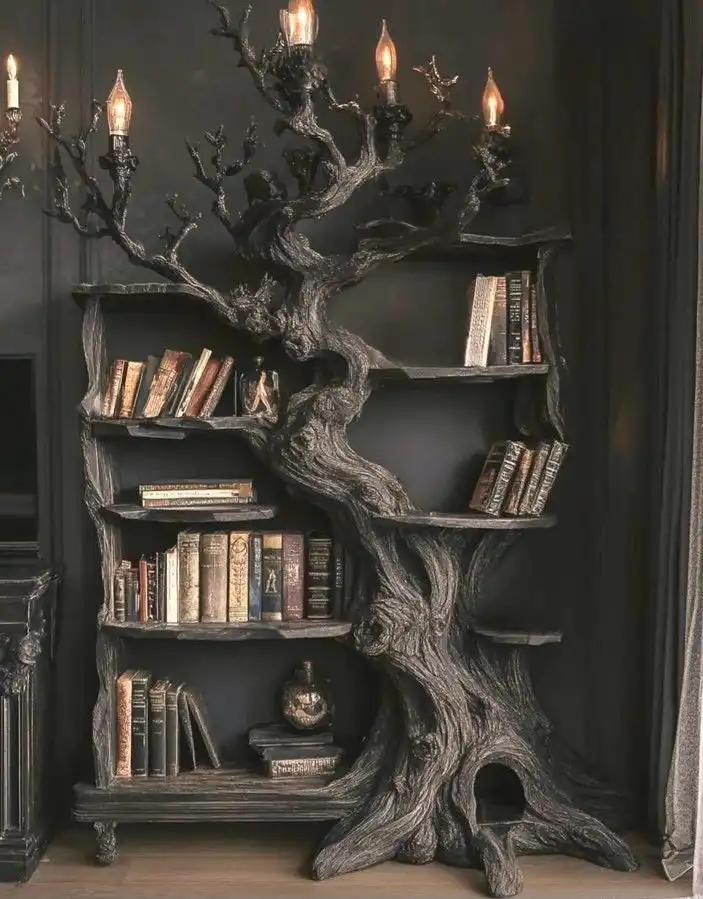
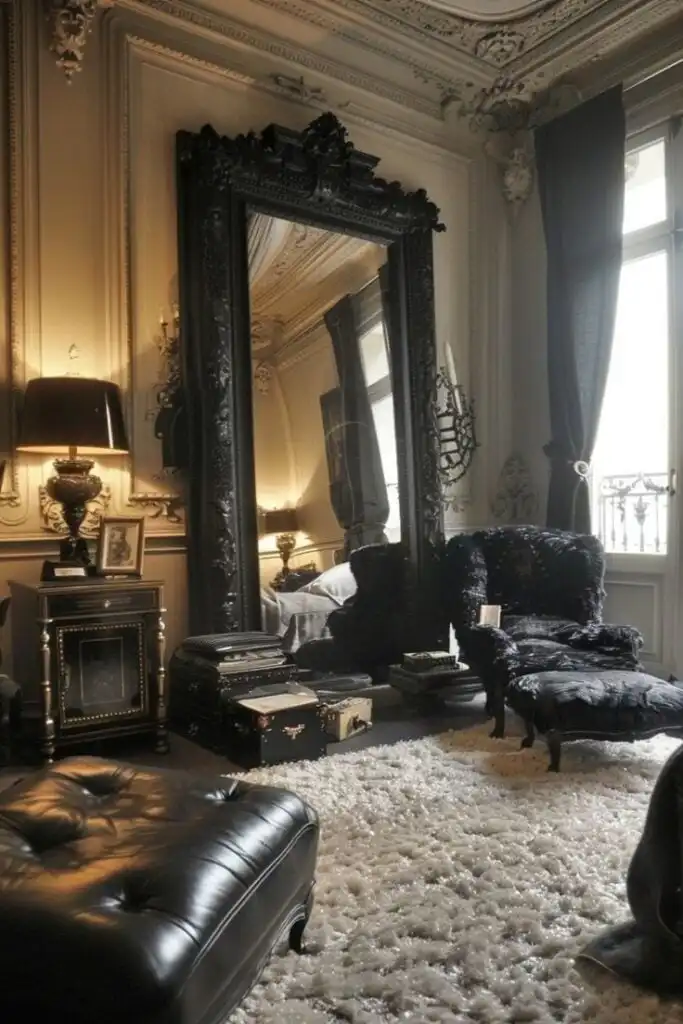
Hunt for Victorian dressers, Jacobean chests, or Edwardian sideboards at flea markets and estate sales. These pieces bring authentic patina—worn brass, aged leather, and faded veneer—that reads as history rather than new décor.
Look for solid hardwood construction like oak or walnut; joints and dovetails signal quality and help the piece hold up over time.
When buying, inspect for structural soundness: check drawers, legs, and drawer runners. Minor surface wear works in your favor, but avoid pieces with active woodworm, loose frames, or water damage.
Refinish only when necessary. A gentle restoration or dark stain preserves character while matching your palette.
Carved Woodwork
Carved details define Gothic furniture: pointed arches, foliate motifs, and strapwork bring visual drama. Seek headboards, dining chairs, and armoires with deep-relief carving that casts shadow and texture in low light.
You can mix carved oak cabinets with smoother modern surfaces to avoid cluttered heaviness.
Pay attention to scale and proportion. Large carvings suit high-ceiling rooms; small apartments benefit from a single carved focal piece like a console or mirror.
Maintain carvings by dusting with a soft brush and using wood oils sparingly to avoid build-up in crevices.
Statement Seating
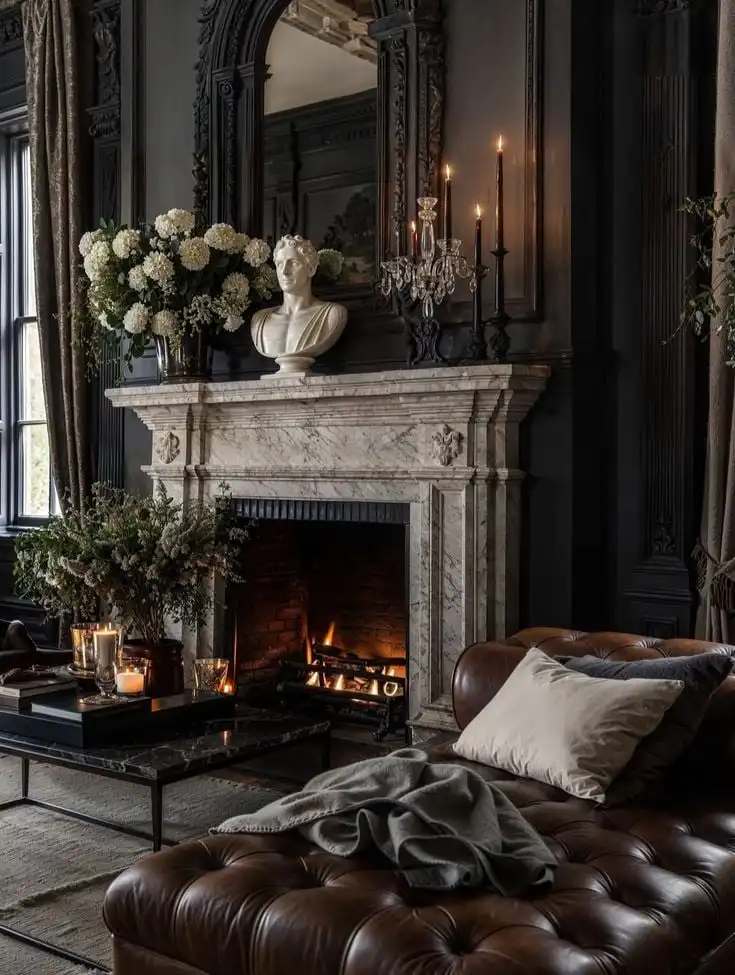
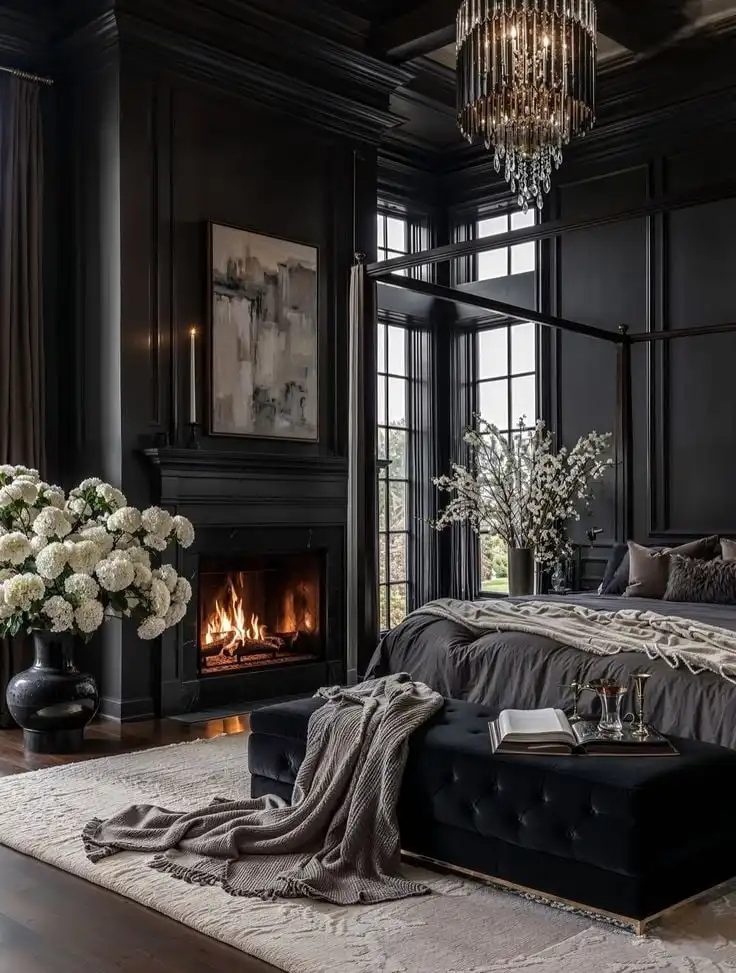
Choose seating that anchors the room: wingback chairs, tufted leather sofas, and throne-like armchairs work well. Dark leather, rich velvet, or heavy brocade create a tactile, moody feel.
Look for high backs and rolled arms to provide presence and comfort.
Arrange seating to highlight a focal point—fireplace, tapestry, or a carved table. Use a mix of textures: pair a tufted sofa with a carved wooden chair to balance softness and structure.
Add functional accents like nailhead trim, turned legs, and ornate feet to reinforce the Gothic look without sacrificing usability.
Decorative Motifs and Accessories
These items shape the gothic mood through pattern, light, and texture. Pick motifs that repeat across furniture, lighting, and textiles to make the room feel unified and intentional.
Gothic Revival Patterns
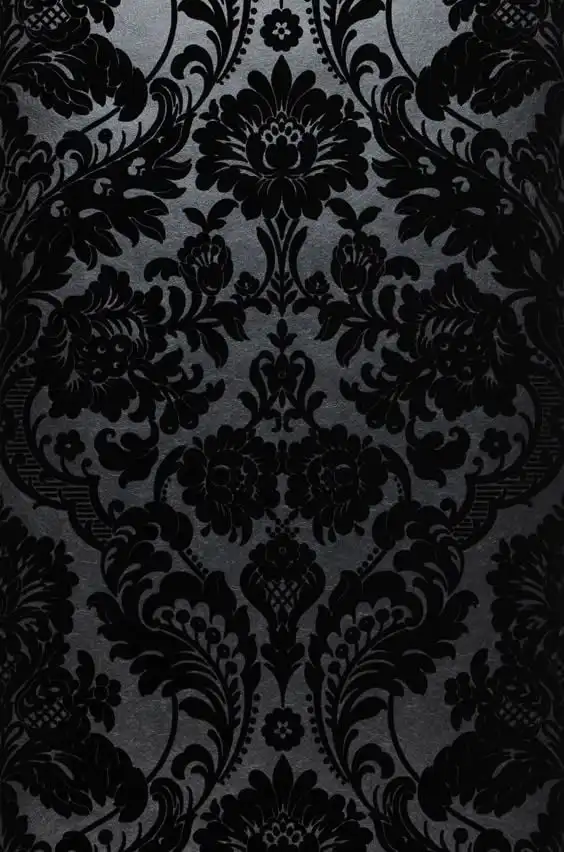
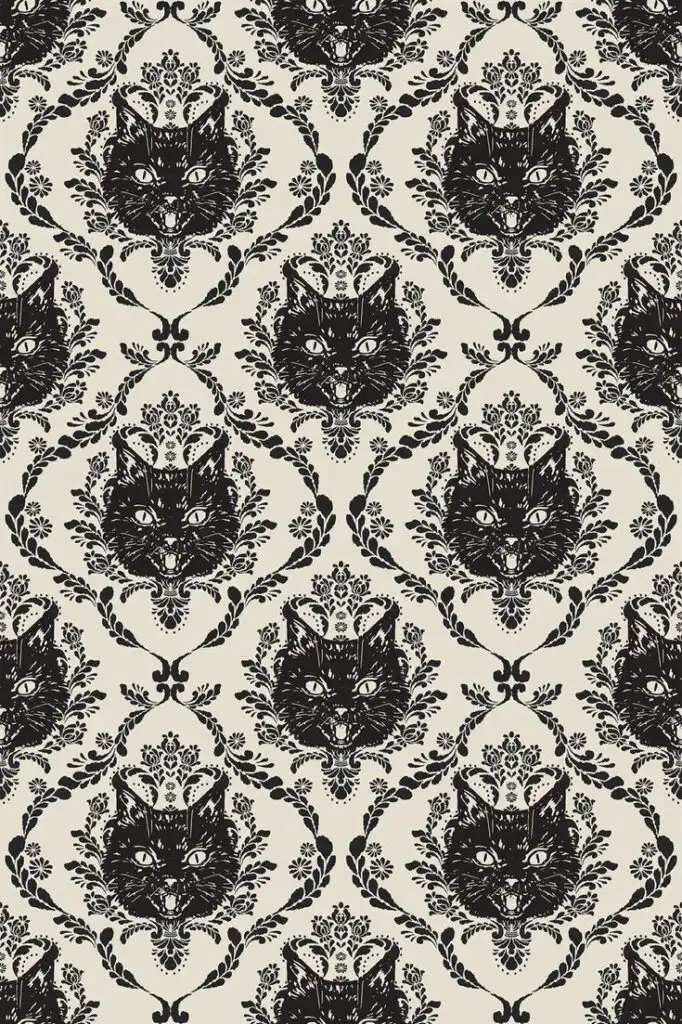
Choose patterns rooted in medieval and Victorian sources: quatrefoils, fleur-de-lis, pointed arches, and trefoils work well. Use them on wallpaper, upholstery, and trim to create a sense of history.
For scale, mix a large-scale damask or arched tracery on a feature wall with smaller repeats on cushions or curtains. Keep color contrast strong—deep charcoal, oxblood, or forest green against antique gold or ivory—to keep details visible in low light.
Use pattern sparingly on upholstery where wear is heavy. For high-use sofas, pick solids with patterned pillows. On woodwork or trim, carve or stencil motifs rather than repainting, so the texture reads when light hits it.
Candles and Chandeliers
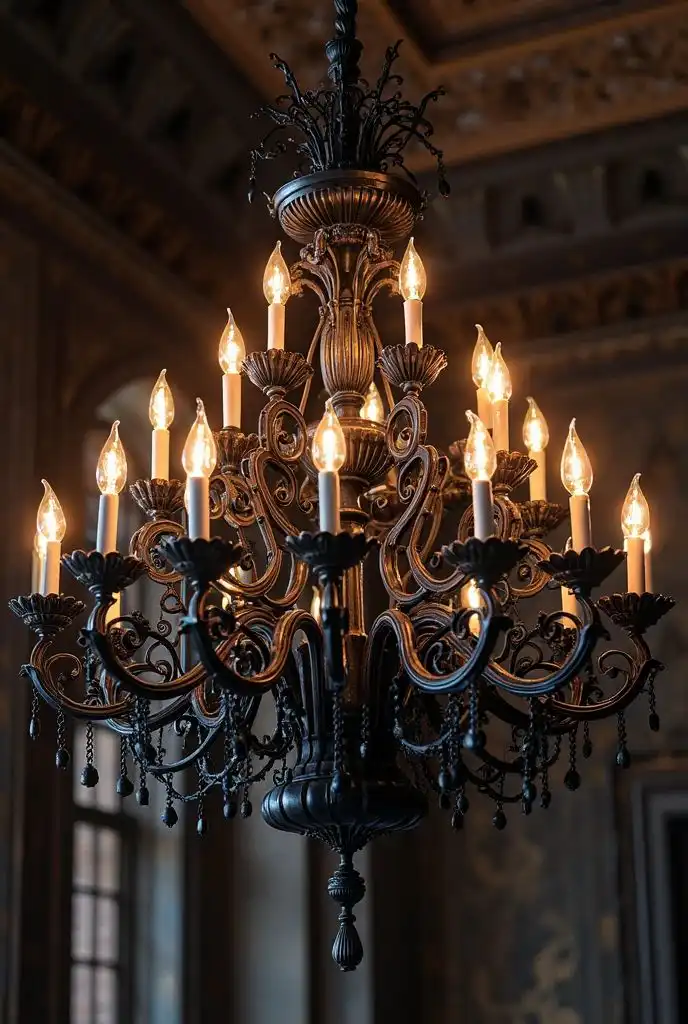

Lighting sets the gothic mood more than any other accessory. Choose wrought iron or dark brass chandeliers with tapered candle-style bulbs for authentic form and modern safety.
Layer lighting: a central chandelier, wall sconces, and tall candles in holders create depth. Use dimmers so you can move from bright to moody easily. For real candles, use drip-style holders and consider LED candles with flicker effects for safety in bedrooms or around textiles.
Place chandeliers over dining tables or entry halls to anchor the space. Match metal finishes across fixtures to keep the look cohesive. Add crystal drops sparingly if you want a hint of Victorian glamour without softening the gothic edge.
Tapestries and Rug Choices
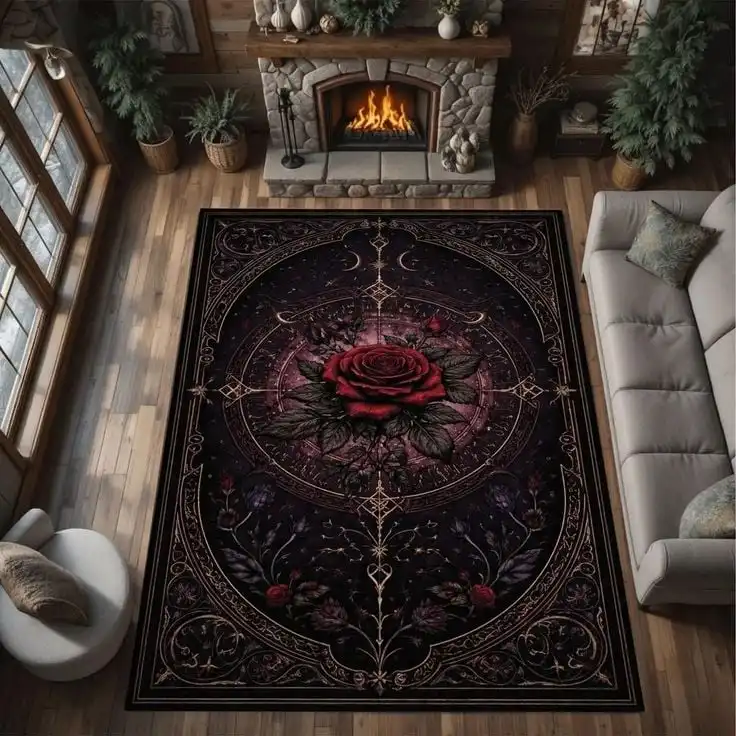
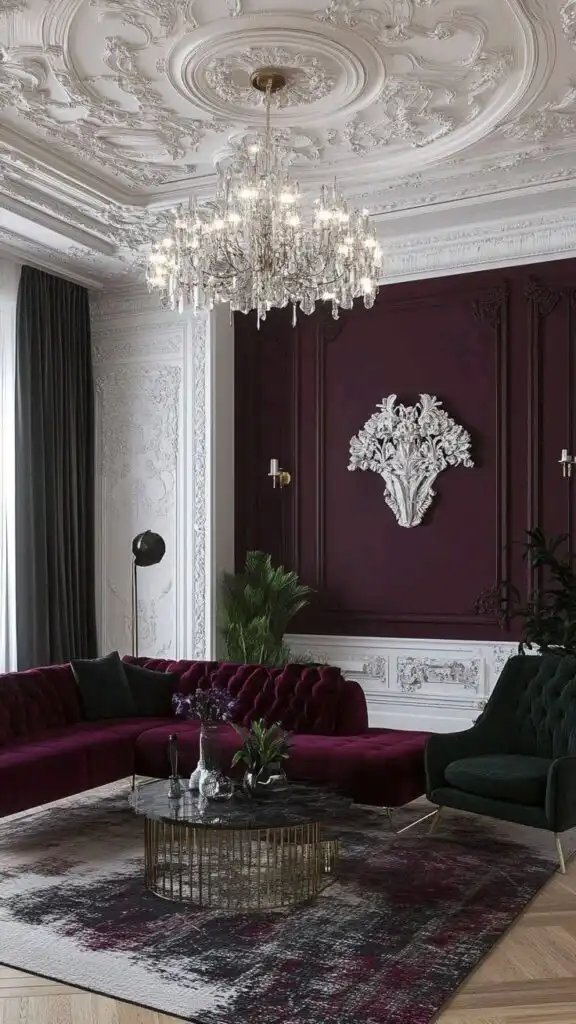
Tapestries and rugs add warmth, reduce echoes, and reinforce theme through scene, color, and texture. Choose woven tapestries with medieval scenes or stylized botanical motifs for walls.
For rugs, select dense, low-pile wool in Persian or Aubusson-inspired patterns. Dark palettes with reds, blues, and muted golds hide wear and read as rich rather than flat. Place a large rug under seating groups so furniture legs sit fully on the rug to anchor the area.
Layer a smaller patterned runner over a plain rug for contrast near doorways. Mount tapestries with a wooden rod or hidden track to protect the fabric and keep a clean line on the wall.
Lighting Options for Gothic Ambience
Pick fixtures that give warm, low light, rich color, and strong shadows. Aim for contrast, texture, and old-world shapes to build mood without making the room too dark for daily use.
Candlelight Effects
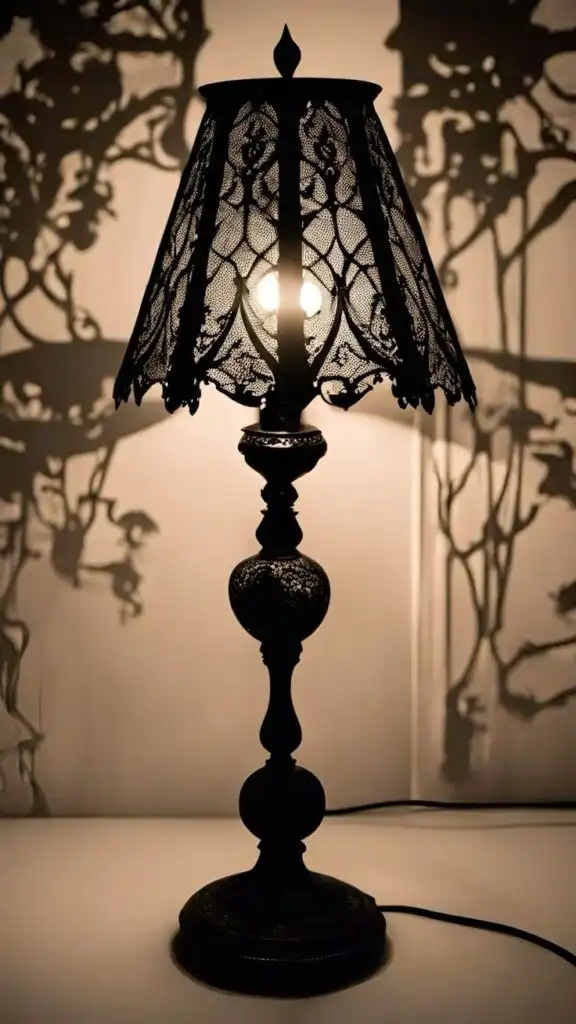
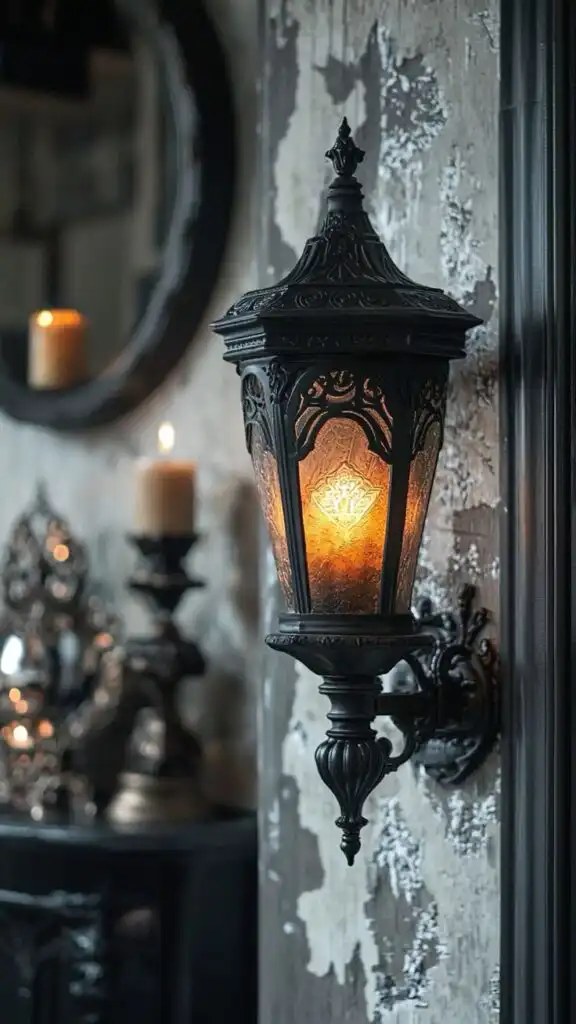
Candlelight gives the truest gothic mood. Use clusters of real or LED candles on candelabras, mantels, and dining tables to create flicker and deep, moving shadows. Real beeswax or unscented pillar candles give warm amber tones; flameless LED candles with flicker chips are safer and work well in bedrooms or homes with pets.
Place candles at varied heights to add depth. Combine tall taper candles in iron holders with short votives in glass for a layered glow. Keep candles away from drapes and never leave them unattended. For dining or living areas, dim overhead lights and let candle groups serve as the primary light source for an intimate atmosphere.
Stained Glass Lamps
Stained glass lamps add color and pattern to your Gothic scheme. Choose lamps with jewel-toned glass—deep ruby, emerald, and cobalt—set in dark metal or patinated bronze bases to match gothic furniture. Table lamps and floor lamps with stained panels cast colored pools of light that highlight textiles and wood grain.
Position a stained glass lamp near seating or beside a bed to create a colored reading pool. Use bulbs with warm color temperature (2700K–3000K) to keep tones rich. Inspect leadwork and shade condition; replace frayed wiring and use lamps with stable bases to avoid tipping. Swap shades seasonally to refresh color accents.
Ambient Wall Sconces
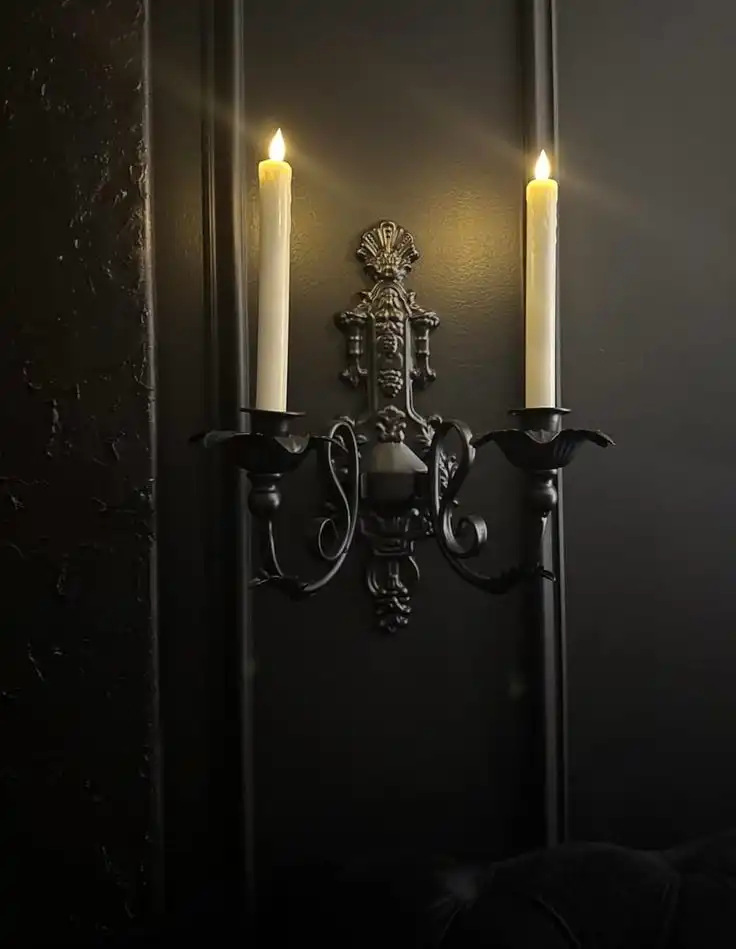
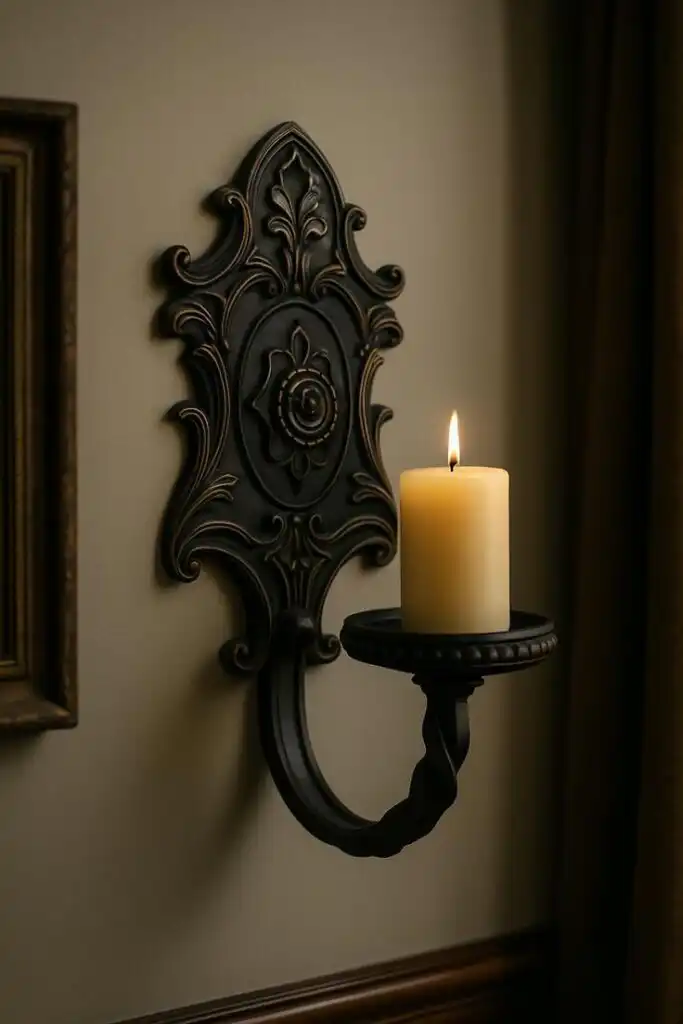
Wall sconces control the layer and direction of light along hallways and over mantels. Pick designs with candle-style bulbs, gothic arches, or wrought-iron scrollwork to echo architectural elements. Mount sconces at eye level (about 60–66 inches from the floor) to provide even wall wash without glare.
Use dimmers to adjust intensity for different activities. Pair sconces with uplights for soft ceiling bounce or direct them down to highlight artwork and mirrors. For bathrooms and kitchens, choose sealed or rated fixtures and keep sconce finishes consistent with metal accents elsewhere in the room.
Creating a Cohesive Gothic Decor
Focus on a few strong motifs, consistent materials, and a clear color plan. Use repeating details—like ironwork, carved wood, and jewel tones—to tie rooms together without making them feel heavy.
Blending Old and New
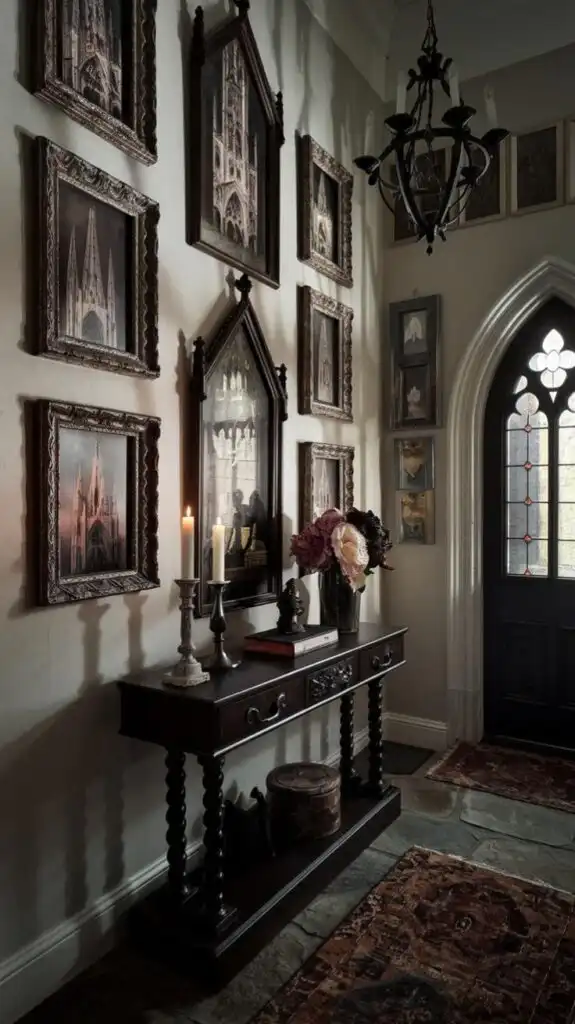
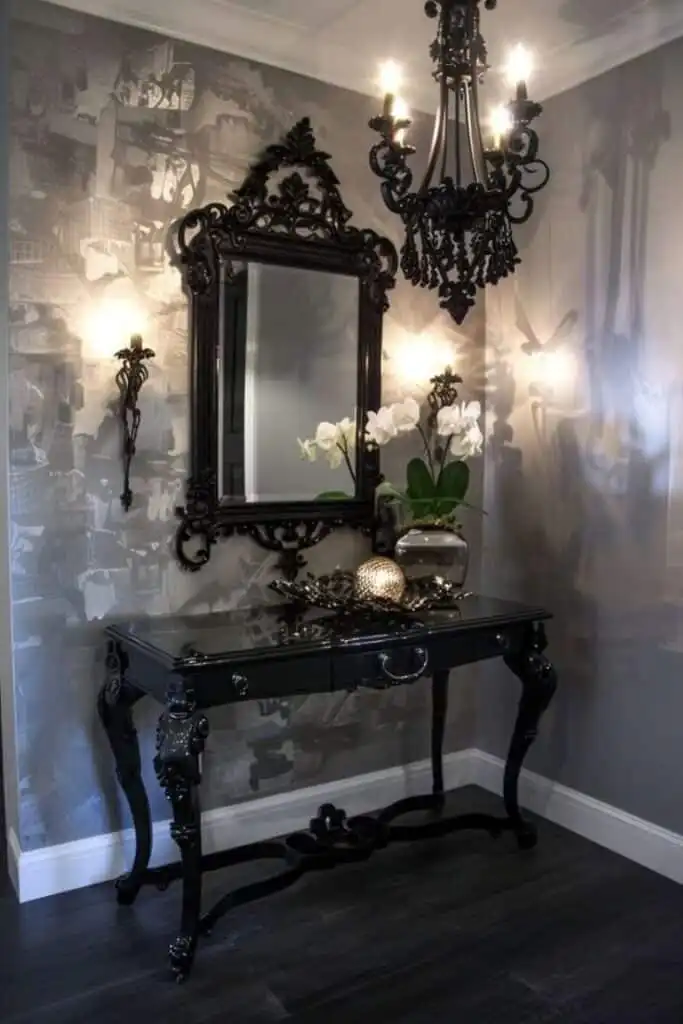
Mix antique pieces with modern items to keep your space alive. Pair a carved oak headboard with a simple platform bed frame, or set a streamlined sofa against a wall hung with an ornate mirror. Let one antique be the focal point in each room so it doesn’t compete with clean-lined furniture.
Choose finishes that echo each other: dark-stained wood, matte black metal, and deep brass work well across eras. Use textiles to bridge styles—velvet cushions and a kilim rug soften hard edges and link historic and contemporary looks. Keep patterns limited; pick two or three repeats (floral, damask, geometric) and use them in different scales.
Lighting updates modernize antiques. Replace dated shades with Edison bulbs in wrought-iron fixtures, or add a sleek floor lamp next to a vintage armchair. This keeps the room functional and visually balanced.
Balancing Drama and Comfort
Start with a dark color anchor on one wall or a large piece of furniture, then add lighter elements to prevent gloom. Layer soft textures—plush rugs, linen throws, and heavy drapes—so the room feels inviting despite bold colors.
Pick seating first for comfort: deep seats, supportive cushions, and durable upholstery. Then add dramatic accents like a chandelier, stained-glass lamp, or carved side table. Position lighting for tasks and mood: bright reading lights near chairs, dimmer overhead for atmosphere.
Use small decorative repeats to unify drama with livability. Candlesticks, carved frames, and iron hardware can appear in multiple rooms to create continuity. Keep clutter minimal; let dramatic pieces have space to be seen and enjoyed.
FAQ
What is Gothic interior design, and how does it create ambiance?
Gothic interior design combines grand architecture, dark colors, and ornate details to evoke a dramatic, moody atmosphere that feels timeless and romantic.
What are the key architectural features of Gothic interiors?
Key architectural elements include vaulted ceilings, pointed arches, stained glass, tall structures, and intricate metalwork that shape the room’s mood and function.
How can I incorporate Gothic design elements in a modern home without overwhelming the space?
You can balance Gothic elements by focusing on a few strong architectural pieces, using a deep color palette, layered textures, and modern lighting to create a dramatic but livable space.
What are effective ways to use lighting to enhance Gothic interiors?
Utilize candle-like fixtures, stained glass lamps, ambient wall sconces, and dimmable warm lighting to create shadows, highlight architectural details, and develop a cozy gothic atmosphere.
How do I create a cohesive Gothic decor style with furniture and accessories?
Use consistent materials like dark woods, metallic finishes, and repeating motifs such as quatrefoils or pointed arches, and mix antique with modern pieces carefully to maintain balance and harmony.
- 94shares
- Facebook0
- Pinterest91
- Twitter3
- Reddit0