My first fashion sketch looked like a stiff paper doll wearing a potato sack. I’d been obsessing over runway collections for months, saving every Valentino editorial I could find — but the moment I actually picked up a pencil and tried to draw a silhouette, it came out wrong in every possible way. The proportions were off. The fabric folds looked like crumpled paper bags. The collar didn’t even connect to the shoulders
- What Fashion Designing for Beginners Actually Requires
- Essential Tools to Get Started (With Real Prices)
- How to Sketch a Fashion Croquis (Step by Step)
- Understanding Fabric: The Knowledge Most Beginners Skip
- Digital Tools That Give Beginners an Edge in 2026
- Building Your First Fashion Portfolio
- FAQ: Fashion Designing for Beginners
- Do I need to know how to sew to start fashion designing?
- What's the best free software for fashion design beginners?
- How long does it take to learn fashion designing basics?
- What's a croquis and why do fashion designers use it?
- Can I learn fashion design online for free?
- What fabric should beginners practice sewing on?
- Start Simple, Build Deliberately
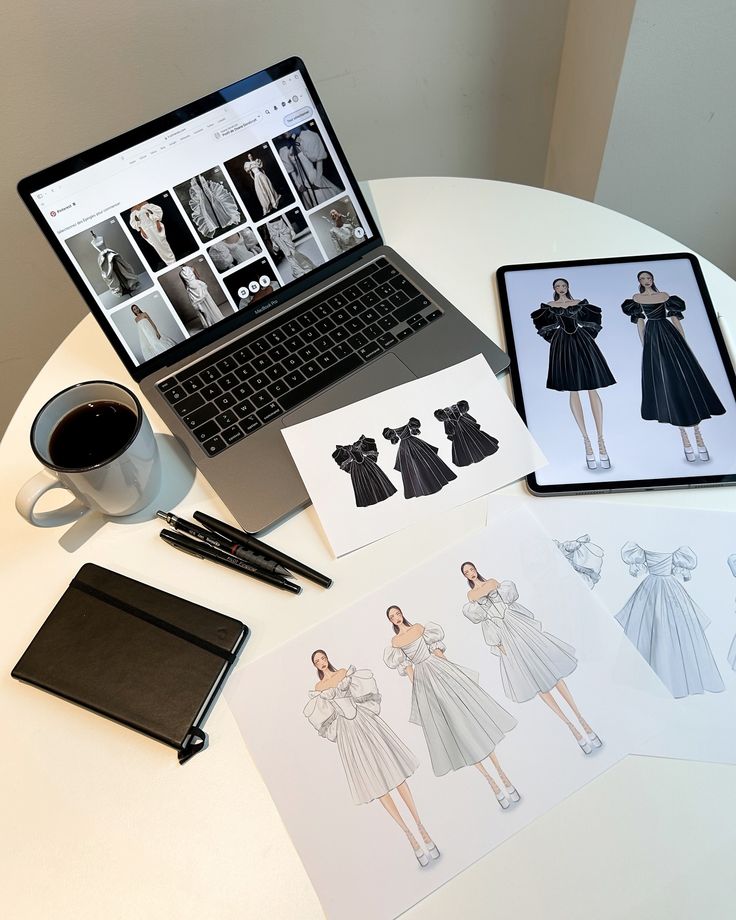
If you’re starting out in fashion design right now, that experience is normal — and it passes faster than you’d think. The trick is knowing what to focus on first, which tools are actually worth buying, and where the real learning happens. This guide cuts straight to what matters.
What Fashion Designing for Beginners Actually Requires
Before you invest in anything expensive, understand what the craft actually demands. Fashion design sits at the intersection of drawing, construction, and materials knowledge. You don’t need to master all three on day one — but you do need a working foundation in each.
The Skills That Matter Most
Sketching is your communication tool. You don’t need to draw like an illustrator — you need to draw clearly enough that a pattern maker or manufacturer could understand your intent. That’s a much lower bar, and it’s achievable within a few weeks of focused practice.
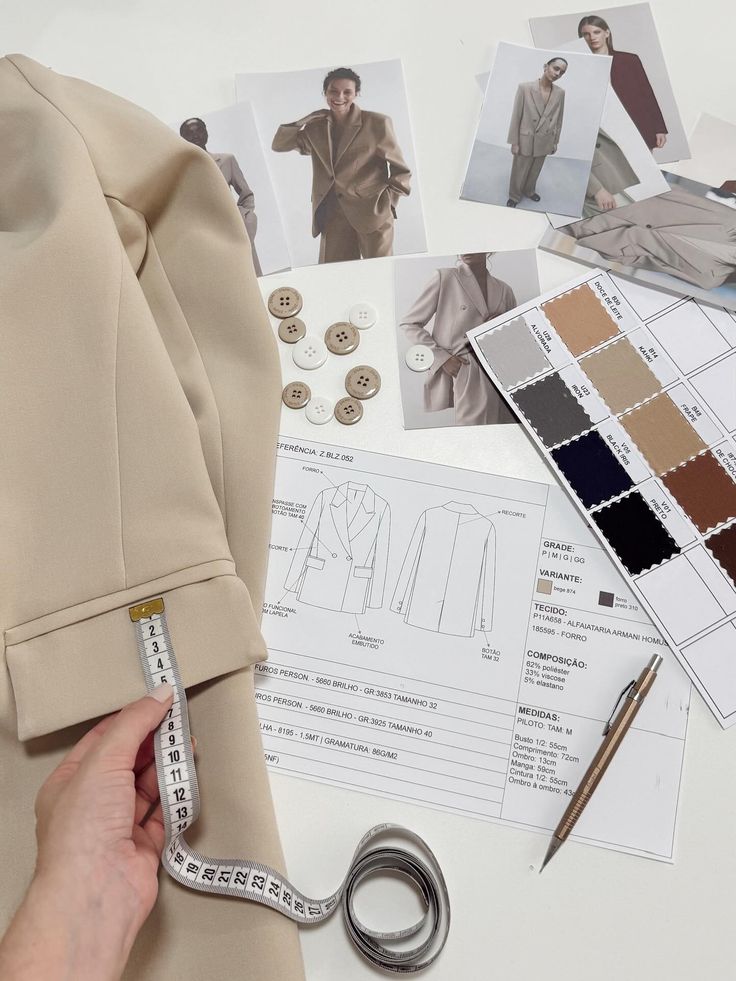
Fabric literacy comes second. The way a silk charmeuse drapes is completely different from cotton twill — and your design lives or dies on that material choice. I’ve noticed beginners spend months perfecting sketches and then completely ignore fabric behavior. Don’t make that mistake.
Construction basics — how seams work, where ease allowances go, how a dart creates shape — give your designs structural logic. Even if you eventually hand off sewing to someone else, understanding garment construction makes you a better designer from sketch to spec sheet.
The Reality of the Learning Curve
Expect the first month to feel chaotic. You’ll sketch something you love and then realize it physically can’t be constructed the way you drew it. That’s normal. Fashion design is problem-solving — the technical constraints are part of the creative process, not obstacles to it.
Set a simple target: one finished sketch per day for 30 days. Not perfect sketches — finished ones. The volume of practice matters far more than any single piece.
Essential Tools to Get Started (With Real Prices)
| Tool / Supply | Recommended Brand | Price |
|---|---|---|
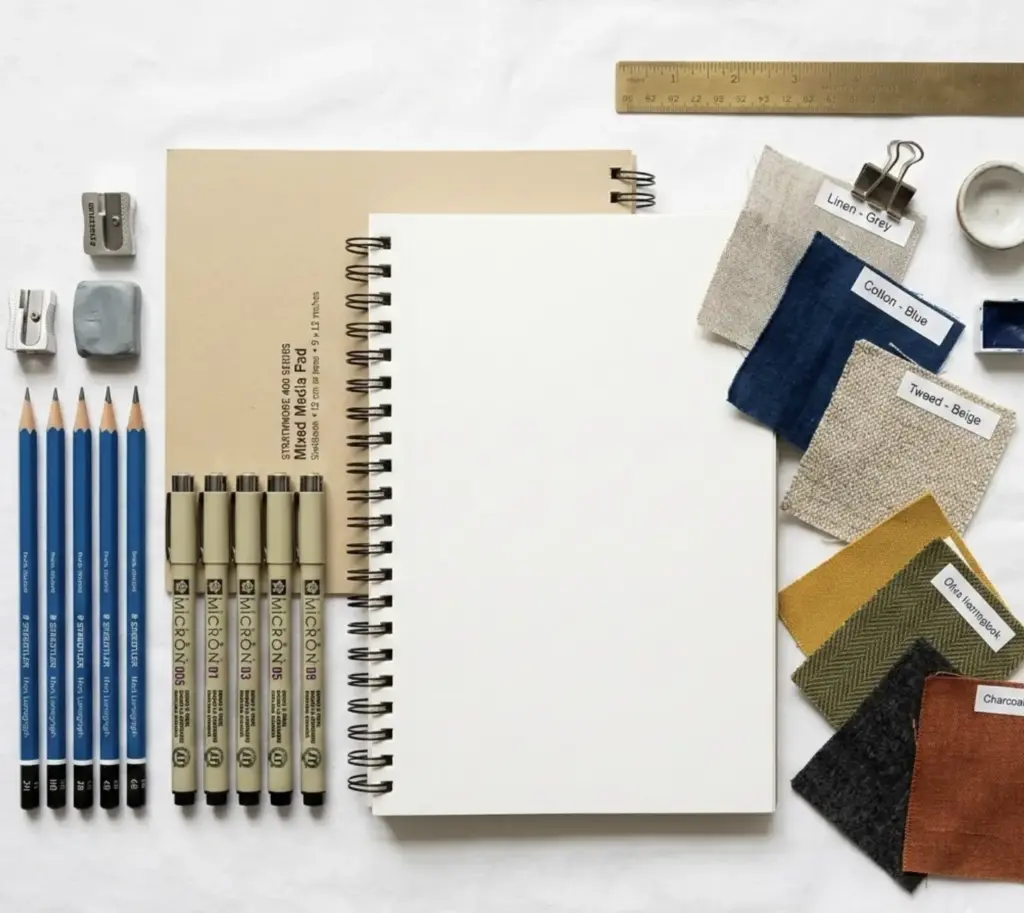
| Sketchbook (9×12″) | Strathmore 400 Series | ~$12 |
| Mechanical pencil set | Staedtler Mars 925 (2H, HB, 2B) | ~$14 |
| Fine-liner pens | Micron 01, 03, 05 | ~$10 |
| Croquis template pad | Fashion Design Templates — Amazon | ~$8 |
| Color markers | Copic Sketch (skin tones set) | ~$40 |
| Watercolor set | Winsor & Newton Cotman 12-pan | ~$20 |
| Dress form (beginner) | SONGMICS adjustable foam form | ~$55 |
| Fabric shears | Fiskars 8″ Softgrip | ~$18 |
| Sewing machine | Brother CS6000i | ~$180 |
| Digital design app | Procreate (iPad) / Canva (free) | $12.99/mo or free |
Start with the sketchbook, two or three Micron pens, and a croquis template pad. That’s under $30 and covers everything you need for the first month. Add the sewing machine and dress form only when you’re ready to move from sketching to construction.
One tool worth prioritizing early: Procreate on iPad ($12.99/month, or use the free version of Canva on desktop). Digital sketching lets you iterate faster, experiment with colorways in seconds, and build a portfolio that looks polished even as a beginner.
How to Sketch a Fashion Croquis (Step by Step)
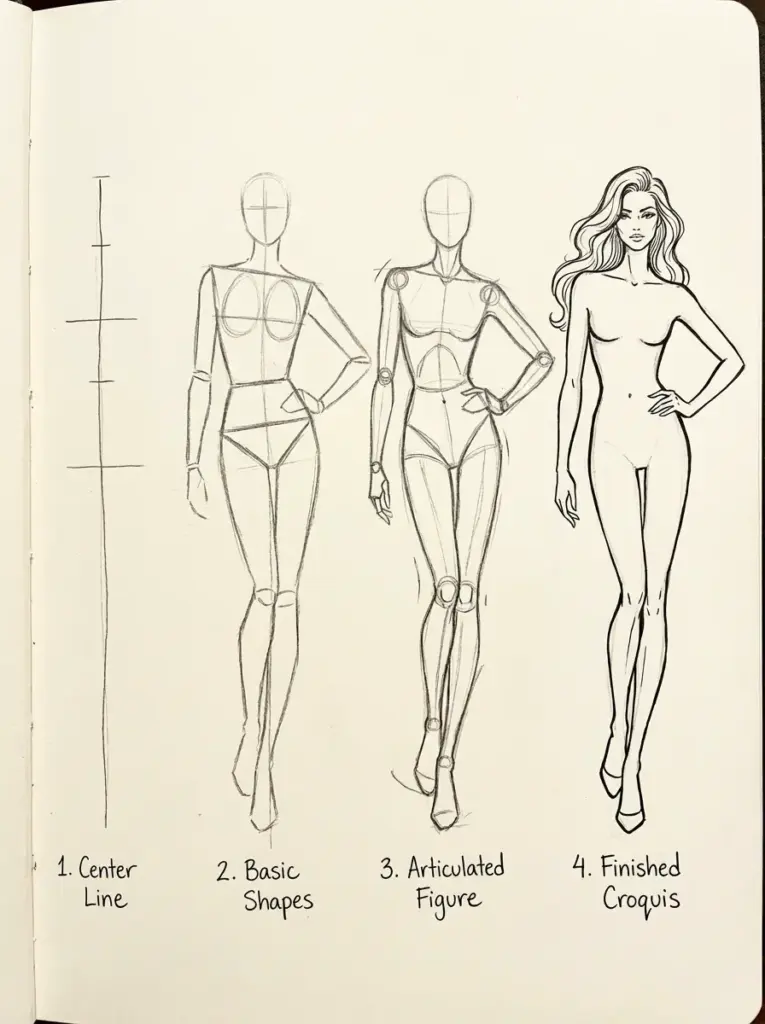
The fashion croquis is the elongated figure template designers use as a base for sketches. Unlike realistic figure drawing, fashion croquis are typically 9 heads tall — compared to the real-life standard of 7.5 heads. That extra length is intentional: it makes garments look more dramatic on the page.
The 9-Head Proportion Method
- Draw a vertical center line. Mark 9 equal segments — each segment = one head height.
- Head occupies segment 1. Chin sits at the bottom of segment 1.
- Shoulders fall just below segment 2. Keep them narrow — fashion figures read slim.
- Waist sits at segment 3. Hips at segment 4. Crotch at segment 4.5.
- Knees land at segment 6. Ankles at segment 8.5. Feet extend to segment 9.
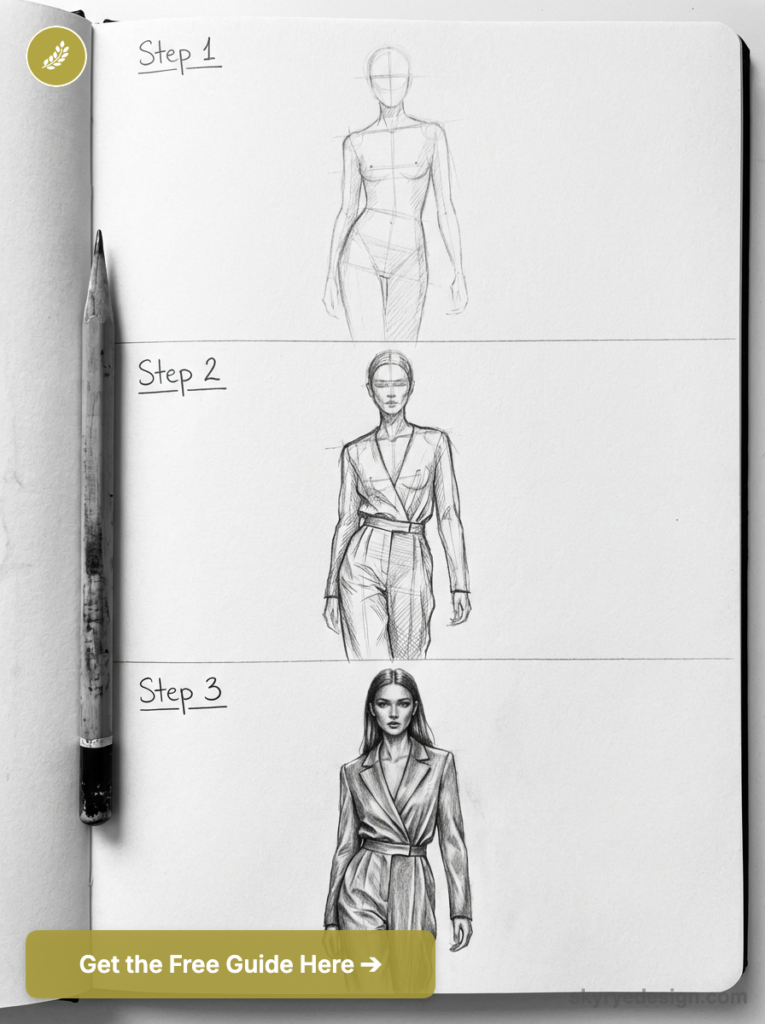
Once you’ve drawn the base figure 20 or 30 times from memory, it becomes automatic. From there, you’re just placing garments over the form — drawing necklines, hemlines, sleeve shapes, and fabric folds.
Fabric Folds: The Detail That Changes Everything
Most beginner sketches look flat because they ignore how fabric actually moves. Study four basic fold types: tension folds (where the fabric pulls between two anchor points), drape folds (gravity-driven), pipe folds (cylindrical, like sleeves), and zigzag folds (at bent joints like knees and elbows).
Reference images obsessively. I keep a folder of editorial shots organized by garment type — knitwear folds differently than woven cotton, and both read differently than jersey. That visual library informs every sketch.
Understanding Fabric: The Knowledge Most Beginners Skip
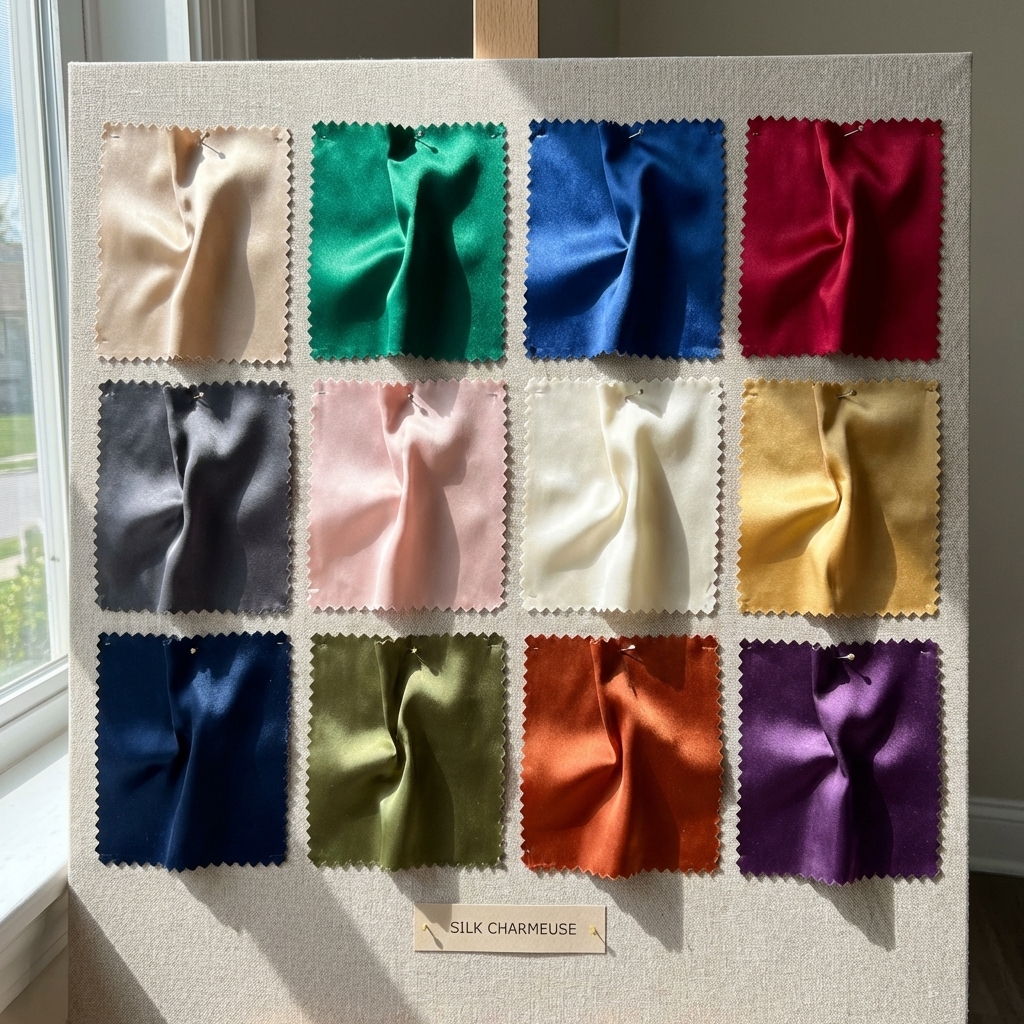
Walk into any fabric store and you’ll find hundreds of options. It’s overwhelming — until you organize materials into a simple mental framework.
Four Fabric Categories Every Designer Should Know
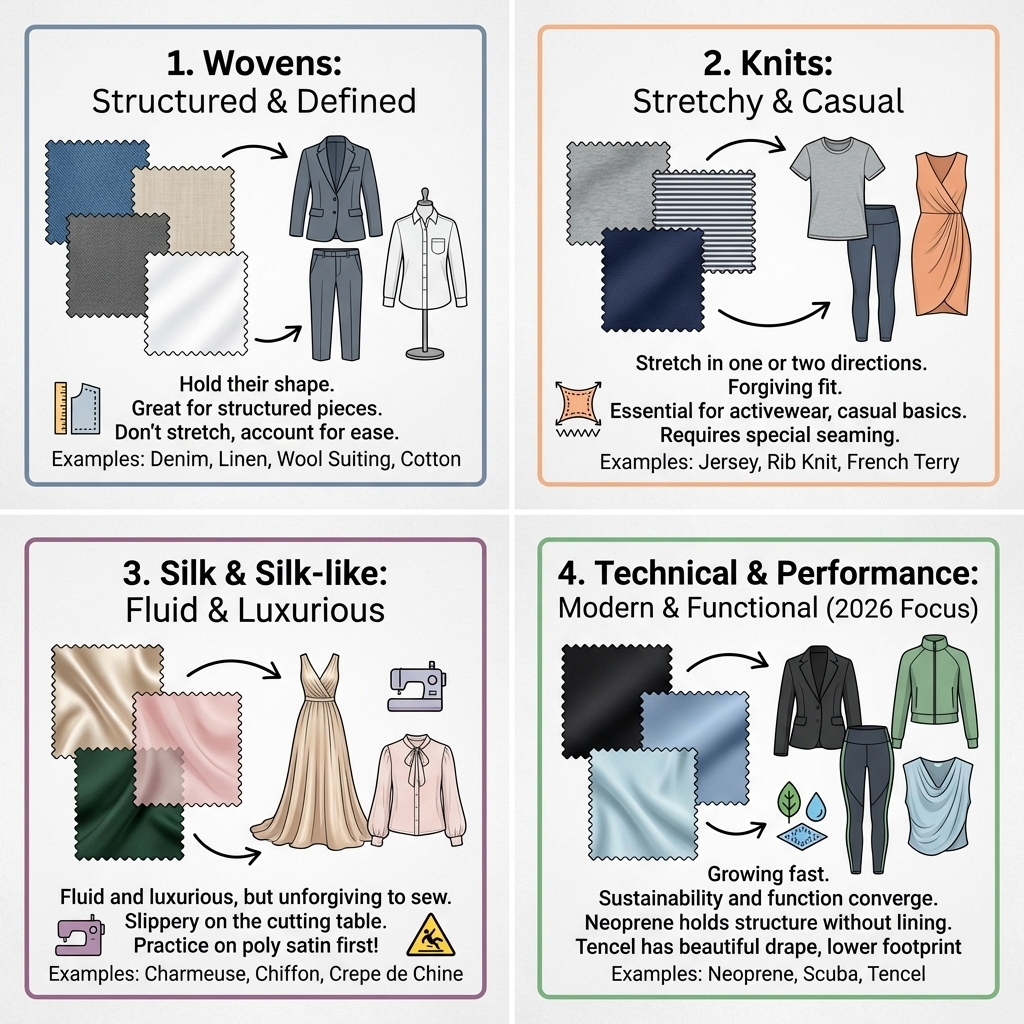
Wovens (cotton, linen, denim, wool suiting): Hold their shape. Great for structured pieces — blazers, trousers, tailored shirts. Don’t stretch, so pattern pieces need to account for ease differently.
Knits (jersey, rib knit, French terry): Stretch in one or two directions. Forgiving fit. Essential for activewear, casual basics, and draped dresses. Require different seaming techniques — a standard straight stitch will break on jersey.
Silk and silk-like fabrics (charmeuse, chiffon, crepe de chine): Fluid and luxurious, but unforgiving to sew. Slippery on the cutting table. Beginner tip: practice your silk designs in a cheap polyester satin first.
Technical and performance fabrics (neoprene, scuba, Tencel): Growing fast in 2026 as sustainability and function converge. Neoprene holds structure without lining. Tencel has a beautiful drape with a lower environmental footprint than conventional cotton.
Spend a Saturday at a fabric store just touching things and reading labels. No purchase necessary. That tactile knowledge accelerates your design sense faster than almost anything else.
Digital Tools That Give Beginners an Edge in 2026
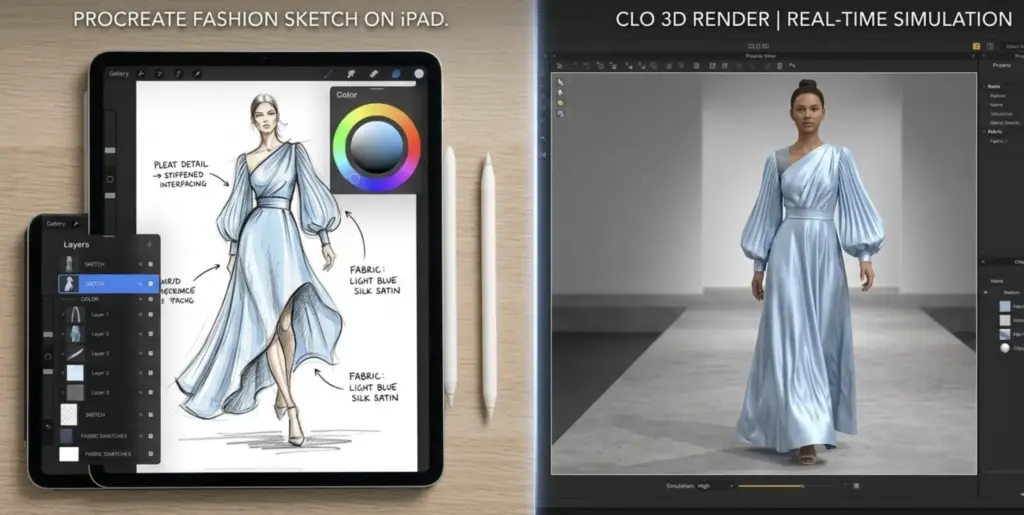
The 2026 fashion design landscape has shifted significantly toward digital-first workflows, even for independent designers. Here’s what’s worth learning:
Free and Low-Cost Tools That Actually Work
Canva (free): Not a traditional design tool, but excellent for building mood boards, color palette explorations, and portfolio presentations. Use it to develop your visual identity before you ever touch fabric.
Procreate (~$12.99/mo on iPad): The fastest sketching tool available for fashion beginners. Brush sets designed specifically for fashion illustration are available for under $10 on Etsy. The layer system lets you separate the croquis from the garment from the color — huge for iterating quickly.
CLO 3D (student plan ~$29/mo): 3D garment simulation software used by major fashion houses. The learning curve is steep, but being able to see a garment on a virtual body before cutting any fabric is genuinely transformative. Many fashion schools now teach this as a core skill.
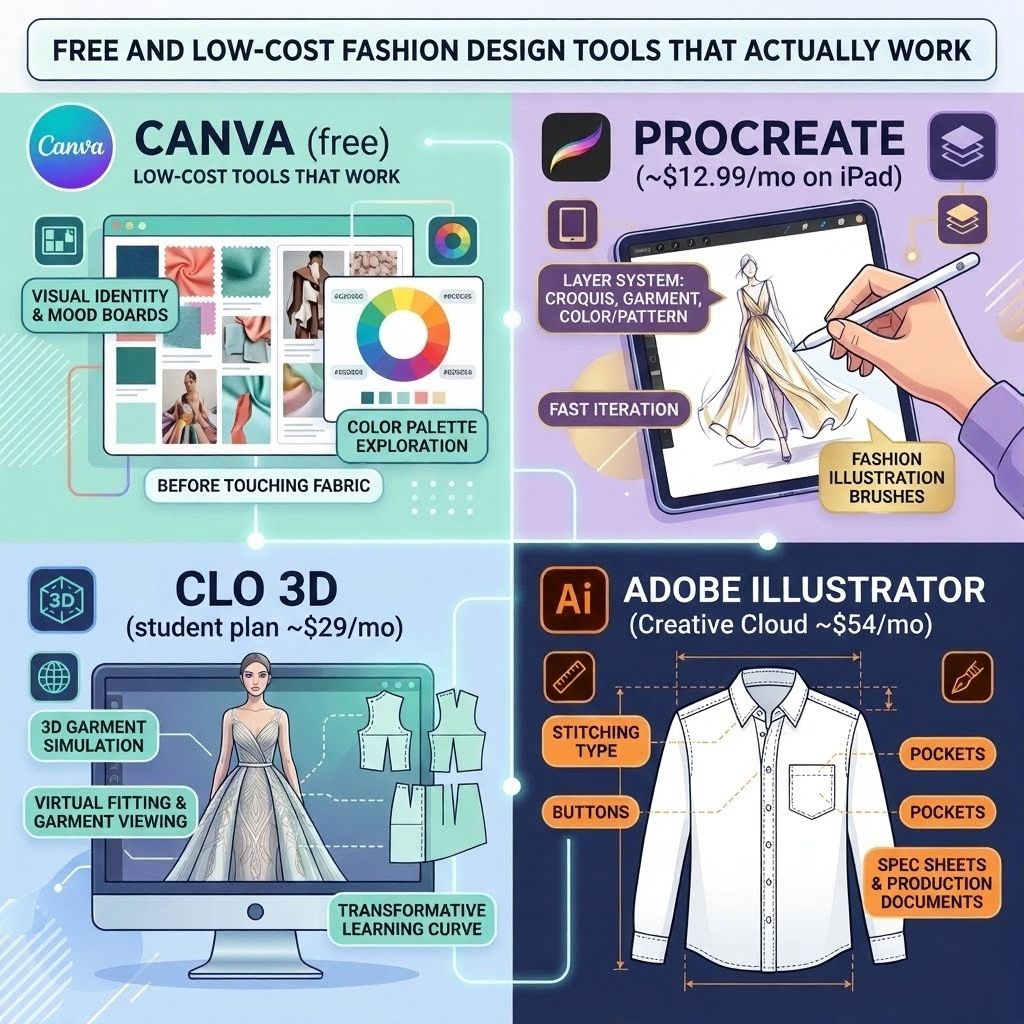
Adobe Illustrator (Creative Cloud ~$54/mo): Industry standard for technical flat drawings — the garment illustrations used in spec sheets and production documents. Invest time here once you’re comfortable with sketching.
Building Your First Fashion Portfolio
Your portfolio is your first impression — and for beginners, a focused small collection beats a sprawling inconsistent one every time.
What to Include When You’re Just Starting Out
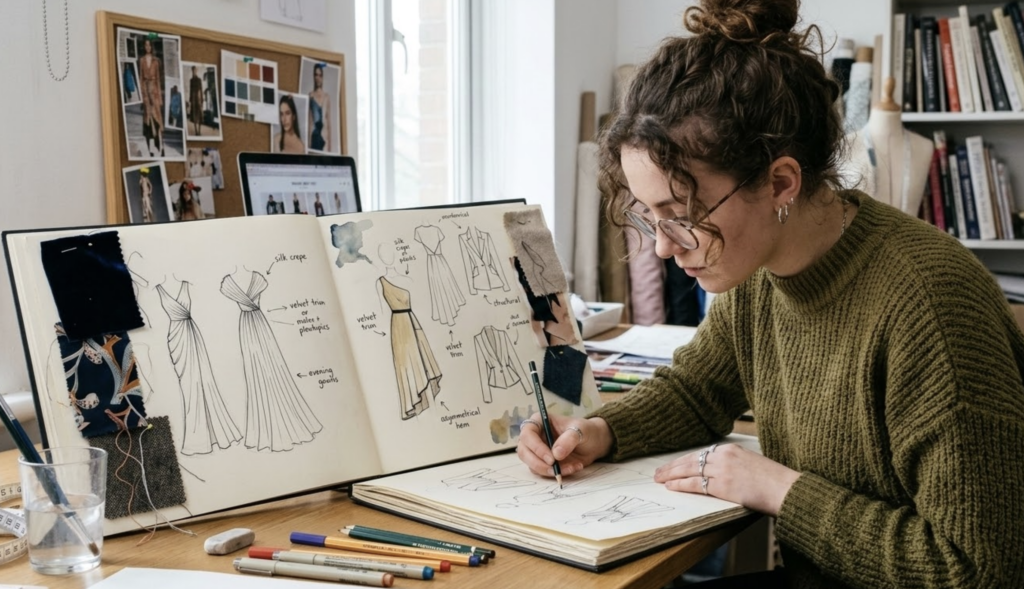
Aim for one cohesive 6-piece collection rather than 20 unrelated sketches. Pick a theme — a specific season, a material story, a cultural reference — and design everything around it. Cohesion signals design thinking. Random variety signals someone still experimenting without direction.
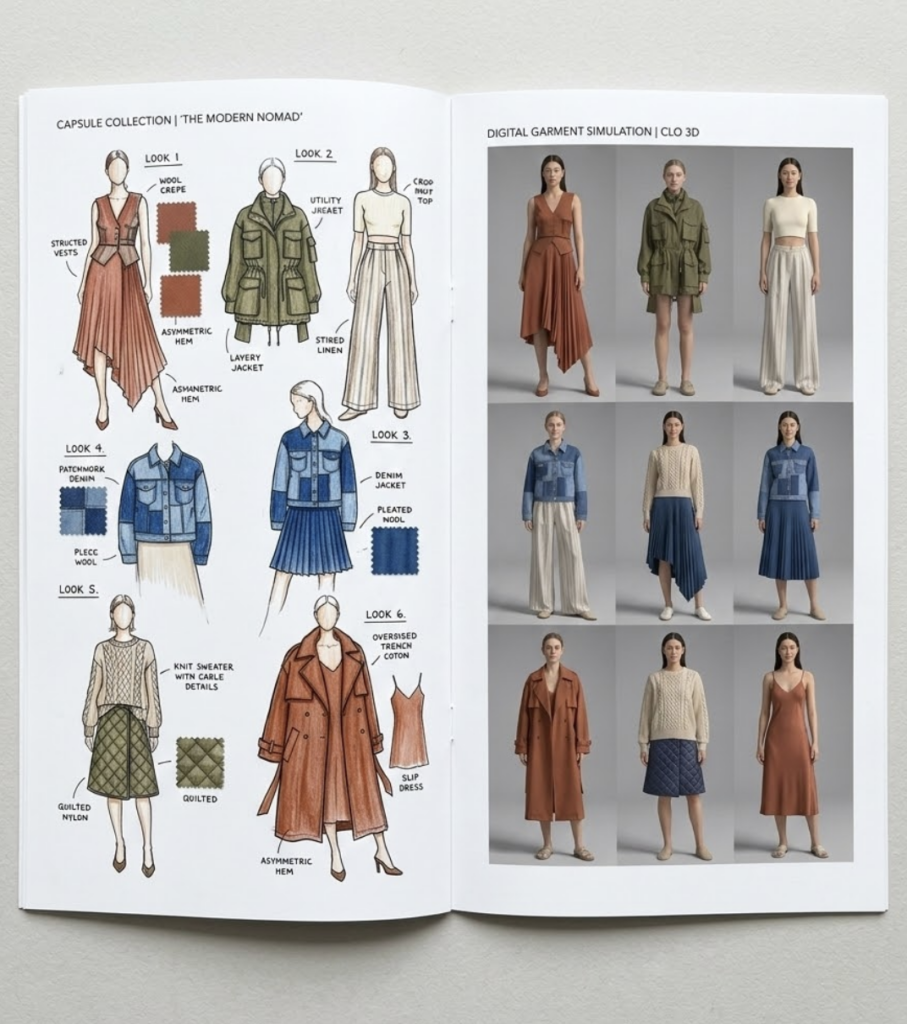
Include: final sketches, flat technical drawings, fabric swatches, and one or two photos if you’ve made any physical samples. If you haven’t sewn anything yet, digital renders from CLO 3D or Procreate fill that gap entirely.
Post your work consistently on Instagram and Pinterest — both platforms have active fashion design communities that give genuine feedback. Tag your process, not just the finished result. Posts showing the sketch-to-sample journey consistently outperform final reveals alone.
FAQ: Fashion Designing for Beginners
Do I need to know how to sew to start fashion designing?
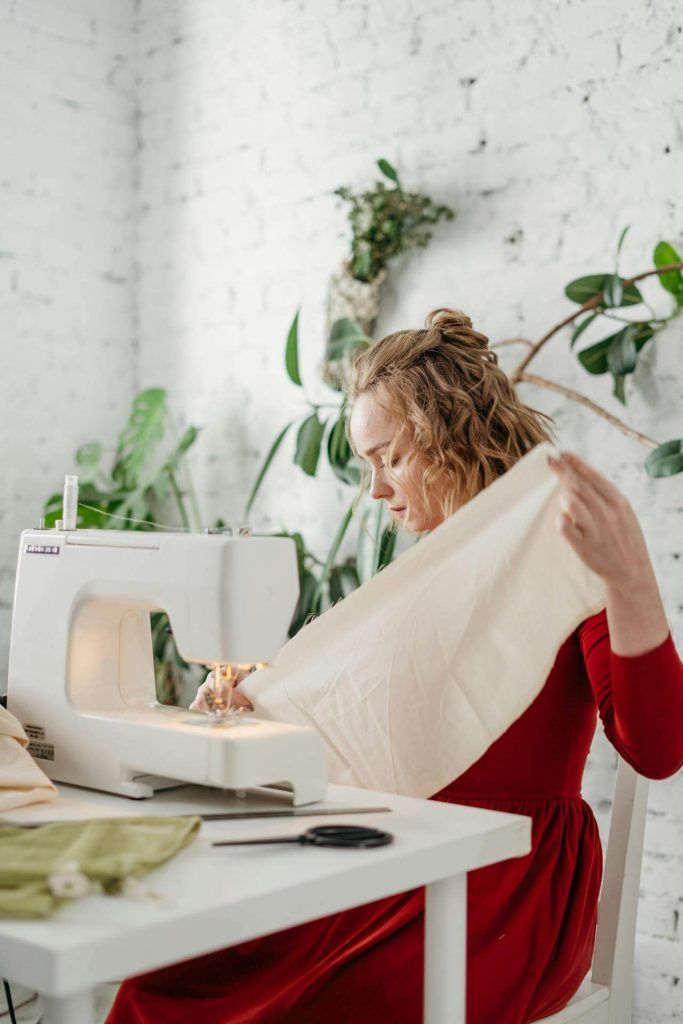
No — but it helps enormously. Many successful designers have limited technical sewing skills and work closely with pattern makers and seamstresses. That said, understanding how garments are constructed makes your designs more realistic and buildable. Start with basic hand sewing and a simple sewing machine project before diving into complex designs.
What’s the best free software for fashion design beginners?
Canva is the best free starting point for mood boards and portfolio layout. For actual sketching, Procreate on iPad (paid, ~$12.99/month) is far ahead of free alternatives. On desktop, SketchBook by Autodesk has a generous free tier and works well for fashion illustration with a drawing tablet.
How long does it take to learn fashion designing basics?
With focused daily practice, most beginners develop a competent sketching foundation within 8–12 weeks. Construction skills take longer — expect 6+ months before you can consistently produce wearable garments. The learning curve accelerates sharply if you take even one structured course alongside self-study.
What’s a croquis and why do fashion designers use it?
A croquis (from French, meaning “rough sketch”) is a simplified elongated figure template — typically 9 heads tall, compared to real-life proportions of 7.5 heads. Designers use it as a base to quickly sketch garment ideas. It’s not about drawing realistic bodies; it’s about communicating garment shape, proportion, and silhouette efficiently.
Can I learn fashion design online for free?
Yes, meaningfully so. YouTube channels like Evelyn Wood and the FIDM channel cover technical skills well. Skillshare and Domestika have structured fashion courses from $10–$30 for individual classes. For technical patternmaking, Winifred Aldrich’s textbooks (around $35 used) remain the clearest available resource.
What fabric should beginners practice sewing on?
Cotton muslin is the standard practice fabric for good reason — it’s cheap (~$3–$5 per yard), easy to cut, holds pins well, and behaves predictably. Make your early muslins (also called toiles) in this before cutting into anything you’ve paid real money for. Once comfortable, graduate to cotton quilting fabric before attempting drapey or slippery materials.
Start Simple, Build Deliberately
Fashion design has a long learning curve — but the early wins come faster than most people expect. Pick up a Strathmore sketchbook, draw your first croquis today, and commit to 30 days of daily sketching before you evaluate your progress. That foundation makes everything else click into place.
The designers who grow fastest aren’t the ones with the most expensive tools. They’re the ones who practice consistently, study garments obsessively (turn your clothes inside out and examine every seam), and iterate without getting precious about individual sketches. Your 50th sketch will be better than your first regardless of what happens in between — so start now.
- 14shares
- Facebook0
- Pinterest14
- Twitter0
- Reddit0