

Video has become one of the main ways brands communicate online. Product launches, tutorials, behind-the-scenes stories, and customer experiences all give businesses a chance to build a more direct connection with their audience.
But producing effective video content week after week is rarely simple.
Many brands have plenty of ideas but struggle with the production process behind them. Turning one concept into finished content takes planning, recording, editing, reviewing, and publishing. Without a clear social media video workflow, teams can spend more time chasing files and feedback than shaping a useful story.
- More platforms create more versions
- Start with a clear purpose
- Build a repeatable production system
- Repurpose strong material with intent
- Make editing easier to manage
- Keep feedback focused
- Give each person a defined role
- Adapt the video to each platform
- Organise footage so the team can reuse it
- Measure content and production performance
- Create better videos without adding complexity
A strong workflow makes production faster without lowering the standard of the work. It gives the team structure while leaving room for creative decisions, so more energy goes into the message and less into avoidable admin.

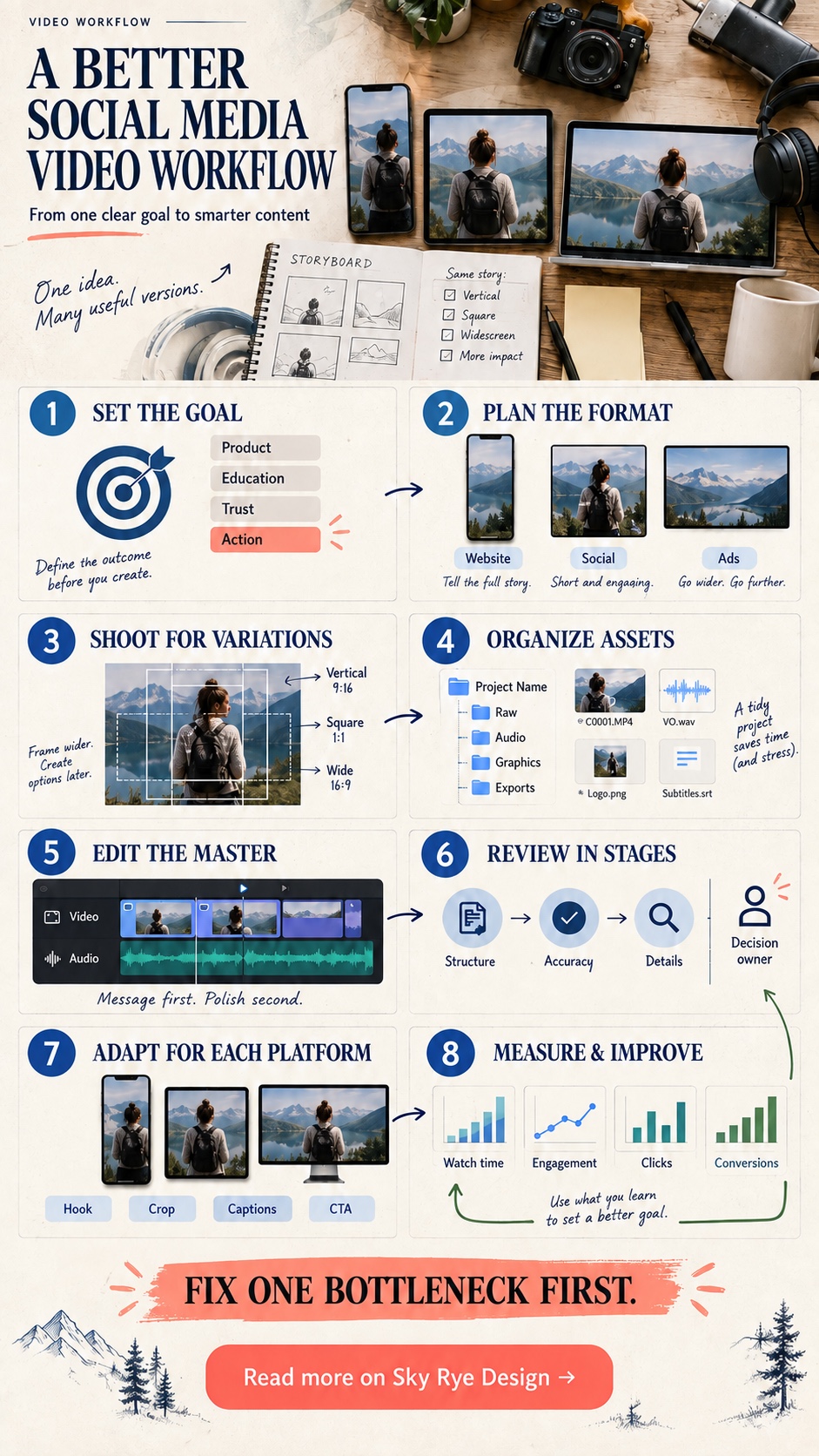
More platforms create more versions
Demand has grown because audiences now meet brands across several platforms. A business may need short vertical clips for social media, a longer video for its website, and several campaign edits for paid advertising.
The challenge is not simply producing more videos. It is producing more versions of each idea.
A product announcement, for example, might become a short social clip, a detailed explainer, a customer-focused edit, and an advertisement aimed at a specific audience. If every version starts from zero, the production process becomes slow and repetitive. Teams repeat edits, lose track of assets, and spend hours on minor changes.
The answer is not always a larger team. Often, it is a better system.

Start with a clear purpose
A successful video workflow begins before anyone presses record.
Many production problems start when a team creates content without agreeing on what the audience should understand, feel, or do next. Before filming, decide whether the goal is to introduce a product, teach customers, build trust, or encourage a specific action.
That objective guides every decision that follows, from the shot list and pacing to the final call to action.
Consider a technology company launching a new feature. Its website may need a detailed educational video, while social media needs a shorter cut built around one clear benefit. Both videos share the same core idea, but they do different jobs.

Build a repeatable production system
Many brands treat every video as a separate project. That creates extra work because the team keeps solving the same production problems.
A better approach is to build a repeatable system. This does not mean every video should look identical. It means the path from idea to publication follows a clear structure.
Teams can use consistent methods for briefing concepts, collecting footage, naming files, organising assets, and reviewing edits. In my experience with design projects, this kind of structure protects the creative work. When people know where a file belongs and who makes the next decision, they have more time to improve composition, rhythm, and clarity.
For growing brands, that matters even more because content demands tend to rise faster than team size.

Repurpose strong material with intent
One of the simplest ways to improve production is to get more value from material the brand already has.
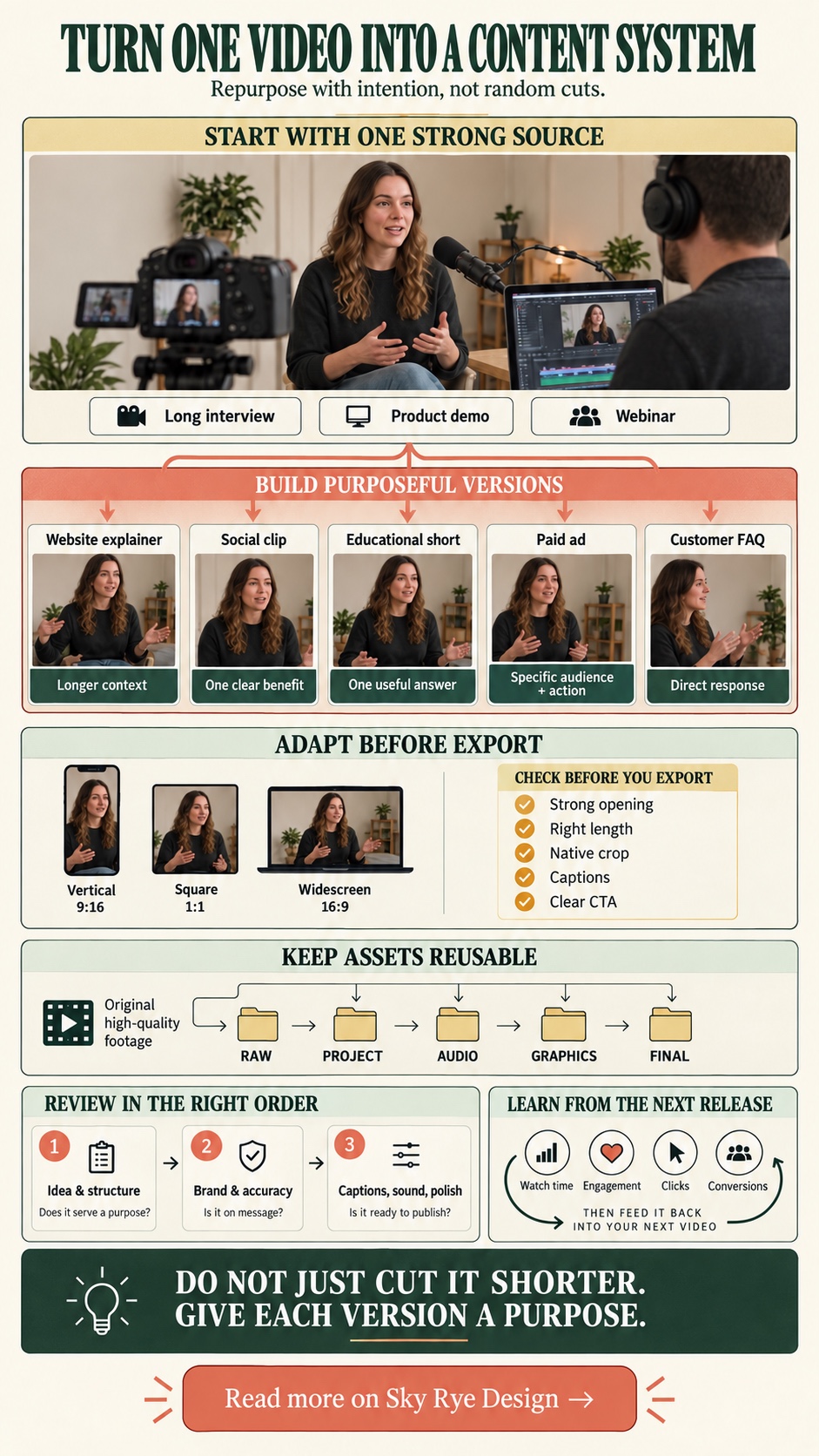
A long interview can become several short educational clips. A product demonstration can supply social posts, website content, and sales-support footage. A webinar can provide direct answers to common customer questions.
This approach helps brands publish more useful content without arranging a new shoot for every post.
Still, repurposing works only when each version has a clear job. Cutting a long video into random fragments rarely produces good social content. Each edit needs a strong opening, enough context to make sense on its own, and a finish suited to the audience and platform.
Make editing easier to manage
Editing is often where a video workflow slows down. Even with a good idea and useful footage, shaping raw material into a polished piece takes time, judgement, and close attention.
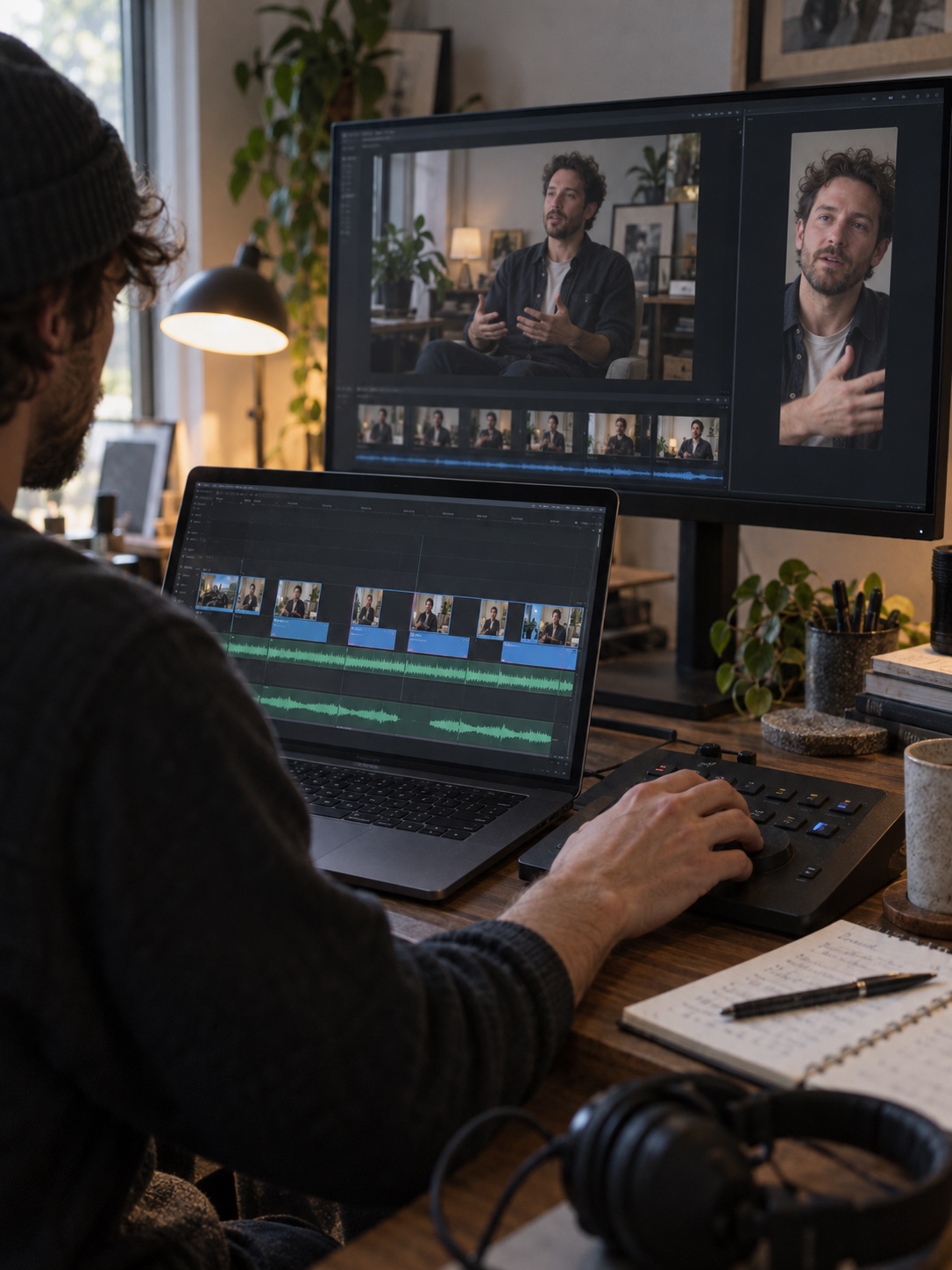
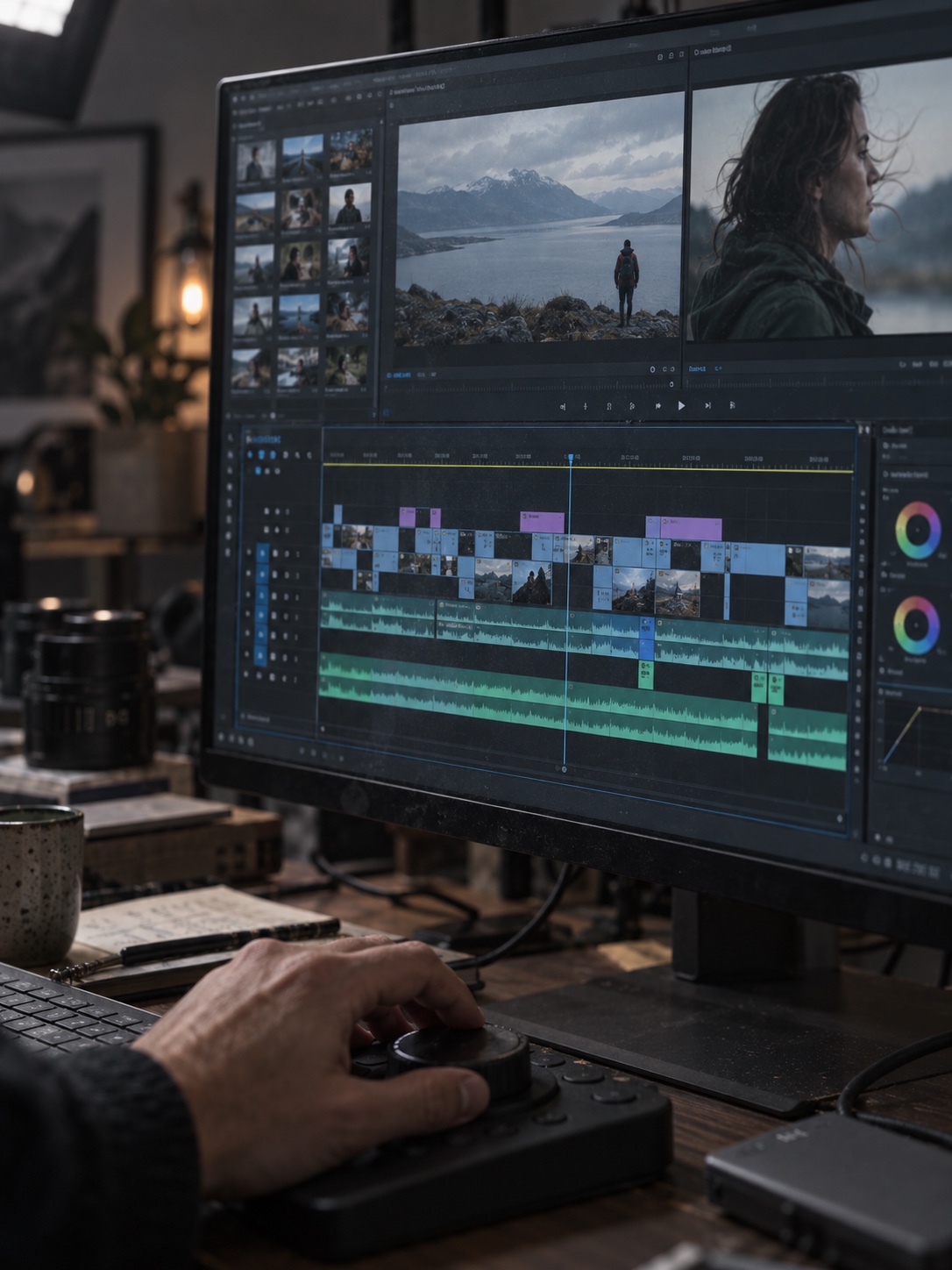
Modern editing workflows have made that process more accessible to marketing teams without a dedicated editor. Teams can now edit videos online using browser-based tools that allow them to organise footage, make adjustments and prepare content without relying on a complex production setup.
This can be especially useful for distributed teams, growing businesses, and marketers who need to work quickly while keeping control of the final result.
These tools do not replace creative decisions. They reduce the friction around technical steps, giving the team more time to improve the message, pace, and presentation.

Keep feedback focused
As more people take part in content creation, collaboration becomes a larger part of the workflow. A typical brand video may involve marketers, designers, product specialists, and company leaders. Without a clear review process, feedback quickly becomes difficult to manage.
Too many opinions at the wrong stage can stop production in its tracks. Teams may repeat changes because the original goal was unclear or because reviewers are commenting on different versions.
Set review stages before editing begins. Early feedback should focus on the idea, structure, and accuracy. Later feedback should cover details such as graphics, captions, sound levels, and final polish. This order prevents the team from perfecting a sequence that may still be removed.

Give each person a defined role
Decide who owns each part of the process. One person might guide the creative direction, another checks brand and product accuracy, and a third gives final approval.
Clear roles keep projects moving because the team knows whose feedback is required and whose comments are optional. They also reduce conflicting instructions, which are a common source of unnecessary revision rounds.
Keep the approval group small. A useful workflow gives the right people a voice at the right moment; it does not invite everyone into every edit.

Adapt the video to each platform
Publishing the same video everywhere ignores how people use each platform. A website visitor may watch a longer explanation because they already have an interest in the brand. A social media viewer needs a faster opening because the video appears among dozens of other posts.
The central idea can remain the same, but its presentation may need to change. Plan for the length, framing, viewing environment, audience awareness, and desired action before final delivery.
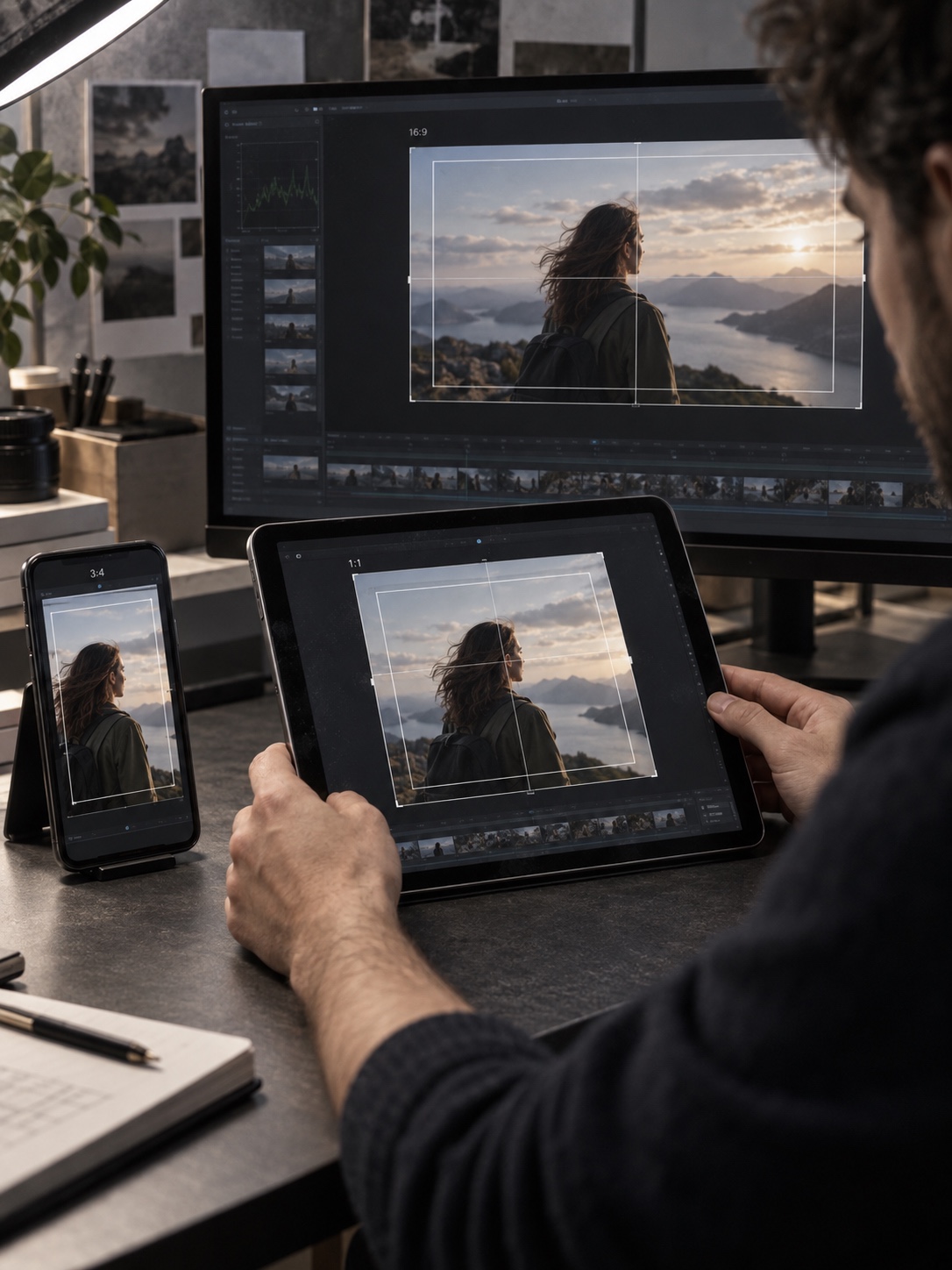
This is also the stage to decide whether the edit needs captions, a square or vertical crop, a shorter introduction, or a different final frame. Planning those variations early is much cleaner than rebuilding them after the master edit is approved.

Organise footage so the team can reuse it
Good content management makes future production easier. Store raw footage, project files, audio, graphics, captions, and final exports in a folder structure the whole team understands.
Use plain file names with the project, date, format, and version. Separate raw material from approved exports. And keep one clear master rather than several files called “final.” It sounds basic, but this is where many hours disappear.
A tidy archive also makes repurposing safer. Editors can find the original high-quality footage instead of downloading a compressed copy from an old social post.

Measure content and production performance
A video workflow should not end when the content goes live. Review performance and use what you learn to improve the next project.
The right metric depends on the video’s purpose. A brand-awareness campaign may focus on reach, watch time, and engagement. A product video may be judged by clicks, enquiries, or conversions.
But numbers from the platform tell only part of the story. Review the production process as well. Did the edit take too long? Were there avoidable revision rounds? Did the shoot capture enough useful variations? Which step caused the longest delay?
Improving the workflow can be as valuable as improving the content itself.


Create better videos without adding complexity
As video becomes a larger part of marketing, brands need systems that support consistent production without sacrificing quality. The goal is not to publish the highest possible number of clips. It is to create relevant videos with less repeated work.
Better planning, smarter editing, purposeful repurposing, and focused collaboration help teams use their time and footage more effectively. Technology can support that process, but the strongest results still come from understanding the audience and communicating one idea clearly.
A successful video strategy needs more than good concepts. It needs a workflow that carries those concepts from brief to finished content without creating unnecessary friction.
Start by reviewing the current process and finding the stage where time is lost. Fix one bottleneck first. That single change can give every video that follows a stronger foundation.

- 7shares
- Facebook0
- Pinterest7
- Twitter0
- Reddit0