Overview
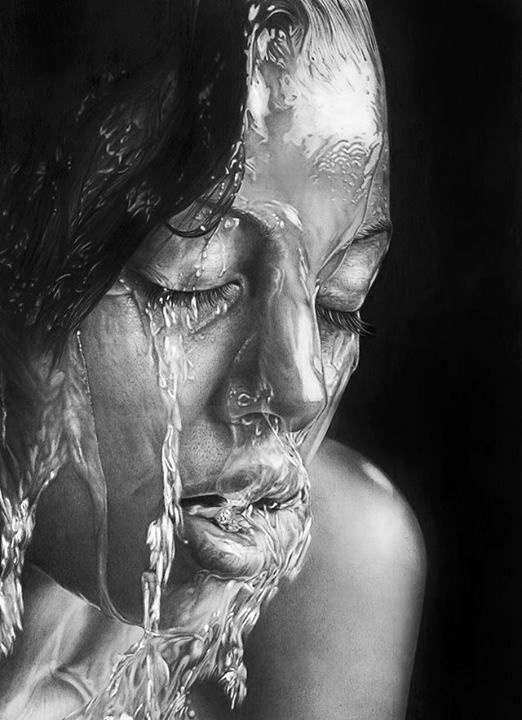
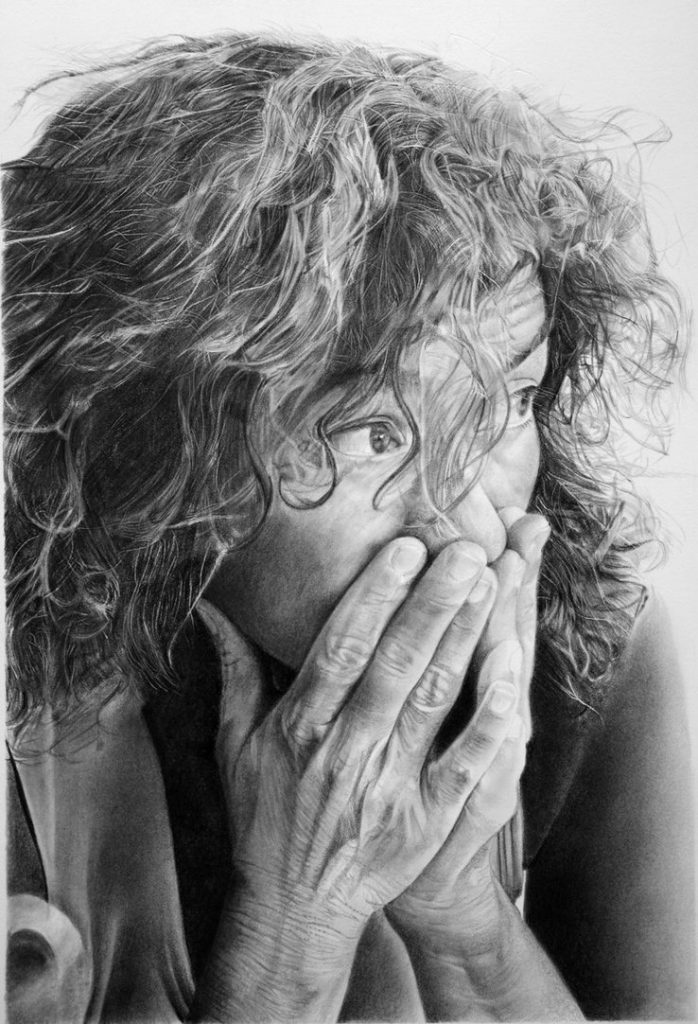
Franco Clun’s pencil drawings are a strong reference for anyone studying graphite realism. His portraits and animal studies use careful value control, crisp focal details, and soft tonal transitions to make black-and-white drawings feel tactile and alive.
The most useful lesson is not simply that the drawings are detailed. It is how the detail is organized. Hair, wrinkles, fur, water, and reflected light are handled with different edges, so the eye knows where to slow down and where to move on.
What to notice in Franco Clun pencil drawings
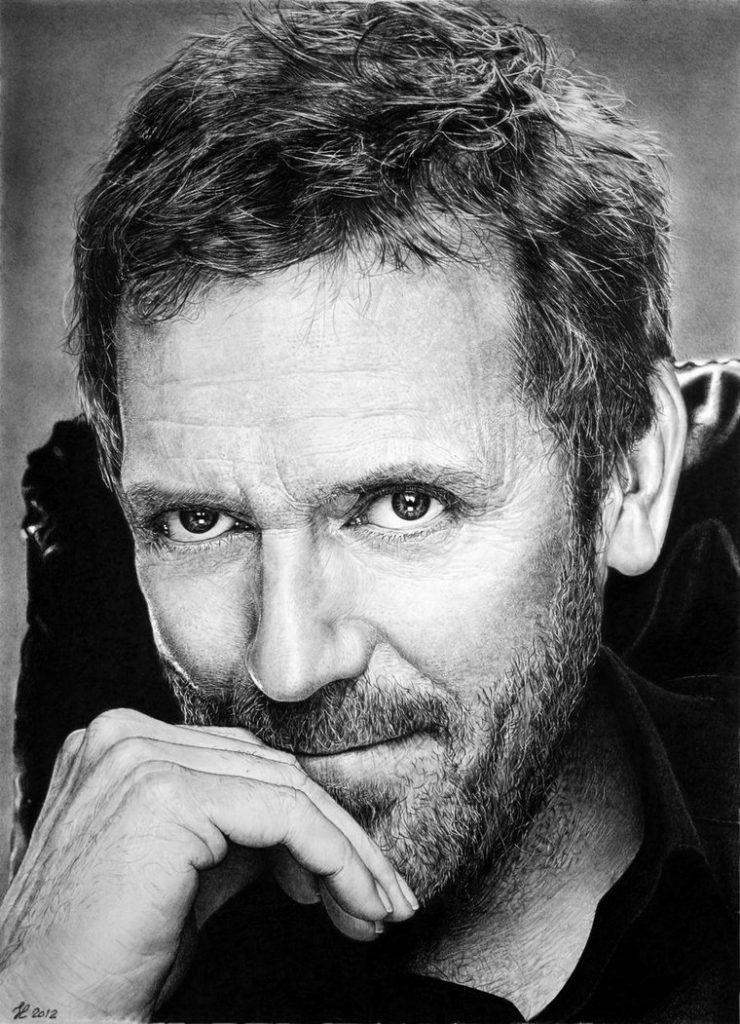
When I study work like this, I look first at the big shadow shapes before the fine texture. The portraits feel convincing because the dark masses are placed clearly, then the smaller marks sit inside that structure. That is a useful habit for artists working in graphite: solve the value pattern first, then earn the details.
If you are practicing realistic pencil drawing, compare these pieces with our pencil drawing pictures collection and notice how much of the realism comes from contrast, not only from tiny lines.
| Detail to study | Where it shows up | Why it helps your drawing |
|---|---|---|
| Value range | Dark backgrounds, bright skin highlights, and deep eye shadows | A wide value range makes the graphite feel dimensional instead of flat. |
| Edges | Hairlines, eyelids, lips, hands, and fur | Soft edges create skin and atmosphere; sharp edges pull attention to the focal point. |
| Texture control | Wrinkles, beard hair, cat fur, wet skin, and fabric | Texture works best when it follows the form instead of sitting on top like a pattern. |
| Catchlights | Eyes in the portraits and the close-up cat drawing | Small highlights make the subject feel alive, but only if the surrounding darks are strong enough. |
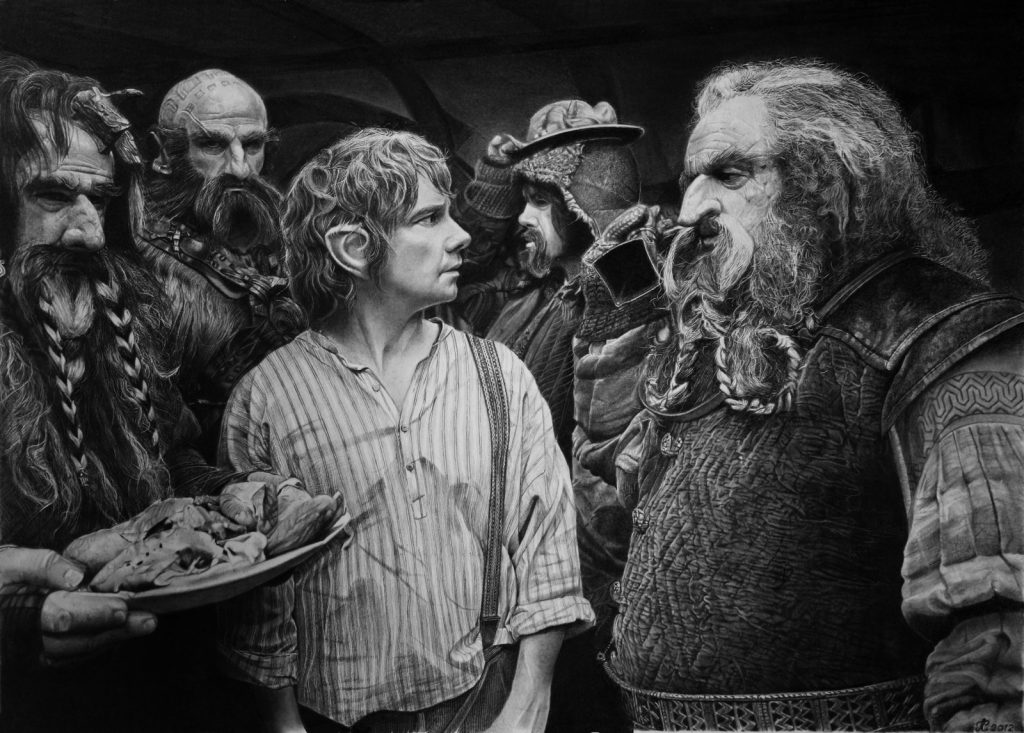
| Composition | Close crops and the wider Hobbit scene | The framing decides whether the drawing feels intimate, cinematic, or study-like. |
Gallery of Franco Clun realism art



Frequently asked questions about Franco Clun
Q: Who is Franco Clun?
A: Franco Clun is an Italian artist known online for highly detailed graphite and pencil drawings. This Sky Rye Design feature focuses on his realistic portraits, animal studies, and pop-culture inspired work, especially the way he handles skin texture, hair, water, fur, and deep contrast in black-and-white drawings.
Q: What is Franco Clun best known for?
A: He is best known for realistic pencil portraits and animal drawings with a polished, photo-like finish. The gallery here includes celebrity-style portraits, expressive faces, a close-up cat drawing, and a detailed scene inspired by The Hobbit, all useful for studying graphite realism.
Q: What should artists study in Franco Clun pencil drawings?
A: Start with value control. Look at how the darkest areas support the bright highlights, then study the edges around eyes, lips, hair, wrinkles, fur, and wet skin. The drawings work because the details sit inside a strong light-and-shadow structure, not because every mark is equally sharp.
Q: Are Franco Clun’s drawings photorealistic?
A: Many of the drawings have a photorealistic finish, especially in the portraits and animal studies. Still, the best way to read them is as graphite drawings first: controlled pressure, layered values, soft transitions, and crisp accents placed only where the viewer's eye needs them.
Q: What materials are best for practicing this kind of graphite realism?
A: A small graphite range is enough to begin: HB for light construction, 2B to 4B for midtones, and 6B or 8B for the deepest darks. Add a kneaded eraser for lifted highlights, a blending stump if you use one lightly, and smooth paper that can hold several layers.
Q: How can beginners practice realistic pencil portraits like this?
A: Choose one small section instead of copying a full portrait. Draw an eye, a hand, a patch of hair, or a small area of fur, then compare the value pattern before adding texture. Beginners usually improve faster when they train contrast and edges before chasing every tiny line.
Conclusion
Franco Clun’s realism works because it balances patience with control. The drawings have the surface appeal of photorealism, but the real lesson is more practical: strong values, selective sharpness, and texture that follows the form. For artists, that makes his pencil work worth studying slowly, one small area at a time.
- 1.1Kshares
- Facebook0
- Pinterest1.1K
- Twitter0
- Reddit0