Lips gave me more trouble than any other facial feature for the first two years I was drawing portraits. Eyes, nose, ears — I could work through those. But lips came out either stiff and flat or so heavily shaded they looked like a bruise. The problem, I eventually figured out, was that I was drawing the outline of lips instead of the form of them.
- Why Lips Are Actually Hard (And What Fixes It)
- Lip Anatomy Every Artist Needs to Know
- Materials: What Actually Makes a Difference
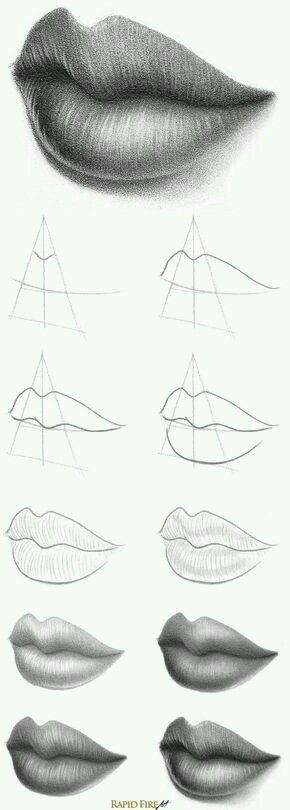
- Step-by-Step: How to Draw Lips from Scratch
- Shading Techniques That Actually Read as Lips
- Drawing Lips from Different Angles
- Fitting Lips Into a Full Portrait
- Practice Habits That Actually Work
- FAQ: Drawing Lips
- Q: What are the basics I need to know before drawing lips?
- Q: Which pencils are best for drawing realistic lips?
- Q: How do I draw the Cupid's bow correctly?
- Q: Why do my lips look flat even when the shading seems right?
- Q: How do I draw lips from a side profile?
- Q: What is the most common mistake when drawing lips?
- Q: How long does it take to get good at drawing lips?
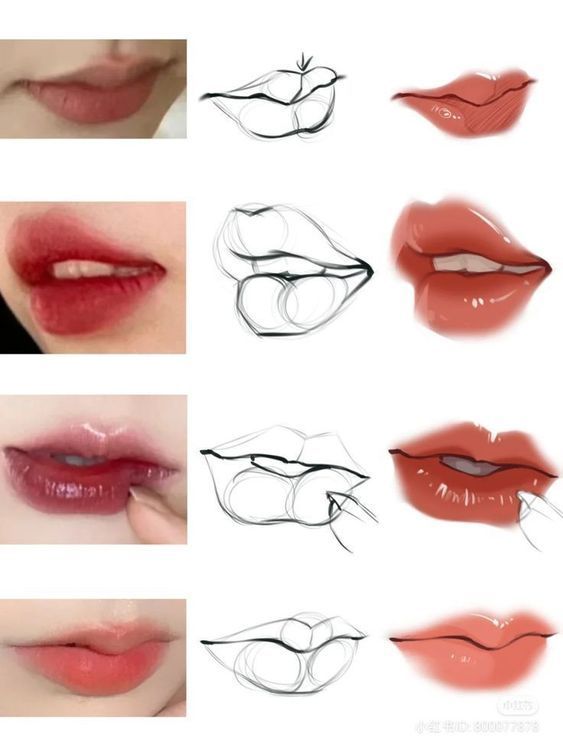
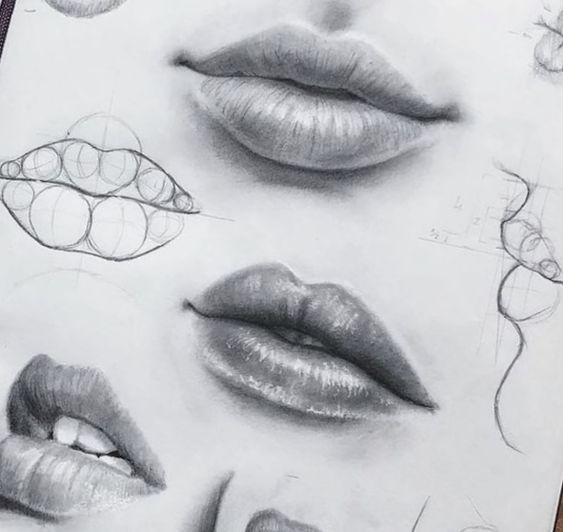
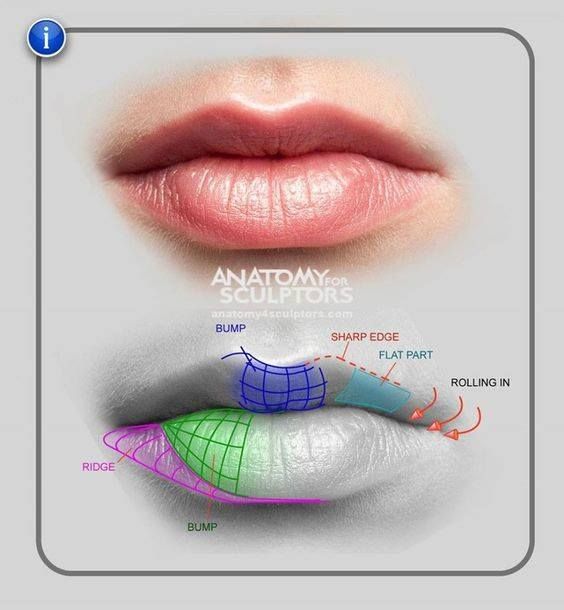
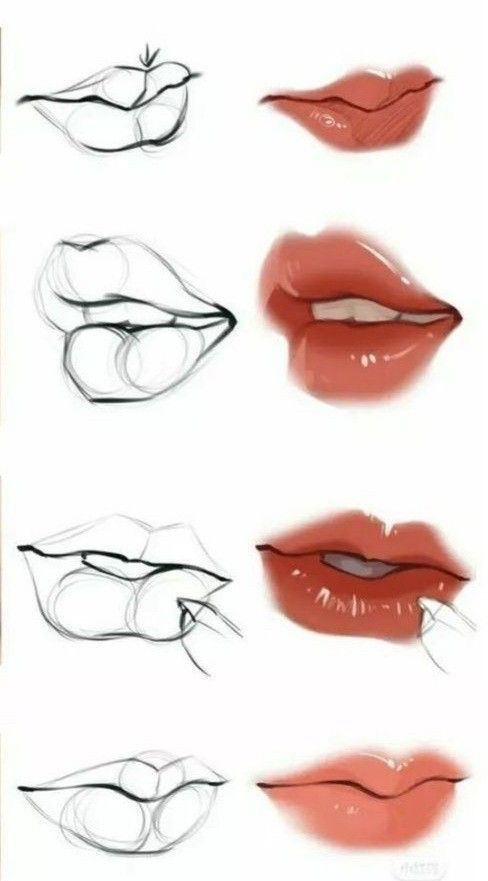
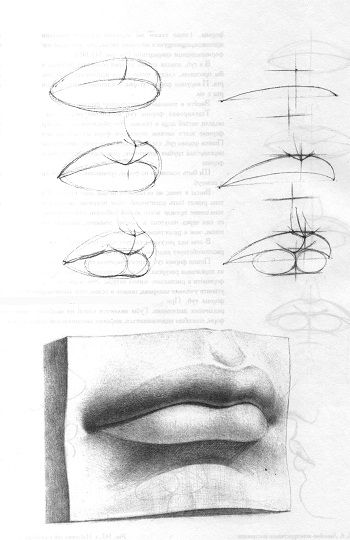
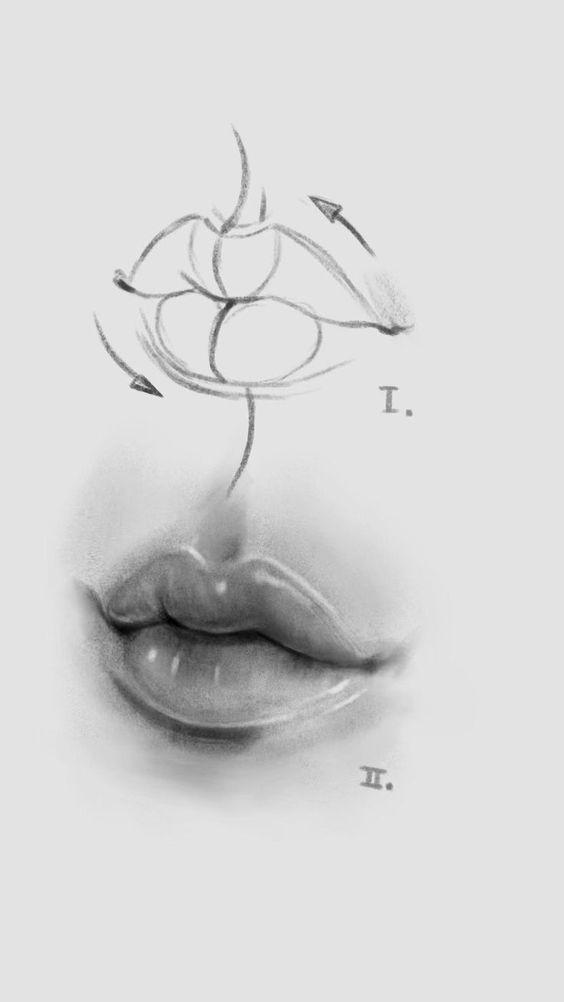
Once I understood the underlying anatomy — the three lobes of the upper lip, the two lobes of the lower, the way the Cupid’s bow sits on a curve rather than a flat line — everything changed. The shading started making sense. The edges stopped looking traced.
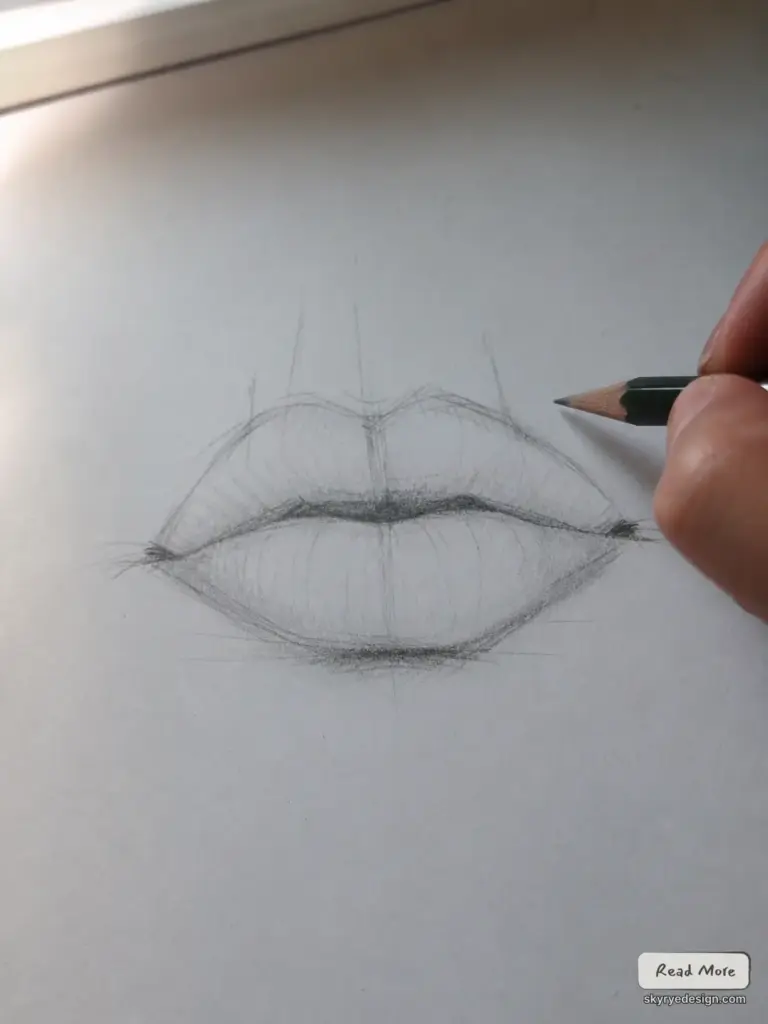
This tutorial covers what I wish someone had told me earlier: how to construct lips from basic forms, how to shade them so they read as three-dimensional, and the specific mistakes that make otherwise solid drawings fall apart at the mouth.
Why Lips Are Actually Hard (And What Fixes It)
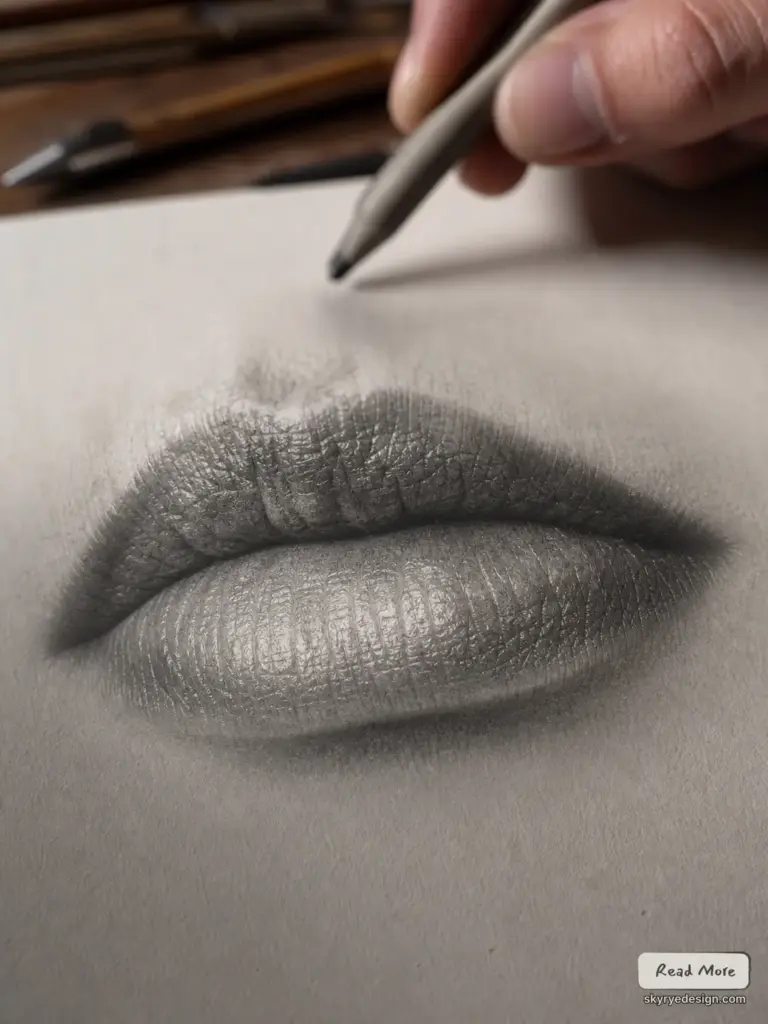
The frustrating thing about lips is that they look simple. Two shapes, some shading, done. But that simplicity is a trap. Because lips are not flat — they sit on a curved surface (the teeth and jaw underneath), they have complex planes that change direction multiple times, and the edge between lip and skin behaves differently depending on where you are on the face.
Most beginners make the same set of mistakes:
- Drawing a hard outline around the entire lip, then trying to shade inside it
- Treating the upper and lower lip as identical shapes
- Shading the surface texture (lines and wrinkles) before establishing the large shadow masses
- Ignoring the form changes at the corners of the mouth
- Drawing the philtrum too dark or too symmetrical
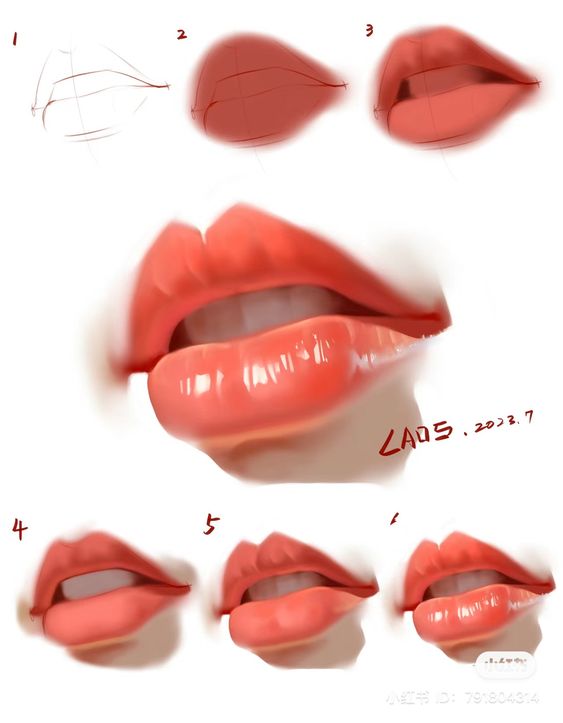
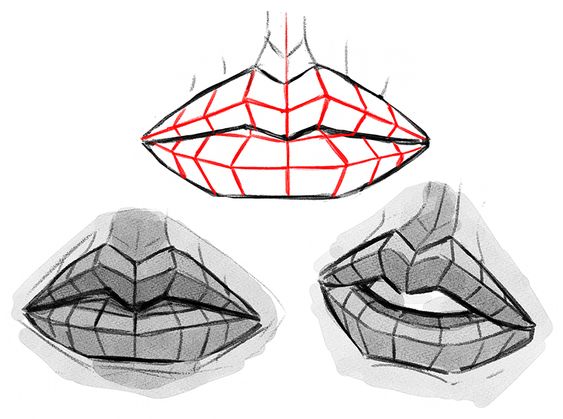
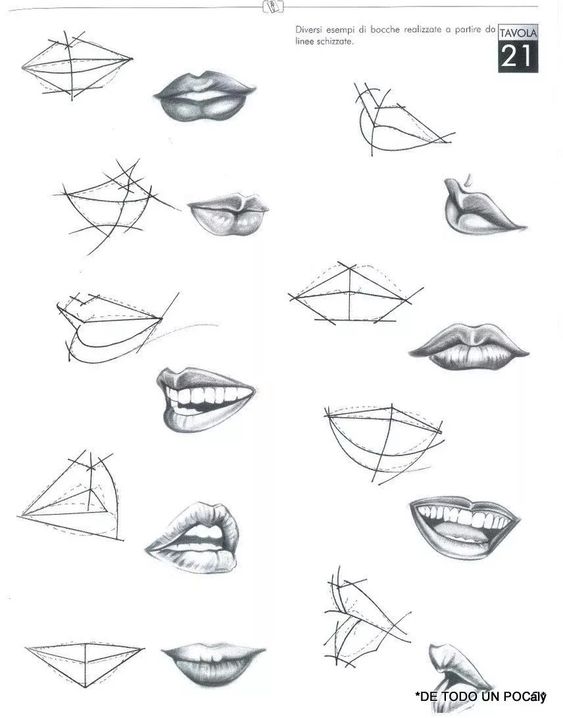
The fix for almost all of these is the same: start with construction, not contour. Block the three-dimensional forms first. Let the edges and details come last.
Lip Anatomy Every Artist Needs to Know
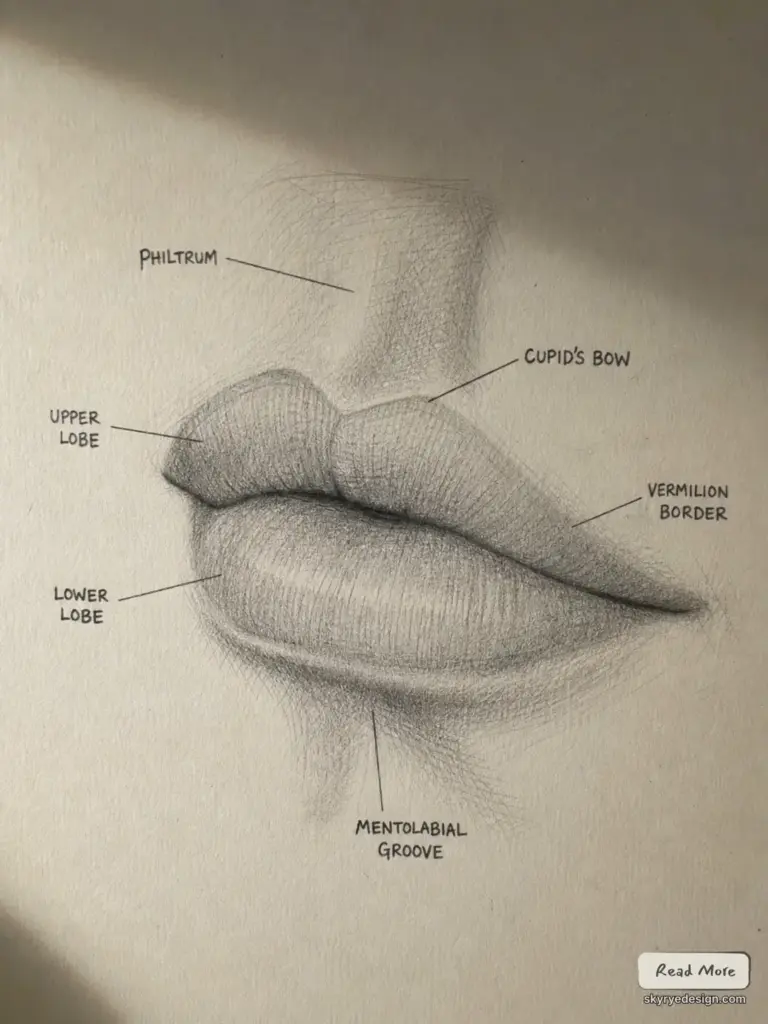
You don’t need a medical textbook. But you do need to understand the main structural landmarks before you put pencil to paper.
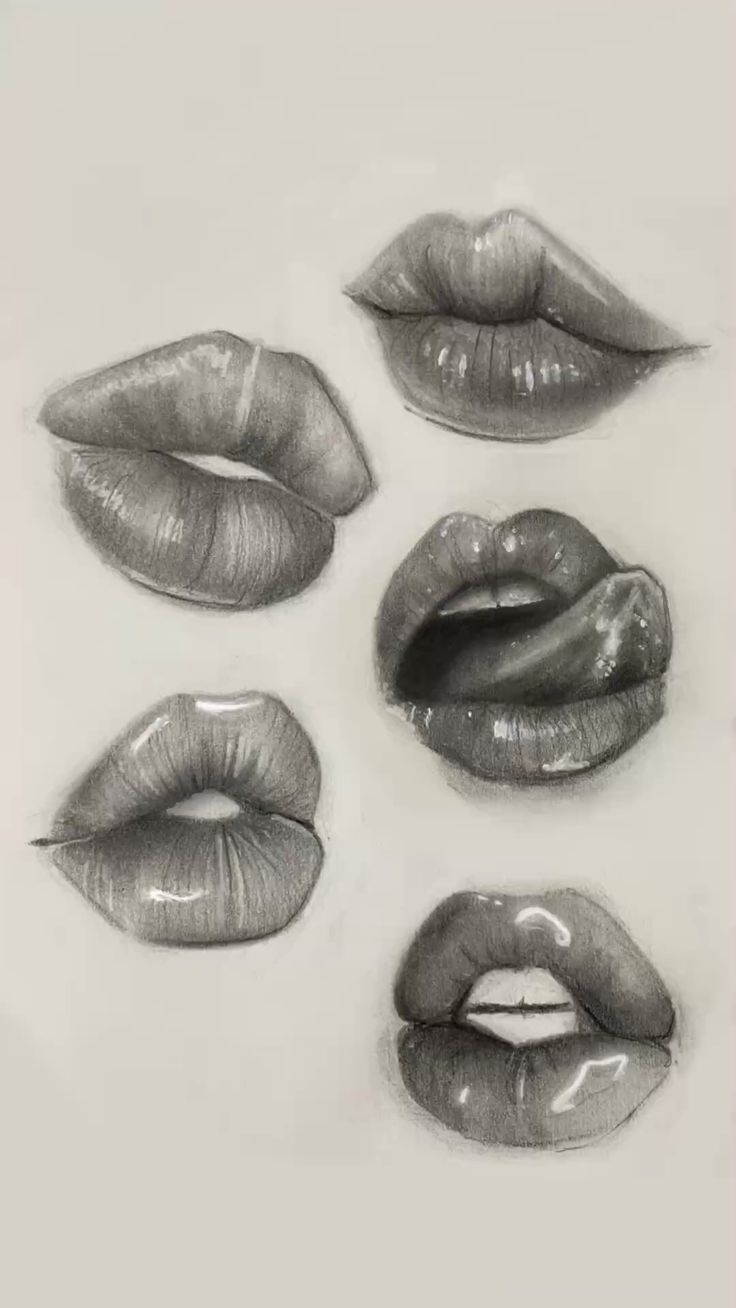
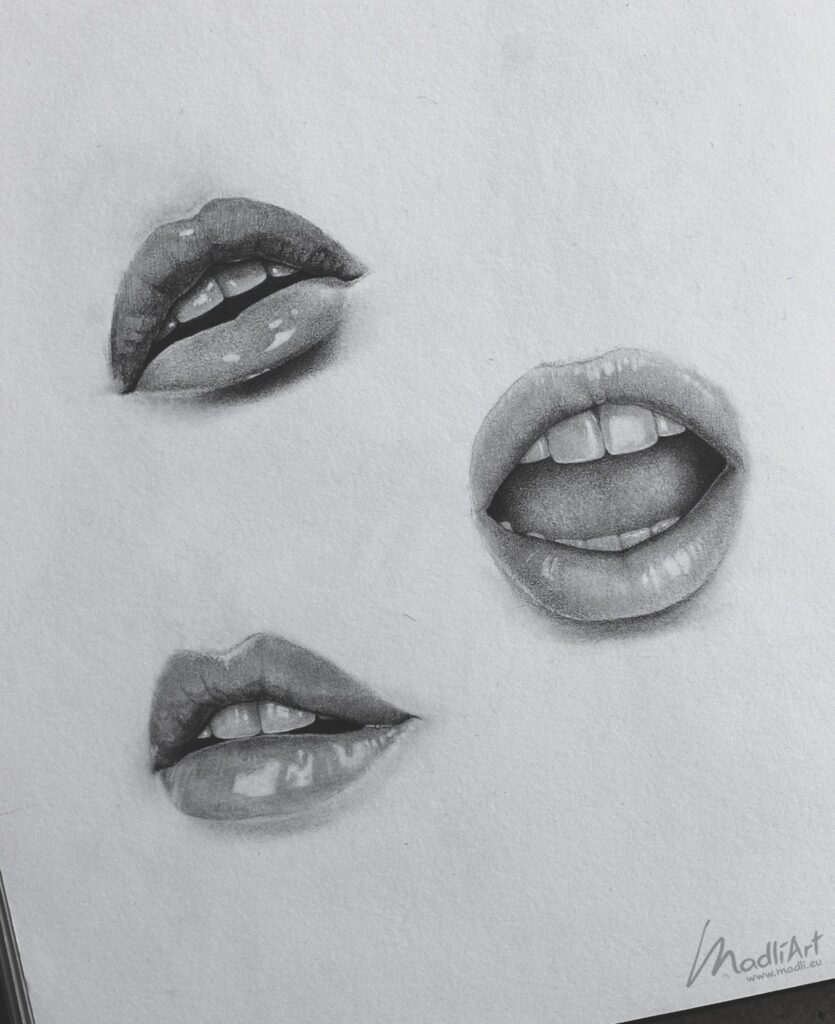
For lips, the volume appears when the soft edges and cast shadows work together, so this shading drawing for depth guide is a useful supporting exercise.
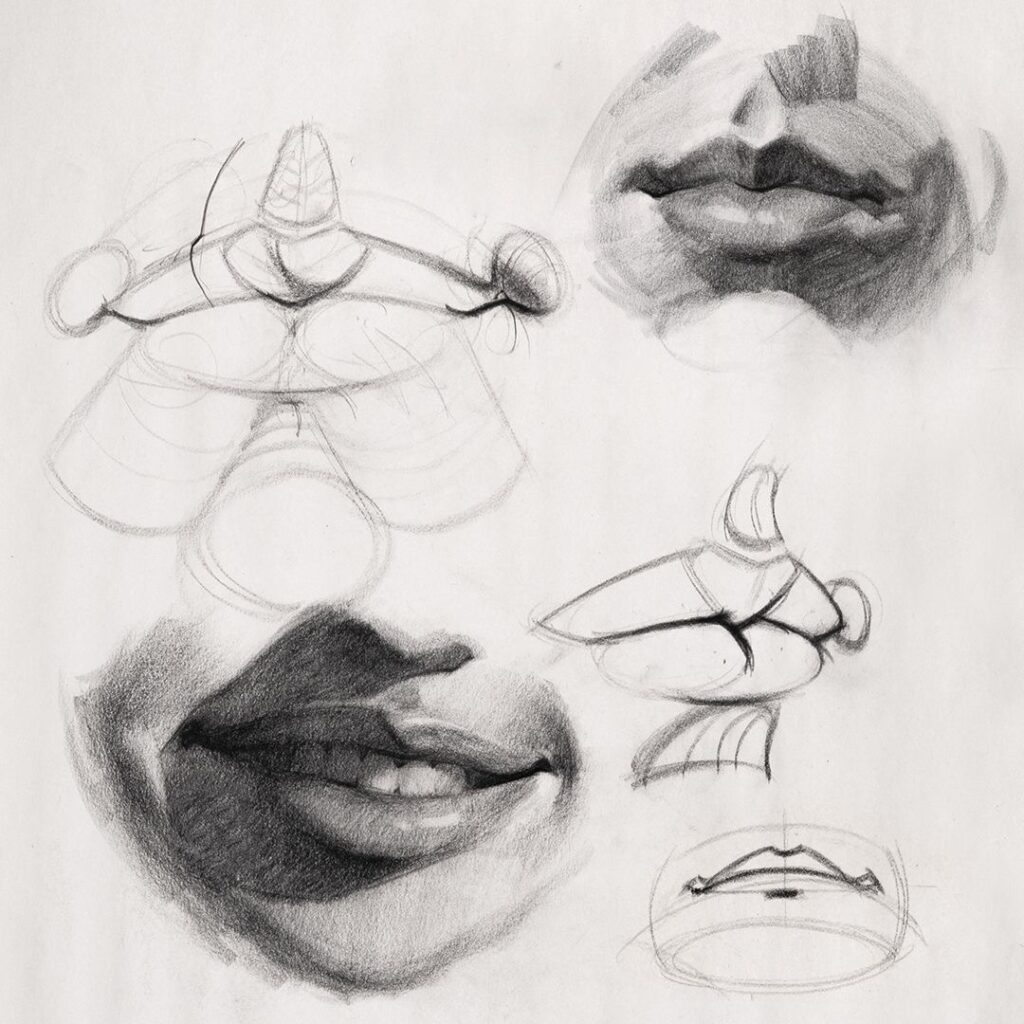
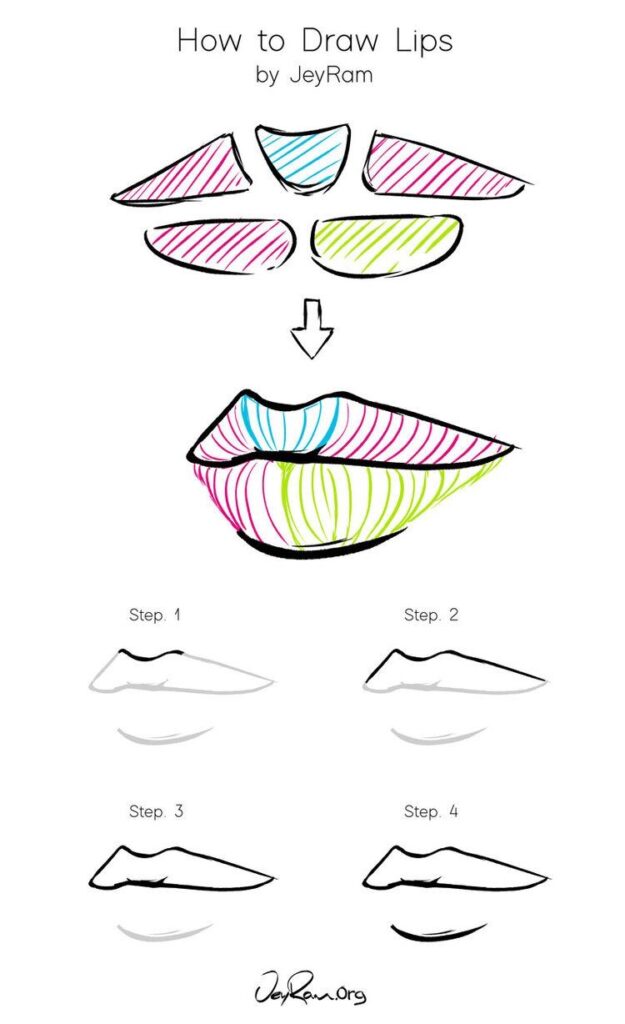
The Upper Lip
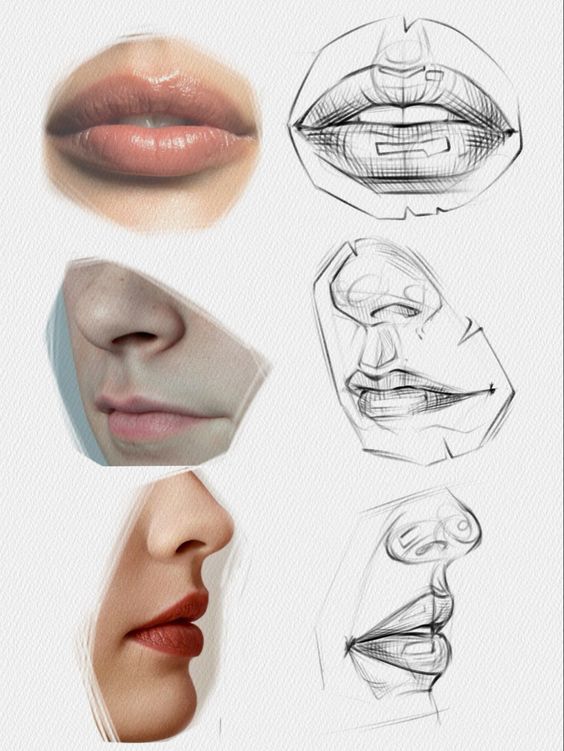
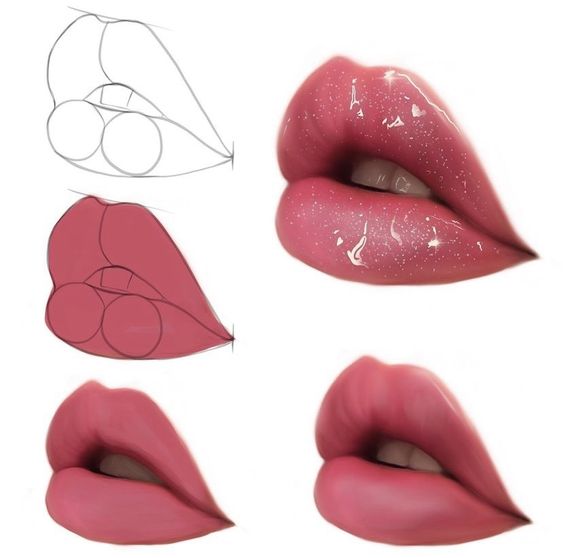
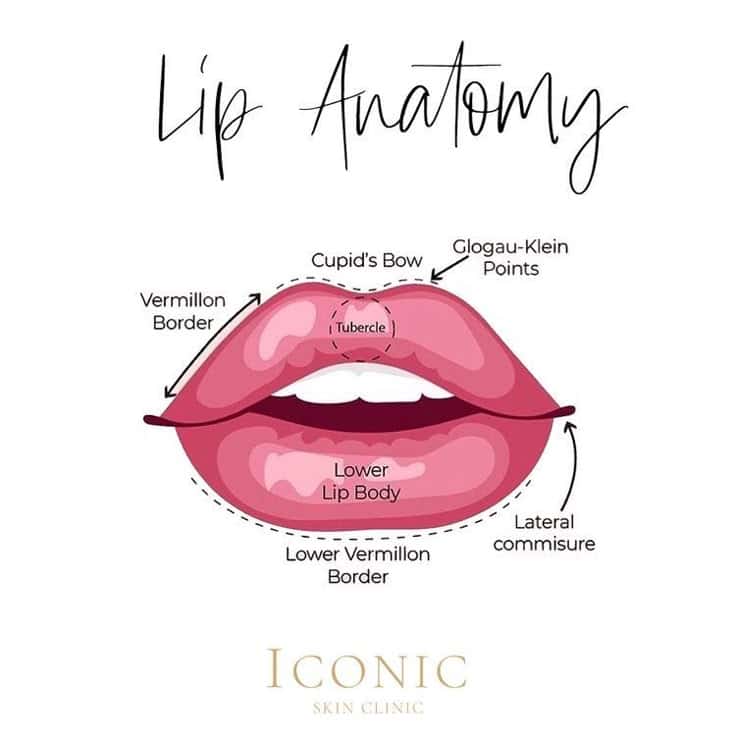
The upper lip has three forms: a central lobe (the tubercle, which sits right at the Cupid’s bow dip) and one lobe on each side. These three shapes create the characteristic double-curve silhouette of the upper lip. The philtrum — the two ridges running from the nose down to the bow — frames the central lobe and gives you your centre-line anchor.
The upper lip is generally thinner and sits slightly in front of or level with the lower lip. It catches less direct light than the lower lip, so in most lighting conditions it’s darker overall.
The Lower Lip
The lower lip has two lobes — rounder and fuller than the upper lip lobes. This is the part that catches the most light from above, which is why the lower lip usually has the brightest highlight in a portrait. The mentolabial groove (the crease below the lower lip) is a shadow that separates the lip from the chin and gives you immediate depth if you use it correctly.
The Vermilion Border


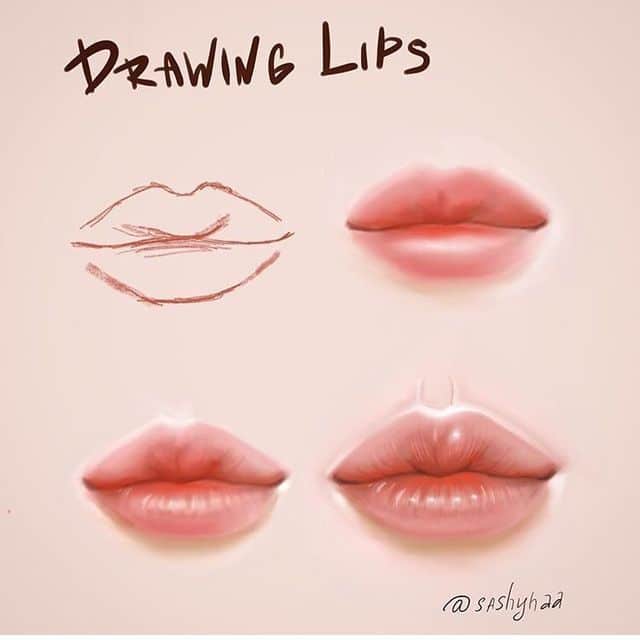
This is the defined edge between the lip tissue and the surrounding skin. It’s most distinct at the Cupid’s bow and the center of the lower lip. At the corners of the mouth and along the sides, it softens and sometimes nearly disappears. Drawing it as a uniform hard line everywhere is one of the fastest ways to make lips look artificial.
Materials: What Actually Makes a Difference
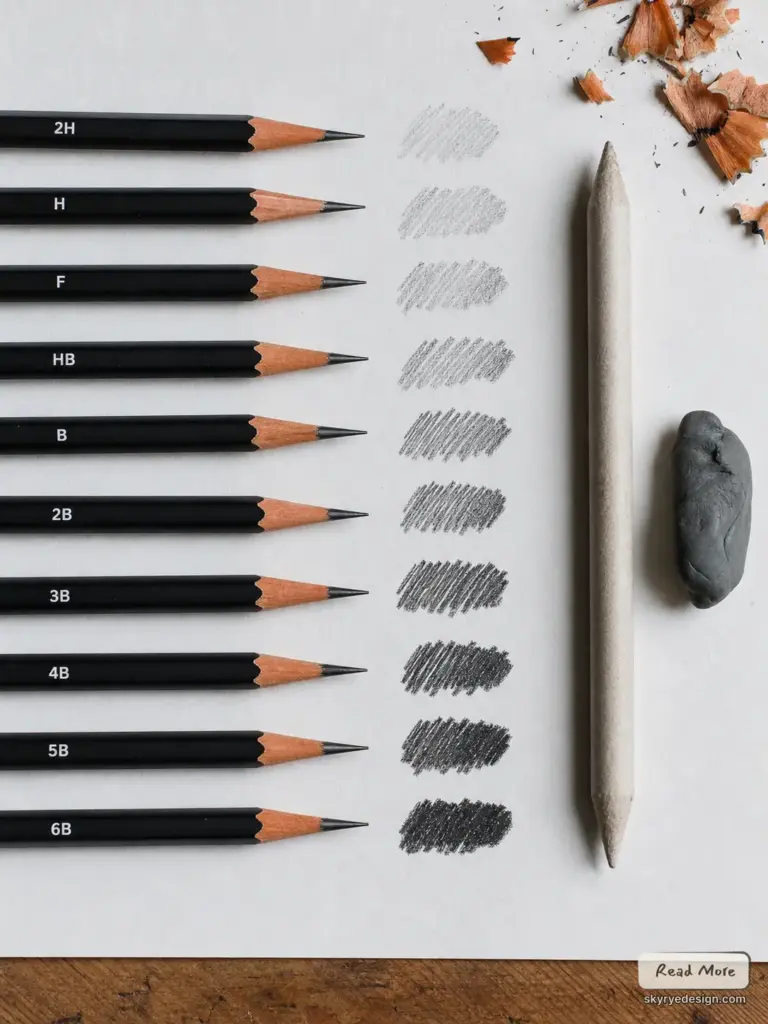
You don’t need expensive materials to draw good lips. What matters is having a range of pencil grades and understanding what each one is for.
Construction lines: HB or 2H. Light enough to erase cleanly without denting the paper.
Mid-tone shading: 2B. The workhorse for most of the lip’s surface shading.
Dark shadows and corners: 4B or 6B. The corners of the mouth and the shadow under the lower lip need real depth. Don’t try to get there by pressing harder with a 2B.
Highlights: Kneaded eraser. You can shape it to a fine point and lift graphite precisely. A vinyl eraser for larger areas.
Blending: A blending stump (tortillon) for smooth gradients on the lower lip body. Your fingertip for softer, broader blending around the edges.
For paper: smooth Bristol board or cartridge paper around 120gsm. Too much tooth (texture) and the graphite sits on the surface grain rather than blending smoothly.
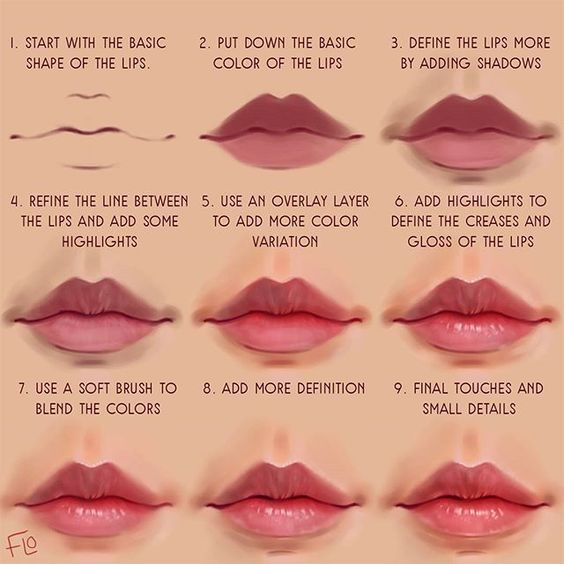
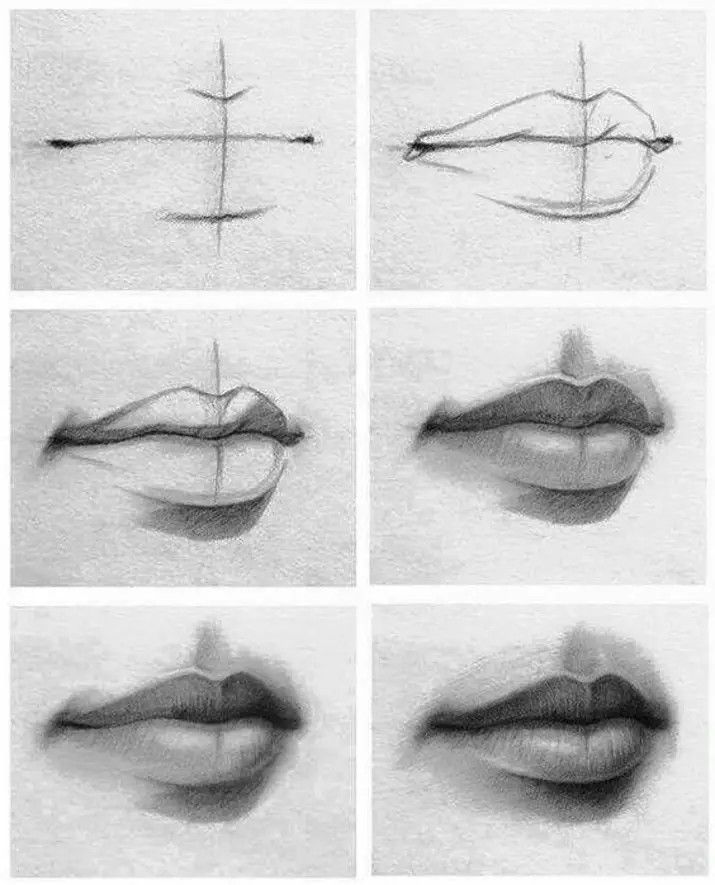
Step-by-Step: How to Draw Lips from Scratch
Work through these stages in order. Resist jumping ahead.
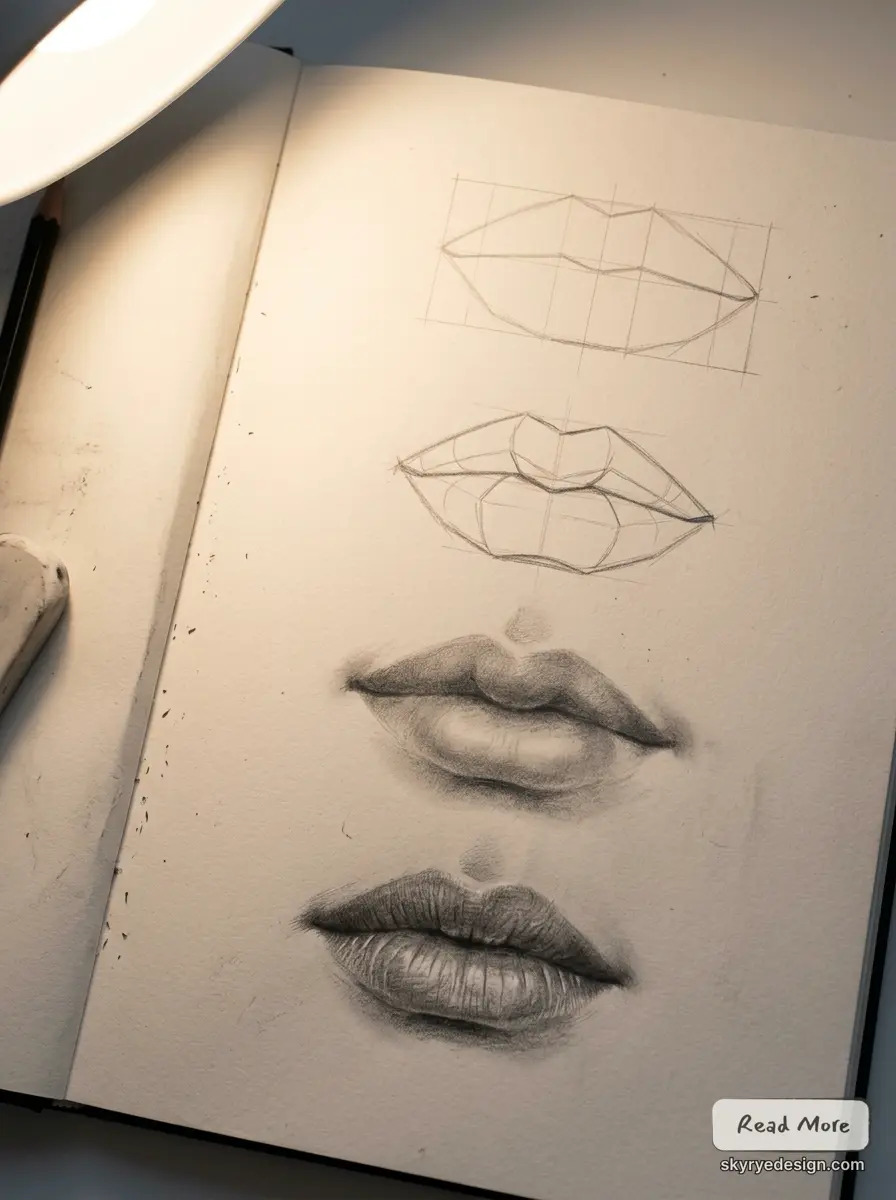
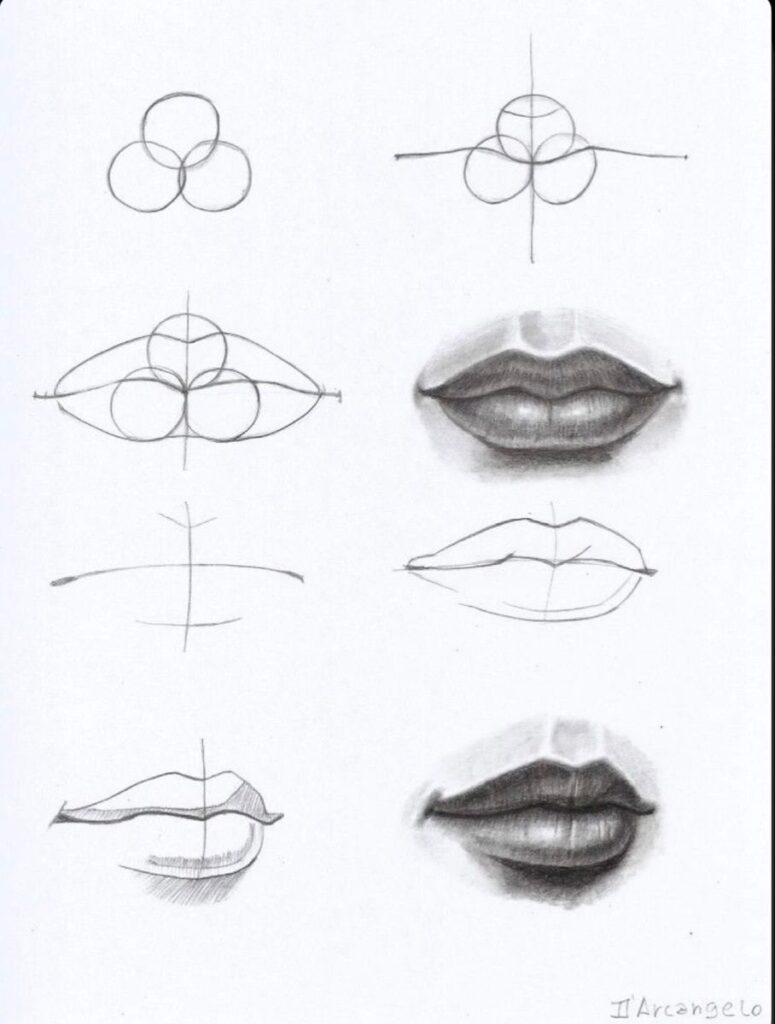
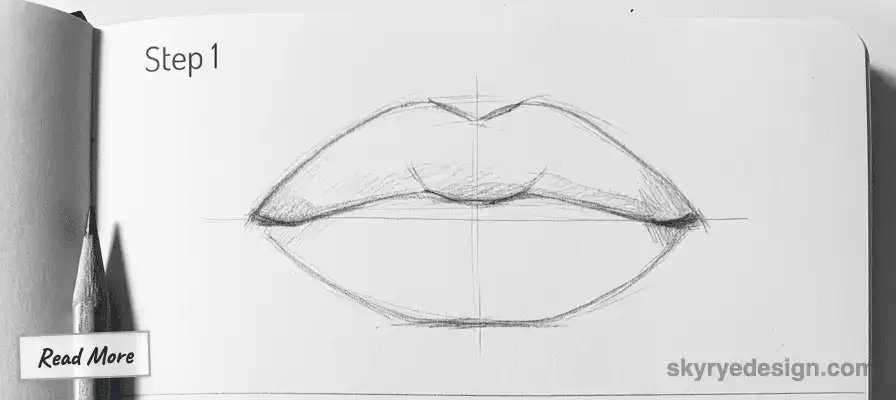
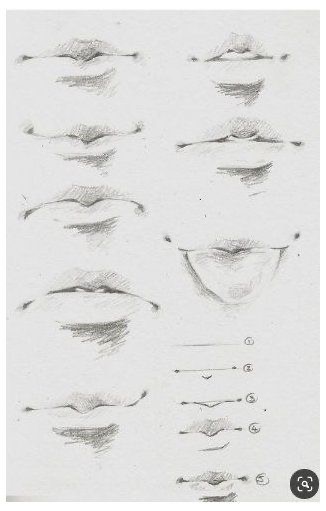
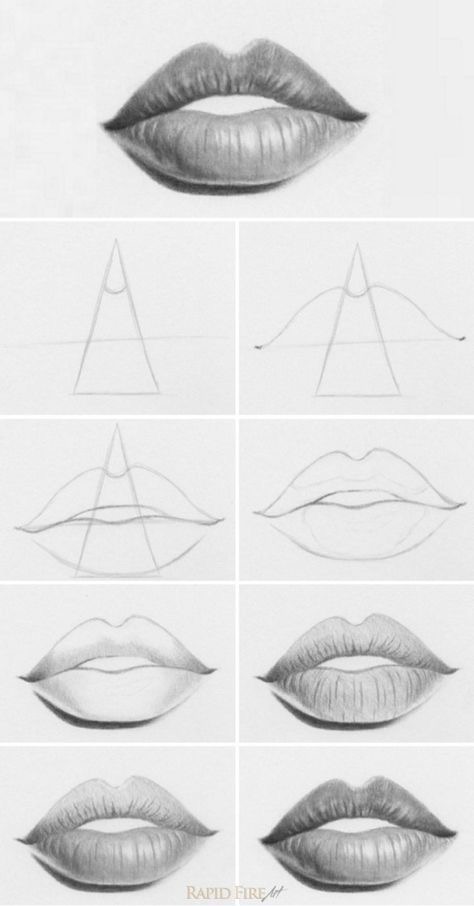
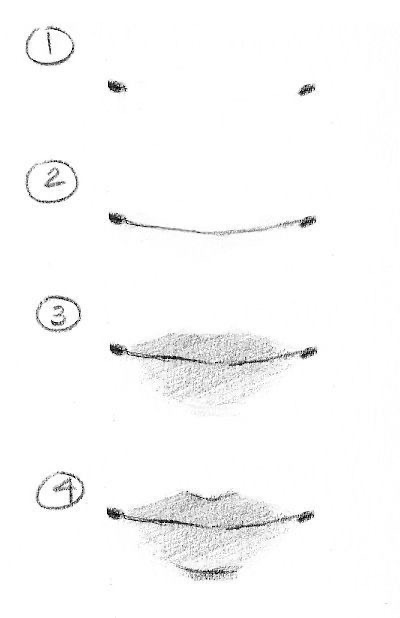
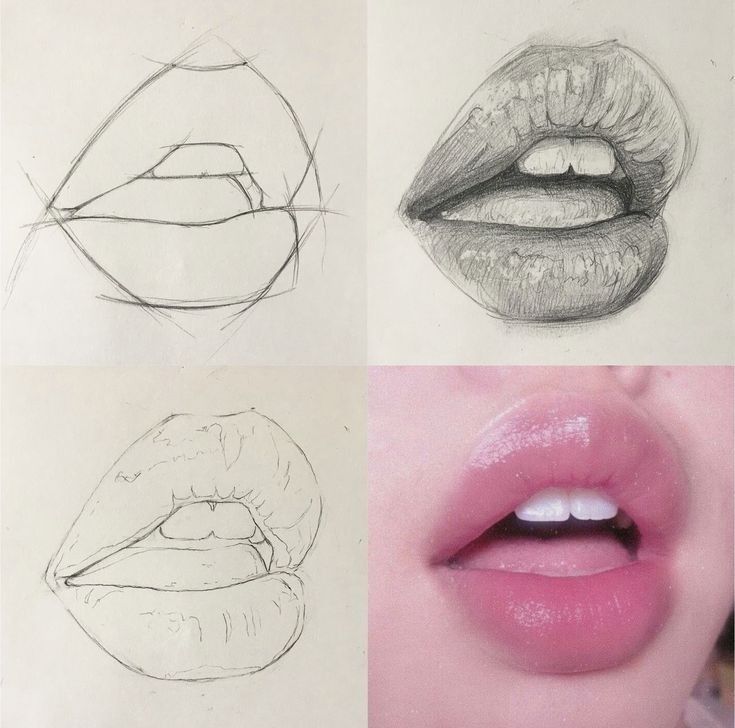
Step 1: Construction box
Draw a light rectangle roughly 2:1 in proportion (wider than tall). This is your bounding box. It keeps your proportions honest before you’ve drawn a single curve. Mark the vertical centre line lightly.
Step 2: Cupid’s bow and base line
About one-third down from the top of your box, place the two Cupid’s bow peaks symmetrically on either side of your centre line. Connect them with a gentle dip in the middle, then curve the line outward and slightly downward to the corners. Draw a parallel curved line near the bottom of your box for the lower edge of the lower lip.
Step 3: Separate the lips
The line that divides upper and lower lip is not a straight line — it curves slightly downward at the centre and lifts toward the corners. This line is also your darkest value in the whole drawing, so keep it light for now. Add a small “M” shape at the centre to suggest the shadow between the two lips.
Step 4: Block the shadow masses
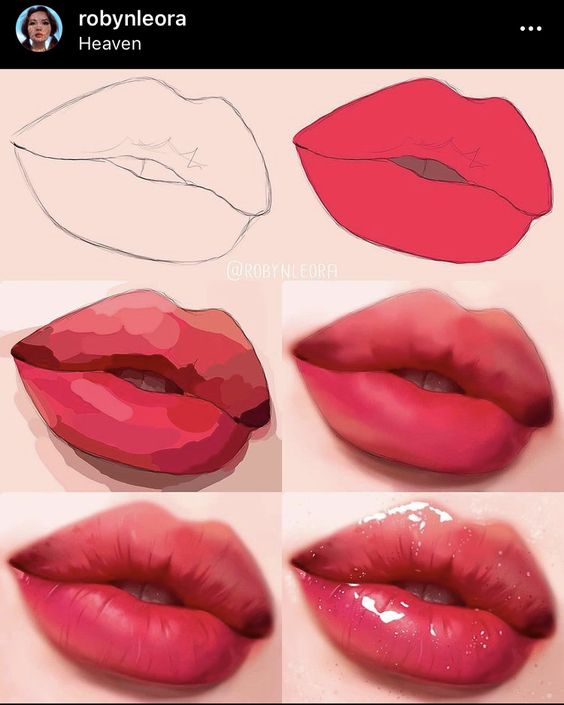
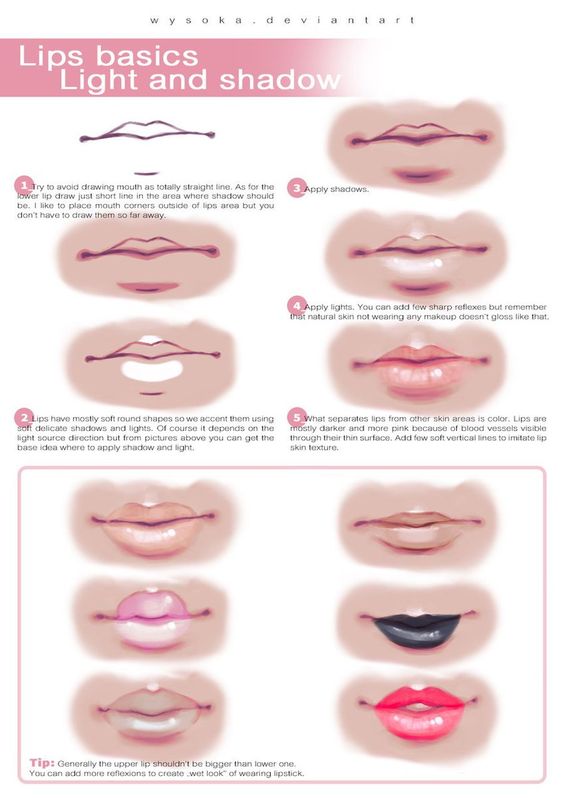
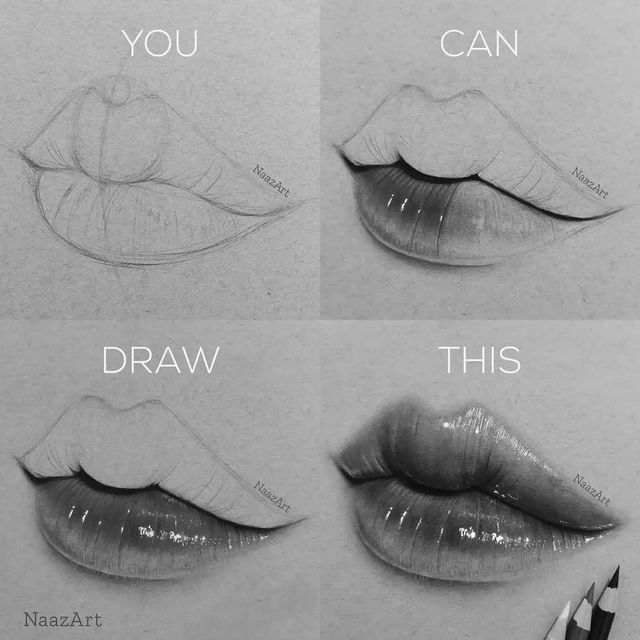
Before any blending or detail, identify where the shadow falls as large masses. In typical frontal lighting: the upper lip is mostly in shadow (except the central tubercle which catches a bit of light), the corners are dark, and the under-side of the lower lip has a strong shadow from the mentolabial groove. Block these in lightly with your 2B.
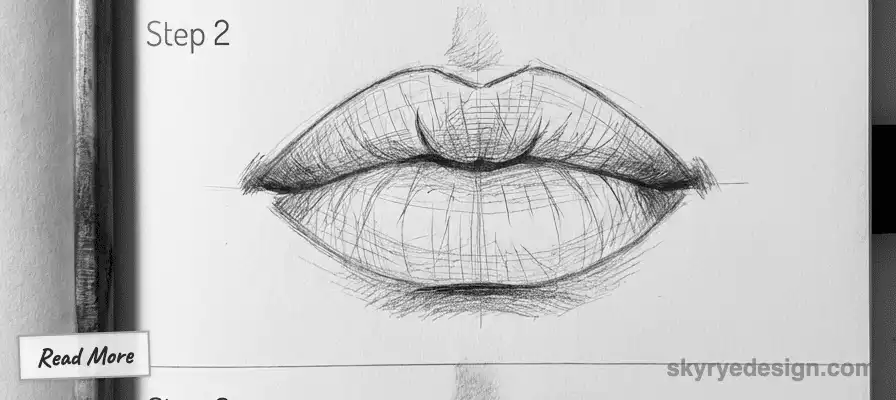
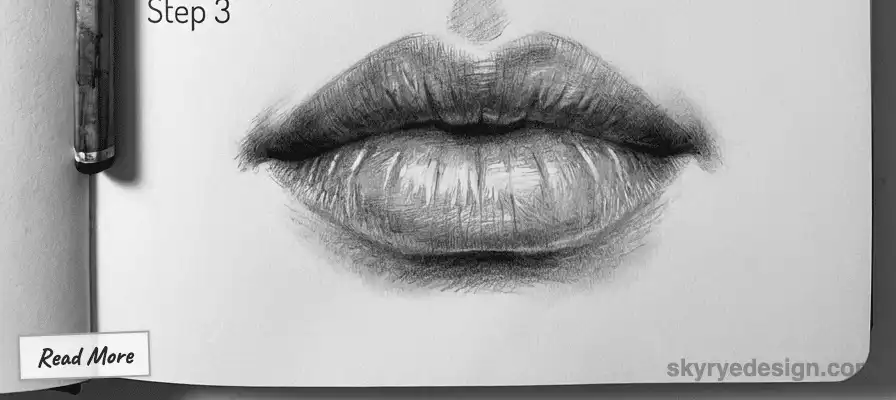
Step 5: Add texture and final detail
Only now add the fine vertical lines that run along the lip surface. Keep them light and varied in length — not uniform hatching. Use your kneaded eraser to lift highlights along the vermilion border of the lower lip and at the Cupid’s bow peaks. Deepen the corner shadows with 4B or 6B.
Shading Techniques That Actually Read as Lips
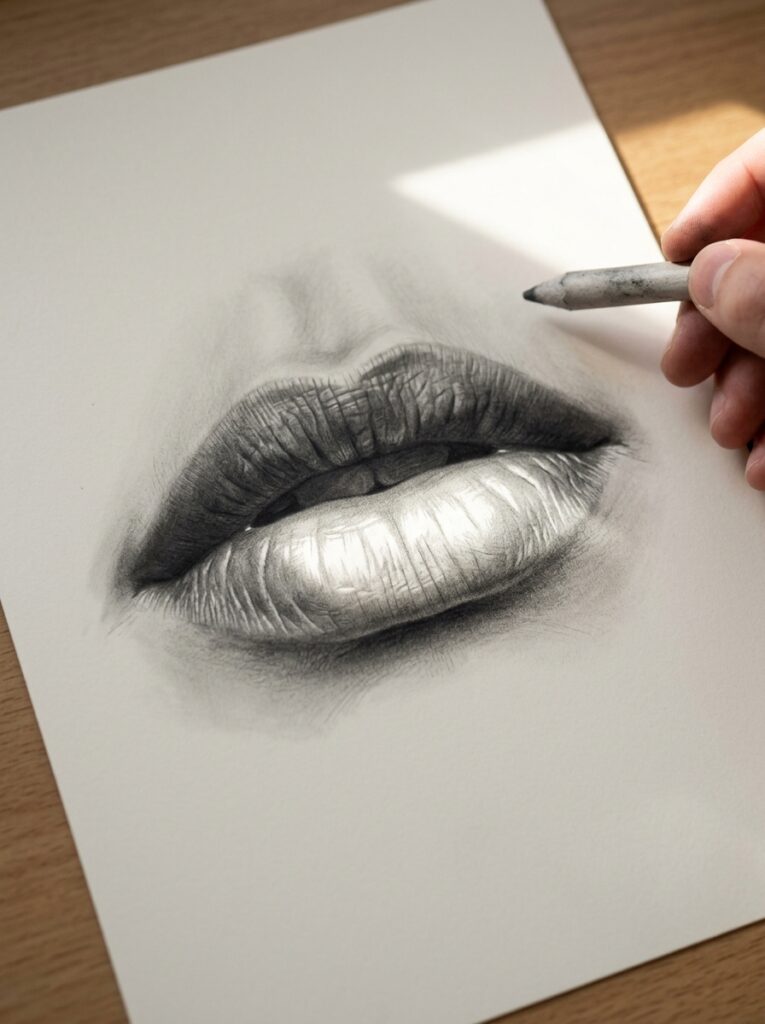
Shading lips is mostly about reading two things correctly: the form of each lobe as it curves away from the light source, and the sharp value jump at the line between the lips.
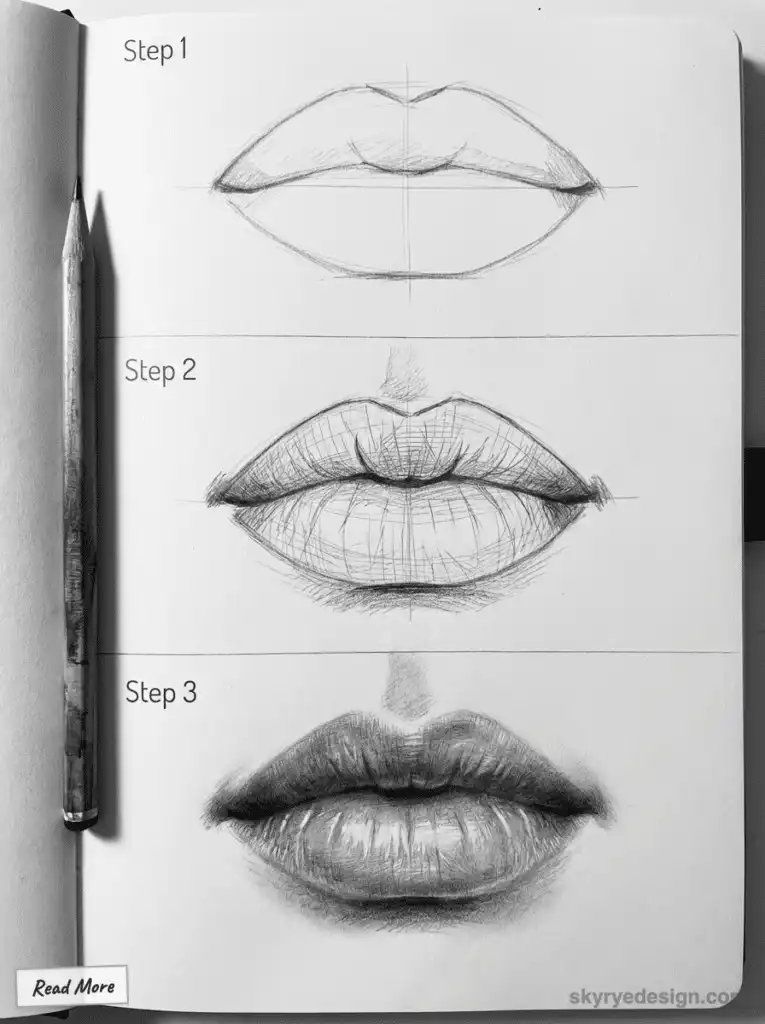
Form Shading vs Surface Texture
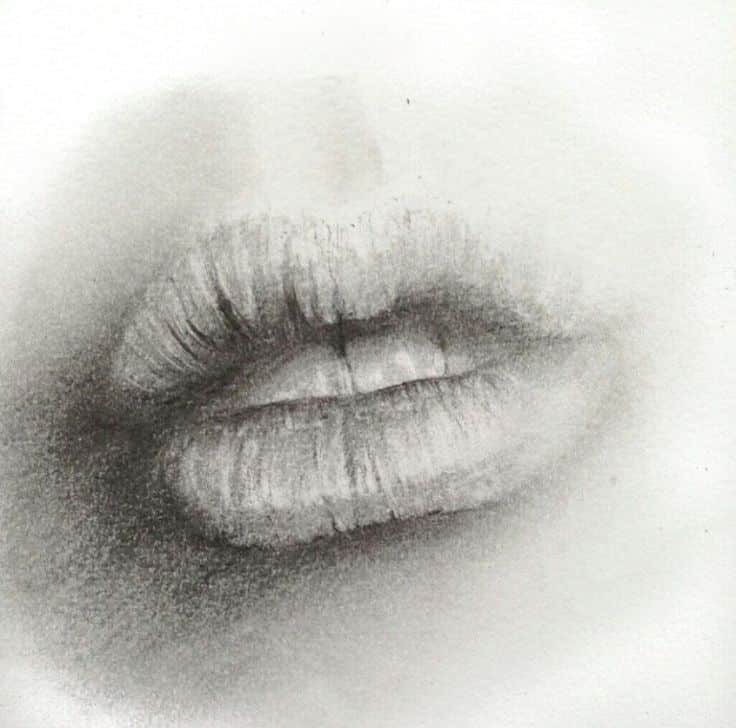
Form shading describes the three-dimensional shape of the lips — how each lobe is brighter at its apex and darker at its edges. Surface texture is the fine lines and skin detail on top of that. If you add surface texture before establishing form shading, the lips look like a flat surface covered in lines. Always form-shade first.
The Darkest Mark in the Drawing
The line between the upper and lower lip is typically the darkest value in the entire mouth area, often darker than the corners. Press firmly with a 4B or 6B here, and blend slightly upward into the upper lip and downward into the lower lip so the line doesn’t look pasted on.
Highlights: Lifted, Not Left
Don’t try to avoid graphite where you want highlights — shade first and lift with a kneaded eraser. You get far more control that way. The main highlight zones on lips: the center of the lower lip body, the Cupid’s bow peaks, and sometimes a thin strip along the upper vermilion border. Each one should feel like a soft glow, not a white stripe.
Drawing Lips from Different Angles
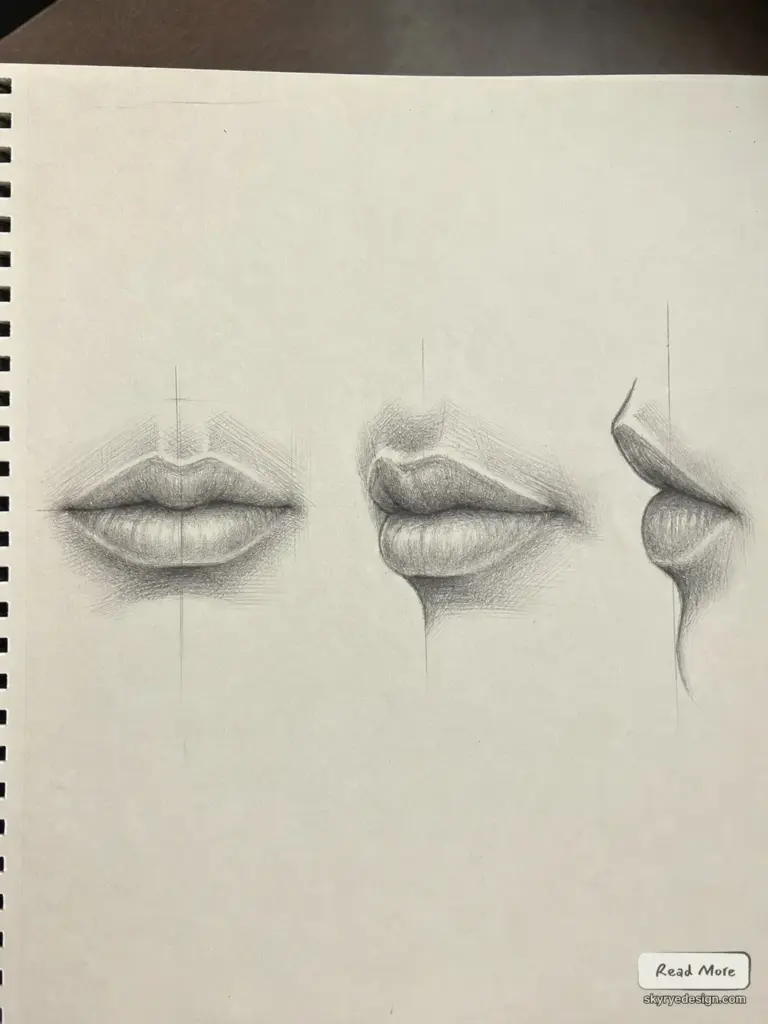
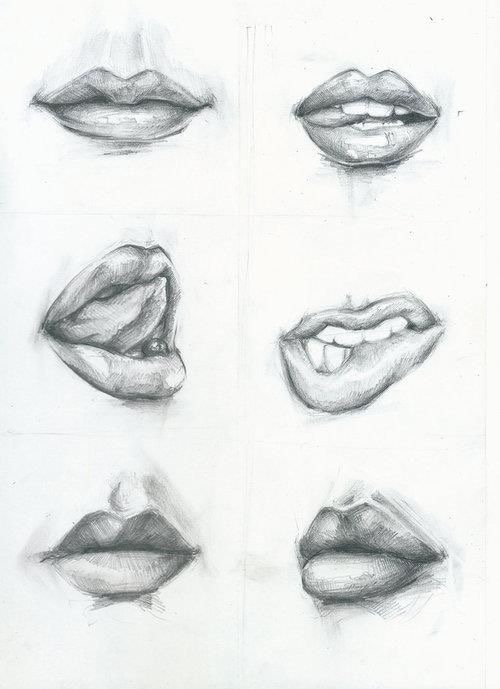
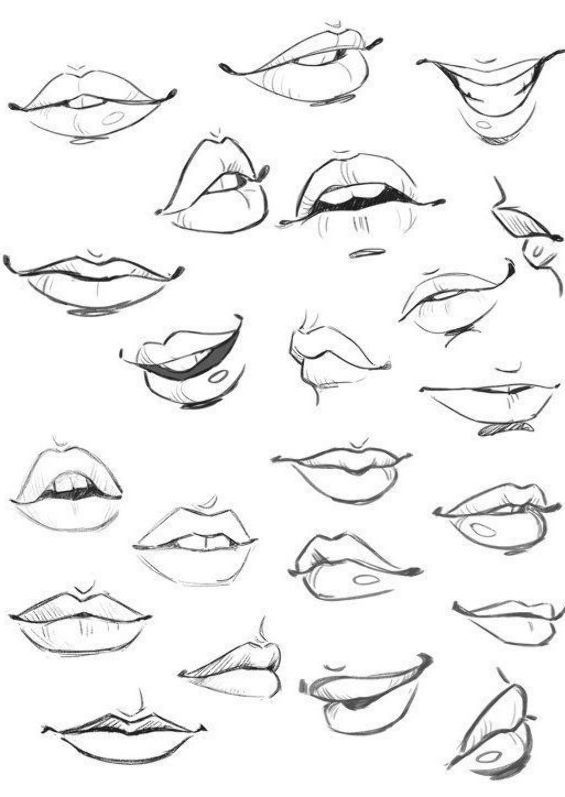
Front view is where most people start, but your portraits will need lips from multiple angles. Here’s what changes at each.
Three-Quarter View
At three-quarters, the lips are no longer symmetrical. The far side compresses and the Cupid’s bow appears to shift. The centre line of the face is now off-centre, so the philtrum tilts with it. Draw the near side fuller and the far side slightly flatter and smaller. The corner of the mouth on the far side often disappears or nearly disappears depending on the angle.
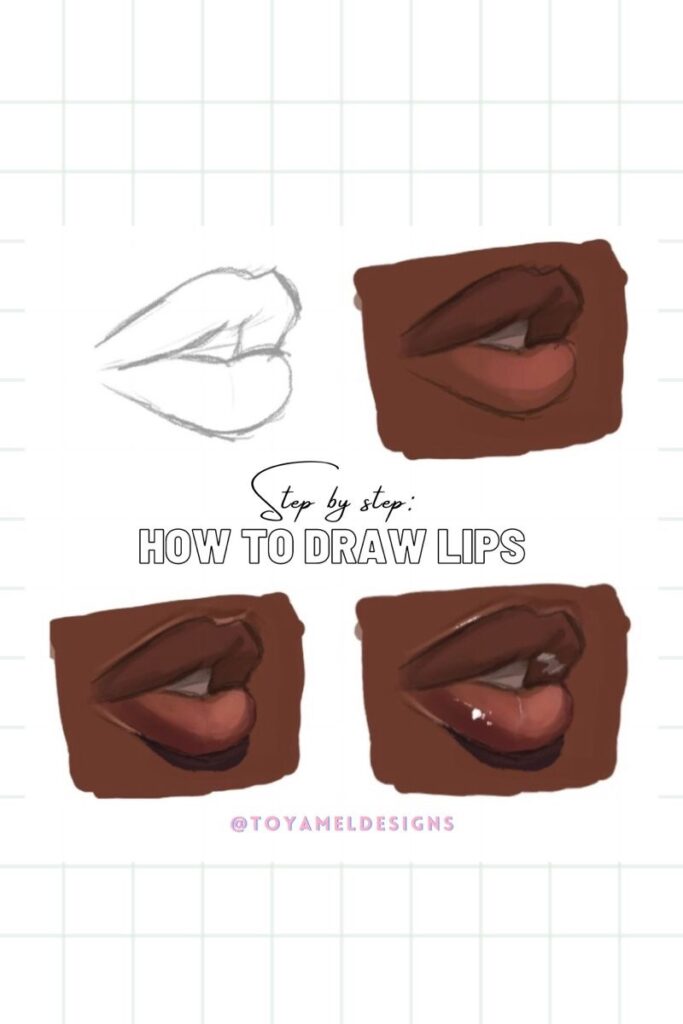
Profile / Side View
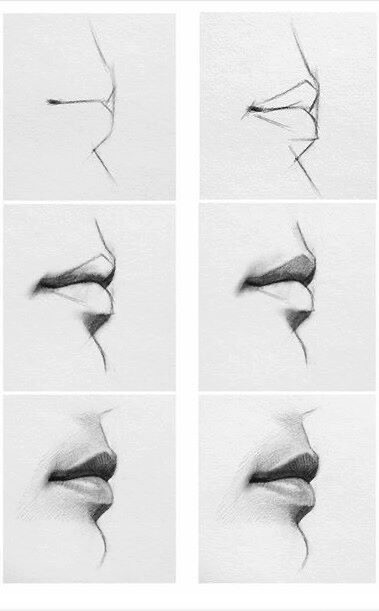
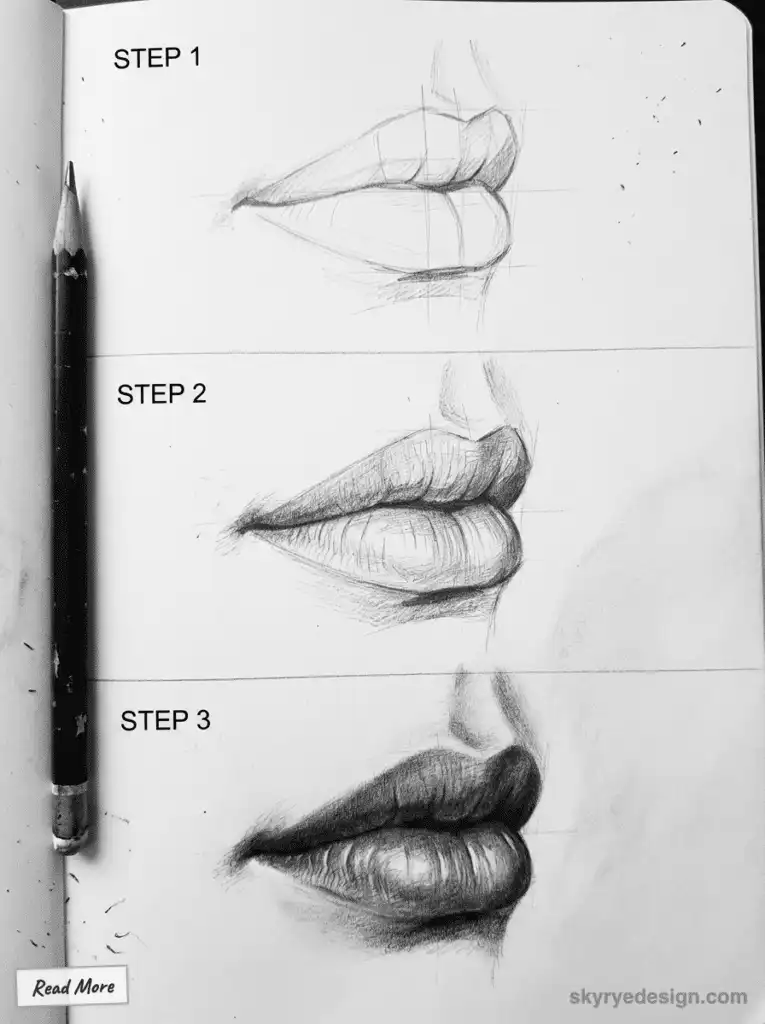
In profile the Cupid’s bow disappears entirely. What you see is an S-curve from the base of the nose to the chin: the upper lip protrudes forward from the philtrum, dips slightly at the division between the lips, then the lower lip curves back. In most faces the upper lip protrudes slightly further forward than the lower. Don’t assume they’re level — observe your reference.
The vermilion border becomes a single silhouette edge in profile. It’s often the sharpest, most defined line in the whole side-view drawing.
Looking Up (Worm’s Eye) and Looking Down
Looking up: you see more of the underside of the upper lip and the shadow beneath the lower lip deepens. The Cupid’s bow foreshortens significantly. Looking down: the upper lip dominates, the lower lip compresses, and the chin is closer. In both cases, trust your reference — foreshortened lips look wrong to the eye until you’re trained to draw what you see rather than what you know.
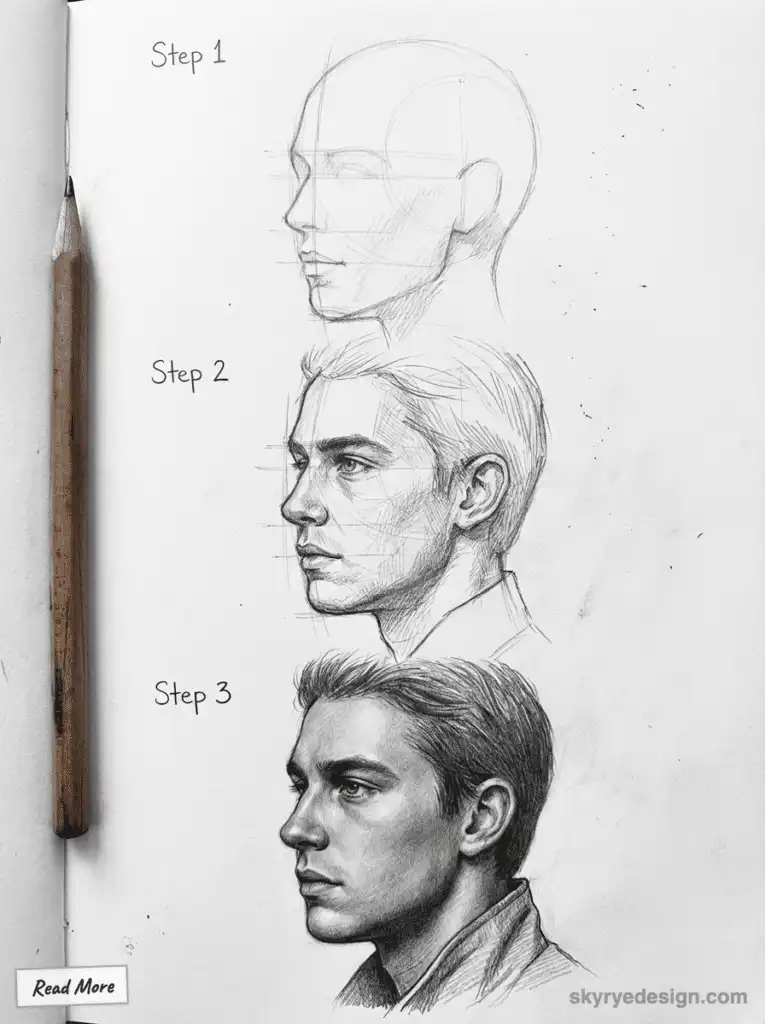
Fitting Lips Into a Full Portrait
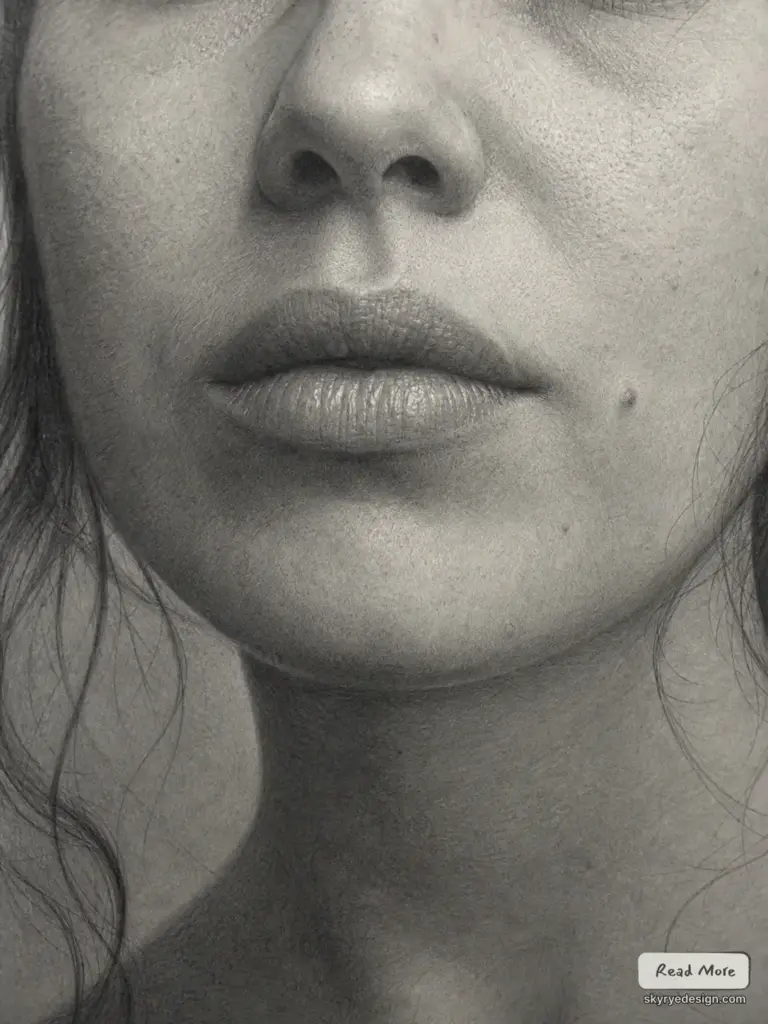
A common situation: you draw the lips on their own and they look good. Then you add them to a full portrait and they look disconnected. Here’s what usually causes that and how to fix it.
Value consistency. The lips should be part of the same lighting logic as the rest of the face. If your light source is coming from the upper left, the right sides of the lip lobes should be darker. If you shade the lips separately and ignore the overall light direction, they’ll sit in the face like a sticker.
The edges between lip and skin. The skin above the upper lip (between the vermilion border and the nose) is usually slightly lighter than the lip itself, and softens into the lip without a hard line at the sides. The skin below the lower lip is in partial shadow from the lip above it. Handle these transitions carefully — hard borders look pasted-on.
Relative proportions. In most faces, the width of the mouth roughly aligns with the inner corners of the eyes. The distance from the base of the nose to the centre of the upper lip is roughly equal to the distance from the centre of the lower lip to the top of the chin. These aren’t rules to follow mechanically, but they’re useful checks when something feels off.
Practice Habits That Actually Work
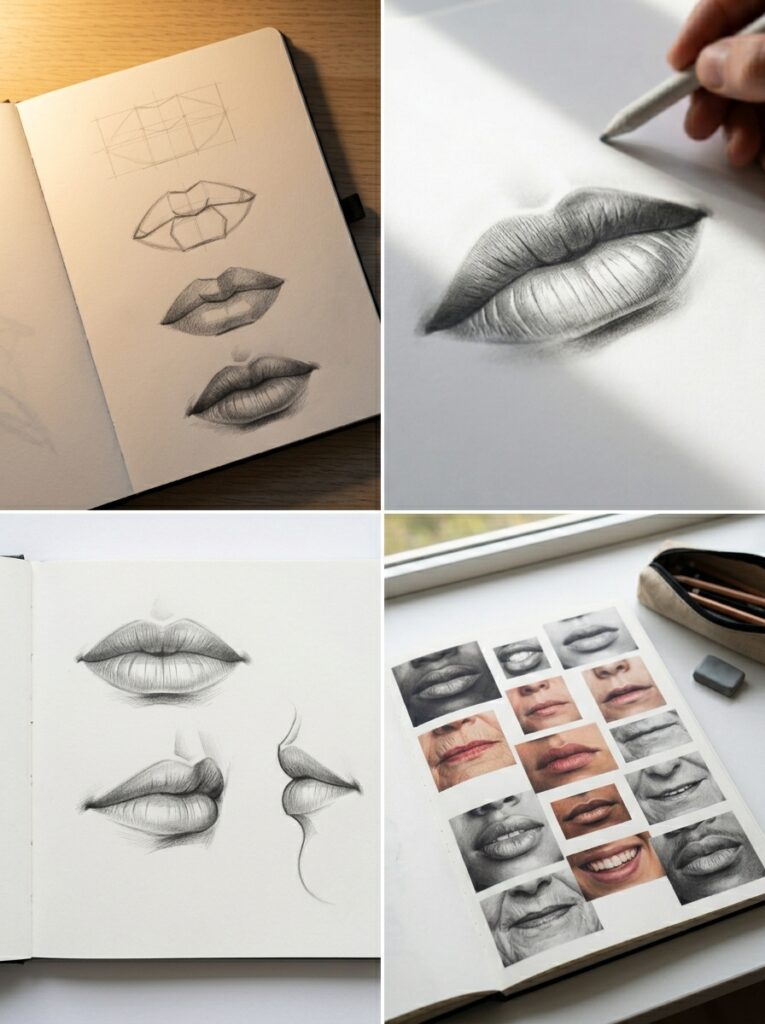
The gap between knowing how to draw lips and being able to draw them reliably is closed by one thing: volume of reference-based practice. Here’s what makes that practice useful rather than just repetitive.
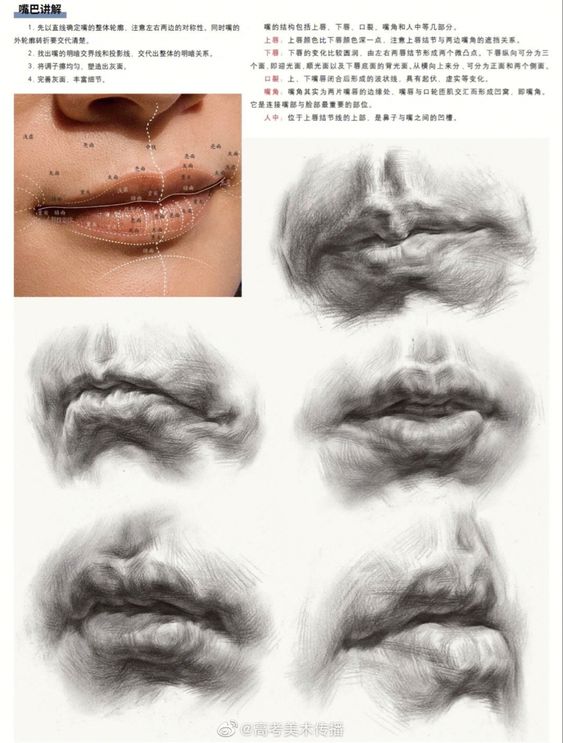
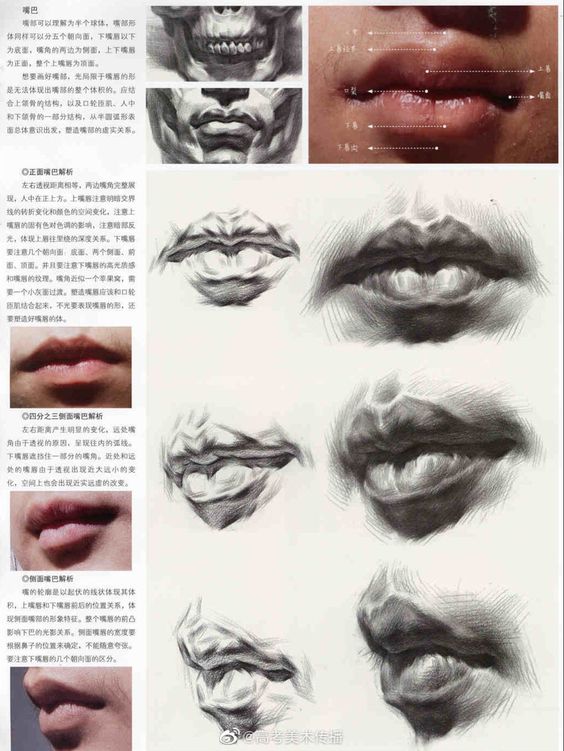
Draw from photos, not from imagination. Until you’ve built a strong mental model of lip forms, imagination practice reinforces your misconceptions. Pull reference photos — good ones, with clear lighting — and draw directly from them. Unsplash, Pinterest photography boards, and portrait photography sites all have solid material.
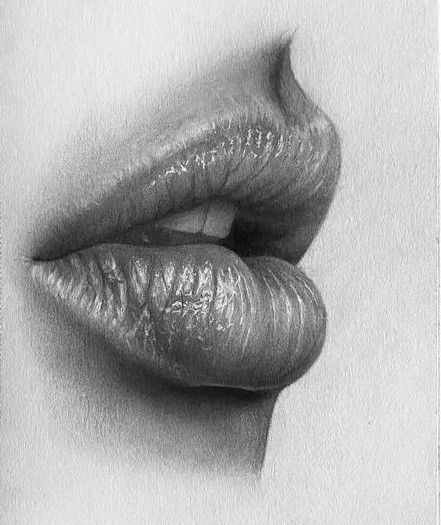
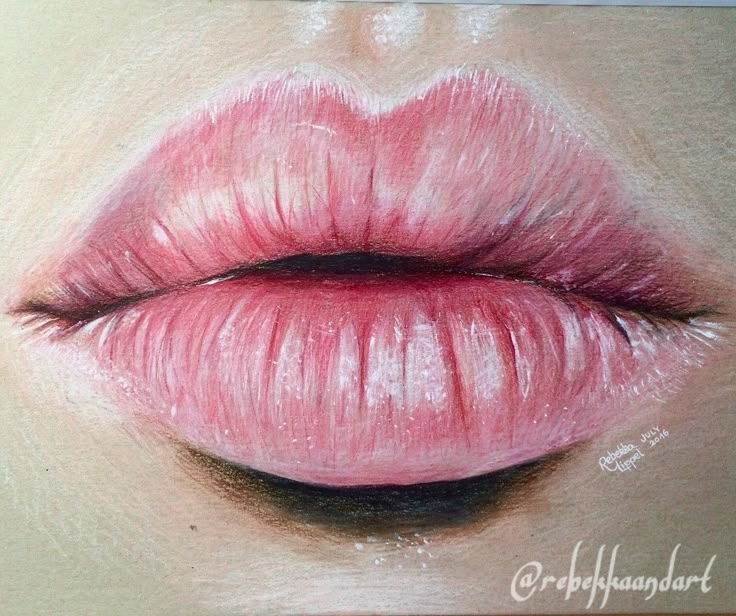
Do form studies before full drawings. Spend ten minutes doing just the shadow mass of the lips — no outline, just value. Then do studies of just the Cupid’s bow construction. Breaking the problem into parts is faster than repeating the whole drawing and wondering why it still looks flat.
Draw different lip types. Lips vary enormously between people — by ethnicity, age, and individual anatomy. Drawing only one type creates a default template that works for that type and fails everywhere else. Deliberately seek variety in your references.
Use a timer. Twenty focused minutes with a reference and a clear goal beats two hours of unfocused drawing. A goal might be: nail the lower lip highlight, or get the corner shadows right, or draw the philtrum correctly. Specific beats general.
FAQ: Drawing Lips
Q: What are the basics I need to know before drawing lips?
Start with anatomy: the upper lip has three forms (a central tubercle and two side lobes), the lower lip has two rounded lobes. The philtrum above and the mentolabial groove below are your construction anchors. Understand these forms before touching shading. Most drawing problems with lips come from skipping the structure phase.
Q: Which pencils are best for drawing realistic lips?
Use an HB or 2H for construction lines, a 2B for mid-tone shading, and a 4B or 6B for the darkest corners and inner shadows. A kneaded eraser handles highlights without tearing the paper. Smooth Bristol board or cartridge paper around 120gsm gives you the most control for blending.
Q: How do I draw the Cupid’s bow correctly?
Drop a light vertical centre line first. Place two small peaks symmetrically above that centre — these are the Cupid’s bow tips. Connect them with a gentle dip in the middle, then curve down and outward to the corners. The bow rarely sits perfectly flat: it usually tilts slightly with the face. Block the whole shape lightly before committing to any line.
Q: Why do my lips look flat even when the shading seems right?
Usually the problem is missing form shading on the planes rather than surface texture. Each lobe curves away from you at the edges, so the value needs to drop off toward the sides and corners. Also check the light ridge along the top of the lower lip — leaving it lighter than the body of the lower lip creates immediate depth.
Q: How do I draw lips from a side profile?
In profile the upper lip almost always protrudes slightly past the lower lip. The Cupid’s bow disappears; instead you see a simple S-curve from nose to chin. The vermilion border becomes a single defining edge. Block the overall silhouette first before adding any surface detail.
Q: What is the most common mistake when drawing lips?
Drawing the outline first as a hard contour and then trying to fill it in. Real lips do not have a uniform dark border — the edge dissolves into skin in places. Start with light construction shapes, find the shadow masses, and let the edge emerge from value rather than a traced line.
Q: How long does it take to get good at drawing lips?
With focused practice using reference photos, most beginners see noticeable improvement in two to four weeks of daily 20-minute sessions. The first landmark is getting proportions right. The second is learning to read light and shadow masses rather than copying outlines. Lips drawn from imagination improve much slower than lips drawn from reference.



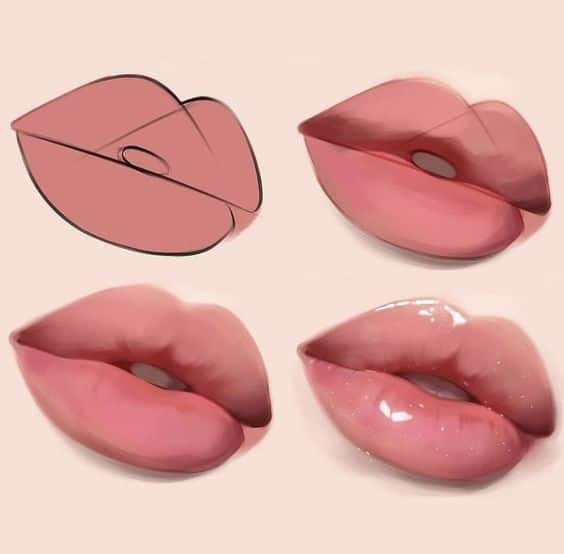
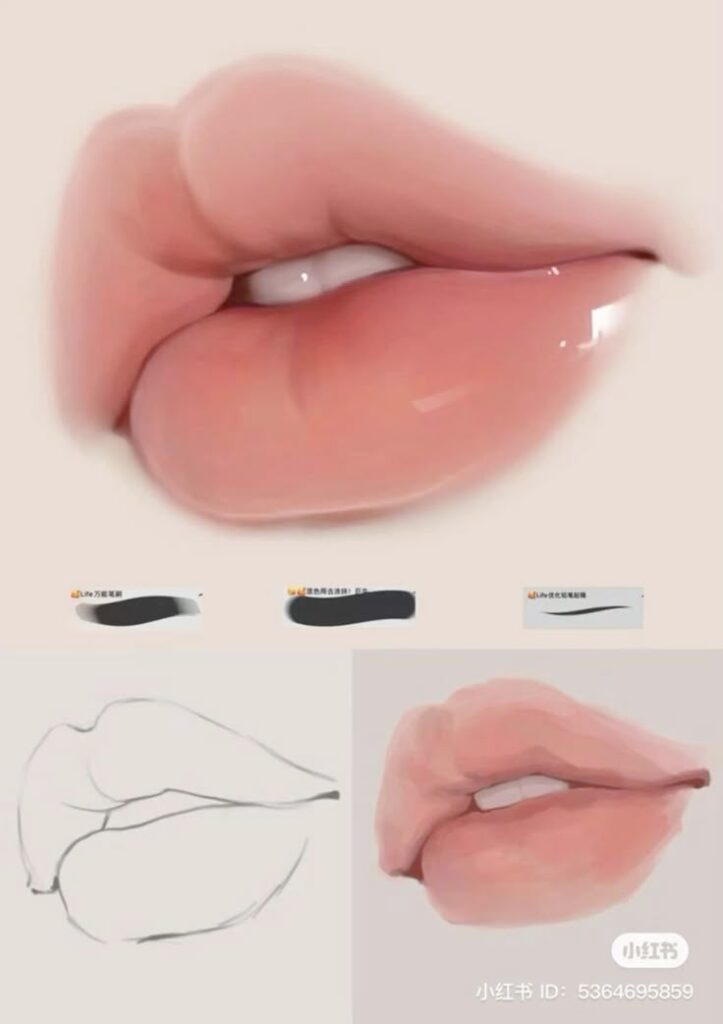

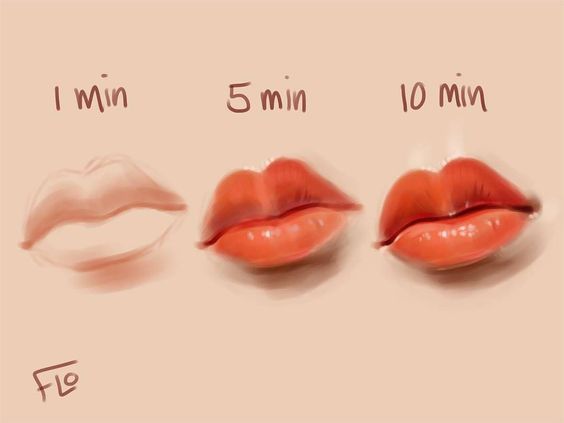







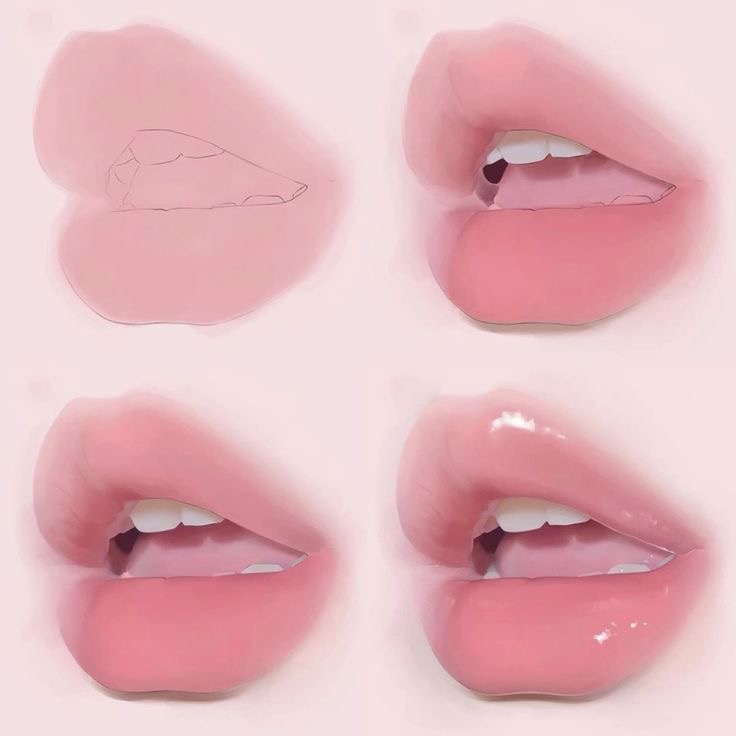

Related realism study: For a painted example of subtle mouth edges and skin temperature, study this hyper realistic portrait painting after the drawing exercise.
A portrait reads better when the mouth and gaze agree, so pair this lip study with an eye drawing sketch before you commit to the final expression.
- 21.1Kshares
- Facebook0
- Pinterest21.1K
- Twitter0
- Reddit0