
Ever caught your self checking out a majestic deer maybe catch a glimpse of one in a forest and think to yourself “wow I wish I could capture that beauty on paper” Well it turns out your not alone!. Deer with their elegant forms, those wonderful big brown eyes & impressive antlers make them a pretty captivating subject for artists of all skill levels. But lots of people get put off by the thought of drawing deer, not knowing where to start. Relax! aspiring artist – this friendly little guide is here to take the mystery out of it & show you exactly how to draw a deer turning that intimidation into inspiration.
Drawing deer is def not about getting every single hair mark right on your first go. Its about learning what the basic shapes are, the proportions & how all the bits fit together, & then building up from there. Think of it a bit like learning to play a musical instrument – you have to start with the basics (scales) before you can play a proper song. By breaking the process down into manageable little chunks, you’ll find that you can actually draw these magnificent creatures – & that its incredibly rewarding. So grab a pencil, a bit of paper & lets set off on this artistic adventure together!
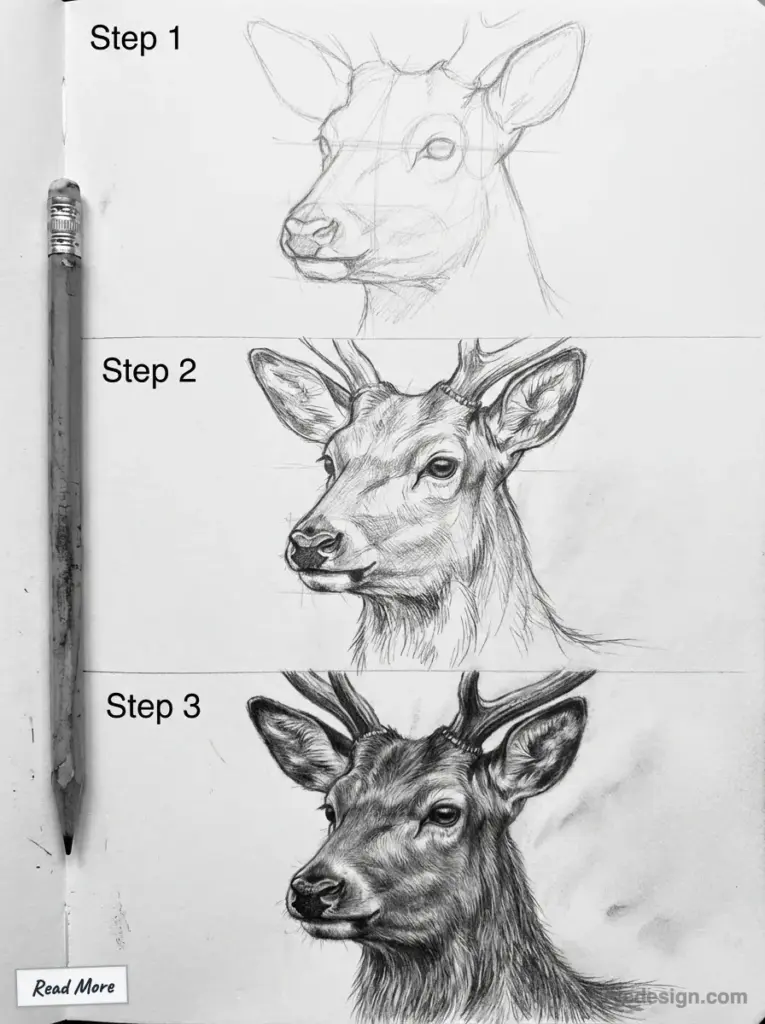
Getting Started: Your Artistic Toolkit and Mindset
Before you even make your first mark, it’s helpful to gather a few basic supplies and adopt the right approach. You don’t need a professional art studio to create stunning deer drawings.
Essential Supplies for Your Deer Drawing Adventure
- Pencils: A good range of graphite pencils is invaluable. Start with an HB for general sketching, a 2B or 4B for darker lines and shading, and perhaps a 2H for lighter guidelines.
- Paper: Any drawing paper will do to start, but smoother surfaces tend to work better for finer details and blending. Sketchbooks are excellent for practice.
- Eraser: A kneaded eraser is fantastic for lifting graphite without damaging the paper, and a regular plastic eraser is good for sharper corrections.
- Blender (Optional): A blending stump, tortillon, or even a cotton swab can help you achieve smooth shading transitions.
- Reference Images: This is crucial! Unless you have a live deer posing for you (unlikely, and probably not recommended!), clear, high-quality reference photos are your best friend. Look for images from different angles and in various poses. Pay attention to lighting and environment.
Cultivating the Right Mindset
Drawing is a skill that improves with practice and patience. Don’t aim for perfection on your first attempt. Instead, focus on learning, observing, and enjoying the process. Every line you draw, every mistake you make, is a step forward. Embrace the journey!
The Foundation: Basic Shapes and Proportions
Every complex subject can be broken down into simpler forms. This is the golden rule of drawing, and it’s especially true for deer. We’ll start by mapping out the deer’s overall structure using basic geometric shapes.
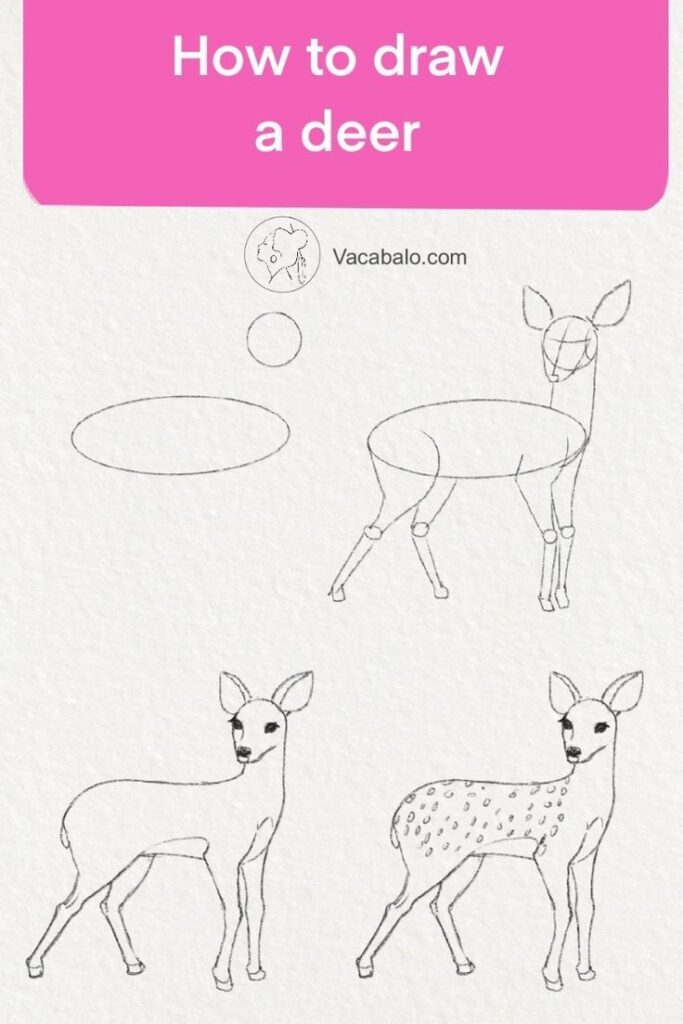
Step 1: Establishing the Core Body
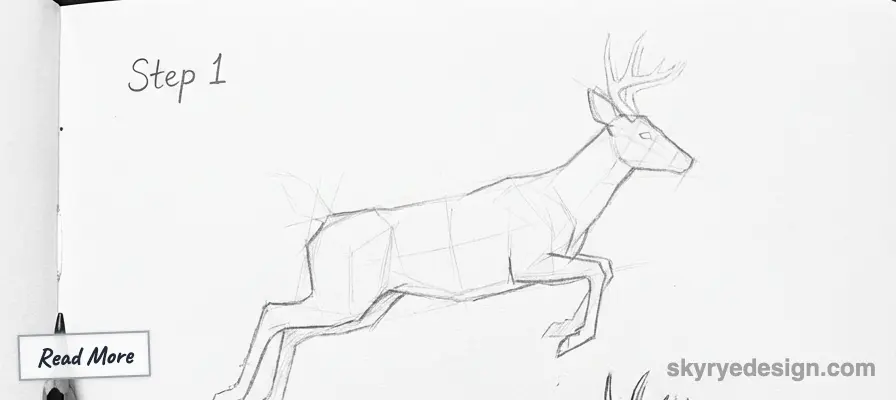
Imagine the deer’s body as two main oval or egg shapes.
- Chest/Shoulder Area: Draw a larger, somewhat elongated oval for the chest and front part of the body. This oval should be slightly tilted, with the narrower end pointing towards the head.
- Pelvic/Rear Area: Draw a slightly smaller, rounder oval for the hindquarters. Position it behind and slightly above the first oval, leaving a gap that will become the deer’s midsection.
- Connecting the Ovals: Lightly sketch two curved lines to connect these two ovals, forming the basic silhouette of the deer’s torso. This gives you the initial body length and general curve of the back and belly.
Step 2: The Head and Neck
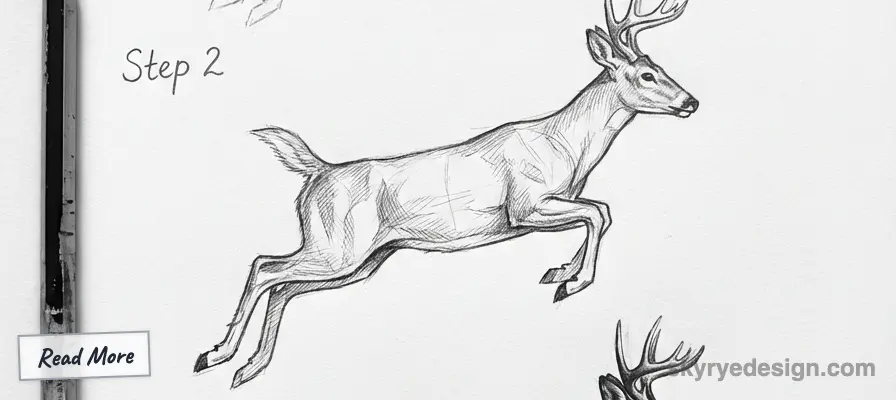
Now, let’s add the head and neck, crucial elements for defining the deer’s posture and expression.
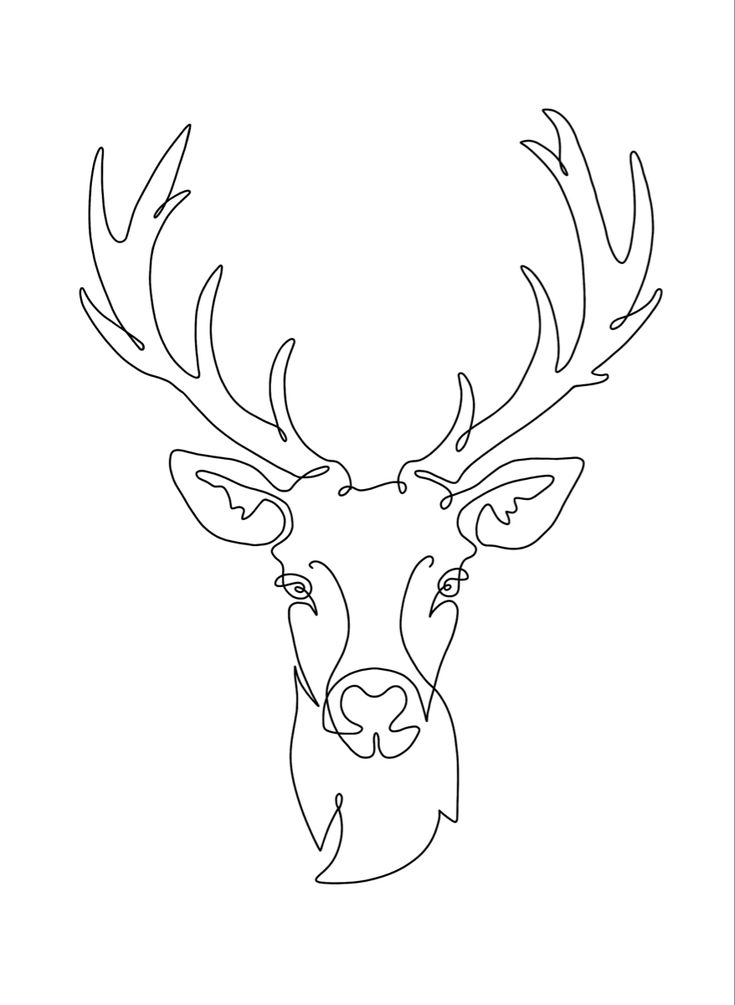
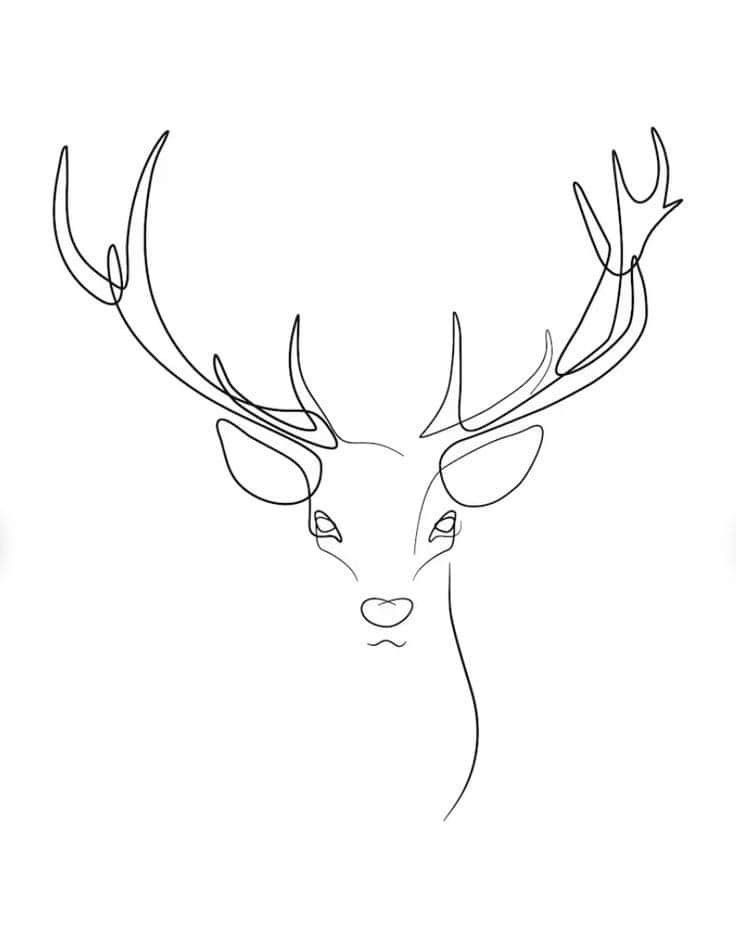
- Neck: Draw a curved line extending from the chest oval upwards and forwards. The neck of a deer is thick at the base and tapers towards the head. Think of it as a cylinder.
- Head: At the end of the neck, sketch a relatively small oval or a slightly rounded rectangle for the main part of the skull. Below this, draw a smaller, narrower oval for the muzzle. The size of the head in proportion to the body is important; it’s generally quite small.
- Connecting Head Shapes: Lightly connect the main head oval to the muzzle to define the basic shape of the deer’s face.
Step 3: Legs and Hooves – The Pillars of Grace
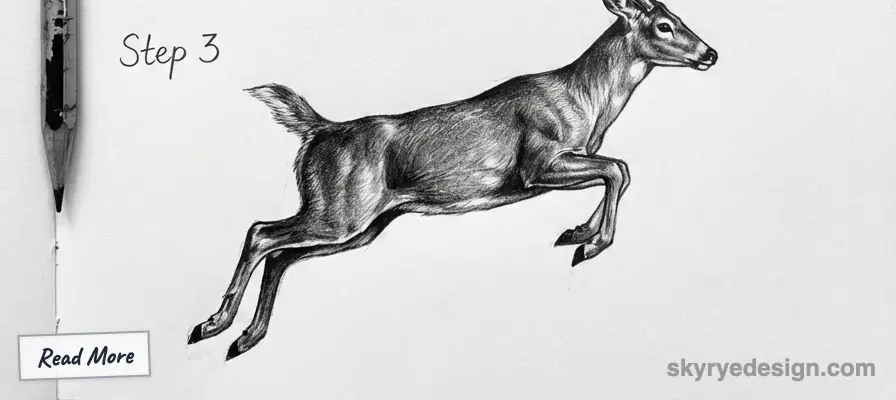
Deer legs – the long & slender ones – may look delicate but theyre incredibly strong and that strength lets them move around with an agility that is really something to behold.
- Joints First: When drawing deer legs, the joints are what you need to think about not lines. Think knees – just like our elbows – and hocks – similar to our heels. And of course, they bend in their own special way.
- Start by drawing the front legs – two lines coming down from the chest oval. Then mark out the little knee joint with a tiny circle. Below that draw another segment and then another small circle for the ankle joint.
- Then you get the hind legs, drawing two lines from the pelvic oval. A big circle for that hock joint – its pretty high up on the leg. Then the leg just goes straight down from there almost all the way to the ankle.
- Leg Segments: Now draw lines connecting up those joints – giving you the upper leg, the forearm/shin and the lower leg. Keep those lines a bit thin.
- Hooves: Down at the bottom of the leg add little block-like shapes with a point on the end for the hooves. Remember a deer has cloven hooves, so theyre split.
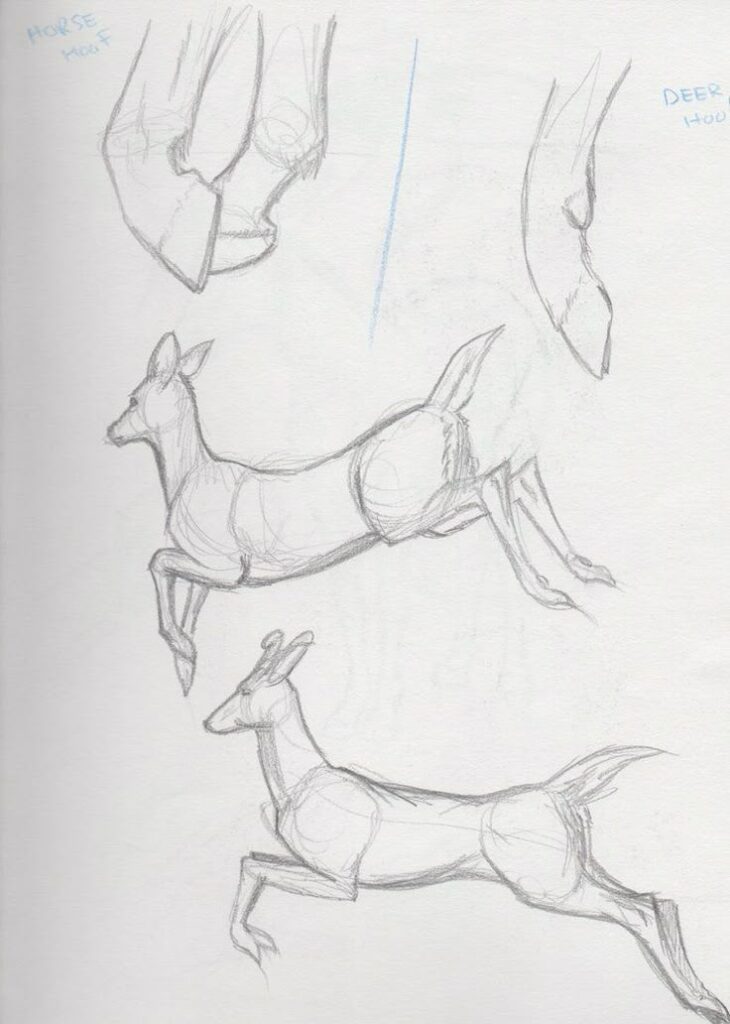
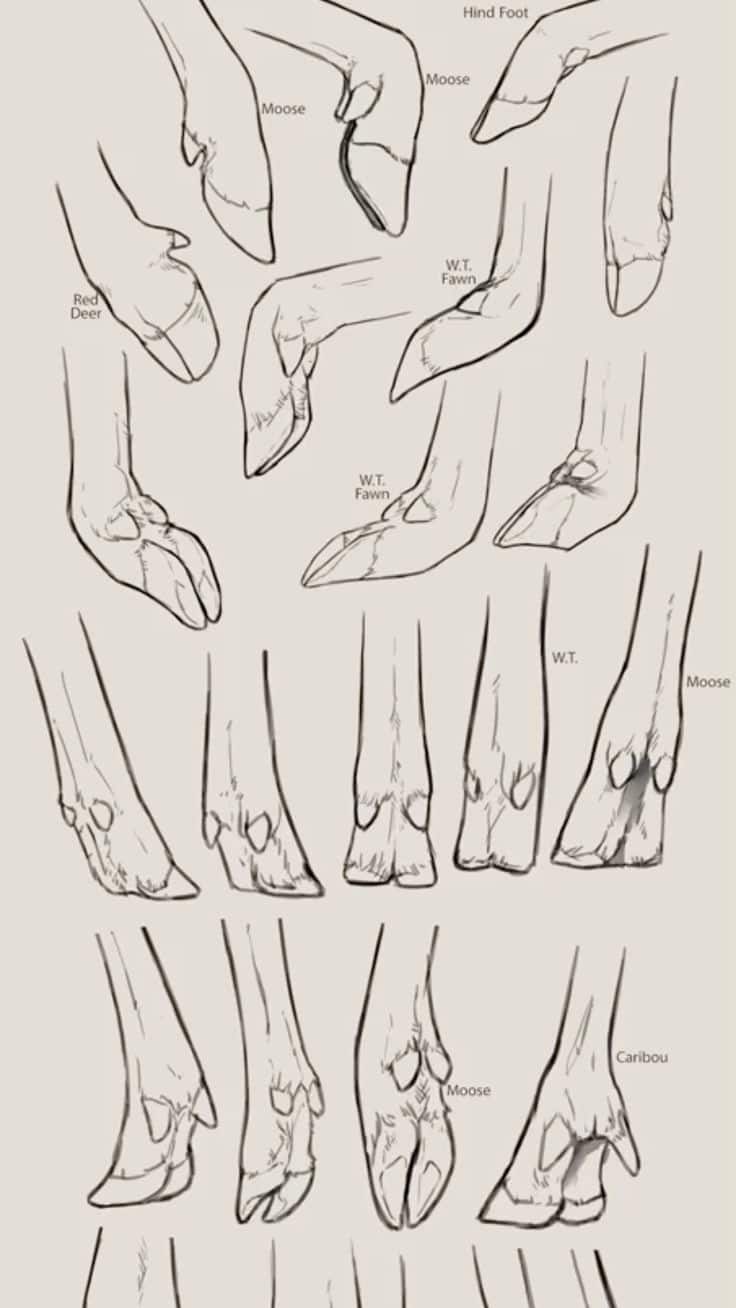
Pro Tip: Pay close attention to the angles and lengths of the legs in your reference image. This is where many artists struggle to get the proportions right. Observe how the weight is distributed. To understand how body parts connect and move, much like how you might observe different elements when learning how to draw clothing that flows and moves, consider the underlying skeletal structure that dictates the form.
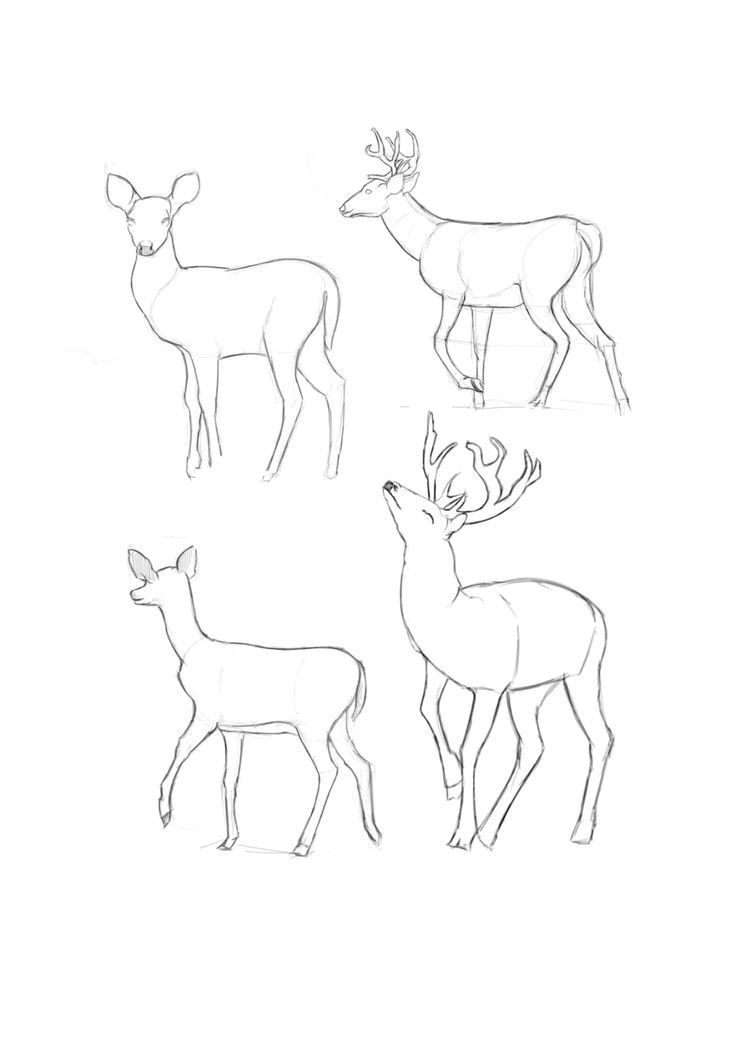
Refining the Form: Anatomy and Structure
With your basic shapes in place, it’s time to start “sculpting” your deer, adding flesh and muscle over your skeletal framework.
The Head: Eyes, Ears, and Muzzle
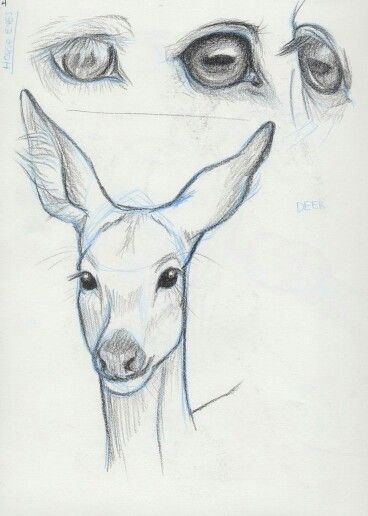
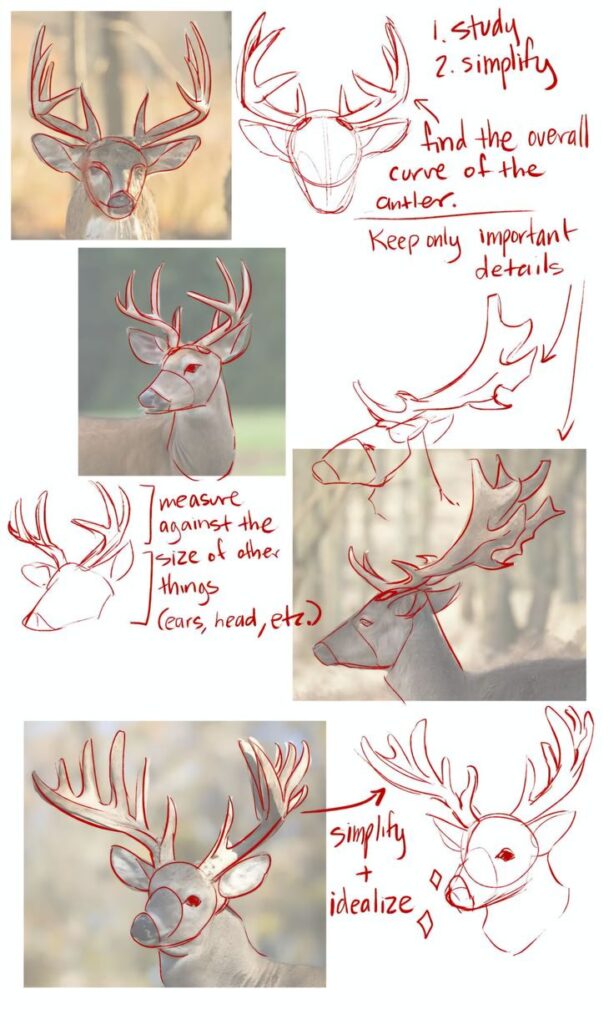
The deer’s head is where you really start to get a sense of its personality.
- Eyes: Big deer eyes are something to behold – really dark and pushed right out to the side of the head, so they can take in everything around them. They’re almond-shaped, with a very soft gentle look to them – and they really add to the whole ‘cute’ factor. When you’re placing them, try to get them just a bit above the middle of the head.
- Ears: You can tell right away that deer ears are a big part of their charm – often big and very expressive. They’re usually a long, oval shape, nice and wide at the bottom and then tapering off to a softer point. Take a good look at how they’re placed in your reference image – usually they’re right up high on the head, flapping out in every direction.
- Muzzle and Nose: Now get in there and refine that muzzle shape – make it a bit thinner than the top part of the head. Then you’ve got the nose – just a dark, wet, triangle shape right at the end of the muzzle, with nice little nostrils that you can see. And don’t be afraid to add a bit of a curve to the mouth line, it adds a lot of character.
The Body: What Makes it Move
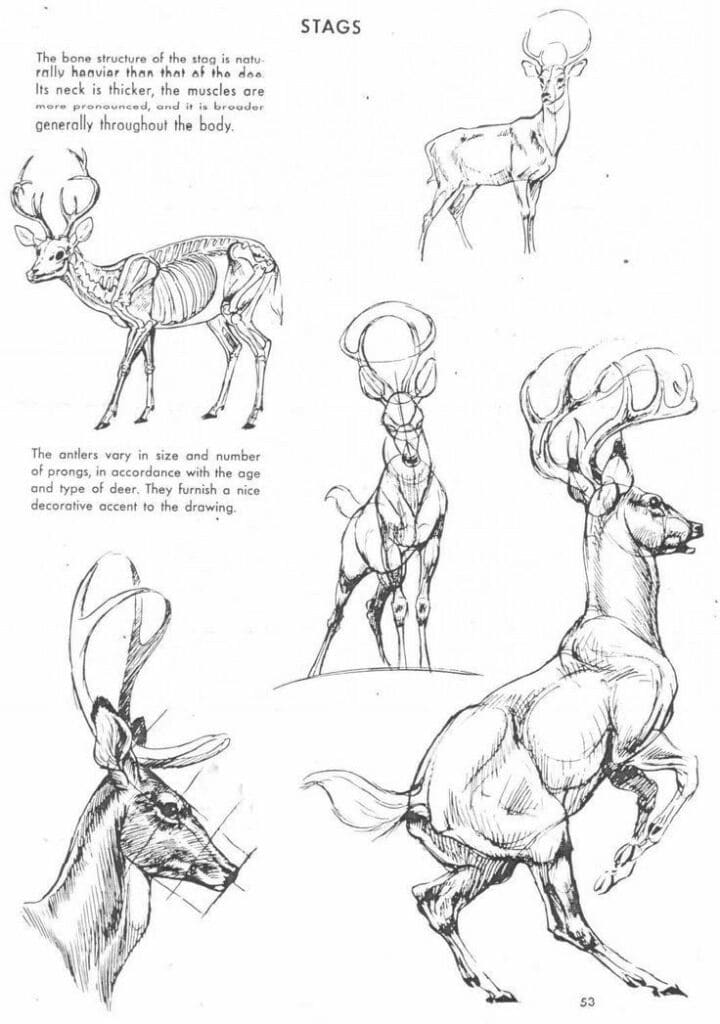
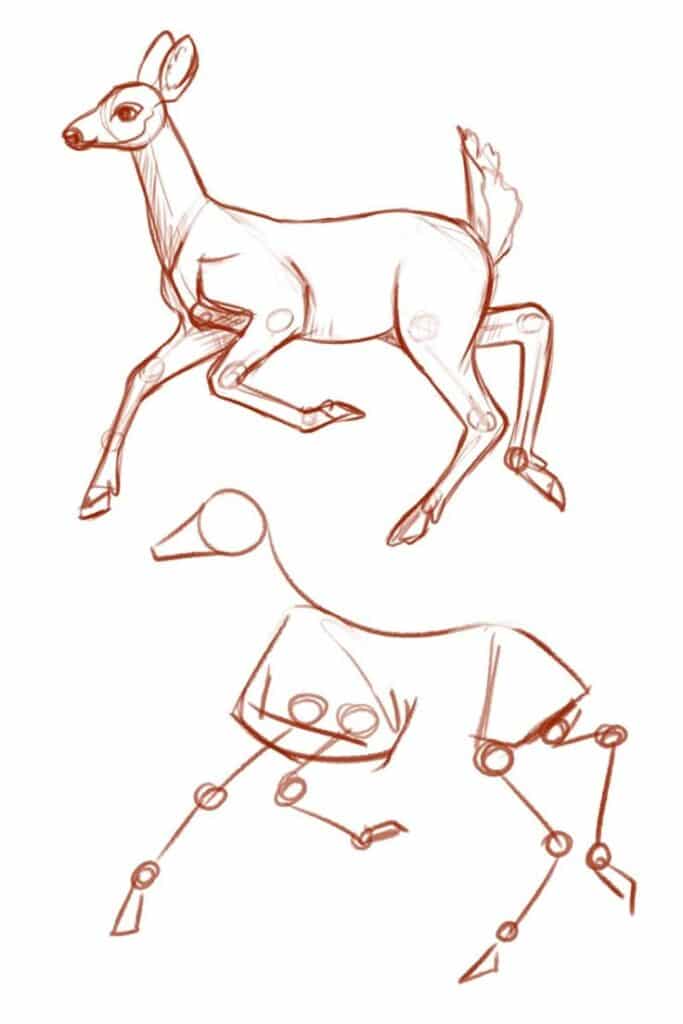
- Neck: Smooth out the neck lines, adding subtle curves for muscle definition. The underside of the neck will gently curve into the chest.
- Shoulders and Hips: These areas will have more volume. Soften the edges of your initial ovals to suggest the rounded forms of the shoulder and hip joints.
- Spine and Belly: Follow the natural curve of the deer’s back (often a gentle arch) and the slightly less pronounced curve of the belly. Deer generally have a lean, athletic build.
Legs: Strength and Grace
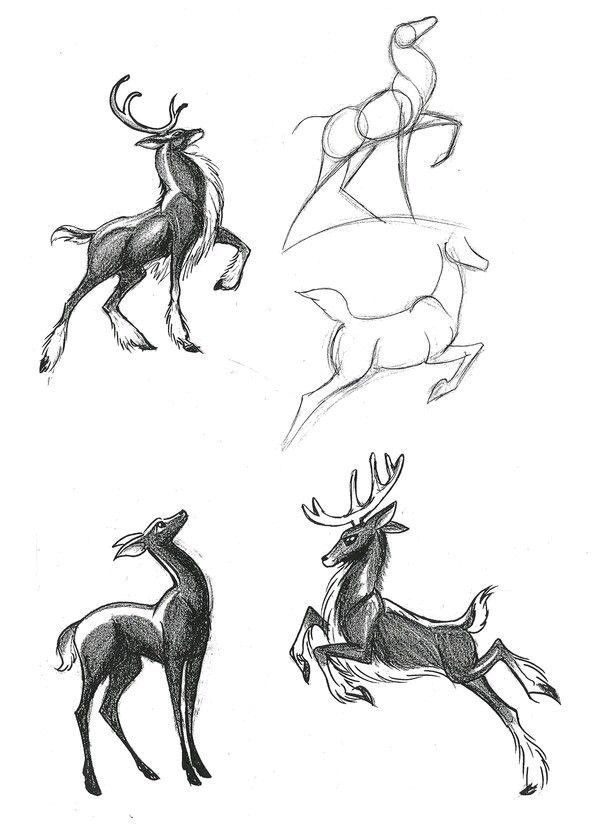
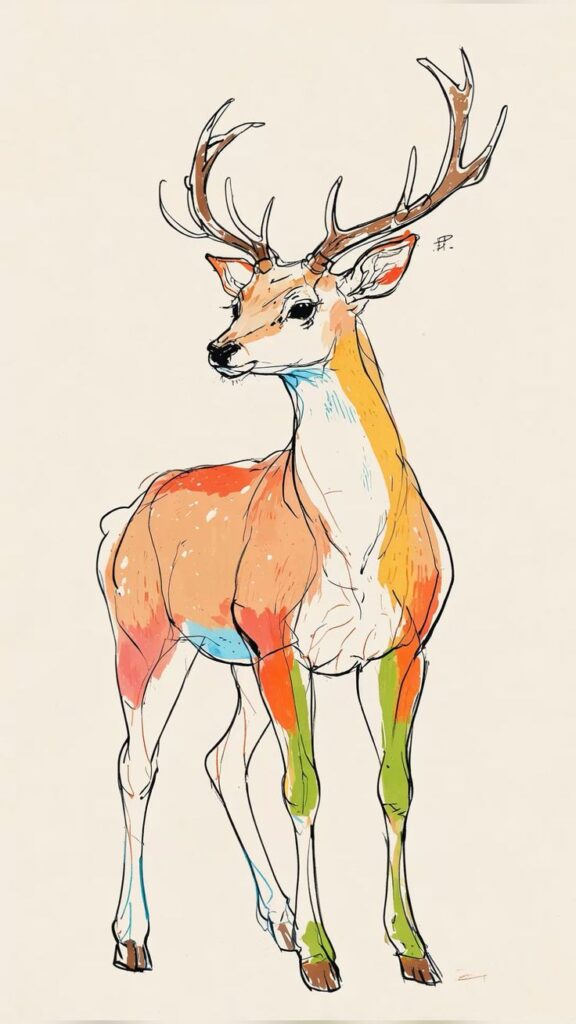
- Muscle Definition: Begin to add subtle muscle mass to the upper legs. The forelegs will show distinct muscle groups around the shoulders and upper arm. The hind legs will have powerful thigh muscles. Keep these details soft; deer aren’t heavily muscled like a horse.
- Tendons and Bones: Below the major muscle groups, the lower legs are primarily bone and tendon. Keep these areas slender and defined.
- Hooves: Refine the hooves, making sure to indicate the cloven split. The front of the hoof is typically straighter, while the back curves in.
The Majestic Crown – Drawing Antlers
Antlers can be the most tricky yet also the most rewarding part of a male deer – a buck or a stag. They’re one of a kind, growing and then falling off every year, and can vary a lot in size and how complicated they are.
Getting Your Head Around Growth and Structure
The Basic Shape: Think about what the overall outline of the antlers looks like. Do they spread right out? Are they tall and skinny? Get that general shape down first before you start adding details.
Pedicles – The Root of the Antler: First you’ve got to draw the bony bits on the skull where the antlers grow, these are called pedicles. Start by putting down two small lumps on top of the head, just back from the ears – this is where the antlers will sprout from.
The Main Beam: The main beam of the antler curves out and up from the pedicles. Take a good look at the direction and way it curves in your reference picture and draw that out first.
Tines (The Points): Tines are the pointy bits that branch off the main beam. There can be loads of them, and the way they’re arranged depends on the type of deer, how old it is, and even the individual – so pay attention to how many you draw and how they’re angled. Sketch ’em in as simple lines branching out from the main beam.
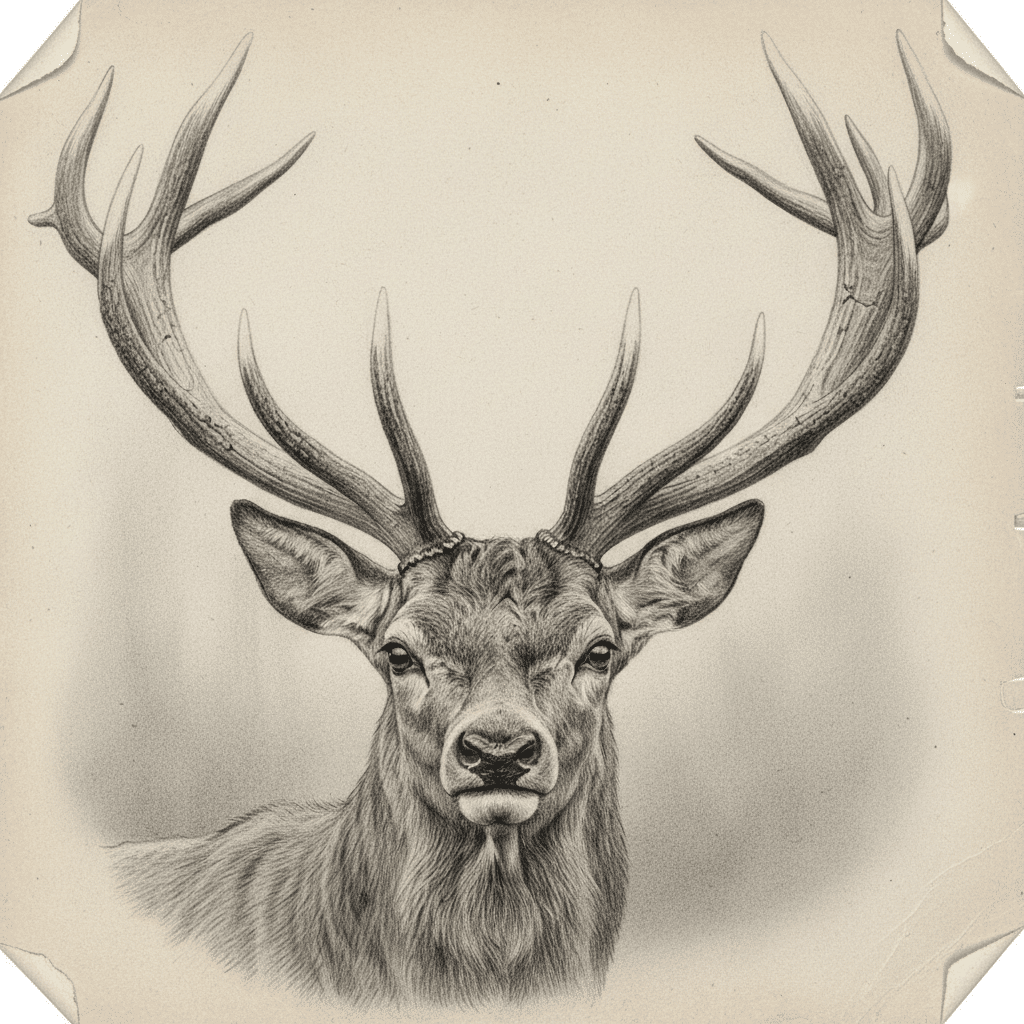
Adding Texture to Antlers
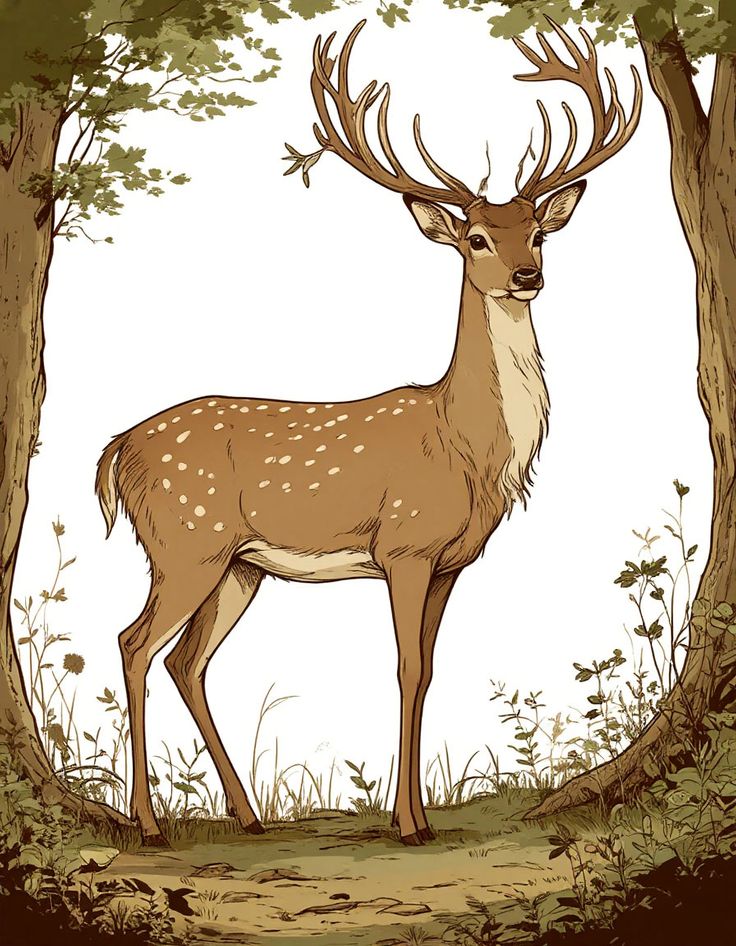
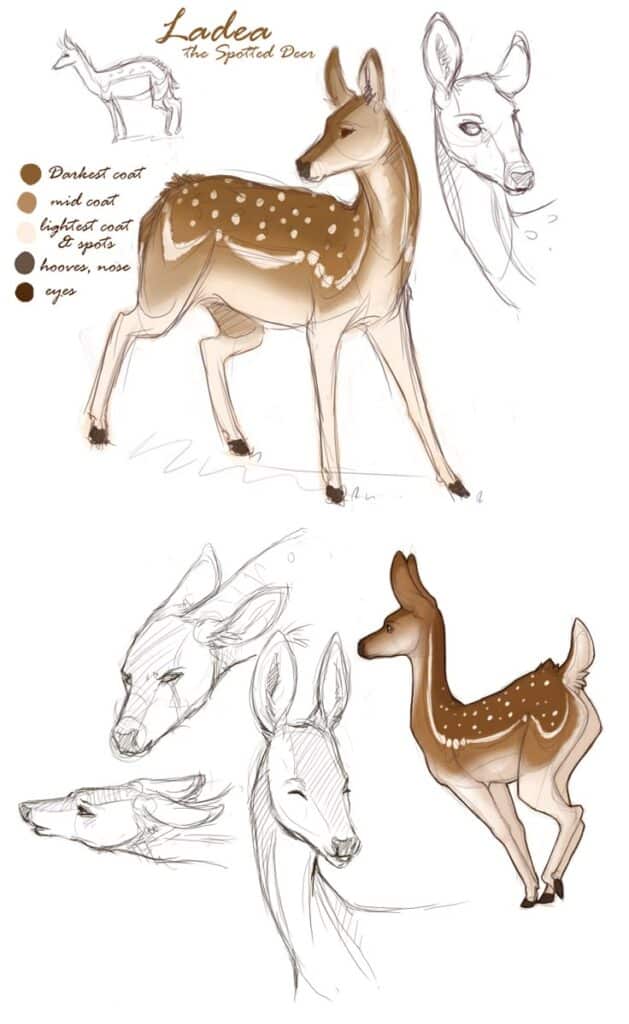
Mature antlers have a rough, bony texture, sometimes with grooves or ridges.
- Bumps and Ridges: Use short, varied pencil strokes to suggest the uneven surface.
- Color Variation: If you’re working in color, remember antlers are typically bone-colored, but can have darker rubbed areas from trees.
Key Tip: Antlers are symmetrical but not identical. Don’t try to make them perfect mirror images. Embrace the natural variations. For more dynamic forms and to understand how different elements create a whole, considering how to draw various organic and inorganic shapes can be very helpful. Much like when learning to draw something as intricate as different body parts, applying similar principles helps you tackle complex forms like antlers or even human features, as seen in tutorials like how to draw lips or anime eyes drawing.
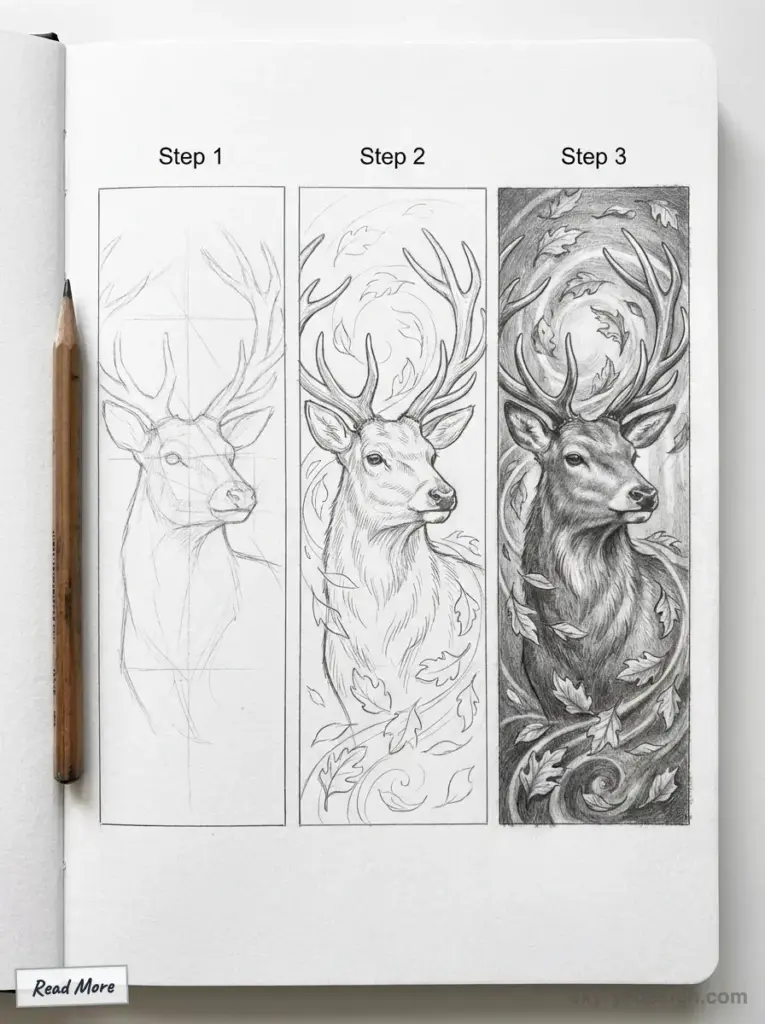
Bringing it to Life: Details and Texture
Now that the underlying structure is solid, it’s time to add the captivating details that make your deer drawing truly realistic and alive.
Fur Texture
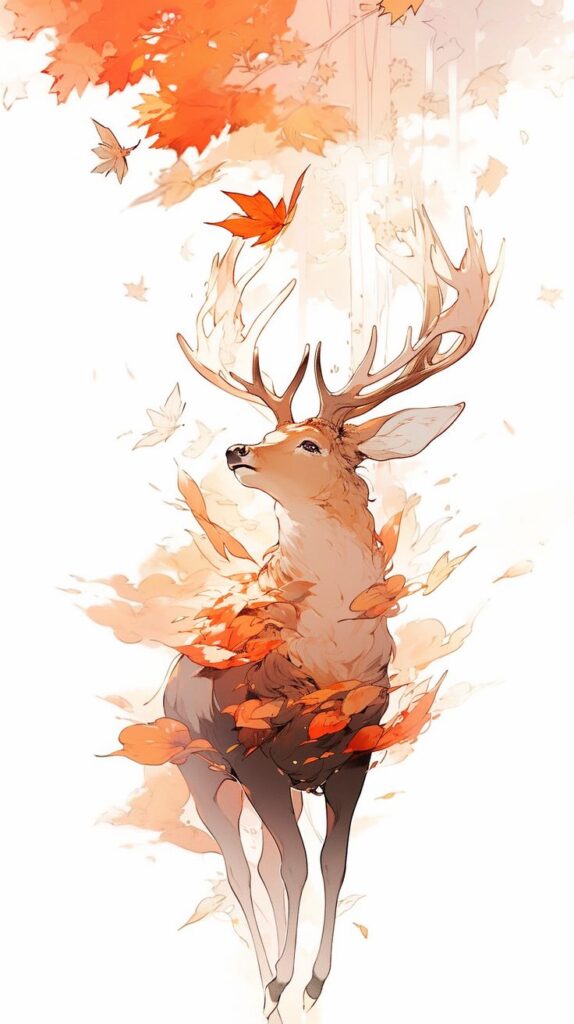
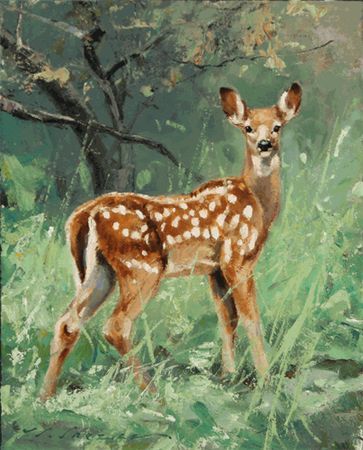
Deer fur varies by season and species, but generally, it’s short, dense, and lies flat against the body.
- Direction of Growth: Always draw your fur strokes in the direction the fur naturally grows. This follows the contours of the body.
- Layering: Don’t draw individual hairs everywhere. Instead, use short, overlapping strokes to create patches of fur. Build up layers of strokes to create depth.
- Highlights and Shadows: Observe how light hits the fur. Areas in light will have lighter, softer strokes, while shadowed areas will have darker, denser strokes.
- Variations: The fur on the belly is often lighter, and there might be subtle color shifts. Pay attention to patches of white, especially around the tail and muzzle.
Expressive Eyes
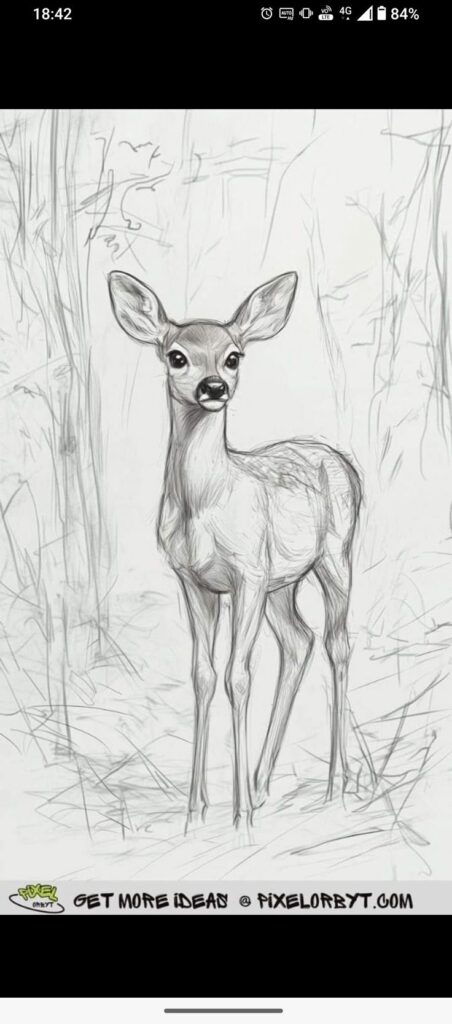
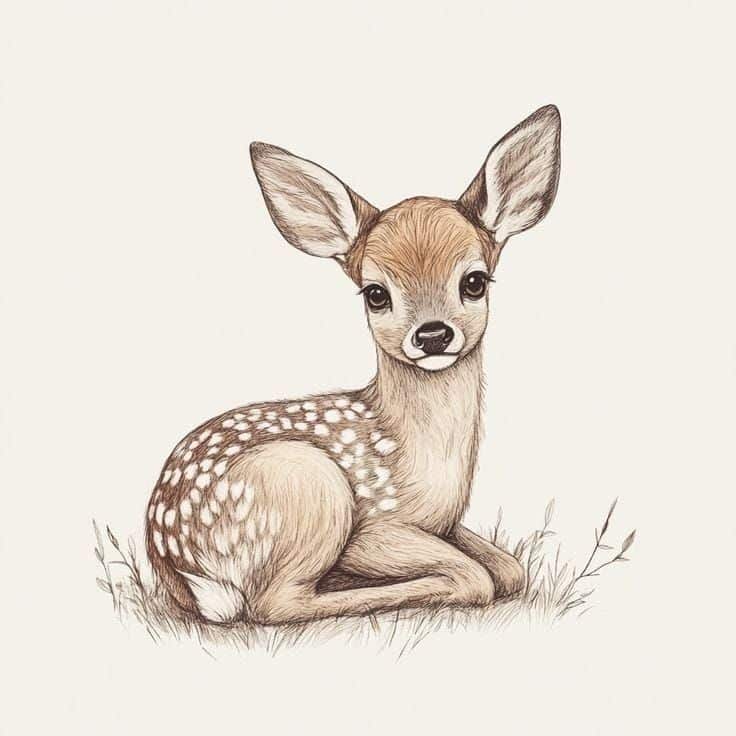
The eyes are the window to the deer’s soul.
- Dark Pupils: Deer have large, dark pupils. Fill these in darkly, but leave a tiny specular highlight (a white dot) to make the eye sparkle and appear wet and alive.
- Eyelids: Add subtle lines for the eyelids and surrounding skin.
- Reflections: If your reference shows reflections in the eye, try to include them. They add immense realism.
Nose and Mouth
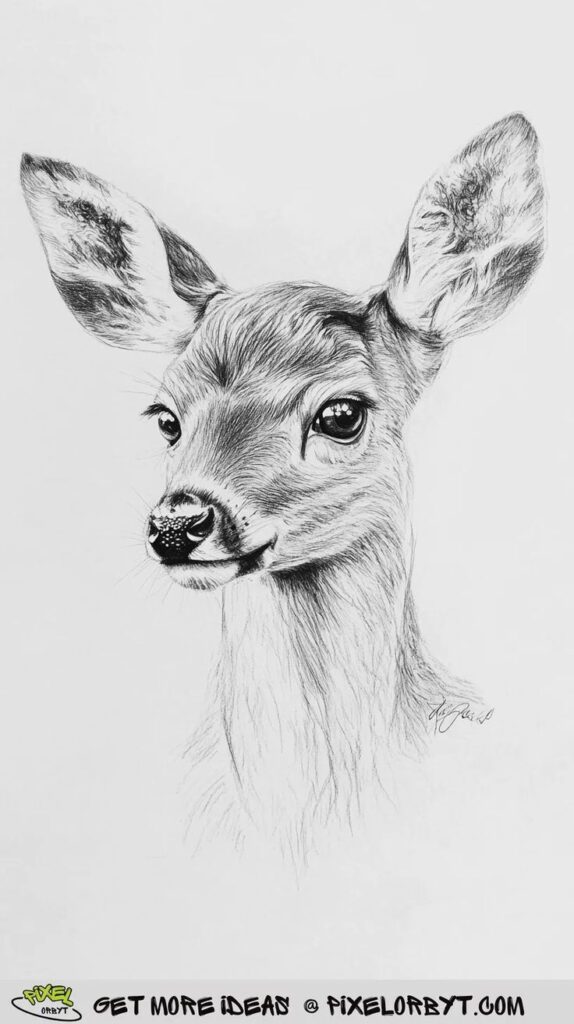
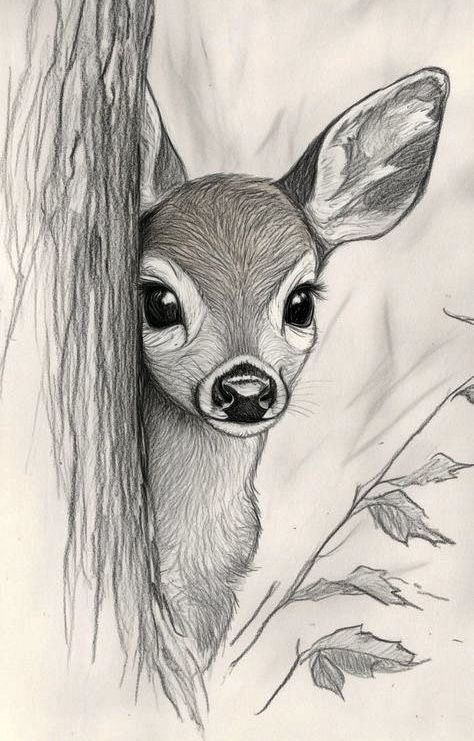
- Nose: The nose is typically dark and moist. Use a smooth, dark tone, leaving a slight highlight to indicate its wetness. Clearly define the nostrils.
- Mouth: The mouth line is usually subtle. Use a fine line to suggest its presence.
Ears and Tail
- Ears: Add the inner fur texture to the ears, often lighter than the body fur. The inside of the ear might be lighter in tone.
- Tail: Deer tails vary. Some are short and bushy, others longer. Observe its shape and how it attaches to the body. Use fur texture techniques.
Adding Depth: Lighting, Shading, and Form
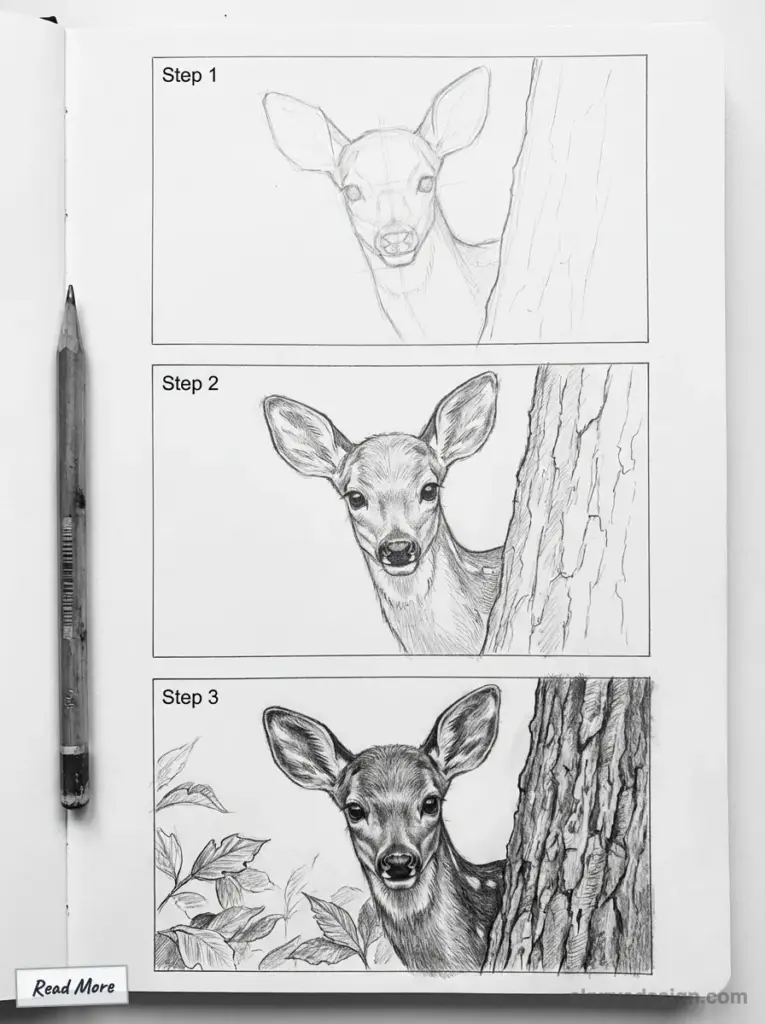
Shading is what transforms a flat outline into a three-dimensional form. It’s about understanding how light interacts with the deer’s body.
Understanding Light Source
- Determine Your Light Source: Where is the light coming from? This dictates where the highlights and shadows will fall.
- Core Shadows: These are the darkest areas, typically on the opposite side of the light source, and where forms turn away from the light.
- Cast Shadows: These are shadows cast by one part of the deer onto another (e.g., the head casting a shadow on the neck) or by the deer onto the ground.
Shading Techniques
- Hatching and Cross-Hatching: Using parallel lines or intersecting parallel lines to build up tone.
- Circulism: Small, overlapping circular strokes, great for smooth fur textures.
- Blending: Use a blending stump or cotton swab to smooth out graphite and create gradients.
- Contrast: Don’t be afraid of dark darks and light lights. Strong contrast adds drama and dimension.
- Form Shadows: As you shade, remember you’re revealing the underlying forms – the roundness of the chest, the curve of the leg muscles.
Dynamics and Environment: Poses and Backgrounds
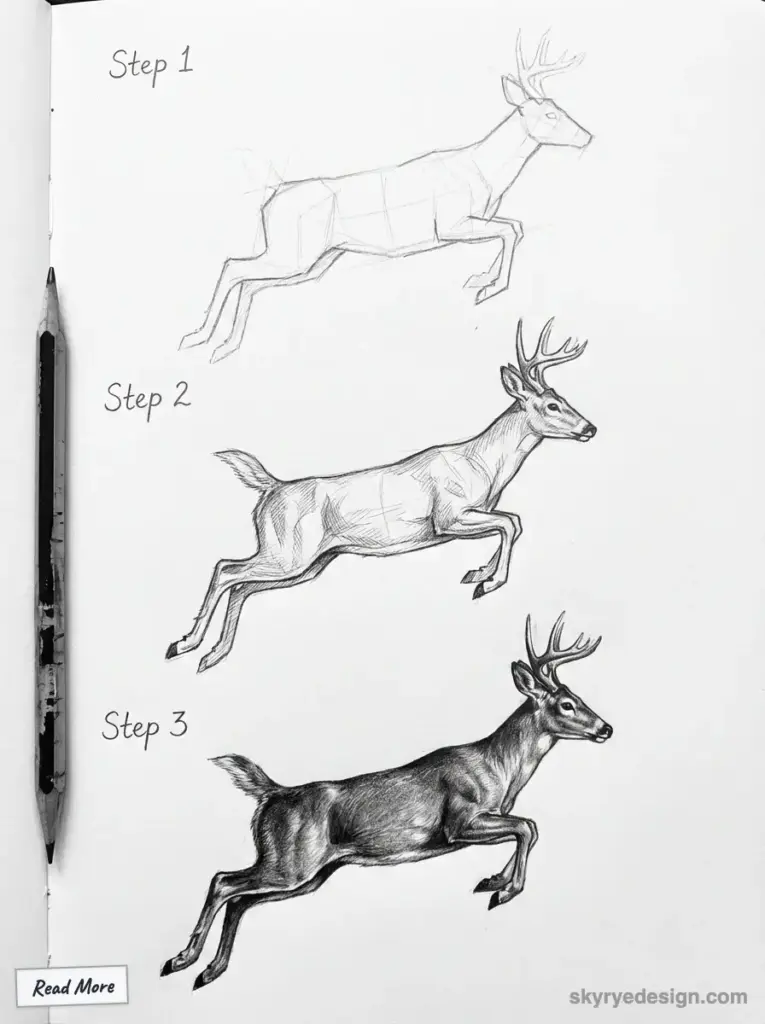
A deer rarely stands perfectly still. Capturing its movement and natural habitat can elevate your drawing. Understanding various character poses can also offer a broader perspective on depicting life and movement in your artwork, even for animals.
Dynamic Poses
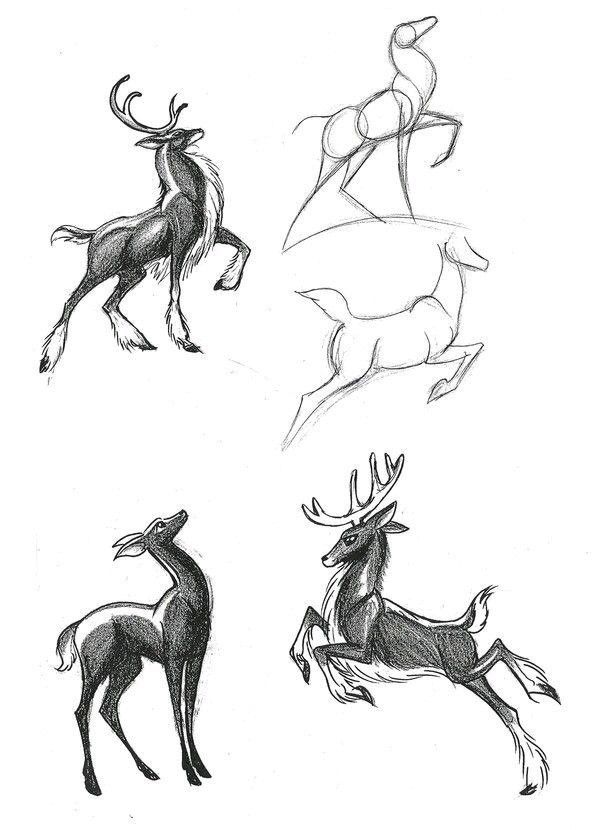
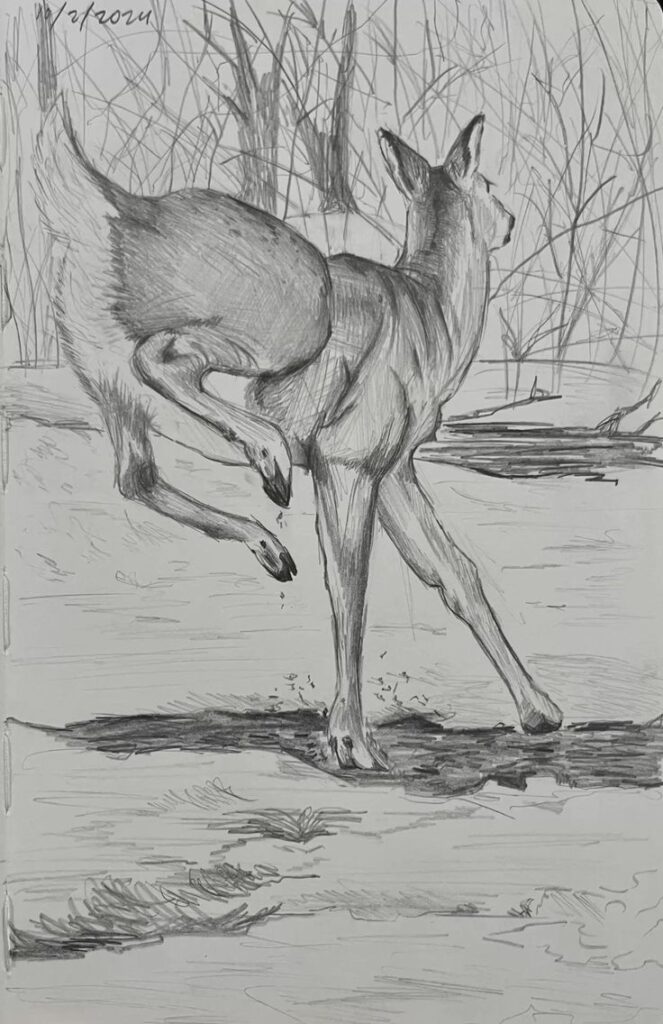
- Observation is Key: Look at your reference photos. Is the deer grazing, alert, running, or resting? Each pose tells a story.
- Action Lines: Before you draw any shapes, sketch a very light “line of action” that captures the overall flow and energy of the pose. This helps maintain dynamism.
- Foreshortening: If parts of the deer are coming towards or away from the viewer, they will appear shorter than they are. This can be tricky but adds immense realism. Practice simple forms first.
Integrating with a Background
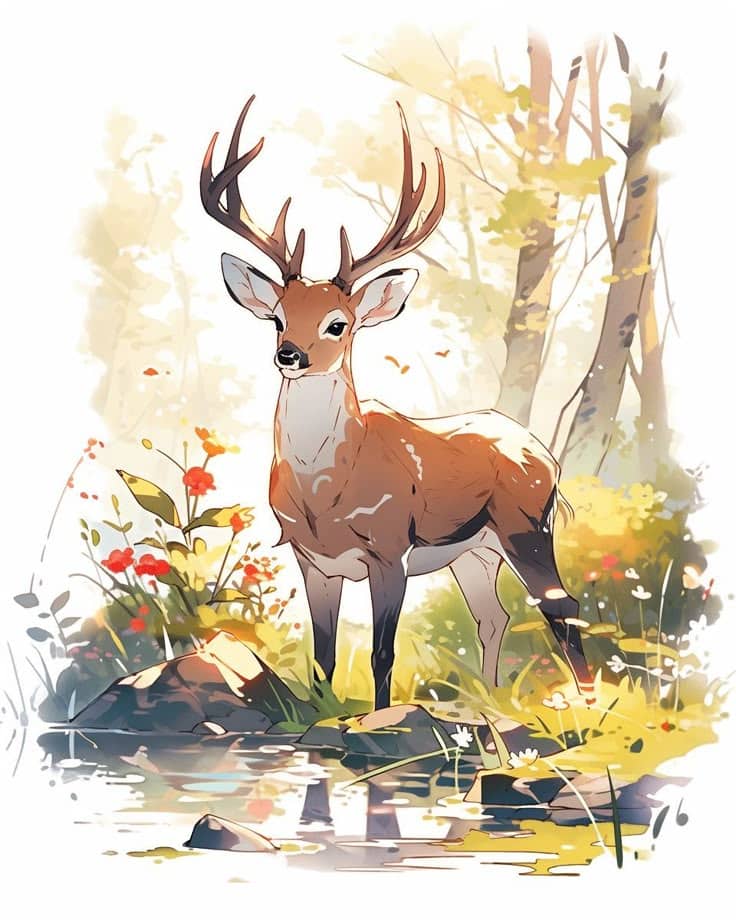
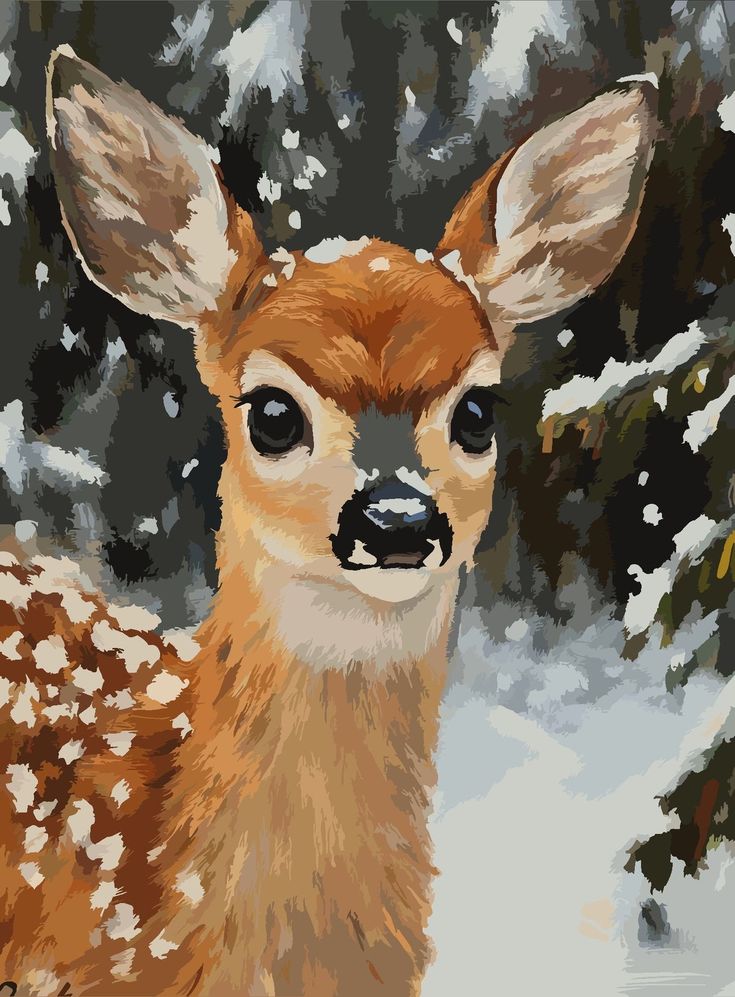
A simple background can anchor your deer in a scene.
- Blurry Background: Often, a softly blurred background puts the focus squarely on the deer while still giving context.
- Simple Elements: Consider basic shapes for trees, bushes, or ground cover. You don’t need intricate detail.
- Atmospheric Perspective: Objects further away appear lighter, less saturated, and less detailed. Use this to create depth.
- Ground Shadow: A cast shadow beneath the deer helps ground it, making it feel like it’s actually standing on something, rather than floating.
- Natural Elements: Adding elements like grass, leaves, or even simple drawing flowers can enrich the environment without overpowering the main subject.
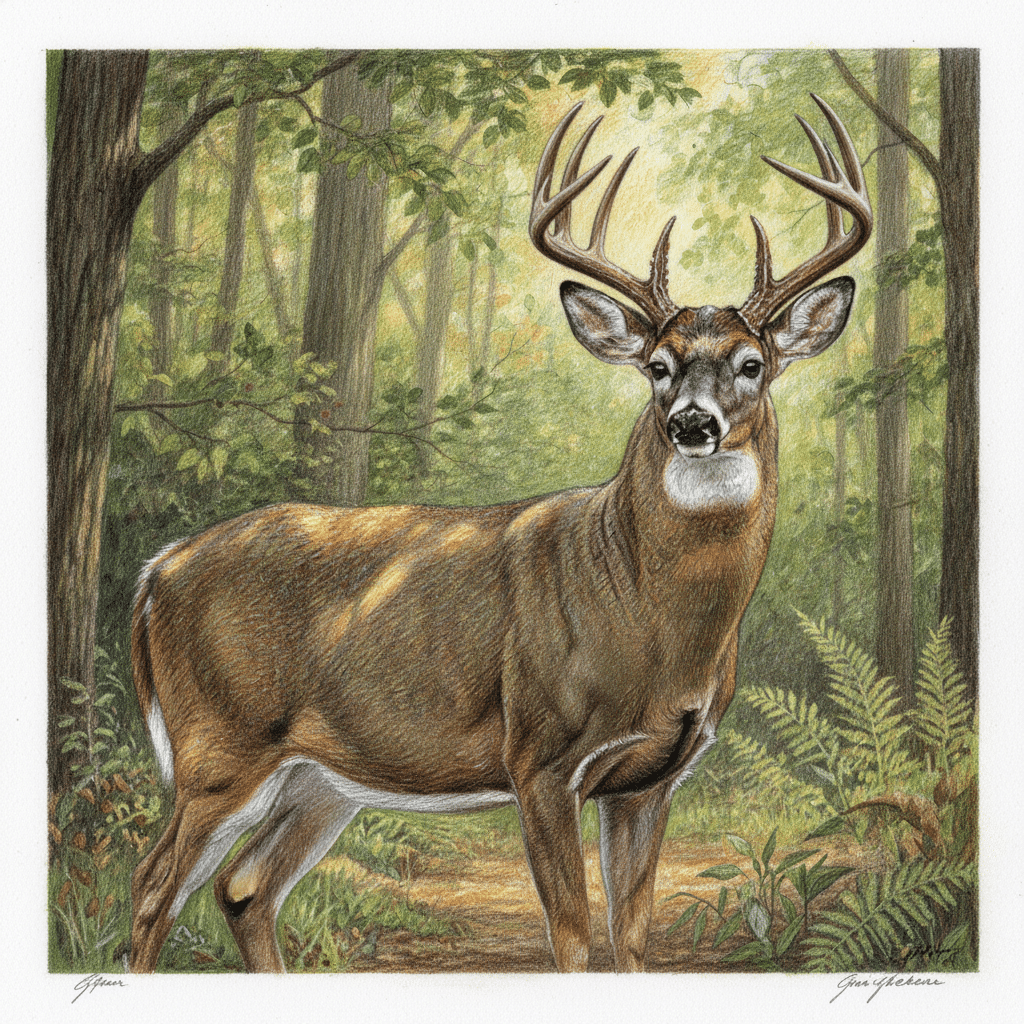
So, You’ve Finally Reached The Artistic Journey End
Learning to draw deer is quite a journey – mainly because it requires heaps of observation, bags of patience and a pretty whole lot of persistence. You take the deer & break it down into those simple ovals & cylinders, then you get to mess around adding in the detail of fur & the grandeur of those antlers – each bit builds on the other one, you know? Don’t overlook that fact that your eyes and your determination to keep at it are your most valuable tools – not some fancy set of pencils.
The whole thing about drawing is that its just as much about the journey, the process as much as the finished product. Every deer you try & sketch is gonna help you hone your observational skills a bit more, improve your knowledge of anatomy and quite likely leave you with a deeper respect for these fantastic creatures. With that in mind, keep going – keep observing, keep trying, but most importantly, keep having fun while bringing your ideas to life on the page. Who knows? Your next drawing could end up being the one that leaves people going ‘Wow’!
Now that youve got some new skills under your belt – are you ready to see how good youre really getting? Grab a pencil, find a good reference photo and then get on with drawing your very own majestic deer – you never know, its going to be your masterpiece!
Frequently Asked Questions
What are the most important things to focus on when starting to draw a deer?
When you’re just starting, the most important things are getting the basic proportions and overall shape right. Focus on breaking the deer’s body down into simple ovals and cylinders, paying attention to how these shapes connect and their relative sizes. Don’t worry about tiny details until the foundation is solid.
How do I make my deer drawing look more realistic?
Realism comes from careful observation and layering details. Pay close attention to your reference image for fur direction, subtle muscle definition, lighting and shadows, and especially the expression in the eyes. Adding texture with varied pencil strokes, creating strong contrast with shading, and including realistic highlights in the eyes will make a big difference.
Are antlers difficult to draw, and how can I simplify them?
Antlers can be challenging due to their complex branching structure. To simplify, start by drawing the main beam’s general curve and direction. Then, lightly sketch the major tines as simple lines, focusing on their overall placement and length before adding any texture or thickness. Remember, they are generally symmetrical but not perfectly identical.
What kind of pencils should I use for drawing deer?
A good range of graphite pencils is ideal. An HB pencil is great for initial sketching and guidelines. Use softer pencils like 2B or 4B for darker lines, shadows, and building up fur texture. Harder pencils like 2H can be used for very light details or subtle outlines if needed.
How can I practice drawing deer effectively?
Consistent practice is key! Don’t just draw one finished piece. Do quick sketches focusing on specific elements, like just drawing heads, legs, or antlers. Study reference photos closely for different poses and lighting. Experiment with various shading techniques and try drawing the same deer from multiple angles to understand its form better.
Should I draw the background or just the deer?
Whether you draw a background depends on your goal. For learning, focusing solely on the deer is perfectly fine. However, a simple background can help ground your deer and add context. You can keep it minimalist, perhaps a few blurred trees or a hint of grass, to ensure the deer remains the focal point.
What’s a common mistake beginners make when drawing deer?
A common mistake is rushing to details without establishing solid proportions first. This can lead to a deer that looks distorted or unbalanced. Another is making the legs too straight and stiff, or not understanding the crucial joint placements, which robs the drawing of its natural grace and movement. Always start with construction lines and basic shapes!
- 4.3Kshares
- Facebook0
- Pinterest4.3K
- Twitter0
- Reddit0