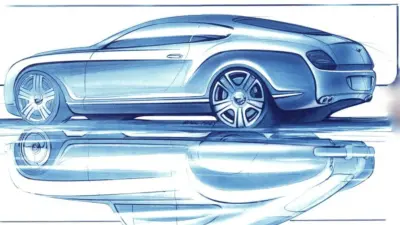

Few automotive brands translate to paper as beautifully as Jaguar. In this guide, “Jaguar drawing” means illustrating the iconic cars produced by the Jaguar automotive brand. From long, flowing hoods to muscular rear haunches and feline proportions,
Jaguar cars feel drawn as much as they are engineered. For artists, designers, and car enthusiasts alike, Jaguar drawing offers the perfect balance of elegance and aggression—organic curves paired with disciplined geometry.
- Getting a Feel for Jaguar Design Before You Pick Up Your Pencil
- Legendary Jaguar Models: Step-by-Step Drawing Guide
- 1. Jaguar E-Type (1961)
- 2. Jaguar XK120 (1948)
- 3. Jaguar XKSS (1957)
- 4. Jaguar Mark II (1959)
- 5. Jaguar XJ Series (1968–1992)
- 6. Jaguar XJS (1975)
- 7. Jaguar XJ220 (1992)
- 8. Jaguar XK8 / XKR (1996)
- 9. Jaguar F-Type (2013)
- 10. Jaguar I-PACE (2018)
- Tools & Techniques to Draw Better Jaguar Drawings
- Common Mistakes When Drawing a Jaguar Car
- Final Thoughts: Jaguar's got to be a dream brand for Artists
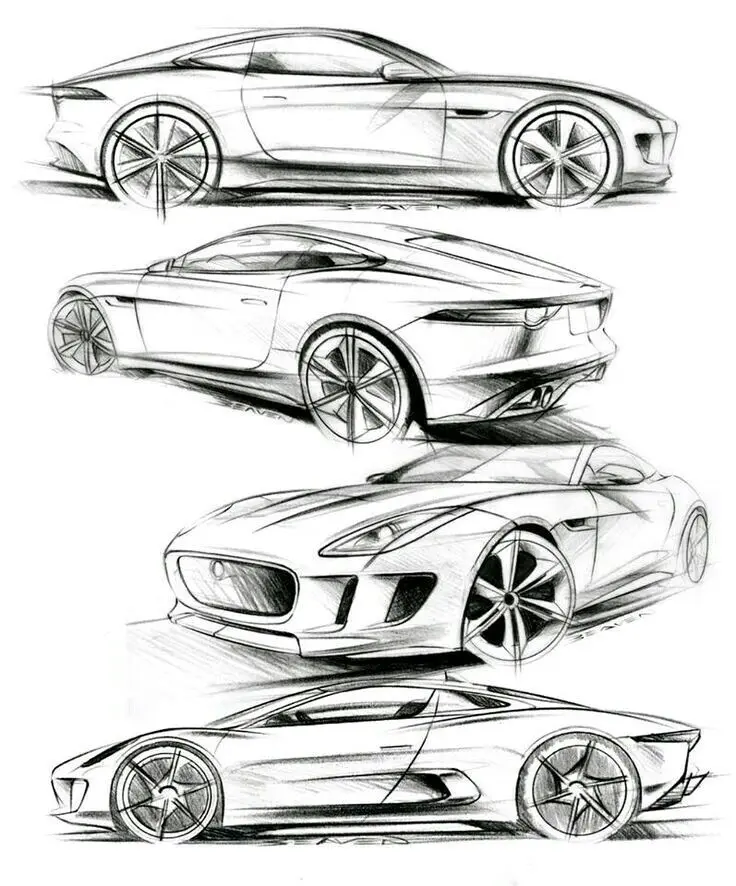
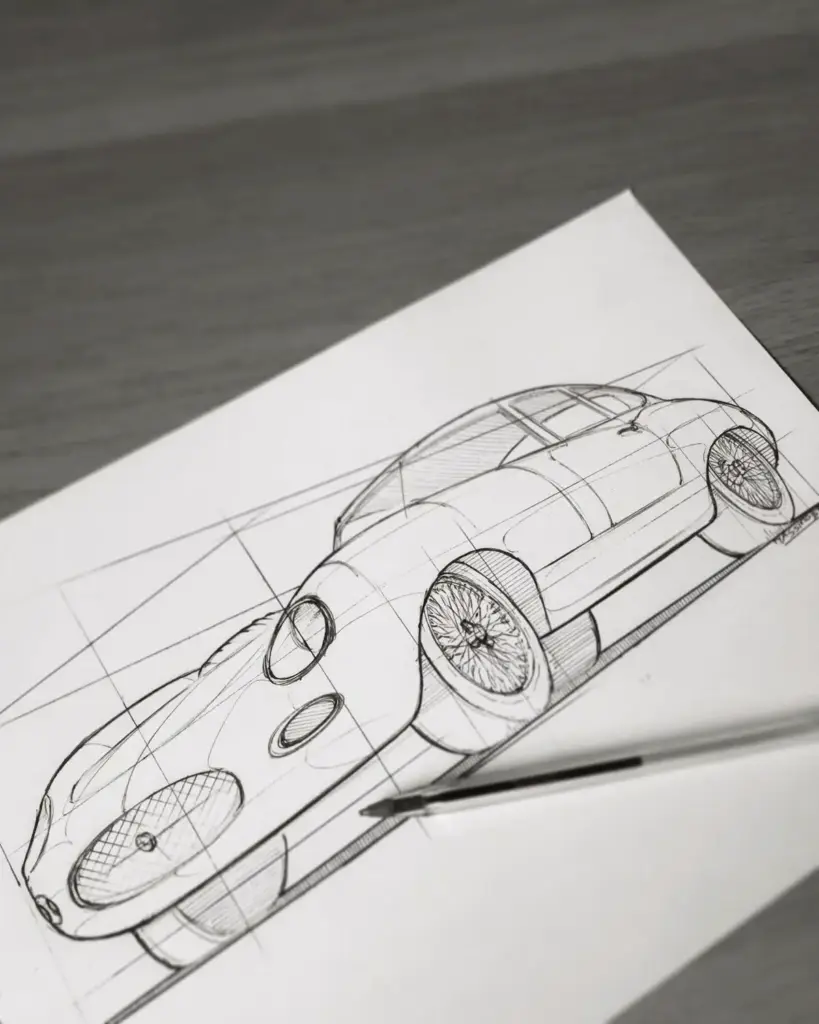
This guide is both an art tutorial and a design deep dive. You’ll learn how to draw10 legendary Jaguar models, understand what makes each visually iconic, and discover how to translate real-world automotive design into compelling sketches—whether you’re working in pencil, pen, Procreate, or Illustrator. The process is broken down into easy, step-by-step instructions, making it accessible for both beginners and experienced artists.
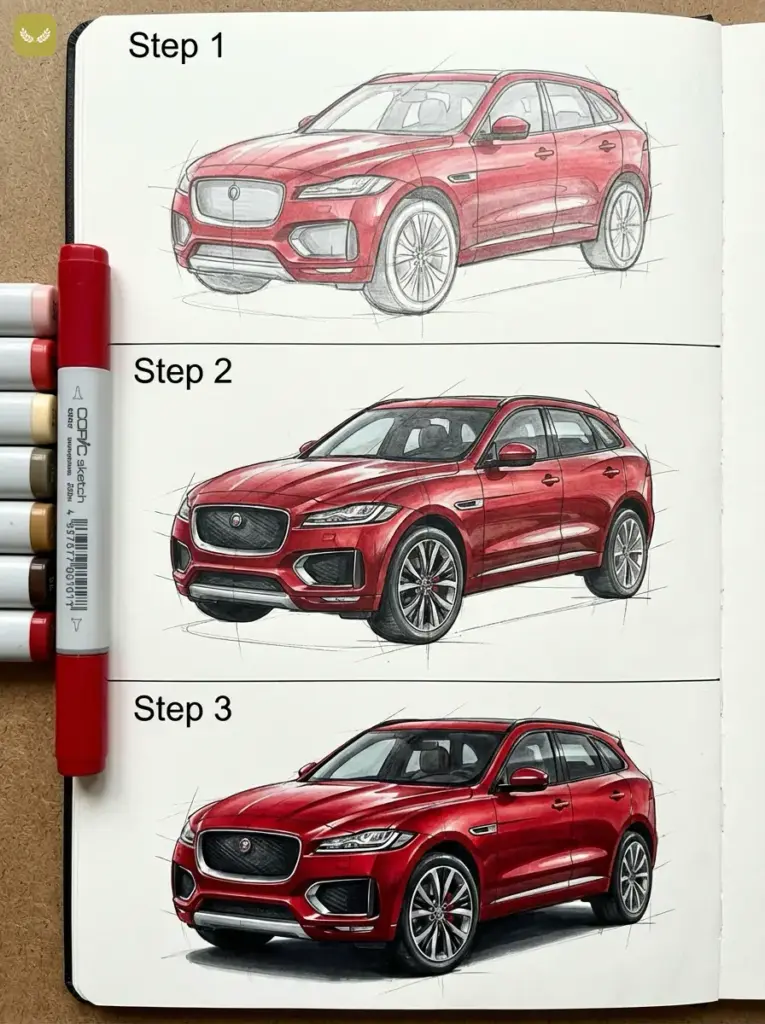
We’ll cover:
- Core Jaguar design principles
- Model-specific drawing tips
- Proportion breakdowns
- Line strategy for sketching realism and motion
If you’ve ever searched for how to draw a Jaguar car or Jaguar sketch reference, this article is built exactly for you.
Getting a Feel for Jaguar Design Before You Pick Up Your Pencil
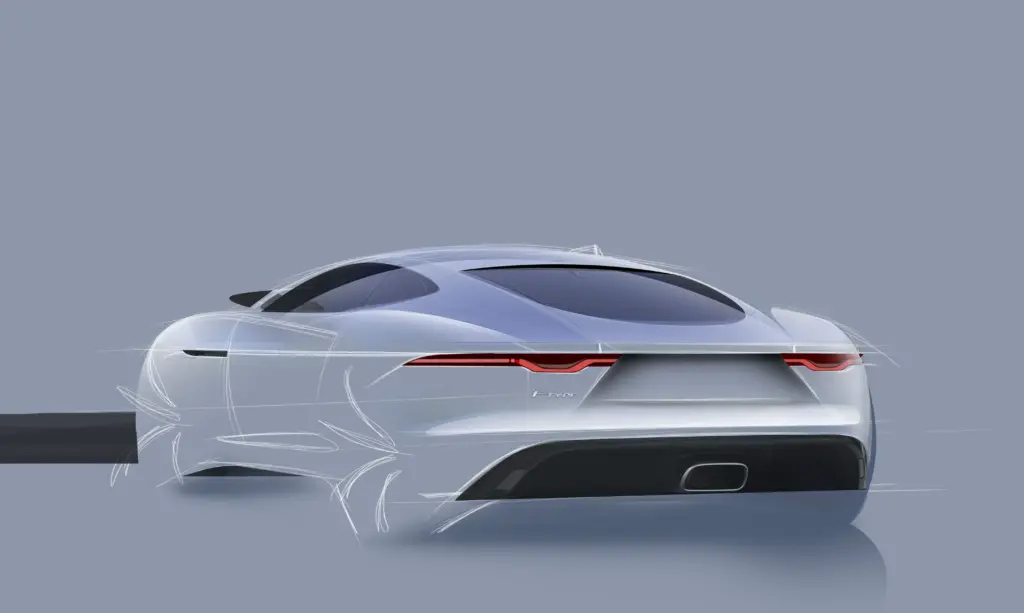
Before you even start sketching a Jaguar, it’s a good idea to wrap your head around what makes a Jaguar actually look like one. Even as they keep pushing the limits with new tech and performance, certain visual things stay the same over the years.
Jaguar Design Essentials You Should Pay Attention To: Jaguar’s Head in Focus
- A long hood, short back end – its a classic style of the grand-tourer that never goes out of fashion
- Back end bias, the cabin is clearly slung over the back wheels
- That flowing line that runs from nose to tail – its the bit that makes the car look as if its in motion even when its standing still
- Low roofline – even the sedan versions give off a sleek vibe
- A ‘less is more’ approach to aggression – Jaguars don’t often look too bulky or over-embellished
When drawing, switch your focus from straight lines to curves that feel like a gesture. A Jaguar is all about movement – regardless of whether it is actually moving or not.
Legendary Jaguar Models: Step-by-Step Drawing Guide
1. Jaguar E-Type (1961)
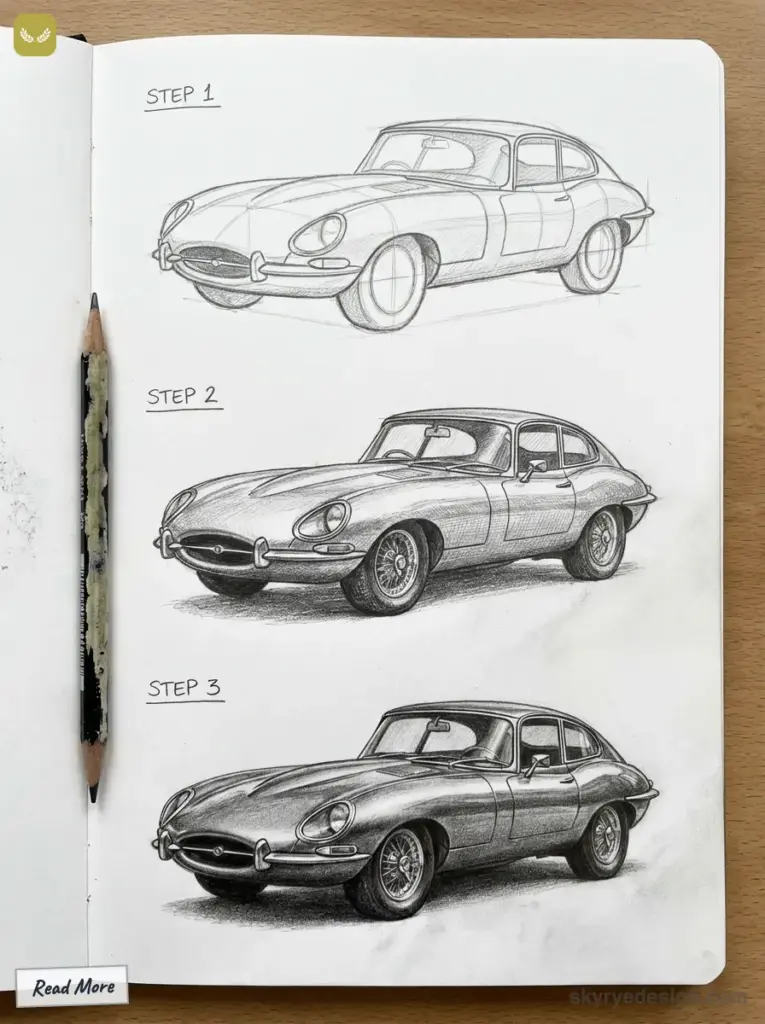
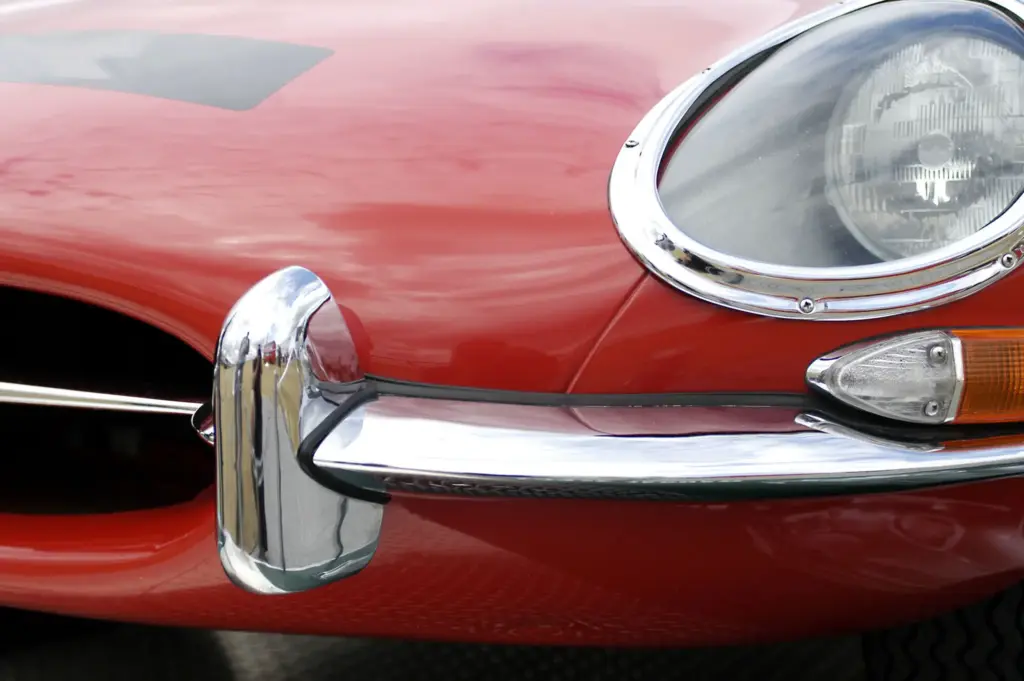
Often called one of the most beautiful cars ever made, the Jaguar E-Type is essential for anyone learning Jaguar drawing.
Why Its Legendary
- The aerodynamics on this old girl were revolutionary at the time
- It’s got some seriously aircraft-inspired curves
- And those early models with the oval grille & covered headlights? Just the coolest
Getting the Lines Right
- First off, start with a pretty rough sketch of a head shape and build a rough spine down the middle. Use circles as guides to get the proportions right – it’s all about building up the jaguar from basic shapes, one layer at a time.
- Start with a big, sweeping arc from the nose all the way back to the tail
- Now don’t go and shorten that long, splayed hood – it’s fundamental to the shape
- The cabin itself needs to be kept pretty compact, and right up against the back of the car
Pro Tip from the Pros
The key to drawing that E-Type is to not overthink it. It looks its best when you draw it fairly loosely and get the flow right before you start worrying about the tiny details.
2. Jaguar XK120 (1948)
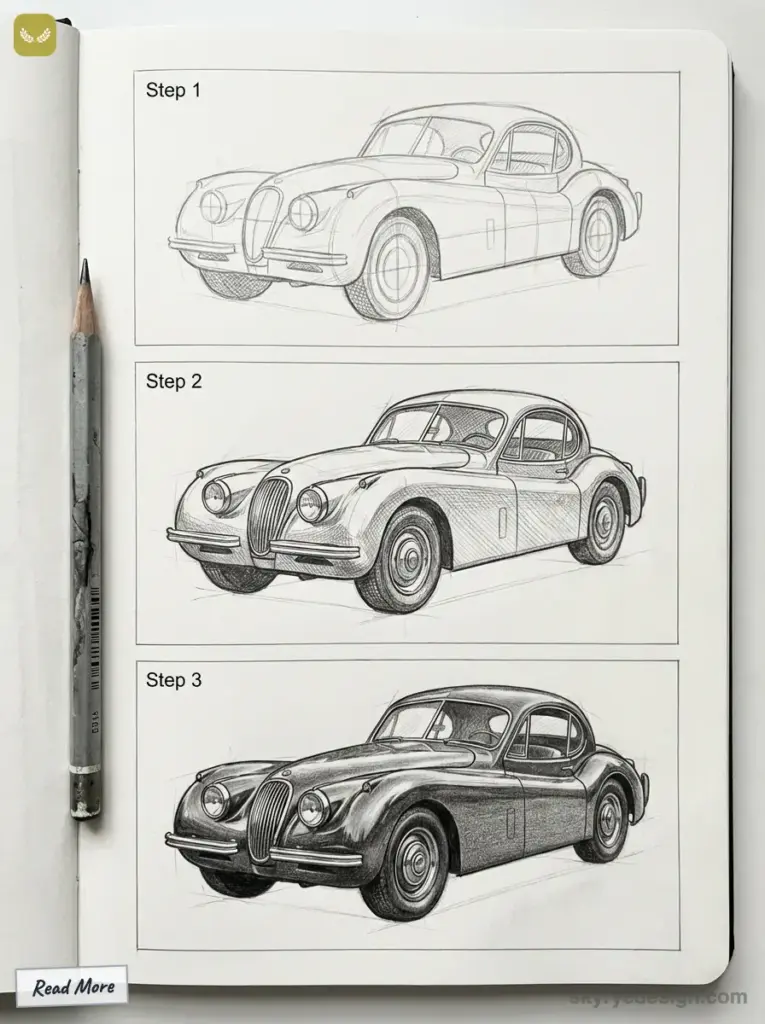
The XK120 introduced Jaguar’s post-war design language and remains a favorite among classic car illustrators.
Why It’s Legendary
- Britain’s fastest production car at launch
- Smooth pontoon fenders
- Elegant roadster proportions
Drawing Focus
- Emphasize rounded forms, not sharp edges
- Use overlapping ellipses to block the fenders
- For perfect circles as guides, trace the outer rim of a glass or lid to help ensure accurate proportions
- Keep wheel arches large and expressive
Pro Tip
Light shading under the fenders adds depth without clutter.
3. Jaguar XKSS (1957)
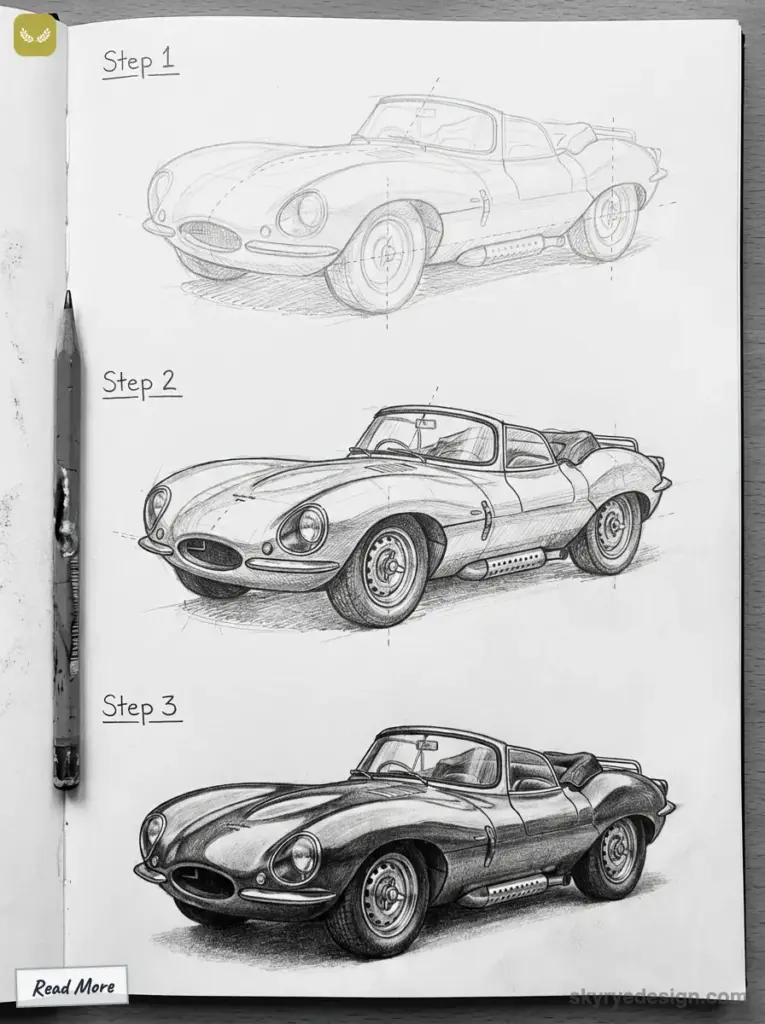
The XKSS bridges race car aggression and road car elegance.
Why It’s Legendary
- Derived from the D-Type race car
- Rare and historically significant
- Raw, mechanical presence
Drawing Focus
- Sharper angles than earlier Jaguars
- Exposed details: roll hoop, vents, exhaust
- Lower ride height than road cars
Pro Tip
Use heavier line weight on mechanical elements to contrast with smoother body curves.
4. Jaguar Mark II (1959)
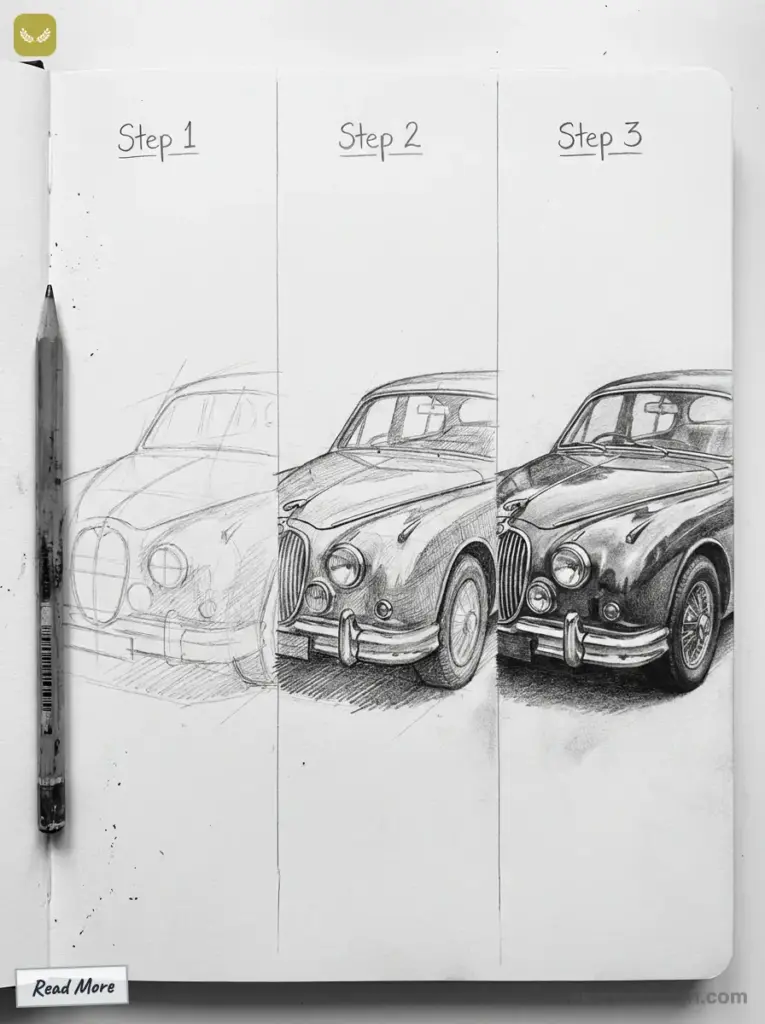
A rare example of a luxury sports sedan that’s equally fun to draw.
Why It’s Legendary
- Compact, muscular sedan proportions
- Strong motorsport and cultural presence
- Instantly recognizable grille and roofline
Drawing Focus
- Balance vertical height with horizontal flow
- Keep window frames thin and elegant
- The rear haunches should subtly bulge
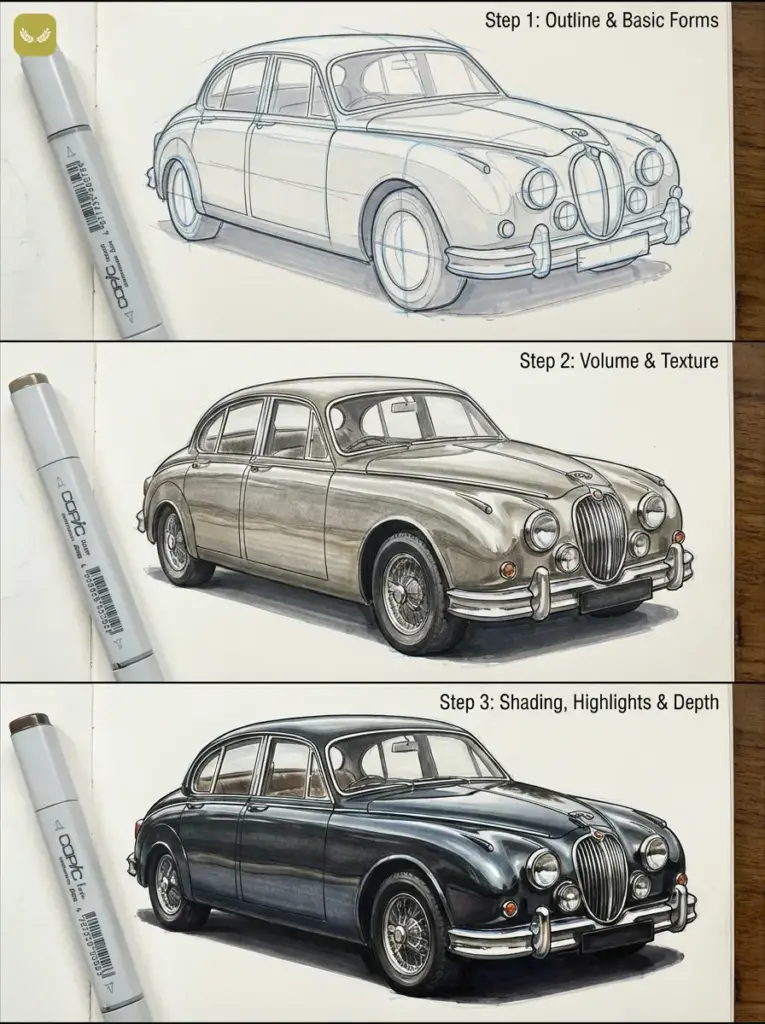
Pro Tip
Draw the roof and windows as one continuous shape before separating details.
5. Jaguar XJ Series (1968–1992)
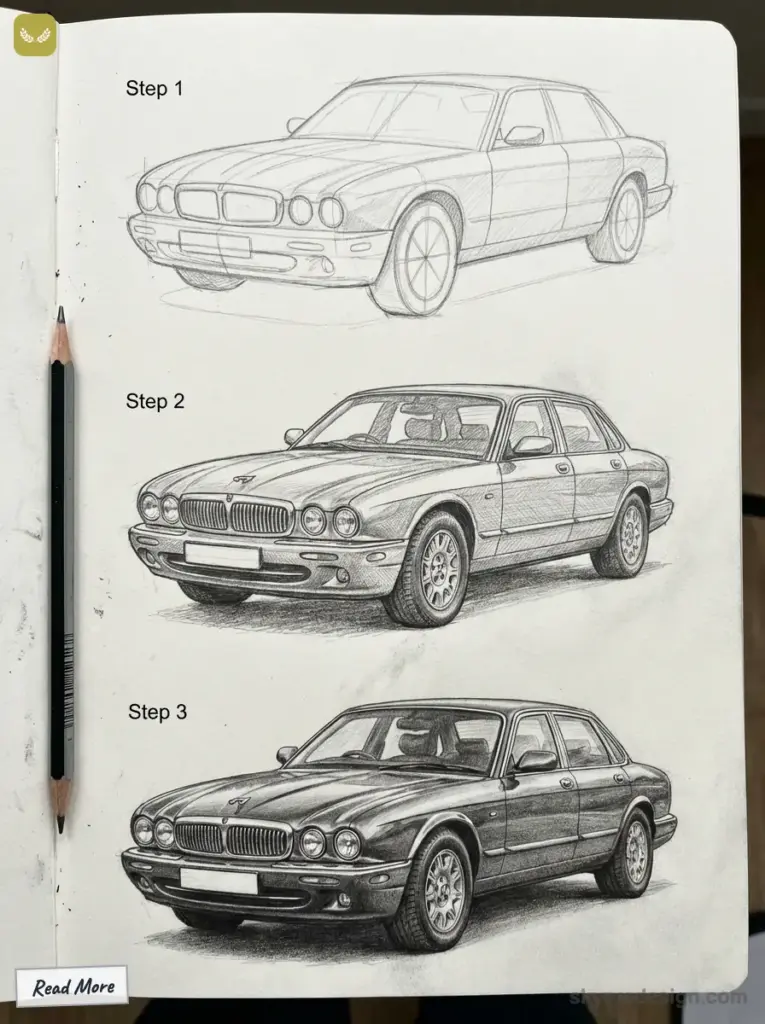
The XJ defined Jaguar luxury for decades and offers excellent practice in restraint.
Why It’s Legendary
- Longest-running Jaguar design lineage
- Understated luxury
- Smooth, uninterrupted surfaces
Drawing Focus
- Long horizontal lines
- Minimal ornamentation
- Subtle curves rather than dramatic ones
Pro Tip
Negative space is your friend—don’t fill every panel with shading.
6. Jaguar XJS (1975)
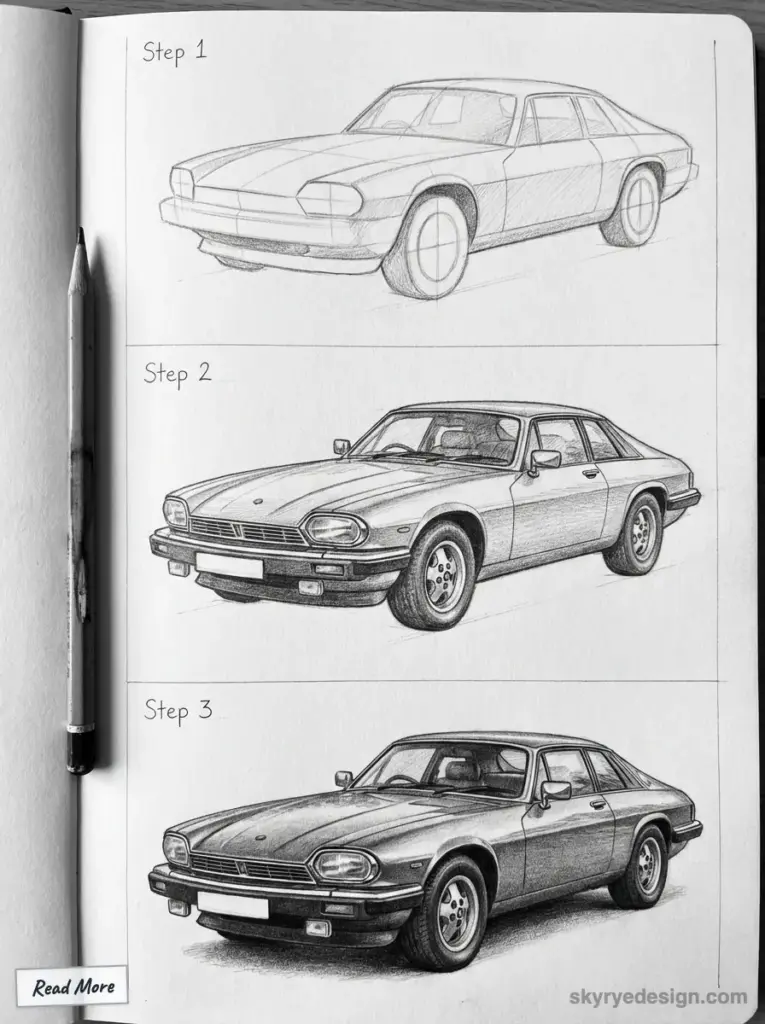
The XJS divided opinion—but that makes it fascinating to draw.
Why It’s Legendary
- Bold departure from E-Type styling
- Flying buttresses
- Long GT proportions
Drawing Focus
- Focus on rear structure and C-pillars
- Keep roofline low and stretched
- Avoid boxiness—everything should feel rounded
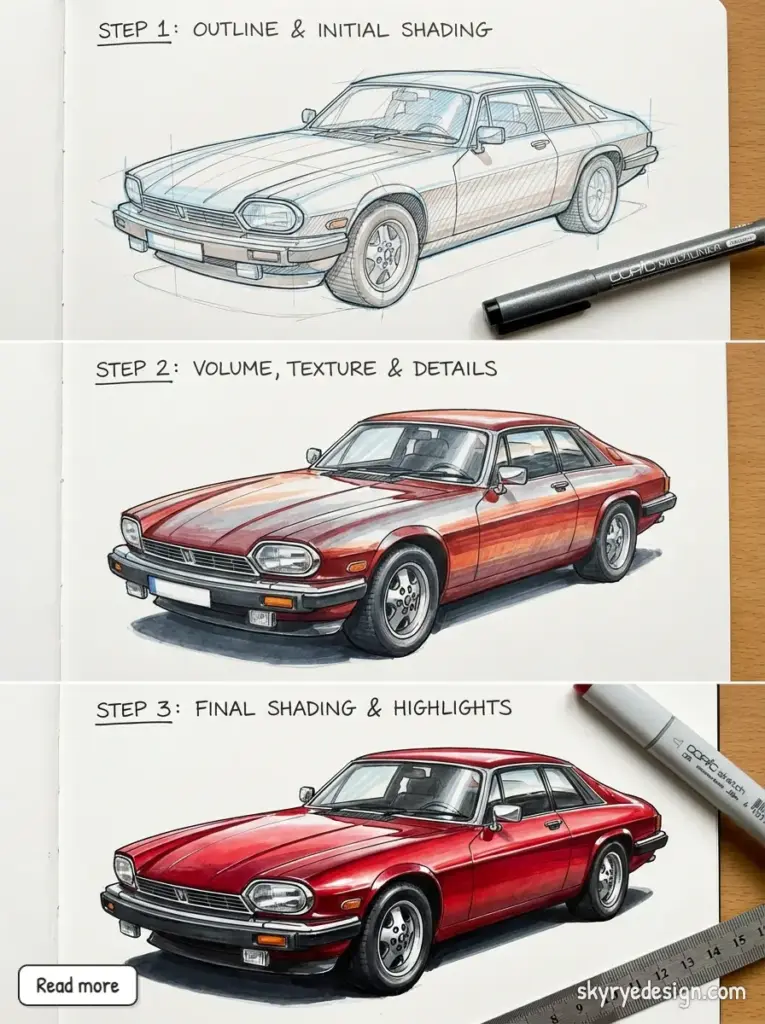
Pro Tip
Draw the rear three-quarter view to best showcase its unique design.
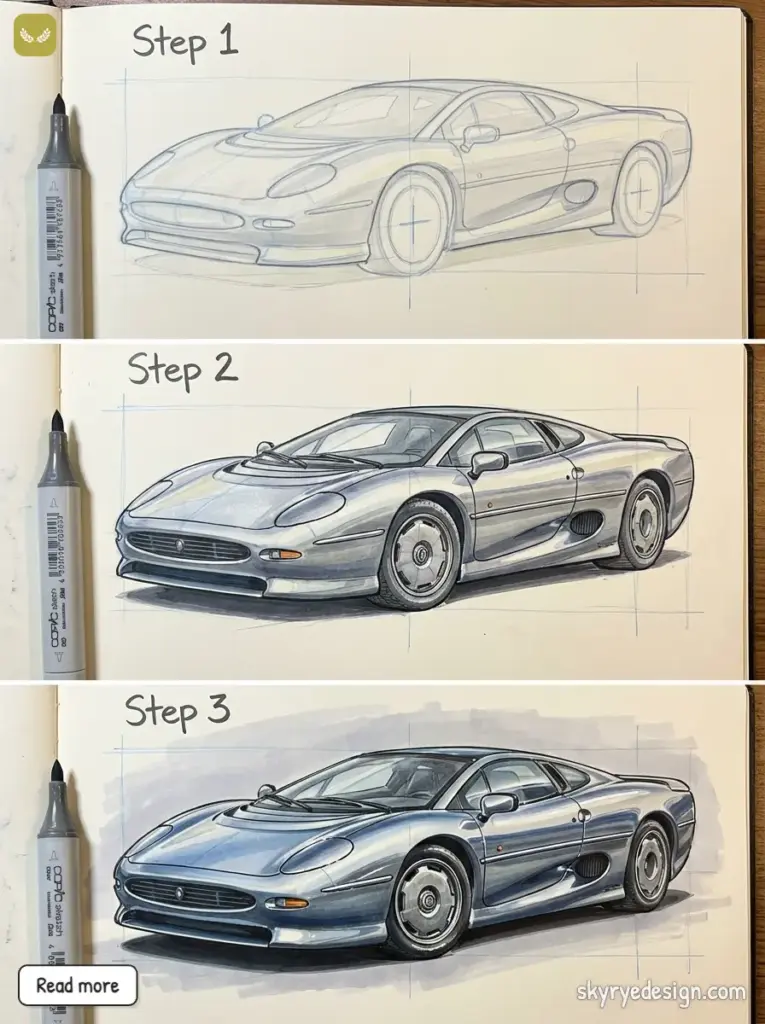
7. Jaguar XJ220 (1992)
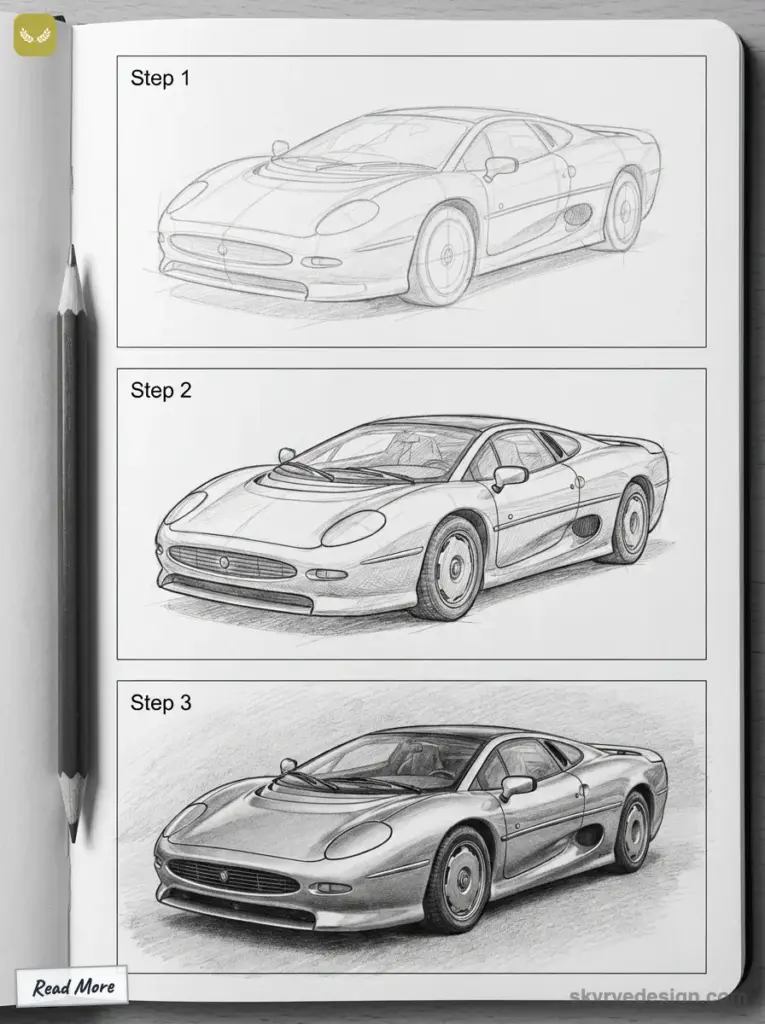
The XJ220 is where Jaguar meets supercar fantasy.
Why It’s Legendary
- Once the fastest production car in the world
- Ultra-low stance
- Dramatic proportions
Drawing Focus
- Extremely wide track
- Low roof and exaggerated side intakes
- Strong perspective exaggeration
Pro Tip
Use vanishing points aggressively—this car thrives on drama.
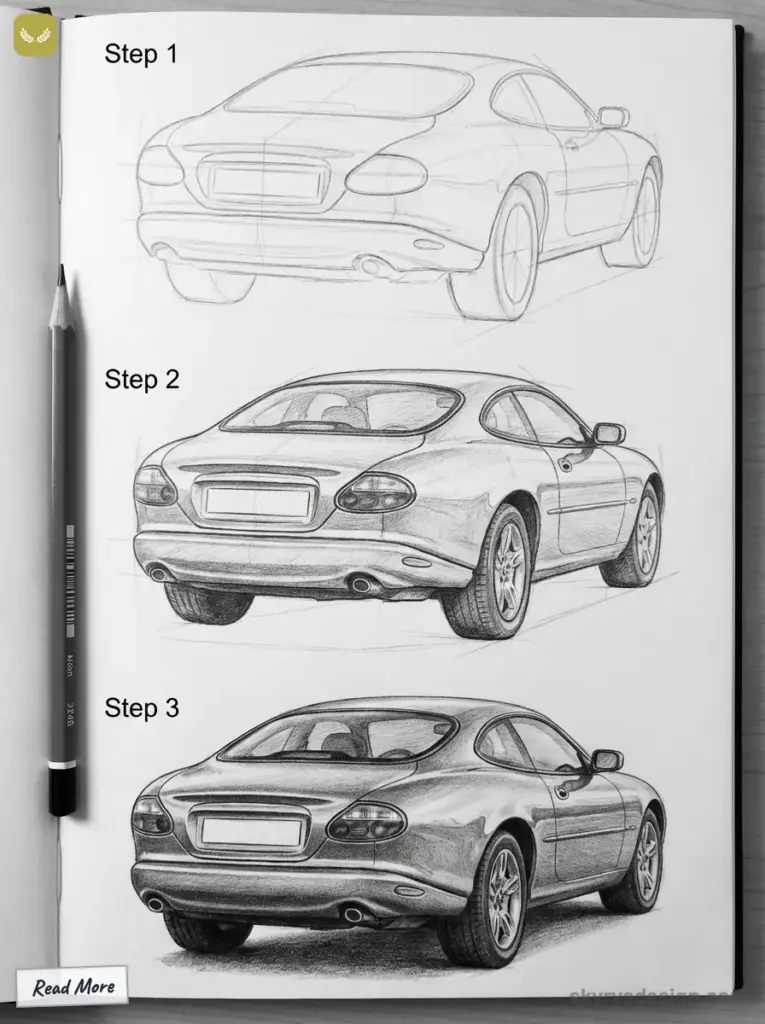
8. Jaguar XK8 / XKR (1996)
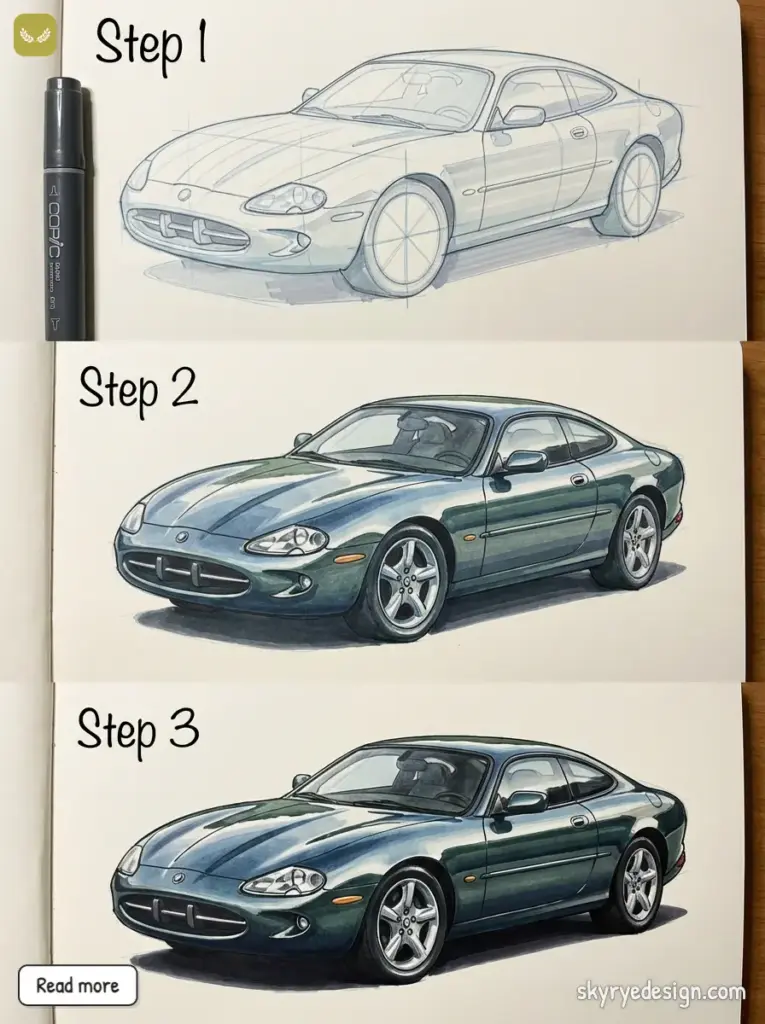
This modern reinterpretation of classic Jaguar cues is great for transitional styling studies.
Why It’s Legendary
- Retro-inspired without being nostalgic
- Soft, approachable curves
- Grand touring focus
Drawing Focus
- Rounded nose and headlights
- Smooth beltline
- Balanced proportions front to rear
Pro Tip
Use softer pencils or brushes to maintain a luxurious feel.
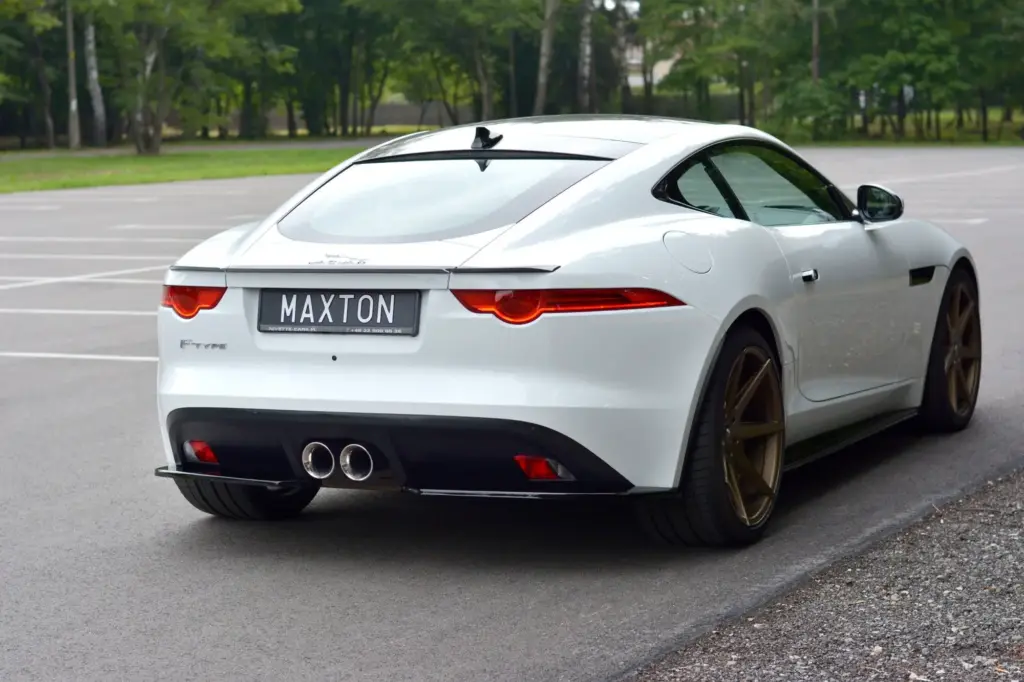
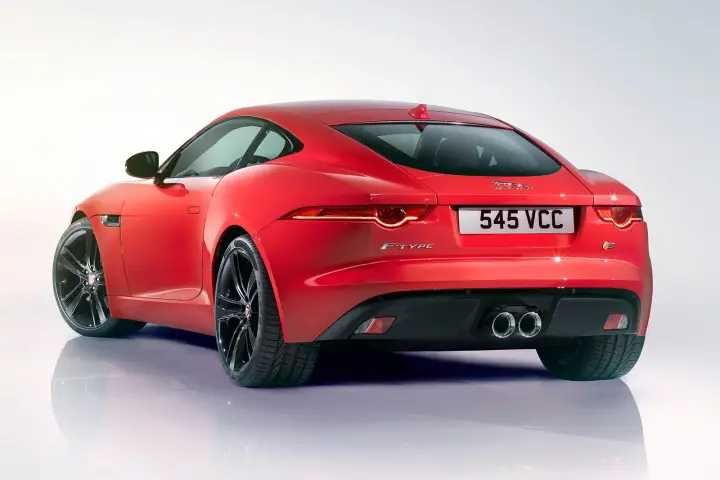
9. Jaguar F-Type (2013)
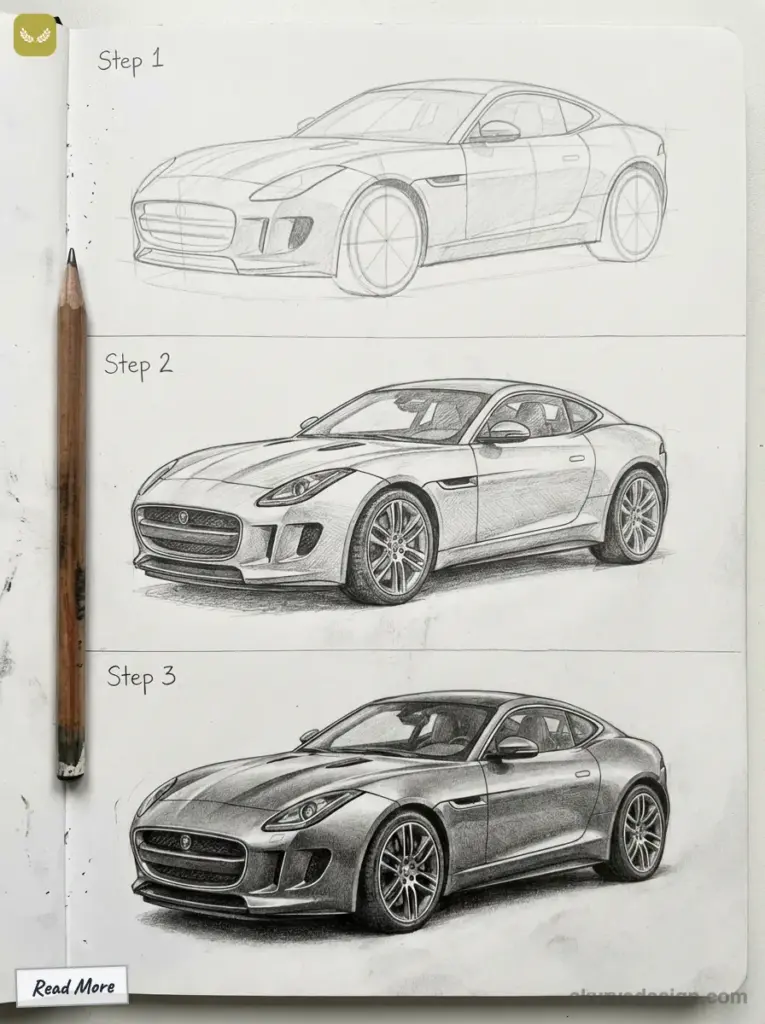
The F-Type brought raw emotion back to Jaguar sports cars.
Why It’s Legendary
- Aggressive modern styling
- Shorter proportions than past GTs
- Powerful surfacing
Drawing Focus
- Sharp light reflections
- Pronounced rear haunches
- Compact cabin
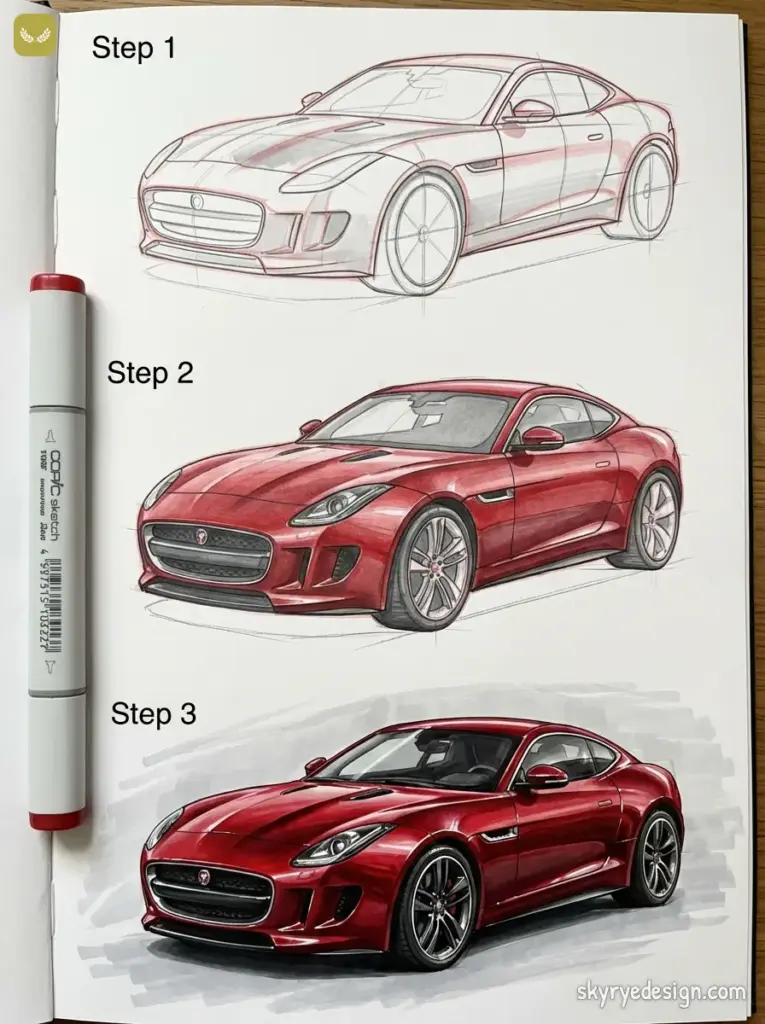
Pro Tip
Contrast thick shadow undercuts with crisp highlights for a modern look.
10. Jaguar I-PACE (2018)
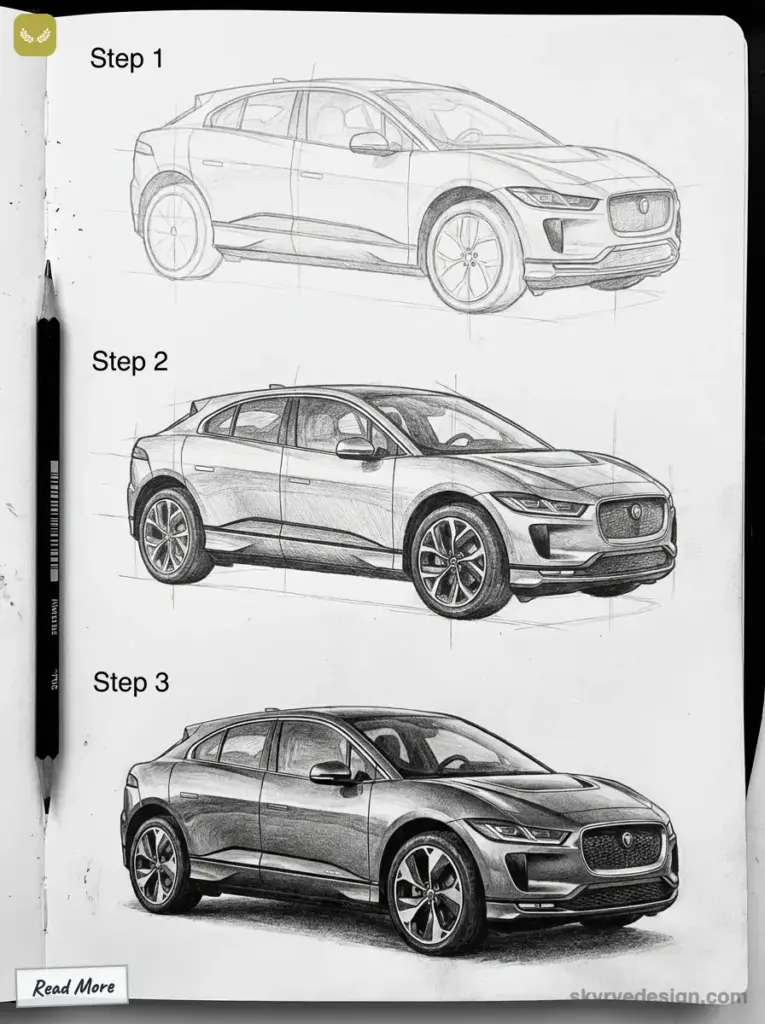
A new chapter for Jaguar—and a new challenge for artists.
Why It’s Legendary
- Jaguar’s first all-electric performance SUV
- Cab-forward proportions
- Aerodynamic focus
Drawing Focus
- Short hood, long cabin
- Strong shoulder line
- Clean, minimal surfaces
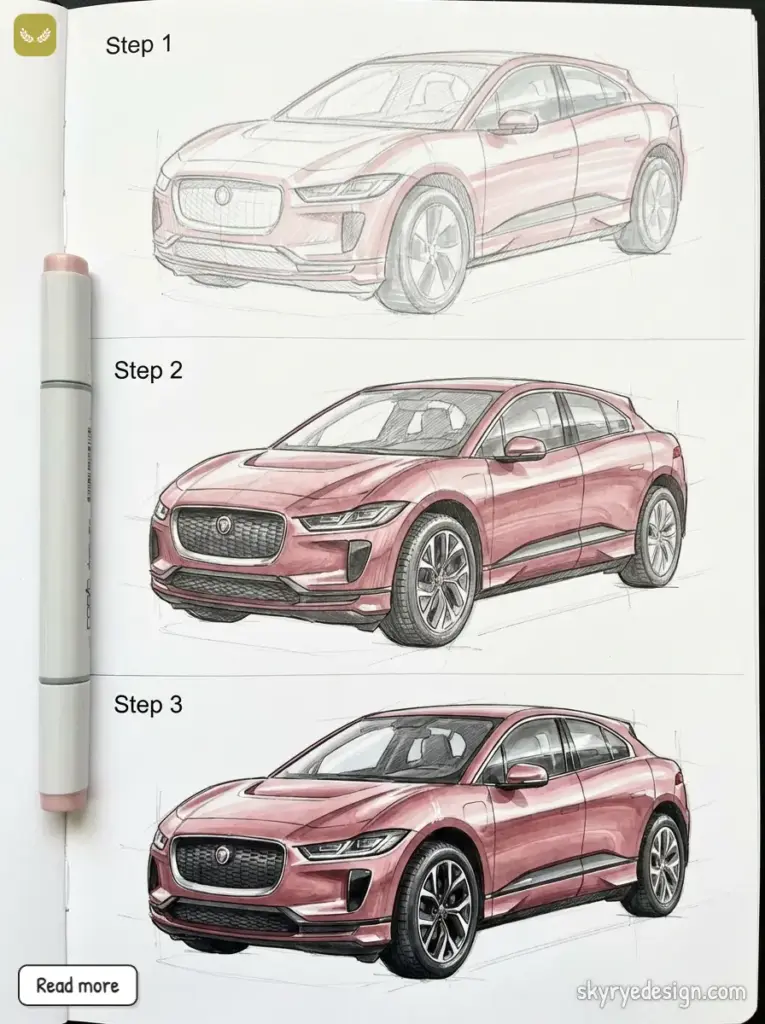
Pro Tip
Avoid traditional “engine hood” assumptions—draw what you see, not what you expect.
Tools & Techniques to Draw Better Jaguar Drawings
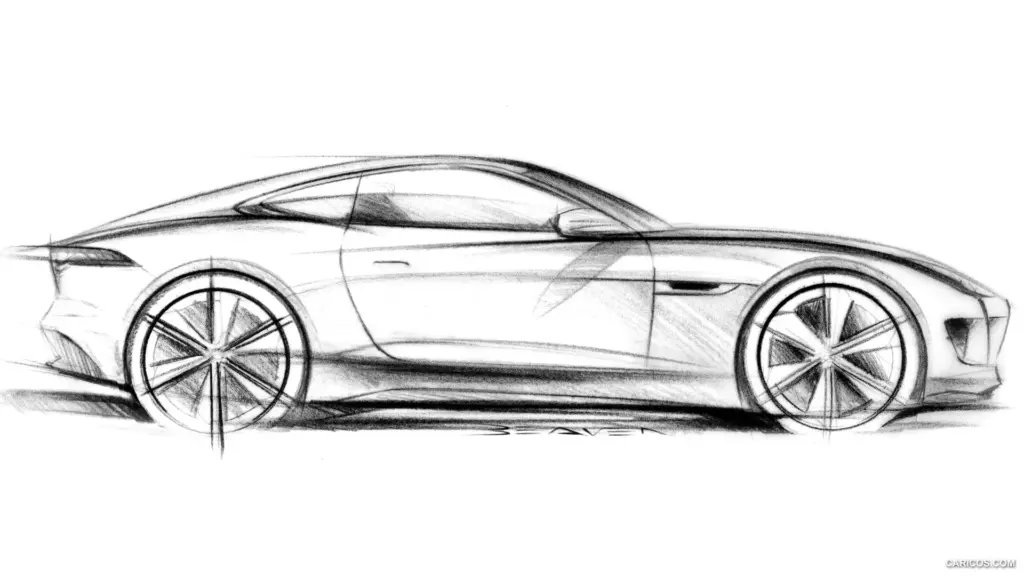
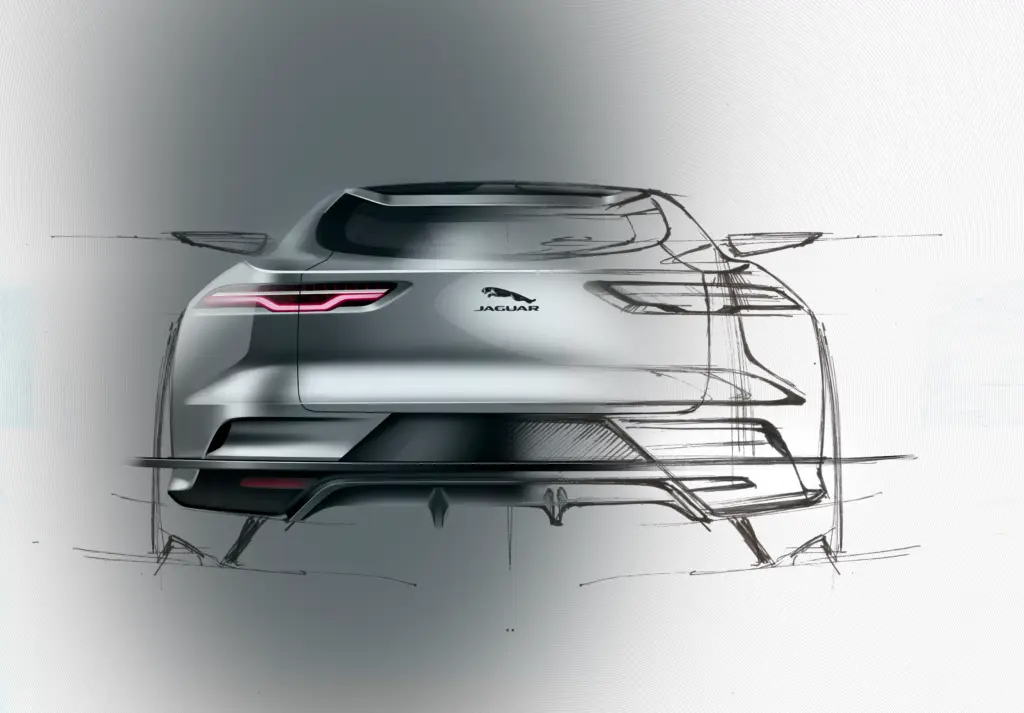
Recommended Tools
- Pencils: HB for layout, 2B–4B for form, graphite for detailed and realistic shading
- Charcoals: Recommended for deep shadows and texture, often combined with graphite to achieve a realistic jaguar drawing style
- Ink pens: Variable line weight preferred
- Digital: Procreate, Photoshop, Illustrator
Practice Exercises
- 30 second gesture sketches – just try to snatch a few key poses of that jaguar in a split second – sketch loose & fast to capture the movement & posture. Don’t worry too much about making mistakes, just knock ’em out lightly so you can easily rub ’em out and try again til you get the pose just right.
- Side-profile proportion drills
Get in some serious practice drawing that jaguar’s side profile over & over again. Focus on getting the proportions spot on – use those light lines at first to make it easy to erase any boo-boos & correct ’em before moving on to a more finished drawing. - Light reflection studies on curved panels
Take a good hard look at how light bounces off that jaguar – learn how to get the values playing nicely. Try layering up from light to dark – start with a light sketch & then gradually build up some nice, rich shading with those darker pencils. This one’s a great way to get some control over values & details bit by bit.
Common Mistakes When Drawing a Jaguar Car
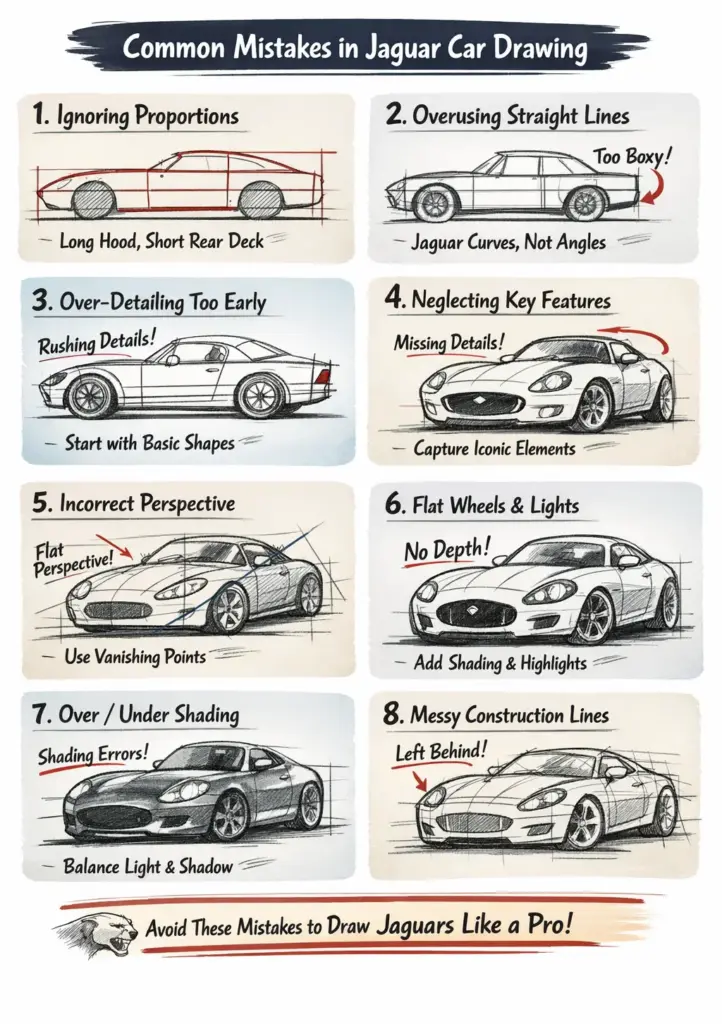
Drawn Jaguars often turn out to be a dog’s breakfast thanks to a handful of common pitfalls that can totally throw off the elegance and accuracy of your sketch. But having a feel for what not to do will help improve your jaguar drawing skills and create more realistic, visually appealing illustrations.
1. Getting the Proportions Wrong
One of the most simple yet easy ways to mess up your jaguar drawing is to get the proportions completely wrong. Jaguars are all about long hoods, short rear decks and that cab-rearward cockpit that gives them such a distinctive look. When you get these wrong, your drawing is going to look a bit off or just plain generic rather than a genuine jaguar.
2. Overusing Straight Lines
One of the defining features of Jaguar design is its flowing, organic curves – so why do most new artists fall into the trap of using too many straight lines or sharp angles? A drawing that’s full of these has lost that fluid motion and elegance that makes a jaguar so special. Try and focus on smooth, flowing curves that’ve got some real gestural swing to ’em.
3. Jumping the Gun on the Details
Getting in too deep with detailed shading and intricate parts before you even establish the basic shape of your car is just asking for trouble – and frustration. It’s far better to start with some light sketches, a rough outline and some simple lines before you even think about adding any of that nitty gritty detail. That way you can make any necessary corrections and keep the whole thing looking balanced.
4. Missing Out the Jaguar’s Key Features
Each Jaguar model has its own unique visual signature – whether that’s an oval grill, covered headlights, flying buttresses or something else. If you’re not careful to get these right, your drawing will lack that certain something that makes it instantly identifyable as a jaguar. Make a point of paying attention to those iconic features so your sketch looks the part.
5. Messing up the Perspective and Angles
Jaguars are great at dynamic proportions, but that means you’ve got to work hard to get the perspective right if you want your drawing to look realistic. Drawing the car flat on its back or with the wrong angles is just going to end up looking flat and underwhelming. Instead, make use of your construction lines and vanishing points to nail the perspective and keep the whole thing looking sharp.
6. Spotting on Wheels and Lights – Too Perfect
Some new artists have a nasty habit of drawing wheels and lights with perfect circles and uniform patterns – but the thing is, that’s just not how it works in the real world. Wheels have depth and shading to make them look like they’re really round, and lights should reflect light the way they do in real life – with highlights and shadows that add some real depth.
7. Getting Your Shading Wrong – Too Much or Too Little
Balancing light and shade is a critical part of drawing a car, but it’s all too easy to get it wrong. Too much shading and you’ll end up obscuring all the important details, too little and it’ll just look flat and unconvincing. What you really need to do is get a feel for how to do this light-to-dark layering – the kind of thing that really brings out the form and depth of your subject without overwhelming it.
8. Not Erasing Those Construction Lines
If you leave your construction lines visible after you’ve refined your drawing, it’s just going to look a bit messy, like you haven’t finished yet. Take the trouble to go back and carefully erase those guidelines when you’re done so your drawing looks clean and professional.
By avoiding all these common pitfalls, you’ll be a lot more confident in your ability to capture the essence and sophistication of Jaguar cars in your drawings.
Final Thoughts: Jaguar’s got to be a dream brand for Artists
Jaguar vehicles sit at the intersection of art, engineering, and emotion. Whether you’re sketching a 1950s roadster or a modern electric SUV, Jaguar drawing teaches you how to:
- See curves instead of parts
- Balance elegance with power
- Communicate motion through line alone
If you want to improve your automotive illustration skills, there are few better brands to study—and few more rewarding to draw.
- 535shares
- Facebook0
- Pinterest535
- Twitter0
- Reddit0