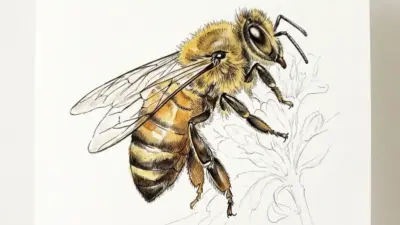
Ever wanted to capture the intricate beauty of a butterfly’s wing or the charming buzz of a bumblebee on paper? Learning how to draw insects might seem daunting at first, with all those tiny legs, antennae, and complex patterns. But trust me, it’s far more accessible and fun than you might think! This guide is designed to unlock your inner entomological artist, providing simple, step-by-step techniques to bring these fascinating creatures to life with your pencil.
We’re not aiming for scientific illustrations right off the bat, but rather a journey into appreciating the unique structures and personalities of the insect world through art. Whether you’re a complete beginner or looking to sharpen your sketching skills, you’ll discover that drawing insects is a fantastic way to improve your observation, develop your drawing fundamentals, and connect with the tiny wonders all around us. So, grab your sketchbook and let’s get sketching!

Why Draw Insects? Unveiling a Miniature World
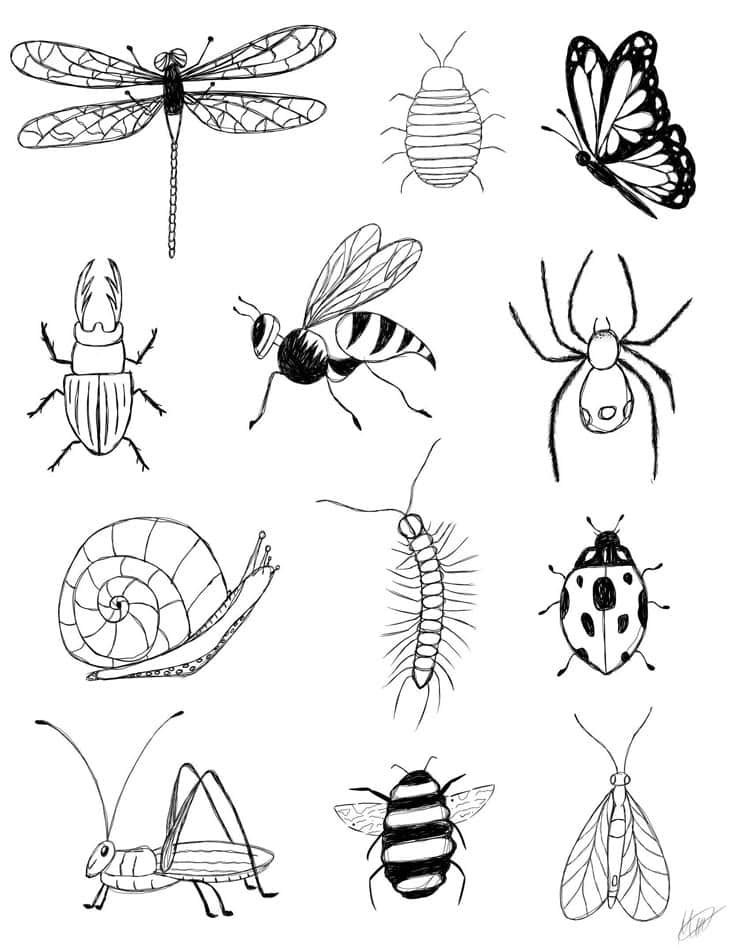
Insects are everywhere, from the dazzling dragonflies darting over ponds to the industrious ants marching across your kitchen floor. They represent an incredible diversity of forms, colors, and textures, making them an endless source of artistic inspiration. But why specifically dedicate your artistic endeavors to these small wonders?
First, drawing insects hones your observational skills like few other subjects. You’ll begin to notice details you never did before: the segmented antennae of a beetle, the delicate venation in a fly’s wing, the hairy body of a bee collecting pollen. This heightened awareness translates into better drawing across all subjects.
Second, they are fantastic teachers of fundamental drawing principles. Their often symmetrical bodies offer lessons in balance and proportion. Their hard exoskeletons and fuzzy bodies provide opportunities to practice texture. The way their legs articulate teaches you about movement and jointed structures. Plus, they offer an amazing entry point into nature drawings, allowing you to connect with the environment in a new, artistic way.
Lastly, it’s simply incredibly rewarding. There’s a unique satisfaction in taking a complex little creature and breaking it down into manageable shapes, then slowly building it up with detail until it pops off the page. It’s a meditative process that allows you to slow down, focus, and find beauty in the often-overlooked.
Your Essential Toolkit: Gear Up for Bug Art
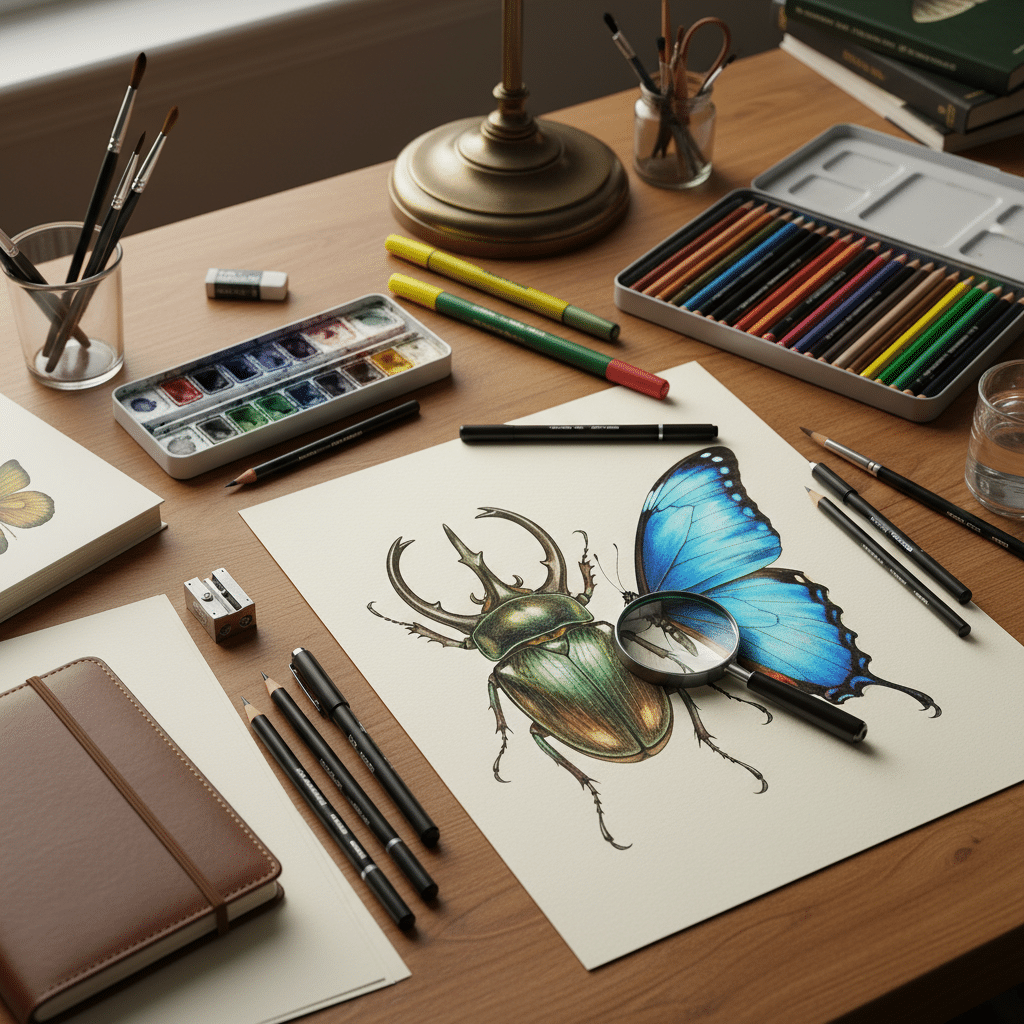
Before we dive into the nitty-gritty of drawing, let’s talk about the tools you’ll need. The good news is, you don’t require an expensive art studio to get started. Basic supplies are more than enough.
- Pencils: A good range of graphite pencils is your best friend.
H Pencils (e.g., 2H, 4H): These are harder pencils, producing lighter, finer lines. Perfect for initial sketches and light guidelines that you’ll erase later. B Pencils (e.g., 2B, 4B, 6B): These are softer pencils, offering darker, richer lines. Ideal for shading, adding depth, and defining your final outlines. A mechanical pencil with fine lead (0.5mm or 0.3mm) can also be invaluable for tiny details.
- Paper: A standard sketchbook is perfect. Look for paper with a bit of “tooth” or texture, as this holds graphite better. Don’t be afraid to experiment with different paper types as you progress.
- Erasers:
Kneaded Eraser: This soft, pliable eraser lifts graphite without damaging the paper surface. Great for lightning lines or dabbing away excess graphite. Vinyl (Plastic) Eraser: For more precise erasing and removing darker lines completely.
- Optional Extras (for when you’re ready to explore):
Fineliners (Ink Pens): For crisp outlines and adding intricate details that stand out. Various tip sizes (0.05mm, 0.1mm, 0.3mm) are useful. Colored Pencils or Watercolors: Once you’re comfortable with the form, adding color can truly bring your insects to life. Blotting Tool/Smudge Stick: For blending graphite and creating smooth transitions in your shading. Reference Photos: High-quality photos of insects are invaluable. Look for clear, well-lit images from various angles.
Remember, the goal isn’t to have the most expensive tools, but to have comfortable tools that allow you to express yourself. Start simple, and expand your kit as your skills and interests grow.
Understanding Insect Anatomy (Simplified): The Blueprint
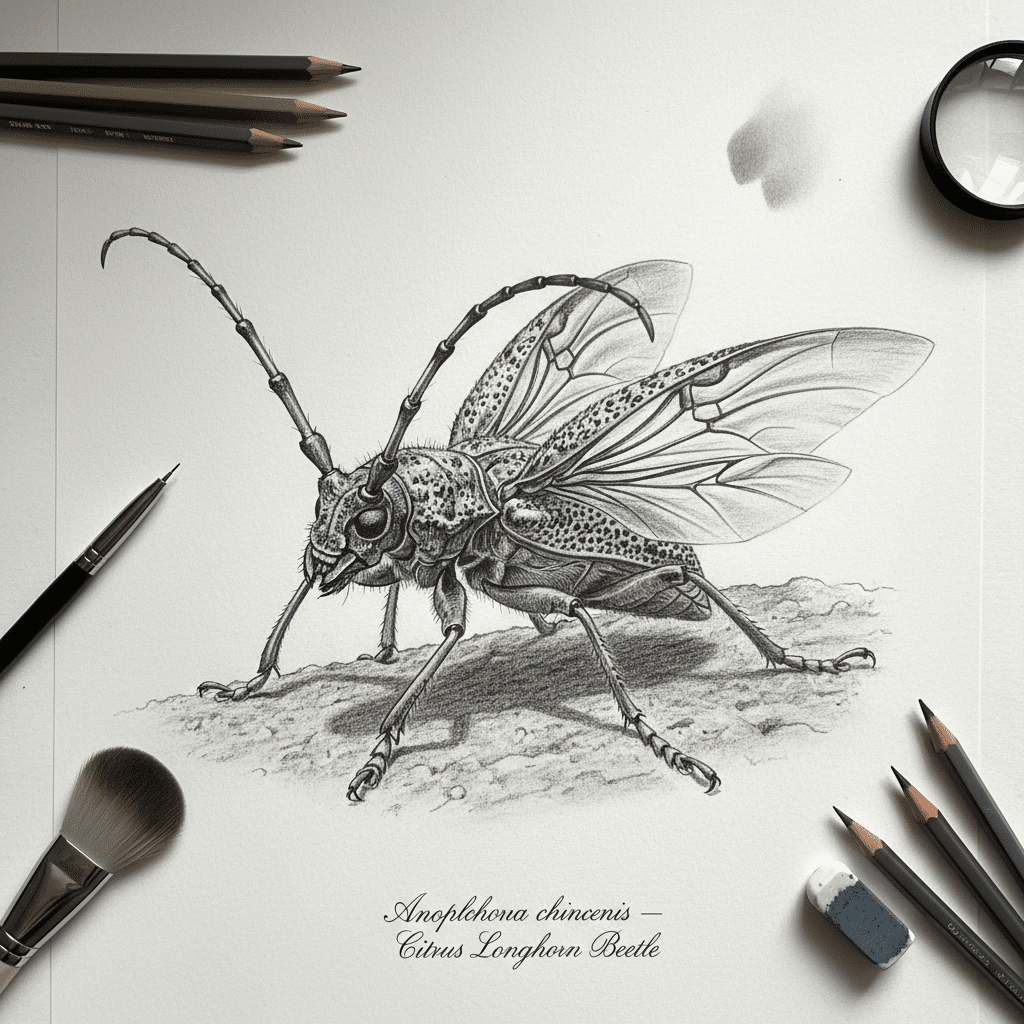
Before you draw an insect, it helps to understand its basic structure. Think of it as learning the art bases for these tiny creatures. While there’s immense variation, most insects share a common body plan, which can be broken down into three main segments:
1. The Head: This is the “control center” where the insect processes information from its environment. Eyes: Most insects have large compound eyes, often made up of many tiny lenses, giving them a faceted appearance. Some also have simple eyes (ocelli). Antennae: These sensory appendages come in countless forms – feathery, clubbed, segmented, whisker-like. They’re used for touch, smell, and sometimes hearing. Mouthparts: Highly varied depending on diet (chewing, sucking, piercing). 2. The Thorax: This is the insect’s “engine room,” responsible for locomotion. Legs: All adult insects have six legs, always attached to the thorax. They are typically segmented, like miniature armored limbs. Wings: Most insects have two pairs of wings (four total), also attached to the thorax. Some have only one pair, and some are wingless. Wings can be delicate and transparent (dragonflies), hardened and protective (beetles), or covered in scales (butterflies). The vein patterns within the wings are often unique to species. 3. The Abdomen: This is the “gut and reproductive” section, containing most of the insect’s digestive and reproductive organs. Segments: The abdomen is typically segmented, giving it a ribbed or banded appearance. Cerci/Ovipositors:* Some insects have tail-like appendages (cerci) or egg-laying structures (ovipositors) at the end of their abdomen.
Key Features to Remember:
- Exoskeleton: Insects have a hard outer shell (exoskeleton) instead of an internal skeleton. This means their bodies often appear shiny, rigid, and sometimes angular.
- Segmentation: Almost every part of an insect – from antennae to legs to the abdomen – is made up of distinct segments. This is a crucial detail for accurate drawing.
Understanding these basic parts will give you a solid foundation and make the drawing process much more logical. Instead of seeing a jumble of lines, you’ll start to see a structured organism.
Basic Shapes: The Foundation of Every Bug
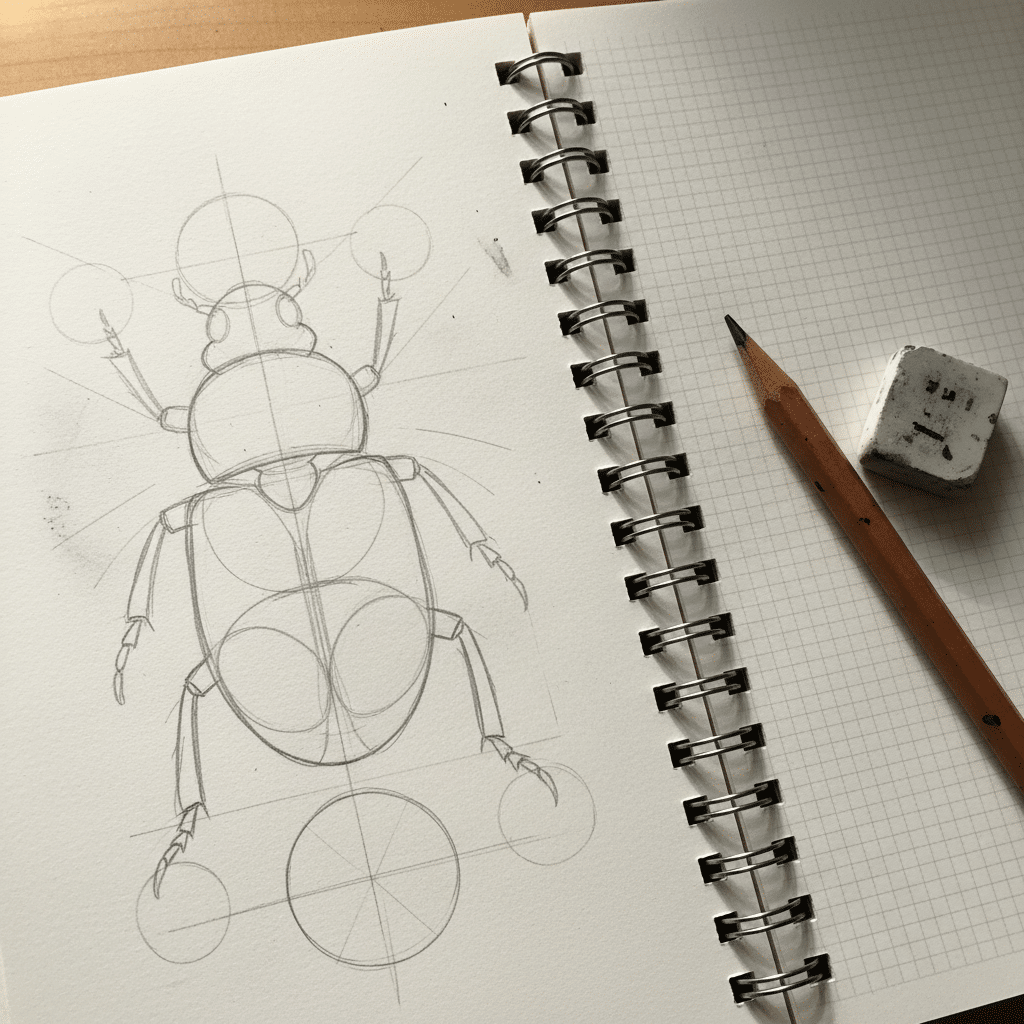
This is where the magic begins! Forget about drawing a perfect beetle immediately. Instead, we’re going to build our insect using simple geometric shapes. This approach is fundamental to drawing anything, not just insects, and helps you get the proportions right before diving into details.
Think of your insect as a collection of circles, ovals, rectangles, and cylinders.
1. Head: Often a circle or an oval. 2. Thorax: Usually a larger oval or a slightly squashed circle. 3. Abdomen: The largest section, frequently an elongated oval, cylinder, or even a teardrop shape. 4. Legs: Start as thin lines for placement, then build them up with small cylinders or elongated ovals for the segments. 5. Wings: Simple curved shapes – triangles, ovals, or rounded rectangles – to establish their size and general position. 6. Antennae: Thin lines indicating direction and length.
The Process:
- Lightly sketch these basic shapes, focusing on their relative sizes and how they connect. Don’t press hard; these are just guidelines.
- Overlap the shapes where parts connect (e.g., the head slightly overlaps the thorax).
- Establish the overall pose of the insect with these initial shapes. Is it flying? Resting? Crawling?
This foundational step is critical. It’s like building the frame of a house before you start decorating. Get the basic structure right, and the rest will fall into place much more easily.
Step-by-Step Drawing Process: Bringing Your Bug to Life
Now that you have your basic shapes and understand insect anatomy, let’s go through the step-by-step process of turning those simple forms into a detailed insect drawing.
1. Observation is Key
Before you even touch your pencil to paper, spend time observing. If you can’t find a live insect (and often, they don’t hold still!), use high-quality reference photos. Look closely at:
- The overall silhouette.
- The relationship between the head, thorax, and abdomen size.
- The angle and curve of the legs.
- The shape and venation (vein patterns) of the wings.
- The texture: shiny, fuzzy, bumpy?
- Where the light hits and creates shadows.
The more you observe, the more accurately you’ll be able to represent it.
2. Sketching the Basic Form (Lightly)
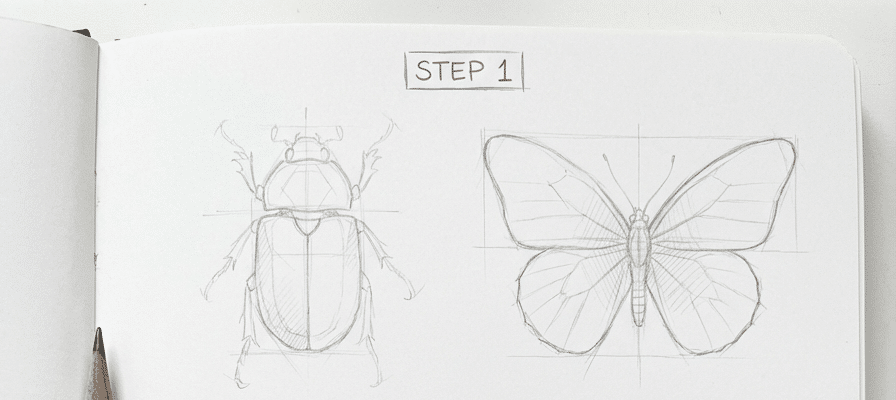
Using your H pencil (like a 2H or 4H), gently sketch the basic geometric shapes you identified earlier. Focus on:
- Proportion: How big is the head compared to the thorax? How long is the abdomen?
- Placement: Where do the legs attach? How do the wings extend from the thorax?
- Angle: Is the insect viewed from above, the side, or an interesting three-quarter angle?
Keep your lines loose and barely visible. You’re simply mapping out the composition. Don’t be afraid to make multiple light lines to find the right shape; you’ll erase the unnecessary ones later.
3. Refining the Anatomy
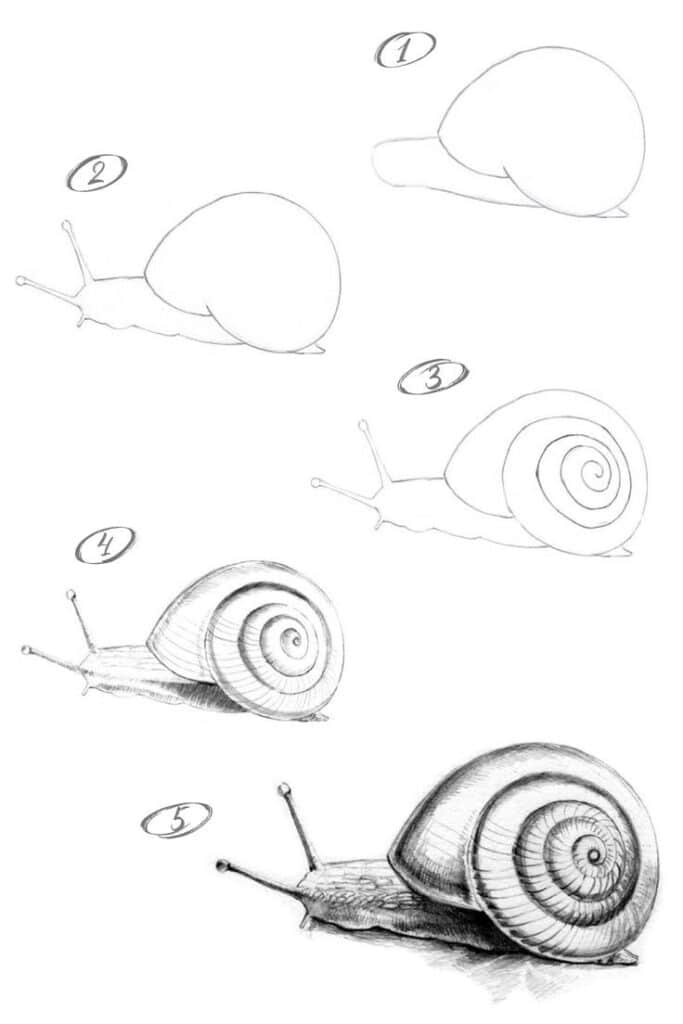
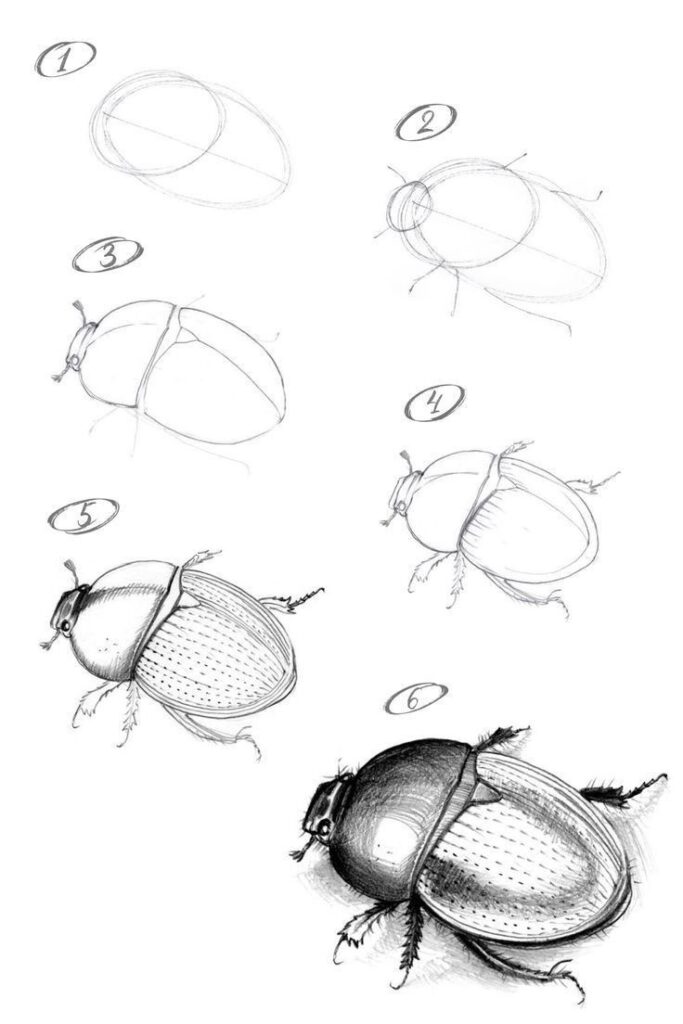
Now, using your basic shapes as a guide, start to refine the outlines of each body part. Think of it as “connecting the dots” but with smoother, more organic curves.
- Head: Define the shape of the head, adding the prominent compound eyes. Sketch the antennae, paying attention to their length, curvature, and segmentation.
- Thorax: Refine the thorax’s outline.
- Abdomen: Draw the segmented lines of the abdomen. These lines should follow the curve of the body, giving it a cylindrical or rounded appearance.
- Legs: This is often the trickiest part. Insects have six legs, each with several segments and joints (e.g., coxa, trochanter, femur, tibia, tarsus).
Start by sketching the general direction and curve of each leg with single lines. Then, go back and “flesh out” each segment, making them cylindrical or slightly tapered. Pay close attention to the joints – they aren’t smooth curves but distinct articulation points.
- Wings: Refine the wing shapes. If the insect has prominent venation (veins), lightly sketch in the main veins. These often follow specific patterns and add structural integrity to the wing.
At this stage, your drawing should clearly resemble an insect, even without heavy detail.
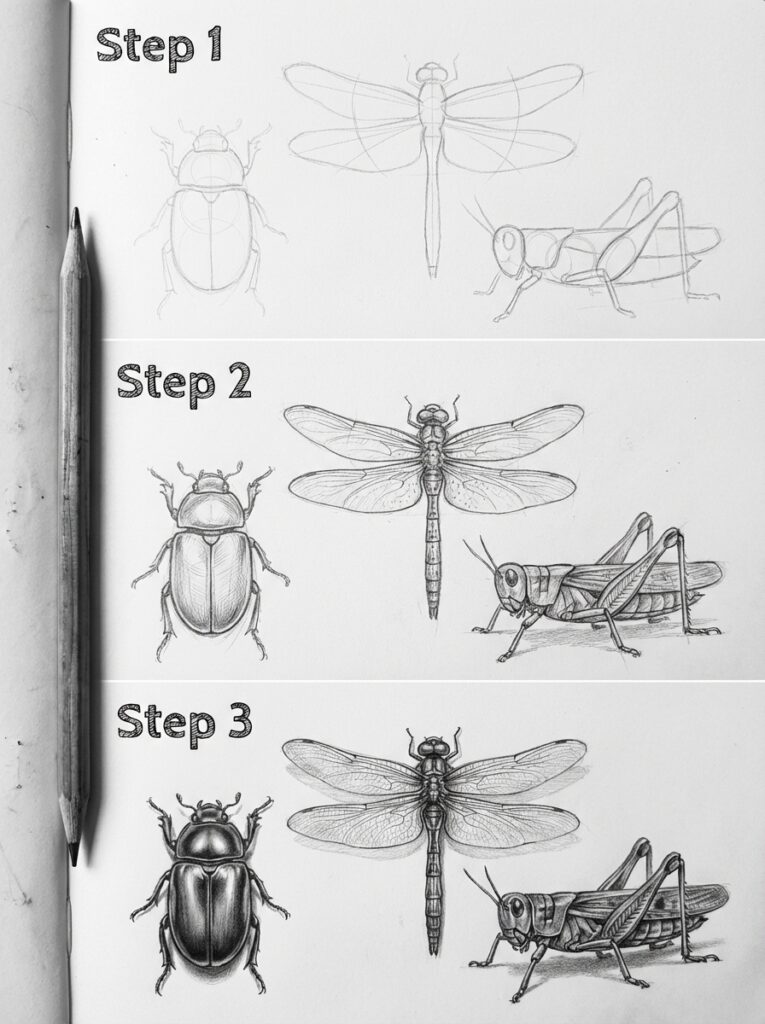
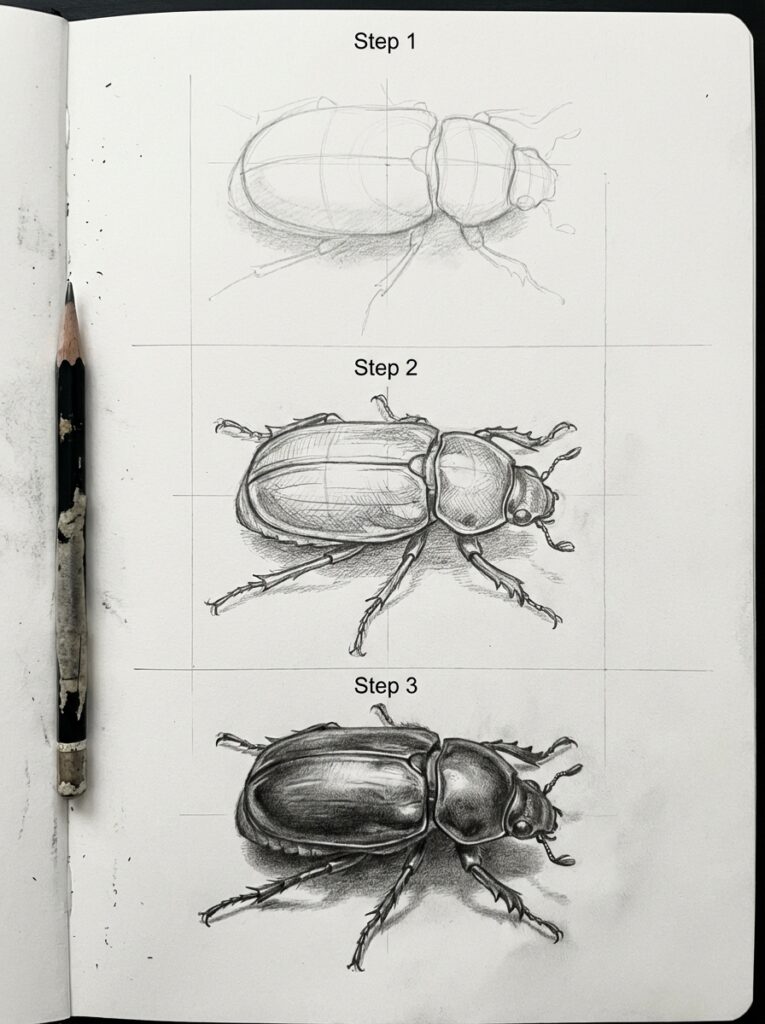
#### 4. Adding Details and Texture
This is where your insect really starts to come alive! Switch to a slightly softer pencil (like an HB or 2B) for these details.
- Eyes: If compound, suggest the facets with tiny dots or a subtle pattern.
- Antennae: Add any small hairs, segmentation, or specific shapes (e.g., clubbed, feathery).
- Exoskeleton: Observe the texture. Is it smooth and shiny like a beetle, or rough and bumpy like a cicada? Use short, parallel lines for striations, or tiny dots for a granular texture.
- Hairs/Fuzz: For insects like bees, use very fine, short, light strokes to mimic their fuzzy bodies. The direction of these strokes should follow the curve of the body.
- Wing Venation: Go over the wing veins with more definition. For transparent wings, remember they aren’t solid; they cast shadows and have subtle reflections.
- Legs: Add tiny spines, claws, or specialized structures you observe on the reference.
Remember, detail doesn’t mean drawing every single hair. It means suggesting the textures and patterns effectively.
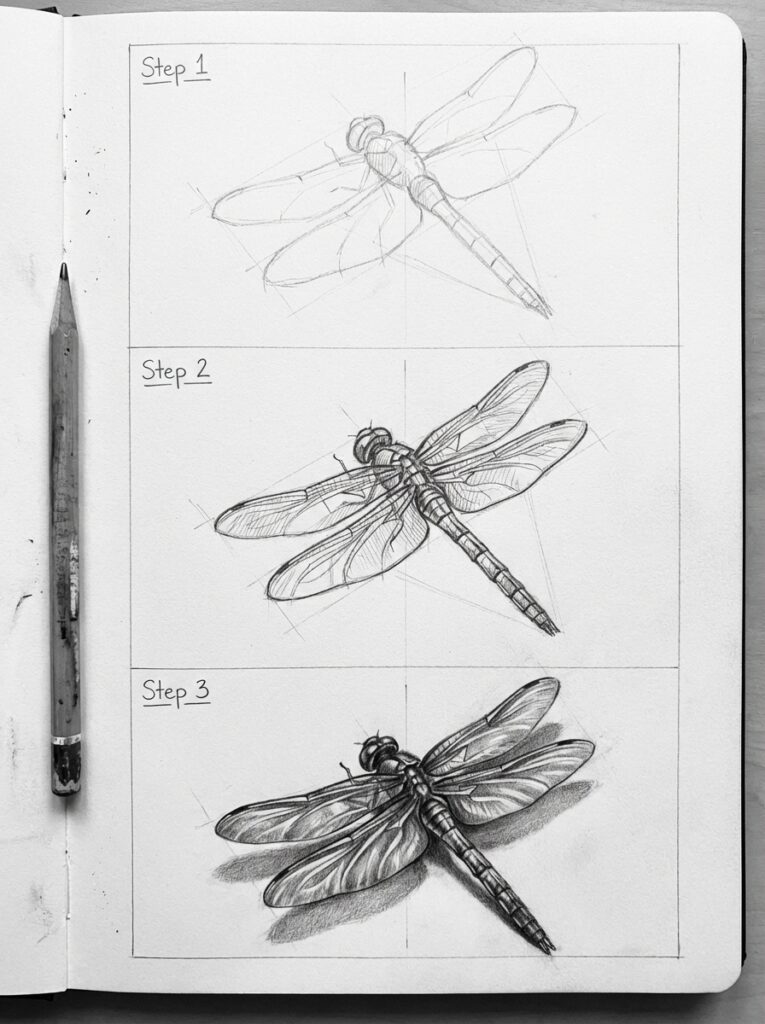
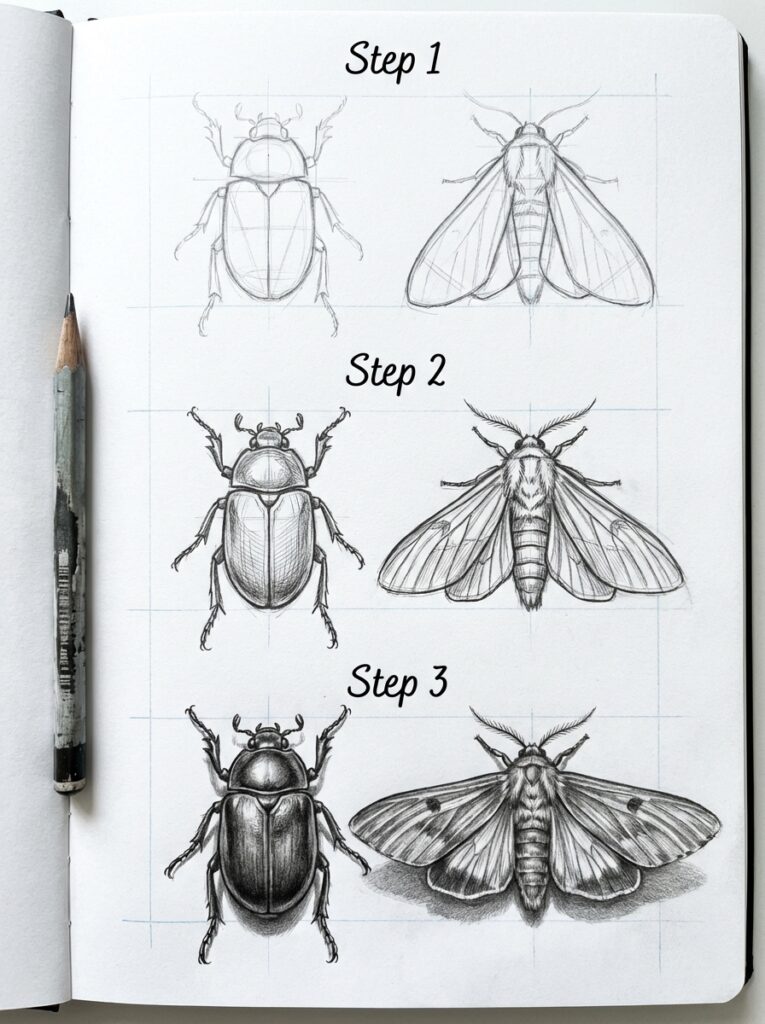
5. Shading and Form: Giving Depth
Shading is what turns a flat outline into a three-dimensional creature. It defines the insect’s form, shows its volume, and grounds it in space.
- Establish a Light Source: Decide where your light is coming from. This dictates where the highlights (brightest areas) and shadows (darkest areas) will fall.
- Basic Shading: Use a soft pencil (2B, 4B) to apply a base layer of mid-tone shading. Build up gradually, applying more pressure or layering strokes for darker areas.
- Form Shadows: These are the shadows that define the curves and contours of the insect’s body. The underside of the abdomen, the protected areas under the wings, and the crevices between segments will be darker.
- Cast Shadows: These are the shadows the insect casts on the surface it’s resting on, or from one part of its body onto another (e.g., a wing casting a shadow on the abdomen). Cast shadows are usually darker and have sharper edges close to the object.
- Highlights: Leave some areas untouched or lightly erase them with a kneaded eraser to represent highlights, where the light directly hits the shiny exoskeleton.
- Techniques:
Hatching/Cross-hatching: Using parallel or intersecting lines to build up tone. Stippling: Using tiny dots to create texture and tone. Blending:* Using a blending stump, tissue, or even your finger (though be careful of oils) to smooth out graphite for softer transitions.
Shading requires patience. Work slowly, building up your tones in layers. Step back frequently to assess your progress. For more general drawing tips that can enhance your shading, consider exploring broader artistic resources.
#### 6. Final Touches
- Clean Up: Use your vinyl eraser to remove any leftover construction lines or smudges.
- Define Outlines: Go over key outlines with a slightly darker line to make the insect pop. This could be with a 6B pencil or a fine-liner pen. Be selective; not all outlines need to be equally dark.
- Add Sparkle: A tiny, bright highlight on an eye or a shiny part of the exoskeleton can add life.
- Refine Details: Are there any small details you missed or could enhance? A few more hairs, a subtle pattern?
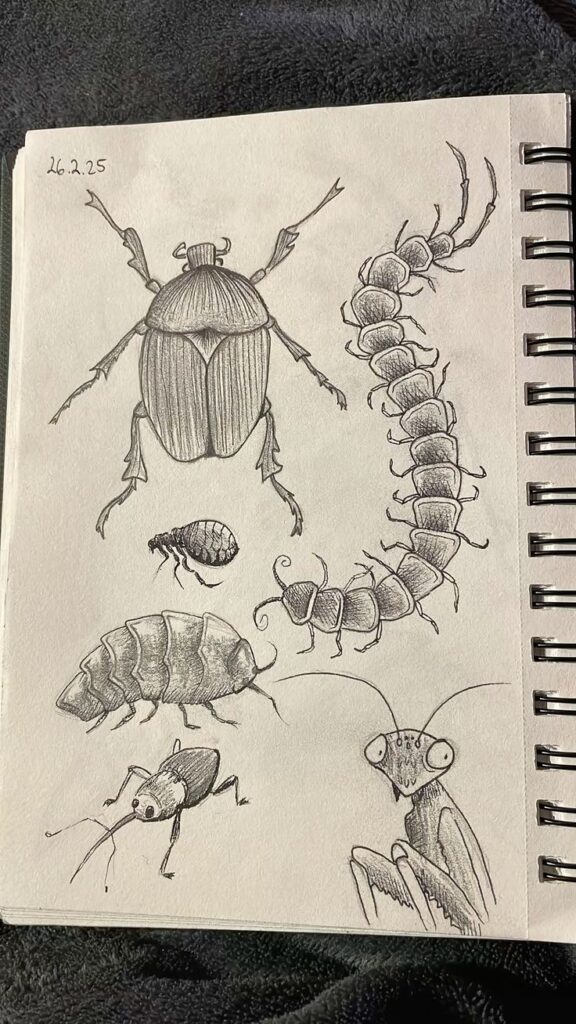
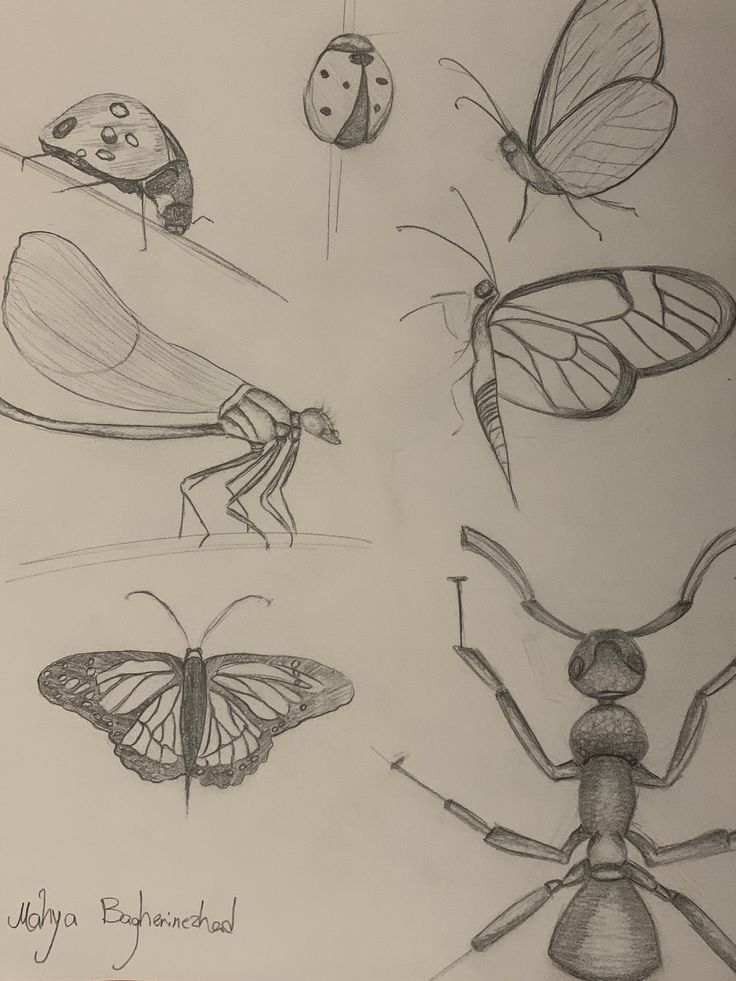
Drawing Different Types of Insects: Practice Makes Perfect
Now that you know the general process, let’s look at how to apply it to a few diverse insect types. Each offers unique challenges and rewards.
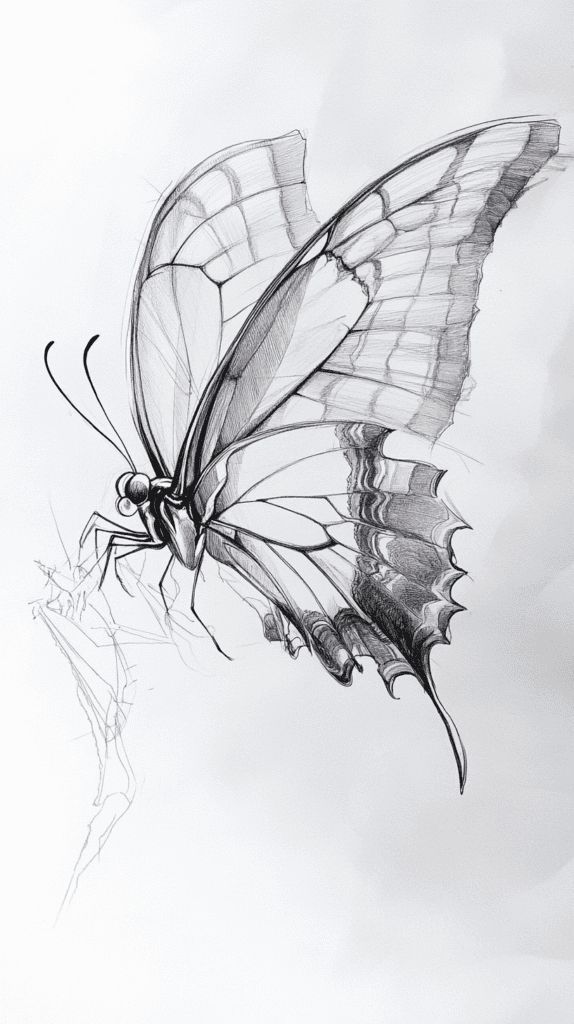
The Graceful Butterfly
Butterflies are all about symmetry, delicate wings, and vibrant patterns.
- Basic Shapes: An elongated oval for the body, a smaller oval for the head. The wings are large, often triangular or rounded shapes.
- Symmetry: When drawing a butterfly with outstretched wings, focus heavily on symmetry. Draw a central vertical guideline down the body, and ensure corresponding points on each wing are equidistant from it.
- Wings: The most captivating part. Sketch the main outline, then lightly map out the main venation. The patterns between these veins are often symmetrical.
- Texture: Use light, feathery strokes or stippling to suggest the delicate scales on the wings.
- Color (if applicable): Butterflies are a fantastic subject for exploring color. Use colored pencils or watercolors to mimic their iridescent hues.

The Busy Bee
Bees are instantly recognizable by their fuzzy bodies and delicate, transparent wings.
- Basic Shapes: A relatively round head, a robust, fuzzy thorax, and a distinctly segmented, often striped abdomen.
- Fuzz: This is key! Use very fine, short, overlapping strokes in the direction of the fur growth to create a soft, fluffy texture. Avoid harsh outlines where the fuzz is thickest.
- Segmentation: Clearly define the segments of the abdomen, and add the characteristic stripes.
- Wings: Bees have four transparent wings. Focus on their delicate venation and how they overlap.
- Legs: Pay attention to the pollen baskets on the hind legs if you’re drawing a worker bee.


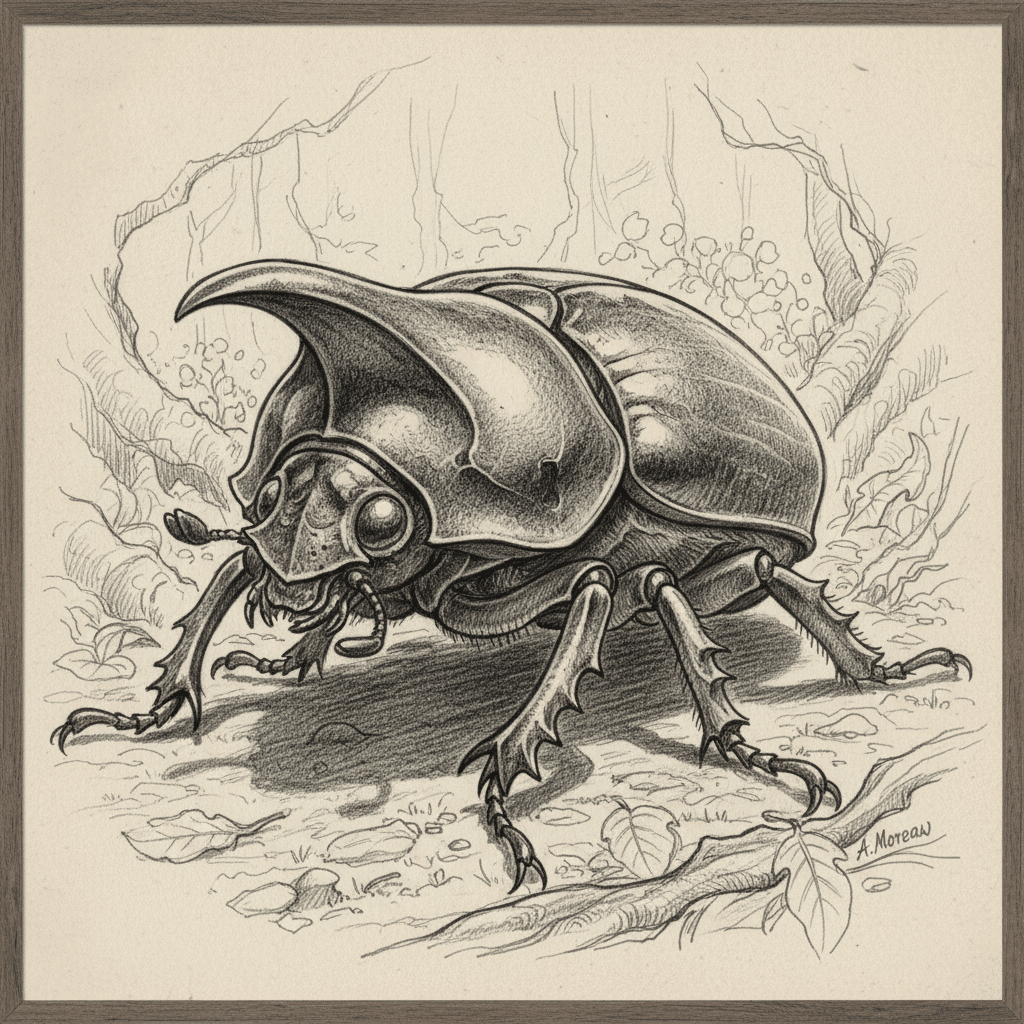
The Armored Beetle
Beetles offer a fantastic opportunity to practice drawing hard, reflective surfaces, and complex leg structures.
- Basic Shapes: Often very geometric – oval head, broad thorax, and an oval or elongated abdomen covered by hard wing cases (elytra).
- Exoskeleton: Emphasize the hard, shiny surface with strong contrasts between highlights and shadows. Use clean, confident lines for the edges.
- Segmentation: Pay attention to how the head, thorax, and abdomen connect. The thorax (pronotum) is often very prominent.
- Legs: Beetles often have robust, segmented legs with distinct joints and sometimes powerful claws. Practice drawing these in different positions.
- Patterns: Many beetles have incredible iridescent or textured patterns on their elytra. Use small dots, lines, or cross-hatching to suggest these.

The Elongated Dragonfly
Dragonflies are aerial acrobats, characterized by large eyes, slender bodies, and intricate, transparent wings.
- Basic Shapes: A large, almost helmet-like head dominated by eyes, a compact thorax, and a long, slender, segmented abdomen.
- Eyes: The compound eyes can cover most of the head. Suggest their faceted nature with subtle patterns.
- Wings: Four large, often clear wings with dense venation. This is a challenge in itself! Practice drawing the web-like network of veins. The wings can also have a slight iridescent sheen.
- Abdomen: Emphasize the long, segmented structure of the abdomen. Each segment should be clearly defined.
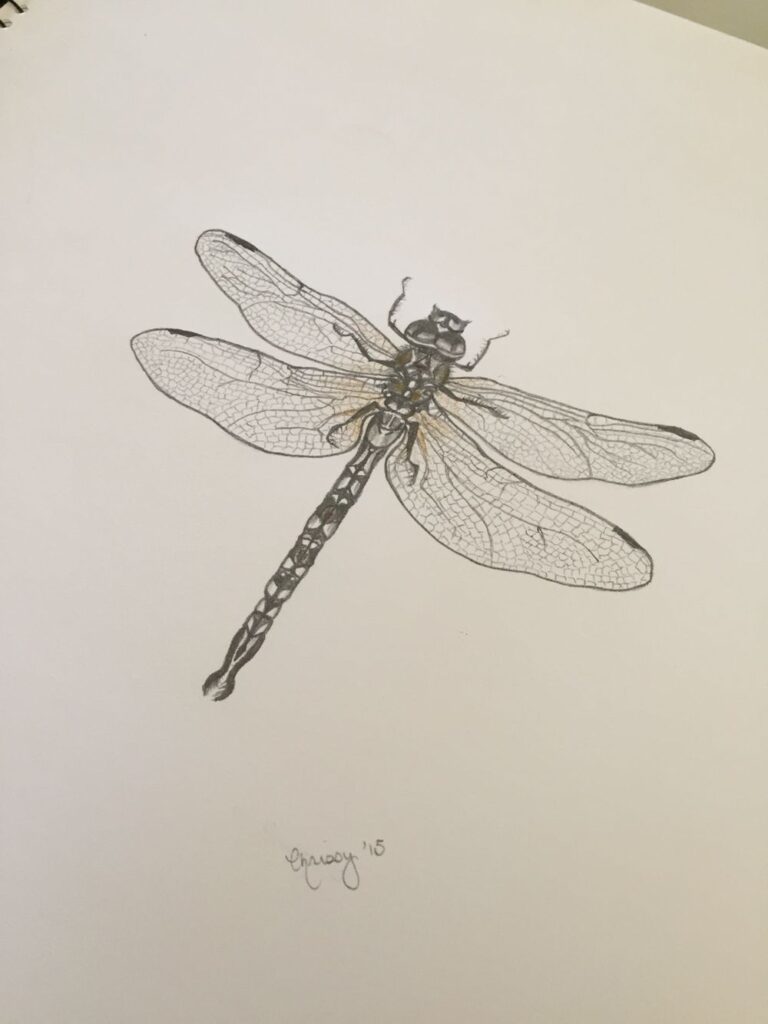

Tips for Success and Overcoming Challenges
Drawing insects can be incredibly rewarding, but like any skill, it comes with its own set of challenges. Here are some tips to help you along your artistic journey:
- Start Simple: Don’t pick the most complex insect with iridescent wings and a dozen hairy legs for your first attempt. Begin with simpler forms like a ladybug or a basic beetle silhouette. Build confidence before tackling a complicated moth.
- Practice Regularly: Consistency is more important than long, infrequent sessions. Even 15-20 minutes of sketching each day will yield significant improvement over time.
- Use Good References: High-quality photos are invaluable. Look for clear, well-lit images that show the insect from various angles. If you can, observe real (dead or safely contained) insects to understand their 3D form.
- Don’t Be Afraid of Mistakes: Every line that doesn’t quite work is a learning opportunity. Embrace the eraser! Drawing is an iterative process.
- Focus on Proportions First: Get the sizes of the head, thorax, and abdomen right before you start adding tiny details. A perfectly rendered eye won’t look right if the head is too small.
- Break It Down: If an insect looks too complex, mentally (or physically with light lines) break it down into its core geometric shapes. This makes it less intimidating.
- Experiment with Tools: Try different pencils, papers, or even ink pens. You might find a medium that clicks with you. For those interested in expanding their artistic repertoire digitally, exploring resources on digital art in 2025 might spark new ideas.
- Take Breaks: Staring at your drawing for too long can make you “go blind” to errors. Step away for a few minutes, clear your head, and then look at your work with fresh eyes. You’ll often spot things you missed.
- Study Entomology (Loosely): A little bit of knowledge about how insects live, move, and function can inform your drawings and make them more dynamic and believable.
- Join a Community: Share your work with others! Online forums or local art groups can provide encouragement, constructive feedback, and inspiration.
Beyond the Basics: Taking Your Insect Art Further
Once you’ve mastered the fundamentals of drawing insect forms, there’s a whole world of artistic exploration awaiting you.
- Color Theory: Move beyond graphite and delve into the vibrant world of insect colors. Learn how different colors interact, how to create realistic iridescent effects, and how to use color to convey mood or realism. Colored pencils, watercolors, acrylics, or digital painting all offer unique possibilities.
- Backgrounds and Environments: Don’t just draw the insect in isolation. Place it in its natural habitat – perched on a leaf, clinging to a flower, or flying through the air. This adds context, depth, and storytelling to your artwork. Consider how light and shadow in the environment affect the insect itself.
- Stylization vs. Realism: While this guide focuses on realistic rendering, you might find your artistic voice leans towards stylization. Experiment with cartoonish insects, abstract interpretations, or highly decorative patterns inspired by insect forms. There’s no single “right” way to draw.
- Digital Drawing: If you have access to a tablet and stylus, digital art offers incredible flexibility for drawing insects. Layers allow you to experiment endlessly, and a vast array of brushes can simulate various textures, from fine hairs to shiny exoskeletons. It’s a fantastic medium for detailed work and adding vibrant colors.
- Composition: Think about the overall arrangement of your drawing. How does the insect fit on the page? What angle is most interesting? Should it be centered, or off-center to create visual tension? Understanding composition can elevate a simple drawing to a compelling piece of art.
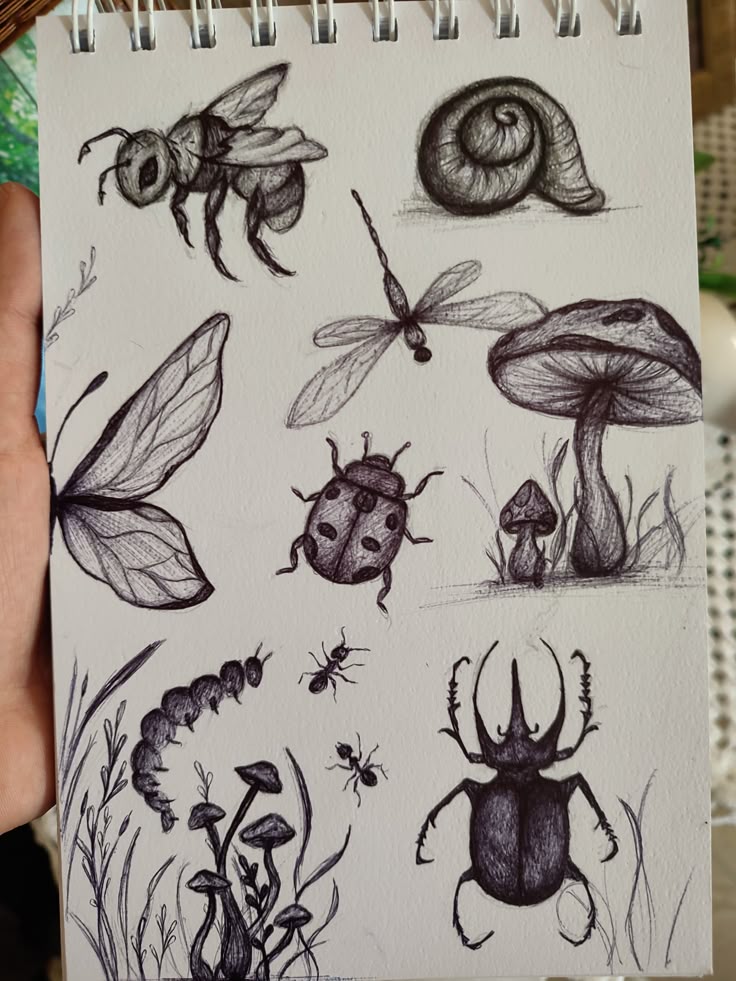
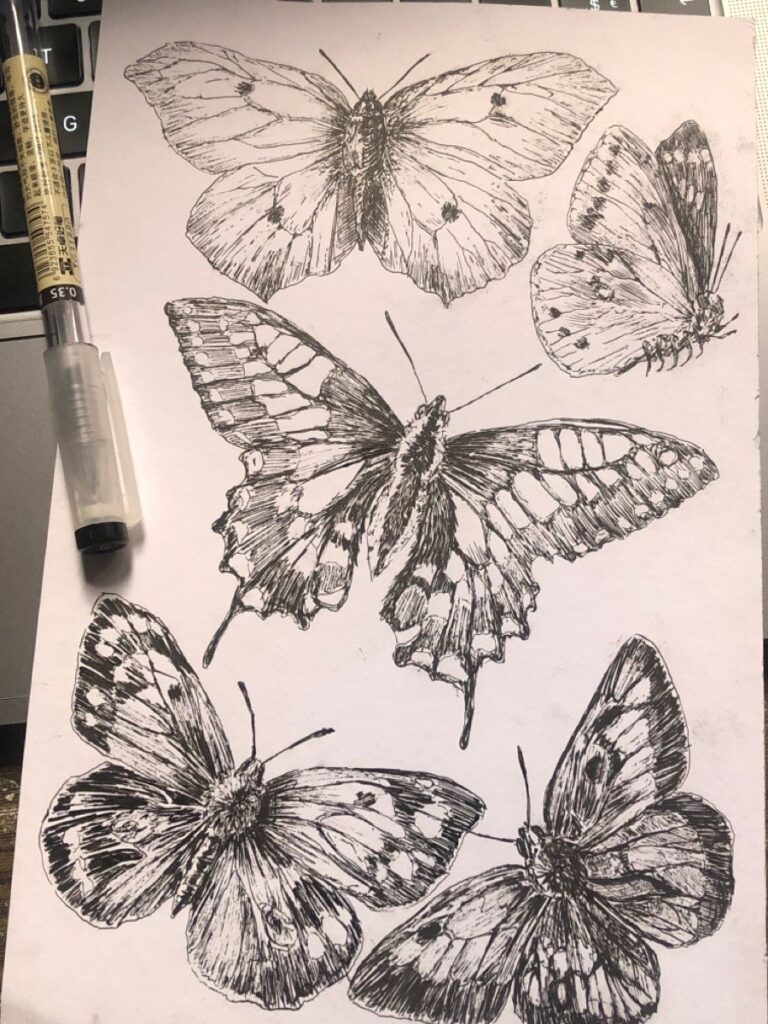
Conclusion: Embrace the Buzz of Creativity
Congratulations! You’ve taken the first steps on an incredible journey into the world of insect art. Learning how to draw insects is more than just putting lines on paper; it’s about developing a deeper appreciation for the natural world, honing your artistic skills, and finding joy in the intricate beauty of creatures often overlooked.
From the first light geometric shapes to the final intricate details and shading, each step builds confidence and refines your artistic eye. Remember, every master artist started with simple lines and shapes. The key is to observe, practice, and most importantly, have fun with it. Don’t let the complexity of these tiny marvels intimidate you. Break them down, understand their basic blueprint, and let your creativity take flight.
So, keep sketching, keep observing, and let the fascinating world of insects inspire your next masterpiece. The canvas (or sketchbook page) is yours to fill with these incredible, tiny wonders. Happy drawing!
What basic tools do I need to start drawing insects?
To begin drawing insects, a good set of graphite pencils (such as 2H to 6B), standard sketchbook paper with some tooth for better grip, and a variety of erasers, including kneaded and vinyl erasers, are essential. Optional tools include fineliners for outlines, colored pencils or watercolors for coloring, blending tools, and reference photos.
How can I understand insect anatomy to improve my drawings?
Understanding insect anatomy involves learning their three main body segments: the head, thorax, and abdomen, along with their key features such as compound eyes, antennae, jointed legs, and wing venation. Recognizing that insects are made up of simple shapes like circles and ovals helps in constructing accurate drawings.
What is the best way to start drawing an insect?
Start by lightly sketching the basic geometric shapes that form the insect’s body parts, focusing on proportions and placement. Overlap these shapes to establish the overall pose. Once the framework is set, refine the outlines, adding details and textures gradually.
How do I add realistic textures and shading to my insect drawings?
Use softer pencils like HB or 2B to add details such as eyes, hair, and exoskeleton textures. Establish a light source and build up shading gradually with layering techniques like hatching or stippling. Use highlights and shadows to give depth and three-dimensionality to the drawing.
What are some common challenges in drawing insects, and how can I overcome them?
Common challenges include capturing complex details like wing venation and leg articulation. To overcome these, start with simple shapes, practice regularly, use high-quality reference images, and break down the insect into manageable parts. Patience and iterative refining are key to improving your skills.
- 845shares
- Facebook0
- Pinterest842
- Twitter3
- Reddit0