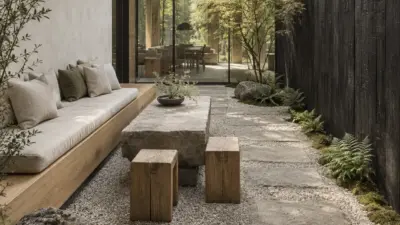
Vertical gardening ideas for small spaces work best when every inch has a job: a box for roots, a wall for height, and a clear path for light and water. A balcony, patio, narrow side yard, or compact indoor corner can hold herbs, salad greens, trailing flowers, and even small fruit when the planter is deep enough and drainage is handled properly.
The mistake I see most often is treating a vertical garden like decor first and a growing system second. It can be beautiful, of course, but the layout has to answer practical questions: where does excess water go, how heavy will the planter be after rain, and can you still reach the top row without making maintenance annoying?
How to plan a vertical garden in a small space
For a small-space vertical garden, start with the wall, rail, fence, or shelf that can safely carry weight, then choose containers around the plants you actually want to grow. Shallow pockets suit herbs, lettuces, and small flowers. Deeper planter boxes suit strawberries, dwarf peppers, compact tomatoes, and climbers on a trellis. Keep thirsty plants low enough to water easily, place sun-loving crops where they get the brightest exposure, and avoid stacking plants so tightly that leaves stay damp all day. If the area is windy, use heavier boxes at floor level and lighter wall planters above. The best vertical gardening ideas for small spaces feel simple because the structure, soil, drainage, and access have been solved before the pretty foliage goes in.

| Idea | Best for | What to watch |
|---|---|---|
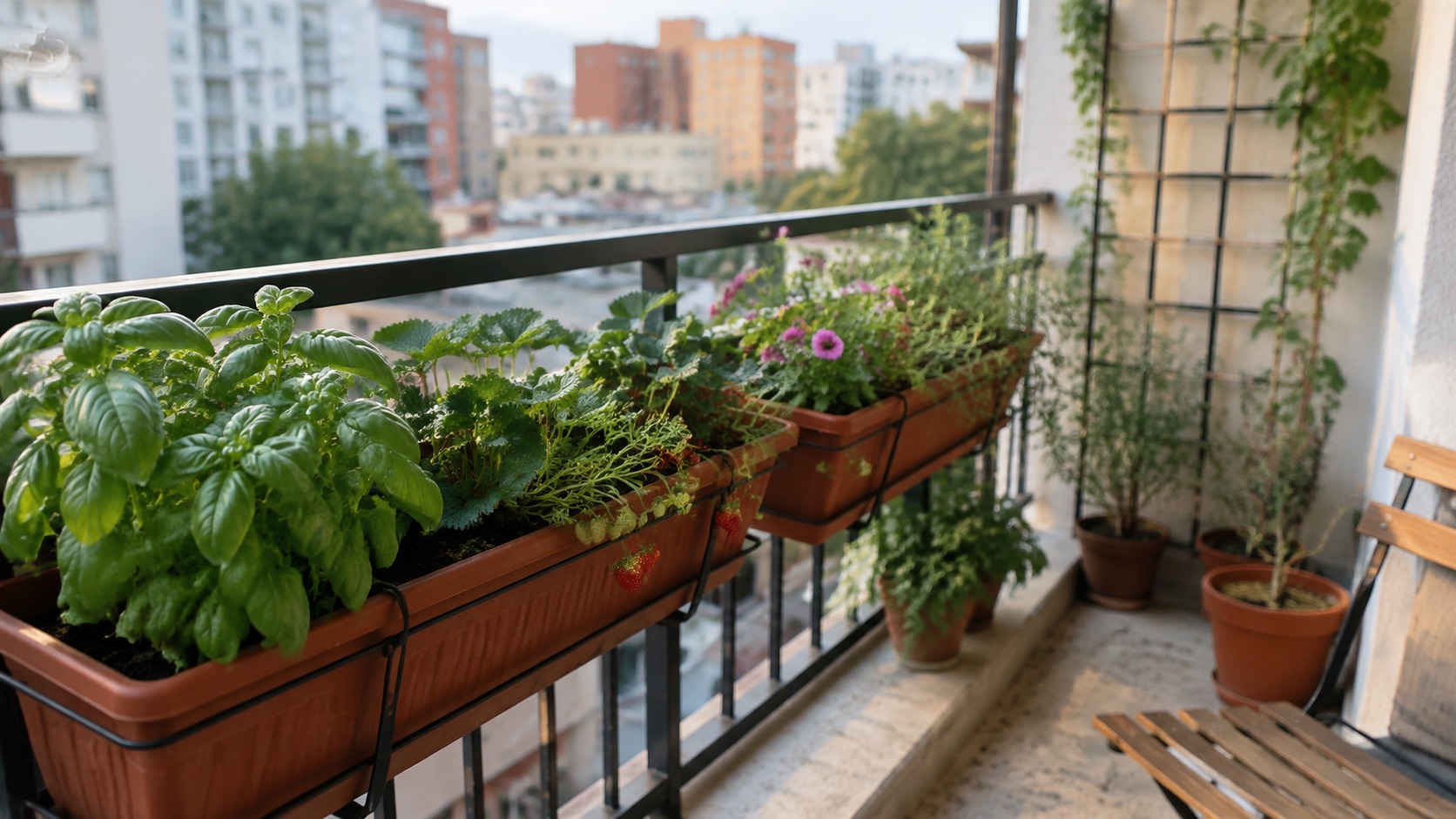
| Railing planter boxes | Balconies, decks, sunny apartment edges | Weight limits, drip control, and wind exposure |
| Wall pockets | Herbs, lettuce, annual flowers, indoor greenery | Shallow roots and faster drying soil |
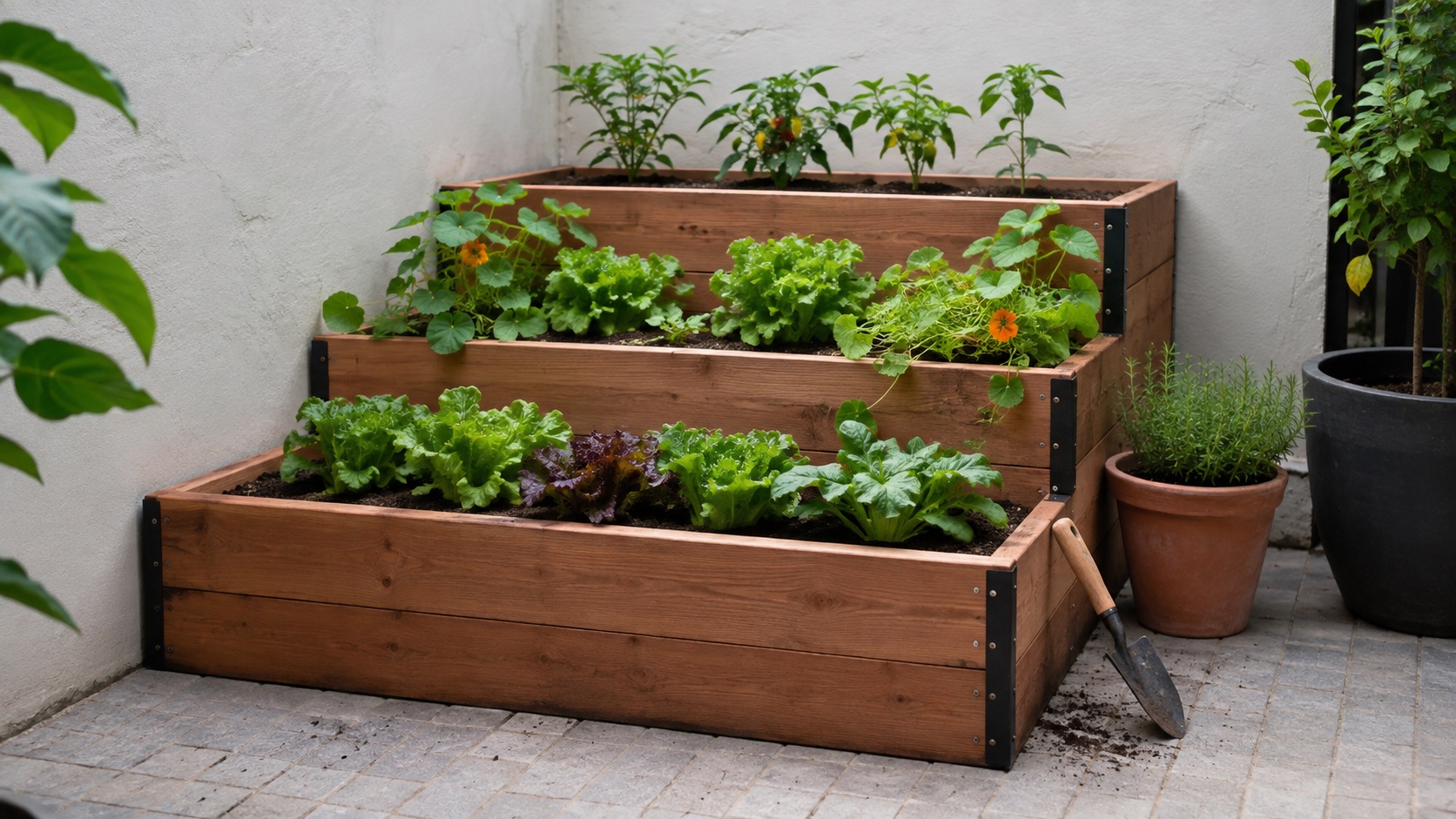
| Tiered planter boxes | Patios, compact vegetable gardens, renters | Keeping the lower tiers from being shaded out |
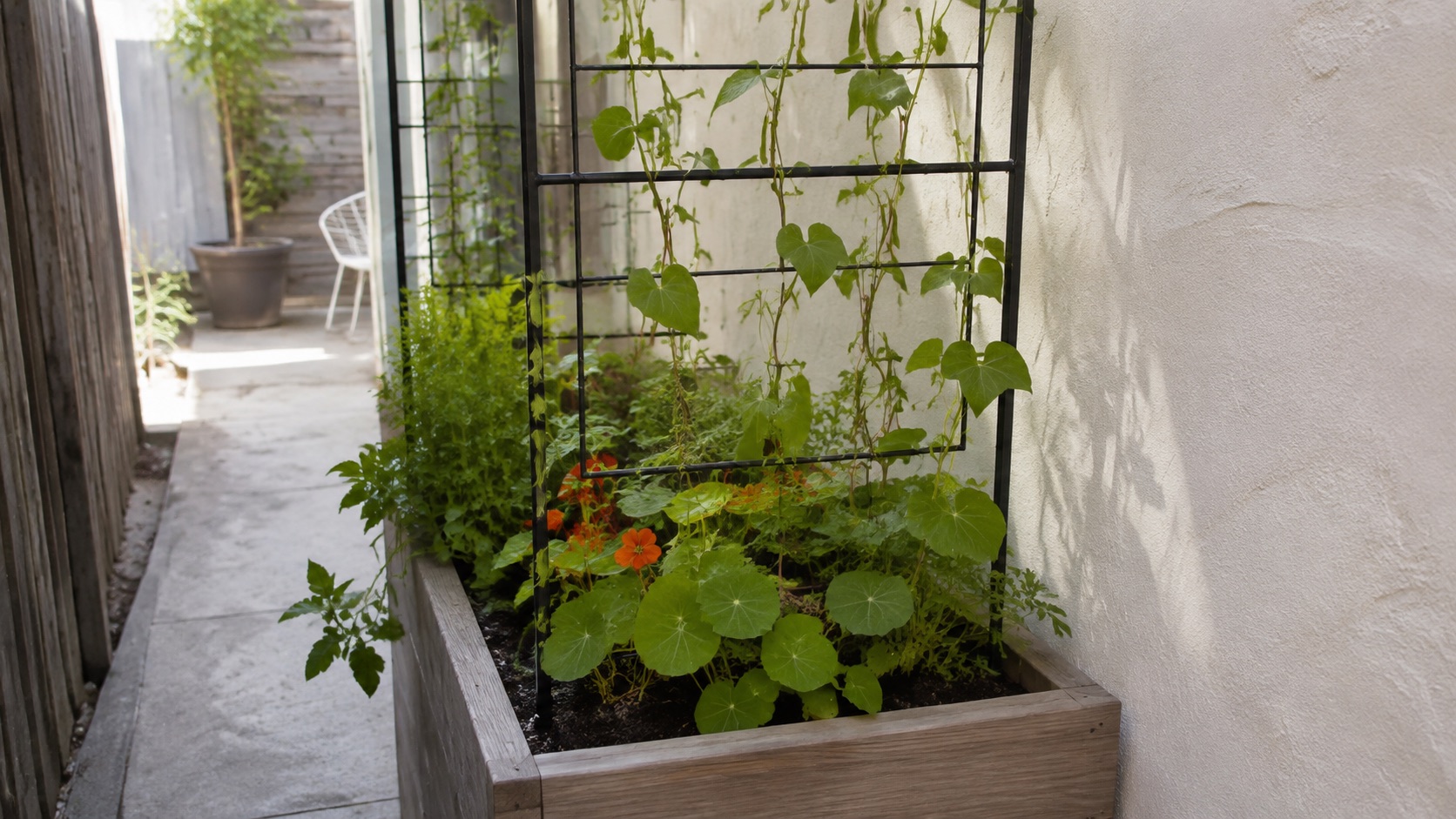
| Trellis containers | Peas, beans, cucumbers, jasmine, climbing flowers | A deep base and a stable vertical support |
| Hanging baskets | Trailing flowers, strawberries, compact herbs | Regular watering and reachable hanging height |
| Indoor wall planters | Houseplants, herbs, soft green focal points | Waterproof backing, trays, and enough light |
Benefits of planter boxes and vertical gardens
Planter boxes and vertical gardens solve the same problem from two angles. Boxes give roots a defined, controllable home. Vertical structure moves foliage upward so the floor stays open for a chair, path, table, or simply breathing room. Together, they turn awkward corners and bare walls into usable growing space.
More growing room without crowding the floor
A small patio garden does not need to feel packed. When you use a narrow box, shelf, or trellis against the wall, the plants create height while the usable footprint stays modest. That is why a small patio garden often feels larger after the planting is organised vertically, not smaller.
Better airflow and easier plant checks
Vertical spacing can improve airflow around leaves, which helps them dry after watering and makes early pest or disease problems easier to spot. It also keeps herbs and salad greens at eye level, so you are more likely to trim, harvest, and notice dry soil before the plants struggle.
A cleaner visual frame for small spaces
A planter box gives the garden a visual edge, which matters in a tight outdoor room. If you want a polished finish, compare a ready-made planter box with a custom landscape design package; if the floor needs a low-maintenance green base, artificial grass can soften the area around real planted containers without adding more watering work.
Choosing planter boxes for small spaces

Good planter box ideas start with depth, drainage, and access. The University of Maryland Extension’s container food gardening guidance is a useful reminder that container gardens need more frequent monitoring than ground beds because they hold less water and fewer nutrients. That does not make them difficult; it just means the container has to match the plant.
Wooden and raised planter boxes
Wooden boxes work well for patios and side yards because they look warm, can be built to exact dimensions, and hold enough soil for mixed planting. A low raised garden bed is better for larger vegetables, while a slim wall-side box is better for herbs, flowers, and small climbers.
Self-watering planter boxes
Self-watering boxes are useful on hot balconies and busy patios because they reduce daily watering swings. They still need overflow drainage, fresh potting mix, and occasional checks. Use them for greens, herbs, strawberries, or annual flowers rather than plants that hate consistently moist roots.
Wall-mounted and railing planters
Wall-mounted planters and railing boxes are the classic answer for planter boxes for small spaces. Before installing them, check fixing points, loaded weight, and where runoff lands. The container types and drainage notes are especially helpful when you are comparing plastic, wood, fabric, metal, and repurposed containers.
Large containers used sparingly
One large outdoor planter can anchor a small garden better than five undersized pots. Use it for a dwarf tree, a tomato with herbs below, or a tall ornamental grass with trailing flowers, then let smaller wall planters handle the lighter crops.
Vertical gardening techniques for small spaces

Vertical gardening is not one product. It can be a trellis, a pocket panel, a ladder shelf, a fence-mounted rail, a pallet planter, or a purpose-built living wall. The Old Farmer’s Almanac guide to vertical gardening for beginners frames it simply: grow upward with structures so the same footprint can hold more plants.
Trellises and climbing structures
A trellis container is the easiest way to add height without complicated installation. Put the deepest box at the base, add a sturdy frame, and grow peas, beans, cucumbers, jasmine, mandevilla, or climbing nasturtiums. Keep the trellis slightly away from the wall so air can move behind the leaves.
Pocket gardens and wall rails
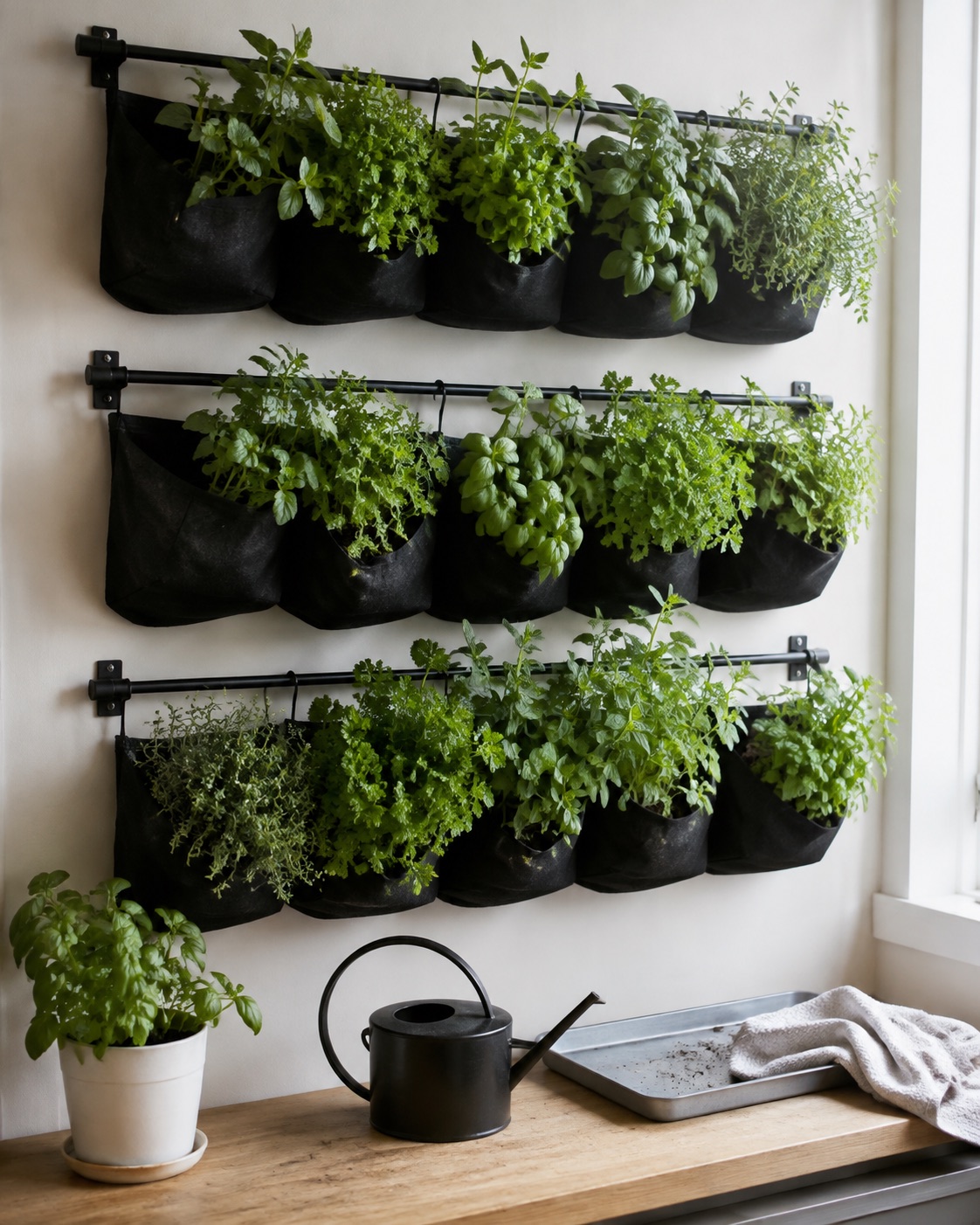
Pocket gardens are best for shallow-rooted plants: herbs, lettuces, small ferns, and annual flowers. They are also useful when you want quick pallet garden ideas from recycled wood, fabric pockets, or mounted rails. Just avoid mixing thirsty basil with drought-tolerant succulents in the same tiny pocket system.
Tiered stands and stacked boxes
Tiered systems are forgiving because they are easy to move, clean, and replant. They are also a good bridge between container gardening and more built-in DIY garden projects. Put sun-hungry crops on top, shade-tolerant herbs lower down, and trailing flowers on the front edge.
Living walls and modular panels
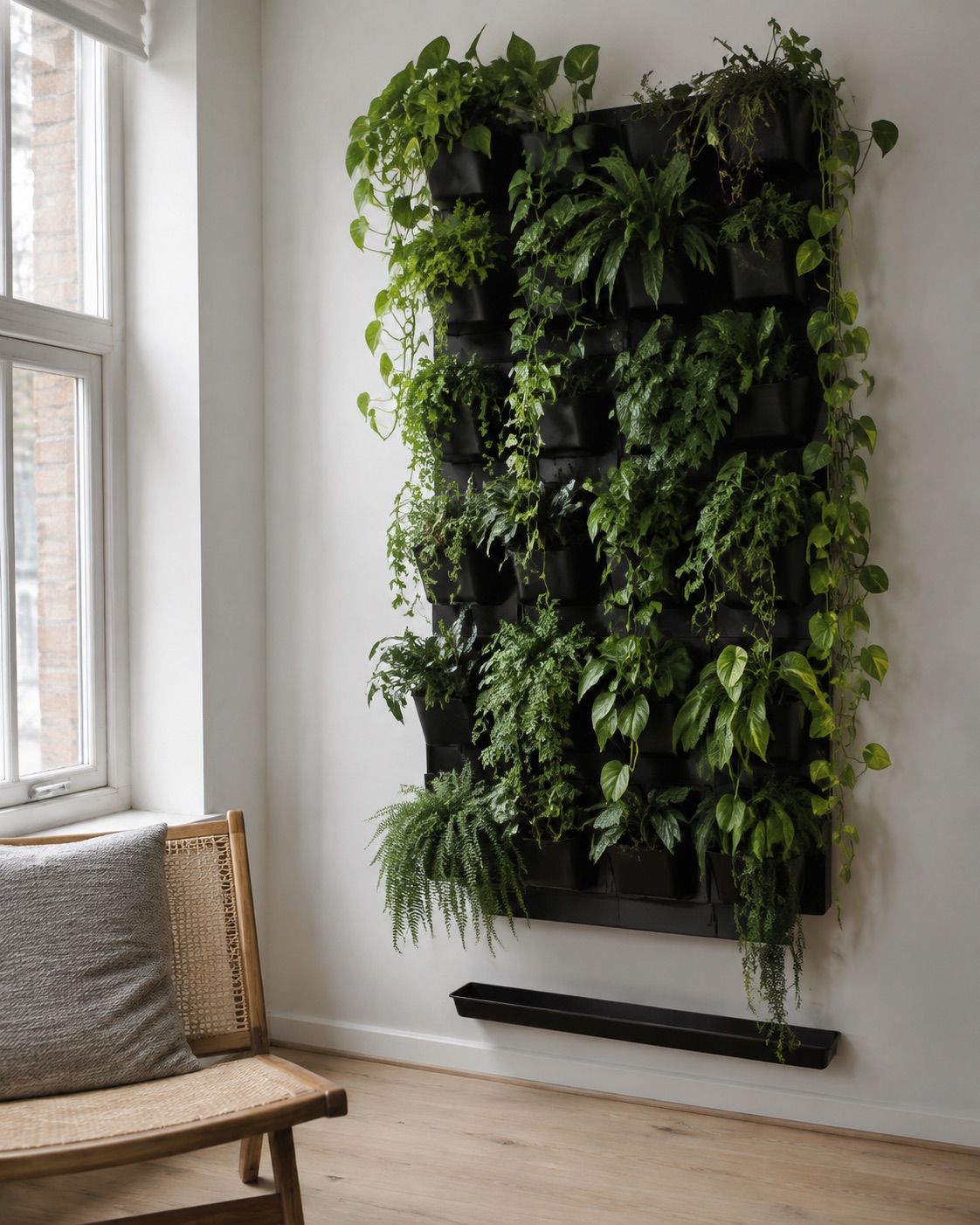
Living walls create the lushest look, but they need the most planning. Start small with modular panels, waterproof backing, and a watering route you can maintain. For more visual directions, Gardeners’ World has a useful list of vertical garden ideas that ranges from simple frames to greener wall treatments.
Best plants for vertical gardening and planter boxes
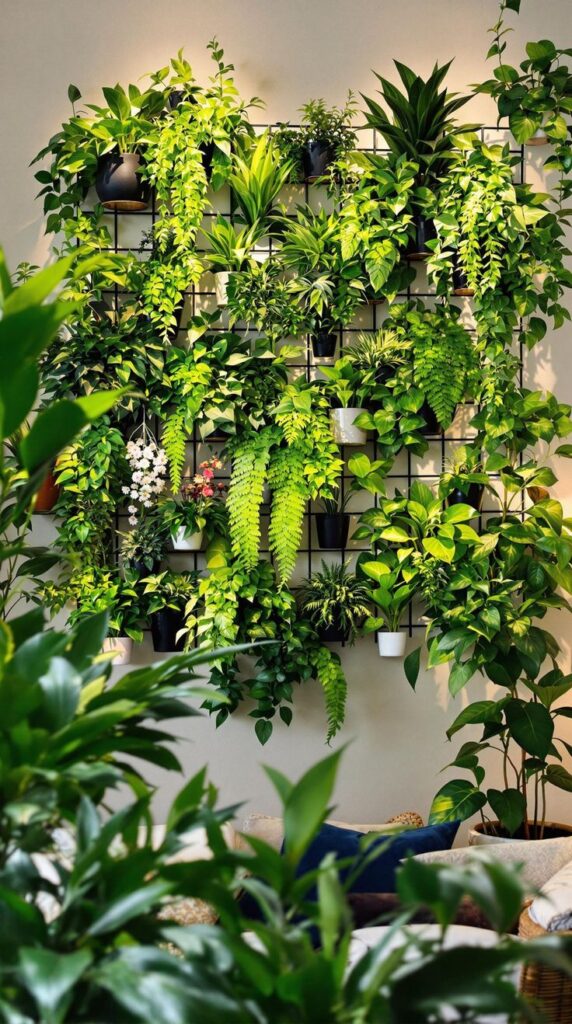
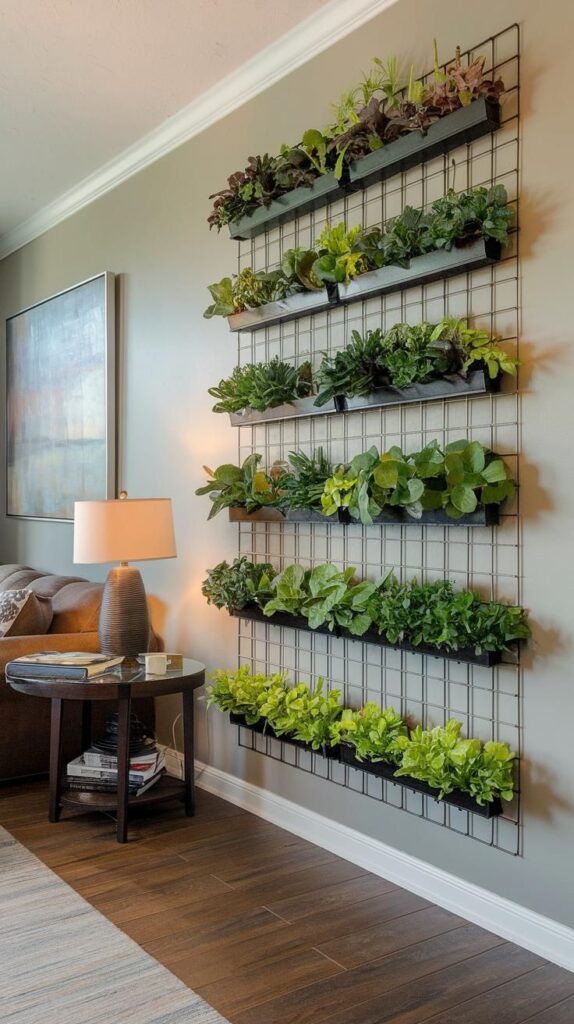
The best plant is not always the most dramatic one. In a small garden, the winner is the plant you can water, trim, and harvest without moving half the balcony around. Choose compact varieties, check root depth, and group plants with similar sun and water needs.
| Plant group | Good choices | Best container |
|---|---|---|
| Herbs | Basil, parsley, thyme, mint, oregano | Wall pockets, railing boxes, small tiered planters |
| Leafy greens | Lettuce, spinach, arugula, chard | Shallow boxes with steady moisture |
| Climbers | Peas, beans, cucumbers, nasturtiums | Deep planter box with trellis |
| Flowers | Petunias, calibrachoa, nasturtiums, violas | Hanging baskets, wall pockets, railing planters |
| Fruit | Strawberries, dwarf citrus, compact blueberries | Hanging pockets for strawberries, deeper tubs for shrubs |
| Houseplants | Pothos, ferns, philodendron, peperomia | Indoor wall planters with waterproof trays |
For edible containers, vegetables in containers is worth reading before you buy seeds because vegetables need more root space than most decorative wall planters provide. For indoor greenery, pair the vertical layout with basic indoor plant care so light, humidity, and watering stay realistic.
How to set up and maintain a small-space garden
Check light before buying containers
Spend one clear day noting where direct sun lands in the morning, midday, and late afternoon. Full-sun vegetables and most flowering annuals need the brightest zone. Herbs can often handle a little less. Indoor wall planters near a weak window may need a grow light, especially in winter.
Choose lightweight potting mix, not garden soil
Garden soil can compact inside containers, block drainage, and make wall planters heavier than expected. Use a container potting mix, then refresh it between seasons. Add compost or slow-release fertilizer according to the plant, not as a blanket fix for every box.
Make drainage visible and predictable
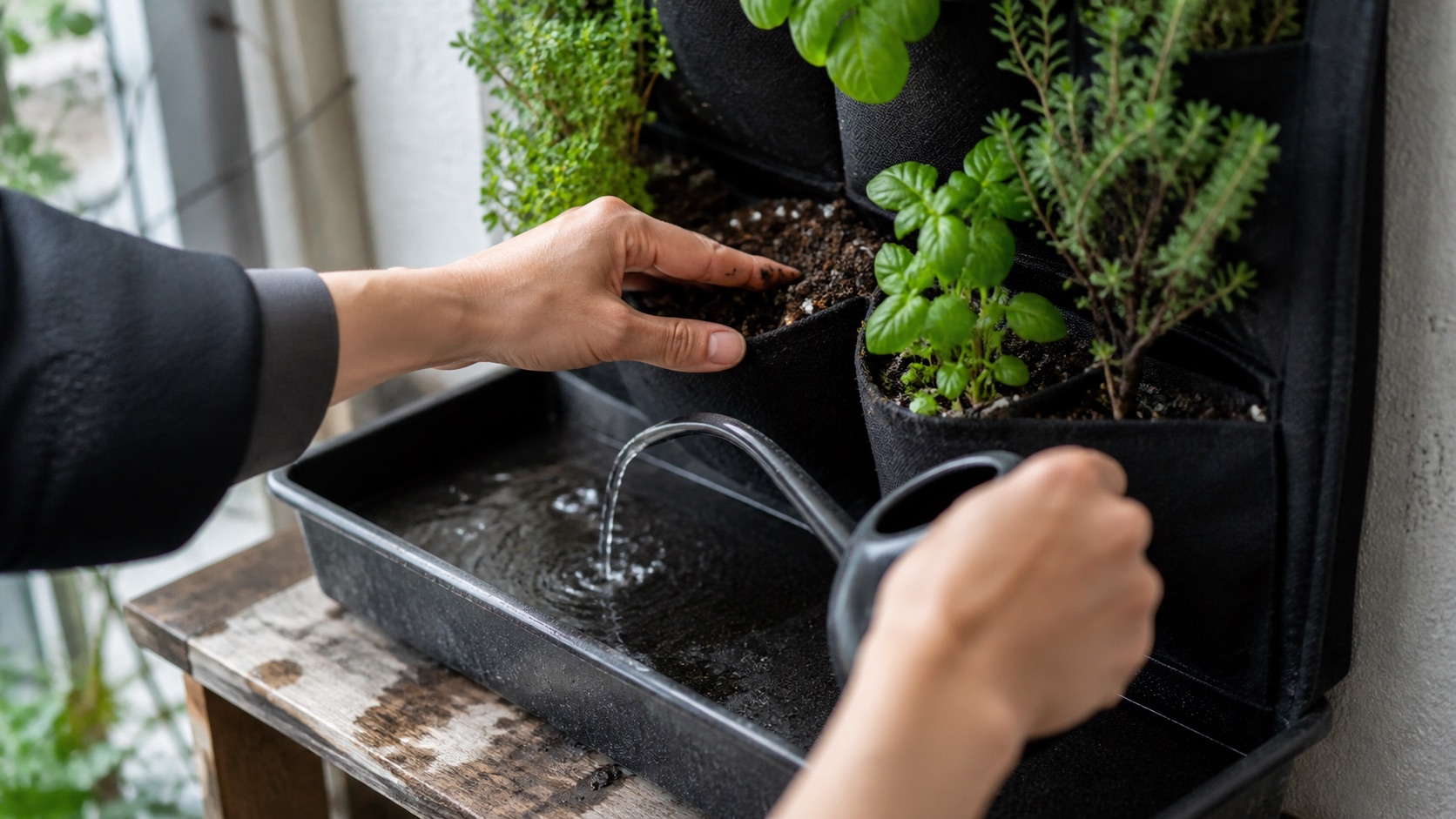
Every planter needs a drainage plan. That may mean holes, trays, feet under the box, a saucer you empty after watering, or a waterproof liner behind an indoor wall planter. If you cannot see where the water goes, the design is not finished yet.
Keep maintenance reachable
Vertical gardens fail when the top row becomes a chore. Keep edible plants within arm’s reach, save the highest spots for trailing or drought-tolerant plants, and leave a small tool zone. If the garden is part of a seating area, nearby balcony decor ideas can help the planting feel intentional instead of squeezed in.
Small-space garden mistakes to avoid
- Using tiny decorative pots for plants that need deep roots.
- Mounting heavy wet containers on weak fences, rails, or plasterboard.
- Planting the top tier so densely that lower plants sit in shade all day.
- Forgetting that wind dries balcony planters faster than ground beds.
- Mixing plants with opposite water needs in the same pocket panel.
- Letting trailing plants cover vents, doors, steps, or safety railings.
Martha Stewart’s vertical garden setup advice is useful here because it treats the project as a living installation, not a static decoration. That mindset matters: a vertical garden changes shape every week, so pruning and spacing are part of the design.
More small-space garden ideas
Once the planter boxes are working, add one finishing layer rather than five. A narrow shelf, warm light, folding chair, or a few garden glass accents can make the garden feel designed. If the area is mainly for entertaining, combine planting with broad outdoor inspiration from DIY garden projects and keep the floor clear enough to move comfortably.
Vertical gardening ideas FAQ
What are the best vertical gardening ideas for small spaces?
The best vertical gardening ideas for small spaces are railing boxes, wall planters, pocket panels, trellis containers, tiered planter boxes, and hanging baskets. Choose the system by root depth first, then by style. Herbs and leafy greens can live in shallow pockets, while tomatoes, dwarf fruit, and larger flowers need deeper boxes and stronger support.
How do you start vertical gardening on a balcony or patio?
Start by measuring sun, wind, railing height, and the weight your surface can hold. Pick one main structure, such as a trellis planter, wall rail, or tiered stand, then add containers with drainage holes. Use lightweight potting mix, leave room to water comfortably, and keep tall plants where they will not shade everything below.
What plants work well in a vertical garden?
Good vertical garden plants include basil, mint, parsley, thyme, lettuce, spinach, strawberries, nasturtiums, petunias, pothos, ferns, and compact climbing crops. Match the plant to the container depth: shallow pockets suit herbs and greens, while climbing beans, peas, cucumbers, and tomatoes need deeper planter boxes plus a firm trellis.
Are planter boxes good for small-space gardening?
Yes, planter boxes are one of the easiest tools for small-space gardening because they define the growing area and make watering, soil choice, and plant spacing easier to control. They work especially well on patios, balconies, decks, narrow side yards, and sunny indoor corners when the box has enough depth and drainage.
How do you water planter boxes without overwatering?
Water planter boxes when the top inch of potting mix feels dry, then let extra water drain fully. Small containers dry faster than garden beds, especially in summer wind and sun, so check them often instead of watering on a fixed calendar. Self-watering boxes can help, but they still need overflow holes and occasional soil checks.
What are common mistakes in vertical gardening?
Common vertical gardening mistakes include choosing containers that are too shallow, forgetting drainage holes, using heavy garden soil, mixing plants with different water needs, and placing thirsty plants too high to reach. Another big mistake is building the display first and checking sunlight afterward. Light, water access, and weight limits should lead the design.
Can vertical gardens work indoors?
Vertical gardens can work indoors if there is enough light, airflow, and water control. Use wall planters with liners, trays, or waterproof backing, and start with reliable houseplants or herbs. A grow light may be needed away from bright windows. Indoors, smaller modular planters are usually easier to maintain than one large living wall.
Final note on small-space vertical gardens
A small garden does not need to imitate a large yard. It needs a clear structure, containers that respect the plants, and a maintenance routine that fits real life. Start with one good planter box or one vertical rail, learn how the light and water behave, then expand only where the space still feels easy to use.
- 14shares
- Facebook0
- Pinterest11
- Twitter3
- Reddit0