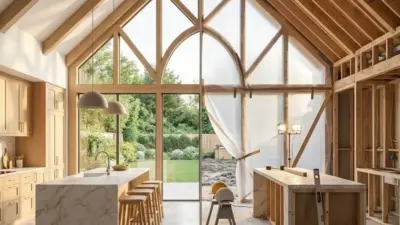
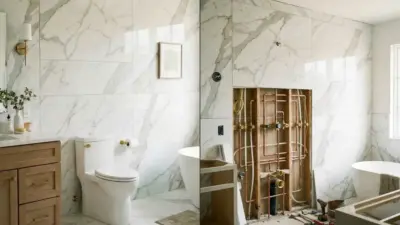
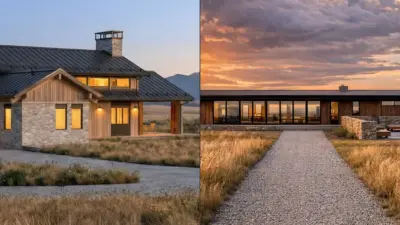
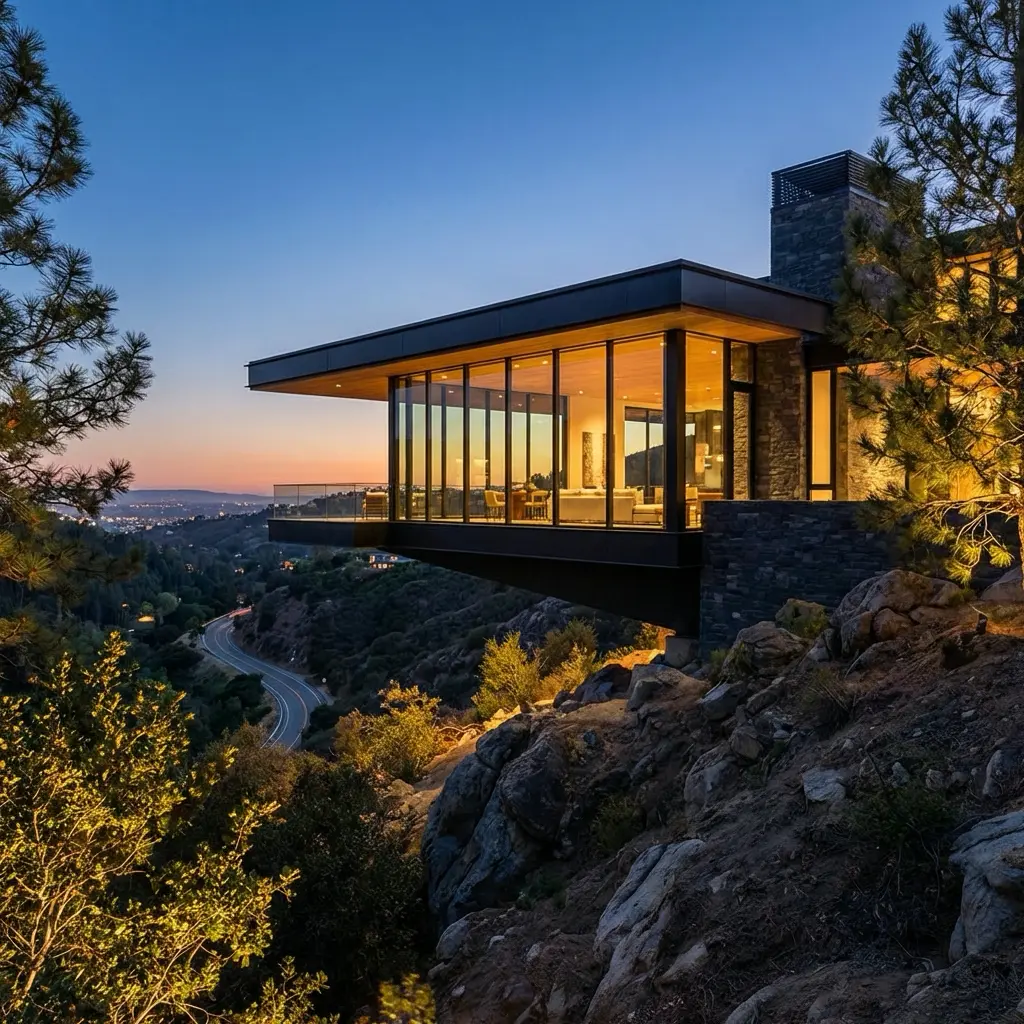
The render looked perfect. Cantilevered main floor hovering over a 40-foot drop, floor-to-ceiling glass on three sides, a rooftop terrace facing the valley. Three months into the geotechnical survey, we discovered the slope had been slowly moving downhill for decades — about 2 inches per year. The caisson depth we’d budgeted for wouldn’t touch bedrock. The entire foundation strategy had to be rebuilt from scratch, adding $380,000 to a project that hadn’t broken ground yet.
- Why Hillside Sites Break Standard Engineering Logic
- Foundation Systems Built for Slopes
- Retaining Walls: Structure, Drainage, and Aesthetics
- Slope Stabilization: Before the Walls Go In
- What Luxury Hillside Architecture Looks Like in 2026
- FAQ: Hillside Structural Engineering
- How much more does it cost to build on a hillside vs flat land?
- What is a caisson foundation and when is it required?
- How do I know if a hillside lot is buildable?
- What causes retaining walls to fail?
- Do hillside homes have higher insurance costs?
- What is slope stabilization and why does it matter during construction?
- The Engineering Is the Architecture
That gap — between the render and the reality — is where hillside structural engineering lives. And in 2026, as more architects and developers push into challenging terrain for the views and the land values, understanding that gap isn’t optional anymore.
Why Hillside Sites Break Standard Engineering Logic
Flat site construction has a comfortable baseline: predictable soil bearing capacity, gravity loads running straight down, drainage that follows simple physics. Hillside sites disrupt all three simultaneously.
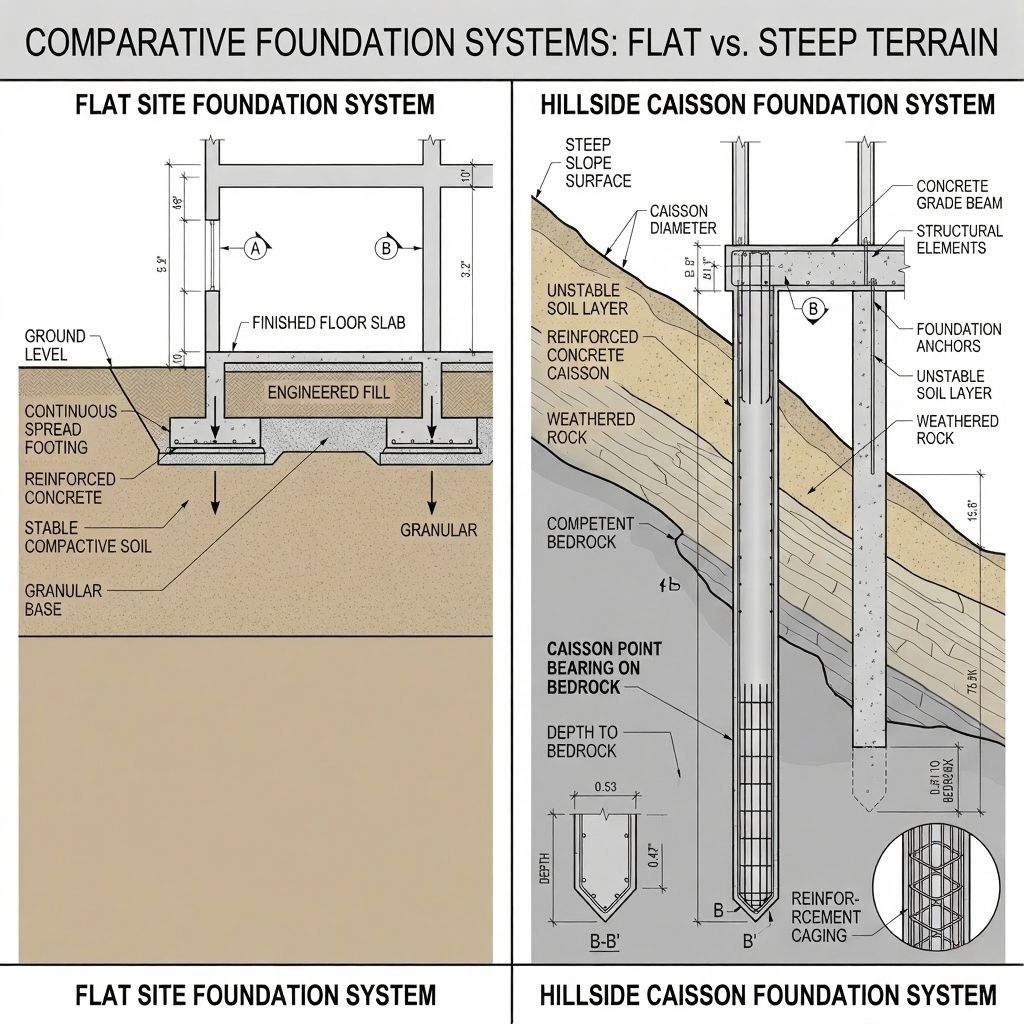
Soil behavior on slopes is governed by factors that don’t exist on flat ground. Lateral earth pressure — the horizontal force that soil exerts against any structure placed into or onto a slope — can exceed the vertical loads in extreme cases. Add moisture: saturated hillside soils can generate hydrostatic pressure that pushes against basement walls and retaining structures with thousands of pounds per square foot.
The Soil Variables That Determine Everything
Geotechnical surveys on hillside sites regularly reveal conditions that bear no resemblance to neighboring properties 200 feet away. A 2025 project in the Santa Monica Mountains found bedrock at 18 feet on the uphill side of a lot and at 62 feet on the downhill side — same parcel, same elevation, 44 feet of difference.
Expansive clays are the most common problem in residential hillside development. Montmorillonite-heavy soils can swell 30–40% by volume when saturated and shrink back during dry seasons. That seasonal movement — repeated over years — works loose any foundation system that isn’t anchored below the active zone.
| Challenge | Engineering Response | Typical Cost Premium |
|---|---|---|
| Expansive clay soils | Caisson foundations to bedrock | +25–40% vs flat site |
| Active slope creep | Helical piers + grade beams | +20–35% |
| Hydrostatic pressure on walls | Drainage layers + waterproofing | +15–25% |
| Seismic amplification on slope | Moment frames + base isolation | +30–50% |
| Erosion during construction | Temporary terracing + erosion fabric | +8–12% |
Foundation Systems Built for Slopes
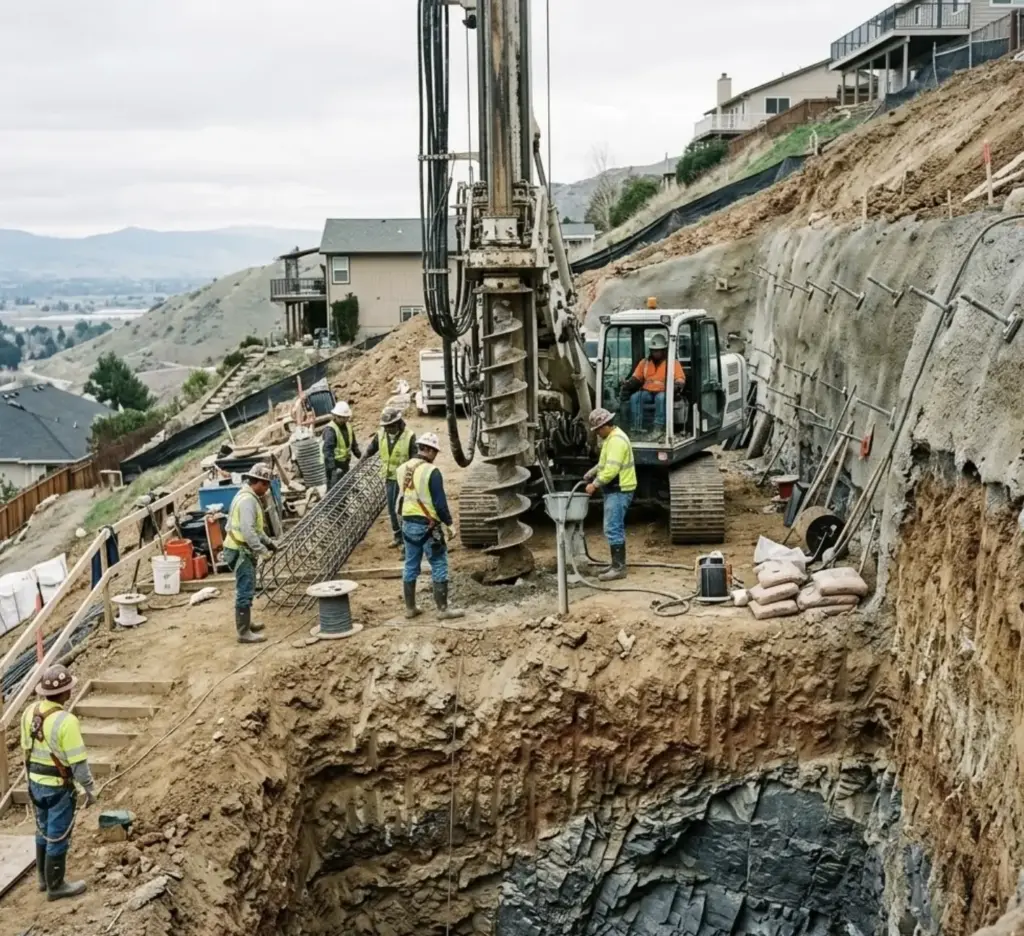
The foundation choice on a hillside site is rarely a design preference — it’s dictated by the geotechnical report. But understanding the options helps architects design around the structural constraints rather than fighting them.
Caisson Foundations: The Hillside Standard
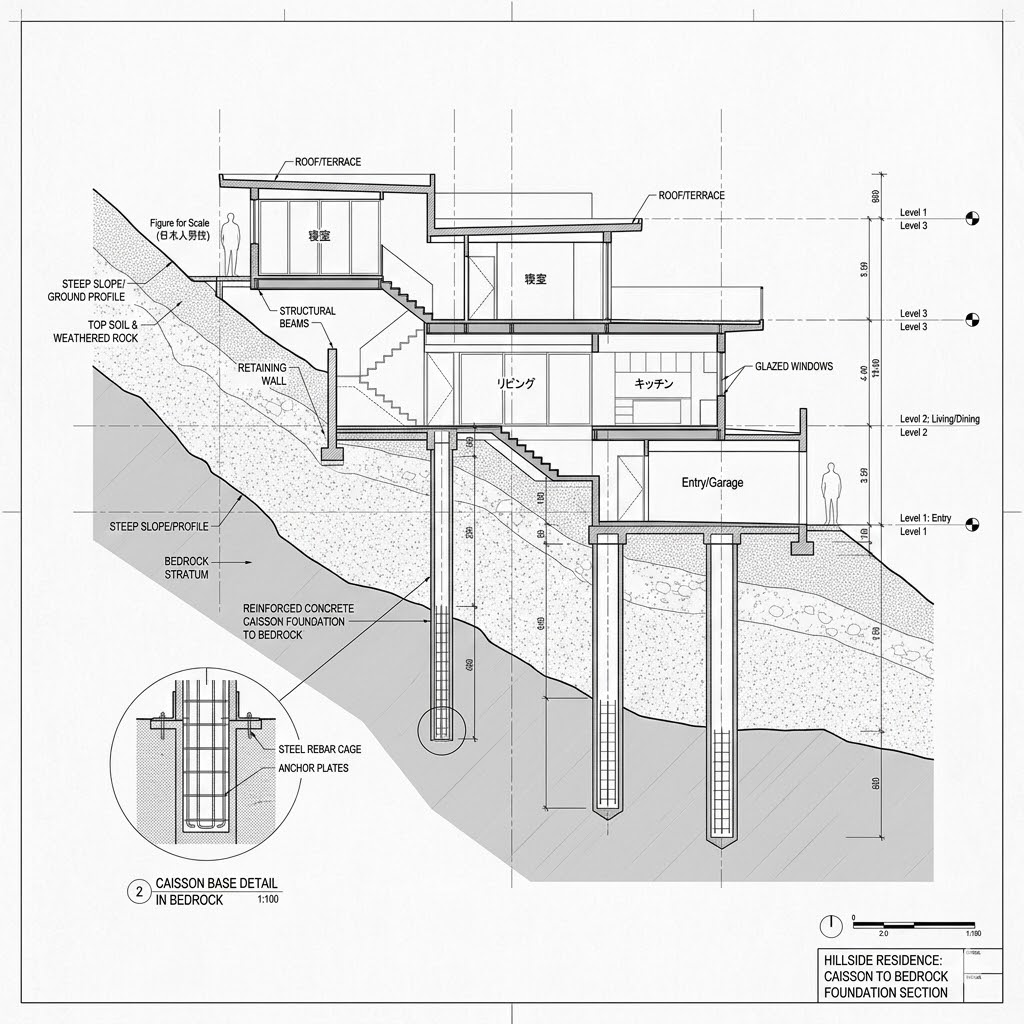
Drilled caissons — also called drilled piers or bored piles — are the default solution for serious hillside conditions. A rotary drill bores a cylindrical hole, typically 18 to 36 inches in diameter, down through unstable soil and into competent bedrock or dense bearing strata. The hole is then filled with reinforced concrete.
Depth varies dramatically. In Los Angeles hillside projects I’ve observed, caissons routinely go 30 to 80 feet. At $150–$350 per linear foot depending on diameter and soil conditions, a site requiring 12 caissons at 50-foot average depth is looking at $90,000–$210,000 in foundation costs alone — before the grade beams that tie them together.
The structural advantage is decisive: caissons transfer building loads to bedrock, bypassing the unstable upper soil entirely. The building effectively floats on columns of concrete anchored in rock. For cantilevered designs — the signature hillside typology — this anchoring is what makes the cantilever physically possible, not just visually compelling.
Helical Piers and Grade Beams
Where caissons aren’t practical — tight access, shallow bedrock that’s still fractured, or budget constraints — helical piers offer an alternative. Steel shafts with helical plates are torqued into the ground using a hydraulic drive head. Installation is faster and requires less equipment, but load capacity per pier is lower.
Grade beams — reinforced concrete beams connecting foundation elements at or below grade — distribute loads and resist the lateral forces that slopes generate. In seismic zones, the interaction between grade beams and caissons or helical piers defines the building’s resistance to both downslope movement and earthquake forces.
Retaining Walls: Structure, Drainage, and Aesthetics
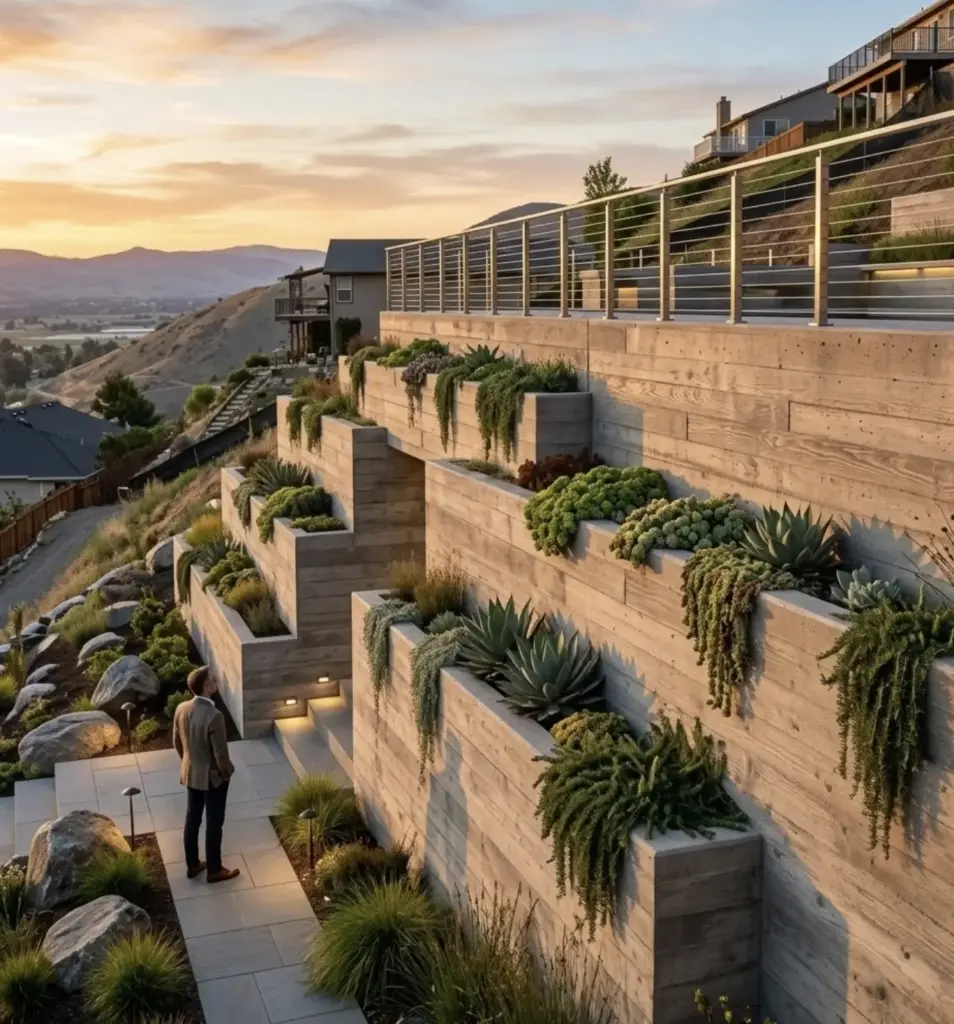
Every hillside development involves retaining walls. On significant slopes, they’re not just support structures — they’re major visible elements of the architecture. The engineering and the aesthetic have to be designed together, not sequentially.
The Drainage Problem Most Architects Underestimate
Retaining walls fail for one reason more than any other: water. Hydrostatic pressure — the force of water-saturated soil pressing against a wall — increases with the square of height. A 10-foot wall retaining saturated soil experiences roughly four times the lateral pressure of a 5-foot wall in the same conditions.
Proper retaining wall design layers multiple drainage strategies: granular backfill behind the wall to allow water to move freely, a continuous drainage composite (products like Mirafi or Enkadrain run $2–$4 per square foot installed), weep holes or perforated drain pipe at the wall base, and a positive drainage swale at grade level to intercept surface water before it reaches the wall.
Skipping or minimizing any of these layers doesn’t reduce cost significantly — drainage materials are inexpensive relative to the total wall cost. But it does create a failure mode that typically manifests 5–15 years after construction, when replacement costs dwarf the original savings.
Wall Types and When Each Makes Sense
Cast-in-place concrete: Maximum strength, maximum design flexibility (board-forming, exposed aggregate, integral color). Best for walls over 8 feet. $60–$120/SF installed.
Segmental retaining wall blocks (Allan Block, Versa-Lok): Faster installation, lower cost, good for walls under 6 feet. $20–$45/SF installed. Geogrid reinforcement required for walls over 4 feet.
Soldier pile and lagging: Steel H-piles driven into the ground with timber or concrete lagging spanning between them. Used for temporary shoring during excavation and for permanent retaining on constrained urban sites.
Gabion walls: Wire baskets filled with stone. Permeable by nature — excellent drainage performance. Increasingly popular in 2026 for their naturalistic aesthetic on rural hillside sites. $25–$50/SF.
Slope Stabilization: Before the Walls Go In
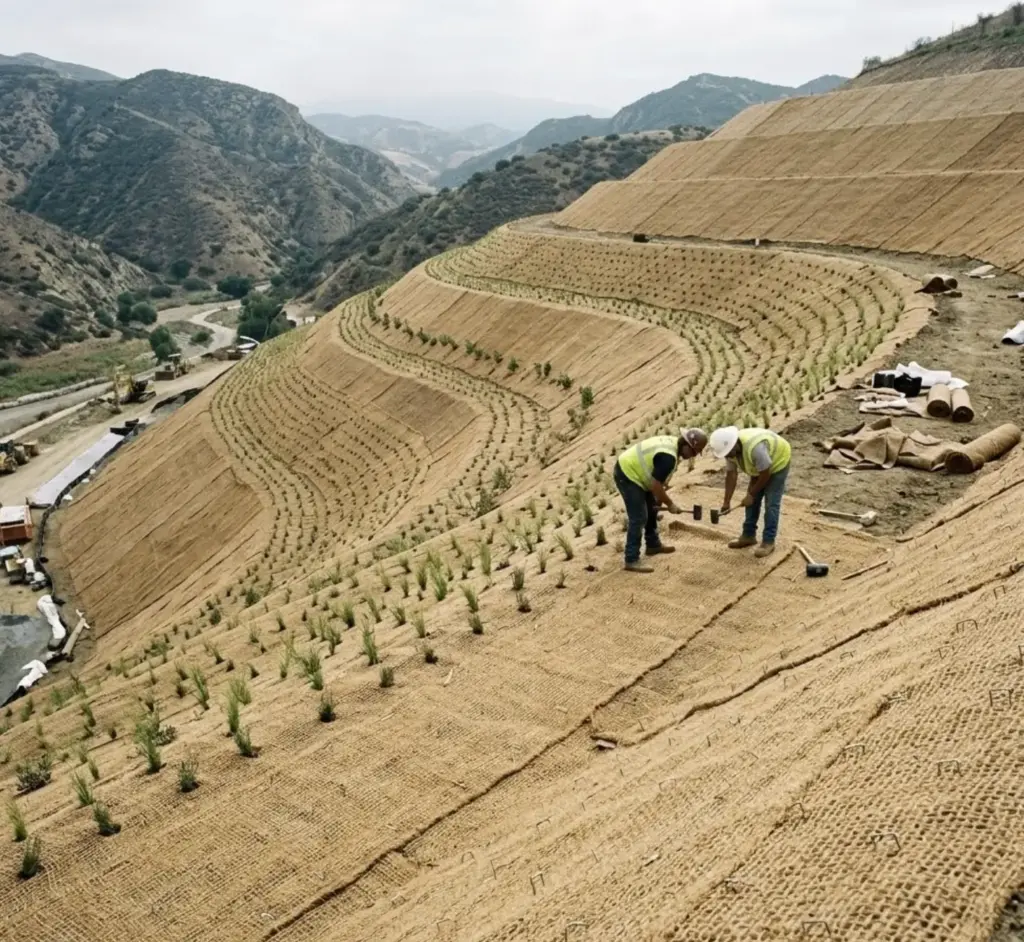
The most expensive slope stabilization projects are the ones that start after something moves. Addressing slope stability proactively — before excavation begins — protects both the construction schedule and the permanent structure.
Short-Term and Long-Term Strategies
Terracing: Cutting the slope into stepped horizontal platforms reduces the effective slope angle and creates stable building pads. Each terrace level requires its own retaining structure, but smaller walls at multiple levels often outperform a single large wall structurally and aesthetically.
Vegetative stabilization: Deep-rooted native plants — not lawn, which has shallow roots — provide meaningful erosion control on slopes under 2:1 (horizontal:vertical). In Southern California and the Pacific Northwest, combinations of ceanothus, coffeeberry, and native grasses are commonly specified. Budget $8,000–$25,000 for a serious revegetation program on a residential hillside.
Mechanical reinforcement: Soil nails (steel rods grouted into drilled holes) and ground anchors (pre-stressed cables anchored in competent rock or soil) are used on slopes requiring active stabilization. These systems work by effectively stitching the unstable upper material to stable material below. Cost: $15–$40 per square foot of slope face.
What Luxury Hillside Architecture Looks Like in 2026
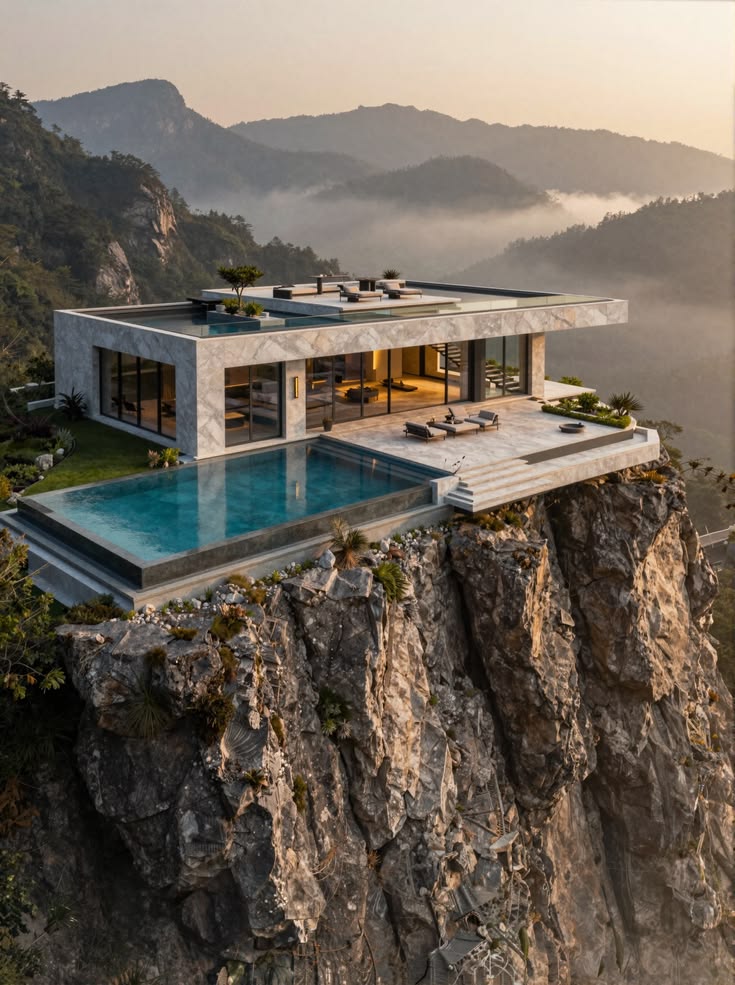
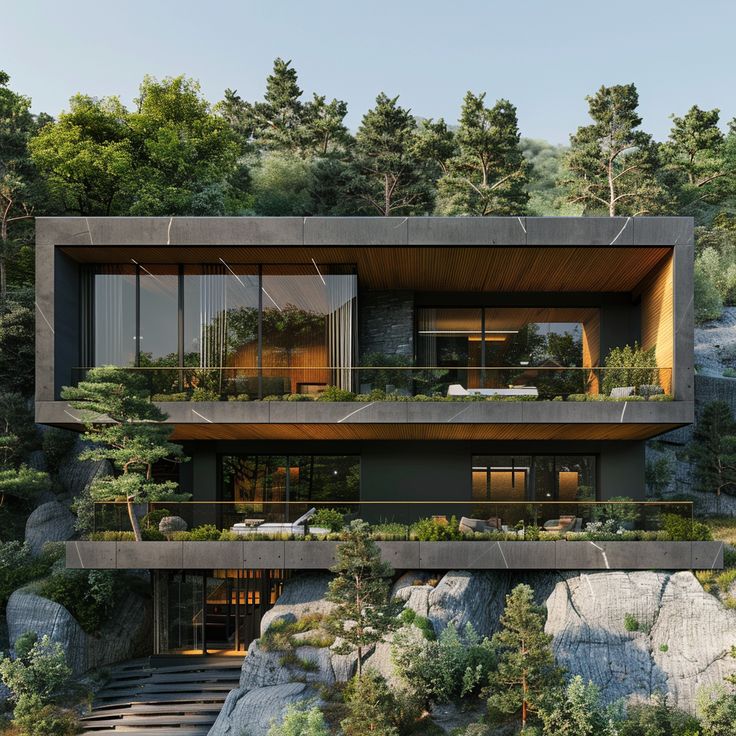
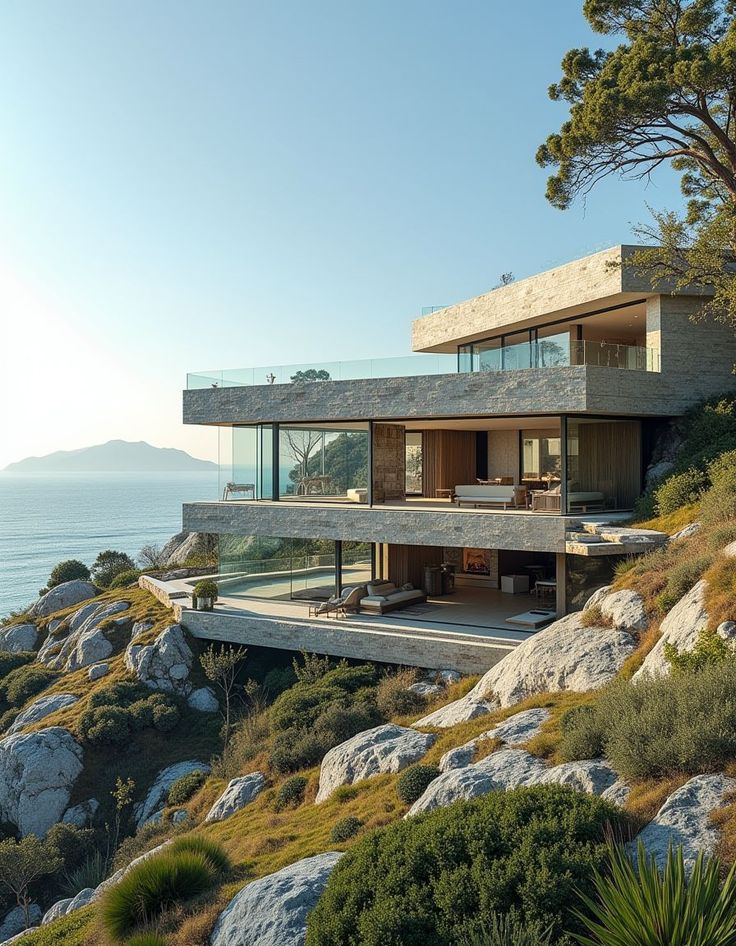
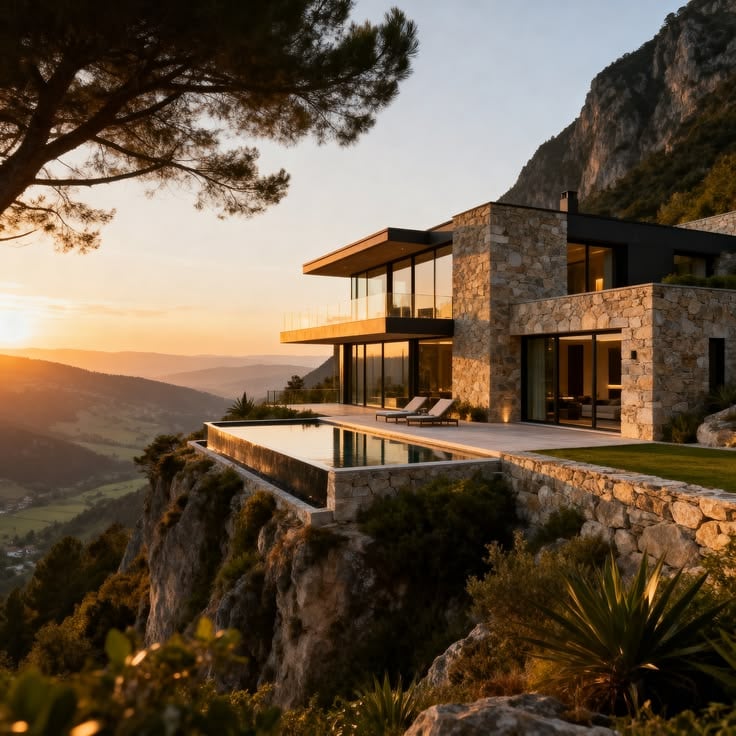
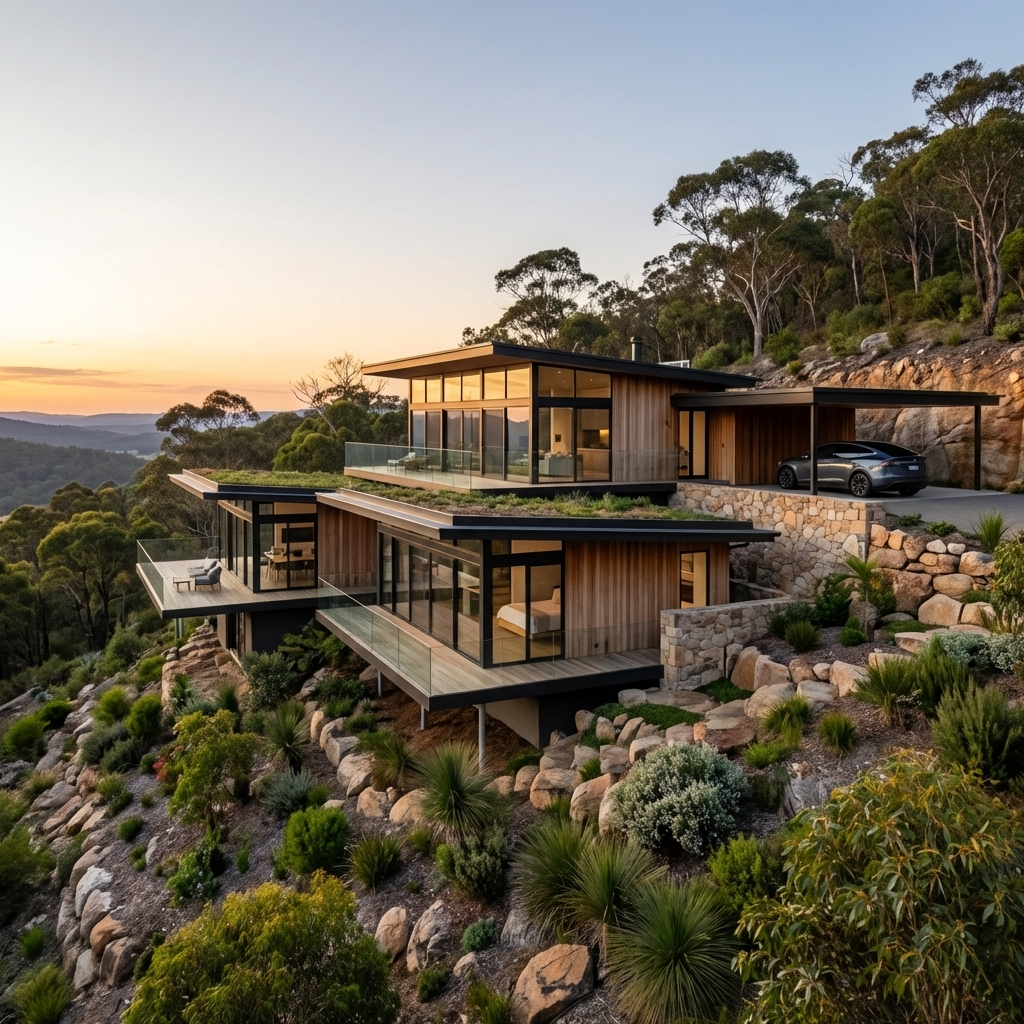
The luxury hillside typology has evolved significantly in recent years. The maximalist glass box suspended over a cliff — spectacular in renderings, brutal in practice — is giving way to designs that work more deliberately with the terrain rather than against it.
Split-level plans that follow the natural contour reduce both excavation volume and structural complexity. Each level steps down the slope, with retaining walls integrated into the architecture rather than hidden behind landscaping. Foundation elements — caissons and grade beams — are designed to be part of the structural expression rather than buried infrastructure.
Biophilic integration has shifted from marketing language to genuine design driver. Planting pockets integrated into retaining walls, green roofs on lower levels visible from above, and landscape that frames views rather than competing with them — these aren’t aesthetic preferences anymore. They’re what buyers in the $3M+ market expect.
The projects that resolve these challenges well — that turn geotechnical constraints into architectural opportunities — require genuine collaboration between architect, structural engineer, and geotechnical engineer from day one. If you’re at the early stages of a hillside development and haven’t yet brought engineering into the conversation, the team at ProStruct Engineering works specifically in this space. Contact us today to bring structural expertise in before design decisions get locked in.
FAQ: Hillside Structural Engineering
How much more does it cost to build on a hillside vs flat land?
Typically 20–50% more, depending on slope severity, soil conditions, and seismic zone. The main cost drivers are foundation systems (caissons or helical piers), retaining walls, and the additional engineering analysis required. Sites with expansive soils or active slope movement can push costs even higher.
What is a caisson foundation and when is it required?
A caisson is a drilled concrete pier that extends from the structure down to bedrock or stable bearing material, bypassing unstable upper soils. Required on most serious hillside sites where surface soils can’t be trusted to carry building loads. Depth ranges from 20 to 80+ feet. Cost: $150–$350 per linear foot depending on diameter and conditions.
How do I know if a hillside lot is buildable?
A preliminary geotechnical investigation (Phase I, typically $5,000–$15,000) will assess soil conditions, slope stability, and seismic hazards. This report drives all subsequent engineering decisions. Don’t purchase a hillside lot without one — the findings frequently change project feasibility and budget assumptions significantly.
What causes retaining walls to fail?
Water is the primary cause — hydrostatic pressure from saturated backfill soil overwhelms walls that weren’t designed with adequate drainage. Secondary causes include inadequate embedment depth, missing or undersized drainage systems, and lateral loads from vehicle traffic or seismic events. Proper drainage design is cheaper than wall replacement by a factor of 10 or more.
Do hillside homes have higher insurance costs?
Yes, in most cases. Wildfire exposure, landslide risk, and the higher replacement costs associated with complex hillside construction all influence premiums. In California, some hillside properties in high-risk zones now face insurance availability issues entirely. Engineering documentation — demonstrating that slope stability and fire-resistant construction have been addressed — can significantly improve insurability.
What is slope stabilization and why does it matter during construction?
Slope stabilization refers to measures that prevent soil movement during and after construction — terracing, erosion control fabric, soil nails, vegetative revegetation, and drainage management. It matters during construction because excavation temporarily destabilizes slopes, and an uncontrolled slope failure mid-project is both dangerous and extremely expensive to remediate.
The Engineering Is the Architecture

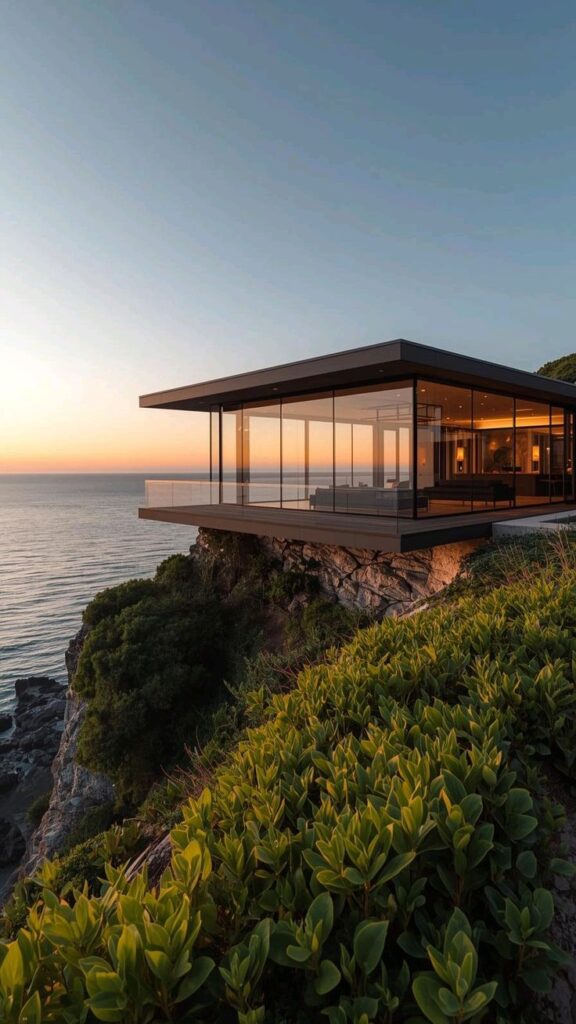

The most successful hillside projects don’t treat structural engineering as a constraint imposed on a design — they treat it as a generative force in the design. Caisson locations inform column placement. Retaining wall geometry shapes the landscape plan. Drainage infrastructure becomes a visible element of the architecture.
Getting there requires bringing structural and geotechnical expertise into the conversation before the massing is locked — not after. The projects that get it right start with the soil, not the render.
- 35shares
- Facebook0
- Pinterest35
- Twitter0
- Reddit0