My first encounter with a sheet metal fabrication floor stopped me cold. Not because of the noise — though a plasma cutter at full draw is genuinely loud — but because of the gap between what I was looking at and what I’d been imagining.
I’d spent weeks on a product brief, obsessing over tolerances and surface finishes, and here were people translating those obsessions into physical objects at a pace that felt almost reckless. A component that existed only as a CAD file at 9 am was a real, holdable thing by 2 pm.
That gap — between creative intention and manufactured reality — is exactly where custom design does its most interesting work. And in 2026, that gap is narrowing faster than most designers realize.
The Role of Custom Design in Modern Manufacturing
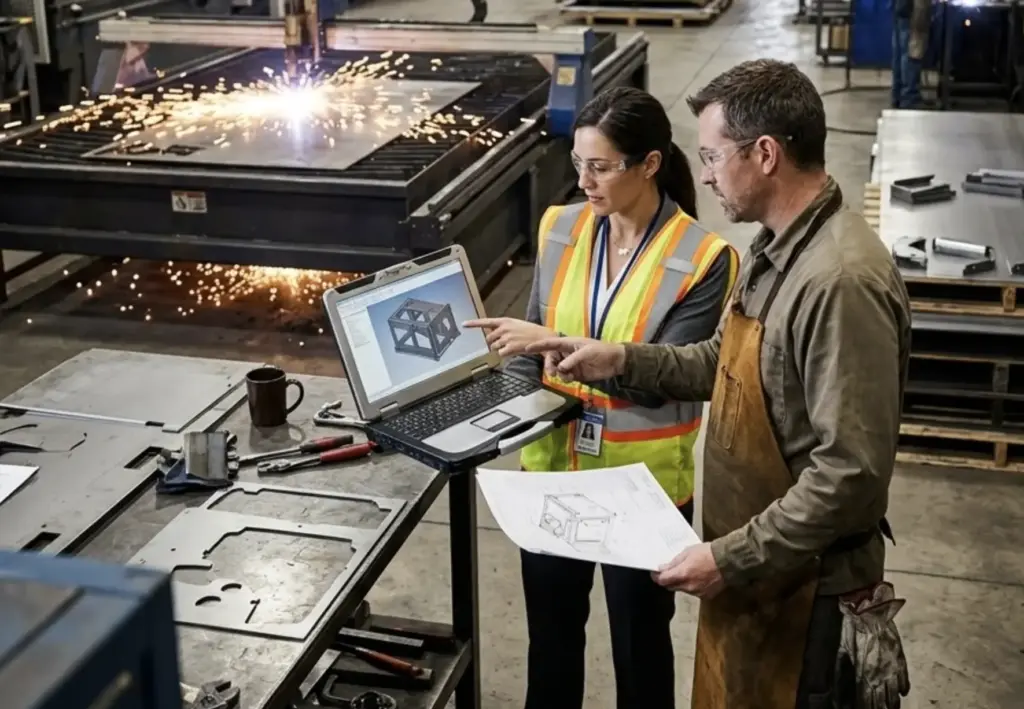
There’s a version of this conversation that treats custom design as a luxury — something premium brands do when they have budget to spare after the engineering is finished. That version is increasingly wrong.
The manufacturers gaining ground right now aren’t the ones with the most sophisticated equipment. They’re the ones where the design process and the fabrication process are genuinely integrated — where a designer’s decision about a bend radius or a surface treatment is made with full knowledge of what that decision costs downstream, and the fabricator’s input shapes the design before it’s locked.
This matters across every sector, but it’s most visible in the places where the stakes are highest. Consumer electronics, where the casing isn’t just aesthetic but determines thermal management and drop resistance. Architectural metalwork, where a facade panel has to satisfy a structural engineer, a fire code, and a client who wants it to catch the afternoon light at a specific angle. Industrial equipment, where a custom hopper or conveyor component needs to outlast the machine it’s part of.
Custom design is the process that holds all of those requirements in tension simultaneously. It’s not decoration applied to engineering. It’s engineering and aesthetics solved together, from the first sketch.
Precision and Quality in Custom Fabrication
Here’s the uncomfortable truth about creative work: an idea is only as good as its execution. I’ve seen genuinely brilliant product concepts fail because the manufacturing process couldn’t hold the tolerances the design required — not because the fabrication was bad, but because nobody had the conversation early enough about what was achievable.
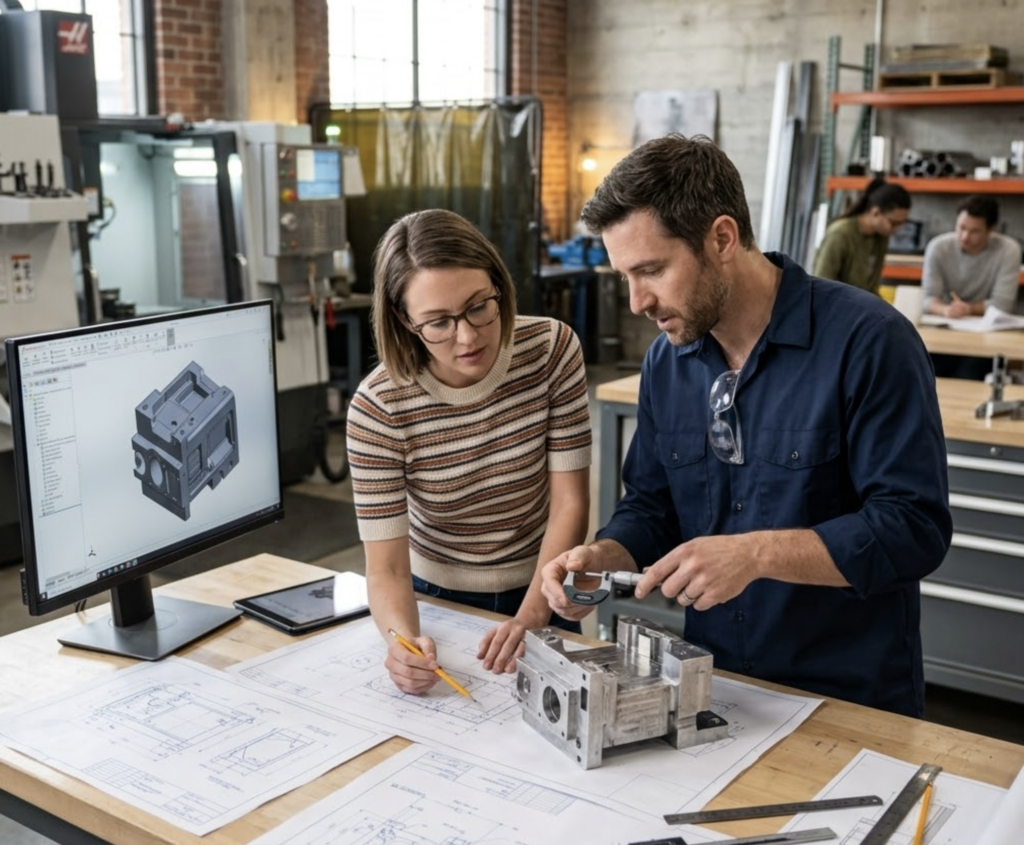
Precision manufacturing is where that conversation gets resolved. And in sectors like aerospace, automotive, and commercial architecture, ‘resolved’ means something specific: tolerances measured in fractions of a millimetre, surface finishes specified to Ra values, structural performance verified against load calculations rather than approximations.
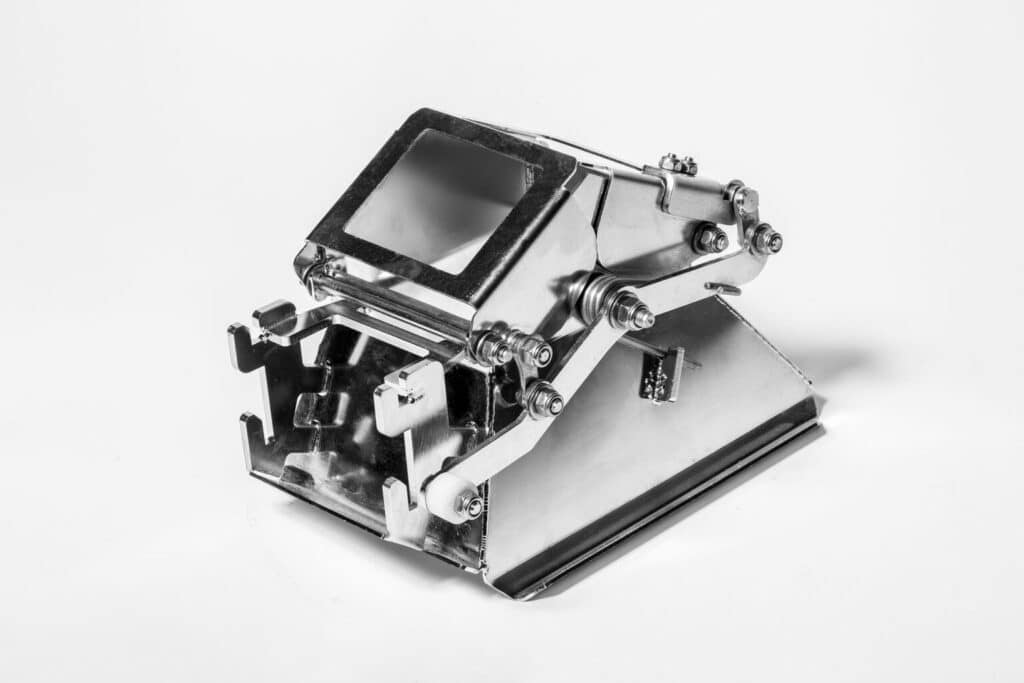
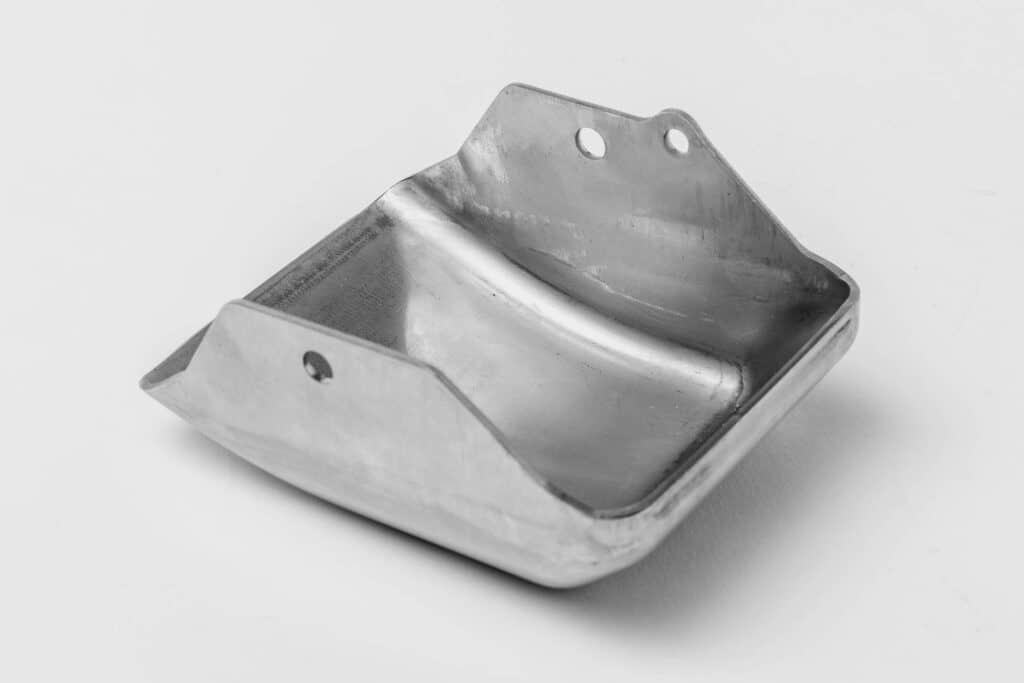
Custom sheet metal fabrication sits at the center of this for a wide range of industries. It’s the process that bridges the gap between a concept that looks right on screen and a component that performs correctly under real conditions — thermal cycling, vibration, repeated mechanical stress. When you’re producing automotive prototype parts or precision enclosures for high-tech equipment, the fabrication process isn’t a downstream implementation step. It’s a design constraint that shapes every upstream decision.
The Federal Group operates in exactly this space — precision fabrication of custom metal components for industries where getting the details wrong isn’t an option. In my experience, the fabricators that add the most value aren’t the ones who simply execute a spec. They’re the ones who can tell you, before a single piece of material is cut, where the design has a problem.
Designing for Functionality and Aesthetics
The old argument — that functional design and beautiful design are in tension — has been comprehensively settled. They’re not. The most functional designs are usually the most beautiful ones, because the same discipline that drives out unnecessary complexity in engineering drives out unnecessary decoration in aesthetics.
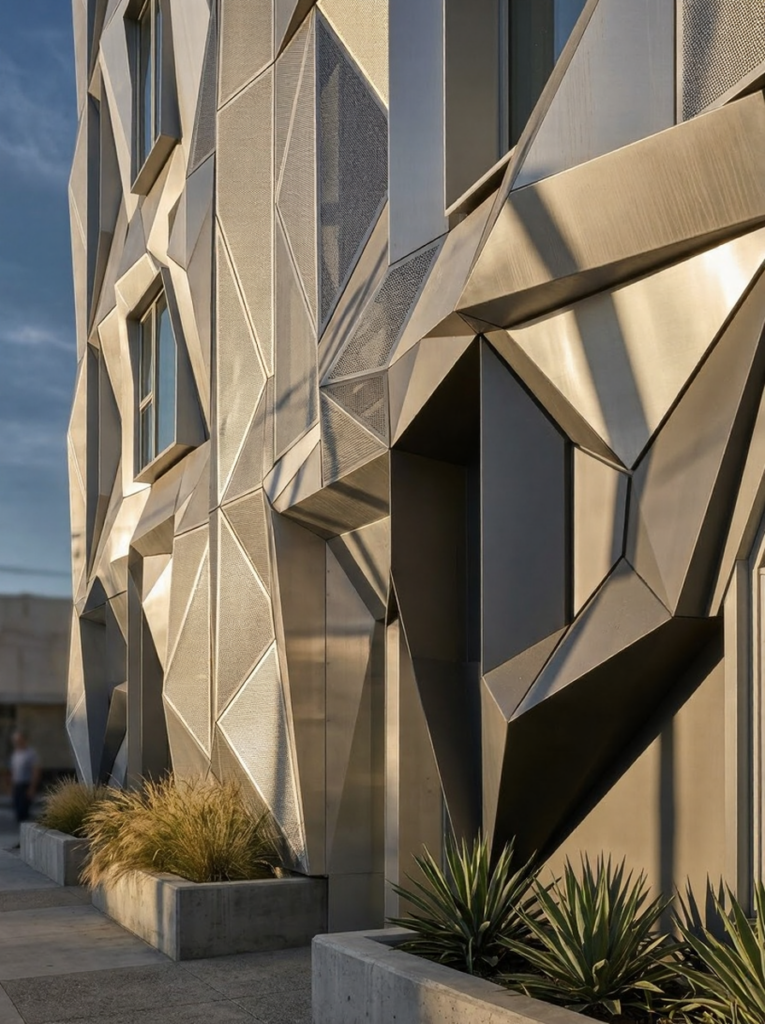
Look at how this plays out in architectural metalwork. A building facade built from custom sheet metal panels isn’t just a visual statement — the geometry of those panels determines how the structure handles wind load, thermal expansion, and water drainage. The shadow lines that make the facade interesting to look at are often the same forms that stiffen the panel against deflection. Functionality and aesthetics aren’t competing. They’re producing the same answer from different directions.
Consumer electronics tell the same story. The aluminum unibody that made the MacBook feel expensive wasn’t primarily an aesthetic decision — it was a structural one that happened to look extraordinary.
The casing’s rigidity, its thermal conductivity, and its resistance to flex under keyboard pressure: all of these are engineering outcomes that also produced the object’s visual character. Custom fabrication processes are what make that level of integration possible — the ability to hold a design choice to a manufacturing standard tight enough that the aesthetic and the functional are genuinely the same thing.
Selecting the Appropriate Manufacturing Partner
The portfolio review is the obvious starting point when evaluating a fabrication partner. But I’ve learned to look at something else first: how they respond when you show them a design that has a problem.
A transactional fabricator quotes the job and flags the issue as your problem. A genuine manufacturing partner tells you about it before you’ve committed, explains what the problem is and why it exists, and usually has a suggestion for how to resolve it without compromising what you were trying to achieve. That distinction matters more than equipment specs or lead times.
The Federal Group’s custom sheet metal fabrication services operate at the scale where both things are required simultaneously — the technical capability to handle complex, demanding projects and the design-partnership mindset that catches problems before they become expensive ones. Their work spans from large industrial fabrications to small, precision components, which means the team has seen enough variation in design challenges to have genuine intuition about where problems typically hide.
What you’re actually buying from a manufacturing partner isn’t just fabrication capacity. It’s accumulated problem-solving experience applied to your specific situation. The fabricators who’ve made the same mistake across a hundred projects aren’t going to let you make it on project one hundred and one.
Innovation in Design and Manufacturing
The tools have changed. This is worth stating plainly because it changes what’s achievable, not just how fast things happen.
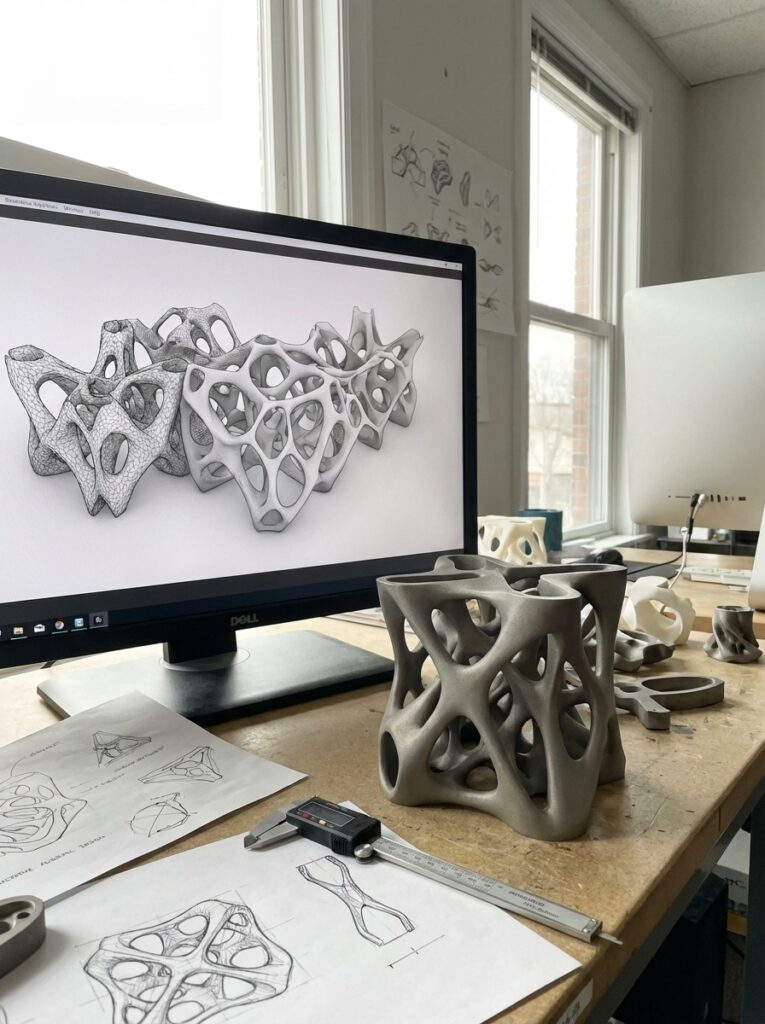
Generative design software — tools that use algorithms to optimize a component’s geometry for a specific set of load conditions — can now produce structures that no human designer would arrive at through conventional methods. Forms that look almost biological, with material precisely where it’s needed and absent everywhere it isn’t. The role of the designer shifts from generating geometry to setting constraints and evaluating outputs. The role of the fabricator shifts from executing a fixed spec to working with forms that push the limits of what conventional tooling can produce.
CAD software is in the middle of its own inflection point — AI-assisted design workflows that reduce the iteration time between concept and manufacturable geometry from days to hours. For custom fabrication, this means design concepts that might previously have required weeks of back-and-forth between designer and engineer can now be stress-tested and refined in a fraction of the time.
Sustainability is reshaping the space too. Custom design, by its nature, tends toward efficiency — you’re optimizing for specific requirements rather than building in the generic overengineering that mass production sometimes relies on. Material selection increasingly factors in embodied carbon and recyclability alongside performance characteristics. For sheet metal specifically, the recyclability of aluminum and steel without degradation gives custom fabrication a genuine sustainability argument that goes beyond marketing.
For those looking for high-volume production and engineering support in the Southeast, for instance, Spartanburg Steel Products has the capacity to manage large-scale projects. Having these resources available makes it easier to scale up as demand grows. It also ensures that the final products meet the specific needs of the market.
The Future of Custom Design in Manufacturing
The direction is clear: the distance between a design intention and a manufactured object is going to keep shrinking, and the quality of the outcome is going to keep depending on the strength of the relationship between the people on either side of that distance.
Custom design isn’t a premium option for companies that have already solved the basics. It’s the process by which the basics get solved at a level of specificity that generic solutions can’t reach. The products that define their categories in the next decade — in consumer electronics, in architecture, in industrial equipment — will be the ones where creative problem-solving and precision fabrication were the same conversation from the beginning.
The manufacturers who understand that now are the ones worth working with.
- 177shares
- Facebook0
- Pinterest177
- Twitter0
- Reddit0