Every January the same practice resurfaces: scissors, glue sticks or a Pinterest board, and a poster-sized collage of everything you want the year to hold. Vision boards have been around for decades, dismissed at various points as a bit corny, and yet every year more people make one anyway, including plenty who’d never call themselves “woo.”
- Do vision boards work?
- What a vision board actually is
- Why it keeps coming back instead of fading
- What's different about vision boards this time around
- Four vision board examples, built around one goal each
- How to build one that actually holds up past February
- A vision board for what your money wants to say
- FAQ
- Final thoughts
- References
There’s a reason this old-school habit keeps coming back instead of fading out for good. There’s also a reason it so often fails by February. I’m a designer, so I look at a vision board the way I’d look at any visual system: what does it ask the eye to do, and what happens to it after the first week? This guide answers the question most people actually type into search, do vision boards work, and then shows how to build one that holds up.
Do vision boards work?
Vision boards work as an attention tool, not as a wish-granting device. Looking at a specific image of a goal can keep that goal in your mind and make you notice related opportunities, and choosing the image forces you to define what you actually want. But research on goal visualization suggests that picturing success alone can reduce effort. In several studies by psychologist Gabriele Oettingen, people who fantasised more positively about a goal made less progress than people who also pictured the obstacles. The pattern that holds up is a board paired with action: one specific goal per image, a realistic obstacle you’ve named, and a simple if-then plan. So the answer is yes, as one piece of a system, and no, as a stand-alone ritual that you make once and then forget about.
What a vision board actually is
A vision board is a curated collage of images, words and sometimes small objects that represents goals or a desired feeling for a defined period of time. It’s usually built once, then kept somewhere visible as an ongoing, low-effort reminder.
The format has stayed almost identical since it entered mainstream self-help culture. What’s changed is how seriously people take it, as an actual practice rather than a craft project.
Vision board vs mood board
The two get mixed up, and the difference matters. A mood board is a design tool: it gathers references so a team can agree on a look before making anything. A vision board is personal and forward-looking: it gathers images of a life or a result you want to move toward. If you want the professional version, I explained the purpose of a mood board in design projects separately.
The practical overlap is that both live or die by selection. Fewer, better images beat a crowded wall, in a studio and on your phone.
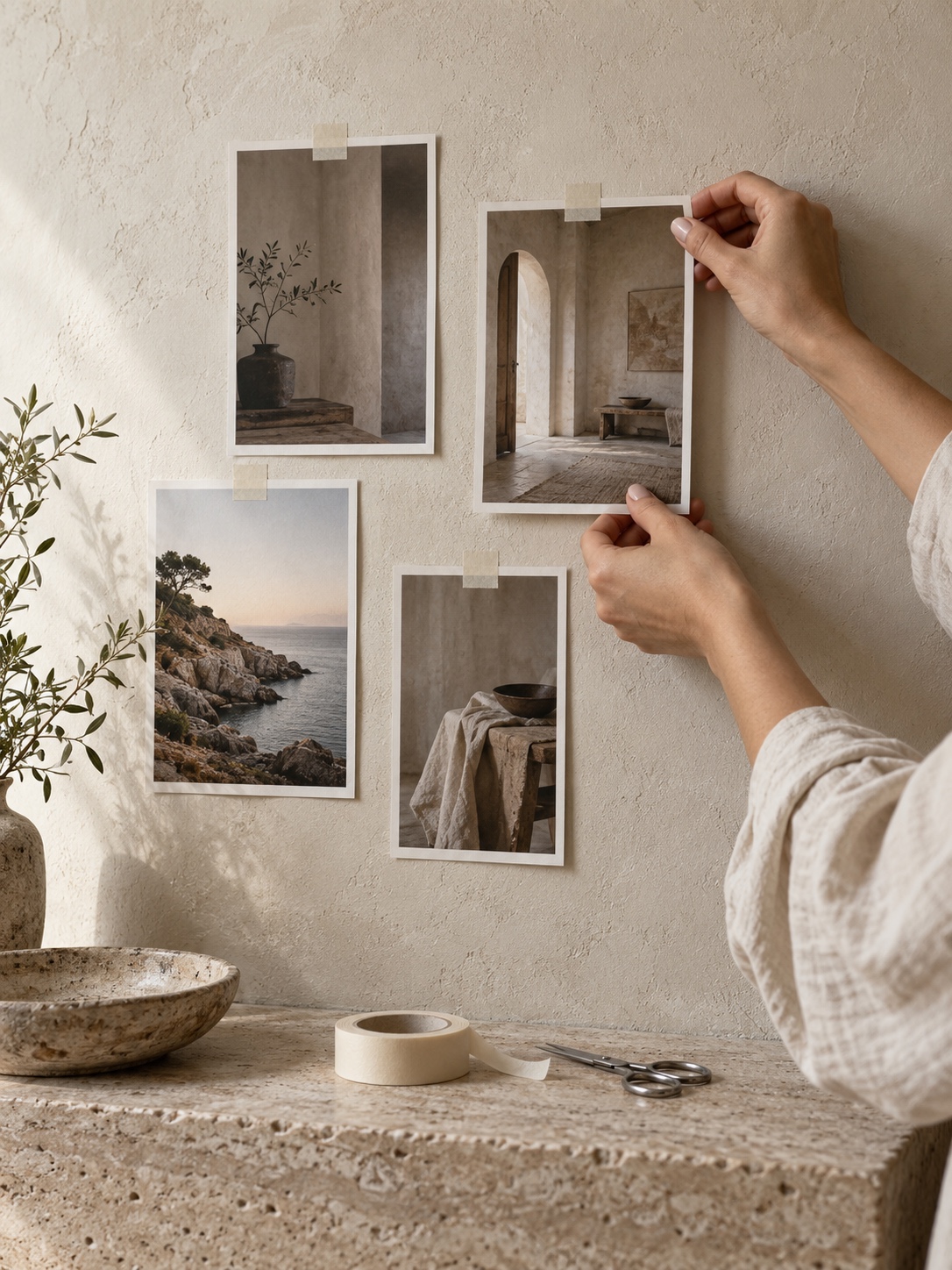
Why it keeps coming back instead of fading
Three things explain why a simple collage survives every new self-help trend. Each one is useful, and each one has a limit worth knowing.
It works with how memory and attention actually function
Once you’ve consciously identified something as a goal, you tend to notice more of what’s related to it. Attention research supports the general idea that our goals shape what we pick out of a busy environment. A vision board is essentially a tool for keeping a goal in front of you daily, which is a large part of why looking at a collage can go along with real progress toward what’s pictured. How much the collage itself adds, compared with simply having decided on the goal, hasn’t been tested well, so I’d treat the effect as modest.
Here’s the catch, and it’s the most important finding for anyone building one. In a review by Oettingen and Gollwitzer, several studies found that positive fantasies about the future were linked to less effort and weaker results. In one example, university graduates who fantasised more positively about starting work sent fewer job applications and received fewer offers. In another, women in a diet programme who pictured their success more vividly lost less weight.
The same research found that contrasting the wish with the obstacles, and adding an if-then plan, was linked to more action. In plain terms: a board that only shows the finished dream can feel like progress without producing any. A board that also points at the next step does better.
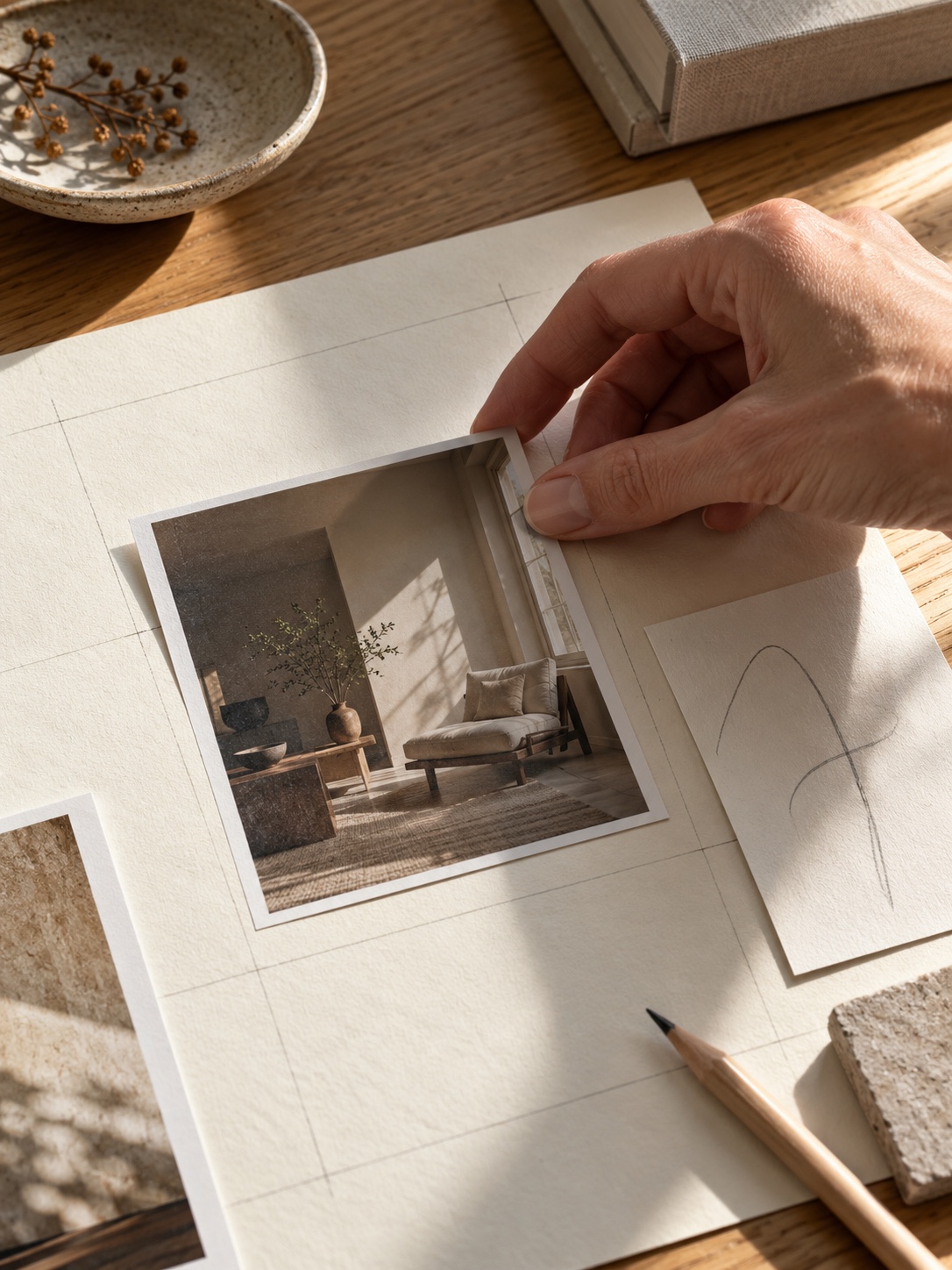
It forces specificity
The hardest part of goal-setting is usually admitting, concretely, what you want. “A better year” is too vague to act on. Choosing a specific image to represent “a calmer morning routine” or “a home that feels finished” requires a level of clarity that vague resolutions rarely ask for.
I notice the same thing in design briefs. When a client says “modern and warm,” I get nowhere. When they send me one photograph of a room they love, we can start. A vision board does that for yourself: it replaces an adjective with a picture. If you can’t find a picture, that tells you the goal isn’t clear yet.
A quick test helps here. For each image on your board, finish the sentence “I’d know this was happening when I could…” If you can’t, the image is decoration. If you can (“cook dinner in this kitchen on a Tuesday”), you’ve found something you can actually work toward, and you can write the first small step beside it.
It’s low-effort to maintain
Unlike a daily journal or a structured tracking system, a vision board asks almost nothing of you after the initial build. You just have to see it. That low ongoing effort is a big part of why it has lasted across so many different eras of self-help, each with a different name for the same basic idea.
The risk is the opposite problem: a board that asks nothing also changes nothing. A low-effort tool needs one small trigger that connects it to action, which I’ll cover below.
What’s different about vision boards this time around
The practice looks familiar, but three shifts separate today’s boards from the corkboards of the past.
Digital has mostly replaced physical
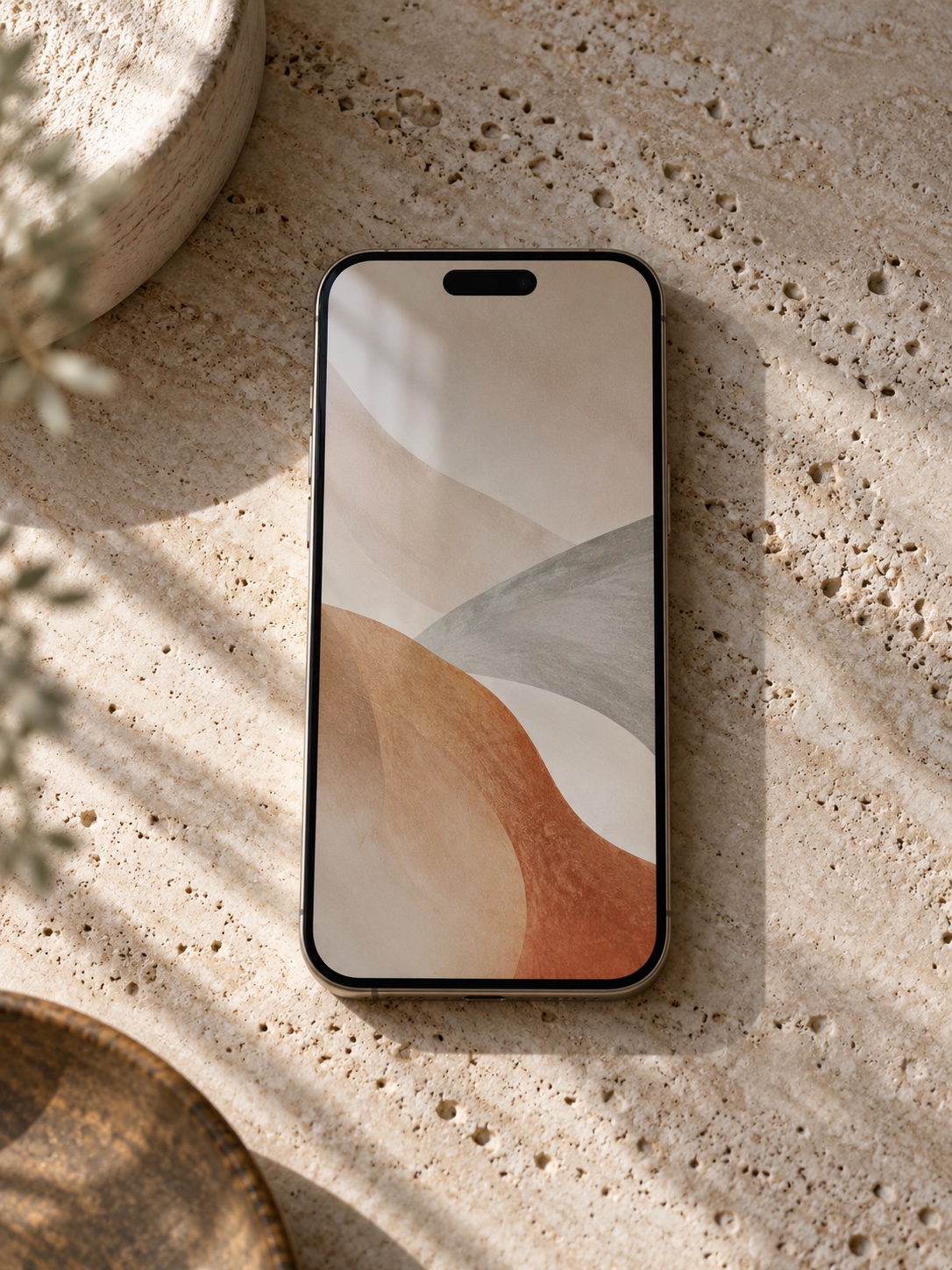
Where a vision board used to mean a literal corkboard, most are now built as phone lock screens, desktop backgrounds or Pinterest boards. These formats get seen dozens of times a day without needing a physical object on a wall.
That’s a genuine advantage, but I still like paper for one reason: making a physical board is slow, and slowness makes you choose. A practical compromise is to plan on paper first, then photograph the finished layout and use it as your lock screen, so you get the careful selection and the daily visibility in one go. If you want the digital route, my guide to vision board 2026 aesthetic layouts covers current layouts for both formats.
Here’s how I’d choose between them. Pick digital if your main problem is forgetting to look, because a lock screen gets seen without any effort. Pick paper if your main problem is vagueness, because cutting and placing images makes you decide. Pick both if you can: a paper board for the planning session and a digital copy for daily sight.
Whichever you choose, keep the content light. A lock-screen board works best with one strong image and, at most, three or four words, because small text gets lost behind icons and widgets.
They’re more targeted
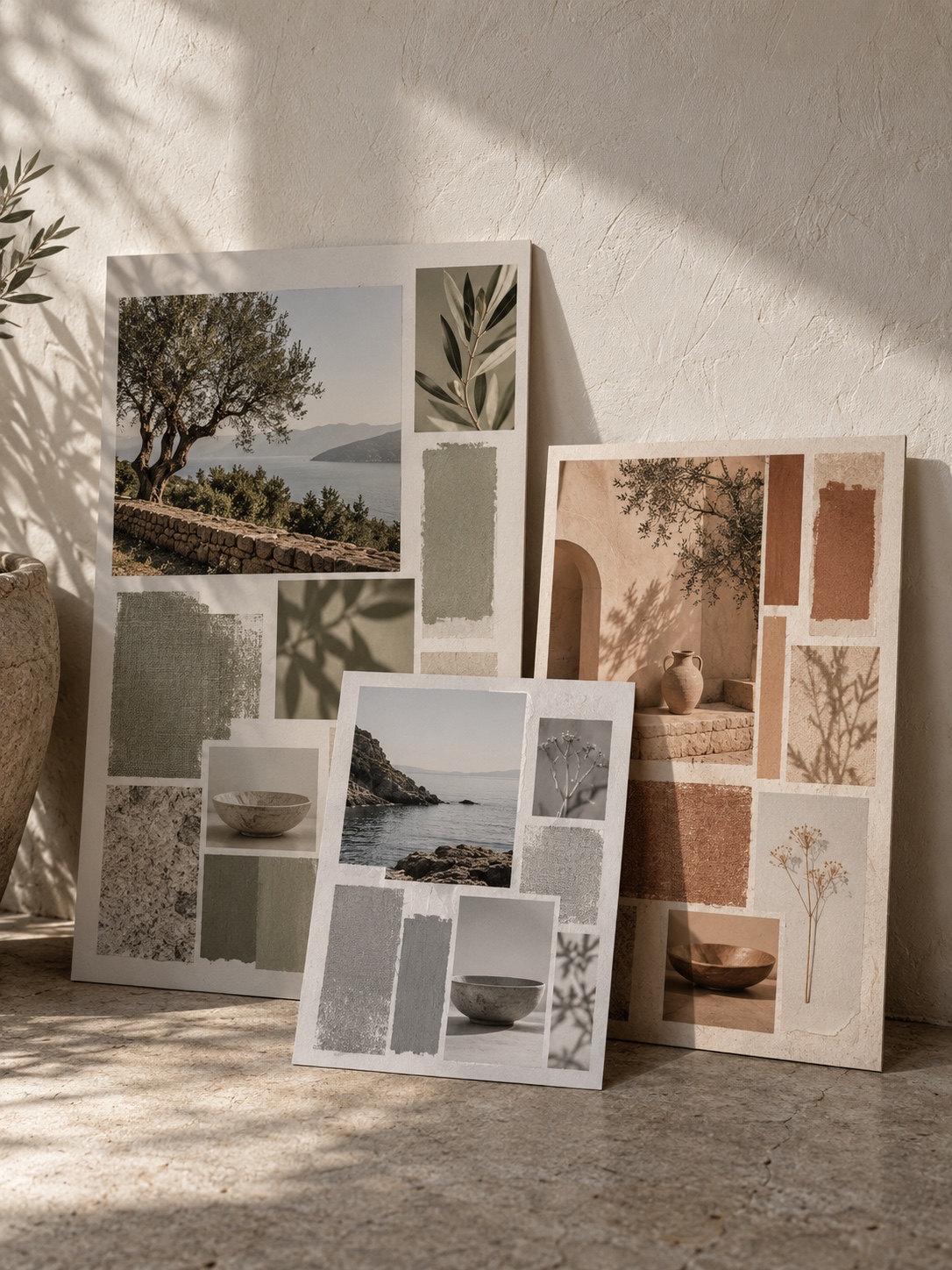
Instead of one sprawling board covering every area of life, many people now build smaller, more specific boards: one for a home renovation, one for a wedding, one for a career pivot. A single catch-all collage tries to represent everything at once and ends up representing nothing.
Think of it as the difference between a poster and a brief. A poster decorates a wall. A brief tells you what to do on Monday.
They’re paired with action more explicitly
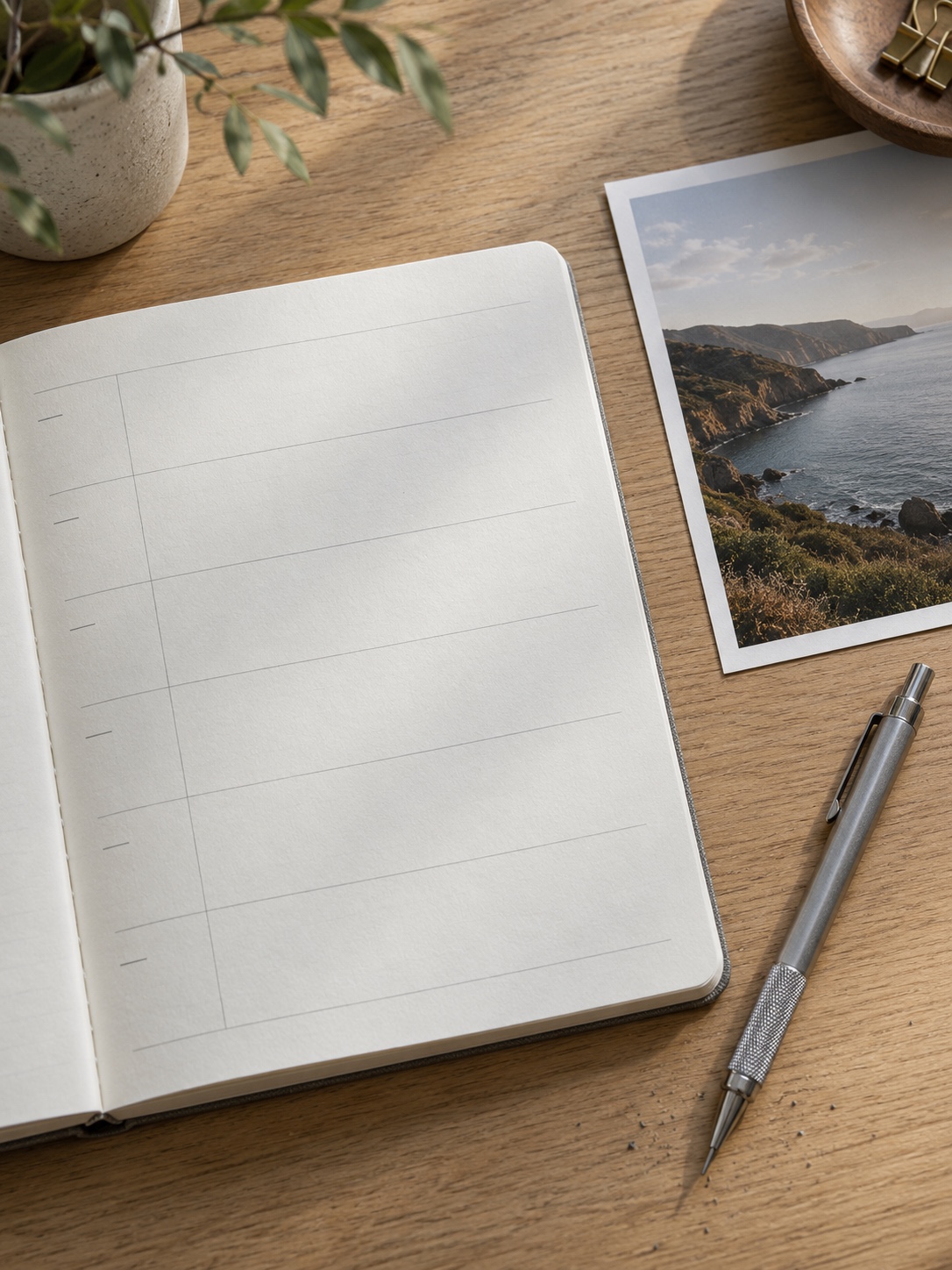
Modern vision-board culture tends to pair the board with a concrete practice: a weekly check-in, a linked to-do list, a journaling habit. The board becomes one piece of a system rather than a stand-alone ritual.
This matches what the research points to. Oettingen’s WOOP method (wish, outcome, obstacle, plan) is built on exactly that idea: picture the outcome, name the obstacle, and make an if-then plan. You don’t need the method to benefit. A weekly 10-minute look at the board, with one question (“what’s the next small step?”), is enough.
Four vision board examples, built around one goal each
Abstract advice is easier to follow with a concrete picture, so here are four small boards and how I’d design each. None of them needs more than three images.
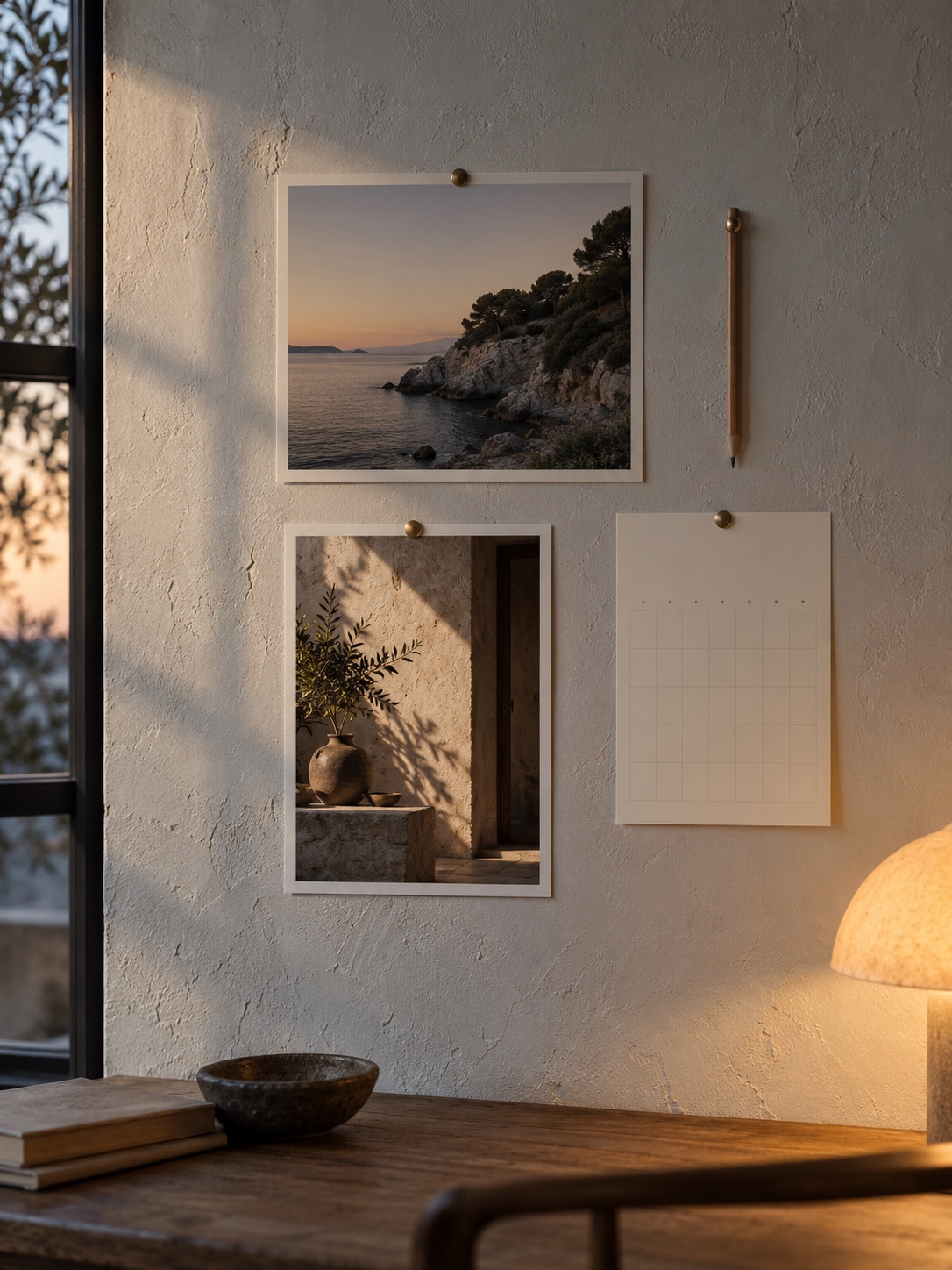
A home board. One hero photograph of the room you want to finish, one close-up of a material you’ve already chosen (a wood sample, a tile), and a small palette strip of two or three colours. The action on the back: “measure the wall and order the sample.” The design logic is simple: the hero image sets the mood, the material grounds it in something you can buy.
A career board. One image of the place you’d like to work, or the kind of work you want to be doing, and one image of a skill you need to build. Skip the generic skyline and the trophy. The action: “update the portfolio page this week.” Career boards fail when they’re all outcome and no process, so make the second image a process image.
A health board. One image of the feeling, such as a morning walk or a full table, and nothing that shames. Avoid before-and-after pictures, which tend to turn a board into a source of guilt. The action should be small enough to do on a bad day: “ten minutes outside before work.”
A calm-routine board. One image of the morning you want, with plenty of empty space around it. This is where whitespace does real work, because the point of the board is rest. The action: “phone stays out of the bedroom.”
How to build one that actually holds up past February
Most boards fail for boring reasons: too many goals, too little contrast, and a hiding place nobody walks past. Fix those three and you’re ahead of most people. For a full step-by-step build, see my guide to making your own aesthetic vision board. Here’s the version that keeps the practice honest.
Start with two or three categories
Pick the areas of your life that are genuinely live questions right now, not every category you could theoretically improve. Home, work, health, money, relationships: choose the two or three that feel urgent. Everything else can wait for the next version.
For each category, choose one main image and one or two supporting ones. One hero image per goal is a layout rule from editorial design, and it works here because the eye needs somewhere to land first.
Choose images of the feeling, not just the object
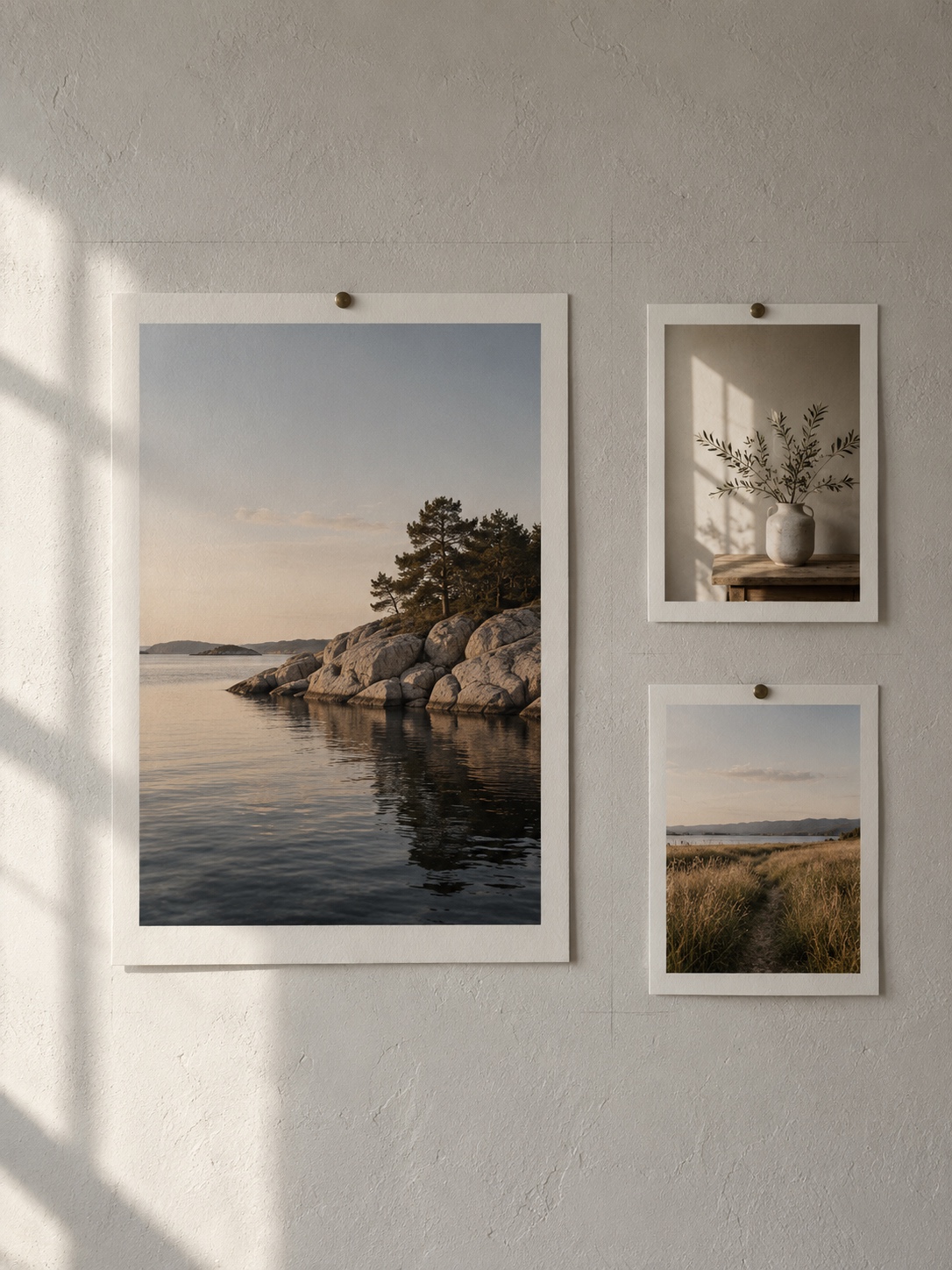
A photograph of a car shows an object. A photograph of an open road at dawn shows how you’d like to feel. Choose images that represent the experience of reaching the goal, along with a few words if they help.
Then, for each image, write one concrete action on the back or in your notes: “book the viewing,” “send the application,” “walk 20 minutes before work.” This is the step that turns a picture into a plan, and it’s the part most boards skip.
Add a short design layer
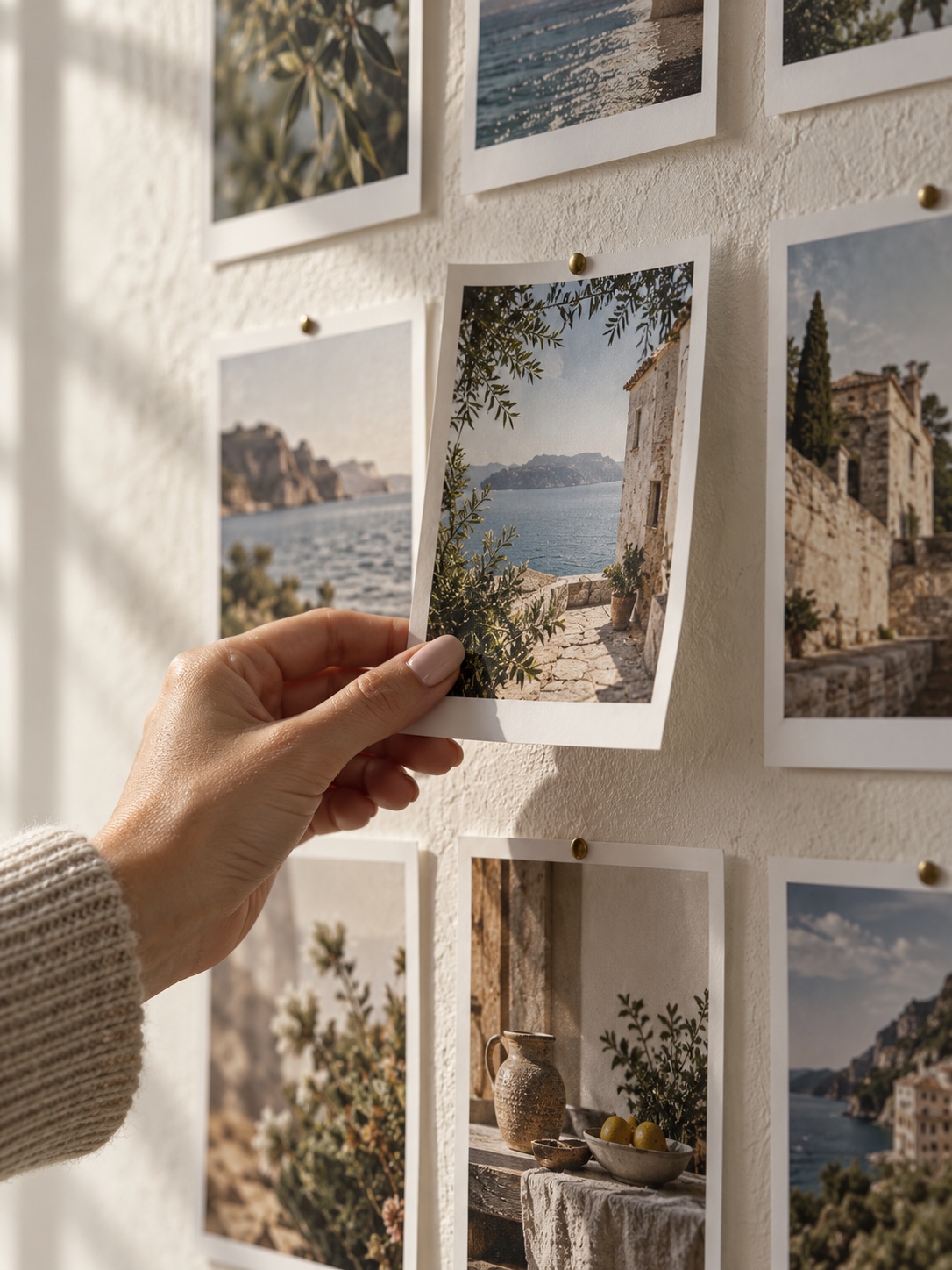
A little visual discipline makes a board easier to live with. Use two to four colours at most, so the board reads as one calm object rather than a collage of unrelated pictures. Keep one dominant image per goal. Leave generous empty space: crowded boards turn into wallpaper you stop seeing within a week.
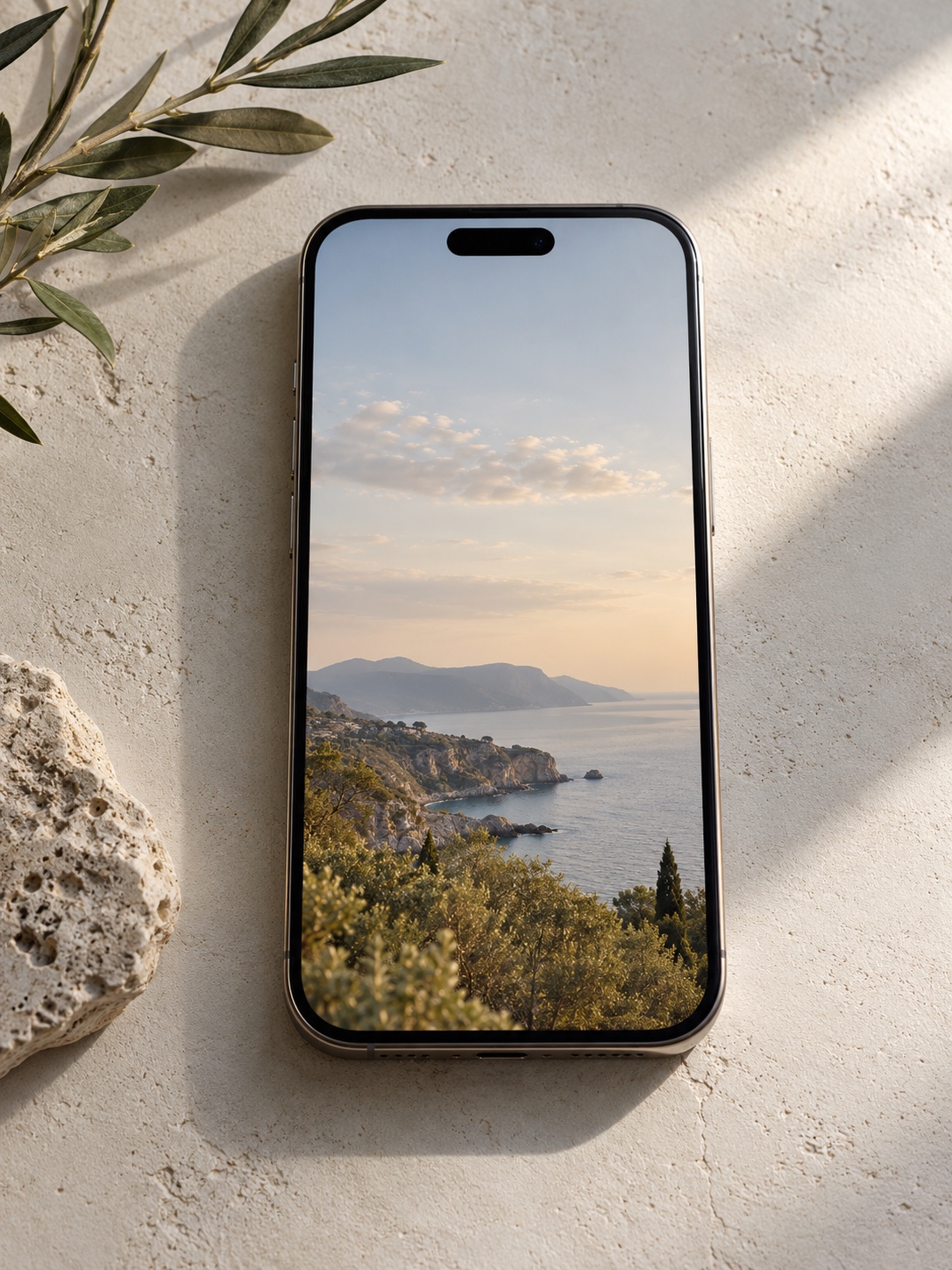
If the board is a phone lock screen, leave room for the clock at the top and the notification area at the bottom, and keep the main image clear of both. A beautiful composition that the clock covers is a design failure, and it’s the commonest one I see in digital boards.
Put it where you’ll see it daily
A phone lock screen outperforms a corkboard in a closet every time. Choose the surface you look at most: your phone, your desk, the inside of a wardrobe door. Digital boards tend to get more consistent visibility, since most people check their phones dozens of times a day.
Mistakes that make a board stop working
Four mistakes account for most of the boards that go quiet by February. The first is too many goals: a board with fifteen categories asks for fifteen decisions, and the eye never settles. The second is images that show objects instead of feelings, which look nice and say nothing about how you want your days to go. The third is no action attached. The fourth is hiding the board: a poster behind a wardrobe door you open twice a week is a decoration, not a tool.
If you recognise your own board in that list, don’t rebuild it from scratch. Cut it to two goals, add one action each, and move it to a surface you pass daily. That’s usually enough.
Revisit it every few months
Some goals will feel achieved. Some will feel wrong for where you are now. Updating the board keeps it a living tool instead of a stale poster. Put a reminder in your calendar for three months out, and treat the review like a short design critique: what still earns its place, and what can go?
A vision board for what your money wants to say
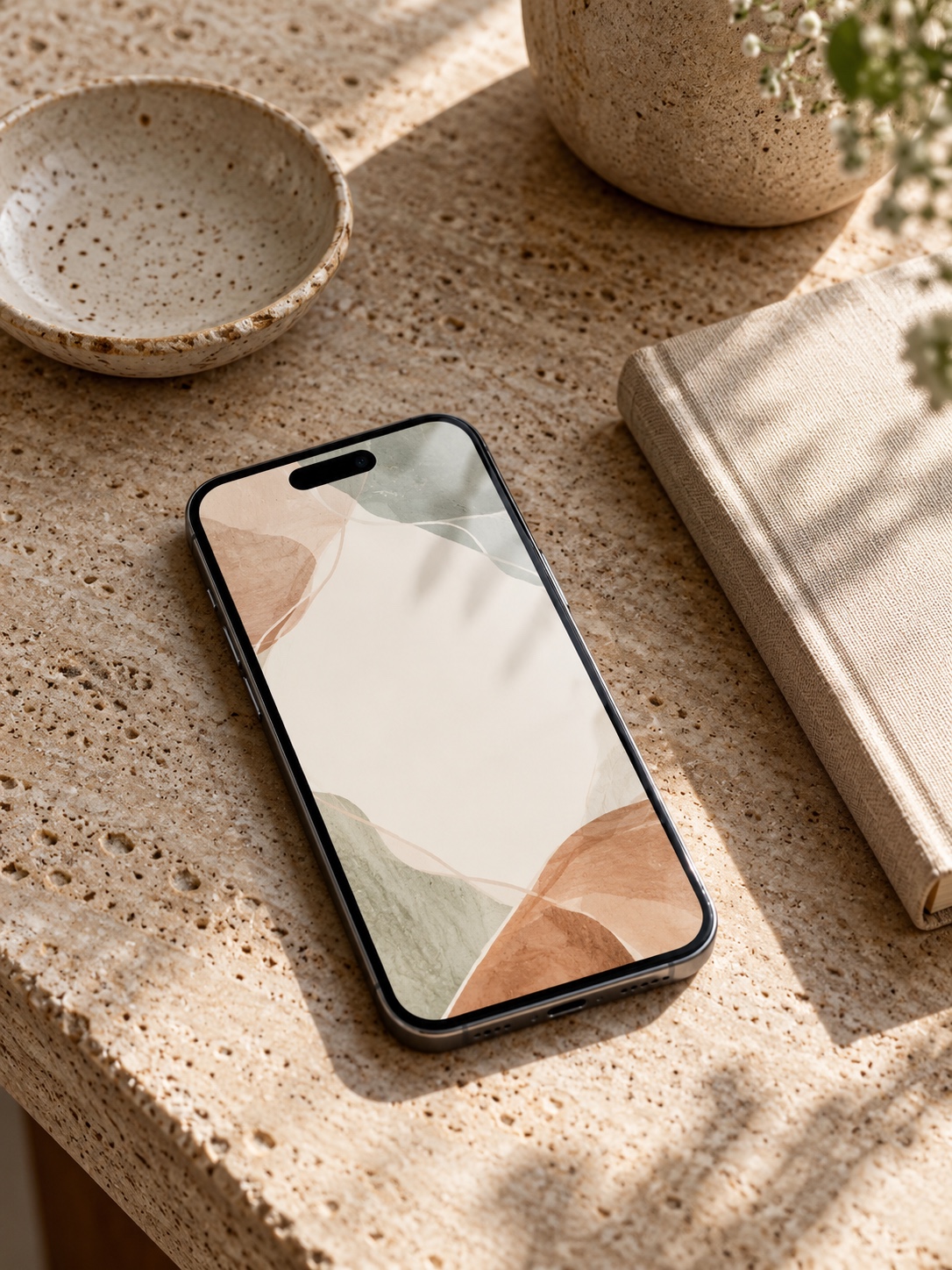
If part of your board is about financial goals, a personalised version can go further than a generic image of a house or a beach. Wedding Serenity Club’s free Money Mantra Generator asks a few questions about how you want your abundance to feel, such as steady, expanding, protected or generous, and builds an affirmation from your answers instead of picking one from a list. The result is formatted as a phone lock-screen wallpaper, which makes it a small, ready-made addition to a digital vision board. The site’s blog has more on intention-setting and ritual practices if you want to explore the rest of your board.
I’d keep one thing in mind, and the site is upfront about it too. The tool presents itself as a keepsake, not a financial instrument: its page says nothing there is financial advice and that a wallpaper is not a strategy. That’s the right way to use it. Let the wallpaper set the tone, and pair it with the unglamorous part: a budget, a savings target, a date.
Money isn’t the only part of a board worth personalising. The same site offers other quizzes and story-style tools that some people use to find visual themes, such as a past-life-flavoured aesthetic quiz and a short fairytale-style chapter about your love story. They’re entertainment more than method, but they can give you an image or a phrase to start from.
Disclosure: this section features a tool from Wedding Serenity Club, a partner of this article.
FAQ
Do vision boards actually work?
They work as an attention and clarity tool, not as magic. Choosing specific images forces you to define what you want, and seeing them daily keeps the goal in mind. Research on visualization also warns that picturing success alone can reduce effort, so the boards that work are paired with a named obstacle and a concrete next step.
How do vision boards work psychologically?
Mostly through attention and specificity. A goal you’ve made concrete is easier to notice opportunities for, and an image is harder to be vague about than a word. The limit is motivation: studies by Oettingen and colleagues found that positive fantasies alone can sap effort, while contrasting the wish with obstacles and making an if-then plan led to more action.
Should a vision board be digital or physical?
Whichever you’ll see every day. Digital boards on a phone lock screen or desktop get more consistent visibility, because most people check their phones dozens of times a day. A physical board takes longer to build, which can help you choose more carefully. Many people keep a paper version for planning and a digital one for daily sight.
How many things should be on a vision board?
Fewer is better. Two or three specific categories is a common, sustainable starting point, with one main image per goal and a little space around it. A crowded board tends to turn into background you stop noticing, and a smaller one is easier to keep updated.
Is a vision board just wishful thinking?
On its own, it can be. A board of finished dreams may feel like progress without producing any. It works best paired with action: a weekly check-in, a named obstacle, an if-then plan and a next small step. Treat the board as a reminder of direction, not as a substitute for doing the work.
When’s the best time to make one?
January is the most common trigger, but a vision board works at any transition: a new job, a move, a wedding, a birthday. Any moment where it’s useful to get specific about what’s next is a good time. Review it every few months so it keeps matching where you actually are.
Final thoughts
Vision boards keep returning because they do two useful things cheaply: they make you define what you want, and they keep it in view. They fail when they stop at the dream. The version that lasts past February is small, specific and paired with a next step, and it’s designed well enough that you still enjoy looking at it.
Pick two goals tonight, choose one image for each, and write the first action on the back. It takes about twenty minutes, and it’s the quickest way to find out whether the practice works for you.
References
- 0shares
- Facebook0
- Pinterest0
- Twitter0
- Reddit0