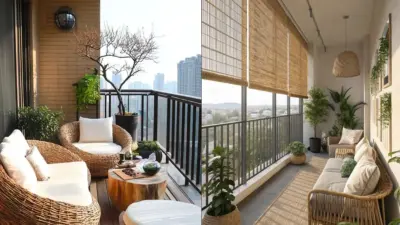
These 25 DIY lamp shade projects are a good way to change the mood of a room without buying a new lamp. Start with the shade shape, then think about how the material will filter light: twine gives warm shadows, paper feels soft and sculptural, and metal or wood looks cleaner and more architectural.
Before you begin, use an LED bulb, keep paper and glue away from heat, and test the shade on the lamp before leaving it on for a long time. A beautiful shade still has to be safe.
Quick materials checklist
- LED bulb and a stable lamp base
- Twine, paper, cardboard, bottle glass, wood, or thin metal rods
- Craft glue, scissors, ruler, and masking tape
- A balloon, cylinder, or frame to shape the shade
Simple twine lamp shade
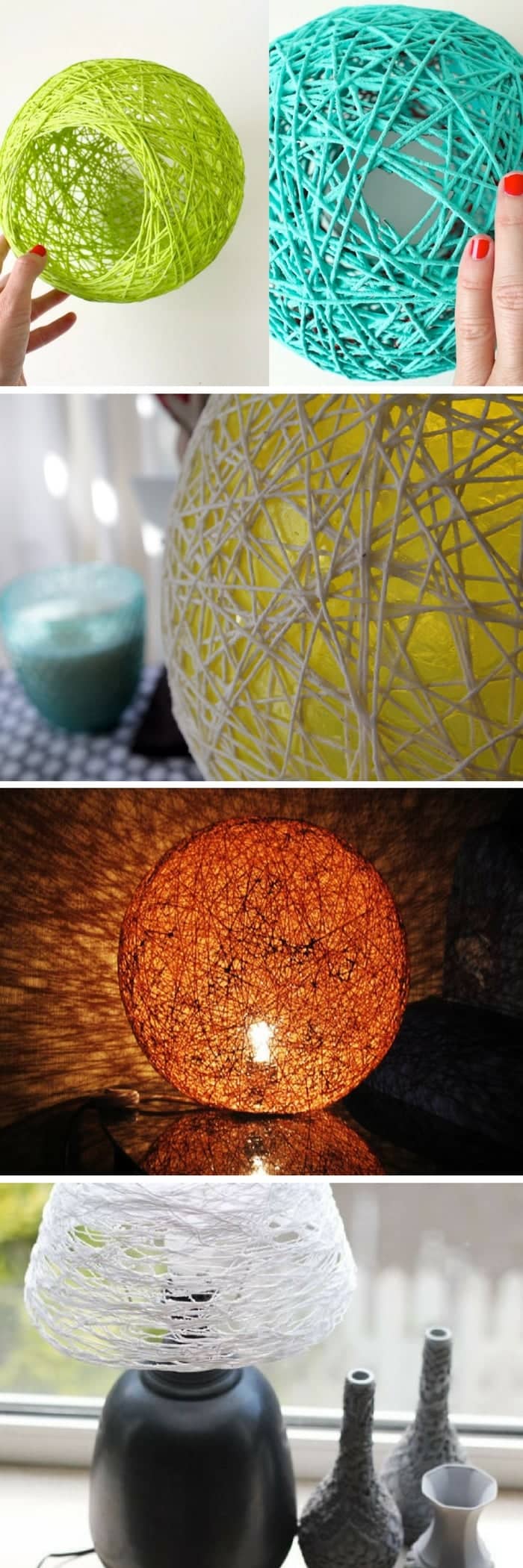
A twine shade is one of the easiest DIY lamp shade projects to repeat. Wrap glue-soaked twine around a balloon or cylinder, let it dry fully, then remove the form. The trick is leaving enough open space so the bulb can glow through the pattern.
Origami paper lamp shade
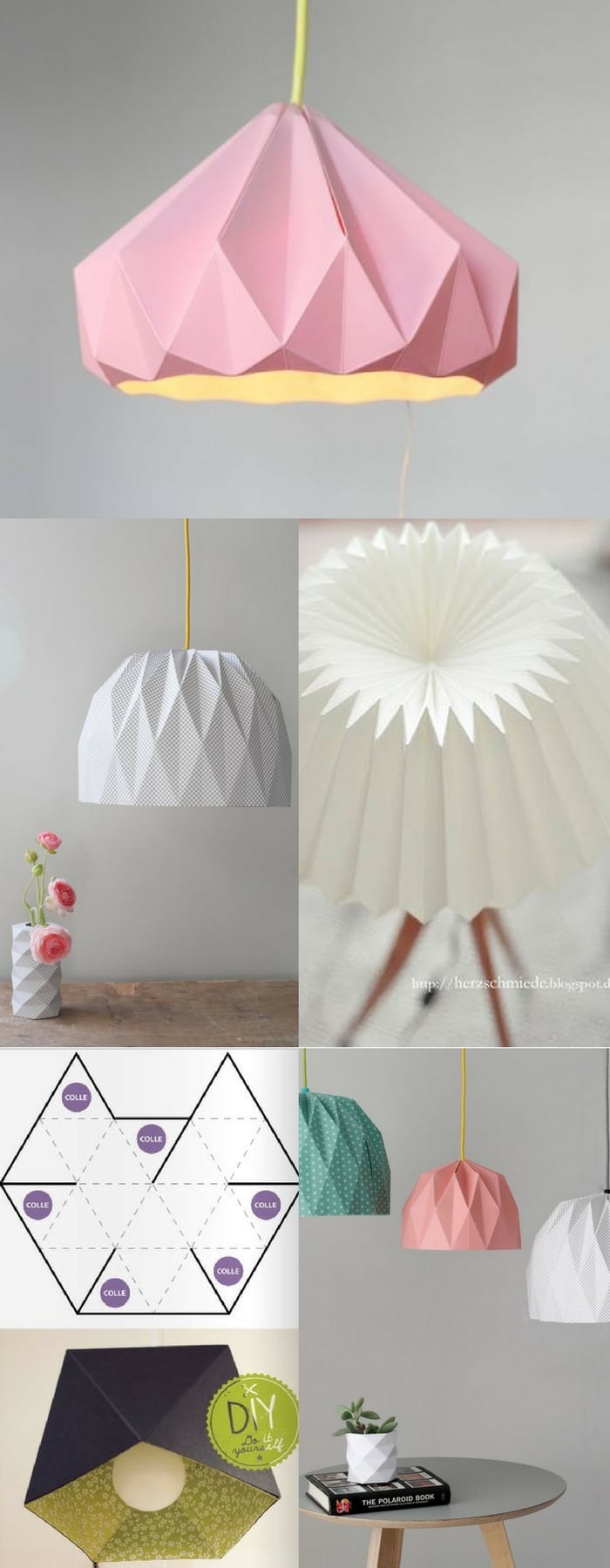
Use dense paper, a clean folding pattern, and a light hand with glue. Origami shades work best when the creases are sharp and repeated, because the folds become the decoration.
DIY bottle lamp
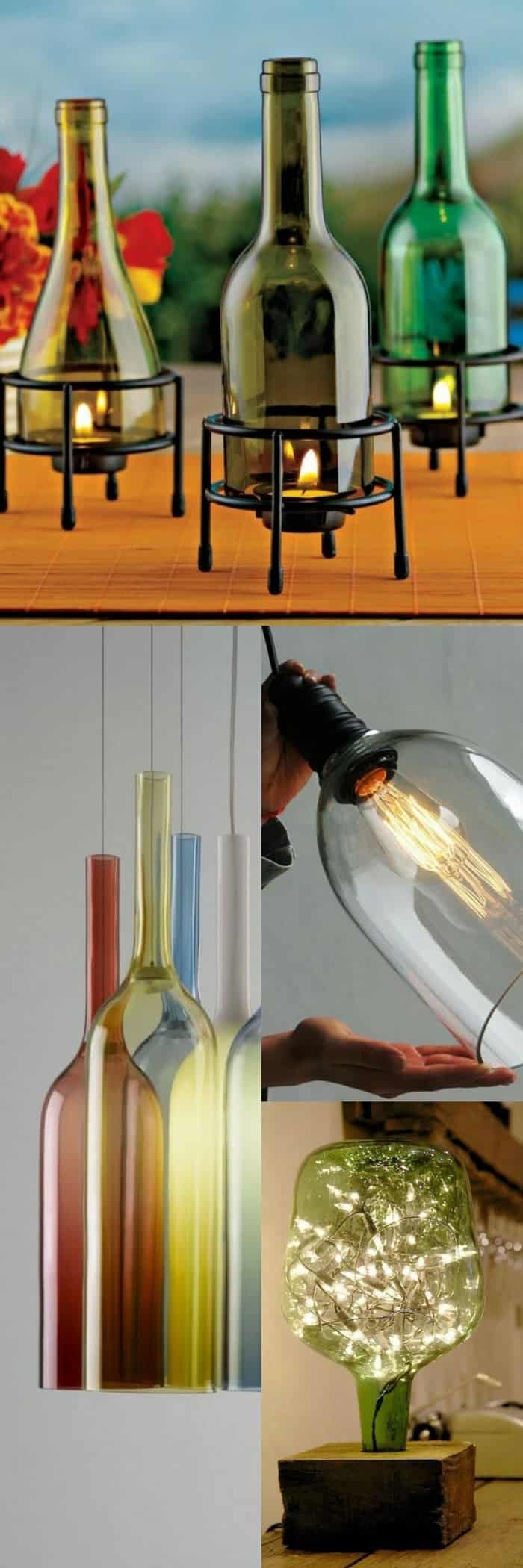
A bottle lamp is cheap, practical, and easy to personalize. Choose a bottle with a strong silhouette, then pair it with a simple shade so the whole lamp does not feel too busy.
Geometric lamp shade
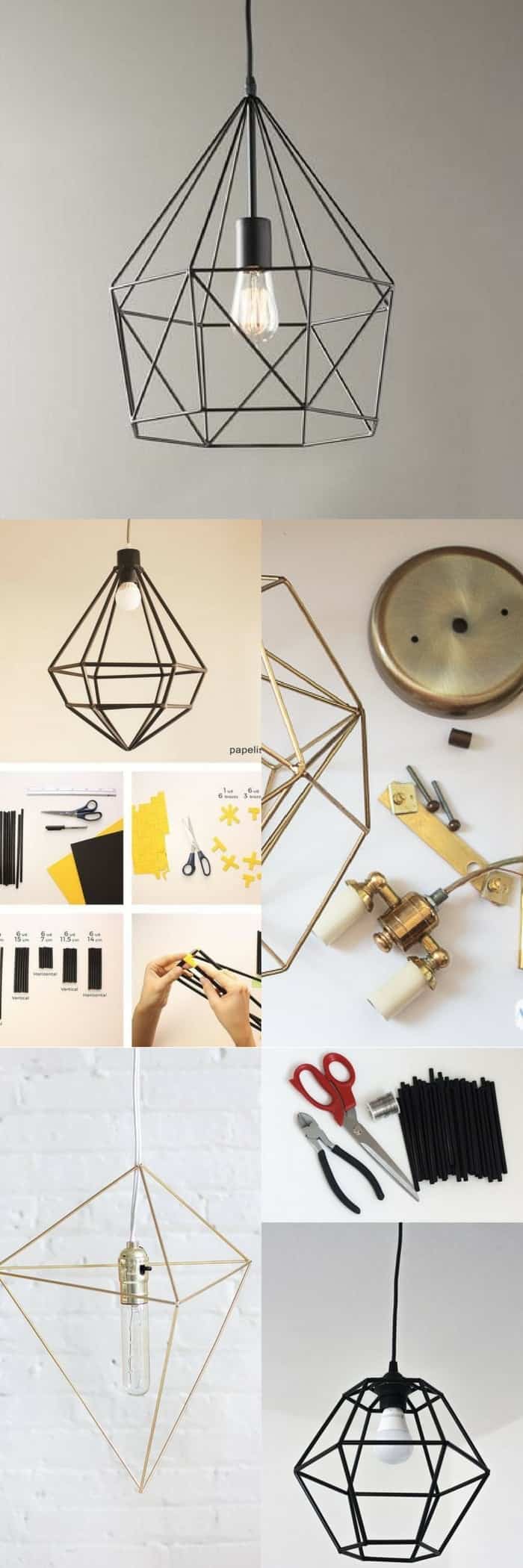
Geometric shades can be made with thin rods, balloon sticks, copper pipe, or a lightweight wire frame. If you enjoy this kind of hands-on home styling, save a few more home DIY ideas for the same weekend.
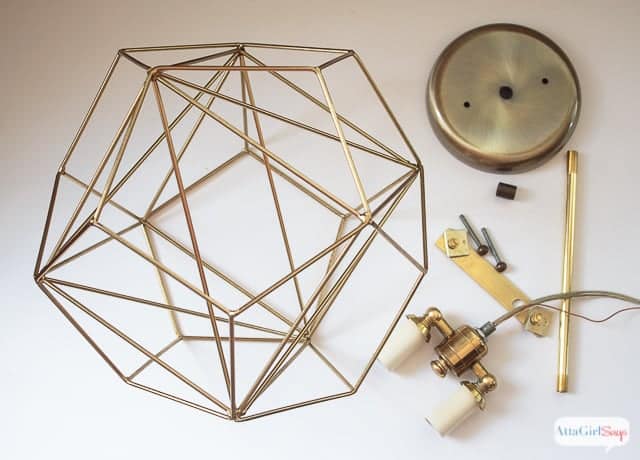
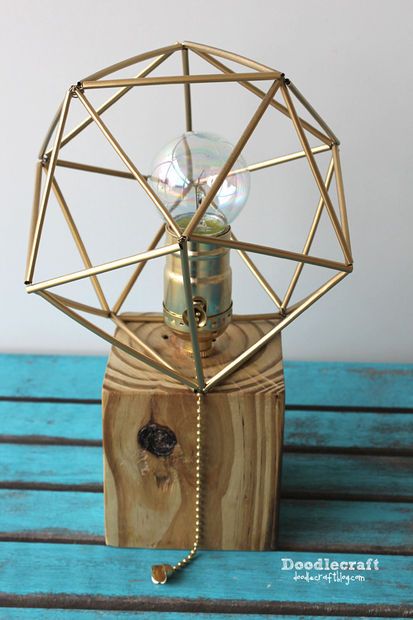
Simple DIY lamp projects
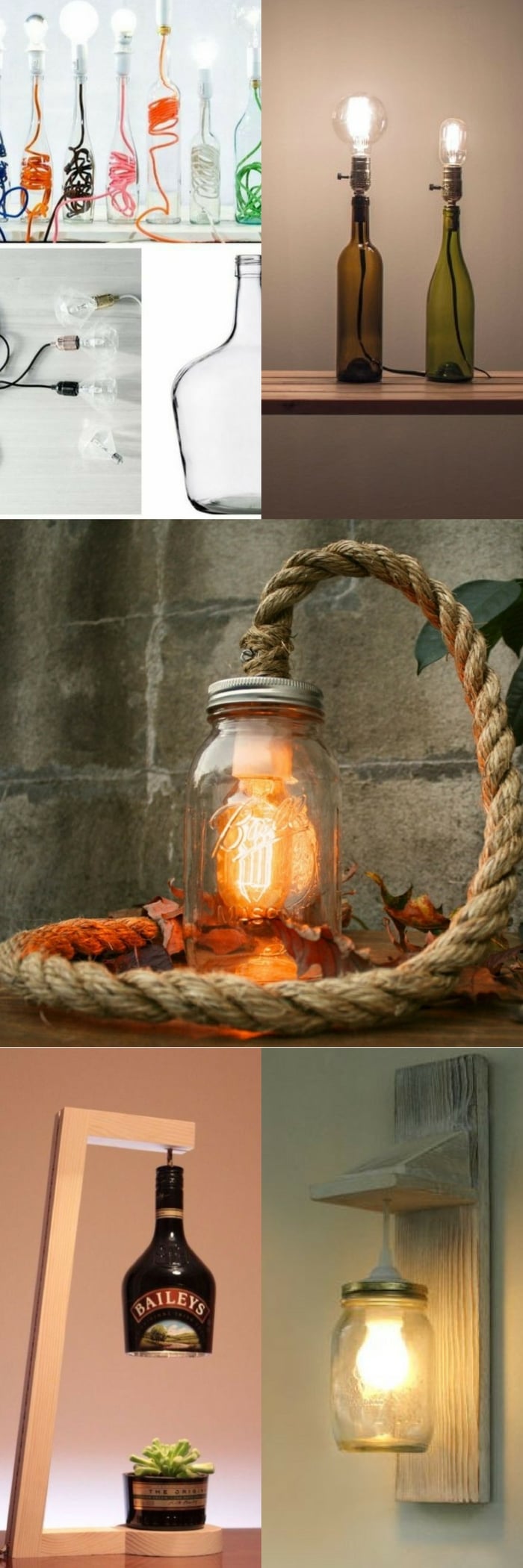
A decorative pot can become a lamp base or shade detail if the proportions are right. Keep the cord path neat and make sure the weight sits low enough that the lamp will not tip over.
Table lamp shade ideas
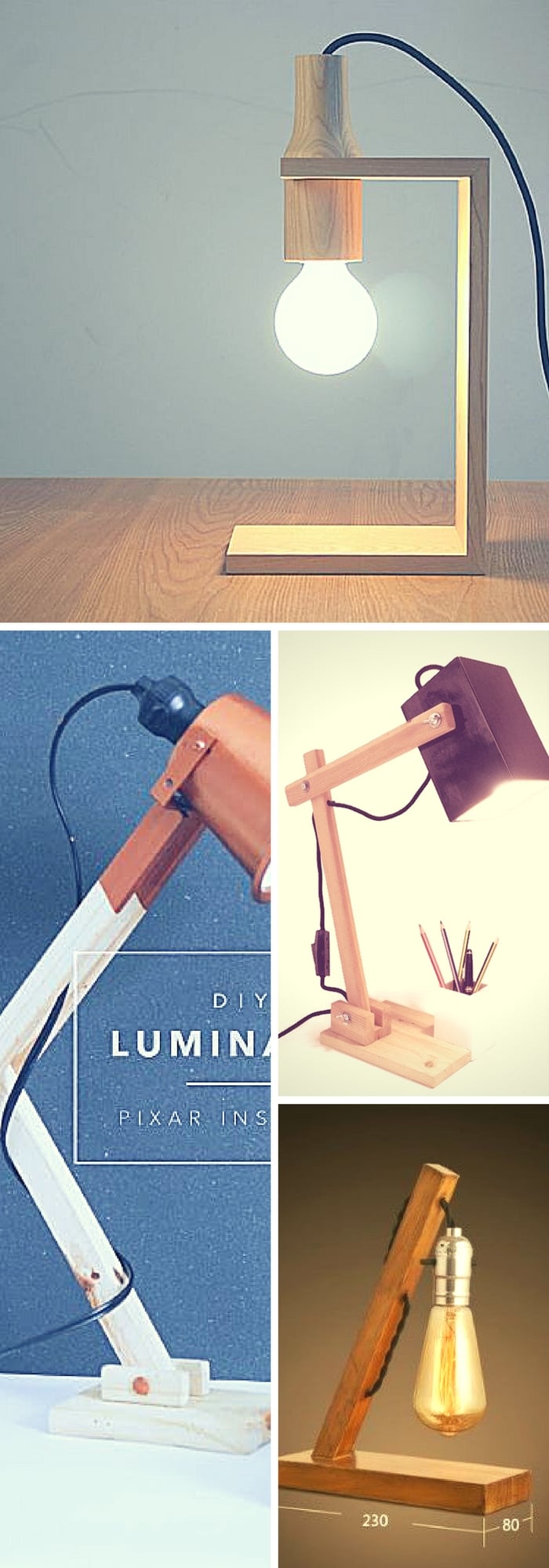
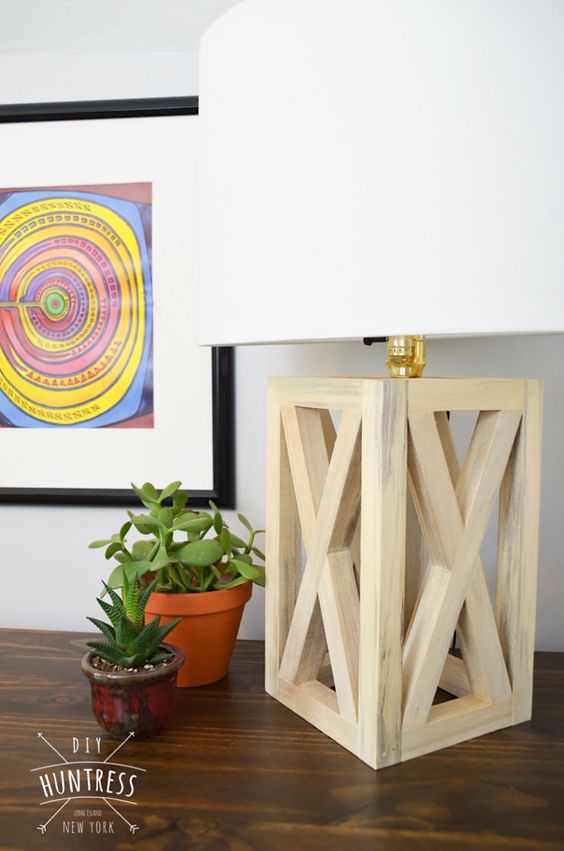
More DIY lamp shade ideas to make at home
Here are 15 more DIY lamp shade projects to bring the list up to 25 ideas. Pick the one that fits your room first, then choose the material. A shade for a reading corner needs more useful light than a decorative lamp on a shelf.
11. Rattan cane webbing shade
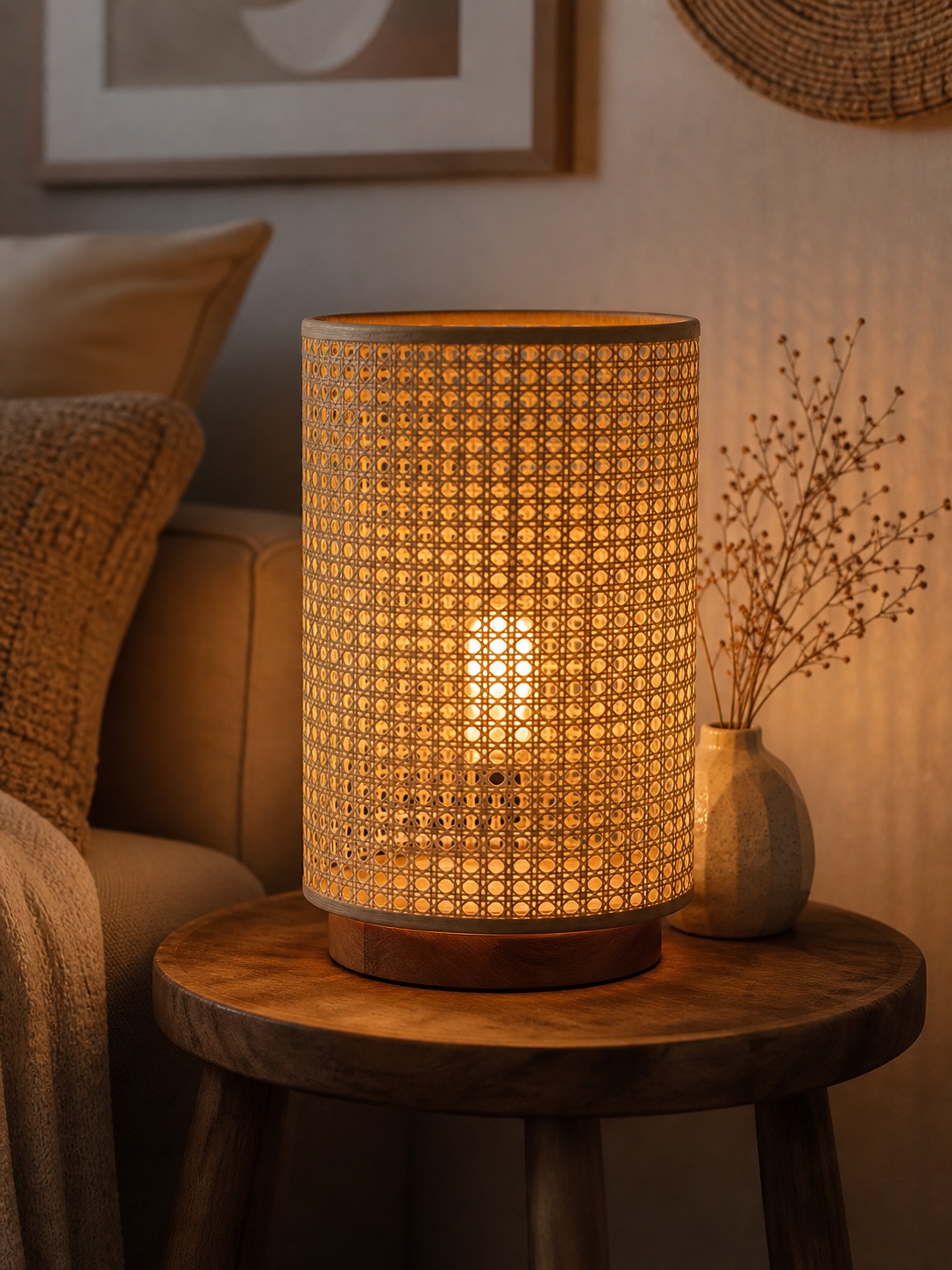
Cane webbing is useful when you want a lamp shade that feels warm but still structured. Wrap it around a simple drum frame, secure the seam neatly, and let the woven pattern create soft shadows on the wall.
12. Pleated linen shade
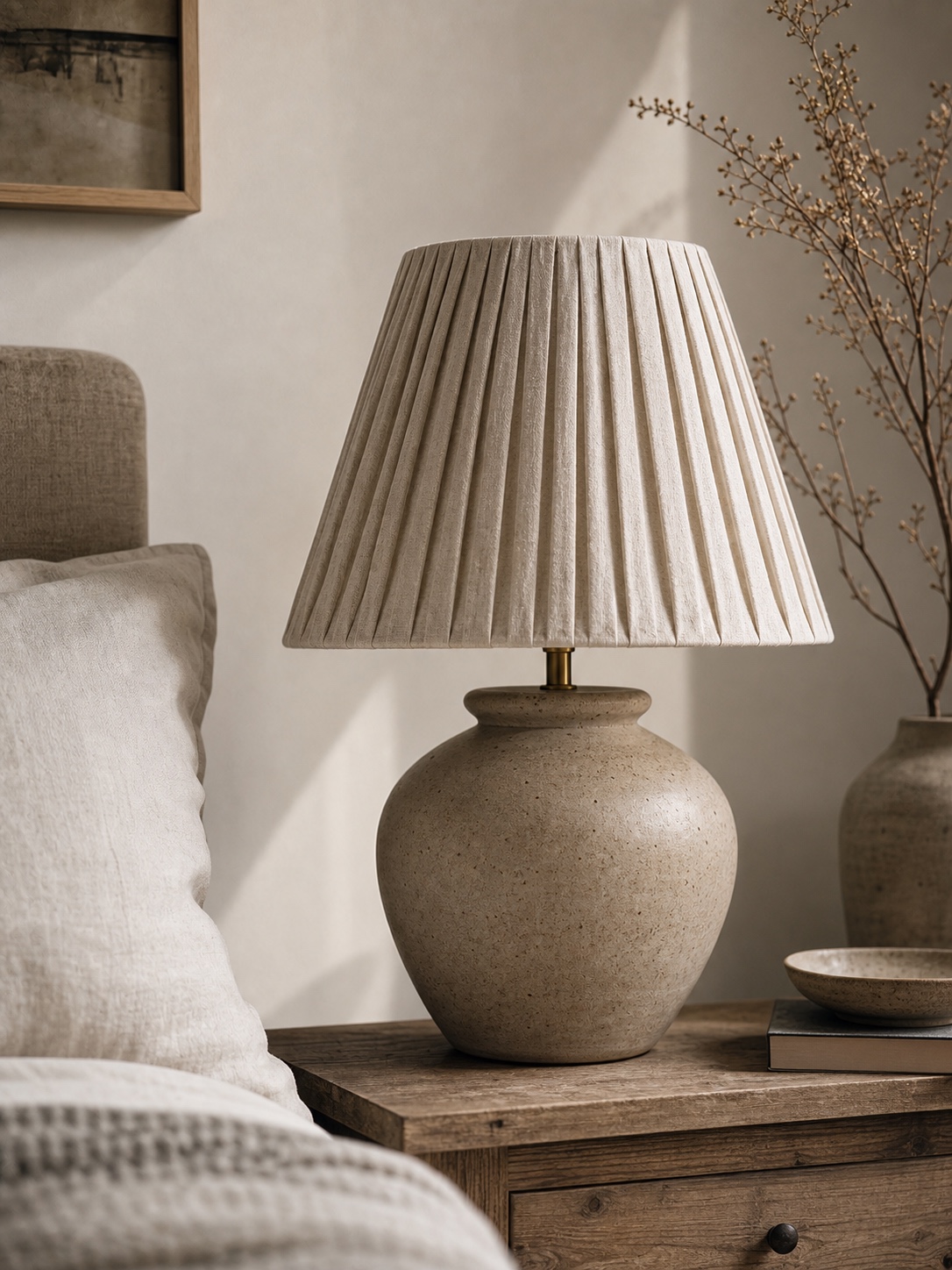
A pleated linen shade feels softer than plain fabric because the folds catch the light. Mark the pleats first, press them carefully, and keep the bottom edge even so the shade does not look wavy.
13. Macrame fringe lamp shade
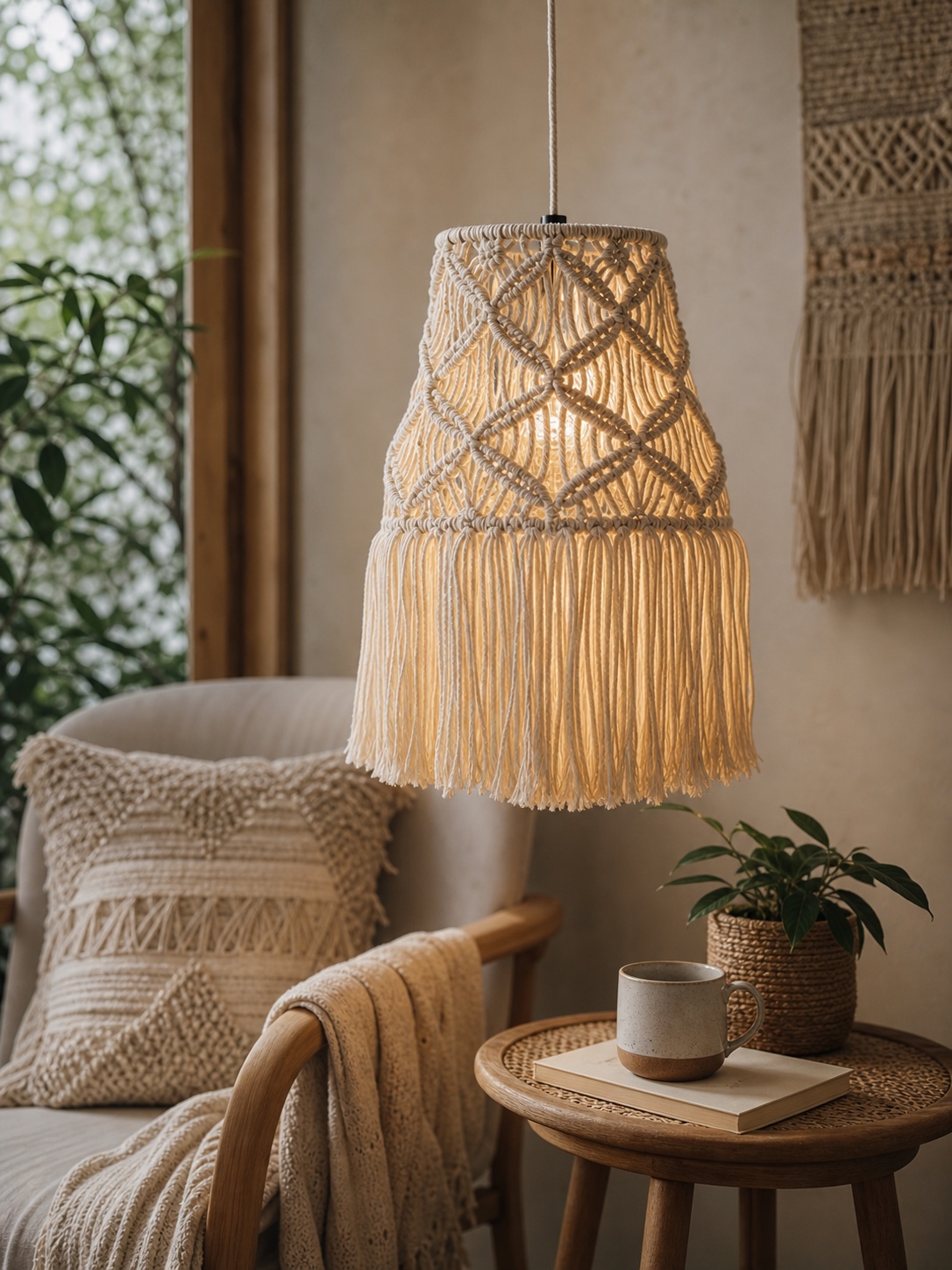
Macrame works well for a pendant lamp or a small accent shade. Keep the knots loose enough for light to pass through, and trim the fringe after hanging so the edge looks intentional.
14. Punched metal shade
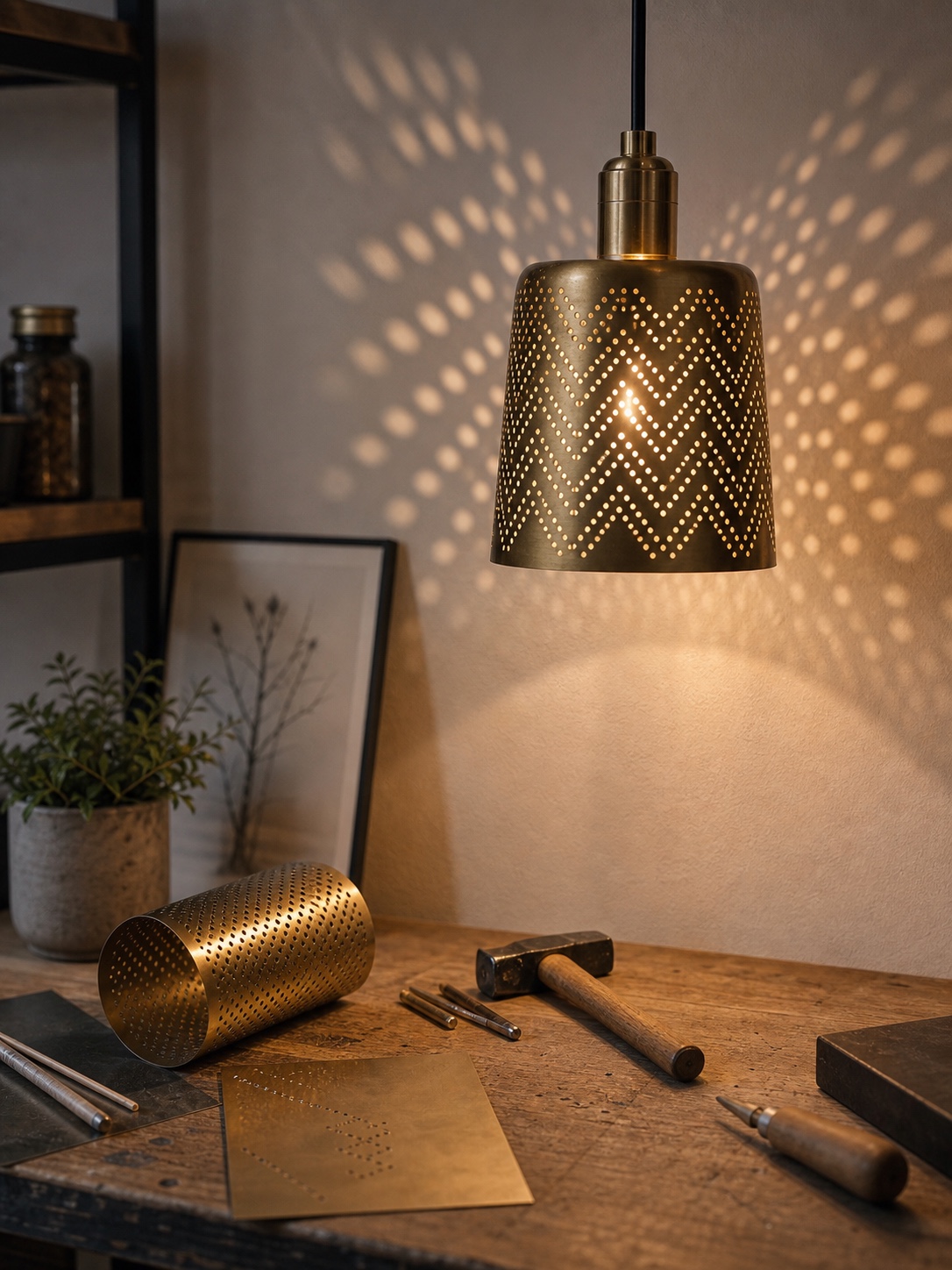
A punched metal shade is best for patterned light. Use thin metal, mark the hole pattern before drilling or punching, and smooth the edges so the shade is safe to handle.
15. Terracotta pot lamp shade
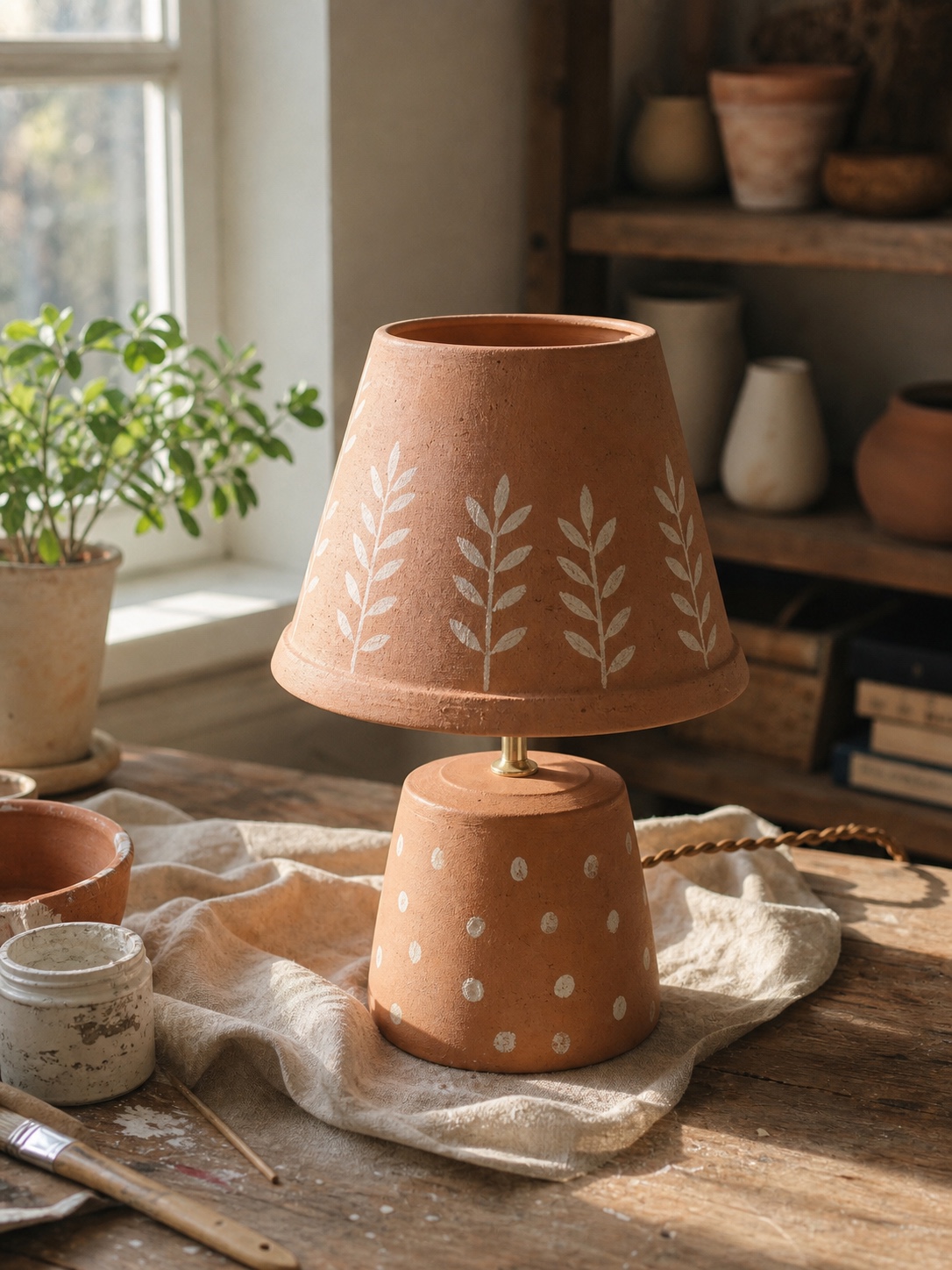
A terracotta pot can become a sculptural shade or base if it is light enough and properly drilled. The clay texture looks especially good with linen, jute, and warm white bulbs.
16. Beaded glass shade
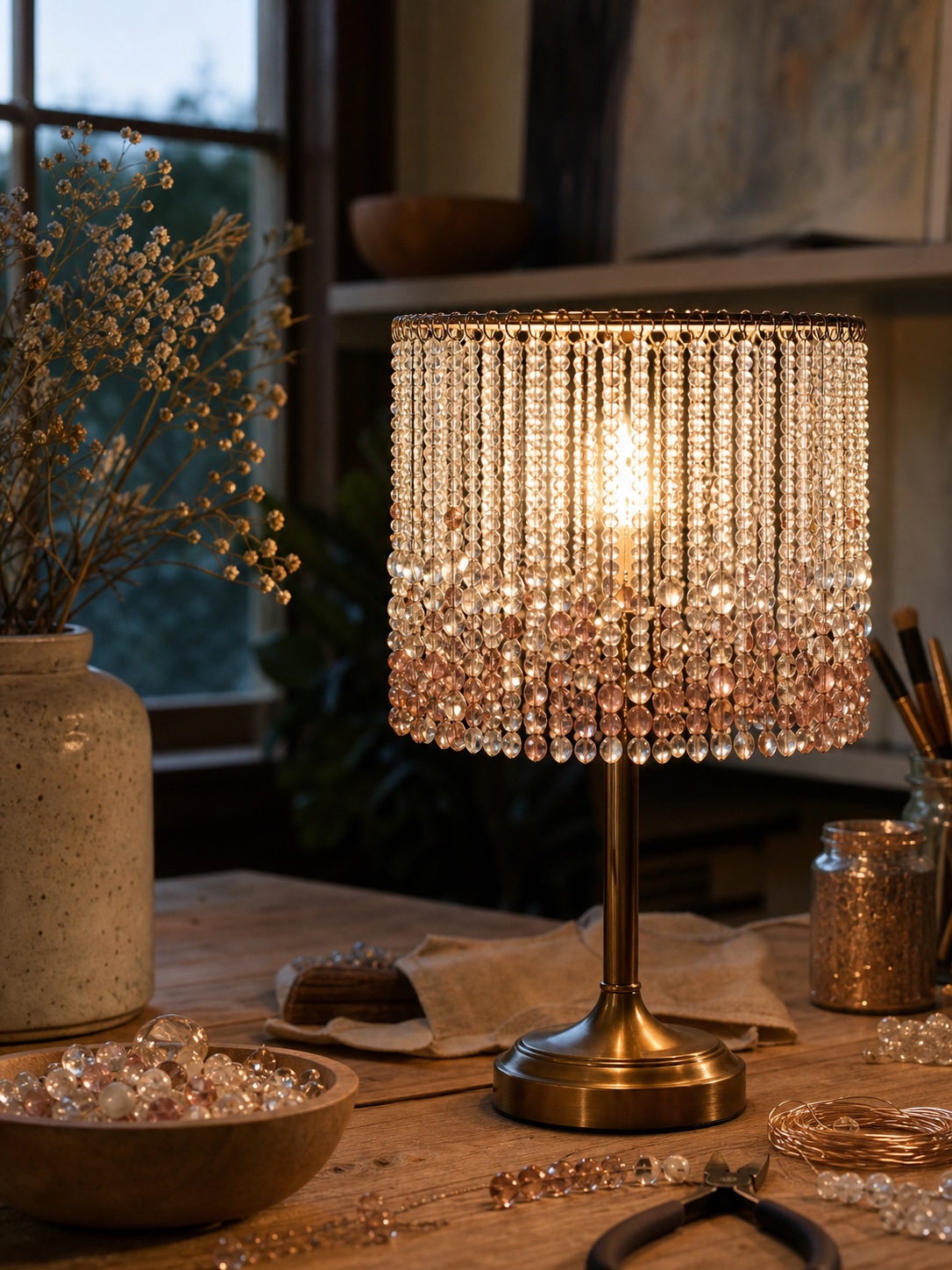
A beaded shade is slower to make, but the payoff is the sparkle. Use a strong frame, repeat the bead spacing, and keep the pattern simple so it looks refined rather than crowded.
17. Wood veneer shade
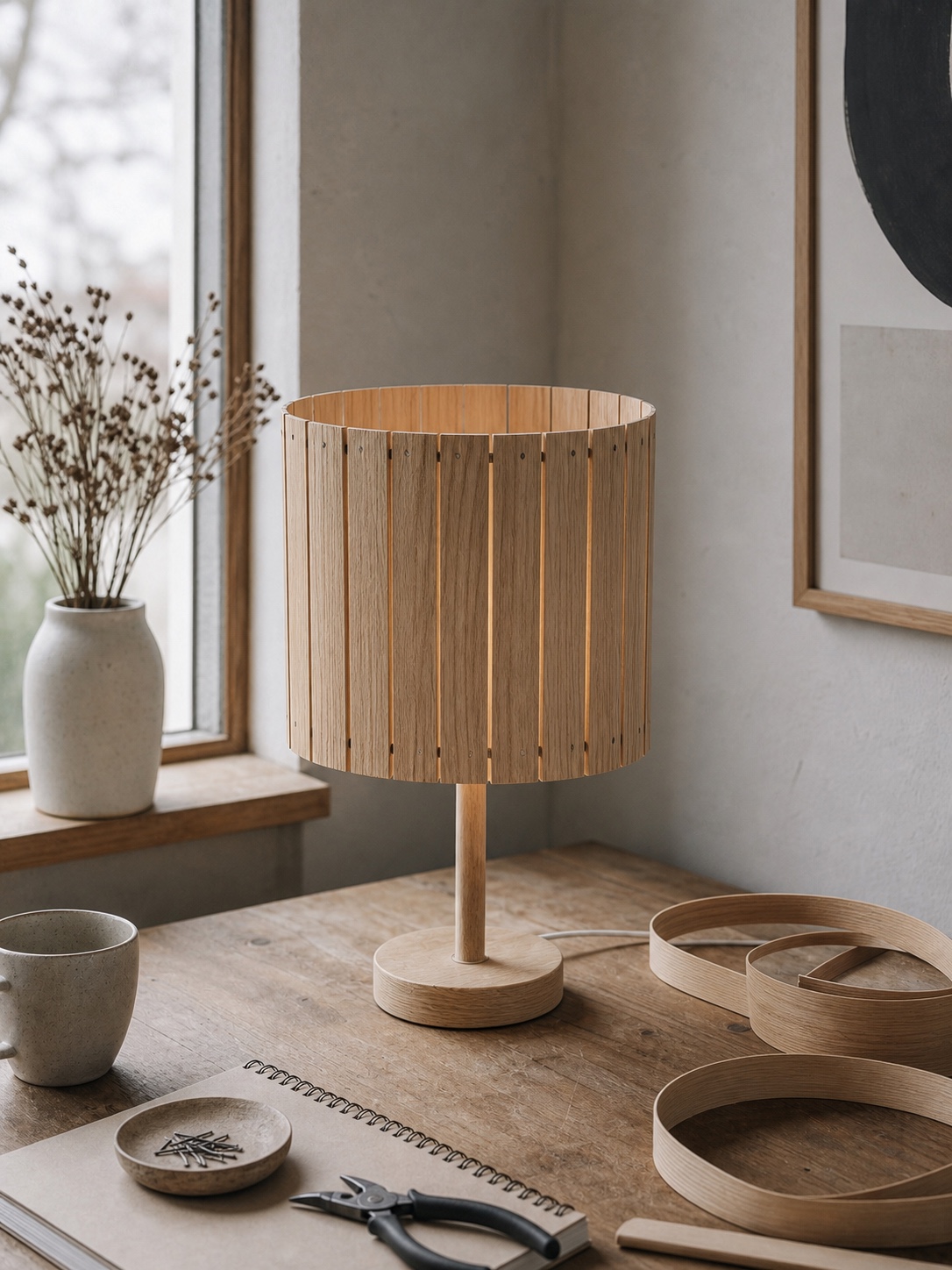
Thin wood veneer gives a lamp a calm Scandinavian feel. Bend it gently, avoid sharp folds, and use an LED bulb so the shade stays cool.
18. Pressed flower paper shade
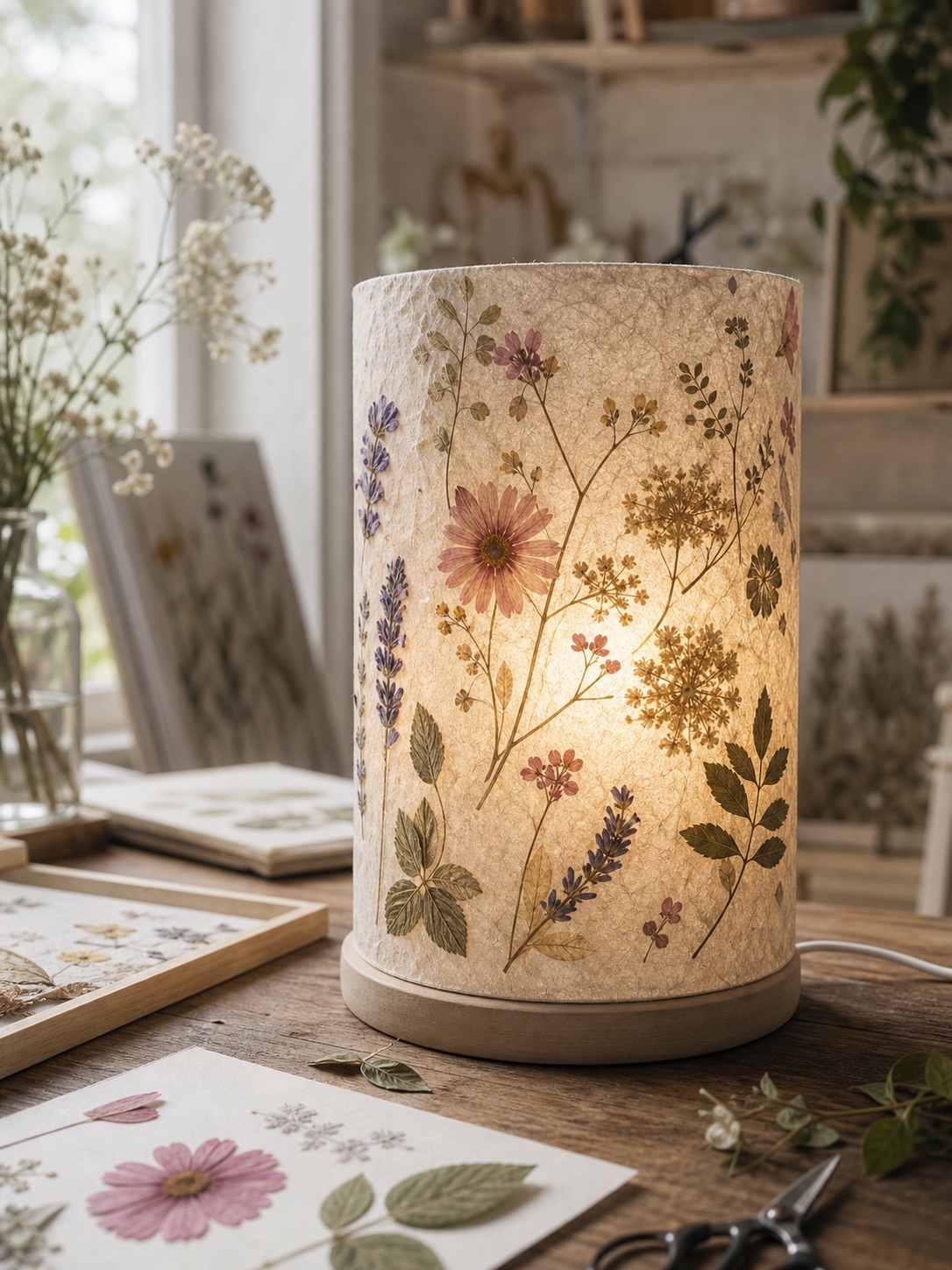
Pressed flowers look beautiful inside translucent paper. Keep the flowers flat, use a light adhesive, and test the shade with a low-heat bulb so the paper keeps its shape.
19. Upcycled denim shade
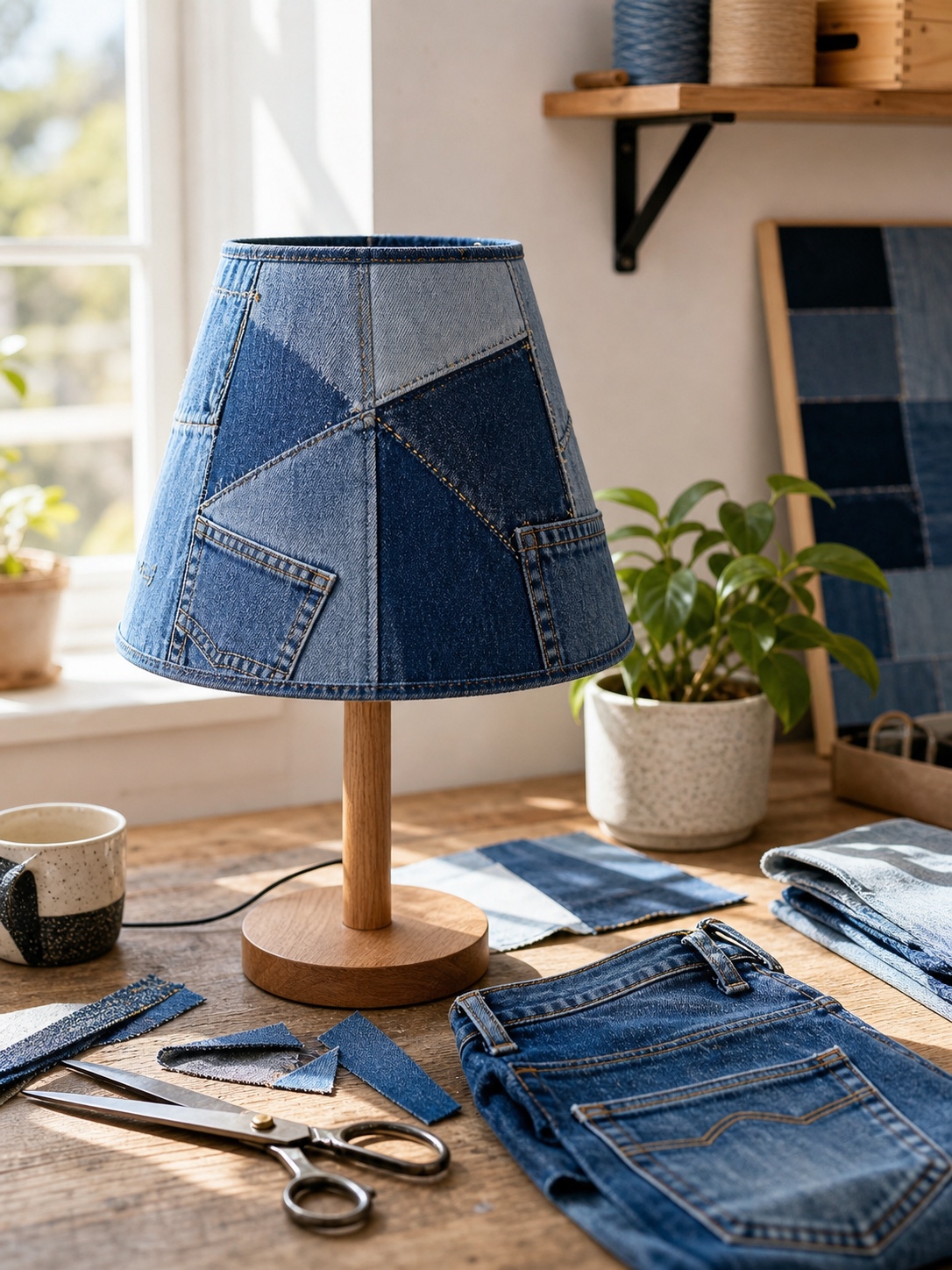
Old denim gives a lamp shade a casual, textured surface. Use the seams as design lines instead of hiding them, and keep the fabric pulled tight around the frame.
20. Rice paper lantern shade
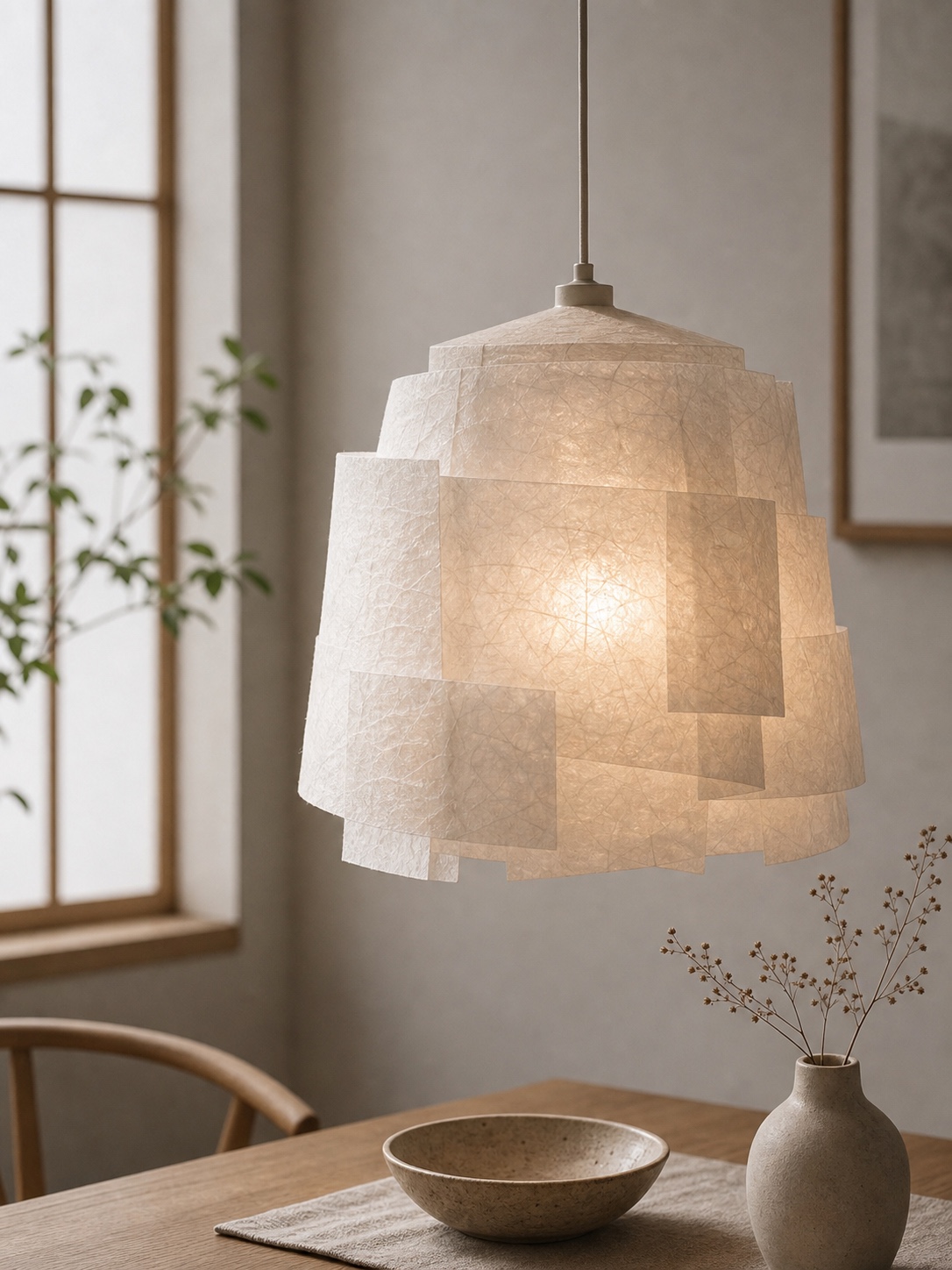
Rice paper is light, affordable, and forgiving. Layer the paper slightly over the frame and leave a clean opening at the top and bottom for airflow.
21. Coastal rope wrapped shade
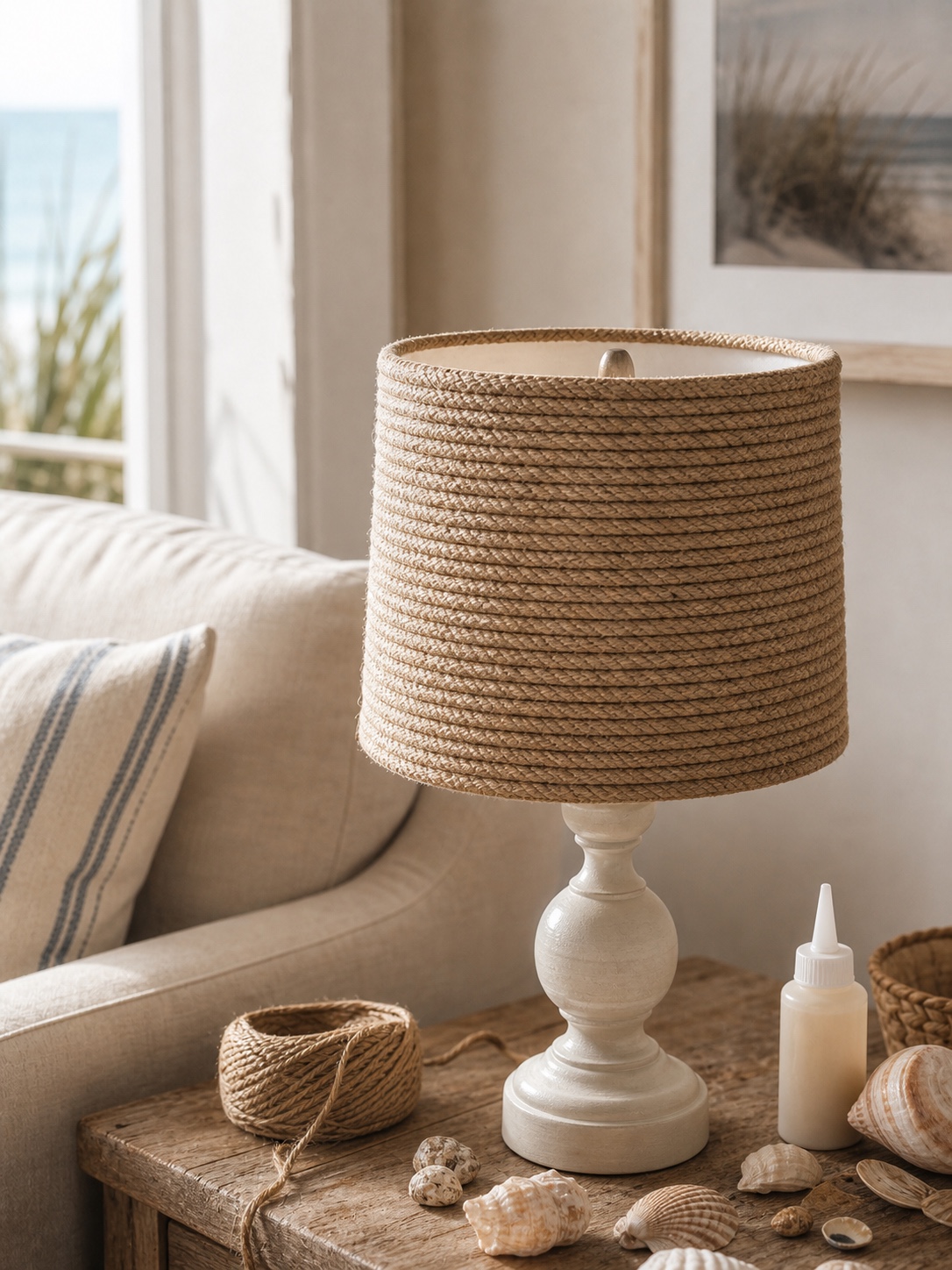
A rope wrapped shade can make a plain lamp feel more relaxed. Work in short sections with glue, press each row close to the last one, and avoid covering the shade so thickly that it blocks all the light.
22. Mosaic glass shade
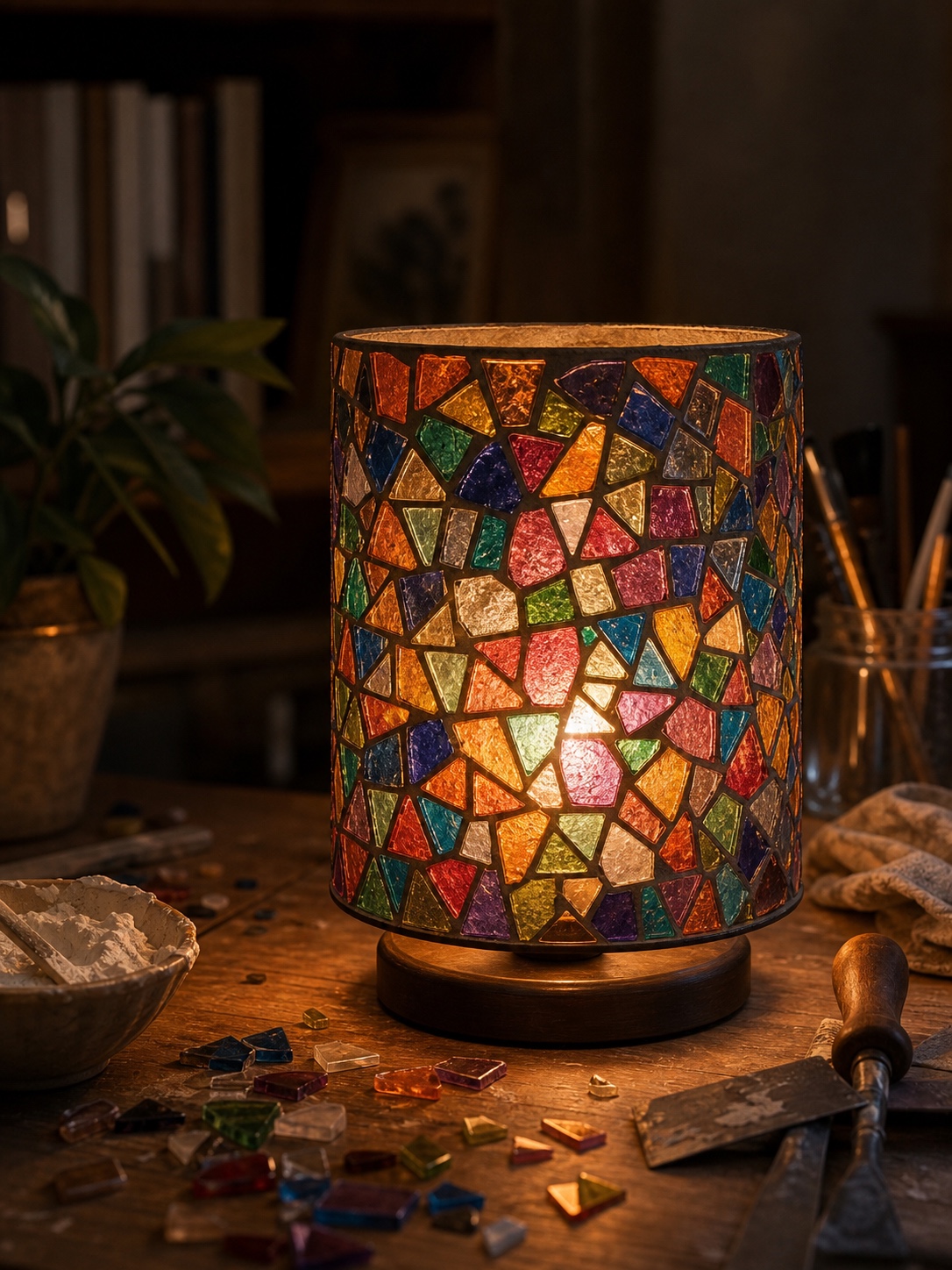
Mosaic glass is a strong choice when the lamp is meant to be the feature. Use small translucent pieces, repeat a limited color range, and keep the grout lines clean.
23. Black wire frame shade
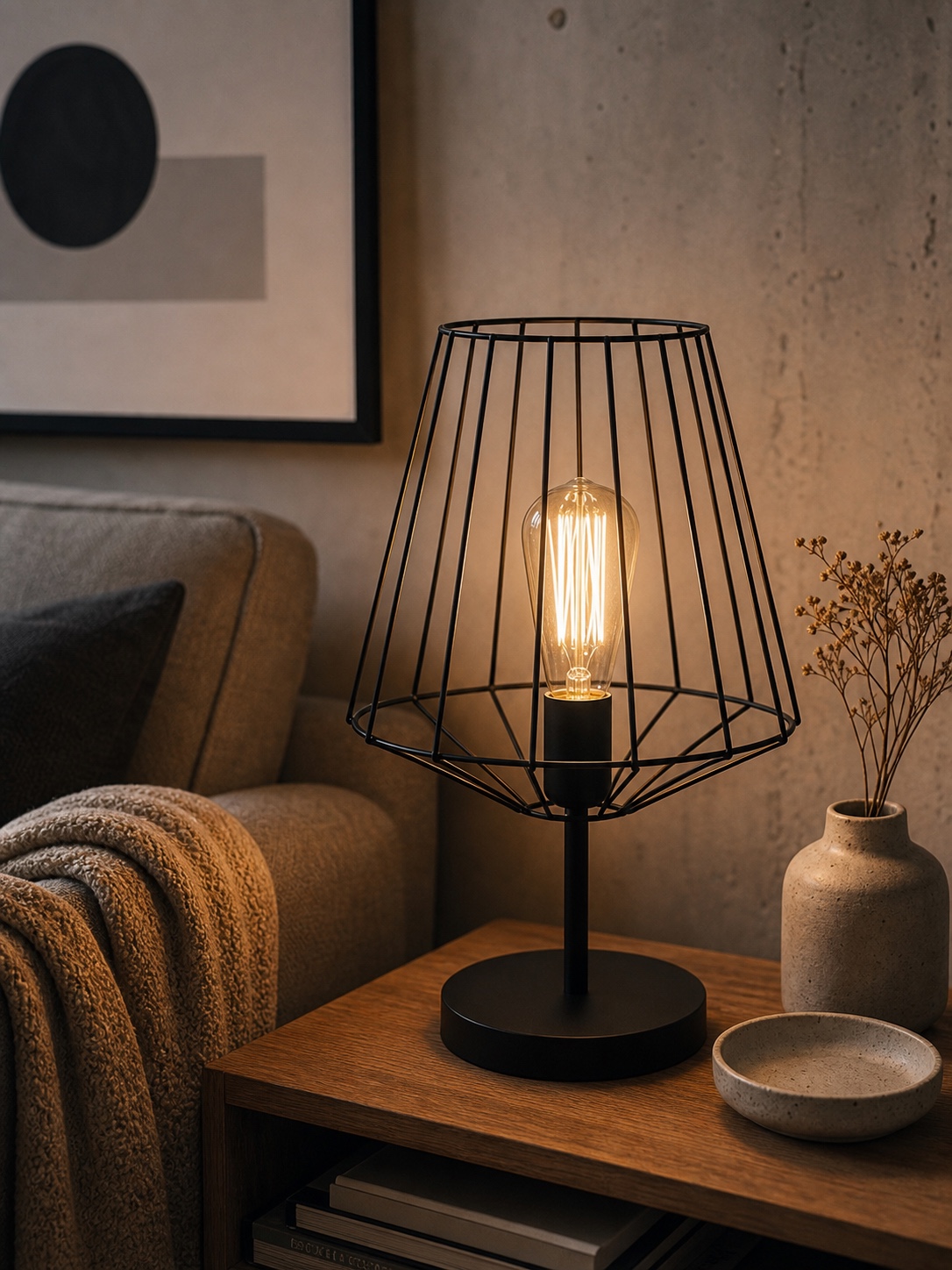
A wire frame shade is minimal and architectural. It works best with a decorative LED bulb because the bulb stays visible, so choose the bulb shape as carefully as the frame.
24. Crochet cotton shade
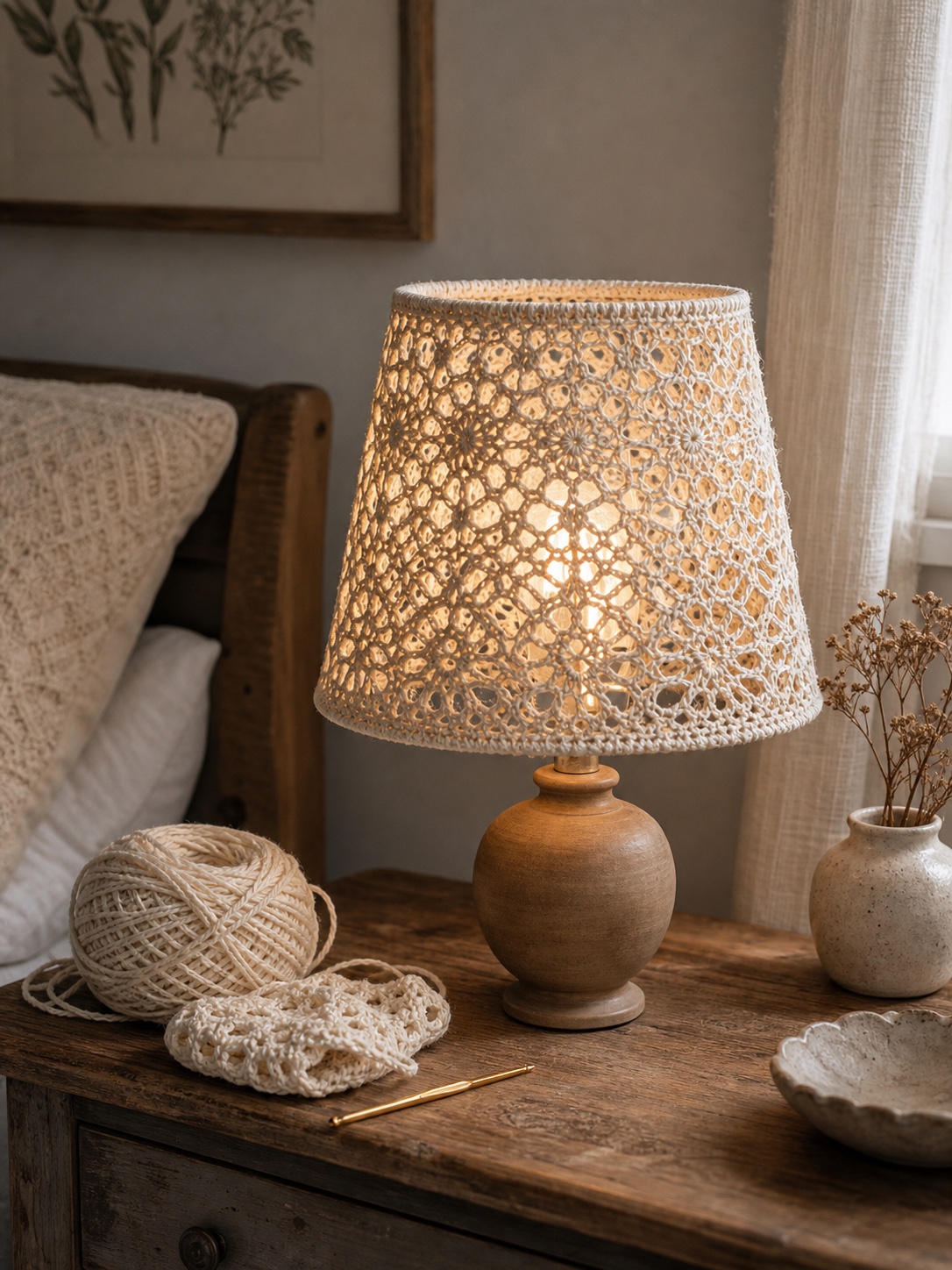
Crochet creates a soft lace shadow without much material. Stretch the cotton evenly over the frame, and keep the stitch pattern open enough that the lamp still gives useful light.
25. Painted gradient shade
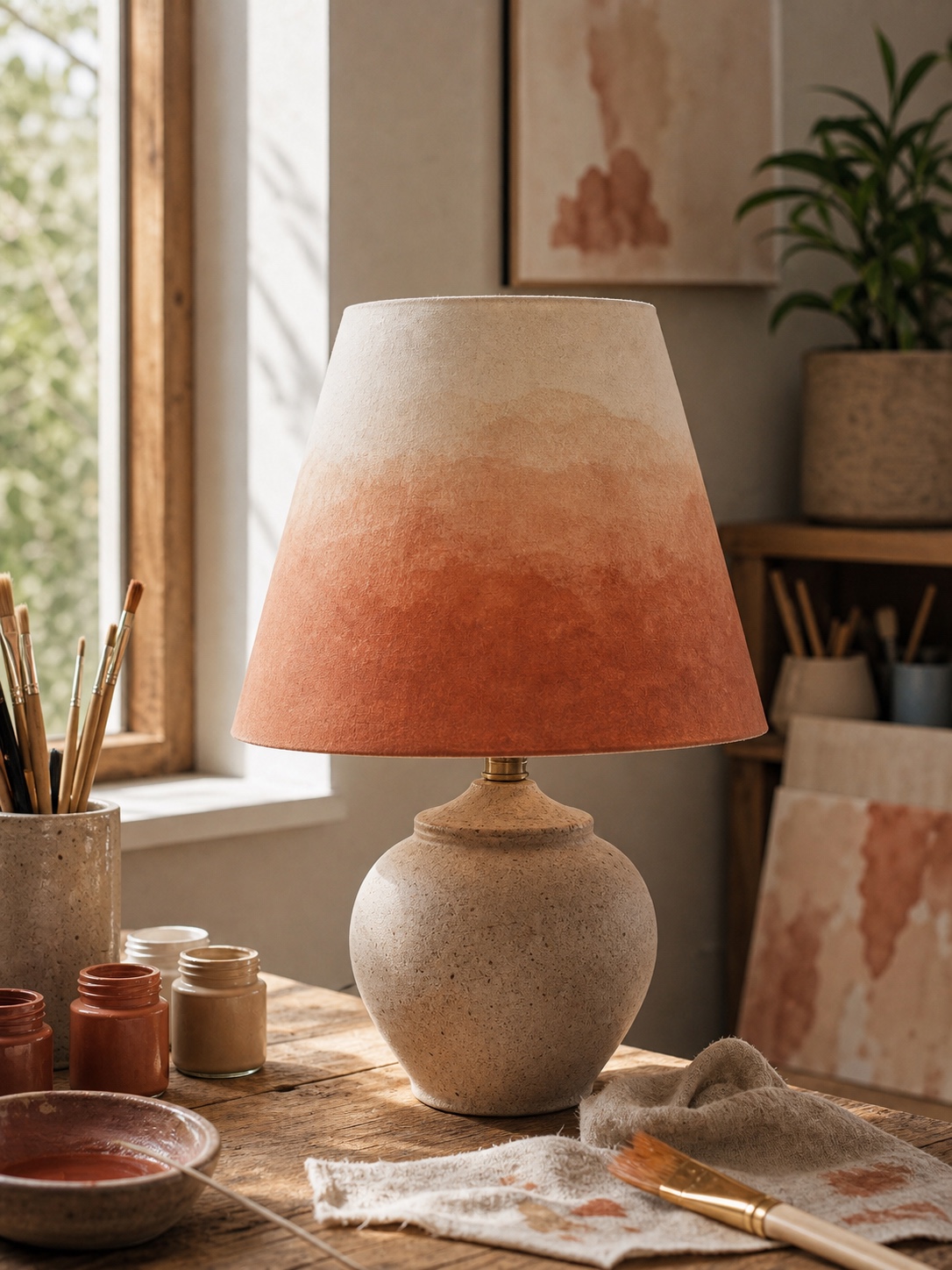
A painted gradient shade is the easiest way to refresh a lamp you already own. Use thin layers of fabric paint, blend while the surface is still damp, and stop before the color becomes muddy.
DIY lamp shade FAQ
What can I use to make a DIY lamp shade?
You can use twine, paper, cardboard, linen, cane webbing, denim, wood veneer, wire, beads, rope, or pressed flower paper. The safest choice is usually a lightweight material paired with an LED bulb, because LED bulbs stay cooler than older incandescent bulbs.
How do I make a lamp shade look handmade but not messy?
Keep the silhouette simple, repeat one material clearly, and finish the top and bottom edges neatly. Most DIY lamp shades look better when the shape is restrained and the texture does the visual work.
Are paper lamp shades safe?
Paper lamp shades can be safe when they are used with low-heat LED bulbs and enough space around the bulb. Do not let paper touch the bulb, socket, or hot metal parts, and test the lamp while you are nearby before regular use.
What is the easiest DIY lamp shade idea for beginners?
A wrapped twine shade, painted gradient shade, or rope wrapped drum shade is usually easiest. These ideas do not require advanced tools, and small imperfections often blend into the handmade texture.
How do I choose the right DIY lamp shade material?
Choose by the kind of light you want. Linen and paper soften light, cane and crochet create patterned shadows, metal and wire feel more architectural, and glass beads or mosaic pieces make the lamp more decorative.
Can I update an old lamp shade instead of building one from scratch?
Yes. Painting, wrapping with rope, adding fabric, or replacing the outer covering can refresh an old shade quickly. Keep the original frame if it is stable, clean, and the right size for your lamp base.
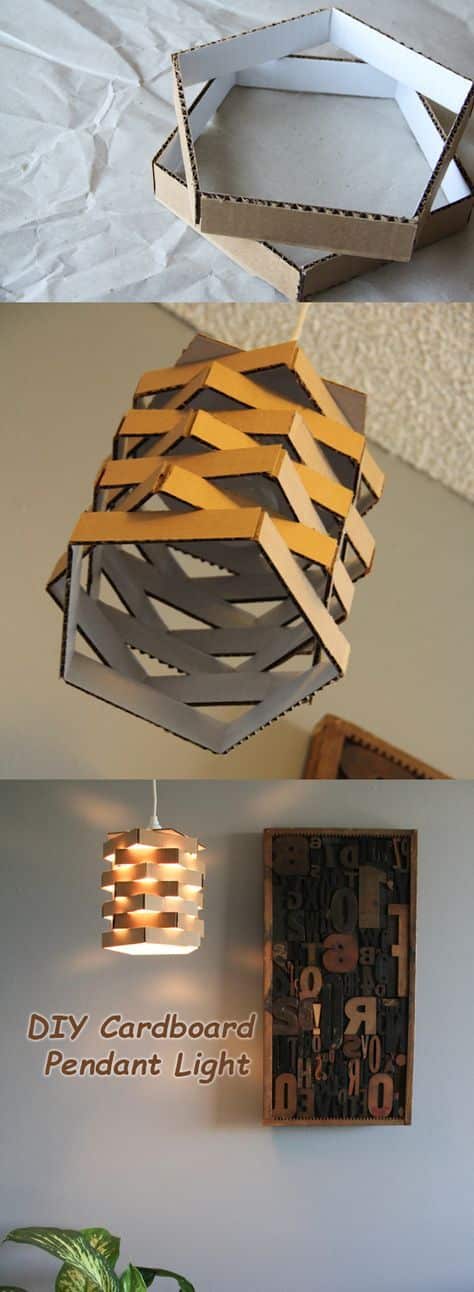
For a table lamp, cardboard and glue can work beautifully if the form is simple. For more handmade room updates, explore stylish decor you can make yourself or browse the DIY archive.
- 8.8Kshares
- Facebook0
- Pinterest8.8K
- Twitter3
- Reddit0