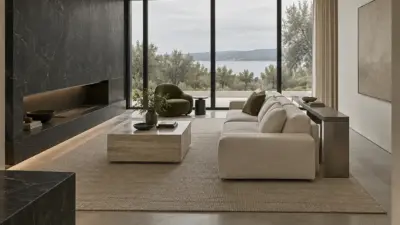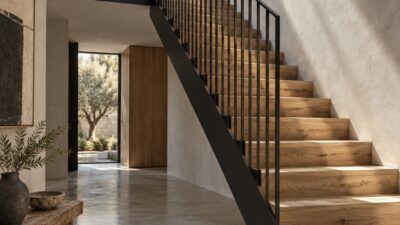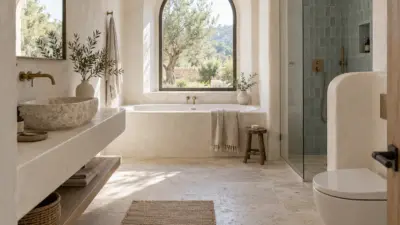

Look at any well-designed car and you’ll find parts that have nothing in common mechanically. The headlights are projectors, the mirrors fold, the door handles pop out.
Yet the car reads as one object, because the lines, the proportions and the finish agree with each other. Houses work the same way, and that’s why mixing window styles is less risky than most people fear.
- Can you mix window styles in a home?
- Windows are a design decision, not just a functional one
- Mixing window styles without losing architectural character
- Balancing natural light across different window types
- Practical details to check before combining windows
- Keeping the whole house visually cohesive
- Where to start
- Frequently asked questions
- References
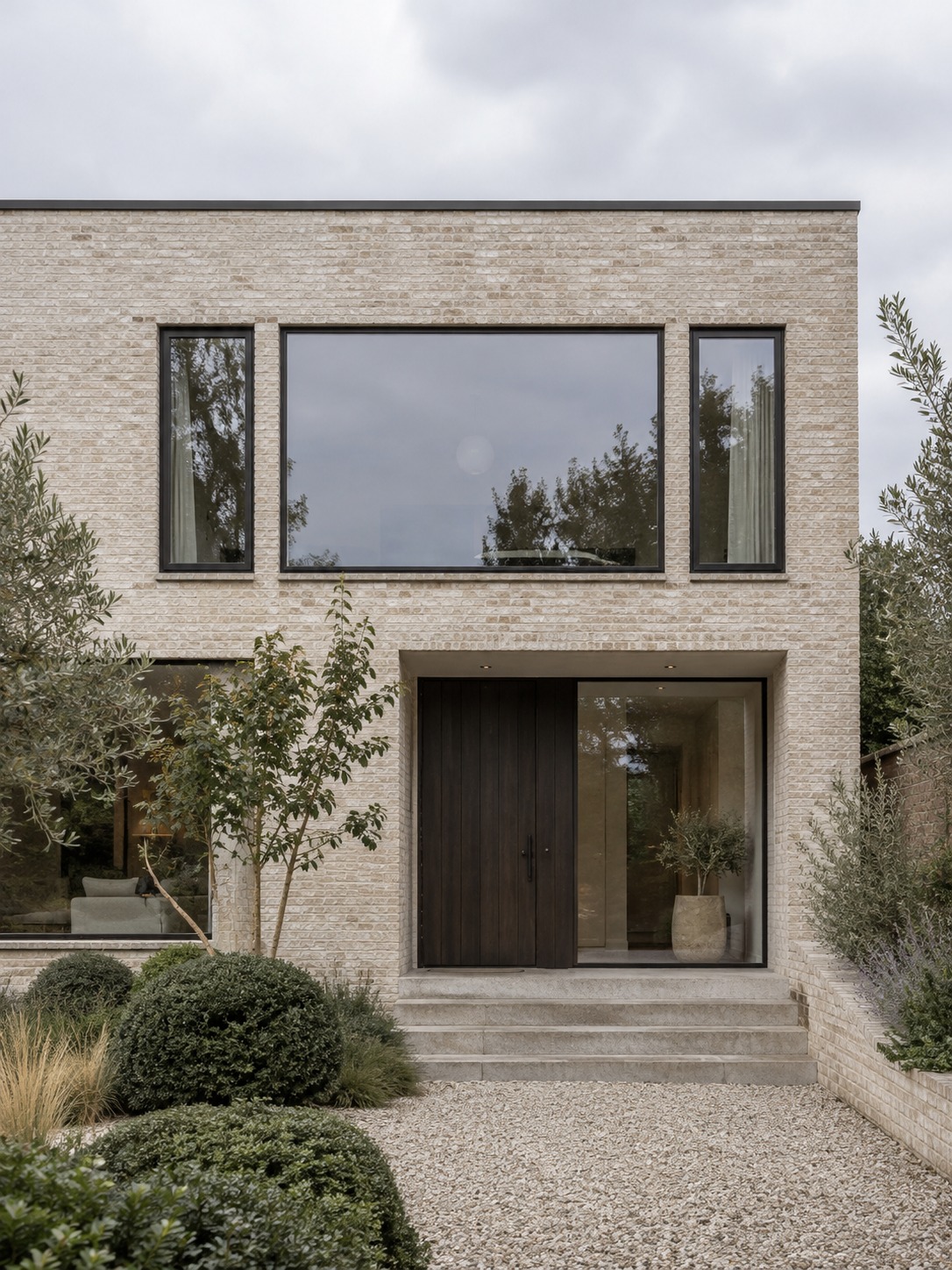
The question comes up constantly during a renovation, especially when the budget forces you to change windows in stages. If you’re planning window replacement in Kamloops, where hot dry summers and cold winters make window choices a real comfort decision, you’ll face it sooner or later: one big view window in the living room, an operable window in the kitchen, something smaller in the bath. Do they have to be the same type?
I studied industrial design and spent years drawing cars, and my short answer is no. They have to agree on the details your eye actually compares. This guide shows which details those are.
Can you mix window styles in a home?
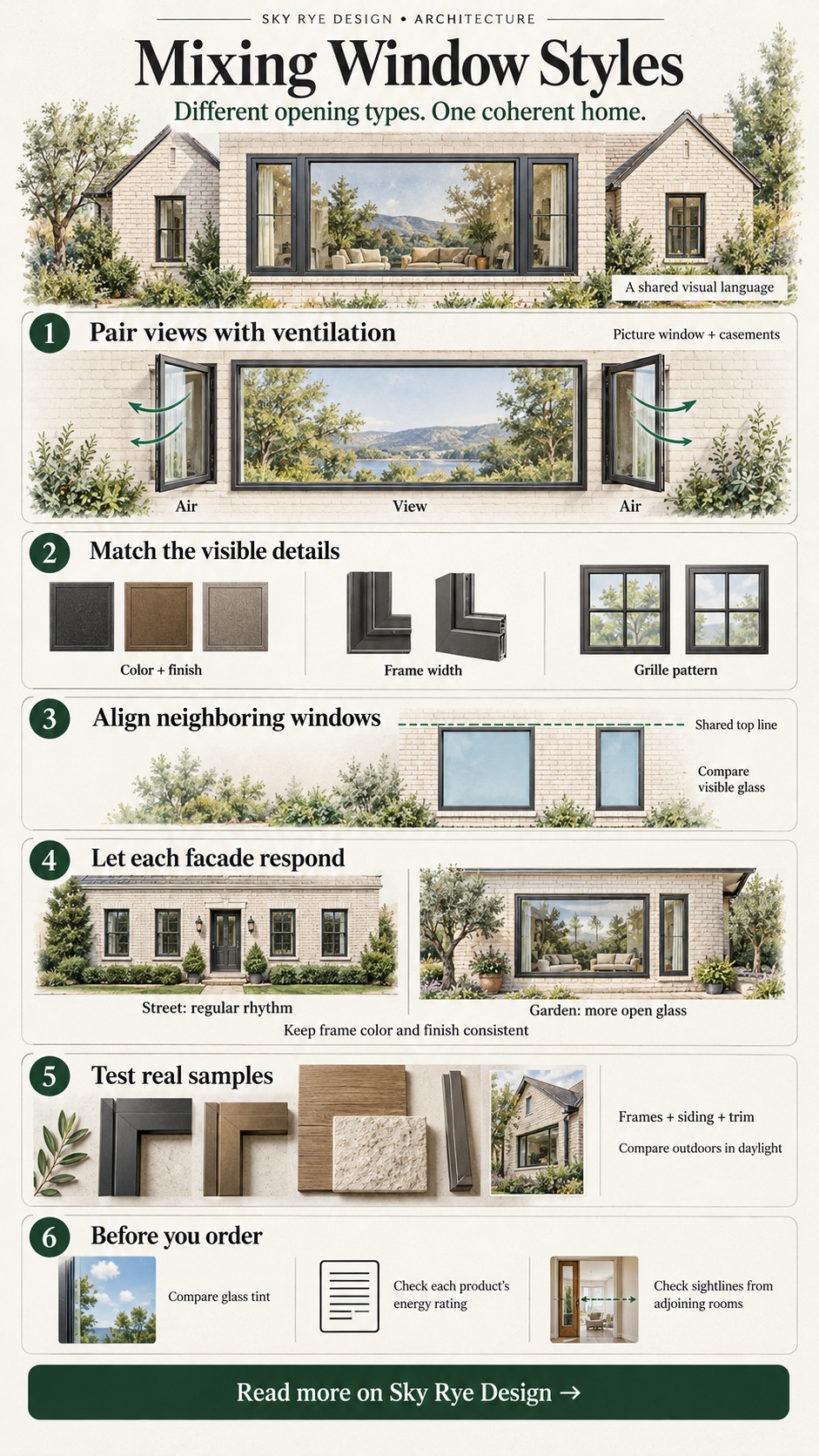
Yes, you can mix window styles in a home, as long as the windows share the visible details the eye compares: frame color and finish, the thickness of the frame, the grille or muntin pattern, and the proportions of the glass. Different opening types, such as a fixed picture window beside two casements, usually read as one design when those details match. Problems appear when frame colors drift apart, when grilles appear on some windows and not others without a reason, or when window heights and top lines ignore each other on the same wall.
A good test is distance. Stand across the street and squint. If the windows look like they belong to one family, the mix works. If one stands out, find out which detail is off and fix that one. Always check the energy ratings of each product separately, because similar looks tell you nothing about performance.
Windows are a design decision, not just a functional one
It’s easy to treat windows as a purely technical purchase: pick a size, pick a frame material, get a quote. But every window is also a visual anchor. A large picture window can make a compact living room feel twice as big. A row of narrow, evenly spaced windows gives a house a crisp, gallery-like rhythm. Muntin patterns, frame color and even the depth of the reveal shape the personality of the house in ways people underestimate until they see them done well.
Designers usually start by asking how a room will be used and how light should move through it during the day. Then they work backward to the window that supports that. I use the same order on every project, from a car interior to a house. Function sets the question, and the window type is just the answer that fits.
That order is also what makes mixing sensible. When each window answers a different question (a view here, fresh air there, privacy in the bath), it is natural that the answers look different. The skill is making them look related.
Mixing window styles without losing architectural character
Some houses have a strong architectural language, and the first job is to read it. Here are the common ones:
- Craftsman and bungalow homes tend to suit multi-pane or divided-light windows that echo their handcrafted, early-20th-century detailing.
- Mid-century modern homes often look best with clean-lined, minimally divided windows that emphasize horizontal proportions.
- Farmhouse-style homes frequently use black-framed windows against light siding for a graphic, high-contrast look.
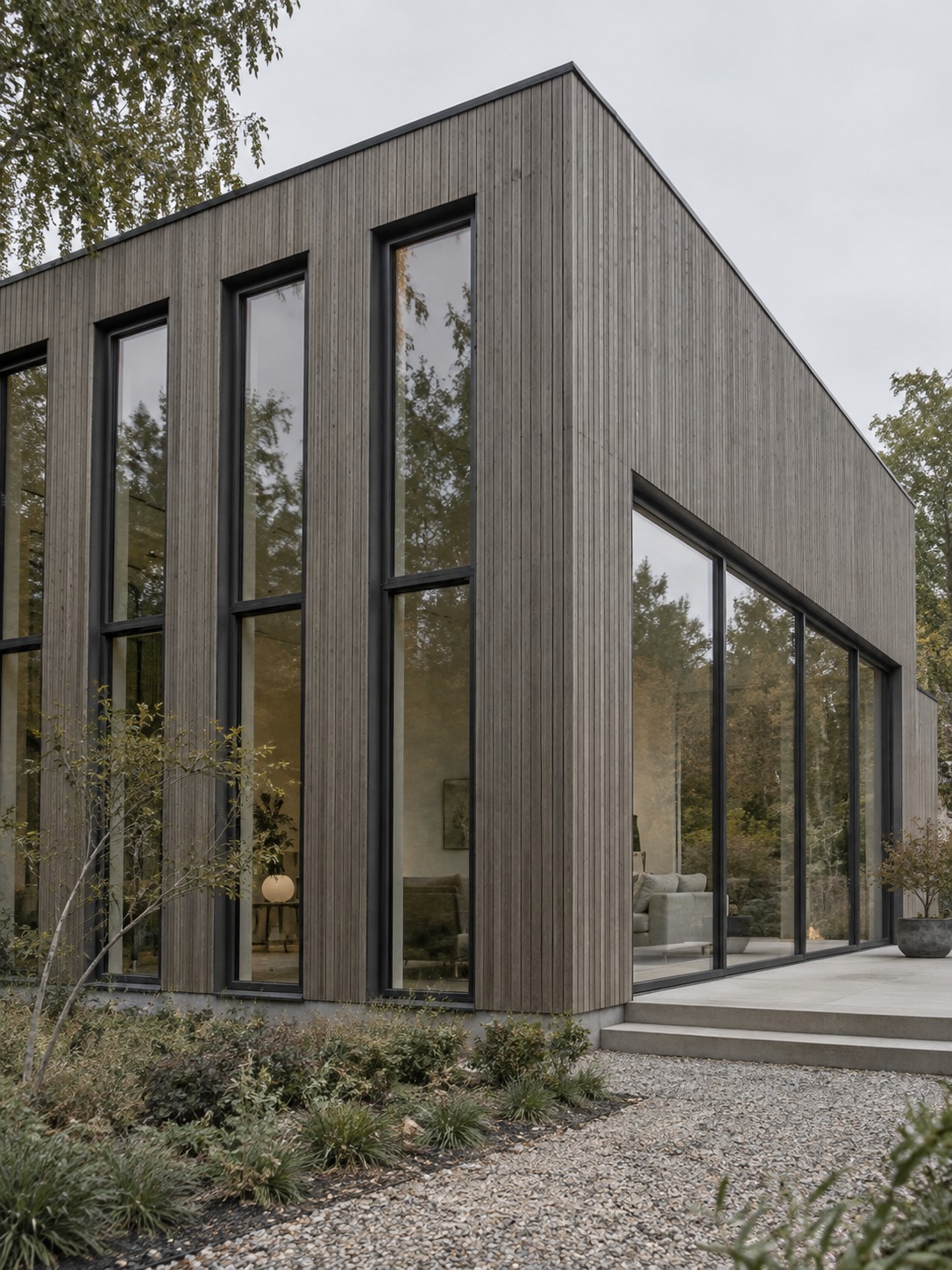
- Contemporary builds lean toward large, unbroken panes of glass that treat the window as a frame for the landscape.
A home with strong cues like these usually benefits from windows that reinforce that language. But reinforcing the language doesn’t mean buying one type of window everywhere. Mixing is allowed, and it works best when the windows differ in how they open while agreeing in what you can see.
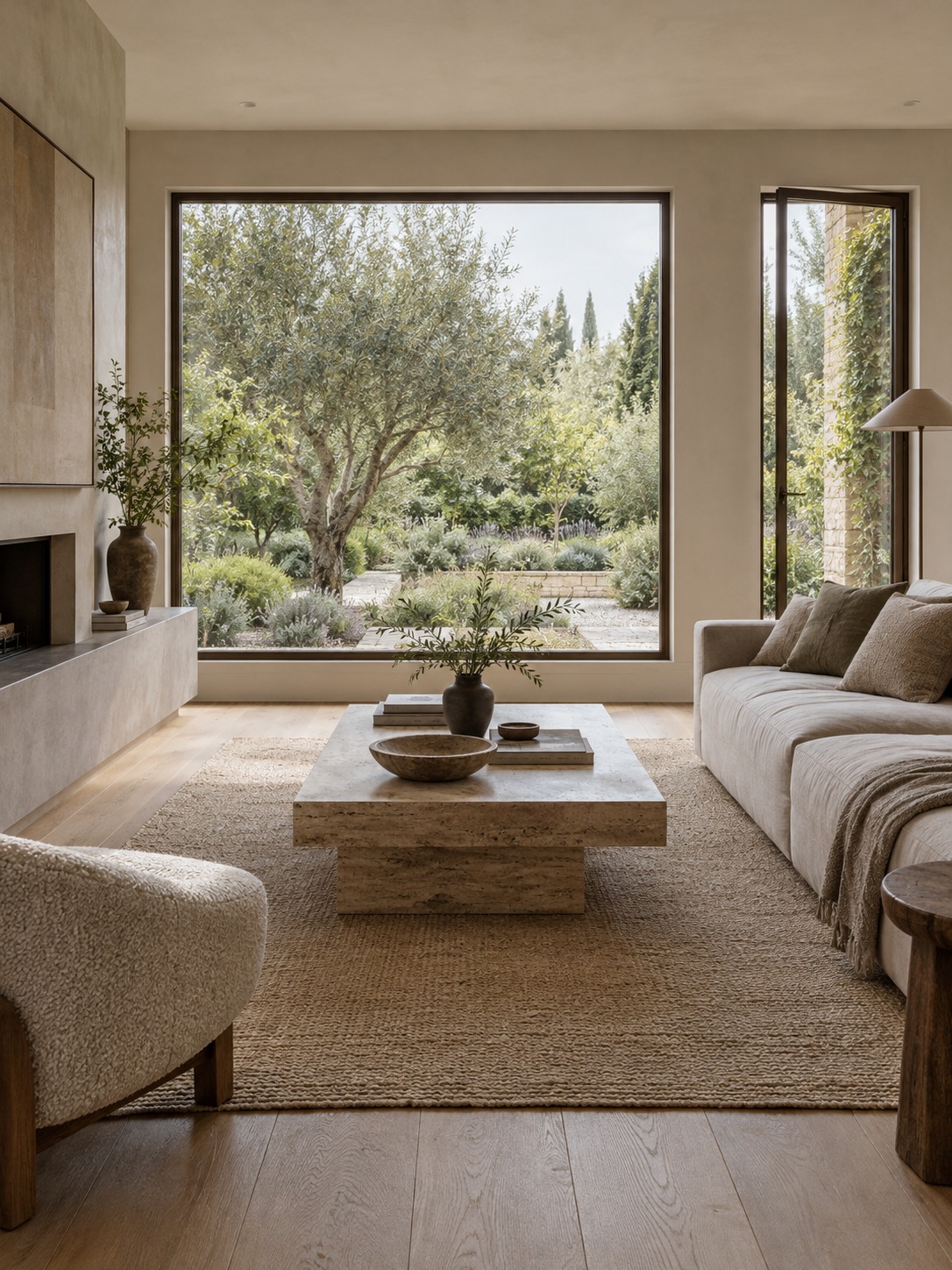
Picture window with casements on both sides
This is the combination I recommend most often. A large fixed picture window gives you the view. Narrow casement windows on each side give you the ventilation without interrupting the glass. Emily Henderson walks through a similar logic in her guide to choosing window types for a whole house: double-hung, single-hung and casement windows can share a house when the style and finish match.
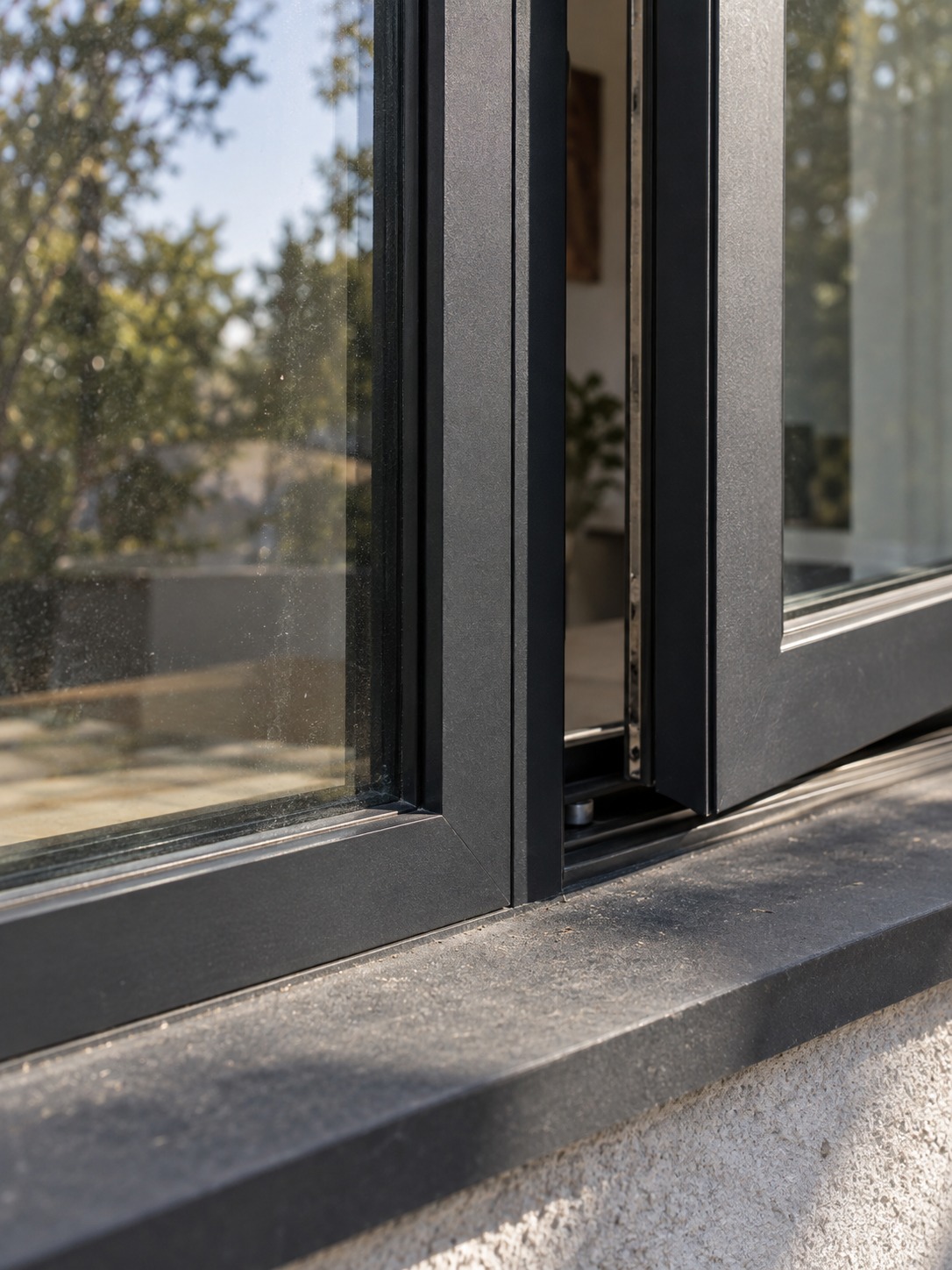
The detail that holds this group together is the frame. Keep the same color, the same finish and a similar visible frame width on all three. If the picture window has a thin frame and the casements have thick sashes, the group looks like three different purchases, because it is.
Matching double-hung windows at the front, more glass toward the garden
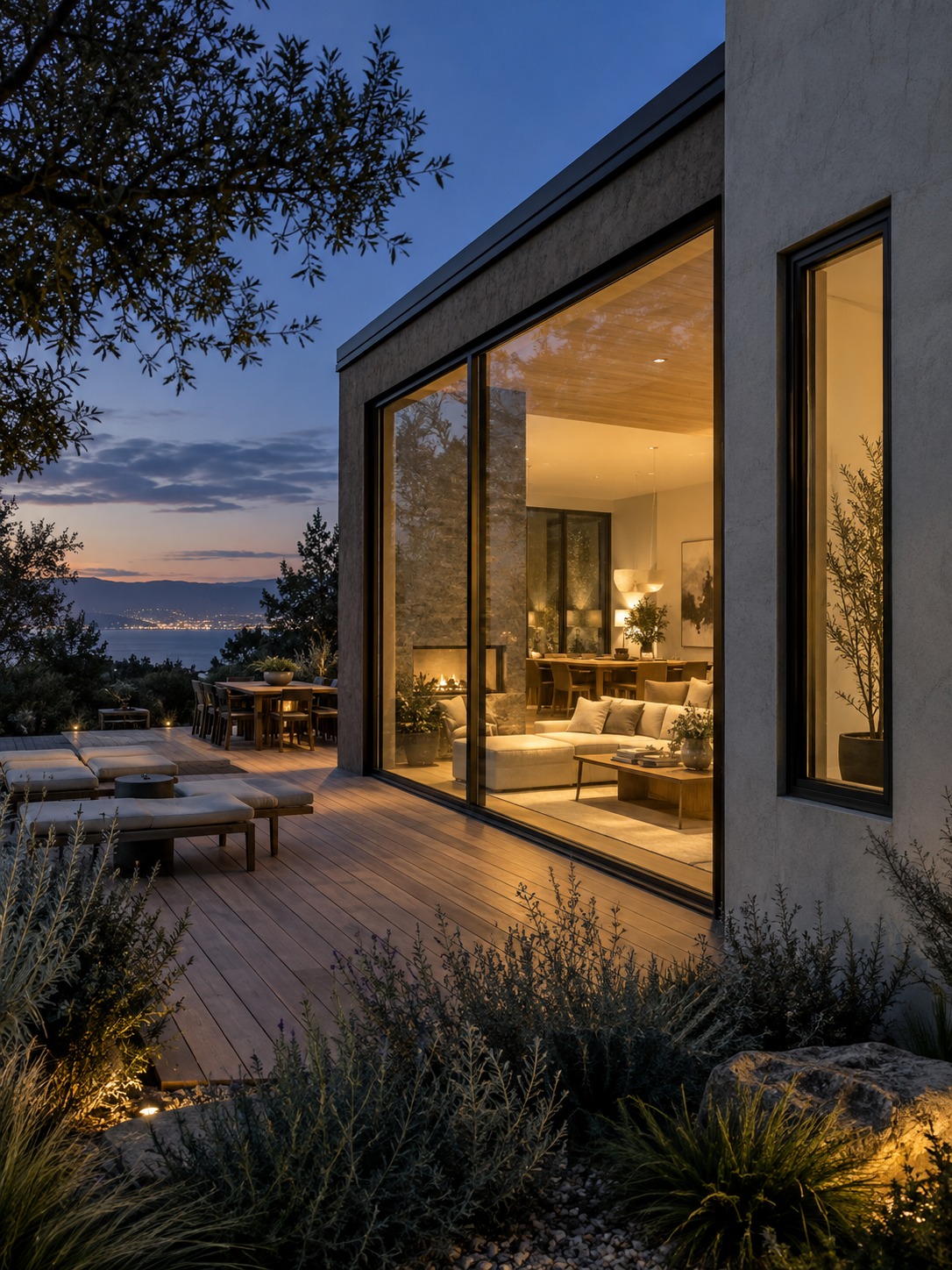
The second example is a house where the street side stays traditional and the back opens up. A regular group of double-hung windows on the main facade keeps the character the neighbors expect. On the garden side, larger fixed glass and a casement or two let you enjoy the yard.
The reason this works is that you rarely see both sides at once. The front and rear elevations are separate compositions, so the rules between them can be looser than the rules inside one wall. Even so, I’d keep the same frame color and the same grille logic on both sides, so that the house still reads as one building when you walk around it.
Treat these two examples as options, not rules. A narrow Victorian and a low ranch need different answers, and a small mockup will tell you more than any list.
If you need definitions of each opening type before choosing, my overview of modern window types covers them one by one.
Balancing natural light across different window types
Beyond style, the placement and orientation of a window shape how a room feels all day. South-facing rooms tend to get consistent, warm light and can handle larger glass areas. North-facing rooms often benefit from taller or wider windows to make up for softer, cooler light. East- and west-facing windows bring dramatic morning or evening light, but they can need thoughtful treatment to manage glare.
One correction to a common claim. People often say south-facing windows can be as large as you like without overheating. In the northern hemisphere, a south-facing window gives useful low sun in winter, but in summer it still needs shade, such as a roof overhang, an exterior shade or a good blind. Otherwise a beautiful glass wall becomes the hottest room in the house by July.
Use the fixed window for the view and the operable one for air
Mixing types is where light planning gets practical. A fixed window has no moving sash, so it usually shows more glass for its size and gives the clearest view. An operable window, such as a casement, gives you air but adds a sash and a frame. So put the fixed unit where you want to look and the operable one where you want to breathe.
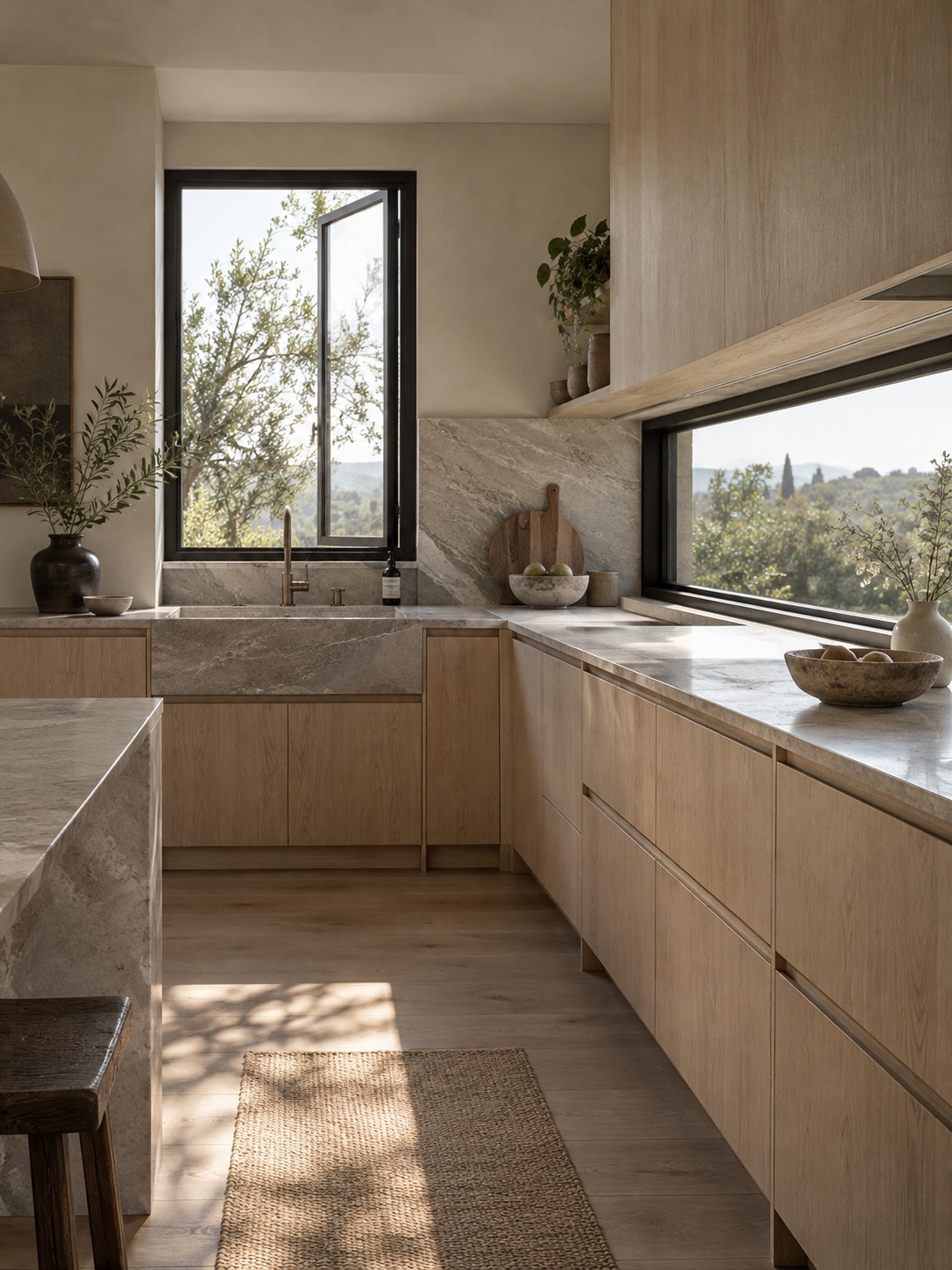
In a living room, that might be a large fixed window facing the garden and a tall casement beside the sofa. In a kitchen, a casement over the sink is easier to reach than a double-hung, and the cooking fumes have somewhere to go.
Compare visible glass and grille patterns in neighboring windows
Here’s a detail I check on every elevation. Two windows can have the same opening size and still look different, because one has a wide frame and the other a slim one. The visible glass area, the part of the opening that’s actually clear, is what the eye reads as the window.
Compare the clear glass of neighboring windows on a drawing before you order. If a fixed window shows much more clear glass than the casement beside it, the pair will look lopsided. And choose one grille pattern. If one window has a six-over-one pattern and its neighbor has none, the difference should have a reason, such as a bathroom or a back elevation.
Quick comparison of common window styles
| Window style | Best suited for | Design effect | What to match when mixing |
|---|---|---|---|
| Casement | Contemporary, farmhouse | Clean lines, unobstructed views | Frame color, visible frame width |
| Double-hung | Traditional, Craftsman | Classic proportions, versatile | Grille pattern, top line with neighbors |
| Picture window | Modern, minimalist | Maximizes light and framed views | Frame finish, glass proportions |
| Bay or bow | Traditional, cottage | Adds depth, creates a reading nook | Trim and roof detail |
| Sliding | Mid-century, ranch | Wide horizontal sightlines | Horizontal alignment with other windows |
Practical details to check before combining windows
Design decisions still have to work alongside practical ones. This is the checklist I’d run before placing an order.
- Glazing and climate. Double or triple glazing with low-E coatings performs differently in different climates. ENERGY STAR is a useful starting point for comparing options, but its criteria depend on climate zone and on the country, so check the label for your own zone rather than assuming one number fits everywhere.
- Frame material. Vinyl, wood, aluminum and fiberglass age differently and suit different budgets. Wood frames offer warmth but need more upkeep than vinyl or fiberglass.
- Maintenance. If you mix frame materials, you mix upkeep schedules. A wood picture window beside vinyl casements will weather differently over the years, and repainting one window in a group is rarely invisible.
- Long-term value. Windows affect both comfort and curb appeal, so they’re a reasonable investment. I wouldn’t promise a specific return, because it depends on the market, the condition of the house and the quality of the installation.
Check that profile, tint and finish agree
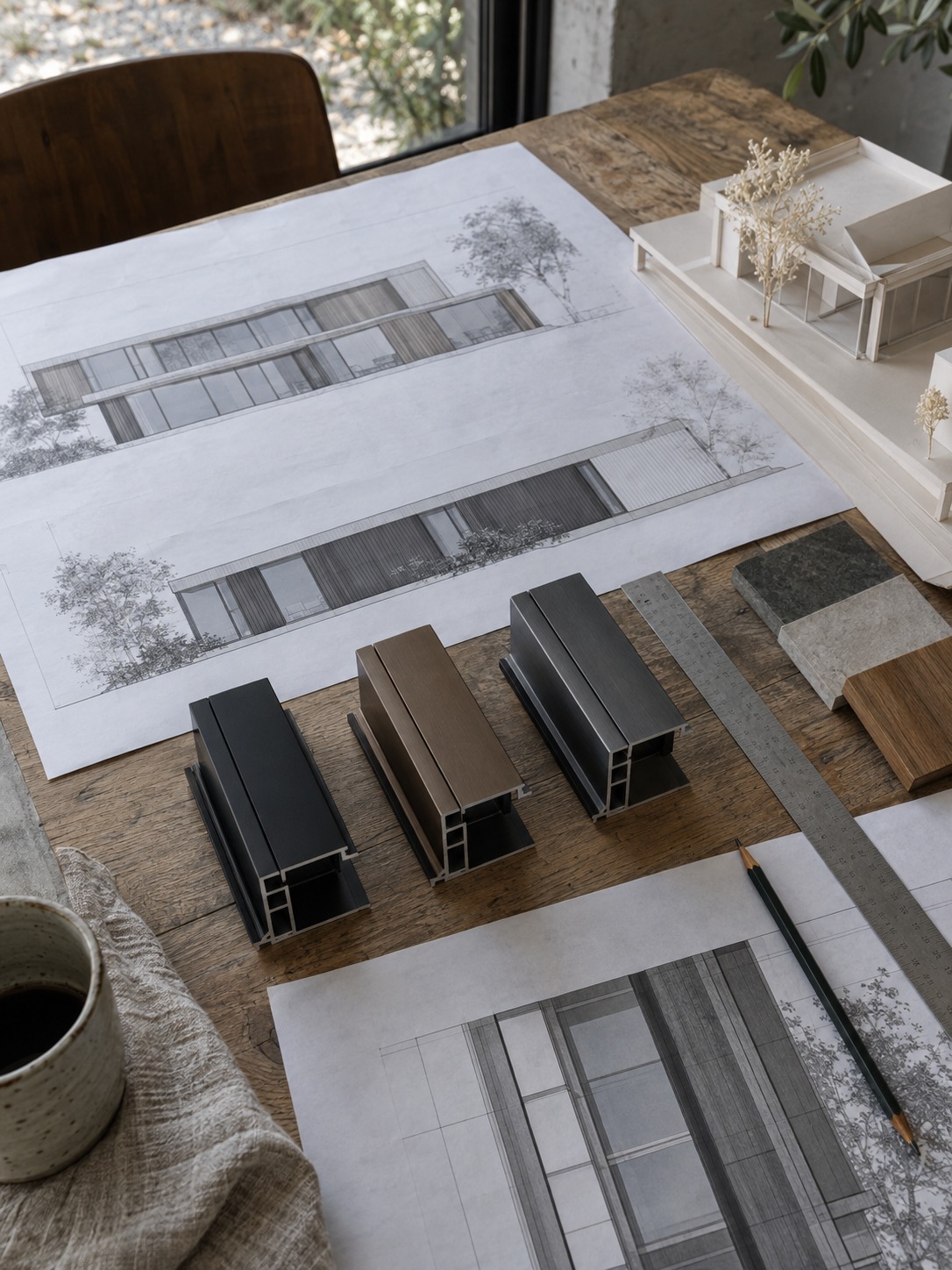
When you order from one manufacturer, a casement and a picture window in the same color usually match well. When you order from two, they might not. “Black” differs between brands: one is a flat matte, another has a slight sheen, another leans brown in daylight.
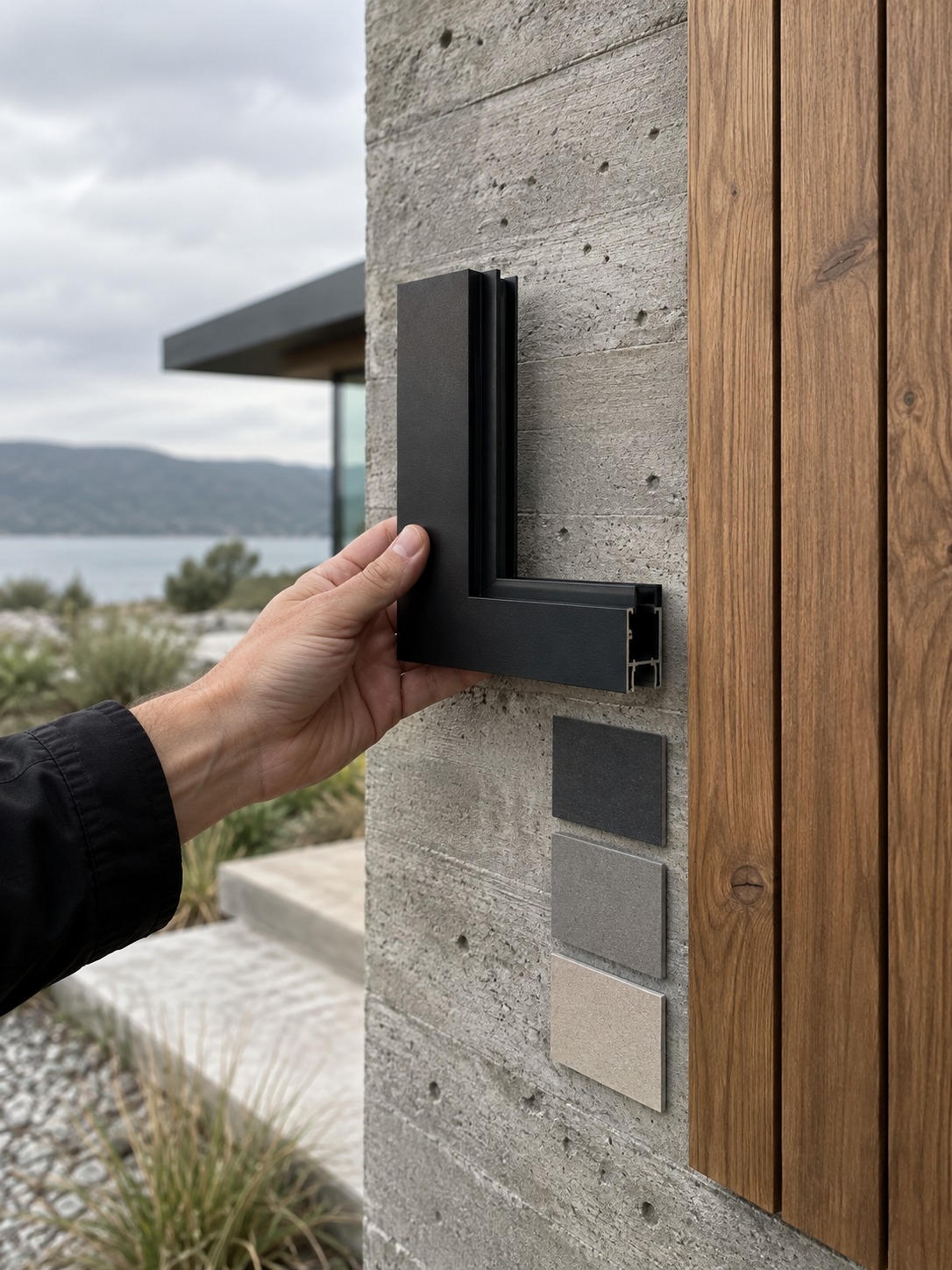
Ask for physical samples of each frame and hold them next to each other outdoors. Compare the visible profile (how wide the frame looks from outside), the color, the sheen and the glass tint. If you’re mixing glass types, such as a low-E coating on some windows and a different one on others, look at the reflection on a sample in daylight, because tint differences show up on the facade.
Check energy performance for each product
Looks tell you nothing about performance. A casement and a fixed window with the same frame can have different ratings, and the frame, the glass package and the spacer all affect the result. So check the rating of every unit you plan to install, using the label for your climate zone.
For Canadian homeowners, Natural Resources Canada publishes guidance on windows, doors and skylights, and it is a sensible place to learn how ratings are presented before you compare quotes. Your installer should be able to give you the numbers for each model in writing.
Keeping the whole house visually cohesive
Windows rarely exist in isolation. Trim color, siding material and roofline all interact with window choices, and together they create the look of the house, or undermine it. A common mistake is choosing windows and exterior finishes as separate decisions, months apart. Each choice is sound, but the result feels disjointed.
I’ve seen this on car projects as well: a wheel that’s beautiful on its own can look wrong in the arch. It’s the relationship that counts.
Build a mood board with real samples
Before committing to an order, pull together a simple mood board. Include photos of the current exterior, a few reference homes with similar architecture, and samples of the planned trim and siding colors. Add a sample of each window frame.
Seeing frame color next to siding and trim samples surfaces mismatches early, when they’re cheap to fix. Black or bronze frames read very differently against warm wood siding than against crisp white or grey, and that difference is much easier to catch on a board than after installation. Look at the samples outdoors, in morning and afternoon light.
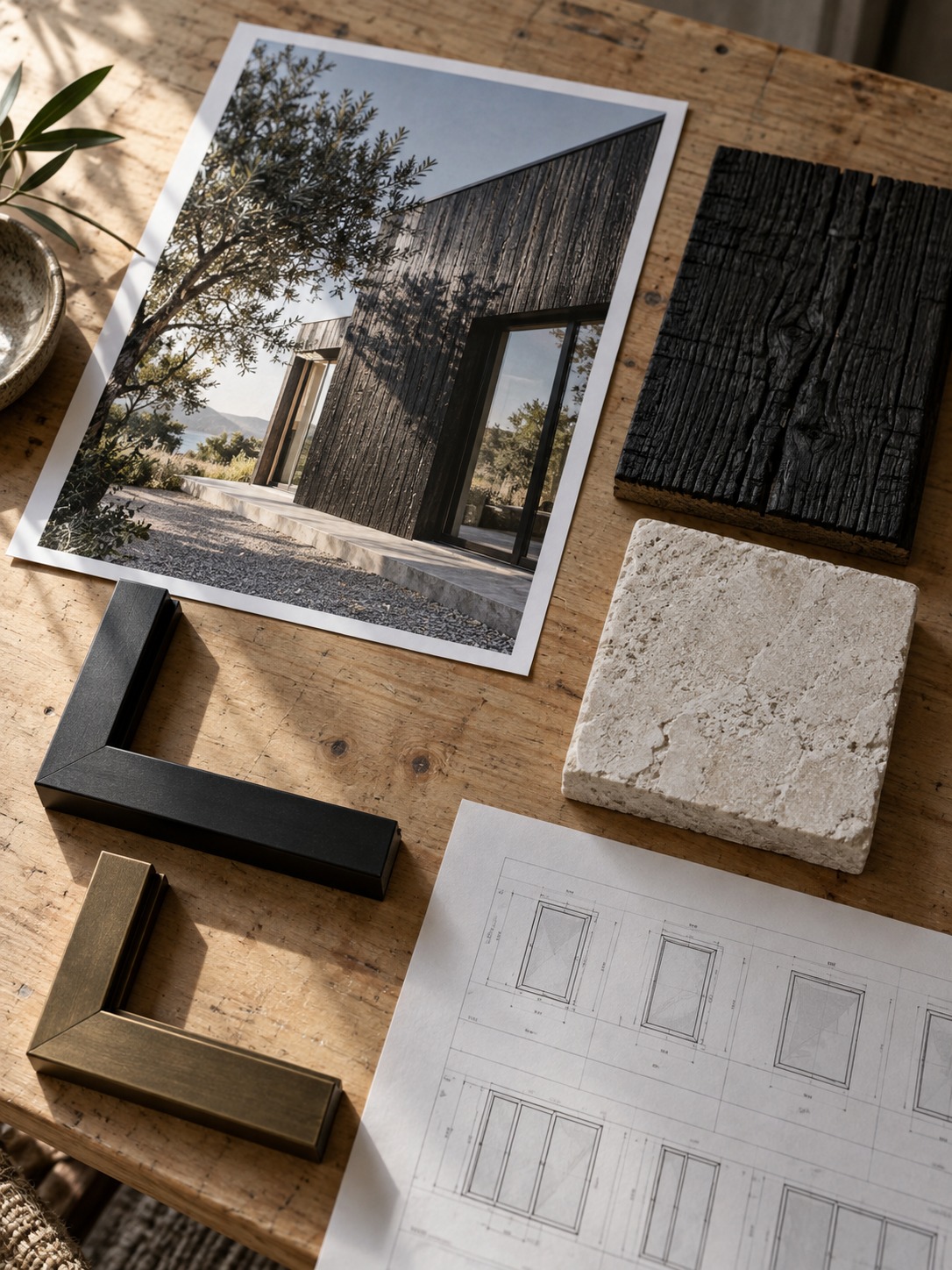
Compare windows in the same view
Next, draw or photograph each facade and look at windows that are seen together. Align the heights where they belong to one composition: tops of windows on the same wall usually look best on a shared line, and a row of different windows reads better when the sills or heads agree. Check the grille lines too. When a horizontal grille bar in one window sits at a different height from the bar in its neighbor, the eye notices, even if it can’t say why.
Then check thickness. Hold frame samples against the facade photo, or ask the manufacturer for the visible frame width, and make sure the casements and the fixed windows are in the same range.
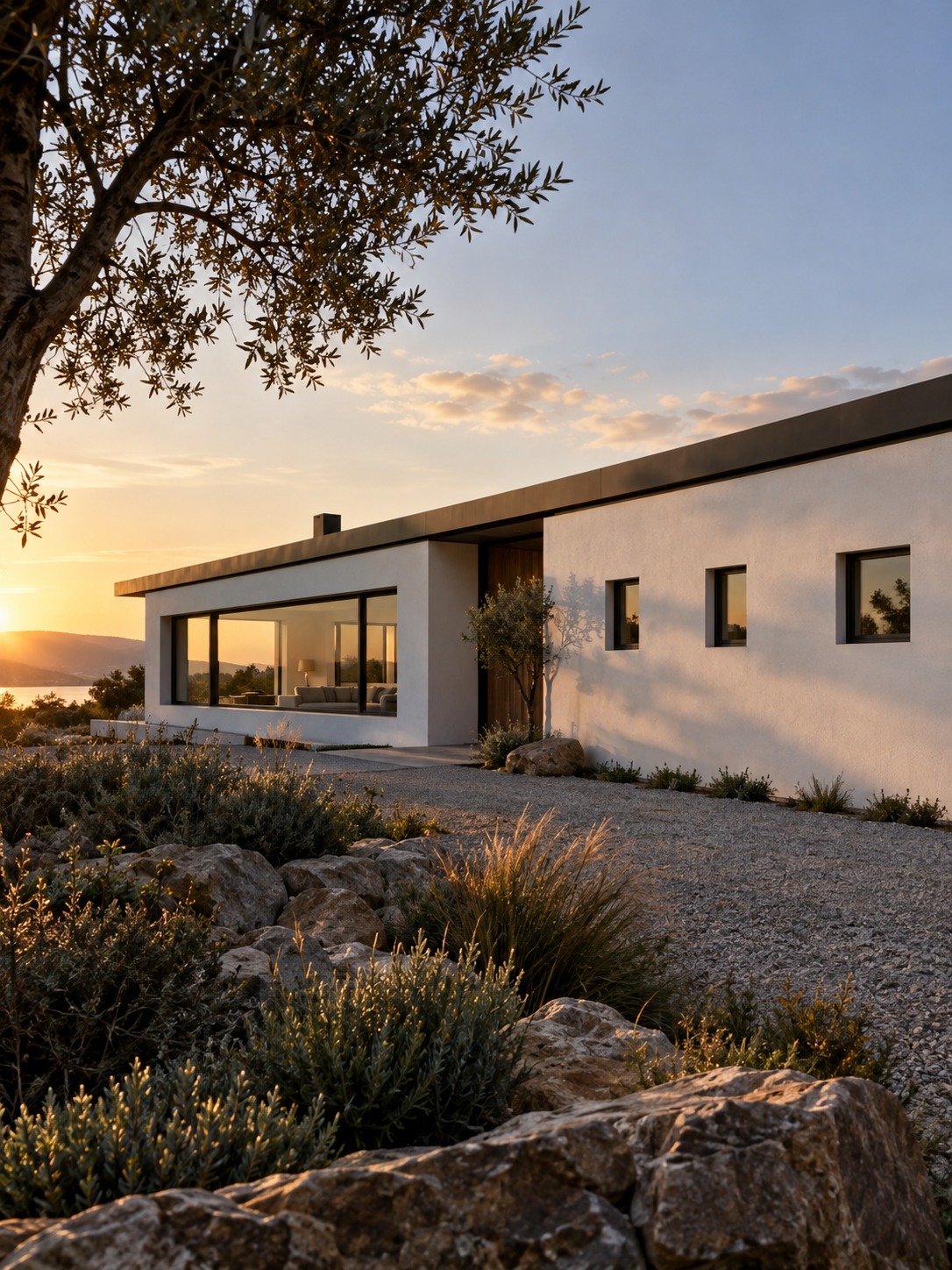
Neighboring windows versus separate facades
There are two kinds of “mixing,” and they have different rules. Windows next to each other in one composition, such as a picture window with casements or a pair on the same wall, should share nearly everything except how they open. Windows on separate facades, such as the street side and the garden side, can differ more, because you read them one at a time.
Keep three things constant across all facades: frame color, finish and the general logic of the grille. Then let the type, size and proportion respond to each room. Trim is the other thread that connects everything, and I wrote about it in detail in my guide to window trim ideas.
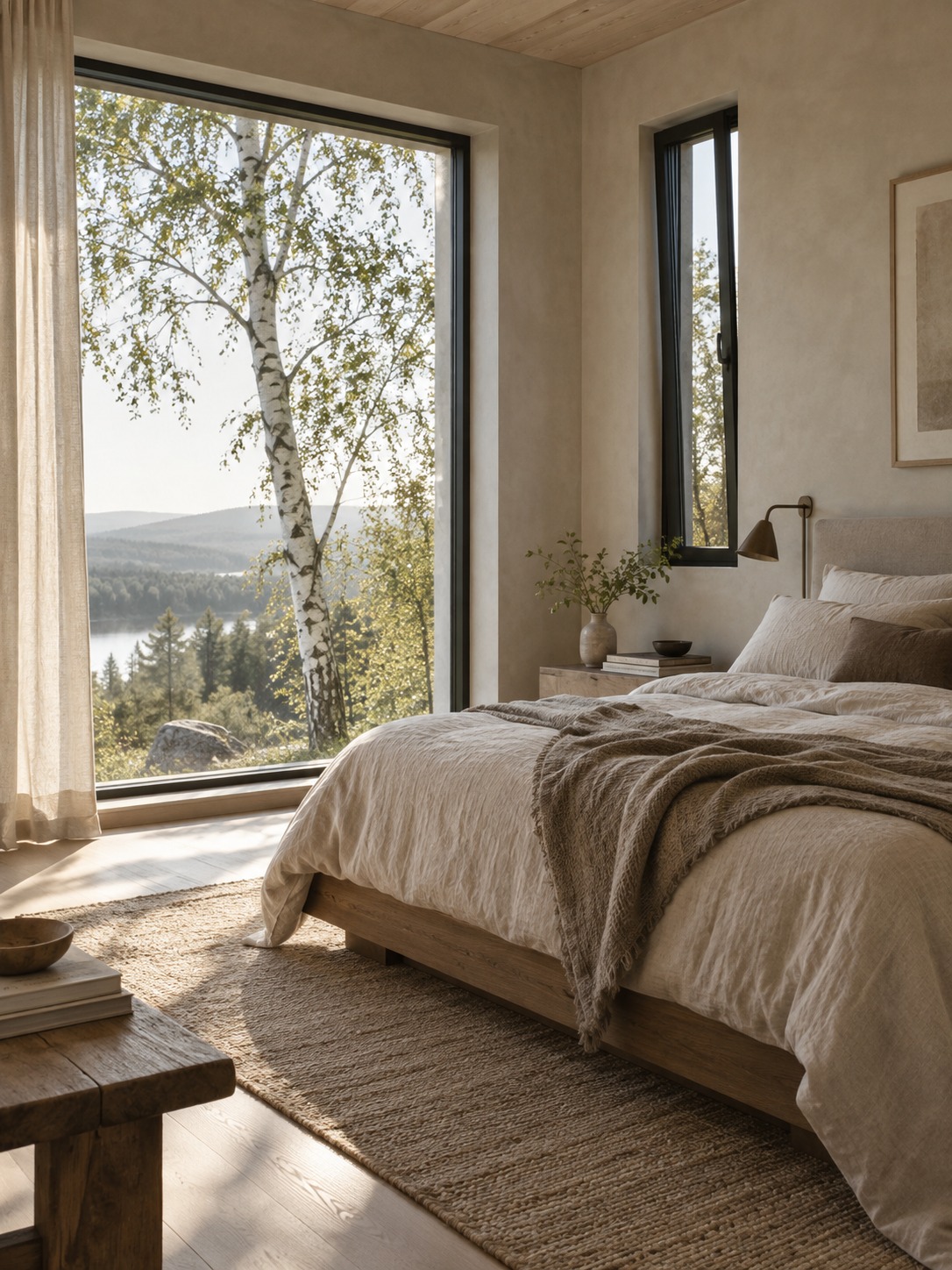
Three mixes that tend to go wrong
After looking at a lot of facades, I keep seeing the same three mistakes. The first is two frame colors that are almost the same, say a charcoal window beside a black one. Near misses look like errors, while a clear contrast looks like a decision. The second is grilles on the front windows only, with the side of the house left plain. Pick a rule (all windows or none, or a clear exception such as the bath) and stick to it.
The third is scale. A tiny casement placed next to a wide picture window looks like an afterthought, even if the type is fine. Give the smaller window a size and a height that relates to the big one, for example half the width or the same head height. It is the same trick I use when I sketch a car: small parts need to answer to the big ones.
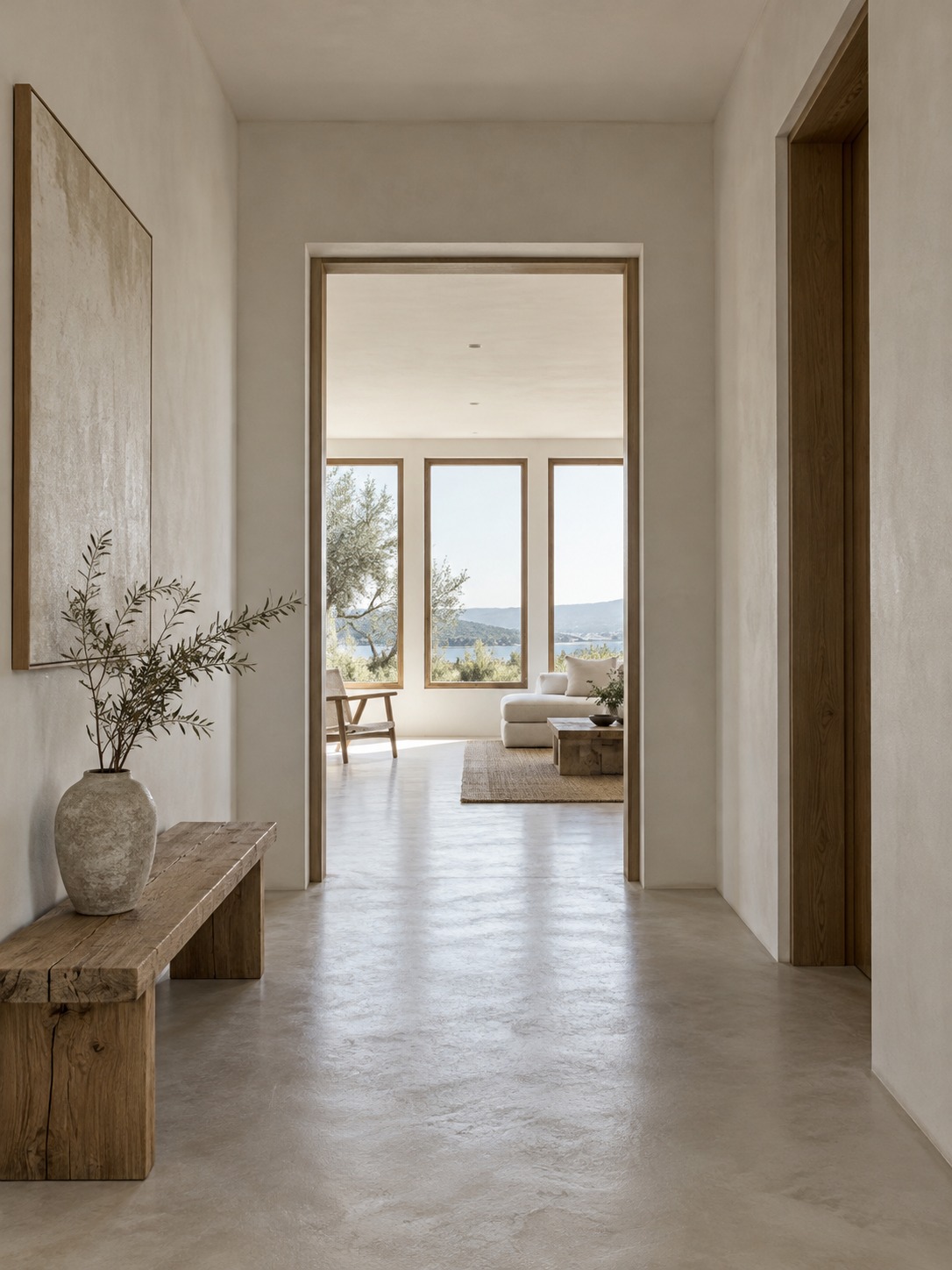
Check sightlines from inside
Interior sightlines matter too. In an open-plan renovation, a window on one wall is seen from the adjoining rooms, not only from the room it sits in. A low sliding window that looks good from the sofa might line up awkwardly with a tall casement visible down the hall. Walk through the house with a tape and a sketch, and note what you see through each doorway.
If you are planning a larger renovation, Canada Mortgage and Housing Corporation is a good place to look for general housing information in Canada, alongside your contractor and local building rules.
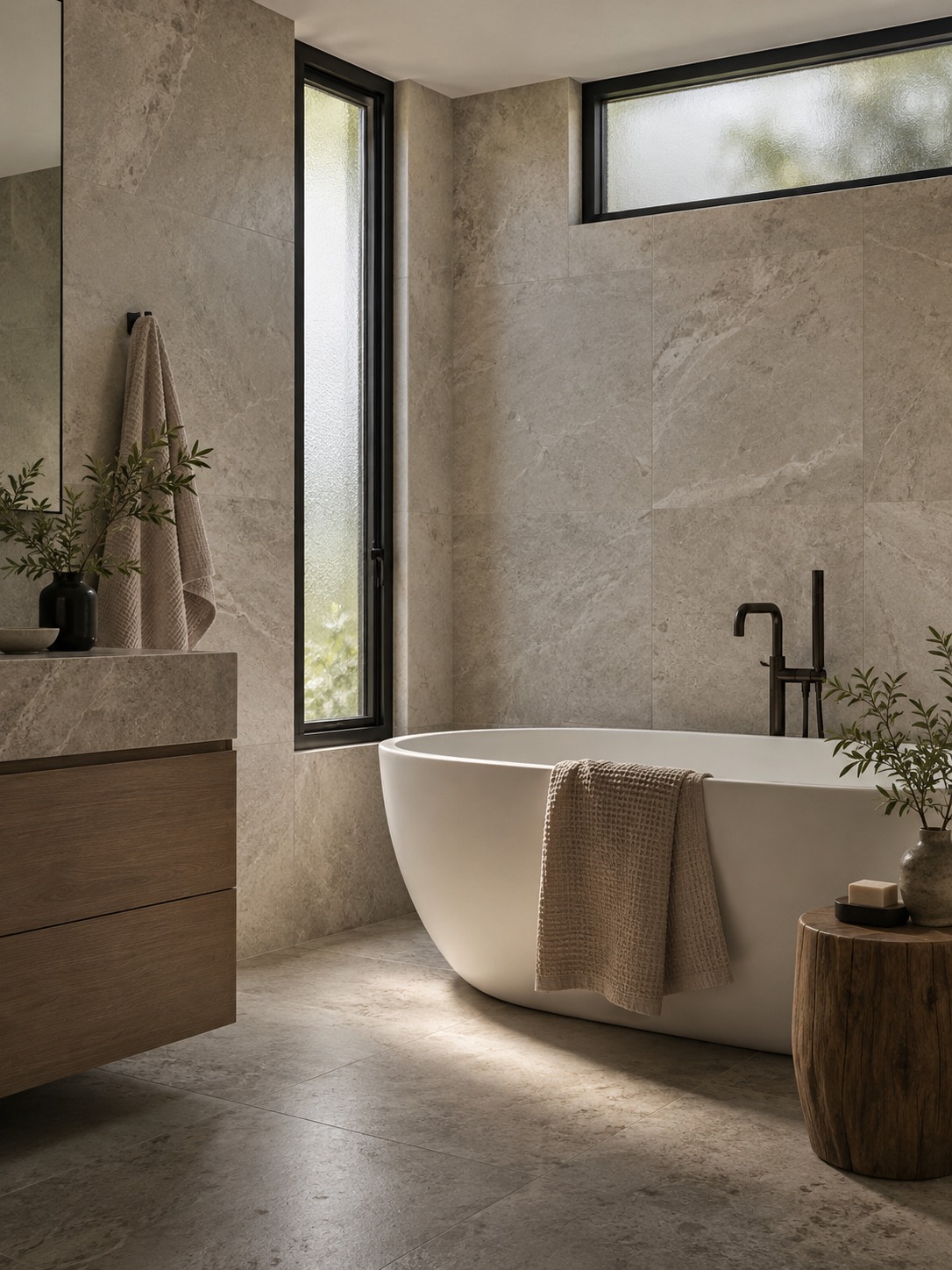
Where to start
Start with how each room should feel and what the architecture is already telling you. Pick the window type that suits each room, then agree on the frame color, the finish, the grille logic and the proportions. Test the combination on a mood board before you order.
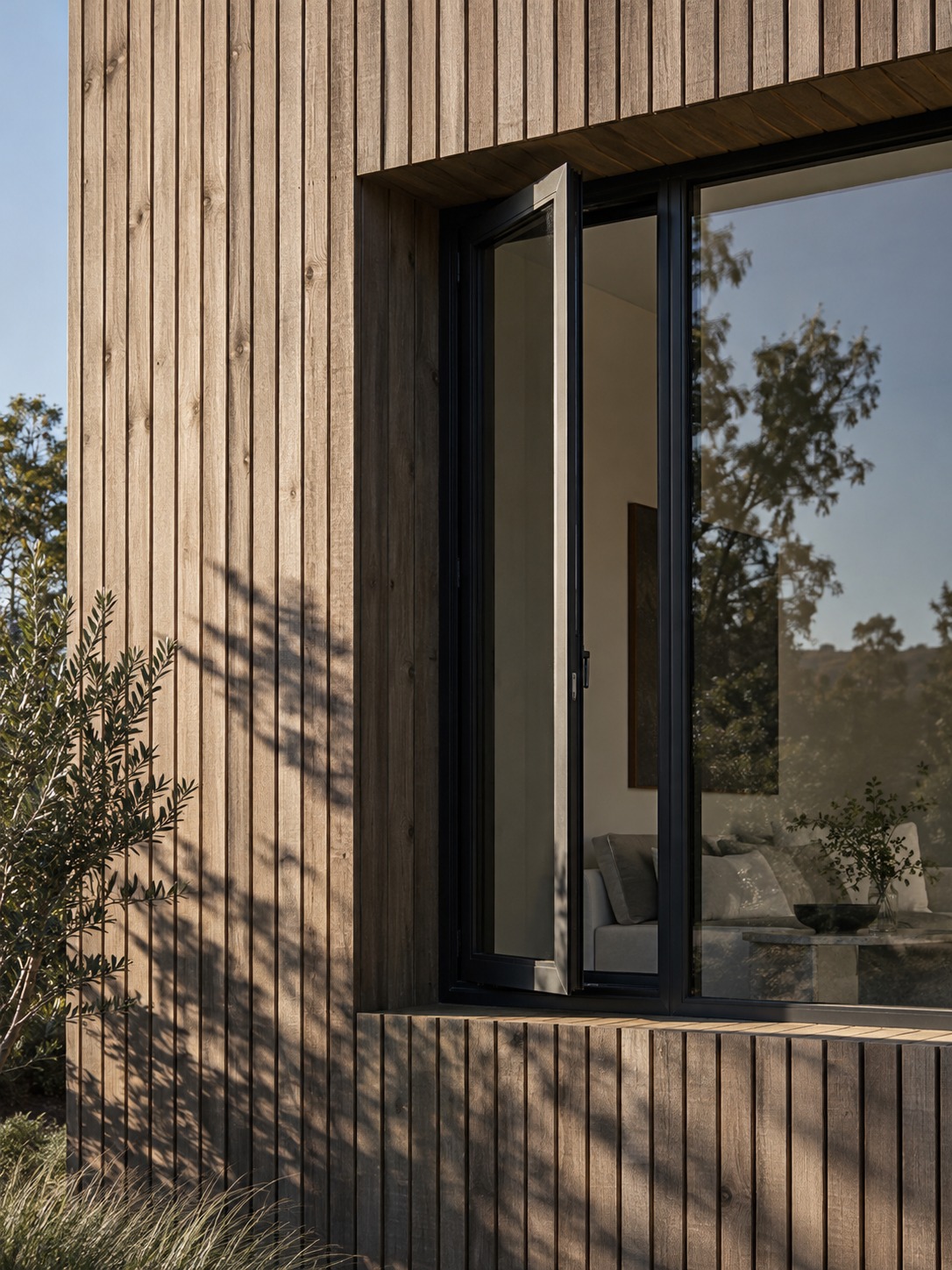
The technical specifications, meaning glazing, frame material and energy ratings, still matter enormously. But they work best in service of a clear design vision rather than in place of one. A house with mixed windows that share a clear logic looks considered. A house with identical windows chosen without thinking is just uniform.
Frequently asked questions
Can I mix window styles within one home?
Yes. It works best when the windows share frame color, finish, visible frame width, grille pattern and proportions, and differ mainly in how they open. Use a picture window with casements for a view with ventilation. Keep the same logic on every elevation, and allow more difference between separate facades, such as the street side and the garden side, than within one wall.
Does window style really affect resale value?
Windows that suit the architecture and are visibly well maintained add to curb appeal, which buyers notice first. A mixed set that looks deliberate usually reads better than a set of mismatched replacements. I wouldn’t promise a specific return, so ask a local appraiser or agent what buyers in your area expect.
How much does window choice affect natural light?
A lot. The frame-to-glass ratio, grille patterns and placement can change the usable daylight in a room, sometimes more than the size of the opening. When you mix types, a fixed window usually shows more clear glass than an operable one of the same size, so compare visible glass, not rough opening dimensions.
Should you mix window styles in a new build?
In a new build you have the most freedom, because you can plan the types, the frames and the facade together. Draw each elevation first and choose one frame finish. Then assign fixed and operable windows to the rooms that need views or air. Mixing during a staged renovation takes more discipline, because earlier windows are already in place.
References
- Natural Resources Canada: Windows, Doors and Skylights
- ENERGY STAR: Windows, Doors and Skylights
- Canada Mortgage and Housing Corporation
Vlad is a product and industrial designer with 15+ years of experience across automotive, jewelry, and digital design, based in Kyiv. He writes the design and home-planning guides at Sky Rye Design.
- 16shares
- Facebook0
- Pinterest16
- Twitter0
- Reddit0