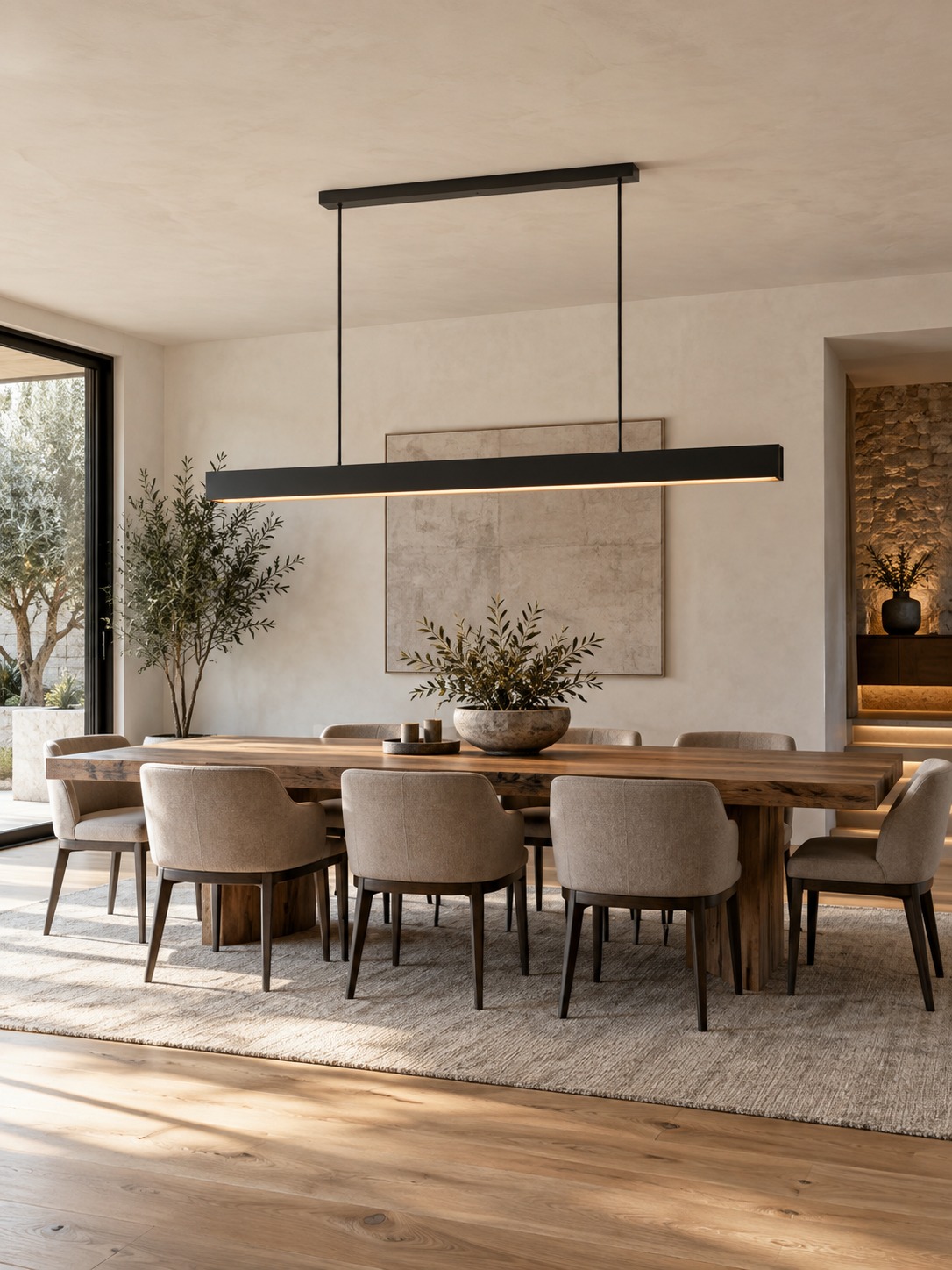
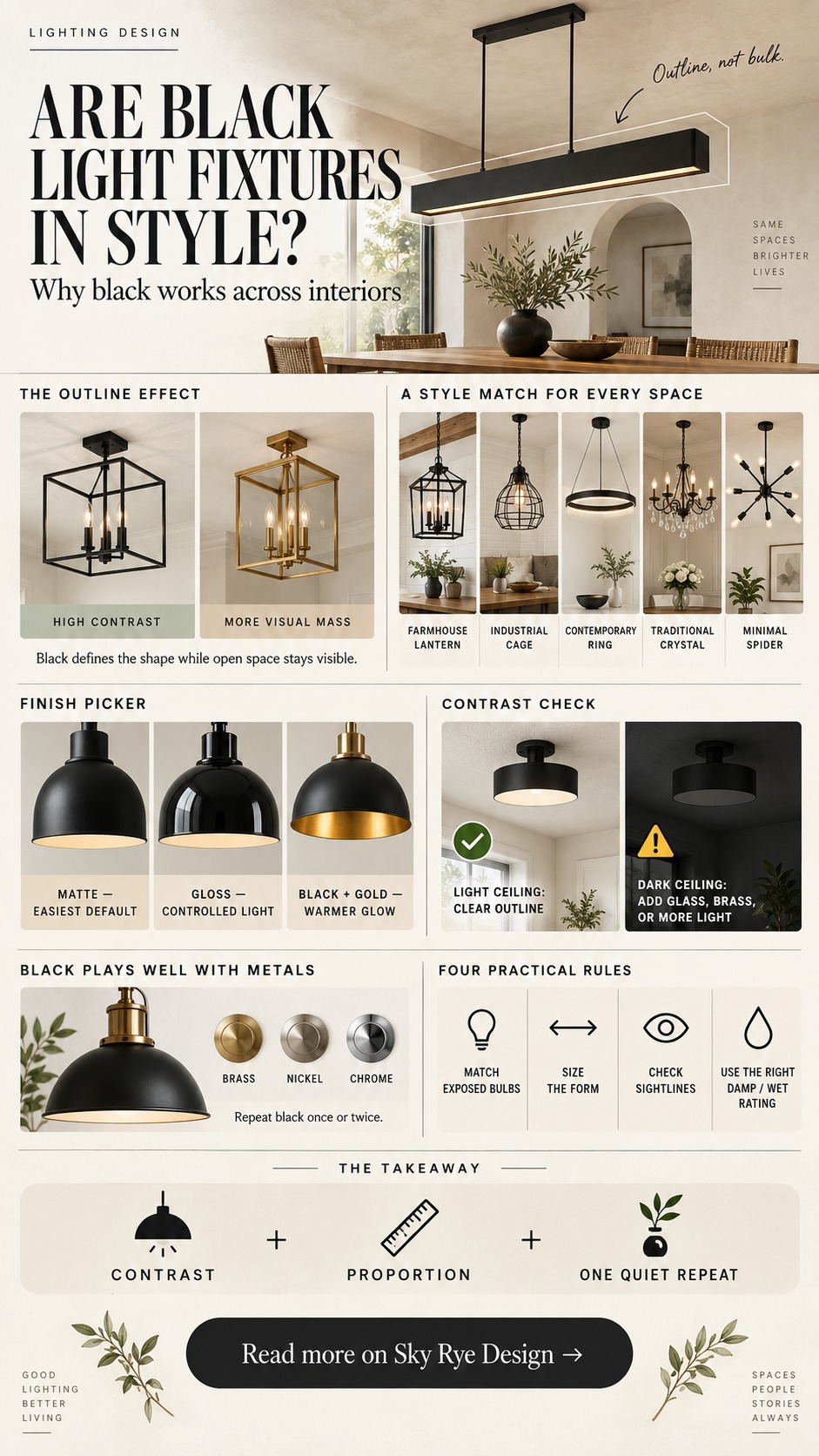
Are black light fixtures in style? Yes. Black remains one of the safest lighting finishes because it works more like a visual outline than a decorative color. Against a pale ceiling, a black frame gives the eye a crisp shape without the reflective weight of polished brass or chrome.
That does not mean every black fixture works in every room. The finish needs contrast, the shape needs the right scale, and the room should repeat black at least once somewhere else. Get those three decisions right and a black light can move comfortably between farmhouse, industrial, contemporary, Scandinavian, traditional, and transitional interiors.
- Why black fixtures can look visually lighter
- How black lighting works in different interior styles
- Matte black, gloss black, or black and gold?
- How to coordinate black fixtures with room hardware
- Choose the form before the finish
- Light quality matters more than fixture color
- Placement and scale rules for black light fixtures
- Cleaning and maintaining a black finish
- FAQ about black light fixtures
- The short answer
Why black fixtures can look visually lighter
Silhouette versus reflective mass
My first training was in academic drawing, where a contour line can describe a form without filling it in. A black light fixture often behaves the same way. The eye follows its arms, ring, cage, or bar as a set of edges. The open space between those edges remains visible, so the fixture can be physically large while still feeling airy.
Polished metal creates a different effect. Brass, chrome, and nickel catch highlights and reflect the room, so they tend to read as solid objects. Matte black reflects very little. That does not literally make a black fixture smaller, and it is not a license to ignore proportion, but it often lets an open-frame design carry a little more diameter without seeming bulky.
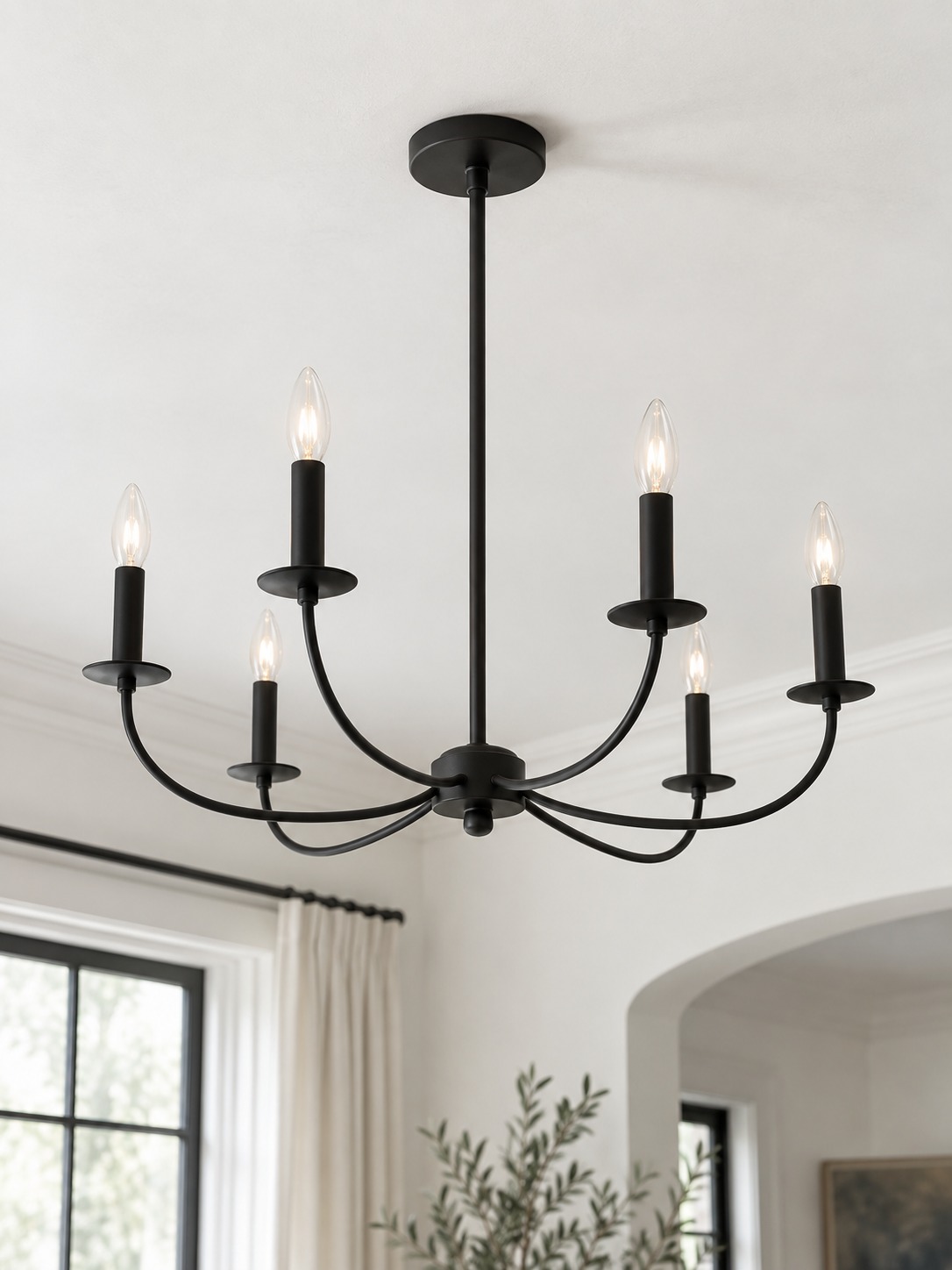
The same low-reflection quality can be useful when a ceiling has a subtle texture or an old repair. A shiny canopy may draw attention to every ripple around it; a matte black canopy is quieter. The finish will not hide a serious installation problem, but it is forgiving of the small irregularities found in real homes.
Where the outline effect breaks down
Contrast is the condition that makes this work. Put a black frame below a white, cream, or pale wood ceiling and the shape separates cleanly from the background. Put it below a charcoal ceiling in a dim room and much of that definition disappears. The fixture may still succeed, but now it needs help from downlights, wall washing, or a reflective detail inside the shade.
This is why showroom impressions can be misleading. Retail displays are usually bright and evenly lit. At home, a low ceiling, warm paint, and weak daylight can change the same fixture dramatically. Before buying, look at the fixture from the doorway and imagine it against the actual ceiling color, not the white background in a product photograph.
How black lighting works in different interior styles
| Interior style | Black fixture form that fits | Why it works |
|---|---|---|
| Modern farmhouse | Candle-style iron or lantern frames | Echoes window grilles and door hardware |
| Industrial | Exposed-bulb cages and pipe forms | Continues the room’s structural language |
| Contemporary | Linear bars and simple rings | Turns clean geometry into the focal point |
| Traditional or transitional | Black frames with crystal or glass | Refreshes a familiar silhouette |
| Scandinavian or minimal | Thin-arm spiders and mobile forms | Adds definition with little visual mass |
Modern farmhouse and industrial rooms
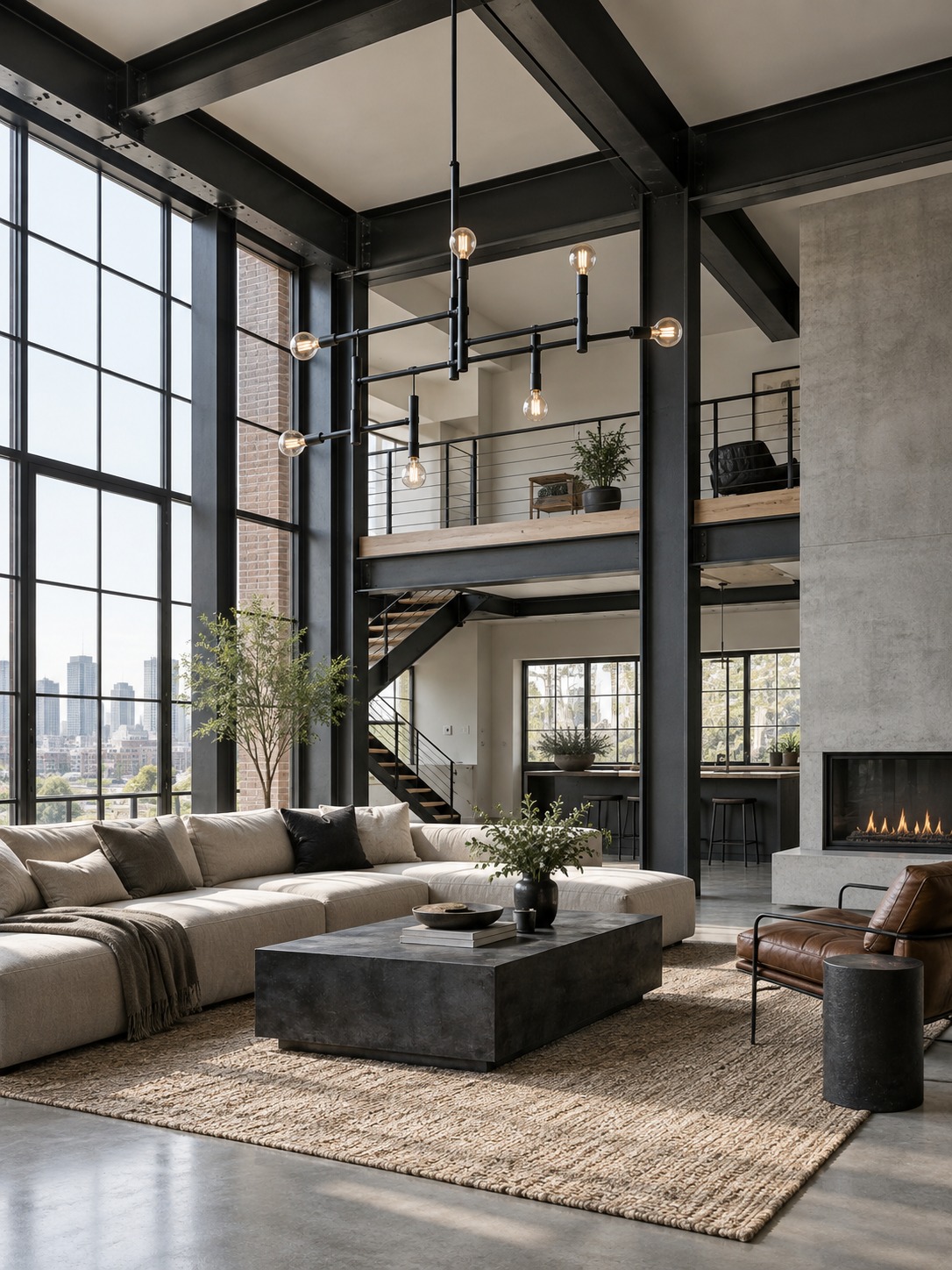
These are the most natural homes for black lighting because black metal is often already present. In a farmhouse kitchen, lantern pendants can pick up the finish of the window frames, range hardware, or cabinet pulls. In a loft, a black pipe chandelier can relate to beams, steel stairs, and exposed services without adding a new material to the palette.
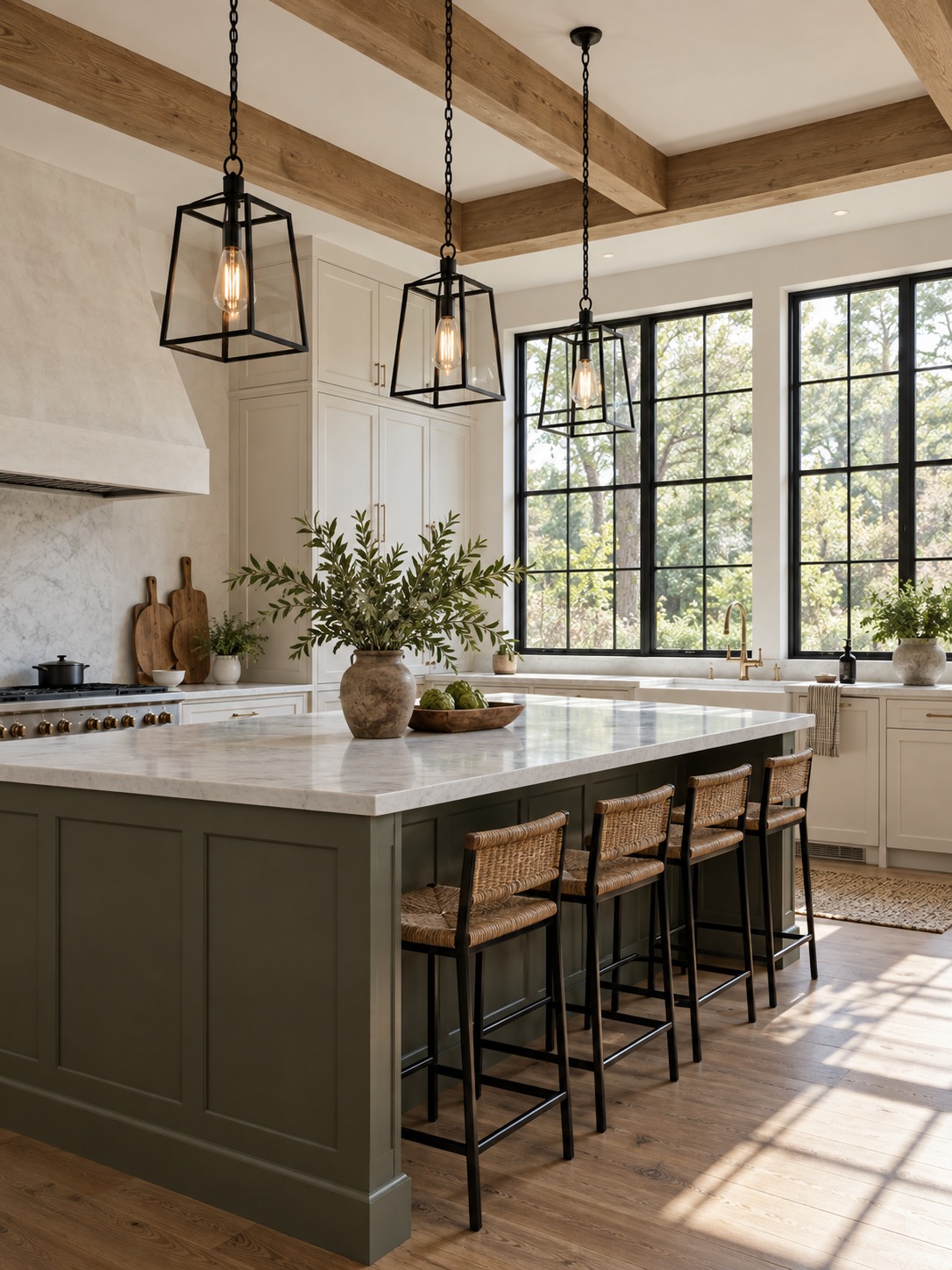
Form matters more than the label on the finish. A heavy wagon-wheel chandelier may suit a large farmhouse great room but overwhelm a small kitchen. A simple cage or narrow candle frame gives you the same black-metal connection with less bulk. Industrial fixtures also need restraint: one convincing structural gesture is stronger than a room filled with decorative pipes.
Contemporary and minimalist rooms
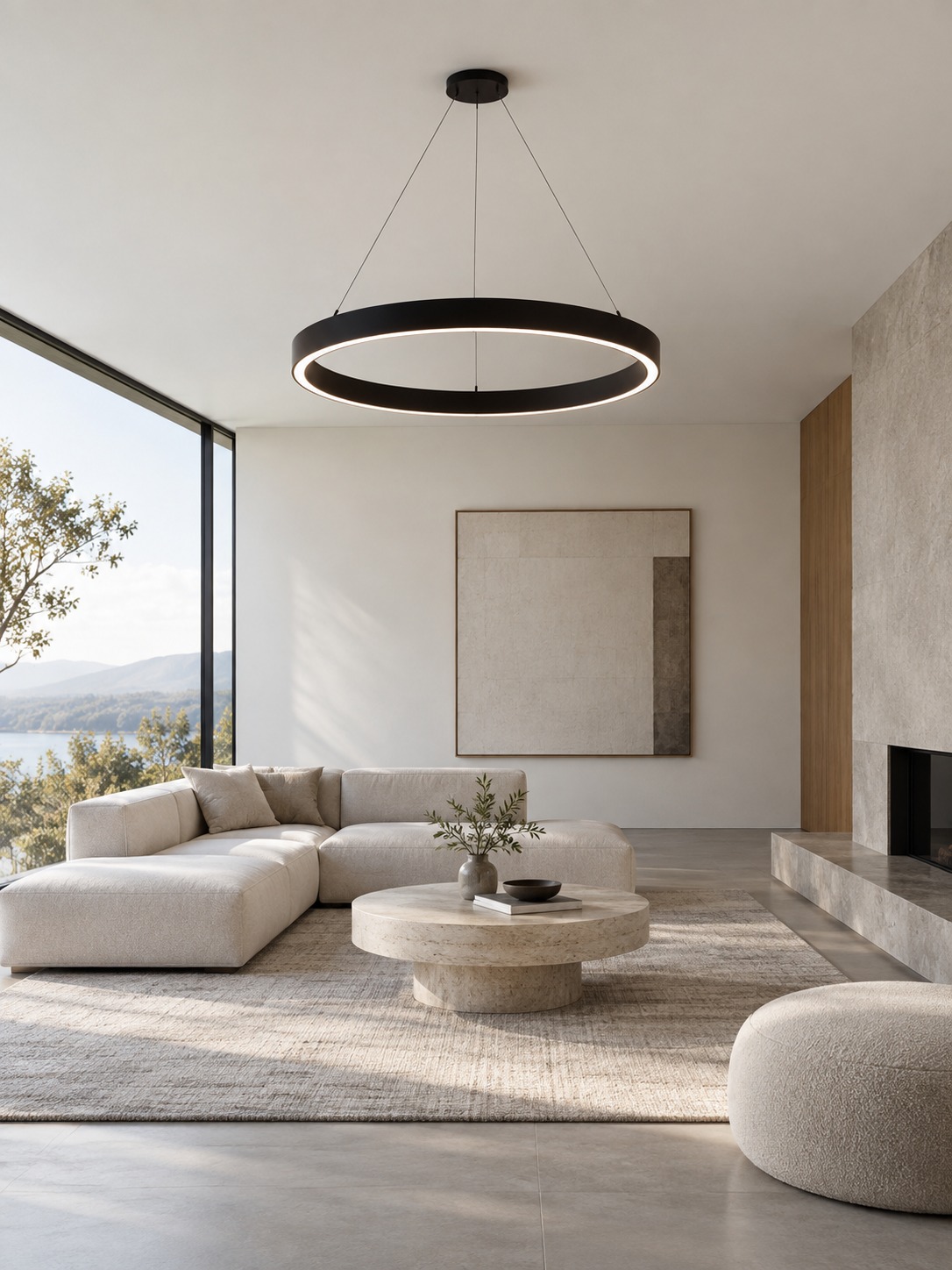
In a quieter room, the silhouette itself becomes the decoration. A slim bar over a dining table, a black ring in a double-height living room, or a spider fixture in a bedroom gives the eye one legible geometric idea. There is no need to surround it with matching objects. The cleaner the room, the more disciplined the fixture’s proportions should be.
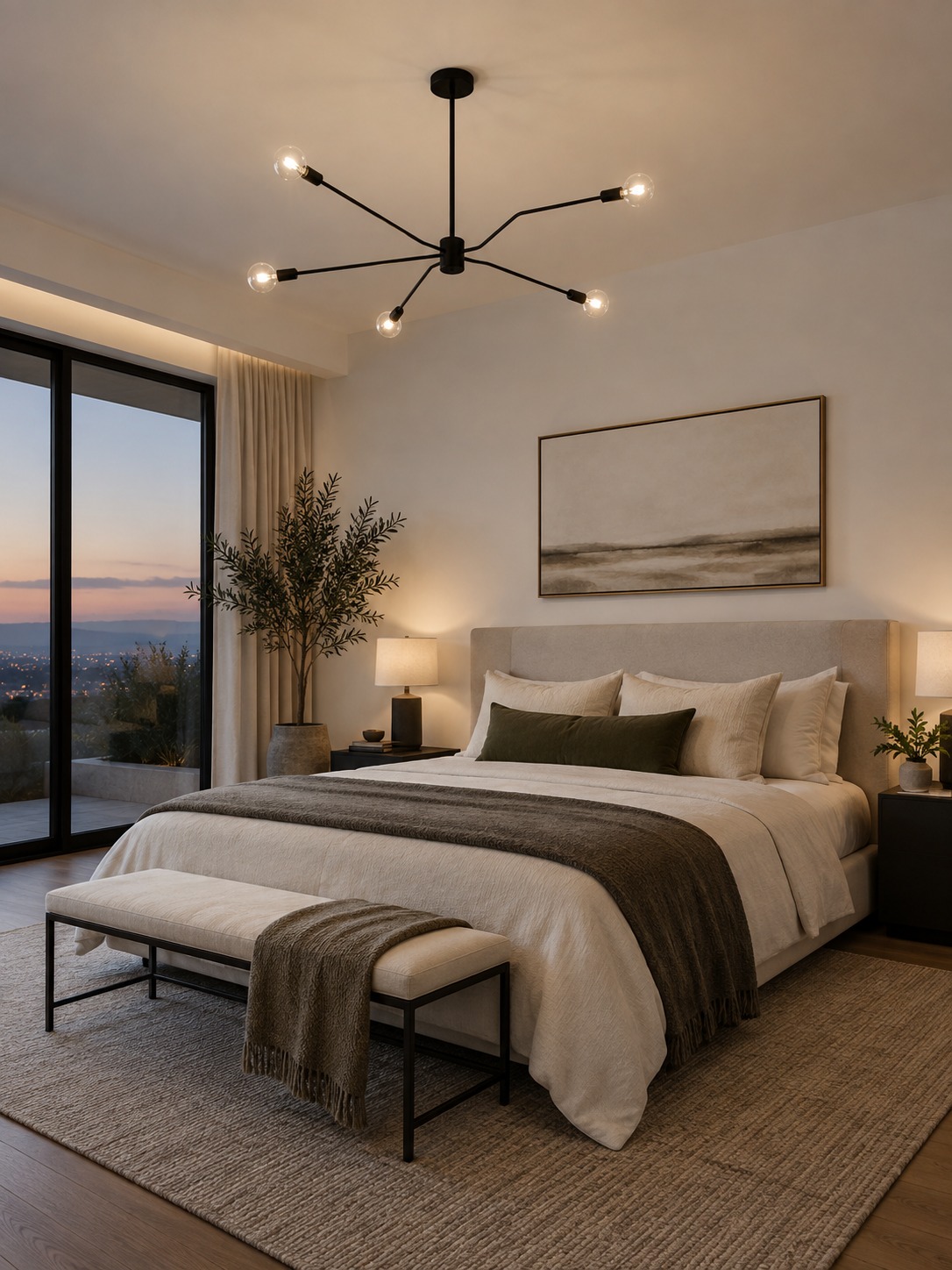
Minimal does not have to mean undersized. An open ring may span a broad seating area while occupying very little of the visual field. The important distinction is between physical size and visual density. A large, thin fixture can feel calmer than a small, opaque drum shade because more of the room remains visible through it.
Traditional and transitional rooms
Black can update a classic fixture without stripping away its character. Keep the chandelier profile, glass drops, or lantern form, then change the metal finish. The contrast makes the familiar shape feel sharper, while the crystal or glass still provides the sparkle a traditional room expects.
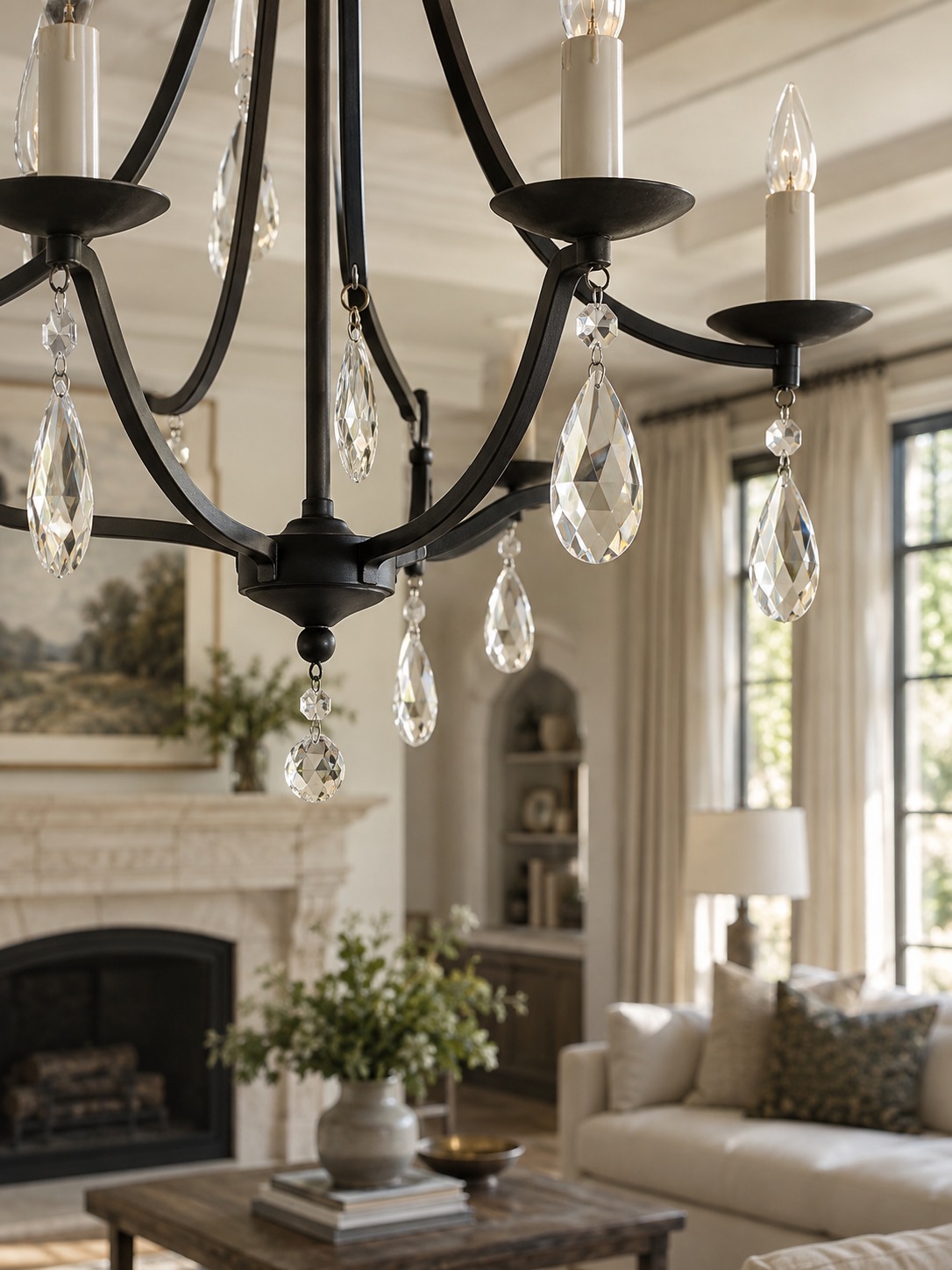
This is especially useful in transitional interiors, where old and new are meant to coexist. A black lantern above an antique table, or a black chandelier with clear drops above a tailored sofa, connects eras without pretending the room belongs entirely to one of them.
Matte black, gloss black, or black and gold?
Matte black is the easiest default. It keeps reflections under control, photographs cleanly, and sits comfortably beside painted wood, stone, and brushed metals. It also hides casual fingerprints better than a high-gloss surface, although horizontal arms and shades will still collect dust.
Gloss black is more theatrical. It can look excellent in a formal dining room where layered light creates deliberate highlights. In flat or very bright light, however, those reflections can become busy and reveal dust or handling marks. Choose it because you want the shine, not because it is the only black option available.
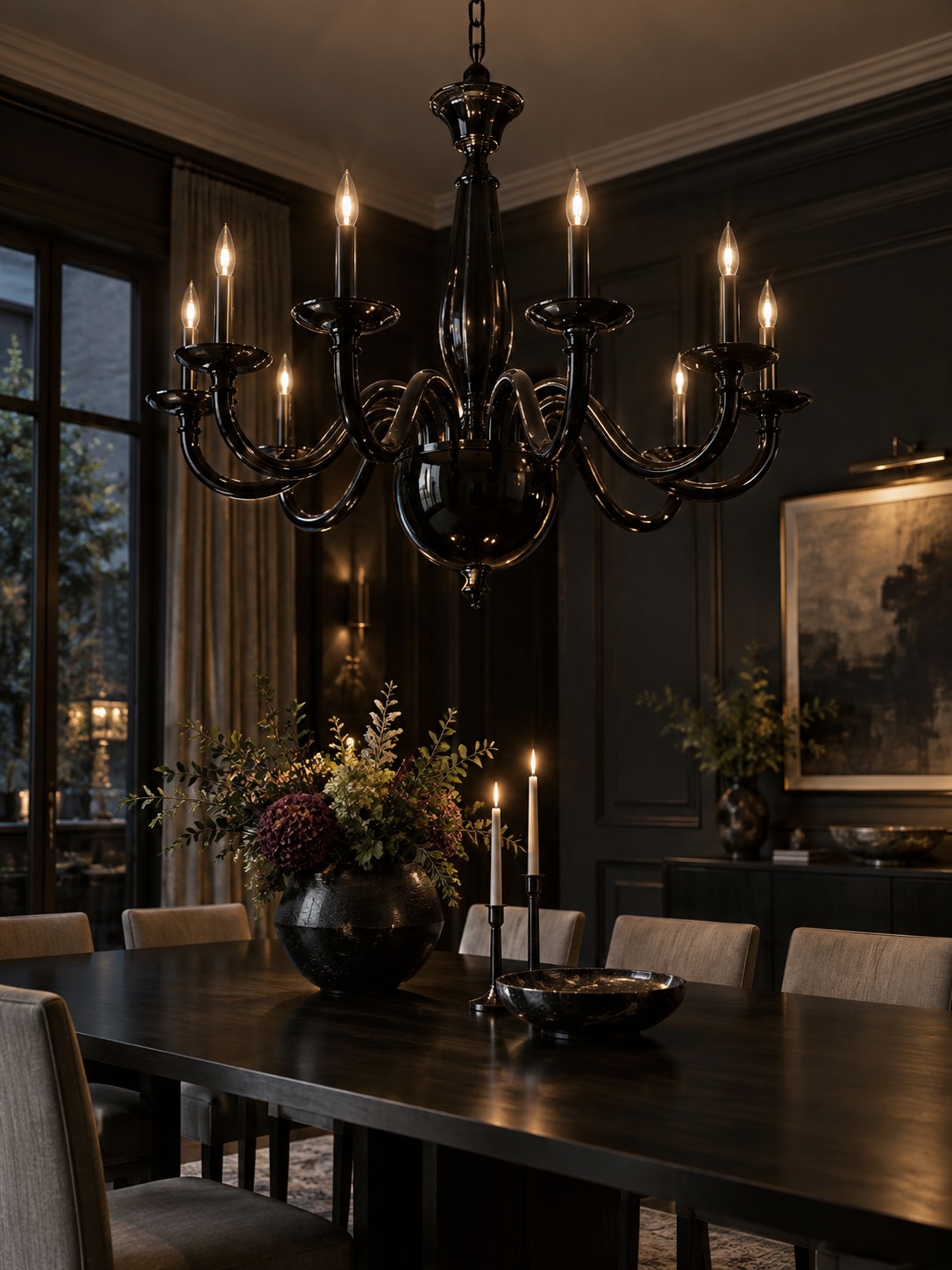
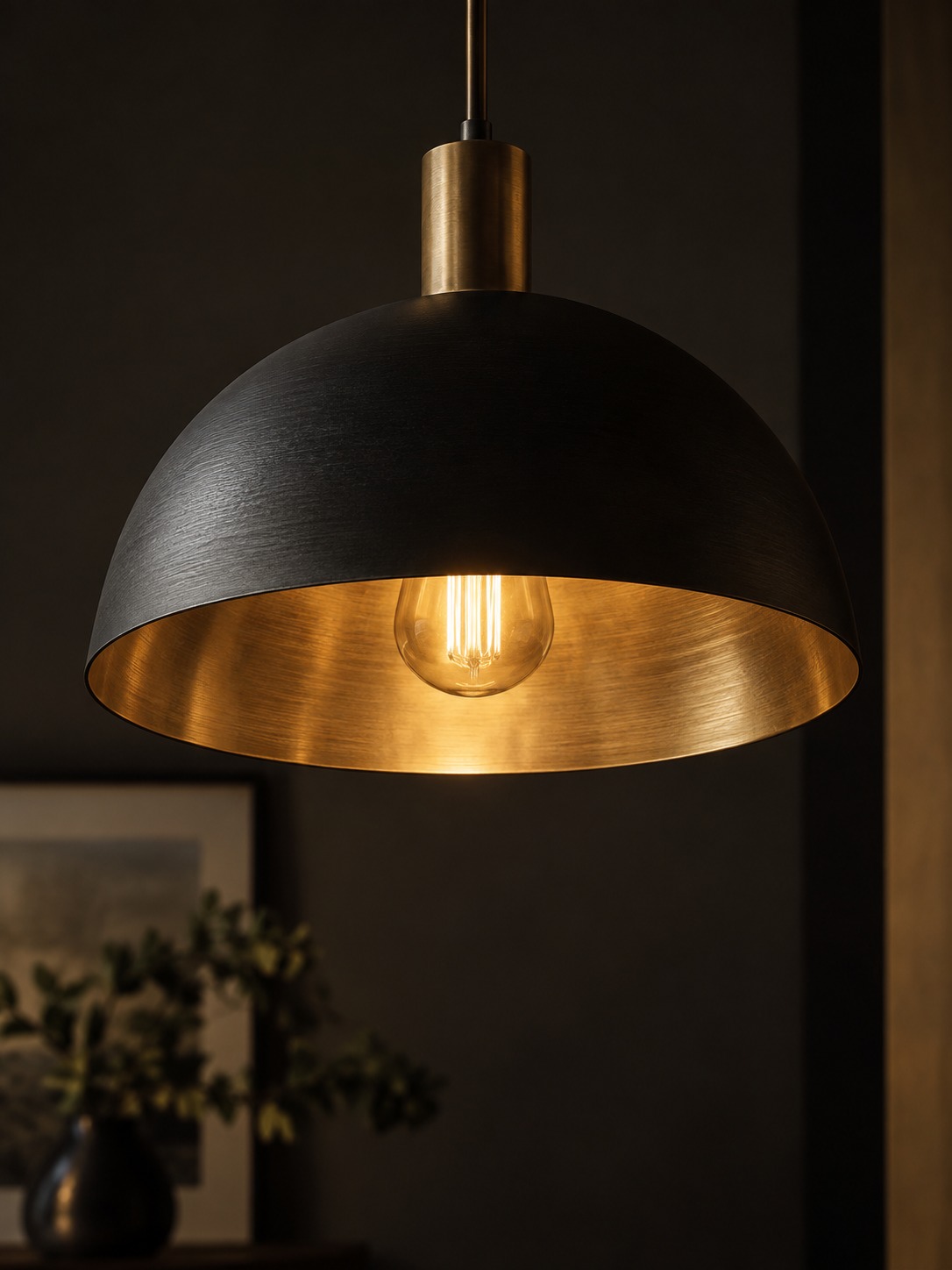
Black and gold is the warmer middle ground. A dark exterior preserves the graphic outline while a brass or gold interior bounces warmer light toward the table or floor. You can see this strategy across these black-frame designs. It is particularly useful when an all-black shade makes the light feel too severe.
How to coordinate black fixtures with room hardware
Mixing black with brass, nickel, bronze, and chrome
Black is unusually easy to mix with metal because it does not read as another reflective metal. It can act as the pause between warm brass and cool nickel, or connect a bronze faucet to chrome accessories. The finishes do not need to match exactly; they need a visible logic.
A useful limit is two dominant metal finishes plus black as a neutral accent. That keeps the mix legible. If every handle, frame, lamp, and hinge introduces a different sheen, the problem is not black; it is the absence of hierarchy.
Repeat black once or twice
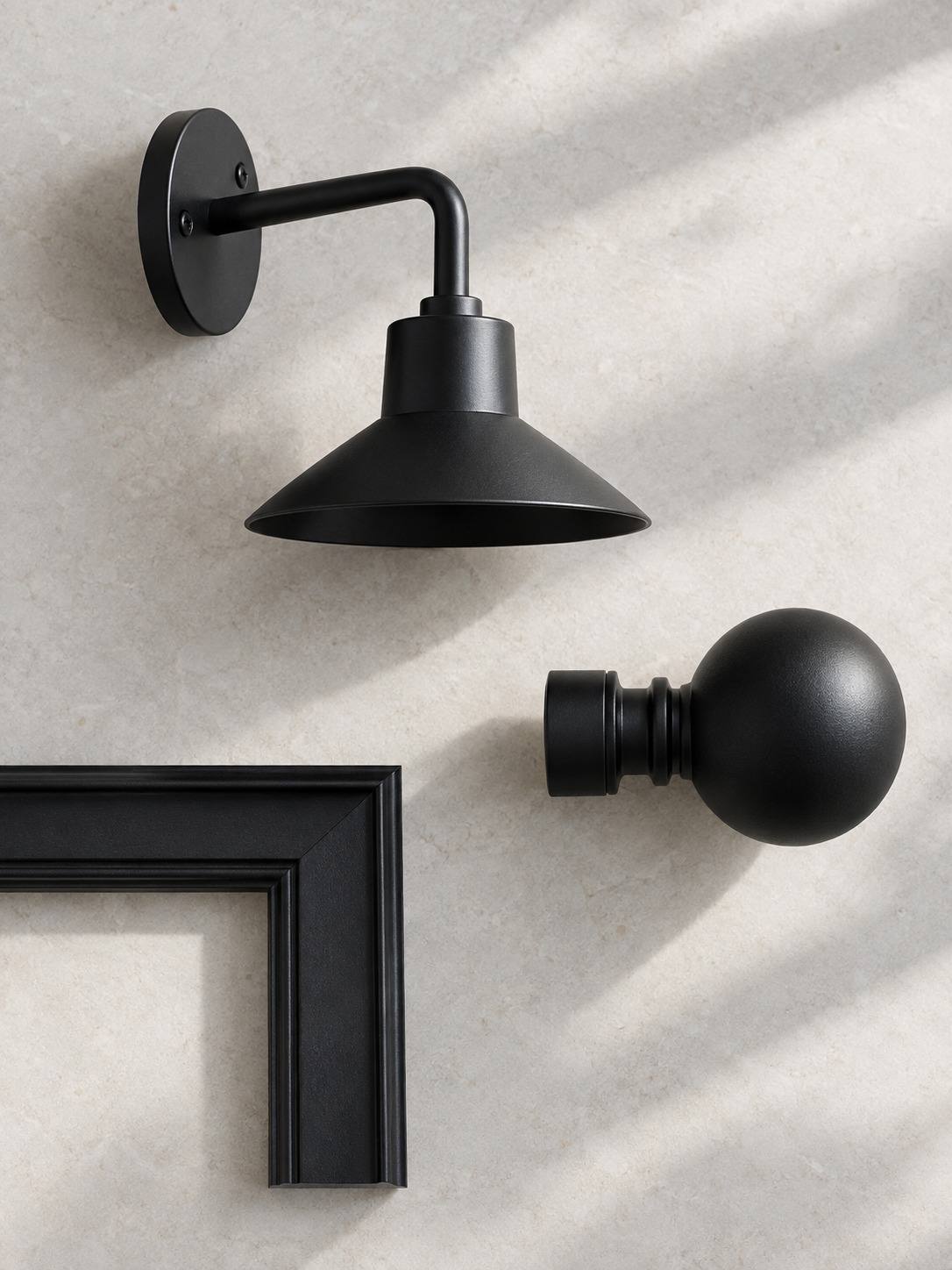
A single black fixture in a room with no other dark detail can look isolated. Repeat the finish in a curtain rod, picture frame, chair leg, window mullion, or lamp base. One quiet echo is often enough. You are establishing a relationship, not building a black-and-white theme.
There is a compositional reason for this. One strong dark mark can feel accidental; a second, smaller mark tells the eye that the first was intentional. Stop before every element joins the pattern. Too much black can flatten the depth that the contrast was meant to create.
Choose the form before the finish
A black finish cannot rescue the wrong shape. Start by asking what the fixture must do in the room: stretch along a table, organize a central seating area, light a work surface, or provide a soft layer near a mirror. Once the function and footprint are clear, black becomes one finish option rather than the decision that drives everything else.
Linear pendants for long surfaces
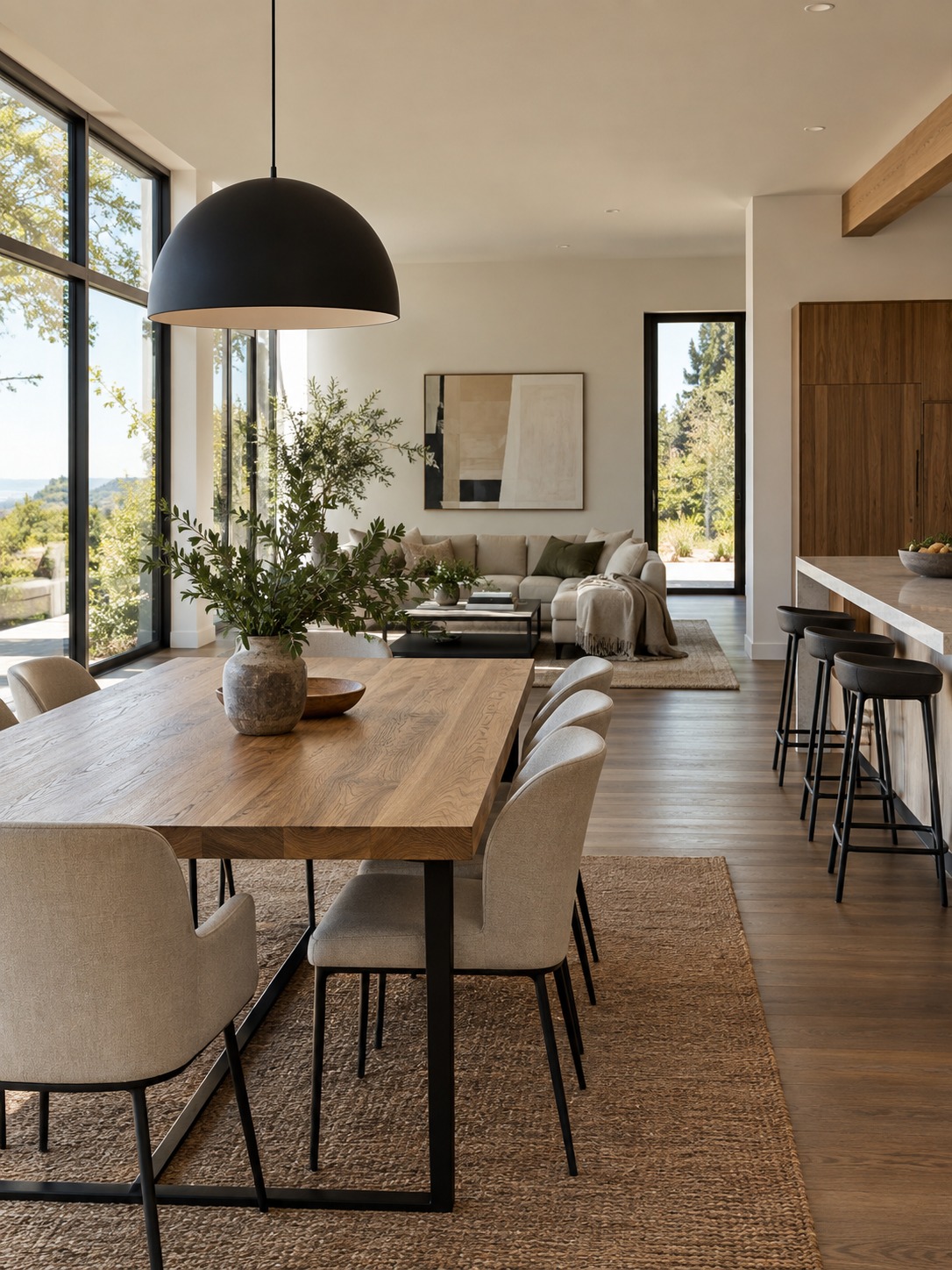
A linear pendant makes sense above a rectangular table or island because its geometry follows the surface below. Black emphasizes that axis, which can help organize an open-plan room. Aim for visual breathing room at both ends rather than matching the tabletop edge exactly. A fixture that is almost as long as the table often feels cramped; one that is noticeably shorter reads as a centered element.
Rings and branching chandeliers for open rooms
Rings create a calm horizontal boundary, while branching chandeliers send the eye in several directions. Both can fill a large volume without forming an opaque ceiling. Look closely at the fixture’s density. Twelve thin arms may feel lighter than six thick ones, even when the outer diameter is the same.
Lanterns and cages for entries and kitchens
Lanterns are easy to understand because the black frame describes a simple volume. In an entry, check that the bottom of the fixture does not interrupt the first view into the house. Over an island, two or three smaller cages create rhythm, but their spacing should respond to the work surface rather than the number shown in a catalog photograph.
Flush mounts and sconces for lower ceilings
Black ceiling light fixtures can work in compact rooms, but a wide black disk on a low white ceiling may feel heavier than an open pendant. Look for shallow designs with a pale diffuser or clear glass. For sconces, pay attention to the light pattern on the wall. A black cone produces a sharper pool of light than an opal globe, which matters beside a bed or bathroom mirror.
Light quality matters more than fixture color
A beautiful black frame cannot compensate for weak output or uncomfortable glare. Check lumens, beam direction, diffusion, and dimmer compatibility before ordering. Open fixtures put the bulb directly in view, so a very bright clear bulb can be tiring at eye level. Frosted bulbs, lower-lumen decorative lamps, or a fixture with concealed LEDs may be more comfortable.
Color temperature changes how the finish feels. Warm light around 2700K softens black and brings out wood, cream, and brass. Neutral light around 3000K can suit a clean kitchen or bathroom. More important than choosing one universal number is keeping adjacent sources consistent. A black frame creates such a clear boundary around exposed bulbs that small color differences become obvious.
Also check the color rendering specification when a fixture lights food, art, textiles, or skin. The frame may be the object you notice during the day, but the quality of the emitted light determines whether the room feels good at night.
Placement and scale rules for black light fixtures
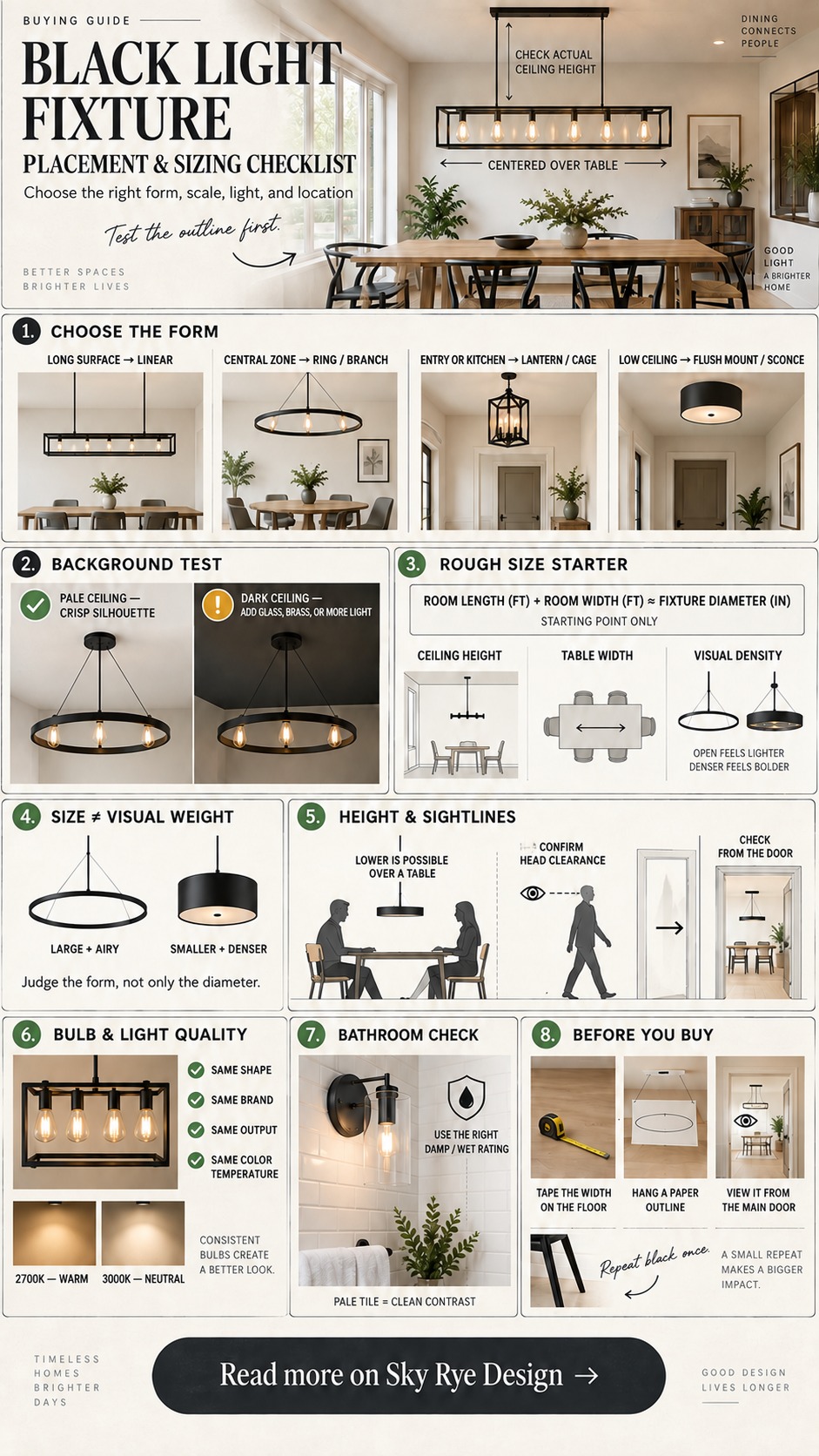
- Check the background. A pale ceiling gives a black frame definition. With a dark ceiling, plan additional light around the fixture or choose a design with glass, brass, or a pale inner surface.
- Match exposed bulbs. Open cages make every bulb part of the composition. Use the same brand, shape, output, and color temperature throughout the fixture. A mix of warm and cool bulbs is hard to ignore once they are side by side.
- Size the form, not only the finish. The familiar room-length-plus-room-width rule can provide a rough chandelier diameter in inches when the room is measured in feet. Treat it as a starting point. Ceiling height, table width, furniture layout, and the density of the fixture all matter.
- Keep sightlines clear. Over a dining table, a pendant can usually hang lower because nobody walks beneath it. In an open path, confirm head clearance and check views from nearby rooms before installation.
- Use the right rating. A black bathroom sconce still needs a damp or wet-location rating appropriate to its position. Finish color is not a substitute for electrical suitability.
Open black frames often tolerate a larger diameter than opaque shades because so much space remains visible through them. Still, do not automatically jump to the next catalog size. Tape the width on the floor, hang a paper outline at the proposed height, and look from the main doorway. That ten-minute test is more useful than any universal sizing claim.
If you are choosing a long fixture or working through exact proportions, the Long Black Chandelier guide goes deeper into form and sizing. For the rest of the room, Lighting Design Tips for Modern Homes explains how ambient, task, and accent layers should work together.
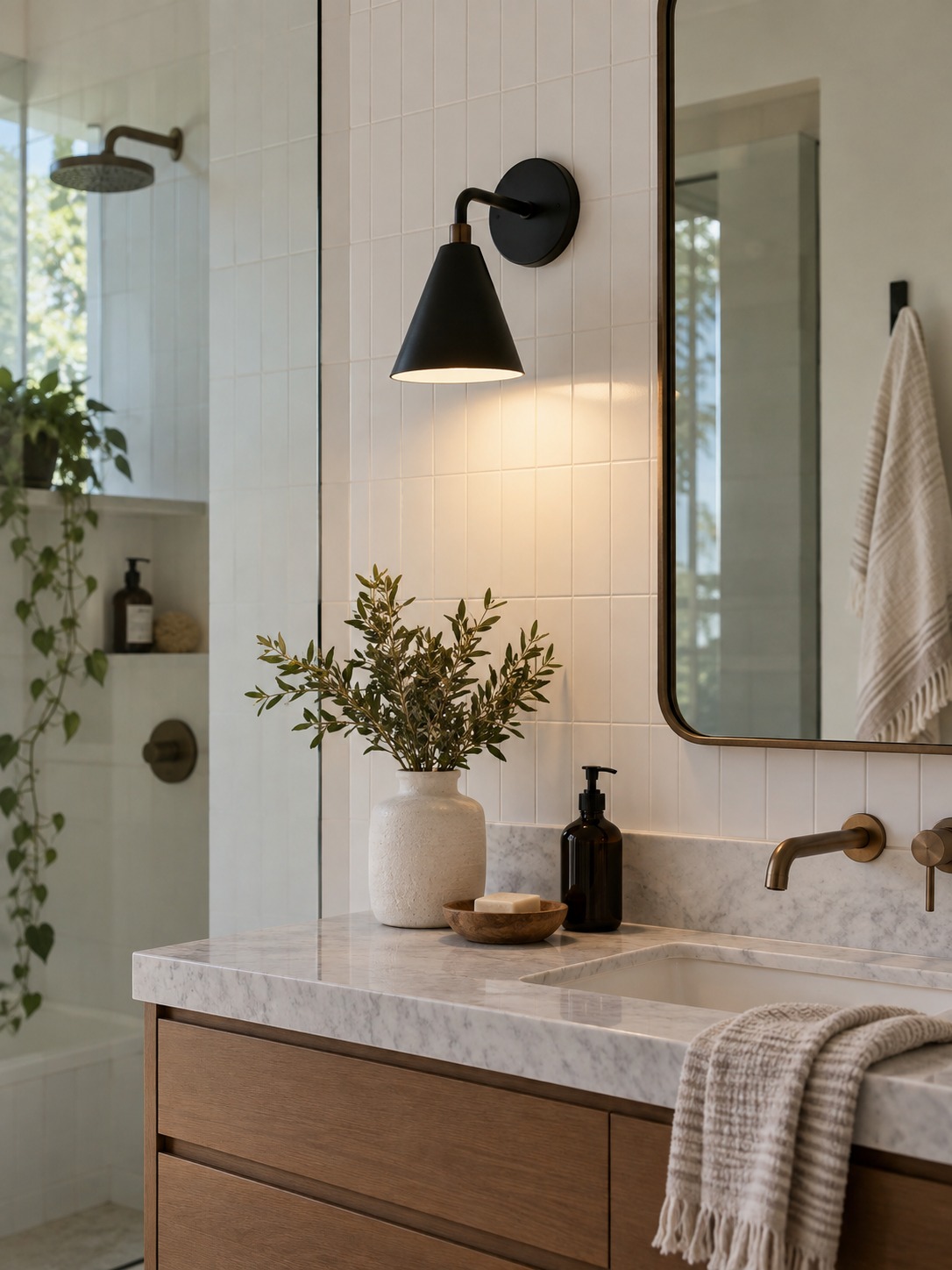
Bathrooms add glare, shadow, humidity, and mirror reflections to the decision. The Art of Bathroom Lighting covers those practical layers in more detail.
Cleaning and maintaining a black finish
Matte black is low maintenance, not maintenance-free. Dust is least obvious on vertical arms and most visible on broad horizontal shades. Switch off the fixture, let the bulbs cool, and use a dry microfiber cloth. For a more thorough clean, use a barely damp cloth followed by a dry one.
Avoid abrasive pads and strong ammonia cleaners unless the manufacturer specifically approves them. Powder coat, painted metal, patinated brass, and blackened steel can look similar in a product photo but respond differently to chemicals. The care sheet supplied with the fixture is the final authority.
FAQ about black light fixtures
Are black light fixtures going out of style?
No. Individual shapes come and go, but black remains useful because it creates contrast and works with many material palettes. A simple form will usually age better than a highly specific trend silhouette.
Do all light fixtures in a house need to match?
No. Fixtures should feel related, not identical. Repeat one or two qualities such as finish, geometry, glass type, or visual weight, then let each room use the form that suits its scale and function.
Can you mix black and gold light fixtures?
Yes. Black gives the composition a crisp outline, while gold or brass adds reflected warmth. The combination can appear within one two-tone fixture or across separate fixtures in adjoining spaces.
Do black fixtures work with brass or chrome hardware?
Yes. Black can bridge warm and cool metals because it does not compete as another shiny finish. Repeat each metal deliberately and keep the overall palette limited so the mix looks planned.
Do black light fixtures work with dark ceilings?
They can, but the silhouette will be less distinct. Choose a fixture with glass or a metallic interior, add light around it, or create contrast through the ceiling canopy and nearby surfaces. If the graphic outline is the goal, a pale ceiling is the simpler solution.
The short answer
Black light fixtures are still in style because they solve a visual problem: they define form without demanding that every metal in the room match. Matte black is the most flexible choice, black and gold adds warmth, and gloss black suits rooms where reflection is intentional. Give the fixture contrast, choose the right scale, match exposed bulbs, and repeat black once elsewhere. Those decisions matter far more than the trend label.
- 0shares
- Facebook0
- Pinterest0
- Twitter0
- Reddit0