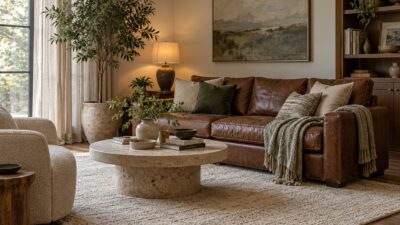
Most “relaxing bedroom” content is a moodboard — a linen duvet, a reading chair nobody sits in, a caption about hygge. I’ve designed interiors and architecture across several countries, and the bedrooms that actually help people sleep better rarely look like the moodboard.
A restorative bedroom does not have to look plain or clinical. These a cozy yet stylish bedroom combine warm texture, layered lighting and restrained styling so comfort and personality can coexist.
They’re the ones where layout, light, materials, air, and storage were treated as one connected system instead of a styling exercise. This is a practical audit of that system, not another gallery of pretty rooms.
- Why Bedroom Design Affects How Restful the Room Feels
- Start With the Bed Zone, Not Just the Bed
- Plan a Layout That Removes Nighttime Friction
- Use Lighting as a Circadian Design Tool
- Make the Bedroom Feel Better Through Materials
- Control the Bedroom Microclimate
- Hide the Visual Noise
- Design for Real Life, Not a Showroom Bedroom
- Frequently asked questions
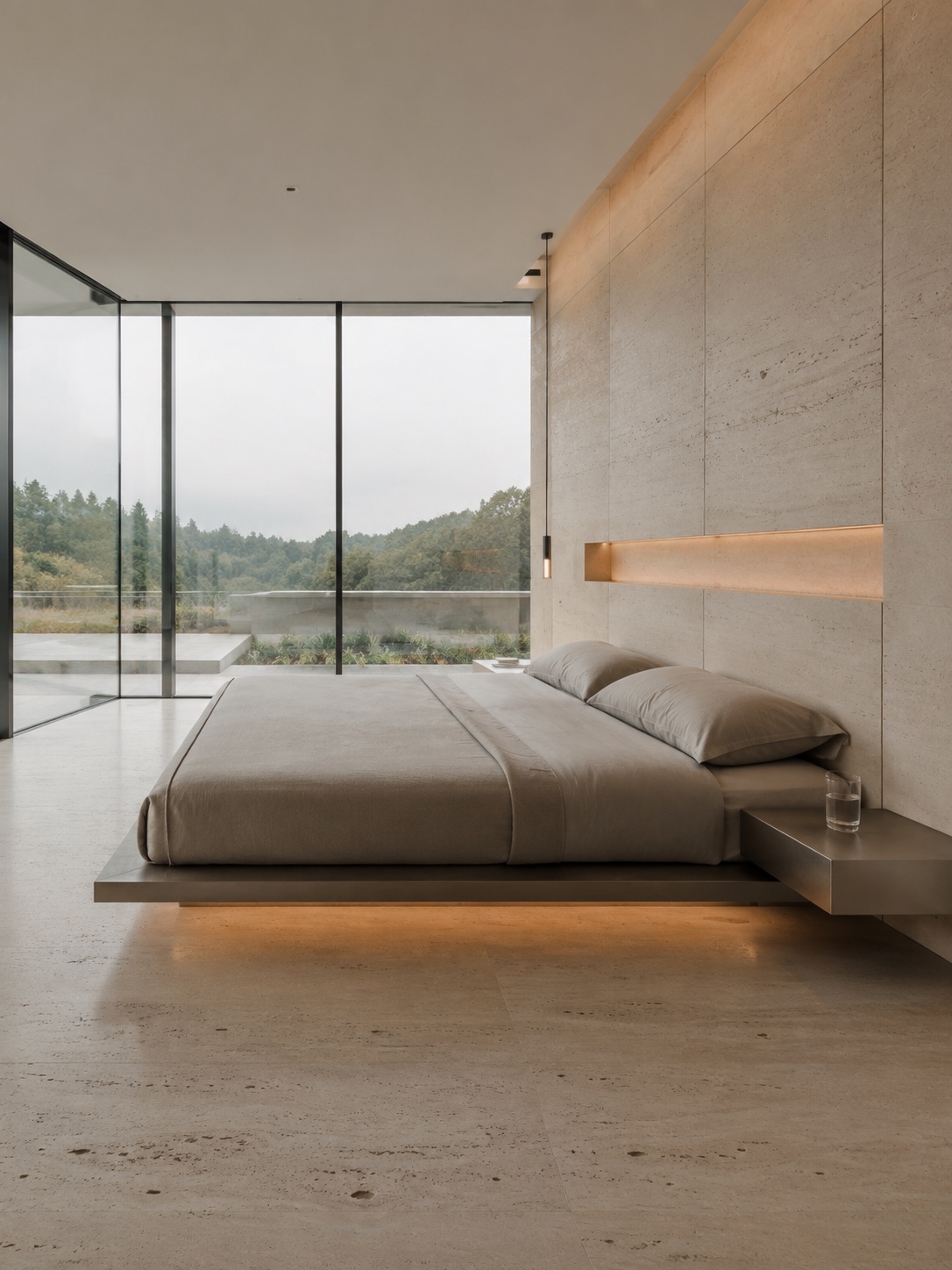
Why Bedroom Design Affects How Restful the Room Feels
Design signals that tell the brain to slow down
A bedroom sends your brain constant low-level signals about whether it’s safe to switch off. A desk visible from the pillow, a bright window with no covering, a pile of laundry in your peripheral vision — none of these are dramatic on their own, but together they keep a low hum of “there’s still something to deal with” running in the background. Calm rooms remove that hum through composition: fewer competing focal points, softer transitions between light and shadow, storage that closes rather than sits open. This is a design problem before it’s a sleep problem.
Where the original sleep-advice angle becomes an interior design problem
Most sleep advice stops at “get blackout curtains” or “keep your room cool,” which is true but incomplete. The actual work is translating that advice into a specific room: where the bed sits relative to the window, which fixture handles evening light versus which one handles reading, where the laundry basket goes so it’s out of the sightline. That’s design work, not medical advice, and it’s the part most guides skip.
Start With the Bed Zone, Not Just the Bed
Support, scale, height, and clear movement around the bed
A beautiful frame doesn’t fix a body that isn’t properly supported, and this is where sleep position and mobility actually matter more than style. If you read in bed, deal with back pain, or want easier movement getting in and out, adjustable beds and bases solve a real problem that a stylish headboard never will. This matters even more in a shared bed with two different comfort needs — one person wants head elevation for snoring, the other just wants to stop waking up with stiff hips, and a base that adjusts independently on each side handles both without either person compromising.
Beyond the mattress itself, give the bed enough clearance to walk around comfortably on both sides. A bed jammed against a wall to save space might work in square footage, but it turns getting up at night into an obstacle course, and that friction adds up over months of use.
Why the bed should have visual priority in the room
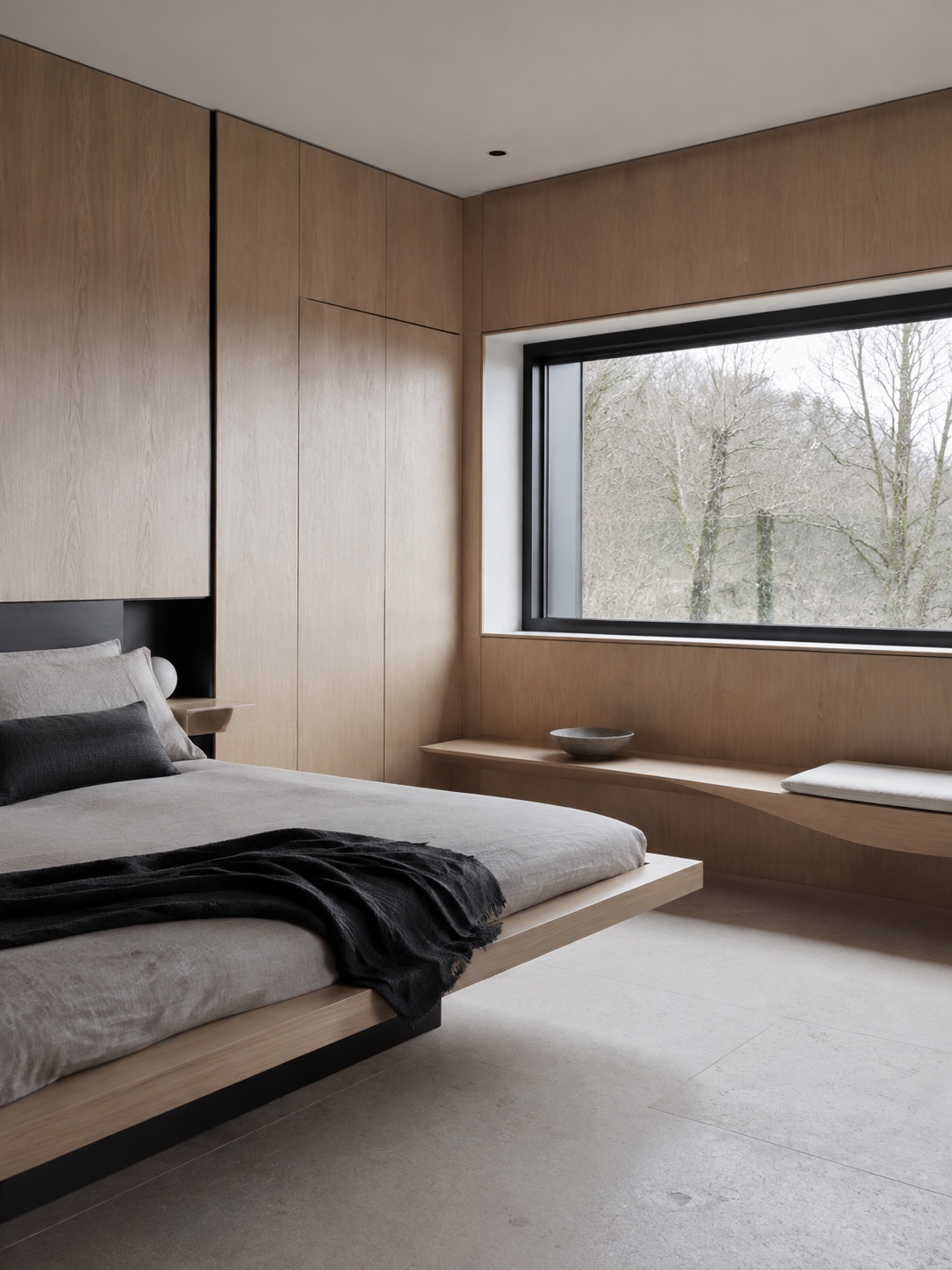
The bed should read as the obvious center of the room, not one item competing with a desk, a dresser, and a mounted TV for attention. I treat this the same way I’d treat a focal wall in any interior composition: everything else in the room should visually defer to it. A bed squeezed beside a desk or facing a cluttered corner keeps sending “stay alert” signals even after the lights go off, since your eyes register that clutter every time you shift position.
Plan a Layout That Removes Nighttime Friction
Keep work, laundry, and storage out of the sleep sightline
A layout that looks fine during the day can quietly work against you at night if the first thing you see from the pillow is a laundry pile or an open closet. Position the bed so that whatever’s in your direct sightline is calm — a wall, curtains, artwork — rather than a work corner or storage overflow. If your bedroom doubles as an office, the desk should sit outside your natural eyeline from bed, even if that just means angling it toward a side wall instead of facing the mattress.
Small bedroom layout rules for calmer circulation
In smaller rooms and condos, every piece of furniture has to earn its place. Oversized dressers and nightstands that crowd the walking path do more harm than their storage capacity is worth — a narrow, awkward path around the bed keeps you half-alert even during a two a.m. trip to the bathroom. I default to wall-mounted or slim floating nightstands in tight bedrooms specifically because they free up floor space without giving up bedside storage entirely.
Shared bedrooms: balancing two comfort routines
Two people rarely want identical light, temperature, or bedtime routines, and a shared bedroom layout should account for that rather than assuming one setup fits both. Independent reading lights on each side, a bedside outlet for each person’s devices, and enough nightstand storage that neither person’s items end up on the other’s side all reduce the small frictions that build into resentment over time.
Use Lighting as a Circadian Design Tool
Morning light, evening warmth, and dimmable layers
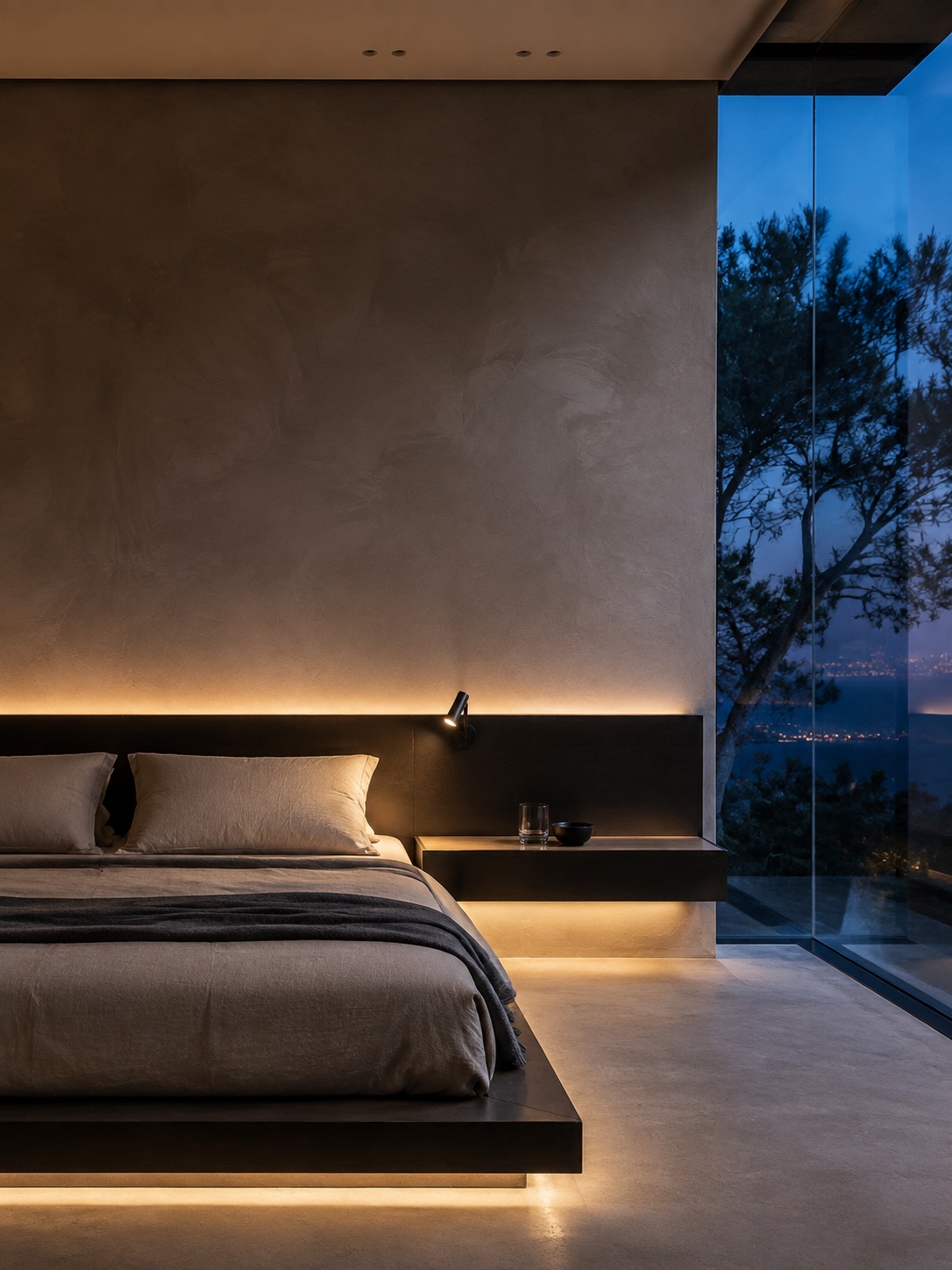
Layered lighting handles what a single overhead fixture never can. You want enough light to function without the room feeling clinical, which means combining a dimmable ceiling fixture, warm bedside lamps, and — where possible — some control over how morning light enters the room. I go into the mood side of this in more depth in how lighting can change the mood of a home, which applies directly to a bedroom’s evening wind-down.
Blackout curtains, bedside lamps, and screen glare
Warm bulbs instead of harsh cool-white light make a bigger difference than most people expect, since cool light reads as daytime to your brain regardless of the hour. Blackout curtains matter most in summer, when daylight stretches well past a reasonable bedtime, and low bedside lighting for reading keeps the transition to sleep gradual instead of an abrupt lights-off. Screen glare from a TV or phone undoes a lot of that work, so if a screen lives in the bedroom, its placement and brightness deserve as much thought as any lamp.
Seasonal lighting adjustments for winter and summer
Winter mornings are dark enough that waking up can feel genuinely grim, and summer evenings stay bright long past when you’d like to wind down. A lighting plan that only accounts for one season fails the other. Simple fixes — a lamp on a timer for dark winter mornings, heavier blackout coverage for summer — cost far less than a redesign and solve the seasonal mismatch directly.
Make the Bedroom Feel Better Through Materials
Breathable sheets, layered blankets, rugs, and curtains
Cotton, linen, and wool blends regulate temperature better than heavy synthetic fabrics, which matters more than thread-count marketing suggests. Bedding that adapts across the year — lighter layers in summer, heavier ones in winter — beats a single all-season set that traps heat in July and does nothing in January.
Texture choices that soften sound and reduce visual harshness
Rugs and upholstered elements do double duty: they soften hard surfaces acoustically, and they take the visual edge off a room full of flat walls and hard flooring. A bedroom with nothing but bare walls and hardwood underfoot reads as sterile even when it’s clean, and that starkness works against the calm you’re trying to build.
Color palettes that feel calm without becoming bland
Color has more influence on a room’s mood than most people give it credit for, and I’ve put together a deeper breakdown of bedroom color schemes if you want to go further than “just paint it grey.” The goal isn’t a flat, colorless room — it’s choosing tones that feel settled rather than stimulating, which still leaves plenty of room for personality.
Control the Bedroom Microclimate
Temperature, humidity, and airflow as design considerations
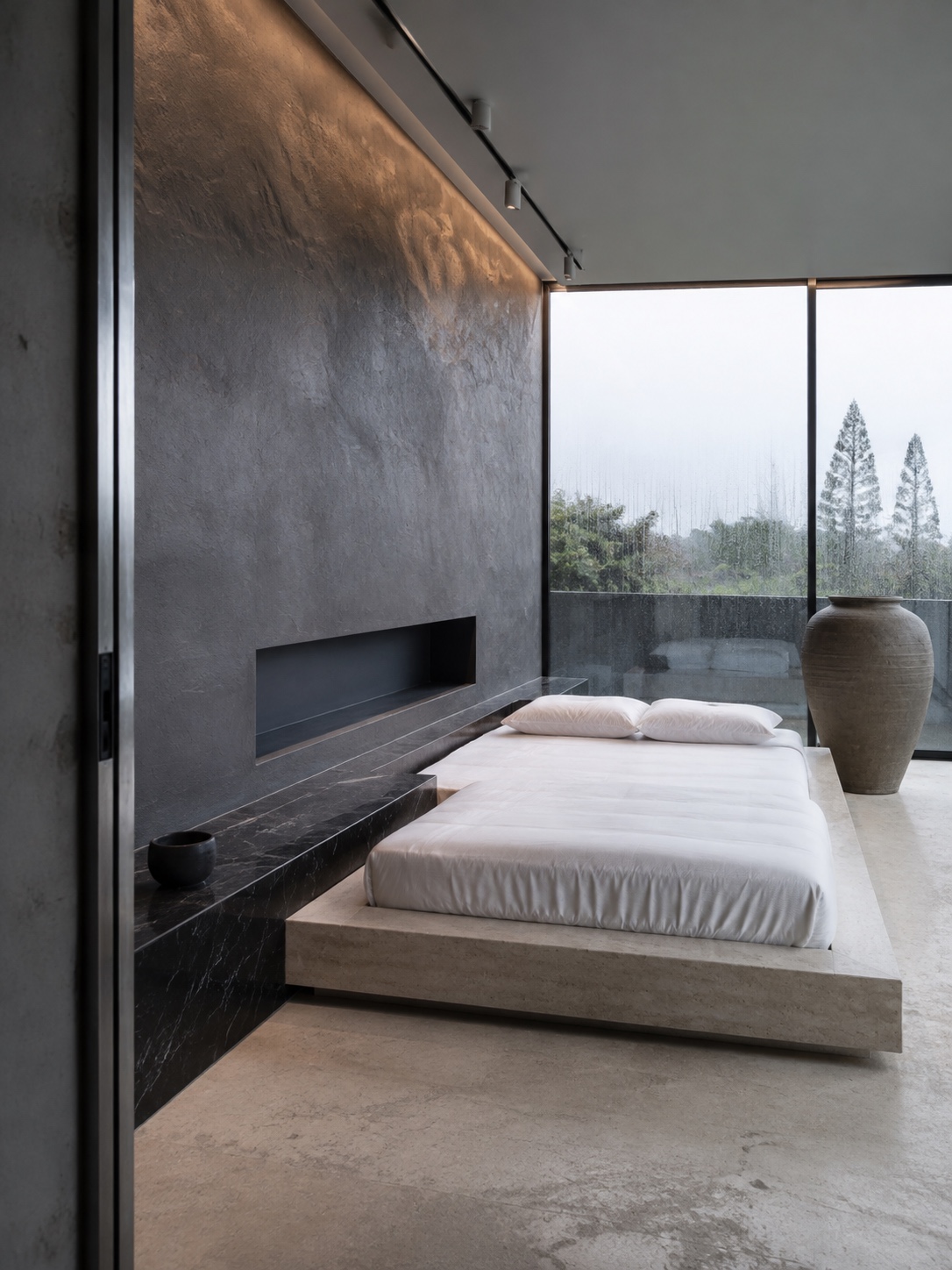
A beautifully designed room still fails at night if it’s too hot, too dry, or stuffy. Forced-air heating dries out indoor air fast in colder months, which affects comfort, skin, and even snoring — a problem that has nothing to do with your mattress and everything to do with your room’s air.
Window treatments, rugs, plants, and humidifiers
A humidifier during dry winter months, window coverings that help with insulation, and a rug or two to soften a cold floor all address the microclimate side of comfort that pure styling ignores. Plants can help with a room’s felt humidity and softness too, though they’re a minor supporting player next to a proper humidifier.
When comfort problems are not only mattress problems
If you wake up overheated, congested, or generally uncomfortable, it’s worth ruling out the room itself before blaming the mattress. Airflow, humidity, and even the fabric of your curtains all shape how a room feels at three in the morning, and none of them show up on a mattress spec sheet.
Before buying a new mattress or bedding set to fix a comfort complaint, check the room first: humidity, airflow, and curtain insulation solve more overheating and congestion problems than people expect.
Hide the Visual Noise
Nightstands with drawers, under-bed storage, and closet systems
Chargers, laundry piles, unopened packages, random cables, the chair that quietly becomes a backup closet — bedrooms collect clutter fast, and all of it competes for attention even after you’ve stopped consciously noticing it. Nightstands with drawers, under-bed storage, and a properly sorted closet system keep daily essentials close without leaving everything visible. I’ve written more on the trade-off between minimal and lived-in storage in minimalism versus cozy clutter, which is worth reading if you’re deciding how far to take this.
Charging stations, cables, and bedroom technology boundaries
If your bedroom is also doing double duty as your office, your streaming lounge, and your scrolling headquarters, sleep quietly gets pushed to the bottom of the room’s priorities. Keep charging stations off the bed itself, and if you can, route cables somewhere they’re not part of the nightly view. These are small boundary decisions, but they add up to a room that reads as a bedroom rather than a multi-use catch-all.
How to keep the room useful without making it sterile
The goal isn’t a stark, empty room — it’s a room with less mental noise. A closed cabinet holding exactly what you need at hand is more useful than an empty shelf that looks good in photos but forces you to store everything else somewhere less convenient. Keep the room functional first, and let the calm come from organization rather than absence.
Design for Real Life, Not a Showroom Bedroom
Pets, kids, rentals, condos, and routines
A lot of bedroom inspiration online looks great until you imagine actually living in it for a week — crisp white everything, no visible storage, a bench that somehow never collects clothes. Real bedrooms deal with pets shedding on the duvet, kids wandering in at odd hours, rental restrictions on paint and fixtures, and routines that don’t match a catalog photo. Durable, washable materials and flexible layouts matter more in these situations than a perfectly matched palette. In a child’s room, a low floor bed from montessori bed co can preserve clear sightlines and give the child more independence at bedtime. My piece on cozy bedroom ideas leans more into the lived-in side of this if a showroom look was never really the goal.
A simple bedroom audit before buying anything new
Before buying anything, walk your bedroom at the time you’d normally go to sleep and note what you actually see and feel: What’s in your direct sightline from the pillow? Is the light warm or clinical? Is the air too dry or too stuffy? Is there visible clutter competing for attention? Most of what needs fixing shows up in that five-minute walk-through, before you spend a cent on new furniture.
What to upgrade first: light, layout, bedding, storage, or air
If you can only tackle one thing, start with lighting — it’s the cheapest, fastest change with the most immediate effect on how the room feels in the evening. Layout comes next, since it’s mostly about rearranging what you already own. Bedding, storage, and air quality upgrades (humidifiers, better window coverings) are worth tackling once the first two are handled, since they compound on a layout and lighting setup that’s already working in your favor rather than fighting it.
Frequently asked questions
What is the best bedroom design for better sleep?
There’s no single template, but the common thread across sleep-friendly bedrooms is a layout with the bed as the visual focus, layered lighting that shifts from bright to warm through the evening, breathable materials, and enough hidden storage that clutter doesn’t stay visible.
Which bedroom colors are best for sleep?
Muted, settled tones tend to feel calmer than bright or highly saturated colors, though the effect has as much to do with how a color is used — walls versus accents — as which color you pick. A full breakdown of workable palettes is worth reading if you want specifics rather than a generic “paint it blue.”
How should I arrange my bedroom for better rest?
Give the bed clear visual priority, keep it out of the direct sightline of clutter or work areas, and make sure there’s enough clearance to move around both sides comfortably. In smaller rooms, prioritize slim furniture over anything that crowds the walking path.
Is bedroom lighting important for sleep?
Yes — lighting is one of the most direct design levers for how a bedroom feels in the evening. Warm, dimmable layers signal wind-down time, while bright cool-white light or unmanaged screen glare works against that signal regardless of how late it is.
How can I make a small bedroom more sleep-friendly?
Focus on furniture that doesn’t crowd the walking path, wall-mounted or slim nightstands instead of bulky ones, and closed storage to keep visual clutter down. Small rooms benefit even more from layered lighting, since there’s less space for a single harsh fixture to dominate.
- 33shares
- Facebook0
- Pinterest33
- Twitter0
- Reddit0