Most conversations about sustainable homes stop at solar panels and smart thermostats – the visible, photogenic parts of green design. What rarely gets discussed is what happens to all that carefully engineered efficiency the moment the grid goes down. A heat pump that’s perfectly tuned for low energy use is just as useless as an old furnace when there’s no power reaching it at all.
I’ve spent years working across architecture and spatial design projects, and one principle keeps showing up regardless of scale: a system is only as good as its worst-case behavior. An energy efficient home that collapses the moment the grid fails isn’t actually resilient – it’s efficient under one set of conditions and fragile under another. Backup-ready design closes that gap, and it does it without turning a thoughtfully designed home into a generator showroom.
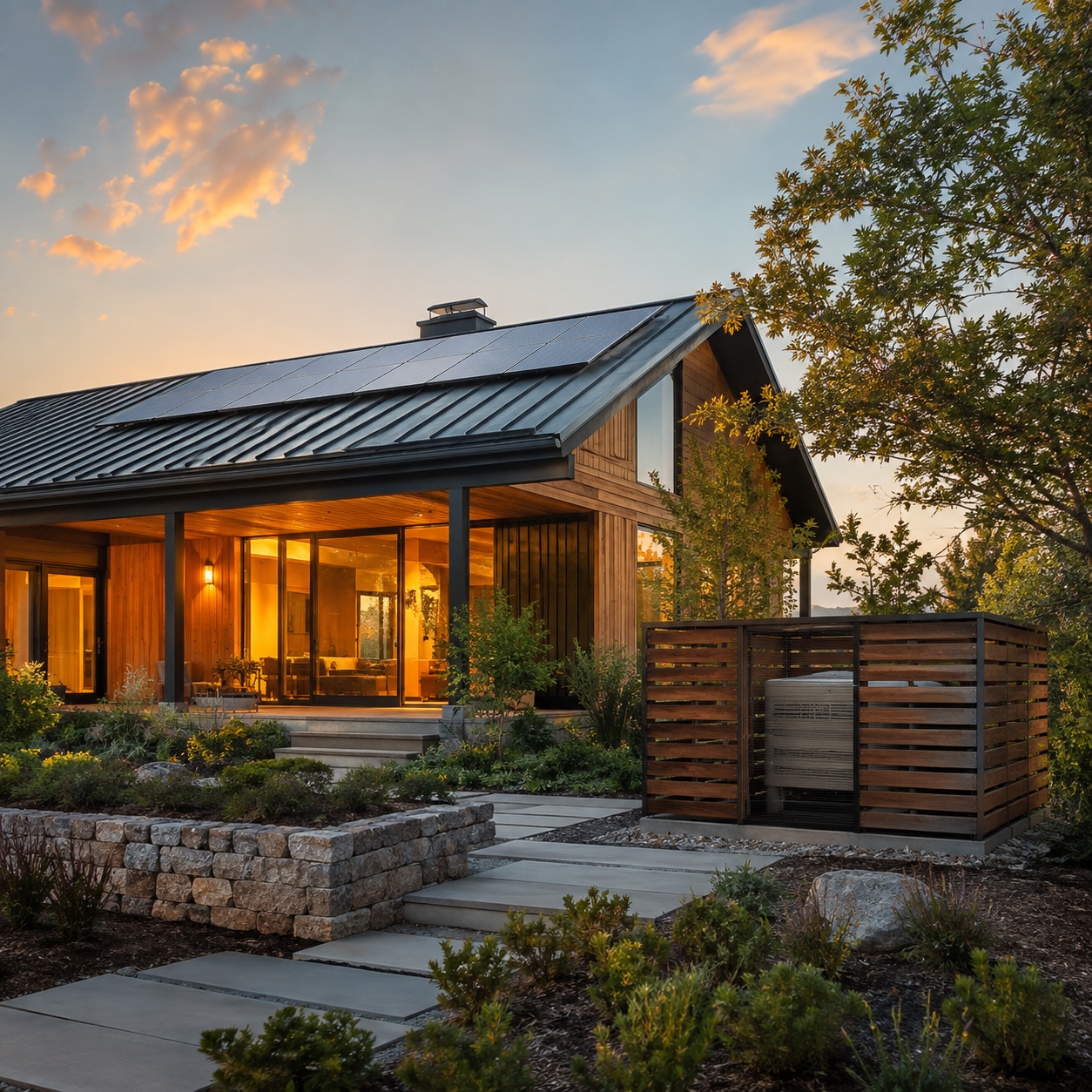
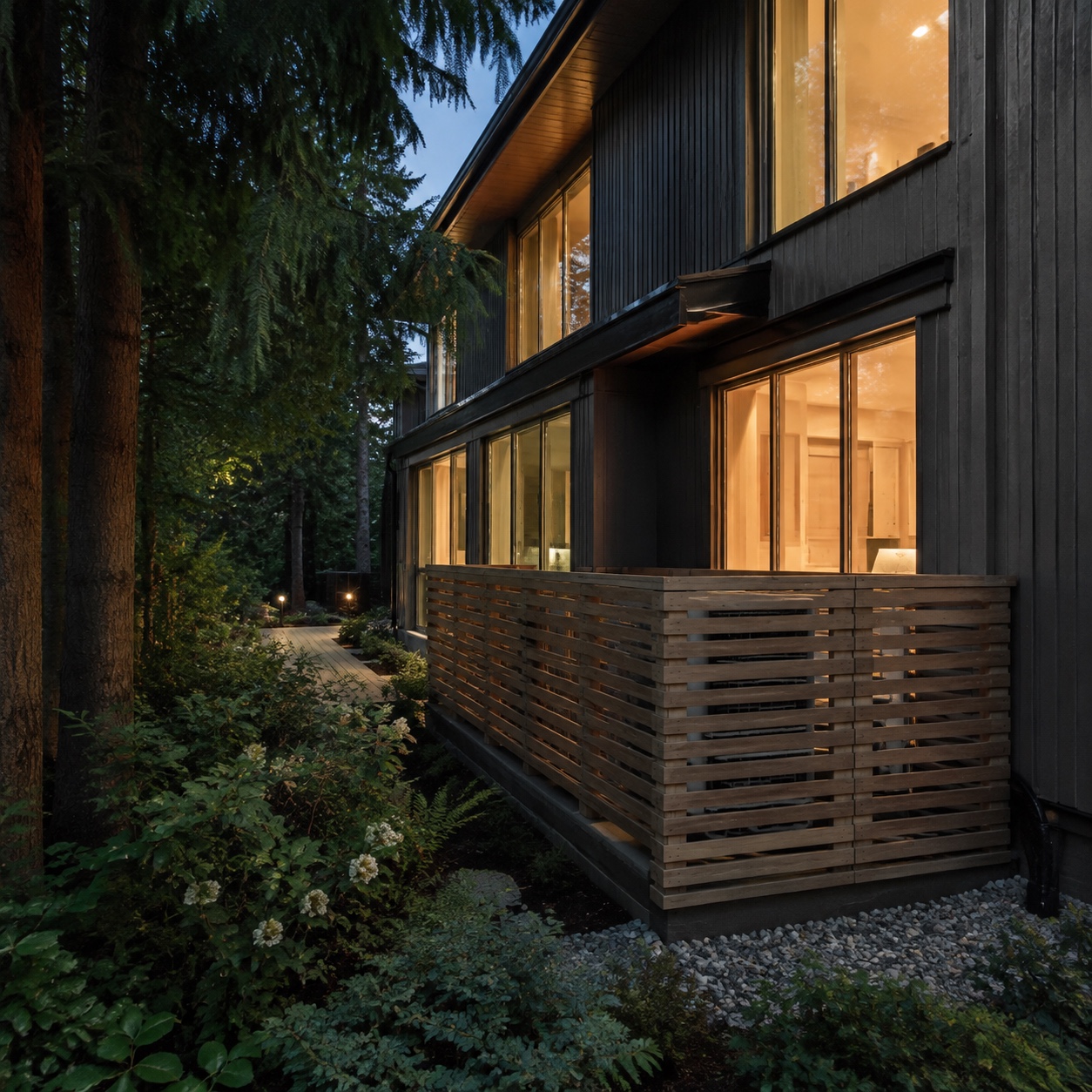
What Backup-Ready Design Adds to an Energy Efficient Home
Energy efficiency and resilience solve two different problems, and conflating them is where a lot of sustainable home planning goes wrong. Efficiency asks how little energy a home can use under normal conditions. Resilience asks what happens when normal conditions stop existing – a multi-day outage, an ice storm, a grid strained by extreme heat.
A genuinely well-designed modern home answers both questions, and increasingly that means treating backup power as part of the architecture rather than an afterthought bolted on after move-in. Selecting reliable home backup generators has become as much a design decision as choosing window placement or insulation values – it determines whether the rest of the home’s efficient systems actually function when they’re needed most. Our sustainable home design guide covers the broader principles this piece builds on; this one goes narrower, into what backup-ready specifically adds on top of that foundation.
Why Sustainable Homes Need Resilient Power Planning
The more efficient and electrified a home becomes, the more it actually depends on continuous power to function at all. That’s a real trade-off worth naming honestly: a home heated by a heat pump and cooled by an efficient mini-split system has no fallback the way an old house with a wood stove and window units effectively did. Efficiency and dependency rise together, which is exactly why resilience planning matters more now than it did a generation ago – our piece on why backup power solutions matter for every home covers the broader case for treating this as a baseline expectation rather than an emergency afterthought.
Heat pumps, refrigeration and smart systems during outages
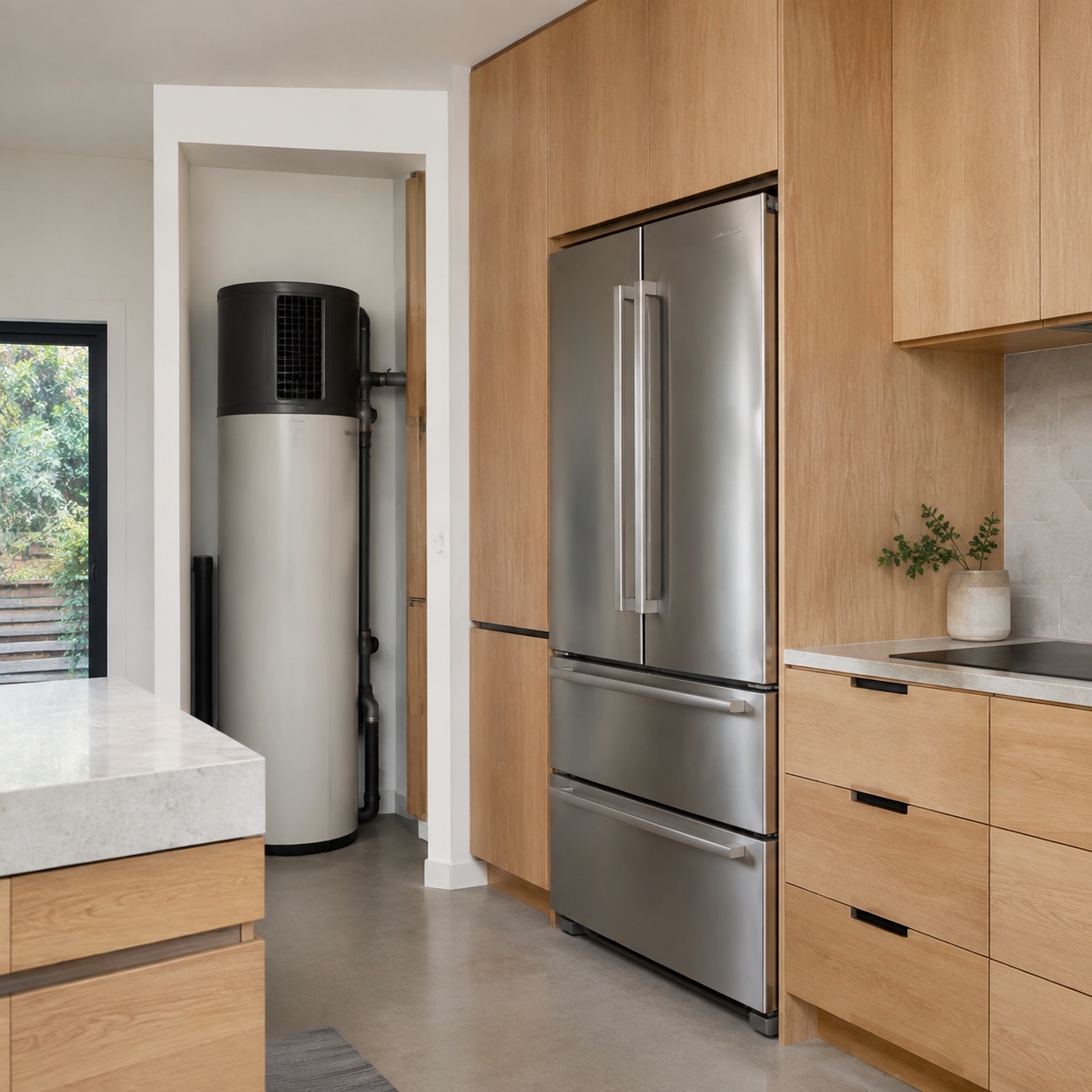
A heat pump without power isn’t a slightly-less-efficient heating system – it’s no heating system at all. The same is true of refrigeration, which quietly does more damage during an outage than people expect. Food loss during a multi-day blackout isn’t just an inconvenience; it’s wasted embodied energy and resources that undercuts the entire premise of sustainable living. Generators provide exactly the continuity that keeps this failure mode from happening. Smart home systems – the sensors, controls, and automation that make a modern efficient home actually efficient – go dark too, which means the house loses not just comfort but the intelligence layer that was managing its energy use in the first place.
Where a whole-house generator fits beside solar and batteries
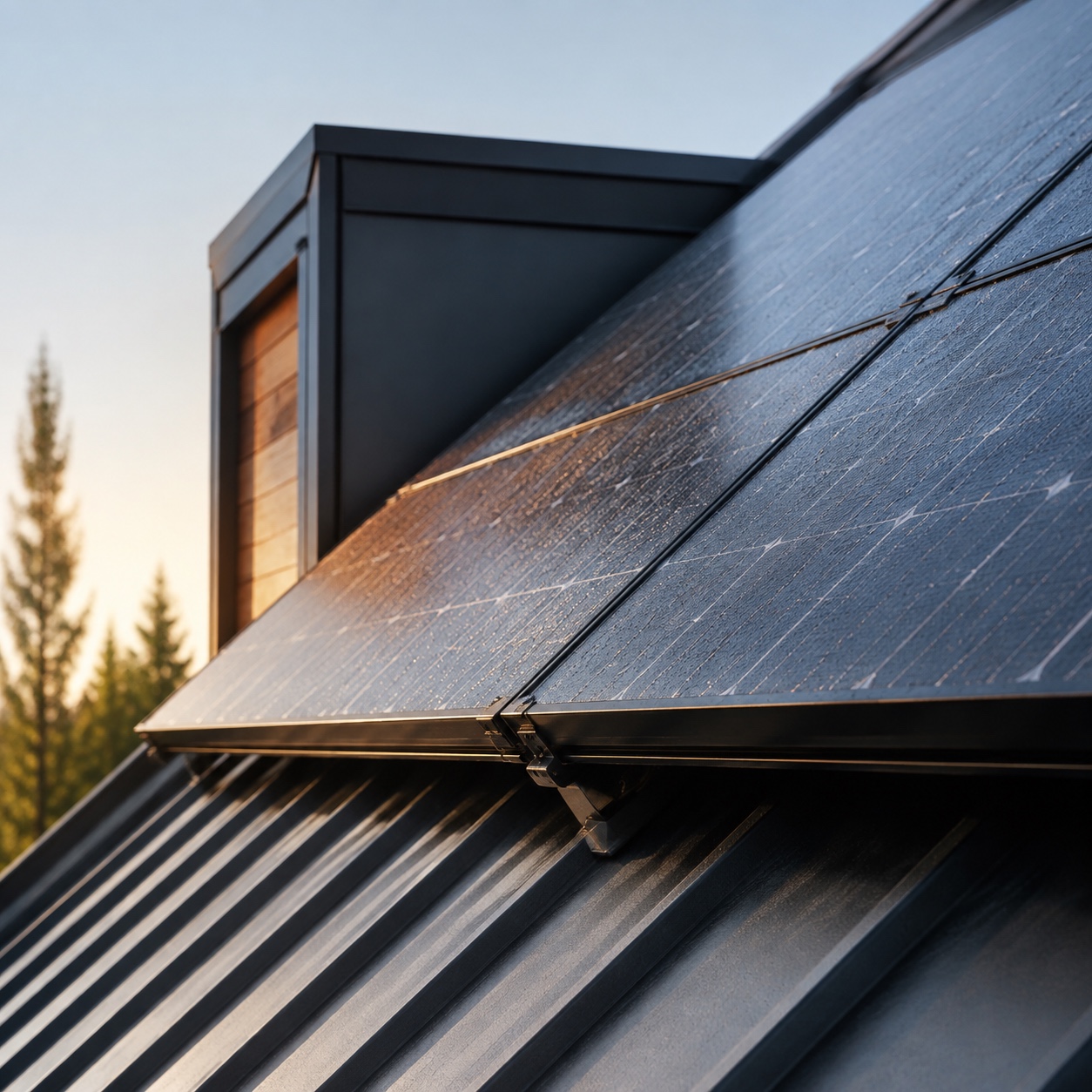
This is where I’d push back gently on a framing I see constantly: solar and generators aren’t competing solutions, they’re solving different parts of the same problem. Solar with battery storage handles daily cycling and short gaps gracefully, but batteries have finite capacity – a multi-day outage during a stretch of overcast weather will outlast most residential battery systems. A whole-house generator is the layer that covers the scenario batteries alone can’t: extended outages, sustained cloud cover, or a battery system that’s already been drawn down. Our guide on the everyday benefits of solar generators covers the solar-plus-storage side of this equation in more depth, and pairing that system with standby generation is what actually closes the resilience gap rather than leaving it half-solved.
Designing Generator Placement Without Hurting the Home’s Look
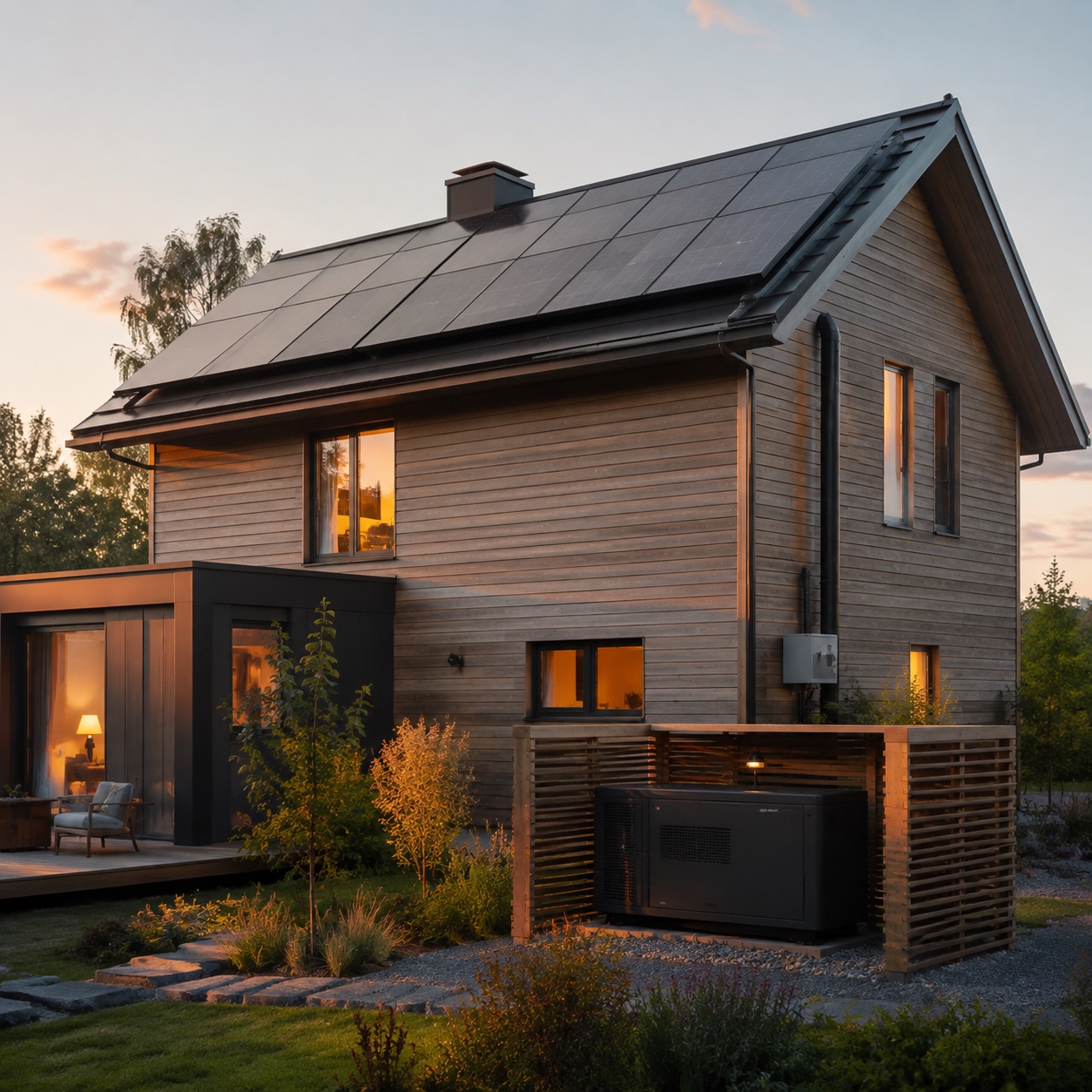
A generator is mechanical equipment, and mechanical equipment has a way of visually announcing itself if nobody thinks through where it goes. The good news is that this is a solvable design problem, not a trade-off you have to accept.
Noise, ventilation, service access and landscape screening
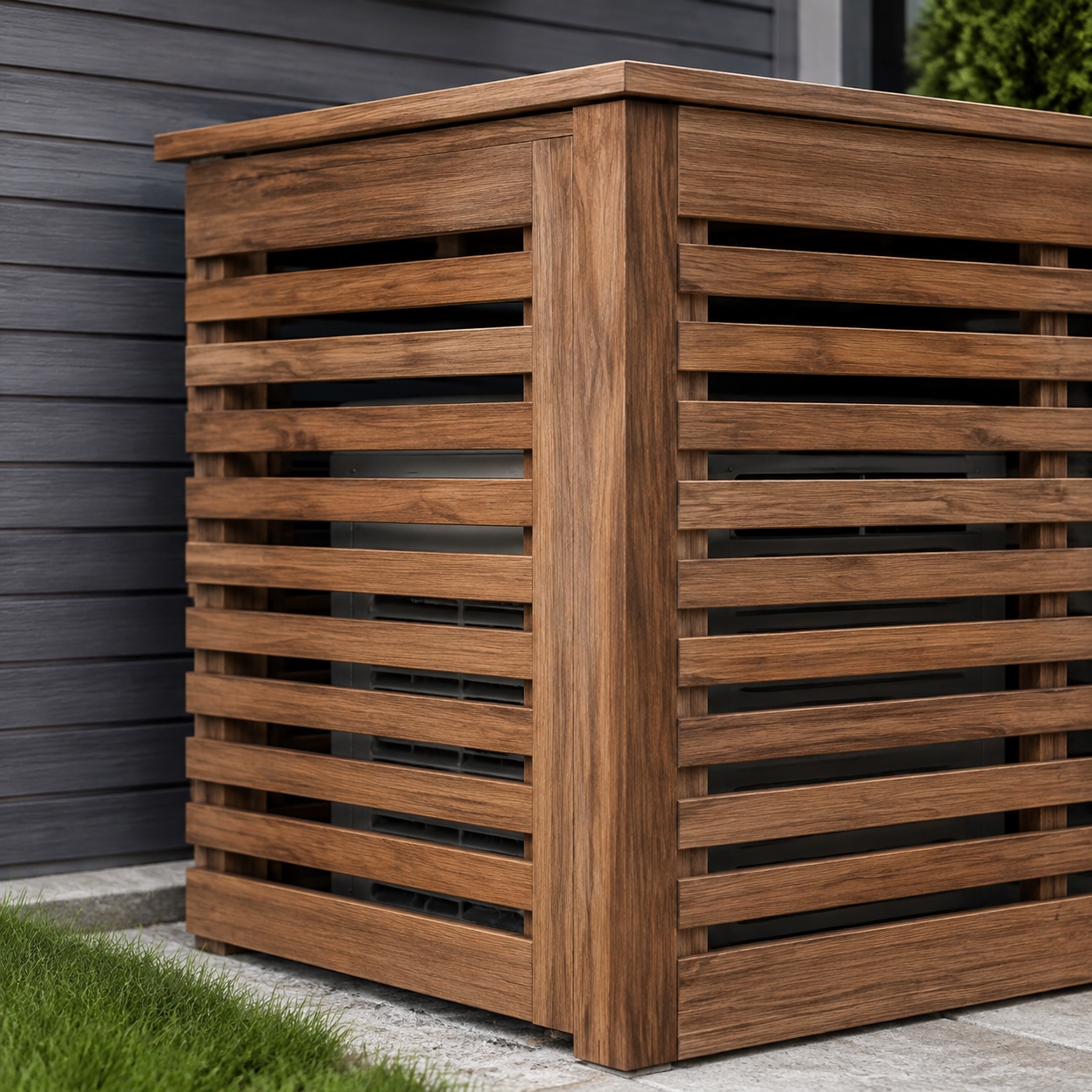
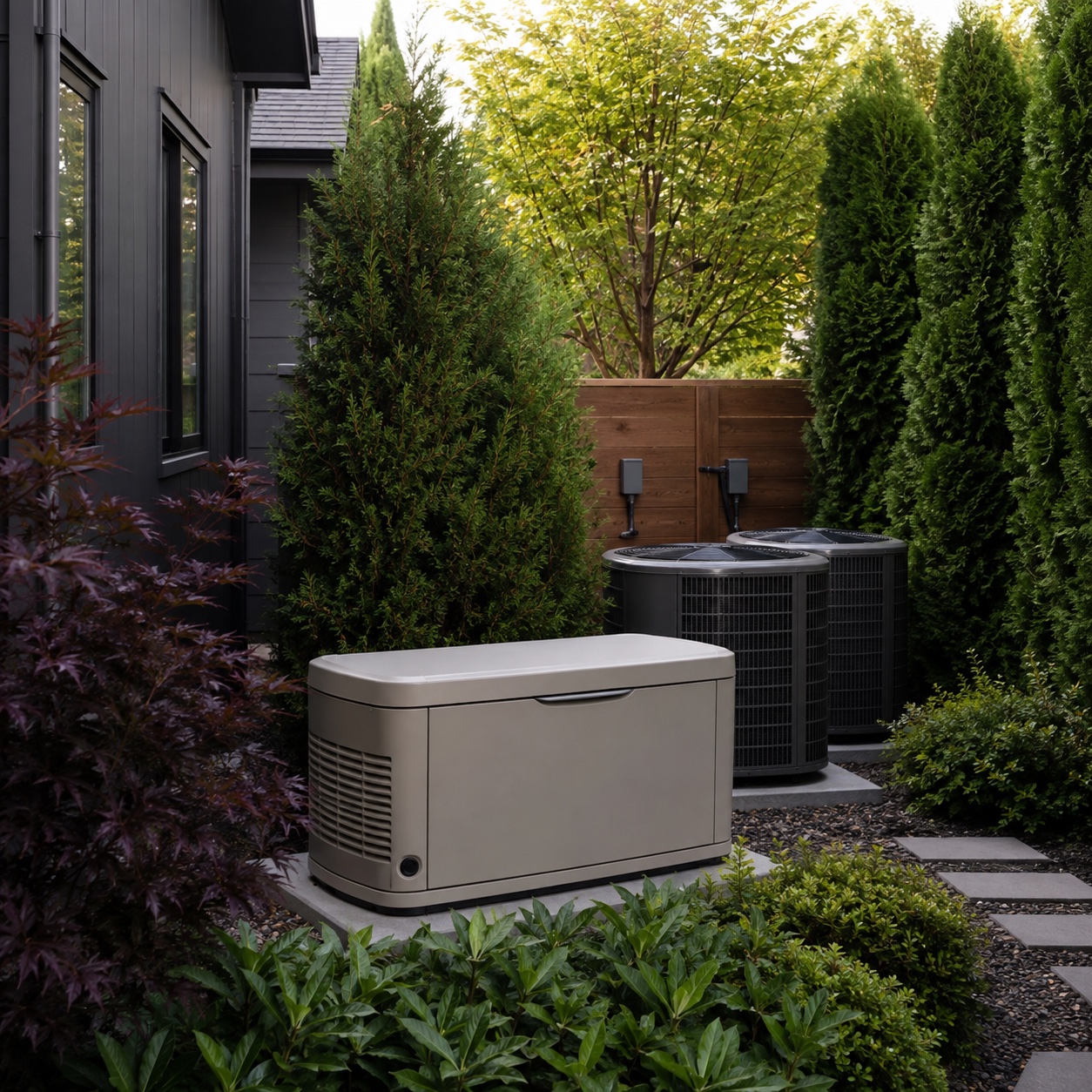
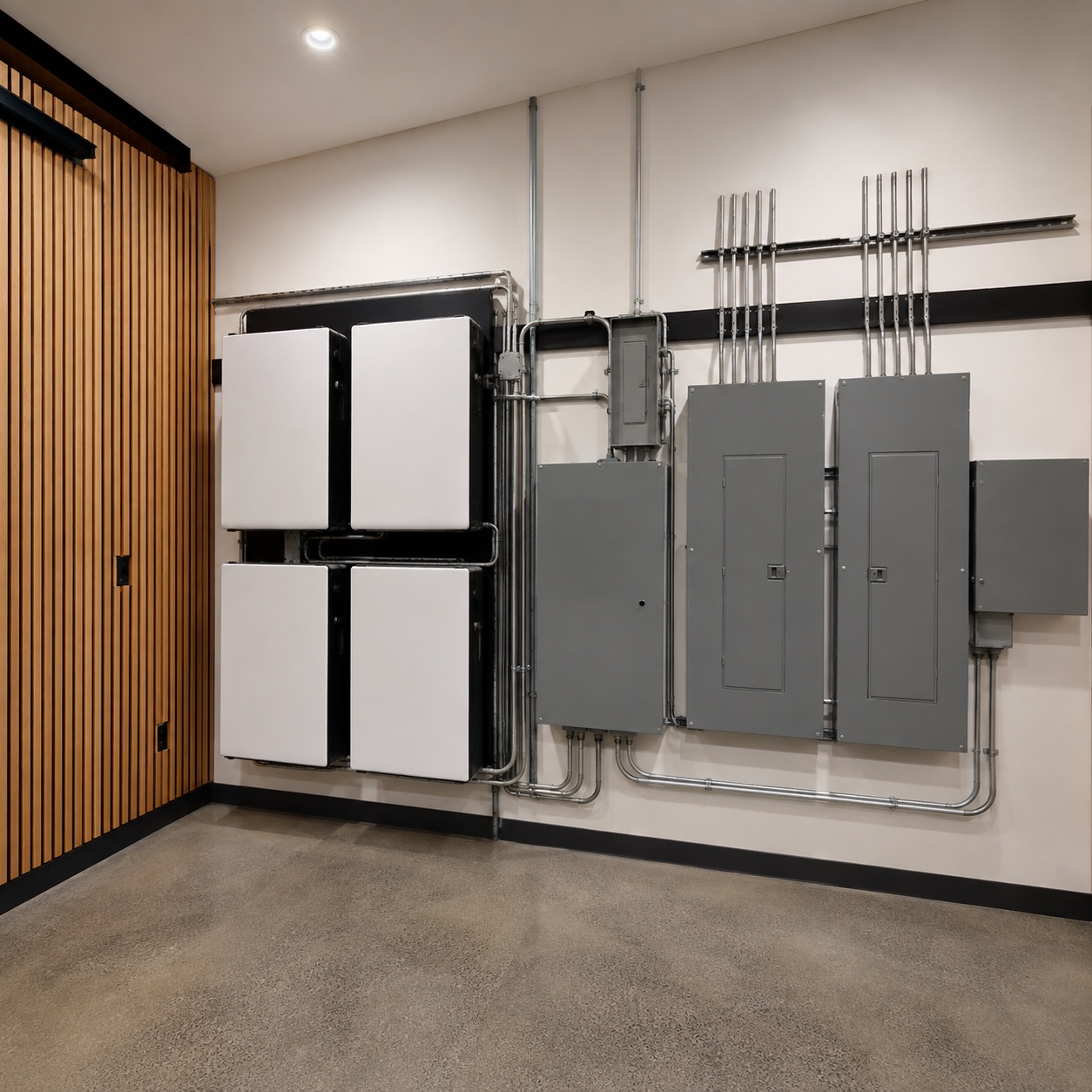
Placement decisions here mirror the same logic that governs any exterior mechanical equipment – HVAC condensers, pool pumps, anything that needs airflow and occasional service access but shouldn’t dominate a sightline. Keep the unit far enough from windows and outdoor living spaces that operational noise doesn’t intrude, while staying close enough to the home’s electrical panel and fuel source to keep installation practical. Ventilation clearances aren’t optional – generators need unobstructed airflow to run safely, so landscape screening has to work around that requirement rather than against it.
Dense planting, a slatted wood or metal screen, or a low garden wall can all conceal the unit visually while leaving the airflow paths the manufacturer specifies untouched. Service access matters just as much as concealment; a beautifully hidden generator that a technician can’t reach for maintenance just becomes a future problem. Our energy efficient home upgrades guide covers exterior equipment placement more broadly if you’re planning several mechanical systems at once rather than a generator in isolation, and our piece onenergy-efficient home upgrades that pay offis a good companion read for prioritizing which upgrades to tackle first.
Natural gas, propane and lower-waste emergency planning
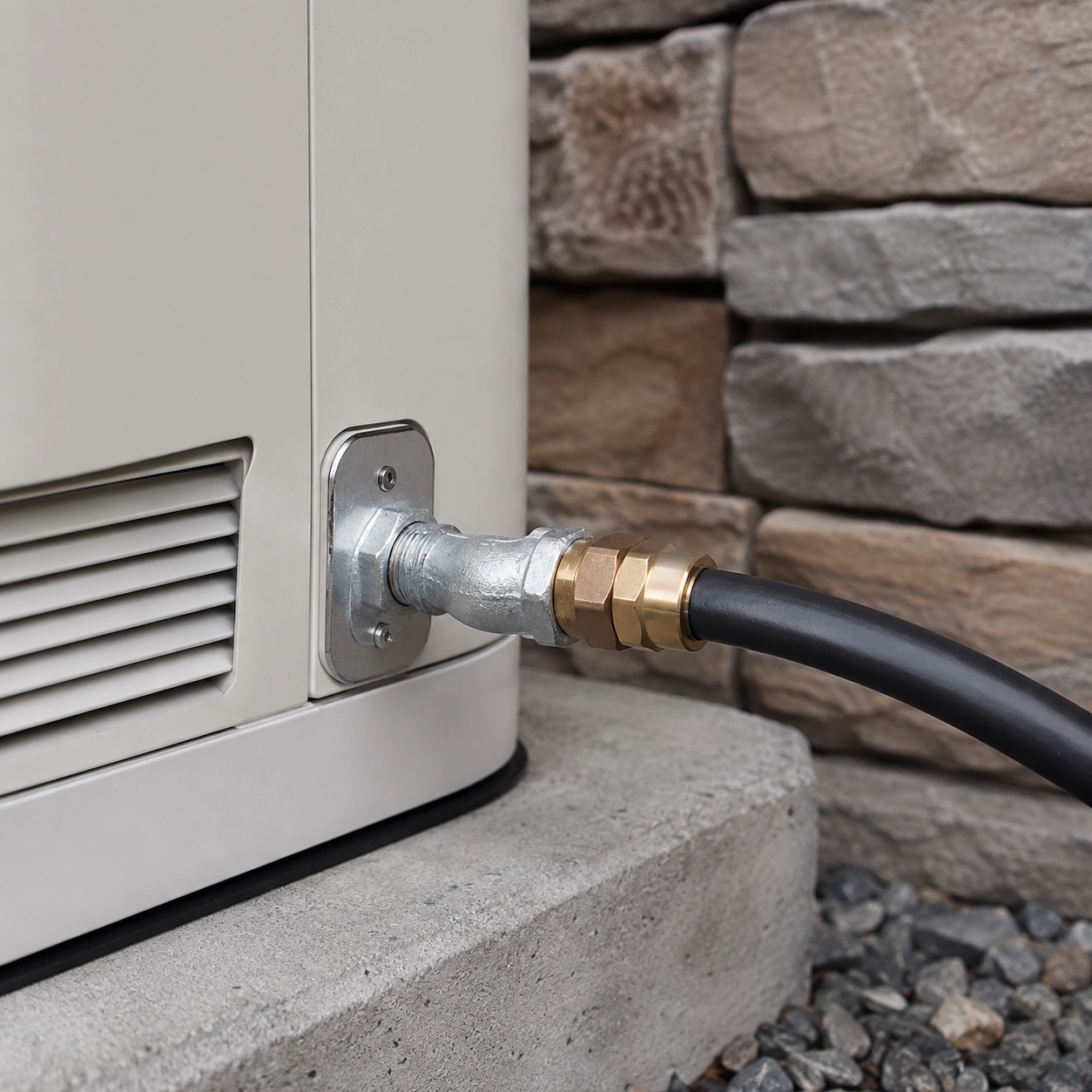
Fuel choice is itself a sustainability decision, not just a logistics one. Natural gas and propane both burn considerably cleaner than the gasoline used in portable emergency generators, and a permanently plumbed standby unit avoids the waste stream that comes with storing, replacing, and eventually disposing of gasoline containers and the units that run on them.
If you’re weighing generator options against other backup approaches, our piece onchoosing the right home generatorwalks through the practical comparison in more detail. The broader point for a design-minded reader: treating fuel source as a resilience decision made once, during planning, avoids the far less sustainable pattern of scrambling for gasoline during an actual emergency.
Smart Energy Controls for Modern Sustainable Homes
A generator that runs constantly out of caution rather than necessity undermines the sustainability case for having one at all. This is where smart controls earn their place in the design.
Monitoring usage, reducing runtime and avoiding unnecessary fuel waste
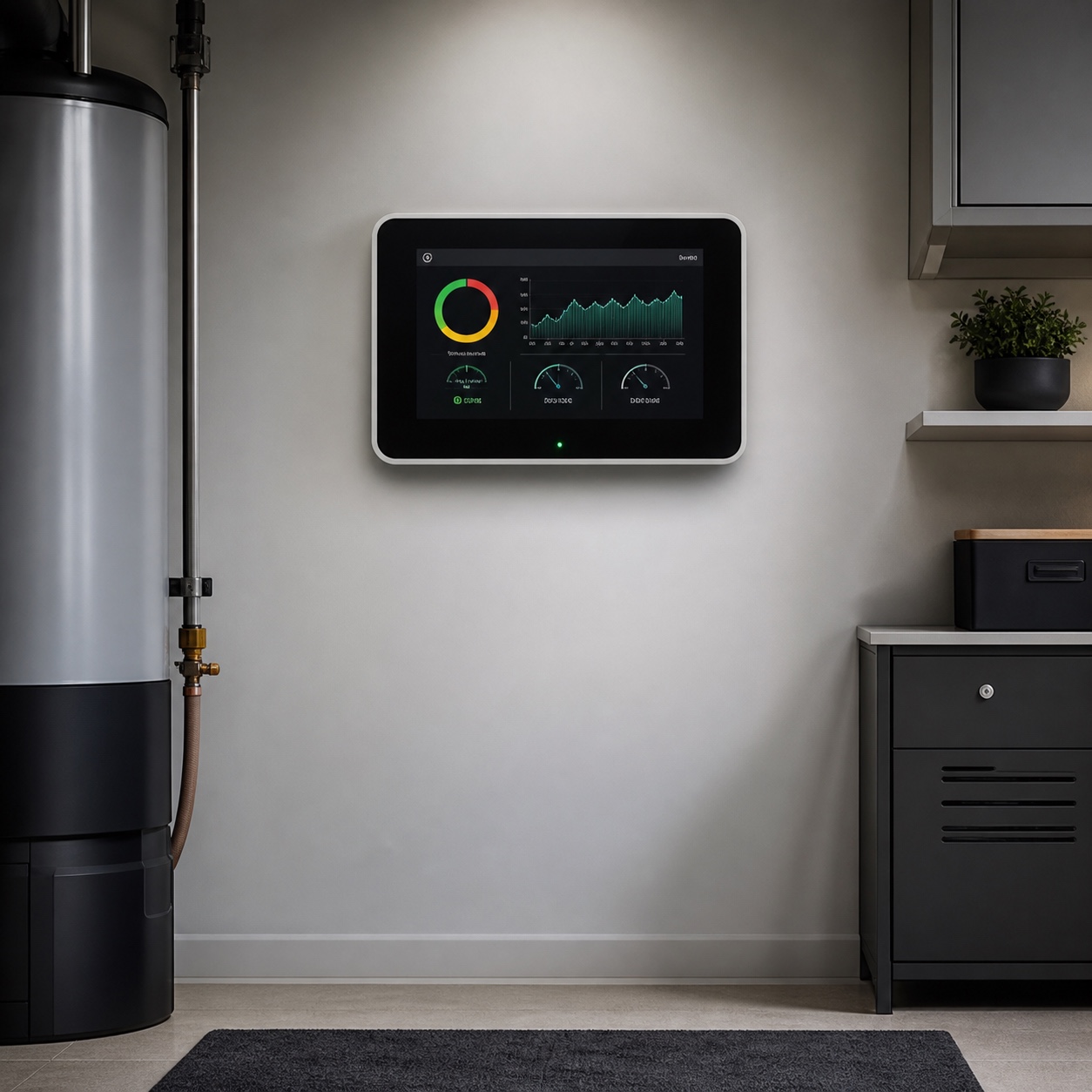
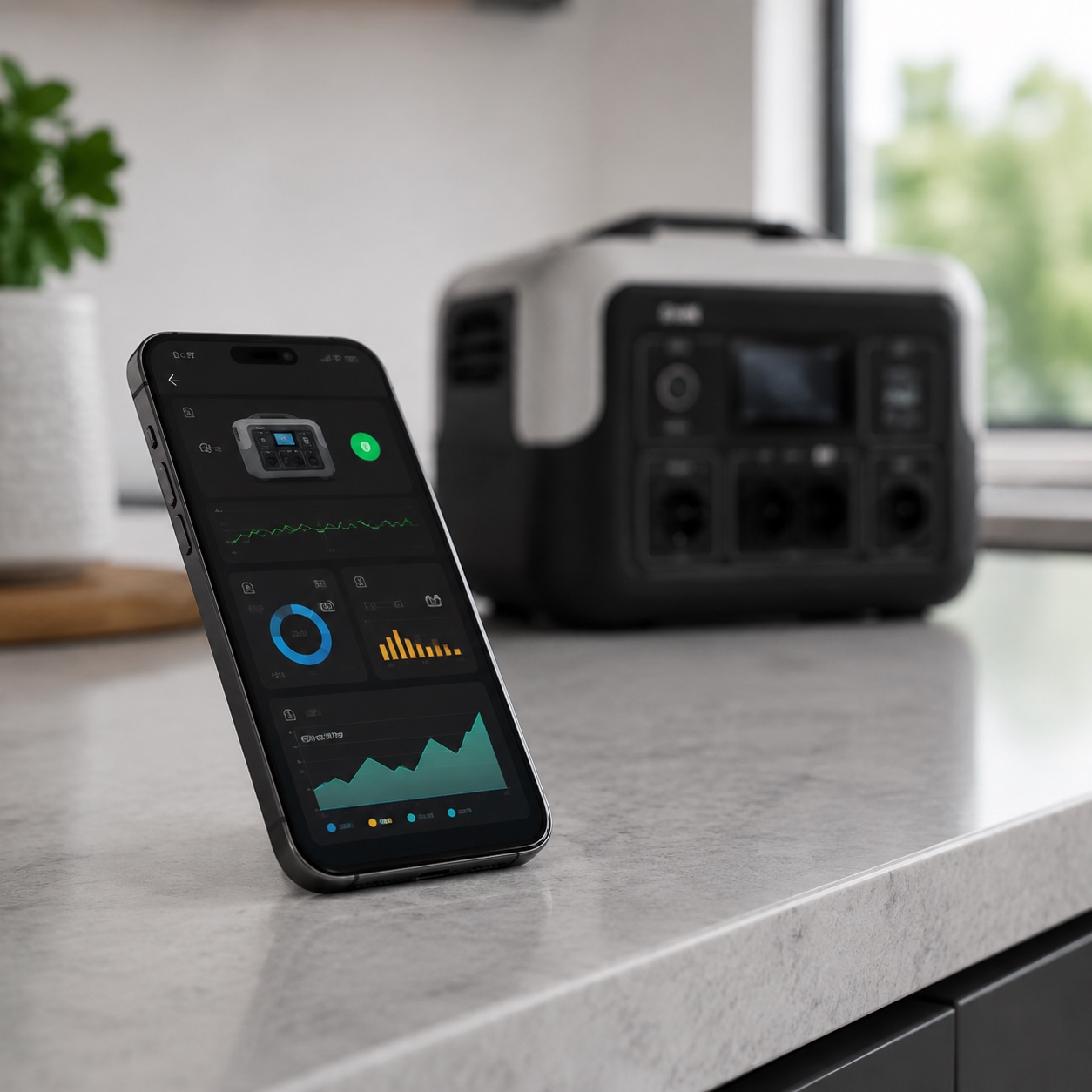
Modern standby systems pair with home energy monitoring platforms that track real-time load, letting the generator run only what the home actually needs rather than defaulting to full output. That distinction matters more than it sounds like it should – a system that intelligently sheds non-essential load during an outage (leaving heat pumps and refrigeration running while pausing something like a pool pump) burns meaningfully less fuel than one running everything simultaneously regardless of priority.
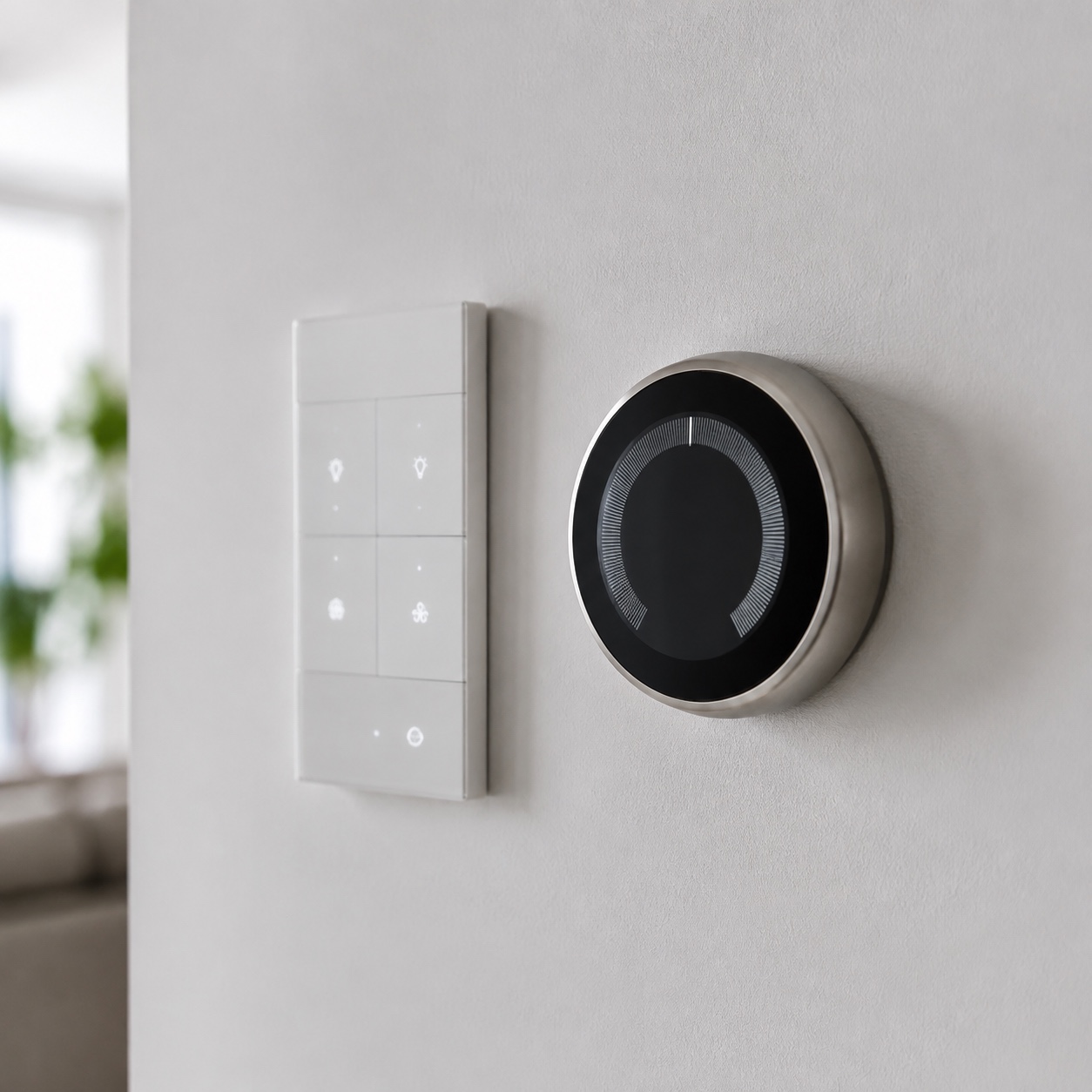
This is the same logic behind any well-designed smart home system: visibility into actual usage is what makes efficient decisions possible, whether that’s during normal operation or an emergency. Our piece on why broadband is an architecture decision covers the connectivity backbone that makes this kind of real-time monitoring and control possible in the first place, and our practical guide to improving home energy use and comfort is worth pairing with this piece for the everyday side of the same monitoring principle.
How to Keep the Angle Sustainable, Not Salesy
It’s worth being direct about a real risk in this space: backup power gets marketed constantly, and it’s easy for genuinely useful resilience planning to get buried under equipment-first sales messaging that has nothing to do with sustainable design.
Frame the generator as resilience infrastructure, not the hero product
The distinction I’d draw is this: a well-designed backup-ready home treats the generator the way it treats insulation or ductwork – essential infrastructure that does its job quietly and stays out of the home’s visual and experiential foreground.
It’s not the feature you show off; it’s the system that makes everything else you’re proud of (the heat pump, the solar array, the smart controls) actually trustworthy under real conditions. Green construction increasingly treats resilience as a baseline expectation rather than an upsell, and that’s the framing worth carrying into any backup power decision – it’s part of what makes a home genuinely sustainable, not a separate purchase justified by fear of the next storm. Passive design principles reinforce this same instinct from a different angle: our guide on passive solar design covers how a home can reduce its baseline energy dependency before backup power ever needs to compensate for anything, which is the more sustainable order of operations – design down the need first, then plan resilience for what’s left.

FAQ
Q: Is a whole-house generator sustainable?
A: It depends on how it’s specified and used, not on the fact of having one. A natural gas or propane standby unit paired with smart load management and used specifically for outage resilience is a genuinely defensible part of a sustainable home system. A generator run constantly or oversized well beyond actual need undercuts that case regardless of fuel type.
Q: Can a generator work with solar panels?
A: Yes, and the two are complementary rather than redundant. Solar with battery storage handles daily use and short gaps efficiently, while a whole-house generator covers extended outages or conditions where solar production and battery capacity both fall short, such as multiple overcast days in a row.
Q: Where should a standby generator be placed in a modern home design?
A: Far enough from windows and outdoor living areas to manage noise, close enough to the electrical panel and fuel line for practical installation, and positioned with unobstructed ventilation clearance that landscape screening works around rather than against. Service access for maintenance should factor into placement from the start, not get solved after installation.
Q: What is the difference between energy efficiency and resilience?
A: Efficiency measures how little energy a home uses under normal conditions. Resilience measures whether a home’s systems keep functioning when normal conditions break down – a power outage, extreme weather, or grid strain. A truly well-designed sustainable home addresses both, since an efficient home that fails completely during an outage isn’t actually delivering on its sustainability premise.
- 19shares
- Facebook0
- Pinterest19
- Twitter0
- Reddit0