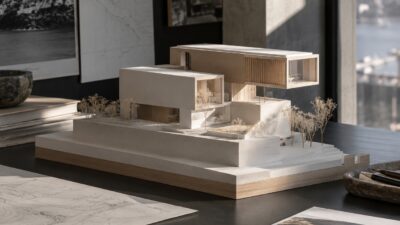
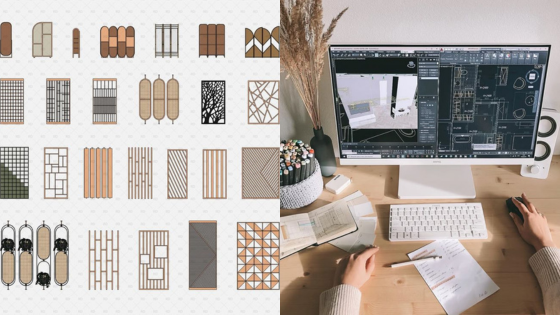
Artificial intelligence in architecture works best when it tests a human decision instead of pretending to make one. I’ve spent years moving between disciplines where a tool’s job is to support judgment — enterprise dashboards that surface data without deciding strategy, spatial design software that models a layout without deciding what the layout should mean.
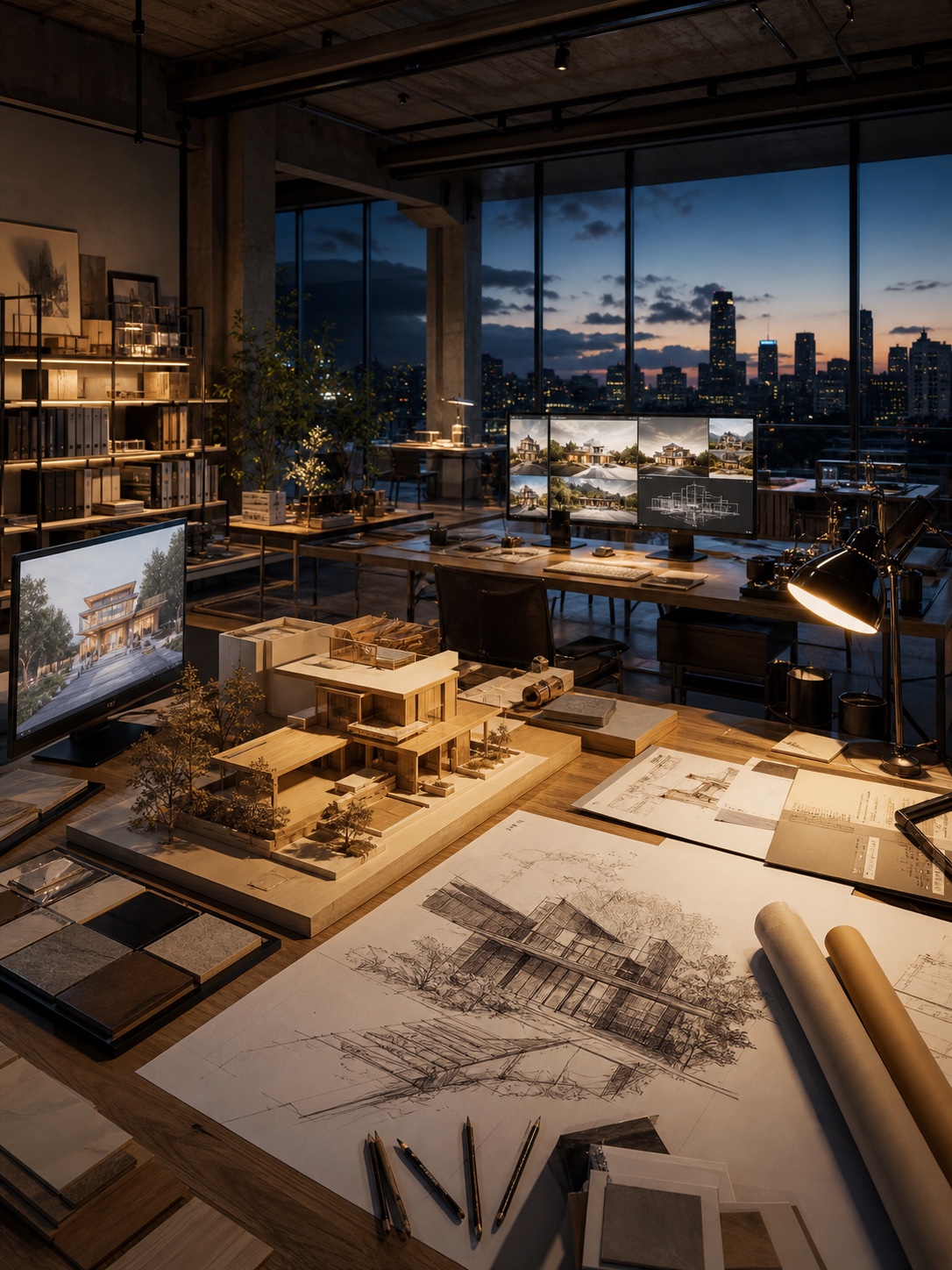
Architecture is running the same experiment right now with AI, and the framing that actually holds up under scrutiny is simple: designed by humans, tested by AI. The architect still sets the intention, the context, the users, the constraints. AI has become a genuinely useful second set of eyes for iterating on that intention faster, catching what a human reviewer might miss on the fifth pass through a drawing set, and comparing tradeoffs at a speed no manual workflow could match.
- Why artificial intelligence in architecture is not about replacing architects
- Human Creativity Still Sets the Brief
- Where AI Fits in the Architectural Workflow
- CAD, BIM, and Documentation Support
- AI Turns Design Into an Iterative Process
- Testing Buildings Before Problems Become Expensive
- AI CAD and BIM: What Actually Gets Automated
- What Architects Still Need to Judge
- Risks and Limits of AI-Assisted Architecture
- Future of Architecture: Human Vision, Machine Testing
- Final Thoughts
- Frequently asked questions
This isn’t a piece about AI replacing architects, and it isn’t the opposite kind of piece dismissing AI as a gimmick either. It’s a look at where AI actually sits inside a real architectural workflow — generative iteration, CAD and BIM support, early validation — and, just as importantly, what still requires a human to decide.
Why artificial intelligence in architecture is not about replacing architects
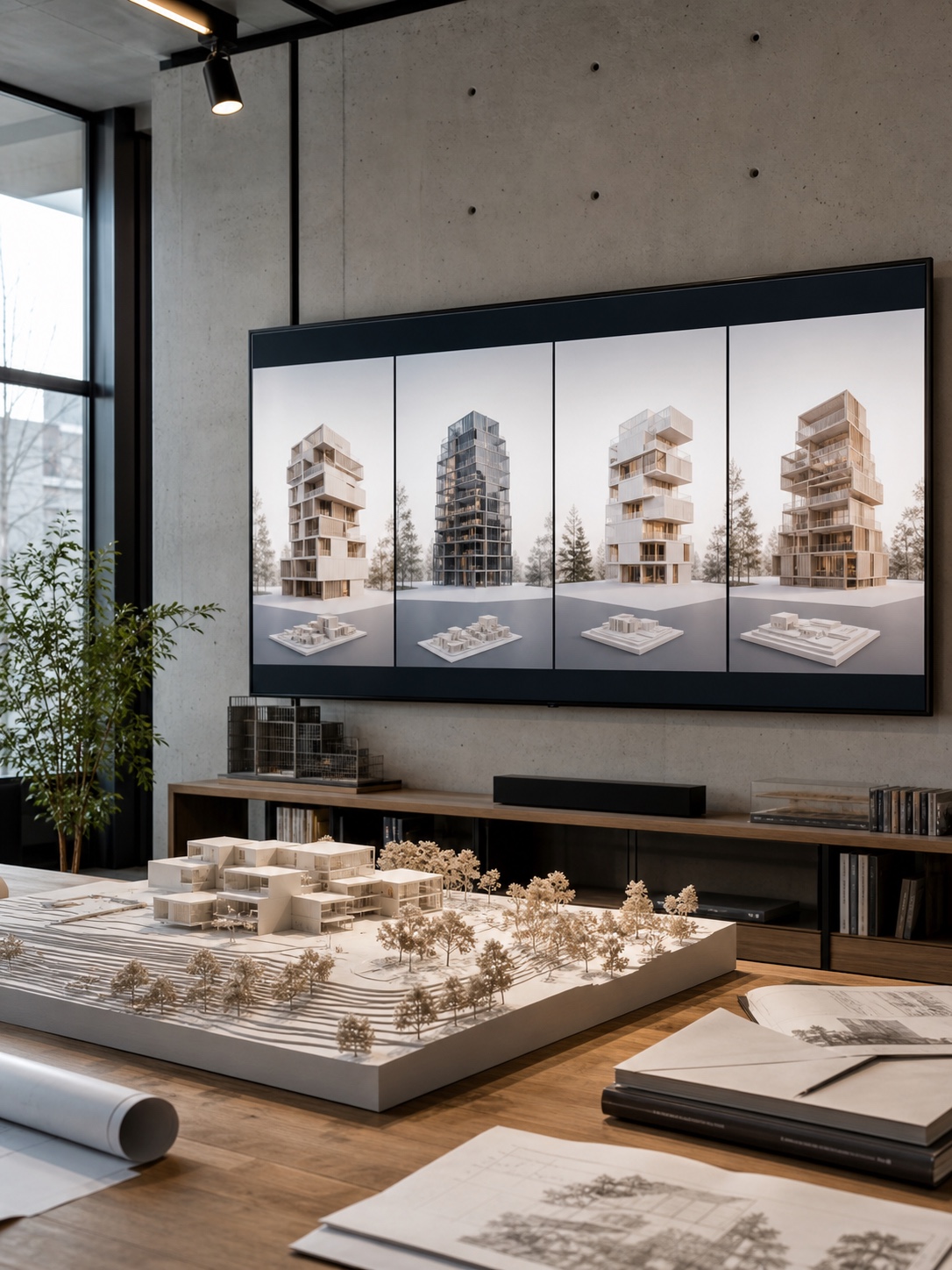
Architecture has always balanced imagination against reality — a striking idea has to hold up against structural limits, available materials, site conditions, budget, code, and the actual needs of the people who’ll use the space. Computer-aided design closed part of that gap for decades. AI is shifting the process again, but not by taking over the decision that actually defines a building.
This same pattern — human intention first, AI as a testing and iteration layer second — is showing up across creative fields well beyond architecture right now, from the shift already reshaping AI-assisted fashion design to the broader pattern I’ve covered in AI’s role in creative industries broadly. Architecture isn’t a special case here. It’s one of the clearer examples of a much bigger pattern.
Human Creativity Still Sets the Brief
Context, Culture, Users, Site, Budget, and Intent
A building doesn’t begin with software deciding what should exist. It begins with a need, a site, a client, and a set of priorities that only a person genuinely understands well enough to translate into a design brief. An architect reads context in a way a model simply can’t — how a space should feel entering it, how people will actually move through it, how it should sit relative to what’s already around it, and what kind of experience it’s meant to create for a specific community or client.
AI can generate alternatives based on parameters you define, but it doesn’t independently arrive at the human reasoning behind those parameters. A technically optimized layout isn’t automatically a good building — architecture still needs judgment, cultural awareness, and a sense of purpose that has to come from a person, the same instinct I’d apply reading proportion and composition in any drawing-based discipline; I go into that specific observational skill in more depth in my guide to drawing in architecture.
Where AI Fits in the Architectural Workflow
Generative Options, Parametric Relationships, Simulation, and Validation
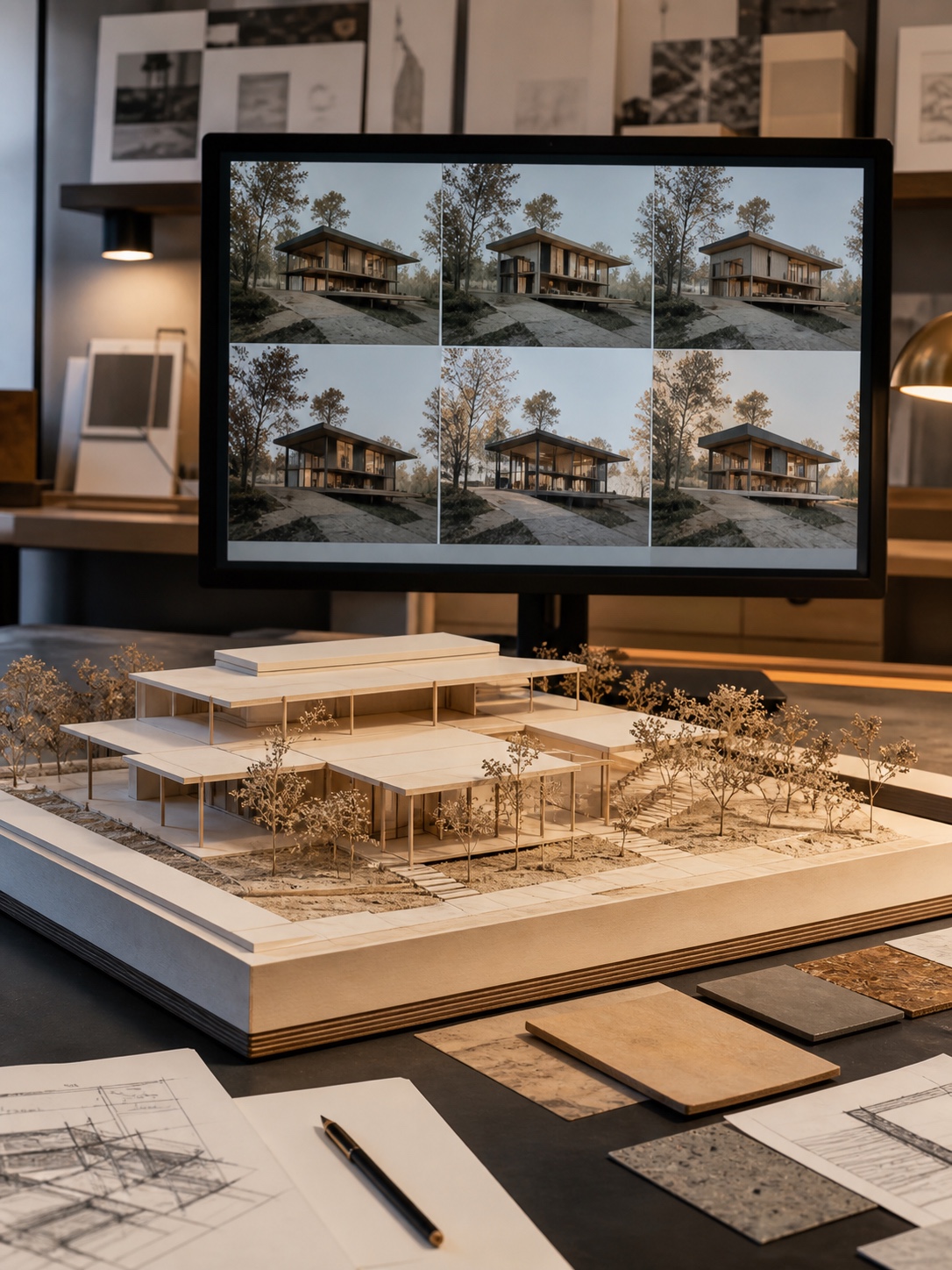
Once the brief is set, AI genuinely earns its place generating a wide range of design alternatives within defined parameters, modeling parametric relationships between elements, running early simulations, and flagging validation concerns before a design commits to a direction. This is the part of the process where AI’s speed advantage is largest — producing dozens of variations for comparison in the time a manual process would need for two or three.
CAD, BIM, and Documentation Support
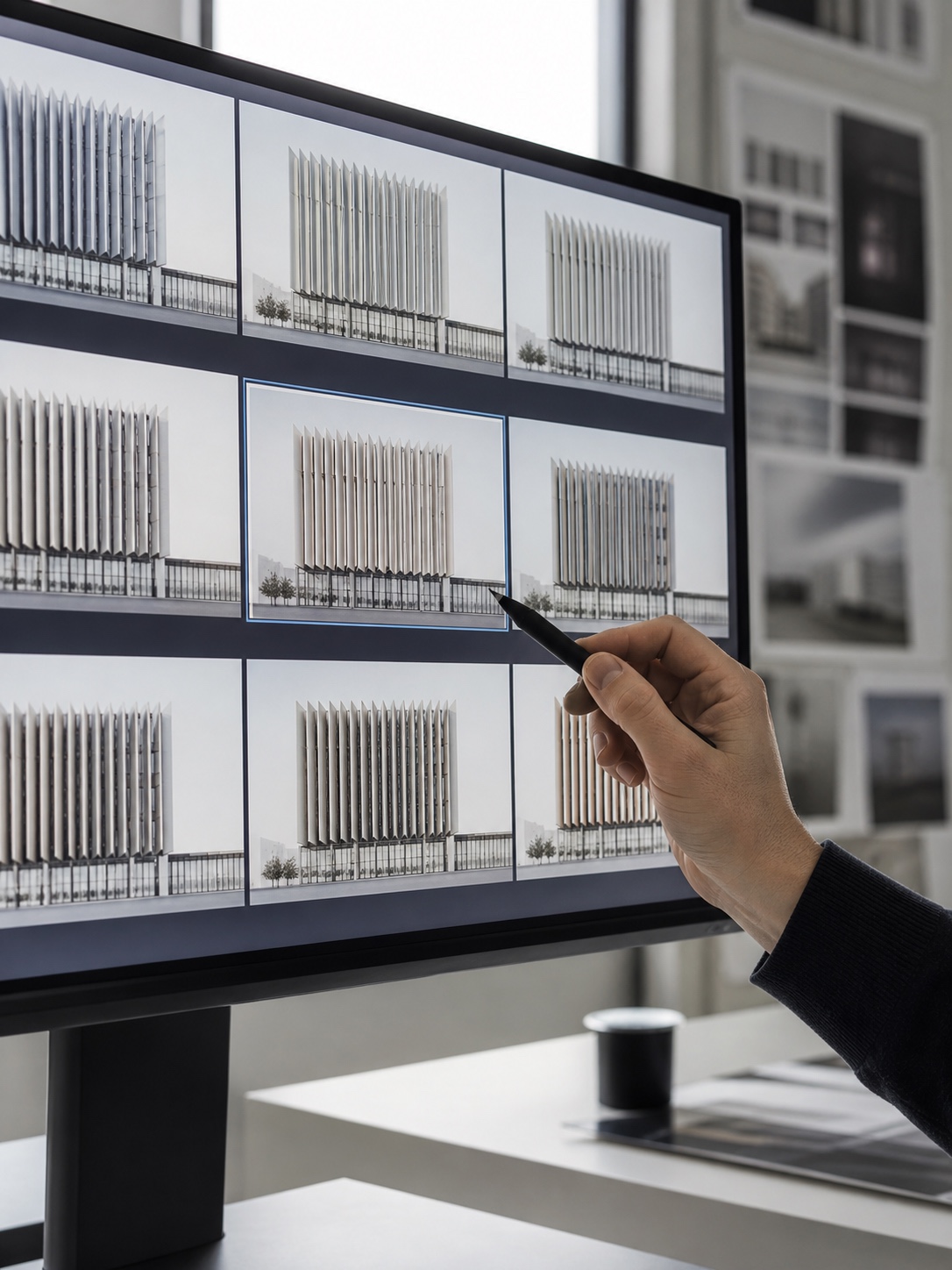
The same generative capability extends directly into CAD and BIM documentation, where AI-assisted tools support automated checking, drawing updates, and coordination across a growing, changing model.
I cover a broader version of this generative-then-human-directed pattern, applicable well beyond architecture specifically, in my agentic AI workflow guide — the underlying structure is nearly identical: AI handles a defined generative or checking step, a person still directs the overall process.
This kind of AI-supported visualization also changes how early a client actually understands a proposal, a shift I’ve written about specifically in my piece on how 3D architectural visualization affects client perception.
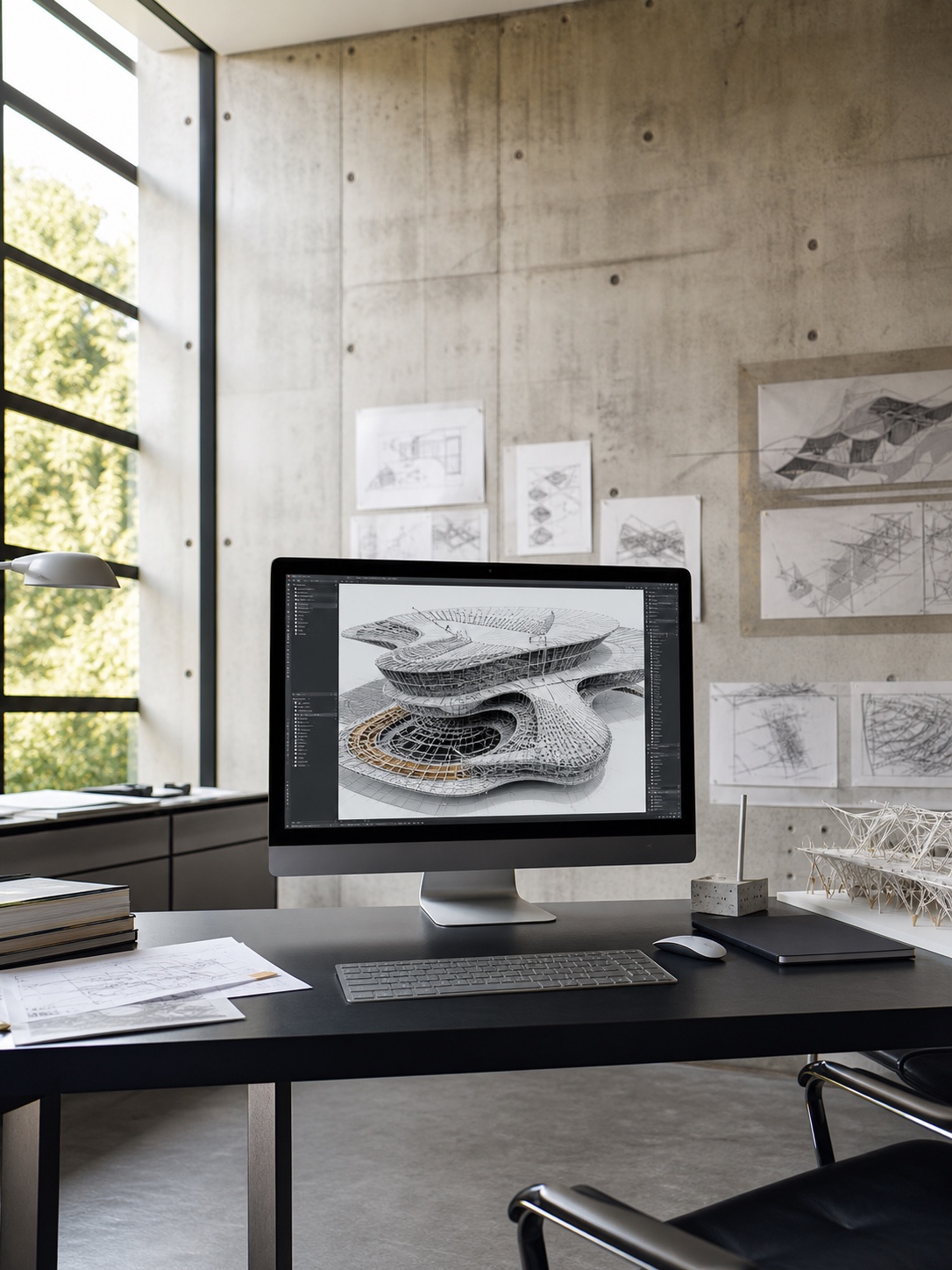
AI Turns Design Into an Iterative Process
From One Big Review Cycle to Continuous Design Testing
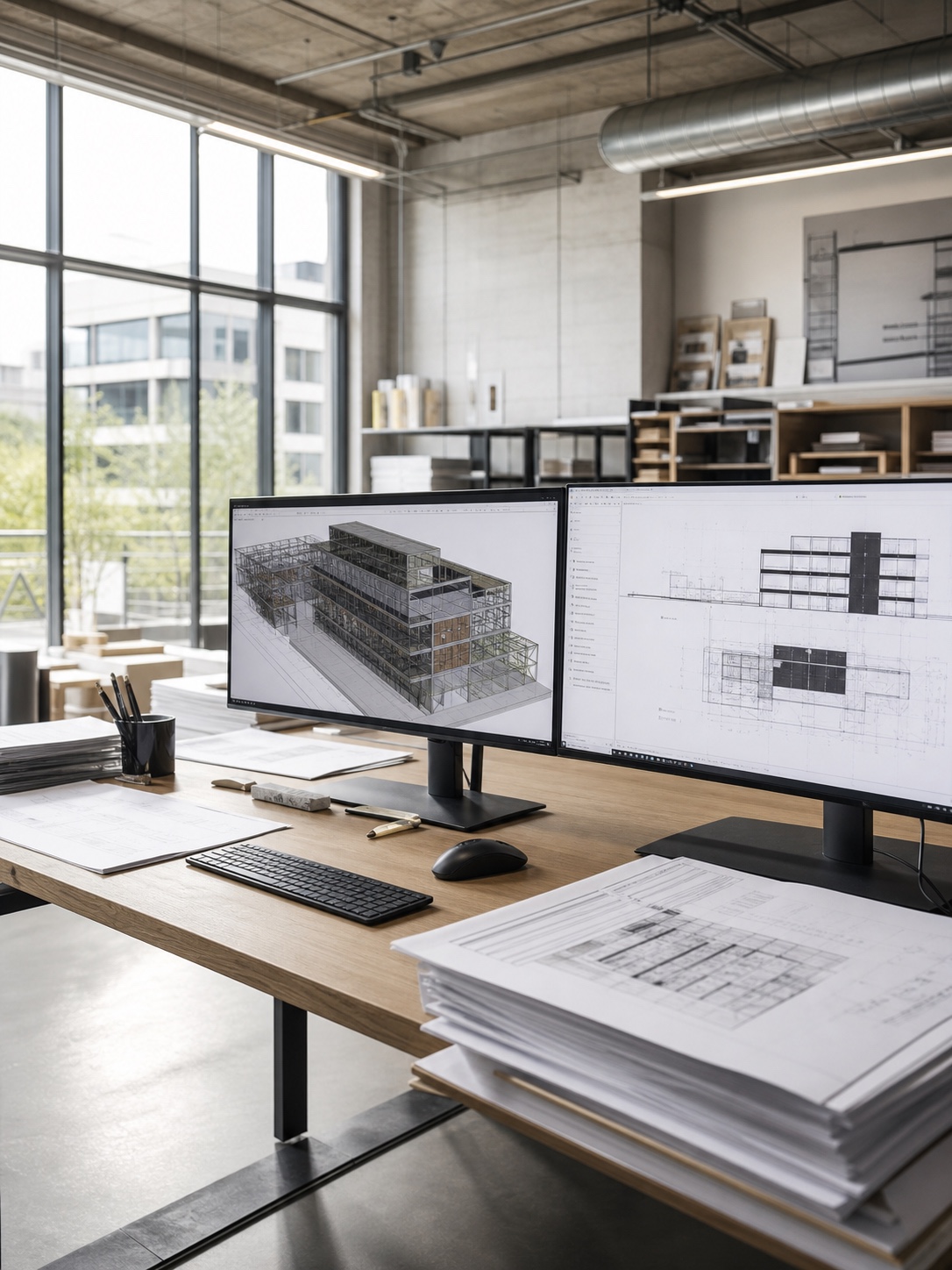
Traditional architectural workflows have historically relied on one major review cycle late in the process, where problems that surfaced were often expensive to fix because so much of the design had already been committed.
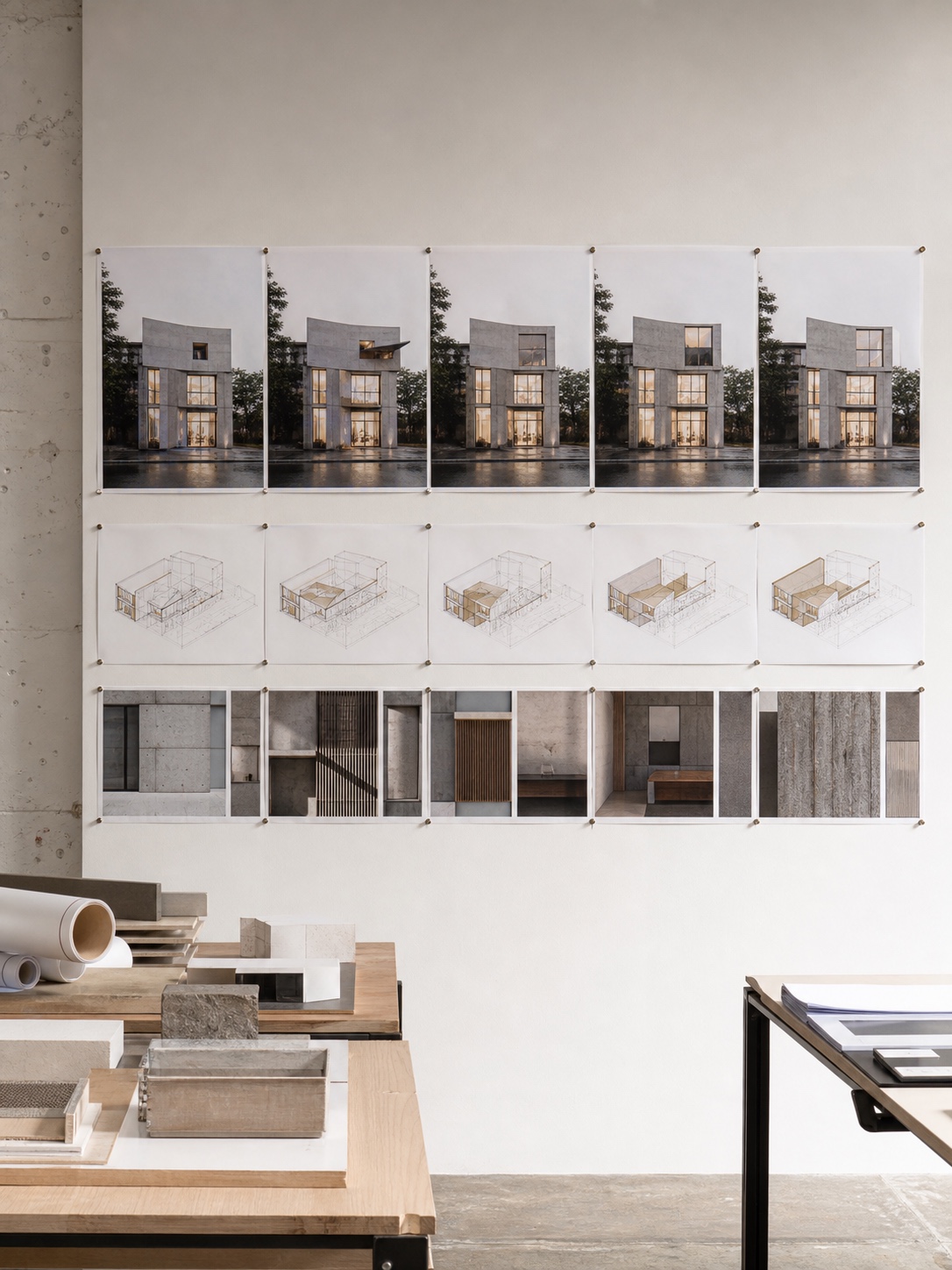
AI shifts that structure toward continuous testing throughout — design, test, adjust, test again — rather than saving all validation for a single late-stage checkpoint. I explored a closely related version of this shift, applied to how AI reshapes living-space design specifically, in my piece on smart, AI-tested artistic living spaces.
Testing Buildings Before Problems Become Expensive
Clash Detection, Layout Efficiency, Environmental Performance, and Code Checks
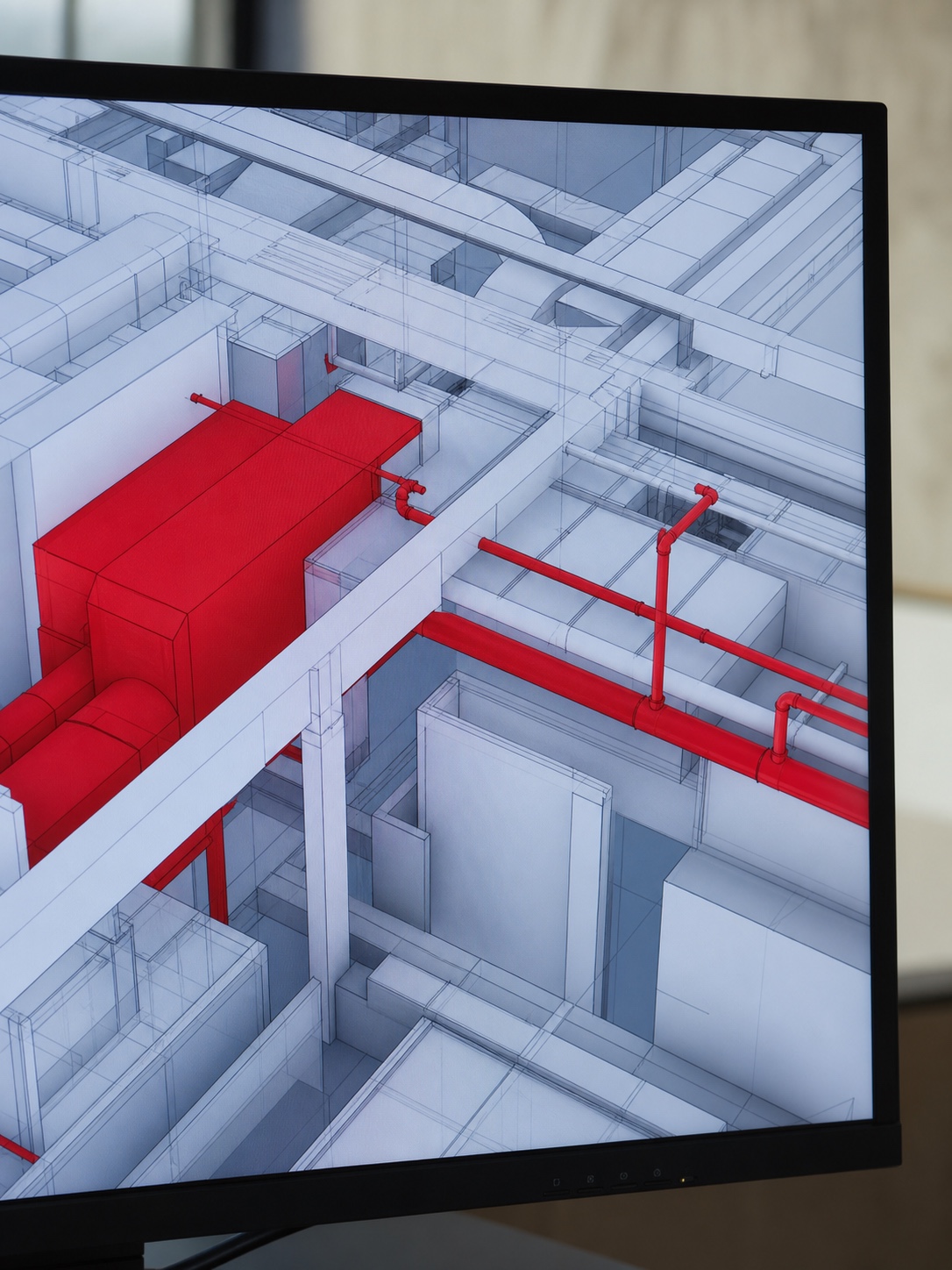
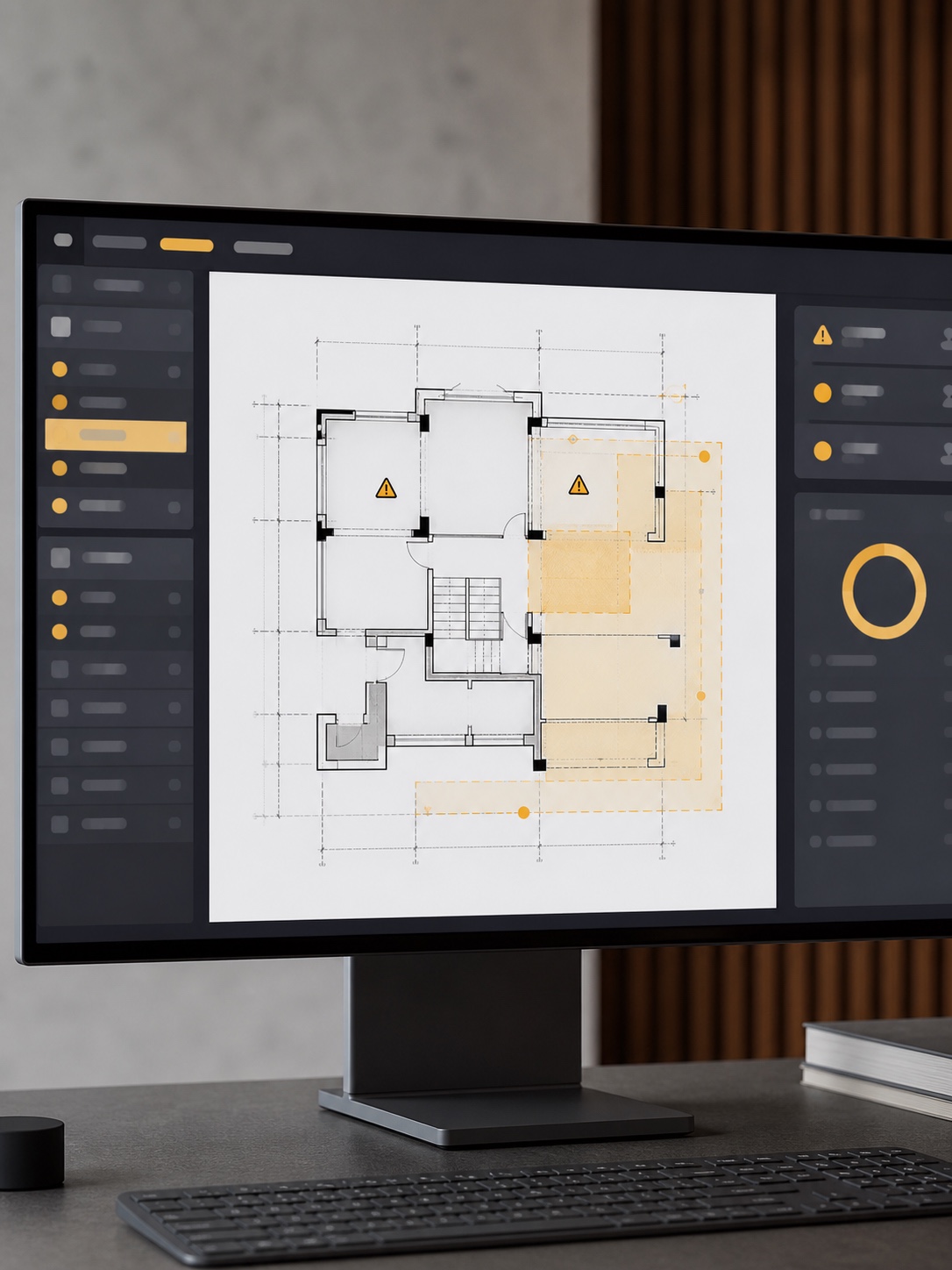
A design can look resolved on screen and still hide real problems — conflicts between structural and mechanical systems, inefficient circulation, underperforming environmental design, or code issues that only surface once a project has moved too far along to fix cheaply. AI-assisted systems support clash detection, layout efficiency analysis, environmental performance simulation, and code checking early enough that changes are still genuinely easy to make. That’s the actual value proposition — not replacing the review, but moving it earlier, where a caught problem costs a design revision instead of a change order mid-construction. The same early-testing logic applies directly to physical fabrication methods increasingly paired with architectural design, which I cover in my piece on how 3D printing is transforming architecture.
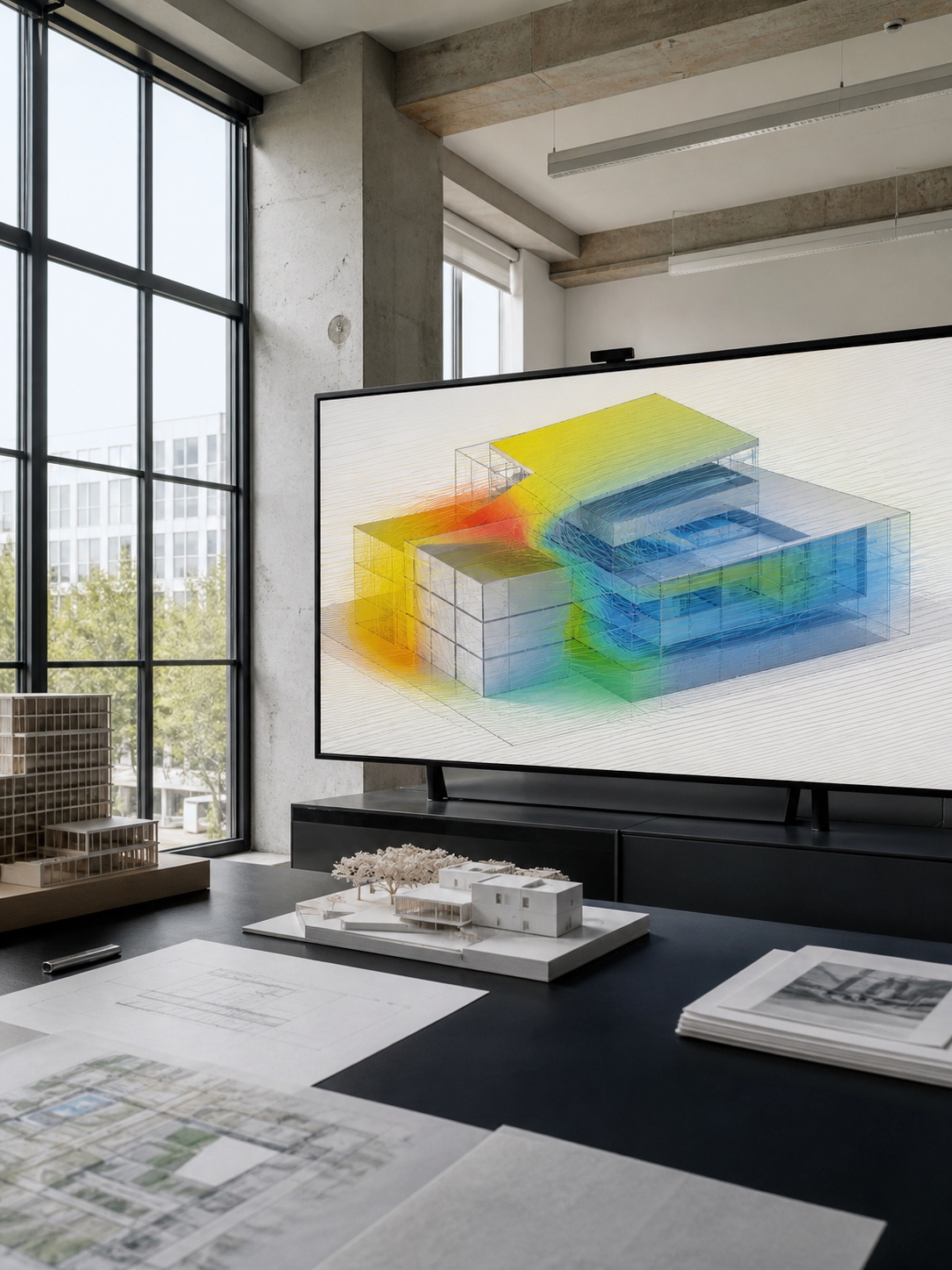
AI CAD and BIM: What Actually Gets Automated
Repetitive Drafting, Pattern Recognition, Drawing Updates, and Cloud Collaboration
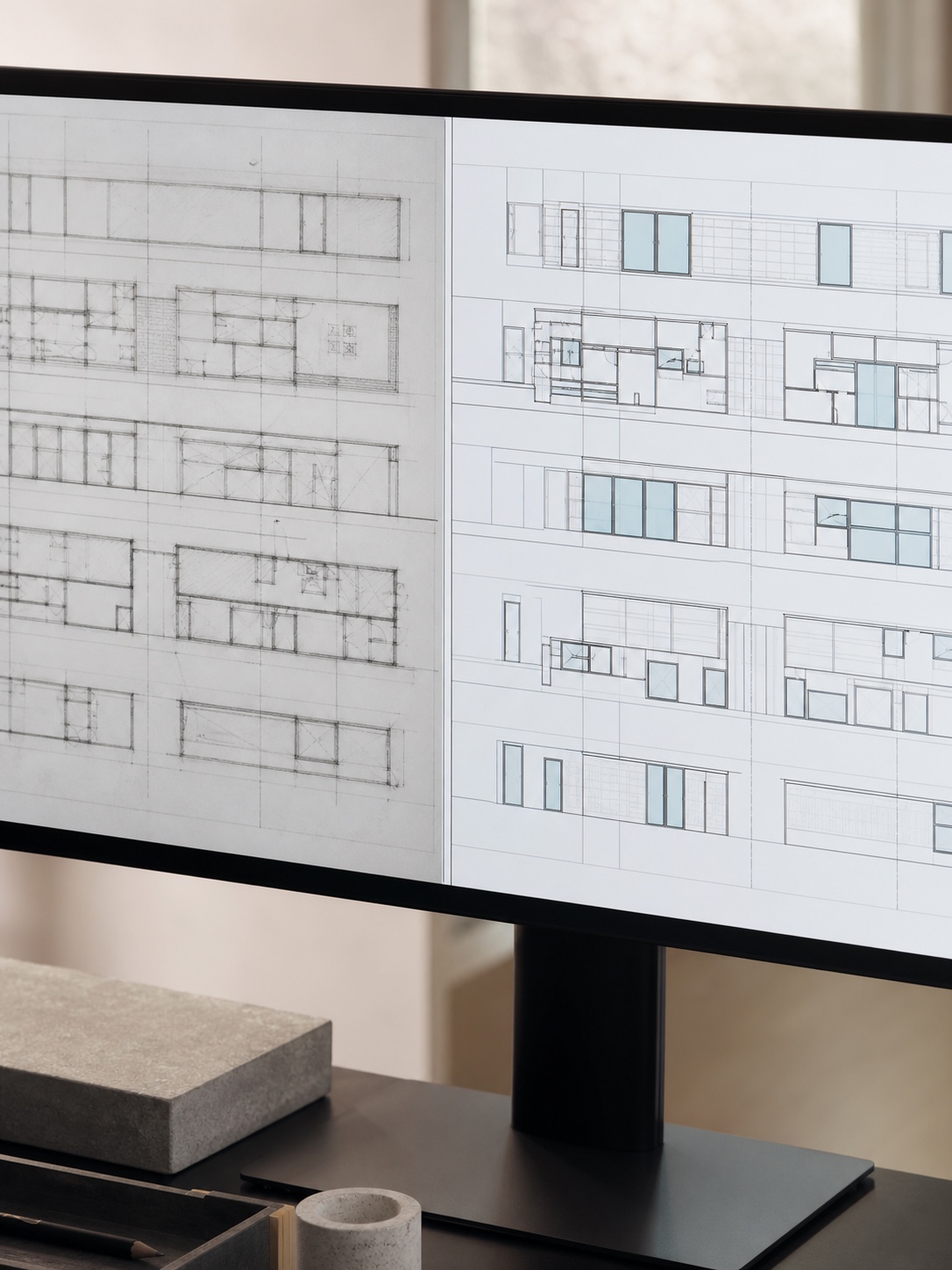
Drafting is where the relationship between architect and AI shows up most concretely day to day. Traditional CAD remains essential, but its more repetitive tasks — generating design alternatives, recognizing recurring patterns, propagating updates across related drawing elements, catching discrepancies, and accelerating documentation — increasingly get real support from automation.
AI-Driven Engineering specifically describes this shift: turning design concepts and project information into practical CAD and BIM outputs faster, while the architect still reviews, refines, and signs off on everything that comes out the other end.
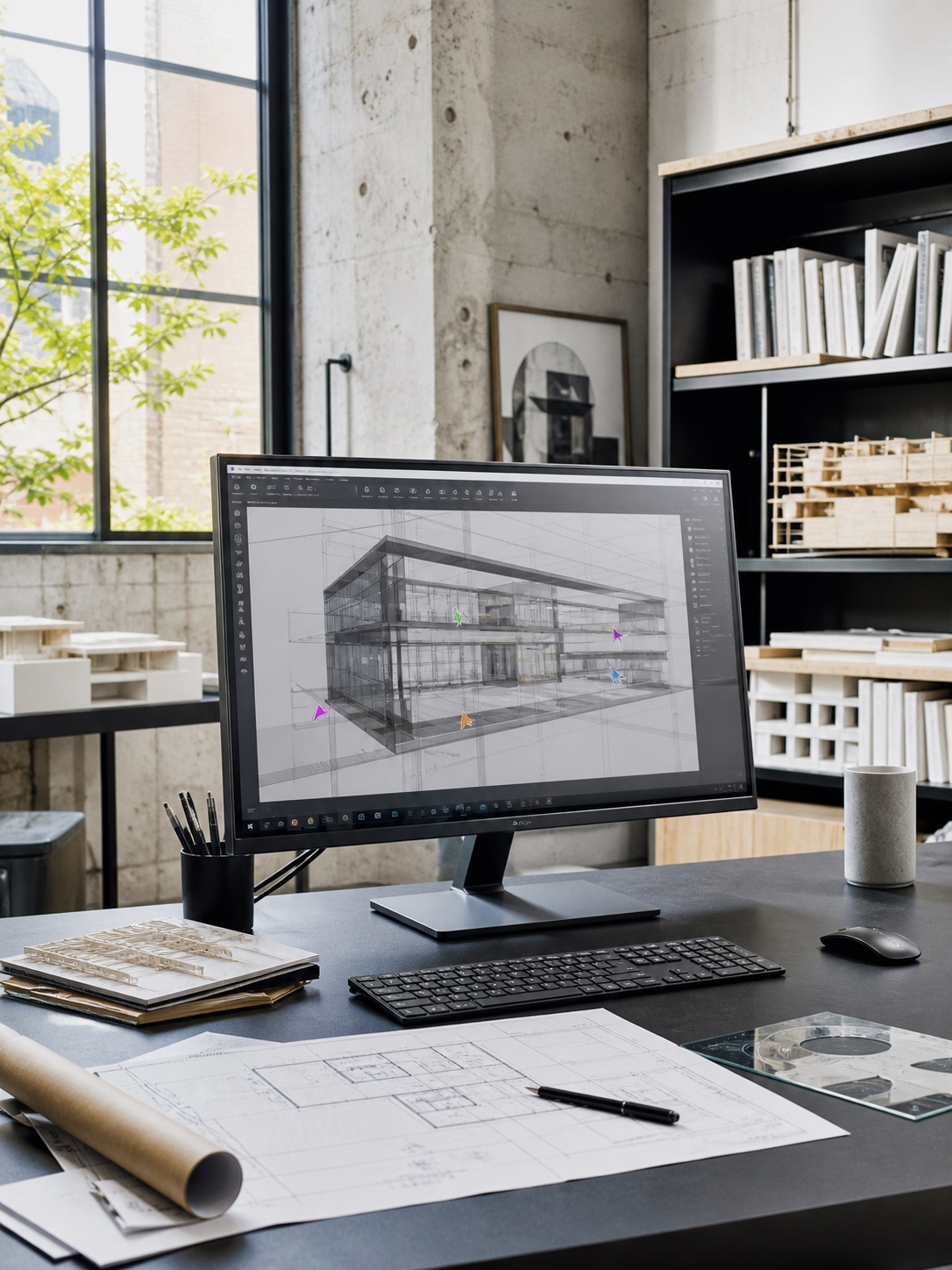
AI CAD drafting extends this further with natural-language interaction for certain instructions and cloud-based collaboration that lets a distributed project team work inside shared digital environments — genuinely valuable on larger projects where multiple specialists are coordinating interconnected pieces of the same design simultaneously.
What Architects Still Need to Judge
Meaning, Experience, Proportion, Ethics, and Tradeoffs
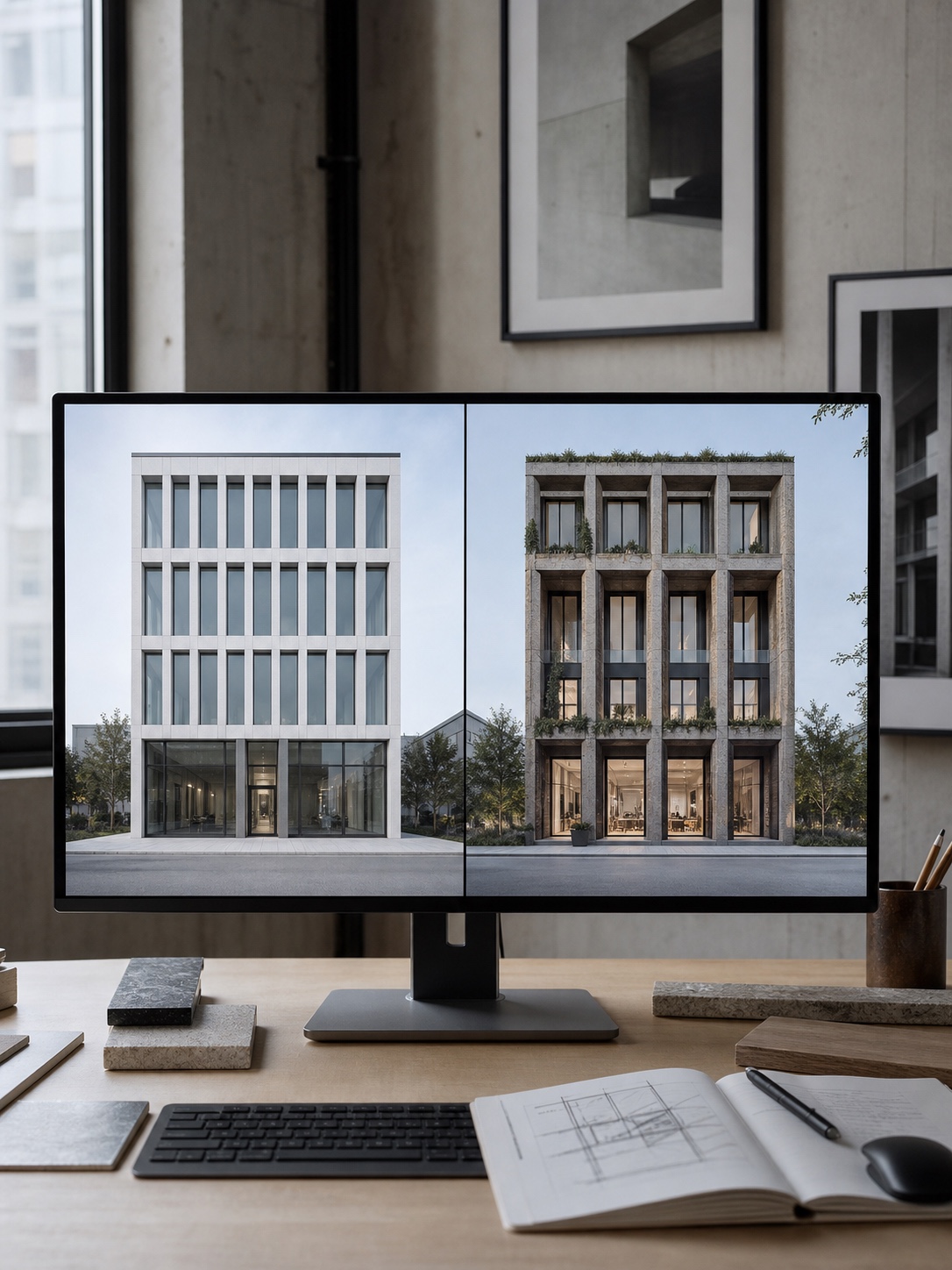
When software can generate dozens of technically valid solutions, someone still has to decide which ones actually make sense for this specific project, this specific client, this specific site. When an algorithm flags what looks like an improvement, an experienced architect has to judge whether that recommendation genuinely fits the project’s actual goals rather than just its measurable parameters.
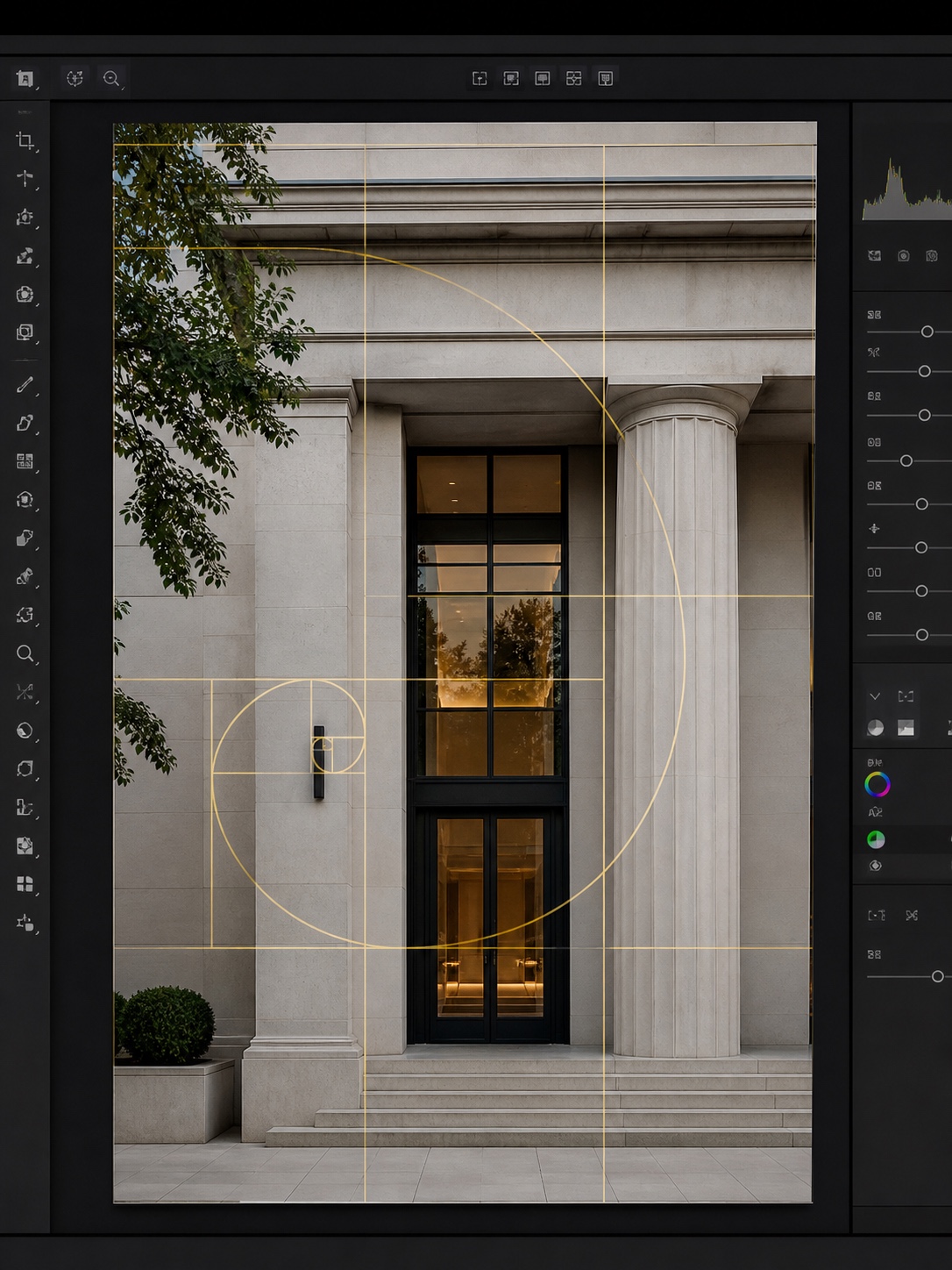
AI can calculate, compare, and generate possibilities at scale — it can’t independently weigh meaning, cultural context, spatial experience, or the ethical tradeoffs a project sometimes requires. That judgment work is exactly the kind of curatorial decision-making I look for when reviewing strong design work generally, the same quality that separates a genuinely compelling architecture portfolio from a merely competent one.
Risks and Limits of AI-Assisted Architecture
Over-Optimization, Bland Outputs, Data Bias, False Confidence, and Review Discipline
AI-assisted design carries real risks worth naming directly rather than glossing over. Over-optimizing for measurable parameters — energy performance, cost, structural efficiency — can quietly produce technically sound but genuinely bland architecture if nobody’s actively pushing back on the optimization target itself.
Training data bias can steer generative suggestions toward familiar, already-common solutions rather than genuinely novel ones. Perhaps the most practical risk is false confidence: a polished, AI-generated visualization can look more resolved than it actually is, which makes rigorous human review discipline more important, not less, the more capable these tools become.
This same tension between AI’s fluency and the need for continued human critical judgment shows up clearly in other creative fields already grappling with it, which I’ve explored in my piece on AI’s expanding role in digital art spaces.
Future of Architecture: Human Vision, Machine Testing
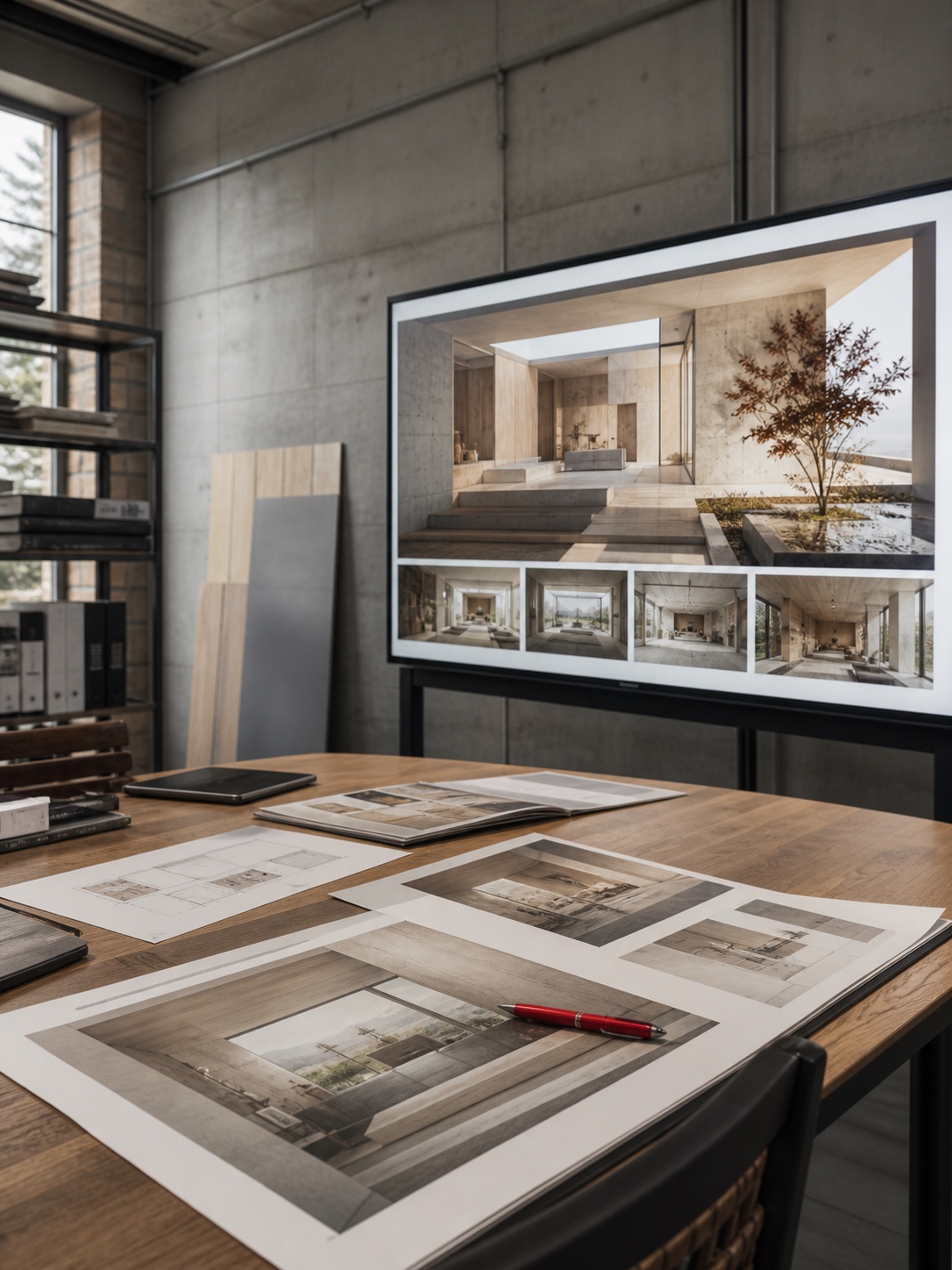
The strongest architecture teams going forward won’t be the ones swapping AI in for people — they’ll be the ones who get both working together deliberately.
Architects will likely spend less time on repetitive production work and more on concept development, client communication, and critical decision-making, while AI handles a growing share of routine drafting, validation, and comparative analysis. That shift in emphasis is already reshaping how the next generation of architects gets trained, a change I cover directly in my piece on how architecture schools are reinventing the studio learning model.
Final Thoughts
The real shift isn’t that AI is designing architecture on its own — it’s that architects now have a genuinely capable partner for testing “what if you tried it another way” faster than any manual workflow allowed.
The buildings that come out of this collaboration will still carry a human signature: designed by human minds, shaped by human experience, and tested more rigorously than before by increasingly capable machines, long before any of it becomes concrete, steel, glass, or wood.
Frequently asked questions
Q: How is artificial intelligence used in architecture?
A: AI supports the architectural workflow primarily through generative design alternatives, parametric modeling, simulation and performance testing, clash detection, and CAD/BIM documentation automation. It works within parameters a human architect defines, generating and testing options rather than independently deciding what a building should be.
Q: Will AI replace architects?
A: No — AI handles iteration, testing, and routine documentation faster than manual workflows, but it doesn’t independently understand context, culture, client needs, or the judgment required to decide which technically valid option is actually the right one for a specific project. The architect’s role is shifting toward more concept development and decision-making, not disappearing.
Q: What is AI CAD drafting?
A: AI CAD drafting refers to automation layered onto traditional CAD workflows — generating design alternatives, recognizing patterns, propagating updates across related drawing elements, catching discrepancies, and speeding up documentation, often supported by natural-language instructions and cloud-based collaboration tools.
Q: How can AI help with BIM and engineering checks?
A: AI-assisted BIM tools support clash detection between building systems, automated code and performance checking, and faster coordination across a shared, evolving model, catching potential conflicts and inefficiencies earlier in the process when they’re still inexpensive to fix rather than after construction has begun.
Q: What should architects review before trusting AI-generated options?
A: Architects should review AI-generated options for over-optimization toward narrow measurable parameters at the expense of genuine design quality, potential bias toward familiar solutions baked into training data, and whether a polished visualization is masking unresolved issues. Rigorous human review discipline matters more, not less, as these tools become more capable and their outputs look more finished.
- 107shares
- Facebook0
- Pinterest107
- Twitter0
- Reddit0