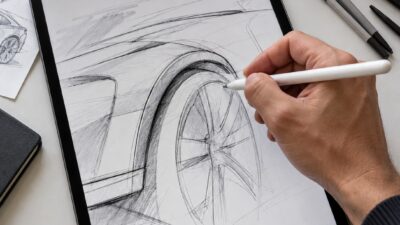
The first time I saw one of my own illustrations cast in sterling silver and worn by a stranger at a market, I understood something that no amount of print-on-demand revenue had taught me: physical objects carry weight in a way that digital files simply don’t. Not just the literal weight of the metal—the emotional weight of owning something made rather than generated.
- Why Production Has to Shape the Design—Not the Other Way Around
- Jewelry Sketching for a 3D World: What Changes and What Stays the Same
- Material Selection: The Decision That Dictates Everything Else
- Prototyping: The Phase Where Businesses Are Made or Lost
- Packaging, Ethics, and the Brand Story That Commands Premium Pricing
- At a Glance: The Jewelry Launch Checklist
- Frequently Asked Questions
- How much does it cost to produce a first jewelry sample?
- What's the minimum order quantity I should look for in a manufacturer?
- Do I need to learn CAD software myself?
- What's the difference between gold-filled and gold-plated jewelry?
- How do I protect my jewelry designs legally?
- Is sustainability in jewelry actually important to buyers, or is it just marketing?
- The Leap Is Smaller Than It Looks
For independent artists and illustrators, the jump from selling prints and digital downloads into physical jewelry feels enormous. The production language is different, the upfront costs are real, and the margin for error is much smaller than sending a PNG to a printer. But the margins are dramatically better—a sterling silver pendant that costs $12 to produce at a low-MOQ factory can retail for $80 to $140 with genuine brand equity behind it. And unlike a digital file, it doesn’t get resold or redistributed.
This guide covers the full pipeline: from adapting your illustration approach for three-dimensional production, through material selection and CAD files, to the prototyping process and brand positioning that makes the difference between a side project and a scalable product line.
Why Production Has to Shape the Design—Not the Other Way Around
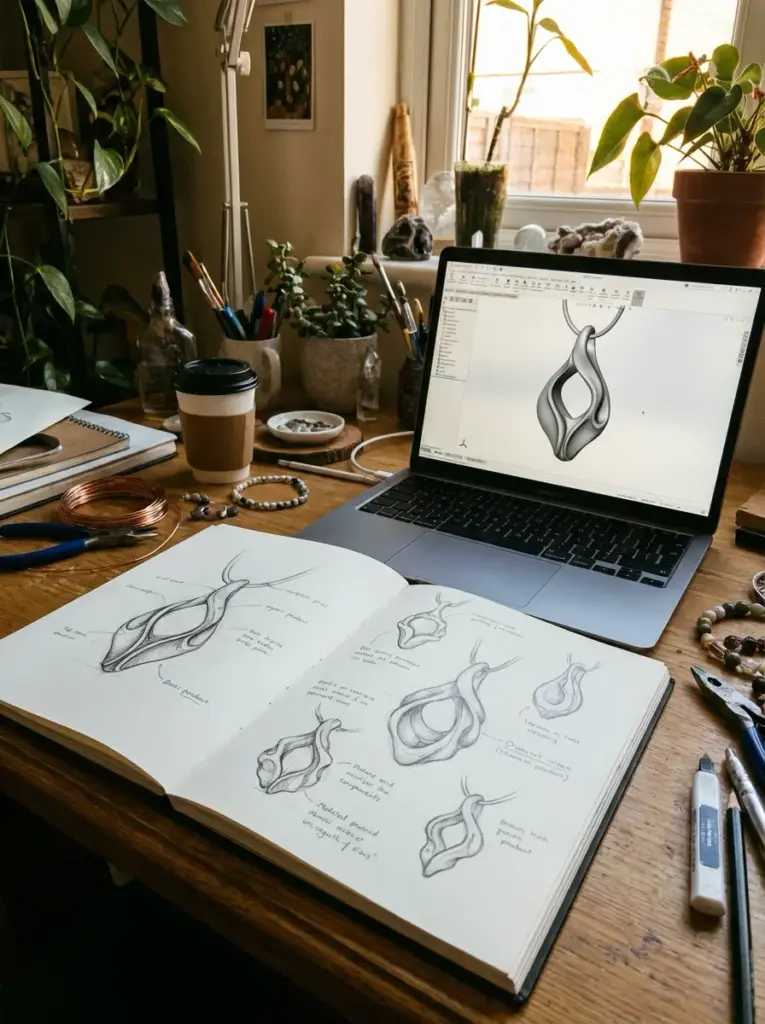
The most expensive lesson in jewelry production is learning it after the molds are made. I’ve spoken to independent designers who spent $400 on tooling for a piece that failed structurally on the first sample—because a detail that looked elegant in Procreate was physically impossible to cast cleanly in brass. Gravity, tensile strength, and casting physics don’t adapt to your brief.
The shift required is a mindset one: you’re not just an artist anymore. You’re a product designer. Every decorative choice has a structural consequence—a thin connecting element between two hanging forms might look graceful in a sketch but crack under standard daily wear. A deep undercut that creates visual shadow on screen creates a casting trap in the mold.
This is why experienced jewelry designers always involve their manufacturing partner during the concept phase, not after. Working with a manufacturer that supports low Minimum Order Quantities and genuinely engages at the design stage changes the economics of the whole operation.
I’ve seen this workflow done well by designers who partner with Azonejewelry early in the process—before a final sketch is committed to CAD. Their team flags structural issues at the concept stage, which is where changes cost time rather than money. That early conversation is worth more than any revision after tooling.
| ✏️ Pro TipBefore finalising any sketch for production, ask your manufacturer one question: ‘Where will this piece fail?’ A good partner will tell you immediately. A reluctant answer is a signal to find someone else. |
Jewelry Sketching for a 3D World: What Changes and What Stays the Same
Your existing illustration skills transfer more directly than you’d expect—with one critical addition. Standard illustration deals with perceived light on a 2D surface. Jewelry design requires you to render how metallic surfaces behave: the hard-edged specular highlight of polished gold, the directional sheen of brushed silver, the way a faceted stone catches light from multiple angles simultaneously.
The practical difference at the sketch stage: draw your jewelry concepts as three-quarter views, not flat front-on elevations. A flat front view of a pendant tells the factory almost nothing about the back structure, the bail attachment, or the dimensional profile of the piece. Three-quarter perspective forces you to resolve the three-dimensional design problems before they hit the CAD stage.
From Sketch to CAD: Why 2D Files Alone Aren’t Enough
Handing a 2D illustration to a production facility and expecting an accurate output is one of the industry’s most common and costly errors. A factory working from a flat drawing will interpret every ambiguous dimension their own way—which is usually the cheapest way, not the way you intended.
3D CAD files are the production standard for exactly this reason. Software like Rhino 3D, ZBrush (for organic forms), or MatrixGold gives you precise control over dimensions, wall thickness, stone seat geometry, and structural integrity. A CAD file also lets the manufacturer calculate exact metal weight before casting—critical for pricing accuracy and for ensuring the finished piece won’t feel unexpectedly heavy or flimsy on the wrist.
If you’re not ready to learn CAD yourself (it’s a genuine skill investment—expect 80–120 hours to reach production-useful competency in Rhino), outsourcing CAD conversion to a specialist is a legitimate intermediate step. Platforms like Upwork have experienced jewelry CAD artists who work from annotated sketches for $50–$150 per piece. Budget this into your prototype costs from the start.
Material Selection: The Decision That Dictates Everything Else
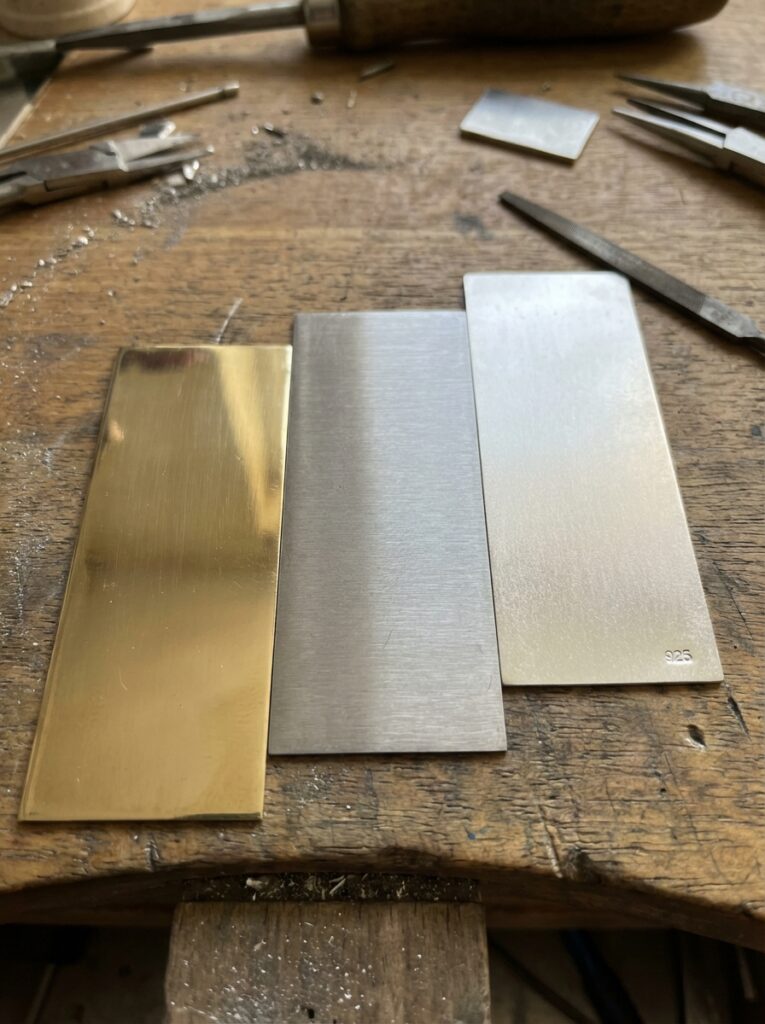
Your choice of base metal isn’t just an aesthetic decision—it sets your price point, your target customer, your production minimum, and your brand positioning. Get this wrong and you’re either overpriced for your audience or under-margined for your business. Here’s how the three main options break down in practice.
Stainless Steel: Volume, Durability, Edge
Stainless steel is the material of choice for high-volume, entry-price-point designs. It’s hypoallergenic, remarkably durable, and produces a clean, industrial aesthetic that works for streetwear-adjacent and gender-neutral jewelry lines. The margins at retail are lower than brass or silver, but the production costs and MOQ thresholds are also lower—making it an accessible entry point for first-time product designers.
One practical note: stainless steel is harder to work with in lost-wax casting than brass or silver. Most stainless jewelry uses die casting or stamping, which limits the complexity of achievable forms. Highly detailed, organic forms—think illustrated creatures or botanical motifs—are better suited to brass.
Brass: The Workhorse of Independent Jewelry
Brass is the material most independent jewelry brands build their initial lines on, and for good reason. It’s highly malleable (ideal for complex, detail-rich casting), takes gold plating exceptionally well, and has a weight that feels genuinely premium in the hand. A well-plated brass pendant is visually indistinguishable from solid gold-fill to most retail buyers.
The limitation is longevity: standard gold plating on brass begins to wear at friction points—clasps, ring shanks, bracelet links—after 12–18 months of regular wear. This is manageable through design (minimising friction zones) and through customer communication (setting honest care expectations). Brands like Wolf & Moon and Tatty Devine have built successful long-term businesses entirely on brass-based fashion jewelry.
Sterling Silver 925: The Bridge to Fine Jewelry
Sterling silver (92.5% pure silver, the international 925 standard) occupies a different market position entirely. It has intrinsic material value, it’s the expected standard at the $80–$200+ retail tier, and it appeals to a buyer who thinks of jewelry as a considered purchase rather than a seasonal accessory.
The production cost is meaningfully higher than brass—silver spot price fluctuates, typically ranging from $0.80 to $1.20 per gram at the time of writing, compared to brass at roughly $0.05–0.08 per gram. But the retail markup is proportionally larger, and the customer relationship is different. Silver buyers tend to wear and keep pieces longer, generating stronger word-of-mouth and repeat purchases.
For artists whose illustration style tends toward the detailed and intricate—fine line work, delicate botanical forms, layered compositions—925 silver is the natural material match and the strongest long-term brand position.
| ✏️ Pro TipSource your metals through a manufacturer with GRS (Global Recycled Standard) certification wherever possible. Recycled-content metals are becoming a genuine purchasing criterion in the mid-to-premium jewelry segment—not a niche preference. |
Prototyping: The Phase Where Businesses Are Made or Lost
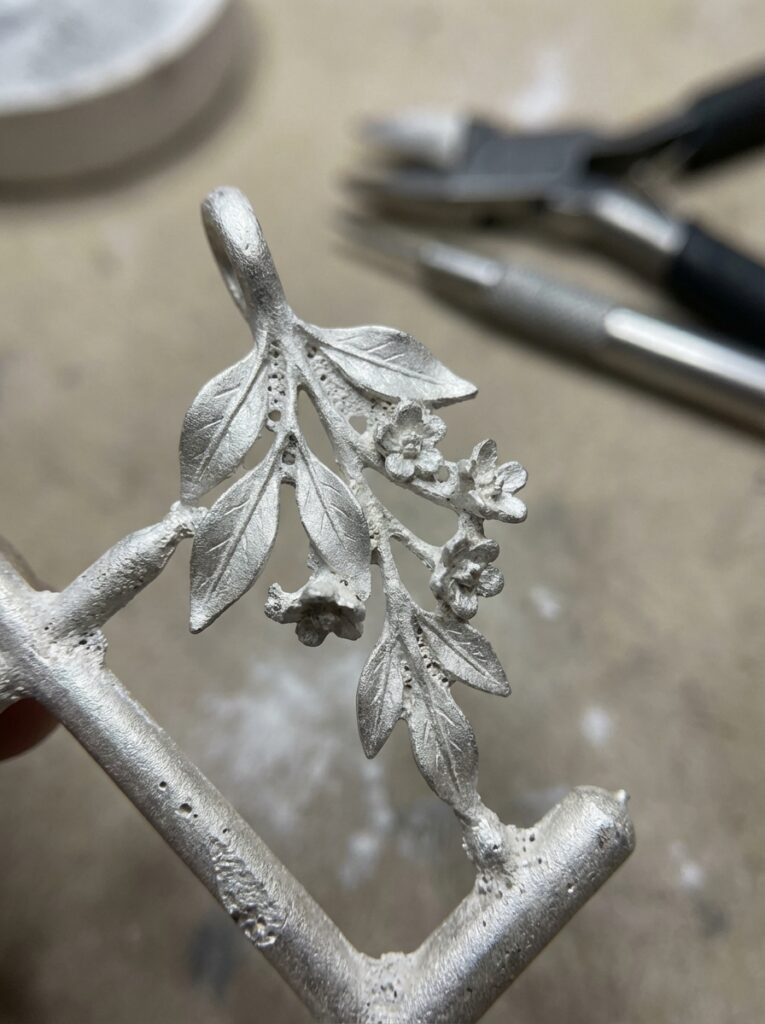
The factory has your CAD file. The first physical output is typically a high-resolution 3D printed wax model—sometimes printed in resin, depending on the facility. This wax is used to create the master mold via lost-wax casting: the wax form is embedded in plaster investment, the plaster is fired (burning out the wax), and molten metal is poured into the resulting cavity.
The wax model stage is your last low-cost intervention point. Check every dimension against your spec. Is the bail wide enough for the chain gauge you’re planning to use? Are any engraved elements too shallow to survive polishing? Is the piece’s center of gravity positioned so it hangs correctly, or will it flip face-down on a chain?
When the first metal sample arrives, wear it. Put it on and move around. Does the pendant flip? Do any edges catch on fabric? Is the clasp mechanism smooth enough for a customer to operate one-handed? A sample that looks perfect on a flat surface can reveal serious wearability problems the moment it’s on a body.
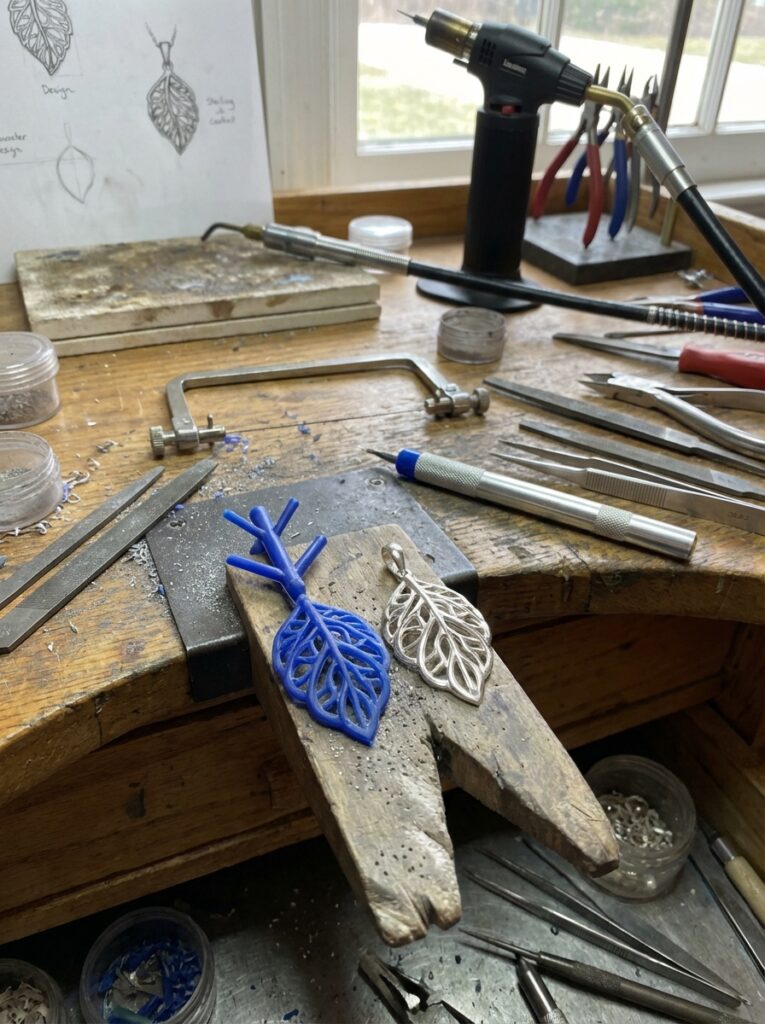
Tooling and mold corrections are measured in tens of dollars. Mass-producing a structurally flawed design is measured in thousands. Approve nothing until you’d be proud to wear it yourself.
Packaging, Ethics, and the Brand Story That Commands Premium Pricing
A beautifully made piece of jewelry presented in a generic polybag with a generic card is a missed opportunity at the exact moment the customer is most emotionally receptive—the unboxing. Your packaging is the final brand touchpoint, and for independent designers, it’s also one of the few areas where you can directly compete with much larger brands on equal terms.
The shift that matters most in 2026: buyers in the 25–40 demographic are actively evaluating the ethics of the brands they purchase from, not just the aesthetics. Emerging data on
The shift that matters most in 2026: buyers in the 25–40 demographic are actively evaluating the ethics of the brands they purchase from, not just the aesthetics. Emerging data on sustainability in retail consistently shows that Gen Z and millennial consumers are willing to pay 15–20% more for brands that demonstrate verifiable environmental commitments—not just marketing language, but specific material certifications, packaging choices, and supply chain transparency.
For an independent jewelry brand, this is structurally advantageous. You have direct relationships with your manufacturer. You know exactly where your metal comes from and how your packaging is made. That traceability, communicated honestly in your brand story, is a genuine competitive differentiator against larger brands that can’t credibly make the same claim.
What ‘Sustainable Packaging’ Actually Means at This Scale
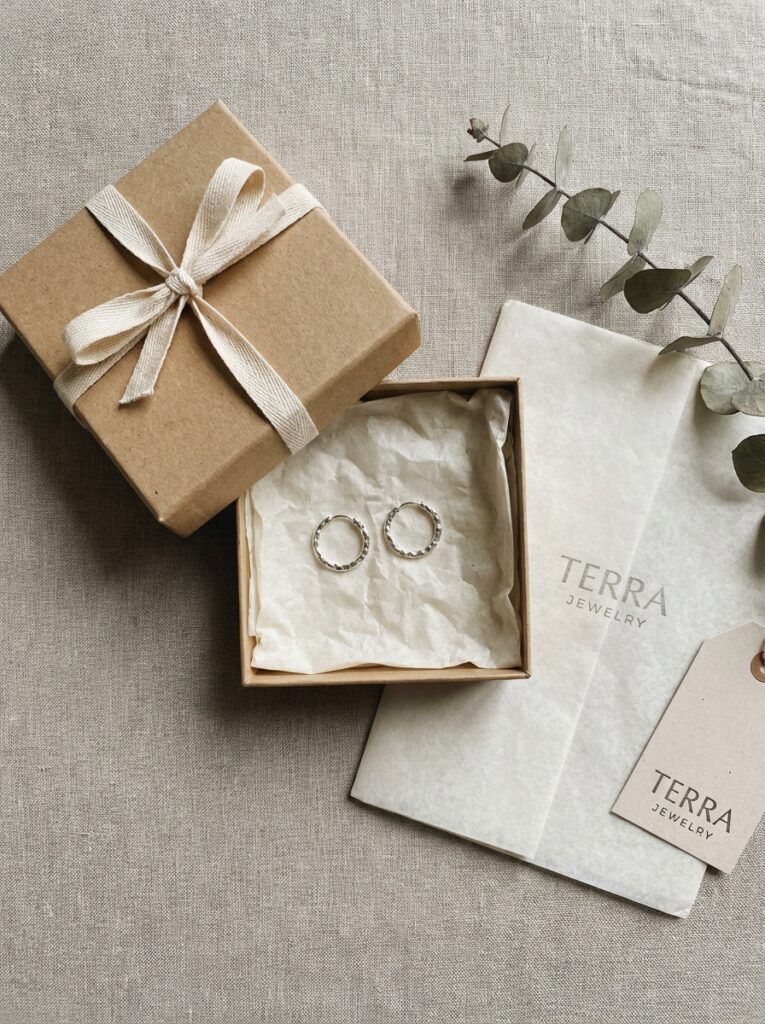
Biodegradable packaging doesn’t mean compromising on the premium feel of the unboxing experience. Kraft-based rigid boxes with soy-ink printing, cotton ribbon, and recycled tissue paper can be sourced from suppliers like Tiny Box Company (UK) or EcoEnclose (US) at price points that remain viable for independent brands—typically $0.80–$2.50 per unit at 200–500 quantity.
Print your care instructions on a recycled card insert. Include the material certification (GRS, if applicable) as a simple, confident statement—not a lengthy ESG paragraph. Buyers appreciate specificity: ‘This piece is cast in 925 silver from 100% recycled-content metal’ is more credible than ‘We care about the planet.’
Pricing for the Value You’ve Built
A workable pricing formula for independent jewelry: (production cost + packaging) × 4 to 5 = retail price. A brass pendant with a $9 production cost and $1.50 packaging should retail at $42–$52. A 925 silver equivalent with $16 production and the same packaging should be $87–$107. These multiples feel aggressive if you’re used to the economics of print sales, but they reflect the correct positioning for handcrafted, design-led physical goods.
Don’t underprice to compete with fast-fashion jewelry. Your customer isn’t buying a cheap chain—they’re buying the specific thing your illustration made into a wearable object. That specificity has real value. Price it accordingly.
At a Glance: The Jewelry Launch Checklist
| Area | Key Action | Impact |
| Production | Involve your manufacturer before finalising sketches | Mechanical viability + lower revision costs |
| Design | Translate 2D concepts into 3D CAD files | Exact weight calculation, structural risk flagged early |
| Materials | Choose GRS-certified steel, brass, or 925 silver | Dictates margins, durability, and target demographic |
| Prototyping | Test wax master samples ruthlessly before approving | Prevents costly mass-production mistakes |
| Branding | Biodegradable packaging + transparent ethical sourcing | Commands premium pricing from Gen-Z / Millennials |
Frequently Asked Questions
How much does it cost to produce a first jewelry sample?
Expect to spend $150–$400 for a single prototype including CAD conversion, wax model, casting, and basic finishing. This varies with material (silver costs more than brass) and the complexity of the design. Most reputable manufacturers will itemise these costs transparently before you commit.
What’s the minimum order quantity I should look for in a manufacturer?
For independent artists starting out, look for manufacturers that offer MOQs of 20–50 pieces per design. Some specialist small-batch producers work from as low as 10 units. Low MOQs let you validate designs at market before committing to larger inventory. As a benchmark, most established independent jewelry brands in the $80–$150 retail tier work with 50–100 unit initial runs.
Do I need to learn CAD software myself?
No—outsourcing to a jewelry CAD specialist is a legitimate option, particularly for your first few designs. Platforms like Upwork have experienced Rhino and MatrixGold artists who work from annotated sketches at $50–$150 per piece. Learning CAD yourself becomes worth the investment once you’re producing five or more new designs per season.
What’s the difference between gold-filled and gold-plated jewelry?
Gold-filled (also called rolled gold) has a bonded layer of gold that’s at least 1/20th the total weight of the piece—significantly more durable than standard plating. Gold-plated pieces have a much thinner deposited layer (typically 0.5–2.5 microns) that wears faster at friction points. For indie brands, gold-filled is the better long-term customer satisfaction choice, though it costs more to produce.
How do I protect my jewelry designs legally?
Register your original designs as 3D design trademarks or registered designs in your key markets (the EU and UK have strong registered design protection; the US uses design patents). Keep dated records of your original sketches and CAD files as evidence of authorship. Copyright alone offers limited protection for jewelry forms, so registered design protection is the practical tool here.
Is sustainability in jewelry actually important to buyers, or is it just marketing?
It’s genuinely important to the 25–40 buying demographic that independent jewelry brands typically target. Studies consistently show these buyers research brand ethics before purchasing in the $80+ price tier—not just looking for eco-language on a website, but for specific, verifiable claims like GRS-certified metals or named packaging suppliers. Vague sustainability claims increasingly backfire; specific, honest commitments build trust.
The Leap Is Smaller Than It Looks
Moving from 2D illustration to a physical jewelry brand is a genuine business decision—it involves upfront cost, production relationships, and a tolerance for the learning curve of an unfamiliar industry. But the core skills you already have as a visual artist are more relevant here than in almost any other physical product category.
Your eye for proportion, your understanding of light and surface, your ability to make considered aesthetic choices—these translate directly into better product design, stronger brand identity, and a more credible creative story than most jewelry brands at this price tier can tell.
Start with one design. One material. One manufacturer relationship built through honest early conversations. Get one sample right, then one production run right. The business scales from there. The sketchbook is already open.
- 211shares
- Facebook0
- Pinterest211
- Twitter0
- Reddit0