The terrace house in Levenshulme had everything on the list. Victorian bay window, original cornicing in the front room, cast iron fireplace they hadn’t bothered to rip out, a rear extension that was basically a blank canvas. The price was low enough to leave serious renovation budget. I walked around it twice, called my contractor, and was ready to make an offer before I’d spent twenty minutes looking at anything beyond the walls.
My architect talked me out of it. Not because of anything wrong with the house — the bones were genuinely good. Because of something wrong with my process. “You’ve looked at the property,” she said. “You haven’t looked at the area. Those are two completely different due diligence exercises, and you’ve only done one of them.”
- Why Renovation Investment Requires Neighbourhood Intelligence
- What Traditional Listings Don't Tell You
- The Data Points That Actually Predict Renovation ROI
- The Manchester Specific Context
- How to Actually Run the Research
- The Design Budget Conversation
- The Neighbourhood Is Part of Your Design Brief
- FAQ: UK Property Data for Renovation Buyers
- Why isn't Rightmove enough for renovation property research?
- What data should I check before buying a renovation property in the UK?
- How does neighbourhood data affect renovation ROI?
- What are the best sources for UK neighbourhood property data?
- Is Manchester a good market for renovation investment in 2026?
- How do infrastructure projects affect nearby property values?
She was right. I hadn’t looked at what was happening to property prices on that specific street over the past five years. I hadn’t checked what the council had planned for the industrial site two roads away. I hadn’t looked at crime trend data, or infrastructure investment signals, or population movement patterns. I was about to spend £180,000 buying a house and another £60,000 making it extraordinary — and I was doing it essentially blind to whether that £60,000 would ever come back.
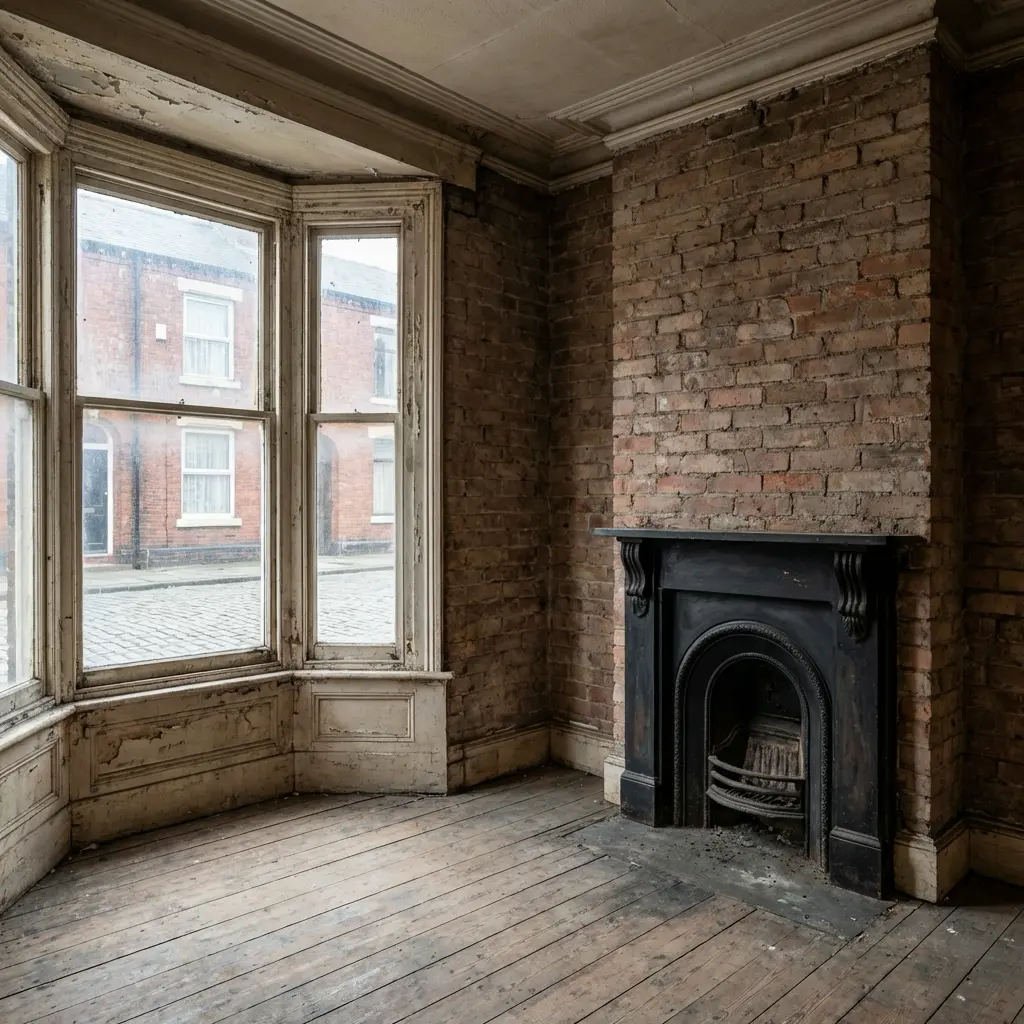
This article is about the part of property research that design-focused buyers consistently skip. Not because they’re careless, but because nobody told them it existed.


Why Renovation Investment Requires Neighbourhood Intelligence
There’s a version of the renovation calculation that most designers and property hunters understand intuitively: buy low, spend well, sell for a profit that justifies the effort. What that calculation almost never accounts for is that the neighbourhood is doing its own calculation independently of yours — and if those two calculations are moving in opposite directions, the most beautiful renovation in the world won’t save you.

I’ve seen this happen. A house in South Manchester, genuinely exceptional interior design work — the kind of kitchen that gets published, a bathroom that justified every penny. Sold for significantly less than the combined purchase and renovation cost because the street’s trajectory was downward in ways the buyer hadn’t spotted. The design was right. The location intelligence was absent.
| The inverse is also true, and it’s where the real opportunity lives. A relatively modest renovation in an area that’s genuinely improving can return dramatically more than a premium renovation in a static or declining area. |
The neighbourhood isn’t the backdrop to your renovation project. It’s the context that determines whether your renovation investment makes financial sense.
What Traditional Listings Don’t Tell You
Property listings have a fundamental limitation built into their design: they show you what the property is, not what the area is doing. A Rightmove listing will tell you the asking price, the square footage, the number of bedrooms, and show you photographs of rooms. It will not tell you:
- Whether the street’s median sale price has risen or fallen over the past three years
- Whether there’s a major development planned that will affect the neighbourhood positively or negatively
- Whether the crime statistics for the immediate area are trending up or down
- Whether the demographic composition is changing in ways that affect future buyer demand
- Whether comparable properties nearby are taking 30 days or 300 days to sell
None of this is hidden information — it exists across planning databases, Land Registry records, police data, census analysis, and local authority development frameworks. The problem is that it’s scattered across dozens of sources and requires meaningful time to compile. This is precisely what a local area insights platform resolves — aggregating these dispersed data sources into a coherent picture of what’s actually happening in a specific neighbourhood, rather than what a listing presents about a specific property.
The Data Points That Actually Predict Renovation ROI

Price Trend Direction and Velocity
Not just ‘what have prices done’ but ‘what direction are they moving, and how fast?’ A neighbourhood where average sale prices have risen 3% per year for five consecutive years is a fundamentally different risk profile from one where prices rose 15% in a single year following a single catalyst and have been flat since.
In my experience, the most reliable renovation markets in the UK tend to be areas in the second or third stage of gentrification — where the process is clearly underway, and prices are moving steadily, but where entry costs haven’t yet caught up with those in nearby comparable areas. Parts of East Manchester, certain streets in Leeds LS6 and LS7, and corridors in Bristol’s northern suburbs have been strong renovation value opportunities precisely because the data showed a clear trend before the prices reflected it.
Infrastructure Signals
Infrastructure investment is probably the single most reliable predictor of medium-term neighbourhood appreciation. When a new tram line is confirmed, or a major employer commits to a city-fringe development, or a university announces expansion into a specific district, property prices in the affected area move — first modestly, then dramatically, typically over a 5–7 year cycle from announcement to full realisation.
Cross-referencing a property’s location against local authority Local Development Frameworks, Transport for Greater Manchester investment plans, or DLUHC regeneration zone designations takes a full afternoon manually — but it can fundamentally change your assessment of a renovation property’s long-term potential.
Crime Trend Data, Not Just Crime Rates
Raw crime rates are a blunt instrument — they tell you the current state but not the direction of travel. A neighbourhood with a moderately elevated crime rate that has been falling consistently for three years is a very different proposition from one with a lower absolute rate that has been rising. Buyers who look only at the current number miss the trend that actually matters for a 5–10 year ownership horizon.
Demographic Shift Indicators
Population composition changes tend to lead property price changes by 2–3 years. Areas where younger professional demographics are increasing — visible in data around average age, educational qualification levels, and new business registrations — tend to see hospitality and retail quality improve, which drives further in-migration, which drives prices. Identifying this cycle at its early stages is where renovation investors consistently find value.
The Manchester Specific Context
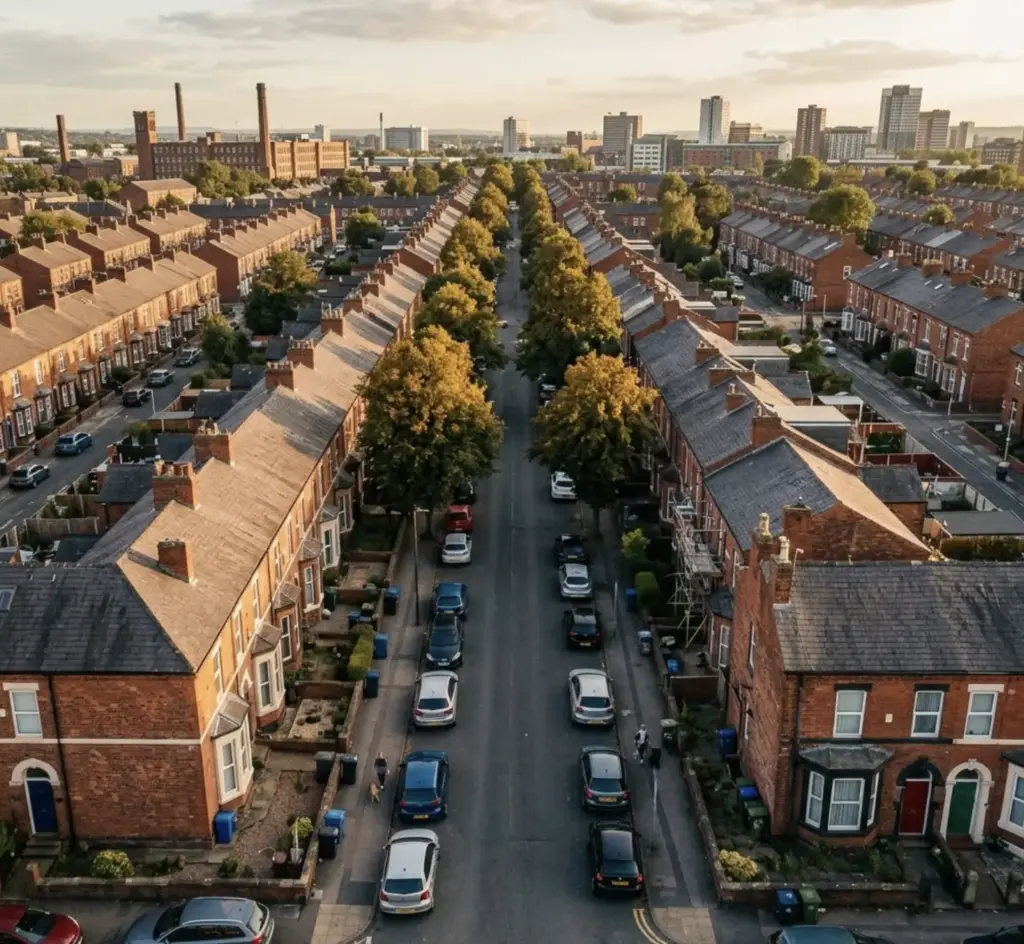
Greater Manchester is worth discussing specifically because it’s simultaneously one of the UK’s strongest renovation markets and one of the most data-dependent ones.
The city’s growth story of the past decade has been real — MediaCityUK shifted the entire Salford Quays and Trafford axis, the Northern Quarter’s maturation pulled investment into Ancoats and New Islington, and the Metrolink expansion has created consistent price uplift corridors around new and planned stops. But that growth has been extremely uneven at the street level.
Two terraced streets in M19 can have completely different price trajectories depending on which side of a planning boundary they fall on, or whether they’re within the catchment of the correct school, or how close they are to a planned cycle corridor. The macro story — Manchester is growing, investment is coming, property values are rising — doesn’t tell you anything useful about the specific house you’re about to spend £240,000 buying and renovating.
| The data does. And in a market this active, not using it is a genuinely expensive choice. |
How to Actually Run the Research
| 📷 07 — Architect reviewing local council planning documents and development maps — printed planning applications, laptop with planning portal, focused professional context |

For a renovation property at £150,000–£250,000 in Greater Manchester, the research process should cover four areas before any offer is made.
Land Registry price trend analysis. Pull the full transaction history for the specific street and the surrounding 500-metre radius. Look at the trend over 5 years and 10 years, not just the most recent comparable. Calculate the average annual appreciation rate and compare it to the wider postcode district.
Local authority planning register. Search the relevant council’s planning portal for any applications or decisions within 500 metres in the past 3 years. Look specifically for change-of-use applications, large residential developments, and any commercial development that would affect the street’s character.
Before buying into an area, I would read the numbers alongside the physical plan: residential development planning affects walkability, maintenance burden, transport access, and long-term neighborhood demand.
Police crime data trend analysis. Use data.police.uk to pull crime category data for the specific neighbourhood, then look at the 12-month trend. You want the direction, not just the absolute number.
Infrastructure and regeneration context. Check the Greater Manchester Combined Authority’s spatial development strategy, Transport for Greater Manchester’s pipeline, and any active Enterprise Zone or regeneration scheme designations.
Consolidating this research manually takes 4–6 hours per property. A purpose-built tool that aggregates these signals substantially compresses that timeline and surfaces the key indicators without requiring the buyer to become a data analyst.
The Design Budget Conversation
| 📷 08 — Premium designer kitchen renovation inside Victorian terrace — bespoke cabinetry, concrete worktops, original brick wall feature, Crittal rear extension, editorial interior design photography |
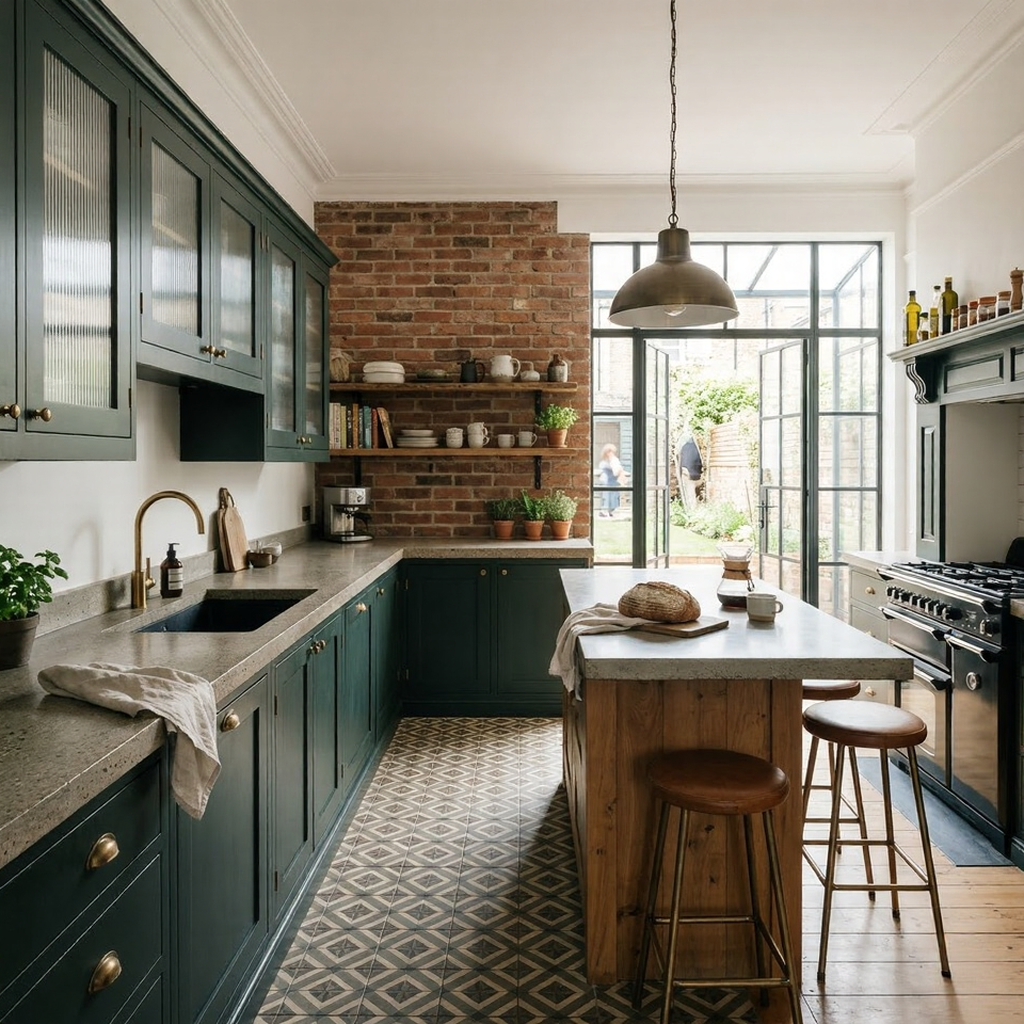
Renovation-focused buyers typically think about budget in two buckets: acquisition cost and renovation cost. The data research introduces a third variable — the neighbourhood’s appreciation potential, which determines the effective ceiling on what the finished property can be worth.
Once the data supports the purchase, the next question is design budget. Use an investor-focused interior design plan to decide what should be repaired, staged, upgraded, or left alone.
A neighbourhood with strong upward price momentum and genuine infrastructure catalysts approaching can support a higher specification renovation than one where prices are flat. The designer’s brief — specification of kitchen, bathroom, material quality, level of finish — should be informed by what comparable properties at the top of the market in that neighbourhood are actually achieving on sale.
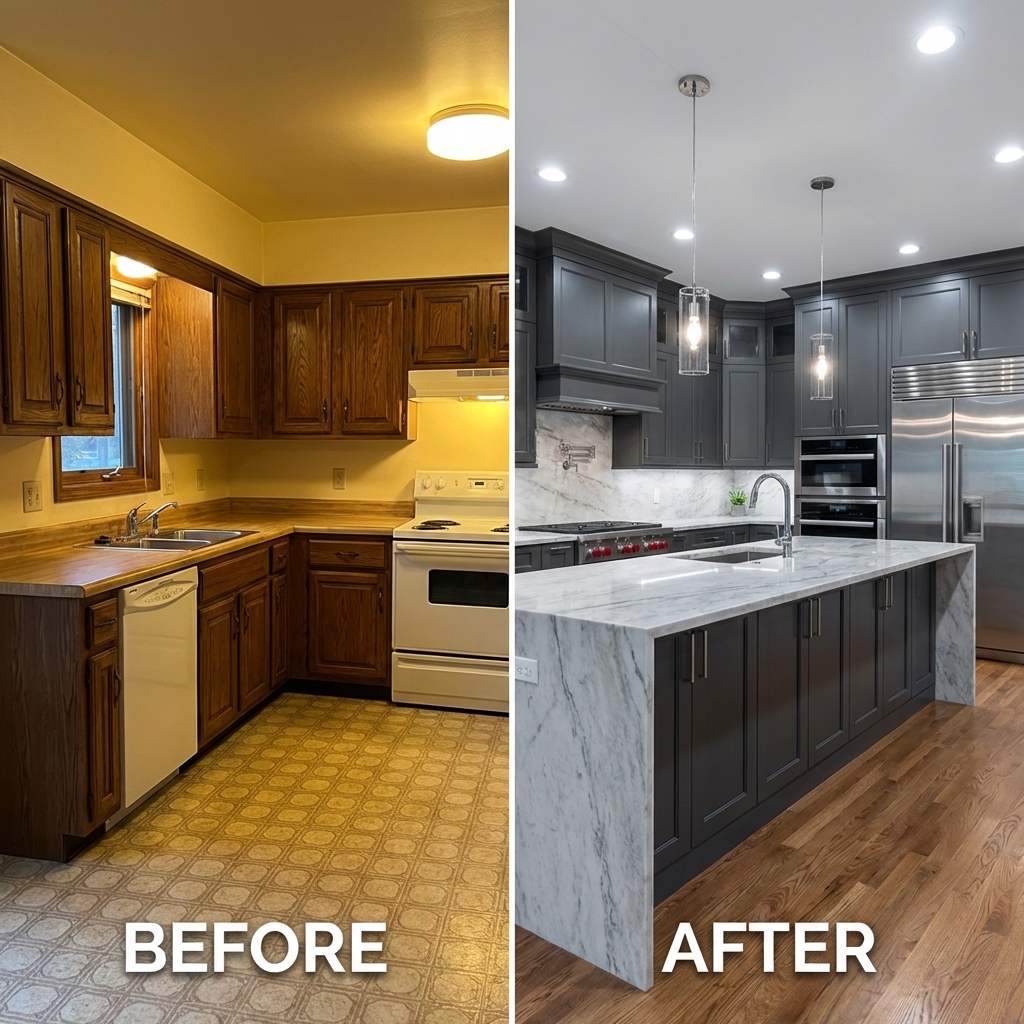
I’ve seen buyers spend £80,000 on a renovation that the neighbourhood would only ever reward with £30,000 of value uplift. Not because the work was poor — it was exceptional — but because the ceiling imposed by the local market was below the level of specification they chose. The data tells you where that ceiling is before you commission the kitchen.
The Neighbourhood Is Part of Your Design Brief
The most useful reframe for renovation buyers who are primarily design-motivated is this: the neighbourhood isn’t something you assess once and then ignore. It’s a design constraint, in the same way that the building’s structure or the planning authority’s requirements are design constraints.
A Victorian terrace in an area where prices are moving toward £400,000 for a fully renovated comparable can support a different brief than the same house in an area where the ceiling is £280,000. The data tells you which situation you’re in. The design follows from that information, not the other way around.
Buy the right house in the right area with the right data behind the decision, then design it to the ceiling the neighbourhood supports — and you have a renovation that works financially and aesthetically simultaneously. That’s not a compromise. That’s what intelligent property buying looks like.
FAQ: UK Property Data for Renovation Buyers
Why isn’t Rightmove enough for renovation property research?
Rightmove and similar platforms show property-level information — price, size, photos, location. They don’t show neighbourhood-level data: price trend direction, infrastructure investment pipeline, crime trend analysis, demographic shifts, or planning decisions. For a renovation buyer committing significant capital to improving a property, these neighbourhood signals are as important as the property itself.
What data should I check before buying a renovation property in the UK?
Four key data areas: Land Registry price trend analysis for the specific street and surrounding 500-metre radius over 5 and 10 years; local authority planning register for applications and decisions within 500 metres; police crime trend data showing direction of travel not just absolute rates; and infrastructure and regeneration context including Local Development Frameworks and transport investment plans.
How does neighbourhood data affect renovation ROI?
The neighbourhood’s price ceiling determines the maximum value a completed renovation can achieve regardless of specification quality. A premium renovation in a static or declining area may not recover its cost. The same renovation in an area with consistent appreciation momentum and infrastructure catalysts approaching can return significantly more. Area data tells you where that ceiling is before you commission the kitchen.
What are the best sources for UK neighbourhood property data?
Key sources include HM Land Registry for transaction history and price trends, data.police.uk for crime category trend analysis, local council planning portals for development applications, and GMCA or equivalent regional body documents for infrastructure pipeline. Local area insights platforms aggregate these sources into a single interface, reducing research time from several hours to minutes.
Is Manchester a good market for renovation investment in 2026?
Greater Manchester has strong macro fundamentals — ongoing infrastructure investment, population growth, and consistent demand from young professional demographics. However, the growth is highly uneven at street level. Two terraces in M19 can have significantly different price trajectories depending on planning boundaries, school catchments, and proximity to infrastructure improvements. Data research at the specific property level is essential before any renovation commitment.
How do infrastructure projects affect nearby property values?
Infrastructure investment typically drives property price appreciation over a 5–7 year cycle from announcement to full realisation. Properties within the impact radius of confirmed infrastructure projects tend to appreciate ahead of the wider market. Identifying these signals early, through planning documents and development frameworks, is one of the most reliable indicators of renovation ROI potential.
- 69shares
- Facebook0
- Pinterest69
- Twitter0
- Reddit0